Archive for the ‘Iran’s military spending’ category

Rouhani threatened unless he keeps Iran’s “provocative”

April 2, 2016

Rouhani threatened unless he keeps Iran’s “provocative” DEBKAfile, April 2, 2016

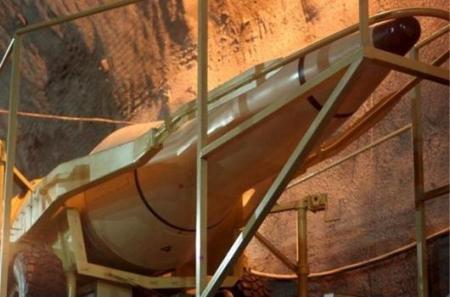
A missile is seen inside an underground missile base for Iran's Islamic Revolutionary Guards Corps (IRGC) Aerospace Force at an undisclosed location in this undated handout photo courtesy of Fars News. REUTERS/farsnews.com/Handout via Reuters

A missile is seen inside an underground missile base for Iran’s Islamic Revolutionary Guards Corps (IRGC) Aerospace Force at an undisclosed location in this undated handout photo courtesy of Fars News. REUTERS/farsnews.com/Handout via Reuters

President Barack Obama said Friday April 1, that “Iran has so far followed the letter of the [nuclear] agreement [with the six powers], but, he added, “the spirit of the agreement involves Iran also sending signals to the world community and business that it is not going to be engaging in a range of provocative actions that may scare business off,” such as fire-testing nuclear-capable ballistic missiles, calling for Israel’s destruction and providing Hizballah with missiles.

At a news conference ending the two-day nuclear summit in Washington, Obama went on to say: “Some of the concerns that Iran has expressed, we are going to work with them to address.” But meanwhile, he said, the US and its allies are taking steps to help Iraq benefit from the agreement by facilitating trade and banking transactions with the Islamic Republic; and the US Treasury Department is seeking to set clearer investment guidelines for Iran.

Two days earlier, on Wednesday, March 30, the Obama administration was reported acting to give Iran limited access to US dollars, since the almost complete lifting of sanctions in January, which netted Tehran an injection of approximately $150 billion “hasn’t provided the country with sufficient economic benefits.”

DEBKAfile’s analysts note the inherent contradiction in the US president’s approach to Tehran: He wants Iran to be compensated with a never-ending shower of dollars for agreeing to limit its nuclear program, but “the US and its allies” cannot question how the money is spent.

So while the West, under orders from Washington, must scramble to boost the Iranian economy, Tehran may continue to test ballistic missiles until they are nuclear capable, and top up the Hizballah terrorists’ arsenal with ever deadlier tools of death.

This glaring inconsistency arises from a fact largely hidden from the world public: last year’s landmark nuclear accord was concluded by Iran’s President Hassan Rouhani and Foreign Minister Mohammed Javad Zarif – not by the real powers in Tehran, supreme leader Ayatollah Ali Khamenei, the Revolutionary Guards chiefs and the ayatollahs at the head of the fundamentalist Shiite movement.

Indeed, even Rouhani was never allowed to formally sign the deal, much less gain Khamenei’s ratification.

But now, Rouhani’s fate depends on keeping those ruling elites happy.  He has found himself in the position of their hostage, a cash machine for keeping the funds for the Islamic Republic’s projects termed by President Obama “provocative” constantly on tap.

Those projects which are currently in full spate clearly leave every little over from the $150bn to even start lifting the Iranian economy out of its mess, while the Rouhani’s government carries the can for that too. Indeed, DEBKAfile’s Iranians sources disclose, the president is forced to earmark 50 percent of the funds released by sanctions relief for items listed under “defense”, namely,  the nuclear and missile development programs, Iran’s overseas military operations, including the Syrian war, subsidizing the Lebanese Hizballah, and establishing new terrorist organizations for attacks on Israel, such as the Al-Sabirin, on the Golan.

These enterprises eat up billions of dollars. Just Iran’s operations in Syria and support for Hizballah cost Tehran $2 billion every month.

Syrian president Bashar Assad didn’t surprise anyone when he revealed that the five-year civil war in his country had cost $200 billion so far. With this kind of spending on “defense,”  the Iranian economy will continue to decay, while Rouhani’s government, which promised the people a better life after the nuclear accord, must bow to the will of the hard-liners or face the consequences.

Our Iranian sources report that Obama’s inconsistent approach to Iran has sharpened the discord between the two major political camps in Tehran and put the “reformists” in extreme peril should they dare to defy the hard-liners who hold the levers of power. Khamenei has publicly threatened to liquidate such opposition leaders as Rouhani and his ally, former president Ayatollah Akbar Hashemi Rafsanjani.

President Rouhani has been put by Obama’s policy in the position of having to keep Tehran’s hungry war- and terror-mongers flush with cash, if he is to save himself and fellow “reformists” from “liquidation.”

The supreme leader was pretty blunt when he said on Friday, March 29, “Those who say the future is in negotiations, not in missiles, are either ignorant or traitors.” This comment underlined Iran’s overriding commitment to developing nuclear missiles and a warning to “traitors” of their fate: execution or a life sentence in a grim Iranian jail.

The Iran Nuclear Deal: What the Next President Should Do

October 2, 2015

The Iran Nuclear Deal: What the Next President Should Do, Heritage Foundation, October 2, 2015

(But please see, The Elephant In The Room. — DM)

The failure of Congress to halt the implementation of the Obama Administration’s nuclear agreement with Tehran means that the U.S. is stuck with a bad deal on Iran’s nuclear program at least for now. Iran’s radical Islamist regime will now benefit from the suspension of international sanctions without dismantling its nuclear infrastructure, which will remain basically intact. Iran’s path to a nuclear weapon is unlikely to be blocked by the Administration’s flawed deal, any more than North Korea was blocked by the Clinton Administration’s 1994 Agreed Framework.

The next President should not passively accept Obama’s risky deal with Tehran as a fait accompli. Instead, he or she should immediately cite any violations of the agreement by Iran, its continued support for terrorism, or other hostile policies as reason to abrogate the agreement. The Bush Administration, faced with bad deals negotiated by the Clinton Administration, eventually withdrew from both the Agreed Framework and the Kyoto Protocol.

Rather than endorsing a dangerous agreement that bolsters Iran’s economy, facilitates its military buildup, and paves the way for an eventual Iranian nuclear breakout, the next Administration must accelerate efforts to deter, contain, and roll back the influence of Iran’s theocratic dictatorship, which continues to call for “death to America.”

How the Next President Should Deal with Iran

Upon entering office, the next Administration should immediately review Iran’s compliance with the existing deal, as well as its behavior in sponsoring terrorism, subverting nearby governments, and attacking U.S. allies. Any evidence that Iran is cheating on the agreement (which is likely given Iran’s past behavior) or continuing hostile acts against the U.S. and its allies should be used to justify nullification of the agreement.

Regrettably, Tehran already will have pocketed up to $100 billion in sanctions relief by the time the next Administration comes to office because of the frontloading of sanctions relief in the early months of the misconceived deal. Continuing to fork over billions of dollars that Tehran can use to finance further terrorism, subversion, and military and nuclear expansion will only worsen the situation.

In place of the flawed nuclear agreement, which would boost Iran’s long-term military and nuclear threat potential, strengthen Iran’s regional influence, strain ties with U.S. allies, and diminish U.S. influence in the region, the new Administration should:

1. Expand sanctions on Iran. The new Administration should immediately reinstate all U.S. sanctions on Iran suspended under the Vienna Agreement and work with Congress to expand sanctions, focusing on Iran’s nuclear program; support of terrorism; ballistic missile program; interventions in Syria, Iraq, and Yemen; human rights violations; and holding of four American hostages (Washington Post reporter Jason Rezaian, Christian pastor Saeed Abedini, former U.S. Marine Amir Hekmati, and former FBI agent Robert Levinson, who has been covertly held hostage by Iran since 2007).

The new Administration should designate Iran’s Islamic Revolutionary Guard Corps (IRGC) as a foreign terrorist organization and apply sanctions to any non-Iranian companies that do business with the IRGC’s extensive economic empire. This measure would help reduce the IRGC’s ability to exploit sanctions relief for its own hostile purposes.

Washington should also cite Iranian violations of the accord as reason for reimposing U.N. sanctions on Iran, thus enhancing international pressure on Tehran and discouraging foreign investment and trade that could boost Iran’s military and nuclear programs. It is critical that U.S. allies and Iran’s trading partners understand that investing or trading with Iran will subject them to U.S. sanctions even if some countries refuse to enforce U.N. sanctions.

2. Strengthen U.S. military forces to provide greater deterrence against an Iranian nuclear breakout.Ultimately, no piece of paper will block an Iranian nuclear breakout. The chief deterrent to Iran’s attaining a nuclear capability is the prospect of a U.S. preventive military attack. It is no coincidence that Iran halted many aspects of its nuclear weapons program in 2003 after the U.S. invasion of and overthrow of hostile regimes in Afghanistan and Iraq. Libyan dictator Muammar Qadhafi, motivated by a similar apprehension about the Bush Administration, also chose to give up his chemical and nuclear weapons programs.

To strengthen this deterrence, it is necessary to rebuild U.S. military strength, which has been sapped in recent years by devastating budget cuts. The Obama Administration’s failure to provide for the national defense will shortly result in the absence of U.S. aircraft carriers from the Persian Gulf region for the first time since 2007. Such signs of declining U.S. military capabilities will exacerbate the risks posed by the nuclear deal.

3. Strengthen U.S. alliances, especially with Israel. The nuclear agreement has had a corrosive effect on bilateral relationships with important U.S. allies in the Middle East, particularly those countries that are most threatened by Iran, such as Israel and Saudi Arabia. Rather than sacrificing the interests of allies in a rush to embrace Iran as the Obama Administration has done, the next Administration should give priority to safeguarding the vital security interests of the U.S. and its allies by maintaining a favorable balance of power in the region to deter and contain Iran. Washington should help rebuild security ties by boosting arms sales to Israel, Saudi Arabia, and other members of the Gulf Cooperation Council (GCC) that are threatened by Tehran, taking care that arms sales to Arab states do not threaten Israel’s qualitative military edge in the event of a flare-up in Arab–Israeli fighting.

To enhance deterrence against an Iranian nuclear breakout, Washington also should transfer to Israel capabilities that could be used to destroy hardened targets such as the Fordow uranium enrichment facility, which is built hundreds of feet beneath a mountain. The only non-nuclear weapon capable of destroying such a target is the Massive Ordnance Penetrator (MOP), a precision-guided, 30,000-pound “bunker buster” bomb. Giving Israel these weapons and the aircraft to deliver them would make Tehran think twice about risking a nuclear breakout.

The U.S. and its European allies also should strengthen military, intelligence, and security cooperation with Israel and the members of the GCC, an alliance of Bahrain, Kuwait, Oman, Qatar, Saudi Arabia, and the United Arab Emirates, founded in 1981 to provide collective security for Arab states threatened by Iran. Such a coalition could help both to contain the expansion of Iranian power and to facilitate military action (if necessary) against Iran.

4. Put a high priority on missile defense. Iran’s ballistic missile force, the largest in the Middle East, poses a growing threat to its neighbors. Washington should help Israel to strengthen its missile defenses and help the GCC countries to build an integrated and layered missile defense architecture to blunt the Iranian missile threat. The U.S. Navy should be prepared to deploy warships equipped with Aegis ballistic missile defense systems to appropriate locations to help defend Israel and the GCC allies against potential Iranian missile attacks as circumstances demand. This will require coordinating missile defense activities among the various U.S. and allied missile defense systems through a joint communications system. The U.S. should also field missile defense interceptors in space for intercepting Iranian missiles in the boost phase, which would add a valuable additional layer to missile defenses.

5. Deter nuclear proliferation. For more than five decades, Washington has opposed the spread of sensitive nuclear technologies such as uranium enrichment, even for its allies. By unwisely making an exception for Iran, the Obama Administration in effect conceded the acceptability of an illicit uranium enrichment program in a rogue state. In fact, the Administration granted Iran’s Islamist dictatorship better terms on uranium enrichment than the Ford and Carter Administrations offered to the Shah of Iran, a U.S. ally back in the 1970s.

The Obama Administration’s shortsighted deal with Iran is likely to spur a cascade of nuclear proliferation among threatened states such as Saudi Arabia, Turkey, Egypt, and the United Arab Emirates. Such a multipolar nuclear Middle East, on hair-trigger alert because of the lack of a survivable second-strike capability, would introduce a new level of instability into an already volatile region. To prevent such an outcome, the next Administration must reassure these countries that it will take military action to prevent Iran from gaining a nuclear capability as well as to deter Iranian military threats to their interests.

6. Expand domestic oil and gas production and lift the ban on U.S. oil exports to put downward pressure on world prices. In addition to sanctions, Iran’s economy has been hurt by falling world oil prices. Its oil export earnings, which constitute more than 80 percent of the regime’s revenue, have been significantly reduced. By removing unnecessary restrictions on oil exploration and drilling in potentially rich offshore and Alaskan oil regions, Washington could help to maximize downward pressure on long-term global oil prices. Lifting the ban on U.S. oil exports, an obsolete legacy of the 1973–1974 energy crisis spawned by the Arab oil embargo, would amplify the benefits of increased oil and gas production. Permitting U.S. oil exports not only would benefit the U.S. economy and balance of trade, but also would marginally lower world oil prices and Iranian oil export revenues, thereby reducing the regime’s ability to finance terrorism, subversion, and military expansion.

7. Negotiate a better deal with Iran. The Obama Administration played a strong hand weakly in its negotiations with Iran. It made it clear that it wanted a nuclear agreement more than Tehran appeared to want one. That gave the Iranians bargaining leverage that they used shrewdly. The Administration made a bad situation worse by downplaying the military option and front-loading sanctions relief early in the interim agreement, which reduced Iran’s incentives to make concessions.

The next Administration should seek an agreement that would permanently bar Iran from acquiring nuclear weapons. At a minimum, this would require:

  • Banning Iran from uranium enrichment activities;
  • Dismantling substantial portions of Iran’s nuclear infrastructure, particularly the Fordow and Natanz uranium enrichment facilities and Arak heavy water reactor;
  • Performing robust inspections on an “anytime anywhere” basis and real-time monitoring of Iranian nuclear facilities;
  • Linking sanctions relief to Iranian compliance;
  • Ensuring that Iran comes clean on its past weaponization efforts; and
  • Determining a clear and rapid process for reimposing all sanctions if Iran is caught cheating.

The Bottom Line

The nuclear deal already has weakened relationships between the U.S. and important allies, undermined the perceived reliability of the U.S. as an ally, and helped Iran to reinvigorate its economy and expand its regional influence. After oil sanctions are lifted, Iran will gain enhanced resources to finance escalating threats to the U.S. and its allies. The next Administration must help put Iran’s nuclear genie back in the bottle by taking a much tougher and more realistic approach to deterring and preventing an Iranian nuclear breakout.
Why won’t Obama stop lying about Iran’s military budget?

September 2, 2015

Why won’t Obama stop lying about Iran’s military budget? Front Page Magazine, Daniel Greenfield, September 2, 2015

ofp

Obama claimed that ISIS was only a “jayvee” team even as it was capturing Iraqi cities. Now he wants us to believe that Iran is just another “jayvee” team even as it’s taking over Iraq, Syria and Yemen.

Like the rest of his Iran deal talking points, the one about Iran’s tiny military budget is false, and not only is it false, but his claim about how small Iran’s military budget keeps changing.

A few weeks ago, in a speech at American University, he was  claiming that “The defense budget of the United States is more than $600 billion. To repeat, Iran’s is about $15 billion.”

“Iran’s defense budget is $30 billion. Our defense budget is closer to $600 billion. Iran understands that they cannot fight us,” Obama had told the New York Times in April.

Just now, he told the Forward, “As I pointed out repeatedly, Iran’s annual defense budget is about $15 billion.”

What is Iran’s military budget? Read Obama’s lips. It’s either $15 billion or $30 billion.

Either Iran’s military budget changes every time Obama gives a speech or he’s playing with numbers to make it seem small. If $30 billion still seems big, how about $15 billion? And if $15 billion is still too big, get ready for the $7.5 billion Iranian defense budget. How can you be worried about that?

Obama is borrowing a trick from the Manchurian Candidate. No one is talking about how big Iran’s military budget is, but debating how small it is. And how small is it?

Iran’s military is at over 500,000 in strength. The Basji militia claims to be able to mobilize millions more. It has a nuclear weapons program and some of the most advanced indigenously developed weapons programs in the region. Iran is currently involved in wars in Syria and Iraq. Its proxy armies have carved up Lebanon and Yemen, and are slavering over Bahrain.

Not bad for $15 billion or $30 billion or whatever Obama is claiming it is this week.

Of course Iran’s budget isn’t $15 or $30 billion. It spent $11 billion on the Bushehr reactor alone. Its nuclear program cost upward of $100 billion. Obama’s deal requires him to claim that the program is peaceful, but who really believes that a country sitting on a mountain of gas and oil blew that much money just to lower the cost of electricity a little bit?

How much money is Iran really spending to expand its territory and influence?  Iran is allegedly spending billions a month to back Assad’s military campaign. The total may come to as much as $35 billion a year.

That’s more than more than twice as much as Obama’s current estimate of its military budget.

The Hezbollah terror group has received billions from Iran over several years. Islamic Jihad in Israel gets between $100 and $150 million a year.  Iran cut off aid to Hamas due to the Sunni-Shiite shift. Since then relations are slowly being restored, but it’s unclear how much money this will mean for the terror group. In 2007, Iran had pledged $250 million in aid. It’s unknown how much money Iran is spending on its Houthi terrorists in Yemen or how much money it’s spending on Shiite militias in Iraq and Syria.

In 2007, a senior Hezbollah terrorist captured by the US claimed that Iran was providing $3 million a month to Shiite terror groups to attack Americans in Iraq. Considering that the Shiite militias now dominate Baghdad and other parts of Iraq and number in the tens of thousands, it’s a safe bet that the bill for maintaining Tehran’s terrorist army in Iraq has gone up a whole lot since then.

It’s unknown how much Iran is spending on its Shiite militias in Syria, but the NDF reportedly has 100,000 men and is being trained and financed by Iran.

And this is just the visible ground forces.

Iran also has an international terrorist network which it has used to carry out terror attacks everywhere from Argentina to Thailand to Saudi Arabia to Paris. No country since the USSR has anything like it in its scope and organizations like that cost money. We can’t even begin to guess how much Iran spends on it.

But there are hints. The investigation into Iran’s bombing of the Jewish Community Center in Argentina was stymied by bribery attempts and climaxed in the assassination of Alberto Nisman, the Special Prosecutor who had accused President Kirchner of a cover-up in return for business deals with Iran.

That sort of arrangement doesn’t come cheap. Iran is willing to spend a lot of money to maintain a global terror network and then to clean up after it.

So what is Iran’s real military budget?

It has the biggest ballistic missile arsenal and the only known nuclear weapons program in the region. It has the largest number of active military personnel in the region and its militias control large sections of four other countries. It has indigenously developed fighter jets and a global terrorist network. It has drone bases, submarines and is the “the holder of the largest chemical weapons stockpile” in the area.

This doesn’t come cheap and you can’t have all that on the military budget of Colombia. If you believe Obama, then Iran has a smaller military budget than Israel and Saudi Arabia even though the military spending in both countries is largely focused on countering threats from Iran. If you believe Obama, Iran is no match for any of its neighbors, and yet it’s conquering or terrorizing them one by one.

But with Obama, the devil is usually in the details. He emphasizes the “defense budget”, but despite its official claims, Iran doesn’t play defense. It goes on the offensive. Its constitution states that its military is an “ideological army” built to fulfill “the ideological mission of jihad in Allah’s way; that is, extending the sovereignty of Allah’s law throughout the world.”

Or as the Ayatollah Khomeini said, “Islam makes it incumbent on all adult males… to prepare themselves for the conquest of [other] countries so that the writ of Islam is obeyed in every country in the world.”

Iran doesn’t have a defense budget. Like Nazi Germany or the USSR, its entire system is militarized. A portion of its money goes to the business of government. A portion of that exists officially as a defense budget, most of which is swallowed up by Iran’s Revolutionary Guard (IRGC). The IRGC is a terrorist group with its own army and air force that is involved in wars across the region.

None of these numbers really mean anything because Iran’s accounting would make the mafia blanch. Iran is an oligarchy built on a complex network of organizations. State-owned enterprises, generals, Islamic foundations and terrorist bosses move money around using everything from oil to heroin.

The official budget means even less than it does in Russia. It’s just a number you read in the newspaper.

The IRGC controls construction companies, nuclear plants, airports, banks and ports. Imagine if GE, HSBC and Berkshire Hathaway were all one entity and had their own army. That’s the IRGC. Its annual revenue is estimated to be higher than Obama’s estimate for Iran’s entire defense budget.

Iran doesn’t have a defense budget. Its economy is its military budget. The IRGC controls at least a third of the country’s GDP and the vast majority of its exports. It claims a majority of the official defense budget, but unofficially it controls a majority of Iran’s economy.

It’s also responsible for exporting terrorism worldwide.

Obama’s claims about Iran’s tiny defense budget, which shrinks every time he gives a speech, are a lie. He claims that the “Gulf States, combined, spend about eight times” as much as Iran does. In fact, Iran spends at least as much if not more because most of its military budget is as black as night.

Ever since he struck a deal with Iran’s terror regime, he’s been knowingly passing on misinformation from that regime. And Obama can’t even seem to keep the phony budget numbers he’s using straight.

Obama has told many lies about his Iran deal. But this is more than just another lie. Minimizing Iran’s military spending to make it look as harmless as possible endangers American national security. There are already reports that Obama worked to tamper with ISIS intelligence materials to make the terror group look weak. It was his insistence that ISIS was only a jayvee team that let it take over cities.

Now he wants to convince Americans that Iran is just another jayvee team we shouldn’t take seriously. Pay no attention to the nukes or the worldwide terror rings. Its fake military budget is so small.

Obama deserves to be called out for every lie he has told about his disastrous Iran deal. But it’s important to our national security to call him out for his big lie about Iran’s little military budget.


