Archive for the ‘Iranian Revolutionary Guard’ category

Boeing Trying to Sell Planes to Leading Official of Iran’s Revolutionary Guard Corps

April 12, 2017

Boeing Trying to Sell Planes to Leading Official of Iran’s Revolutionary Guard Corps, Washington Free Beacon, April 12, 2017

(Please see also, Airplane Sales to Iran Put Under Critical Review By Trump Admin. — DM)
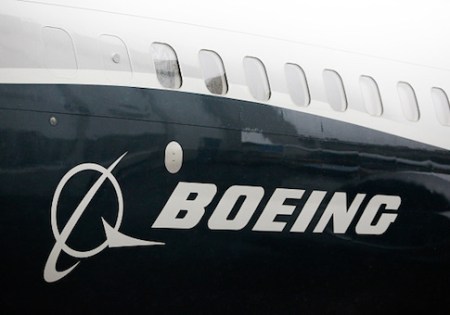
The Boeing logo on the first Boeing 737 MAX 9 airplane is pictured during its rollout for media at the Boeing factory in Renton, Washington on March 7, 2017. /  JASON REDMOND/AFP/Getty Images)

U.S airline manufacturer Boeing is coming under renewed criticism following disclosures that its latest deal with Iran is being inked with a senior regime official and leading member of the country’s Revolutionary Guard Corps, which has sponsored terrorism across the Middle East and is responsible for helping to kill U.S. soldiers.

Boeing’s latest deal—which the Washington Free Beacon first reported last week has been put under a critical review by the Trump administration—is being inked with Iran Aseman Airlines, which is owned and controlled by the state. The CEO of Aseman Airlines is Hossein Alaei, a “prominent and longtime member of Iran’s Islamic Revolutionary Guard Corps,” or IRGC, according to several members of Congress who are petitioning the Trump administration to cancel the sales.

Sen. Marco Rubio (R., Fla.) and Rep. Peter Roskam (R., Ill.) expressed concern that Boeing’s sale of around 60 new planes to Aseman Airlines will bolster the IRGC’s global terrorism operation and help the Iranian regime transport weapons and troops to conflict areas such as Syria.

The lawmakers called on the Trump administration to immediately suspend licenses permitting these sales and conduct a review of Iran’s effort to use commercial aircraft for illicit activities.

“Iran, the world’s leading state sponsor of terrorism, has systematically used commercial aircraft for illicit military purposes, including to transport troops, weapons, and cash to rogue regimes and terrorist groups around the world,” the lawmakers wrote. “The possibility that U.S.-manufactured aircraft could be used as tools of terror is absolutely unacceptable and should not be condoned by the U.S. government.”

Rubio and Roskam asked the administration to “suspend current and future licenses for aircraft sales to commercial Iranian airlines until your administration conducts a comprehensive review of their role in supporting Iran’s illicit activity.”

Instead of granting Boeing a license for these sales, the United States should take immediate steps to “revoke authorizations and re-impose sanctions on Iranian airlines found guilty of such support, and should bar U.S. companies from selling aircraft to Iran until the Iranian regime ceases using commercial airliners for illicit military purposes,” according to the letter.

The latest information about Boeing’s deal with Aseman Airlines and IRGC leader Alaei has only heightened concerns about the danger of the Trump administration approving the sales.

Alaei served as commander of the IRGC Navy until 1990. During that time, Alaei oversaw the harassment of U.S. forces in the Persian Gulf and efforts by the IRGC Navy to plant mines in international waters.

Alaei also served as the head of the IRGC’s general staff and a deputy minister of defense before assuming control of Iran’s Aviation Industries Organization, which is currently subject to U.S. sanctions.

Alaei serves as a lecturer at Iran’s Imam Hossein University, the IRGC’s national defense college, which also has been sanctioned by the United States.

“With his deep ties and service to the IRGC, Hossein Alaei’s position as CEO of Aseman therefore casts a dark shadow on the corporate ownership of and control over the airlines, and raises significant concerns that Iran Aseman Airlines is part of the IRGC’s economic empire and a tool used to support its malign activity abroad,” according to Rubio and Roskam.

Boeing also is pursuing deals with Iran Air, the country’s flagship carrier, and Mahan Air. Both have been sanctioned by the United States.

These carriers have been accused of using “commercial aircraft to transport weapons, troops and other tools of war to rogue regimes like the Syrian dictatorship of Bashar al Assad, terrorist groups like Hezbollah, Hamas, and Islamic Jihad, and militant groups like the Houthi rebels in Yemen,” the lawmakers wrote.

Boeing could bolster Iran’s illicit activities and help the country revamp its aging fleet of planes, according to the lawmakers.

“There is no reason to believe Iran has ceased its malicious activity,” Rubio and Roskam wrote. “Compelling evidence indicates that commercial Iranian airliners remain pivotal in delivering military support to terrorist groups and dictatorships around the Middle East.”

“Iran’s commercial airlines have American blood on their hands,” they wrote.
U.S. airstrikes in Syria a smackdown for Iran’s mullahs

April 9, 2017

U.S. airstrikes in Syria a smackdown for Iran’s mullahs, American ThinkerReza Shafiee, April 9, 2017

(According to Iranian President Rouhani, “today all terrorists in Syria are celebrating the U.S. attack.” Rouhani evidently does not view Assad’s enforcers, Khamenei’s Revolutionary Guard or Iranian proxies such as Hezbollah as “terrorists.” The Syrian in this video must, according to Rouhani, be a terrorist. — DM)

Iranian president Hassan Rouhani strongly defended Assad regime’s recent sarin attack on his own people. He blasted President Trump for his decision for airstrikes. Rouhani said in a televised speech referring to the U.S. president: “This man who is now in office in America claimed that he wanted to fight terrorism, but “today all terrorists in Syria are celebrating the U.S. attack.” He also said: “Why have you attacked the Syrian army which is at war with terrorists? Under what law or authority did you launch your missiles at this independent country?”

To put more teeth to what U.S. means in terms of ending Iran’s influence in Syria, an even more effective step forward would be to expel the IRGC and all its proxies from Syria. It would certainly help with the broader war in the region against Islamic fundamentalism in all its shapes and forms. To get rid of terrorism, get rid of the Iran’s proxies.

***************************

The deadly chemical attack on innocent Syrian men, women and children in Idlib, which killed at least 100 and injured 400 was little more than Syrian dictator Bashar al-Assad crossing the “red line” again. It wasn’t his first chemical attack, he launched a similar attack in summer of 2013, which left at least 1400 dead, according the opposition sources. At that time, the world stared in disbelief as Assad commit atrocities in Syria without paying a price.  

This time, things were different. On April 7 the U.S. launched an airstrike on an airfield believed to have been used by his forces to drop chemical bombs on Idlib. It was a clear sign of shift in the U.S. attitude toward his regime. Other nations announced support, too, making the attitude shift more than just unilateralism.

President Donald Trump said after the U.S. airstrike: “Tonight, I call on all civilized nations to join us in seeking to end the slaughter and bloodshed in Syria and also to end terrorism of all kinds and all types.”

The airfield bombed is significant, because it is also used by members of Islamic Revolutionary Guard Corps (IRGC) and the Quds Force, according to a report from Asharq Al-Awsat Arabic language website. The field has been used for a long time by IRGC to operate not only in Syria but also in Iraq.

Since the start of the bloody six-year-old Syrian war, Bashar al-Assad and his allied goons, the Islamic Revolutionary Guard Corps (IRGC), including Quds Force commander Qasem Soleimani, thought that they could get away with anything.

They relied on the notion that the international community is too divided to take any firm action against the massacre of innocent Syrian people. So they thumbed their noses at every element of international law. Soleimani was caught on camera many times in Iraq and later in Aleppo walking around unencumbered as if he was a tourist there and not the international thug he was, blacklisted by UN resolutions banning him from traveling.

The reaction of the world’s leaders to the attack was a stark contrast to previous years in the Syrian conflict, too. Instead of knee-jerk opposition to Trump, there as almost a consensus about the fact that Assad must face the consequences of his actions; something long overdue.

In a joint statement, German Chancellor Angela Merkel and French President Francois Hollande laid the blame for the U.S. airstrikes on Assad’s Al-Shayrat airfield solely on Assad.

They said: “President Assad alone bears responsibility for this development.”  and “His repeated use of chemical weapons and his crimes against his own population had to be sanctioned.”

The Syrian opposition welcomed the airstrikes with joy and almost disbelief that after so many years of inaction, despite repeated calls on the U.S. to act against Assad regime, the moment finally arrived with the Tomahawk missiles.

Nikki Haley, the U.S. ambassador to the United Nations, told the UN Security Council: “The United States took a very measured step last night. We are prepared to do more, but we hope it will not be necessary.”

One of the few big exceptions to this moment of moral clarity was in the predictably repellant reaction from Iran.

Iranian president Hassan Rouhani strongly defended Assad regime’s recent sarin attack on his own people. He blasted President Trump for his decision for airstrikes. Rouhani said in a televised speech referring to the U.S. president: “This man who is now in office in America claimed that he wanted to fight terrorism, but today all terrorists in Syria are celebrating the U.S. attack.” He also said: “Why have you attacked the Syrian army which is at war with terrorists? Under what law or authority did you launch your missiles at this independent country?”

The United States Senate was quick to reciprocate President Trump’s action on behalf of the Syrian people by introducing a new bill to ensure further extend measures safeguarding human rights for innocent Syrian citizens.  The bill, titled the Syrian War Crimes Accountability Act was introduced on April 6 to instruct the Secretary of State to report on war crimes, crimes against humanity, and genocide in Syria, as well as to authorize assistance for investigations and other credible transitional justice efforts, including a potential hybrid tribunal, in a bid to hold Assad and his regime accountable for their heinous acts.

A durable solution to Syrian crisis is something hardly disputable by anyone. The U.S. administration through its UN Ambassador Nikki Haley reiterated again on an interview with CNN on Sunday that a long term solution for Syria with Assad in the picture is not possible to imagine. She also pointed to Assad’s main sponsor, the mullahs in Iran, as a major obstacle to peace in the war-torn country and the need to end the Iranian regime’s “influence” in Syria.

The mullahs’ “influence” is something which should not be taken lightly. The Syrian people’s peaceful uprising against the Assad’s dictatorship in 2011 could have taking a different turn had it not been for the IRGC and Quds Force stepping up in full support of the regime in Damascus.

The Assad regime was on the edge in 2013 and outside the capital it had no control over the rest of the country. With the aid of mullahs who spent billions in Syria while their own people at home were hungry, and the inaction of Obama administration by turning a blind eye to Assad’s crossing its established “red line,” the Syrian dictator survived.

Now it seems that a new plan is unfolding in Washington to stop the genocide in Syria with the U.S. administration’s firm respond to Assad’s use of chemical weapons against his people. The attack may not have a major military significance but it has firm political tone to it. The action no doubt has resonated as far east as Tehran.

To put more teeth to what U.S. means in terms of ending Iran’s influence in Syria, an even more effective step forward would be to expel the IRGC and all its proxies from Syria. It would certainly help with the broader war in the region against Islamic fundamentalism in all its shapes and forms. To get rid of terrorism, get rid of the Iran’s proxies.

Iran: A “Paper Tiger”

April 1, 2017

Iran: A “Paper Tiger,” Iran Focus, March 31, 2017

(What would Russia do? Please see also, Iran’s Elections: A Breaking Crisis? — DM)

London, 31 Mar – While Iran calls for the destruction of Israel, according to some experts, an American or Israeli attack against the Islamic Republic’s nuclear and military sites would be fairly easy to execute. This is because, although Iran points to technological advancement in their military, it is actually has overextended itself in Syria.

A report published in March by the Middle East Media Research Institute (MEMRI), noted Iran has backed off their provocations against U.S. Navy vessels, and has even ceased their threats to sink these ships in the Persian Gulf. The report continued, “The slogan ‘death to America’ has disappeared almost entirely from the official discourse of regime spokesmen, including Iranian Supreme Leader Ali Khamenei himself, as have public burnings of the American flag.”

Fars News Agency reported on March 26, that deputy chief of staff of Iran’s armed forces, Brigadier General Masoud Jazayeri, warned the U.S. to be more careful about its warship movements in the Persian Gulf, which is a softer warning than we’ve heard in the past from Iranian leaders.

President and founder of MEMRI, Yigal Carmon, has stated that Iran’s claims of domestic development of military technologies are “complete nonsense,” but said that the country’s acquisition of North Korean missiles is concerning. Carmon said further, that Iran imports North Korean missiles and renames them to give the impression that they were domestically developed.

He explained that Iranian media publishes stories every few weeks about success of their military programs. One such story in January 2013, announced that Iran’s Space Agency had sent a monkey into space, yet pictures of the monkey before and after the “mission” failed to match up. “Iran does not create any quality military equipment, they only are able to buy from abroad. What do they invent to counter U.S. ships? All they are able to come up with is suicide speed boats,” he said.

Iran has also “displayed what they claimed to be domestically built submarines, but when we saw the picture that they put out, we saw that the size would be good for the Baltimore aquarium,” said Carmon.

The ballistics test Iran conducted in January failed. Carmon believes that Iran poses no real challenge to the U.S. “If the U.S. or Israel attack Iran’s nuclear sites and military targets, it will be a done deal,” he said.

A comparison of American and Iranian financial resources may bolster this argument. Fox News columnist Jonathan Adelman, an international studies professor at the University of Denver, wrote in February, “Look at the figures. The American GDP of over $18 trillion is more than 40 times the GDP of Iran ($450 billion)…. Given all this, the fear of Iran getting nuclear weapons still remains real. But, even more real is the notion that the biggest power in the world, plus three significant regional powers (Israel, Egypt and Saudi Arabia), could handle Iran if they would put their minds to it.”

Iran sank $6 billion annually of its resources into the Syrian Civil War, according to Bloomberg News.

Dr. Harold Rhode, a distinguished senior fellow at the Gatestone Institute, and a former U.S. Defense Department official, has stated that while America is strong both militarily and internally, Iran and North Korea “appear strong, but are weak and rotten inside.” Rhode said that while Iran is trying to develop nuclear weapons, it is destroying its country by inaction on domestic problems such as its water crisis. London-based NGO Small Media published a study in March 2016, saying that Iran “faces an unprecedented crisis of water resources that threatens to render vast swathes of the country near-uninhabitable within the coming decades.”

A dangerous opium drug problem is also facing Iran. Rhode speculated that Iranian authorities could crack down on drugs, but ignore it instead, in order “to keep the people preoccupied so they don’t concern themselves with overthrowing the government.”

Rhode believes the American or Israeli approach should be one of strength, but said, “Do we need to have a massive invasion [of Iran]? No. We must show that this regime cannot do what is necessary to keep themselves in power.”

There are alternatives to “actual physical attacks,” such as electronic warfare, when it comes to confronting Iran, according to MEMRI’s Carmon.

Rhode said other options should be considered before putting troops on the ground, including bringing about regime change. “We live in very stable societies, we expect changes to come slowly, but that is not how it works in totalitarian societies like Iran. The moment the people see the regime has lost its ability and willingness to keep itself in power, the regime will topple very quickly, as happened to the shah in 1979. The shah was not willing to do what was necessary to put down the rioting,” he said, and called Iran a “potentially a paper tiger” adding that it is “our job to encourage regime change—and we can.”

Iran’s Elections: A Breaking Crisis?

April 1, 2017

Iran’s Elections: A Breaking Crisis? American ThinkerShahriar Kia, April 1, 2017

(If and to the extent that this analysis is correct, we should provide clandestine assistance to the Iranian resistance, both in and outside Iran. In view of the hostility between the current Iranian regime and the Arab League, it might well be willing to do its part. — DM)

The 12th presidential election in Iran will be held on May 19th. These polls are taking place at a time when the regime in Tehran, and especially Supreme Leader Ali Khamenei, are facing three distinct crises.

a)  Khamenei, suffering from prostate cancer, sees his days as numbered and must designate a successor. From March 2015 he has held various sessions with senior regime and Revolutionary Guards (IRGC) officials for this very purpose. Khamenei insists that his successor be clarified prior to his death.

b)  A major policy overhaul in Washington following the end of Obama’s tenure. This has terrified Iran and placed this regime in intense isolation on the international stage and across the region in the face of Arab and Islamic countries.

c)  The presidential election crisis in May.

Khamenei, witnessing his establishment coming to its knees during the 2009 uprisings, is extremely concerned about a repeat scenario. In such circumstances, the possibility of his entire regime crumbling at the hands of a revolting population is very serious and even likely. Khamenei is weighing how to properly engineer the elections while not providing any pretext for popular upheaval.

In contrast to the viewpoints of various parties in the West, the rifts inside Khamenei’s faction and those supporting Iranian President Hassan Rouhani does not arise from a difference between two so-called “moderate” and/or “hardline” mentalities. The fact is that the sham election is a dispute over two solutions aimed at safeguarding and maintaining a religious dictatorship in power, furthering their expansionism and ambitions.

Both factions, including Khamenei and the current formerly represented by the influential Ali Akbar Hashemi Rafsanjani, believe in resorting to a domestic crackdown, obtaining nuclear weapons, meddling in the internal affairs of other countries such as Iraq and Syria, and using instability and terrorism leverage as a tool to pursue their foreign policy. The only difference is how to advance in their goal to realize these objectives. Therefore, when we are talking about two factions, we must not mistakenly compare the Iranian regime with today’s advanced democracies.

Khamenei is considered very weak due to the current crises his regime is facing. In contrast to last year, when he constantly lashed out at Rouhani for the deal sealed to curb Iran’s nuclear program and similar initiatives sought for other purposes, Khamenei refused to mention Iran’s current political crises. Furthermore, following the major U.S,-Iran policy change, Khamenei has set aside his stereotype threats against the U.S. and maintained a state of hesitancy in his remarks.

Khamenei and Election Engineering

Candidates for Iran’s presidential elections will register from April 11th to the 16th. The ultraconservative Guardian Council, a 12-man body directly and indirectly appointed by Khamenei himself, will weigh the candidates’ qualifications from April 17th to the 27th. The elections are scheduled for May 19th.

Iran’s presidential elections always feature a large number of candidates. However, the main candidates from the two main factions must receive Khamenei’s explicit or implicit approval.

“Rouhani’s candidacy was confirmed after gaining the approval of the establishment’s senior officials,” according to the Ebtekar daily.

By establishing the “Popular Party of Revolutionary Forces” and the membership of the same individuals who elevated firebrand Mahmoud Ahmadinejad as president from the ballot boxes back in 2005, Khamenei has revealed signs of how he has engineered the upcoming elections.

In his “Nowruz” message marking the Iranian calendar New Year, Khamenei came to admit his role in the results of the 2009 presidential election.

“I entered the 2009 [presidential election] and stood firm,” he said. In his remarks, Khamenei warned about the May election by stipulating, “I will stand firm and intervene.”

It is worth noting the IRGC command, and especially Quds Force chief Qassem Suleimani, are seeking the candidacy of Ibrahim Reisi, who is also considered one of Khamenei’s options as his successor. Khamenei has yet to reach a final decision over Reisi’s candidacy in the May elections. If he registers as a candidate and fails to become president, his chances of succeeding Khamenei will be severely undermined. And if Khamenei seeks to select Reisi as the next president at all costs, he faces the severe possibility of instigating nationwide uprisings.

What is the Forecast?

Naturally, due to the numerous different elements facing Khamenei and his regime’s factions, forecasting even the near future is quite a challenging task. However, there are three different scenarios facing Khamenei:

1) Eliminating Rouhani and selecting a candidate meeting his standards, and that of the IRGC.

2) Rouhani is severely weakened after losing Rafsanjani, considered a major pillar in the regime’s apparatus. He will be reappointed as president on the condition of succumbing to the hegemony of Khamenei and the IRGC.

3) Rouhani views Khamenei weak in the balance of power and stands as a major opponent against his faction.

Of course, Khamenei prefers to realize the first scenario. If concerns of nationwide uprisings cancel this possibility, he will give in to the second scenario.

Although Rouhani is in favor of the third scenario, considering the society’s powder keg conditions and losing the support of Rafsanjani, such a turn of events would be considered dangerous for both the regime’s factions. This outcome can bring an end to the public’s fear of the regime’s domestic crackdown machine and ignite a new nationwide uprising. This is a red line for both of Iran’s factions.

Those supporting Khamenei, and especially the IRGC, seek to eliminate Rouhani from these elections. However, Khamenei cannot take very bold measures and officially oppose Rouhani’s candidacy. When confirming Rouhani’s candidacy, Khamenei asked him to hold coordinating meetings with Sulemani and IRGC chief Mohammad Ali Jafari. This request brings us closer to the second scenario.

However, the Iranian people and their organized opposition, symbolized in the National Council of Resistance of Iran (NCRI), consider such elections under the mullahs’ regime as baseless and demand free and fair elections held under the United Nations auspices. Such polls are only possible through regime change in Iran and establishing a democratic system.

The Real Winner in the Russia Investigations Is Iran

March 31, 2017

The Real Winner in the Russia Investigations Is Iran, PJ MediaRoger L Simon, March 30, 2017

The best interests of the United States would be to woo Russia away from these maniacs — and we very well could have.  We are, at least for now, still the world’s biggest GNP and control a great deal of the global economy.  Greedy despots like Putin know that as well as anybody.  They may not feel good about it, but to some degree they might play with us.  And if they wanted to enough, if we sweetened the pot enough, they’d even disengage from the mullahs, leaving them with no ally of value, no substantial defender.

Trump — or some people close to him — may have had this in mind when they started speaking with the Russians way back in the Paleolithic Era of the transition days.  They’d have been fools not to.  They wouldn’t have been doing their duty to the United States or to the civilized world for that matter.

Now Trump or his people can no longer even consider making such inroads. They would be accused immediately of treason or something close. The possibility of separating the Russians from Iran has been destroyed by these investigations — first by the House, now by the Senate, and always by the media.

*****************************

While the Evil Party and the Stupid Party continue to bludgeon each other into extinction over whether Putin was manipulating our election, the real winner from our politicians’ current endless Russia-fixation is the Islamic Republic of Iran.

Sound like a stretch? Not at all. The reasons should be evident.

Russia is not rich. It currently ranks 12th  in overall GNP, about even with Australia, which has roughly one-seventh Russia’s population. It’s a dismal 47th in per capita GNP — unimpressive, to say the least, for the world’s largest country with immense natural resources spread over 11 time zones.

And things have not been looking up. Their population has been declining since 1991.  The price of oil — by far their largest export -0 is down.  Making matters worse, Donald Trump, allegedly Putin’s best friend, has opened the U.S. energy spigots, threatening to drive that price even lower. (Putin would have done a lot better with Hillary’s anti-fracking position, assuming that wasn’t a phony.)

Yes, they have a powerful nuclear arsenal with potent missiles to deliver them, but Russia needs friends, badly — especially to shore up its forces in the seemingly never-ending civil war in Syria. Enter Iran.  From Reuters Monday:

Iran’s president met Russia’s prime minister on Monday in a bid to develop a warming relationship that has been greatly strengthened by both sides’ involvement on the same side of the war in Syria.

Beginning a visit to Moscow, President Hassan Rouhani told Prime Minister Dmitry Medvedev: “I hope that a new turning-point in the development of our relations will be reached.”

Iranian arms purchases and Russian investment in the Iranian energy sector are likely talking points for Rouhani, less than two months before Iran’s May 19 presidential election.

Iranian media say he will discuss several economic agreements – potentially valuable prizes for the moderate leader [sic], who is keen to show his people that Iran is benefiting from its 2015 deal with world powers to rein back its nuclear programme in returning for an easing of international sanctions.

Aside from Reuters’ credulous nonsense that Rouhani is in any way moderate, where did all the mullahs’ new deal-making money come from in the first place?  Well, we know.  Iran, for reasons still unfathomable, received huge amounts — sometimes in cold, hard cash — from the Obama administration after the Iran deal and later apparently to preserve it. (The contents of that deal, unknown to all but a few, are what really deserve a congressional investigation, not the present kangaroo court.) What did the mullahs do with the cash? Help their impoverished citizens or buy $10 billion worth of modern weapons from the Russians? Well, we know that too. Obama’s deal helped create a match made in Hell.

And the worse part of this Hellish match is Iran, not Russia (although she’s no picnic).  Vladimir Putin is obviously a dictatorial plutocrat with massive ambitions, but he’s more or less sane.  The mullahs of Iran are also dictatorial plutocrats, but they’re not (sane).  Some of them believe absolutely delusional theories dreamed up in the seventh century and have set out to prove them true — in Iran, in Syria, in Yemen, in North Korea, in South America,  and on and on.  They are as crazy as ISIS and far more dangerous because they already have a large country from which to enact their imperialist/millennialist fantasies.

The best interests of the United States would be to woo Russia away from these maniacs — and we very well could have.  We are, at least for now, still the world’s biggest GNP and control a great deal of the global economy.  Greedy despots like Putin know that as well as anybody.  They may not feel good about it, but to some degree they might play with us.  And if they wanted to enough, if we sweetened the pot enough, they’d even disengage from the mullahs, leaving them with no ally of value, no substantial defender.

Trump — or some people close to him — may have had this in mind when they started speaking with the Russians way back in the Paleolithic Era of the transition days.  They’d have been fools not to.  They wouldn’t have been doing their duty to the United States or to the civilized world for that matter.

Now Trump or his people can no longer even consider making such inroads. They would be accused immediately of treason or something close. The possibility of separating the Russians from Iran has been destroyed by these investigations — first by the House, now by the Senate, and always by the media. They go on and on even though there has been no genuine evidence of collusion between the Trump team and the Russians. By now it’s like a bad mini-series that somehow wound its way onto your Netflix queue and you can’t get rid of it. Eventually, I suppose, someone, somewhere will be caught with his or her hand in the cookie jar.  It will be highly ambiguous and most likely for minor personal gain, but nevertheless he or she will will be endlessly excoriated in the press, ever anxious to prove themselves right.  But it will all be a meaningless waste of time in the end.

Meanwhile, Iran has won big.

Still, there has been one valuable piece of information to emerge from this pointless muddle.  Which leads me to a last question.  Who, in the final analysis, spied more on our government — Putin or Obama?  I bloviate. You decide.

Iran’s Foiled Bahrain Plot

March 31, 2017

Iran’s Foiled Bahrain Plot, American ThinkerAmir Basiri, March 31, 2017

Members of an Iran-backed terrorist cell were arrested by Bahrain authorities over the weekend, all being accused of planning assassinations aimed at targeting senior government officials. There are reasons to believe this cell is responsible for a February bus bombing that left several policemen wounded.

Iran’s Revolutionary Guards (IRGC) provided military training for six of the arrested suspects, while the Iraqi Hizb’allah terrorist organization — funded by Iran — trained five other members, according to the BNA, Bahrain’s state news agency. Three other cell members received their training inside Bahrain.

This occurred parallel to a call made by U.S. House of Representatives Speaker Paul Ryan suggesting the Trump administration to issue further sanctions on Iran and most specifically target the IRGC, describing the entity as “Iran’s army of terror.”

The speaker went to make a very specific call that will raise the stakes with Iran and place the IRGC where it belongs.

“I think we should designate them as a terrorist organization,” he added.

 The Tunisian Foreign Ministry has also voiced its concerns and strongly condemned all measures causing insecurity and instability in Bahrain, and making it clear its government stands beside Manama.

According to a Bahrain Interior Ministry statement, two exiled Bahrain nationals currently living in Iran were coordinating the terrorist cell’s activities. Mortada Majid al-Sanadi is one such individual, who also happens to be designated as global terrorist by the U.S. State Department.

A similar IRGC and Lebanese Hizb’allah plot aimed at launching terrorist attacks across Bahrain was foiled by the country’s authorities.

Bahrain had in the past also arrested 47 individuals, all accused of having links to “terrorist elements in Iran,” who in November 2015 blueprinted plans to carry out imminent attacks throughout the country. Bahrain recalled its ambassador from Iran a month later in response to a raid targeting a bomb-making workshop discovered in Bahrain. A significant number of individuals were also arrested due to suspected ties with the IRGC.

Through the course of Sunday’s arrests, Bahrain security forces also seized a large quantity of explosives manufactured domestically, alongside communications equipment and different weapons, all from the homes of the detained suspects. Iranian sponsored proxies, not enjoying a remarkable report card, are now further accused of providing support to local Bahraini cells in building bombs.

Lebanese Hizb’allah leader Hassan Nasaralah has reportedly provided the main suspect in Sunday’s arrests, known as Ali Ahmed Fakhwari, a whopping $20,000 to provide necessary funding to wreak havoc through terrorist attacks across Bahrain, according to the wired BNA report.

Bahrain had earlier this month also announced the discovery of a 54-man group of individuals suspected of being involved in attacks targeting security forces. Such plots included planning a prison break in January and obtaining automatic weapons.

Iran has a history of plotting and conducting terrorist and sectarian attacks across the globe recently, mostly through a network of proxies including the likes of the Lebanese Hizb’allah, the IRGC Quds Force, Shiite extremists in Iraq, the Houthis in Yemen, and Shiite foot-soldiers dispatched from Pakistan and Afghanistan toSyria. Iran’s terror plots and attacks have targeted various countries including Cyprus, Egypt, Georgia, India, Thailand, and others. Hizb’allah was specifically accused of being behind a July 2012 bus bombing in Bulgaria, that resulted in five Israeli tourists and the driver being killed.

U.S. authorities were also able to foil an Iranian plot aimed at assassinating the Saudi Arabian ambassador to the U.S. in Washington back in October 2011, while Iran was also pursuing plans to bomb the Israeli and Saudi embassies in the U.S. capital.

Former UN ambassador John Bolton recently put it best emphasizing how Iran is the world’s main state sponsor of terrorism. As the war against Daesh (ISIS/ISIL) ends in victory against the group, the regime in Iran should be next on the list, as Tehran arms and finances Sunni and Shiite terrorists under the banner of Islam, he said. The mullahs are truly the epicenter of a global terrorist network, Bolton added.

Recent developments emphasize how the spotlight needs to be shone on Iran and its dangerous meddling in the region, described by the Iranian opposition National Council of Resistance of Iran (NCRI) as far more dangerous than the mullahs’ nuclear program.

As Speaker Paul Ryan explained, the NCRI in a recent statement also emphasized on the necessity to campaign “all assets to place the IRGC and all affiliated proxy groups in terrorist lists of the United Nations, United States and European Union; referring Iran’s Middle East crimes dossier to the UN Security Council; adopting binding resolutions to expel the IRGC and proxy groups from the region; and ending all political and economic relations with Tehran are amongst such measures.”

With crucial presidential elections just around the corner for Iran, rest assured the regime will resort to more such warmongering across the region in attempts to place a lid and cloak all domestic crises that bear the potential of inflating into 2009-like uprisings.

Kuwaiti Daily: Missile, Arms Factories Built By IRGC In Lebanon Have Recently Been Handed Over To Hizbullah

March 14, 2017

Kuwaiti Daily: Missile, Arms Factories Built By IRGC In Lebanon Have Recently Been Handed Over To Hizbullah, MEMRI, March 14, 2017

The Kuwaiti daily Al-Jarida reported on March 11, 2017, citing an aid to Mohammad Ali Jafari, commander of the Iranian Revolutionary Guards Corps (IRGC), that Iran established facilities for manufacturing missiles and other weapons in Lebanon and has recently handed them over to the management and oversight of Hizbullah. According to the daily’s source, the facilities are more than 50 meters underground and heavily shielded against aerial attacks. He also clarified that various parts of the missiles are manufactured in different factories and then assembled together.

The following is a translation of the report:[1]

The Al-Jarida report

With Iran facing growing pressures from the Donald Trump administration and the Israeli government under Binyamin Netanyahu, an aid to the IRGC commander told Al-Jarida that Iran has built factories [for manufacturing] missiles and [other] weapons in Lebanon and has recently turned them over to Hizbullah. In response to statements by Iranian Defense Minister Hossein Dehghan several days ago – who said that Hizbullah is capable of manufacturing missiles [that can] hit any part of Israel [but] gave no details or explanations – a knowledgeable source who wished to remain anonymous said that, after Israel destroyed an Iranian arms factory in Sudan several years ago that had supplied arms to Hizbullah, and after [Israel also] bombed an arms convoy that was intended to reach Hizbullah via Syria, the IRGC launched a project for establishing arms factories in Lebanon [itself]. [The source] also claimed that a special department has been established at the IRGC’s Imam Hossein University [in Tehran] to train Lebanese and other experts, and that hundreds of experts have already been trained.

“According to the source, the factories are more than 50 meters underground, and above them are several layers of shielding so that Israeli planes cannot hit them. Moreover, manufacture of the missiles does not take place in one factory; different parts are built in different factories and then assembled together. He added that the transfer of the factories to Hizbullah’s [management] was gradual but that they have been under full Hizbullah management and oversight for three months now.

“The source stressed that Hizbullah is able to manufacture several kinds of missiles, some with a range of over 500 km, including surface-to-surface and surface-to-sea missiles; torpedoes launched from light high-speed boats; spy drones and [attack] drones armed with weapons and rockets; anti-tank missiles, and fast armored boats. He clarified that weapons produced in these plants have been used in the Syria war and were proved to be effective. Anti-tank missiles managed to destroy car bombs that targeted Hizbullah fighters. He [also] noted that Hizbullah manufactures cannon, machine guns, anti-aircraft guns, mortars, and various [other] missiles and bullets, especially armor-piercing ones…”

_____________________________

[1] Al-Jarida (Kuwait), March 11, 2017.

Iraqi Kurds Unite Ahead of March 21 Confrontation with Iran

March 14, 2017

Iraqi Kurds Unite Ahead of March 21 Confrontation with Iran, Clarion ProjectRyan Mauro, March 14, 2017

(What, if anything, can/will the Trump administration do to help overthrow the Mad Mullahs? Iran seems ripe for regime change, please see, e.g., From Execution to Medieval Torture: “Iran’s Mandela” Ayatollah Boroujerdi, and In Iran, A Nationwide Teachers’ Demonstration.— DM)

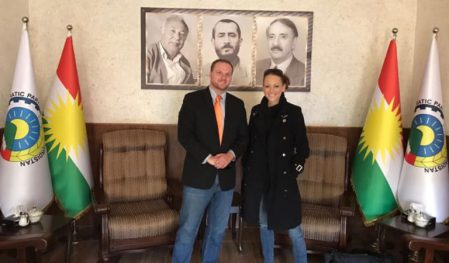
Clarion Project’s National Security Analyst Prof. Ryan Mauro & Legal Analyst Jennifer Breedon in Iraq with Hossein Yazdanpanah, the leader of the Kurdistan Freedom Party (PAK)

Its leader, Mustafa Hijri, said in a speech in Europe in October 2016 that his group was not fighting just for Iranian Kurds, but for the replacement of the current theocratic Iranian regime with a secular democracy for all. He asked the “progressive and democratic forces of the world” to support the PDKI and other Iranians seeking to topple the government.

Kurds are an oppressed minority in Iran, representing about 10 percent of the population (between 8 and 10 million people). According to the U.N., almost half of the political prisoners in Iran are Kurdish and about one-fifth of the executed prisoners last year were Kurdish.

******************************

Mark March 21 on your calendar. Six armed Kurdish parties in Iraq have united ahead of expected protests in Iran on that date. Both the Iranian regime’s Revolutionary Guards Corps and an Iranian Kurdish militia have held military exercises in preparation for expected conflict.

The six groups are preparing for protests in the Kurdish areas of Iran to celebrate the Kurdish New Year, Newroz, on March 21. Holiday events become the scene of political protests, Iranian regime repression and even clashes.

But the Kurdish alliance says this time will be different because they are unified, preparing in advance and agreed to jointly collect and share intelligence in January for a common defense against the Iranian regime.

“There always have been activities in Kurdistan for celebrating Newroz and these activities always are opportunities for people to express their resistance against the fact that they have been denied of their basic rights.

“Using symbols, songs and gatherings, youth in Newroz have always shown their anger and resentment toward the lasting oppression of Kurds in Iran,” explained the U.S. representative of the Democratic Party of Iranian Kurdistan (PDKI).

The PDKI recently held a military exercise near the border with Iran in preparation for a “full guerilla fight,” in the words of one of its officials. The Iranian Revolutionary Guards Corps likewise held a military exercise in the Kurdish-majority province of Kermanshah, where protests and clashes are expected.

PDKI has about 2,000 fighters in the border area between the autonomous Iraqi Kurdistan region and Iran. It declared the end of a 20-year ceasefire with Iran last year and openly said it was sending its Peshmerga fighters into Iranian Kurdistan, but would not fire the first shot.

The Kurdish Rudaw newspaper describes PDKI as “historically considered the most formidable Kurdish military organization opposing the Islamic Republic in Tehran.”

Clarion Project’s National Security Analyst Prof. Ryan Mauro & Legal Analyst Jennifer Breedon inside the headquarters of the Democratic Party of Iranian Kurdistan (PDKI) on a recent trip to Iraq.

Its leader, Mustafa Hijri, said in a speech in Europe in October 2016 that his group was not fighting just for Iranian Kurds, but for the replacement of the current theocratic Iranian regime with a secular democracy for all. He asked the “progressive and democratic forces of the world” to support the PDKI and other Iranians seeking to topple the government.

A Shiite political bloc within the Iraqi parliament called on the Iraqi government to kick out the Kurdish forces that fight the Iranian regime in January. The Kurdish parties attributed the move to Iranian influence, pointing out that it came after two bombings targeted the office of the PDKI in Koye, Iraq in December. Seven people died. The party blamed Iran for the attack.

Prior to the attack on the PDKI, Iranian Supreme Leader Ayatollah Khamenei accused Saudi Arabia of arming Kurdish opposition forces through its consulate in Iraqi Kurdistan. Khamenei demanded that the Kurdish Regional Government stop all opposition activity and close the Saudi consulate, neither of which happened.

The other Iraqi Kurdish parties in the alliance are the Kurdistan Democratic Party of Iran (KDPI), Khabat and three groups all bearing the name of Komala.

Another group that is likely to be active in the confrontation with Iran but is not part of the six-party alliance is the Kurdistan Freedom Party (PAK). I met their leader Hossein Yazdanpanah in January in Iraq at one of his camps near the battlefield with ISIS.

Kurds are an oppressed minority in Iran, representing about 10 percent of the population (between 8 and 10 million people). According to the U.N., almost half of the political prisoners in Iran are Kurdish and about one-fifth of the executed prisoners last year were Kurdish.

There was significant repression last year resulting in bloody clashes between the PDKI and other Kurdish militants on one side and the Iranian regime on the other. It received almost no attention from the West, a rather unsurprising development considering the U.S. turned away from Iran’s 2009 Green Revolution that could have positively changed the world.

If the Iranian Kurdish opposition in Iraq has its way, then the U.S. will have another opportunity to support the Iranian people. In my meetings with Iranian Kurds in Iraq, I was struck by how much hope they invested in the hope that, despite the U.S.’ mistakes and overlooking of their cause, the U.S. would eventually come around and support them—not only because it is in the U.S.” interest, but because America is a good country with good people.

America and the West more broadly should not repeat the mistakes of the past.

Let’s hope that when the Kurds rise up against the Iranian regime on March 21, they will be joined by a chorus of freedom-loving voices eager to see them triumph over Islamist tyranny.

IRGC-controlled Iraqi militia forms ‘Golan Liberation Brigade’

March 13, 2017

IRGC-controlled Iraqi militia forms ‘Golan Liberation Brigade’, Long War Journal, , March 12, 2017

(Please see also, Iran’s Islamic Revolutionary Guards now opposite Israeli troops on 1967 ceasefire line in Golan Heights — DM)

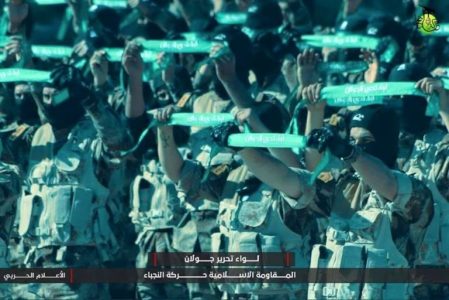
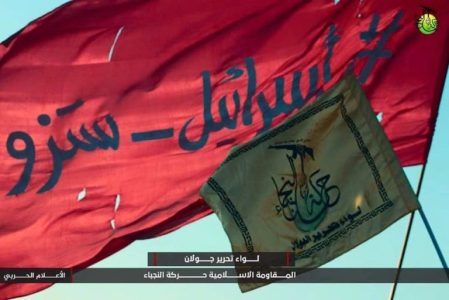
Photo 1: Harakat al Nujaba Golan Liberation Brigade, as portrayed in propaganda video.

The IRGC’s goals in southern Syria are to crush Syrian opposition forces, and build the capability to open another front against Israel. The IRGC hopes a viable Golan foothold would serve as deterrence against Israel and US, and that it could activate in a future conflict, such as another Israel-Hezbollah war. For now, the IDF’s fortified posture in the Golan remains a difficult, if not futile, target for the Guard and its allies. The IRGC nevertheless intends to project steadfast commitment to ideological principles and defiance of adversaries.

*****************************

The Iranian-controlled Iraqi militia Harakat al Nujaba this week announced the formation of its “Golan Liberation Brigade.” While it is not uncommon for entities to name themselves after areas they aim to “liberate,” the militia’s spokesman has said that the unit could assist the Syrian regime in taking the Golan Heights, a region in the Levant that has been controlled by Israel since the 1967 Six-Day War.

If true, the unit would likely participate in a future offensive to capture territory from Syrian opposition in the part of the Golan Heights still controlled by Syria, before moving on to the much taller order of dislodging the Israelis across the border. This week’s announcement reflects Tehran’s priorities in southern Syria since finally taking the fiercely contested city of Aleppo late last year: crush Syrian opposition, and pose military threat to Israel from the Golan Heights. While the Islamic Republic is incapable of credibly challenging the Jewish state’s fortress in the Golan, reaffirming ideological commitment to fighting Israel signals defiance to a global audience amid a reportedly converging American-Arab-Israeli military alliance against Tehran.

Harakat al Nujaba, or Movement of the Noble, has sustained operations in the Syrian and Iraqi combat zones. An offshoot of the Iranian-backed militias Asaib Ahl al Haq and the Hezbollah Brigades, Harakat al Nujaba was formed in 2013 to fight in the Syrian Civil War as part of Iranian-led Iraqi expeditionary forces. The militia joined the Popular Mobilization Forces, the umbrella organization of Iraqi militia, the following year, after the Islamic State incursion into Iraq. Operating as one of the largest Iraqi-Shiite militia contingents in Syria, the militia has claimed to field 10,000 forces. Harakat al Nujaba played an important role in assisting Iran’s Islamic Revolutionary Guard Corps (IRGC) and pro-Syrian regime forces conquer Aleppo late last year.

The Iraqi militia functions as an extension of the Islamic Republic. Having sworn full allegiance to Iran’s Supreme Leader, Ayatollah Ali Khamenei, the militia promotes velayat-e faqih (guardianship of jurisprudence), the Islamic Republic’s founding ideology. Harakat al Nujaba takes direct orders from Major General Qassem Soleimani, the chief of the IRGC extraterritorial branch the Qods Force. Last year, the Iraqi militia, which is also known as Harakat Hezbollah al Nujaba, proclaimed that it and Lebanese Hezbollah, Iran’s most powerful foreign militia, were “the twins of resistance.”

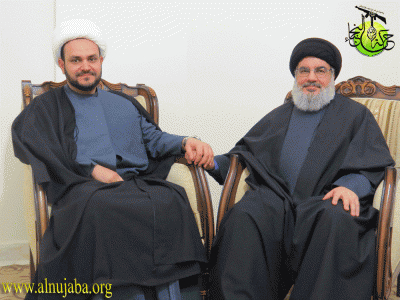
The militia leader Akram al Kabi is close to the top Iranian leadership, including the supreme leader. A co-founder of the Asaib Ahl al Haq – itself an offshoot of the Mahdi Army – Kabi was designated in September 2008 by the US Treasury as a terrorist for aiding Iraqi insurgents. In 2015, he openly said he would depose the Iraqi government if Khamenei issued the order. Last year, top Iranian officials close to Khamenei gave Kabi a highly publicized reception in Tehran, unprecedented in scope and scale for a militia leader. This past December, Harakat al Nujaba publicized Kabi’s meeting with Khamenei on the sidelines of a conference in Tehran.

Harakat al Nujaba has divulged some details about the Golan Liberation Brigade. The commander of the militia’s forces in Syria released a statement declaring the unit to be a synthesis of combat experiences gained in Lebanon, Syria and Iraq. The militia’s official spokesman confirmed the event as a press conference March 8 in Tehran at the IRGC-affiliated Tasnim News Agency, saying the unit was formed following “recent victories” (an implicit reference to Aleppo). He claimed the Golan unit is comprised of “special” forces.

“Should the Syrian government make the request, we are ready to participate in the liberation of occupied Golan with our allies,” the spokesman said. “We will not permit the soil of Arab countries to remain in the grasps of occupiers.”

Harakat al Nujaba also released a video promoting the Golan unit that showed fighters marching in columns and carrying a banner reading, “Israel will be destroyed.”

(The video is at the link. — DM)

Tehran’s goal of establishing a foothold in the Golan Heights is not a secret. Last year, the head of the Israeli foreign and defense legislative committee revealed without divulging details that Israel had repelled several Iran-directed attempts to move forces into Syrian Golan Heights.

Senior Iranian military commanders are known to operate in Syrian Golan. Last July, the then-commander of the IRGC Basij paramilitary publicized an inspection of Quneitra by the Israel border. In January 2015, an Israeli strike in the area killed several high-value targets including IRGC Brigadier General Mohammad Ali Allah-Dadi and multiple Hezbollah operatives.

A chasm remains between the capabilities and ambitions of Harakat al Nujaba and the IRGC to retake the Golan from Israel. The combined forces of the Syrian regime and IRGC-led militias are no match for the Israel Defense Forces (IDF), and this disparity is expected to hold for the foreseeable future. Israel could also adopt a more proactive approach in Syria to foil IRGC encroachment by the Golan, for example coordinating with Syrian rebels positioned in the area. Syrian Golan’s flat geography furthermore denies the IRGC suitable terrain to replicate the southern Lebanon model of concealing rocket launch sites dispersed across a widespread area, making it easier for the IDF to search and destroy weapons systems. For years, the IDF has been fortifying positions in the rocky plateau of Golan to face greater capabilities than the IRGC and its allies can muster.

Yet the claim to retake Israeli Golan underscores Harakat al Nujaba’s ideological commitment to the IRGC’s and Khamenei’s declared goal of destroying Israel. Khamenei and his top Guard generals have frequently spoken that that the divine hand would aid the faithful who take steps towards “divine-inspired” ideological principles.

Brandishing the formation of the Golan unit also challenges Arab countries on the Palestinian issue, as the Tehran has accused them of abandoning the cause in service of Israel. The Islamic Republic has slammed reported Arab-Israeli rapprochement and talks to form a US-brokered military coalition with the goal of countering Tehran, as covered in The Wall Street Journal. Last month, top Iranian government officials hosted another round of the Support of Palestinian Intifada Conference in a show of unity and defiance. This past week, Tehran’s interim Friday prayer leader this week excoriated “some leaders in Islamic countries who are with Zionists,” calling them “not human.” Suffering from loss of legitimacy over support of Syrian President Bashar al Assad against a Sunni-Arab uprising and nervous over a converging Israeli-Arab alliance, the Islamic Republic is projecting to the globe and “sell-out”Arab leaders a defiant commitment to fighting Israel.

The Iraqi militia’s Golan unit and IRGC-led expeditionary forces could help pro-Syrian regime forces take opposition-held areas in the south. In February 2015, IRGC-led forces launched a failed campaign in the Daraa and Quneitra in the south. Since conquering Aleppo last year, the IRGC-led expeditionary forces and other pro-Syrian regime forces have been able to redirect their dwindling assets to several fronts in north, central, and south Syria. Pro-regime forces backed by Russian air power have been pounding Daraa in the south for more than a month to slow an opposition offensive, and have recently launched a new bid to capture it. An IRGC colonel was also killed last month in the area. A pro-Syrian regime propaganda outlet late last month reaffirmed the government’s intention to retake all of Daraa and open a major border crossing with Jordan. Meanwhile, pro-regime forces have made progress in the northern pocket of Quneitra Governorate, located in the Syrian-controlled part of the Golan.

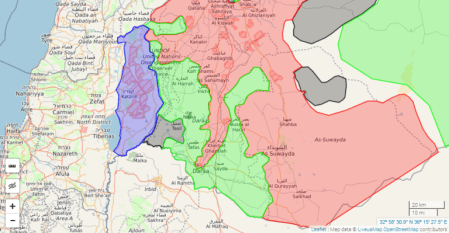
Map 1: southern Syria front, March 2017. Red: pro-Syrian regime forces. Green: rebel forces including Free Syrian Army and al Qaeda-affiliate Jabhat Fath al Sham. Black: Islamic State affiliates. Credit: Liveuamap.

The IRGC’s goals in southern Syria are to crush Syrian opposition forces, and build the capability to open another front against Israel. The IRGC hopes a viable Golan foothold would serve as deterrence against Israel and US, and that it could activate in a future conflict, such as another Israel-Hezbollah war. For now, the IDF’s fortified posture in the Golan remains a difficult, if not futile, target for the Guard and its allies. The IRGC nevertheless intends to  project steadfast commitment to ideological principles and defiance of adversaries.

Photo 2.
Photo 3: Harakat al Nujaba Golan Liberation Brigade flag at front, and “Israel will burn” banner in the back.

Amir Toumaj is a Research Analyst at Foundation for Defense of Democracies.

Iran’s Islamic Revolutionary Guards now opposite Israeli troops on 1967 ceasefire line in Golan Heights

March 12, 2017

Iran’s Islamic Revolutionary Guards now opposite Israeli troops on 1967 ceasefire line in Golan Heights, Jihad Watch

(Please see also, Iranians at the gate. — DM)

Israeli Prime Minister Benjamin Netanyahu has stated:

The threat of Shia Islamic terror is directed not only against us, but against the region and the entire world.

Perhaps Israel, more than any other nation, fully understands what “radical Islamic terrorism” is, and its primary goal of obliterating Israel.

“We do not want to see Shia Islamic terrorism led by Iran step in to replace Sunni Islamic terrorism,” Mr Netanyahu told the Russian President.

Iran continues attempts to destroy the Jewish state. They speak of this openly and write this in black and white in their newspapers.

Iran is now in a strategic position to try to destroy Israel directly (instead of through its proxies) as it expands its Shia base into Iraq and Syria.

Netanyahu could also not be clearer in his message that replacing Sunni terrorism with Shia terrorism is counterintuitive. Netanyahu is right about the global danger of mainstream Shia and Sunni terrorism, which is normalized in all too many Islamic states, not just in the Islamic State.

Netanyahu also once stated:

Islamic terrorism is inundating the world and inciting millions in many countries, from Jakarta to Africa to California.

“Iranian Revolutionary Guards opposite Israeli troops on 1967 ceasefire line in Golan Heights as tensions mount,” by Lizzie Dearden, Independent, March 10, 2017:

Benjamin Netanyahu has accused Iran of using the Syrian civil war to “gain a foothold to fight Israel” amid fears over Iranian troops stationed along the border with the occupied Golan Heights.

Tehran is supporting Bashar al-Assad with deployments of the Revolutionary Guards (IRGC), Basij militia and funding to allied militias including Hezbollah.

The IRGC are now reported to be present in Syrian-government controlled territory along the 1967 ceasefire line in the Golan Heights, which has seen months of Israeli air strikes met with rockets fired towards the Israel Defence Forces (IDF).

Brigadier General Mohammad-Reza Naghdi, a commander in Iran’s Basij force, was pictured surveying the border, while a Shia paramilitary group has formed a “Golan Liberation Brigade”.

Harakat Hezbollah al-Nujaba, an Iraqi force backed by Iran, is “ready to take action to liberate Golan” from Israeli occupation, according to spokesman quoted by Iranian state media this week.

The deployments have made the Iranian government a major power broker in the Syrian civil war, meeting with Russian and Turkish representatives at ceasefire talks in Astana, Kazakhstan.

In a meeting with Vladimir Putin on Thursday, the Israeli Prime Minister said that any truce must not allow the continued presence of Iranian forces in Syria.

“We do not want to see Shia Islamic terrorism led by Iran step in to replace Sunni Islamic terrorism,” Mr Netanyahu told the Russian President.

“Iran continues attempts to destroy the Jewish state. They speak of this openly and write this in black and white in their newspapers.

“Today, we have our own country and our army, and we can defend ourselves. But I want to say that the threat of Shia Islamic terror is directed not only against us, but against the region and the entire world.”

He told reporters Iran was “arming itself and its forces against Israel including from Syria territory and is, in fact, gaining a foothold to continue the fight against Israel”.

After the meeting, the Israeli Prime Minister said the removal of Iranian forces from Syria were vital to “prevent misunderstandings”.

“I made it clear that regarding Syria, while Israel is not opposed that there should be an agreement there, we strongly oppose the possibility that Iran and its proxies will be left with a military presence in Syria under such an agreement,” Mr Netanyahu added.

A statement released by the Kremlin said he and Mr Putin discussed “joint efforts to combat international terrorism” and examined areas of bilateral cooperation.

Two years ago, Israel and Russia agreed to coordinate military actions over Syria in order to avoid accidentally trading fire but the risk of skirmishes is increasing as pro-Assad forces fight for more territory in the Golan Heights….