Archive for the ‘Iranian proxies’ category

Iran Sponsored Shi’a Militia Launches Terror Group to Fight Israel

April 5, 2017

Iran Sponsored Shi’a Militia Launches Terror Group to Fight Israel, Investigative Project on Terrorism, April 5, 2017

Israel is very concerned with the establishment of Iranian-led terrorist bases in the Golan Heights. Hizballah openly seeks to consolidate its presence in the region and launch attacks against Israel from a new front in a future war.

**************************

An Iranian supported Shi’a militia, Al-Nujaba, says it formed the “Golan Liberation Army” to fight Israel, the Middle East Media Research Institute (MEMRI) reports.

“This army has been trained and has detailed plans. If the Syria regime asks us to, we are ready to act to liberate the Golan [from Israel] along with our allies,” Al-Nujaba spokesman Hashem Al-Mousawi said in a March 8 interview with Iran’s Tasnim news agency.

Al-Mousawi also admitted that the new militant group is “part of the PMU [Popular Mobilization Units],” an Iraqi-backed umbrella organization comprised of numerous Shi’a militias, including some with close ties to Iran. The Golan Liberation Army emerged from the Iranian led “resistance” axis and consists of “special forces who have received training and equipment,” he said.

“Iran is the only country that has helped us,” Al-Mousawi said, “and sent us its military advisors, led by Qassem Soleimani.”

Soleimani, the commander of the Iranian Revolutionary Guards Corps’ (IRGC) Quds Force, is tasked with advancing Iran’s regional expansion and terrorist networks. Since September 2015, Iran increased its forces in Syria from hundreds to thousands to support Hizballah terrorists acting at Iran’s behest in propping up the Bashar al-Assad regime.

Despite Iran’s commitment to Syria, the Islamic Republic is establishing terrorist networks in the Golan Heights, using Hizballah, Druze, and Palestinian Islamic Jihad (PIJ) operatives to target Israel. The new Golan Liberation Army shows that Iran is now diverting Iraqi militia assets from fighting ISIS to confront the Jewish state.

Soleimani’s Quds Force financed most of the Iraqi-Shi’ite militias and provided them with weapons specifically to target American soldiers. With Hizballah’s assistance, the Quds Force supplied terrorists with powerful explosive devices that killed numerous American and coalition troops in Iraq.

Israel is very concerned with the establishment of Iranian-led terrorist bases in the Golan Heights. Hizballah openly seeks to consolidate its presence in the region and launch attacks against Israel from a new front in a future war.

President Trump and King Abdullah II Hold a Joint Press Conference

April 5, 2017

President Trump and King Abdullah II Hold a Joint Press Conference, White House via YouTube, April 5, 2017

Sisi as key to Arab anti-ISIS pact with Israel

April 3, 2017

Sisi as key to Arab anti-ISIS pact with Israel, DEBKAfile, April 3, 2017

(Please see also, Restore the U.S.-Egyptian Strategic Alliance, Designate the Muslim Brothers as Terrorists. — DM)

Our Washington sources report that President Trump aims to complete his plan for bringing together Egypt, Saudi Arabia, Jordan and Israel on a new footing by September.

*********************************

US President Donald Trump’s first face to face with Egyptian President Abdel-Fatteh El-Sisi at the White House Monday, April 3, focuses on four main topics, DEBKAfile reports: The fight against Islamist State terror rampant in Egyptian Sinai and neighboring Libya; topping up US military assistance to Cairo, aid for easing Egypt’s dire economic straits and, finally, the effort to bolster normal relations between the Arab world (including the Palestinians) and Israel.

From the moment he assumed the Egyptian presidency in June 2014, El-Sisi has waged a never-ending war on Islamist terror against Ansar Beit-al Maqdis, which later pledged alliance to the Islamic State’s leader Abu Bakr Al-Baghdadi. The Egyptian army has so far been worsted.  The Egyptian president is not deaf to the criticism of the Second and Third Armies’ failure to overcome a few thousand armed men, even though they can at a moment’s notice raise several thousand more fighters from the Bedouin tribes of Sinai. US intelligence has rated the Egyptian forces as slow-moving and unwieldy; but for limited forays, its contingents preferring to sit safely in their barracks rather than risk going out and pursuing the enemy across the Peninsula.

Shortly before President El-Sisi’s trip to Washington, the Egyptian air force conducted intense bombardments of ISIS concentrations around the northern town of El Arish, killing at least 14 terrorists, nabbing 22 and seizing large caches of roadside bombs. But they too long delayed bearding the Islamists in their main stronghold atop Mount Jabal Hala in central Sinai. ISIS is therefore free to move around the territory and strike at will, the while expanding its operations into Egypt proper.

The weekend air strikes came after months in which ISIS overran sections of El Arish, Sinai’s biggest town (pop: 100,000). Their grip is such that Egyptian forces no longer dared venture into those lawless neighborhoods, especially at night. Earlier this year, terrible persecution including executions forced the few thousand indigenous Christians, most of them Copts, to flee their homes in El Arish. Egyptian forces proved unequal to safeguarding the US-led international observer force (MFO) monitoring the 1972 Egyptian-Israel peace treaty at a nearby station.

American military aid to Egypt stands today at $1.3bn a year. Even though the US president means to slash foreign aid programs, he may make an exception in this case and expand military assistance -, possibly in the coin of advanced military hardware, given the country’s unending frontline battle against Islamist terror.

Its presence in El Arish, 130km from the Egyptian-Israeli border, plants the peril on the doorsteps of Egypt’s neighbors as well: Northern Sinai borders on Israel, its northwestern district shares a border with the Gaza Strip, abutting in the east on Jordan and in the southwest on Libya. The cities of western Sinai sit on the banks of the Suez Canal.

The Islamic State’s Sinai affiliate is closely allied with Salafi organizations in the Gaza Strip and works hand in glove with its Palestinian Hamas rulers, especially in the lucrative arms-smuggling business.

Al-Baghdadi last year posted a group of Iraqi officers in his service to the Sinai contingent. They travelled through southern Jordan to reach the peninsula. The Islamist cells in Libya have moreover made ISIS-held turf in Sinai their safe highway for traveling undetected to their other strongholds across the Middle East.

To stamp out this sprawling, multi-branched menace, the Trump administration needs to bring Egypt, Jordan and Israel into a coalition for a sustained, common campaign.

The Obama administration, which boycotted President El-Sisi for persecuting Egypt’s Muslim Brotherhood, tried unsuccessfully to build Turkey, Egypt and Israel into a counterterrorism pact. The Trump administration, for which the Brotherhood is anathema, has a better chance. But first, relations between the Arab world and Israel need to be placed on a regular footing. Some groundwork already exists in the informal bilateral military ties Egypt and Jordan maintain with Israel. DEBKAfile’s military sources have revealed in past reports the limited give-and-take relations for fighting terror Saudi Arabia and Abu Dhabi maintain with Israel.

The US President’s advisers recognize that before a broad, effective front against ISIS and Al Qaeda can be put together from these partial, often covert ties, progress is necessary towards normalizing relations between the Arab governments and the Jewish state, including the Israeli-Palestinian track.

Trump will certainly want to hear what role his Egyptian guest is willing to take for bringing this process forward. He will ask his next Middle East visitor, Jordan’s Abdullah II, the same question, when he arrives in Washington Tuesday. As for the Palestinian leader Mahmoud Abbas, he was promised an invitation to the White House this month, but not yet been given a date. He is clearly being left to wait until the senior players in the region have had their say. Our Washington sources report that President Trump aims to complete his plan for bringing together Egypt, Saudi Arabia, Jordan and Israel on a new footing by September.

Iran’s Foiled Bahrain Plot

March 31, 2017

Iran’s Foiled Bahrain Plot, American ThinkerAmir Basiri, March 31, 2017

Members of an Iran-backed terrorist cell were arrested by Bahrain authorities over the weekend, all being accused of planning assassinations aimed at targeting senior government officials. There are reasons to believe this cell is responsible for a February bus bombing that left several policemen wounded.

Iran’s Revolutionary Guards (IRGC) provided military training for six of the arrested suspects, while the Iraqi Hizb’allah terrorist organization — funded by Iran — trained five other members, according to the BNA, Bahrain’s state news agency. Three other cell members received their training inside Bahrain.

This occurred parallel to a call made by U.S. House of Representatives Speaker Paul Ryan suggesting the Trump administration to issue further sanctions on Iran and most specifically target the IRGC, describing the entity as “Iran’s army of terror.”

The speaker went to make a very specific call that will raise the stakes with Iran and place the IRGC where it belongs.

“I think we should designate them as a terrorist organization,” he added.

 The Tunisian Foreign Ministry has also voiced its concerns and strongly condemned all measures causing insecurity and instability in Bahrain, and making it clear its government stands beside Manama.

According to a Bahrain Interior Ministry statement, two exiled Bahrain nationals currently living in Iran were coordinating the terrorist cell’s activities. Mortada Majid al-Sanadi is one such individual, who also happens to be designated as global terrorist by the U.S. State Department.

A similar IRGC and Lebanese Hizb’allah plot aimed at launching terrorist attacks across Bahrain was foiled by the country’s authorities.

Bahrain had in the past also arrested 47 individuals, all accused of having links to “terrorist elements in Iran,” who in November 2015 blueprinted plans to carry out imminent attacks throughout the country. Bahrain recalled its ambassador from Iran a month later in response to a raid targeting a bomb-making workshop discovered in Bahrain. A significant number of individuals were also arrested due to suspected ties with the IRGC.

Through the course of Sunday’s arrests, Bahrain security forces also seized a large quantity of explosives manufactured domestically, alongside communications equipment and different weapons, all from the homes of the detained suspects. Iranian sponsored proxies, not enjoying a remarkable report card, are now further accused of providing support to local Bahraini cells in building bombs.

Lebanese Hizb’allah leader Hassan Nasaralah has reportedly provided the main suspect in Sunday’s arrests, known as Ali Ahmed Fakhwari, a whopping $20,000 to provide necessary funding to wreak havoc through terrorist attacks across Bahrain, according to the wired BNA report.

Bahrain had earlier this month also announced the discovery of a 54-man group of individuals suspected of being involved in attacks targeting security forces. Such plots included planning a prison break in January and obtaining automatic weapons.

Iran has a history of plotting and conducting terrorist and sectarian attacks across the globe recently, mostly through a network of proxies including the likes of the Lebanese Hizb’allah, the IRGC Quds Force, Shiite extremists in Iraq, the Houthis in Yemen, and Shiite foot-soldiers dispatched from Pakistan and Afghanistan toSyria. Iran’s terror plots and attacks have targeted various countries including Cyprus, Egypt, Georgia, India, Thailand, and others. Hizb’allah was specifically accused of being behind a July 2012 bus bombing in Bulgaria, that resulted in five Israeli tourists and the driver being killed.

U.S. authorities were also able to foil an Iranian plot aimed at assassinating the Saudi Arabian ambassador to the U.S. in Washington back in October 2011, while Iran was also pursuing plans to bomb the Israeli and Saudi embassies in the U.S. capital.

Former UN ambassador John Bolton recently put it best emphasizing how Iran is the world’s main state sponsor of terrorism. As the war against Daesh (ISIS/ISIL) ends in victory against the group, the regime in Iran should be next on the list, as Tehran arms and finances Sunni and Shiite terrorists under the banner of Islam, he said. The mullahs are truly the epicenter of a global terrorist network, Bolton added.

Recent developments emphasize how the spotlight needs to be shone on Iran and its dangerous meddling in the region, described by the Iranian opposition National Council of Resistance of Iran (NCRI) as far more dangerous than the mullahs’ nuclear program.

As Speaker Paul Ryan explained, the NCRI in a recent statement also emphasized on the necessity to campaign “all assets to place the IRGC and all affiliated proxy groups in terrorist lists of the United Nations, United States and European Union; referring Iran’s Middle East crimes dossier to the UN Security Council; adopting binding resolutions to expel the IRGC and proxy groups from the region; and ending all political and economic relations with Tehran are amongst such measures.”

With crucial presidential elections just around the corner for Iran, rest assured the regime will resort to more such warmongering across the region in attempts to place a lid and cloak all domestic crises that bear the potential of inflating into 2009-like uprisings.

Trump’s Greatest Deal

March 24, 2017

Trump’s Greatest Deal, Front Page MagazineCaroline Glick, March 24, 2017

(Before the Flynn debacle, Trump’s efforts to get Russia to divorce itself from Iran appeared to be proceeding well. Please see, Highly Classified National Security Information Must Not be Leaked. Part b of the article is titled “Flynn telephone conversations.” Part c is titled “General Flynn, Russia and Iran.” Flynn’s departure from the Trump administration and America’s current Russophobia do not augur well for future success in pushing for the divorce. — DM)

Originally published by the Jerusalem Post

If Trump can convince Russia to ditch Iran, then he has a chance of dismantling the regime in Tehran and so defusing the Iranian nuclear program and destroying Hezbollah without having to fight a major war.

The payoff to Russia for agreeing to such a deal would be significant. But if Trump were to adopt this policy, the US has a lot of bargaining chips that it can use to convince Putin to walk away from the ayatollahs long enough for the US to defuse the threat they pose to its interests.

The problem with the Russia strategy is that since Trump defeated Hillary Clinton in the presidential race, the Democrats, their allied media outlets and powerful forces in the US intelligence community have been beset by a Russia hysteria unseen since the Red scares in the 1920s and 1950s.

The fact that Obama bent over backward to cater to Putin’s interests for eight years has been pushed down the memory hole.

***************************************

What can be done about Iran? In Israel, a dispute is reportedly raging between the IDF and the Mossad about the greatest threat facing Israel. IDF Chief of General Staff Lt.-Gen. Gadi Eisenkot thinks that Hezbollah is the greatest threat facing Israel. Mossad Director Yossi Cohen thinks Iran’s nuclear program is the greatest danger facing the Jewish state.

While the media highlight the two men’s disagreement, the underlying truth about their concerns has been ignored.

Hezbollah and Iran’s nuclear program are two aspects of the same threat: the regime in Tehran.

Hezbollah is a wholly owned subsidiary of the regime. If the regime disappeared, Hezbollah would fall apart. As for the nuclear installations, in the hands of less fanatical leaders, they would represent a far less acute danger to global security.

So if you undermine the Iranian regime, you defeat Hezbollah and defuse the nuclear threat.

If you fail to deal with the regime in Tehran, both threats will continue to grow no matter what you do, until they become all but insurmountable.

So what can be done about Tehran? With each passing day we discover new ways Iran endangers Israel and the rest of the region.

This week we learned Iran has built underground weapons factories in Lebanon. The facilities are reportedly capable of building missiles, drones, small arms and ammunition. Their underground location protects them from aerial bombardment.

Then there is Hezbollah’s relationship to the Lebanese Armed Forces (LAF).

For more than a decade, the Americans have been selling themselves the implausible claim that the LAF is a responsible fighting force capable and willing to rein in Hezbollah. Never an easy claim – the LAF provided targeting information to Hezbollah missile crews attacking Israel in 2006 – after Hezbollah domesticated the Lebanese government in 2008, the claim became downright silly. And yet, over the past decade, the US has provided the LAF with weapons worth in excess of $1 billion. In 2016 alone the US gave the LAF jets, helicopters, armored personnel carriers and missiles worth more than $220 million.

In recent months, showing that Iran no longer feels the need to hide its control over Lebanon, the LAF has openly stated that it is working hand in glove with Hezbollah.

Last November, Hezbollah showcased US M113 armored personnel carriers with roof-mounted Russian anti-aircraft guns, at a military parade in Syria. The next month the Americans gave the LAF a Hellfire missile-equipped Cessna aircraft with day and night targeting systems.

Lebanon’s President Michel Aoun is a Hezbollah ally. So is Defense Minister Yaacoub Sarraf and LAF commander Gen. Joseph Aoun.

Last month President Aoun told Sen. Bob Corker, the chairman of the US Senate Foreign Affairs Committee, that Hezbollah serves “a complementary role to the Lebanese army.”

And yet the Americans insist that it continues to make sense – and to be lawful – to arm the LAF.

You can hardly blame them. Denial is an attractive option, given the alternatives.

For the past eight years, the Obama administration did everything in its power to empower Iran. To make Iran happy, Obama did nothing as hundreds of thousands of Syrians were killed and millions more were forced to flee their homes by Iran and its puppet Bashar Assad.

Obama allowed Iran to take over the Iraqi government and the Iraqi military. He sat back as Iran’s Houthi proxy overthrew the pro-US regime in Yemen.

And of course, the crowning achievement of Obama’s foreign policy was his nuclear deal with the mullahs. Obama’s deal gives Iran an open path to a nuclear arsenal in a bit more than a decade and enriches the regime beyond Ayatollah Khamenei’s wildest dreams.

Obama empowered Iran at the expense of the US’s Sunni allies and Israel, and indeed, at the expense of the US’s own superpower status in the region, to enable the former president to withdraw the US from the Middle East.

Power of course, doesn’t suffer a vacuum, and the one that Obama created was quickly filled.

For decades, Russia has been Iran’s major arms supplier. It has assisted Iran with its nuclear program and with its ballistic missile program. Russia serves as Iran’s loyal protector at the UN Security Council.

But for all the help it provided Tehran through the years, Moscow never presented itself as Iran’s military defender.

That all changed in September 2015. Two months after Obama cut his nuclear deal with the ayatollahs, Russia deployed its forces to Syria on behalf of Iran and its Syrian and Lebanese proxies.

In so doing, Russia became the leading member and the protector of the Iranian axis.

Russia’s deployment of forces had an immediate impact not only on the war in Syria, but on the regional power balance as a whole. With Russia serving as the air force for Iran and its Syrian and Hezbollah proxies, the Assad regime’s chances of survival increased dramatically. So did Iran’s prospects for regional hegemony.

For Obama, this situation was not without its advantages.

In his final year in office, Obama’s greatest concern was ensuring that his nuclear deal with Iran would outlive his presidency. Russia’s deployment in Syria as the protector of Iran and its proxies was a means of achieving this end.

Russia’s alliance with Iran made attacking Iran’s nuclear program or its Hezbollah proxy a much more dangerous prospect than it had been before.

After all, in 2006, Russia supported Iran and Hezbollah in their war against Israel. But Russia’s support for Iran and its Lebanese legion didn’t diminish Israel’s operational freedom. Israel was able to wage war without any fear that its operations would place it in a direct confrontation with the Russian military.

This changed in September 2015.

The first person to grasp the strategic implications of the Russian move was Prime Minister Benjamin Netanyahu. Netanyahu recognized that with Russian forces on the ground in Syria, the only way for Israel to take even remedial measures to protect itself from Iran and its proxies was to drive a wedge between President Vladimir Putin and the ayatollahs wide enough to enable Israel to continue its raids against weapons convoys to Hezbollah and other targets without risking a confrontation with Russia. This is the reason that Netanyahu boarded a flight to Moscow to speak to Putin almost immediately after the Russian leader deployed his forces to Syria.

Israel’s ability to continue to strike targets in Syria, whether along the border on the Golan Heights or deep within Syrian territory, is a function of Netanyahu’s success in convincing Putin to limit his commitment to his Iranian allies.

Since President Donald Trump entered the White House, Iran has been his most urgent foreign policy challenge. Unlike Obama, Trump recognizes that Iran’s nuclear program and its threats to US economic and strategic interests in the Persian Gulf and the Levant cannot be wished away.

And so he has decided to deal with Iran.

The question is, what is he supposed to do? Trump has three basic options.

He can cut a deal with Russia. He can act against Iran without cutting a deal with Russia. And he can do nothing, or anemically maintain Obama’s pro-Iran policies.

The first option has the greatest potential strategic payoff. If Trump can convince Russia to ditch Iran, then he has a chance of dismantling the regime in Tehran and so defusing the Iranian nuclear program and destroying Hezbollah without having to fight a major war.

The payoff to Russia for agreeing to such a deal would be significant. But if Trump were to adopt this policy, the US has a lot of bargaining chips that it can use to convince Putin to walk away from the ayatollahs long enough for the US to defuse the threat they pose to its interests.

The problem with the Russia strategy is that since Trump defeated Hillary Clinton in the presidential race, the Democrats, their allied media outlets and powerful forces in the US intelligence community have been beset by a Russia hysteria unseen since the Red scares in the 1920s and 1950s.

The fact that Obama bent over backward to cater to Putin’s interests for eight years has been pushed down the memory hole.

Also ignored is the fact that during her tenure as secretary of state, Clinton approved deals with the Russians that were arguably antithetical to US interests while the Clinton Foundation received millions of dollars in contributions from Russian businessmen and companies closely allied with Putin.

Since November 8, the Democrats and their clapping seals in the media and allies in the US intelligence community have banged the war drums against Russia, accusing Trump and his advisers of serving as Russian patsies at best, and Russian agents at worst.

In this climate, it would be politically costly for Trump to implement a Russian-based strategy for dismantling the Iranian threat.

This brings us to the second option, which is to confront Iran and Russia. Under this option, US action against Iran could easily cause hostilities to break out between the US and Russia. It goes without saying that the political fallout from making a deal with Russia would be nothing compared to the political consequences if Trump were to take the US down a path that led to war with Russia.

Obviously, the economic and human costs of such a confrontation would be prohibitive regardless of the political consequences.

This leaves us with the final option of doing nothing, or anemically continuing to implement Obama’s policies, as the Americans are doing today.

Although tempting, the hard truth is that this is the most dangerous policy of all.

You need only look to North Korea to understand why this is so.

Seemingly on a daily basis, Pyongyang threatens to nuke America. And the US has no good options for dealing with the threat.

As Secretary of State Rex Tillerson acknowledged during his recent trip to Asia, decades of US diplomacy regarding North Korea’s nuclear program did nothing to diminish or delay the threat.

North Korea has been able to develop nuclear weapons and intercontinental ballistic missiles while threatening the US with destruction because North Korea enjoys the protection of China. If not for the Chinese, the US would long ago have dealt a death blow to the regime.

Israel has moved Russia as far away from Iran as it can on its own. It is enough to stop convoys of North Korean weapons from crossing into Lebanon.

But it isn’t enough to cause serious harm to Tehran or its clients.

The only government that can do that is the American government.

Trump built his career by mastering the art of deal making. And he recognized that Obama’s deal with Iran is not the masterpiece Obama and his allies claim but a catastrophe.

The Iran deal Trump needs to make with the Russians is clear. The only question is whether he is willing to pay the political price it requires.
Dr. Majid Rafizadeh: Why the Islamist State of Iran is So Dangerous

March 22, 2017

Dr. Majid Rafizadeh: Why the Islamist State of Iran is So Dangerous, Clarion ProjectElliot Friedland, March 22, 2017

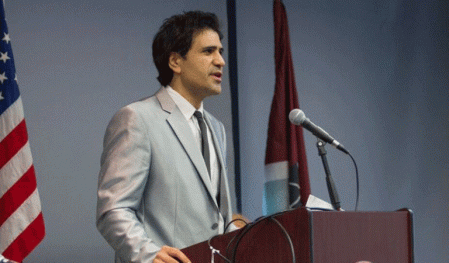
Dr. Majid Rafizadeh. (Photo: Supplied)

Dr. Majid Rafizadeh is a world-renowned Iranian-American political scientist,  businessman and author. He is a leading expert on Iran, Middle East, US foreign policy, and president of the International American Council on the Middle East and North Africa. Harvard-educated, Rafizadeh serves on the board on Harvard International Review. Born in Iran, Dr. Rafizadeh lived most of his life in Iran and Syria.

He can be reached on Twitter: @Dr_Rafizadeh or by email at Dr.Rafizadeh@Post.Harvard.Edu

He graciously agreed to speak with Clarion Project Dialogue Coordinator Elliot Friedland about Iran and why he feels so strongly about the threat posed by the regime. The views expressed below are those of Dr. Rafizadeh’s and not necessarily those of Clarion Project.

1. Clarion Project: What do you think is so dangerous about the regime of Iran?

Dr. Majid Rafizadeh: There are so many reasons why the Islamist state of Iran is extremely dangerous. They could fill an entire book.

Briefly speaking, I believe there are four major reasons, or what I will call, five concentric forces of extremism and fundamentalism:

First of all, from my perspective, the Iranian regime is far more dangerous than terrorist groups such as the Islamic State or Al Qaeda. On a daily basis, Iran tortures and executes people on a much larger scale than terrorist organizations such as ISIS. It is the top state sponsor of terrorism in the world. It supports militarily and financially hundreds of militia and terrorist groups all around the world. It regularly gives birth to terrorist groups. Only one country, the Islamist state of Iran single-handedly assists almost one quarter of world-designated terrorist groups. The Iranian regime contributes in terrorist attacks around the world. This means that the Iranian regime is responsible for blood spilled across many nations, for the slaughter of countless victims of terrorism. Iran has placed spies, lobbyists and agents across the globe, even in the U.S.

The Iranian regime is more dangerous than ISIS and Al Qaeda combined because the Islamist state of Iran operates under the “legitimacy” of the state system. Unlike ISIS or Al Qaeda, the Iranian regime has easily gotten away with its brutal actions for almost four decades because it is a “government” and supported by the United Nations when it comes to sovereignty. Since the ruling clerics rule a country, no one questions their actions.

Unlike terrorists groups such as ISIS and Al Qaeda, the Iranian regime has powerful ballistic missiles which can hit any country in the region; it has military institutions, it hires hundreds of thousands of militiamen, it freely controls the wealth of a large nation and wields all of the influence that comes with it. Instead of solely focusing on ISIS, the international community should also address the Iranian regime.

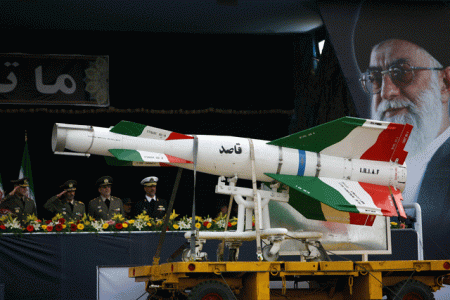
A military parade in Iran. (Photo: Getty Images)


Secondly, the Iranian regime is a radical theocracy. This means that its core pillars are anchored in radical Islamism and extreme interpretations of the religion of Islam. The Iranian regime imposes strict Shia sharia laws to suppress and control its population and export its ideology beyond its borders.  For nearly four decades, the ruling political establishment has exploited Islam and used their fundamentalist version of Islam in order to advance its parochial, religious, ideological, revolutionary and political interests. From the Iranian regime’s perspective, it is mandatory to commit any act of terrorism necessary to advance these religious and political goals.

Third, the Iranian regime ranks at the very top when it comes to human rights abuses according to Amnesty International and Human Rights Watch. This regime brutally cracks down on religious and ethnic minorities. It crushes all kinds of freedoms on a daily basis, engages in torture, and executes children.

Fourth, the Iranian regime’s objective is to spread its Shia radical Islamism across the globe. The Islamist state of Iran’s constitution clearly states that it is the mission of the Islamic state to export its ideology, religion and revolutionary principles beyond its borders. The functions of Iran’s Quds Force, proxies, lobbyists and agents among others, are to accomplish this goal. The constitution mandates an “Imam” or “Velyat-e Faqih” to rule people; which is another form of authoritarian theocracy. The regime believes that the world will be ruled under the power of the Islamic state of Iran and its Shia sharia law. It will do anything to achieve this religious and political objective.

Fifth, the Iranian regime aims at directly damaging the US and Israel’s national security interests in addition to any other country that opposes its authoritarian views. The regime has killed Americans and Westerners and it continues to fund efforts to harm the lives of American and Israeli people, as well as millions of other people.


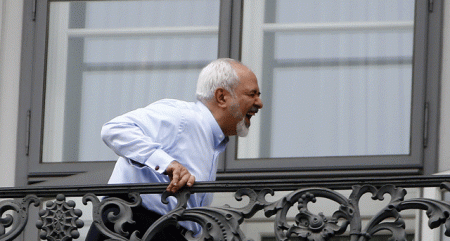
Iranian Foreign Minister Mohammed Javad Zarif laughs during the nuclear negotiations. (Photo: Reuters)


2. Clarion: The Iranian people are a lot more liberal than the regime. How can outside powers such as the United States reach out to and empower the people without emboldening the regime?

Rafizadeh: First of all, the U.S. government and other powers need to cooperate with those voices which oppose the theocratic and Islamist state of Iran. Powerful countries should stand on the right side of history.  There are many human rights groups and civil societies inside and outside of Iran that aim to democratize Iran and eliminate its violence. The U.S. specifically can help these people and unite the groups they form. It is in the long-term interest of any influential country that makes the effort to unify those that oppose the Islamic state and the human rights activists that struggle against it. Providing support to  opposition groups is an effective tool that will empower the Iranian people without emboldening the government. Seeing these groups strengthen and grow in numbers would frighten Iran’s government and weaken its grasp on the country as a whole.

Secondly, the U.S. and other powerful countries should cease all diplomatic, political, or economic ties with the Islamist state of Iran. They need to put pressure on the regime to respect human rights and to moderate its militaristic and ideological foreign policy. Four decades of diplomacy has not changed the violent behavior of the Islamist state of Iran.

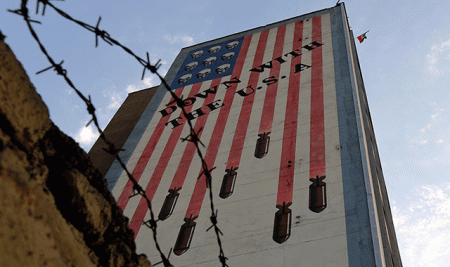
A building in Tehran emblazoned with anti-American graffiti. (Photo: ATTA KENARE/AFP/Getty Images)

3. Clarion: Now that the Iran Deal has gone through and will be upheld, what is the next step for those worried about the regime’s nuclear ambitions?

Rafizadeh: I strongly believe, and we should all be aware, that the Iranian regime will use every opportunity to acquire nuclear weapons. Nuclear weapons are the Iranian regime’s golden shield which can guarantee its rule for eternity and will ensure the achievement of its radical goals.

The nuclear deal is very dangerous. When it expires, it will allow Iran to legally become a nuclear state. It is already providing Iran with billions of dollars every year, wealth that is used for extremism, terrorism, damaging U.S. national interests, and killing Westerners and Americans.

The nuclear activities of the Iranian regime should be monitored by independent groups meticulously. History has shown us, that the International Atomic Energy Agency or the UN will not detect Iran’s undercover nuclear operations. They have failed to do so several times.  All violations should be brought to the attention of the public. In addition, sanctions (particularly the UN Security Council’s sanctions) should be re-imposed on the Iranian regime. The Iranian regime should be punished for its ballistic activities and violations of UN resolutions. Without consequences, they have no motivation to limit their activities or progress toward becoming a nuclear state.

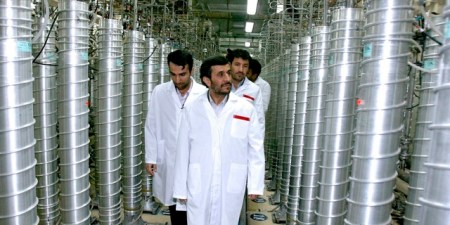
Then Iranian President Mahmoud Ahmadinejad tours the nuclear facility at Natanz. (Photo: Reuters)

4. Clarion: Should international activists who want to see the Iranian situation improve be using a policy of detente and engagement or isolation, boycotts and shaming?

Rafizadeh: The only policy that has resulted in success against the Iranian Regime was the application of pressure and boycotts. For example, in several cases, when there has been an international outcry and when the media paid attention to a victim of torture or execution in Iran, the Iranian regime has been forced to change its sentence. The economic boycotts successfully forced the Iranian regime to the negotiating table.

For the Islamic state of Iran, engagement and concessions signal weakness, not diplomacy. Negotiations only embolden and empower the regime. Applying pressure is the most effective, and likely only way, to create change within the regime.

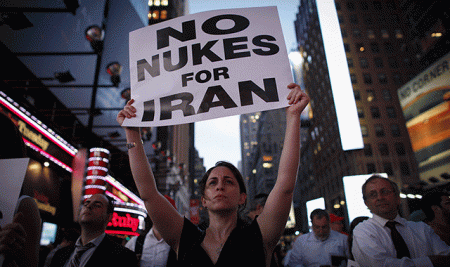
A woman protests against nuclear weapons for Iran at a rally in Times Square. (Photo: KENA BETANCUR/AFP/Getty Images

5.  Clarion: What is the most important thing people who want to eliminate extremism and see positive relations between Muslims and non Muslims should be doing?

Rafizadeh: The most important thing is to do what you [Clarion] are doing: to give a voice to those Muslims who strongly oppose radical Islam and attempt to create reforms from within Islam. Those silent moderate Muslims need to speak up, and need to be supported when they do. If we stay silent, radical Islam will continue winning and expanding. It is our job to strongly stand against radical Islam even if that endangers our life. People should know that there are truly some Muslims who want to forge genuine reformation in Islam and help eliminate radical Islam.

Many Muslims, including myself and my family, who have endured oppression under radical Islam in Muslim nations, would like to eliminate radical Islam, promote a peaceful moderate form of Islam and lead a reformation.

Finally, I describe in detail other important topics in this article “As a Muslim, I am shocked by Leftists and Liberals” as well as in my books.

I grew up between two authoritarian governments, the Islamic Republic of Iran and Syria, under the leadership of people such as Assad, Ayatollah Ali Khamenei, and Mahmoud Ahmadinejad. My youth was influenced by two major denominations of Islam in the Muslim world; the Shia and Sunni. I also studied Shia and Sunni Islam academically, and at one point I was a very devout Muslim. My parents, who still live in Iran and Syria, come from two different ethnic Muslim groups; Arab and Persian.

Unfortunately, in the West and particularly in the US I have witnessed that there are some groups, who have access to megaphones, including liberals, democrats, leftists and Western Muslim scholars (who have never experienced radical Islam first hand and have never lived under states ruled by sharia law) spread apologetic views toward radical Islam. They also criticize those Muslims who attempt to promote social justice and peace within Islam.

If liberals, leftists and many Western Muslim scholars truly stand for values which they call for, such as peace and social justice, they should be aware that their actions are actually contributing to the expansion of radical Islam, and they are hurting us and our efforts to lead reformation in Islam and weaken radical Islam.

World Shrugs as Hizballah Prepares Massive Civilian Deaths

March 21, 2017

World Shrugs as Hizballah Prepares Massive Civilian Deaths, Investigative Project on Terrorism, Noah Beck, March 21, 2017

Like the terror group Hamas, Hizballah knows that civilian deaths at the hands of Israel are a strategic asset, because they produce diplomatic pressure to limit Israel’s military response. Hizballah reportedly went so far as offering reduced-price housing to Shiite families who allowed the terrorist group to store rocket launchers in their homes.

********************************

Hizballah leader Hassan Nasrallah recently warned Israel that his Iran-backed terror group could attack targets producing mass Israeli casualties, including a huge ammonia storage tank in Haifa, and a nuclear reactor in Dimona.

Also last month, Tower Magazine reported that, since the beginning of the Syrian civil war, Iran provided Hizballah with a vast supply of “game-changing,” state-of-the art weapons, despite Israel’s occasional airstrikes against weapons convoys.

In a future conflict, Hizballah has the capacity to fire 1,500 rockets into Israel each day, overwhelming Israel’s missile defense systems. Should such a scenario materialize, Israel will be forced to respond with unprecedented firepower to defend its own civilians.

Hizballah’s advanced weapons and the systems needed to launch them reportedly are embedded across a staggering 10,000 locations in the heart of more than 200 civilian towns and villages. The Israeli military has openly warned about this Hizballah war crime and the grave threats it poses to both sides, but that alarm generated almost no attention from the global media, the United Nations, or other international institutions.

Like the terror group Hamas, Hizballah knows that civilian deaths at the hands of Israel are a strategic asset, because they produce diplomatic pressure to limit Israel’s military response. Hizballah reportedly went so far as offering reduced-price housing to Shiite families who allowed the terrorist group to store rocket launchers in their homes.

But if the global media, the UN, human rights organizations, and other international institutions predictably pounce on Israel after it causes civilian casualties, why are they doing nothing to prevent them? Hizballah’s very presence in southern Lebanon is a flagrant violation of United Nations Security Council resolution 1701, which called for the area to be a zone “free of any armed personnel, assets and weapons” other than the Lebanese military and the U.N. Interim Forces in Lebanon (UNIFIL).

The resolution also required Hizballah to be disarmed, but the terror group today has an arsenal that rivals that of most armies. Hizballah possesses an estimated 140,000 missiles and rockets, and reportedly now can manufacture advanced weapons in underground factories that are impervious to aerial attack.

“Israel must stress again and again, before it happens, that these villages [storing Hizballah weapons] have become military posts, and are therefore legitimate targets,” said Yoram Schweitzer, senior research fellow at Israel’s Institute for National Security Studies (INSS).

Meir Litvak, director of Tel Aviv University’s Alliance Center for Iranian Studies, agrees, adding that global attention would “expose Hizballah’s hypocrisy in its cynical use of civilians as… human shields.”

Even a concerted campaign to showcase Hizballah’s war preparation is unlikely to change things, said Eyal Zisser, a senior research fellow at the Moshe Dayan Center for Middle Eastern and African Studies. Hizballah exploits the fact that “the international community is too busy and…weak to do something about it,” Zisser said. All of “these talks and reports have no meaning. See what is happening in Syria.”

Israel has targeted Hizballah-bound weapons caches in Syria twice during the past week. Syria responded last Friday by firing a missile carrying 200 kilograms of explosives, which Israel successfully intercepted.

If Hizballah provokes a war, Israel can legitimately attack civilian areas storing Hizballah arms if the Israel Defense Forces (IDF) first attempts to warn the targeted civilians to leave those areas, Litvak said. But “it will certainly be very difficult and will look bad on TV.”

While Sunni Arab states are generally united against the Shiite Iranian-Hizballah axis, Litvak, Zisser, and Schweitzer all agreed that Israel could hope for no more than silent support from them when the missiles fly.

Indeed, the “Sunni Arab street” is likely to be inflamed by the images of civilian death and destruction caused by Israel that international media will inevitably broadcast, further limiting support for Israel from Iran’s Sunni state foes.

Rather perversely, the Lebanese government has embraced the very terrorist organization that could cause hundreds of thousands of Lebanese civilian deaths by converting residential areas into war zones. “As long as Israel occupies land and covets the natural resources of Lebanon, and as long as the Lebanese military lacks the power to stand up to Israel, [Hizballah’s] arms are essential, in that they complement the actions of the army and do not contradict them,” President Michel Aoun told Egyptian television last month. Hizballah, he said, “has a complementary role to the Lebanese army.”

Aoun’s declaration means that Lebanon “takes full responsibility for all of Hizballah’s actions, including against Israel, and for their consequences to Lebanon and its entire population, even though the Lebanese government has little ability to actually control the organization’s decisions or policy,” said INSS Senior Research Fellow Assaf Orion.

MK Naftali Bennett, a veteran of Israel’s 2006 war with Hizballah, believes that Lebanon’s official acceptance of Hizballah and its policy of embedding military assets inside residential areas removes any constraints on Israeli targeting of civilian areas. “The Lebanese institutions, its infrastructure, airport, power stations, traffic junctions, Lebanese Army bases – they should all be legitimate targets if a war breaks out,” he said. “That’s what we should already be saying to them and the world now.”

In a future war, Hizballah is certain to try bombarding Israeli civilian communities with missile barrages. Israel, in response, will have to target missile launchers and weapons caches surrounded by Lebanese civilians.

But it need not be so. Global attention on Hizballah’s abuses by journalists and diplomats could lead to international pressure that ultimately reduces or even prevents civilian deaths.

Those truly concerned about civilians do not have a difficult case to make. Hizballah has shown a callous disregard for innocent life in Syria.

It helped the Syrian regime violently suppress largely peaceful protests that preceded the Syrian civil war in 2011. Last April, Hizballah and Syrian army troops reportedly killed civilians attempting to flee the Sunni-populated town of Madaya, near the Lebanese border. In 2008, its fighters seized control of several West Beirut neighborhoods and killed innocent civilians after the Lebanese government moved to shut down Hizballah’s telecommunication network.

Hizballah terrorism has claimed civilian lives for decades, including a 1994 suicide bombing at Argentina’s main Jewish center that killed 85 people . As the IDF notes, “Since 1982, hundreds of innocent civilians have lost their lives and thousands more have been injured thanks to Hizballah.”

If world powers and the international media genuinely care about avoiding civilian casualties, they should be loudly condemning Hizballah’s ongoing efforts – in flagrant violation of a UN resolution – to cause massive civilian death and destruction in Lebanon’s next war with Israel.

Facing Trump Administration, Iran Shows Fear And Military Self-Restraint, Halts Provocations, Threats, And Incitement – While Boosting Morale At Home And Delegating The Bulk Of Conflict To Its Proxies

March 20, 2017

Facing Trump Administration, Iran Shows Fear And Military Self-Restraint, Halts Provocations, Threats, And Incitement – While Boosting Morale At Home And Delegating The Bulk Of Conflict To Its Proxies, MEMRIA. Savyon and Yigal Carmon* March 20, 2017

Introduction

Since the establishment of the administration of U.S. President Donald Trump, which is known to be against Iran’s revolutionary regime, Iran has faced a new reality. On the one hand, the U.S. is acting to organize the Gulf countries and Arab countries into an arrangement that Arab media have dubbed an “Arab NATO” which is aimed against Iran. On the other hand, Iran senses that despite the Iran-Russia cooperation in recent years and in various areas, Russia is abandoning it for its other vital interests, such as an understanding with the U.S. in order to advance the lifting of the sanctions against it, and an understanding with Turkey as its top regional partner.[1]

These developments have given rise in Tehran to a sense that it is besieged and under an emerging existential threat, in light of the crystallization of a comprehensive U.S.-Russia-Arab (including Israel) front against the Iranian revolutionary regime.

This report will review the overall Iranian reaction to this new situation:

The Iranian Response To The New Developments

Iran’s response to these new developments is characterized by fear of U.S. activity against its regime, as can be seen in several areas:

1. Considerable military restraint and a halt to long-range missile tests, in response to the warning by President Trump: Following Iran’s failed January 29, 2017 launch of its long-range Khorramshahr missile, the Trump administration announced that Iran was being “put on notice.” At that time, Iran had been making preparations to launch yet another long-range missile, and had made the practical arrangements for doing so; the launch was cancelled following the U.S. warning. Islamic Revolutionary Guard Corps (IRGC) Aerospace Force commander Amir Ali Hajizadeh complained, on March 9, that Iran had been so firmly deterred that it is even refraining from using a missile to launch a satellite into orbit: “We have a missile for non-military purposes for launching satellites. But it is being put into storage because of America’s angry tone?! … How much longer will we be blackmailed and forced to compromise? If we do not change our strategy, and continue to operate according to orders from officials who are stuck in the mud, our situation will deteriorate daily.”[2]

The satellite images below, taken by ImageSat International (ISI),[3] show the launch site in Semnan. The first image, taken January 17, shows the launch site and launch pedestal as inactive; it also shows, on the ground, the emblem of the Iranian Space Agency (ISA) and the emblem of the Simorgh (“Phoenix”) orbital carrier rocket that is used to launch satellites. The second image, taken February 3, shows the launch pedestal ready for launch and many vehicles at the launch site.

Left to right: Image 1: Launch site in Semnan showing inactive launch pedestal, with emblems, taken January 17, 2017; Image 2: Launch site showing pedestal ready for launch and vehicles surrounding the site, taken February 3, 2017.

Images 3 and 4 below, also taken February 3, show the integration facility during a visit by a VIP in advance of the launch. The VIP’s vehicle, and many others, including jeeps from the VIP’s motorcade, can be seen.

Left to right: Images 3 and 4, showing integration facility during the VIP’s visit; taken February 3, 2017.

Image 5, taken two days later, on February 5, shows that the launch site is again inactive.

Image 5 – launch site again inactive, taken February 3, 2017.

The day after the cancellation of the missile launch, on February 4, IRGC Aerospace Force commander Amir Ali Hajizadeh said: “America is looking for excuses surrounding our missile tests, because the enemy has set its sights on [harming] our security. The enemy deals with issues such as [our] nuclear capabilities and science, the might of [our] missiles, and so on. These are all merely excuses [to justify] their hostility towards the Islamic regime and the Iranian nation.”[4]

Also indicating Iran’s military self-restraint were February 9, 2017 statements by Defense Minister Hossein Dehghan. On the eve of Iran’s Revolution Day, he spoke about “the new claim by American elements and media outlets regarding an additional missile test by Iran. These false claims,” he added, “are a type of creating an enemy and Iranophobia. This is planned by the Zionist regime, which incites while spreading lies.

“First, this is a false claim, and nothing like [such a missile launch] happened; second, even if such a test was conducted, it had nothing to do with them at all; and third, Iran’s missile program is a standard program, and missile tests are part of these plans, which are made in advance; these tests are conducted in order to maintain our country’s defensive readiness.”[5]

  1. A halt to provocations against U.S. Navy vessels, and even an official IRGC statement that responsibility for handling the crews of foreign vessel apprehended penetrating Iranian territorial waters was being transferred from the IRGC to the civilian Ports & Maritime Organization (PMO): This is due to fear of a harsh response by the Trump administration to humiliation of American captives – as happened in January 2016, even though there had been no real response to this from the Obama administration.[6]
  2. A halt to public threats to burn and sink U.S. Navy vessels in the Persian Gulf,[7] and a near-total moratorium on hostile anti-U.S. statements: The slogan “death to America” has disappeared almost entirely from the official discourse of regime spokesmen, including Iranian Supreme Leader Ali Khamenei himself,[8] as have public burnings of the American flag.[9]

In a March 16, 2017 article, the ideological camp mouthpiece Kayhan attacked the government of Iranian President Hassan Rohani, stating that the government is claiming that “when Trump was elected, [Rohani government officials] said that Trump was unpredictable and makes unconsidered decisions – and that is why it is better for us to refrain from saying anything to offend him…”[10]

  1. Boosting morale and persuading Iranians of the might of their country and of the need for faith in God and in the armed forces’ ability to face down the U.S.: One example of this was a television interview with Defense Minister Dehghan on February 7, 2017, on the eve of Revolution Day. In it, Dehghan said that today, that is, after Trump took office, Iran is on the defensive against the American threat: “We consider defense to be necessary for our country, for other Muslim countries, and for Muslims [in general]… It is certain that the enemies are lying in wait for our regime. It is our duty to equip ourselves to the point that no one dares threaten us, blackmail us, or attack our country. All defensive elements, together with the nation as a whole, stand against the enemy to prevent an attack by it, and if the enemy attacks, we will punish it…

“The countries around us are no threat to us. The threat to us is an extra-regional threat known as the regime of arrogance [i.e. the U.S.], which is why we must acquire anything that gives us the upper hand – that is, asymmetric warfare. We must operate so that on the designated day [when war breaks out], not only will we not be caught off guard strategically, but we will surprise the enemy and inflict the maximum damage on it…”[11]

One example of efforts to boost national morale was a speech by IRGC Deputy Commander Hossein Salami, who had often issued threats to the U.S. and had said that Iran would destroy its forces in the Gulf. On February 2, 2017, Salami highlighted Iran’s defensive capabilities in light of the uniting of ranks by its enemies: “Today, the enemies have joined forces against our great revolution, but their plans have been defeated. The entire world wants to wipe us off the geographical map… but the martyrs have shown that any superpower can be confronted with reliance on faith, with Islam, and with obedience to the leader. By relying on jihad and martyrdom, we can confront any power and defend the honor of Muslims.

“Our glorious history is full of victories over the arrogance [i.e. the U.S.]… The Islamic regime of Iran has succeeded in gaining major influence in the Islamic world… Our nation is so mighty… We are involved in a great jihad, and as long as the Muslims [meaning the Shi’ites] dream of martyrdom and rely on the directives of the Koran, which light our way, we will never be defeated, but we will defeat the enemy…

“Iran’s mighty missile force is included in the list of unprecedented global deterrents. If the enemy fears our nuclear might, it can flee to the bomb shelters.

“The Iranian nation has learned to create might by reliance on internal faith… Every day, the number of defensive missiles, warships, and launchers increases. The air, land, and sea are under the control of this nation… here, in the land of heroes and martyrs.”[12]

Also in his February 4 speech, IRGC Aerospace Force commander Amir Ali Hajizadeh highlighted Iran’s ability to withstand an American attack: “The threats to Iran made by certain American elements are merely boasts. Due to my knowledge of the capabilities of our armed forces, I confidently say that a foreign threat will not influence our Islamic regime. We rely on the infinite might of God, while America relies on earthly equipment and might. We will emerge victorious from the arena in any possible scenario. We will not hesitate for a single moment in creating and strengthening our defensive capabilities… 24 hours a day, we work to defend the security of the nation, and if the enemy makes the smallest error, our missiles will land on its head like a thunderclap.”[13]

  1. Strengthening the resistance front and delegating the fight against Iran’s enemies – the West, Israel, Saudi Arabia, and the Gulf states – to Iran’s proxies: These proxies include the Shi’ite militias in Iraq and the Houthis in Yemen, as well as Syria, Hizbullah, and the Palestinian organizations, which are operated by Iran, to revive the battlefront against Israel (see MEMRI Special Dispatch No. 6811, Iran Prepares Militarily And Politically Vis-à-vis Trump Administration: Strategic Alliance With Russia, Dragging Israel Into War With Hizbullah, Palestinians, March 3, 2017).

The Iran-backed Houthis in Yemen have recently been firing missiles at Saudi Arabia: On March 17, the Houthis fired a medium-range ballistic missile at an Aramco facility in Jazan, Saudi Arabia.[14] Also on March 17, the Houthis fired three missiles at a mosque in an army base in Ma’rib Governorate during Friday prayers. The attack killed and wounded dozens of officers and soldiers.[15] Additionally, a locally made Yemeni Borkan-2 missile was fired at the King Salman airbase in Riyadh.[16]

Further, the Syrian regime has been escalating its responses to Israeli attacks on convoys transferring strategic missiles from Iran to Hizbullah. Unlike in the past, this week the Syrian regime fired anti-aircraft missiles at Israeli aircraft. MEMRI assesses that this was the result of Iranian pressure on Syrian President Bashar Al-Assad and on Hizbullah to respond in accordance with Iranian policy in order to spark a military confrontation with Israel.

Furthermore, it should be mentioned that as part of the Iranian regime’s efforts to revive the Palestinian front against Israel, on February 21, 2017, Tehran held the Sixth Conference in Support of the Palestinian Intifada. In his opening remarks at the conference, Supreme Leader Khamenei stressed the need to assist resistance movements in their military struggle against Israel, and said that Iran’s aid to these movements is directly tied to the level of these movements’ commitment to the principles of “resistance” (i.e. the struggle against Israel). He especially highlighted the need to continue aiding the resistance in the West bank, saying: “The main pivot of the Resistance is the steadfastness and endurance of the Palestinian people who have raised courageous and resistant children. Meeting the needs of the Palestinian people and Palestinian resistance is an important and vital responsibility which should be carried out by all of us. In doing so, we should not ignore the basic needs of the Resistance in the West Bank because the West Bank shoulders the main burden of the suppressed intifada.” (see MEMRI Special Dispatch No. 6795, Khamenei In Speech At Iran’s Sixth International Conference In Support Of Palestinian Intifada: ‘We [Stand] With Every Group That Is Steadfast On This Path [Of Resistance]’; ‘Cancerous Tumor’ Israel Must Be Cured In Several Phases, February 21, 2017).

It should also be mentioned that as part of Iranian efforts against Israel, Hizbullah secretary-general Hassan Nasrallah has recently made aggressive statements about Israel in interviews with Iranian and Lebanese media.

  1. Attempting to connect Russia to Iran in a strategic alliance (see MEMRI Special Dispatch No. 6795, Iran Prepares Militarily And Politically Vis-à-vis Trump Administration: Strategic Alliance With Russia, Dragging Israel Into War With Hizbullah, Palestinians, March 3, 2017).
  2. Clinging insistently to the JCPOA, even in light of actions by the U.S. that Iranian representatives had once stated would lead Iran to revert to a pre-JCPOA situation.

Moreover, in this context, MEMRI assesses that Iran will under no circumstances withdraw from the JCPOA, even if the Trump administration increases the sanctions against it, and even if the U.S. takes military action against Iranian interests in the region. This is because the JCPOA is an historic achievement for Iran, since it grants it the status of a nuclear state. Furthermore, according to the Iranian regime mouthpiece Kayhan, the Rohani government had presented the JCPOA as a tool to prevent a war against the Iranian regime.[17]


*A. Savyon is Director of the MEMRI Iranian Media Project; Y. Carmon is President of MEMRI.


[1] See MEMRI Inquiry and Analysis No. 1303, ‘Iran Diplomacy’ Following Tripartite U.S.-Russia-Turkey Military Chiefs of Staff Meeting: ‘If You Aren’t Sitting At The Table, You Are Being Eaten At The Table,‘ March 15, 2017.

[2] Tasnim (Iran), March 9, 2017.

[3] ISI – ImageSat International – is a privately owned company which provides confidential earth imagery acquisition under prioritized tasking management with very high resolution image quality.

[4] Tasnim (Iran), February 4, 2017.

[5] Asr-e-Iran (Iran), February 9, 2017.

[6] According to IRGC Navy commander Ali Fadavi, the IRGC signed an agreement with the Ports and Maritime Organization of Iran (PMO) under which the crews of all foreign naval vessels penetrating Iranian territorial waters and captured by the IRGC would be handed over to the PMO. Defapress.ir February 27, 2017.

[7] An isolated incident on March 4, 2017 saw IRGC boats approach an American destroyer, forcing it to change course. The Iranians later argued that the incident came about because the destroyer had deviated from its regular path. Tasnim (Iran), March 8, 2017.

[8] Assembly of Experts head and Guardian Council secretary Ayatollah Ahmad Jannati was the one official who did use the “death to America” slogan during a Revolution Day parade on February 10, 2017. He said: “Today, we all chant the slogan ‘death to America’ and trample its flag. This means we will not compromise nor back down to evil. We are not alone in the world, and throughout the world there are many nations that trample the American flag. Hostility towards America is the slogan of all those who are oppressed and desire freedom. We will never end our hostility towards evil, and we will always chant the slogan ‘no to humiliation.'” Fars (Iran), February 10, 2017.

[9] It should be noted that some attempted to justify this by calling it a sign of respect for the American people who voted against Trump.

[10] Kayhan (Iran), March 16, 2017. It should be mentioned that while the ideological camp’s hawks, such as the IRGC and Kayhan, accuse the pragmatic camp and President Rohani of responsibility for this policy of self-restraint, Supreme Leader Khamenei consents to this policy, and even leads it himself.

[11] Tasnim (Iran), February 8, 2017.

[12] Tasnim (Iran), February 2, 2017.

[13] Tasnim (Iran), February 4, 2017.

[14] Al-Akhbar (Lebanon), March 18, 2017.

[15] ‘Okaz (Saudi Arabia), March 18, 2017.

[16] Al-Quds Al-Arabi (London), March 18, 2017.

[17] Kayhan (Iran), March 16, 2017.

More Missiles Ready to Hit Saudi Capital: Yemen’s Army Spokesman

March 20, 2017

More Missiles Ready to Hit Saudi Capital: Yemen’s Army Spokesman, Tasnim New Agency, March 20, 2017

(There were reports at Fars News Agency and other Iranian or Iranian -linked media of a successful missile attack on Riyadh on February 5th. However, according to the March 20th Tasnim article, “The Yemeni official said it was the first such attack by the Yemeni forces on the Saudi capital.” A search at the Saudi media outlet Al-Arabiya produced nothing about either the February 5th or the more recent attack. Are such reports reliable?– DM)

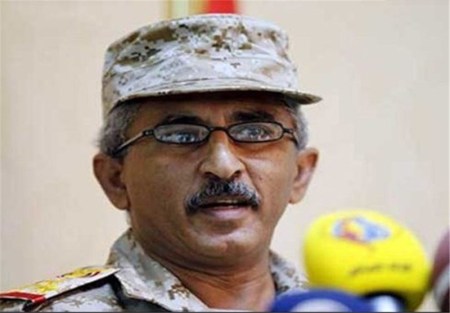
TEHRAN (Tasnim) – Yemen’s Army Spokesman Sharaf Luqman confirmed the firing of a Scud-type ballistic missile at a Saudi air base in Riyadh, saying that more missiles are ready to confront the invading regime.

“We have managed to boost our missile production capabilities and our missiles can now reach the Saudi capital,” Luqman told Lebanon’s al-Mayadeen news network on Sunday.

His remarks came after Yemeni forces on Saturday night fired a long-range ballistic missile at King Salman Air Base in the Saudi capital Riyadh, inflicting major material losses on the kingdom. The Scud-type Borkan-2 (Volcano-2) ballistic missile hit its target.

The Yemeni official said it was the first such attack by the Yemeni forces on the Saudi capital.

Luqman further said that more missiles are ready to be launched against the positions of the Saudi regime, stressing that the new missiles will change the equation of the kingdom’s war on the impoverished Arab country.

The missile attacks are in response to the aggression launched by Saudi Arabia and some of its Arab allies in March 2015.

The Saudi-led coalition has been launching deadly airstrikes against the Houthi Ansarullah movement for two years in an attempt to restore power to the fugitive former President Abd Rabbuh Mansour Hadi, a close ally of Riyadh.

Some 11,000 Yemenis, including thousands of women and children, have lost their lives in the deadly military campaign.

In-House Hizballah Missile Factories Could Add to Massive Arms Buildup

March 17, 2017

In-House Hizballah Missile Factories Could Add to Massive Arms Buildup, Investigative Project on Terrorism, Yaakov Lappin, March 17, 2017

This does not mean Hizballah is seeking a conflict with Israel now, but it does mean that should a new war erupt in the future, Israel’s civilian population will face unprecedented threats.

Israel’s defense establishment is making its own preparations accordingly, based on the understanding that this Iranian agent has developed into a full-fledged terrorist army.

*********************************

A recent report saying that Iran constructed underground missile factories in Lebanon for Hizballah would, if accurate, indicate a disturbing boost in the Shi’ite terror organization’s ability to self-produce weapons.

Already, the Israeli defense establishment sees Hizballah as a powerful and radical army rather than a ‘mere’ terror organization due to its deep and sophisticated weaponry (which surpasses that of most states), and its hierarchical command structure.

An ability to manufacture destructive rockets and missiles would mean that the militant Islamist Lebanese-Shi’ite organization is no longer entirely reliant on arms trafficking from its patron Iran and ally, the Assad regime in Syria.

The report, made available by the Middle East Media Research Institute (MEMRI), was published in the Kuwaiti daily Al-Jarida. It cites an aide to the commander of Iran’s Islamic Revolutionary Guards Corps (IRGC) as its source. The IRGC’s Quds Force is an elite unit that runs Iran’s extensive overseas operations to arm, finance, and strengthen Iran’s regional proxies.

According to the Kuwaiti report, the IRGC built the arms-making facilities more than 50 meters underground and fortified them against air strikes before handing control of them over to Hizballah three months ago.

The report is well within the realm of the possible, Ely Karmon, a Hizballah expert and a senior research scholar at the International Institute for Counter-Terrorism in Herzliya told the Investigative Project on Terrorism. He pointed to a 2015 statement made by the IRGC’s Aerospace Force commander, Brigadier General Amir Ali Hajizadeh, boasting that Tehran has provided “Syria, Iraq, Palestine and the Lebanese Hizballah resistance group with the needed know-how to produce missiles.”

“The IRGC’s Aerospace Force has developed to a stage in the field of missile industries that it can mass-produce different types of short- and mid-range missiles,” Hajizadeh said.

Assessing the latest Kuwaiti report, Karmon said that it is “possible that these Hizballah military factories are in the Quseyr area in Syria, and not in Lebanon.” Quseyr is an area of western Syria near Lebanon which has come under Hizballah control in recent years after being seized from Sunni rebel organizations.

Israel bombed targets in the area in the past, Karmon noted, likely as part of Israel’s covert program to selectively disrupt of Hizballah’s force build-up.

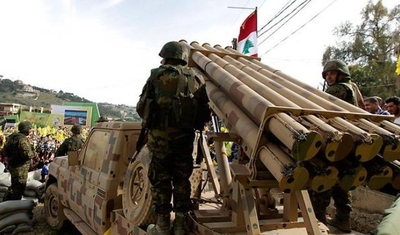
In November, Hizballah paraded its heavy weaponry in Quseyr – including tanks, armored personnel carriers, artillery guns, and missile launchers.

The Kuwaiti report also claimed that “a special department has been established at the IRGC’s Imam Hossein University [in Tehran] to train Lebanese and other experts, and hundreds of experts have already been trained… The manufacture of the missiles does not take place in one factory; different parts are built in different factories and then assembled together.”

The missile factories reportedly can produce surface-to-surface missiles with a range of over 500 kilometers – in other words, capable of hitting anywhere in Israel – surface-to-sea missiles, perhaps intended to hit Israeli ships and Israel’s offshore gas rigs in the Mediterranean Sea, armed drones, anti-tank missiles, and other weapons. The production sites can also be used to make machine guns, mortars, and anti-aircraft guns.

Since the end of the 2006 war with Israel, Hizballah stockpiled an arsenal totaling 120,000 missiles – one of the largest of its kind in the world. The vast majority of these arms were manufactured in Iran and Syria and smuggled into Lebanon. A growing number are guided rockets and missiles, which Hizballah could use to try to use to overcome Israeli air defenses and target sensitive targets.

Iranian weapons transfers continue regardless of whether Hizballah has access to its own missile factories. Israeli Prime Minister Benjamin Netanyahu provided details on “the ongoing Iranian attempt to transfer weapons, advanced weapons, to Hizballah, via Syria,” when he visited Russian President Vladimir Putin in Moscow earlier this month.

Reports say that Israel targeted such weapons again overnight, triggering Syrian surface-to-air missile fire at Israeli jets. At least one of those missiles reportedly was intercepted by Israel’s Arrow defense system.

Hizballah also is training elite terror cells to infiltrate Israel during the next war, and to temporarily ‘conquer’ northern Israeli communities in a bid to demoralize Israelis.

These preparations, it is safe to assume, are being closely monitored by Israel.

Hizballah’s deep involvement fighting for the Assad regime in Syria for four years also has boosted its power. The best form of training is combat itself, and its operatives have been exposed to Iranian commanders and technology on the battlefields of Syria.

Meanwhile, back in Lebanon, Hizballah has embedded the vast majority of its bases, rocket launchers, and command posts in civilian regions, including a massive maze of underground tunnels and subterranean compounds.

Yet all is not well in Hizballah’s camp despite its clear and growing power. Hizballah is facing a dramatic economic crisis due to a shortage of cash flow from Iran, which itself has not yet received all of the funds it was expecting to get after signing the nuclear deal.

Hizballah’s expenses are not only military and terrorist. They include many civilian and political activities in Lebanon, for which it is now struggling to pay. Additionally, the fact that it has sustained more than 1,500 casualties in Syria has demoralized sections of the traditional Lebanese Shi’ite support base.

Nevertheless, Hizballah is pushing to build up its massive offensive capabilities against Israel.

It seeks more accurate rockets and missiles, while its leader Hassan Nasrallah has repeatedly threatened to strike Israeli strategic targets such as ships carrying industrial ammonia to the Israeli city of Haifa, and Israel’s nuclear reactor in Dimona.

This does not mean Hizballah is seeking a conflict with Israel now, but it does mean that should a new war erupt in the future, Israel’s civilian population will face unprecedented threats.

Israel’s defense establishment is making its own preparations accordingly, based on the understanding that this Iranian agent has developed into a full-fledged terrorist army.