Archive for the ‘Iranian navy’ category

General Unveils Plans for Iran’s Naval Presence in Latin America

April 2, 2016

General Unveils Plans for Iran’s Naval Presence in Latin America, Tasnim News Agency, April 2, 2016

(Ha! Obama’s reset with Latin America will obviously prevent Iranian influence there. Won’t it? — DM)

Iranian military

(Tasnim) – Iran’s Army Commander Major General Ataollah Salehi on Saturday unveiled plans for the presence of the country’s naval forces in Latin America.

Speaking to reporters in the southern port city of Bandar Abbas, the senior commander said special plans have been devised to reinforce the Navy in the new Iranian year (which began on March 20) and equip it with advanced gear.

According to the commander, one of the main purposes is to enable the naval forces to “take bigger steps” in naval voyages.

Iran seeks to prepare for “mighty presence” in Latin American waters, Major General Salehi noted.

The aim of presence in faraway waters is to display Iran’s naval power to the world and carry out joint operations with friend countries in other regions, he added.

Back in February 2015, Navy Commander Rear Admiral Habibollah Sayyari said “constant” presence in international waters is a strategy pursued by his forces.

The world has now recognized the Iranian Navy as a “power”, the commander had said, adding that such an international status necessitates “an upgrade in the quality of equipment” and science-based development.

Leader of the Islamic Revolution Ayatollah Seyed Ali Khamenei has also repeatedly emphasized the necessity for incessant progress of the Iranian Armed Forces irrespective of the political developments.

The Navy should continue playing its major and significant role in safeguarding the national security and public defense and protecting the country’s borders through boosting military preparedness and capabilities, the Leader said in November 2014.

“Extensive Information” Obtained from US Sailors Captured by IRGC

February 1, 2016

“Extensive Information” Obtained from US Sailors Captured by IRGC, Tasnim News Agency, February 1, 2016

Iranian admiral

TEHRAN (Tasnim) – Commander of the Islamic Revolution Guards Corps Navy Rear Admiral Ali Fadavi said the forces extracted a lot of information from the confiscated cell phones and laptops of the US sailors recently captured by Iran after intrusion into the country’s territorial waters.

“We have extracted extensive information from their (American sailors’) laptops and cell phones,” Admiral Fadavi said in a parliamentary session in Tehran on Monday.

The IRGC commander went on to say that the information can be made public if a decision is made to that effect.

Admiral Fadavi also noted that the IRGC has filmed the capture of the US sailors for several hours, the release of which would bring humiliation to the United States.

If US officials say they are angry with and frustrated by the footage released, they would be 100 times more embarrassed if the IRGC releases other films of the capture, the Iranian commander said.

Iran does not seek to humiliate any nation, he said, but stressed that if they want to humiliate Iran, the IRGC would publish the footage and make them even more embarrassed and humiliated.

US Defense Secretary Ashton Carter had earlier said he was “very, very angry” when he saw footage of 10 US Navy sailors detained by Iranian authorities broadcast by Iranian television news.

The Islamic Revolution Guards Corps (IRGC) Navy on January 12 captured the US Navy sailors inside Iran’s territorial waters in the Persian Gulf, but released them the next day following an apology and after technical and operational investigations indicated that the intrusion into Iranian territorial waters was “unintentional”.

Yesterday, Leader of the Islamic Revolution Ayatollah Seyed Ali Khamenei awarded the ‘Medal of Fath (Conquest)’ to Admiral Fadavi and four other IRGC commanders who made the “courageous and timely” move in the recent capture of American boats and sailors near Iran’s Farsi Island.

Egypt bids for two advanced French helicopter carriers – counterweight to the Iranian navy

August 27, 2015

Egypt bids for two advanced French helicopter carriers – counterweight to the Iranian navy, DEBKAfile, August 27, 2015

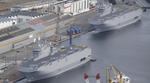
mistral-_Saint-Nazaire_western_France_May_25_2015Mistral carriers at Saint-Nazaire shipyard

Egypt is in advanced negotiations with France for two highly advanced French Mistral class assault-cum-helicopter carrier ships that were originally destined for the Russian Navy. DEBKAfile’s military and intelligence sources report that this deal, if it goes through, will substantially beef up the regional lineup of the Saudi, Egyptian and Israeli navies. The new vessels would enable it to contest Iranian naval challenges in the Mediterranean, the Red Sea and the Persian Gulf, and alter the balance of strength between the opposing sides.

Saudi Arabia and the United Arab Emirates have given presidents Abdel-Fatteh El-Sisi and Francois Hollande pledges to fund the transaction at $800 million per carrier.

The Mistrals will join the missile ships of Saudi Arabia, Egypt and Israel and six Dolphin submarines which, according to foreign sources, are capable of firing nuclear-tipped ballistic missiles. Their delivery comes at a time of strengthening strategic ties among Egypt, Saudi Arabia, the UAE and Israel.

The Egyptian navy stands to own the most advanced warships of any Middle East power. The French vessels may also be used as aircraft carriers, because their decks are designed to carry fighter jets as well as helicopters. The only nations maintaining this type of vessel in the region are outsiders – the US, which deploys a Wasp class helicopter for marines; Russia, the ageing Moskva class copter carrier, and France.

Originally ordered from France by the Russian Navy, the pair of Mistrals was never delivered owing to the sanctions the European Union imposed on Moscow after the Ukraine invasion.

It is a multi-purpose warship, able to accommodate 16 “European Tiger” four-bladed, twin-engined attack helicopters, four large landing craft for dropping 450 marines on shore, 70 armored vehicles, including 14 heavy AMX Leclerc assault tanks.

These figures are flexible. If necessary, the French carriers can handle an expanded complement of 900 marines and 40 tanks. It is also a command ship geared to maintain communications with military forces located anywhere in the world. It also carries a 69-bed field hospital. The Mistral has a maximum speed of 18 knots and maximum range of 20,000 miles.

Once Again, Iran Blinks First

May 20, 2015

UN Says Iranian Ship With Yemen Aid Heading to Djibouti
UNITED NATIONS — May 20, 2015, 12:56 PM ET Via AP


(Wise decision on the part of Iran. – LS)

The United Nations says an Iranian ship with humanitarian supplies for Yemen is heading to Djibouti where the U.N. has its hub for the distribution of aid to the conflict-torn country.

U.N. deputy spokesman Farhan Haq said Wednesday the U.N. received word from the Iranian government that the ship “will proceed to Djibouti.” It was originally reported to be heading to Yemen’s Hodeida port.

Haq said given concerns about the situation on the ground in Yemen, Secretary-General Ban Ki-moon has urged all countries and organizations to arrange aid deliveries with the U.N. to Djibouti for onward distribution in Yemen.

Earlier Wednesday, Iran’s Deputy Foreign Minister Hossein Amir Abdollahian told the semi-official ISNA news agency that the vessel Nejat, or Rescue, will travel to Yemen in “full coordination with the U.N.”

Iran Has Another Temper Tantrum and Threatens the Saudis

May 13, 2015

Iran Makes This Declaration To Saudi Arabia: ‘We Will Cut Off Your Hand And Ignite The Flames Of War.’ The Standoff Between Saudi Arabia And Iran Begins
by Shoebat Foundation on May 13, 2015


(Perhaps the blockade should be closer to Iran’s shores instead. – LS)

Last time Iran tried to send an Iranian plane to land in Sana’a airport under the guise of “humanitarian aid” to Yemen, Saudi Arabia responded by bombing the airport in Sanaa to prevent it from landing just to make a point that Iran cannot ignore Saudi warnings that a blockade on Yemen is enforced.

Now this is happening all over again at a much larger scale and a more dangerous posture. Iran’s latest attempt is sending a humanitarian ship The Shahed cargo ship as a flotilla to break the Saudi-enforced blockade, which departed Iran on Monday and is currently in the Gulf of Aden.

Iran is mimicking the Gaza aid Flotilla, which caused world attention in Israel in 2010, and this new Iranian flotilla is accompanied by a direct threat from Iran “we [Iran] will cut off the hand that touches it”. And to ensure they make good on their threat, they are accompanying this ‘Flotilla’ with two warships, Alborz and the Bushehr proclaiming by such posture that Iran will break the blockade despite warnings by Saudi Arabia and the United States.

The U.S. advised Iran to reroute such humanitarian efforts and use a United Nations distribution hub in Djibouti, which is the normal avenue for such humanitarian assistance. It has then become obvious that Iran is attempting a standoff with Saudi Arabia and a showdown between the two nations can become imminent.

Iran is also including civilian foreign activists onboard in order to mimic the Gaza flotilla and escalate the condemnation of Saudi Arabia in case of civilian casualties. The state-run IRNA news agency quoted Iranian Admiral Hossein Azad as saying that the 34th naval group “is present in the Gulf of Aden and Bab al-Mandab strait and has been given the specific mission of protecting the humanitarian aid ship.”

Tehran says the warships are necessary in case Saudi-led coalition forces from their naval blockade intercepts the humanitarian cargo ship.

But unlike Israel, Saudi Arabia is not known to have restraint. Just hours before the ceasefire’s beginning in Yemen, Saudi-led coalition forces pounded the Yemeni capital Sanaa with a massive attack on weapons installations.

Despite Saudi resolve to crush the Houthi rebellion in Yemen, a senior Iranian commander has stressed that attacking the Iranian aid ship heading to Yemen will “ignite the flames of war” in the region.

Deputy Chief of Staff of the Iranian Armed Forces Brigadier General Masoud Jazayeri made the remarks in an interview with Arabic-language news channel al-Alam on Tuesday.

Saudi Arabia, the United States, and their allies must keep in mind that if they want to block Iran’s humanitarian aid to the regional countries, “they will start a fire which they cannot put out,” the commander added.

“I clearly announce that the self-restraint of the Islamic Republic of Iran has its limits,” Jazayeri stated.

Meanwhile the US on Tuesday warned Iran against “provocative actions,” saying it was tracking the Iranian warships. There are some six U.S. warships already in the region around Yemen, including in the Gulf of Aden.

Iranian Pirates Release Ship After Taking Booty

May 7, 2015

Operator of cargo ship seized by Iran says vessel released
By Amir Vahdat and David Rising | AP May 7 at 9:04 AM


(Man the cannons! Hoist the colors! – LS)

TEHRAN, Iran — A Marshall Islands-flagged cargo ship seized by Iran has been released and the crew members are all in good condition, according to the ship’s operator.

Rickmers Ship Management told The Associated Press in an e-mail Thursday that the MV Maersk Tigris was released following a court order. It will now continue its scheduled voyage to Jebel Ali, in the United Arab Emirates, where it will be met by representatives from Rickmers and others.

Iranian forces seized the ship April 28 as it traversed the Strait of Hormuz. It was taken to Bandar Abbas, the main port of Iran’s navy, under escort by Iranian patrol boats.

Iran claimed that the Danish shipping company that chartered the ship, Maersk Line, owed money to an Iranian firm. Rickmers’ spokesman Cor Radings would not comment on whether any money was paid to settle the case with Iran, saying in a telephone interview from Amsterdam “that is up to Maersk and the Iranian authorities, our responsibility is with the vessel and crew.”

He said his company had confirmed that the ship had left the Iranian port with all 24 crew members on board and all of its cargo, and that it was expected to arrive in Jebel Ali late Thursday night or early Friday morning.

Iran’s Ports and Maritime Organization said in a statement that the government had received the appropriate assurances from Maersk Line. The Danish company had, “ensured the provision of a letter of guarantee for the enforcement of the judicial decision,” the statement said.

In Copenhagen, Maersk Line spokesman Michael Storgaard told AP that the case “is not over yet,” but confirmed that the company was committed to covering the $163,000 debt claimed by the Iranian firm, if necessary. “We have said we would be willing to pay the $163,000 but for now we have not paid anything,” he said.

Storgaard said lawyers from both sides will now begin looking into the matter.

Denmark’s Foreign Minister Martin Lidegaard made reference to an apparent role by his government in the negotiations, saying it was “gratifying that our joint efforts” had led to the release of the ship.

“For Denmark as a seafaring nation, it is obviously a priority that international obligations are complied with and that ships can sail in the Persian Gulf,” Lidegaard said in a statement. “We have also made that clear in our contact with the Iranian authorities.”

The incident came at a critical time in Iran’s relations with the West, as talks on Tehran’s contested nuclear program continue and frictions rise amid a U.S.-backed campaign by a Saudi-led coalition carrying out airstrikes against Iranian-backed Shiite rebels in Yemen.

Following the Maersk incident, Washington adopted a policy change, allowing any U.S.-flagged ship to be accompanied by Navy warships through the narrow strait, which includes Iranian territorial waters. Navy ships are positioned nearby and are ready to respond if needed, but they do not actually escort a vessel.

The Strait of Hormuz is the route for about a fifth of the world’s oil and is only about 33 kilometers (21 miles) wide at its narrowest point.

Column One: The Marshall Islands’ cautionary tale

May 1, 2015

Column One: The Marshall Islands’ cautionary tale, Jerusalem Post, Caroline Glick, April 30, 2015

Iranian navy shipIranian navy ship.. (photo credit:REUTERS)

There is a thread that runs between Obama’s policy toward Iran and his policy toward Israel.

On Tuesday, the Iranian Revolutionary Guard Corps forcibly commandeered the Maersk Tigris as navigated its way through the Straits of Hormuz. Iran controls the strategic waterway through which 40 percent of seaborne oil and a quarter of seaborne gas transits to global markets.

The Maersk Tigris is flagged to the Marshall Islands. The South Pacific archipelago gained its independence from the US in 1986 after signing a treaty conceding its right to self-defense in exchange for US protection. According to the treaty, the US has “full authority and responsibility for security and defense of the Marshall Islands.”

Given the US’s formal, binding obligation to the Marshall Islands, the Iranian seizure of the ship was in effect an act of war against America.

In comments to Bloomberg hours after the ship was seized, Junior Aini, chargé d’affairs at the Marshall Islands Embassy in Washington, indicated that his government’s only recourse is to rely on the US to free its ship.

Immediately after the incident began, the US Navy deployed a destroyer to the area. But that didn’t seem to make much of an impression on the Iranians. More significant than the naval movement was the fact that the Obama administration failed to condemn their unlawful action.

If the administration continues to stand by in the face of Iran’s aggression, the strategic implications will radiate far beyond the US’s bilateral ties with the Marshall Islands. If the US allows Iran to get away with unlawfully seizing a Marshall Islands flagged ship it is treaty bound to protect, it will reinforce the growing assessment of its Middle Eastern allies that its security guarantees are worthless.

As the Israel Project’s Omri Ceren put it in an email briefing to journalists, “the US would be using security assurances not to shield allies from Iran but to shield Iran from allies.”

But President Barack Obama apparently won’t allow a bit of Iranian naval piracy to rain on his parade. This week Obama indicated that he feels very good about where his policy on Iran now stands. And he has every reason to be satisfied.

With each day that passes, the chance diminishes that his nuclear deal with the mullahs will be scuppered.

On the one hand, the Iranians are signaling that they are willing to sign a deal with the Great Satan. And this makes sense. For them the deal has no downside.

First there’s the money. Last week the State Department indicated that it won’t rule out paying Iran a $50 billion “signing bonus.”

The $50b. would be an advance on Iranian funds that have been frozen in Western banks under the terms of the sanctions regime that would be lifted in the event a deal is concluded.

Iran can do a lot with $50b.

Iran is spending $3b. a month to finance its war in Syria. With $50b. in their pockets the ayatollahs can fight for another year and a half without selling a barrel of oil.

According to a report earlier this week on Channel 10, during Syrian Defense Minister General Fahd al-Freij’s visit to Tehran this week, he was instructed to enable Hezbollah to open a front against Israel on the Golan Heights. Iran’s “signing bonus” would pay for Iran’s new war against Israel.

As for their nuclear weapons program, even Obama admitted that when his deal expires in 10 years, Iran will have the capacity to build nuclear weapons at will.

Iran can get around the ideological issue of signing with its theological foe by focusing its hatred on the US Congress, something Foreign Minister Mohammad Javad Zarif did effortlessly at a press conference in New York on Wednesday.

At home as well, Obama no longer faces serious opposition to his Iran policy. The Iranian Nuclear Agreement Review Act, the bill now being debated on the Senate floor, ensures that Congress will have no ability to stand in the way of the deal. In contrast to the provisions of the US Constitution that require a two-third Senate majority to approve an international treaty, the Senate bill requires a two-third majority of senators to block the implementation of Obama’s nuclear deal with the greatest state sponsor of terrorism.

Obama has successfully bullied centrist Democrat senators into abandoning their concern for US national security and supporting his deal.

They in turn have convinced centrist Republicans – and AIPAC – to push forward the legislation and so turn Congress into partner in Obama’s nuclear gambit.

Attempts by Republican senators, including presidential candidate Sen. Ted Cruz, to attach amendments to the bill that would require Congress to either treat the deal as an international treaty, or at the very least require a simple majority to reject it, have been strenuously opposed not only by the Democrats, but by the Republican leadership as well.

Obama’s confidence that his deal will go through has freed him up to mark the next target of his foreign policy in what he recently referred to as the “fourth quarter” of his presidency: Israel.

According to a report in Foreign Policy, the administration is now seeking to delay anti-Israel resolutions at the UN Security Council – including a French draft resolution that would require Israel to surrender all of Judea and Samaria and northern, southern and eastern Jerusalem to the Palestinians – until after the deal with Iran is concluded at the end of June. According to the report, the administration doesn’t want to upset pro-Israel Democrats while it still needs them to approve the deal with Iran.

But Obama has no problem with marking the target.

And so, on Monday, Undersecretary of State for Political Affairs Wendy Sherman did just that.

In an address before Reform Jews, Sherman issued a direct threat against Israel.

In her words, “If the new Israeli government is seen to be stepping back from its commitment to a two-state solution, that will make our job in the international arena much tougher… it will be harder for us to prevent internationalizing the conflict.”

In an apparent attempt to soften the harsh impression Sherman’s statement made on the Israeli public, on Wednesday US Ambassador Dan Shapiro gave an interview to Army Radio.

Although his American-accented Hebrew is always a crowd pleaser, Shapiro’s statements were simply a more diplomatic restatement of Sherman’s threat.

As he put it, “We are entering a period without negotiations [between Israel and the Palestinians] and this leads us to two important challenges.

One – how do we make progress toward the two-states for two-peoples solution, and two – negotiations have always been critical to preventing the delegitimization of Israel.”

In other words, Shapiro signaled that the Obama administration expects Israel to make significant concessions to the Palestinians in return of nothing, in the absence of negotiations.

And if we fail to make such unreciprocated concessions, we will have no legitimacy and the US will have no choice but to act against Israel at the UN.

That is, by Shapiro’s and Sherman’s telling, Israel’s unwillingness to bow to Palestinian and US demands for concessions to the Palestinians is what has caused and what feeds the international campaign to delegitimize its right to exist.

For anyone who entertains the thought that Shapiro and Sherman are correct to blame Israel for the movement to delegitimize it, this week we received new proof of its falsity.

This week, the leaders of the Boycott, Divestment and Sanctions movement condemned Israel not for failing to make concessions to the Palestinians. This week they condemned the Jewish state for helping Nepal earthquake victims.

Ever since the Israeli humanitarian aid mission set off for Nepal earlier this week, leading figures in the BDS movement have been working overtime to attribute ill and even demonic intentions to their mission.

Kenneth Roth, the executive director of Human Rights Watch, tweeted on his Twitter account, “Easier to address a far-away humanitarian disaster than the nearby one of Israel’s making in Gaza. End the blockade!” Max Blumenthal, a Jewish anti-Semite who has risen to prominence in the BDS campaign, tweeted, “For a country responsible for so many man-made catastrophes, natural disasters can’t come often enough.”

Ali Abumiah, the editor of Electronic Intifada, intoned that Israel was racist to evacuate newborn infants born to surrogate mothers in Nepal and leave the surrogates behind. He also tweeted, “Propaganda operation goes into high gear to exploit Nepal earthquake to improve Israel’s blood-soaked image.”

These assaults, which attribute malign, exploitative designs to Israel’s humanitarian relief efforts, make clear that there is no connection between Israel’s actions and hostility toward Israel.

The purpose of the BDS movement is not to pressure Israel to make concessions to the Palestinians.

Its purpose is to delegitimize Israel’s right to exist and delegitimize support for Israel’s right to exist.

If Israel is evil for sending hundreds of soldiers and relief workers to Nepal to rescue earthquake victims, clearly Israel will be attacked as evil for making concessions to the Palestinians that the Palestinians and the Obama administration will insist are insufficient.

Shapiro’s claim that negotiations between Israel and the PLO, or Israeli unilateral concessions to the Palestinians, protect Israel from its Western detractors is totally unfounded.

There is a thread that runs between Obama’s policy toward Iran and his policy toward Israel.

That common threat is mendacity. Obama’s actual goals in both have little to do with his stated ones.

Obama claims that he wishes to prevent Iran from acquiring nuclear weapons. But as we see from his willingness to allow Iran to become a nuclear threshold state while running wild in the Straits of Hormuz, committing mass slaughter in Syria, building an empire that includes Iraq, Syria, Lebanon and Yemen, and threatening its Arab neighbors and Israel, the purpose of the administration’s negotiations with Iran is not to prevent Iran from becoming a nuclear power.

The purpose of the negotiations is to build an American-Iranian alliance on Iran’s terms.

So, too, Obama says his goal is to advance the cause of peace between Israel and the Palestinians.

But his pressure and hostility toward Israel does nothing to achieve this goal. The goal of a policy of acting with hostility toward Israel is not to promote peace. It is to distance the US from Israel and align America’s Israel policy with Europe’s preternaturally hostile treatment of the Jewish state.

Three days after a ship sailing under their flag was seized by Iran’s Revolutionary Guards, citizens of the Marshall Islands discovered that their decision to place their security in America’s hands is no longer the safe bet they thought it was 29 years ago.

Anyone who entertains the belief that Israel will gain diplomatic acceptance or even a respite from American pressure if it makes concessions to the Palestinians is similarly making a high risk gamble.
Part II: Is Iran Playing Games With the US Navy?

May 1, 2015

First on CNN: Navy to escort U.S. commercial ships near Iran
By Barbara Starr, CNN Pentagon Correspondent Updated 7:28 PM ET, Thu April 30, 2015


(Here’s the second article. Is Iran drawing the attention of the US Navy away from the Yemen strait? The Iranians are pretty sneaky. Escalation seems to be their dangerous game for now. – LS)

Washington (CNN)U.S. Navy warships accompanied four U.S. flagged vessels through the Strait of Hormuz Thursday, beginning a new military operation to offer armed protection from potential harassment by Iran’s navy, a U.S. defense official tells CNN.

The ships transiting the strait were both inbound to the Persian Gulf and also outbound into the North Arabian Sea and they occurred without incident. All four unarmed vessels were military supply and survey ships either operated by the U.S. Military Sealift Command or under contract to the command.

The official said the Pentagon will not be providing daily details on transits or the warships in the area because the US “does not want to establish a pattern of life,” for observers in the area.

CNN first reported Thursday that U.S. Navy warships would accompany U.S.-flagged commercial vessels that pass through the Strait of Hormuz due to concerns that ships from Iran’s Revolutionary Guard Corps navy could try to seize a U.S. cargo ship.

Pentagon officials provided clarification Thursday afternoon that not every ship will necessarily be accompanied by the Navy. But this is still a significant change in the U.S. military posture in the Strait.

The classified plan was approved by the Pentagon earlier Thursday, according to a senior defense official.

While the Navy maintains a routine ship presence in the Persian Gulf and the North Arabian Sea, this new effort specifically requires an armed warship to be in the narrow channel between Iran and Oman when a U.S. commercial vessel passes through.

The decision to go ahead with this plan comes as Iran Revolutionary Guard ships harassed a U.S.-flagged vessel, the Maersk Kensington, on Friday and then later seized another cargo ship, the Maersk Tigris, flagged in the Marshall Islands.

The worry is that with the uncertainty around Iran’s intentions, any seizure of a U.S.-flagged vessel could provoke an international incident with Iran.

(Internation incident?  How about an act of war. – LS)

“This is a way to reduce the risk of confrontation,” the official told CNN.

The official emphasized the Navy is not trying to “play up” the current situation, but said the orders were approved “based on tensions in the region.”

A second U.S. official said if it becomes necessary, U.S. warships are prepared to escort U.S. commercial vessels throughout the entire Gulf.

There are a number of U.S. ships and aircraft in the immediate vicinity, including four ships and several aircraft monitoring the status of the Marshall Island vessel, which remains in Iranian custody allegedly over a 2005 financial dispute. U.S. Navy ships will be moved in and out of the area depending on the transit schedule of U.S. cargo vessels.

Iranian officials said the seizure of the Marshall Islands-flagged ship Maersk Tigris was due to a court decision.

Foreign Minister Mohammad Javad Zarif said Wednesday that the ship had “some rather peculiar activity” in its past that resulted in court action, according to lawyers with whom his ministry has been in touch.

“Simply, our naval forces implemented the decision of the court,” he added.

Rickmers Shipmanagement, the company managing the Maersk Tigris, a Maersk Line ship, said in a statement Thursday that the apparent issue dates back to 2005, when another Maersk Line vessel delivered a shipment to Dubai that was later disposed of when no one collected the containers.

A spokesperson for Rickmers Shipmanagement also said that 24 people — none American — are on board the Maersk Tigris and that they are all doing well. However, the company continues to “insist that the crew and vessel are released as soon as possible.”

The two recent incidents come after the U.S. last week sent warships to the vicinity of Yemen after concerns were raised that an Iranian convey was attempting to supply arms to Houthi rebels who have deposed the Western-backed government in Sanaa.

Multiple U.S. officials said the American ships had been deployed to the region to dissuade the Iranian convoy, which included armed ships, from docking in Yemen. The Iranian ships turned away from Yemen on Thursday.

The U.S. hope is that by deploying the naval accompaniment for cargo ships in the Strait of Hormuz, it’s much less likely that Iran would cause trouble for them. Rather, like in the case of Yemen, they would be more inclined to turn back.

Still, the move comes amidst U.S.-Iran tensions in the region over competing interests in Yemen and elsewhere. And it also coincides with delicate nuclear talks in the which the United States and five other world powers are trying to seal a final deal with Iran curbing the latter’s nuclear program.

Part 1: Is Iran Playing Games With the US Navy?

May 1, 2015

Iran says warships at entrance to key Yemen strait
Via AFP May 1, 2015


(I have two articles that seem to interrelate. Is Iran drawing the attention of the US Navy away from the Yemen strait? Of course, I have no evidence that such a thing is in the works, but you have to admit, it is kind of fishy. – LS)

Tehran (AFP) – Two Iranian destroyers, sent to the Gulf of Aden to protect commercial ships, have reached the entrance of Bab el-Mandab, a strategic strait between Yemen and Djibouti, Iran’s navy said Thursday.

“We are present in the Gulf of Aden in accordance with international regulations to ensure the safety of commercial ships of our country against the threat of pirates,” said the head of the Iranian navy, Rear Admiral Habibollah Sayari, quoted by the official IRNA news agency.

The navy has sent the Alborz and Bushehr destroyers to patrol the entrance to the strait, he added.

Bab el-Mandeb, a narrow body of water, is the key strategic entry point into the Red Sea, through which around four million barrels of oil pass each day on ships headed to or from the Suez Canal.

Last week, US officials said an American aircraft carrier and a cruiser left the waters off Yemen and headed back to the Gulf after an Iranian naval convoy also turned back from the area.

Washington suspected the convoy of carrying weapons destined for Shiite Huthi rebels in Yemen.

“The information that the Iranian ships received warnings and left the area is not correct,” Sayari said, insisting that Iran will not enter “the territorial waters of other countries” in reference to Yemen.

Saudi Arabia, which heads a Sunni Arab coalition conducting air strikes on Yemeni rebels since March, has imposed an air and sea blockade.

Sayari said the two destroyers would stay posted around Bab el-Mandab until late June.

Iran denies having armed Huthi rebels and has called for the immediate end of coalition air strikes as a condition for resuming dialogue aimed at ending the crisis in Yemen.

The Iranian navy has deployed warships in the Gulf of Aden and in the Indian Ocean for a number of years to stave off the threat of hijacking for commercial vessels.

(Look who’s doing the hijacking now. – LS)

In Tehran, the top Saudi diplomat posted in Iran was summoned Thursday to the foreign ministry which “strongly protested” over an incident in which Saudi warplanes bombed Sanaa airport runway to prevent an Iranian plane from landing.

Tuesday’s action “endangering the lives of the crew and members of the Iranian Red Crescent, who brought medical aid to Yemenis and wanted to transfer the wounded, is unacceptable,” said a senior Iranian diplomat, quoted by IRNA.

It was the fourth time in a month the Saudi charge d’affaires was summoned.

A timely message from Iran

April 29, 2015

A timely message from Iran, Power Line, Scott Johnson, April 28, 2015

What the hell are the Iranians doing playing chicken with the U.S. Navy on the same day that the full Senate takes up debate on Corker-Menendez?

*****************

Omri Ceren provides this email update on today’s developments in the Persian Gulf, reported in this brief Reuters story:

It’s been a busy two hours, but some clarity is starting to emerge about the Iranian seizure of a cargo vessel in the Strait of Hormuz. The vessel is the M/V Maersk Tigris and sails under a Marshall Islands flag. It was intercepted by Iranian navy patrol crafts earlier today and sent a distress call, and which point it was contacted by US naval assets who streamed to the area to monitor the confrontation. The vessel was ordered to sail into Iranian waters and refused, at which point the Iranians fired shots across her bow, and the master complied. It’s now in the Iranian port of Bandar Abbas.

There is a dispute over whether the M/V Maersk Tigris was in international waters when it was initially intercepted. The Pentagon seems to have told journalists this morning that it was transiting through Iranian territorial waters. Defense analysts are posting maps showing otherwise (https://twitter.com/PatMegahan/status/593073911786377216).

A few things you’re likely to be hearing as the afternoon kicks off:

(1) The U.S. is treaty-bound to defend the security of the Marshall Islands. To what extent will the US be obligated to act in response to functionally unspinnable Iranian aggression? Keep in mind that in two weeks the President will be personally in a room floating security assurances to the Gulf, promising that the U.S. will protect them from future Iranian aggression.

The Republic of the Marshall Islands (RMI) is a sovereign nation. While the government is free to conduct its own foreign relations, it does so under the terms of the Compact. The United States has full authority and responsibility for security and defense of the Marshall Islands, and the Government of the Marshall Islands is obligated to refrain from taking actions that would be incompatible with these security and defense responsibilities. (http://www.state.gov/r/pa/ei/bgn/26551.htm)

(2) The administration just wrapped up a week of insisting that under no circumstances would it allow Iran to interfere with shipping in the area. It’s unclear how that can be reconciled with what the Iranians just did.

White House Press Secretary Josh Earnest, April 21: “principal goal of this operation is to maintain freedom of navigation and free flow of commerce in the Gulf of Aden and the Red Sea… would send a clear signal about our continued insistence about the free flow of commerce and the freedom of movement in the region… this is a clear statement about our commitment to ensuring the free flow of commerce in this important region of the world” (https://www.whitehouse.gov/the-press-office/2015/04/21/press-briefing-press-secretary-josh-earnest-4212015)

State Department Spokesperson Marie Harf, April 21: “I think the Defense Department may have already addressed this in their briefing today, but there were reports about these U.S. ships that have been moved. And I want to be very clear, just so no one has the wrong impression, that they are not there to intercept Iranian ships, to do issues like that; that the purpose of moving them is only to ensure the shipping lanes remain open and safe. I think there was some misreporting and confusion on this, and I just wanted to be very clear.” (http://www.state.gov/r/pa/prs/dpb/2015/04/240950.htm)

Pentagon spokesman Col. Steve Warren, April 21: “[U.S. warships] are operating [in the Arabian Sea] with a very clear mission to ensure that shipping lanes remain open, to ensure there’s freedom of navigation through those critical waterways, and to help ensure maritime security…By having U.S. ships in the region, we…preserve options should the security situation deteriorate to the point where there is a problem or a threat to freedom of navigation or to the shipping lanes or to overall maritime security.” (http://www.defense.gov/news/newsarticle.aspx?id=128634)

(3) What the hell are the Iranians doing playing chicken with the U.S. Navy on the same day that the full Senate takes up debate on Corker-Menendez? Business Insider’s national security and military editor Armin Rosen had one of the early lines on this:

Whatever else is going on, IRGCN just baited a Burke-class US destroyer into a confrontation in the world’s busiest oil choke point. (https://twitter.com/ArminRosen/status/593076865922891779)