Dr. Jasser reacts to a Seattle judge’s ruling regarding the travel ban 02.07.2017, AIFD via YouTube, February 7, 2017
(Please see also, A Maniac is Running Our Foreign Policy! (It’s Not Trump). — DM)
Dr. Jasser reacts to a Seattle judge’s ruling regarding the travel ban 02.07.2017, AIFD via YouTube, February 7, 2017
(Please see also, A Maniac is Running Our Foreign Policy! (It’s Not Trump). — DM)
Time for Trump to Release Full Details of the Iran Nuclear Deal, PJ Media, Roger L Simon, February 3, 2017
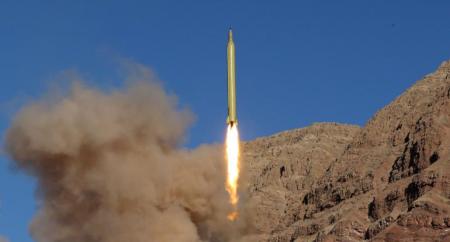 A ballistic missile is launched and tested in an undisclosed location, Iran, March 9, 2016. REUTERS/Mahmood Hosseini/TIMA
Does anyone know what’s really in the Iran nuclear deal with all its unpublished side agreements and secret verbal pledges?
Certainly not the American public, on whose behalf it was putatively negotiated. And probably not most, if not all, members of Congress who were bypassed in its negotiation and “signing” in a manner that doesn’t seem remotely constitutional.
Despite the yeoman efforts of Jay Solomon, Omri Ceren and others, the full extent of the deal is still a mystery. We don’t know in anywhere near full detail what Obama and Kerry, with the aid and comfort of wannabe fiction writer Ben Rhodes, hath wrought, though we do—pace Solomon, Ceren, etc.—have some sense that where compromises were made they almost universally favored Iran. Obama, for reasons again mysterious, seemed desperate to get a deal.
We also know that Iran has already broken at least one U.N. resolution:
The Khorramshahr medium-range ballistic missile flew 600 miles before exploding, in a failed test of a reentry vehicle, officials said. Iran defense minister Brigadier Gen. Hossein Dehqan said in September that Iran would start production of the missile.
U.N. resolution 2231 — put in place days after the Iran nuclear deal was signed — calls on the Islamic Republic not to conduct such tests. However, this is at least Iran’s second such test since July. The resolution bars Iran from conducting ballistic missile tests for eight years and went into effect July 20, 2015
Some Iranian officials claim that Obama & Co. gave them verbal permission during the negotiations to test missiles up to 2000 kilometers, enough to reach Israel, but not Europe. That’s nauseating, if true. Again, we don’t know, although we do know the Iranians insist they will continue with their tests.
Trump, however, has responded properly and forcefully by imposing new sanctions on 13 Iranian people and a dozen of their companies. He made his views evident to all in, unsurprisingly, a tweet: “Iran is playing with fire – they don’t appreciate how ‘kind’ President Obama was to them. Not me!” Via his national security adviser General Flynn, he further made clear that “nothing’s off the table.”
But most importantly, are the Iranians also breaking the original nuclear deal? Well, we don’t know because, as noted, we don’t know what it is. Not only that, as many have reported and PJM’s Michael Ledeen predicted quite some time ago, neither side has actually signed the deal in the first place. So it may not even exist. It’s a tree growing unseen in the wilderness or, perhaps more accurately, one of those Hollywood-style “verbal agreements”—enforceable only when opportune. It’s maximum plausible deniability all around.
That means nothing really happened. In the end, Iran can do anything it wants, or can get away with, in the nuclear realm just as it obviously believes it can do anything it wants in the missile launching realm.
Perhaps I’m missing something, but what reason could there be, at this point, not to release the so-called terms of this so-called deal—other than the embarrassment of the officials involved? America has a right to know what has been done in its behalf. Instead of BS transparency, we need real transparency. So do the citizens of many others countries that are in the crosshairs of the newly-enriched (by us) Iran with its expansionist goals that have been brutally apparent since this imaginary signing in Syria, Lebanon, Yemen and who knows where else.
The time is long since past for the complete details of this quondam deal to be released. I suspect they would be more than a little disturbing. Do it, Mr. President.
Guest Column: Washington Finally Designates Iran’s Revolutionary Guard Corps, Investigative Project on Terrorism, Raymond Tanter and Edward Stafford, February 3, 2017

The U.S. Treasury Department announced sanctions Friday on a host of Iranian companies and individuals as terrorists. It is a welcome development, which hopefully sends a signal to Tehran to rein in its global terror support, ballistic missile testing, and oppression of its people.
The action targets people and entities involved in procuring technology and/or materials to support Iran’s ballistic missile program, as well acting for or on behalf of, or providing support to, Iran’s Islamic Revolutionary Guard Corps (IRGC)-Qods Force.
The Iranian entities operate like a network out of Lebanon. It is the base of Hizballah (Party of God), an IRGC proxy, which was designated in 1997, but the IRGC was not designated.
Friday’s sanctions could help liberal democracy grow in Iran by showing Iranians that their leadership would face consequences for violating civil liberties at home and international relations norms abroad.
Per the Iranian Constitution (See Articles 107, 110), Iran is a theocratic dictatorship. Its parliament is under the sway of the Supreme Leader and other ayatollahs who select themselves. There is no such thing as a separation of powers by an independent authority.
Iran’s military is subordinated to the IRGC, which also controls most of the economy. Electoral results that do not satisfy the leadership are ignored and protests of anti-democratic governmental action are ruthlessly and systematically suppressed.
In the aftermath of the 2009 presidential elections, the Greens and the National Council of Resistance of Iran (NCRI) led protests. There is evidence the NCRI continues to exist despite facing heavy persecution. But the Greens have faded away, with their leaders Mir Hossein Mousavi and Mehdi Karroubi under house arrest in Tehran, subject to the whims of Supreme Leader Ayatollah Khamenei.
It appears as if Iran’s leaders face few domestic consequences for their illiberal and anti-democratic rule; so, to paraphrase Burke, the fewer consequences from within, the more needed from without.
Candidates for Designation
A 2015 study by Israel’s Meir Amit of the Intelligence and Terrorism Information Center, Portrait of Qasem Soleimani, commander of the Iranian Islamic Revolutionary Guards Corps’ Qods Force, provides ample evidence of the IRGC’s role in fomenting global terrorism.
Starting in 2012, the IRGC recruited several thousand Shi’ite volunteer fighters from among Afghan refugees living in Iran. The IRGC also cultivated terrorist networks in the Golan Heights. These activities morphed into terrorism on Aug. 20, 2015, when local forces, including Hizballah operatives supported and supplied by the IRGC, fired four rockets at Israel from the Syrian-controlled Golan Heights. Two hit Israeli territory in the Upper Galilee and two fell in the Golan.
Last April, Hizballah with the backing of the IRGC, began building new military installations in Syria, according to a report from the Foundation for Defense of Democracies. These appear to be geared toward a future, conventional war with Israel, but they offered Hizballah a venue from which it can launch strikes against northern Israeli cities.
Deliberately targeting civilians is a textbook example of terrorism. During this same time, the IRGC helped Hizballah operate complex weapons rockets that increased Hizballah’s ability to target Israeli cities.
A study published last fall by Iranian specialist Alireza Jafarzadeh and his colleagues shows how Iran fuels the Syrian civil war by placing the IRGC on the ground and transporting some Afghan refugees living in Iran to fight in Syria. The IRGC combined its troops and those of surrogates on the ground in terrorist assaults on civilians in places like Aleppo, Syria. This combination of forces on land with Syrian airstrikes proved to be a toxic mix of terrorism: “Syria is our 35th province, and is a strategic province for us,” Mehdi Taeb, a former commander of IRGC intelligence said in 2013. Because Taeb retains influence in the IRGC, his statements were and are indicative of the depth of the IRGC commitment to Syrian regime capabilities to conduct terrorism against civilians:
“If the enemy attacks us and seeks to take Syria or Khuzestan [an Iranian province], our priority would be to keep Syria, because if we keep Syria, we can retake Khuzestan. But if we lose Syria, we cannot keep Tehran.”
These three studies show the IRGC meets the legal criteria for an FTO designation. They are: 1) It must be a foreign organization; 2) engage in terrorist activity or terrorism, or retain the capability and intent to engage in terrorist activity or terrorism; and 3) the organization’s terrorist activity or terrorism must threaten the security of U.S. nationals or the national security (national defense, foreign relations, or the economic interests) of the United States).
To designate an organization or individual, there must be evidence they threaten the United States’ national security, foreign policy, or economy. The studies cited show that the IRGC is a threat to U.S. national security interests.
As evidence of congressional interest in designation, on Friday, MSNBC reported a bipartisan letter to President Trump in favor of sanctions against the IRGC. In addition, “The Iranian Revolutionary Guard Corps (IRGC) Terrorist Designation Act” was introduced in the House and Senate in January. These identical bills emphasize that the IRGC meets the criteria for designation as a foreign terrorist organization under U.S. law.
“If a foreign organization looks like a terror group, operates like a terror group, and supports terrorism, then it should be called for what it is–a foreign terrorist organization,” said House co-sponsor Michael McCaul, R-Texas. “As obvious as that seems, for years the IRGC has been allowed to operate clandestinely using front companies and illicit networks to evade formal designation.”
Fellow Texas Republican and Senate co-sponsor Ted Cruz added that, by designating IRGC as a foreign terror organization, the U.S. would be “signaling to financial institutions and companies who facilitate or conduct business with the IRGC that they may be held liable.”
The Way Forward
Regarding the executive branch, President Trump made excellent choices for his national security team—Secretary of State Rex Tillerson; Defense Secretary James Mattis; National Security Adviser, Mike Flynn; Homeland Security Secretary, John Kelly; Director of National Intelligence, Dan Coats; and Director of Central Intelligence, Mike Pompeo.
These talented officials need not sing from the same songbook, that is, they need not agree. But it is important that their views be taken into account in the interagency process. That said, consider two major benefits of designation their consultation might produce.
First, tagging the IRGC would give succor to democratic forces within Iran by imposing costs on anti-democratic ones, including those who lead the IRGC. The IRGC leader Qasem Soleimani, who goes virtually unchallenged, would be weakened. A weaker Soleimani could give rise to splits within the regime and place Iran on its back foot. Now, Tehran can spend money abroad on Afghan fighters, Hizballah in Lebanon and Syria, Hamas in Gaza, and ignore unmet economic needs of the population.
Second, designating the IRGC sends a strong signal to the Arab Gulf States, led by Saudi Arabia: Washington is serious about regime change in Tehran. Prince Turki al Faisal, former Saudi intelligence chief, spoke to a group of Iranian dissidents in Paris in July 2016. Although he was not then in the government, Prince Turki remains an influential player in Riyadh.
A crowd of over 100,000 Iranian oppositionists chanted in Farsi that they wanted regime change in Iran. Prince Turki spoke to the dissidents in Arabic, saying he also wanted to see regime change in Tehran. This remark brought the house down.
In a subsequent brief conversation with Tanter, Turki said that designating the IRGC would be a good start toward unraveling of the Iranian regime.
The bottom line is that designation could help bring liberal democracy to Iran by weakening the grip of its key repressive institution—the Islamic Revolutionary Guard Corps and its proxies like Hizballah.
Trump slaps sanctions on Iran over missile test, Washington Times, Dave Boyer, February 3, 2017
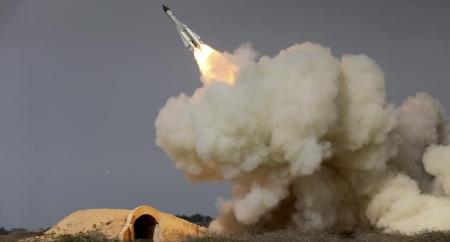
 In this Dec. 29, 2016, photo, released by the semi-official Iranian Students News Agency (ISNA), a long-range S-200 missile is fired in a military drill in the port city of Bushehr, on the northern coast of Persian Gulf, Iran.
The Trump administration hit Iran with new sanctions Friday, one day after President Trump said he had put Tehran “on notice” for testing a missile.
The Treasury Department announced sanctions against 13 individuals and 12 entities.
Speaker Paul D. Ryan said the “swift and decisive response proves that our new administration is serious about holding the Iranian regime accountable for its illicit behavior.”
House Foreign Affairs Committee Chairman Ed Royce, California Republican, said Iran’s action poses “a direct threat to the United States and our allies.”
“I’m glad the administration is taking long-overdue steps to hold the regime accountable,” Mr. Royce said. “I look forward to working with the administration to build on these designations, push back against Iran’s destructive policies, and promote stability in the Middle East.”
Some of those on the sanctions list are based in the United Arab Emirates, Lebanon and China. The penalties were imposed under existing authority that had been issued by then-President Barack Obama. A bipartisan group of senators had urged Mr. Trump in a letter Thursday to take action against Iran.
“Iranian leaders must feel sufficient pressure to cease deeply destabilizing activities, from sponsoring terrorist groups to continued testing of ballistic missiles,” the lawmakers wrote. “Full enforcement of existing sanctions and the imposition of additional sanctions on Iran for its ballistic missile program are necessary.”
Iran tested a missile Sunday. On Wednesday, White House national security adviser Mike Flynn said the Trump administration was putting Iran “on notice,” calling the missile test “provocative.”
The missile launch was followed by Iran-backed Houthi militants’ deadly attack this week on a Saudi naval vessel in the Red Sea.
Mr. Trump told reporters Thursday that he wasn’t ruling out the prospect of military action against Tehran.
“Nothing’s off the table,” the president said.
Iran’s Foreign Minister Javad Zarif said on Twitter that the Iranian government was “unmoved” by Mr. Trump’s warnings.
“We’ll never initiate war,” Mr. Zarif said. “We will never use our weapons against anyone, except in self-defense. Let us see if any of those who complain can make the same statement.”
Ali Akbar Velayati, a top aide to Iran leader Ayatollah Ali Khamenei, said Thursday that Iran will continue to test ballistic missiles and “not ask any country for permission in defending itself.”
“This is not the first time that an inexperienced person has threatened Iran,” he said. “Iran is the strongest power in the region and has a lot of political, economic and military power. America should be careful about making empty threats to Iran.”
Mr. Trump said Friday that Iran is “playing with fire.”
“They don’t appreciate how ‘kind’ President Obama was to them,” he said on Twitter. “Not me!”
Mr. Obama signed an agreement with other world powers in 2015 to lift economic sanctions against Iran in exchange for limits on Tehran’s nuclear program and regular international inspections.
Mr. Trump has called it a bad deal and says he wants to renegotiate parts of it.
“Likewise, the Zionist regime is the most important enemy of Iran in the regionregion, and is less than 1,200 km away. Therefore, short- and medium-range missiles are sufficient to strike U.S. bases near Iran, and long-range missiles are sufficient to strike the occupied territories [Israel]. The diagram shows several of these American bases and [also] the missiles that are counting [down] to the moment [when they will be able to] strike them.”
*********************
Introduction
On January 30, 2017, U.S. sources announced that Iran had conducted a failed test of a new ballistic missile, the Khorramshahr. According to reports, the missile exploded after a 965-km flight.[1] Both Iranian Foreign Minister Zarif (on January 31) and Defense Minister Dehghan (on February 1) stressed that Iran “asks permission from no one in the matter of its defense program.”[2]
It should be emphasized that contrary to statements by Iranian regime spokesmen who say that Iran’s missile program is defensive, missiles with a 2,000-km range are strictly offensive and strategic. This is why Iran has faced constant demands to stop developing them.
In the years that preceded the U.S.-Iran nuclear talks, Iran developed ballistic missiles with ranges of 2,500-5,000 km that threaten Europe and even the U.S.
Dr. Hassan Abbasi, theoretician of Iran’s Islamic Revolutionary Guards Corps (IRGC) and director of the IRGC Center for Borderless Security Doctrinal Analysis, said in 2004: “We have a strategy drawn up for the destruction of Anglo-Saxon civilization and for the uprooting of the Americans and the English.
“Our missiles are now ready to strike at their civilization, and as soon as the instructions arrive from Leader [Ali Khamenei], we will launch our missiles at their cities and installations… And because of Khatami’s policies and dialogue between the civilizations, we have been compelled to freeze our plan… and now we are [again] about to carry out the program… The global infidel front is a front against Allah and the Muslims, and we must make use of everything we have at hand to strike at this front, by means of our suicide operations or by means of our missiles.”[3]
The London-based Saudi daily Al-Sharq Al-Awsat also reported, on June 14, 2004, that the Shihab 4 and Shihab 5 long-range missile projects had been revived, on orders from Iranian Supreme Leader Ali Khamenei.[4]
It should be noted that a December 14, 2013 report on Iran’s missile program published by the IRGC-affiliated Mehr news agency immediately following the Geneva Agreement provided details on the various Shihab models. According to the report, Shihab 3D missiles, with a range of 2,200-3,000 km, “can easily reach the occupied territories [Israel]… and cover their entire area.” The report also stated that the Shihab 4 has a range of 3,000 km and the ability to launch satellites into orbit, and that “very little information” has been published about the Shihab 5. The diagrams in the article also feature a Shihab 6 model.[5]
U.S. Approves Iranian Development Of Missiles With A Range Of Only 2,000 km – That Is, Capable Of Reaching Israel
However, after U.S.-Iran negotiations began, and at the end of their first stage, in Geneva in November 2013, Iranian officials began reporting that Iran’s missile program for missiles with ranges above 2,000 km was being restricted.
Thus, for example, immediately after the interim agreement was reached in Geneva, on December 10, 2013, and in reference to it, IRGC commander Mohammad Ali Jafari said that Iran is capable of producing missiles with a range of over 2,000 km but that Khamenei had restricted the IRGC to a 2,000-km range: “We want to increase the range of the IRGC’s missiles, but despite this, the Leader [Khamenei] has restricted us to a range of 2,000 km. We have the capability to increase the range of our missiles, and our missiles should obviously reach Israel… The regime’s red lines were not crossed during the nuclear talks with the P5+1 [Group] and in the Geneva Agreement.”[6]
Indeed, IRGC commanders stressed that the most important thing for the regime was missiles capable of striking Israel; see, for example, comments by IRGC Aerospace and Missile Division director Amir Ali Hajizadeh, who said following a 2016 missile launch: “For us, Israel’s evil is totally clear, and the 2,000-kilometer range of our missiles [is intended] to confront the distant Zionist regime.”[7]
Extensive quotes regarding the Iranian regime’s explicit intent to target Israel with its missiles can be found in MEMRI Inquiry & Analysis No. 1135, Iranian IRGC Missile Unit Commanders: We’ve Developed 2,000-km Range Missiles And Equipped Hizbullah With 300-km Range Missiles; Fars News Agency: Israel’s Illusions About Its Natural Gas Fields Will Be Buried In The Mediterranean, December 3, 2014, and Special Dispatch No. 6349, Iran Launches Long-Range Missiles Emblazoned With Slogan: ‘Israel Should Be Wiped Off The Face Of The Earth’, March 16, 2016.
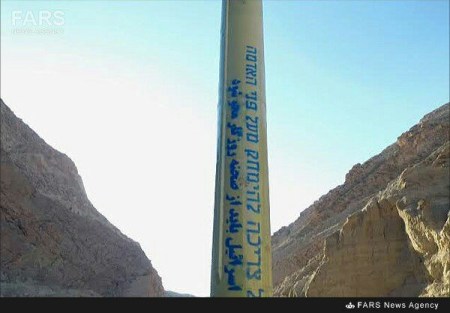 Iranian missile emblazoned with the slogan ‘Israel Should Be Wiped Off The Face Of The Earth” (Fars, Iran, March 9, 2016)
On November 17, 2014, the IRGC-affiliated Tasnim news agency posted a diagram explaining that Iran “makes do” with a range of 2,000 km, which it considers “desirable” and which covers all of Israel: “On the Firing Line – The commanders of the army of the Islamic Republic [of Iran] have said several times that with its attainment of long-range missiles with a range of up to 2,000 km, Iran has arrived at the range ceiling that it considers desirable, and that ‘in the meantime’ there is no need to increase this range. Although the U.S. is 11,000 km from Iran, in recent years it has approached the borders of Iran, [and therefore] its military bases, equipment, and forces are a target for Iran’s missiles.
“Likewise, the Zionist regime is the most important enemy of Iran in the region, and is less than 1,200 km away. Therefore, short- and medium-range missiles are sufficient to strike U.S. bases near Iran, and long-range missiles are sufficient to strike the occupied territories [Israel]. The diagram shows several of these American bases and [also] the missiles that are counting [down] to the moment [when they will be able to] strike them.”[8]
Additionally, Defense Minister Hossein Dehghan said on August 18, 2015 in response to a reporter’s question on the manufacture of missiles with a range greater than 2,000 km: “We do not produce missiles with ranges greater than 2,000 km.”[9]
Is U.S. Permission For Iran To Develop Missiles With Ranges Up To 2,000 km – Which Reach Israel – A Secret Annex Of The JCPOA, Or Simply Unwritten Consent?
In statements, IRGC officials hinted that restrictions on the range of Iranian missiles so that they reach Israel but not Europe were part of the Iran deal. Thus, for instance, IRGC commander Mohammad Ali Jafari referred to the IRGC’s November 2, 2015 consent to UN Security Council Resolution 2231, saying: “One of the points in this resolution was the matter of restrictions, which some military elements feared. Therefore, we held meetings in [Iran’s] Supreme National Security Council, and also went to the Leader [Khamenei]. The [Iranian] negotiating team told the Westerners that we do not agree to these restrictions. They [the Westerners] said that these issues must be included in the resolution. Even when I met with the Leader, he said that there were no restrictions on developing defensive capabilities. The only restriction relates to nuclear missiles, which, obviously, we never wanted.”[10]
The next day, on November 3, 2015, Iranian Army chief of staff Hassan Firouzabadi referred to Jafari’s remarks, saying: “I confirm statements by the IRGC commander that Iran’s missile activity is not restricted. We will follow two restrictions: The first is mentioned in the JCPOA, in the matter of no nuclear planning, and the second is the range of 2,000 km, which has already been noted previously by all elements in Iran.”[11]
It should be noted that the Hebrew version of this news, which IRIB published on November 4, 2015 explicitly mentioned, in both the headline and the text, that the JCPOA allows Iran to possess ballistic missiles of a range of 2,000 km. The Hebrew news item read:
“Firouzabadi: The Nuclear Agreement Promises Iran Missiles With 2,000-km Range
“The chief of staff of Iran’s armed forces, Maj.-Gen. Hassan Firouzabadi, stressed that the state, under orders from the general commander [i.e. Khamenei] of the IRGC, undertakes, inter alia, to restrict nuclear planning, but that it is entitled to produce missiles with a range of 2,000 km.
“Firouzabadi made these statements yesterday (Tuesday) to a group of Islamic regime leaders and officials, and referred to [statements by] the IRGC general commander emphasizing that Iran would commit to the sections of the nuclear agreement with the West that include a restriction on nuclear planning, and that in addition, Iran is entitled to possess missiles with a range of 2,000 km.”[12]
These statements indicate that although the permission given to Iran to develop missiles capable of striking Israel is likely not a secret annex of the JCPOA, it still constitutes unwritten consent that is an integral part of the nuclear deal. It is convenient for both sides not to publish this understanding in written form – for Iran because it rejects any public reference to its missile program, which it defines as defensive but is in fact offensive; and for the Obama administration, because there would be repercussions if it were to be revealed that it had given Iran permission to develop missiles capable of striking Israel.
It should be noted that UN Security Council Resolution 2231 (2015) constitutes an additional concession by the Obama administration to Iran, in comparison with the previous resolution 1929 (2010). This concession has two components:
One, UNSCR 1929 banned Iran from conducting any activity concerning missiles capable of carrying nuclear warheads, while UNSCR 2231 replaced the word “capable,” which refers to objective specifications, with the word “intended,” which concerns fluid political matters.
Two, while UNSCR 1929 banned Iran from conducting any missile activity, UNSCR 2231 rescinds this ban.
Following Iran’s May 9, 2016 missile test, which took place after the JCPOA’s Implementation Day – and which embarrassed the Obama administration – IRGC Aerospace and Missile Division director Amir Ali Hajizadeh said: “The Americans are telling [us]: ‘Don’t talk about missile affairs, and if you conduct a test or maneuver, don’t mention it.'”[13]
*A. Savyon is Director of MEMRI’s Iran Media Project; Y. Carmon is President of MEMRI; U. Kafash is a Research Fellow at MEMRI.
[1] Foxnews.com, January 30, 2017.
[2] Yjc.ir, January 31, 2017; Tasnim (Iran), February 1, 2017.
[3] Shargh (Iran), June 5, 2004; Al-Sharq Al-Awsat (London), May 28, 2004. Also see MEMRI Inquiry & Analysis No. 181, The Internal Debate in Iran: How to Respond to Western Pressure Regarding Its Nuclear Program, June 17, 2004; MEMRI Special Dispatch No. 723, Iran’s Revolutionary Guards Official Threatens Suicide Operations: ‘Our Missiles Are Ready to Strike at Anglo-Saxon Culture… There Are 29 Sensitive Sites in the U.S. and the West…’, May 28, 2004; and MEMRI TV Clip No. 252, Iranian Revolutionary Guard Official In Tehran University Lecture (Part II): We Plan To Target US Nuclear Warheads On US Soil; Should Take Over England, May 22, 2004.
[4] A military source in the Iranian Defense Ministry stated: “In a meeting last week with Revolutionary Guards commanders, Khamenei said that Israel was planning to attack Iran’s nuclear installations and the Iranian military soon, and therefore defense and military preparedness should be boosted as soon as possible. Khamenei stressed that the increase in petroleum prices allowed Iran to allocate a larger budget to its military projects. [Iran’s] Ministry of Defense received $1 billion to resume its Shihab 4 and Shihab 5 project. It is known that in the past, Iran conducted an experiment with Shihab 3 missiles whose range is 1,200 kilometers [and which can reach Israel], but [President] Khatami halted the project of the Shihab 4, whose range is 2,800 [which covers Western Europe], and the Shihab 5, whose range is 4,900-5,300 km [and which can reach the U.S.], because he thought it was a project incompatible with Iran’s strategic interests and defense needs.” Al-Sharq Al-Awsat (London), June 14, 2004.
[5] Mehrnews.com, December 14, 2013.
[6] ISNA (Iran), December 10, 2013.
[7] Fars (Iran), March 9, 2016. See MEMRI Special Dispatch No. 6349, Iran Launches Long-Range Missiles Emblazoned With Slogan: ‘Israel Should Be Wiped Off The Face Of The Earth’, March 16, 2016.
[8] Tasnim (Iran), April 17, 2014. See MEMRI Inquiry & Analysis No. 1135, Iranian IRGC Missile Unit Commanders: We’ve Developed 2,000-km Range Missiles And Equipped Hizbullah With 300-km Range Missiles; Fars News Agency: Israel’s Illusions About Its Natural Gas Fields Will Be Buried In The Mediterranean, December 3, 2014.
[9] Yjc.ir, August 18, 2015.
[10] Fars (Iran), November 2, 2015.
[11] Mashregh (Iran), November 3, 2015.
[12] Hebrew.irib.ir, November 4, 2015.
[13] See MEMRI Special Dispatch No. 6430, IRGC Aerospace And Missile Force Commander: The Americans Are Telling Us ‘Don’t Talk About Missile Affairs, And If You Conduct A Test… Don’t Mention It’, May 15, 2016.
Thank Obama for Iranian Missile Tests, PJ Media, Andrew C. McCarthy, January 31, 2017
 (Amir Kholousi, ISNA via AP)
There is great shrieking from the “international community” over Iran’s ballistic missile test over the weekend, the latest of what the Wall Street Journal reports is nearly a dozen such tests since President Obama’s Iran nuclear deal — the Joint Comprehensive Plan of Action (JCPOA) — went into effect last year. The United Nations Security Council, which endorsed the deal even though no party has actually signed it, is set to hold an “emergency meeting” today to discuss the matter.
What is there to discuss?
French foreign minister Jean-Marc Ayrault said it best in complaining that such tests are “contrary to the spirit” of the JCPOA.
When they talk about a violation of the “spirit” of a pact, you can be certain that there has been no violation of the letter of a pact — i.e., the thing that is required for there to be a real, actionable violation.
The provocative missile tests further elucidate the obvious: Iran’s nuclear program is about developing nuclear weapons — which Iran will be able to do consistent with the terms of the JCPOA. But regardless of the crying and gnashing of teeth at the emergency meeting, the tests do not violate the JCPOA.
For that, we can thank Barack Obama.
Prior to the JCPOA, Iran’s ballistic missile activities were barred by a series of UN resolutions backed by American and international sanctions. But sensing Obama’s desperation to complete the JCPOA at any cost, and by indulging any fiction, Iran threatened to walk away from the table unless the restraints on missiles were eliminated.
Obama quietly accommodated the mullahs — despite having repeatedly told the American people that the negotiations were confined to nuclear activities, and that his administration would hold a hard line on Iranian missile development and terror promotion.
There was nothing in the JCPOA about ballistic missiles. When Obama brought the deal to the Security Council, however, he used its endorsement vehicle — Resolution 2231 — to undermine the missile sanctions. The pertinent paragraph is buried deep in the resolution (Annex B, Paragraph 3 — scroll all the way down to page 99 of 104). It states (italics is mine):
Iran is called upon not to undertake any activity related to ballistic missiles designed to be capable of delivering nuclear weapons, including launches using such ballistic missile technology, until the date eight years after the JCPOA Adoption Day[.] …
Notice three things:
How could Obama have agreed to such disastrous terms (in addition to giving the mullah’s over $100 billion in sanctions relief — including ransom cash)? The Obama administration illusion was that Iran was in the process of a powerful, inevitable reform movement that would, in the course of eight to 15 years, transmogrify it into a normal, reasonable, moderate nation-state. According to this thinking, by the time the JCPOA ran its course, Iran would be so benign it would probably not want nuclear missiles; and even if it did, that would be no problem because, by then, its regime would have evolved into a stable pillar of the international community.
Of course, we now know this was a consciously false narrative that Obama peddled to sell the Iran deal to the public — orchestrated by deputy national security adviser Ben Rhodes, with the help of an echo chamber media.
Iran ratcheted up missile development almost immediately after the JCPOA went into effect. The missiles test-fired last March were inscribed “Israel must be wiped out.” In Tehran, that’s known as “the spirit” of the agreement.
Iran tests ballistic missile in defiance of UN resolution, US officials say, Fox News, Lucas Tomlinson, Jennifer Griffin, January 30, 2017
President Trump on Sunday spoke with King Salman of Saudi Arabia, a conversation in which the two “agreed on the importance of rigorously enforcing the Joint Comprehensive Plan of Action with Iran and of addressing Iran’s destabilizing regional activities,” the White House said in a statement.
A ballistic missile launch could potentially fall under “destabilizing regional activities.”
The launch also comes a day before Jordan’s King Abdullah arrived in Washington for meetings with Vice President Pence and Defense Secretary Mattis.
*****************************
Iran conducted a ballistic missile test in yet another apparent violation of a United Nations resolution, U.S. officials told Fox News on Monday.
The launch occurred at a well-known test site outside Semnan, about 140 miles east of Tehran, on Sunday.
The Khorramshahr medium-range ballistic missile flew 600 miles before exploding, in a failed test of a reentry vehicle, officials said. Iran defense minister Brigadier Gen. Hossein Dehqan said in September that Iran would start production of the missile.
U.N. resolution 2231 — put in place days after the Iran nuclear deal was signed — calls on the Islamic Republic not to conduct such tests. However, this is at least Iran’s second such test since July. The resolution bars Iran from conducting ballistic missile tests for eight years and went into effect July 20, 2015.
Iran is “called upon not to undertake any activity related to ballistic missiles designed to be capable of delivering nuclear weapons, including launches using such ballistic missile technology,” according to the text of the resolution.
The landmark nuclear deal between Iran and world powers, however, does not include provisions preventing Iran from conducting ballistic missile tests, and Iran claims the tests are legitimate because they are not designed to carry a nuclear warhead.
President Trump on Sunday spoke with King Salman of Saudi Arabia, a conversation in which the two “agreed on the importance of rigorously enforcing the Joint Comprehensive Plan of Action with Iran and of addressing Iran’s destabilizing regional activities,” the White House said in a statement.
A ballistic missile launch could potentially fall under “destabilizing regional activities.”
The launch also comes a day before Jordan’s King Abdullah arrived in Washington for meetings with Vice President Pence and Defense Secretary Mattis.
Re-isolate Iran now, Israel Hayom, David M. Weinberg, January 27, 2017
In fact, the U.S. and Israel should reach an accord on a basket of responses to Iranian violations and aggressions, including the placement of a military option against Iran’s nuclear program back on the table.
Trump and Netanyahu must together promulgate an approach for combating the malign influence and hegemonic ambitions of Iran.
*********************************
Prime Minister Benjamin Netanyahu has made it clear that one of the top items on his agenda for consultation with U.S. President Donald Trump in Washington next month is countering Iranian aggression. With good reason. The net result of the Joint Comprehensive Plan of Action has been to foster Iran’s rise to regional hegemon.
While the JCPOA suspended a part of Iran’s nuclear weapons program for a few years, the ayatollahs see it as providing time to advance their centrifuge capability and regional sway.
In a Hoover Institution paper published this month, Professor Russell Berman and Ambassador Charles Hill call Iran a “de facto Islamic caliphate,” and the Islamic Revolutionary Guard Corps an “Iranian expeditionary force for invading strategic Arab spaces.”
They call former President Barack Obama’s declared goal — of finding and bolstering so-called moderates in Tehran via the JCPOA — an “illusion.” Iran is not a polity of moderates and hard-liners, they write. It is a revolutionary theocracy masquerading as a legitimate state actor. So the first thing Trump must do is recognize the consistently hostile character of the regime.
Alas, Obama was obsessed from the advent of his presidency with making nice to Iran, and was willing to subordinate much of American foreign policy in service of that goal. He sent many secret letters to Supreme Leader Ayatollah Ali Khamenei that recognized the prerogatives of the Islamic republic and foreswore regime change. He cut funding to anti-regime groups and abandoned Iranian moderates during the early days of the Green Revolution in 2009, after the regime fixed an election. He effectively conceded Syria as within Iran’s sphere of influence.
In his penetrating book, “The Iran Wars: Spy Games, Bank Battles, and the Secret Deals That Reshaped the Middle East,” Wall Street Journal reporter Jay Solomon exposes the money trail that accompanied this strategic sellout to Iran. In exchange for talking, Obama gave the Iranians hundreds of millions of dollars monthly, stabilizing their economy. And in the end, Obama offered Iran a deal that legalized full-blown uranium, plutonium, and ballistic missile work on a timeline, and did not force the country to disclose its previous nuclear cheating. The deal also released roughly a hundred billion dollars to Iran; had American officials traveling to drum up business for Iran; and removed restrictions on a range of Iranian terrorists.
Along the way, the administration abandoned the powerful sanctions leverage it had over Iran. Solomon chronicles the ramp-up of severe banking sanctions on Iran that were having a disastrous impact on the Iranian economy. “Iran’s economy was at risk of disintegrating, the result of one of the most audacious campaigns in the history of statecraft. The country was months away from running short on hard currency. The budget had a $200 billion black hole. And the U.S. Treasury Department had made sure Iran had no way to recover. Iranian ships and airplanes were not welcome beyond Iran’s borders, and oil revenue was frozen in overseas accounts.”
And then, behold, Obama backed off. Administration officials all of a sudden claimed that tightening the noose on the Iranian economy would cause the sanctions policy to collapse! And Secretary of State John Kerry was sent to cut a sweet deal with Iran; a deal that squandered — and then reversed — a decade’s worth of effort to constrain Iran.
Now Trump must act to constrain Iran all over again.
Over the past year, Iran has intensified a pattern of aggression and increased its footprint across the region. Iranian advisers with Shiite militias from as far away as Afghanistan have flooded Syria, giving Tehran a military arc of influence stretching to the Mediterranean.
Khamenei says that Iran’s massive military presence (alongside Hezbollah) in Syria is a supreme security interest for the regime — a front line against Israel — and that Iran has no plans to leave.
This has grave implications for Israel. Netanyahu must demand of Trump (and Putin) to include the removal of all foreign forces, especially Iran, in any future agreement regarding Syria. This will be very difficult — especially since Russia has just signed a long-term agreement to greatly enlarge its military presence in Syria, including the port in Tartus and air base in Latakia.
Iran, too, is aggressively expanding its naval presence in the Red Sea region and eastern Mediterranean. Since 2011, it has been sending warships through the Suez Canal, and has used maritime routes to send arms shipments to Hizballah and Hamas. (Israel has intercepted five of these armament ships.) And in the Strait of Hormuz, IRGC speedboats have repeatedly engaged in provocative encounters with American warships, including the conduct of surprise live rocket fire exercises in proximity to U.S. Navy vessels.
Then there is Iranian terrorism. IRGC agents have been caught planning attacks on Israeli, American, British and Saudi targets in Kenya. Over the past five years, Iranian agents were exposed while planning to attack Israeli diplomats in Azerbaijan, Cyprus, Georgia, India, Nigeria, Thailand and Turkey. Hezbollah operatives supported by Iran carried out the bus bombing of Israeli tourists at the Burgas airport.
Also: The detailing of Iranian terrorism in Arab countries such as Egypt, Jordan and Saudi Arabia could fill this entire newspaper.
Then there is Iran’s ballistic missile program. In December, U.S. Senator Ted Cruz sent a seven-page letter to three senior officials of the Obama administration, detailing his well-founded concerns that North Korea and Iran might be working together on developing nuclear missiles. (Not surprisingly, the Obama officials never answered.)
Cruz’s basic question was: Why does Iran, having promised not to make nuclear weapons, continue to pour resources into developing long-range ballistic missiles, including numerous missile tests this past year? If not for nuclear weapons, then for what?
The intrepid analyst Claudia Rosett continually has raised the suspicion that North Korea’s nuclear program is secretly doubling as a nuclear backshop for Iran. It’s very possible that the $1.7 billion in air-freighted cash that Obama granted Iran is being used to finance nuclear weapons and missile research in North Korea. It’s even possible that Iran may be bold enough to buy warheads from North Korea.
Only Washington can stop this, by re-isolating and pressuring Iran. Netanyahu should travel to Trump with a comprehensive plan to influence U.S. policy toward Iran, as well as plans for joint action against Tehran.
This should include an end to the secrecy surrounding many sections of the JCPOA. All side agreements should be disclosed relating to Iranian technology acquisitions, raw material quantities, uranium and plutonium enrichment levels, sanctions relief and financial transfers. Loopholes and exceptions made surreptitiously by Obama should be closed.
Penalties should be set firmly in place for Iran’s prohibited missile programs. (Such penalties do not exist in the JCPOA or in U.N. Security Council Resolution 2231.)
U.S. and Israeli resources should be pooled, in a renewed and formal U.S.-Israel agreement, to uncover and eliminate any undisclosed sites within Iran connected to nuclear weapons technology; to counter Iranian terror threats across the region; and to subvert any Iranian bases in Syria and Lebanon.
In fact, the U.S. and Israel should reach an accord on a basket of responses to Iranian violations and aggressions, including the placement of a military option against Iran’s nuclear program back on the table.
Trump and Netanyahu must together promulgate an approach for combating the malign influence and hegemonic ambitions of Iran.
Iran: How Will Rafsanjani’s Death Affect Regime? Iran News Update, January 10, 2017
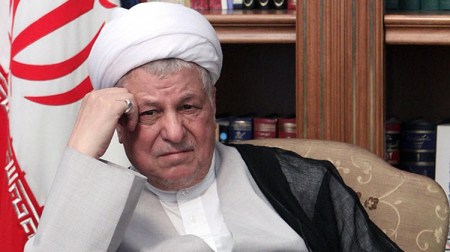
In his January 10 article for Al-Arabiya,, Heshmat Alavi, political and rights activist who focuses on Iran, writes about the effect of senior cleric Ali Akbar Hashemi Rafsanjani’s death by heart attack on Sunday, January 8, at the age of 82.
As Rafsanjani was known for his influential role in shaping the regime’s politics following the 1979 revolution, the Iranian regime was dealt a significant blow, and a power vacuum is created, less than four months prior to crucial presidential elections.
Rafsanjani’s role for the past 38 years helped maintain the regime’s measures of domestic crackdown, export of terrorism and extremism abroad, and their effort to obtain nuclear weapons, according to Alavi.
“The death of Rafsanjani, one of the pillars of the religious fascism ruling Iran and its balance factor collapsed, and the regime in its entirety is closer now to its overthrow,” said Iranian opposition leader Maryam Rajavi, President of the National Council of Resistance of Iran.
After Iran-Iraq War of the 1980s, Rafsanjani served as president from 1989 to 1997. He ran again for office again in 2005, but lost the election to firebrand Mahmoud Ahmadinejad.
In recent years, Rafsanjani has been mentoring the so-called “moderate” Iranian President Hassan Rowhani, and was known for his fierce rivalry with Iranian Supreme Leader Ali Khamenei.
Although known for his close ties to the regime founder Ruhollah Khomeini, who died in 1989, the West believed him to be a “pragmatic conservative” willing to mend fences with the outside world, especially the US.
Rafsanjani’s last post was head of the Expediency Council, a body assigned to resolve conflicts between the regime’s parliament (Majlis) and the Guardian Council, which has close links to Khamenei, and vets all candidates based on their loyalty to the establishment before any so-called elections. Rafsanjani himself was disqualified by the Guardian Council when he sought to participate in the 2013 elections as a “reformist” candidate.
Instead, Rafsanjani placed his power behind Rowhani after the latter assumed power as president in 2013. Rafsanjani used this position to “carve himself and his family an economic empire from the country’s institutions and natural resources in the past decades,” writes Alavi.
“One brother headed the country’s largest copper mine; another took control of the state-owned TV network; a brother-in-law became governor of Kerman province, while a cousin runs an outfit that dominates Iran’s $400 million pistachio export business; a nephew and one of Rafsanjani’s sons took key positions in the Ministry of Oil; another son heads the Tehran Metro construction project (an estimated $700 million spent so far),” states a 2003 Forbes analysis, which also alludes to the billions cached in Swiss and Luxembourg bank accounts by the Rafsanjanis.
While the West was convinced that Rafsanjani was more moderate than his “hardline” counterparts, he went along with them in suppressing dissidents, namely members and supporters of the People’s Mojahedin Organization of Iran (PMOI/MEK), the main opposition group that first blew the whistle on Iran’s clandestine nuclear weapons program.
“Four rulings are a must for the [PMOI]: 1- Be killed. 2- Be hanged. 3- Arms and legs be amputated. 4- Be separated from society,” Rafsanjani said back in 1981. He also played a presiding role in the 1988 massacre of over 30,000 political prisoners.
During his presidency, Rafsanjani allegedly directed numerous assassinations of dissidents abroad, including renowned human rights advocated Dr. Kazem Rajavi, former Iranian ambassador to Italy Mohammad Hossein Naghdi and Iranian Kurdish leader Abdulrahman Ghassemlou. He was also indicted for his role in the 1994 AMIA bombing in Buenos Aires that left 85 killed and hundreds wounded.
Alavi writes, “Rafsanjani has through four decades of mullahs’ rule in Iran played the role of the regime’s No. 2 figure and a balancing element, always securing the regime’s higher interests. His death will significantly weaken the mullahs’ regime in its entirety and will trigger major upheavals across the regime’s hierarchy.” He concludes by saying, “If past is any indication, the mullahs will most likely resort to further violence and the export of terrorism and extremism to prevent this newest crisis from spiraling out of control.”
The NCRI referred to Rafsanjani as “one of the two pillars and ‘key to the equilibrium’ of the Iranian regime,” adding that, “during his long career he was associated with some of the regime’s most egregious actions, including mass-casualty terror attacks and the assassinations of exiled dissidents.”
Rafsanjani is considered as one of its founding fathers of the Iranian regime, who played an outsized political role in the life of the Islamic republic, not only by serving as President after serving as Speaker of Parliament and Deputy Commander of the Armed Forces, but also heading two of the regime’s most important institutions, the Assembly of Experts, an 88-member body of top clerics which nominates the Supreme Leader; and the Expediency Council, a body that advises the Supreme Leader.
“Rafsanjani, who had always been the regime’s number two, acted as its balancing factor and played a decisive role in its preservation. Now, the regime will lose its internal and external equilibrium,” opposition leader Maryam Rajavi said in a statement that also referred to the “approaching overthrow” of the clerical regime.
On January 9 the NCRI published a list, outlining some of his outrageous conduct:
• Rafsanjani called for the extermination of members of Iran’s main opposition group, the People’s Mojahedin Organization of Iran (PMOI or MEK). On October 3, 1981, the state-run Ettela’at daily wrote, “Referring to the grouplets’ operations, Hashemi Rafsanjani, Speaker of the Islamic Parliament and Tehran’s acting Friday prayer leader, said in his sermon, ‘Divine law defines four sentences for them which must be carried out: 1 – kill them, 2 – hang them, 3 – cut off their arms and legs, 4 – banish them…‘Had we caught and executed 200 of them right after the Revolution, they would not have multiplied so much. If we don’t deal decisively with [Mojahedin] armed grouplet and agents of America and the Soviet Union today, in three years we will have to execute thousands of them instead of one thousand now…”
• According to Hossein-Ali Montazeri, Khomeini’s former heir, Khomeini sought counsel on his decisions from just two individuals: Rafsanjani and current Supreme Leader Ali Khamenei, including his decision to issue a fatwa ordering the massacre of at least 30,000 political prisoners at the end of the Iran-Iraq war in the summer of 1988.
During Rafsanjani’s tenure as President and as head of the Supreme National Security Council (SNSC), a body that oversees and authorizes the regime’s terrorist operations, the assassination of Iranian dissidents abroad and the regime’s terror attacks skyrocketed. The terror targets were not only Iranians.
• Rafsanjani’s remarks on May 5, 1989 as carried by Iran’s official state news agency IRNA , and were reported by The Associated Press:: “If in retaliation for every Palestinian martyred in Palestine, they will kill and execute, not inside Palestine, five Americans or Britons or Frenchmen, the Israelis could not continue to do these wrongs… It is not hard to kill Americans or Frenchmen. It is a bit difficult to Kill [Israelis]. But there are so many [Americans and Frenchmen] everywhere in the world.”
• Argentinian investigators implicated Rafsanjani in 2006, in one of the deadliest instances of Iranian terrorism abroad – a suicide truck bombing of the AMIA Jewish community center in Buenos Aires, in which 85 people were killed in 1994. The investigators accused Iran of instructing Hezbollah to carry out the bombing. They issued arrest warrants for Rafsanjani, seven other senior Iranians, and a Lebanese national, Imad Mughniyah, Hezbollah terrorist chief.
Interpol, at Argentina’s request, issued red notices – the organization’s equivalent of arrest warrants – for five of the Iranians and Mughniyah.
• The FBI established undeniable evidence that Tehran had masterminded the deaths of 19 American servicemen, in the bombing of Khobar Towers in Saudi Arabia on June 25, 1996.
According to the NCRI, these are some of the most significant killings of prominent dissidents abroad during Rafsanjani’s tenure:
• In 1992, four Iranian Kurdish dissidents in a Berlin restaurant called Mykonos were assassinated. A German court ruled in 1996 that the Iranian regime under Rafsanjani was directly responsible for the killings, which the U.S. State Department said provided further proof that Iran was a terrorist state.
• Maryam Rajavi’s brother-in-law, Kazem Rajavi of the National Council of Resistance of Iran (NCRI) – Iran’s most renowned human rights advocate and a former Iranian ambassador to the U.N. was shot dead near Geneva in 1990. Swiss investigators accused the Iranian regime of responsibility and authorities issued an arrest warrant for Rafsanjani’s intelligence minister, Ali Fallahian.
• Mohammad Hossein Naghdi, the NCRI representative in Rome, was shot dead on a street in the Italian capital in March 1993.
• Zahra Rajabi, the NCRI’s representative on refugee issues, was shot dead with an NCRI colleague in an Istanbul apartment in February 1996.
Rafsanjani was the one who pushed the Iranian clandestine nuclear weapons program forward as a guarantor of the regime’s survival. He cooperated with countries like North Korea to achieve these objectives.
Rafsanjani acknowledged that during his time as parliamentary speaker and President, both he and Khamenei sought ways to obtain a nuclear bomb in an interview published by the regime’s official state news agency IRNA on October 27, 2015. “Our basic doctrine was always a peaceful nuclear application, but it never left our mind that if one day we should be threatened and it was imperative, we should be able to go down the other path,” Rafsanjani said. He added he had travelled to Pakistan to try to meet Abdul Qadeer Khan, the father of Pakistan’s nuclear weapons program, who later helped North Korea to develop a bomb. Fortunately, the meeting never occurred.
Straun Stevenson Blames President Obama for the Legacy of Death and Destruction in Middle East, Iran News Update, January 8, 2017
(Please see also, In its Last Days, Obama Administration Clings to Hope of a Positive Role for Iran. — DM)
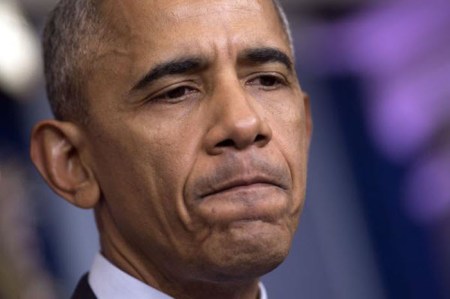
Struan Stevenson, president of the European Iraqi Freedom Association, former member of the European Parliament representing Scotland (1999-2014), president of the Parliament’s Delegation for Relations with Iraq (2009-14) and chairman of Friends of a Free Iran Intergroup (2004-14), writes in his January 6, 2017 article for UPI, that the legacy of President Barack Obama will be death and destruction in the Middle East. His vision cooperation between the United States and Iran “has unlocked a Pandora’s box of conflict and sectarian strife across the zone.”
During the closing days of the Obama administration the controversial nuclear deal with Iran and his policies regarding that ruthless regime have allowed the mullahs to threaten the security of the Middle East, and perhaps, while Saudi Arabia, the Gulf states and Turkey have tried to prevent Iran’s aggressive expansionism in the region.
The U.S. and other countries is the West failed the Syrian opposition and allowed a civil war to continue into its seventh year, costing hundreds of thousands of lives, and setting off the huge migration crisis in Europe.
$150 billion of frozen assets were released to Iran by the U.S. as part of the nuclear deal, which the Tehran government was expected to use to shore up their economy, on the brink of collapse. Instead, the regime redouble its spending the Islamic Revolutionary Guards Corps and Quds Force, both of which are listed terrorist organizations in the West and are involved in many conflicts in the Middle East. Not only does Iran support Bashar al-Assad in Syria, and Yemen’s Houthi rebels, it funds and supplies Hezbollah in Lebanon and the brutal Shi’ia militias in Iraq.
The nuclear deal has been breached, which Stevenson says demonstrates Iran’s complete disdain for the West. Two Qadr-H missiles were fired last March, in defiance of a U.N. Security Council resolution tied to the agreement. “Israel must be wiped out” was marked on the missiles, and the test firing took place on the day that the U.S. Vice President Joe Biden was visiting Israel. Vladimir Putin sent the first shipment of Russian S-300 surface-to-air missiles to Iran last August.
President Obama attempted to make deals with the so-called “moderate” and “smiling” Iranian President Hassan Rouhani, which he interpreted as having a green light for Tehran’s expansionist policy. Rouhani is in fact in charge of a government which has executed around 3,000 people since he took office in 2013, ten just this year. Mass hangings are now carried out in public, even in football stadiums. Many of the officials in his government were complicit in the 1988 massacre of some 30,000 political prisoners, most of whom were part of the opposition People’s Mojahedin of Iran. In fact, it was supervised by Mostafa Pour-Mohammadi, who is Rouhani’s justice minister.
Obama began his administration by agreeing with Iran, and backing Nouri al-Maliki as prime minister in Iraq. Stevenson writes, “Maliki was a puppet of the mullahs, doing their bidding by opening a direct route for Iranian troops and equipment heading to Syria to bolster the murderous Assad regime. Iran’s support for Maliki in Iraq and for Assad in Syria, two corrupt dictators who repressed and brutalized their own people, resulted in the rise of Daesh, also known as the Islamic State.Thanks to U.S. acquiescence over Tehran, Daesh grew and became a threat to the whole world.” He continues, “Obama compounded this grievous mistake by providing American military support and air cover for the genocidal campaign being waged by pro-Iranian Shi’ia militias in Iraq. Once again Iran exploited its role in ousting Daesh as a means for implementing its ruthless policy of ethnic cleansing to annihilate the Sunnis in Iraq’s al-Anbar Province. Horrific sectarian atrocities were committed during the so-called “liberation” of the ancient cities of Fallujah and Ramadi. The Shi’ia militias, who formed the main part of the force fighting to recapture these cities from Daesh and are now engaged in the battle to recapture Mosul, are led by Gen. Qasem Soleimani, commander of the Iranian terrorist Quds Force. Soleimani has also played a key role in Syria and the massacre in Aleppo.”
Tehran is gaining strength in Iraq. The Iraqi army is poorly trained, and the Iranian has Prime Minister Haider al-Abadi’s agreement to allowing Iranian-funded militias to take control of military operations. Political disarray in Baghdad, has paved the way for Iran to consolidate its hold in Iraq.
The unenviable task of trying to sort out the Middle East mess will be left to President-elect Donald Trump. Many people on his team believe that Iran is the main source of conflict in the Middle East and poses a greater threat to the West than North Korea or even Russia. It will be interesting to see how Trump will fare.




 anneinpt
 artaxes
 danmillerinpanama
 davidking1530
 Peter Hofman
 Joseph Wouk
 Peter
Peter Louisiana Steve
 WarSclerotic
Recent Comments