Archive for the ‘Iranian missiles’ category

Op-Ed: MUST READ: Facing Iran on its Own

September 6, 2015

Op-Ed: MUST READ: Facing Iran on its Own, Israeli National News, Prof. Louis Rene Beres, September 6, 2015

(“Ready, fire, aim . . . think” is a poor strategy. “Think, ready, aim, fire and then think some more” is better. That should be obvious, but is it?– DM)

The urgent primacy of Israel’s defining a nuclear doctrine is clear. The cumulative harms ensuing from the significant diplomatic failure to stop the Iran deal will ultimately depend upon Israel’s own selected responses.

In core matters of war and peace, timing is everything. For Israel, now cheerlessly confirmed in its long-held view that U.S.-led diplomacy with Iran was misconceived, future strategic options should be determined with great care. In essence, this means that the beleaguered mini-state’s nuclear policies, going forward, should be extrapolated from carefully fashioned doctrine, and not assembled, ad hoc, or “on the fly,” in assorted and more-or-less discrete reactions to periodic crises.

More precisely, should Israel decide to decline any residual preemption options, and prepare instead for aptly reliable and protracted dissuasion of its nearly-nuclear Iranian adversary, several corresponding decisions would be necessary. These closely-intersecting judgments would concern a still-expanding role for multilayered ballistic missile defense,[1] and also, a well-reasoned and incremental discontinuance of deliberate nuclear ambiguity.[2]

In this connection, among other things, Jerusalem will need to convince Tehran that Israel’s nuclear forces are (1) substantially secure from all enemy first-strike attacks,[3] and (2) entirely capable of penetrating all enemy active defenses.[4]

To succeed with any policy of long-term deterrence, a nearly-nuclear Iran would first need to be convinced that Israel’s nuclear weapons were actually usable. In turn, this complex task of strategic persuasion would require some consciously nuanced efforts to remove “the bomb” from Israel’s “basement.” One specific reason for undertaking any such conspicuous removal would be to assure Iranian decision-makers that Israeli nuclear weapons were not only abundantly “real,” but also amenable to variable situational calibrations.

The strategic rationale of such assurance would be to convince Iran that Israel stands ready to confront widely-different degrees of plausible enemy threat.

In the “good old days” of the original U.S.-U.S.S.R. Cold War  (we may now be on the brink of “Cold War II”), such tangibly measured strategiccalculations had been granted their own specific name. Then, the proper term was “escalation dominance.” Early on, therefore, it had been understood, by both superpowers, that adequate security from nuclear attack must always include not only mutually-reinforcing or “synergistic” protections against “bolt-from-the-blue” missile attacks, but also the avoidance of unwitting or uncontrolled escalations. Such unpredictably rapid jumps in coercive intensity, it had already been noted, could too-quickly propel certain determined adversaries from “normally” conventional engagements to atomic war.

Occasionally, especially in many-sided strategiccalculations, truth can be counter-intuitive. On this point, regarding needed Israeli preparations for safety from a nearly-nuclear Iran,[5] there exists an obvious, but still generally overlooked, irony. It is that in all foreseeable circumstances of nuclear deterrence, the credibility of pertinent Israeli threats could sometimes vary inversely with perceived destructiveness. This suggests, at a minimum, that one distinctly compelling reason for moving deliberately from nuclear ambiguity to certain limited forms of nuclear disclosure would be to communicate the following vital message to Iran: Israel’s retaliatory nuclear weapons are not too destructive for actual operational use.

Soon, Israel’s decision-makers will need to proceed more self-consciously and explicitly on rendering another important judgment. This closely-related decision would concern making an essentially fundamental strategic choice between “assured destruction” and “nuclear war fighting” postures. To draw upon appropriate military parlance, assured destruction strategies are those postures generally referred to as “counter-value” or “mutual assured destruction” (MAD) strategies.

Nuclear war fighting strategies, on the other hand, are more typically synonymous with “counterforce .”

In principle, counter-value and counterforce strategies represent seemingly alternative theories of deterrence, differential nuclear postures in which a state chooses to primarily target its strategic nuclear weapons on either its presumed enemy’s “soft” civilian populations and supporting infrastructures, or on that same enemy’s “hard” military assets. Although presumptively in prima facie violation of humanitarian international law, or the law of armed conflict (because counter-value doctrine would apparently disregard, bydefinition, the binding legal obligations of “distinction”), it is still reasonable to recall another relevant argument: Favoring counter-value targeting doctrines could more persuasively reduce the probability of a nuclear war.

Significantly, this means that any Israeli commitment to assured destruction strategies could ultimately prove less corrosive, and more humane.

It is also plausible that a geographically vulnerable state lacking Clausewitzian “mass,[6] and contemplating “counter-value versus counterforce” targeting issues, would opt for some sort or other of “mixed” strategy. In any event, whichever nuclear deterrence strategy Israel might actually decide to choose, what would only matter is what Iran itself would perceive as real. Always, in matters of nuclear strategy, the only decisional reality is perceived reality.

In choosing between two core nuclear targeting alternatives, Israel could decide to opt for nuclear deterrence based primarily upon assured destruction strategies. Reciprocally, however, looking at the negative consequences column, Jerusalem could thereby invite an enlarged risk of “losing” any nuclear war that might sometime arise. For the most part, this is true because counter-value-targeted nuclear weapons are not designed to efficiently destroy military targets.

If, on the other hand, Israel were to opt for nuclear deterrence based primarily upon counterforce capabilities, Iran could then feel especially threatened, a potentially precarious condition that could subsequently heighten the prospect of an enemy first-strike, and thereby, of an eventual nuclear exchange.

In these particular matters, assorted “intervening variables” must also be considered. Israel’s strategic decisions on counter-value versus counterforce doctrines should depend, at least in part, on certain prior investigations of: (1) enemy state inclinations to strike first; and (2) enemy state inclinations to strike all-at-once, or in stages.

Should Israeli strategic planners assume that an already-nuclear Iran is apt to strike first, and to strike in an unlimited fashion (that is, to fire all or most of its nuclear weapons, right away), Israeli counterforce-targeted warheads, used in retaliation, could hit only empty silos/launchers. Anticipating such manifestly unfavorable circumstances, Israel’s only reasonable application of counterforce doctrine would then be to strike first itself.

Nonetheless, any idea of an Israeli nuclear preemption, even if technically “rational” and legal, would likely be dismissed out-of-hand in Jerusalem.

Concerning specific jurisprudential issues of law and nuclear weapons use, the U.N.’s International Court of Justice, in a landmark 1996 Advisory Opinion, ruled that nuclear weapons could sometimes be used permissibly, but only in those largely residual circumstances where the “very survival of a state would be at stake.”

If, as now seems most likely, Israel were to reject all conceivable preemption options, there would be no compelling reason for Jerusalem to opt for a counterforce strategy vis-à-vis Iran. Rather, from the discernibly critical standpoint of persuasive intra-war deterrence, a counter-value strategy would likely prove more appropriate.

With this in mind, The Project Daniel Group, in 2004, had urged Israel to “focus its (second-strike) resources on counter-value warheads….”[7] This earlier suggestion still makes perfect sense today.

Should Israeli planners assume that an already-nuclear Iran is apt to strike first, but, for whatever reason, to strike “only” in a limited fashion, holding some measure of nuclear firepower in reserve for anticipated follow-on strikes, Israeli counterforce-targeted warheads might display damage-limiting benefits. Moreover, such counterforce targeting preparations could serve an Israeli conventional preemption, either as a compelling counter-retaliatory threat, or, should Israel decide not to preempt, as a threatened Israeli retaliation.

For example, should a conventional Israeli defensive first-strike be intentionally limited, perhaps because it would have been coupled together with a calculated quid-pro-quo of no further destruction, in exchange for an enemy cessation of hostilities, recognizable counterforce targeting preparations could serve to reinforce an Israeli counter-retaliatory strike.

Here, Israel’s attempt at intra-war deterrence could fail, thus occasioning the need for additional follow-on damage limiting strikes.

Israeli preparations for nuclear war-fighting should never be interpreted as a distinct alternative to nuclear deterrence. Instead, such preparations should always be considered as essential and integral components of Israeli nuclear deterrence.[8] The overriding purpose of Israel’s nuclear forces, whether still ambiguous, or newly disclosed, must consistently be deterrence, not any actual military engagement. In principle, of course, nuclear war-fighting scenarios are not ipso facto out-of-the-question, but they should always be rejected by Israel where still possible.

Si vis pacem, para bellum atomicum. “If you want peace, prepare for atomic war.”

In the still-valid counsel of Project Daniel: “The primary point of Israel’s nuclear forces must always be deterrence ex ante, not revenge ex post.” Or, conceptualized in the historically antecedent language of Sun-Tzu, the ancient Chinese military thinker, Israel should be guided by the following sound maxim: “Subjugating the enemy’s army without fighting is always the true pinnacle of excellence.”[9]

Yet, even at this late date, there are existentially menacing circumstances that could sometime turn a rational Israeli prime minister toward preemption. These are prospectively catastrophic circumstances wherein sustained and stable nuclear deterrence with Iran is expected to be highly improbable, or even inconceivable.

If Israeli leadership should have corollary doubts about Iranian decisional rationality, it could still make strategic sense to launch certain appropriately defensive first strike attacks. This calculation would obtain, moreover, even if the expected retaliatory and public relations consequences for Israel would expectedly be overwhelming.

There are two final and closely-related observations.

First, even if it could be assumed, by Israel, that Iranian leaders will always seek to act rationally, this would ignore the accuracy of information used to make rational decisions. Rationality, in all strategic calculations, refers only to the intention of maximizing preferences. It says nothing about whether or not the information used is correct or incorrect.

This means that perfectly rational Iranian leaders could sometime make errors in calculation that would lead them to launch an aggressive war against Israel.[10]

Second, Iranian leaders could sometime be irrational, but this would not mean that they were also mad or “crazy.” Rather, in all pertinent matters, an irrational national decision is “merely” one which does not place the very highest value upon national survival. For a relevant example, Iranian decision-makers could sometime choose to act upon a preference-ordering that values destruction of the Jewish State and the corollary fulfillment of presumed religious expectations more highly than the Shiite republic’s physical existence.

In principle, at least, faced with just such an irrational adversary, Israel might still manage to forge a successful plan for deterrence. Here, however, Jerusalem would first need to base its discernibly calculable threats upon those particular and identifiable religious institutions or infrastructures held most sacred in Tehran.

When the ancient Greek leader, Pericles, delivered his famous Funeral Oration, with its ritualistic praise of Athenian civilization – a speech we know today by way of Thucydides’ Peloponnesian War – his perspective was openly strategic. Long before military calculations had ever needed to include nuclear weapons, and about a half-century after the Persian (Iranian) defeat of Greece at Thermopylae by Xerxes, Pericles had already understood the vital connections between enemy power and self-inflicted error. “What I fear more than the  strategies of our enemies,” Pericles had presciently warned, “is our own mistakes.”

There is a important lesson here for Israel: Looking beyond the just-completed nuclear agreement with Iran, do not forget that the cumulative harms ensuing from this significant diplomatic failure will ultimately depend upon Israel’s own selected responses.[11] To best ensure the most suitable responses, Jerusalem should first be certain to fashion a theoretically-refined[12] and appropriately flexible strategic doctrine.

__________________________

Sources:

[1] See, on this role: Louis René Beres and (Major-General/IDF/Res.) Isaac Ben-Israel, “Think Anticipatory Self-Defense,” The Jerusalem Post, October 22, 2007; Professor Beres and MG Ben-Israel, “The Limits of Deterrence,”Washington Times, November 21, 2007; Professor Beres and MG Ben-Israel, “Deterring Iran,” Washington Times, June 10, 2007; Professor Beres and MG Ben-Israel, “Deterring Iranian Nuclear Attack,” Washington Times, January 27, 2009; and Professor Beres and MG Ben-Israel, “Defending Israel from Iranian Nuclear Attack,” The Jewish Press, March 13, 2013. See, also: Louis René Beres and (General/USAF/Ret.) John T. Chain, “Could Israel Safely Deter a Nuclear Iran,” The Atlantic, August 9, 2012; Professor Beres and General Chain, “Living With Iran,” BESA Center for Strategic Studies, Israel, May 2014; and Louis René Beres and (Lt. General/USAF/Ret.) Thomas McInerney, “Obama’s Inconceivable, Undesirable, Nuclear-Free Dream,” US News & World Report, August 29, 2013.

[2] See, on such discontinuance: Louis René Beres, “Like Two Scorpions in a Bottle: Could Israel and a Nuclear Iran Coexist in the Middle East,” The Israel Journal of Foreign Affairs, Vol. 8., No. 1, 2014, pp. 23-32; Louis RenéBeres, “Facing Myriad Enemies: Core Elements of Israeli Nuclear Deterrence,” The Brown Journal of World Affairs, Vol. XX, Issue 1., Fall/Winter 2013, pp. 17-30; Louis René Beres, “Lessons for Israel from Ancient Chinese Military Thought: Facing Iranian Nuclearization with Sun-Tzu,” Harvard National Security Journal, Harvard Law School, 2013; Louis René Beres, “Striking Hezbollah-Bound Weapons in Syria: Israel’s Actions Under International Law,” Harvard National Security Journal, 2013; and Louis René Beres, “Looking Ahead: Revising Israel’s Nuclear Ambiguity in the Middle East,” Herzliya Conference, 2013, March 2013; IDC/Herzliya.

[3] Recently, improved security for Israeli nuclear forces has been associated with enhanced sea-basing options. See, on these options: Louis René Beres and (Admiral/USN/ret.) Leon “Bud” Edney, “Israel’s Nuclear Strategy: A Larger Role for Submarine-Basing,” The Jerusalem Post, August 17, 2014; and Professor Beres and Admiral Edney, “A Sea-Based Nuclear Deterrent for Israel,” Washington Times, September 5, 2014.

[4] See Professor Beres and Admiral Edney, “What Now For Israel: What are the Jewish State’s security options after the Iran Nuclear Agreement?”, US News & World Report, July 14, 2015.

[5] On July 23, 2014, Iran’s Supreme Leader, Ali Khamenei, called openly for the annihilation of Israel. See: Y. Mansharof, E. Kharrazi, Y. Lahat, and A. Savyon, “Quds Day in Iran: Calls for Annihilation of Israel and Arming the West Bank,” MEMRI, July 25, 2014, Inquiry and Analysis Series Report, No. 1107. In its July 2015 agreement with Iran, the U.S. included no contingent requirement that Iran first reject such expressly genocidal intentions. Jurisprudentially, it is significant that precisely such a requirement is deducible from the authoritative 1948Convention on the Prevention and Punishment of the Crime of Genocide. In other words, by not insisting upon such a requirement, the U.S. was acting in violation of its own antecedent treaty obligations.

[6] See Karl von Clausewitz, On War.

[7] See: Israel’s Strategic Future: Project Daniel, The Project Daniel Group, Louis René Beres, Chair, Ariel Center for Policy Research, ACPR Policy Paper No. 155, Israel, May 2004, 64 pp.

[8] Herman Kahn’s instructive comment many years back stipulates: “It is incorrect and unproductive to categorically accuse those who subscribe to war-fighting concepts either of wanting to fight a nuclear war, or of having less interest in deterrence.” See Kahn, Thinking About the Unthinkable in the 1980s, New York, Simon and Schuster, 1984, p. 43.

[9] In heeding this ancient counsel, Israeli decision-makers will always have to bear in mind the totality of the Iranian threat, that is, the direct perils of a nuclear missile attack, and also the indirect risks issuing from assorted Iranian surrogates. Most plainly, Iranian surrogate power resides in the Shiite militia, Hezbollah, which now operates out of Syria, as well as Lebanon; in the government and its derivative militias in Iraq; in Shiite Houthi rebels, now expanding their control across Yemen; and even in Sunni Hamas, which sometimes represents specifically Iranian preferences and expectations in Palestinian Gaza. Significantly, the cumulative impact of Iranian-posed direct and indirect threats to Israel is plausibly greater than the simple sum of its parts –  in other words, this injurious impact is authentically synergistic.

[10] For pertinent law, see: Resolution on the Definition of Aggression, Dec. 14, 1974, U.N.G.A. Res. 3314 (XXIX), 29 U.N. GAOR, Supp. (No. 31) 142, and U.N. Doc. A/9631, 1975, reprinted in 13 I.L.M. 710, 1974; and Charter of the United Nations, Art. 51., Done at San Francisco, June 26, 1945. Entered into force, for the United States, Oct. 24, 1945, 59 Stat., 1031, T.S. No. 993, Bevans, 1153, 1976, and Y.B.U.N. 1043.

[11] In this connection, Israel must conspicuously augment its comprehensive deterrence posture with expanding active defenses. At the same time, however, the country’s leaders must bear in mind that any such augmentation ought not to override its obligations to be proactive or audacious. “Defensive warfare,” wrote Clausewitz, “does not consist of waiting idly for things to happen. We must wait only if it brings us visible and decisive advantages.” In a further observation that could have been composed in a direct warning to modern Israel about a nuclearizing Iran, the Prussian military thinker went on insightfully: “That calm before the storm, when the aggressor is gathering new forces for a great blow, is most dangerous for the defender.”

[12] “Theories are nets,” said the German poet, Novalis, “and only those who cast, will catch.”

Iranian Regime Celebrates Its Victory In The Nuclear Agreement

September 4, 2015

Iranian Regime Celebrates Its Victory In The Nuclear Agreement, MEMRI, September 4, 2015

After Iran and the P5+1 announced the JCPOA on July 14, 2015, top Iranian officials, headed by Supreme Leader Ali Khamenei, said that the country was a superpower with standing equal to that of the U.S., and that this status would become even stronger because of the agreement. They boasted of Iran’s might and said that it had forced the superpowers to surrender to it and its demands.

Following are highlights from these statements:

Iranian Defense Minister: The Superpowers Surrendered To Iran And “Obeyed The Iranian Rights”

At an armed forces general command ceremony on August 30, 2015, Iranian Defense Minister Hossein Dehghan said: “Today, Iran has attained such status that the superpowers have surrendered to it, because of its majesty, its steadfastness, its resistance, and its unity. Despite their great pride, the regime of the arrogance [the West, led by the U.S.] sat humbly behind the negotiating table and obeyed the rights of the Iranian nation.”[1]

Leader Khamenei: “Those Who Levelled Sanctions Against Us Yesterday Are Dying Today – Because Iran Has Become The Region’s Foremost Military Power”

On August 24, 2015, the website of Iranian Supreme Leader Ali Khamenei published a poster titled “The Iron Fist,” symbolizing Iran’s might following the agreement. The text on the poster states: “Those who levelled sanctions against us yesterday are dying today, because Iran has become the region’s foremost military power. The Islamic Republic of Iran has proven that it works diligently to defend itself. The entire nation unites as a solid fist, standing fast against the aggressors who lack all reason.” The poster features a fist adorned with Iranian flags breaking through clouds; the fist is made up of military equipment, including missiles, jets, ships, tanks, and so on.[2]

24758

IRGC Website Javan: “Iran Is Becoming A Power… Equal To America In The World”

On July 15, 2015 the Javan website, which is affiliated with Iran’s Islamic Revolutionary Guard Corps (IRGC), claimed that Iran has become a superpower with standing equal to that of the U.S., and that this is why the U.S. agreed to conduct a dialogue with Iran in nuclear talks: “In his speech following the agreement between Iran and the P5+1, Obama stated: ‘This deal is also in line with a tradition of American leadership. It’s now more than 50 years since President Kennedy stood before the American people and said, “Let us never negotiate out of fear, but let us never fear to negotiate.” He was speaking then about the need for discussions between the United States and the Soviet Union.’[3]

“This speech clearly shows the sunset of American power and that [the U.S.] has been downgraded from a superpower to an ordinary power. First, Obama considers diplomacy and negotiations to be America’s leadership tradition, while its record indicates that since it emerged in the international arena during World War I, it has chosen no path but military force. The wars in Korea, Vietnam, Iraq, and Afghanistan, the bombing of Hiroshima and Nagasaki, and the dozens of other crimes in Latin America show that America’s leadership tradition has never been diplomacy. Superpowers see themselves as too big to waste their time in negotiations and diplomacy with third-world or smaller countries. They are used to determining how others should behave by waving their finger, and fulfilling their interests by way of military assault. America’s diplomatic record includes several rounds of talks with the former Soviet Union. Therefore, we can say that from World War II to 1990, America’s leadership tradition championed diplomacy or negotiations only vis-à-vis powers of equal standing…

“Obama’s statements defending negotiating with Iran can lead to one of two conclusions: Either America views Iran and its deterrence as equal to those of the former Soviet Union… or America does not have the status it once did…

“What has happened now is that the U.S. Secretary of State [John Kerry] has abandoned all his duties and his life to negotiate with Iran – to haggle, to capitulate, to call on the Europeans to help in the talks, and he does not consider Iran to be like Vietnam, Korea, Afghanistan, and Iraq. So what really happened here?

“In his televised speech on April 5, 2015, following the Lausanne agreement, Obama said that of the three options – attack, sanctions, and negotiations – he saw no other option but negotiations, and even before that he said, ‘If I could have, I would have dismantled Iran’s entire nuclear [project].’ The other side of the ‘if I could have’ coin is ‘I can’t.’ How can we understand this ‘I can’t?’ After all, America has a military presence in 50 places around the globe, including in the Persian Gulf…

“America’s conduct in the absence of the Soviet Union shows that Iran is becoming a power that is second to, or even equal to America in the world. [Therefore,] America does not have the courage to attack it militarily or even to conduct bilateral talks [with it], so it is being helped by three European countries [France, Britain, and Germany].

“It is not unreasonable that America believes that our military capabilities do not surpass its own, but it fears [Iran’s] soft power, which is stronger than military bombardment… This soft power has two main avenues: an covenant between the nation and the Imam [Ayatollah Ruhollah Khomeini]… and an alliance with the countries of the region [that is based on] emotion and faith. The Iraqi nation is an example of this alliance; there, America sacrificed 4,400 troops and ousted Saddam [Hussein], but the friends of the Islamic Revolution [of Iran] sat on Saddam’s throne and did not in any way allow [the Americans] to seize power there. This soft power cannot carry out a military assault, which is why the Islamic Revolution’s increasing might has caused America to transform itself, due to fear, from a stupid enemy into a relatively clever one.”[4]

Senior Khamenei Advisor In IRGC: Nuclear Agreement Will Improve Iran’s Status And Might

Yadollah Javani, senior advisor to Khamenei in the IRGC, wrote in the July 27, 2015 editorial of the IRGC weeklySobh-e Sadeq: “Will war break out between Iran and America? This cannot be decisively answered with a yes or no. But we can prove that in past years, the U.S. was incapable of carrying out, and could not work up the courage to carry out, a military assault on Iran. In the past decade, the Americans and Zionists have repeatedly threatened to attack Iran, but due to their deep concerns regarding the implications of a possible war against [Iran], they have not followed through with their threats… Therefore, American officials announced that Iran’s nuclear dossier would only be resolved by diplomatic means.

“After the [April 2, 2015] Lausanne statement, U.S. President Obama announced that war or increased sanctions would not subdue Iran or destroy its nuclear industry. Throughout all these years the Americans threatened to attack Iran militarily, but both they and others, including the Iranian nation, knew full well that this threat was mainly psychological warfare, and that America could not start another war in West Asia.

“With its record of empty military threats, the Americans once again began to boast about the issue of a military assault on Iran, after the conclusion of the Vienna talks and the signs of an emerging nuclear agreement between Iran and the P5+1. The military threat has come from Obama, U.S. Secretary of State John Kerry, Defense Secretary Ashton Carter, and other American officials in recent days; they have all stressed the option of military force against Iran in the future…

“So far the Americans have not attacked, because of Iran’s deterrence, which is steadily increasing. A decade ago, the Americans were stronger than they are today, and the Islamic Republic of Iran was weaker. In the past decade, the power of America and its allies in the region has eroded, while the power of the Islamic Republic and its allies has only increased. Therefore, the regional upheavals during the past decade have worked in Iran’s favor, and to the detriment of the U.S.. Thanks to the nuclear agreement, this process will not take a turn for the worse for Iran, but could only add special might to it.

“This is precisely the cause of the concern regarding the nuclear agreement that has been expressed by officials of the Zionist regime and of America’s other allies in the region, such as the Al-Saud regime. Therefore, the boasting by America, following the acknowledgement of a nuclear Iran by the agreement between Iran and the P5+1, comes from necessity, and reflects America’s attempt to maintain the façade of its status as a world superpower.

“However, the truth is that the time of this superpower has passed, and America must accept the facts of the new world. The world’s balance of power is shifting, and a new international political order is being shaped. [This new world order] includes the acknowledgement of a nuclear-fuel-cycle-Iran with decisive deterrent capabilities in the region by the world’s six main powers…”[5]

__________________

Endnotes:

[1] Tasnimnews.com (Iran), August 30, 2015.

[2] Farsi.khamenei.ir, August 24, 2015.

[3] Whitehouse.gov, July 14, 2015.

[4] Javan (Iran), July 15, 2015.

[5] Sobh-e Sadeq (Iran), July 27, 2015.

NATO Allies Making It Easier for Iran to Attack Israel?

September 3, 2015

NATO Allies Making It Easier for Iran to Attack Israel? The Gatestone InstituteBurak Bekdil, September 3, 2015

  • Iran did not go mad and threaten to hit all NATO installations in Turkey because it wanted 3.5 million Turkish citizens to die from the chemical warhead of a Syrian missile. It went mad and threatened because it viewed the defensive NATO assets in Turkey as a threat to its offensive missile capabilities.
  • Iran’s reaction to the NATO assets in Turkey revealed its intentions to attack. It could be a coincidence that the U.S. and Germany (most likely to be followed by Spain) have decided to withdraw their Patriot missile batteries and troops from Turkey shortly after agreeing to a nuclear deal with Iran. But if it is a coincidence, it is a very suspicious one. Why were Assad’s missiles a threat to Turkey two and a half years ago, but are not today?
  • Apparently, NATO allies believe, although the idea defies logic, that the nuclear deal with Iran will discourage the mullahs in Tehran from attacking Israel.

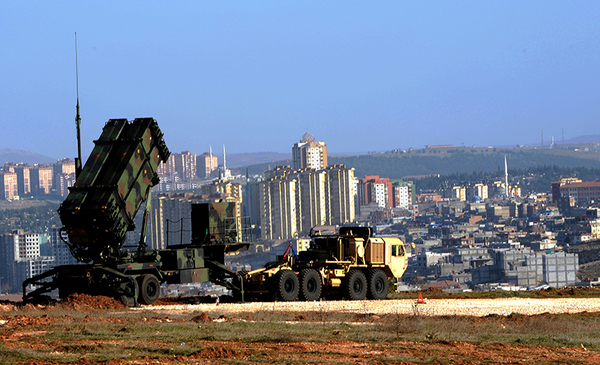
In early 2013, NATO supposedly came to its ally’s help: As Turkey was under threat from Syrian missiles — potentially with biological/chemical warheads — the alliance would build a mini anti-missile defense architecture on Turkish soil. Six U.S.-made Patriot missile batteries would be deployed in three Turkish cities and protect a vast area where about 3.5 million Turks lived.

The Patriot batteries that would protect Turkey from Syrian missiles belonged to the United States, Germany and the Netherlands. In early 2015, the Dutch mission ended and was replaced by Spanish Patriots. Recently, the German government said that it would withdraw its Patriot batteries and 250 troops at the beginning of 2016. Almost simultaneously, the U.S. government informed Turkey that its Patriot mission, expiring in October, would not be renewed. Washington cited “critical modernization upgrades” for the withdrawal.

Since the air defense system was stationed on Turkish soil, it unnerved Iran more than it did Syria. There is a story behind this. First, Patriot missiles cannot protect large swaths of land, but only designated friendly sites or installations in their vicinity. That the six batteries would protect Turkey’s entire south and 3.5 million people living there was a tall tale. They would instead protect a U.S.-owned, NATO-assigned radar deployed earlier in Kurecik, a Turkish town; and they would protect it not from Syrian missiles with chemical warheads, but from Iranian ballistic missiles.

1234 (1)U.S. Patriot missiles, deployed outside Gaziantep, Turkey in 2013. (Image source: U.S. Army Europe/Daniel Phelps)

Kurecik seemed to matter a lot to Iran. In November 2011, Iran threatened that it would target NATO’s missile defense shield in Turkey (“and then hit the next targets,” read Israel) if it were threatened. Shortly before the arrival of Patriots in Turkey, Iran’s army chief of staff warned NATO that stationing Patriot anti-missile batteries in Turkey was “setting the stage for world war.”

What was stationed in Kurecik was an early-warning missile detection and tracking radar system. Its mission is to provide U.S. naval assets in the Mediterranean with early warning and tracking information in case of an Iranian missile launch that might target an ally or a friendly country, including Israel. So, a six-battery Patriot shield to protect the NATO radar in Kurecik against possible Iranian aggression was necessary. And that explains why the Iranians went mad about Kurecik and openly threatened to hit it.

NATO and Turkish officials have always denied any link between the Patriot missiles and the NATO radar in Turkey. They have often pointed out that the Patriot batteries were stationed in the provinces of Adana, Kahramanmaras and Gaziantep, while Kurecik was in nearby Malatya province. But the Patriot is a road-mobile system: It can be dismantled easily and re-deployed in another area in a matter of hours (the road distance between Kurecik and Kahramanmaras is a mere 200 kilometers, or 124 miles).

Clearly, Iran did not go mad and threaten to hit all NATO installations in Turkey because it wanted 3.5 million Turkish citizens to die from the chemical warhead of a Syrian missile. It went mad and threatened because it viewed the defensive NATO assets in Turkey as a threat to its offensive missile capabilities, which the Patriots could potentially neutralize.

Why, otherwise, would a country feel “threatened” and threaten others with starting a “world war” just because a bunch of defensive systems are deployed in a neighboring country? Iran did so because it views the NATO radar in Turkey as an asset that could counter any missile attack on Israel; and the Patriots as hostile elements because they would protect that radar. In a way, Iran’s reaction to the NATO assets in Turkey revealed its intentions to attack.

It could be a total coincidence that the U.S. and Germany (most likely to be followed by Spain) have decided to pull their Patriot batteries and troops from Turkey shortly after agreeing to a nuclear deal with Iran. But if it is a coincidence, it is a very suspicious one. In theory, the Patriot systems were deployed in Turkey in order to protect the NATO ally from missile threats from Syrian President Bashar al-Assad’s regime. Right? Right.

Assad’s regime is still alive in Damascus and it has the same missile arsenal it had in 2013. Moreover, Turkey’s cold war with Assad’s Syria is worse than it was in 2013, with Ankara systematically supporting every opposition group and openly declaring that it is pushing for Assad’s downfall. Why were Assad’s missiles a threat to Turkey two and a half years ago, but are not today?

The Patriot missiles are leaving Turkey. They no longer will “protect Turkish soil.”

Apparently, NATO allies believe, although the idea defies logic, that the nuclear deal with Iran will discourage the mullahs in Tehran from attacking Israel.

It looks as if the potential target of NATO heavyweights’ decision is more a gesture to Iran than to Turkey.

Obama secures rubber stamp for Iran deal catastrophe

September 3, 2015

Obama secures rubber stamp for Iran deal catastrophe, Front Page MagazineJoseph Klein, September 3, 2015

(Please see also, Use Our Senatorial Nuclear Option to Stop Iran’s Radioactive Nuclear Option. Make Senators vote yes or no on the “deal.”— DM)

obama-wc2

Democratic Senator Barbara Mikulski of Maryland has pushed President Obama’s nuclear appeasement deal with Iran over the top. With her decision to vote in favor of the deal, Obama now has the support of the 34 senators he needs to uphold his expected veto of a congressional resolution of disapproval. If enough craven Democrats back a planned filibuster to prevent a vote on the floor of the Senate, Obama will not even have to use his veto pen.

The nightmare of a financially secure nuclear armed Iran, legitimized by the Obama administration and its international partners, is about to envelop us.

Ironically, Obama warned in a speech he delivered on September 1st in Alaska that a potentially bleak future could lie ahead, in which “there’s not going to be a nation on this Earth that’s not impacted negatively.”

“People will suffer,” Obama said. “Economies will suffer. Entire nations will find themselves under severe, severe problems…more conflict.”

President Obama is right to be concerned about the future, but his stated reason for his concern is entirely misplaced. Obama was talking about climate change, which he considers to be a man-made disaster. In truth, Obama himself has created a far more imminent disaster with his nuclear deal.

In his climate change speech, Obama spoke about our “grandkids” who “deserve to live lives free from fear, and want, and peril.” He added that we need to prove “we care about them and their long-term futures, not just short-term political expediency.”

Obama, and the partisan loyalists who support him no matter what, are the ones letting down our grandkids. They are the ones who have sacrificed our grandkids’ long-term futures at the altar of short-term political expediency. The only long-term future that Obama is interested in is his own legacy.

By President Obama’s own admission, no later than 15 years from now – when my granddaughter will be just 18 years old – Iran will be in a position to develop enough enriched materials to produce nuclear bombs with virtually no “break-out” time. The deal’s major nuclear restrictions, such as they are, will have gone away, even assuming that Iran had not cheated in the meantime.

The deal’s inspection mechanism is a farce, including most notably, Iran’s self-inspection of its military site where it is suspected that nuclear weaponization research and development work was carried out. The military facility at Parchin is off-limits to onsite inspection by the International Atomic Energy Agency (IAEA). Yet the Obama administration continues to lie to the American people about how comprehensive the IAEA inspections will be. Secretary of State John Kerry tweeted this falsehood on September 2nd:  “With this #IranDeal, the IAEA can go wherever the evidence leads. No facility…will be off limits.”

The Iranian leaders also will get their hands soon on hundreds of billions of dollars. No doubt they will use some of their treasure trove from sanctions relief to fund their terrorist proxies all over the world. Obama admitted in his speech defending his deal last month at American University that monies from sanctions relief “will flow to activities we object to.” He acknowledged that “Iran supports terrorist organizations like Hezbollah. It supports proxy groups that threaten our interests and the interests of our allies – including proxy groups who killed our troops in Iraq. They try to destabilize our Gulf partners.”

Yet Obama tells the American people not to worry about such real-life risks. Instead, he diverts attention to his Chicken Little climate change hype that the sky will fall if we do not take urgent action now.

Much of the rest of the Iranians’ windfall from sanctions relief will go towards developing and acquiring, from North Korea, Russia and other sources, advanced military technology and long-range missiles.

Iran’s leaders have made it abundantly clear that they do not consider themselves bound by either the 5-year UN Security Council arms embargo or the 8-year missile embargo.  For example, Iran’s President Hassan Rouhani declared: “We will buy, sell and develop any weapons we need and we will not ask for permission or abide by any [U.N.] resolution for that.”

Iranian Defense Minister Hossein Dehghan said last month that “We are considering the design, research, and production of [missiles] that are highly destructive, highly accurate, radar evasive, and tactical.”

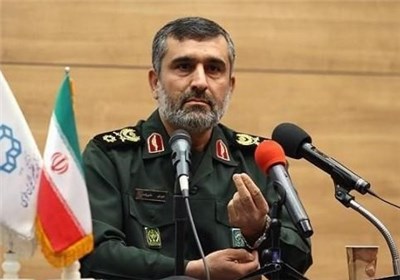
Brigadier General Amirali Hajizadeh, commander of the aerospace division of the Islamic Revolutionary Guard Corps (IRGC), said: “Some wrongly think Iran has suspended its ballistic missile programs in the last two years and has made a deal on its missile program.” To emphasize his point, the commander announced that Iran “will have a new ballistic missile test in the near future that will be a thorn in the eyes of our enemies.”

The head of Iran’s Islamic Revolutionary Guard Corps, Maj. Gen. Mohammad Ali Jafari, announced plans to expand the reach of Iran’s missiles.

The Iranian thugs are not limiting themselves to purely defensive weapons. “They (the US and the Zionists) should know that the Islamic Revolution will continue enhancing its preparedness until it overthrows Israel and liberates Palestine,” said Brigadier General Mohsen Kazzemeini, the IRGC’s top commander in the Tehran Province (as quoted by Iran’s Fars News Agency). “We will continue defending not just our own country, but also all the oppressed people of the world, especially those countries that are standing on the forefront of confrontation with the Zionists,” he added.

The Obama administration, which conceded as part of the nuclear deal to agree to unconditional term limits on the arms and missile embargoes, barely raised an eyebrow at Iran’s refusal to be bound by even these limited embargoes. In fact, Kerry went so far as to say that “they are not in material breach of the nuclear agreement for violating the arms piece of it.”

A sobering report was just released by the Iran Strategy Council, led by retired generals Chuck Wald (Commandant of Marine Corps) and James Conway (Deputy Commander of European Command). It warns of the deal’s likely dangers to America’s own national security and of the “cascading instability” it will produce in the Middle East region and beyond:

“The final agreement on Iran’s nuclear program, the Joint Comprehensive Plan of Action (JCPOA), has potentially grave strategic implications that directly threaten to undermine the national security of the United States and our closest regional allies. By allowing Iran to become a nuclear threshold state and enabling it to become more powerful and expand its influence and destabilizing activities – across the Middle East and possibly directly threatening the U.S. homeland – the JCPOA will place the United States in far worse position to prevent a nuclear Iran.”

The report’s authors predict that the “nightmare scenarios of WMD and terrorism on the soil of the United States and its allies will become more probable.”

Nevertheless, the Obama administration is spiking the ball, exulting over its evident victory in keeping enough Democratic senators on board to protect Obama’s deal.

The White House tweeted: “If your house is on fire, would you refuse to put it out because there could be another fire in 15 years?”

The question should be: “If your house is flammable, would you hand your enemy a match?”

Kerry, who turned on his own fellow soldiers during the Vietnam War, tweeted: “I have had the privilege of serving our country in times of peace and in times of war—and peace is better.”

When Neville Chamberlain returned from Germany with his infamous Munich Pact in hand, he declared: “I believe it is peace for our time…Go home and get a nice quiet sleep.”

The long nightmare of World War II ensued shortly thereafter. Thanks to Barack Obama and John Kerry, we are entering the nightmare leading inevitably to an emboldened, well-funded Iran equipped with nuclear arms and the missiles to deliver them.

Use Our Senatorial Nuclear Option to Stop Iran’s Radioactive Nuclear Option

August 28, 2015

Use Our Senatorial Nuclear Option to Stop Iran’s Radioactive Nuclear Option, National Review – Morning Jolt, Jim Geraghty, August 28, 2015 (via e-mail).

A simple proposal: To stop Iran’s nukes, use our own nuclear option. Scrap the filibuster, pass a resolution declaring the Iran deal a treaty that requires Senate authorization, introduce the text of the Iran deal, and vote it down.

Remember, Democrats got rid of the filibuster for nominations in 2013, arguing that GOP obstructionism was interfering with the president’s constitutional authority to make judicial appointments. The Constitution requires Senatorial consent to treaties. The administration claims the Iran deal isn’t a treaty because they think it has “become physically impossible“ to pass a treaty in the Senate.

Do you think Iran will honor its side of the agreement? Probably not, right?

Even if they do, do you think Iran will attempt to build a nuke quickly when the deal expires? Certainly, right?

Do you think that if Iran gets a nuke, they will use it? Pretty darn likely, right?

So, congressional Republicans . . . what are you willing to do to prevent a mushroom cloud either in the Middle East or closer to home?

Poof goes the Big Enchilada

August 28, 2015

Poof goes the Big Enchilada, Israel Hayom, David M. Weinberg, August 28, 2015

Just in case there was any doubt as to what U.S. President Barack Obama is up to, Professor Andrew Bacevich of Boston University has laid it out for us in a series of recent articles.

Obama’s nuclear deal with Iran is meant to reboot and redirect the entire vector of American Middle East policy: to retreat from Pax Americana and allow Iran to take its rightful place as a major regional power.

For decades, two tenets have informed U.S. policy in the Middle East. The first is that U.S. interests there are best served by the position of unquestioned American pre-eminence. The second is that military might holds the key to maintaining that dominant position. (In this context, Israel has been an important U.S. regional ally).

This approach is what Bacevich calls the “Big Enchilada” — the America-as-top-dog approach that Obama is seeking to overturn.

Obama rejects this notion, since he essentially views America’s preponderance in world affairs as arrogant and sinful. He feels that American “bullying” has brought about disastrous results.

Most telling was Obama’s infamous lament in 2010 about America as “a dominant military superpower, whether we like it or not.” In other words, he really doesn’t like it at all. No statement could be more revealing of Obama’s disgust for American global leadership.

In the context of the current deal with Iran, Obama has been equally clear as to how he expects this play out. If successfully implemented, the agreement that slows Iran’s nuclear program will also end Iran’s isolation. This will allow Tehran, over time, to become a “legitimate” and “extremely successful regional power” and a “powerhouse in the region.” These are Obama’s own words.

All this leads, of course, to American retreat — blessed retreat from Obama’s perspective — from the projection of power in the region. Replacing America will be a revanchist, greatly emboldened, anti-Semitic and genocidal (toward Israel), Islamic Republic of Iran. Poof goes the Big Enchilada.

Obama has been mostly dismissive of Iran’s “bad behavior,” as he flippantly calls it. He says that he “hopes to have conversations” with Iranian leadership that might lead someday to their “abiding by international norms and rules”; that he “hopes and believes” that Iranian “moderates” will leverage their country’s reintegration into the global economy as an opportunity to drive kinder, gentler and less revolutionary foreign policies.

Whether Obama himself believes such nonsense is moot. The rub is that Obama doesn’t view American behavior in the region over past decades as any more moral or legitimate than Iran’s behavior. Consequently, the main thing for him is the humbling and retreat of America.

What happens after that? Well, that will be some other president’s problem, and Israel can lump it.

It is against the backdrop of such unfounded expectations and dangerous strategic vision that Prime Minister Netanyahu is leading the fight against the Joint Comprehensive Plan of Action with Iran, otherwise known as the nuclear agreement.

Netanyahu understands that the nuclear agreement isn’t just about Iran’s nuclear program. It’s about American detente with Iran and a perilous rejigging of America’s global strategic posture. As such, Netanyahu’s main goal is to prevent American retreat from the region, to thwart any intensification of American rapprochement with Iran and to avert the inevitable corollary of this: the further downgrading of U.S.-Israel ties.

To do so, the Iran deal must be kept strategically disputed and politically fragile. Even if (or when) Obama steamrolls over Congress, the deal must remain controversial and questionable. It needs to become politically toxic.

American and European companies must know that investing in Iran is still a risky business. Iran must know that it is under extraordinary scrutiny, and that American opponents of the deal will jump at every opportunity to scuttle it if red lines are crossed. Space must be cleared for the rescinding or cancellation of the accord in the face of Iranian “bad behavior.” Obama’s successor should be under pressure to vigorously oppose Iranian hegemony in the region and to act more forthrightly than Obama to block Tehran’s nuclear program.

In fact, a climate must be created that will encourage the next U.S. administration to backtrack from the deal, to reassert and reinvigorate America’s traditional foreign policy approach, and to revitalize the U.S.-Israel relationship.

This explains why Netanyahu has rebuffed all attempts by dozens of well-meaning mediators to scale down his opposition to the deal and cut a compensatory deal with Obama. Aside from the fact that Obama never rewards his “friends” and has little to offer Israel of meaningful counterweight to this terrible deal, Netanyahu understands that far more is at stake. It’s the big enchilada.

In this regard, it’s worth considering the status of Obama’s “comprehensive plan of action” with Iran. It is not a formal treaty between the U.S. and Iran; it is not even a signed agreement with the P5+1. Rather, it is a set of multilateral “understandings.” Such understandings can and should be considered short-lived.

The Iran “agreement” should be thought of as no more authoritative or binding for future U.S. administrations than, say, the “Bush letter” to Prime Minister Ariel Sharon, in which President George W. Bush suggested recognition of settlement blocks. Obama has tossed this letter right out the window.

The Iran “agreement” should be thought of as no more authoritative or binding for future U.S. or Israeli administrations than, say, the “Clinton parameters” for Israeli-Palestinian peace that were outlined during President Bill Clinton’s final days in office. Netanyahu is correct to have dismissed these parameters as no longer relevant.

The Iran “agreement” should be thought of as no more authoritative or binding for future U.S. administrations than, say, the apparently ridiculous, secretive “side agreements” on inspections which the International Atomic Energy Agency has reached with Iran, with or without Obama administration review.

Presidential promises, letters, memos, agreements and understandings — especially when declared or imposed unilaterally — are transient things. They are valid and binding only for as long as the principal holds political power. In Obama’s case, that is another 510 days, and no longer.

Then, hopefully, America can snap back to solid, assertive foreign policy principles, and claw back to a position of responsible leadership against truly dangerous actors in the Middle East.

The Iran deal and the Israeli veto

August 24, 2015

The Iran deal and the Israeli veto, Power LinePaul Mirengoff, August 23, 2015

(How long can Israel wait? Please see also, Thinking About the Unthinkable: An Israel-Iran Nuclear War and WHY IRAN IS NUCLEAR NOW. — DM)

CNN’s report thus raises this obvious question: Will Israel attack Iran now that the U.S. and its European allies are about to enter a deal that effectively grants Iran the right to become a nuclear power?

***********************

This weekend, CNN reported that in recent years, Israeli leaders planned three attacks on military targets in Iran. CNN bases this story on an audio recording with former Defense Minister (and one-time Prime Minister) Ehud Barak. The recording was leaked to an Israeli television station.

Why didn’t Israel carry through with the planned attacks? In the first case (2010), Israeli military leaders reportedly nixed the idea. The head of the Israeli Defense Force (IDF) simply didn’t believe the planned attack was “operational.”

In the second case (2011), the IDF signed off on an attack. However, two key ministers had doubts that could not be overcome.

In the third case (2012), the attack didn’t come off because of scheduling issues. Supposedly, the planned strike conflicted with a joint military exercise with the United States. The Israeli didn’t want to embarrass Washington by attacking Iran just as it was set to engage in the joint military exercise because this would give the appearance that the Americans were involved. (The explanation in CNN’s report for why the attack wasn’t rescheduled is garbled).

In all three instances, Prime Minister Netanyahu wanted to attack. In all three instances, Barak, who is not a member of Netanyahu’s party, concurred.

In none of these instances does it appear that President Obama’s obvious opposition to an Israeli attack on Iran was the dealbreaker, if CNN’s report is to be believed (though Obama’s views may have contributed to the two ministers getting cold feet in 2011).

CNN’s report thus raises this obvious question: Will Israel attack Iran now that the U.S. and its European allies are about to enter a deal that effectively grants Iran the right to become a nuclear power?

One might think not. The deal has the support of European governments eager to allow their businessmen to take advantage of Iranian markets. Here in the U.S., the deal is unpopular, but Obama considers it the main element of his foreign policy legacy.

There will be hell to pay if Israel upsets these expectations by attacking Iran.

But the more we learn about the farcical nature of this deal, the more Israel’s calculus may tilt in favor of an Israeli attack — if not in 2015 or 2016, then in 2017 when Obama is no longer president. After all, the hell Israel would pay if it attacks Iran must be weighed against the threat of a nuclear Iran. CNN’s report, if accurate, adds plausibility to the view that Israel sees the latter as more hellacious.

In a very real sense, then, the key people evaluating Obama’s deal aren’t U.S. Senators and Representatives, but rather Israeli generals, intelligence chiefs, and ministers. They are the ones who, effectively, can nullify the deal.

It seems to be that with every revelation of a major Obama/IAEA concession to the mullahs, the prospect that Israel will exercise its veto increases.

Thinking About the Unthinkable: An Israel-Iran Nuclear War

August 23, 2015

Thinking About the Unthinkable: An Israel-Iran Nuclear War, Amerian Thinker, John Bosma, August 23, 2015

(We live in “interesting times.” — DM)

The signing of a Munich-class agreement with Iran that hands it more than it ever hoped to pull off represents a shocking, craven American capitulation to an apocalyptic crazy state: a North Korea with oil. Nothing in Western history remotely approaches it, not even Neville Chamberlain’s storied appeasement of another antisemitic negotiating partner.

But it also augurs the possibility of a nuclear war coming far sooner than one could have imagined under conventional wisdom worst-case scenarios. Following the US’s betrayal of Israel and its de facto detente with Iran, we cannot expect Israel to copy longstanding US doctrines of no-first-nuclear-use and preferences for conventional-weapons-only war plans. After all, both were premised (especially after the USSR’s 1991 collapse) on decades of US nuclear and conventional supremacy. If there ever were an unassailable case for a small, frighteningly vulnerable nation to pre-emptively use nuclear weapons to shock, economically paralyze, and decapitate am enemy sworn to its destruction, Israel has arrived at that circumstance.

Why? Because Israel has no choice, given the radical new alignment against it that now includes the US, given reported Obama threats in 2014 to shoot down Israeli attack planes, his disclosure of Israel’s nuclear secrets and its Central Asian strike-force recovery bases, and above all his agreement to help Iran protect its enrichment facilities from terrorists and cyberwarfare – i.e., from the very special-operations and cyber forces that Israel would use in desperate attempts to halt Iran’s bomb. Thus Israel is being forced, more rapidly and irreversibly than we appreciate, into a bet-the-nation decision where it has only one forceful, game-changing choice — early nuclear pre-emption – to wrest back control of its survival and to dictate the aftermath of such a survival strike.

Would this involve many nuclear weapons? No – probably fewer than 10-15, although their yields must be sufficiently large to maximize ground shock. Would it produce Iranian civilian casualties? Yes but not as many as one might suppose, as it would avoid cities. Most casualties would be radiological, like Chernobyl, rather than thermal and blast casualties. Would it spur a larger catalytic nuclear war? No. Would it subsequently impel Russia, China and new proliferators to normalize nuclear weapons in their own war planning? Or would the massive global panic over the first nuclear use in anger in 70 years, one that would draw saturation media coverage, panic their publics into urgent demands for ballistic missile self-defense systems? Probably the latter.

The Iranian elite’s ideology and controlling political psychology is inherently preferential towards nukes and direct population targeting as a way to implement Shi’ite messianism and end-times extremism. Iran is a newly nuclear apocalyptic Shi’ite regime that ranks as the most blatantly genocidal government since the Khmer Rouge’s Sorbonne-educated leaders took over Cambodia in April, 1975. Senior Iranian officials have periodically tied nuclear war to the return of the Twelfth Imam or Mahdi, which Iran’s previous president anticipated within several years. This reflects not just the triumphalist enthusiasm of a new arriviste nuclear power that just won more at the table than it dared to dream. It also reflects a self-amplifying, autarchic end-days theology that is immune to both reality testing and to Western liberal/progressive tenets about prim and proper nuclear behavior.

Admittedly, Iranian leaders have lately resorted to envisioning Israel’s collapse in more restrained terms through Palestinian demographic takeover of the Israeli state and asymmetric warfare. Still there remains a lurid history of Iranian officials urging the elimination of Israel and its people, of allocating their nukes to Israeli territory to maximize Jewish fatalities, of Iranian officials leading crowds in chants of “Death to Israel!” Iran’s government also released a video game allowing players to target various kinds of Iranian ballistic missiles against Israeli cities – this as part of intensive propaganda drumming up hatred of Jews. A more recent video game envisions a massive Iranian ground army marching to liberate Jerusalem. In all, Iran’s official stoking of genocidal Jew hatred is far beyond what Hitler’s government dared to advocate before the 1939 outbreak of World War 2.

The deliberate American silence over Iran’s genocidal intentionality sends an unmistakable signal to Israel that the US no longer recognizes a primordial, civilizational moral obligation to protect it from the most explicit threats imaginable. It is truly on its own, with the US in an all-but-overt alliance with its worst enemy. The shock to Israel’s leaders of this abrupt American lurch into tacitly accepting this Iranian intentionality cannot be understated. Iran is violating the core tenets of the 1949 Geneva Conventions, a US initiative after the Tokyo and Nuremberg war-crimes trials to codify genocide as a crime against humanity. Now the US is silent.

But this shift is also recent. Every US government prior to President Obama would have foresworn nuclear talks with such a psychopathic regime or would have walked out in a rage upon such utterances. Yet Iran’s genocidal threats have had no discernible effect on Obama’s canine eagerness for a deal. It’s as if 75 years ago a US president had cheerfully engaged in peace talks with Hitler and his SS entourage despite learning the details of the Nazis’ secret Wannsee Conference where Hitler signed off on the Final Solution for the Jews. But whereas Hitler had the sense in that era to keep that conclave secret, Iran’s Wannsee intentionality toward Israel and world Jewry has for years been flamboyantly rude-and-crude and in-your-face. That this Iranian advocacy of a second Holocaust drew no objection from the US negotiators of this deal should make moral pariahs out of every one of them – including our president and Secretary of State.

These two factors alone, especially the abrupt evaporation of the US’s ultimate existential bargain with Israel through Obama’s de facto alliance with the mullahs, would drive Israel to the one attack option it can unilaterally use without running short of munitions and experiencing the massive US coercion embedded in that dependence. But there are other reasons why early Israeli nuclear pre-emption is not only justified but almost mandatory.

First, it is too late to stop Iran’s bomb-making momentum with conventional weapons or sanctions. That nation’s science and technology base is robust and improving. It has learned to domestically produce high-performance gas centrifuges whose uranium gas output is such that smaller numbers of them are needed for breakout. The US spent decades and many billions at labs like Oak Ridge National Laboratory on composites, software-controlled magnetic bearings, gas flow separations, thermal controls and ultra-precision manufacturing for these thin-wall, very-high-speed devices. Yet Iran has come up the centrifuge learning curve with surprising speed. Its metallurgists are familiar with a novel aluminum forging method that may yield nanophase aluminum shells so strong that they approach the centrifugal strength usually associated with more demanding composite-shell gas centrifuges. Also, Iran’s bomb engineering and physics can tap the sophisticated bomb designs and re-entry vehicle (RV) skills of North Korea, which is reducing the weight and mass of its H-bombs to fit on ballistic missiles and whose collaboration with Iran reportedly included Iranian technicians at North Korean bomb tests.

Other technology sources in the Nuclear Bombs R Us cartel for wannabe proliferators set up by rogue nuclear scientist A.Q. Khan of Pakistan include China, Russia and Pakistan. Worst of all, under the US-Iran deal, Iran’s ballistic missiles can improve their reliability, accuracy, throw-weight and their post-boost RV-release thrusters.

Second, Iran’s underground nuclear targets are likely harder than American and Israeli hard-target munition (HTM) developers have assumed. Why? Because Iranian engineers have perfected the world’s toughest concrete, developing mixtures using geopolymers, quartz powders (called fume) and metal and ceramic fibers. The result is hardness levels reportedly up to 50,000-60,000 psi in experimental samples. This means that even shallow “cut and cover” hard targets like the Natanz centrifuge enrichment plant, an armored complex in an excavated pit that is then covered, can resist destruction by the US’s most lethal hard-target bomb: the 30,000-lb “Massive Ordnance Penetrator.” Only the B-2 and the B-52 can carry the MOP. Yet while the MOP can penetrate ~200 ft into 5000-psi targets, it only reaches 25 feet into 10,000-psi concrete – and Iranian cement for new or up-armored underground bunkers has likely progressed well beyond that.

US and Israeli HTM alternatives include staged-warhead penetrators and – high on the wish list – novel energetic chemistries with orders-of-magnitude more power than current HTMs. Tactical HTMs with up to four sequential warheads use precursor warheads to blast an initial opening for larger follow-through charges to destroy tanks, fortifications and bridge piers. But these impact at slow speeds compared to what’s needed to kill deep hard targets. The latter need superhard casings (probably single-crystal metals) and packaging to keep their sequenced charges intact during violent impacts of thousands of feet/second (fps). One benchmark is the Department of Energy’s Sandia lab’s success years ago in firing a simulated hard-target RV into rock at 4400 fps. Similarly, reactive-material (RM) munitions and next-generation HEDM (high-energy-density material) explosives and energetic chemistries with orders-of-magnitude more power look promising for the future. But these require years of iterative fly-redesign-fly testing to assure they’ll survive impact with their deep targets.

Bottom line: with even the US’s best non-nuclear HTMs marginal against Iran’s critical deep targets, Israel’s HTMs probably wouldn’t do the job either, being lower in kinetic energy on target. Alternatives like using HTMs to destroy entrances to such targets and ventilation shafts may work – but unless Iranian military power and recovery are set back months or years, this damage would be repaired or worked round. Moreover, nuclear facilities tunneled into mountains would be almost impossible to destroy with conventionals.

Still, the brains behind Iran’s nuclear bomb, missile and WMD is concentrated in soft targets like the Iranian universities run by the IRGC (Iran Revolutionary Guard Corps), custodian of the bomb program). These can be hit by conventionals under a Peenemunde targeting strategy to kill as many weapon scientists and technicians as possible. (This recalls Prime Minister Winston Churchill’s directive for British bombers to target the residential housing on the small Baltic island where Hitler had sited his V-2 rocket program.) Alternatively, conventional or nuclear EMP (electromagnetic pulse) or HPM (high-power microwave) weapons could destroy for months all the computers and communications that support university-hosted bomb work. This would keep these scientists and surrounding urban populations alive.

Third, Obama’s decision to provide Iran “training courses and workshops to strengthen Iran’s ability to prevent, protect and respond to nuclear security threats, including sabotage, to nuclear facilities and systems as well as to enable effective and sustainable nuclear security and physical protection systems” is the clearest indicator that this accord is aimed squarely at Israel. Why? It eliminates the sole option Israel has left now that it lacks the US-supplied conventional HTMs to destroy unexpectedly hard deep targets, forcing it at best into a slow-motion conventionals-only campaign. This would expose it to brutal political and military blowback by Iran and its Chinese, Russian and European suppliers – and by an enraged American president. In essence, it appears that the Obama regime has under the accord deliberately stripped Israel of every option except nuclear pre-emption – which Obama, in typically liberal-progressive fashion, assumes would never happen. Ergo, Israel would be forced to accommodate Iranian military supremacy.

Fourth, what may drive an early Israeli nuclear attack are two considerations: (a) Russian S-300 ATBM/SAMs (anti-tactical ballistic missile/surface-to-air missile) in Iranian hands; and (b) Hezb’allah’s thousands of missiles. Russia’s agreement to supply Iran four batteries of its fearsome S-300 by late August for defending priority targets would make it very difficult for Israel to mount the complex precision bombing strategies needed for tough targets. The S-300, the world’s best, can knock down high-speed aircraft from near ground level to almost 100,000 feet. It can also engage some ballistic missiles.

Meanwhile, Hezb’allah’s arsenal of more than 60,000 rockets (by some estimates) is a much greater threat to Israel, especially its air force, than is appreciated. Hezb’allah has retrofitted an unknown fraction of these missiles, whose range now covers almost all of Israel, with GPS and precision guidance, allowing them to hit critical targets. Unfortunately, Israel’s Iron Dome and David’s Sling interceptors were designed on the assumption that most incoming missiles would be inaccurate and so the interceptors could be saved only for those approaching critical targets. The result? Hezb’allah rocket campaigns targeting Israeli airbases and other military targets could quickly run Israel out of interceptors. Iran could easily order such a campaign to throw Israel off balance as it focuses on the deadly US-abetted nuclear threat from Iran.

An Israeli nuclear pre-emption is thus eminently thinkable. Every other option has been stripped away by Obama’s decision, concealed from Israel, Congress and our allies until it was too late to challenge, to let Iranian bomb-making R&D run free and to harden Iran’s bomb-making infrastructure against Israel – while imposing lethal restrictions on Israeli countermeasures and forswearing any US and allied military attacks, such as B-2’s and B-52’s dropping MOP bombs.

The die is now cast. Nuclear pre-emption becomes attractive to a nation in extremis, where Israel is now:

…Israel needs to impart a powerful, disorganizing shock to the Iranian regime that accomplishes realistic military objectives: digging out its expensive underground enrichment plants, destroying its Arak plutonium reactor and maybe Bushehr in the bargain, killing its bomb and missile professionals, scientists and technicians, IRGC bases, its oil production sites, oil export terminals and the leaders of the regime where they can be found.

…its initial strike must move very fast and be conclusive within 1-2 hours, like the Israeli air attack opening the 1967 Six-Day War. The goal is to so stun the regime that Israel controls the first and subsequent phases of the war and its ending. This means that Israel must hit enough critical targets with maximum shock – and be willing to revisit or expand its targets – so as to control blowback and retaliation from Iran’s allies. In essence, this involves a very fast-paced Israeli redesign of the Middle East in the course of a nuclear war for survival.

…what is poorly appreciated is that nuclear weapons from 10 to 300 kilotons (KT) – depending on accuracy – can destroy deep hard targets to 200+ meters depth by ground coupling if they penetrate merely 3 meters into the ground (Effects of Nuclear Earth Penetrators and Other Weapons: National Research Council / National Academy Press, 2005, pp. 30-51). Israel could lower bomb yields or achieve deeper target kills by its reported tests of two-plane nuclear attacks in which the first plane drops a conventional HTM like a GBU-28 to open up a channel; the second plane drops its tactical nuclear bomb into that ‘soft’ channel for greater depth before bursting. This unavoidably would produce fallout on cities downwind. Fortunately, the same medical countermeasures used for radiological accidents (Chernobyl accidents, etc.)  – potassium iodide pills (available domestically from www.ki4u.com) – can be airdropped for use by exposed urbanites.

…the more important objective, however, is decapitation and economic paralysis by EMP and HPM effects that destroy all electronic, electrical and electromechanical devices on Iranian territory. While a high-altitude nuclear burst would affect most of Iran’s territory, it may not be necessary if smaller, lower-altitude weapons are used.

…A small number of nuclear weapons (10-15?) may suffice: one each for known underground hard targets, with one held in reserve pending bomb-damage assessments; several low-yield bombs for above-ground bomb-related depots; and low-yield neutron weapons to hit IRGC and regime targets while avoiding blast and fallout. Reactors can be hit with conventional HPM pulse weapons to burn out electrical, electronic and electromechanical systems for later reactor destruction by Special Forces. A targeting priority (using antipersonnel conventionals) would be university-hosted bomb/missile scientists.

…Israeli F-15s and F-16s provide the most accurate delivery for the initial phase – assuming that the S-300 batteries can be decoyed, jammed or destroyed (where Israeli air force experience is unmatched). The small stock of Jericho-2 ballistic missiles probably would be held in reserve. They can’t be used against buried targets unless their re-entry vehicles (RVs) are fitted with penetrator casings and decelerators like ribbon parachutes (used to slow down US test RVs for shallow-water recovery at Pacific atolls) to avoid disintegrating on impact. (Both methods require flight-testing, which is detectable.) Israel’s Dolphin subs in the Red Sea and Indian Ocean can launch nuclear or (probably) conventional cruise missiles with cluster munitions for IRGC targets.

The final issue is how Israeli and US leaders would operate in these conditions. An Israeli decision to go nuclear would be the most tightly held decision in history, given the prospect of out-of-control blowback by our current president if that was leaked. Still, Israel sees itself being driven into a Second Holocaust corner, possibly within weeks as the S-300s begin deploying around Iran’s nuclear targets. Once it decides nukes are its only way out, it would simulate and map out all possible event chains and surprises once it launches. Unavoidably, it would also have to decide what to do if it learns the US is feeding its pre-launch mobilization information to Iran, using its electronic listening posts and missile-defense radars in the region. It may have to jam or destroy those US sites.

For the US, however, this no-warning nuclear war would land like a thunderbolt on an unprepared White House that would likely panic and lash out as Obama’s loudly touted “legacy” goes up in smoke. The characteristic signatures of nuclear bursts would be captured and geolocated by US satellite. The commander of NORAD (North American Aerospace Defense Command) under Cheyenne Mountain in Colorado Springs would call the White House on the famous red phone. (As one of the few civilians who sat through a red phone alert at NORAD in July 1982, after a Soviet missile sub launched two test missiles off the Kamchatk Peninsulaa, I can testify it is a frightening experience for which nothing prepares you.) Given the psychology of our current president and his emotional investment in his Iran deal, what might follow could challenge the military chain of command with orders that previously were unthinkable.

Now retired, John Bosma draws on a 40-year background in nuclear war-gaming and strategic arms control (SALT 1 and 2, Soviet arms-racing and SALT violations, US force upgrades) at Boeing Aerospace (1977-1980); congressional staff and White House experience (1981-1983) in organizing the “Star Wars” ballistic missile defense (BMD) program and proposing its “defense-enforced strategic reductions” arms-control model adopted by the Reagan State Department; military space journalism (1984-1987); and technology scouting in conventional strategic warfare, rapid (1-2 hours) posture change in space, novel BMD engagement geometries with miniature air-launched interceptors, counter-WMD/terrorism, naval BMD and undersea warfare. Clients included DARPA (Defense Advanced Research Projects Agency), the Missile Defense Agency, the Office of Secretary of Defense (OSD) Advanced Systems and Concepts Office, the Navy and the  He follows Israeli forces and BMD and has studied Iran’s nuclear R&D programs. All of his work is open-source


Iran to Stage Ballistic Missile Maneuver Soon: Commander

August 21, 2015

Iran to Stage Ballistic Missile Maneuver Soon: Commander, Tasnim News Agency, August 21, 2015

13930122190429352508783

(Tasnim) – Commander of the Islamic Revolution Guards Corps (IRGC) Aerospace Force Brigadier General Amir Ali Hajizadeh announced on Friday that the country plans to hold a ballistic missile maneuver in the near future.

In a speech in the northern city of Qaem Shahr on Friday, Brigadier General Hajizadeh rejected as untrue some claims that the IRGC has halted the ballistic missile program over the past two years, saying that missile tests are on the agenda.

“Such measures (war games and ballistic missile tests) are on the agenda and huge successes have been achieved over the past two years,” the commander stressed.

He further pointed to the IRGC’s plan to stage a massive war game to test-fire ballistic missiles in the near future, adding that its details will be announced soon.

Earlier this month, Chief of Staff of the Iranian Armed Forces Major General Hassan Firouzabadi underlined that the country’s missile tests will be carried out on schedule, according to plans endorsed by Supreme Leader of the Islamic Revolution Ayatollah Seyed Ali Khamenei.

During the nuclear negotiations between Iran and the Group 5+1 (Russia, China, the US, France, Britain and Germany), the United States and its allies exerted pressure on Iran over its military capabilities.

Iran, however, said it would only discuss its nuclear program as its missiles are solely employed as a deterrent against any potential foreign aggression.

Since the successful conclusion of the nuclear negotiations in Vienna on July 14, Iranian officials have time and again stressed that the country’s military capabilities would not be affected by the finalized text of the nuclear agreement- known as the Joint Comprehensive Plan of Action (JCPOA)- or a resolution that the United Nations Security Council passed later to endorse the JCPOA.

Netanyahu: ‘You Rush to Embrace Iran, They Fire Rockets at Us’

August 21, 2015

Netanyahu: ‘You Rush to Embrace Iran, They Fire Rockets at Us’, Israel National News, August 21, 2015

The attack ordered by Iran comes after a report in April, when  Iranian officials reportedly told the Syrian regime to strike Israel and open a war front on the Golan Heights.

**************************

PM warns ‘we’ll harm those who try to harm us,’ slams world powers for nuclear deal after ‘Iranian commander ordered rocket strike.’

Prime Minister Binyamin Netanyahu released a statement on Friday, shortly after the IDF airstrike that took out the Islamic Jihad terror cell backed by Iran that launched four rockets into Israel from Syria the day before.

“I said this week that those who try to harm us – we will harm them. And that’s what we did,” said the prime minister.

“The IDF struck the cell that conducted the (rocket) fire, and the Syrian forces that enabled it. We don’t intend to escalate the incidents, but our policy remains as it was,” he said. At least 14 targets were hit by the IDF overnight, including a strike on an army post which Syria said killed one soldier.

Turning his attention to the IDF reports that Iranian military sources funded and directed the Islamic Jihad cell, Netanyahu condemned the world powers that sealed a nuclear deal with Iran just last month and are now advancing economic trade and diplomatic ties.

“The countries that rush to embrace Iran need to know that an Iranian commander is the one who gave the cover and direction to the cell that fired on Israel,” he said.

As noted by Netanyahu, the one who gave the order for the rocket strike was said to be the head of the Palestinian department in Iran’s Al-Quds force, the covert foreign operations unit of the Iranian Revolutionary Guards.

Netanyahu on Friday ordered the Foreign Ministry to send an official letter to Western governments, saying Israel has “reliable information that this attack was carried out by the Palestinian Islamic Jihad, ordered directly by the Iranian terrorist Said Izadhi of the Iranian Revolutionary Guards.”

“This is further clear indication of Iran’s increasing involvement in attacks against Israel in particular and against regional targets in general. The ink on the nuclear agreement has not yet dried, and this attack shows clearly how Iran plans to act the moment after the international sanctions are removed.”

The attack ordered by Iran comes after a report in April, when  Iranian officials reportedly told the Syrian regime to strike Israel and open a war front on the Golan Heights.