Archive for the ‘Iranian military’ category

Hizballah set to fight ISIS for Euphrates Valley

June 17, 2016

Hizballah set to fight ISIS for Euphrates Valley, DEBKAfile, June 17, 2016

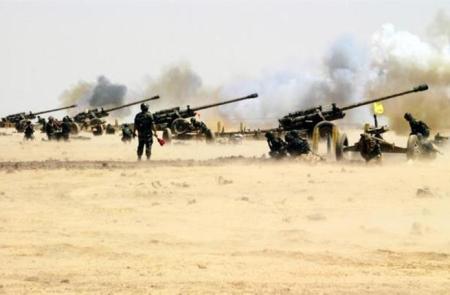
Hezbollah_Zabadani_12.8.15Hizballah artillery in action in Syria

Hizballah this week ordered a general military call-up for their biggest combat mission in the Syrian war since their forces began fighting in support of the Assad regime in 2013, DEBKAfile military forces report.

Iran’s Lebanese proxy has been assigned the task of expelling the Islamic State from broad areas it occupied in the Deir ez-Zor region of eastern Syria and, in particular, the Euphrates River valley which connects eastern Syria and western Iraq.

This Hizballah offensive is designed to open the way for the pro-Iranian Shiite Popular Mobilization Forces and the Badar Forces militias which entered the ISIS-held Iraqi town of Fallujah Friday June 17 to move west and up the Iraqi side of the valley. The two militias spearheaded the Fallujah operation under the command of Iran’s Maj. Gen. Qassem Soleimani of the Revolutionary Guards and Ground Corps Brig. Gen. Mohammad Pakpour.

The plan is for Hizballah forces to meet these pro-Iranian militia forces on the Syria-Iraq border and so gain control over the most important strategic land pass between Iraq and Syria.

Whereas the pro-Iranian militias in Iraq are fighting under US air cover, Hizballah is assured of Russian air support in Syria. And so, for the first time in the Syria conflict and its own history, Hizballah will receive air cover from both the US and Russia, the two superpowers now coordinating their military moves in Syria and Iraq.

This strategy, which essentially connects the Syrian and Iraqi campaigns against ISIS, was charted on June 9, at a secret meeting in Tehran of the Russian, Iranian and Syrian defense chiefs.

DEBKAfile military sources in Washington say that the operation’s plan was put before President Barack Obama and he sanctioned it as part of the war on ISIS.

In the run-up to the Syrian segment of the plan, Hizballah is transferring substantial combat strength from Lebanon into Syria, and emptying its other Syrian fronts, especially around Aleppo, for the large-scale concentration around Palmyra.

The Hizballah force will start out by targeting the Syrian town of Al-Sukhna, 63km south of Palmyra and 136km north of Deir ez-Zor, thus gaining command of M20, the main highway link between northern to eastern Syria.

DEBKAfile military sources say that this military offensive by Hizballah against ISIS, with combined US-Russian support, threatens to transform a terrorist organization dedicated to fighting Israel in the service of Iran into one of the most powerful armies in the Middle East. Israel cannot stop this happening. The former Israel defense ministers who harangued this week against the Netanyahu government’s alleged “scaremongering” willfully ignored this dangerous development. They must also be held at least partly accountable for the failure of Israel’s air raids over Syria to diminish Hizballah’s military capabilities.

U.S. Taxpayers are Funding Iran’s Military

June 9, 2016

U.S. Taxpayers are Funding Iran’s Military, Power LineJohn Hinderaker, June 9, 2016

Eli Lake uncovers the latest Iran scandal:

One of the unexpected results of President Barack Obama’s new opening to Iran is that U.S. taxpayers are now funding both sides of the Middle East’s arms race. The U.S. is deliberately subsidizing defense spending for allies like Egypt and Israel. Now the U.S. is inadvertently paying for some of Iran’s military expenditures as well.

It all starts with $1.7 billion the U.S. Treasury wired to Iran’s Central Bank in January….

For months it was unclear what Iran’s government would do with this money. But last month the mystery was solved when Iran’s Guardian Council approved the government’s 2017 budget that instructed Iran’s Central Bank to transfer the $1.7 billion to the military.

Saeed Ghasseminejad, an associate fellow at the Foundation for Defense of Democracies, spotted the budget item. He told me the development was widely reported in Iran by numerous sources including the state-funded news services.

It is important to note that this is above and beyond the $100 billion (or whatever the number turns out to be) that Iran has received or will receive in unfrozen assets. These are US taxpayer dollars:

Republicans and some Democrats who opposed Obama’s nuclear deal have argued that the end of some sanctions would help to fund Iran’s military. But at least that was Iran’s money already (albeit frozen in overseas bank accounts). The $1.7 billion that Treasury transferred to Iran in January is different.

A portion of it, $400 million, came from a trust fund comprising money paid by the government of Shah Mohammad Reza Pahlavi, a U.S. ally, for arms sold to Iran before the 1979 revolution. Those sales were cut off in 1979 after revolutionaries took over the U.S. Embassy in Tehran and held the American staff hostage for 444 days. The remaining $1.3 billion represents interest on the $400 million principle over more than 36 years.
***
According to a letter from the State Department to Representative Mike Pompeo, a Republican who has called for an investigation into the January payment, that money came out of something known as the Judgment Fund, which is “a source of funding to pay judgments and claims against the United States when there is no other source of funding.”

The rationale for payment of this $1.7 billion to Iran is unclear, but the timing suggests that it was paid in exchange for release of American prisoners:

In January, many observers, including Pompeo, said the transfer was more like a ransom payment because it coincided with the release of five Americans detained in Iran. The Iranian commander of the Basiji militia, Mohammad Reza Naghdi, said at the time: “Taking this much money back was in return for the release of the American spies.” The White House disputed this claim and said the payment was independent of the negotiation to release the American prisoners.

As usual, Iran’s government is more credible than our own.

One more thing I hadn’t realized: in the wake of the nuclear deal with the Obama administration, Iran has nearly doubled its military budget.

Iran’s 2017 $19 billion defense budget has increased by 90 percent from 2016, according to Ghasseminejad.

We now know where $1.7 billion of that came from.

The mullahs don’t think their number one security issue is global warming, so we can assume that our $1.7 billion, along with the unfrozen assets, will be spent effectively to undermine the interests of the U.S. and its allies.

Iran’s Chess Board

June 3, 2016

Iran’s Chess Board, Front Page MagazineCaroline Glick, June 3, 2016

official_photo_of_hassan_rouhani_7th_president_of_iran_august_2013

Even if Obama’s successor disavows his actions, by the time Obama leaves office, America’s options will be more limited than ever before. Without war, his successor will likely be unable to stem Iran’s rise on the ruins of the Arab state system.

********************

Reprinted from jpost.com.

Strategic thinking has always been Israel’s Achilles’ heel. As a small state bereft of regional ambitions, so long as regional realities remained more or less static, Israel had little reason to be concerned about the great game of the Middle East.

But the ground is shifting in the lands around us. The Arab state system, which ensured the strategic status quo for decades, has collapsed.

So for the first time in four generations, strategy is again the dominant force shaping events that will impact Israel for generations to come.

To understand why, consider two events of the past week.

Early this week it was reported that after a two-year hiatus, Iran is restoring its financial support for Islamic Jihad. Iran will give the group, which is largely a creation of the Iranian Revolutionary Guard Corps, $70 million.

On Wednesday Iranian media were the first to report on the arrest of a “reporter” for Iran’s Al-Alam news service. Bassam Safadi was arrested by Israel police in his home in Majdal Shams, the Druse village closest to the border with Syria on the Golan Heights. Safadi is suspected of inciting terrorism.

That is, he is suspected of being an Iranian agent.

There is nothing new about Iranian efforts to raise and run fronts against Israel within its territory and along its borders. Iran poses a strategic threat to Israel through its Hezbollah surrogate in Lebanon, which now reportedly controls the Lebanese Armed Forces.

In Gaza, Iran controls a vast assortment of terrorist groups, including Hamas.

In Judea and Samaria, seemingly on a weekly basis we hear about another Iranian cell whose members were arrested by the Shin Bet or the IDF.

But while we are well aware of the efforts Iran is making along our borders and even within them to threaten Israel, we have not connected these efforts to Iran’s actions in Iraq and Syria. Only when we connect Iran’s actions here with its actions in those theaters do we understand what is now happening, and how it will influence Israel’s long-term strategic environment.

The big question today is what will replace the Arab state system.

Syria, Iraq, Lebanon, Yemen and Libya no longer exist. On their detritus we see the fight whose results will likely determine the fates of the surviving Arab states, as well as of much of Europe and the rest of the world.

Israel’s strategic environment will be determined in great part by the results of Iran’s actions in Iraq and Syria. While Israel can do little to affect the shape of events in these areas, it must understand what they mean for us. Only by doing so, will we be able to develop the tools to secure our future in this new strategic arena.

Until 2003, Saddam Hussein was the chief obstacle to Iran’s rise as the regional hegemon.

US forces in Iraq replaced Hussein until they left the country in 2011. In the meantime, by installing a Shi’ite government in Baghdad, the US set the conditions for the rise of Islamic State in the Sunni heartland of Anbar province on the one hand, and for Iran’s control over Iraq’s Shi’ite-controlled government and armed forces on the other.

Today, ISIS is the only thing checking Iran’s westward advance. Ironically, the monstrous group also facilitates it. ISIS is so demonic that for Americans and other Westerners, empowering Iranian-controlled forces that fight ISIS seems a small price to pay to rid the world of the fanatical scourge.

As former US naval intelligence analyst J.E. Dyer explained this week in an alarming analysis of Iran’s recent moves in Iraq published on the Liberty Unyielding website, once Iranian- controlled forces defeat ISIS in Anbar province, they will be well placed to threaten Jordan and Israel from the east. This is particularly the case given that ISIS is serving inadvertently as an advance guard for Iran.

In Syria, Iran already controls wide swaths of the country directly and through its surrogates, the Syrian army, Hezbollah and Shi’ite militias it has fielded in the country.

Since the start of the war in Syria, Israel has repeatedly taken action to block those forces from gaining and holding control over the border zone on the Golan Heights.

Prime Minister Benjamin Netanyahu’s surprising recent announcement that Israel will never relinquish control over the Golan came in response to his concern that in exchange for a cease-fire in Syria, the US would place that control on the international diplomatic chopping block.

A week and a half ago, Iran began its move on Anbar province.

On May 22, Iraqi forces trained by the US military led Iraq’s offensive to wrest control over Fallujah and Mosul from ISIS, which has controlled the Sunni cities since 2014. Despite the fact that the lead forces are US-trained, the main forces involved in the offensive are trained, equipped and directed by Iran.

As Iraqi forces surrounded Fallujah in the weeks before the offensive began, Qassem Soleimani, the commander of the Revolutionary Guards’ Quds forces, paid a public visit to the troops to demonstrate Iran’s dominant role.

The battle for Fallujah is a clear indication that Iran, rather than the US, is calling the shots in Iraq. According to media reports, the Pentagon wanted and expected for the forces to be concentrated in Mosul. But at the last minute, due to Soleimani’s intervention, the Iraqi government decided to make Fallujah the offensive’s center of gravity.

The Americans had no choice but to go along with the Iranian plan because, as Dyer noted, Iran is increasingly outflanking the US in Iraq. If things follow their current course, in the near future, Iran is liable to be in a position to force the US to choose between going to war or ceasing all air operations in Iraq.

On May 7, Asharq al-Awsat reported that the Revolutionary Guards is building a missile base in Suleimaniyah province, in Iraqi Kurdistan.

A senior IRGC general has made repeated visits to the area in recent weeks, signaling that the regime views this as an important project. The report further stated that Iran is renewing tunnel networks in the region, built during the 1980-88 Iran-Iraq War.

Dyer warned that depending on the type of missiles Iran deploys – or has deployed – to the base, it may threaten all US air operations in Iraq. And the US has no easy means to block Iran’s actions.

To date, commentators have more or less agreed that US operations in Iraq and Syria make no sense. They are significant enough to endanger US forces, but they aren’t significant enough to determine the outcome of the war in either territory.

But there may be logic to this seemingly irrational deployment that is concealed from view. A close reading of David Samuels’s profile of President Barack Obama’s Deputy National Security Adviser Ben Rhodes published last month in The New York Times, points to such a conclusion.

Samuels described Rhodes as second only to Obama in his influence over US foreign and defense policy. Rhodes boasted to Samuels that Obama’s moves toward Iran were determined by a strategic course he embraced before he entered office.

A fiction writer by training, Rhodes’s first “national security” job was as the chief note taker for the Iraq Study Group.

Then-president George W. Bush appointed the group, jointly chaired by former secretary of state James Baker and former congressman Lee Hamilton, in 2006, to advise him on how to extricate the US from the war in Iraq.

In late 2006, the ISG published its recommendations.

Among other things, the ISG recommended withdrawing US forces from Iraq as quickly as possible. The retreat was to be enacted in cooperation with Iran and Syria – the principle sponsors of the insurgency.

The ISG argued that if given the proper incentives, Syria and Iran would fight al-Qaida in Iraq in place of the US. For such action, the ISG recommended that the US end its attempts to curb Iran’s nuclear program.

Responsibility for handling the threat, the ISG recommended, should be transferred to the US Security Council.

So, too, the ISG recommended that Bush pressure Israel to withdraw from the Golan Heights, Jerusalem and Judea and Samaria in the framework of a “peace process.”

Such action too would serve to convince Iran and Syria that they could trust the US and agree to serve as its heirs in Iraq.

Bush of course, rejected the ISG’s recommendations.

He decided instead to sue for victory in Iraq. Bush announced the surge in US forces shortly after the ISG published its report.

But now we see, that through Rhodes the Iraq Study Group’s recommendation became the blueprint for a new US strategy of retreat and Iranian ascendance in Iraq and throughout the Middle East.

The chief components of that strategy have already been implemented. The US withdrawal from Iraq in 2011 left Iran as the new power broker in the country. The nuclear pact with Iran facilitated Iran’s transformation into the regional hegemon.

Against this strategic shift, the US’s minimalist campaigns in Iraq and Syria against ISIS make sense.

The US forces aren’t there to defeat ISIS, but to conceal Iran’s rise.

When ISIS is defeated in Anbar and in Raqqa in Syria, its forces are liable to turn west, to Jordan.

The US is currently helping Jordan to complete a border fence along its border with Iraq. But then ISIS is already active in Jordan.

And if events in Iraq and Syria are any guide, where ISIS leads, Iran will follow.

Iran’s strategic game, as well as America’s, requires Israel to become a strategic player.

We must recognize that what is happening in Iraq is connected to what is happening here.

We need to understand the implications of the working alliance Obama has built with Iran.

Even if Obama’s successor disavows his actions, by the time Obama leaves office, America’s options will be more limited than ever before. Without war, his successor will likely be unable to stem Iran’s rise on the ruins of the Arab state system.

In this new strategic environment, Israel must stop viewing Gaza, Judea and Samaria, the Golan Heights and Lebanon as standalone battlefields. We must not be taken in by “regional peace plans” that would curtail our maneuver room. And we must bear in mind these new conditions as we negotiate a new US military assistance package.

The name of the game today is chess. The entire Middle East is one great board. When a pawn moves in Gaza, it affects the queen in Tehran.

And when a knight moves in Fallujah, it threatens the queen in Jerusalem.
The Perils of Not Listening to Iran

April 7, 2016

The Perils of Not Listening to Iran, Gatestone InstituteShoshana Bryen, April 7, 2016

♦ The Iranian firing of a missile within 1500 yards of U.S. aircraft carrier Harry S. Truman in December, and the kidnapping and photographing of a U.S. Navy ship and crew (the photographs were a violation of the Geneva Convention) were test cases. Other than an apparent temper tantrum by Secretary Kerry, there was no American response. Oh, actually, there was. Mr. Kerry absolved his friend Iranian Foreign Minister Javad Zarif of responsibility.

♦ The Iranians were confident that the Americans could be counted on not to collapse the whole discussion over violations along the edges. Their model was American behavior in the Israeli-Palestinian “peace process.” The Palestinians violate agreements and understandings with impunity because they know the Administration is more firmly wedded to the process than the specific issues on the table.

Supporters of President Obama’s Iran deal (JCPOA) are starting to worry — but that is because they believed him when his lips moved. They heard “snapback sanctions” and pretended those were an actual “thing.” They are not, and never were. They heard Treasury Secretary Jack Lew say the U.S. would never allow Iran access to dollar trading because of the corruption of the Iranian banking system and Iranian support for terrorism — and they wanted to believe him. And sanctions? The administration said that sanctions related to non-nuclear Iranian behavior — support for terrorism, ballistic missile development, and more — would be retained.

Supporters believed Secretary Kerry when he said sanctions on Iran would be lifted only by a “tiny portion,” which would be “very limited, temporary and reversible… So believe me, when I say this relief is limited and reversible, I mean it.” They all but heard him stamp his loafer.

The mistake was not just listening to the administration say whatever it was Democrats in Congress wanted to hear, while knowing full well that once the train left the station it would never, ever come back. The bigger mistake was not listening to Iran. The Iranians have been clear and consistent about their understanding of the JCPOA.

Days before Congress failed to block the JCPOA, Maj. Gen. Hassan Firouzabadi, Chief of Staff of the Iranian Armed Forces, outlined Iran’s red lines.

  • To block “infiltration” of “Iran’s defense and security affairs under the pretext of nuclear supervision and inspection… Iranian military officials are not allowed to let the foreigners go through the country’s security-defense shield and fence.”
  • “Iran’s military officials are not at all allowed to stop the country’s defense development and progress on the pretext of supervision and inspection and the country’s defense development and capabilities should not be harmed in the talks.”
  • “Our support for our brothers in the resistance [Hezbollah, Assad, Yemeni Houthis, Hamas, Shiites in Iraq] in different places should not be undermined.”
  • A final deal should be a “comprehensive one envisaging the right for Iran to rapidly reverse its measures in case the opposite side refrains from holding up its end of the bargain.”
  • “Iran’s national security necessitates guaranteed irreversibility of the sanctions removal and this is no issue for bargaining, trade, or compromise.”
  • “Implementation… should totally depend on the approval of the country’s legal and official authorities and the start time for the implementation of undertakings should first be approved by the relevant bodies.”
  • Iran would not be limited in transferring its nuclear know-how to other countries of its choosing.

The Iranians deliberately and openly conflated what the Administration claimed would be limited sanctions relief related to specific Iranian actions on the nuclear program with the larger issues of sanctions for other Iranian behavior. The Iranians were confident that the Americans could be counted on not to collapse the whole discussion over violations along the edges. Their model was American behavior in the Israeli-Palestinian “peace process.” The Palestinians violate agreements and understandings with impunity because they know the Administration is more firmly wedded to the process than the specific issues on the table.

The Iranian firing of a missile within 1500 yards of U.S. aircraft carrier Harry S. Truman in December, and the kidnapping and photographing of a U.S. Navy ship and crew (the photographs were a violation of the Geneva Convention) were test cases. Other than an apparent temper tantrum by Secretary Kerry, there was no American response. Oh, actually, there was. Mr. Kerry absolved his friend, Iranian Foreign Minister Javad Zarif, of responsibility, noting, “it was clear” that the footage did not come from the Iranian Ministry of Foreign Affairs. He blamed the Iranian military, as if they do not work together.

Iran’s announcement that it would pay $7,000 to each family of Palestinian terrorists killed by Israel “to enable the Palestinian people to stay in their land and confront the occupier,” elicited the disclosure that Mr. Kerry was “extremely disturbed.”

Iran’s ballistic missile test in November, in violation of UN Security Council Resolutions, prompted U.S. Ambassador to the UN Samantha Power to say, “The U.S. is conducting a serious review of the reported incident,” and if the reports were confirmed, the Obama administration would bring the issue to the UN and “seek appropriate action.”

By February, however — after yet another ballistic missile test, in which the missiles carried explicit threats to Israel, Mr. Kerry said he was prepared to let the matter drop. “We’ve already let them know how disappointed we are.”

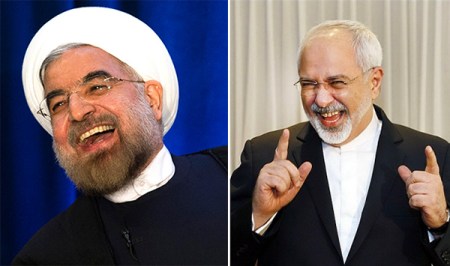
1323 (1)Iran’s firing of a missile within 1500 yards of a U.S. aircraft carrier in December, and its kidnapping and photographing of a U.S. Navy crew were test cases. Other than an apparent temper tantrum by Secretary of State John Kerry, there was no American response, except that Kerry absolved his friend Iranian Foreign Minister Javad Zarif of responsibility. Pictured above: Iranian President Hassan Rouhani (left) and Foreign Minister Javad Zarif (right).

Responding to Senator Lindsay Graham’s suggestion that Congress might increase sanctions against Iran, Mr. Kerry replied, “I wouldn’t welcome [that] at this time given the fact that we’ve given them a warning and if they decide to do another launch then I think there’s a rationale.”

Kerry may not have to wait long.

Just this week, Iranian Deputy Chief of Staff Brig-Gen Maassoud Jazzayeri was quoted by the FARS News Agency reiterating, “The White House should know that defense capacities and missile power, specially at the present juncture where plots and threats are galore, is among the Iranian nation’s red lines and a backup for the country’s national security and we don’t allow anyone to violate it.”

Now, he is believable.

Congress is beginning to breathe fire, but it is not yet clear what it can or will do in the face of the Obama Administration’s executive actions. Last week, angry congressmen were reduced to threatening to “name and shame” American companies that do business with Iran because they cannot figure out how to stem the tide of the Obama Administration’s indulgence of Iranian provocations. That reaction is not even close to good enough.

Analysis: Iran, ISIS Likely to Unite for WWIII

February 28, 2016

Analysis: Iran, ISIS Likely to Unite for WWIII, The Jewish PressHana Levi Julian, February 28, 2016

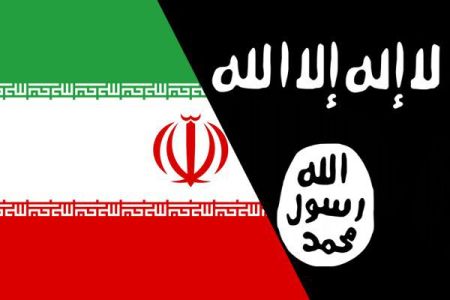
Iran-ISIS-flagPhoto Credit: JP.com graphic

Israeli military analysts are now beginning to prepare top officials, who are in turn beginning to prepare the nation, for what eventually may become the start of World War III.

Most analysts still believe the Syrian crisis is a sectarian conflict between the Sunni, Shi’a and Alawite Muslims. But that time is long gone.

A cataclysmic clash of civilizations is taking place in Syria, one that a number of nations have patiently awaited for decades.

Turkey, so deeply invested in the glorious history of its Ottoman Empire period, would find great satisfaction in stretching its influence with a modern-day “Turkish Islamic Union” that might embrace like-minded nations in the region and perhaps also beyond.

Da’esh, as it is known in the Middle East and which in English calls itself the “Islamic State” (known by others as ISIS or ISIL) is rapidly stretching its influence to build a worldwide Sunni caliphate. It began as a splinter group from the Al Qaeda terrorist organization, and then morphed into the Islamic State in Iraq and Syria (hence “ISIS”) — but at last count had successfully recruited more than 41 other regional Muslim terrorist organizations to its cause from around the world on nearly every continent.

And then there is the Islamic Republic of Iran, a Shi’ite Muslim nation, which is extending its tentacles as rapidly throughout the world as Da’esh, but far more insidiously and certainly more dangerously. If in this world one might define any nation today as Amalek, that ice-cold, black-hearted evil that first picks off the weakest of the Jewish nation, it is Iran, which has quietly extended its influence and control farther and more deeply than any other enemy Israel has ever had. Wealthy, patient, smiling and calculating, Iran acquires new allies each year, even among those Israel once counted as friends. Meanwhile, Iranian officials never forget to keep the home fires burning, to stir the pot and keep it simmering, and always to nurture the various conflicts at home in the Middle East.

This past week, Iran announced the money it donates to families of Arab “martyrs” who murder Israelis will be paid via its own special charity organization, and not through the Palestinian Authority government.

But Tehran has yet to reveal the details of exactly how it intends to pay.

Instead, a high-ranked government official simply made an announcement this weekend saying Iran did not trust the Ramallah government, driving a deeper wedge already dividing the PA’s ruling Fatah faction from Gaza’s ruling Hamas terror organization — Iran’s proxy group.

Hamas has been planting sleeper cells and budding regional headquarters, however, throughout the PA-controlled areas of Judea and Samaria, and it is clear the group’s next goal is an attempt to wrest control of those two regions from the PA, thus completing Iran’s takeover of the PLO — the PA’s umbrella organization and liaison to the United Nations.

Money is always helpful in such an enterprise, and Iran has recently enjoyed a massive infusion of cash that came courtesy of the United States and five other world powers after sanctions were lifted last month as part of last July’s nuclear deal.

Iranian Ambassador to Lebanon Mohammed Fath’ali announced last Wednesday that Iran would pay Arab families for each “martyr” who died attacking Israelis in Jerusalem and each Arab family whose home was demolished by Israel after one of its occupants murdered Israelis in a terror attack.

Iranian Parliament Speaker Ali Larijani last week underlined Tehran’s continued strong support for the wave of terror against Israel.

“The Islamic Republic supports the Palestinian Intifada and all Palestinian groups in their fight against the Zionist regime. We should turn this into the main issue in the Muslim world,” Larijani said in a meeting with a number of “resistance” groups in Tehran,FARS reported Sunday (Feb 28).

But it is clear that Iran is not content solely with a takeover of the PLO.

Tehran has its eye on a much wider goal, now more clearly than ever the resurrection of an updated Persian Empire — in modern parlance military analysts refer to it as an “Axis of Evil” — in much the same manner that Sunni Da’esh (ISIS) is single-mindedly pursuing its goal of rebuilding a worldwide caliphate.

Iranian forces via proxies have already managed to involve themselves in what once were domestic affairs in Yemen, Syria, Lebanon, Egypt, Jordan, Bahrain, Saudi Arabia, Iraq, Israel, Cuba, Mexico, the United States, Afghanistan, Venezuela, Brazil, Argentina, Qatar, Turkey and numerous other nations.

Larijani has at last proclaimed officially that Iran doesn’t differentiate between Shiites and Sunnis since they share many commonalities, adding that Tehran “has supported the Palestinian nation (although they are Sunnis) for the past 37 years.”

The remark is significant in that Iran’s Revolutionary Guard Corps and Lebanese Shi’ite Hezbollah guerrillas – another Iranian proxy – are fighting Sunni opposition forces in Syria on behalf of President Bashar al-Assad. Iranian forces are fighting the Sunni Muslim Da’esh (ISIS) terror organization that seized a significant percentage of territory in Syria.

But south of Israel, Iran’s proxy Hamas, a Sunni Muslim group, has been providing material and technical support to the same Da’esh — but its “Sinai Province” terror group in the Sinai Peninsula.

Here we finally see that Iran is willing to adapt and support terror wherever it can be found, as long as it meets two of three criteria: (1) it furthers its goal to destabilize the region, (2) in the process it works towards the annihilation of Israel, and/or (3) will contribute towards conquest and influence to reach the goal of an ultimate renewed, updated Persian Empire.

How long then until Iran connects the two dots and simply arranges a meeting between its own Supreme Leader Ayatollah Ali Khamenei and the leader of Da’esh, Abu Bakr al-Baghdadi? Hezbollah’s Hassan Nasrallah and Hamas leader Khaled Meshaal will likely be invited for dessert …

The other question is how long until someone strikes the spark that ignites the conflagration — the region is already in chaos.

A European-Iranian honeymoon

January 31, 2016

A European-Iranian honeymoon, Israel Hayom, Prof. Eyal Zisser, January 31, 2016

Last week, the European dam burst. While the continent was turning a cold shoulder to Israel and European entities continued with their threats of boycott, its gates were thrown open to Iran. European leaders put their obsession with Israel aside for an hour or two, and after paying the necessary lip service to International Holocaust Memorial Day, gave Iranian President Hassan Rouhani a royal welcome.

The Iranian president, the smiling face of the Islamic republic, arrived for visits to Italy and France. It was the first visit of its kind since the nuclear deal was signed, a visit that signaled the start of a European-Iranian honeymoon, a visit that will be followed by others like it all over the continent. Rouhani’s visit came days after the economic sanctions on Iran were lifted. It’s no wonder that during the visit, announcements were made about contact between the Iranians and a number of Italian and French companies on deals including a return to European cars being manufactured in Iranian plants and, of course, contracts to purchase Iranian oil. The Iranians are hungry for Europe’s products and technology, while European companies are hungry for Iranian money.

As Rouhani was being received in Europe as an honored guest, Iran’s spiritual leader Ayatollah Ali Khamenei was busy with his longtime hobby of denying the Holocaust. He posted a clip on his website in which he called to investigate whether or not the Holocaust had actually happened, as the Zionists claim it did. But no one in Europe bothered Rouhani with any minor matter like that. After all, it was U.S. Secretary of State John Kerry who urged people not to take Tehran’s calls to annihilate Israel and the U.S. seriously, saying it was only talk. The Europeans also didn’t bother to raise the question of Iranian involvement in regional destabilization, such as in Yemen and Syria, or about Tehran’s support of terrorism. Even questions about respecting human rights and freedom of expression and promoting democracy in Iran itself were removed out of respect for the agenda of the day. Europe, as we know, only asks those questions of Israel.

Indeed, despite Rouhani’s smiles, no change has taken place yet in Iran itself. The conservative camp continues to rule with a fist of iron and supreme leader Khamenei remains firmly at the wheel, or in the hands of the Revolutionary Guard and not Rouhani and his people. So while Rouhani was trying to spread the slogan of a “new Iran” throughout Europe and asking his hosts to turn over a new leaf in the relations between Iran and Europe, the conservatives at home were preparing an unpleasant surprise. Most of the reform camp’s candidates for the parliamentary election scheduled to take place on February 26 were rejected. Even the grandson of late Ayatollah Ruhollah Khomeini, Ahmed Khomeini, who wanted to be elected to the Council of Experts — the Iranian body that oversees the supreme spiritual leader and is responsible for choosing his successor — was rejected on the grounds of “not proving appropriate religious capabilities.”

Iran should be judged not by its words, but by its actions, but the Iranian record speaks for itself. A mere two months after it signed the nuclear agreement with the major world powers in July 2015, Tehran sent thousands of soldiers to Syria to fight on the side of Syrian President Bashar Assad. Painful pictures are coming out of Syria of children dying of hunger in cities under siege by Assad’s forces, Hezbollah fighters, and members of the Iranian Revolutionary Guard. But Iran has been rewarded for its doings in Syria and invited by the U.N. and western countries to take part in a discussion on Syria’s future. The Iranian record also includes ballistic missile tests, to show us what Iranian’s military ambitions are; the arrest of U.S. sailors in the Persian Gulf; and — just like in the good old days — an angry mob setting fire to the Saudi Arabian embassy in Tehran.

The Europeans are choosing to ignore all that as they announce a new chapter in Iranian-European relations. The bill for the honeymoon will be footed by others — in Syria, the Persian Gulf, and Israel.

IDF, Russian, Iranian forces on war alert for Hizballah attack on Israel – and backlash

December 31, 2015

IDF, Russian, Iranian forces on war alert for Hizballah attack on Israel – and backlash, DEBKAfile, December 31, 2015

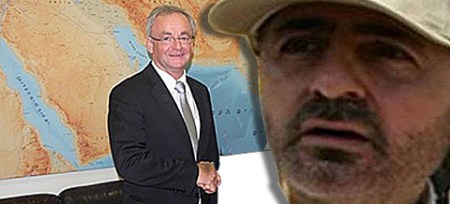
Gerhard-Conrad

The IDF and all of the armies involved in the Syrian civil war, namely those of Russia, Syria and Iran, went on their highest war alert on Thursday, Dec. 31 when all their intelligence organizations reported that Hassan Nasrallah could not be stopped from attacking Israel, in revenge for the assassination of Samir Quntar in Damascus on December 20.

More than one intermediary visited Beirut to avert the Hizballah attack and its deadly fallout, including a former senior officer of the German BND foreign intelligence service. According to DEBKAfile’s intelligence sources, Gerhard Conrad, late of the BND and incumbent director of the European Union’s Intelligence and Situation Center, was given this urgent mission by Chancellor Angela Merkel.

He came away from a meeting with Nasrallah on Dec. 29, with the news that the Hizballah chief was not open to persuasion and the attack was already underway.

Conrad has excellent connections in the Arab world, especially in Syria and Lebanon. Seven years ago, he acted as intermediary between Israel and Hizballah for negotiating the recovery of the bodies of two fallen IDF soldiers, Eldad Regev and Ehud Goldwasser, in exchange for the handover of that same Hizballah high-up Samir Quntar and other jailed and convicted Arab terrorists.

The German spy-diplomat then established personal connections with a shadowy figure, Wafik Safa, who is in charge of Hizballah’s intelligence and security network and a close crony of Nasrallah.

Conrad used those connections again in 2011 to broker the release of Gilead Shalit from Hamas captivity.

It was Safa he arranged for him to meet Nasrallah in Beirut Tuesday. He found the Hizballah chief unshakeable in his determination to make Israel pay for Quntar’s death, even at the cost of a painful backlash against the Shiite group’s terrorists in Syria and Lebanon.

He was unmoved by the warning issued by Israel’s chief of staff, Lieut. Gen. Gady Eisenkott, on Monday, just hours before the Conrad mission.  Eisenkott said, “Just as we have proven in the past, we know how to strike anyone who wishes to harm us. Our enemies know they will suffer grave consequences if they try to undermine our security.”

Upon receipt of the German emissary’s report on the meeting, Eisenkott, his deputy, Maj. Gen. Yair Golan, and OC Northern Command, Maj. Gen. Aviv Kochavi, inspected the preparedness of the IDF’s northern border defenses for all contingencies.

They took into account a scenario, whereby Nasrallah would take advantage of the stormy weather forecast for the weekend in Syria, Lebanon and Israel, to strike Israel, in the knowledge that the heavy rain and snow would impede Israeli air force activity and give the Hizballah operation a tactical edge.

Russian military and Iranian Revolutionary Guard forces in Syria have taken into account that a Hizballah attack will not go unanswered by Israel and that the IDF would most likely hit back at Hizballah on Syrian soil, thus ushering in the New Year with a new whirlwind.

Syria rebels: We have killed Al Qods Chief Soleimani

November 14, 2015

Syria rebels: We have killed Al Qods Chief Soleimani, DEBKAfile, November 14, 2015

Syrian rebel sources claimed Saturday night that they had killed Iranian al Qods chief, the commander of Iranian forces in Iraq and Syria, Gen. Qassem Soleimani, in the fighting east of Aleppo. This claim is not confirmed by any other sources. The rebels say they located the Iranian general’s movements by means of intelligence and struck his car with a TOW missile, killing him and three other Iranian commanders with him, Masoud Askari, Mahmud Dahakan and Ahmed Rajai. If this is confirmed it would count as a signal Syrian rebel feat.