Archive for the ‘Iran’ category

Islam’s “Human Rights”

November 5, 2016

Islam’s “Human Rights”, Gatestone InstituteJanet Tavakoli, November 5, 2016

No intelligent government should impair the right of free speech to placate people who falsely claim they are victims when often they are, in fact, aggressors.

To the 57 members of the Organization of Islamic Cooperation, however, all human rights must first be based on Islamic religious law, Sharia: whatever is inside Sharia is a human right, whatever is outside Sharia is not a human right.
Therefore, slavery or having sex with children or beating one’s wife, or calling rapes that do not have four witnesses adultery the punishment for which is death, or a woman officially having half the worth of a man, are all “human rights.”

Soft jihad includes rewriting history as with the UNESCO vote claiming that ancient Biblical monuments such as Rachel’s Tomb or the Cave of the Patriarchs are Islamic, when historically Islam did not even exist until the seventh century; migration to widen Islam (hijrah), as we are seeing now in Europe and Turkish threats to flood Germany with migrants; cultural penetration such as promoting Islam in school textbooks or tailoring curricula for “political correctness”; political and educational infiltration, as well as intimidation (soft jihad with the threat of hard jihad just underneath it).

More regrettable is that these are so often done, as at UNESCO, with the help and complicity of the West.

Both hard and soft jihad are how Islam historically has been able to overrun Persia, Turkey, Greece, Southern Spain, Portugal, all of North Africa, and all of Eastern Europe. It is up to us not to let this be done to us again.
 

After witnessing the Islamic Republic of Iran violate human rights, adopt sharia law, persecute other religions, murder dissenters, and compel the judiciary to serve the Ministry of Intelligence, it seems clear that the worst thing that can happen to a free Western country is to allow Islamic fundamentalists to take over a government.

Most of the world’s 1.6 billion Muslims pray in Arabic, even if it is not their mother tongue. The problem, however, is not in the translation; it is in the ideology.

Fifteen of the nineteen 9/11 hijackers were Saudi Arabian; two more were from the United Arab Emirates; one was from Egypt, and one from Lebanon. All were from Arabic-speaking countries.

Muslim scholars did not unite to protest the act of terrorism on 9/11. Instead, many celebrated a victory; the Quran includes passages that permit violence to expand Islam.

Most so-called Muslims are peace-loving, but if there are 164 verses of the Koran prescribing jihad, and many Muslims might feel it would be heretical or disloyal to condemn it.

Arabic-speaking Muslim countries are not alone in supporting terrorism. According to the U.S. Department of State, the Islamic Republic of Iran is still the leading state sponsor of terrorism. Iran also recently announced that it will continue to support terrorism, including the terrorist groups Hizballah [“The Party of Allah”] and Hamas.

Iran still supports the death fatwa issued against a European, the British novelist Salman Rushdie, for The Satanic Verses — a novel — issued by the long-dead Ayatollah Khomeini in 1989. Last year the bounty on his head was raised another $600,000 to almost $4 million.

Until his death earlier this year, Ayatollah Vaez-Tabasi, a leading Shia cleric in Iran, who presided over the Imam Reza shrine that draws as many annual visitors as Mecca, called for “perpetual holy war.”

Muhammad’s Practices Clash with the Humanistic Values of Western Civilization

Fundamentalists view Muhammad as the perfect man. Yet Muhammad led violent followers who raped, enslaved war captives, and murdered unbelievers as part of Islam’s program to expand. Today that behavior is emulated by Islamic terrorists in Iraq, Syria, Sudan, Pakistan, Bangladesh, Mauritania, Nigeria, to name just a few.

Muhammad had several wives, including a slave given to him as a gift. When he was in his fifties, he asked for a friend’s six-year-old daughter and consummated the so-called marriage when the child was nine. Although Muhammad criticized corrupt customs of his Arab contemporaries, he had sex with a girl who was too young to be capable of consent; in the West we call this statutory rape. (Sahih Bukhari volume 5, book 58, number 234)

Referring to Muhammad’s life, fundamentalists allow forced marriages of female children in countries including Saudi Arabia, Afghanistan, some Gulf States, and Iran.

If fundamentalist Muslim leaders do not understand how flawed this ideology appears to the West, their incomprehension may spring from a fundamentally different view of human rights: To the West, these values are embodied in the Enlightenment — such as individual freedoms, freedom of thought, disinterested enquiry — and in the Universal Declaration of Human Rights – that all people, regardless of race religion or gender, have the right to life, liberty personal security, and freedom from slavery torture, and degrading treatment.

To the 57 members of the Organization of Islamic Cooperation (OIC), however, all human rights must first be based on Islamic religious law, Sharia: whatever is inside Sharia is a human right, whatever is outside Sharia is not a human right.

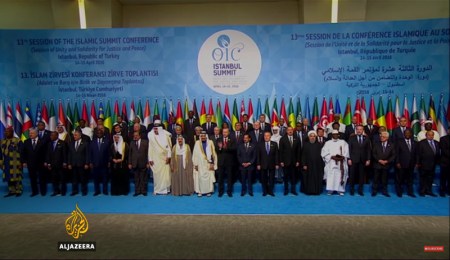
2022To the 57 members of the Organization of Islamic Cooperation, all human rights must first be based on Islamic religious law, Sharia: whatever is inside Sharia is a human right, whatever is outside Sharia is not a human right. Pictured above: The 2016 OIC Summit in Istanbul, Turkey. (Image source: Al Jazeera video screenshot)

Therefore, slavery or having sex with children or beating one’s wife, or calling rapes that do not have four witnesses adultery the punishment for which is death, or a woman officially having half the worth of a man, are all “human rights.”

In 2005, after the Danish cartoonist Kurt Westergaard drew a cartoon mildly satirizing Muhammad as an assignment for a newspaper, many Muslim clerics cried blasphemy and called for his death. These included a Pakistani cleric who offered a one million dollar reward to anyone who would murder the Dane. Thousands of Muslims protested. In 2010, an axe-wielding Muslim assailant attacked Westergaard in his home; fortunately, Westergaard was able to escape to a secure room.

Western governments should stand resolute against those who would blackmail us into giving up our freedoms. No intelligent government should impair the right of free speech to placate people who falsely claim they are victims when often they are, in fact, aggressors.

Reformist Muslims and the Credibility Crisis

Most of the world’s 1.6 billion Muslims may not countenance violence and human rights violations, but the fact remains that fundamentalists are not a fringe group; they occupy senior positions in the Muslim clerical hierarchy. There are tens of millions (or more) of them, and each seems to believe that his interpretation of Islam is the only correct one. Of this group, it is estimated that hundreds of thousands are jihadis willing to engage in active violence.

Many Reformist Muslims claim they are being unfairly lumped into this extremist crew, but if they are claiming a schism, many they often have not been clear about it.

When Martin Luther, a Catholic priest and a theology professor, repudiated two core teachings of the Catholic Church, he acknowledged that, by definition, he was no longer Catholic. He was part of the Protestant Reformation, and his followers are called Lutherans.

Reformist Muslims still call themselves Muslims, but there can never be a Quran 2.0. Every word in the Quran is believed to be the word of Allah, similar to the Ten Commandments as the direct word of God; no one is able to say that Allah did not mean what Allah reportedly said. Interpretations, however do differ and since 1948 have apparently caused the deaths of 11,000,000 Muslims at the hands of other Muslims.

So one can imagine what might be in store for non-Muslims.

Islam, moreover, seems to have been has been set up to spread it both by violence, “hard jihad,” and “soft jihad. ” Hard jihad includes terrorism, murder and attempted murder. Soft jihad includes rewriting history as with the UNESCO vote claiming that ancient Biblical monuments such as Rachel’s Tomb or the Cave of the Patriarchs are Islamic, when historically Islam did not even exist until the seventh century; migration to widen Islam (hijrah), as we are seeing now in Europe and Turkish threats to flood Germany with migrants; cultural penetration such as promoting Islamin school textbooks or tailoring curricula for “political correctness“; political and educational infiltration, as well as intimidation (soft jihad with the threat of hard jihad just underneath it).

More regrettable is that these are so often done, as at UNESCO, with the help and complicity of the West.

Both hard and soft jihad are how Islam historically has been able to overrun Persia, Turkey, Greece, Southern Spain, Portugal, all of North Africa, and all of Eastern Europe. It is up to us not to let this be done to us again.
El-Sissi against the Arab world

October 31, 2016

El-Sissi against the Arab world, Israel Hayom, Dr. Reuven Berko, October 31, 2016

(How different would the situation be now if Obama, Clinton et al had supported Sisi’s “coup” rather than Morsi and the Muslim Brotherhood? — DM)

The attitude of the Arab Gulf states toward Egypt under President Abdel-Fattah el-Sissi is a good example of the insanity of considerable parts of the Arab world, whose twisted suicidal reasoning is unclear to many people outside it.

Given the American wipeout in the Middle East, leaders of the Persian Gulf states are very well aware that the only support they can expect against the expected Iranian aggression on the Arabian Peninsula comes from Egyptian military might. Nevertheless, megalomania, hypocrisy, double talk, and in particular a divisive and violent radical Islamist agenda are leading the Arab leaders to saw off the very branch they sit on.

The competition for hegemony, a tangle of conflicting economic and political interests and defensive manipulations, along with drives for expansion and survival, are leading the Gulf states to arm and fund the radical Sunni terrorist movements in Syria and Iraq to check the growth and terrorism of Shiite Iran, whose military provocations and threat to the Sunni Arab Gulf states is increasing.

But in effect they are encouraging Islamic terrorism in Egypt.

Turkey and Qatar have not accepted the loss of former President Mohammed Morsi and the Muslim Brotherhood, and have not relinquished their dream of an Islamic empire. The Saudis, because of their money, reject Egypt as the “Arab mother state.” Mistaken U.S. policy confers transient status on el-Sissi’s regime. All of Egypt’s attempts to ingratiate itself with Saudi Arabia — the military guarantees, the delegations, and the gifts of the Tiran and Sanafir islands — failed to do the trick.

There is an Arab proverb that says, “Starve your dog so he will obey you.” While battling Iran, the Gulf states are inciting for el-Sissi to be ousted while supplying stingy amounts of money and fuel just to humiliate him and keep him “alive,” beaten, and needy — a thug who can attack Tehran for them. While the Al Jazeera network presents the Egyptian president as a sex criminal, an agent of Iran, Israel, and America, a corrupt official who sells weapons to the Houthi rebels in Yemen, the Egyptian government is vulnerable to incitement and terrorism from the Muslim Brotherhood and their protectors in the Gulf (Al Jazeera), flooding, monstrous demographics (thanks to the Islamic ban on birth control), inflation, shortages of fuel, sugar, rice and raw materials, as well as the threat of the water level in the Nile River dropping and a hit to its $55 billion tourism industry.

To encourage his suffering, restive, exposed-to-incitement people, el-Sissi told them that he lived for a decade with nothing in the refrigerator other than a bottle of water. In response, the Saudi king mocked him, delayed shipments of fuel and visas to Saudi Arabia for Egyptians and made threats that el-Sissi would fall, like then-President Hosni Mubarak. In response to the intra-Arab scheming, el-Sissi invited the Russians to conduct a joint military exercise and recently voted against the Arabs — and with Iran, Russia and Syria — in the U.N. Security Council on a solution to the Syrian crisis, knowing that the fall of Syrian President Bashar Assad and the success of the Islamists would make him the next target. If the Gulf states don’t change their policy soon, they’ll wind up getting a refrigerator full of explosives from him.

Dangerous Weakness in Iraq and Syria

September 23, 2016

Dangerous Weakness in Iraq and Syria, Counter Jihad, September 22, 2016

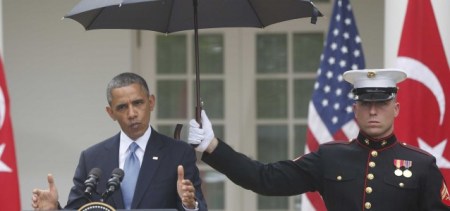
umbrellaman

US Secretary of State John F. Kerry “urges” Russia and Syria to ground their military aircraft after the destruction of a humanitarian aid convoy. Meanwhile, in the eastern part of that same theater, American and Iraq forces came under a sulfur mustard (commonly known as “mustard gas”) attack from the Islamic State (ISIS).

This is not the first use of sulfur mustard by ISIS and their predecessors.  They used them in IEDs against American forces during the Iraq War, and against Kurdish forces as late as last year.  Nevertheless, they clearly do not fear to use them against Americans at this time.  Whatever message we are conveying to ISIS, it does not include a proper respect for violating the laws of war when dealing with our soldiers.

Likewise, the Russians are not going to ground their aircraft just because we ask them to do.  In fact, the Russians are sending their only active aircraft carrier to join the war in Syria.  Defying an empty “urging” by our Secretary of State is just another way for Russia to show that they, and not we, are in control of the conflict.

Syrian jets, meanwhile, came close to bringing American forces under aerial attack for the first time since World War II.  Only good fortune kept American soldiers from being killed by Syrian bombs.  Fighters had to be scrambled to prevent additional sorties by the Syrian bombers.

In addition to Russia, Syria, and ISIS, Iran’s challenges against US Navy forces are up 50% from last year.  The Iranians are violating international law on a regular and consistent basis in challenging American fleet ships over access to international waters.

According to U.S. officials, the incidents all involved the IRGC, which operates a navy in parallel to Iran’s regular naval force, and whose leaders answer directly to Iranian Supreme Leader Ayatollah Ali Khamenei, Defense News reported.

Ten American sailors and their two boats were seized by IRGC naval forces in January of this year in violation of international law.

Subsequent to the sailors’ release, Iran portrayed their capture as a victory against the U.S., releasing the sailors after claiming that Washington apologized for the incident. Khamenei proclaimed that the naval forces who captured the sailors did “God’s deed” and issued medals to the commanders involved, while the IRGC announced plans to build a statue to commemorate the seizure.

In May, the deputy commander of the IRGC threatened to close the strategic Straits of Hormuz to the U.S. and its allies if they “threaten us,” adding: “Americans cannot make safe any part of the world.”

The U.S. Navy reported last month that in 2015, there were close to 300 encounters or “interactions” between American and Iranian naval vessels in the Persian Gulf. While most of the encounters were not considered to be harassment, the behavior of the Iranian navy was found to be less disciplined than that of other navies.

Weakness is provocative in a military conflict.  Refusing to embrace strong measures that would control these aggressive moves is exactly how American servicemen get killed.  Across the Middle East, our President’s predilection for weakness is putting American lives in grave [danger.]

What John Kerry Probably Told the Saudi Crown Prince

September 21, 2016

What John Kerry Probably Told the Saudi Crown Prince, Clarion Project, Elliot Friedland, September 20, 2016

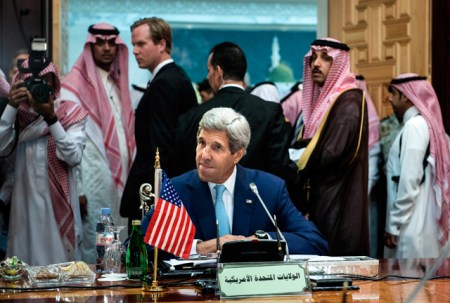
kerry-gulf-states-cooperation-ip_2John Kerry. (Photo: © Reuters)

US Secretary of State John Kerry spoke with Saudi Crown Prince Mohammed bin Nayef at the UN to discuss bilateral ties. Here’s what they might have said to each other.

U.S. Secretary of State John Kerry: Pleasure to see you your royal highness. I have some very important matters to discuss with you and don’t have much time, so I hope you don’t mind if we launch straight into it.

Saudi Crown Prince Mohammed Bin Nayef: No problem at all.

Kerry: Wonderful. The first thing I’d like to ask is about is your human rights violations in Yemen. You guys sure have been killing an awful lot of civilians over there. According to the U.N. humanitarian coordinator your soldiers have killed or wounded at least 10,000 civilians since beginning the campaign in 2015. Do you think you could, you know, dial it back a little bit? Or maybe just be more careful when you’re getting your bomb on?

Nayef: Listen, we’ve bought $110 billion worth of weapons from y’all since Obama took office. That’s a lot of money. If you don’t like the way we do things we’d be happy to take our business elsewhere. China never asks us these sorts of insulting questions about alleged “civilian casualties.” How can you prove they’re not terrorists anyway? Once someone is just mangled chunks mixed with rubble, terrorists and civilians start to get a lot harder to differentiate

Kerry: The U.N. Human Rights Commissioner says you’ve killed two-thirds of the civilians who’ve died in the war. You’ve dropped cluster bombs on civilian areas! You’re using white phosphorus!

Nayef: Cluster bombs and white phosphorus that you sold to us. As I said we’re happy to take our business elsewhere. Do you want us to kill Iranian-backed terrorists or not? You know what they’re like, always hiding in civilian areas like that school for the blind.  We’ll try, but it’s an impossible situation.

Kerry: Ok, ok, I don’t want to upset you. What about Syria. Since 2013, you’ve been the largest foreign backer of rebel militias.

Nayef: I thought you supported the legitimate aspirations of the Syrian people to oust the tyrant Assad?

Kerry: Well in theory, but you were instrumental in founding and funding Jaish al-Islam, the largest rebel group in Syria with 20,000-25,000 soldiers. The thing is that this militia group and many others openly want to establish an Islamist state with sharia governance. We were rather hoping this thing could finish up with a nice Western-style liberal democracy. You’ve spent billions funding rebel groups, but what’s the endgame here? Another repressive Islamist regime? Maybe Assad wouldn’t be so bad after all, you know?

Nayef: Listen up Johnny boy. After all your smack-talk about red-lines and chemical weapons and the thousands of his own people he has killed, 86,000 civilians dead since the start of the war, of which he’s thought to have killed 75%, you want us to swallow keeping that viper as president of Syria? Besides, you have no idea what you’re doing there. CIA-backed militias have reportedly engaged in combat with Pentagon-backed militias!

Unlike you, we’re in it to win, and we’re not going to stop backing the rebels just because they take religion seriously, unlike your godless citizenry.

Kerry: OK, ok. But what about women’s rights in your kingdom? Human Rights Watch has launched the campaign to end your patriarchal male guardianship laws, which keep women trapped in a system of gender apartheid. Will you be acting to repeal those laws and bring Saudi Arabia into the 2st Century?

Nayef: Why? So our women can walk around half naked like they do in America, whoring themselves out to every guy they see, not even caring if they get raped? Clearly you do not understand Islamic values of honor and chastity. I suggest you take a cultural sensitivity course instead of imposing your colonial paradigms of women’s liberation onto our ancient and noble culture.

Kerry: One more thing, could you release imprisoned human-rights activist Raif Badawi? Ten years in prison and 1,000 lashes for writing a blog seems a bit much.

Nayef: No.

Kerry: Ok, well I guess that’s about it then.

Nayef: Thank you for your time, Mr Secretary. I do so enjoy our little chats.

What’s the Plan for Winning the War?

August 25, 2016

What’s the Plan for Winning the War?, Counter Jihad, August 25, 2016

Who is even thinking about how to win the war?  Will the legacy of the Obama administration be a shattered NATO, a Turkey drawn into Russia’s orbit, an Iranian hegemony over the northern Middle East, and a resurgent Russia?  It certainly looks to be shaping up that way.  Russia is playing chess while the US is playing whack-a-mole.  The absence of a coherent governing strategy is glaring.

**********************

Michael Ledeen makes a clever observation:

Everyone’s talking about “ransom,” but it’s virtually impossible to find anyone who’s trying to figure out how to win the world war we’re facing.  The two keystones of the enemy alliance are Iran and Russia, and the Obama administration, as always, has no will to resist their sorties, whether the Russians’ menacing moves against Ukraine, or the Iranians’ moves against us.

The moves are on the chessboard, sometimes kinetic and sometimes psychological warfare.  Like a chess game, we are in the early stages in which maneuver establishes the array of forces that will govern the rest of the game.  Russia’s deployment of air and naval forces to Syria stole a march on the Obama administration.  Its swaying of Turkey, which last year was downing Russian aircraft, is stealing another.  Its deployment of bombers and advanced strike aircraft to Iran is another.  That last appears to be in a state of renegotiation, as Ledeen notes, but that too is probably for show.  The Iranians have too much to gain in terms of security for their nuclear program, at least until they’ve had time to build their own air force.

Iran is making strategic moves as well.  Ledeen notes the “Shi’ite Freedom Army,” a kind of Iranian Foreign Legion that intends to field five divisions of between twenty and twenty-five thousand men each.  Overall command will belong to Quds Force commander Qassem Suliemani, currently a major figure in the assault on Mosul, having recovered from his injury in Syria commanding Iranian-backed militia in the war there.  The fact of his freedom of movement is itself a Russian-Iranian demonstration that they will not be governed by international law:  Suliemani is under international travel bans for his assassination plot against world diplomats, but was received in Moscow and now travels freely throughout the northern Middle East.

Turkey, meanwhile, has been effectively cut off by Iran’s and Russia’s success in the opening game of this global chess match.  As late as the Ottoman Empire, the Turks looked south through Iran and Iraq to power bases as far away as Arabia.  Now the Ayatollahs are going to control a crescent of territory from Afghanistan’s borders to the Levant, leaving the Turks locked out.  One might have expected the Turks to respond by doubling their sense of connection to Europe and NATO.  Instead, the purge following the alleged coup attempt is cementing an Islamist control that leaves the Turks looking toward a world from which they are largely separated by the power of this new Russian-Iranian alliance.  The Turks seem to be drifting toward joining that alliance because being a part of that alliance will preserve their ties to the Islamic world.

For now, the Obama administration seems blind to the fact that these moves are closing off America’s position in the Middle East.  This is not a new policy.  Eli Lake reports that the Obama administration told the CIA to sever its ties to Iranian opposition groups in order to avoid giving aid to the Green revolution.  Their negotiation of last year’s disastrous “Iran deal” has led to Iran testing new ballistic missiles and receiving major arms shipments from Russia.  Yet while all these moves keep being made around them, the Obama administration proceeds as if this were still just an attempt to crush the Islamic State (ISIS).  The commander of the XVIIIth Airborne Corps has been given a task that amounts to helping the Iranians win.  Our incoherent policy has left us on both sides in Syria.  Our only real ally in the conflict, the Kurds, stand abandoned by America.

Who is even thinking about how to win the war?  Will the legacy of the Obama administration be a shattered NATO, a Turkey drawn into Russia’s orbit, an Iranian hegemony over the northern Middle East, and a resurgent Russia?  It certainly looks to be shaping up that way.  Russia is playing chess while the US is playing whack-a-mole.  The absence of a coherent governing strategy is glaring.

Anti-Israel Double Standards Enable Assad’s Brutality

August 23, 2016

Anti-Israel Double Standards Enable Assad’s Brutality, Investigative Project on Terrorism,  Noah Beck,August 23, 2016

1789

Syria’s civil war claimed 470,000 lives since it started in March 2011, the Syrian Centre for Policy Research announced in February. That’s an average of about 262 deaths per day and 7,860 per month. The carnage has continued unabated, so, applying the same death rate nearly 200 days after the February estimate, the death toll is over 520,000.

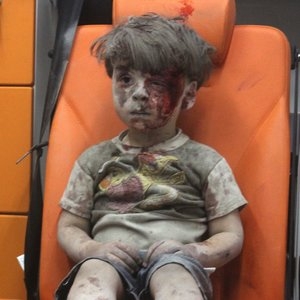
Such numbers are staggering, even by Middle East standards. However, the violence has become so routine that it only occasionally captures global attention, usually when a particularly poignant moment of human suffering is documented. The most recent example is Omran Daqneesh, a 5-year old Syrian boy who was filmed shell-shocked, bloody, and covered in dust after the airstrike bombing of his Aleppo apartment block.

The tragic image of Omran caused outrage around the world, as did the image of Aylan Kurdi, the drowned Syrian boy whose body washed up last September on a beach in Turkey. Yet Omran’s plight demonstrates that, nearly a year after the last child victim of Syrian horrors captured global sympathy, nothing has changed.

If anything, the violence in this multi-party proxy war seems to be getting worse. Since Aylan Kurdi’s drowning, Russia began blitz-bombing Syria in support of the Assad regime. The Syrian Observatory for Human Rights (SOHR) estimates that nine months of Russian airstrikes have killed 3,089 civilians – a toll that is greater, by some estimates, than the number of civilians killed by ISIS. By contrast, Syrian civilian deaths caused by U.S. airstrikes are probably in the hundreds (over roughly twice as much time, since U.S. airstrikes began in the summer of 2015).

But Syrian airstrikes are responsible for the bulk of civilian deaths in Syria. The Assad regime killed 109,347 civilians between March 2011 and July 2014 (88 percent of the total casualties at the time), according to estimates by the Syrian Network for Human Rights. That works out to about 91 civilian deaths per day. More recently, the SOHR documented 9,307 civilian deaths from 35,775 regime airstrikes over a 20-month period running from November 2014 through June 2016. Thus, roughly one innocent Syrian was killed every hour, during the 20 months that the SOHR documented civilian casualties caused by Russian and Syrian airstrikes.

Compare those figures to the number of innocent Palestinians killed by Israel from 2011 to 2014. According to Human Rights Watch (HRW), which has been accused of anti-Israel bias, 37 Palestinians were killed in 2011, 103 in 2012, 15 in 2013 and 1,500in 2014 – the year when Hamas fired rockets at Israel from highly populated Gazan areas. That’s a four-year total of 1,655. During roughly the same four-year period, the number of Syrian civilian deaths was about 76 times greater than the HRW total of Palestinian civilian casualties.

Yet the European Union singles out Israel for conflict-related consumer labels without any similar attempt to warn European consumers about goods or services whose consumption in any way helps the economies of countries responsible for the Syrian bloodshed, including Syria, Russia, and Iran. Human rights lawyer Arsen Ostrovsky has highlighted how none of those countries is targeted by those advocating a boycott of Israel out of a purported concern for human rights. Even more absurd, most of the results produced by a Google search for “academic boycott of Syria” or “academic boycott of Iran” concern academic boycotts of Israel. That asymmetry precisely captures the problem.

In addition to supporting the Assad regime in Syria and contributing to the violence there, Iran executes people for everything from drug offenses to being gay.

Indeed, the global outcry over Syrian suffering is embarrassingly weak when compared to reactions to Israel’s far less bloody conflict with the Palestinians. Imagine if Omran Daqneesh had been a Palestinian boy hurt by an Israeli airstrike on Gaza. College campus protests, the media, NGOs, and world bodies around the planet would be positively on fire. Israeli embassies would be attacked, French synagogues would be firebombed (eight were attacked in just one week during Israel’s 2014 war with Gaza), Jews around the world would be attacked, and condemnations would pour in from the EU, the United Nations, and the Obama administration. UN resolutions and emergency sessions would condemn the incident. International investigations would be demanded. Global blame would deluge Israel, regardless of whether Hamas, a terrorist organization, actually started the fighting or used human shields to maximize civilian deaths. Israel would be obsessively demonized despite any risky and unprecedented measures the Israeli military might have taken to minimize civilian casualties.

Moreover, when an occasional Syrian victim captures global attention, the protests are generally for some vague demand for “peace” in Syria, rather than blaming and demanding the punishment of Syria, Iran, and Russia, even though those regimes are clearly responsible for the slaughter. The starkly different reactions to Israel and Syria are even more shocking when it comes to the United Nations.

From its 2006 inception through August 2015, 62 United Nations Human Rights Council resolutions condemned Israel, compared to just 17 for Syria, five for Iran, and zero for Russia, according to the watchdog group UN Watch. The lopsided focus on Israel is equally appalling at the UN General Assembly, as UN Watch has highlighted. In each of the last four years, as the Syrian bloodbath claimed hundreds of thousands of lives, there were at least five times as many resolutions condemning Israel as those rebuking the rest of the world:

2012: 22 against Israel, 4 for the rest of the world

2013: 22 against Israel, 4 for the rest of the world

2014: 20 against Israel, 3 for the rest of the world

2015: 20 against Israel, 3 for the rest of the world

A corollary of the anti-Israel bias ensures that no Israeli victim will ever enjoy the kind of global sympathy expressed for Omran Daqneesh or Aylan Kurdi. When a Palestinian man enters the bedroom of a 13-year old girl and stabs her to death in her sleep,Obama says nothing even though she was a U.S. citizen and the world hardly notices. By contrast, imagine if the Israeli father of Hallel Yaffa Ariel had decided to take revenge by entering a nearby Palestinian home to stab a 13-year old Palestinian girl to death in her sleep. The global anger would be deafening.

Why do Israeli lives matter so much less? And why do student activists, the UN, the EU, the media, and the rest of the world focus so much more on alleged Palestinian civilian deaths than on Syrian civilian deaths? Doing so is woefully unjust to Syrians. It is also deeply unfair to Israel, which has endured terrorist attacks on its people throughout its existence as a state. It is the one country that, according to Col. Richard Kemp, former commander of British forces in Afghanistan, has done more to protect civilians during war than any other in the history of war.

The global obsession with condemning Israel not only defames a beleaguered democracy doing its best, it also enables the truly evil actors like the Assad regime and Hamas, by giving them a pass on some of the world’s worst crimes.

Israel’s let-down: Putin-Erdogan hook-up with Iran

August 9, 2016

Israel’s let-down: Putin-Erdogan hook-up with Iran, DEBKAfile, August 9, 2016

2 (1)

The talks between Presidents Vladimir Putin and Reccep Erdogen in St. Petersburg scheduled for Tuesday, Aug. 9, are causing trepidation among Israel’s policy-makers and military leaders. Their summit takes place on the sidelines of the G-20 summit, concluding nine months of hostility between the two capitals that was sparked by Turkish jets shooting down a Russian SU-24 warplane over the Syrian border on Nov. 24, 2015.

The feud was put to rest on July 17 – two days after Erdogan suppressed the attempted military coup against his rule. The Turkish ruler decided there and then to exploit the episode to expand his strength and use it not only for a massive settling of accounts with his critics, but also as a springboard for parlaying his reconciliation with Moscow for a strategic pact with Russia.

Israel, the worry is that while turning his back on the United States and NATO, Eerdogan will go all the way to bond with Russia to which Iran is also attached as a partner. Indeed, Erdogan has scheduled a trip to Tehran and a meeting with President Hassan Rouhani a few days after his talks with Putin.

The Turkish president’s latest moves look like spawning another new Middle East bloc that would consist of Turkey, Russia, Iran, Iraq, Syria and indirectly the Lebanese Hizballah terrorist group.

This prospect would upend Israel’s key policies for Turkey and Syria.

The Israeli détente with Ankara in recent months hinged on Turkey’s continuing to maintain its close military and intelligence ties with the United States and its integration in an anti-Iran Sunni alliance in partnership with Saudi Arabia, Egypt, the United Arab Emirates and Jordan.

But the Putin-Erdogan meeting Tuesday threatens to throw American, Israeli and moderate Arab rulers’ plans to the four winds. Turkey appears to have opted to line up with a Russian-Shiite front led by Tehran in preference to an anti-Iran Sunni alliance.

Therefore, the expanded military and intelligence cooperation which the Israeli-Turkish rapprochement was to have heralded will be low key at best for two reasons:

1. Israel will beware of sharing its military technology with Turkey lest it find its way to Iran. During the talks with Ankara for patching up their quarrel Israel was constantly on the lookout for indications that Turkey was prepared to break off its ties with Iran.

2. For the sake of keeping Iran and Hizballah away from its borders, Israel entered into arrangements with Russia, some of them never published, at the start of Moscow’s military intervention in Syria last September. Those arrangements included coordination of their air force operations over Syria.

Now, Israel finds itself suddenly up against a Russian-Turkish partnership aimed at strengthening Iranian domination of Syria – the exact reverse of the Netanyahu government’s objective in resolving its dispute with Ankara and forging deals with Moscow.

Israeli-Saudi Ties Warming; Hizballah and Iran Livid

August 8, 2016

Israeli-Saudi Ties Warming; Hizballah and Iran Livid, PJ MediaP. David Hornik, August 7, 2016

netImage Courtesy of Shutterstock

As Khamenei tweeted on Monday: “Revelation of Saudi government’s relations with Zionist regime was stab in the back of Islamic Ummah.”

************************

The Israeli society that I encountered embraces a culture of peace, has accomplishments it wants to (protect), wants coexistence, and wants peace.

Those words weren’t spoken by an enthused congressman after a trip to Israel. They were spoken to BBC Arabic by Abd al-Mujid al-Hakim, director of the Middle East Center for Strategic and Legal Policy in Jedda, Saudi Arabia, and a member of a Saudi delegation that recently visited Israel.

The delegation, which included academics and businessmen, was led by Dr. Anwar Eshki, a retired Saudi general and former top adviser to the Saudi government. About a year earlier Eshki had shaken hands and shared a stage in Washington with Israeli Foreign Ministry director-general Dore Gold—seen as a major breakthrough at the time. But a public visit to Israel of this kind, which could only have been carried out with the approval of the highest level of the Saudi government, is a historical first and still has a taste of the surreal to it.

During the visit Eshki met again with Gold; with Maj.-Gen. Yoav Mordechai, responsible for Israeli administration of the territories; with Palestinian officials in Ramallah; and with opposition Members of Knesset.

One of those opposition MKs, Issawi Frej of the far-left, mostly Jewish Meretz Party, said:

The Saudis want to open up to Israel. It’s a strategic move for them. They want to continue what former Egyptian president Anwar Sadat started (with the 1979 Israeli-Egyptian peace treaty). They want to get closer with Israel, and we could feel it clearly.

What’s going on?

Israeli commentator Yossi Melman, while noting that the visit marks a new plateau in the increasingly overt Israeli-Saudi ties, points out:

[O]n a covert level, according to foreign reports, the ties being cultivated are even more fascinating. Intelligence Online reported that Israel is selling intelligence equipment, as well as control and command centers, to the Saudi security forces. Previously, it had been reported in the foreign media that the heads of the Mossad, the organization responsible for Israel’s covert ties, met with their Saudi counterparts. Media outlets affiliated with Hezbollah even reported that officers from the two countries’ armies had met.

What’s going on, in other words, is that Israel and Saudi Arabia have common enemies in the region, and with American power withdrawing, Israel’s power constantly growing, ISIS threatening, and the Obama administration having paved a path to nuclear weapons for Iran, the Saudis—like Egypt, Jordan, and other Sunni states—are casting their troubled gaze toward Jerusalem.

Or as Melman puts it:

Israel and the Saudis share a fear for Iran’s nuclear program and Tehran’s efforts to increase its influence in the region. They also both have an interest in weakening the standing of Hezbollah, “the forward headquarters” of Iran on Lebanon’s Mediterranean coast. Prime Minister Benjamin Netanyahu speaks often of Israel’s ties with the “Sunni Bloc,” and hints that the Saudis are included in this group.

It appears that he need hint no more.

Last week’s Saudi visit to Jerusalem—a dramatic, even stunning confirmation of Israel’s cooperation with that bloc—did not go unnoticed, of course, by the rival Shiite bloc. And they’re not happy about it.

Hizballah chief Hassan Nasrallah accused the Saudis of “normalizing for free, without receiving anything in return…. It seems the future of Palestine and the fate of its children have become a trivial matter for some Arab states recently.”

The Saudi visit, he said, “couldn’t have taken place without the agreement of the Saudi government. We know how things work there. In Saudi Arabia a person will be lashed for so much as tweeting.”

But if Nasrallah is not pleased with this development, his boss—Iranian supreme leader Ayatollah Khamenei—is even less thrilled.

As Khamenei tweeted on Monday: “Revelation of Saudi government’s relations with Zionist regime was stab in the back of Islamic Ummah.”

None of this means that the Sunni Arab part of the Ummah is ready to warmly embrace Israel. While in Israel last week, Dr. Eshki—like Egyptian and Jordanian officials before him—said that real “normalization” would have to await a resolution of the Palestinian issue. It’s code for: “We’re not really ready to accept a Jewish state in our midst.”

Still, considering that Israel and Sunni Arab states used to fight wars every few years, a reality of nonbelligerency and pragmatic ties is a major improvement for Israel. Whoever is the next U.S. president might want to cooperate with the Israeli-Sunni alliance against Iran instead of giving the mullahs a “sunset clause” leading to nuclear night.

Coup-Weary Turkey: Directionless and Insecure

August 8, 2016

Coup-Weary Turkey: Directionless and Insecure, Gatestone InstituteBurak Bekdil, August 8, 2016

♦ The more Ankara feels distant to Washington, the more it will want to feel closer to Moscow.

♦ As Western leaders call on President Erdogan to respect civil liberties and democracy, Erdogan insists he will consider reinstating the death penalty: “The people have the opinion that these terrorists [coup-plotters] should be killed. Why should I keep them and feed them in prisons for years to come?”

Turkey once boasted of having NATO’s second biggest army, equipped with state-of-the-art weapons systems. That powerful army now lacks command: After the failed coup of July 15, more than 8,500 officers and soldiers, including 157 of the 358 generals and admirals in the Turkish military’s ranks, were discharged. The top commanders who were purged had made up 44% of the entire command structure. Prime Minister Binali Yildirim said that the military’s shipyards and weapons factories will be transferred to civilian authority; military high schools and war academies have been shut; military hospitals will be transferred to health ministry; and the gendarmerie, a key force in anti-terror operations, and the coast guard will be tied to the interior ministry.

Those changes leave behind an army in deep morale shock, with political divisions and polarization. Its ranks are suffering not just trauma but also humiliation. The Turks are lucky their country was not attacked by an enemy (and they are plentiful) at a time like this. Conventional war, however, is not the only threat to Turkey’s security. The Turkish army’s worst decline in modern history came at a time when it was fighting an asymmetrical war against Kurdish insurgents inside and outside of Turkey and, as part of a U.S.-led international campaign, the Islamic State (ISIS) in neighboring Syria.

The attempted coup not only quickly discredited the Turkish military but also left the country once again directionless in foreign policy. President Recep Tayyip Erdogan has been slamming his NATO ally, the United States, almost daily. His government big guns have been implying an American hand behind the failed coup by a faction of officers they claim are linked to a U.S.-based Muslim cleric, Fethullah Gulen, once Erdogan’s best political ally. “The putschist [Gulen] is already in your country, you are looking after him. This is a known fact,” Erdogan said, addressing Washington. “You can never deceive my people. My people know who is involved in this plot, and who is the mastermind.”

The White House immediately denied Erdogan’s claim. Deputy Press Secretary Eric Schultz said the U.S. was one of the first countries to condemn the failed coup, and noted that a successful one would have put American troops serving in Turkey at risk. “It is entirely false. There is no evidence of that at all,” Schultz said. “We feel that talk and speculation along those lines is not particularly constructive.” The failed coup has become a Turkish-American dispute — with a military dimension, too.

Erdogan also criticized U.S. General Joseph Votel, who voiced concerns over “the long-term impact” of the coup on the Pentagon’s relations with the Turkish military. According to Erdogan, Votel’s remarks were evidence that the U.S. military was siding with the coup plotters. The Pentagon’s press secretary, Peter Cook, flatly denied that claim: “Any suggestion anyone in the department supported the coup in any way would be absurd.”

Erdogan probably wants to play the tough guy and is slamming Washington day after day not just to look pretty to millions of anti-American Turks but also to pressure Washington in Turkey’s quest to extradite Gulen, presently the biggest snag between the two allies.

But there is another dimension to Erdogan’s ire: He wants to mend fences with Moscow.

Turkey’s relations with Russia were frozen after Nov. 24, when Turkey, citing a brief violation of its airspace along Turkey’s border with Syria, shot down a Russian military aircraft. Russia’s President Vladimir Putting ordered punishing economic sanctions, imposed a travel ban on Russian tourists visiting Turkey and suspended all government-to-government relations. Unable to ignore the damage, a repentant Erdogan conveyed regrets to Putin; the regrets were accepted and the two leaders are scheduled to meet on August 9, when the Turks hope that relations with Russia will be entirely normalized.

Normalization, unfortunately, will not come at the price of Turkish “regrets” alone. For full normalization, Turkey will have to digest the Russian-Iranian-Syrian line in Syria’s civil war — a pact which Turkey has loudly detested ever since civil war erupted in Syria in 2011. This will be another foreign policy failure for Erdogan and an embarrassing U-turn. But the more Ankara feels distant to Washington, the more it will want to feel closer to Moscow.

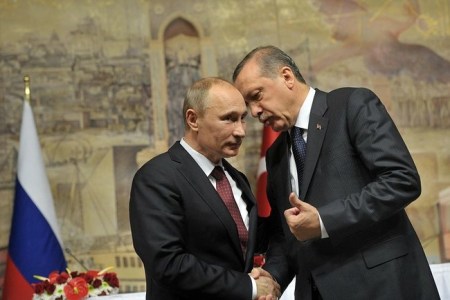
1375Turkish President Recep Tayyip Erdogan is attempting to repair badly damaged relations with Russia, even as he slams his NATO ally, the United States, almost daily, and accuses the U.S. military of supporting the coup attempt against him. Pictured: Russian President Vladimir Putin (left) with Erdogan (then Prime Minister), meeting in Istanbul on December 3, 2012. (Image source: kremlin.ru)

Meanwhile, after the coup attempt, Turkey’s troubled relations with the European Union turned even more troubled. European Commission head Jean-Claude Juncker said that the EU’s deal with Turkey on halting the flow of migrants toward the bloc may collapse. “The risk is big. The success so far of the pact is fragile. President Erdogan has already hinted several times that he wants to scrap it,” Juncker said. It is not just the migrant deal that may entirely suspend Turkey as a candidate country for the EU.

As Western leaders call on Erdogan to respect civil liberties and democracy, Erdogan insists he will consider reinstating the death penalty. “The people have the opinion that these terrorists [coup-plotters] should be killed,” Erdogan said in interview with CNN. “Why should I keep them and feed them in prisons for years to come? That’s what the people say … as the president, I will approve any decision to come out of the parliament.”

Such a move would kill Turkey’s accession process entirely. Federica Mogherini, EU’s foreign policy chief, warned that if Turkey reintroduces the death penalty, it will not be joining the European Union. “Let me be very clear on one thing,” she said; “… No country can become an EU member state if it introduces [the] death penalty.”

The attempted coup not only destabilized NATO’s second largest army and exposed it to the risk of serious operational vulnerabilities; it also left Turkey at risk of engaging in potentially dangerous liaisons with playmates of different kind — Russia and Iran & Co. — at least for now.

Did Clinton’s Email Negligence Lead to the Execution of an Iranian Defector? Front Page Magazine

August 8, 2016

Did Clinton’s Email Negligence Lead to the Execution of an Iranian Defector? Front Page Magazine,  Ari Lieberman, August 8, 2016

defector

But then came the Clinton email dump which may have spelt doom for Amiri.Two emails in particular, which were made public and which were undoubtedly read by the Iranians shed light on the voluntary nature of Amiri’s defection and attempts by the U.S. to address his concerns and facilitate his return to Iran.

*********************

In 2009, Shahram Amiri, an Iranian nuclear scientist, traveled to Saudi Arabia, ostensibly to visit Muslim holy sites located in the Kingdom. Once there, he disappeared only to reappear later in some peculiar online rants, claiming to be residing in Virginia and alternatively, in Arizona, and expressing a desire to return to Iran.

Amiri, who conducted nuclear research at the military affiliated Malek Ashtar University of Technology and worked for Iran’s Atomic Energy Organization, was said to possess a treasure trove of classified information on Iran’s illicit nuclear program. On his YouTube channel, he alleged that he was kidnapped by CIA and Saudi intelligence and was offered large sums of money in exchange for information on Iran’s nuclear program.

For reasons known only to Amiri, and which will undoubtedly be the subject of much speculation, Amiri arrived at the Iranian interest section of the Pakistani embassy in Washington and two weeks later, returned to Iran. Approximately one year had elapsed from the time of his defection until his return to Iran.

Some have speculated that he feared for his family’s well-being and returned to spare them harassment by the Iranian authorities or perhaps he was genuinely homesick and thought the Iranians would buy his story of a CIA orchestrated kidnapping. Whatever the case, On August 3, 2016 Amiri was executed by the Mullahs in their favorite method of execution – hanging.

Amiri undoubtedly provided the administration with vital intelligence on Iran’s rogue nuclear program and that clearly did not sit well with Iranian officials. Upon his return, Amiri repeated the allegation of being kidnapped in Saudi Arabia in a joint CIA/Saudi operation. While the Iranians initially welcomed him, likely for public consumption, he was soon transformed into a treasonous enemy of the state and imprisoned and almost certainly tortured while undergoing grueling interrogation.

The Iranians could not be 100 percent certain of Amiri’s story. Iran is a nation built upon conspiracy theories and fantasy and in their view, the possibility of a CIA/Saudi operation to kidnap a nuclear scientist didn’t seem far-fetched and in fact, could have been plausible.

But then came the Clinton email dump which may have spelt doom for Amiri. Two emails in particular, which were made public and which were undoubtedly read by the Iranians shed light on the voluntary nature of Amiri’s defection and attempts by the U.S. to address his concerns and facilitate his return to Iran.

The first email, sent to Clinton on July 5, 2010, and processed through her home-brewed bathroom server, was authored by Richard Morningstar, acting special envoy of the U.S. secretary for Eurasian energy. This email implied that Amiri needed a cover story to return to Iran and that the U.S. should make an effort to address his concerns. He writes, “Per the subject we discussed, we have a diplomatic, ‘psychological’ issue, not a legal issue,” and notes further that “Our friend has to be given a way out. We should recognize his concerns and frame it in terms of a misunderstanding with no malevolent intent and that we will make sure there is no recurrence. Our person won’t be able to do anything anyway. If he has to leave, so be it.”

The second email was sent to Clinton by her senior foreign policy adviser, Jake Sullivan. In the email, which was sent on July 12, 2010, Sullivan writes, “The gentleman you have talked to Bill Burns about has apparently gone to his country’s interests [sic] section because he is unhappy with how much time it has taken to facilitate his departure. This could lead to problematic news stories in the next 24 hours. Will keep you posted.”

Sullivan was referencing Amiri’s earlier contact with Iran’s interest section in the Pakistani embassy. It also implies that the U.S. was attempting to facilitate his return to Iran. If this was in fact a kidnapping as alleged by Amiri, why then would the U.S. facilitate his return to an enemy country? And why would it need to address his concerns? Kidnappers do not normally carry out their victim’s wishes when their victims ask to be returned. That would defeat the entire purpose of kidnapping.

The Iranians are no fools. They probably suspected that Amiri voluntarily defected all along and the kidnapping element was nothing but a cover story. But the emails confirmed their suspicions and Amiri then paid for his decision with his life. If that was indeed the case, Hillary Clinton, through gross negligence and dereliction of duty, may have sealed Amiri’s gruesome fate.