Archive for the ‘Iran’ category

President Strangelove or, how I learned to stop worrying and love the bomb

May 14, 2015

President Strangelove or, how I learned to stop worrying and love the bomb, Jerusalem Post, David Turner, May 14,2015

Concerned about Soviet intentions in the region the Truman administration entered into the U. S.-Saudi Mutual Defense Assistance Agreement (MDA) in 1951. The Agreement provided the foundation for what would emerge as an American commitment to provide a defense umbrella for the region to protect American interests in the Middle East. American assurances to states in the region seemed intact until the GW Bush Administration invasion of Iraq. Trapped in a war it completely misjudged and soon realized it could not win the administration sought an accommodation with Iran to control Shi’ite militias battling the Americans.

The Bush policy of “accommodation” with Iran became the Obama policy of “appeasement” towards the Islamic Republic. Thus began a six-year-long quest to intended to encourage that country’s recalcitrant and hegemony ambitious leaders to abandon its nuclear weapons program. With the imminent 30 June deadline for signing an Agreement quickly approaching the president invited the Gulf Cooperation Council (GCC) states headed by Saudi Arabia to Camp David promising a mutual defense agreement assuring the Arab states of American protection in the event Iran proved a threat to the region. In addition to “assurances, the Saudis insisted on a signed and “formal alliance structure with the United States guaranteeingU.S. support against potential Iranian aggression.”

In advance of the conference the White House announced that President Obama would meet with the Saudi king the day beforeCamp David. But at the last minute, [d]ispleased with Washington’s dealings with Iran, with an emerging deal over its nuclear program and with US security proposals to Gulf Arab nations,” King Salman announced he would not meet with President Obama and would not attend the Camp Davidconference. In the end only two of six Gulf nations decided to attend with heads of state.

The king’s last-minute cancellation, his turn-down of a meeting with the leader of the Free World was described as “a calculated snub for the president’s policies on Iran and the Middle East.” It was revealed that Kerry, in his meeting with the Saudis the week earlier, told the king that Obama was not prepared to finalize according to the king’s timetable any agreement that might result at Camp David.

And then there was the fact that a mutual defense agreement with the Saudis, the 1951 MDA, already existed already assuring the Saudis protection under America’s nuclear umbrella. Mistrust of American intentions and assurances by America’s “allies” built up over the previous twelve years was palpable.

Bush and the Region

“Even before the inauguration [and, of course, the pretext of 9/11], Cheney asked outgoing Secretary of Defense William Cohen to provide Bush with a briefing focused on Iraq… [Bush appointee] Defense Secretary Rumsfeld saw, “September 11, 2001, as a potential “opportunity.””

Symptomatic of hubris resulting from power minus coherent policy President Bush ignored both Arab and Israeli warnings of Foreseen Consequences certain to follow should the administration follow through with its threat to invade Iraq.

“With his latest remarks, [Saudi, later king] Prince Abdullah joined the chorus of Arab complaints about the Bush administration’s talk of taking military action to oust Saddam Hussein and put an end to his programs to develop weapons of mass destruction. At virtually every stop in the Arab world, Mr. Cheney has been told that an American military strike would destabilize the region.”

And, according to Lawrence Wilkerson, a member of the State Department’s Policy Planning Staff, “[t]he Israelis were telling usIraq is not the enemy – Iran is the enemy.” Wilkerson said that the Israeli reaction to invading Iraq in early 2002 was, “If you are going to destabilize the balance of power, do it against the main enemy.”

Bush and the Bomb

Cut off the head of the snake,” the Saudi ambassador toWashington, Adel al-Jubeir, quotes the king as saying during a meeting with General David Petraeus in April 2008.

In a speech to the Knesset in 2008 to observe Israel’s 60thanniversary Bush told the Knesset, “America stands with you in firmly opposing Iran’s nuclear weapons ambitions. Permitting the world’s leading sponsor of terror to possess the world’s deadliest weapon would be an unforgivable betrayal of future generations.” Nowhere in his speech did Bush hint at his long held view that America was not prepared to enter another Middle East war, that there never was a military option with which to threaten Iran’s nuclear weapons program. No accident then that Bush chose war-averse Robert Gates as his defense secretary; and that Gates in turn chose war-averse Admiral “Mike” Mullen as head the Joint Chiefs of Staff. The dovish defense pair would for years be the president’s PR mouthpiece warning against even the threat of force to halt Iran’s nuclear program. The Gates/Mullen oft-repeated warning of “unforeseen consequences” became, over the years a common, almost mantra-like warning against any action against Iran.

No surprise then that the openly dovish, newly-elected President Obama invited Gates to remain on as his defense department head, “a show of bipartisan continuity in a time of war that will be the first time a Pentagon chief has been carried over from a president of a different party.”

Obama and the Region

By way of destabilizing the region Obama has not yet equaled the fallout of Bush’s invasion of Iraq. If Bush gifted Iraq to Iran, set the stage for the “Arab Spring,” Obama did not come in second for lack of trying. The new president followed Bush by targeting his own tyrant, Muamar Qadafi and transformingLibya, as did Bush in Iraq, a political wreck bordering on a failed state.  Libya today is ruled al-Queda, Islamic State and other terror organizations with two governments powerless to assert control. Bordering Egypt Libya today supplies both the Sinai Salafist insurgency and the terror enclave of Gaza with weapons. And as Bush ignored Israeli and Arab warnings regarding the impact of invading Iraq, Obama chose to those same Arab-Israeli warnings regarding his intention to depose America’s principal Arab ally, Hosni Mubarak of Egypt. In a single mindless move the U.S. followed up its Iraq disaster with Egypt. And followed the collapse of Egypt’s secular regime, insult to injury Obama endorsed as “democratic government” the same Muslim Brotherhood with a decades-long terror campaign against the government; the group behind the assassination of Anwar Sadat for having sought peace with Israel: the Muslim Brotherhood whose child, al-Quaeda, had flown airliners into New York’s World Trade Center! The list of Bush and Obama Administration policy failures seems to know no limits: Iraq redo, Bahrain,Yemen and the bloodbath of Syria. Lacking capacity to learn from ideology-based failures, it continually repeats its “unintended consequences.”

Obama and the Bomb

If Bush set the pattern for accommodation then the tactic at least had some “justification” as Iran’s IRGC was funding, arming and even leading the Shi’ite insurgency against Iraq’s American invaders. Not provoking Iran might have the result of limiting American casualties. But for Obama, recipient in advance of the Nobel Peace Prize for promising regarding “world peace”; for Obama to provide Iran, a state sponsor of Islamist terrorism a world forum to show up American weakness and enhance Iranian prestige; for Obama whose commitment on entering office was to promote nuclear non-proliferation: for Obama to provide Iran all the time necessary to achieve threshold nuclear armament status and, failing to contain Iran the consequence would be a nuclear arms race in the lands of the Arab Spring… Saudi Arabia,Turkey and Egypt are already moving to parity with Iran whileJordan and several Gulf states are at varying stages of planning.   

Obama, who promised nuclear non-proliferation, has turned out to be godfather to a nuclear arms race in the least stable, most militant region of the world!

Is It Really Difficult to Get the Iranians to Go to War?

May 13, 2015

Is Iran really a defensive state?
J. Matthew McInnis May 13, 2015 2:25 pm Via AEIdeas


(Interesting reading. – LS)

On Tuesday, AEI released my first in a series of working papers on Iranian strategy and decision-making, titled “Iran’s Strategic Thinking: Origins and Evolution.” My first key finding may come as a bit of a surprise to some Washington audiences: Iran remains fundamentally a defensive state, principally concerned with its own survival. But everyone knows we worry about Iran’s expanding influence in the region, Tehran’s efforts to destabilize its neighbors, and its pursuit of a nuclear weapons capability. What gives?

These questions hit at the central conundrum all security analysts of Iran face. On one hand, Iran has been aggressive with its use of proxy forces and sponsorship of terrorism since 1979. On the other, Tehran has not initiated a direct military conflict in the past 36 years (and really for almost 300 years). Instead it builds its military forces around deterrence and retaliation. The bottom line is that it is really difficult to get the Iranians to go to war. Any military or defense expert who has participated in an Iran war game or crisis simulation in recent years, whether inside the US government or in the think tank community, will probably tell you the same thing.

So why does Iran avoid direct military conflict? First, Tehran would be severely challenged to seize and hold territory, or gain and sustain air or naval superiority anywhere in its immediate neighborhood. In comparison to any of the regional powers—let alone any of the world powers—Iran’s conventional military is simply not up to the task.

Second, their military power is first and foremost tasked to preserve the state. The Iranian leadership’s constant fears of regime collapse trump everything else. Iran’s military doctrines are primarily designed to defend against invasion from without, or to suppress insurrection from within, rather than launch offensive conventional military campaigns beyond its borders.

Third, Iran does not necessarily need traditional military dominance to achieve its foreign policy objectives—proxies and covert actions can usually get the job done. Using others to fight its battles also minimizes the risk of escalation to a conventional conflict, especially if there is some plausible deniability of Iran’s behind-the-scenes role.

I do not see Iran as a passive, benign actor. Quite the contrary. The Islamic Republic remains a revisionist state intent on reshaping the political, economic, cultural-religious, and security architecture in the region and the world. Iran is a threat to the United States and to our allies. There is no indication that any nuclear deal or desired de-escalation with the United States will change any of that, despite the hopes of some in the Obama administration.

This is also not a static assessment. Iran’s open proxy campaign in Iraq against ISIS may be a sign of a developing expeditionary mindset. As Iran modernizes its conventional forces or feels less threatened, it may become more militarily adventurous. Tehran still wants to be the regional hegemon. But analysts and policymakers must understand better how Iran’s leaders think they will achieve that status if the United States hopes to successfully shape Iran’s behavior, deter, contain, or defeat it. We need to ask honest, tough questions about why Iran does what it does. Read the report. Let the debate begin!


Iran: We’ll Build Five More Underground Nuclear Plants

May 13, 2015

Iran: We’ll Build Five More Underground Nuclear Plants, Commentary Magazine, May 13, 2015

There has likely not ever been an administration that has politicized intelligence to the degree that Obama’s has, systematically ignoring any information that would undercut the White House and State Department narrative first on Russia, then on Syria, and now on Iran. As anyone who has ever dealt with intelligence knows, 90 percent if not more is what appears in the open sources every single day. And so, in that spirit, here is an interview with Mohammad Javad Larijani that the Iranian news agency Tasnim just published in Persian. Now, like Rouhani (and, for that matter, Ayatollah Ruhollah Khomeini), Larijani spent time in the West. In Larijani’s case, it was to study mathematics at Berkeley. He has had quite a career, mostly in the judiciary, and today, he is among Supreme Leader Ali Khamenei’s most trusted advisors. So what did Larijani say earlier today with regard to the “historic” agreement that Obama and Kerry have embraced? “…Our facilities will not only remain underground, but will go deeper in the ground,” he said, expressing indignation at Vice President Joseph Biden’s assurances at a recent speech to the Washington Institute that all options remain on the table should Iran cheat on its commitments. He then condemned any slowdown of research and development at the once-covert nuclear enrichment center that Iran built under a mountain at Fordo, and called on Iran to build five new underground facilities.

As talks continue (and sanctions collapse apace), it is important to step back and consider a few broader patterns with regard to Iranian behavior.

First, what the Iranian government is doing is engaging in an elaborate game of good cop, bad cop. Iranian Foreign Minister Mohammad Javad Zarif might whisper sweet nothings into Secretary of State John Kerry’s ear, and like a naïve schoolgirl on the night of the senior prom, President Barack Obama might believe that Iranian President Hassan Rouhani’s statement that if Obama gives up everything, Rouhani will love him for eternity, but there is ample evidence that Iran simply intends to screw the United States. Sincere partners do not play these games.

Second, it is Diplomacy 101 to only strike deals with those who can enact them. Bill Clinton’s Arab-Israeli negotiating team learned this the hard way in 2000, when they called the president to Camp David after Palestinian and Israeli negotiators agreed to a deal. When Palestinian chairman Yasir Arafat arrived, however, he not only flatly refused to agree to what his negotiators had committed him to, but he also refused to make a counteroffer. It was a lesson some of George W. Bush’s diplomats learned the hard way. When the United States negotiated with Zarif back in 2003, Iranian authorities did not abide by the deal that Zarif had struck. There are two possibilities: Either Zarif lied to Ambassador Ryan Crocker and then-National Security Council official Zalmay Khalilzad, or Zarif was sincere but he did not have the influence and ability to guarantee that all of Iran’s myriad power centers would abide by his agreement. And confusing the target with ever shifting power centers—the Iranian equivalent of Three Card Monte—is Iranian strategy 101, whether it comes to revising commercial contracts, undercutting diplomacy, or even negotiating a cultural exchange.

This brings us to the issue of who in Iran has committed themselves to resolving Iran’s nuclear program through negotiations. For a moment, let’s assume that Rouhani and Zarif are sincere (although there is ample evidence that they are not). Has the Supreme Leader really endorsed a diplomatic resolution to the nuclear deal as proponents of the talks have suggested? Take the issue of “heroic flexibility.” That doesn’t mean, as proponents of the deal have suggested, that Khamenei has thrown his weight behind the talks. His own advisors have explained that what Khamenei blessed was a change in tactics, not a change in policy. In other words, so long as Iran gets its nuclear capability, the Supreme Leader doesn’t care if it comes through subterfuge or if he holds his nose and has representatives talk to the Americans. How sad it is that Obama and Kerry have such faith in the Supreme Leader, when he refuses to meet American officials, and yet doesn’t hesitate to find time for GambiansBelarusians, and Eritreans. What the White House and the news media have not realized, however, is that the term “Heroic Flexibility” also has religious connotations. It’s sad to see the State Department and the media—both bastions of multiculturalism—so myopic on issues of culture. Now, none of this even begins to touch the Islamic Revolutionary Guard Corps that has said no to any deal from the very beginning.

So what to make of Larijani’s interview? His proximity to the Supreme Leader should concern anyone who does not have political blinders on. Whether because of personal ambition (in the case of some diplomats or Kerry’s destructive quest for a Nobel Peace Prize), ideological sympathy, or just naiveté, too many do. Simply put, it’s strange to see the White House and the State Department convince themselves that Khamenei is onboard with a substantive nuclear deal that will end Iran’s military nuclear program and illicit nuclear activities when so many statements that come from his office and his proxies suggest the opposite.

Why the Snub? Saudis Know Obama’s Replaced Them With Iran

May 11, 2015

Why the Snub? Saudis Know Obama’s Replaced Them With Iran, Commentary Magazine, May 11, 2015

Will Obama get the message and change course? That’s even less likely than him embracing Netanyahu. An administration that came into office determined to create more daylight between itself and Israel has now embarked on a policy designed to alienate all of America’s traditional allies in order to appease a vicious Islamist foe. Anyone who thinks this will turn out well simply isn’t paying attention to the same events that have left the Saudis and other U.S. allies thinking they are more or less being left on their own.

**********************

If the Obama administration thought it’s half-hearted efforts to make up with Saudi Arabia and other Arab states outraged by its Iran policies, it’s got another thing coming. On Sunday, the Saudis told the White House that King Salman would not be attending meetings there or at Camp David this week. Later, Bahrain said its King Hamad would skip the same meeting. The snubs are as pointed as President Obama’s recent signals that he has no intention of meeting with Israeli Prime Minister Benjamin Netanyahu anytime soon. But while the president has little interest in patching things up with America’s sole democratic ally in the Middle East, he was quite interested in making nice with the Saudi monarch. But the Saudis and Bahrain, like the Israelis, are deeply concerned by the U.S. effort to create a new détente with Iran. It’s not just that Salman apparently has better things to do than to schmooze with Obama. The president may have thought he could essentially replace the Saudis with Iran as the lynchpin of a new Middle East strategic vision without paying a price. But the Saudis understandably want no part of this. The result will be a region made even more dangerous by the Arabs, as well as the Israelis, coming to the realization that they can’t rely on Washington.

The conceit of Obama’s strategy rests on more than a weak deal that he hopes will be enough to postpone the question of an Iranian bomb even as it essentially anoints Tehran as a threshold nuclear power. Rather it is predicated on the notion that once Iran is allowed to, in the president’s phrase, “get right with the world” and reintegrated into the global economy, it can be counted on to keep peace in a region from which Obama wants to withdraw.

That’s why the administration has tacitly allied itself with Iran in the struggle against ISIS in Iraq and, bowed to Tehran’s desire to leave its ally Bashar Assad in power in Syria even as they sought to restrain the Islamist regime’s Houthi friends in their effort to take over Yemen. But given Iran’s desire for regional hegemony, it’s reliance on terrorist allies like Hezbollah and Hamas as well as Assad’s criminal regime, the notion that it is a force for stability is as much a delusion as the idea that it is giving up its quest for nuclear weapons.

Just as important, the Obama foreign policy team was convinced that it could afford to ignore the Saudis’ concerns about their intended entente with Iran with as much impunity as it did those of Israel. As one expert quoted in the New York Times said, the Saudis have no alternative to the U.S. as a superpower ally. But it has not failed to escape their attention that “there’s a growing perception at the White House that the U.S. and Saudi Arabia are friends but not allies, while the U.S. and Iran are allies but not friends.”

Under the circumstances, the Saudis are now prepared to show the president the extent of their disdain. But it may not stop at that.

The Saudis, like the Israelis, know that America’s promises about both the nuclear deal and the future of the region are not worth much. The Iranians have been granted two paths to a bomb by the United States. One is by cheating via the easily evaded restrictions in the nuclear pact with little fear of sanctions being snapped back. The other is by patiently waiting for it to expire while continuing their nuclear research with little interference from a West that will be far more interested in trade than anything else.

That leaves the Saudis thinking they may need to procure their own nuclear option and to flex their muscles, as they have been doing in Yemen. It also sets up the region for what may be an ongoing series of confrontations between Iranian allies and the Saudis and their friends, a recipe for disaster.

Will Obama get the message and change course? That’s even less likely than him embracing Netanyahu. An administration that came into office determined to create more daylight between itself and Israel has now embarked on a policy designed to alienate all of America’s traditional allies in order to appease a vicious Islamist foe. Anyone who thinks this will turn out well simply isn’t paying attention to the same events that have left the Saudis and other U.S. allies thinking they are more or less being left on their own.

Qalamoun battle is do-or-die for Bashar Assad, Hassan Nasrallah and Iran’s Gen. Soleimani

May 9, 2015

Qalamoun battle is do-or-die for Bashar Assad, Hassan Nasrallah and Iran’s Gen. Soleimani, DEBKAfile, May 9, 2015

(??????????? — DM)

Qalamoun_battle_5.15Hizballah flag aloft in Qalamoun battle

President Obama has just lately adopted a plan some members of his National Security Council put forward: It is to get the Iranians moving on the nuclear deal by applying a painful prod in the form of a wedge in the Revolutionary Guards (IRGC) leadership. IRGC chief Gen. Ali Jafari is being elevated as a “moderate” and the “good guy” of the regime, while Gen. Soleimani, the Al Qods chief, who orchestrates IRGC’s external subversive operations, is fingered as the “bad guy.’

*****************

Two contenders are locked in a fateful contest to win the strategic Qalamoun Mts. on the Syrian-Lebanese border: The Syrian army and its Hizballah ally are fighting tooth and nail against the opposition Army of Conquest, which is spearheaded by Nusra Front, Al Qaeda’s Syrian branch. This battle has all of a sudden attained the proportions of a critical regional contest, which poses dire consequences for the Iran-Syrian-Hizballah alliance at large and its three prime movers, Syrian President Bashar Assad, Hizballah leader Hassan Nastrallah, and their overall commander, Iran’s Gen. Qassem Soleimani, head of the Al Qods Brigades.

With so much hanging in the balance, it is no wonder that Hizballah issued confused communiqués on the battle, until Nasrallah interceded Tuesday, May 5 to say: “We have not issued a statement, and we will not issue a statement. When we launch a (Qalamoun) operation, it will be obvious to everyone.”

The operation is, however, already in full flight. Neither Nasrallah nor anyone else can predict its outcome for sure, because a radical, unforeseen shift has taken place in the balance of strength. For the first time in nearly five years of Syrian civil war, the United States has lined up with Saudi Arabia, Turkey, Qatar and the UAE to give the Syrian opposition heavy weapons. Had they been supplied earlier, the war might have ended sooner and many of the hundreds of thousands of victims might have been saved.

Also, after a long silence, senior Obama administration spokesmen were finally willing to blast the Assad regime for his heinous war crimes.

Friday, May 8, three senior spokesmen confirmed as “strong and credible” the reports that the Syrian army had reverted to the use of chemical weapons. They were Robert Malik, US ambassador to the Hague-based Organization for the Prohibition of Chemical Weapons, US Undersecretary of State Antony Nlnken and US ambassador to the UN Samantha Power.

They were willing to “disclose” a fact – long common knowledge in the region – that the Syrian army had retained a part of its chemical stockpile. This disclosure exposed the much-acclaimed US-Russian accord concluded by Secretary of State John Kerry and Foreign Minister Sergei Lavrov at the end of 2013, forcing Assad to surrender his chemical arsenal, as a more or less dead letter.

On the heels of the US accusation, PCWU international inspectors revealed that traces of sarin and VX nerve agents were found in Syria last December and in January.

The new Obama administration’s diplomatic offensive against Assad came as the Qalamoun showdown attained momentous proportions, after two weeks of heavy Syrian military war reverses in the north. The sharp US edge was also directed at Gen. Soleimani, who is responsible for Iran’s supply of chorine-filled barrel bombs dropped by the Syrian air force on civilians in rebel-held areas.

Washington has refocused its attention on Syrian-Iranian chemical warfare out of two broader considerations:

1. Iran’s cavalier contempt for the international accords and treaties banning chemical weapons raises tough questions about Tehran’s credibility and trustworthiness for upholding the comprehensive nuclear accord currently in negotiation with the Six Powers. Can Iran be trusted to honor any commitment to allow the “intrusive inspections” of its nuclear sites, which President Barack Obama has pledged as the underpinning of any accord?

2.  President Obama has just lately adopted a plan some members of his National Security Council put forward: It is to get the Iranians moving on the nuclear deal by applying a painful prod in the form of a wedge in the Revolutionary Guards (IRGC) leadership. IRGC chief Gen. Ali Jafari is being elevated as a “moderate” and the “good guy” of the regime, while Gen. Soleimani, the Al Qods chief, who orchestrates IRGC’s external subversive operations, is fingered as the “bad guy.’

Jafary is also to receive economic incentives for accepting the nuclear accord, while denouncing Soleimani, leading light of Iran’s military interventions in Iraq, Syria and Yemen, may have the added benefit of forcing Tehran to pull in its horns in those conflicts.

Time will tell whether this tactic is effective. As matters stand in May 2015, it is hoped that undercutting Soleimani’s repute will impinge on the level of Iranian military involvement in Syria, Iraq and Yemen. A decision by Tehran to downscale its military support for the Syrian and Hizballah armed forces may undo them in the battle of Qalamoun. This defeat will seriously undermine Assad, Nasrallah and Soleimani. And so the Syrian opposition and its backers have all the more reason to push hard to win this fateful encounter.

Iran and suspension of disbelief

May 8, 2015

Iran and suspension of disbelief, Israel Hayom, Yoram Ettinger, May 8, 2015

The term “suspension of disbelief” — coined in 1817 by the philosopher Samuel Taylor Coleridge — refers to a willingness to suspend one’s critical faculties and believe the unbelievable; sacrificing reality, common sense, doubt and complexity on the altar of a pretend reality, convenience and oversimplification; infusing a semblance of truth into an untrue narrative.

U.S. President Jimmy Carter’s policy toward Iran in 1977-1979 was characterized by suspension of disbelief: energizing the Ayatollah Ruhollah Khomeini while ignoring or underestimating his track record and his radical, supremacist and violent worldview. The betrayal of the Shah transformed Tehran from “the U.S. policeman in the Gulf” to the worst enemy of the U.S.

Currently, the suspension of disbelief undermines the U.S. posture of deterrence and vital U.S. national security and commercial interests. It was demonstrated by U.S. President Barack Obama, who — irrespective of Middle East reality — referred to the brutally intolerant, terror-driven, anti-U.S., anti-infidel, repressive, tumultuous Arab tsunami as the “Arab Spring.” He said it was “casting off the burdens of the past,” “a story of self-determination,” “a democratic upheaval,” “a peaceful opposition,” “rejection of political violence” and “a transition toward [multi-sectarian, multi-ethnic] democracy.”

Suspension of disbelief, coupled with the ayatollahs’ mastery of ‘taqiyya’ (Islam-sanctioned double-talk and deception), is what led U.S. Secretary of State John Kerry to assert on November 24, 2013 that “Iran’s Foreign Minister [Mohammad Javad] Zarif emphasized that they don’t intend to acquire nuclear weapons, and Iran’s supreme leader has indicated that there is a ‘fatwa’ [an authoritative religious ruling] which forbids them to do this.”

In an April 7, 2015 NPR interview, Obama made a reality-stretching assumption which underlines the Iran policy: “If in fact Iran is engaged in international business … then in many ways it makes it even harder for them to engage in behaviors that are contrary to international norms. … It is possible that if we sign this nuclear deal, we strengthen the hand of the more moderate forces in Iran.”

Rebutting Obama’s remarks, Amir Taheri, a leading authority on Iran, wrote: “Hope is not a sufficient basis for a strategy. … [The relatively moderate former President Akbar Hashemi] Rafsanjani has little chance of surviving a direct clash with [Supreme Leader Ayatollah Ali] Khamenei.

The Saudi frustration with U.S. policy on Iran — shared by all pro-U.S. Arab regimes — was expressed on April 25, 2015 by the opinion editor of the prestigious Saudi daily Asharq Al-Awsat, which echoes the position of the House of Saud: “While the U.S. considers the ayatollahs a legitimate partner to negotiation, Saudi Arabia and other Persian Gulf states are in a state of war with Iran, which is the main source of chaos in the region.” The editor-in-chief of the Saudi daily added: “Has the axis of evil collapsed to the extent that President Obama is courting one of its key members?! Isn’t this the same Tehran that has posed a clear and present danger to the Gulf states for the past 36 years?!”

• An agreement is not the goal, but a tool to achieve the real goal.

• Transforming an agreement to a goal undermines the real goal.

• Details of an agreement are less critical than the details of the ayatollahs’ 36-year track record of supremacist, apocalyptic and megalomaniacal violence, martyrdom, sponsorship of global Islamic terrorism, subversion of pro-U.S. Arab regimes, repression, anti-U.S. hate education- and policies, a systematic noncompliance with agreements and mastery of concealment.

• Such a track record warrants a “guilty until proven innocent” approach.

• Preconditioning an agreement upon a dramatic change in the conduct of the rogue, anti-U.S. ayatollahs would be “a poison pill” to a bad deal, but a vitamin to a good deal.

• A “bad deal” would nuclearize Iran; “no deal” would allow the U.S. to choose the ways and means to prevent Iran’s nuclearization.

• Nuclear capabilities would extend the life of the repressive, rogue ayatollah regime, precluding any hope for civil liberties or home-induced regime change.

• An agreement — not preconditioned upon the transformation of the ayatollahs — would compound their clear and present threat to vital U.S. interests.

• The transformation of the nature of the ayatollahs — as a precondition to an agreement — would prevent the nuclearization of the ayatollahs.

• Precluding the option of military pre-emption has strengthened and radicalized the rogue ayatollahs, and could lead to a nuclear war.

• Misrepresenting the option of military pre-emption as war defies reality, since it should be limited to surgical — no troops on the ground — air and naval bombings of critical parts of Iran’s nuclear infrastructure from U.S. bases in Bahrain, Qatar, Saudi Arabia, Oman and the Indian Ocean, or aircraft carriers.

• A U.S. military option forced Iran to end the 1980-1988 war against Iraq, convinced Libya to give away its nuclear infrastructure in 2003, and led Iran to suspend its nuclear development in 2003.

• “Ironclad” supervision and intelligence failed to detect the nuclearization of the USSR, China, Pakistan, India and North Korea.

• Unlike the USSR, which was deterred by Mutual Assured Destruction, the apocalyptic ayatollahs would be energized by MAD-driven martyrdom.

• The zeal to strike a deal has led to a U.S. retreat from six U.N. Security Council Resolutions, which aimed to prevent Iran’s nuclearization.

• A nuclear Iran, which celebrates “Death to America Day,” would devastate cardinal U.S. interests: toppling the oil-producing Arab regimes (impacting supply and price of oil) and other pro-U.S. Arab regimes; intensifying Islamic terrorism, globally and on the U.S. mainland; agitating Latin America; collaborating with North Korea; cooperating with Russia and destabilizing Africa and Asia.

• The track record of the ayatollahs on the one hand, and compliance with agreements on the other hand, constitute an oxymoron.

• Suspension of disbelief, in the case of Iran’s nuclearization, entails overlooking facts that highlight the implausibility of a viable agreement with the ayatollahs, thus damaging crucial U.S. interests and fueling a nuclear war.

Why Obama Will Just Keep Making the Middle East Worse

May 6, 2015

Why Obama Will Just Keep Making the Middle East Worse, Front Page Magazine, Daniel Greenfield, May 6, 2015

obama9-350x350

In its own perverse way, Iran is becoming a client state of America. But it’s a client state that, like the Palestinian Authority with Israel, is actively trying to destroy us. The lesson from that failed effort was that you can’t use terrorists to stabilize territory. All that terrorists can do is destabilize it even more.

****************

A few years ago it was the Muslim Brotherhood. These days it’s Iran. Next week it may be ISIS or Al Qaeda. Obama stands with the worst elements in the Middle East. That’s always been his philosophy.

If the left had a foreign policy, it would be, “The squeaky wheel gets the grease.” But the wheel is a sword and it’s lubricated with blood. The squeakiest wheels and the bloodiest swords get the most grease from the State Department because they hate us the most. And hating us the most means that somewhere along the way we must have hurt them the worst. They hate us, therefore we’re guilty.

The squeaky wheel runs on blood and on American guilt. The worse they are, the guiltier we must be. Instead of reinforcing the moderates, whose shortage of ravening hatred suggests that they don’t have any legitimate complaints about us worth listening to, the left seeks out the extremes of extremists.

When he wasn’t vowing to lower the oceans, abolish taxes on seniors or heal up race relations, Obama was campaigning on fixing our alliances with our allies. But that’s not what he really had in mind.

Any old Joe can ally with allies. It takes a real Barack to ally with enemies.

Our allies were the problem, so he started shedding them. The least crazy Muslims went first. Then Israel. Now he’s down to deciding which enemies will be his allies and he sits on a golf course, like that little girl in the LBJ ad, picking petals off a daisy trying to choose between Iran and the Muslim Brotherhood. Meanwhile the nuclear countdown is building from one to a mushroom cloud.

Allying with moderates is out of the question. Egypt is fighting terrorists, but its moderate government forced out the Muslim Brotherhood, ruining Obama’s best appeasement effort not directed at Russia. Even the Saudis, who stone people to death like it’s a national sport, have become too sensible for him.

Obama won’t have anything to do with moderates. If they aren’t screaming, banging flabby fists on the table and threatening a nuclear war every Wednesday, they aren’t aggrieved enough to be the root cause of our problems in the region. And there’s no point in wasting our time and goodwill on them.

Animated by American guilt, the left’s foreign policy obsessively seeks to mollify the angriest and most violent enemies in the region. And that poisoned foreign policy philosophy of American appeasement leaves him with few other options.

The left insists that the conventional approach of upholding allies just reinforces a hegemony which makes us more hated. The only way to get to the root of the problem, their way, is to find those who hate us the most, apologize and work through their issues with us.

Instead of building a hegemony of allies, Obama has built up a hegemony of enemies.

But rewarding the angriest and most violent enemies in the region has made the Middle East unstable. Instead of fixing the violence and instability in the region, Obama has made it that much worse.

A policy that is inherently opposed to moderates will either end up destroying the stable countries in the region or destabilize them by involving them in regional wars. Obama’s foreign policy is hostile to moderates because it sidelines them as being incapable of resolving the problems in the region.

If you aren’t the problem, then to Obama and the left, you can’t be the solution.

The emphasis on stabilizing the region by enlisting the aid of the violent and the unstable is a dead end. It rewards exactly the sort of behavior that it claims to want to discourage while punishing the stable behavior it claims to want to encourage.

The left’s foreign policy in the region is a Pavlovian experiment for creating more terrorists and cutting down the list of countries that aren’t expansionistic or involved in terrorism.

Obama talks about stabilizing the Middle East, but you can’t fix a hole by making a bigger hole and you can’t put out a fire by pouring gasoline on it, and gasoline and holes are all he has to work with. By making the violent and angry the focus of his outreach efforts, he has made violence and anger into the unstable pivot of the region. The future of the region now belongs to the angry and the violent.

Jimmy Carter tried to stabilize Iran and the region by aiding the Ayatollah. Instead of stabilizing anything, a revolutionary Shiite Iran became a loose cannon that not only threatened the United States, but dragged the rest of the region into its wars. From the Iran-Iraq war to terrorism in Lebanon and all the way to Al Qaeda looking for some experts to teach its terrorists how to hijack a lot of planes, the peanut farmer’s crop was a harvest of wars and bombings that killed a lot of Americans and even more locals.

Obama picked up where Carter left off. And the problems are bigger, but basically the same. The difference is that Obama had the leisure and disregard for national security to move the same foreign policy philosophy into destructive testing mode. America’s traditional alliances have collapsed. The rest of the region is handling problems on its own with Obama stuck trying to lobby the Saudis or Israel on behalf of Iran. When the Saudis bomb the Shiite Houthi terrorists in Yemen, the Iranians run to Obama. When the Israelis urge sanctions on Iran, the Iranians run to Obama to fix the problem for them.

In its own perverse way, Iran is becoming a client state of America. But it’s a client state that, like the Palestinian Authority with Israel, is actively trying to destroy us. The lesson from that failed effort was that you can’t use terrorists to stabilize territory. All that terrorists can do is destabilize it even more.

But the lessons of that failed peace process were never learned and attempts to use terrorists to stabilize entire countries continued.

Obama is still attempting to negotiate with the Taliban to stabilize Afghanistan. Negotiations with Iran to stabilize the region are going so well that every Sunni Muslim country that can afford it is rushing off to get its own nuclear program started.

There’s no telling how stable the Middle East will be once it has more nuclear nations than existed in the entire world a generation ago; probably even more unstable than the atomic structure of Plutonium.

The only thing Obama can keep doing is making the Middle East worse because it’s the only possible outcome of his foreign policy. American guilt requires perpetual atonement and the only people we can get it from are tearing apart the Middle East and the world.

N. Korea Submarine Missile Allows Covert Nuclear Strike on US

May 5, 2015

N. Korea Submarine Missile Allows Covert Nuclear Strike on US, Israel National News, Ari Yashar, May 5, 2015

(Perhaps North Korea and Iran can make a deal — North Korea gets sanctions-relief money and Iran gets missile equipment and nukes for its submarines. Or maybe Iran could just pay North Korea to attack the U.S. mainland.– DM)

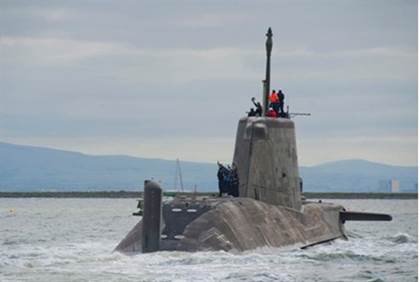
img369953Military submarine (illustration) Reuters

[I]t was reported last month that US President Barack Obama hid intel from the UN about North Korea transferring rocket components needed to create a nuclear missile to Iran even during the nuclear talks, to try and prevent the UN from acting on the information with increased sanctions.

[O]nce the KN-11 and mobile KN-08 “systems go operational, it potentially gives North Korea a dual threat for attacking the United States with nuclear or chemical weapons – a threat generated from difficult to detect mobile platforms on both land and sea.”

***********************

In a worrying step showing North Korea’s rapidly expanding nuclear strike capabilities, the Communist regime recently held a test of a new submarine-launched ballistic missile (SLBM), the first time it has launched a missile capable of carrying a nuclear warhead from underwater.

According to US defense officials cited by the Washington Free Beacon on Tuesday, the test took place on April 22 from an underwater test platform near the coastal city of Sinpo in the southeast of the country, and tested what the US is calling a KN-11 missile.

The test appears to have been successful, and is the third KN-11 test showing the high-priority of the nuclear missile program for North Korea. Previous tests in January and last October were from a sea-based platform not underwater and a land-based platform.

The KN-11 joins the KN-08 mobile intercontinental ballistic missile (ICBM) as being part of a varied North Korean missile arsenal on platforms that would be hard for the US to detect, and consequently allow a strike that would be difficult to shoot down.

Admiral Bill Gortney, Commander of North American Aerospace Defense Command (NORAD) and US Northern Command, admitted last month that North Korea could hit the continental US with a nuclear strike. That admission accompanied the announcement that NORAD is reopening its nuclear-EMP-proof Cheyenne Mountain bunker, apparently amid renewed concerns of an EMP attack by which a nuclear weapon would be detonated over the US, knocking out all of its electronic devices, and thereby rendering it defenseless to secondary nuclear strikes.

The latest launch test also comes after Chinese experts warned the US last month that American estimates are wrong and North Korea actually has 20 nuclear weapons, with that arsenal to double next year thanks to the regime’s higher than anticipated advanced enrichment capabilities.

Nuclear strikes the US won’t see coming

Admiral Cecil D. Haney, commander of the Strategic Command, confirmed the SLBM launch test in comments to the Senate on March 19, reports the Washington Free Beacon. The program is in violation of UN Security Council resolutions.

Regarding the UN, it was reported last month that US President Barack Obama hid intel from the UN about North Korea transferring rocket components needed to create a nuclear missile to Iran even during the nuclear talks, to try and prevent the UN from acting on the information with increased sanctions.

Former US Defense Intelligence Agency official Bruce Bechtol, Jr. told the paper that North Korea’s SLBM program is meant to give it the ability to strike the US, and to not have the strike be detected in advance.

“With an SLBM they get both,” said Bechtol. “The submarine can get the platform to launch the missile within range of the continental United States, Alaska, or Hawaii. Thus, once operational, this immediately brings key nodes in the United States within range of what would likely be a nuclear armed missile.”

He noted that once the KN-11 and mobile KN-08 “systems go operational, it potentially gives North Korea a dual threat for attacking the United States with nuclear or chemical weapons – a threat generated from difficult to detect mobile platforms on both land and sea.”

Obama is bringing the US to “tragedy”

A number of American officials responded sharply to the KN-11 test, placing the blame squarely on Obama’s shoulders.

“This missile, along with the KN-08, happened on Obama’s watch and nothing has been done,” one US intelligence official told the Washington Free Beacon.

Former US Ambassador to the UN John Bolton added his criticism, saying, “by utterly ignoring North Korea’s growing missile threats, Obama has allowed the threat of rogue state proliferators to fall out of the center of the national political debate.”

“This is a potential tragedy for the country,” Bolton warned.

Air Force Lt. Gen. (ret.) Thomas McInerney said that the KN-08 and KN-11 programs constitute “threats to the continental United States and have been developed under the Obama administration’s leadership.”

“Leading from behind is a failed strategy as evidenced by this very dangerous strategic threat to the continental United States of nuclear attack by a very unstable North Korean government,” said McInerney.

The general also spoke about Obama’s admission that the nuclear deal being formed with Iran will allow it to obtain a nuclear weapon in under 15 years if it doesn’t breach conditions and obtain it sooner, noting that the deal “puts the United States in the most dangerous threat of nuclear attack since the height of the Cold War but from multiple threats – North Korea, China, Russia, and Iran.”

Opponents of the nuclear deal being formulated with Iran ahead of a June 30 deadline have warned it follows in the footsteps of the failed deal sealed by then-President Bill Clinton with North Korea in 1994.

Despite the deal, North Korea tested its first nuclear weapon in 2006, just over ten years after the agreement.

Iranian Supreme Leader following Lausanne Declaration: Nothing Has Been Achieved So Far

May 5, 2015

Iranian Supreme Leader following Lausanne Declaration: Nothing Has Been Achieved So Far, MEMRI TV via You Tube, May 5, 2015

(Khamenei delivered this speech last month, but this fourteen minute video includes some comments I had not seen him make previously. — DM)

Iran’s chutzpah

May 3, 2015

Iran’s chutzpah, Jerusalem Post editorial, May 2, 2015

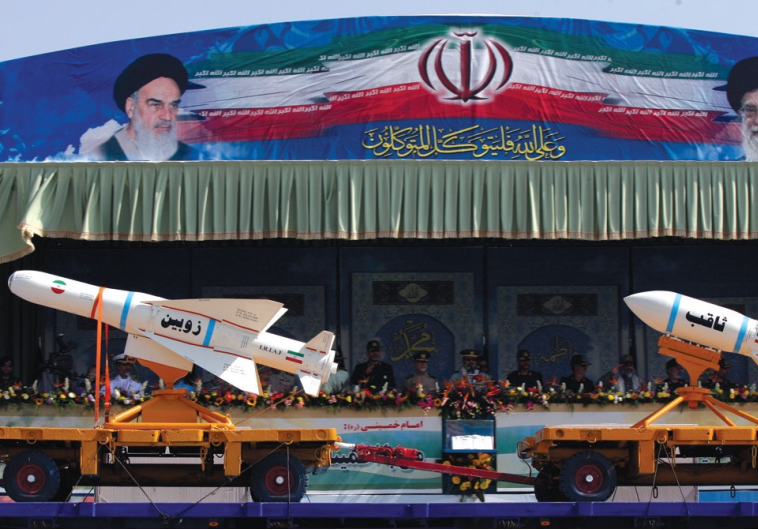
Iran chutzpahIran. (photo credit:REUTERS)

Whenever we assume that Iran’s chutzpah can get no more egregious, Tehran’s powers-that be spare no effort to prove us wrong.

Their calculated ploy is transparent – since the Islamic Republic’s nuclear project is now the focus of global attention, its leaders have cynically decided to turn the tables on their critics. In the guise of holier-than-thou protectors of humanity, Iran last Monday demanded that everyone else in possession of nukes desist forthwith from upgrading them or from lengthening the shelf-life of these weapons.

Needless to say, the sanctimonious tit-for-tat was spitefully in-your-face.

Quite expectedly, Iranian Foreign Minister Mohammad Javad Zarif told participants at the Review Conference of the Parties to the Treaty on the Non-Proliferation of Nuclear Weapons in New York that it is Israel which poses the greatest menace to the Middle East and indeed to the entire world due to its alleged nuclear stockpiles.

The month long conference is held every five years and is attended by NPT signatory nations. Israel never signed the treaty and remains officially mum on whether it does or does not possess a nuclear arsenal.

Zarif brazenly branded Israel “the single violator of this international regime [the NPT]…,“ and said, “one of the most important issues in the NPT review process is to look into ways and means of bringing about the Israeli compliance with NPT.”

And if that message failed to hit home, Zarif also aimed his barbs at NATO, asserting that Iran and the other 117 non-aligned NPT signatories are “deeply concerned by military and security doctrines of the nuclear-weapon states as well as that of the North Atlantic Treaty Organization.”

Yet Israel, which Iran had time and again threatened to wipe off the map, was singled out for particular accusations of villainy. Iran shamelessly seized on a persistent Egyptian theme – an attempt to deprive Israel of whatever nuclear powers it is believed to possess and coerce Israel to sign the 1970 NPT.

In 2005, Egypt scuttled the NPT resolutions because they did not specifically target Israel’s purported nuclear weaponry. In 2010, Egypt, still under Hosni Mubarak, persuaded the US to address Israel’s nuclear capability in the final communiqué – making Israel the only state mentioned, unlike the openly nuclear Pakistan and India (which like Israel also had not signed the NPT).

Israel saw this as a sell-out by the Obama administration.

The conference said nothing about Iran but urged that Israel rid itself of nuclear arms and that it allow international inspectors to visit and monitor its installations.

What five years ago was considered as unprecedented hypocrisy by the NPT Conference has now magnified to truly grotesque proportions. If Iran was just an unnamed elephant in the room last time around, it has since grown emboldened enough to lay blame on others.

Presumably this is part and parcel of a scheme to deflect attention from Tehran’s nuclear ambitions while a deal that would allow it to develop atomic warheads is in the making.

On the face of it, Iran can claim moral equivalence. But this is a counterfeit claim. Iran and like-minded allies – to say nothing of the powers now negotiating a deal with the ayatollah regime – all know that Israel is as prudent a democracy as exists anywhere. If Israel actually has the bomb, then it has had it for more than 50 years – almost as long as the original “Atomic Club” members. In all that time no wrongful use was made.

Iran is the diametrical opposite to Israel – a regime professing extreme Islamist doomsday theology whose bywords are volatility and unpredictability. There’s no even handedness between a self-defending democracy and an expansionist, apocalyptic tyranny.

Moreover, it is outrageous to ignore the variety of WMD deployed in the internecine Arab massacres but speciously concentrate on the Middle East’s one beleaguered democracy. The implication is that democratic Israel can be pressured while autocratic Iran will get away with flagrant obstructionism. The good-guy will be disarmed while fanatic aggressors are armed to the teeth.

The danger is that bona fide democracies seem willing to play along with Iran and misdirect the frustration it foments by spotlighting Israel.