Archive for the ‘Iran scam’ category

Iran Sending Warships to Atlantic Ocean Amid Massive New Military Buildup

August 14, 2017

Iran Sending Warships to Atlantic Ocean Amid Massive New Military Buildup, Washington Free Beacon, August 14, 2017

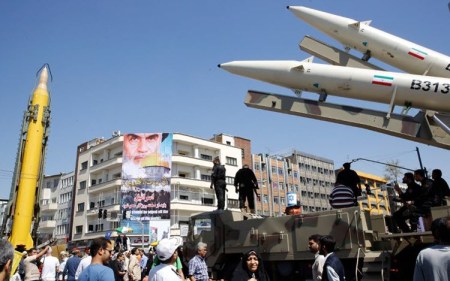
Iranian military ship and light replenishment ship are seen docked for refueling / Getty Images)

Iran is preparing to send a flotilla of warships to the Atlantic Ocean following the announcement of a massive $500 million investment in war spending, according to Iranian leaders, who say the military moves are in response to recent efforts by the United States to impose a package of new economic sanctions on Tehran.

The military investment and buildup comes following weeks of tense interactions between Iran and the United States in regional waters, where Iranian military ships have carried out a series of dangerous maneuvers near U.S. vessels. The interactions have roiled U.S. military leaders and prompted tough talk from the Trump administration, which is currently examining potential ways to leave the landmark nuclear deal.

Iran’s increasingly hostile behavior also follows a little-noticed United Nations report disclosing that Iran has repeatedly violated international accords banning ballistic missile work. Lawmakers in the U.S. Congress and some policy experts also believe that Iran has been violating some provisions in the nuclear agreement governing nuclear-related materials.

With tensions over sanctions and Iran’s compliance with the nuclear agreement growing, Iranian parliamentary members voted to increase war spending by more than $500 million. This is at least the second recent cash influx to Iran’s military since the landmark nuclear deal that unfroze billions in Iranian assets and saw the United States awarding Tehran millions in cash.

Iranian lawmakers reportedly shouted “death to America” as they passed the measure, which boosts spending to Iran’s contested missile programs by around $260 million.

The bill also imposes sanctions on U.S. military officials in the region. Additionally, Iranian officials are moving to set up courts to prosecute the United States for the recent sanctions, which Iran claims are in violation of the nuclear deal.

Meanwhile, following several aggressive encounters with U.S. military vessels in the Persian Gulf, Iranian military leaders announced that they would be leading a flotilla of warships into the Atlantic Ocean.

“No military official in the world thought that we can go round Africa to the Atlantic Ocean through the Suez Canal but we did it as we had declared that we would go to the Atlantic and its Western waters,” Iranian Navy Commander Rear Admiral Habibollah Sayyari was quoted as saying over the weekend.

“We moved into the Atlantic and will go to its Western waters in the near future,” Sayyari said.

U.S. military officials reported Monday yet another “unsafe” encounter with an Iranian drone that was shadowing a U.S. carrier in the Persian Gulf region and reportedly came close enough to an American F-18 jet to risk the pilot’s life.

As with other similar encounters during the past months, the Iranian craft did not respond to repeated radio calls by the United States. While the drone is said to have been unarmed, it is capable of carrying missiles.

Iranian leaders have been adamant that the country will not halt its work on ballistic missile technology, which could be used to carry nuclear weapons.

The United States has issued several new packages of sanctions as a result of this behavior, but U.N. members have yet to address the issue, despite recent reporting that found Iran is violating international accords barring such behavior.

“Little-noticed biannual reporting by the UN Secretary General alleges that Iran is repeatedly violating these non-nuclear provisions,” Iran Watch, a nuclear watchdog group, reported on Monday.

“Thus far, the United States has responded to such violations with sanctions and designations of Iranian and foreign entities supporting Tehran’s ballistic missile development,” the organization found. “However, the U.N. and its member states have not responded. More must be done to investigate allegations of noncompliance and to punish violations of the resolution.”

Michael Rubin, a former Pentagon adviser and expert on rogue regimes, said that Iran’s recent behavior shows the regime has not moderated since the nuclear deal was implemented. The Obama administration sold the deal in part on promises that it could help bring Tehran into the community of nations.

“Every time the Islamic Republic has cash, it chooses guns over butter,” Rubin told the Washington Free Beacon. “What the [nuclear deal] and subsequent hostage ransom did was fill Iran’s coffers, and now we see the result of that.”

“What [former President Barack] Obama and [former Secretary of State John] Kerry essentially did was gamble that if they funded a mad scientist’s lab, the scientist would rather make unicorns rather than nukes,” Rubin said. “News flash for the echo chamber: Iranian reformist are just hardliners who smile more. Neither their basic philosophy nor their commitment to terrorism have changed.”
US seeks to test Iran deal with its new inspections

July 27, 2017

US seeks to test Iran deal with its new inspections, Times of IsraelJosh Lederman and Matthew Lee, July 27, 2017

(It may be significant that Undersecretary of State Thomas Shannon, rather than Secretary of State Tillerson, was sent to discuss the proposal with European members of the European Commission monitoring the “deal.” — DM)

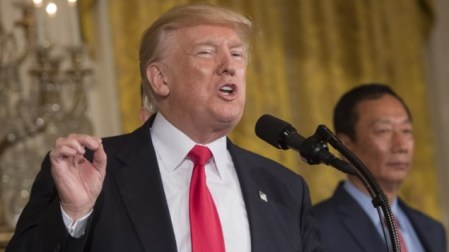
US President Donald Trump speaks during an event in the East Room of the White House in Washington, DC, July 26, 2017. (AFP/SAUL LOEB)

Trump faces another certification deadline in three months, and it’s far from clear that either new inspections or any “fixes” to address whether his concerns will be in place by then. Trump told the Wall Street Journal this week he expects to say Iran isn’t complying, setting a high bar for Secretary of State Rex Tillerson and other aides to persuade him otherwise.

“If it was up to me, I would have had them noncompliant 180 days ago,” Trump said.

************************************

A refusal by Tehran to allow monitors in military sites could give Trump the excuse he wants to cancel the nuclear agreement.

WASHINGTON (AP) — The Trump administration is pushing for inspections of suspicious Iranian military sites in a bid to test the strength of the nuclear deal that US President Donald Trump desperately wants to cancel, senior US officials said.

The inspections are one element of what is designed to be a more aggressive approach to preventing Iran from obtaining a nuclear weapon. While the Trump administration seeks to police the existing deal more strictly, it is also working to fix what Trump’s aides have called “serious flaws” in the landmark deal that — if not resolved quickly — will likely lead Trump to pull out.

That effort also includes discussions with European countries to negotiate a follow-up agreement to prevent Iran from resuming nuclear development after the deal’s restrictions expire in about a decade, the officials said. The officials weren’t authorized to discuss the efforts publicly and spoke on condition of anonymity.

The inspections requests, which Iran would likely resist, could play heavily into Trump’s much-anticipated decision about whether to stick with the deal he’s long derided.

If Iran refuses inspections, Trump would finally have a solid basis to say Iran is breaching the deal, setting up Tehran to take most of the blame if the agreement collapses. If Iran agrees to inspections, those in Trump’s administration who want to preserve the deal would be emboldened to argue it’s advancing US national security effectively.

The campaign gained fresh urgency this month following a dramatic clash within the administration about whether to certify Iran’s compliance, as is required every 90 days.

Trump was eager to declare Tehran in violation, even though the International Atomic Energy Agency that monitors compliance says its infractions are minor. At the urging of top Cabinet members, Trump begrudgingly agreed at the last-minute to avoid a showdown for another three months — but only with assurances the US would increase pressure on Iran to test whether the deal is truly capable of addressing its nuclear ambitions and other troublesome activities.

Trump faces another certification deadline in three months, and it’s far from clear that either new inspections or any “fixes” to address whether his concerns will be in place by then. Trump told the Wall Street Journal this week he expects to say Iran isn’t complying, setting a high bar for Secretary of State Rex Tillerson and other aides to persuade him otherwise.

“If it was up to me, I would have had them noncompliant 180 days ago,” Trump said.

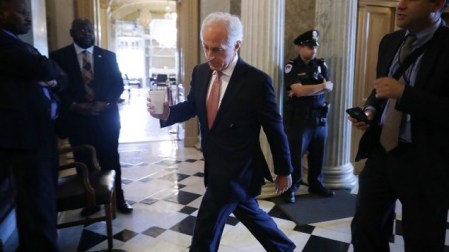
Senator Bob Corker (R-Tennessee) heads into the Senate Chamber at the US Capitol, in Washington DC, July 26, 2017. (Chip Somodevilla/Getty Images/AFP)

To that end, the administration is seeking to force Iran to let in IAEA inspectors to military sites where the US intelligence community believes the Islamic Republic may be cheating on the deal, several officials said.

Access to Iran’s military sites was one of the most contentious issues in the 2015 deal, in which Tehran agreed to roll back its nuclear program in exchange for billions of dollars in sanctions relief.

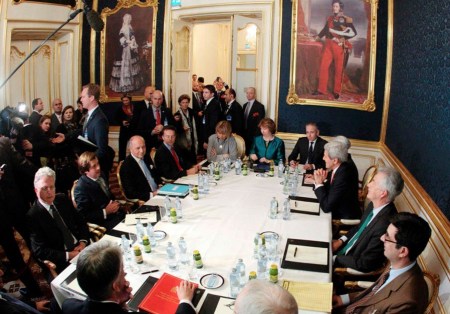
Last week in Vienna, where the International Atomic Energy Agency is based, Undersecretary of State Thomas Shannon floated the proposal to the European members of the Joint Commission that oversees the deal, one official said. Britain, France and Germany joined the US, Russia, China and the European Union two years ago in brokering the deal with Iran.

To force inspections of new sites in Iran, the US would need to enlist the support of the IAEA and a majority of the countries in the deal. But the US has run into early resistance over concerns it has yet to produce a “smoking gun” — compelling evidence of illicit activity at a military site that the IAEA could use to justify inspections, officials said.

Among the concerns about a rush toward inspections is that if they fail to uncover evidence of violations, it would undermine the IAEA’s credibility and its ability to demand future inspections. So the US is working to produce foolproof intelligence about illicit activity, officials said. The officials declined to describe the intelligence activities or the Iranian sites the US believes are involved.

Senator Bob Corker, R-Tennessee, who chairs the Senate Foreign Relations Committee, alluded to the strategy during an event hosted Wednesday by The Washington Post. Corker said the US was trying to “radically enforce” the deal by asking for access to “various facilities” in Iran.

“If they don’t let us in, boom,” Corker said. “You want the breakup of this deal to be about Iran. You don’t want it to be about the US, because we want our allies with us.”

As a candidate, Trump threatened to rip up the deal that US President Barack Obama brokered. As president, Trump has yet to take that step, as his administration finishes a broader Iran policy review expected to conclude in August.

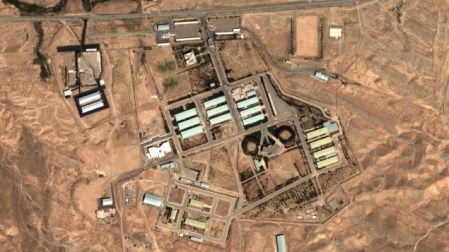
Satellite image of the Parchin facility, April 2012 (AP/Institute for Science and International Security)

The other major step to try and address what Trump has deemed flaws in the deal involves ensuring that Iran can’t revert to old behavior once the limitations on its program “sunset” over the next decade-plus. The US State Department said Trump has directed his administration to “work with allies to explore options” for dealing with that and other shortcomings. Talks are under way with the European countries about a supplemental deal, though it’s unclear how Iran could be persuaded to sign on.

The deal’s provisions for inspections of military facilities, or “undeclared sites,” involve a complex process with plenty of opportunities for Iran to stall. Tehran can propose alternatives to on-site inspections, or reject the request, which would trigger a 24-day process for the Joint Commission countries to override the rejection.

That could drag on for months. And under ambiguities built into the deal, it’s unclear whether Iran must allow IAEA inspectors into military sites, or whether the Iranians can take their own environmental samples and send them to the IAEA for testing, as was allowed under a 2015 side agreement that let Iran use its own experts to inspect the Parchin military site.

Even if Trump declares Iran in violation of the deal — a move that would invigorate his conservative base — he could still leave Iran’s sanctions relief in place.

American businesses are eager for the deal to survive so they can pursue lucrative opportunities in Iran. The aviation industry recently signed billions of dollars of contracts to sell passenger plans to Iranian airlines, including a $16.6 billion deal for Boeing.

A State Department Gone Rogue on Iran

July 25, 2017

A State Department Gone Rogue on Iran, JerusalemPostMatthew R.J. Brodsky, July 24, 2017

Final round of negotiations on a nuclear deal with Iran continue in Vienna November 21, 2014. (photo credit:REUTERS)

According to a recent report, the president assigned a White House team to focus on the Iran deal and sideline the State Department so that he has more options when the issue comes to the fore again in three months.

It’s not just Iran where the president sees a problem; the secretary has been actively tugging in the opposite direction when it comes to solving the Qatar crisis and on a host of issues related to Israel as well.

In many ways, the different view at the State Department should be expected, not just due to institutional issues where diplomats usually prefer finesse to force but because of personnel considerations as well.

Barack Obama holdovers are driving the State Department’s Iran policy.

****************************

For the second time during Donald Trump’s brief tenure as president, Secretary of State Rex Tillerson and the State Department won in the inter-administration battle over the fate of the nuclear deal with Iran, formally known as the Joint Comprehensive Plan of Action (JCPOA). That victory, however, may end up being short lived given the trajectory of the administration’s overall developing policy toward the regime in Tehran and the process by which the reoccurring 90-day certification of Iran took place in April and again on July 17.

The whole ordeal cast a light on the shrinking esteem in which the president seems to hold Secretary Tillerson and the crew of Obama-era holdovers upon whose guidance he relies.

Washington was briefly abuzz on the afternoon of July 17 when rumors began to circulate that President Trump was eager to declare that Iran was in breach of the conditions laid out in the 2015 Iran Nuclear Agreement Review Act (INARA).

Those receptive antennas were further heightened given the previous signals sent. After all, the State Department already released talking points to reporters on the decision to recertify Iran. The Treasury Department also had a package of fresh sanctions on over a dozen Iranian individuals and entities ready to announce to appease the hawks who were eager to cut loose from the deal.

But Trump didn’t want to recertify Iran, nor did he want to the last time around in April. That evening, a longtime Middle East analyst close to senior White House officials involved in the discussions described the scene to me: “Tillerson essentially told the president, ‘we just aren’t ready with our allies to decertify.’ The president retorted, ‘Isn’t it your job to get our allies ready?’ to which Tillerson said, ‘Sorry sir, we’re just not ready.’” According to this source, Secretary Tillerson pulled the same maneuver when it came to recertification in April by waiting until the last minute before finally admitting the State Department wasn’t ready. On both occasions he simply offered something to the effect of, “We’ll get ‘em next time.”

That for the second time, Team Tillerson forced the president to recertify Iran because they prepared no other options appears to have left a mark on Trump.

According to a recent report, the president assigned a White House team to focus on the Iran deal and sideline the State Department so that he has more options when the issue comes to the fore again in three months.

It’s not just Iran where the president sees a problem; the secretary has been actively tugging in the opposite direction when it comes to solving the Qatar crisis and on a host of issues related to Israel as well.

In many ways, the different view at the State Department should be expected, not just due to institutional issues where diplomats usually prefer finesse to force but because of personnel considerations as well.

Most pundits have pointed to the dwindling bench of the department’s roster. After all, many positions remain unfilled. When Tillerson chose Elliott Abrams to serve as deputy secretary, a well-known conservative who served under Ronald Reagan and George W. Bush, Trump even intervened to quash the appointment. The problem, however, is more about the people already in the department, rather than those yet to be appointed or hired.

Barack Obama holdovers are driving the State Department’s Iran policy.

They include Under Secretary of State for Political Affairs Thomas Shannon; Deputy Assistant Secretary for Iran in the State Department’s Bureau of Near Eastern Affairs Chris Backemeyer, who previously served as the director for Iran at the National Security Council (NSC) under Obama; and Deputy Assistant Secretary and former US special envoy for Syria Michael Ratney. The first two were directly involved in the recertification fiasco – twice. They, among others, made their careers selling the Iran deal and are dedicated to its preservation.

In April, the first draft of the language “was full of Obama-era lines” including several falsehoods promoting the utility of the JCPOA, such as the deal verifiably puts Iran a year away from a nuclear weapon, this source explained.

“There was a huge fight after they wrote it because some said it was too pro-deal and it used all kinds of Obama language.”

“The White House went ballistic,” he said, “and they forced rewrites until they had a statement that was just a few lines.”

The revised version praised neither the deal nor Iran’s actions and pointed to the NSC-led interagency review of the JCPOA – a White House victory on the language used but a State Department win on preserving the status quo in policy.

“Backemeyer and Shannon wrote the certification,” the source confirmed, “and they were closely involved in the certification process this time around.”

For an administration that otherwise sounds determined to curtail Iran’s expansionist ambitions, it’s a wonder that the same people who brought the deal across the finish line, made careers out of selling the deal and helped fill Tehran’s financial coffers are still running the show at the State Department.

What’s more, Secretary Tillerson seems supportive of that decision or oblivious to its impact.

In either case, the department is in open insubordination to the White House and neither scenario reflects well on the secretary or his team. Nevertheless, whether or not his days are numbered, the current policy of rubber stamping Iran’s certification certainly appears to be coming to an end.

The author is a senior fellow at the Security Studies Group in Washington, DC, a senior Middle East analyst at Wikistrat and a former director of policy at the Jewish Policy Center. 

What Did Trump Certify?

July 21, 2017

What Did Trump Certify? Power Line,  Paul Mirengoff, July 21, 2017

“What that really foreshadows is once the policy review is done, we’re going to see a massive increase in pressure — not just sanctions pressure but using all instruments of American power.”

****************************************

Did President Trump certify to Congress on Monday that Iran is complying with the nuclear deal? This is what virtually of all of the reporting on his action says he did.

We wrote that, early in the day, National Security Council director H. R. McMaster indicated the administration would certify Iranian compliance. The next day we reported, per Eli Lake, that Trump had balked at providing certification and came close to not doing so, but in the end certified Iranian compliance.

But the invaluable Omri Ceren of the Israel Project informs us that, contrary to “almost all major reporting,” Trump stopped short of certifying that Iran is complying with the deal. Indeed, he removed language about Iranian compliance and added language emphasizing Iranian violations. This AP story confirms Ceren’s report.

What, then, did the president certify? He certified only that Iran has met the four narrow conditions of the 2015 Corker-Cardin bill, says Ceren. The four conditions are these:

(1) Iran is implementing the deal,
(2) Iran is not in material breach,
(3) Iran is not advancing its nuclear weapons program, and
(4) sanctions relief is appropriate and vital for U.S. national security.

In limiting his certification to the four conditions, and listing several Iranian violations, the administration made it clear that, although Iran is not in “material breach,” neither is it in full compliance. This is the compromise brought about by Trump’s last-minute intervention.

What difference do the changes make? They don’t change the fact that Iran will continue to get sanctions relief, for now. Only by refusing to certify one or more of the four conditions might this have changed.

However, the changes are not without significance. For one thing, they undermine the Iranian regime’s oft-repeated talking point that the Trump administration admits Iran is complying with the terms of the deal.

For another, they may signal a shift in policy towards the deal once the Trump administration completes its broad review of the Iran deal, which is expected to happen soon. As the estimable Mark Dubowitz of the Foundation for Defense of Democracies, who reportedly is advising the administration on Iran puts it: “What that really foreshadows is once the policy review is done, we’re going to see a massive increase in pressure — not just sanctions pressure but using all instruments of American power.”

Let’s hope so.

Can Trump Lead the Way to Regime Change in Iran?

July 19, 2017

Can Trump Lead the Way to Regime Change in Iran? Gatestone InstituteHassan Mahmoudi, July 19, 2017

(Vocal support for regime change would be good. Declaring that Iran has violated the JCOPA, now that Iran has received all of the financial benefits from America that it will get, would be merely a symbolic gesture. — DM)

What is needed now is a push for regime change, a watering of the seeds of popular resistance that are again budding — after Obama abandoned the Iranian people in 2009, when they took to the streets to protest the stranglehold of the ayatollahs.

American leadership expert John C. Maxwell defines a leader as “one who knows the way, goes the way, and shows the way.” During his two terms in the highest office in the world, former U.S. President Barack Obama failed at all three, with disastrous consequences.

There is no realm in which Obama’s lack of leadership was more glaring than that of foreign policy, particularly in relation to the Middle East. His combination of action and inaction — pushing through the nuclear deal with Iran at all costs, while simultaneously adopting a stance of “patience” with and indifference to Tehran’s sponsorship of global terrorism and foothold in Syria — served no purpose other than to destabilize the region and weaken America’s position.

While hotly pursuing the nuclear accord — the Joint Comprehensive Plan of Action (JCPOA), signed between Iran and U.S.-led world powers in July 2015 — Obama enabled the regime in Tehran to assist Syrian President Bashar Assad in starving and slaughtering his people (with chemical weapons, among others) into submission. Meanwhile, thanks to Obama’s passivity, and the $1.7 billion his administration transferred to Tehran upon the inking of the JCPOA, the Islamic Republic was able to dispatch its Islamic Revolutionary Guards Corps (IRGC) to recruit and train Hezbollah terrorists in Lebanon and Syria, as well as militias in Iraq, Afghanistan, Yemen and Pakistan.

Today, two years after the signing of the JCPOA, and six months into the presidency of Donald Trump, there is a growing rift between America and Europe over implementation of the deal, which officially went into effect in January 2016. Since taking office in January 2017, Trump has been wavering on whether to remain committed to the deal, which his administration and members of Congress claim has been violated repeatedly by Iran. The U.S. also has maintained certain sanctions, over Iran’s ballistic-missile tests, human-rights abuses and sponsorship of global terrorism.

European countries, however, have taken a very different approach, pointing to International Atomic Energy Organization reports confirming Iran’s compliance, and rushing to do business in and with Tehran.

At a ceremony on July 14, 2017 to mark the anniversary of the deal, European Union foreign policy chief Federica Mogherini called the JCPOA a “success for multilateral diplomacy that has proven to work and deliver,” adding, “This deal belongs to the international community, having been endorsed by the United Nations Security Council, that expects all sides to keep the commitments they took two years ago”

Meanwhile, when reports emerged about Trump being “likely” to confirm on July 17 that Iran has been complying with the deal — and because the law requires that both the president and secretary of state re-certify the deal every three months — four Republican senators sent a letterto Secretary of State Rex Tillerson, with a copy to Trump, urging him not to do so.

The letter reads, in part:

“…In April, you certified Iran’s compliance for the first 90-day period of the Trump administration. That certification was understandable, given the need to grant time for the interagency review of the JCPOA that you described in the certification letter you sent to House Speaker Paul Ryan.

“But now … U.S. interests would be best served by a sober accounting of Iran’s JCPOA violations … of regional aggression, sponsor international terrorism, develop ballistic missile technology, and oppress the Iranian people. Iran’s aggression directly targets the United States…a continuation of current policy would be tantamount to rewarding Iran’s belligerence… German intelligence agencies in 2015 and 2016 reported that Iran continued illicit attempts to procure nuclear and missile technology outside of JCPOA-approved channels.

“… Perhaps most concerning is Iran’s refusal to grant international inspectors access to nuclear-research and military facilities. International Atomic Energy Agency (“IAEA”) inspectors are entitled to visit any location in Iran to verify compliance with the JCPOA’s ban on nuclear weapons development. However, Iran’s refusal to grant inspectors physical access and other forms of access makes it possible-if not highly probable, given Iran’s history of duplicity-that it is concealing additional violations of the JCPOA.

“…it is highly questionable whether the United States can under current arrangements ever gain high confidence that Iran’s nuclear-weapons development has indeed ceased. …”

The senators are correct. Iran never had, nor has to this day, any intention of forfeiting its bid for regional and global hegemony.

Nevertheless, Trump decided, after all, to re-certify Iran’s compliance with the JCPOA. Ahead of his doing so, however, the administration issued a series of reassurances — in the form of talking points — that the Treasury Department would impose sanctions on Iranian government entities and individuals, to punish the regime for its nefarious activities. According to BuzzFeed, these include ballistic-missile development, support for terrorism and the Assad regime, cyber-attacks against U.S. targets, the unjust arrest and imprisonment of American citizens and others.

A few months into the current administration in Washington, Islamic Revolutionary Guards Corps strategist Hassan Abbasi boasted that Iran would lead “global guerilla organizations” against American military and vulnerable targets:

“If only 11 people carried out 9/11, do you realize that the possibility exists for us to do what we want? We don’t need nuclear weapons. … It won’t even be an Iranian-only guerrilla movement, but from all Islamic countries. You can deport all the Muslims, but we are involving and working on Mexicans as well, and Argentinians too. We will organize anyone who has problems with the United States.”

It was Obama’s refusal to recognize, let alone acknowledge, this Iranian ambition that led to his utter appeasement of Tehran and subsequent signing of the JCPOA. It is up to Trump to do more than merely keep the nuclear accord at bay by leaving certain sanctions in place — or even canceling it.

Hassan Abbasi, a strategist for Iran’s Revolutionary Guards, recently boasted that Iran would lead “global guerilla organizations” against American targets: “If only 11 people carried out 9/11, do you realize that the possibility exists for us to do what we want? We don’t need nuclear weapons…” (Tasnim News Agency/Wikimedia Commons)

What is needed now is a push for regime change, a watering of the seeds of popular resistance that are again budding — after Obama abandoned the Iranian people in 2009, when they took to the streets to protest the stranglehold of the ayatollahs.

At the annual “Free Iran” rally, held in Paris on July 1, 2017, an estimated 100,000 Iranian dissidents and hundreds of politicians and other world dignitaries gathered to call for a renewed effort to topple the regime in Tehran. Members of the U.S. delegation to the event — among them former Speaker of the House Newt Gingrich, former U.S. Ambassador to the U.N. John Bolton, former New York City Mayor Rudy Giuliani, former Connecticut Senator Joseph Lieberman and former U.S. Army Chief of Staff and Commander of the Multi-National Forces in Iraq General George Casey — issued a joint statement saying, in part:

“We believe that change is within reach, not only because the regime is becoming engulfed in crisis, but also because there is a large and growing movement organizing for positive change. A viable organization capable of ending the nightmare of religious dictatorship by establishing freedom and democracy, tolerance, and gender equality has steadily gained visibility, popular support and international recognition.”

Let us hope that Trump takes heed and turns out to be the leader who “knows the way, goes the way, and shows the way.”

Hassan Mahmoudi is a human rights advocate, specializing in political and economic issues relating to Iran and the Middle East. @hassan_mahmou1

Iran may withdraw from N-deal for “US violations

July 18, 2017

Iran may withdraw from N-deal for “US violations, DEBKAfile, July 18, 2017

(Why not? Iran has already received all of the substantial U.S. financial benefits of the Iran Scam. Withdrawal would allow Iran to pursue its nuclear objectives without the minor conveniences of trying to hide them. Please see also, Iran’s Nuclear Weapons Program: On Course, Underground, Uninspected. — DM)

Iran’s Foreign Minister Mohammed Javad Zarif told a National Interest interview Tuesday: “If it comes to a major [US] violation, or what in the terms of the nuclear deal is called significant nonperformance, then Iran has other options available, including withdrawing from the deal.” This was his rejoinder to the Trump administration’s statement in certifying that Iran was in compliance of the nuclear deal while “in default of its spirit.”


Trump Admin to Hit Iran With New Sanctions as Tehran Threatens Attacks on U.S. Bases

July 17, 2017

Trump Admin to Hit Iran With New Sanctions as Tehran Threatens Attacks on U.S. Bases, Washington Free Beacon, July 17, 2017

(Please see also, Iran’s Nuclear Weapons Program: On Course, Underground, Uninspected. — DM)

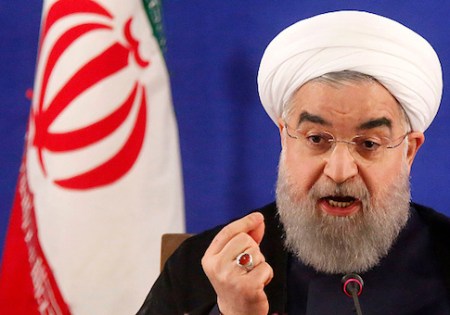
Iranian President Hassan Rouhani / Getty Images

The Trump administration is expected to ratchet up pressure on Iran with a slew of new sanctions targeting the Islamic Republic’s illicit ballistic missile program and regional support for terrorism as the landmark Iranian nuclear deal hits its two-year anniversary, according to senior U.S. officials who deemed Iran in violation of the agreement’s “spirit.”

News of the new sanctions comes on the same day that Iranian military leaders threatened attacks on U.S. forces and bases in the Middle East should America move forward with new sanctions, particularly ones targeting the Iranian Revolutionary Guards Corps, or IRGC.

The new sanctions are part of a larger White House effort to counter Iran’s massive military buildup and rogue militant activities across the Middle East, specifically in Syria, where Iranian-backed forces have launched a series of direct attacks on American forces in recent weeks.

U.S. official dubbed Iran “the most dangerous threat to U.S. interests” and promised a series of new efforts both militarily and policy oriented to combat the Islamic Republic’s illicit activities.

The new sanctions are being leveled outside the purview of the nuclear deal, meaning that they are all non-nuclear related and do not violate conditions of the deal barring the United States from engaging in such activity.

The Trump administration is continuing to perform a full-scale review of its Iran policy, including the nuclear deal. The review is set to be completed in about a month’s time, according to the administration.

The White House must make a decision by Tuesday on whether it will recertify that Iran is in compliance with the deal. The administration is likely to again certify Iran as in compliance of the agreement, despite mounting evidence this not the case. Deliberations in the White House had not concluded as of late Monday morning, but officials signaled they were leaning towards certifying Iran as not in technical violation.

U.S. officials were hesitant to deem Iran in direct violation of the deal, but said Tehran “is in default on the spirit of that agreements,” according to senior administration officials who spoke on background.

“Years of concessions … have resulted in the unintended effect of empowering Iran across the region,” one senior administration official said about the package of new sanctions on multiple Iranian individuals and entities tied to the country’s ballistic missile program and proliferation efforts.

“What we’re saying is Iran is in default of the spirit of the JCPOA,” or Joint Comprehensive Plan of Action, the Iran deal’s official title. “We need to ensure more aggressively they are in compliance with the letter of the JCPOA.”

U.S. officials said that Iran has obfuscated key details of its nuclear program, and continues to engage in activities that could be in violation of the agreement.

“Iran has been less than forthcoming, walking up to the edge of violating the JCPOA,” one senior U.S. official said. “That behavior has to stop.”

Officials also criticized key flaws in the deal that allow Iran to engage in critical nuclear work within the next decade.

The United States plans to “ramp up our efforts to verify reports” of Iran’s alleged violations, officials said.

As part of the effort to combat Iran’s activities, the Trump administration is expected to announce an additional package of sanctions that includes 16 Iranian entities and individuals found to be supporting Tehran’s illicit and criminal activities in the region. This includes seven entities and five individuals found to be supporting the Iranian military and criminal organizations.

Sanctions also have been leveled on three networks designated as supporting Iran’s military procurement and another two organizations supporting Iran’s ballistic missile program.

As news of the expected new package of sanctions came, Iranian military leaders issued new threats warning of attacks on U.S. regional bases should the Trump administration move forward with plans to sanction the IRGC and designate it as a terror group.

“Putting the IRGC in one single class with the terrorist groups and imposing similar sanctions against the IRGC poses a major risk to the U.S., its bases and forces deployed in the region,” Mohammad Hossein Baqeri, chief of staff of Iran’s armed forces, warned on Monday during remarks before IRGC commanders.

Baqeri also lashed out at sanctions on Iran’s ballistic missile program, stating, “the Islamic Republic of Iran’s missile power is defensive and is never negotiable at any level.”

DeSantis: House Intel Committee Has Brought in Some ‘Big Names’ to Answer Questions About Leaks

July 16, 2017

DeSantis: House Intel Committee Has Brought in Some ‘Big Names’ to Answer Questions About Leaks, PJ Media, Debra Heine, July 16, 2617

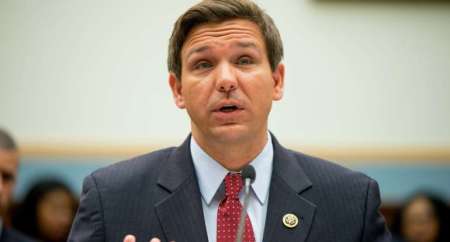
House Judiciary Committee member Rep. Ron DeSantis, R-Fla. (AP Photo/Andrew Harnik)

Rep. Ron DeSantis (R-Fla.) said that the House Intelligence Committee has already brought in some “big names” — “more than the press knows” — to answer questions about leaks of classified information to reporters.

When asked by Hugh Hewitt on MSNBC Saturday morning whether the committee was planning to call up Obama’s former “foreign policy guru,” Ben Rhodes, DeSantis said that he’s spoken to the committee’s chairman, Trey Gowdy of South Carolina, about Rhodes but that he would defer to Gowdy to identify people of interest in the leak investigation.

DeSantis, a member of the House Foreign Affairs Committee, the House Judiciary Committee, and the Committee on Oversight and Government Reform, said in an interview with the Washington Free Beacon last week that President Trump needs to purge Obama holdovers still working in the federal government.

DeSantis told the Beacon that “the holdovers and their allies outside the White House are responsible for an unprecedented series of national security leaks aimed at damaging the Trump administration’s national security apparatus.”

He singled out Obama’s chief propagandist, Ben Rhodes, as the person responsible for most of the leaks and called on Congress to press Attorney General Jeff Sessions and others to make sure they are looking into the situation.

DeSantis told Hewitt that he has drafted a letter to send to Sessions, asking that he investigate the leaks.

So I’ve prepared a letter. We’re going to be sending that next week, I imagine I’ll have a number of my colleagues joining it, asking the Justice Department to look into all these things, but then report back to us whether they are doing it or not, because, Hugh, you know, you’re very knowledgeable in national security.

We have certain intelligence authorities that are coming up for review this year. And if you don’t have anyone, say, being prosecuted for the Michael Flynn leaks, that was FISA material, then you’re not going to be able to do things like reauthorize 702 of the FISA statute, which is due by the end of the year. So I think if there’s no action being taken, I think it actually has a big effect on what we’re able to do in Congress.

And I’m somebody, I want to empower our intelligence agencies. I think it’s very important. But it’s very difficult to make that case to the American people if that information is then being used for domestic political warfare.

Asked if he would call Rhodes in to testify, DeSantis replied:

I’ve talked to Chairman Gowdy about it, and remember, they are doing things on the Intelligence Committee, and they’re doing a lot more than what the press knows in terms of some of the people that they have brought in. And they’ve brought in some pretty big names that I’m not authorized to say. So I want to defer to his judgment about whether that would be more appropriate in terms of the leak investigation that they’re doing on the Intelligence Committee. But I would like to bring him in to talk to him about it, because I want to figure out how all this information was getting out from the FISA intercept on…

DeSantis differentiated between the leaks that are coming from Obama holdovers in the Trump administration and standard “whistleblower” leaks.  These leaks, he argued, are an attack on the president.

“It’s not just people are leaking because they think something was wrong with the government and they want some sunlight,” DeSantis explained. “But this is concerted leaks designed to attack the sitting president. So I think the character of the leaks are different, and I think Comey’s leaks are part of that bushel.”

He cited as an example how conversations Trump has had with a foreign leaders have gone through the National Security Council and somehow ended up on the front page of the newspaper.

“And so we’ve gotten lot of information saying look, there’s only so many places that would come from,” the congressman said. “And the Obama holdover working with Rhodes, that’s a place we’ve been encouraged to look. So I want to look at that, because I think that it’s distorted the president’s ability to simply conduct foreign relations if there’s going to be selective leaking of his conversations with foreign leaders in ways that are damaging to him or at least purporting to damage him. That’s not the way we want our government to function.”

To answer his final question, Hewitt called on DeSantis to use his “prosecutorial chops”:

“If you had to guess who was going to get indicted, if anyone – Donald Trump Jr., James Comey or Ben Rhodes — what would your guess be?” he asked.

DeSantis answered: “I want to know what are in those Comey memos and see whether there’s classified information. I mean, I don’t think Donald Trump Jr. is going to get indicted. I think he had a meeting. I don’t think a criminal offense was committed. In terms of the political judgment, I think that’s fair to criticize. But I don’t think that there was a crime committed there.”

He forgot to mention Rhodes.


Iran Regime President: The Government Builds the Missiles

July 13, 2017

Iran Regime President: The Government Builds the Missiles, Iran News Update, July 13, 2017

Rouhani’s statements defending JCPOA once again exposed more than ever the depth of divisions among the regime’s various bands.

***********************************

INU – At a ceremony entitled Healthy Life Festival on 11 July 2017, the Iranian regime’s president Hassan Rouhani said: “…The strategic weapons built by the 11th (i.e. Rouhani’s) government, make up 80% of the total weapons built in the previous governments.”

In his preliminary speech, in an attempted to take missile claims and the claims about military presence in the countries of the region out of the hands of the Khamenei Revolutionary Guards (IRGC) and in order to advance his own demands, he made significant confession saying that despite the sanctions, his government has given the Iraqi government and the Syrian regime all the money and weapons they needed.

He also noted the IRGC’s missile attack on Syria and said: “We hear that a missile fired from our land and targeted a center, a terrorist center. It is true that those who fired the missile tried hard and sacrificed but who built the missile? The defense Ministry builds these missiles.”

Rouhani’s statements defending JCPOA once again exposed more than ever the depth of divisions among the regime’s various bands.

While attacking Khamenei’s band in this regard, Rouhani said: “If the foreign minister were supposed to go out of the field with a few cursing and (insulting) slogans, the JCPOA would not be realized. Well, some people insulted the foreign minister, on their site, in their newspaper, on the anniversary of the revolution on February 11, on the streets of Tehran; well, one should not be excluded from the service field for the slogans of a few individuals.”

Rouhani also referred to the rival band as “a minority that monopolized everything” and added: “We should not be afraid of those who unfortunately have the big loudspeakers unjustly at their disposal…”

Nikki Haley’s Comments on Iran Highlight Russian-Related Complications

June 29, 2017

Nikki Haley’s Comments on Iran Highlight Russian-Related Complications, Iran News Update, Edward Carney, June 29, 2017

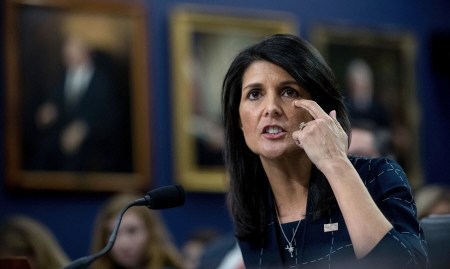
On Tuesday, Nikki Haley, the US ambassador to the United Nations delivered testimony to the House panel on foreign operations, a subcommittee of the Appropriations Committee in the US House of Representatives. In that testimony, Haley addressed multiple issues relating to the Islamic Republic of Iran, thereby reasserting the Trump administration’s assertive policies toward the Iranian regime. By most accounts those policies are still emerging, but they have already come to include purposive outreach to other adversaries of the Islamic Republic and a program of expanded sanctions on matters such as Iran’s ballistic missile program.

However, those efforts to confront and contain the Islamic Republic are arguably complicated by other aspects of the Trump administration’s policy commitments, including a focus on domestic issues and an effort to improve relations between the US and Russia, which boasts close relations with Iran in the areas of trade and military cooperation, especially as it relates to the Syrian Civil War.

While the US supports moderate rebel groups fighting against the dictatorship of Bashar al-Assad, the Iranians and Russians have been credited with turning the war in favor of Assad. Various Shiite militias are currently operating as proxies for Iran in that war, and the Iranian Revolutionary Guard Corps is increasingly playing a direct role in the conflict. Meanwhile, Russia has been providing air support for pro-Assad ground operations since 2015.

Western commentators, including officials in the Trump administration, have variously accused Russia and Iran of ignoring or actively facilitating human rights abuses by the Assad regime, including an April chemical weapons attack that killed at least 80 people in a rebel-controlled civilian area.

As the Associated Press points out, Ambassador Haley’s comments to the House panel came shortly after the White House had issued a warning to Syria regarding alleged preparations for another such chemical attack. The article specified that Pentagon officials had confirmed the intelligence underlying that warning, involving particular movements at the same Syrian air base that had been used as the staging area for the previous chemical attack on Khan Sheikhoun.

White House Press Secretary Sean Spicer said of Assad that “he and his military will pay a heavy price” if they follow through with apparent plans for another “mass murder attack using chemical weapons.” But the AP quoted Haley as saying that the administration’s remarks were not intended only for Assad, but also for Russia and Iran. Both of the Syrian allies joined in denying Assad’s responsibility for the attacks, with some officials insisting that the chemical weapons had originated in a rebel warehouse at the site of a conventional military airstrike.

The dispute over this issue and the subsequent US cruise missile strike on Shayrat air base can be seen as early examples of the escalation between Iranian allies and adversaries which is still going on to this day. In fact, Haley’s effort to fold Russia and Iran into a warning directed more explicitly against Syria is reminiscent of an incident earlier in June wherein a member of Iran’s Revolutionary Guard said that a ballistic missile strike on eastern Syria had been intended largely as a warning to the US and Saudi Arabia.

Those two traditional adversaries of the Islamic Republic have been expanding relations under the Trump administration, sometimes with explicit reference to shared anxieties over expanding Iranian influence and meddling in the broader Middle East. President Trump’s visit to Riyadh in May for an Arab-US summit coincided with the signing of trade agreements that included 110 billion dollars in arms sales to the Arab Kingdom.

But at the same time that the White House is openly siding with Saudi Arabia and its regional allies against the Iranian regime, it does not appear to be giving up on the prospect of improved relations with Russia. In fact, the Western strategy for a political solution to the Syrian Civil War seems to presently involve the expectation that Russia can be encouraged to rein in the Islamic Republic and prevent it from further sabotaging ceasefire agreements.

Recent developments have cast doubt upon the practicality of this strategy however. As the US has taken a more direct role in defending rebel groups, even resorting to the shoot-down of at least two military controlled drones and a Syrian warplane, Russia has responded by threatening to target US aircraft and to halt the use of a hotline intended to prevent mid-air collisions between the multiple powers operating in the skies over Syria.

Haley’s comments on Tuesday were indicative of a roughly matching increase in American criticism of Russia. And this criticism was not limited to the issue of chemical weapons. Haley also explained that Russia’s position on the UN Security Council allowed it to stymie US efforts to sanctions Iran and hold it to account for ongoing misbehavior in matters including the development of the Iranian nuclear program.

“[The Iranians are] going to continue their nuclear capabilities and we just gave them a lot of money to do it with,” Haley said, referring to the 2015 nuclear agreement that President Trump has described as “the worst deal ever negotiated.” She went on to highlight concerns about Iran’s sponsorship of terrorism, suggesting that nuclear weapons could find their way into the hands of terrorist groups at some point in the future, and that Russia would effectively prevent the US and its allies from doing anything to stop this.

“Yes, we would love to sanction Iran; and, yes we will continue to be loud about it; and, yes, Russia will veto it,” Haley said, according to the Washington Examiner.

But this is not to say that the Trump administration has positively brought an end to its strategy of attempting to improve relations with Russia. In fact, various reports suggest that this endeavor is even standing in the way of congressional legislation aimed at increasing national-level sanctions on both Iran and Russia. The Countering Iran’s Destabilizing Activities Act passed the Senate two weeks ago by a margin of 98 to 2, but it was subsequently stalled in the House on procedural grounds, leading Democrats to argue that the House Republican leadership was trying to protect the president’s Russian agenda.

The prospects for resolution appeared to grow dimmer on Tuesday when the Washington Post reported that energy lobbyists were urging lawmakers to reevaluate the bill on the grounds that its restrictions on doing business with Russian companies could have a punishing effect on American firms and foreign firms doing business in the US. These objections could bolster the prospects of the House leadership sending the bill to various committees for review and markup – a process that could delay a final vote by months.

As it concerns Iran, the bill would include sanctions on Iran’s ballistic missile activities and also extend all terrorism-related sanctions to the Revolutionary Guard Corps, for which Trump has urged designation as a foreign terrorist organization. This position has not changed, and it seems that neither has the Trump administration’s hardline approach to Iran policy. Some have suggested that the emerging policy is pointing in the direction of regime change, though this has not become a declared position as yet.

The Washington Examiner pointed out that one member of the House panel on foreign operations, Republican Representative Hal Rogers, had directly raised the prospect of regime change on Tuesday, asking Nikki Haley whether it is an option. The ambassador’s only response was “I don’t know.”

This coming Saturday, the National Council of Resistance of Iran will hold its annual Free Iran rally, which will include explicit calls for regime change driven by a domestic opposition movement within the Islamic Republic. The event is expected to be attended by tens of thousands of Iranian expatriates, plus hundreds of policymakers and experts from the US, Europe, and throughout the world. Notably, these dignitaries will include figures with close ties to the Trump administration, such as John Bolton, who served the second Bush administration in the position now occupied by Haley.