Archive for the ‘Iran – Saudi Arabia’ category

Saudi Arabia, Yemen and the Politicized UN

February 16, 2016

Saudi Arabia, Yemen and the Politicized UN, Gatestone InstituteRichard Kemp and Jasper Reid, February 16, 2016

♦ The UN’s assertion that the Saudi-led coalition has committed war crimes in Yemen is unlikely to be true. UN experts have not been to Yemen, depending instead on hearsay evidence and analysis of photographs.

♦ The UN has a pattern of unsubstantiated allegations of war crimes against the armed forces of sovereign states. Without any military expertise, and never having visited Gaza, a UN commission convicted the Israel Defense Force of deliberately targeting Palestinian civilians in the 2014 conflict. It was an assessment roundly rejected by America’s most senior military officer, General Martin Dempsey, and an independent commission.

♦ The Houthis have learned many lessons from Hamas and Islamic Jihad in Gaza, groups also supported by Iran. Those lessons include the falsification of civilian casualty figures and their causes. The UN swallowed the fake Gaza figures hook, line and sinker, and are now making the same error in Yemen.

♦ The Houthis exploit gullible or compliant reporters and human rights groups to facilitate their propaganda, including false testimony and fabrication of imagery.

♦ Forensic analysis shows that rather than deliberately targeting civilians, the Saudis and their allies have taken remarkable steps to minimize civilian casualties.

The United Nations, Amnesty International and other groups have accused the Saudi-led coalition of war crimes in Yemen. A leaked UN report claims the bombing campaign against Iranian-supported Houthi insurgents seeking violently to topple the legitimate government of Yemen has conducted deliberate, widespread and systematic attacks on civilian targets.

If the UN’s assertion is true, and the coalition is deliberately and disproportionately killing thousands of innocent civilians, it is a war crime. But it is unlikely to be true. The UN has produced no actual evidence of war crimes. None of their allegations is based on investigation on the ground. Their experts have not been to Yemen, depending instead on hearsay evidence and analysis of photographs.

The UN has a pattern of unsubstantiated allegations of war crimes against the armed forces of sovereign states. Only last year, without any military expertise, and never having visited Gaza, a UN commission convicted the Israel Defense Force of deliberately targeting innocent Palestinian civilians in the 2014 conflict. It was an assessment roundly rejected by America’s most senior military officer, General Martin Dempsey, the Chairman of the Joint Chiefs of Staff.

Dempsey’s own findings were confirmed by an independent commission of experienced senior military officers and officials from nine countries. The High Level Military Group found that Israel had not committed war crimes, but had in fact set a bar for avoiding civilian casualties so high that other armed forces would struggle to reach it.

Moreover, last September the UN said that a US airstrike against a hospital in Kunduz, Afghanistan, was “inexcusable” and “possibly a war crime.” Few military forces in the world take greater precautions to prevent civilian casualties on the battlefield than the US. Anyone who has actually experienced combat knows that while such incidents are tragic, when carried out by Western forces, they are far more likely to be the result of human error or the chaos of battle than deliberate war crimes.

There is every reason to believe that the UN is again crying wolf. There is no doubt that thousands are dying in Yemen in horrific circumstances. But we cannot just accept the UN’s figures and its attribution of the proportion of deaths being inflicted by the Saudi coalition. Most of the data comes from the Houthi insurgents, either directly or via non-governmental organizations (NGOs), and is simply accepted as fact. The Houthis have learned many lessons from Hamas and Palestinian Islamic Jihad in Gaza, groups also supported by Iran. Those lessons include the falsification and distortion of civilian casualty figures and their causes. The UN swallowed the fake Gaza figures hook, line and sinker, and are now making the same error in Yemen.

As with Israel’s defensive campaign in Gaza in 2014, and the continued U.S. military support to the Afghan regime, the Saudis’ war to defend the government of Yemen and curb Iranian aggression in the region is lawful and legitimate. Therefore, the illegality of civilian deaths must be assessed according to the laws of armed conflict, in particular whether adequate precautions were taken to avoid them, whether they were proportionate to the military objectives and whether they were necessary to achieve legitimate military goals. The UN cannot possibly make such judgements without a more far-reaching and thorough investigation, and especially not on the basis of information provided by Saudi Arabia’s enemies and by interpreting photographs.

Most of us do not like the way that the Saudi regime runs their country according to the strict application of Islamic Sharia law, and we abhor their record on human rights. But the Saudi military ethos is well known and understood by Western military leaders, including from the U.S. and UK, who have worked closely with them for many years. The reality is, as our officers currently serving alongside them will attest, that the Saudis and their allies are not deliberately trying to kill innocent civilians. Indeed, they are doing their best to minimize civilian casualties. The question is whether their best is good enough.

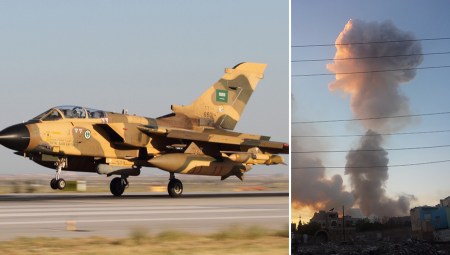
Saudi Arabia and its coalition allies have the most sophisticated Western combat equipment, including planes, attack helicopters, drones and precision-guided munitions. But they lack battle experience. The exception to this is the Emirati forces within the coalition. They have had many years of combat experience alongside Western militaries, including in Somalia, Kosovo, Libya and Afghanistan. Because of that, they have acquitted themselves in Yemen with great professionalism and effectiveness at sea, on the ground and in the air.

But the lack of experience of the other coalition members puts them many years behind our own forces in wielding the highly complex 21st century capabilities of intelligence, surveillance, reconnaissance, communication and targeting.

Yet the coalition faces the same tough challenges that we face on battlefields everywhere. Their Houthi adversaries fight according to the well-developed doctrine of their backers, the Iranian Quds Force. Like Hizballah, Hamas, the Taliban, Al Qaeda and the Islamic State, their techniques include deliberately killing civilians, fighting from within the population and forcing innocents to become human shields.
1474

Completely ignoring the laws of war, they exploit their enemies’ adherence to them. They lure their opponents to attack and kill civilians. They exploit gullible or compliant reporters, international organizations and human rights groups to facilitate their propaganda, including false testimony and systematic fabrication of imagery. The aim is to instigate international condemnation in order to constrain their militarily superior enemies.

We have seen credible forensic analysis of strikes in Yemen that directly contradict the findings of the UN. Forensic analysis shows that rather than deliberately targeting civilians, the Saudis and their allies have taken remarkable steps to minimize civilian deaths. Of note, they have learned much from Israel’s conduct of operations in Gaza. This has included the use of guided munitions to conduct precision attacks against insurgents while seeking to reduce collateral damage.

Why would coalition forces spend vast amounts of money in a cripplingly expensive conflict firing precision strike munitions, and put their valuable pilots at risk, if they wanted to massacre civilians? Why not use much cheaper unguided munitions or Assad’s indiscriminate barrel-bombs?

The overwhelming majority of civilian deaths caused by the Saudi-led coalition have been due not to deliberate targeting, but to inexperienced pilots and unsophisticated intelligence and targeting capabilities in the face of an enemy that fights from within the civilian population. And to that the friction, confusion, stress and fog of war that leads even the most sophisticated, experienced and restrained military forces, such as American, British and Israeli, to sometimes kill civilians unintentionally. Contrary to the UN’s claim, this is unlikely to amount to war crimes.

Like every conflict in the Middle East, the war in Yemen is almost intractable, takes a heavy toll on innocent civilians, and is unlikely to end in anything approaching a perfect solution. But Saudi Arabia and its allies are making considerable efforts to restore stability to the country and its legitimate government.

Instability in Yemen undermines Western interests, including oil supplies. Instability also allows Al Qaeda and the Islamic State — proven and lethal threats to the US and the West — to flourish there.

By confronting the Houthis in Yemen, Saudi Arabia is also confronting Iran, which represents an even greater threat to the region and to the world. Emboldened by U.S. President Barack Obama’s nuclear deal, enriched by the release of billions of dollars of previously frozen funds, encouraged by the imminent boost in oil revenues, Iranian imperial aggression is today rampant in Iraq, Syria, Lebanon and Yemen.

However unpalatable to many, Saudi Arabia is and will remain a vital ally of the West. We must continue to support them in the fight in Yemen. We must not allow the false, ill-informed and increasingly shrill condemnations by the UN, human rights groups and the media to undermine Saudi’s fighting effectiveness as they have sought to do against other legitimate government forces fighting lawless insurgents in so many other places.

Between Putin and Obama

February 7, 2016

Between Putin and Obama, Israel Hayom, Boaz Bismuth, February 7, 2016

The tide has turned in Syria: Aleppo, the rebel stronghold, is on the verge of falling to President Bashar Assad’s army. Hezbollah’s Shiite militias, the Iranian army and the massive Russian air strikes have been the difference.

In contrast to the rebels, Assad can count on his partners. On the Syrian dictator’s side, backed by Russia, action is being taken. On the rebel side, backed by the Americans, there has been a lot of talking. This perhaps explains why in January 2017 U.S. President Barack Obama will exit the White House, and Assad will still be in power. We can add this legacy to the American president’s splendid list of achievements.

And we haven’t even mentioned the millions of Syrian refuges, the terrible migrant crisis in Europe (leading to the rise of far-right parties across the continent), and the escalation of hostilities between Shiites and Sunnis. It’s not a short list.

Since last Monday, Aleppo has been under heavy attack from Assad’s forces. The gains on the ground have been considerable. Russia’s intervention has tipped the balance of power. No one can say this was unexpected. Washington, meanwhile, continues to grumble. U.S. Secretary of State John Kerry lambasted Moscow on Friday for the large number of dead Syrian women and children. Moscow isn’t exactly heeding his criticism. Washington still fails to understand that instead of talking, maybe it would be better to take action already. In August of 2013, however, after Assad had attacked his own people with chemical weapons for the 14th time, the Americans did nothing (red lines, remember?). Why should things be any different today?

Washington, you will say, has worked hard to find a diplomatic solution. This is a good time to remind everyone that the peace talks in Vienna have again hit a dead end. The talks aren’t likely to succeed for a number of reasons, namely that the two main players — Saudi Arabia and Iran — have reached a point of open hostilities, thanks to American foreign policy. Instead of cooperating to resolve the Syrian crisis, these two regional powers are closer than ever to a full-fledged military conflict. Riyadh is threatening to send ground forces into Syria to support the rebels. The commander of Iran’s Revolutionary Guard has already vowed that any such intervention would result in immense casualties for the Saudis. This is where things stand.

Over the weekend Turkey’s foreign minister discussed opening his country’s borders to the steady stream of refugees, but the crossings remain as shut as they were in September, 2014, when thousands of Kurds tried to flee the border town of Kobani. The European Union is trying to remind the Turks that they were given $3 billion for the expressed purpose of absorbing these 2 million refugees. But who expects agreements to be kept in today’s Middle East?

Who does have faith in agreements?

The refugee issue is becoming the hot button topic of the Syrian civil war. “The markets solved the economic crisis, the voters will solve the refugee crisis,” a French lawmaker said a few days ago. In the meantime, as Assad solidifies his power the far-right parties in Germany, Sweden, Denmark and Holland, and of course in France, are all growing in strength. It appears that everyone outside the Obama camp is thriving. And here is yet one more legacy to tell the grandchildren about.

Iraqi Journalist Comes Out Against Claim That ISIS Has Nothing To Do With Islam

February 1, 2016

Iraqi Journalist Comes Out Against Claim That ISIS Has Nothing To Do With Islam, MEMRI, February 1, 2016

(Mr. Boula’s comments relate to Sunni Salafist Islam as practiced in Saudi Arabia and elsewhere. He does mention Shiite Islam as practiced in Iran. Perhaps that has something to do with the pro-Iranian bent of the newspaper for which he writes. — DM)

In an article titled “Does Terror Truly Have No Religion?” in the pro-Iranian Iraqi newspaper Al-Akhbar, Iraqi journalist Fadel Boula came out against the claim, which is frequently heard in the Arab world and outside it, that the terror of the Islamic State (ISIS) and its ilk is completely unrelated to Islam. He pointed out that these terror organizations are motivated by an extremist Salafi ideology and claim that their atrocities represent Allah’s will and directives.

The following are excerpts from his article:[1]  

26614Fadel Boula (image: Al-Akhbar, Iraq)

“[Does terror truly have no religion?] This slogan is uttered regarding terror, as though [terror] reflects a picture that is completely unrelated to its perpetrators’ religious affiliation, and as though there are no religious goals or values behind it, but only a state of insanity that causes those afflicted with it to run amok, unaware of what they are doing or what [they seek] to achieve by their actions – [actions] that disgust not only human beings but [even] the beasts of the jungle.

“The terror that is shaking the world today is not a natural disaster like a tornado, a thunderstorm or an earthquake, and it is not perpetrated by savage tribes. It is perpetrated by people who enlist [because they are] inspired by a religious ideology. [These people] advocate enforcing and spreading [this ideology as a set of] dogmatic principles that must be imposed by the force of the sword, and which [mandate] killing, expulsion and destruction wherever they go.

“Since its inception, this movement of terror has espoused a Salafi ideology that champions religious extremism, and brainwashed people of all ages have rallied around its flag, [people who were] trained to kill themselves and kill others in order to attain martyrdom.

“The terror organizations that act in the name of religion were born when [the mujahideen] declared Islamic jihad against the Soviet forces in Afghanistan. It was the Saudi sheikh Osama bin Laden who laid the cornerstone for the first [terror] cell, which he named Al-Qaeda. Later he called to launch a war in the name of religion, and young believers, influenced by fatwas of extremist [clerics], especially Saudi ones, flocked from the Muslim lands [to Afghanistan].

“[Then, Abu Mus’ab] Al-Zarqawi formed a branch of Al-Qaeda in Iraq, which, calling itself ‘the Islamic State in Iraq,’ recently settled in the city of Mosul and united with its counterpart in Syria. Thus, a scary organization [namely ISIS] suddenly appeared, which advertises itself as the bearer of Islam’s message and banner. [Emulating the early] Islamic conquests, [this organization] invaded Iraq and Syria and appointed a Caliph for the Muslims: Abu Bakr Al-Baghdadi, who settled in Mosul and showed its people what [it is like] to be ruled by a government [that is a throwback to] 1,400 years ago, in terms of the treatment [they received] and the plunder of their lands. The invaders attacked the populace of Mosul and eastern Syria, arrested them by the hundreds, and took a sword to their necks, and later singled out the Christians among them and offered them two options: either convert to Islam or pay the poll tax, as happened to their forefathers when the Arabs attacked their lands in the days of the Caliph ‘Umar Al-Khattab [583-644 AD]. When [the Christians] rejected this humiliation, [ISIS] seized their property, expelled them from their historic home, the province of Ninveh, and sent them to wander destitute under the skies, seeking rescue and safety.

“As for the Yazidis, their plight was and remains an historic disaster that was inflicted upon them by the God-fearing Caliph [Al-Baghdadi] when he applied to them the verse pertaining to infidels, namely offering them two options: to [either] embrace Islam, or die and have their money, women and children seized. We keep seeing images of innocent people being killed and beheaded by these terrorists, who butcher their victims while crying out “in the name of Allah the merciful” and “Allah akbar.” All these crimes are [ostensibly] carried out with Allah’s approval, and they are perpetrated by those who praise Allah day and night and who pray fervently and do everything according to His will.

“When the terrorists blew up the World Trade Center and several airplanes, killing thousands of victims, Osama bin Laden, surrounded by his people, said on television: ‘This is a victory from Allah.’ And now ISIS is bragging about killing innocent people in Paris, saying that it was ‘done with Allah’s approval,’ and threatening that the next attack will be in the U.S., Allah willing. And [Sheikh Yusouf] Al-Qaradhawi and others like him pray and hope that, in the wake of this terrorist momentum, a day will arrive when Muslims inundate Europe and subdue it to Islam. Is this not enough to convince [us] that terror [does] have a religion?”


Endnotes:


[1] Al-Akhbar (Iraq), November 18, 2015.

Iran’s Commitment to Shia in the Region

January 17, 2016

Iran’s Commitment to Shia in the Region, Gatestone InstituteLawrence A. Franklin, January 17, 2016

♦ Iran’s commitment to Shi’ite interests seems firmly linked to its idea of its mission, as well as to the survival of its revolutionary regime. Iran’s theocracy is likely willing to pay a high price to safeguard this legacy. The West should not expect Iran to reduce its presence in Syria or Iraq, even under severe military pressure.

♦ As the Obama Administration continues to reward Iran for violating its agreement not to build nuclear weapons under the nuclear Non-Proliferation Treaty (NPT), and violating its agreement not to build nuclear-capable missiles, and its refusal to sign the worthless “Iran Deal,” its presence is set to become even more unpleasant as it becomes more prominent.

The West does not seem to appreciate the intensity of Iran’s commitment to its Shi’ite cousins in Syria. The West also seems not to comprehend the depth of Iran’s spiritual ties to its centuries-old role as the champion of Shi’a Islam.

Much Western journalistic commentary addresses Iran’s commitment to the Assad regime in Damascus. Left underreported is the profound sense of shared religious identity between the Shia of Iran and the Shi’a Alawi minority of Syria. Iran’s determination to maintain Alawi supremacy in Syria transcends any personal attachment to the Assad administration.

In light of this month’s execution of a leading Shi’ite preacher Nimr al-Nimr by Saudi Arabia and the consequent heightened tension between Tehran and Riyadh, it might help policymakers to understand that the religious divide between Shi’ite and Sunni Muslims as an inveterate and unbridgeable chasm as that between ISIS and the United States.

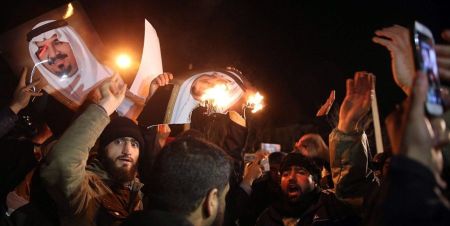
1427Parts of the Saudi embassy in Tehran were burned on January 2, when a mob of Iranians attacked and ransacked the diplomatic mission. The attack came in response to Saudi Arabia’s execution of Shi’ite preacher Nimr al-Nimr the same day.

Iran’s Shi’ite Ayatollahs are on record declaring that Syria’s Alawites are genuine Shi’ites[1], a question finalized after a centuries-long dispute. The Iranian Shi’ite establishment had questioned the Syrian Alawi inclination to venerate Jesus, Mohammad and Ali as a pale reflection of the Christian theological concept of the Holy Trinity. Moreover, some Iranian Mullahs were not comfortable with the Alawi practice of celebrating Christmas. Iran evidently felt obligated to extend a protective cover to its Shi’ite co-religionists.

Another dimension of Iran’s support for regional Shi’ism is its close operational relationship with the Lebanon-based terrorist group, Hezbollah — the political arm of Lebanon’s Shi’ites. The links are so close that Tehran has been able to mobilize thousands of Lebanese Shi’ite volunteers to fight in support of the Assad regime in Syria. Iran’s theological ties to Lebanon’s Shi’ite Muslims also are deep and longstanding.

Iran’s sense of responsibility for Shi’ism beyond its borders seems linked to the historical Islamic world-power contest for hegemony between Sunni and Shi’ite Muslims. The Sunni, for centuries, have dominated and persecuted the Shi’ites, even in states where the Shiites have been in the majority. This century is first time the Shi’ites have started successfully to challenge Sunni supremacy in the region of the Persian Gulf. The George W. Bush Administration replaced Iraq’s ousted Sunni President, Saddam Hussein, with a basically Shi’ite leadership. And the Obama Administration, thorough the promised infusions of up to $150 billion (much of which Iran will presumably use to increase its terrorist activities worldwide), has paved the way for Iran to have the capability to assemble nuclear weapons and missile delivery systems.

But perhaps even the Americans could not, in an electoral system, have prevented Shi’ite predominance in a country where the Shi’ites constituted about two-thirds of Iraq’s population.[2]Next-door Iran is at least 75% Shi’ite.[3] The theological cadre from both countries receives its religious training in many of the same seminaries in Qom, Iran and Najaf, Iraq. Much of Iraq is now controlled by militia groups loyal to Tehran, not to Baghdad.[4]

Iran is also extending assistance to Bahrain’s Shi’ites, the vast majority of the island’s population.[5] Iran, which had controlled Bahrain before the island was colonized by Great Britain in the 19th century, had agreed to London’s grant of independence to the Gulf state in 1971. The agreement had served British imperial interests in the region. Yet Iran has evidently never been comfortable with the arrangement. The final secession of Bahrain from Iranian patrimony remains an open wound to Iran’s national pride. The Bahrain issue is particularly sensitive, as the United States Navy’s 5th Fleet is now headquartered there. The fleet’s naval assets enable the U.S. to guard the Persian Gulf below Iran’s southern border.

A religious reason, however, also motivates Tehran’s role in Bahrain. For more than two centuries, Bahrain has been governed by the al-Khalifas, a Sunni family originally from Qatar,[6]and sustained in power by Iran’s regional and religious arch-rival: Saudi Arabia. The Sunni ruling family in Riyadh even financed the construction of a 14-mile bridge linking Saudi Arabia and Bahrain, enabling a quick response to any possible move by Tehran to re-establish its dominance in the island. In 2011, Riyadh dispatched military units to Bahrain to suppress protests by the country’s Shi’ites, who were demanding more representation in keeping with their majority status on the island.

Iran also maintains extensive ties to the Shi’ite minority in Saudi Arabia’s Eastern Province, where most of the country’s oil fields are. The Saudi National Guard does not permit demonstrations against Riyadh’s policies. Imams who preach any opposition sentiment to the House of Saud are immediately imprisoned. One imam, Nimr, al-Nimr, was executed by the Saudis this month, presumably as a warning to Shi’ites in Saudi Arabia not even to think any dissenting thoughts.

Iran’s sense of duty to Shi’ite communities outside the Arab Middle East has also earned it influence, particularly in South Asia[7] and West Africa[8].

Iran’s commitment to Shi’ite interests seems firmly linked to its idea of its mission, as well as to the survival of its revolutionary regime. Iran’s theocracy is likely willing to pay a high price to safeguard this legacy. The West should not expect Iran to reduce its presence in Syria or Iraq, even under severe military pressure.

As the Obama Administration continues to reward Iran for violating its agreement not to build nuclear weapons under the nuclear Non-Proliferation Treaty (NPT), and violating its agreement not to build nuclear-capable missiles, and its refusal to sign the worthless “Iran Deal,” its presence is set to become even more unpleasant as it becomes more prominent.

Dr. Lawrence A. Franklin was the Iran Desk Officer for Secretary of Defense Rumsfeld. He also served on active duty with the U.S. Army and as a Colonel in the Air Force Reserve, where he was a Military Attaché at the U.S. Embassy in Israel.


[1] In 1972 Shi’ite cleric Ayatollah Hasan Mahdi al-Shirazi issued a Fatwa ruling that Shia and Alawis are “two synonymous words.” Ayatollah Musa al-Sadr, who disappeared on a visit to Libya reconfirmed al-Shirazi’s Fatwa. See also The Vanished Imam by Fouad Ajami, 1986. p 174.

[2] Encyclopedia Britannica (1997) and various other compilation sources support the statistics cited. However, B.E. claims the percentage of Shia among Iran’s Muslims is about 93%.

[3] Encyclopedia Britannica. Kuwait 30%, Syria/15%, Pakistan 15-20%, Bahrain/65%.

[4] The Council on Foreign Relations Initial Background Paper on Militia Groups in Iraq by Lionel Beehnor and follow-on versions, 9 June 2005.

[5] Encyclopedia Britannica.

[6] Al-Khalifa has governed Bahrain directly or indirectly since 1783.

[7] The key pro-Iranian militia/terrorist group in Pakistan’s mega-city of Karachi is the Tehrik-e-Jafaria.

[8] Iran has just lodged diplomatic protest against the alleged Nigerian Army’s recent massacre of Shi’a Muslims.

Progress of sanctions relief will quicken Iran’s power struggle, spur clash with Saudi Arabia

January 17, 2016

Progress of sanctions relief will quicken Iran’s power struggle, spur clash with Saudi Arabia, DEBKAfile, January 16, 2016

investment-in-Iran-by-Ghanoon-daily_16.1.16The nuclear accord implementation by Iran and the lifting of sanctions may not survive the radical opposition in Tehran – not least, because Iran exports will further depress oil prices.

The nuclear watchdog confirmed Saturday night, Jan. 16, that Iran had fulfilled its side of the nuclear deal with the six world powers and that sanctions could be lifted, after US Secretary of State John Kerry, EU’s Federica Mogherini and Iran’s Foreign Minister Mohammad Javad Zarif had been kept hanging about for the IAEA’s from early morning for a verdict worth some $100-150 billion to Tehran. The wording did not explicitly confirm that Iran had met all the terms of the nuclear deal or that it had mothballed most of its uranium-enrichment centrifuges.

From the start, the deal was viewed with deep suspicion by Israel, Saudi Arabia and US lawmakers. Even the White House spokesman Josh Earnest was moved to comment Friday that “the United States wants to make sure that Iran doesn’t cut any corners.”

DEBKAfile’s intelligence and Iranian sources account for the delay in publishing the nuclear watchdog’s report by the “corners” Iran was still trying to cut. According to our sources, Iran had managed to dodge compliance with key terms of the nuclear deal. Nine tons of enriched uranium were indeed shipped to Russia, but most expert watchers are dubious about three other commitments:

1. Washington and Tehran have claimed that the Iranians fulfilled their commitment to pour concrete into the core of the Arak reactor to disable its capacity for producing plutonium. Two days ago, on Thursday, Iranian officials denied this had been done: Only a token operation may have taken place, if any.

Officials associated with Iran’s radical Revolutionary Guards, which fought tooth and nail against the nuclear accord, commented that instead of pouring concrete into the Arak reactor, it should be poured into the hearts of President Hassan Rouhani and Foreign Minister Zarif, for negotiating the accord with the six powers.

Such comments rarely reach the Western media. They are important because they mirror the fierce power struggle ongoing in Tehran, which is heavily fueled by infighting over the nuclear deal and sanctions.

2.  That deal provided for the number of centrifuges enriching uranium at the Natanz center to be reduced from 19,500 to 5,050. Our sources report that 9,000 are still in operation.

3. There is no confirmation that the number of centrifuges operating at the underground facility of Fordo was cut down to one thousand, as agreed.

On top of these deviations, the Obama administration admitted last week that the dispute over Iran’s nuclear-capable ballistic missiles, which were tested last month, is still open, in defiance of UN Security Council resolutions. This makes Tehran liable to a fresh set of sanctions, as US officials too have indicated.

The capture of two US patrol boats by the Revolutionary Guards speedboats last Tuesday, with the 10 American sailors aboard forced to surrender before they were released, was clearly a last-ditch attempt by Iran’s radicals to derail the nuclear accord before the Saturday deadline was reached.

That will not be the last such episode: Iran’s radicals may embark on more such actions to counteract the nuclear deal by striking more American targets and looking for trouble with Saudi Arabi and its Gulf allies.

The fact is that the hard-line factions in Tehran don’t want the sanctions lifted, because they see them as net profit for President Rouhani and his moderate conservatives and his leading backer, former president Hashem Rafsanjani, head of the powerful Assembly of Experts.

Iran’s Finance Minister Ali Tayyebnia gave the radicals fodder when he said last week that even $100 billion in cancelled sanctions would not haul the Iranian economy our [sic]  of crisis or balance the state budget, because the country’s indebtedness is far in excess of that huge amount.

The Iranian-Saudi row is another factor that could upset the nuclear deal, although paradoxically, since oil prices sank below $30, the Guards and Riyadh have a common interest in its collapse.

Iran’s expected return to an already glutted market – through the removal of sanctions – will drive prices down further. This, neither the Revolutionary Guards Corps, which control Iran’s oil sector, nor the Saudis want to see.

The spiral of hostility launched with the Saudi execution of the prominent Shiite cleric Nimr al-Nimr, followed by the mob attack on the Saudi embassy in Tehran and consulate in Meshaad, and the multiple severance of diplomatic and commercial ties between the Gulf emirates and Tehran, may have the effect of reversing the downward trend of oil prices with a sudden spurt.
Therefore, the rosy prospect the Obama administration paints of a successful landmark deal for curbing Iran’s nuclear capabilities is a far cry from being realized.

Therefore, the rosy prospect the Obama administration paints of a successful landmark deal for curbing Iran’s nuclear capabilities is a far cry from being realized.

Pakistan Cautiously Backs Saudi Arabia

January 11, 2016

Pakistan Cautiously Backs Saudi Arabia, Clarion Project, Elliot Friedland, January 11, 2016

(But please see also, Pakistan threatens to wipe Iran off the map if Saudi harmed. — DM)

Pakistan-air-force-display-640The Pakistani Air Force on display. (Photo: © Reuters)

Pakistan’s military has pledged to defend Saudi Arabia as tensions between the Sunni Gulf Kingdom and the Shiite Islamic Republic of Iran soar.

“Any threat to Saudi Arabia’s territorial integrity would evoke a strong response from Pakistan” Pakistani army chief Gen. Raheel Sharif told reporters on Sunday, following a visit from Saudi Deputy Crown Prince and Defence Minister Mohammed Salman.

Pakistani Prime Minister Nawaz Sharif also confirmed his support for Saudi Arabia and made a statement welcoming Saudi Arabia’s anti-terrorist coalition initiative.

The Arab League has already backed Saudi Arabia in its spat with Iran, which was triggered by the execution of Shiite cleric SheikhNimr al-Nimr by Saudi Arabia and a subsequent attack against the Saudi Embassy in Tehran.

A joint statement by Arab League foreign ministers condemned “hostile acts and provocations of Iran.”

Sunni majority Pakistan has long been a close ally of Saudi Arabia. Many Pakistanis work in Saudi Arabia and send remittances back to their families. Saudi Arabia has also given money to Pakistan in the past to help ease budgetary crises.

Yet Pakistan also has a large Shiite population and has remained on mostly good terms with Iran until now. It is also currently engaged elsewhere. On January 11 it will begin hosting four power talks with the US, China and Afghanistan to try and strike a deal with the Taliban.

It is no wonder then that Pakistan offered it’s “good offices” to try and broker a peace between Iran and Saudi Arabia.

“Pakistan has also always expressed its readiness to offer its good offices to brotherly Muslim countries for resolution of their differences through peaceful dialogue and reconciliation,” Prime Minister Nawaz Sharif said in a statement.

Pakistan does not want to become embroiled in an all-out sectarian war, but it also has obligations to back its ally Saudi Arabia.

Iran-Saudi crisis spurs Hizballah strike on Israel

January 4, 2016

Iran-Saudi crisis spurs Hizballah strike on Israel, DEBKAfile, January 3, 2016

Iranian_protesters_set_fire_to_pictures_of_the_Saudi_royal_family_3.1.16

The heated verbal battle between Tehran and Riyadh over Saudi Arabia’s execution of a Shiite cleric escalated Sunday night, Jan 3, with the severance of diplomatic relations. On the broader front, the repercussions from the quarrel between the two leaders of the Muslim world’s Shia-Sunni split are widely seen in Middle East military and intelligence circles as spurring a fast-track Hizballah attack on Israel.

Among the 47 people executed by Saudi Arabia Saturday on terrorism charges was Sheikh Nimr al-Nimr, Saudi Shiite leader and a prominent Shiite cleric in the region. Put to death with him were several Saudi Shiite and Sunni activists, which enraged Iran’s supreme leader Ayatollah Ali Khamenei to the point of threatening the Saudi royal family with “divine revenge.”

From Iran’s perspective, the Saudis committed the unpardonable act of executing Shiites together with Sunni Al Qaeda and ISIS terrorists. This made the House of Saud the first ruling power ever to treat Shiite and Sunni terrorists alike. This, more than anything, incensed Iran and its Lebanese proxy Hizballah, who are deep in a bloody war against the Sunni Islamic State and the Nusra Front terrorists in Syria. Iran’s Revolutionary Guards are additionally locked in a bitter conflict with ISIS in Iraq.

The Iranian war effort is backed by the US in Iraq and by Russia in Syria.

By the mass executions of both classes of terrorist at the same time, Riyadh issued four messages:

1. Washington and Moscow are wrong. The Iranians and the forces they back in the Persian Gulf, Syria and Iraq are just as much terrorists as ISIS and Al Qaeda.

2. The House of Saud is determined to fight both with equal resolve and severity

3. Riyadh has already taken Tehran on in Yemen, and indirectly in Syria, and is now ready to take the fight against Tehran all the way to the war on terror.

4. Taking off the diplomatic gloves, Saudi Foreign Minister Adel al-Jubeir Monday night severed relations with Iran and ordered all Iranian diplomats to leave the kingdom within 48 hours. The foreign ministry said that by condemning the Nimr execution, Iran was supporting terrorism.

Saudi diplomats were already gone after protesters in Tehran torched and ransacked the Saudi embassy Saturday.

Amid all the sound and fury, Tehran’s attention was drawn to comments made by Israeli Prime Minister Binyamin Netanyahu in the light of a major terrorist attack in Tel Aviv. He pointed out that, in addition to the Palestinians, Israel is threatened by two streams of radical Islam, the Shiites and the Sunnis.

He was clearly referring to Iran and its terrorist arm, Hizballah, on the one hand, and ISIS and Al Qaeda, on the other, inspired less by the Tel Aviv outrage than by the gathering clouds of terror darkening the region, which place the Saudi royal family and Israel on the same side, sharing a similar perception of the two foes facing both countries.

Policymakers in Jerusalem noted the odd statement by Turkish President Tayyip Erdogan to reporters on Saturday, January 1 on the way home from a visit to Riyadh. After years of reviling the Jewish state, he said, “Israel is in need of a country like Turkey in the region. We have to admit that we also need Israel.”

He sounded as though he was urging the resumption of the old political and military alliance binding the two countries years ago.

DEBKAfile’s Middle Eastern sources point out that, since his comment came directly after his talks with Saudi King Salman in Riyadh, it appeared to open a path toward the possible creation of a new Middle East bloc consisting of Turkey, Saudi Arabia, perhaps Egypt, and Israel, bound by the same enemies. This grouping could serve as a counterweight against the Sunni-Shiite bloc of Iran, Iraq, Syria and Hizballah, which has the backing of the US and Russia on one hand, and fights ISIS on the other.

Iran’s leaders may curse the House of Saud without restraint, but they are canny enough not to go from words to deeds, knowing they would be on their own if they attacked the oil kingdom and earn no backing from either Washington or Moscow.

However, it might be easier for Tehran to take advantage of Netanyahu’s tough predicament in his war on terror, by sending Hizballah to strike Israel and, meanwhile, pre-empt the formation of a new anti-Tehran alliance. Speeding up Hassan Nasrallah’s promised revenge for the assassination of its master terrorist Samir Quntar would serve this purpose.

This possibility has prompted the IDF to keep artillery units pounding areas bordering on Israel during the past few days. The IDF says this action is necessary to stop Hizballah exploiting the stormy, snowy winter weather to attack Israel. Its military chiefs appear to be acting on information received of an approaching Hizballah operation as its leader has threatened.

Hizballah blows up “Mossad” patrol, sparks border clash with Israel

January 4, 2016

Hizballah blows up “Mossad” patrol, sparks border clash with Israel, DEBKAfile, January 4, 2016

Shortly after DEBKAfile’s forecast of a Hizballah revenge strike for the Samir Quntar assassination, a Hizballah roadside bomb blew up against an IDF patrol at the Shebaa Farms on the Hermon slopes Monday afternoon, Jan. 4.  No casualties were caused. The Israeli force responded with tank artillery fire on the southern Lebanese town of Al-Wazzani and was answered by rocket fire from Lebanon

Hizballah announced that it had targeted an Israeli patrol with a bomb on the ceasefire line at the Shebaa Farms targeting a civilian car carrying a “senior Mossad officer”.

The next Hizballah communiqué said: The Martyr al-Quntar Unit blew up a bomb against an Israeli patrol in the Shebaa Farms, destroying a military vehicle and causing casualties.

In a third communiqué, Hizballah said the car attacked carried a “senior Israeli army officer” – amending its previous claim of a Mossad officer.

The Israeli army has closed all northern roads to civilian traffic in case the Hizballah attack spreads into a major clash.

DEBKAfile reported earlier Monday that the rising tension between Tehran and Riyadh may serve Iran and its Lebanese proxy as an oportunity to attack Israel. The leader of that proxy, Hizballah’s Hassan Nasrallah, had repeatedly threatened to punish Israeli for the assassination of its high profile terrorist planner Samir Quntar in Damascus on Dec, 20. Quntar was freed by Israel as part of a prisoner swap in 2008, three decades after he was convicted of killing four Israelis. In September, the United States placed Quntar on its terror blacklist, saying he had “played an operational role, with the assistance of Iran and Syria, in building up Hizballah’s terrorist infrastructure in the Golan Heights.”

Middle East Fires Blaze Hotter Following U.S. Capitulation to Iran

January 4, 2016

Middle East Fires Blaze Hotter Following U.S. Capitulation to Iran, Power LinePaul Mirengoff, January 4, 2016

In a post about the Saudi Arabia/Iran crisis — the Saudi beheading of a Shiite cleric; the Iranian burning of the Saudi embassy — John asked, “the Middle East couldn’t possibly get worse, could it?” At NRO’s Corner, David French examines the crisis and concludes “in the Middle East things can always get worse.”

Things have indeed gotten worse under President Obama. They got worse when Obama withdrew from Iraq and they are getting even worse following his nuclear deal with Iran, an abject capitulation by the U.S.

French explains:

For months, the Saudis have watched with alarm as the Iranians have engaged in the Mideast equivalent of an extended touchdown dance following the conclusion of the so-called nuclear “deal” with the U.S. The Saudis’ chief regional enemy is set to receive a massive economic infusion, access to international arms markets, and permission to further develop its ballistic missile capabilities.

The Iranians have celebrated by reaffirming their support for Shiite terrorists, conducting missile tests in defiance of the U.N., and — most recently — firing a rocket within two kilometers of an American aircraft carrier. In the meantime, the emerging Iran/Iraq/Sryia alliance received a considerable boost in the form of direct Russian intervention on behalf of the Assad regime.

While the U.S. has been largely impotent, the Saudis have responded by forming a multinational alliance to counter Iran (under the laughable pretense of “fighting terror”) and launching an intense air and ground campaign against Iranian-backed Shiite rebels in Yemen. Saudi Arabia’s execution of Shiite Sheikh Nimr Baqr al-Nimr is an act of pure defiance. Iran’s response — permitting a “mob” to burn the Saudi embassy — demonstrated its own lack of regard for the House of Saud.

What’s the lesson?

Nothing is easy or simple in the Middle East, but we can be certain of two things: Power vacuums will always be filled, and things can always get worse.

American passivity has left an enormous power vacuum in the region, and the Iranians and Saudis are rushing to fill the void. The Iranians are our sworn enemies, and the Saudis are among the worst of “friends.” It’s hard to see how the continued aggressive emergence of either regional power advances American national interests, and a direct clash could have dramatic consequences for the world economy.

The Middle East has long been on fire with violence and instability. This weekend, the fire blazed hotter still.

Walter Russell Mead expands on the connection between Obama’s Iran deal and the Saudi/Iran crisis:

The. . .story on Saudi Arabia’s decision to break diplomatic relations with Iran over the destruction of the Saudi embassy in Tehran, read[s] like an epitaph for the Obama administration’s Middle East policy. In 2015, the central conviction of President Obama’s policy in the Middle East, the only element of his original, ambitious agenda (reconciliation with the Sunni world, promotion of moderate Islamist democracy, solving the Israel-Palestine issue) still standing, was that he could stabilize the Middle East by pursuing a nuclear deal with Iran.

The President has his nuclear deal, but so far it isn’t making him, or anybody else, happy. The perceived U.S. tilt toward Iran has inflamed Sunni jihadis, contributed to the meltdown in Syria, and has made regional sectarian conflict hotter and more dangerous than ever. What’s more, the U.S. has lost leverage over Saudi Arabia, Turkey, Egypt, and Israel—without gaining leverage over Iran.

As a result, the U.S. is both less able to persuade the Sunni powers to refrain from steps that could inflame regional conflict and is completely unable to persuade the Iranians to moderate their behavior in the interest of regional peace.

Like John, I find it difficult to reconcile Obama’s policies with a good faith intention to pursue peace in the Middle East or to advance the national security interests of the United States.

Executed Saudi Shiite Cleric al-Nimr Backed Terror Attacks on America

January 3, 2016

Executed Saudi Shiite Cleric al-Nimr Backed Terror Attacks on America, Front Page Magazine, Daniel Greenfield, January 3, 2016

nimr-al-nimr5

The Saudi justice system is cruel and barbaric. But occasionally they get one right.

The media is scuttling to turn Sheikh Nimr al-Nimr, a Shiite leader so great they named him twice, into a martyr after the Saudis put him down on terror charges. But Nimr al-Nimr was a terror leader. There are no shortage of quotes from him endorsing terrorism, backing Iran and calling for Iranian intervention in Saudi Arabia.

And yes, he hated America too.

 Sheikh al-Nimr also made various anti-American references, claiming that America “wants to humiliate the world.”  In the case of America striking Iran, al-Nimr stated that “Iran has the right to close the Straits of Hormuz, to destroy the Zionist enemy, and to strike at American bases and American interests anywhere.”

Nimr was an agent of Iran. We, these days, have no ability to execute traitors. The Saudis do.

Saudi Arabia is full of Sunnis who say most of the same thing. Nimr got it because he was a Shiite and backed Iran. We don’t actually have a dog in this fight, but we can say good riddance to another enemy. The media has tried to turn Nimr and his relative Ali Mohammed al-Nimr into martyrs. But let’s remember how their Iranian bosses treated protesters during the Green Revolution.

The Nimrs at least weren’t raped beforehand. That’s more than those murdered by their Shiite terror regime in Iran can say.

Taraneh Mussavi may or may not be that green-clad girl who was arrested at a demonstration near the Ghaba Mosque on June 27. The girl who was raped, suffered from a torn uterus and a torn anus, landed at a Karaj hospital, and was finally found dead in an unknown cemetery in northern Iran. Regardless, her name is the secret name for all the women who have been raped in prisons since the 1979 Revolution. What I want to say is that Taraneh Mussavi is not just one individual.

Mehdi Karroubi writes: “Some individuals have raped detained girls with such force as to cause tears and injuries to their sexual organs.” His claim may be entirely false, but that does not make any difference. The following are not exceptions: When Azar Al Kanaan (Nina Aghdam) speaks in front of the camera about how she was raped at Sanandaj prison. When Roya Toloui speaks of how she was raped by her interrogator. When Monireh Baradaran writes in her book Simple Truth, about Tahereh, a woman remembered by most prisoners from the 1980s, a beautiful woman who lost her sanity after being raped by a Pasdar [“Revolutionary Guard”]. When [Canadian Iranian Journalist] Zahra Kazemi’s dead body is covered with cement and her attorney, Shirin Ebadi asks the court, “Why the victim’s clothing was torn and bloodied in a particular location.” When the report from the coroner’s office states that Zahra Bani Yaghub was raped in the Basij headquarters’ detention center in Hamadan.

Published reports are available about these types of torture committed against women political prisoners after the 1979 Revolution. The most systematic type of reported rape has been the rape of virgin girls who were sentenced to death by execution because of political reasons. They were raped on the night before execution. These reports have been substantiated by frequent statements from the relatives of women political prisoners. On the day after the execution, authorities returned their daughter’s dead body to them along with a sum considered to be the alimony. Reports state that in order to lose their virginity, girls were forced to enter into a temporary marriage with men who were in charge of their prison. Otherwise it was feared that the executed prisoner would go to heaven because she was a virgin!

This was the sort of thing that the Nimrs and other Iranian agents want to spread. No one will weep for either the House of Saud or the Shiite Islamic Revolution or ISIS when they are gone.