Archive for the ‘Iran military’ category

Iran’s advances create alarm in Saudi Arabia and the Gulf

March 14, 2015

Iran’s advances create alarm in Saudi Arabia and the Gulf, the Guardian,  March 13, 2015

Arabs believe Baghdad, Damascus, Beirut and Sana’a are in effect under Iranian control – and power may shift further if US sanctions are eased.
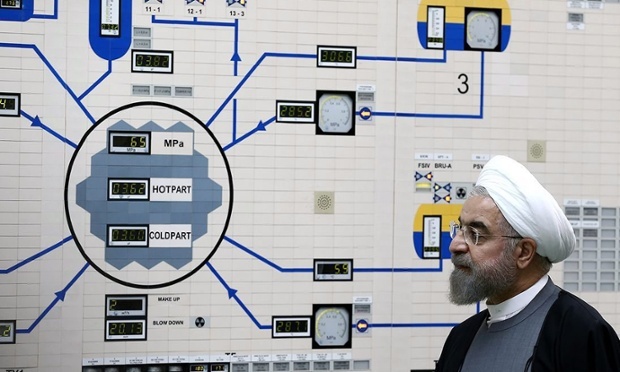
c0ac3569-93da-4ae8-8b51-29dc6991ee13-620x372 Hassan Rouhani, the Iranian president, visiting Bushehr nuclear power plant in southern Iran this year. Photograph: Presidential official handout/EPA

Iran’s great advantage, suggests Emile Hokayem, an analyst, is its commitment and competence, in Syria and beyond. “The expertise, experience and strategic patience it deployed in support of the Syrian regime to a great extent facilitated Assad’s recovery from serious setbacks in 2012. In contrast, the war in Syria has exposed not only the political and operational limitations of the Gulf states, but also the rivalries among them.”
*********************

The commanders of Iran’s Islamic Revolutionary Guard Corps (IRGC) have been working overtime recently, flaunting their achievements across the Middle East and flexing muscles as international negotiations over the country’s nuclear programme enter their critical and perhaps final phase.

On Wednesday it was the turn of Major-General Mohammad Ali Jafari, the IRGC’s most senior officer. “The Islamic revolution is advancing with good speed, its example being the ever-increasing export of the revolution,” he declared. “Not only Palestine and Lebanon acknowledge the influential role of the Islamic Republic but so do the people of Iraq and Syria. They appreciate the nation of Iran.”

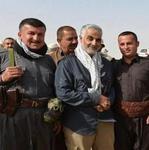
Last month a similarly boastful message was delivered by General Qassem Suleimani, who leads the IRGC’s elite Quds force — and who is regularly photographed leading the fightback of Iraqi Shia miltias against the Sunni jihadis of the Islamic State (Isis) as well as against western and Arab-backed rebels fighting Bashar al-Assad in southern Syria. “Imperialists and Zionists have admitted defeat at the hands of the Islamic Republic and the resistance movement,” Suleimani said.

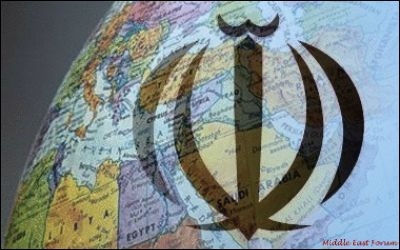
Iran’s advances are fuelling alarm in Saudi Arabia and the Gulf, where Tehran has been a strategic rival since the days of the Shah, and which now, it is said with dismay, in effect controls four Arab capitals – Baghdad, Damascus and Beirut and in the last month Sana’a in Yemen – which is uncomfortably close to home.

Iran’s regional position has certainly improved. Its high-profile role fighting Isis in Iraq, Assad’s retention of control in Syria with the help of its Lebanese ally Hezbollah, and the Houthi rebel takeover in Yemen have all been deeply discomfiting for the Saudis. Anti-government protests in Shia-majority Bahrain are also often blamed on Tehran — though that ignores the domestic roots of the unrest.

In Riyadh King Salman has dropped his preoccupation with the Muslim Brotherhood in favour of building a united Sunni Arab front to confront the Iranians, diplomats say, though translating that strategy into action is another matter. The message from Saudi Arabia and the United Arab Emirates is that whatever the outcome of the nuclear talks, Iran is bent on expanding its power and influence. “The Iranians have scored major victories but only where there are Shia minorities,” a senior Gulf official told the Guardian. “Our concern is that the nuclear issue will become a tool of their foreign policy.”

Arab alarm is shared by Israel. Binyamin Netanyahu used identical arguments in his recent speech to the US Congress, timed to influence next week’s nuclear endgame in Geneva. “The Saudis will be incredibly worried that we are getting close to a point where the Iranians will be players because of the nuclear issue and the way the Americans have effectively ended up on the same side as the Iranians in Iraq,” said one veteran Saudi-watcher. “But the noise they are making is in inverse proportion to their ability to do anything about it.”

Arab governments are not reassured by the promises of John Kerry, the US secretary of state, that Washington is not seeking a “grand bargain” with Tehran that will allow it to “destabilise” the Middle East, bolstered by the easing of economic sanctions. Saud Al Faisal, the Saudi foreign minister, warned of Tehran’s “hegemonic” ambitions as the IRGC supported the military operation to retake the Iraqi town of Tikrit from Isis. In Gulf capitals Hassan Rouhani, the emollient Iranian president, is seen as less important than the hardline supreme leader, Ayatollah Ali Khamenei.

It is hard to disentangle propaganda from reality. But independent analysts argue that Iran is inflating its gains for both foreign and domestic consumption. “If you listen to Suleimani there is a degree of exaggeration,” argues Ali Ansari of St Andrews University. “It’s rhetorical reassurance. He is saying to Iranians: ‘We are powerful and and everyone is worried about this’ – partly to make the point that they are not really under pressure. People outside can see what Iran’s strengths and weaknesses are. But there is this belief that you need to negotiate from a position of strength and that if you are weak you will be trampled on.”

Iran-watcher Hossein Rassam also detects a domestic calculation in the IRGC statements. “Critics of Rouhani’s policy of rapprochement with the international community inside Iran can turn to the supreme leader and say there wasn’t really much need for that softer tone because now we have more bargaining chips in our hands. Iran is the only power in the region which can actually fight Isis and the west needs us for that.”

Meir Litvak, an Israeli expert on Iran, sees both genuine belief and posturing in Tehran’s stance. “The Iranians believe they have been able to save the Assad regime from total collapse and there is at least stalemate in Syria,” he said. “That means they have been able to maintain the link with Hezbollah and maybe open a second front by proxy against Israel on the Golan Heights. The Houthi rebellion in Yemen was initially a genuinely domestic affair but the Iranian regime saw it as an opportunity. And it has become a bonus for it – even if they are not that active inYemen. But if the Saudis are scared that’s a plus for the Iranians.”

Arab diplomatic sources say they expect to see an IRGC and Hezbollah presence in Yemen, helped by a new agreement on regular flights between Tehran and Sana’a.

Iran’s role in Bahrain, where the Shia majority remains locked in confrontation with the Saudi-backed Sunni monarchy, is more about scoring propaganda points than material support – despite claims in Manama about Iran’s sinister role.

Still, in the heartlands of Iranian influence, Iraq and Syria, there have been significant costs as well as benefits, including the deaths of two senior IRGC commanders. Continuing sanctions and low oil prices – seen in Tehran as a deliberate strategy by the Saudis – have also made it harder to shell out billions of dollars to subsidise the Assad regime.

Iran’s great advantage, suggests Emile Hokayem, an analyst, is its commitment and competence, in Syria and beyond. “The expertise, experience and strategic patience it deployed in support of the Syrian regime to a great extent facilitated Assad’s recovery from serious setbacks in 2012. In contrast, the war in Syria has exposed not only the political and operational limitations of the Gulf states, but also the rivalries among them.”
It’s Not Just Islam, It’s the Tribal Mentality

March 12, 2015

It’s Not Just Islam, It’s the Tribal Mentality, Front Page Magazine, March 12, 2015

fft-450x253

Islam in part is the “theologizing” of the tribal mentality. Islam’s important innovation was to redefine the “tribe” as the whole umma of believers, creating in effect a “super tribe” that transcends mere blood as the bonding agent. But the tribal warrior ethos persists–– in the doctrine of jihad, tribal atrocities in contemporary terror and its gruesome videos, the privileging of men in polygamy, honor killings, and social restrictions on women, the disdain for the infidel “other” in the Koranic belief that Muslims are the “best of nations,” the betrayal of alliances in the religious sanction of lying to infidels (taqiyya), and the obsession with “honor” that today we find in violent Muslim reactions to “blasphemy” against Mohammed or the Koran.

Ignoring the tribal mentality is as dangerous for our foreign policy as downplaying Islamic doctrine.

The Obama administration’s serial appeasement of Iran––currently the “strongest tribe” spreading its influence throughout the region–– has damaged our prestige among allies like Jordan, Saudi Arabia, and Egypt, who are already shopping around for a more reliable and forceful partner. If we want to destroy the jihadists, check Iran’s nuclear ambitions, and protect our interests, we must again become the “strongest tribe.”

********************

The “nothing to do with Islam” mantra took a hit recently in one of the premier organs of liberal received wisdom, The Atlantic. Many have greeted as a revelation Graeme Wood’s article on the Islamic doctrines behind ISIS’s atrocities. Regular readers of FrontPage and Jihad Watch will not be as impressed. For years they have understood the link between jihadism and Islam. In 1994 Andy McCarthy made this connection when he prosecuted the perpetrators of the first World Trade Center bombing the previous year, a connection that the FBI ignored or discounted at the time––a failure, by the way, that has become a pernicious tradition for those charged with protecting our nation’s security and interests. For everyone else who has been paying attention to the rise of modern jihadism, Wood’s article is a dog bites man story.

One can hope that perhaps now, with the truth revealed by one of the Acela corridor’s oracles, the jihad deniers will wise up, though I wouldn’t bet on it. Unexamined opinions comprise the bulk of the progressive mind, and are notoriously resistant to empirical evidence and sound argument. But the current mess in the Middle East results from more than just Islam and its traditional belligerence, supremacist pretensions, and illiberal religious laws and doctrines. These characteristics reflect variations on the mentality of the tribe, one antithetical to modernity and the principles of liberal democracy, and still powerful in the Middle East, the region once described as “tribes with flags.”

For all the differences among tribal peoples, the components of this mentality are consistent, from the ancient Gauls and Germans Caesar conquered and the Vikings terrorizing much of Europe, to the American Indians the U.S. Cavalry fought and the jihadist gangs rampaging in the Middle East.

First, there is little notion of a common humanity that transcends ethnicity or culture. Universal principles are scarce, and personal identity is found solely in the collective customs and traditions of the tribe. Outsiders are to be distrusted, plundered, or conquered when possible. Loyalty is not to principle, but to blood. Most tribal peoples consider their tribe the acme of humanity, the only genuine humans. Hence their word for “human” is usually identical to the name of their tribe. They are literally ethnocentric.

Second, violence, particularly against outsiders, is an acceptable instrument for resolving conflict and asserting tribal superiority. Not just the violence of war, but also the cruel torture and slaughter of outsiders, including women and children, are legitimate for serving the interests of the tribe. Indeed, what we call terrorism was a tactic of tribal warfare to prevent a full-scale war by so terrorizing enemies that they would give up without a fight, a phenomenon common in the various Indian wars of American history. Hence the scary face-paint, tattoos, war cries, bizarre hairstyles, tortures like scalping, mutilation of enemies, or slaughter of their women and children, all of which are meant to frighten and demoralize the enemy. The same intent explains the blustering threats, braggadocio, and insults typical of tribal warfare and diplomacy. These practices can be documented in tribal societies from the Iroquois to the ancient Gauls.

Next, loyalty in tribal societies counts only for those within the tribe. Alliances with other tribes or peoples are ad hoc and contingent on the immediate interests of the tribe. They can be abandoned or betrayed if circumstances or perceptions change. Moreover, respect for others beyond the tribe is based solely on their capacity to inflict violence on their enemies. The “strongest tribe,” a status based on its effectiveness and success in conflict, will attract allies, who will abandon the hegemon once it loses that perception of its strength. Thus during Caesar’s wars in Gaul various Gallic and Germanic tribes would ally with the Romans when they appeared dominant, and betray them in an instant if they thought them weak. Likewise during the U.S. Cavalry’s wars against the Plains Indians, many tribes victimized by the Sioux or Apache or Cheyenne would ally with the Americans if they seemed to be winning, then switch sides the moment they seemed weak.

Finally, tribal societies are centered on the male warrior and his honor. Forget the Women’s Studies fantasies of matriarchal tribal societies. Tribal cultures privilege males, for men fight, and the survival and honor of the tribe depends on martial valor. Women bear children and work, as the skeletons of pre-contact American Indian remains demonstrate. Female bones show much more damage from hard physical labor than do male. This doesn’t mean that women had no status within the tribe, or did not enjoy somewhat more equality than women in more sophisticated civilizations. But warrior males still dominated, and culture in the main centered on men and their prowess in war, which earned honor, what we call prestige, for the whole tribe.

Sound familiar? It should, for Islam in part is the “theologizing” of the tribal mentality. Islam’s important innovation was to redefine the “tribe” as the whole umma of believers, creating in effect a “super tribe” that transcends mere blood as the bonding agent. But the tribal warrior ethos persists–– in the doctrine of jihad, tribal atrocities in contemporary terror and its gruesome videos, the privileging of men in polygamy, honor killings, and social restrictions on women, the disdain for the infidel “other” in the Koranic belief that Muslims are the “best of nations,” the betrayal of alliances in the religious sanction of lying to infidels (taqiyya), and the obsession with “honor” that today we find in violent Muslim reactions to “blasphemy” against Mohammed or the Koran.

Ignoring the tribal mentality is as dangerous for our foreign policy as downplaying Islamic doctrine. The chronic disorder in northern Iraq today is not just about the Sunni-Shi’a divide, or ISIS’s dream of a caliphate. It also reflects the bewildering number of tribes and clans in the region, whose complex alliances and enmities continually shift depending on circumstances and the perceptions of which tribe is the stronger. Our ally today can instantly become our enemy tomorrow. Factions that appear “moderate” today can become jihadist terrorists tomorrow. Our “friends” will tell us what we want to hear today, and then betray their words tomorrow. Most important, anything we do that creates the perception of weakness––especially concessions, or failure to inflict revenge, or acts of mercy––will also damage our prestige as the “strongest tribe” and invite tribes to abandon us.

These tribal practices defined most peoples, including Europeans, before the advent of modernity. They have survived among Middle Eastern Muslims because they were encoded in religious doctrines that promise global power for the tribe of the faithful in this life, and paradise in the next, especially for jihadist warriors. This amalgamation in part explains the spectacular success of Muslim warriors for a 1000 years, a record of martial achievement the memory of which today fuels the resentment and anger of those Muslims who wish to restore that lost honor. It also contributes to the difficulty of many Muslim societies to reconcile with modernity, particularly liberal democracy and its cargo of human rights, confessional tolerance, and equality for women and those of other faiths.

Of course, worldwide millions of Muslims have managed to transcend tribalism and adjust their faith to modernity. But millions more haven’t, and it is they who are fomenting most of the mayhem and murder on every continent except Antarctica. Our tactics and strategies in confronting this threat must indeed be based on a correct understanding of the spiritual imperatives that motivate the jihadists. But they also must take into account the tribal mentalities that respect force and honor the strong.

The Obama administration’s serial appeasement of Iran––currently the “strongest tribe” spreading its influence throughout the region–– has damaged our prestige among allies like Jordan, Saudi Arabia, and Egypt, who are already shopping around for a more reliable and forceful partner. If we want to destroy the jihadists, check Iran’s nuclear ambitions, and protect our interests, we must again become the “strongest tribe.”

Obama’s Surrender to Iran

March 12, 2015

Obama’s Surrender to Iran, Front Page Magazine, March 12, 2015

obama-iran

Iran, therefore, needs nuclear weapons to protect itself should it fail to derail Obama’s ambitious plans. Should the Pan Arabic (Sunni) Islamic Union become a reality, the Iranian rulers believe that having the capability of ushering in Armageddon will keep the Sunni’s at bay.

At the very least, the Mullahs in Iran rest better knowing, should they fall, that they can take everyone else down with them. Think “mutually-assured destruction.” A sort of “MAD” amongst madmen.

***************************

It is becoming increasingly clear that Obama’s agenda in the Middle East is to help the Islamists regain the land they once controlled but lost in 1924 with the fall of the Ottoman Empire.

The Arab Spring was not a movement to replace ruthless dictators with democratic governments. It was an Islamic movement to replace secular governments with Islamic ones.

Step by step, this administration is helping to establish the Islamists’ dream of a revived caliphate, or “Pan Arabic Islamic Union” as it has been called by Islamist leaders recently.

There is a mistaken school of thought that believes such an Islamic Union would function like an Arabic European Union, growing their economies and enabling them to take their place among the other nations of the world as equals.

This school neglects to answer the most salient question: How do you contain a movement that recognizes no borders but its own and is compelled by dint of faith to dominate the rest of the world or die in the effort?

Unfortunately, the primary opposition to this plan isn’t coming from the American people. Sadly, much of America is suffering from confusion, ignorance, self-loathing and a dedication to bending over backwards in an attempt to avoid the confrontation that looms ahead.

Rather than marshaling a strong core of support for the hard choices that must be made, our administration is creating a huge chasm between citizens over trivialities and over-amplified slights. We are far weaker for it.

One might ask then, who is opposing the mighty President of the United States? Who dares stand in the way of the Nobel Peace prize winner “Barack Obama?”

The answer will be something of a shock to many.

In no particular order, listed below are those who are arrayed against the designs of our “Dear Leader.”

Putin

Standing most prominently, is Vladimir Putin, the Russian bear. Putin has designs on the former Soviet satellite nations and he needs a strong economy and the leverage that an oil monopoly over the European market provides to fuel his aspirations.

His Ukraine adventure is proving more troublesome than originally thought, and Obama’s push to topple Assad in Syria threatens Putin’s access to a warm water port for Russia’s oil exports to Europe.

The Russian oligarchs are growing restive under the thumb of Putin, seeing his dreams of Sovietus revivivus as bad for business and potentially catastrophic. Putin’s leash is shortening, and his tenure is by no means a sure thing.

While Putin remains in power, he will oppose Obama’s Ottoman revival. He has no choice.

Old Guard and Monarchies of the Middle East

Next are the old guard and monarchies of the Middle East. We like to call them “dictators” even though in reality, while they are all Sunni Muslims, they are more concerned with maintaining their own wealth and power than in recreating an Islamic caliphate.

Among these were Gaddafi, Mubarak and the others deposed in the Arab Spring, but also numbered in this groups is the Hashemite kingdom of Jordan and both Saudi Arabia and the Emirates.

All are in danger of being ejected from this game. But just like Putin, they will not go bloodlessly.

Islamic Republic

The final player is also the strongest: Iran.

Iran, a Shiite nation, is a natural enemy to any Sunni Islamic caliphate system. The Iranian rulers know from Islamic history (the same history we completely ignore here in the West) that any Sunni caliphate will soon swallow and erase the Shi’a, destroying all opponents to their well-established ideals of Islamic religious and political structure.

Iran, therefore, needs nuclear weapons to protect itself should it fail to derail Obama’s ambitious plans. Should the Pan Arabic (Sunni) Islamic Union become a reality, the Iranian rulers believe that having the capability of ushering in Armageddon will keep the Sunni’s at bay.

At the very least, the Mullahs in Iran rest better knowing, should they fall, that they can take everyone else down with them. Think “mutually-assured destruction.” A sort of “MAD” amongst madmen.

Don’t let this apocalyptic scenario, however, lead you to think that Iran is going quietly into oblivion. On the contrary, it has tirelessly worked to thwart Obama’s plans.

Iran’s use of terror and terror proxies is on the upswing. It will distract and misdirect, strike and cajole, but it will not permit a Sunni caliphate to appear on its border without a nuclear capability of its own to deter Sunni adventurism.

Obama’s setbacks in Syria and Benghazi have forced him to negotiate with the Iranians. He wants to assure them that they have nothing to fear from a caliphate, while simultaneously keeping the American people from recognizing the monumentally stupid policy objective he is pursuing.

To this end, he tells us he has gotten Iran to agree to postpone its nuclear work for ten years, under the ridiculously naive idea that the dynamics of the Middle East will have changed. Many believe Obama is in fact a Muslim. In reality, that really doesn’t matter.

His administration believes that all conflict can be framed in Marxist terms. Empower those who have little and they will join the community with smiles and slaps on the back. The administration fundamentally misunderstands the problem and is applying a solution akin to gasoline on a grease fire.

Economics are unimportant to the Islamists. Power is their currency and they spend all they have to purchase the world for Allah. The establishment of an Islamic caliphate will not calm the Arab street, it will invigorate it to greater conquests, as Islam demands.

Of course, in the eyes of the neo-progressives in the White House, to speak truthfully about this “Islamophobia.”

To Obama, a nuclear Iran is an acceptable trade-off for a revived caliphate, To Israel, however, both Iran and a caliphate are threats to their very existence.

Iran with a nuclear weapon has no reason not to make good on its long-standing promise to “wipe Israel from the face of the earth.” A reconstituted caliphate modeled after the former Ottoman Empire has no room for Israel, indeed, on Iran’s maps, Israel doesn’t exist at all.

America is negotiating nuclear policy with a terrorist state, and geopolitical hegemony with an ideology/religion that knows no borders but its own.

In 2013, President Obama told us we can all take a deep breath, he was able to wring an invaluable concession out of the Iranians. He breathlessly announced that Iran had issued a fatwa against nuclear weapons.

It appeared that we had been brought back from the brink by the president’s keen ability to negotiate.   Notwithstanding the obvious (and wholly inappropriate) grandstanding by the POTUS, there are a few other issues that need to be addressed in relation to this irrelevant fatwa.

Most Americans aren’t aware that the foundation of Iran’s nuclear program was laid on March 5th, 1957 by the United States, under an Eisenhower program called “Atoms for Peace.”  Iran established the Tehran Nuclear Research Center (TNRC) in 1967, which was a 5 megawatt nuclear research reactor, fueled by enriched uranium.

In 1968, Iran signed the Nuclear Non-Proliferation Treaty (NPT) ratifying it in 1970, making Iran’s nuclear program subject to International Atomic Energy Agency (IAEA) verification and accountability.

Following the 1979 Revolution, nearly all international nuclear cooperation with Iran was cut off.  With little hope of regaining international cooperation, Iran elected to continue the program on their own, although they thought it best to save face and attempt to “shame” America (and by extension its advanced nuclear technology) by condemning all things nuclear.

It was for this reason and this reason alone, that the fatwa was issued. It had nothing to do with any humanitarian interests held deeply in the hearts of Iranian leaders; they are certainly more than amenable to any method that allows them to more efficiently eliminate their enemies, most especially Israel.

The anti-nuclear fatwa, is fully revealed to be a sham five years later, when we see the destruction of a reputedly “non-existent” Iranian nuclear program by Iraqi forces.

All of this is still occurring under the reign of the same Ayatollah that issued the nuclear fatwa a brief five years previous. Clearly, the Iranians had continued their nuclear program, despite the fatwa.

The next time we saw any reference to the 1979 “nuclear fatwa” was in 2003.  The IAEA issued a report, condemning the Iranian nuclear program, accusing it of once again, trying to weaponize the technology.

Still, Iran didn’t budge.  It wasn’t until the U.S. threatened to get involved militarily (the full might and power of the U.S. military was on display right next door in Iraq under the leadership of President Bush) that the Iranians finally caved.

What did this concession look like?  Well, as you might have guessed, Iran simply reaffirmed the old stand-by fatwa from 1979, condemning nuclear weapons and promising to play nice.

So, for the record, we have clear evidence that the Iranians consider their anti-nuclear fatwa to be toilet paper, so Obama’s “concession” is more enabling than disarming. Iran had cast the ‘79 fatwa out again in 2013, hoping we’ll bite on it one more time. Obama readily obliged.

President Obama appears willing to do whatever it takes to build his legacy on reestablishing the Islamic state after an 80 year absence. He also appears willing to endanger both the United States and Israel to get it done.

European colonization didn’t create terrorists; Islam and Mohammed birthed terrorism in order to spread a brutal and unforgiving ideology.

Absent European intervention, Muslims might yet be centuries further behind than they already are. Islam is a crippling force. Science has never been particularly important to the Islamists.

European contact brought Muslim countries out of the Stone Age; the same stone age to which the Islamic jihad intends to return us all.

Iranian President: Diplomacy With U.S. is an Active ‘Jihad’

March 12, 2015

Iranian President: Diplomacy With U.S. is an Active ‘Jihad’, Washington Free Beacon, March 12, 2015

Hassan RouhaniHassan Rouhani / AP

Iranian President Hassan Rouhani described his country’s diplomacy with the United States as an active “jihad” that is just as significant to Tehran’s advancement as the slew of new weapons and missiles showcased by the Islamic Republic’s military.

Rouhani praised the country’s military leaders for standing “against the enemy on the battlefield” and said as president, he would carry out this “jihad” on the diplomatic front.

Rouhani’s comments echo those of foreign minister and lead nuclear negotiator Javad Zarif, who said Tuesday that Iran has emerged as “the winner” in talks with Western powers. Like Zarif, Rouhani boasted that Iran’s years-long diplomacy with Western nations over its nuclear program established the Islamic Republic as a global power.

Iran has made headway in convincing the U.S. to allow it to maintain much of its core infrastructure through diplomatic talks that Rouhani said are viewed as a “jihad.”

“Our negotiations with the world powers are a source of national pride,” Rouhani said earlier this week. “Yesterday [during the Iran-Iraq War], your brave generals stood against the enemy on the battlefield and defended their country. Today, your diplomatic generals are defending [our nation] in the field of diplomacy–this, too, is jihad.”

“Our power is growing each day, but we don’t intend to be aggressive toward anyone. However, we will certainly defend our country, nation, independence, and honor wholeheartedly.”

Iran stands “10 times more powerful” than it was during the time of the Iran-Iraq War, Rouhani said, which “reflects a serious deterrence to the enemies’ threats.”

Iranian leaders view the ongoing talks with the United States and other nations as a source of global legitimacy.

Rouhani’s remarks have “significant domestic implications,” according to an analysis published by the American Enterprise Institute.

“Iran’s negotiations team to the status of Iran-Iraq War commanders, who are traditionally revered by the regime as upholders of Islamic Revolutionary values, could potentially lead to rhetorical backlash from regime hardliners opposed to the nuclear negotiations,” AEI wrote.

Matan Shamir, director of research at United Against Nuclear Iran, said Rouhani’s latest comments show he is not a moderate leader.

“While Rouhani talks about a ‘win-win’ nuclear deal to global audiences, his comments make clear that he continues to view the U.S. an antagonistic global oppressor that must be triumphed over, in this case by a diplomatic ‘jihad,’” Shamir said. “This is clearly not the language of a moderate or of a regime with which rapprochement is at all realistic.”

Zarif said Tuesday that a final nuclear deal with the United States is meaningless at this point.

“We are the winner whether the [nuclear] negotiations yield results or not,” Zarif was quoted as saying by the Tasnim News Agency. “The capital we have obtained over the years is dignity and self-esteem, a capital that could not be retaken.”

As Rouhani and Zarif grandstand on the nuclear front, Iranian military leaders have begun to unveil a host of new missiles and sea-based weapons.

General Amir Ali Hajizadeh, a leader in the Iranian Revolutionary Guard Corps, said Iran’s defensive capabilities “are non-negotiable in the nuclear talks,” AEI reported.

The comments came the same day Iran paraded its new cruise missiles.

Hajizadeh also dismissed economic sanctions on Iran, saying that “his is a message which should be understood by the bullying powers which raise excessive demands.”

On Wednesday, the State Department said any final deal with Iran was “nonbinding,” meaning that neither party would be legally obliged to uphold the agreement.

Analysis: Iran is no partner in the fight against the Islamic State

March 11, 2015

Analysis: Iran is no partner in the fight against the Islamic State, Long War Journal and , March 11, 2015

B_vsofcXEAAtDRvQassem Soleimani (center) with his bodyguards near the frontlines of Tikrit.

Iran benefits from the threat of an Islamic State, and if the US continues its courtship of Tehran, it may find the Islamic State replaced by an Islamic Republic.

****************

Testifying on Capitol Hill on March 3, Joint Chiefs Chairman General Martin Dempsey characterized the joint attempts of the Iraqi military, Iraqi Shia militias, and Iran’s Islamic Revolutionary Guards Corps (IRGC) at taking back control of Tikrit, Saddam Hussein’s hometown, from the Islamic State, as “a positive thing.” “Frankly,” General Dempsey said, “it will only be a problem if it results in sectarianism.”

General Dempsey’s caveat is an interesting one, since there is every reason to believe that Shia control of Tikrit will result in further sectarianism. While the US administration says in its most recent National Security Strategy that it desires to “degrade and ultimately defeat ISIL [Islamic State]” in an attempt to “support Iraq … free itself from sectarian conflict and the scourge of extremists,” Tehran is actively perpetuating the sectarian crisis in Iraq.

The threat of the Islamic State, coupled with American “strategic patience,” not only makes the Iraqi Shia more dependent on Tehran and legitimizes Iran’s military presence in Iraq, it also provides the regime in Tehran with another bargaining chip in nuclear negotiations with the P5+1 Group.

In the past, the Iraqi Shia have demonstrated little interest in reducing themselves to puppets of Tehran. During the war with Iraq from 1980-1988, Iraqi nationalism trumped sectarian identity: the Shia constituted the rank and file of the Iraqi military, and Shia leaders in Iraq kept their distance from the regime in Tehran. After the collapse of Saddam Hussein’s regime in 2003, Iraq became a sanctuary to Iranian clerics critical of the regime in Tehran, including Hossein Khomeini, grandson of the founder of the Islamic Republic.

But Iraq did not remain a refuge for long. The civil war in Iraq, followed by the rise of Islamic State, forced moderate Iraqi Shia, who otherwise would have pursued a line independent of Iran, to become dependencies of Tehran. After being rebuffed by the US following the Islamic State’s takeover of Mosul in 2014, General Qassem Atta, head of the Iraqi National Intelligence Service, asked Tehran for help and received assistance within 48 hours. Iraqi Prime Minister Haider al Abadi continues to press Washington for more support in his fight against the Islamic State and uses US hesitancy to justify reliance on Iran, which according to Vice President Iyad Allawi,only increases Iran’s influence in Iraq and could lead to dismantlement of the Iraqi state.

The Obama administration may desire to help secure the survival of the Iraqi state, but the small contingent of US advisers in Iraq is relying on a heavily Iranian-influenced Iraqi sectarian intelligence and security apparatus. The Iraqi security forces are predominantly Shia, and in addition, Shia militias and “advisers” from the IRGC Quds Force are now fighting as legitimate Iraqi forces. 

This creates an environment in which targeting operations developed by Iranian forces and the militias have primacy over those developed by the US, leading to the possibility that  Washington could be portrayed by Islamic State as complicit in the indiscriminate targeting of Sunnis. Such operations will be perceived the same way by the very Sunnis we need to fight Islamic State, thus undermining the US strategy to “support Iraq … free itself from sectarian conflict and the scourge of extremists.”

Any US reliance on Iranian support in the fight against the Islamic State is also likely to strengthen Tehran’s bargaining position in the nuclear negotiations.

Although both US and Iranian negotiators maintain that nothing but the nuclear issue is being discussed, this of course is fiction. On Sept. 22, Fars News, quoting an anonymous American source, reported that Secretary of State John Kerry and Mohammad Javad Zarif, Iran’s foreign minister, discussed the nuclear issue as well as the fight against the Islamic State. And Admiral Ali Shamkhani, Iran’s Supreme National Security Council Secretary, has also connected both issues. Clearly, Tehran’s cooperation with Washington in the fight against the Islamic State comes at a price, which Washington must pay at the negotiating table in Geneva.

Iran has Washington where it wants it. Iran wants a favorable deal, and the Obama administration is signaling that such a deal is forthcoming. US “strategic patience” is allowing Iran to increase its influence and presence in Iraq and Syria. Assad is waiting out the Americans and the international community, and Shia militias are now viewed as legitimate forces in Iraq, Syria, and Yemen. But most importantly, US “strategic patience” signals to Iran an unwillingness to jeopardize the talks by linking them to Iran’s role in Iraq, Syria, and Yemen. 

Iran benefits from the threat of an Islamic State, and if the US continues its courtship of Tehran, it may find the Islamic State replaced by an Islamic Republic.

Rouhani adviser denies he called for Iran’s return to empire

March 11, 2015

Rouhani adviser denies he called for Iran’s return to empire, Al-MonitorArash Karami, March 10, 2015

(An modest attempt at a partial walk-back. Please see also, Advisor To Iranian President Rohani: Iran Is An Empire, Iraq Is Our Capital . . . — DM)

Iran's former Intelligence Minister Younesi, chief nuclear negotiator Larijani and former chief nuclear negotiator Rohani attend conference in TehranIran’s former Intelligence Minister Ali Younesi (L), chief nuclear negotiator Ali Larijani and former chief nuclear negotiator and current President Hassan Rouhani (R) attend a conference on Iran’s nuclear policies and prospects in Tehran April 25, 2006. (photo by REUTERS/Raheb Homavandi)

Ali Younesi, President Hassan Rouhani’s adviser on Ethnic and Religious Minorities affairs, has issued a clarification about his comments suggesting a union between regional countries. His words had sparked criticism from the Arab-language media, which construed them as reviving Iran’s ancient empire. A former Iranian vice president who was at the conference also spoke out against Younesi’s comments.

Younesi accused Iran’s enemies of creating propaganda by misconstruing his comments at a March 8 conference on Iranian history and culture, saying that he was simply talking about a “historical and cultural unity” between certain countries in the region, including Iran, Tajikistan, Afghanistan and Iraq. He said that his proposal was for a “union” and “does not mean an empire should be reborn,” but rather that the neighbors should cooperate to confront mutual threats. He added that Iran’s official position is that “it respects the national boundaries and territorial integrity of other countries.”

Younesi was specifically criticized for saying, “Currently, Iraq is not only part of our civilizational influence, but it is our identity, culture, center and capital, and this issue is for today and the past. Because Iran and Iraq’s geography and culture are inseparable, either we fight one another or we become one.” He went on, “My meaning is not that we should remove our borders, but that all the countries of the Iranian plateau should become close because our interests and safety are intertwined.”

Younesi’s call for a “natural union” between these countries was not welcomed by Iran’s regional rivals, especially given the sensitivities of Arab countries in the Persian Gulf to Iran’s assistance to Iraqi forces currently battling the Islamic State in former Iraqi President Saddam Hussein’s hometown of Tikrit.

Saudi Arabian-funded Al-Arabiya incorrectly reported that Younesi had said, “Iran today has become an empire like it used to be through history, and its capital is now Baghdad. That is the center of our civilization and our culture and our identity today, as it has been in the past.” CNN Arabic wrote in their headline that Younesi said, “Iran is an empire and its capital is Iraq. We protect the region from Wahhabis, neo-Ottomans and atheists.” Though the first sentence in the CNN Arabic is incorrectly translated, Younessi did say in the March 8 conference that Iran was helping to protect the region from Wahhabi, takfiri, Zionist and Western domination. The Al-Arabiya article was tweeted over 3,000 times and shared on Facebook by over 4,000 people.

Former Iranian Vice President Mohammad Ali Abtahi also criticized Younesi, posting on Facebook immediately after attending the conference, “Now that the Arab countries in the region have reached a relative unity with Israel on fears about Iran, these comments will be construed as the same threatening talk of Ahmadinejad.” He added, “Irrespective of their governments, people have a sensitivity to their land, and this talk provokes people’s sensitivities.”

As Rouhani’s Ethnic and Religious Minorities adviser, Younesi has become known for reaching out to Iran’s Jewish population by laying wreaths at the graves of Jewish Iranians killed in the Iran-Iraq war, taking criticism from conservatives for suggesting Iran revert to its pre-revolution flag bearing the lion and sun and criticizing those who commit human rights violations in Iran. Though he was once minister of intelligence under President Mohammad Khatami, today his position carries no executive weight. But given the tensions between Iran and Arab countries in the Persian Gulf, it’s understandable that these comments would spark a backlash.

Dealing With the Iranian Death Cult

March 6, 2015

Dealing With the Iranian Death Cult, American ThinkerWarren Adler, March 2, 2015

The surprise attack on Pearl Harbor and the resultant bloodbath should stand as an example of how a rigidly brainwashed death cult like Iran will choose the apparent path of negotiation while hiding its lethal ambition under a camouflage of lies.

*****************

While Prime Minister Benjamin Netanyahu of Israel laid out a strong case for mistrusting Iranian intentions, he did not define the bedrock reason why Iran cannot be trusted. To do that, one must understand the captive mentality of the cult phenomena and how it distorts reason, brainwashes its adherents, and creates unquestioning followers.

For those of us with strong cognizant memories of the events before, during and after the stunning Japanese attack on Pearl Harbor on December 7th, 1941, the current negotiations with Iran to prevent this terror-sponsoring cultist state from developing a nuclear weapon seems chillingly similar.

Prior to that “day of infamy” as then President Franklin Roosevelt so aptly characterized it, the United States was locked in tense and complicated negotiations with Japan to settle conflicts that divided our two countries. They were many, involving a clash of perceived power divisions in the Pacific with underlying territorial and psychological issues leaving both countries at loggerheads.

The United States, satisfied that it had broken the Japanese military codes, felt secure enough that it could divine the Japanese positions on its statecraft and military plans. The Japanese, who had entered into a tripartite agreement with Hitler and Mussolini, felt secure in their military might and those of their Axis allies in the face of a largely militarily unprepared America to extract whatever concessions they were seeking from the United States.

It is true that America is not negotiating alone with Iran, but its position in the discussion and eventual outcome, by virtue of its historical leadership role, makes the comparison worth noting.

America in 1941 was facing comparative angst. President Roosevelt, who had promised to stay out of the war, was dealing with a reluctant public that had little appetite to enter the fray, although he had been persuaded by Winston Churchill to assist the Allies by providing armaments through the Lend-lease program. Even as negotiations with the Japanese proceeded, the Japanese had no intention of rapprochement and had actually been planning the assault on Pearl Harbor for many months before.

Worse, the American intelligence community was divided in their assessment of Japanese intentions and had not a clue about its cultist discipline. They were monstrously naive about the power of cult psychology and, unfortunately, they still are. Iran is run by death cult adherents operating under the guise of religion with all power, despite all the outward signs of alleged diversity, vested in one man.

Japan at that time was also being manipulated by cultists enmeshed in the doctrines of State Shinto, based on a degraded interpretation of the samurai Bushido code. They later initiated the suicide bomber pilot program, finding recruits eager to kill themselves for the emperor by smashing their planes into American ships. If that isn’t death cult conduct, then I’d like to know what is.

At the time of Pearl Harbor, Adolf Hitler, a charismatic and ruthless megalomaniac, had turned the Nazi Party into a brutal master race entitlement cult determined to make “Deutschland Uber Alles” a reality. Indeed, by then the Nazis had brainwashed the German people into the fanatic belief that they were going to fulfill that destiny in a thousand-year Reich, and Hitler had demonstrated his military prowess designed to reach that goal. He held total sway over the Germans, not unlike Ayatollah Khamenei and his cult followers in their control over Iran.

Nothing happens in Iran without the ayatollah’s approval. Indeed, the Islamic terrorist tentacles of the Iranian regime is considerable and unlikely to be deterred by mere negotiations. “Death to America” and “Death to Israel” are not just empty slogans. They are chosen statements of intent officially approved by the regime leader.

The State Shinto cult of emperor worship was manipulated by Japan’s power-hungry military to have the Japanese people believe in the inevitability of their own destiny to carve out their own empire in the Pacific. Indeed, they managed to persuade the revered Emperor Hirohito himself to agree to their machinations. His naive approval was all that was needed to bring the Japanese people on board, a typical cult scenario.

The weakest partner in this ménage a trois, Benito Mussolini, had earned himself some cred by an African adventure in Eritrea and North Africa.

Using the cult comparison, there seems to be little difference between Khomeini and Hitler, at least in terms of power. Hitler, like Khamenei today, calls the shots. Khamenei, his minions, and their vast network of Iranian-armed and financially-supported death cult Islamic terror cells is, by any rational measure, an existential danger to America, and certainly to Israel.

Indeed, nuclear bombs and long-range missiles in the hands of this cult could easily transform a mere perceived danger into a planetary disaster and fulfill their “death to” sloganeering.  Such power in the hand of the Iranian death cult will create a destructive capacity that by comparison makes Hitler’s armies seem like toy soldiers.

What history has taught us is that cults that have gained total power over their adherents will always use any means to gain their ends. They will employ any tactic that hastens their victory. They will lie, cheat, charm, brutalize, and kill anyone who stands in their way. They will demolish any obstacle that confronts them and inhibits their goals. They will dissimulate and deceive.

The idea that sanity will prevail when it comes to cult leaders is a false notion. Hitler, by the evidence of his suicide, appeared to have understood that death was a finality. Islamic terrorist’s have been brainwashed to believe that death, by sacrificing oneself to what they believe is their Prophet’s desire, is a continuation of physicality, offering perpetual pleasure through eternity in some imagined paradise.

The comparison with Pearl Harbor may seem farfetched and hysterical to some, but as 9/11 has illustrated, a cult in which adherents have no fear of death is a weapon of enormous power. Those who believe that leadership sanity and logic will prevail if Iran gets its bomb and actually uses it against their “Death to” objectives should understand that retaliation, which will surely come, could be welcomed by the Iranian perpetrators of the Jihad cult as a glorious suicide mission guaranteeing an entry ticket to their imagined paradise.

The surprise attack on Pearl Harbor and the resultant bloodbath should stand as an example of how a rigidly brainwashed death cult like Iran will choose the apparent path of negotiation while hiding its lethal ambition under a camouflage of lies.


Obama’s Iranian-nuclear strategy brings dividend: Rev Guards lead military assault on Tikrit

March 4, 2015

Obama’s Iranian-nuclear strategy brings dividend: Rev Guards lead military assault on Tikrit, DEBKAfile, March 4, 2015

(Please see also The World Bows to Iranian Regional Hegemony and Should We Give Up on the Iraqi Army? — DM)

General_Qassam_Suleimani_IRAQ_1.15Iranian Gen. Qassem Soleimani on Tikrit battlefront

US President Barack Obama’s plans for Iran, which were spectacularly challenged by Binyamin Netanyahu in his Congress speech Tuesday, March 3, were manifested 10,000 kilometers from Washington in the firestorm over Tikrit, the important Sunni town north of Baghdad. There, Iranian-led Iraqi troops are on the offensive against the Islamic State in the biggest ground battle fought in Iraq since the Iraqi army fell apart and scattered last June against the conquering Islamist march through western and central Iraq.

For four reasons, this battle is loaded with ramifications for Obama’s Iran policy and the Islamic Republic’s drive for recognition as the leading Middle East power:

1.   For Tehran it is a high-stake gamble for prestige, Its top military strategist, Al Qods Brigades chief Gen. Qassem Soleimani, was thrown into the Tikrit operation, to become the first high-ranking general Iran has ever placed publicly up front in direct command of a key battle as a guarantee of its success.

2.  However, three days after the offensive was launched on Sunday, March 1, the 25,000 Iranian and Iraqi troops, backed by Iraqi Shiite militias, were still fighting outside its gates, upsetting the high hopes of a swift victory and breakthrough into the city.

Islamist forces slowed their advance by strewing hundreds of mines and roadside bombs on all the roads leading to Tikrit, while teams of suicide bombers jumped out and blew themselves up amidst the invading army – a tactic seen before in the battle for the Syrian Kurdish town of Kobani.
ISIS boasted that one of the suicide bombers was an American citizen whom they dubbed “Abu Dawoud al-Amriki.”

3.  The United States has no military input in the battle – neither US advisers on the ground nor aerial bombardment. On Tuesday, March 3, while Netanyahu was advising Congress in reference to the relative merits of radical Iran and ISIS that “the enemy of your enemy is the enemy,” Gen. Martin Dempsey, Chairman of the US Joint Chiefs of Staff, revealed some of the Obama administration’s thinking on the subject.

He said Iran and its allies (Iraqi Shiite militias) had taken part in the Iraq war ever since 2004. “But the Tikrit campaign signals a new level of involvement,” he said. “This is the most overt conduct of Iranian support in the form of artillery and other things” and “…could turn out to be a positive thing.”

These comments corroborated DEBKAfile’s disclosures on the US-led war on ISIS, which defined America as confining itself to air strikes over Iraq and Syria and assigning the brunt of the ground war to Iran’s Revolutionary Guards forces – a division of labor, which Israeli military chiefs watch with increasing concern as it brings the Iranian peril closer than ever to Israel, DEBKAfile’s military sources report.

The Iraq format is replicated in southern Syria, where the same Gen. Soleimani, joined by a group of fellow Iranian generals, is leading an operation to seize that part of the country from Syrian rebel hands, including the Golan town of Quneitra .

4. The role Obama has assigned Iran in the two embattled Middle East countries bears directly on the scope of his concessions in the bargaining for a comprehensive nuclear deal.

The World Bows to Iranian Regional Hegemony

March 4, 2015

The World Bows to Iranian Regional Hegemony, Asia Times Online via Middle East Forum, David P. Goldman, March 4, 2015. Originally published under the title, “World Bows to Iran’s Hegemony.”

1025The looming nuclear agreement is a dark cloud for countries within range of Iranian ballistic missiles.

The powers of the world hope to delay, but not deter, Iran’s eventual acquisition of nuclear weapons.

The US has tacitly accepted the guiding role of Iranian commanders in Iraq’s military operations against ISIS.

Washington destroyed the balance of power that defined the region’s politics when it pushed through majority rule in Iraq.

****************

The problem with Israeli Prime Minister Benyamin Netanyahu’s address to Congress March 3 was not the risk of offending Washington, but rather Washington’s receding relevance. President Barack Obama is not the only leader who wants to acknowledge what is already a fact in the ground, namely that “Iran has become the preeminent strategic player in West Asia to the increasing disadvantage of the US and its regional allies,” as a former Indian ambassador to Oman wrote this week.

For differing reasons, the powers of the world have elected to legitimize Iran’s dominant position, hoping to delay but not deter its eventual acquisition of nuclear weapons. Except for Israel and the Sunni Arab states, the world has no desire to confront Iran. Short of an American military strike, which is unthinkable for this administration, there may be little that Washington can do to influence the course of events. Its influence has fallen catastrophically in consequence of a chain of policy.

The best that Prime Minister Netanyahu can hope for is that the US Congress will in some way disrupt the Administration’s efforts to strike a deal with Iran by provoking the Iranians. That is what the White House fears, and that explains its rage over Netanyahu’s appearance.

Tehran may overplay its hand, but I do not think it will. The Persians are not the Palestinians, who discovered that they were a people only a generation ago and never miss an opportunity to miss and opportunity; they are ancient and crafty, and know an opportunity when it presents itself.

Most of the world wants a deal, because the alternative would be war. For 10 years I have argued that war is inevitable whatever the diplomats do, and that the question is not if, but how and when. President Obama is not British prime minister Neville Chamberlain selling out to Hitler at Munich in 1938: rather, he is Lord Halifax, that is, Halifax if he had been prime minister in 1938. Unlike the unfortunate Chamberlain, who hoped to buy time for Britain to build warplanes, Halifax liked Hitler, as Obama and his camarilla admire Iran.

China is Chamberlain, hoping to placate Iran in order to buy time. China’s dependence on Middle East oil will increase during the next decade no matter what else China might do, and a war in the Persian Gulf would ruin it.

Until early 2014, China believed that the United States would guarantee the security of the Persian Gulf. After the rise of Islamic State (ISIS), it concluded that the United States no longer cared, or perhaps intended to destabilize the region for nefarious reasons. But China does not have means to replace America’s presence in the Persian Gulf. Like Chamberlain at Munich, it seeks delay.

Obama, to be sure, portrays his policy in the language of balance of power. He told the New Yorker’s David Remnick in 2014,

It would be profoundly in the interest of citizens throughout the region if Sunnis and Shias weren’t intent on killing each other. And although it would not solve the entire problem, if we were able to get Iran to operate in a responsible fashion – not funding terrorist organizations, not trying to stir up sectarian discontent in other countries, and not developing a nuclear weapon – you could see an equilibrium developing between Sunni, or predominantly Sunni, Gulf states and Iran in which there’s competition, perhaps suspicion, but not an active or proxy warfare.

That, as the old joke goes, is the demo version.

On the ground, the US has tacitly accepted the guiding role of Iranian commanders in Iraq’s military operations against ISIS. It is courting the Iran-backed Houthi rebels who just overthrow a Saudi-backed regime in Yemen. It looks the other way while its heavy arms shipments to the Lebanese army are diverted to Hezbollah.

At almost every point at which Iran has tried to assert hegemony over its neighbors, Washington has acquiesced. “In the end, peace can be achieved only by hegemony or by balance of power,” wrote Henry Kissinger. The major powers hope for peace through Iranian hegemony, although they differ in their estimate of how long this will last.

Apart from its nuclear ambitions, the broader deal envisioned by Washington would leave Iran as a de facto suzerain in Iraq. It would also make Iran the dominant power in Lebanon (via Hezbollah), Syria (via its client regime) and Yemen (through its Houthi proxies). Although Sunni Muslims outnumber Shi’ites by 6:1, Sunni populations are concentrated in North Africa, Turkey and South Asia. Iran hopes to dominate the Levant and Mesopotamia, encircling Saudi Arabia and threatening Azerbaijan.

It is grotesque for America to talk of balance of power in the Persian Gulf, because America destroyed the balance of power that defined the region’s politics from the end of the First World War until 2006, when Washington pushed through majority rule in Iraq.

The imperialist powers in their wisdom established a power balance on two levels. First, they created a Sunni-dominated state in Iraq opposite Shi’ite Iran. The two powers fought each other to a standstill during the 1980s with the covert encouragement of the Reagan administration. Nearly a million soldiers died without troubling the world around them.

Second, the Sykes-Picot agreement of 1916 created two states, Syria and Iraq, in which minorities ruled majorities – the Alawite minority in Syria, and the Sunni minority in Iraq. Tyranny of a minority may be brutal, but a minority cannot exterminate a majority.

America’s first great blunder was to force majority rule upon Iraq. As Lt General (ret.) Daniel Bolger explained in a 2014 book,

The stark facts on the ground still sat there, oozing pus and bile. With Saddam gone, any voting would install a Shiite majority. The Sunni wouldn’t run Iraq again. That, at the bottom, caused the insurgency. Absent the genocide of Sunni Arabs, it would keep it going.

Under majority Shi’ite rule, Iraq inevitably became Iran’s ally. Iranian Revolutionary Guards are now leading its campaign against the Sunni resistance, presently dominated by ISIS, and Iranian officers are leading Iraqi army regulars.

This was the work of the George W Bush administration, not Obama. In its ideological fervor for Arab democracy, the Republicans opened the door for Iran to dominate the region. Condoleezza Rice, then Bush’s National Security Advisor, proposed offering an olive branch to Iran as early as 2003. After the Republicans got trounced in the 2006 Congressional elections, defense secretary Donald Rumsfeld got a pink slip, vice president Dick Cheney got benched, and “realist” Robert Gates – the co-chairman of the 2004 Council on Foreign Relations task force that advocated a deal with Iran – took over at Defense.

China and Russia

In the past, China has sought to strike a balance between Saudi Arabia and Iran with weapons sales, among other means. One Chinese analyst observes that although China’s weapons deliveries to Iran are larger in absolute terms than its sales to Saudi Arabia, it has given the Saudis its best medium-range missiles, which constitute a “formidable deterrent” against Iran.

1026A Chinese warship arrives in Bandar Abbas, Iran in September 2014.

As China sees the matter, its overall dependency on imported oil is rising, and the proportion of that oil coming from Iran and its perceived allies is rising. Saudi Arabia may be China’s biggest provider, but Iraq and Oman account for lion’s share of the recent increase in oil imports. China doesn’t want to rock the boat with either prospective adversary.

Among the world’s powers, China is the supreme rationalist: it views the world in terms of cold self-interest and tends to assume that others also view the world this way. One of China’s most respected military strategists told me bluntly that the notion of a nuclear exchange between Israel and Iran (and by implication any regional nuclear power and Iran) was absurd: the Iranians, he argued, know that a nuclear-armed Israel could destroy them in retaliation.

Other Chinese analysts are less convinced and view Iran’s prospective acquisition of nuclear weapons with trepidation. It is not only war with Israel but with Saudi Arabia that concerns the oil-importing Chinese. For the time being, Beijing has decided to accommodate Iran. In a March 2 commentary, Xinhua explicitly rejected Israeli objections:

The US Congress will soon have a guest, Israeli Prime Minster Benjamin Netanyahu, who is expected to try to convince lawmakers that a deal with Iran on its nuclear program could threaten the very existence of the Jewish state.

Despite the upcoming pressure, policymakers in Washington should have a clear mind of the potential dangers of back-pedaling on the current promising efforts for a comprehensive deal on the Iranian nuclear issue before a March 31 deadline …

With a new round of talks in Switzerland pending, it is widely expected that the P5+1 [the five permanent members of the UN Security Council plus Germany] could succeed in reaching a deal with Iran to prevent the latter from developing a nuclear bomb, in exchange for easing sanctions on Tehran.

The momentum does not come easy and could hardly withstand any disturbances such as a surprise announcement by Washington to slap further sanctions on Tehran.

The Obama administration needs no outside reminder to know that any measures at this stage to “overwhelm” Iran will definitely cause havoc to the positive atmosphere that came after years of frustration over the issue.

While it is impossible for Washington to insulate itself from the powerful pro-Israel lobbyist this time, the US policymakers should heed that by deviating from the ongoing endeavor on Iran they may squander a hard-earned opportunity by the international community to move closer to a solution to the Iran nuclear issue, for several years to come if not forever.

Russia has taken Iran’s side explicitly, for several reasons.

First, Russia has stated bluntly that it would help Iran in retaliation for Western policy in Ukraine, as I wrote in this space January 28. Second, Russia’s own Muslim problem is Sunni rather than Shi’ite. It has reason to fear the influence of ISIS among its own Muslims. If Iran fights ISIS, it serves Russian interests. Russia, to be sure, does not like the idea of a nuclear power on its southern border, but its priorities place it squarely in Iran’s camp.

Demographic Time Bomb

The Israeli prime minister asserted that the alternative to a bad deal is not war, but a better deal. I do not think he believes that, but Americans cannot wrap their minds around the notion that West Asia will remain at war indefinitely, especially because the war arises from their own stupidity.

Balance of power in the Middle East is inherently impossible today for the same reason it failed in Europe in 1914, namely a grand demographic disequilibrium: Iran is on a course to demographic disaster, and must assert its hegemony while it still has time.

Game theorists might argue that Iran has a rational self-interest to trade its nuclear ambitions for the removal of sanctions. The solution to a multi-period game – one that takes into account Iran’s worsening demographic weakness – would have a solution in which Iran takes great risks to acquire nuclear weapons.

Between 30% and 40% of Iranians will be older than 60 by mid-century (using the UN Population Prospect’s Constant Fertility and “Low” Variants). Meanwhile, its military-age population will fall by a third to a half.

Belated efforts to promote fertility are unlikely to make a difference. The causes of Iranian infertility are baked into the cake – higher levels of female literacy, an officially-sanctioned culture of sexual license administered by the Shi’ite clergy as “temporary marriage,” epidemic levels of sexually-transmitted disease and inbreeding. Iran, in short, has an apocalyptic regime with a lot to be apocalyptic about.

Henry Kissinger is right: peace can be founded on either hegemony or balance of power. Iran cannot be a hegemon for long because it will implode economically and demographically within a generation. In the absence of either, the result is war. For the past 10 years I have argued in this space that when war is inevitable, preemption is the least damaging course of action. I had hoped that George W Bush would have the gumption to de-fang Iran, and was disappointed when he came under the influence of Condoleezza Rice and Robert Gates. Now we are back in 1938, but with Lord Halifax rather than Neville Chamberlain in charge.

IRGC Navy Commander Ali Fadavi Presents New “Strategic” Weapon, Says: We Have Deterred America

March 4, 2015

IRGC Navy Commander Ali Fadavi Presents New “Strategic” Weapon, Says: We Have Deterred America, MEMRI Videos via You Tube, March 4, 2015