Archive for the ‘Iran – human rights’ category

Iranian Political Prisoners in Dire Need of the Support of the International Community

January 11, 2017

Iranian Political Prisoners in Dire Need of  the Support of the International Community, Iran News Update, January 11, 2017

(Perhaps if we referred to them as “Palestinians” the international community might notice their plight. — DM)

iranian-political-prisoners-750

Silence of the global community sends a message to the Iranian regime that it can get away with these crimes, and that is a message not to be condoned with silence.

**************************

An article in The Hill by Ali Safavi, member of the Foreign Affairs Committee of the National Council of Resistance of Iran and president of the Near East Policy Research, discusses the alarming reports which from came from Gohardasht Prison, that activist and political prisoner Ali Moezzi, had disappeared on January 4, 2016.

Moezzi spent years in prison in the 1980’s for his affiliation with the Iranian opposition group, the Mujahedin-e Khalq (PMOI/MEK).  Beginning in 2008, he served two more years, for having visited his two daughters residing in Camp Ashraf, Iraq. Arrested again in 2011, seven months after his latest release, for attending the funeral of a fellow political prisoner, he’s been imprisoned ever since. He has faced much pressure, including the extension of his current prison term beyond its specified four years.He’s also be subjected to numerous explicit death threats.

Reportedly, he’s undergone routine beatings and torture and the absence of medical care for his pre-existing health problems. Moezzi’s arrest came shortly after he had been released from a hospital after undergoing surgery following a cancer diagnosis.

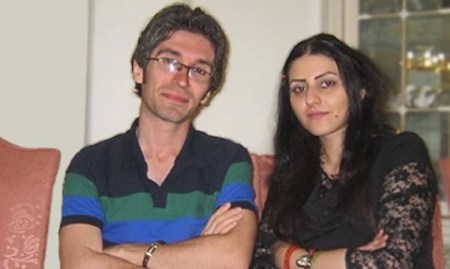
The regime has repeatedly been charged with disregard for the health and well-being of prisoners, especially those detained for political or religious offenses.  A recent example is Arash Sadeghi, who is serving a 15-year prison sentence for his peaceful human rights activism. Sadeghi began a hunger strike shortly after his wife was arrested. Sadeghi finally ended his hunger strike after judicial authorities granted his wife temporary release from her pre-trial detention. His hunger strike lasted more than 70 days befor the regime agreed to even that, and it was not the likelihood of Sadeghi’s imminent death that prompted them to act, but the massive support that his protest had garnered within Iran and abroad. Hundreds of Iranians gathered outside of Evin Prison, to protest his treatment. His cause was promoted on the internet and via banned social media networks by several thousands of supporters.

Salve writes, “It may not be a coincidence that Moezzi disappeared from Gohardasht Prison just one day after it was announced that Sadeghi had been hospitalized and brought back from the brink of death.”  He adds, “Both incidents demonstrated that the Iranian regime has no qualms about endangering the lives of its political adversaries, but the ruling mullahs can only take such a situation to its drastic conclusion if relatively free from public scrutiny.”

He says that it may be easier for the regime simply allow political prisoners to die, if those deaths occur in secret locations, so that they can claim “plausible” deniability.

Iran’s domestic activists or the international community may still be able to save Moezzi in much the same way they saved Sadeghi, but it is impossible to know Moezzi’s current condition, much less to follow its deterioration in real time.  This is a challenge as it is difficult to rally around a cause that they cannot see.  However, these atrocities must not be allowed to continue in the shadows.

This is the challenge that requires serious commitment, and a campaign that includes the international community and media. “World powers must take an interest in this case, and in the overall plight of Iranian prisoners of conscience,” writes Salvi.

Which is actually underscored by the recent success of the Sadeghi case.  Silence of the global community sends a message to the Iranian regime that it can get away with these crimes, and that is a message not to be condoned with silence.


Iran: How Will Rafsanjani’s Death Affect Regime?

January 11, 2017

Iran: How Will Rafsanjani’s Death Affect Regime? Iran News Update, January 10, 2017
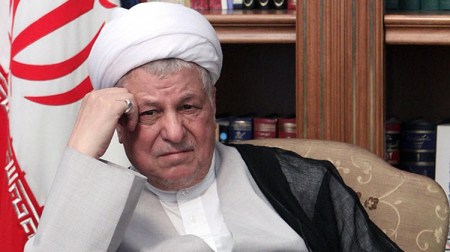
rafsanjani-750

In his January 10 article for Al-Arabiya,, Heshmat Alavi, political and rights activist who focuses on Iran, writes about the effect of senior cleric Ali Akbar Hashemi Rafsanjani’s death by heart attack on Sunday, January 8, at the age of 82.

As Rafsanjani was known for his influential role in shaping the regime’s politics following the 1979 revolution, the Iranian regime was dealt a significant blow, and a power vacuum is created, less than four months prior to crucial presidential elections.

Rafsanjani’s role for the past 38 years helped maintain the regime’s measures of domestic crackdown, export of terrorism and extremism abroad, and their effort to obtain nuclear weapons, according to Alavi. 

“The death of Rafsanjani, one of the pillars of the religious fascism ruling Iran and its balance factor collapsed, and the regime in its entirety is closer now to its overthrow,” said Iranian opposition leader Maryam Rajavi, President of the National Council of Resistance of Iran.

After Iran-Iraq War of the 1980s, Rafsanjani served as president from 1989 to 1997. He ran again for office again in 2005, but lost the election to firebrand Mahmoud Ahmadinejad.

In recent years, Rafsanjani has been mentoring the so-called “moderate” Iranian President Hassan Rowhani, and was known for his fierce rivalry with Iranian Supreme Leader Ali Khamenei.

Although known for his close ties to the regime founder Ruhollah Khomeini, who died in 1989, the West believed him to be a “pragmatic conservative” willing to mend fences with the outside world, especially the US.

Rafsanjani’s last post was head of the Expediency Council, a body assigned to resolve conflicts between the regime’s parliament (Majlis) and the Guardian Council, which has close links to Khamenei, and vets all candidates based on their loyalty to the establishment before any so-called elections. Rafsanjani himself was disqualified by the Guardian Council when he sought to participate in the 2013 elections as a “reformist” candidate.

Instead, Rafsanjani placed his power behind Rowhani after the latter assumed power as president in 2013.  Rafsanjani used this position to “carve himself and his family an economic empire from the country’s institutions and natural resources in the past decades,” writes Alavi.

“One brother headed the country’s largest copper mine; another took control of the state-owned TV network; a brother-in-law became governor of Kerman province, while a cousin runs an outfit that dominates Iran’s $400 million pistachio export business; a nephew and one of Rafsanjani’s sons took key positions in the Ministry of Oil; another son heads the Tehran Metro construction project (an estimated $700 million spent so far),” states a 2003 Forbes analysis, which also alludes to the billions cached in Swiss and Luxembourg bank accounts by the Rafsanjanis.

While the West was convinced that Rafsanjani was more moderate than his “hardline” counterparts, he went along with them in suppressing dissidents, namely members and supporters of the People’s Mojahedin Organization of Iran (PMOI/MEK), the main opposition group that first blew the whistle on Iran’s clandestine nuclear weapons program.

“Four rulings are a must for the [PMOI]: 1- Be killed. 2- Be hanged. 3- Arms and legs be amputated. 4- Be separated from society,” Rafsanjani said back in 1981. He also played a presiding role in the 1988 massacre of over 30,000 political prisoners.

During his presidency, Rafsanjani allegedly directed numerous assassinations of dissidents abroad, including renowned human rights advocated Dr. Kazem Rajavi, former Iranian ambassador to Italy Mohammad Hossein Naghdi and Iranian Kurdish leader Abdulrahman Ghassemlou.  He was also indicted for his role in the 1994 AMIA bombing in Buenos Aires that left 85 killed and hundreds wounded.

Alavi writes, “Rafsanjani has through four decades of mullahs’ rule in Iran played the role of the regime’s No. 2 figure and a balancing element, always securing the regime’s higher interests. His death will significantly weaken the mullahs’ regime in its entirety and will trigger major upheavals across the regime’s hierarchy.”  He concludes by saying, “If past is any indication, the mullahs will most likely resort to further violence and the export of terrorism and extremism to prevent this newest crisis from spiraling out of control.”

The NCRI referred to Rafsanjani as “one of the two pillars and ‘key to the equilibrium’ of the Iranian regime,” adding that, “during his long career he was associated with some of the regime’s most egregious actions, including mass-casualty terror attacks and the assassinations of exiled dissidents.”

Rafsanjani is considered as one of its founding fathers of the Iranian regime, who played an outsized political role in the life of the Islamic republic, not only by serving as President after serving as Speaker of Parliament and Deputy Commander of the Armed Forces, but also heading two of the regime’s most important institutions, the Assembly of Experts, an 88-member body of top clerics which nominates the Supreme Leader; and the Expediency Council, a body that advises the Supreme Leader.

“Rafsanjani, who had always been the regime’s number two, acted as its balancing factor and played a decisive role in its preservation. Now, the regime will lose its internal and external equilibrium,” opposition leader Maryam Rajavi said in a statement that also referred to the “approaching overthrow” of the clerical regime.

On January 9 the NCRI published a list, outlining some of his outrageous conduct:

• Rafsanjani called for the extermination of members of Iran’s main opposition group, the People’s Mojahedin Organization of Iran (PMOI or MEK). On October 3, 1981, the state-run Ettela’at daily wrote, “Referring to the grouplets’ operations, Hashemi Rafsanjani, Speaker of the Islamic Parliament and Tehran’s acting Friday prayer leader, said in his sermon, ‘Divine law defines four sentences for them which must be carried out: 1 – kill them, 2 – hang them, 3 – cut off their arms and legs, 4 – banish them…‘Had we caught and executed 200 of them right after the Revolution, they would not have multiplied so much. If we don’t deal decisively with [Mojahedin] armed grouplet and agents of America and the Soviet Union today, in three years we will have to execute thousands of them instead of one thousand now…”

• According to Hossein-Ali Montazeri, Khomeini’s former heir, Khomeini sought counsel on his decisions from just two individuals: Rafsanjani and current Supreme Leader Ali Khamenei, including his decision to issue a fatwa ordering the massacre of at least 30,000 political prisoners at the end of the Iran-Iraq war in the summer of 1988.

During Rafsanjani’s tenure as President and as head of the Supreme National Security Council (SNSC), a body that oversees and authorizes the regime’s terrorist operations, the assassination of Iranian dissidents abroad and the regime’s terror attacks skyrocketed. The terror targets were not only Iranians.

• Rafsanjani’s remarks on May 5, 1989 as carried by Iran’s official state news agency IRNA , and were reported by The Associated Press:: “If in retaliation for every Palestinian martyred in Palestine, they will kill and execute, not inside Palestine, five Americans or Britons or Frenchmen, the Israelis could not continue to do these wrongs… It is not hard to kill Americans or Frenchmen. It is a bit difficult to Kill [Israelis]. But there are so many [Americans and Frenchmen] everywhere in the world.”

• Argentinian investigators implicated Rafsanjani in 2006, in one of the deadliest instances of Iranian terrorism abroad – a suicide truck bombing of the AMIA Jewish community center in Buenos Aires, in which 85 people were killed in 1994.  The investigators accused Iran of instructing Hezbollah to carry out the bombing. They issued arrest warrants for Rafsanjani, seven other senior Iranians, and a Lebanese national, Imad Mughniyah, Hezbollah terrorist chief.

Interpol, at Argentina’s request, issued red notices – the organization’s equivalent of arrest warrants – for five of the Iranians and Mughniyah.

• The FBI established undeniable evidence that Tehran had masterminded the deaths of 19 American servicemen, in the bombing of Khobar Towers in Saudi Arabia on June 25, 1996.

According to the NCRI, these are some of the most significant killings of prominent dissidents abroad during Rafsanjani’s tenure:

• In 1992, four Iranian Kurdish dissidents in a Berlin restaurant called Mykonos were assassinated. A German court ruled in 1996 that the Iranian regime under Rafsanjani was directly responsible for the killings, which the U.S. State Department said provided further proof that Iran was a terrorist state.

• Maryam Rajavi’s brother-in-law, Kazem Rajavi of the National Council of Resistance of Iran (NCRI) – Iran’s most renowned human rights advocate and a former Iranian ambassador to the U.N. was shot dead near Geneva in 1990. Swiss investigators accused the Iranian regime of responsibility and authorities issued an arrest warrant for Rafsanjani’s intelligence minister, Ali Fallahian.

• Mohammad Hossein Naghdi, the NCRI representative in Rome, was shot dead on a street in the Italian capital in March 1993.

• Zahra Rajabi, the NCRI’s representative on refugee issues, was shot dead with an NCRI colleague in an Istanbul apartment in February 1996.

Rafsanjani was the one who pushed the Iranian clandestine nuclear weapons program forward as a guarantor of the regime’s survival. He cooperated with countries like North Korea to achieve these objectives.

Rafsanjani acknowledged that during his time as parliamentary speaker and President, both he and Khamenei sought ways to obtain a nuclear bomb in an interview published by the regime’s official state news agency IRNA on October 27, 2015. “Our basic doctrine was always a peaceful nuclear application, but it never left our mind that if one day we should be threatened and it was imperative, we should be able to go down the other path,” Rafsanjani said.  He added he had travelled to Pakistan to try to meet Abdul Qadeer Khan, the father of Pakistan’s nuclear weapons program, who later helped North Korea to develop a bomb. Fortunately, the meeting never occurred.
Trump’s Great Iranian Opportunity

January 8, 2017

Trump’s Great Iranian Opportunity, PJ MediaMichael Ledeen, January 7, 2017

(Even in the unlikely event that the State Department — not yet Trump’s — would issue a visa, would Iran permit Borougerdi to attend Trump’s inauguration? However, the mere gesture of extending an invitation would speak loudly and well of President Trump’s views on Iran. — DM)

iran-ayatollah-sized-770x415xtPhoto courtesy Shutterstock.

Donald Trump should invite Ayatollah Boroujerdi to the inauguration.

***************************

The great Ayatollah Hossein Boroujerdi is briefly out of prison, where he had been held in miserable conditions for a decade. He is one of those dissidents who are so beloved by the Iranian people that the murderous regime of Ali Khamenei does not dare to put them to death, or even on trial.  They torture them instead, hoping that they will die of “natural causes.”

When regime security forces went to arrest him, thousands of his supporters protested, blocking miles of highway. Khamenei, Rouhani et. al. still fear those people, ten years later.

He’s out on parole, but don’t think the regime is showing mercy. They typically release prisoners for a few weeks at a time—that way everyone sees the miserable state to which they have been reduced—and then drag them back.

I have written several times about him, calling on human rights advocates and political and religious leaders to campaign for his release. The short version:

Ayatollah Boroujerdi threatens the regime for two reasons:  he advocates toleration of all religious (and non-religious) beliefs, and, in keeping with Shi’ite tradition, opposes the involvement of religious leaders in politics.  Years ago, he said  “the regime is adamant that either people adhere to political Islam or be jailed, exiled or killed. Its behavior is no different from that of Osama bin Laden or Mullah Omar.”

He has repeatedly criticized the fundamentalist doctrines of the Iranian theocratic state, and has dramatically spoken about the most explosive issues in the Muslim world, including anti-Semitism. In 2010 he sent Hanukkah greetings to the Jews of the world, saying “any religious belief that brings us closer to the Source (God) is the truth. This force will lead humanity towards enlightenment. On this great day, we celebrate the unity among the believers of God’s light.”

The response hasn’t been great.  Now that he is out, we have a formidable opportunity to help our kind of Iranian, deliver a stunning message to the Islamic world, and reassert our national values.

Donald Trump should invite Ayatollah Boroujerdi to the inauguration.  Such a dramatic move would deliver several important messages:

–Show our support for the brave, honorable dissidents in Iran.

–Demonstrate that the dreadful period of American support for the expansionist, terror-supporting, mass-murdering tyrants of Tehran is blessedly at an end.

–Show that we understand that there are freedom-loving Muslims, and that we believe they are worthy of Western solidarity.  Our war is with radical Islam, and we intend to win.

Boroujerdi is certainly not the only Muslim dissident we should be helping, but he’s a terrific way to start.

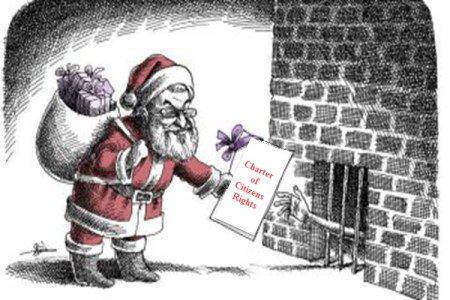
Nothing New in Rouhani’s “Charter of Citizens Rights.” Just a Re-Hash of Past Election Statements

December 23, 2016

Nothing New in Rouhani’s “Charter of Citizens Rights.” Just a Re-Hash of Past Election Statements, Iran Focus, December 23, 2016

charter-of-citizens-rights-750

London, 23 Dec – On the very day that the UN General Assembly condemned violations of human rights in Iran, its president, Hassan Rouhani, published a statement, “Charter of Citizens Rights”, which merely repeats the Constitution and laws of the clerical regime, albeit rearranged. It’s shocking that this occurred in the midst of the justice seeking movement for the 1988 Massacre has gained strength both inside and outside Iran.

During 2013 election, Rouhani announced the same statements, and now he’s reusing them for next year’s election. What’s interesting is that he announced the initial report on implementation will be due after the election.

The Charter consists of 120 articles, none of which challenge the absolute authority of the Supreme Leader, or the complete denial of popular sovereignty, the violation of fundamental rights of women is not addressed, nor are other inhumane laws that have been institutionalized in the clerical regime.

The first article states, “The right to life cannot be denied from citizens except in accordance with law”. According to an article published by the National Council of Resistance of Iran (NCRI) on Wednesday, December 21, “This is nothing but confirmation of 120,000 political executions and mass executions that are happening every day. All these crimes are carried out based on the “law” of Velayat-e-Faqih. Rouhani has previously described all these executions as implementing law and divine command.”

Women’s rights are discussed within the framework of the law — the same law that denies all economic, social and political rights to women. The same law considers women’s rights as being half of men’s, and denies them many careers.

Here is what is said about freedom: “These freedoms are only limited based on necessity and according to the law.” He fails to mention various police organs established according to the law to quell all freedoms, whose wages are paid for by Rouhani’s cabinet and are under the command of his Interior Minister. Mercenaries titled as ‘Hijab (veiling) Police’, ‘Cyber Police’, ‘Mountain Police’, ‘Invisible Police’ and …

Ownership rights are referred to in Article 75, which reads that expropriation is banned, ‘unless it is according to the law’. “Rouhani, fails to explain the fate of the hundreds of billions of dollars stolen by the mullahs’ regime and senior regime officials from the Iranian people over the 38 years of the mullahs’ rule, and what happened to the $95 billion wealth in the ‘The Executive Headquarters of Imam’s Directive,’ practically becoming Khamenei’s personal wealth, all stolen from the Iranian people,” declares the NCRI.

The last part of the Charter speaks to the export of terrorism, calling the killings in Syria, Iraq, Yemen and other countries “foreign policy using various wise measures” for “combating violence, extremism and in defense of innocent people’s rights,” emphasizing “allocating adequate resources to equip and strengthen the armed forces” and “allocating enough supplies to strengthen the defense capability.” This is the same policy Khamenei and his inner circle, including Rouhani, have been imposing on the people of Iran and the rest of the region.

Spending The Iranian people are angry of the use of their assets on the wars like those in Syria and Iraq. “Undoubtedly, Rouhani deserves the medal of obscenity. When introducing this document he said, “These citizenship rights tell the world that Islamic Republic of Iran has this capacity; Islamic Revolution has this capacity to make the best use of all new legal characteristics of today’s world in the context of Iranian Islamic culture,” concludes the NCRI.

During My Five-Year Imprisonment I Witnessed Numerous Crimes of Iran Regime

December 9, 2016

During My Five-Year Imprisonment I Witnessed Numerous Crimes of Iran Regime, Iran Focus, December 9, 2016

shabnam-madadzadeh

“They pushed me and they hit me a lot…They grabbed my hair and pushed my head and wanted me to say what they wanted to hear. They tortured my brother, even more in front of my eyes. They increased the pressure and even more in the interrogation they said they would kill me and threatened to execute me. Nobody knew where I was, I was alone and I heard the sounds of other prisoners being tortured. They would cry out and it was the most horrible sound.”

****************************

London, 9 Dec – During My Five-Year Imprisonment I Witnessed Numerous Crimes of Iran Regime

A former Iranian political prisoner has told The Express about the barbaric way she was treated and why the West must support the democratic alternative to the Iranian Regime.

Shabnam Madadzadeh, 29, was imprisoned for seven years for her support of the political opposition group, the People’s Mojaheidn Organisation of Iran (MEK).

She was beaten and tortured, forced to listen as guards raped other female prisoners and forced to watch as intelligence agents beat her brother, Farzad.

Madadzadeh, a computer science student at Tarbiat Moalem University in Tehran, was arrested with her brother in 2009 for speaking out against the Iranian Regime’s human rights abuses.

She said: “I arrived and spent three months in solitary confinement and there was torture, both mental and physical. My cell was just 2x3m and I was alone with no connection to the world. My family was not allowed to contact me and they could not find out anything about me or what it was like for me in jail.”

When she was released from solitary confinement, Madadzadeh bravely smuggled letters out of prison to raise awareness of the brutality that she and other political prisoners were subjected to.

She refused to answer interrogators, to which they responded with violent interrogations of up to 10 hours each day.

She said: “They pushed me and they hit me a lot…They grabbed my hair and pushed my head and wanted me to say what they wanted to hear. They tortured my brother, even more in front of my eyes. They increased the pressure and even more in the interrogation they said they would kill me and threatened to execute me. Nobody knew where I was, I was alone and I heard the sounds of other prisoners being tortured. They would cry out and it was the most horrible sound.”

She revealed that prisoners were often electrocuted or tortured via the medieval method of stretching on a rack before being beaten.

After her release, Madadzadeh fled the country in fear for her life. She urges Western governments to stand up to the Iranian Regime and President Hassan Rouhani.

She said: “The West cannot negotiate with the regime. It’s the most criminal in the world. The face of the regime is not the smiling faces and shaking of hands. My message to European leaders is stop negotiating with the regime.”

She recommended that Western leaders side with the National Council of Resistance of Iran, a democratic group which acts as a government-in-exile and works alongside the MEK.

Earlier this week, Madadzadeh spoke to the European Parliament about the horrors of the Regime.

She said: “During my five-year imprisonment I witnessed numerous crimes of this regime particularly against Iran’s innocent women and girls and today I am here to be the voice of the voiceless, the voice of those being crushed in the clutches of this misogynist regime in face of the world’s silence and inaction.”

She continued: “The message of the Iranian people to western governments, and my message today is that you must adhere to the three decades of struggle by the Iranian people to break free from the clutches of this regime and accept the true freedom fighters, the National Council of Resistance of Iran as the true representative of the Iranian people, and refrain from any type of negotiations or deals with this notorious regime, because the true price of your deals is human lives, gallows in the streets of Iran.”

This references the numerous executions in Iran, which has the highest per capita execution rate in the world. In 2015 alone, the Regime ordered the deaths of around 1,000 people for mostly low-level, non-violent crimes.

Madadzadeh said: “The Iranian people have the will power to overthrow this regime, and with the tireless efforts of the Iranian resistance they will overthrow this regime.”

Islamic Republic of Iran detains dozens of converts to Christianity

December 5, 2016

Islamic Republic of Iran detains dozens of converts to Christianity, Jihad Watch

Obama’s cash contributions to the Islamic Republic of Iran at work.

housechurchiran

“Iran Detains Dozens Of Christian Converts As Rights Group Urge World To Intervene,” BosNewsLife, December 3, 2016:

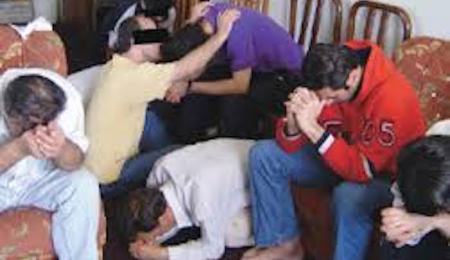
TEHRAN, IRAN (BosNewsLife)– A group of 19 influential human rights groups have urged the United Nations and the international community to help protect Christian converts in Iran saying scores of believers were detained for leaving Islam. In a statement to BosNewsLife the activists said that the “Islamic Republic of Iran” has been “homing in on converts from a Muslim background”.

Between May and August 2016 security forces forces arrested at least 79 Christians, according to activists, family members and friends.

“The majority of those arrested were interrogated and detained for periods ranging from a few days to months.” the groups said.

“At the time of writing some of these 79 Christians remain in detention and have still not been formally charged.”

Rights groups say “the true number of Christians apprehended by the authorities could be notably higher” as “many” arrests would have gone unreported.

In 2012, Iran’s government began to bar converts from Muslim backgrounds from attending services in official churches. Instead Christian converts “are forced” to gather in informal groups known as “house churches”, the activists said. “These gatherings are considered illegal by authorities and are often raided. In August 2016 alone security agents allegedly raided at least four house churches and the house church members were arrested and interrogated.”…

Iran’s Qur’an Reciter – And Child Rapist

December 5, 2016

Iran’s Qur’an Reciter – And Child Rapist, Front Page MagazineDr. Majid Rafizadeh, December 5, 2016

tousu

The Supreme Leader of Iran has called the child rapist a “model to be followed.”

It is crucial to point out that this is not a rare case. There are tens of thousands of religious Islamic figures, from every village and city of Iran, who use their Islamic authority to rape, abuse, and molest children, girls and women. Raping children, boys and little girls is not considered an important issue for the Islamic judiciary of Iran. In addition, if such rapes are conducted by a religious figure, he can be confident that there would be no legal case against him. In fact, the victims who speak up are the ones who would be charged for endangering Iran’s Islamic establishment.

***************************

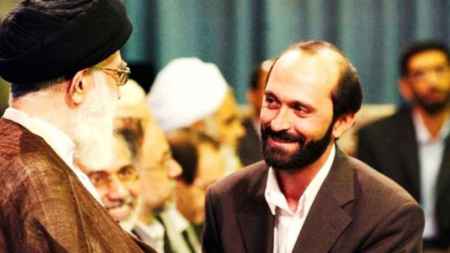
Iran’s best-known Quran reciter, Saeed Tousi, has been molesting and raping children as young as 9 years old, for years.

Tousi is very close to the political and religious establishment of the Islamic Republic.  He is a personal friend to, and Quran reciter for, the Supreme Leader Ayatollah Ali Khamenei, is a member of the Supreme Council of the Quran, and has been given many awards by Ayatollah Khamenei.

The Supreme Council of the Quran was founded 26 years ago and it is operated under the supervision of the Supreme Leader Ayatollah Khamenei.

The Supreme Leader of Iran has called the child rapist a “model to be followed.”

According to the Economist:

For years, the victims say, he touched boys memorizing holy texts at the Supreme Koran Council in Tehran. On trips abroad, the Koranic reciter would allegedly lure Islam’s equivalent of choirboys, some as young as 12, to his hotel room.

The Iran Wire wrote:

According to the victims’ accounts, Saeed Tousi took advantage of young students he was supposed to be offering support to, discussing private sexual matters with them before raping them, often in public bathhouses or hotel rooms. Victims filed their original complaints against Tousi in 2011, but Ali Moghadam [who is the president of the Supreme Council of the Quran] interfered in the judicial process, thereby protecting Tousi and saving him from the consequences of his actions.”It adds: “Tousi’s alleged victims say that when they accompanied Tousi on trips, he showed them pornographic videos and magazines and tried to arouse them by talking about sex.

The victims finally talked to Voice of America’s Persian-language TV network, after losing hope on bringing Tousi to justice. The chief justice, Sadegh Larijani, immediately warned that anyone who talks to a foreign news outlet “in opposition to the values of the Islamic Republic” would be guilty and could be encountering charges for “abetting and giving assistance to a crime.”

BBC Persian conducted an interview with the victims as well, which “was viewed an unprecedented 400,000 times on its Telegram channel.” According to the BBC: “One of the accusers described to the BBC an assault which he said took place in a public bath house when he was 12 years old.”

The victim, who was 12 years old at the time, recounted:

I was so shocked I couldn’t understand what was going on….I was so afraid to say anything because of the shame it would bring upon my name, but then I found out that there were so many other cases among his students. So I broke my silence.

People reacted fiercely. “Another shameful page in the history of the Islamic republic,” wrote Meysam. “People are being abused under the banner of religion… and no-one is going to be held accountable.”

“If the victims had been girls, [the authorities] would’ve accused them of being dressed inappropriately and provocatively. And they would argue that the assault was understandable” wrote Somayeh, according to BBC.

Efforts to bring the child rapist to justice have been fruitless. A spokesman for the judiciary, Gholam Hossein Mohseni-Ejei, argued that there was “insufficient evidence” to look into Tousi’s case.

The intriguing issue is that Tousi has confessed to his crimes:

In 2012, Tousi signed a letter in the presence of Ali Moghadam stating that he repented for his actions. He promised there would be no further instances of sexual harassment. In most courts of law, such a letter would serve as evidence of guilt and wrongdoing. But not only did the letter protect Tousi from any punishment, it did not appear to signal the stopping point for Tousi’s abuse. According to plaintiffs in the case against the Koranic expert, the rapes and abuse continued, and students were left vulnerable to his predatory actions.

Instead of investigating the case, the Islamic judiciary is now accusing his victims of being anti-establishment and foreign conspirators for speaking with foreign media outlets. The religious authorities would have preferred that the children remained silent.

The famous Quran reciter is not only currently walking free, but is also being continuously invited by government officials to recite the Quran at major official ceremonies. He is totally protected by the religious establishment.

It is crucial to point out that this is not a rare case. There are tens of thousands of religious Islamic figures, from every village and city of Iran, who use their Islamic authority to rape, abuse, and molest children, girls and women. Raping children, boys and little girls is not considered an important issue for the Islamic judiciary of Iran. In addition, if such rapes are conducted by a religious figure, he can be confident that there would be no legal case against him. In fact, the victims who speak up are the ones who would be charged for endangering Iran’s Islamic establishment.

Giuliani’s Ties to Iranian Resistance Group MEK Should be Viewed as a Valuable Contribution

November 29, 2016

Giuliani’s Ties to Iranian Resistance Group MEK Should be Viewed as a Valuable Contribution, Iran Focus, November 29, 2016

(The objected-to Politico article was written by Daniel Benjamin, often referred to below but not identified as author of that article. — DM)

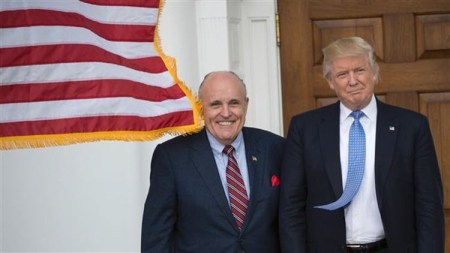
trumpandgu

London, 29 Nov – On November 28, in an article for Politico Magazine, Robert G. Torricelli, former U. S. Senator from New Jersey, and a former member of the U.S. House of Representatives, wrote about the Iranian Resistance Group, Mujahidin e-Khalq (MEK).  His article was written  in response to an article published in Politico last week, criticizing the MEK and the U.S. politicians who support them, particularly former New York Mayor Rudy Giuliani.

Torricelli, a former Democratic member of the Senate Foreign Relations Committee, who is familiar with the MEK and with Giuliani’s work on behalf of the organization says, “I can say unequivocally that Benjamin’s assertions are outrageous—so outrageous that I must respond.” 

A large bipartisan coalition supports the MEK in its campaign for regime change in Iran, including two former chairmen of the joint chiefs, two former CIA directors, a former attorney general and the former chairs of both political parties. People with such varied political ideals, such as Howard Dean and Patrick Kennedy to Newt Gingrich and John Bolton support the MEK. Torricelli says, “From this perspective, the outlier isn’t Rudy Giuliani; it’s Daniel Benjamin.” 

The history of the MEK began when it was part of the coalition opposing the shah of Iran in the late 1970s. The shah’s secret police executed and imprisoned most of their leadership. That vacuum was briefly filled by a Marxist group who were rejected by the incarcerated MEK leaders. Most of the Marxist leaders were killed by the shah or by the mullahs after their ascent to power in 1979. The MEK eventually regained its original leadership, and the MEK became an opposition group to the theocratic regime, and fled into exile in Paris and Iraq.

Torricelli writes, “Throughout this time, the MEK did take part in legitimate political and military action against the Iranian regime, but I have seen no evidence to support the assertion Benjamin makes that it took part in terrorist activities against Iranians or Americans.”

In Iraq in the 1980s, the refugee camps of the MEK were under the protection of the government of Iraq. MEK fighters were aligned with Iraqi Army during Iran/Iraq War. “But Benjamin’s claims that they assisted in Saddam Hussein’s repression of the Kurds have been denied by both MEK and U.S. Army leaders in Iraq. Upon the arrival of U.S. forces in 2003, the MEK willingly handed over its weapons, accepted U.S. protection and actively exposed the Iranian regime and its proxies’ terrorist activities. This included saving American lives by identifying IED locations. This, more than anything, explains the group’s support by former U.S. military personnel, including the former army anti-terror officer and the U.S. military police general assigned to the camp,” writes Torricelli.

The MEK provided invaluable intelligence regarding the Iranian nuclear program that helped counter Tehran’s efforts to develop atomic weapons. Maryam Rajavi, leader of the movement, committed herself publicly to a democratic, non-nuclear, secular Iran at peace with its neighbors with gender equality and a ban on capital punishment. The MEK organized thousands in the Iranian diaspora and built political support in Congress and parliaments across Europe. It is now the most organized and disciplined of the Iranian opposition groups.

“Some current and former State Department employees, including Mr. Benjamin, have a different concept. They remain committed to the idea that the MEK was a terrorist organization—a notion, I believe, which stems from an illusion of American reconciliation with the mullahs. In 1997, a group at State succeeded in convincing President Bill Clinton to place the MEK on the State Department list of terrorist organizations. Some claimed at the time that this decision was mainly intended as a goodwill gesture to Iran. The State Department gave as its reasons the MEK’s long record of violence, but I can tell you that as a member of the Foreign Relation Committee, I reviewed the State Department file on the MEK and found no evidence, no testimony and no reason for the designation except placating Tehran,” Torricelli writes, adding, “Thousands of Iranian-Americans and literally hundreds of members of Congress protested. In 2011, as a private attorney, I led a team of lawyers in a State Department inquiry to resolve the issue. After four hours of testimony, we yielded to the State Department to present their contradictory evidence. They had nothing.”

Without evidence, an order by the U.S. District Court was issued.  The MEK was removed from the State Department list of terrorist organizations by Secretary Hillary Clinton in 2012.

Torricelli continues, “Defeat came hard for the Iran apologists within the department. Mr. Benjamin isn’t the first to argue that the broad coalition of former U.S. intelligence, military, diplomatic and congressional leaders can’t be believed because some accepted speaking fees to attend MEK meetings around the world. The fact that these people faced combat for or dedicated their entire careers to our country, and are among our most respected leaders seems to be of no consequence. It’s an argument that requires no rebuttal except to note that by this standard the views of Thomas Paine, Elie Wiesel and Winston Churchill—all of whom accepted speaking fees from various international organizations—would have been silenced as well.”

Rudy Giuliani was one of the most outspoken supporters. The 3,000 MEK refugees settled along the Iran/Iraq border were under imminent threat in 2012. Iraqi relations with the United States were tense. Torricelli writes,  “Secretary Clinton requested that I assemble a persuasive group of distinguished Americans to travel to Europe and persuade Mrs. Rajavi to relocate the refugees to a former U.S. military base near Baghdad. I appealed to Louis Freeh, Ed Rendell, Michael Mukasey and Rudy Giuliani. Each accepted, canceled commitments, paid his own transportation to Paris and argued persuasively that the MEK assist the United States by relocating.”

Such a broad coalition of diverse Americans has varied perspectives. Torricelli says that, “Some believe that in the political vacuum following an economic or political collapse in Tehran, a determined and well-funded political opposition like the MEK could seize power. Others believe that the MEK might simply be part of a broader coalition, a simple pressure point or just a source of continuing intelligence.” Although rationales for support might differ, this group of Americans is united by the beliefs that the MEK is a genuine democratic force, and that regime change in Tehran is the best option to keep the peace, avoid a nuclear Iran, and benefit American interests.

Going back to Mr. Benjamin’s argument that Rudy Giuliani’s participation in this coalition should disqualify him for consideration as secretary of state, Torricelli has this to say, “Experience and participation in public policy issues was once a condition for high government service. It’s now a complication, because a record of advocacy creates controversy. But the selection of secretary of state needs to be different. Among the most likely crises facing the new president is an escalation in the struggle with the fundamentalist Islamic Republic of Iran. Rudy Giuliani has lived that struggle for a decade. Mr. Benjamin may quarrel with his efforts but it’s important to note that voices in the American foreign policy establishment as diverse as Senator McCain, Secretary Clinton, Deputy Secretary Blinken and John Kerry’s own personal representative on the MEK, Jonathan Weiner disagree. Each has thanked Rudy Giuliani and the other Americans involved in these efforts.”

Whether or not the president-elect chooses Mr. Giuliani as secretary of state, countering Tehran and assisting our country should not be seen as anything other than a valuable contribution to his consideration.

Hassan Rouhani: Iran’s Executioner

November 23, 2016

Hassan Rouhani: Iran’s Executioner, American ThinkerHeshmat Alavi, November 23, 2016

As we begin to wind down to the end of Hassan Rouhani’s term as president of the regime in Iran, it is time to take a look back at the past four years. We all remember how the West joyfully welcomed his election — read selection — as a change of gear in Iran aimed at moderation. However, what the world witnessed ever since has been anything but. An atrocious rise in executions, continued public punishments and an escalating trend of oppression has been Rouhani’s report card during his tenure. With a new administration coming into town, Washington must make it crystal clear to Tehran that human rights violations will no longer be tolerated.

Unprecedented executions

Despite pledging to hold the “key” to Iran’s problems, Rouhani has failed to provide even an iota of the freedoms the Iranian people crave and deserve. His record has revealed an unrelenting loyalty to the regime establishment in regards to social oppression and continued crackdowns. Iran sent 18 to the gallows last week alone, according to official reports.

As the international community continued its policy of appeasement, Rouhani and the entire regime used this opportunity to launch an execution rampage. Over 2,500 people have been sent to the gallows ever since Rouhani came to power, shattering all records held by this regime itself in over two decades.

In 2015 alone, Iran was executing an individual every eight hours, as reported by Dr. Ahmed Shaheed, former United Nations special rapporteur on human rights in Iran.

Vast social crackdown

Rouhani’s commitment to regime supreme leader Ali Khamenei and the ruling elite has rendered a wide-ranging, escalating crackdown. In addition to the executions mentioned above, state-sponsored social oppression has resulted in horrific scenes of public hangings, floggings, and even limb amputations.

The prisons are overwhelmed with inmates, leading to intolerable and inhumane conditions. Political prisoners, specifically, are subject to horrendous treatment by the authorities. Renowned human rights organization Amnesty International has recently issued an Urgent Action call expressing major concerns over the case of Maryam Akbari Monfared, a Green Movement organizer still in prison two years after her family put up her bail.

And this is merely a single example of the dreadful results of Rouhani’s domestic policies. The regime, with the West unfortunately falling in line, had claimed that the Iranian nation welcomed Rouhani’s presidency with open arms. While such assertions were politically motivated from the very beginning, the ordinary Iranian has been the first to pay the price of such a failed engagement policy.

A call for justice

The Iranian population is extremely fond of the Internet and millions are actively using social media. Despite its vast censorship efforts, the regime has failed to completely firewall the entire globe from the clever and highly motivated Iranian netizen. Various clips, images, and stories from inside Iran are leaking to the outside world as we speak, revealing ever more the regime’s atrocities.

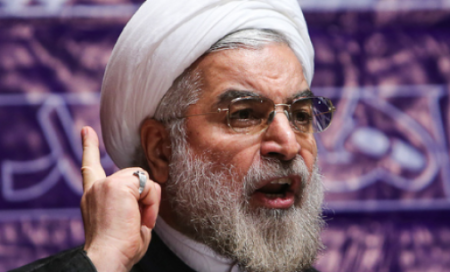
rouhanifinger

One significant case involves the exposure of a controversial sound file shedding light on a private meeting between the late Ayatollah Hossein-Ali Montazeri and the main officials involved in the horrendous 1988 summer massacre of over 30,000 political prisoners across Iran. Montazeri was the successor to Iranian regime founder, mullah Ruhollah Khomeini, set aside by Khomeini himself considering his opposing perspectives.

This disclosure sent shockwaves amongst the Iranian people from all walks of life, and throughout the globe. As a result a global movement is demanding accountability from those responsible for the horrific massacre of thousands of innocent political prisoners. The victims of this carnage included members and supporters of the main Iranian opposition entity, People’s Mojahedin Organization of Iran, and other dissident groups and minorities. The PMOI, more commonly known as the MEK in the West, has also been the focus of a lobbying campaign launched by Iran. Tehran’s mullahs are terrified of MEK supporters such as former New York City mayor and ambassador John Bolton being considered for senior cabinet posts in a Donald Trump White House.

Conclusion

The entire regime in Iran, including the so-called “hardliners” and “moderates,” are shifting gear for the upcoming presidential elections in June 2017. Members of the Rouhani faction have described U.S. President Barack Obama’s tenure as a “golden era.” This signals how Tehran took full advantage of Obama’s rapprochement as a green light to escalate executions and further implement social crackdown.

With a new administration set to take the reins in Washington, the opportunity has arrived for America to raise the issue of Iran’s human rights violations. Such outrageous crimes have no place in the 21st century, and all eyes are on U.S. president-elect Donald Trump. Supporting the call to hold all senior Iranian regime officials involved in the 1988 massacre accountable for their crimes is a good start.

Iran: Latest on a Female Political Prisoner

November 4, 2016

Iran: Latest on a Female Political Prisoner, Iran Focus, November 4, 2016

golrokh-ebrahimi

London, 4 November – A political prisoner in Iran had a visit from her mother for the first time since her imprisonment on October 24.

Golrokh Ebrahimi Iraee was imprisoned for writing an unpublished story about the brutal act of stoning in Iran.

The Intelligence Revolutionary Guards were dressed in plain clothes when they came to arrest her; they kicked and punched the door in order to intimidate her, refuses to give their identities or produce ID or a court order.

Iraee was prevented from taking her asthma medication and according to her mother, the IRGC taunted Iraee, asking what use the medicine would be as she wouldn’t live very long anyway.
They handcuffed and blindfolded her in front of her neighbours and took her to Evin Court.

When in court Iraee explained the mistreatment she had suffered and she was finally allowed her medication before being transferred to prison.

Her mother, who is recovering from one surgery and on the waiting list for another, gave an interview to a Persian newspaper.

She said: “Golrokh is very much concerned about Arash’s (her imprisoned husband) hunger strike because he takes medicine and he is injured in [the] shoulder area while he was being detained by the Revolutionary Guards forces.”

Iraee requested that the person in charge of Evin Prison (where she is being held) call the person in charge of Hajiloo prison (where Arash is being held) to ask him to stop his hunger strike, as he will be unable to visit his wife unless he stops.

Iraee’s mother was told that this would be the only time she could visit and is unsure whether the Regime will change their minds.

Arash Sadeghi is a political prisoner who went on hunger strike to protest his wife’s imprisonment.