The Lessons of the Hamas War, Front Page Magazine, Caroline Glick, March 3, 2017
Originally published by the Jerusalem Post.
Sunni regimes, led by Egypt under President Abdel Fattah al-Sisi, the Saudi regime and the United Arab Emirates, were shocked to discover that the Obama administration was siding with their enemies against them.
If Israel went into the war against Hamas thinking that the Obama administration would treat it differently than it treated the Sunni regimes, it quickly discovered that it was mistaken. From the outset of the battle between Hamas and Israel, the Obama administration supported Hamas against Israel.
America’s support for Hamas was expressed at the earliest stages of the war when then-secretary of state John Kerry demanded that Israel accept an immediate cease-fire based entirely on Hamas’s terms. This demand, in various forms, remained the administration’s position throughout the 50-day war.
Netanyahu asked Sisi for help in blunting the American campaign for Hamas. Sisi was quick to agree and brought the Saudis and the UAE into an all-but-declared operational alliance with Israel against Hamas.
************************************
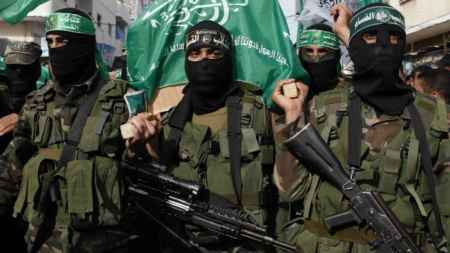
The State Comptroller’s Report on Operation Protective Edge, Israel’s war with Hamas in the summer of 2014, is exceedingly detailed. The problem is that it addresses the wrong details.
Israel’s problem with Hamas wasn’t its tactics for destroying Hamas’s attack tunnels. Israel faced two challenges in its war with Hamas that summer. The first had to do with the regional and global context of the war. The second had to do with its understanding of its enemy on the ground.
War between Hamas and Israel took place as the Sunni Arab world was steeped a two-pronged existential struggle. On the one hand, Sunni regimes fought jihadist groups that emerged from the Muslim Brotherhood movement. On the other, they fought against Iran and its proxies in a bid to block Iran’s moves toward regional hegemony.
On both fronts, the Sunni regimes, led by Egypt under President Abdel Fattah al-Sisi, the Saudi regime and the United Arab Emirates, were shocked to discover that the Obama administration was siding with their enemies against them.
If Israel went into the war against Hamas thinking that the Obama administration would treat it differently than it treated the Sunni regimes, it quickly discovered that it was mistaken. From the outset of the battle between Hamas and Israel, the Obama administration supported Hamas against Israel.
America’s support for Hamas was expressed at the earliest stages of the war when then-secretary of state John Kerry demanded that Israel accept an immediate cease-fire based entirely on Hamas’s terms. This demand, in various forms, remained the administration’s position throughout the 50-day war.
Hamas’s terms were impossible for Israel. They included opening the jihadist regime’s land borders with Israel and Egypt, and providing it with open access to the sea. Hamas demanded to be reconnected to the international banking system in order to enable funds to enter Gaza freely from any spot on the globe. Hamas also demanded that Israel release its terrorists from its prisons.
If Israel had accepted any of Hamas’s cease-fire terms, its agreement would have constituted a strategic defeat for Israel and a historic victory for Hamas.
Open borders for Hamas means the free flow of armaments, recruits, trainers and money to Gaza. Were Hamas to be connected to the international banking system, the jihadist regime would have become the banking center of the global jihad.
The Obama administration’s support for Hamas was not passive.
Obama and Kerry threatened to join the Europeans in condemning Israel at the UN. Administration officials continuously railed against IDF operations in Gaza, insinuating that Israel was committing war crimes by insisting that Israel wasn’t doing enough to avoid civilian casualties.
As the war progressed, the administration’s actions against Israel became more aggressive. Washington placed a partial embargo on weapons shipments to Israel.
Then on July 23, 2014, the administration took the almost inconceivable step of having the Federal Aviation Administration ban flights of US carriers to Ben-Gurion Airport for 36 hours. The flight ban was instituted after a Hamas missile fell a mile from the airport.
The FAA did not ban flights to Pakistan or Afghanistan after jihadists on the ground successfully bombed airplanes out of the sky.
It took Sen. Ted Cruz’s threat to place a hold on all State Department appointments, and Canada’s Conservative Party government’s behind-the-scenes diplomatic revolt to get the flight ban rescinded.
The government and the IDF were shocked by the ferocity of the administration’s hostility. But to his great credit, Prime Minister Benjamin Netanyahu surmounted it.
Netanyahu realized that Hamas is part of the Muslim Brotherhood nexus of jihad and also supported by Iran. As a result the Egyptians, Saudis and UAE rightly view it as a major enemy. Indeed, Egypt was in a state of war with Hamas in 2014. Gaza serves as the logistical base of the Salafist forces warring against the Egyptian military.
Netanyahu asked Sisi for help in blunting the American campaign for Hamas. Sisi was quick to agree and brought the Saudis and the UAE into an all-but-declared operational alliance with Israel against Hamas.
Since the Egyptians were hosting the cease-fire talks, Egypt was well-positioned to blunt Obama’s demand that Israel accept Hamas’s cease-fire terms.
In a bid to undermine Egypt, Obama and Kerry colluded with Hamas’s state sponsors Turkey and Qatar to push Sisi out of the cease-fire discussions. But due to Saudi and UAE support for Sisi and Israel, the administration’s attempts to sideline the Egyptians failed.
The cease-fire terms that were adopted at the end of the war contained none of Hamas’s demands. Israel had won the diplomatic war.
It was a strange victory, however. Netanyahu was never able to let the public know what was happening.
Had he informed the public, the knowledge that the US was backing Hamas would have caused mass demoralization and panic. So Netanyahu had to fight the diplomatic fight of his life secretly.
The war on the ground was greatly influenced by the diplomatic war. But the war on the ground was first and foremost a product of the nature of Hamas and of the nature of Hamas’s relationship with the PLO.
Unfortunately, the Comptroller’s Report indicates that the IDF didn’t understand either. According to the report, in the weeks before the war began, the then-coordinator of government activities in the territories, Maj.-Gen. (res.) Eitan Dangot, told the security cabinet that the humanitarian situation in Gaza was at a crisis point and that hostilities were likely to break out if Israel didn’t allow humanitarian aid into the Strip.
On Wednesday we learned that Dangot’s view continues to prevail in the army. The IDF’s intelligence chief, Maj.-Gen. Herzi Halevi, told the Knesset’s Foreign Affairs and Defense Committee that Israel must send humanitarian aid to Gaza to avert a war.
There is truth to the IDF’s position. Hamas did in fact go to war against Israel in the summer of 2014 because it was short on supplies.
After Sisi overthrew the Muslim Brotherhood regime in Egypt the previous summer, he shut Egypt’s border with Gaza because Gaza was the logistical base of the insurgency against his regime. The closed border cut off Hamas’s supply train of everything from antitank missiles to cigarettes and flour.
The problem with the IDF’s view of Hamas is that providing aid to Gaza means supplying Hamas first and foremost. Every shipment into Gaza strengthens Hamas far more than it serves the needs of Gaza’s civilian population. We got a good look at Hamas’s contempt for the suffering of its people during Protective Edge.
After seeing the vast dimensions of Hamas’s tunnel infrastructure, the then-OC Southern Command, Maj.-Gen. Sami Turgeman, told reporters that Hamas had diverted enough concrete to its tunnel project to build 200 kindergartens, two hospitals, 20 clinics and 20 schools.
Moreover, the civilian institutions that are supposed to be assisted by humanitarian aid all serve Hamas. During the war, three soldiers from the IDF’s Maglan unit were killed in southern Gaza when they were buried in rubble of a booby-trapped UNRWA clinic.
The soldiers were in the clinic to seal off the entry shaft of a tunnel that was located in an exam room.
Hamas had booby trapped the walls of the clinic and detonated it when the soldiers walked through the door.
All of the civilian institutions in Gaza, including those run by the UN, as well as thousands of private homes, are used by Hamas as part of its war machine against Israel.
So any discussion of whether or not to allow humanitarian aid into Gaza is not a humanitarian discussion. It is a discussion about whether or not to strengthen Hamas and reinforce its control over the population of Gaza.
This brings us to the goals of the war in Gaza in 2014. At the time, the government debated two possible endgames.
The first was supported by then-justice minister Tzipi Livni. Livni, and the Left more generally, supported using the war with Hamas as a means of unseating Hamas and restoring the PLO-controlled Palestinian Authority to power in the area.
There were four problems with this notion. First, it would require Israel to reconquer Gaza.
Second, the Obama administration would never have agreed to an Israeli conquest of Gaza.
Third, Israel doesn’t have the forces to deploy to Gaza to retake control of the area without rendering its other borders vulnerable.
The final problem with Livni’s idea is that the PLO is no better than Hamas. From the outset of the war, the PLO gave Hamas unqualified support. Fatah militias in Gaza manned the missile launchers side by side with Hamas fighters. PLO chief Mahmoud Abbas represented Hamas at the cease-fire talks in Cairo. He led the political war against Israel in the West. And he financed Hamas’s war effort. Throughout the war Abbas sent a steady stream of funds to Gaza.
If PLO forces were returned to Gaza, they would behave precisely as they behaved from 2000 until Hamas kicked them out in 2007. That is, they would have acted as Hamas’s full partners in their joint war against Israel.
The second possible endgame involved a long-term strategy of defeating Hamas through attrition. This was the goal the government ended up partially adopting. The government ordered the IDF to destroy as much of Hamas’s missile arsenal as possible and to destroy its offensive tunnels into Israel. When the goals had been achieved to the point where the cost of opposing Obama grew greater than the battle gains, Netanyahu agreed to a cease-fire.
For the attrition strategy to have succeeded, the cease-fire would have only been the first stage of a longer war. For the attrition strategy to work, Israel needed to refuse to resupply Hamas. With its missile arsenal depleted and its tunnels destroyed, had Israel maintained the ban on supplies to Gaza, the residents would have revolted and Hamas wouldn’t have had the option of deflecting their anger onto Israel by starting a new war.
The IDF unfortunately never accepted attrition as the goal. From the Comptroller’s Report and Halevi’s statement to the Knesset this week, it appears the General Staff rejected attrition because it refuses to accept either the nature of Hamas or the nature of the PLO. Immediately after the cease-fire went into force, the General Staff recommended rebuilding Gaza and allowing an almost free flow of building supplies, including concrete, into Hamas’s mini-state.
The Comptroller’s Report is notable mainly because it shows that nearly three years after Protective Edge, official Israel still doesn’t understand what happened that summer. The problem with Hamas was never tactical. It was always strategic. Israel won the diplomatic battle because it understood the correlation of its strategic interests with those of the Sunni regimes.
It lost the military battle of attrition because it permitted Hamas to resupply.





 anneinpt
 artaxes
 danmillerinpanama
 davidking1530
 Peter Hofman
 Joseph Wouk
 Peter
Peter Louisiana Steve
 WarSclerotic
Recent Comments