Archive for the ‘Gaza’ category

Hamas marks 27 years with vow: ‘The Zionist entity will disappear’

December 15, 2014

Hamas marks 27 years with vow: ‘The Zionist entity will disappear,’ Israel Hayom, December 15, 2014

141863621434798889a_b

Terrorist group marks anniversary with parades and weapons displays, including Gaza-made drone • “Hamas is here and Hamas is stronger than ever,” official Khalil al-Haya says • He warns that Hamas can invade Israel “by sea, by land, and by air.”

**************

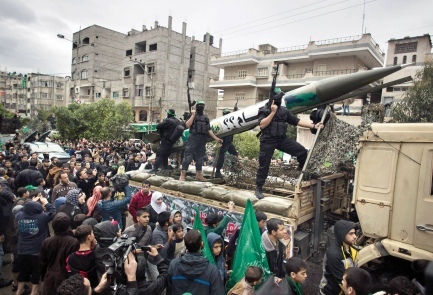
The Hamas terrorist group celebrated on Sunday the 27th anniversary of its founding in a series of showy demonstrations that included parades by its military wing and a display of weapons and ammunition, including a drone manufactured in Gaza.

After radars picked up the drone’s demonstration flight, the Israeli Air Force went on alert, concerned that it might indicate an attempt to penetrate Israeli air space.

In addition, a film clip screened at one of the demonstrations showed a silhouette that the Palestinians claimed was the head of Hamas’ military wing, Mohammed Deif, whom Israel tried to assassinate during Operation Protective Edge this past summer. The fate of Deif, who has survived several previous attempts on his life by Israeli forces, is unknown. The film clip did not feature Deif’s actual voice, only a recording of him speaking during Operation Pillar of Defense in 2012.

The Hamas show of strength also featured speeches against Israel and the Palestinian Authority by senior officials.

“After 27 years, Hamas is here and Hamas is stronger than ever. We have missiles and airplanes and we have the ability to invade the enemy by sea, by land, and by air,” said Hamas official Khalil al-Haya.

“Anyone who things [sic] that Israel is here to stay is mistaken. All of occupied Palestinian will be freed, and the Zionist entity will disappear,” al-Haya said.

Senior Hamas figure Mahmoud al-Zahar called on PA President Mahmoud Abbas to stop coordinating with Israel on security matters, and said that security cooperation between Israel and the Palestinian systems was “a knife in the back.”

The spokesman for Hamas’ military wing, Abu Obeidah, said that the continued “siege” on the Gaza Strip, as well as continued delays in its rehabilitation, could spark another clash.

“Our patience is running out. We won’t agree to more suffering and lack of rehabilitating Gaza from the crimes of Zionist aggression,” Abu Obeidah said.

The military leader also hinted at a possible deal in which Israel would trade Palestinian prisoners for bodies of Israeli soldiers held by Hamas, and expressed thanks to Turkey, Iran, and Qatar for their financial and military assistance.

Western Indifference to the Palestinian Culture of Hate

December 15, 2014

Western Indifference to the Palestinian Culture of Hate, Front Page Magazine, December 15, 2014

(Here is the video of the Islamic preacher.

The New York Times is by no means alone in making the “news” fit its ideological narrative. For an excellent analysis of how and why it happens, please read Sharyl Attkisson’s recent book Stonewalled.– DM)

The practice of ignoring such malevolence partly stems from the fact that the New York Times wishes to present a certain narrative at the expense of the facts and partly stems from a systematic inability of some Western media outlets to hold Arabs to a Western standard of decency and morality. Thus, Arab anti-Semitism, the same kind of anti-Semitism practiced in Europe some 75 years ago, is either ignored or attributed to mere cultural differences.

Rarely is the sort of vitriol witnessed in the videos expressed in English to Western audiences. Only the crassest among them publicly share their feelings about Jews, and the West for that matter. But behind closed doors it’s an entirely different story. Groups like MEMRI, CAMERA, Palestinian Media Watch (PMW) and many others do an excellent job in exposing the malevolence hiding just beneath the surface. The problem is no one seems to care. No one cared 75 years ago either.

*****************

palestinian-450x331

A shockingly, disturbing video has recently surfaced exposing the true and pernicious face of Palestinian extremism and xenophobia. The video, made available by Middle East Media Research Institute (MEMRI) shows a bearded sheikh giving what appears to be an impromptu sermon on the Jews. (After all, what else is there to talk about?) The venue is the Al-Aqsa Mosque, considered by those who practice the “religion of peace” to be their third holiest site after Mecca and Medina.

The speech itself is filled with gut-wrenching anti-Semitism, the kind that would even make the editors of the New York Times blush. The sheikh describes how the Jews possess the vilest of traits, how they were responsible for killing the “prophets,” how they attempted to assassinate Muhammad, how their time for “slaughter is near,” how they will be slaughtered “without mercy,” and of course there’s the perfunctory, “Jews are apes and pigs” thing.

Interestingly, the speaker doesn’t mention the longing for Palestinian statehood or independence. Instead, he talks of the establishment of the “Islamic Caliphate.” “Oh Allah’” he states, “Hasten the establishment of the State of the Islamic Caliphate,” and further rants, “Oh Allah hasten the pledge of allegiance to the Muslim Caliph.” He spews forth the latter statement three times to chants of “Amen!” from the large, approving crowd congregating around him.

These comments, which would register horror and revulsion in the West (at least in some quarters) are almost banal among Palestinians. In fact, a similar video featuring a different speaker some days earlier at the same venue, conveyed identical sentiment, expressing admiration for the Islamic State and calling for murder of Jews and annihilation of America.

Guttural anti-Semitism is ingrained and interwoven in the fabric of Palestinian society. Despite their minuscule numbers, 78% of Palestinians believe that Jews are responsible for most of the world’s wars while a whopping 88% believe that Jews control the global media and still more believe that Jews wield too much power in the business world.

Much of the blame for this can be placed squarely on the doorstep of Mahmoud Abbas’s Palestinian Authority, which subjects the Palestinian population to a steady diet of hate-filled, Judeophobic rhetoric through state-controlled media and educational institutions. It is so well entrenched that the process of deprogramming, if it were ever attempted, would take generations to reverse.

Some of the blame however, rests with the Obama administration and the European Union, which continues to fund the Palestinian Authority with an endless supply of taxpayer money without demanding any form of accountability. Western money is openly used to fund the Palestinian Authority’s hate apparatus with money flowing into institutions that propagate anti-Semitism and encourage terrorism.

Some Western media outlets are also culpable in perpetuating the Palestinian culture of hate. The New York Times for example has frequently and diligently covered so-called “price tag” vandalism attacks; a practice universally condemned by nearly all Israelis and vigorously prosecuted by Israeli authorities but rarely, if ever, covers the type of venomous hate speech witnessed in the above-noted videos.

Hate crimes inspired by this type of pernicious speech are also routinely ignored. Highlighting this point is the disturbing case of Asher Palmer, an American citizen who, along with his infant son was murdered when a rock thrown by a Palestinian crashed through the windshield of the car he was driving, hitting him flush in the face. The New York Times ignored the gruesome murders and only mentioned the incident in passing a few days later in the context of a reprisal “price tag” attack against a mosque. Under the unbelievably skewed editorial policies of the New York Times, it took an act of vandalism, ostensibly committed by Jews, to highlight the horrific murder of Asher Palmer and his infant son at the hands of Arabs.

The practice of ignoring such malevolence partly stems from the fact that the New York Times wishes to present a certain narrative at the expense of the facts and partly stems from a systematic inability of some Western media outlets to hold Arabs to a Western standard of decency and morality. Thus, Arab anti-Semitism, the same kind of anti-Semitism practiced in Europe some 75 years ago, is either ignored or attributed to mere cultural differences.

Indeed, the New York Times no longer even bothers to hide the fact that it engages in duplicitous double standards when it comes to reporting Palestinian-Arab racism and hate speech as evidenced from a telling exchange between New York Times’ opinion page staff editor, Matt Seaton and Tamar Sternthal, a director at the Committee for Accuracy in Middle East Reporting in America (CAMERA).

Rarely is the sort of vitriol witnessed in the videos expressed in English to Western audiences. Only the crassest among them publicly share their feelings about Jews, and the West for that matter. But behind closed doors it’s an entirely different story. Groups like MEMRI, CAMERA, Palestinian Media Watch (PMW) and many others do an excellent job in exposing the malevolence hiding just beneath the surface. The problem is no one seems to care. No one cared 75 years ago either.

Is Obama ready for an about-face to recognize Assad? Will Syria provide the strike force against ISIS?

December 14, 2014

Is Obama ready for an about-face to recognize Assad? Will Syria provide the strike force against ISIS?, DEBKAfile, December 14, 2014

bashar_al_assad_12.14Bashar Assad gets a new lease of life

Netanyahu will ask Washington to exercise its veto against the Palestinian motion. But the Obama administration would rather not, since it supports the Palestinians in principle.

Israel may therefore find itself this time ranged against a united US-Russian front on the Palestinian issue, Moscow’s reward for Washington lining up behind its plan for Syria.

Netanyahu told a cabinet meeting in Jerusalem Sunday, Dec. 14, that Israel would “rebuff any UN moves to set a timetable for withdrawal from territory.” He said Israel now faced a possible diplomatic offensive “to force upon us” such a withdrawal within two years.

*****************

High expectations based on unconfirmed reports swirled around Arab capitals Sunday, Dec. 14, that US President Barack Obama, in league with Moscow and Tehran, had turned his longstanding anti-Assad policy on its head. He was said to be willing to accept Bashar Assad’s rule and deem the Syrian army the backbone of the coalition force battling the Islamic State in Iraq and the Levant.

If these expectations are borne out by the Obama administration, the Middle East would face another strategic upheaval: The US and Russia would be on the same side, a step toward mending the fences between them after the profound rupture over Ukraine, and the Washington-Tehran rapprochement would be expanded.

The Lebanese Hizballah and its leader, Hassan Nasrallah would be vindicated in the key role they played in buttressing President Assad in power.

But for Saudi Arabia and Israel, an Obama turnaround on Assad would be a smack in the face.

The Saudis along with most of the Gulf emirates staked massive monetary and intelligence resources in the revolution to topple the Syrian ruler.

Israel never went all-out in its support for the Syrian uprising, but focused on creating a military buffer zone under rebel rule in southern Syria, in order to keep the hostile Syrian army, Hizballah and elements of the Iranian Revolutionary Guard Corps fighting for Assad at a distance from its northern borders with Syria and Lebanon.

If Obama goes through with accepting the Assad regime, Israel will have to write off most of its military investment in Syria. In any case, Israel’s intelligence agencies misjudged the Syrian situation from the first; until a year ago, they kept on insisting that Assad’s days were numbered.

DEBKAfile’s Arab sources single out major pointers to the approach of a reversal of Syrian policy in Washington:

1.  The resignation of Chuck Hagel as defense secretary last month. Hagel was adamant in advocating Assad’s ouster.

2.  No more than one sentence was devoted to the Syrian conflict in the Gulf Cooperation Council’s (GCC) summit’s resolutions in Doha last week, despite its centrality to inter-Arab affairs: the summit called for “a political solution” of the Syrian issue that would “ensure Syria’s security, stability and territorial integrity.”

Not a word on Assad’s removal from power.

3.  DEBKAfile’s Washington and Moscow sources report that the Syrian issue was destined to figure large in the Rome talks between US Secretary of State John Kerry and Russian Foreign Minister Sergey Lavrov Sunday, Dec. 14.

The Kremlin is making US acceptance of its plan for ending the Syrian conflict the condition for joining the US-European line on the Palestinian demand that next week’s UN Security Council session set a two-year deadline for Palestinian statehood within 1967 border. The text calls for Israeli “occupation of Palestinian territory captured in the 1967 war” to end by November 2016.

France, Britain and Germany are in efforts to draft a resolution of their own.

So any deal Kerry and Lavrov are able to finalize for a tradeoff between the Palestinian and Syria issues will be put before Israeli Prime Minister Binyamin Netanyahu when he meets the US secretary in Rome Monday, Dec. 15.

Netanyahu will ask Washington to exercise its veto against the Palestinian motion. But the Obama administration would rather not, since it supports the Palestinians in principle.

Israel may therefore find itself this time ranged against a united US-Russian front on the Palestinian issue, Moscow’s reward for Washington lining up behind its plan for Syria.

Moscow proposes that the Syrian opposition throw in the towel and both sides accept a truce – especially in the long battle for Aleppo – for the re-convening of the Geneva 2 peace conference in Moscow, with America’s support and participation. Provincial elections would then take place in Syria to bring the Assad government and opposition elements into collaborating in the various ruling institutions.

Russian Deputy Foreign Minister Mikhail Bogdanov spent two days in Damascus last week to work on the details of this blueprint with Bashar Assad, after which he commented tellingly that he was “in contact with our American partners.”

Russian officials then elaborated on their plan before Hizballah and opposition representatives in Turkey.

Even the US Senate bill calling for fresh sanctions against Moscow and the supply of $350 million worth of military aid to Ukraine under the Ukraine Freedom Support Act is unlikely to rock the Kerry-Lavrov Middle East boat.

President Obama is unlikely to affix his signature to the bill and President Vladimir Putin will take it in his stride if he sees progress in reaching an agreement with the United States on Syria.

Even the American threat to station medium-range nuclear missiles in Europe following Moscow’s refusal to endorse the Intermediate-Range Nuclear Forces Treaty failed to cast a cloud over the Kerry-Lavrov encounter.

The two top diplomats have a solid history of progress in forging diplomatic accords on thorny international issues (e.g. Iran’s nuclear program and Syria’s chemical weapons).

If they fail this time, Netanyahu’s talks with Kerry will be lighter and smoother. But if a Syria-Palestinian tradeoff is forged between the two powers, Israel may for the first time find itself on a collision course with a joint US-Russian front on the Palestinian issue.

Netanyahu told a cabinet meeting in Jerusalem Sunday, Dec. 14, that Israel would “rebuff any UN moves to set a timetable for withdrawal from territory.” He said Israel now faced a possible diplomatic offensive “to force upon us” such a withdrawal within two years.

Therefore, the Israeli air strikes against a shipment of Russian missiles for Syria for Hizballah last Monday, Dec. 8, may be seen as an act of defiance against this nascent big-power partnership. Our sources reveal that Moscow was not alone in demanding “explanations” for Israel’s “aggressive” – so too did Washington.

‘Hamas will liberate West Bank, just like Gaza’

December 14, 2014

‘Hamas will liberate West Bank, just like Gaza,’ Israel Hayom, December 14, 2014

Senior Hamas official Mahmoud al-Zahar reveals group’s true intentions in Judea and Samaria, says, “We will repeat the same steps in the West Bank as preparation for our arrival in all of Palestine” • PM speaks with Greek counterpart after Athens attack.

141854662560693664a_bMahmoud al-Zahar called security cooperation between Israel and the PA a “national disgrace” | Photo credit: Reuters

Senior Hamas official Mahmoud al-Zahar over the weekend revealed the Palestinian terrorist organization’s true intentions in Judea and Samaria.

In a speech marking the 27th anniversary of the group’s creation, al-Zahar said, “Just as we liberated Gaza, just as we established a real national government there, just as we built a victorious army, just as we built a protective police force, and just as we have created security apparatuses with which to fight the enemy, we will repeat the same steps in the West Bank as preparation for our arrival in all of Palestine.”

Prior to the IDF’s Operation Protective Edge against Hamas in Gaza this past summer, and following the collapse of diplomatic talks with the Palestinian Authority, the PA and Hamas held successful talks to establish a unity government, which was formed in early June. Hamas, however, simultaneously worked to topple the Fatah-led PA, and the infrastructure it had built in Judea and Samaria was uncovered in mid-August by Israel’s Shin Bet security agency and dismantled. The Shin Bet arrested 93 Hamas operatives working to establish the group’s military infrastructure in Judea and Samaria, an infrastructure that included money and weapons caches, safe houses and more.

Orchestrating these efforts was senior Hamas operative Salah al-Arouri, from the terrorist group’s headquarters in Turkey.

Until now, Hamas had denied reports it was seeking control of Judea and Samaria. Last week al-Zahar accused Fatah of “treating Hamas like an enemy instead of as a political rival.”

In a statement issued on his behalf, al-Zahar blamed Fatah for the siege imposed on Gaza, and he accused the PA of preventing construction materials from entering Gaza while Israel was allowing such goods to cross the border. Al-Zahar also condemned security cooperation between Israel and the PA, calling it a “national disgrace.”

Meanwhile, Prime Minister Benjamin Netanyahu spoke with his Greek counterpart, Antonis Samaras, on Friday following Thursday night’s shooting attack on the Israeli Embassy in Athens. Over 50 bullets were fired at the building, but no one was harmed in the attack. Greek security forces believe the attack was perpetrated by a radical left-wing organization, and were investigating any connection to a similar shooting attack on the German ambassador’s residence in Athens last year.

Israel’s Foreign Ministry issued a statement following the shooting, calling on the international community “to condemn anti-Israel incitement spread around the world by Palestinian leaders and pro-Palestinian groups.”

The Middle East realists: Old and new

December 14, 2014

The Middle East realists: Old and new, Israel Hayom, Richard Baehr, December 14, 2014

America, according to Friedman and the Israel Lobby professors ‎should also ignore Israeli concerns and push forward with a nuclear ‎deal with Iran. A successful negotiation, even one which leaves Iran ‎with nuclear breakout capability in a few months, is certain to ‎change Iran’s pattern of international behavior, as it becomes a ‎regular member of the “community of nations” and gets back to ‎enjoying more robust economic relations with many other nations. ‎Iranian aid to Hezbollah, Hamas, Assad in Syria, Yemeni Shiite ‎rebel groups, Iraqi Shiites, all of these aggressive efforts will soften ‎or go away once Iran becomes America’s latest and greatest strategic ‎partner.‎

Friedman has been one of the great lap dogs for the Obama ‎administration, and his loyalty cost the president very little.

A touch of realism would be welcome in the White House at this ‎point. But it won’t happen because the self-styled realists are ‎wearing the blinkers, and think they know all there is to know.

*********************

Professor Stephen Walt of Harvard University’s John F. Kennedy School of ‎Government and Professor John Mearsheimer of the University of Chicago like to ‎call themselves foreign policy realists. Realists are, in their minds, people who can ‎assess international situations without any ideological blinders or bias. Walt and ‎Mearsheimer co-authored “The Israel Lobby,” originally as a lengthy article in the ‎London Review of Books in 2006, and then as a much longer book version in 2007. In both ‎the article and book, the professors argued that America’s very tight relationship ‎with Israel was strategically unsound for the United States. The authors claimed ‎that the closeness between the two countries was a product of the behavior of the ‎Congress of the United States, which they believe had been unduly influenced by ‎the political power of the American Israel Public Affairs Committee and ‎other supporters of the Jewish state, such as evangelical Christians. ‎

In less academic, and blunter terms, New York Times columnist Tom Friedman ‎welcomed Israel’s Prime Minister Benjamin Netanyahu to his address to a joint session ‎of Congress in 2011, writing that the applause for Netanyahu reflected the fact that the ‎Congress was “bought and paid for by the Israel lobby.”‎

Of course, Friedman had been out ahead of Walt and Mearsheimer, with a similar ‎themed comment in a column in The New York Times in February 5, 2004:‎

‎”Israel’s prime minister has had George Bush under ‎house arrest in the Oval Office. Mr. Sharon has Mr. ‎Arafat surrounded by tanks, and Mr. Bush surrounded ‎by Jewish and Christian pro-Israel lobbyists, by a vice ‎president, Dick Cheney, who’s ready to do whatever Mr. ‎Sharon dictates, and by political handlers telling the ‎president not to put any pressure on Israel in an election ‎year all conspiring to make sure the president does ‎nothing.”

Friedman styles himself as an “eminence grise,” sitting high up in ‎New York Times land, a platform from where he can speak as an ‎equal with the likes of academic intellectuals such as Mearsheimer ‎and Walt, but also foreign leaders too numerous to name, and ‎American presidents, all of whom understand the significance of ‎receiving a favorable column from Tom Friedman. As a presumably ‎great strategic thinker and realist like Walt and Mearsheimer, ‎Friedman has come to the same conclusions as the professors on ‎where America’s strategic interests lie in the Middle East. America ‎must challenge Israel and force a two-state solution with the ‎Palestinians. This is in Israel’s interests as well, of course, since the ‎absence of peace creates so much ill will for both Israel and its ally ‎America among other nations in the region and around the world. ‎Friedman always claims he has Israel’s real interests at heart, while ‎their elected government digs deeper holes. Clearly, if Israel were ‎only to be more forthcoming, the deal with the Palestinians could ‎finally get done this time (next time, some time, whenever…). ‎

America, according to Friedman and the Israel Lobby professors ‎should also ignore Israeli concerns and push forward with a nuclear ‎deal with Iran. A successful negotiation, even one which leaves Iran ‎with nuclear breakout capability in a few months, is certain to ‎change Iran’s pattern of international behavior, as it becomes a ‎regular member of the “community of nations” and gets back to ‎enjoying more robust economic relations with many other nations. ‎Iranian aid to Hezbollah, Hamas, Assad in Syria, Yemeni Shiite ‎rebel groups, Iraqi Shiites, all of these aggressive efforts will soften ‎or go away once Iran becomes America’s latest and greatest strategic ‎partner.‎

Friedman has been one of the great lap dogs for the Obama ‎administration, and his loyalty cost the president very little. In his ‎case, the president revealed that he reads Friedman’s columns, and ‎then followed it up by inviting Friedman into the Oval Office to ‎offer up his invaluable insights. With all that respect and notoriety, ‎nothing could possibly stop the love coming from the Times ‎columnist for everything Obama. Friedman’s latest service to President Barack ‎Obama was to trash the critics of the president’s Iran policy:‎

‎ ‎‎”Never have I seen Israel and America’s core Arab allies ‎working more in concert to stymie a major foreign policy ‎initiative of a sitting U.S. president, and never have I seen ‎more lawmakers — Democrats and Republicans — more ‎willing to take Israel’s side against their own president’s. ‎I’m certain this comes less from any careful consideration ‎of the facts and more from a growing tendency by many ‎American lawmakers to do whatever the Israel lobby asks ‎them to do in order to garner Jewish votes and campaign ‎donations. “‎

Friedman and Walt and Mearsheimer are locked into an old and ‎predictable thesis that America’s real strategic interest in the region ‎is securing its oil supplies, and cozying up with the oil-rich nations ‎of the Gulf and Saudi Arabia. Improving relations with Iran fosters ‎a new climate where American is not so isolated as a result of its ‎support for Israel. And if Israel and the Palestinians make peace, ‎there will be a warm glow everywhere, improving the atmospherics ‎to address other regional issues.‎

There is however a new realism which has overtaken some of those ‎countries who have been patronized by the American realists for ‎decades. For years, many oil rich nations subsidized the efforts of ‎Islamists in schools, universities, mosques, and in politics. They ‎believed they had bought them off to a large extent in their own ‎countries, but could tip the scales against Israel by aiding Hamas ‎and could satisfy the aggressive demands for Islamist expansion in ‎other places. ‎

The new realism, demonstrated most prominently by Egypt, but ‎also by Saudi Arabia and the United Arab Emirates, all Sunni Arab states, is that ‎Iran, in particular a nuclear Iran, will become more assertive, not ‎less, and represents the biggest threat to their own regimes. Sunni ‎Islamists are also a threat to stability — witness Iraq, Libya, Syria, the ‎Sinai in Egypt. Increasingly, Turkey and Qatar are now grouped ‎with Iran as advancing an agenda that is unhelpful to the Saudis, ‎Egypt, and the UAE. Saudi Arabia and Egypt will not vote with ‎Israel at the United Nations, and they will continue to sign onto the ‎usual collection of resolutions condemning Israeli human rights ‎violations against the Palestinians. But it is Egypt that has gone to ‎war with jihadists in Sinai, and effectively shut its border with ‎Gaza. Egyptian soldiers and civilians are being murdered by Hamas ‎and other allies of the Muslim Brotherhood. Defeating this threat is ‎as important to Egypt, as defeating Hamas is for Israel.‎

Caroline Glick makes the argument this way:‎

‎”But the alliance that emerged this summer between Israel and ‎Egypt, with the participation of Saudi Arabia and the UAE, is ‎also a highly significant strategic development. For the first time, ‎a major regional power is basing its strategic posture on its ‎understanding that the threats against itself and against Israel ‎stem from the same sources and as a consequence, that the ‎war against Israel is a war against it.‎

“Israelis have argued this case for years to their Arab neighbors ‎as well as to the Americans and other Western states. But for ‎multiple reasons, no one has ever been willing to accept this ‎basic, obvious reality.‎

“As a consequence, everyone from the Americans to the ‎Europeans to the Saudis long supported policies that empower ‎jihadist forces against Israel.‎

‎‎ ‎“[Egyptian President Abdel-Fattah] Sissi is the first major leader to break with this consensus, as a ‎result of actions Hamas took before and since his rise to power. ‎He has brought Saudi Arabia and the UAE along on his ‎intellectual journey.‎

‎ ‎“Sissi’s reassessment of the relationship between the war against ‎Israel and the war against Egypt has had a profound impact on ‎regional realities generally and on Israel’s strategic posture ‎specifically.‎

‎”From Israel’s perspective, this is a watershed event.‎

‎ ‎“The government must take every possible action, in economic ‎and military spheres, to ensure that Sissi benefits from his ‎actions.”‎

Of course, the Obama administration seemed enthralled with the ‎Muslim Brotherhood government in Egypt, and both threatened ‎and for a time carried out an aid suspension when Sissi and his supporters engineered the ‎overthrow. There have been rumors, denied of course, that the White House has entertained similar notions for Israel due to its ‎‎”unconstructive” policy on settlement construction. More likely, ‎the administration may be trying to intervene in a none too ‎subtle fashion with the upcoming Israeli elections, to signal how ‎much better relations would be between Israel and America if ‎only Netanyahu were gone. If that is the White House strategy, it is not, ‎to use a word, realistic. Most Israelis expect nothing but the ‎back of the hand from Obama at this point, and Obama’s ‎blessing will not enhance the candidates of the Left in the ‎election.

A touch of realism would be welcome in the White House at this ‎point. But it won’t happen because the self-styled realists are ‎wearing the blinkers, and think they know all there is to know.‎

Op-Ed: Going from Bad to Worse

December 14, 2014

Op-Ed: Going from Bad to Worse, Israel National News, Ted Belman, December 14, 2014

(Please see also Caroline Glick tells off Danish ambassador and Preacher at Al-Aqsa Mosque to the Jews: “We Shall Slaughter You Without Mercy” — DM)

From the point of view of Obama, the more pressure on Israel, the better. Europe agrees. The European parliaments, one after another, have favoured the recognition of Palestine in non-binding resolutions.

***************

The world is totally committed to the two-statesolution. European country after country is passing non-binding resolutions to recognize Palestine in principle. The parameters of the deal which have been set in stone, notwithstanding that all issues are to be decided by negotiations, are the ’67 lines plus swaps and the division of Jerusalem.

Never mind that such a deal is not good enough for the Arabs.  Hamas rejects it outright. Mahmoud Abbas, as President of the PA, is still clamoring for the so called right of return and is unwilling to recognize Israel as the home of the Jews while at the same time insisting that “Palestine” be yudenrein.

The EU has already put a boycott on goods from Judea and Samaria and is drafting legislation imposing sanctions on Israel. It is even rumored that the US is contemplating doing the same. That’s ironic considering that both want to ease sanctions on Iran.

Israel, for its part is going along to get along, at least that is, to a degree. Netanyahu has agreed to negotiate the two-state solution subject to three pillars, “One, genuine mutual recognition; two, an end to all claims, including the right of return; and three, a long-term Israeli security presence.” This is according to his remarks to the Saban Conference.  He did not mention borders. Would he accept ’67 lines plus swaps?  He didn’t say but I think it is implied. Even so, there are no takers.

The Palestine Authority (PA) has turned its back on negotiations which would require it to accept these pillars and instead is getting ready to ask the UN Security Council to recognize the state of Palestine and to call for Israel to evacuate the territories calling for a full Israeli withdraw to the pre-1967 lines by November 2016.

The Obama administrations is working to prevent this but at the same time is considering the implications of not vetoing it. From the point of view of Obama, the more pressure on Israel, the better. Europe agrees. The European parliaments, one after another, have favoured the recognition of Palestine in non-binding resolutions.

Congress, on the other hand, in their spending bill, provides as follows, according to the Washington  Post, “The bill stops assistance to the Palestinian Authority if it becomes a member of the United Nations or UN agencies without an agreement  with Israel. It also prohibits funds for Hamas.” and provides “$3.1 billion in total aid for the country (Israel) plus $619.8 million in defense aid”. It has yet to pass.

Meanwhile the PA continues its incitement and lies. A recent poll of Palestinians showed that 80 percent supported individual attacks by Palestinians who have stabbed Israelis or rammed cars into crowded train stations and 59.6 percent supporting rocket fire at Israel. Is this a partner for peace? This poll may have been intended to promote the resistance.

At long last Israel is mounting certain responses. 1) Greater police presence in Jerusalem with fewer restrictions on them, 2) Greater penalties, like longer sentences, for any violent rioters and 3) Enacting zero tolerance laws prohibiting incitement.  The Bill, not yet passed into law, states, “A call to an act of violence or terror deserves condemnation in the criminal realm as well, even if it is insufficient to lead to violence or terror. It does not deserve to be protected by the principle of freedom of expression.”

Wednesday, Defense Minister Moshe Ya’alon attributed  the building freeze in Judea and Samaria to pressure from the Obama administration and suggested Israel has to wait him out.

Speaking to reporters in Washington, State Department spokeswoman Jen Psaki said that objection to “settlements” was longstanding and would not change after President Barack Obama leaves office in 2017 and said “Our policy has been consistent for quite some time,”

I am not so sure. Besides, she misses the point. While all administrations, from President Reagan on have considered settlements, while not illegal, to be an “obstacle to peace”, none of them forced Israel to freeze construction and even planning for construction and certainly not in Jerusalem.

The US and the EU continually allege that ‘settlements’ are an obstacle to peace. Have you ever heard them claim the same about PA incitement, or its support of terror or its refusal to recognize Israel as a Jewish state or its unwillingness to forego the “right of return”? Maybe, a little bit in passing, but they have done nothing to change their position and hardly condemned them.

Furthermore, Obama’s decision to back negotiations based on borders along the ’67 lines plus swaps was a big mistake. Doing so was contrary to his often stated position that any settlement must come through direct negotiations. He has forever repeated the mantra that neither side should take any unilateral moves which pre-determine the outcome.  He himself, by predetermining the borders, is pre-determining the outcome.

Had he not pre-determined the borders of the final settlement, then Israel would have been entitled to build everywhere at its peril, meaning that when borders are agreed upon, if ever, the housing on Israel’s side would remain and the housing on the Palestinian side would have to be vacated if the PA insists on the Nazi doctrine of making the land yuden frie (Jew free) and the West supports such a doctrine.

The only unilateral moves proscribed by the Oslo Accords and all subsequent agreements, are those which change the status of the land. By this is meant, claiming sovereignty. So Israel can’t annex the land andthe PA can’t go to the UN and ask them for sovereignty, not so long as the Oslo Accords have not been formally abrogated. The construction of housing by Israel in no way changes the status of the land. And neither does land use planning.

And if you think that Israel will agree to divide Jerusalem, their eternal capital, think again. Nir Barkat, the Mayor of Jerusalem, when addressing the JPOST Diplomatic Conference attended by over three hundred of diplomats, gave a very upbeat assessment of the transformation of Jerusalem that is taking place and will continue to take place.  He stressed the commitment by him and the government to maintain the status quo between all religions. He ended by disabusing the audience of any thoughts they might have about dividing Jerusalem. It will never happen, he said, and I believe him.

Israel is consumed with the issue of whether to pass the nation-state bill which essentially declares that Israel is the nation state of the Jewish people. To do so, claims the left in Israel, is to diminish it as a democratic state. But there is no evidence to support this.

Eugene Kontorovich wrote a two part article in the Washington Post onThe legitimacy of Israel’s nation-state bill in which he said the bill was unremarkable when compared to many European constitutions with similar, and stronger, national homeland provisions.

He also argued that:

“The proposed measure must also be understood in the context of Israel’s diplomatic situation. Israel’s biggest diplomatic issue is the status of Jerusalem and the West Bank, and international pressure to create a new Arab state there and in Gaza. The major argument by proponents of territorial withdrawal (including President Obama and Sec. Kerry) is that despite the serious security risks, Israel must retreat in order to maintain a “Jewish state.” Indeed, even foreign leaders, like President Obama and Secretary Kerry have both justified their pressure on Israel by invoking the preservation of the Israel’s Jewish identity.”

And went further:

“Thus supporters of Israel leaving the West Bank believe having a Jewish state is worth security risks, surrendering historical homeland and religious sites, and expelling over 100,000 Jews. That suggests a Jewish state is not merely a legitimate thing, but one that is worth a great deal. Yet the same voices calling for Israel to undertake dangerous diplomatic concessions in the name of preserving the state’s Jewish identity balk at legislation declaring that the state in fact is what they claim they want it to remain.”

According to a Israel Democracy Institute recent Poll, 75% of Israeli Jews see no contradiction between Israel being Jewish and being dermcratic.

MEMRI, the NGO that for years has translated the Arab media to document what the Arabs including the PA say among themselves as opposed to what they say in English to the West, prefaced their latest report with this:

“Preacher At Al-Aqsa Mosque In Jerusalem Tells Jews: ‘We Shall Slaughter You Without Mercy’ and ‘I Say To [You] Loud And Clear: The Time For Your Slaughter Has Come’; Says Koran Depicted Jews ‘In The Most Abominable Images,’ Allah Turned The Jews ‘Into Apes And Pigs’; Calls To ‘Hasten The Establishment Of The State Of The Islamic Caliphate’”

Is there any making peace with these people?

ISIS posts a new forward command group to Egyptian Sinai – at Israel’s back door

December 10, 2014

ISIS posts a new forward command group to Egyptian Sinai – at Israel’s back door, DEBKAfile, December 10, 2014

Abu_Bakr_al-Baghdadi_speaks_at_a_mosque_in_Mosul_2014Abu Bakr al-Baghdadi speaking at a mosque in Mosul

On arrival in Sinai, Islamic State commanders announced their movement’s mission had been overhauled and redirected from Egypt alone to the “Egyptian-Zionist alliance.”

******************

A group of at least ten ISIS operations and intelligence officers, led by a senior commander, has arrived in Sinai and taken charge of the local Ansar Beit al-Maqdas jihadis, thereby opening up a dangerous new front against Egypt and Israel, in proximity to the Suez Canal, the Gaza Strip and the West Bank, DEBKAfile’s exclusive counter-terror sources report.

Their identities are not known, but their relocation from Iraq to the Egyptian peninsula was carefully arranged. They came posing as tourists coming for a holiday at the Sinai resort of Sharm el-Sheikh, arriving on charter flights from Middle East and European locations on fake passports. This enabled them to evade the strict security checks at Cairo international airport.

By assuming command of the local Ansar Beit al-Maqdas terrorist group, which last month pledged allegiance to the Islamic State, Abu Bakr al-Baghdadi has moved to add Sinai as a new province to the caliphate he established in parts of Iraq and Syria.

In recent weeks, our counter-terror sources reveal, Islamic State tacticians have provided the Sinai outfit in with a strategic reserve by posting 300 combatants from Iraq to eastern Libya. This group also supplies the Egyptian contingent with arms.

Egypt therefore finds itself encircled by IS forces on its western border from Libya and deeply threatened from the northeast in Sinai; whereas Israel faces the same jihadi menace in the southwest from Sinai and in the north from Syria.

On arrival in Sinai, Islamic State commanders announced their movement’s mission had been overhauled and redirected from Egypt alone to the “Egyptian-Zionist alliance.”

One of their first tasks will be to counteract recent Egyptian military successes in broadening their penetration of the peninsula’s Bedouin tribes and so inflicting heavy losses on Ansar Beit al Maqdas.

Israel finds itself outflanked by the new IS deployment in Sinai. The IDF heavily built up its northern strength to meet any Al Qaeda menace from Syria to the Golan, creating the Bashan Division to fight off jihadist incursions. In the event, the IS’s Syrian units have given the Israeli border a wide berth and are focusing on fighting in northern and eastern Syria.

And so, while preparing to tackle Islamist encroachment from the north, Israel finds them cropping up along its southern border, where no comparable military buildup is in place.

Abu Bakr’s Sinai move contradicts the claims of senior US commanders that IS is on the run in Iraq after being badly hurt by US and coalition air strikes. (Last week there were no more than 31 air raids over Iraq and 15 in Syria.) All that the light US-led air campaign has achieved so far is to induce the Islamic State’s leaders to shift ground tactically from territorial expansion to defense and entrenchment.

Netanyahu’s epic understandings with Egyptian, Saudi and UAE rulers – a potential campaign weapon

December 6, 2014

Netanyahu’s epic understandings with Egyptian, Saudi and UAE rulers – a potential campaign weapon, DEBKAfile, December 6, 2014

Abdullah-al_sisiEgyptian and Saudi rulers take charge of Arab affairs

Netanyahu may or may not opt to brandish Israel’s diplomatic breakthrough to the Arab world as campaign fodder to boost his run for re-election.  Whatever he decides, the rulers of Saudi Arabia, the Arab emirates and Egypt are turning out to have acquired an interest in maintaining him in office as head of the Israeli government, in direct opposition to President Obama’s ambition to unseat him.

******************

The six Gulf Cooperation Council (GCC) rulers meet in the Qatari capital of Doha next week amid high suspense across the Arab world. Its agenda is topped by moves to finally unravel the 2010 Arab Spring policy championed by US President Barack Obama, moves that also bear the imprint of extensive cooperation maintained on the quiet between Israel and key Arab rulers.

DEBKAfile reports that the Doha parley is designed to restore Egypt under the rule of President Abdel Fatteh El-Sisi to the lead role it occupied before the decline of Hosni Mubarak. Another is to root out the Muslim Brotherhood by inducing their champion, the young Qatari ruler, Emir Tamim bin Hamad Al Thani, to drop his government’s support.

At talks taking place in Riyadh ahead of the summit, Qatari officials appeared ready to discontinue the flow of weapons, funds and intelligence maintained since 2011 to the Brothers and their affiliates across the Arab world (Libya, Egypt, Syria, Jordan and Hamas-ruled Gaza), as well shutting down the El Jazeera TV network – or at least stopping the channel’s use as the Brotherhood’s main propaganda platform.

The Doha summit is designed to crown a historic effort led by Saudi King Abdullah, UAE ruler Sheikh Mohammed bin Zayed and President El-Sisi to undo the effects of the Obama administration’s support for elements dedicated to the removal of conservative Arab rulers, such as the Brotherhood.

They have found a key ally in this drive in Israel’s Prime Minister Binyamin Netanyahu, who took advantage of the chance of an epic breakthrough in relations with the leading bloc of Arab nations, with immediate and far-reaching effect on Israeli security and its standing in the region.

Yet at the same time, Netanyahu has kept this feat under his hat – even while smarting under a vicious assault by his detractors – ex-finance minister Yair Lapid and opposition leader Yakov Herzog of Labor – on his personal authority and leadership credibility (“everything is stuck,” “he’s out of touch.”) and obliged to cut short the life of his government for a general election on March 17.

He faces the voter with the secret still in his pocket of having achieved close coordination with the most important Arab leaders – not just on the Iranian nuclear issue and the Syrian conflict, but also the Palestinian question, which has throughout Israel’s history bedeviled its ties with the Arab world.

When Yair Lapid, whom Netanyahu sacked this week, boasted, “I am talking to the Americans” while accusing the prime minister of messing up ties with Washington, he meant he was talking to the Americans close to Barack Obama, whom Egypt, Saudi Arabia and Abu Dhabi, hand in hand with Netanyahu, have judged adverse to their regimes.

This Arab-Israeli collaboration encompasses too many areas to keep completely hidden. Its fruits have begun breaking surface in a string of events.

This week, Israel apparently out of the blue, quietly agreed to Egypt deploying 13 army battalions in Sinai (demilitarized under their 1979 peace treaty), including tanks, and flying fighter jets over terrorist targets.

A joint Saudi-Israeli diplomatic operation was instrumental in obstructing a US-Iran deal on Tehran’s nuclear program.

Another key arena of cooperation is Jerusalem.

Friday, Dec. 5, Jordan announced the appointment of 75 new guards for the Al Aqsa Mosque compound on Temple Mount. The director of the mosque, Sheikh Omar al-Kiswani, said they will begin work in the coming days.

This was the outcome of Jordanian King Abdullah’s talks with the Egyptian president in Cairo Sunday, Nov. 30, in which they agreed that the Muslim Waqf Authority on Temple Mount must change its mode of conduct and replace with new staff the violent elements from Hamas, the Al Tahrir movement and Israeli Arab Islamists, which had taken charge of “security.”.

The Moslem attacks from the Mount on Jewish worshippers praying at the Western Wall below and Israeli police have accordingly ceased in the two weeks since Israel lifted its age restrictions on Muslim worshippers attending Friday prayers at Al Aqsa. Israel groups advocating the right to Jewish prayer on Temple Mount were discreetly advised to cool their public campaign.

The Palestinian riots plaguing Jerusalem for months have died down, except for isolated instances, since, as DEBKAfile revealed, Saudi and Gulf funds were funneled to pacify the city’s restive Palestinian neighborhoods.

Cairo and the Gulf emirates have used their influence with Palestinian Authority Chairman Mahmoud Abbas to get him to moderate his invective against Israel and its prime minister, and slow his applications for Palestinian membership of international bodies as platforms for campaigning against the Jewish state.

Concerned by the way the mainstream Arab world was marginalizing the Palestinian question, Hamas leader Khaled Meshaal chose his moment Friday – ahead of the White House meeting between the Jordanian monarch and President Obama – to try and re-ignite the flames of violence in Jerusalem. He went unheeded.

Netanyahu may or may not opt to brandish Israel’s diplomatic breakthrough to the Arab world as campaign fodder to boost his run for re-election.  Whatever he decides, the rulers of Saudi Arabia, the Arab emirates and Egypt are turning out to have acquired an interest in maintaining him in office as head of the Israeli government, in direct opposition to President Obama’s ambition to unseat him.

ISIS in Gaza

December 5, 2014

ISIS in Gaza, Gatestone InstituteKhaled Abu Toameh, December 5, 2014

When One Radical Group Believes Another Is Not Radical Enough

Now almost everyone is talking about the Islamic State threats in Gaza against poets, writers and women. The leaflets mention the poets and writers by name — a move that has created panic. The leaflets also include an ultimatum to Palestinian women to abide by Islamic attire or face the Islamic State style of punishment — presumably being stoned to death.

Of course, all this is taking place while Hamas continues to insist that that the Islamic State is not operating in Gaza. Those who are taking the threats seriously are the writers and women whose names appeared in the leaflets.

Islamic State flags can already be seen at football stadiums, on windshields of vehicles, mosques, educational centers and wedding invitations.

It is also clear that if and when the Hamas regime collapses, the Gaza Strip will not fall into the lands of the less-radical Palestinians.

It is important to keep in mind that the counties in Europe now voting for a Palestinian state may effectively be paving the way for a takeover by Islamic State.

It is always dreamlike to see one Islamist terror group accuse the other of being too “lenient” when it comes to enforcing sharia laws. But it is not dreamlike when a terrorist group starts threatening writers and women.

That is what is happening these days in the Gaza Strip, where supporters of the Islamic State are accusing Hamas of failing to impose strict Islamic laws on the Palestinian population — as if Hamas has thus far endorsed a liberal and open-minded approach toward those who violate sharia laws.

825Members of Islamic State, in Gaza. (Image source: Islamic State YouTube video)

Until this week, the only topic Palestinians in the Gaza Strip were talking about was how to rebuild homes and buildings that were destroyed during the last war between Hamas and Israel.

Now, however, almost everyone is talking about the Islamic State threats against poets, writers and women.

It is no secret that the Islamic State has a presence in the Gaza Strip. According to sources there, many disgruntled members of Hamas and other radical salafi-jihadi groups have already joined the Islamic State, with some fighting together with ISIS groups in Syria and Iraq.

Earlier this year, it was revealed here that Islamic State has already begun operating inside the Gaza Strip — much to the dismay of Hamas.

Hamas, nevertheless, continues to deny any presence of Islamic State inside the Gaza Strip. “There are no members of Islamic State in the Gaza Strip,” said Eyad al-Bazam, spokesman for the Hamas-run Interior Ministry.

Many Palestinians, however, do not seem to take Hamas’s denials seriously, and remain unconvinced.

Over the past few days, two separate leaflets signed by Islamic State threatened to target Palestinian poets and writers for their “wantonness” and “atheism.” The leaflets mention the poets and writers by name — a move that created panic among many Palestinians in the Gaza Strip.

The leaflets also included an ultimatum to Palestinian women to abide by Islamic attire or face the Islamic State style of punishment — presumably being stoned to death. The threat leaves one with the false impression that, under Hamas, women can wear swimming suits at the beach and walk around the streets of Gaza City in mini-skirts.

But this is what happens when one fundamentalist group believes that the other is not radical enough.

“We warn the writers and poets of their wanton sayings and atheist deeds,” one of the leafletsread. “We give the apostates three days to retract their apostasy and wantonness and enter the religion of Islam anew.”

The threats issued by Islamic State have drawn strong condemnations from many Palestinians. This is the first time that such threats have been made against poets and writers or women.

Although Hamas has denied any connection to the threats, Fatah officials in the West Bank were quick to accuse the Islamist movement — which has been in control of the Gaza Strip since 2007 — of being behind the leaflets.

Palestinian political analyst Naji Sharab explained that any attempt to deny the presence of Islamic State terrorists in the Gaza Strip was “unrealistic.”

“There’s no denying that Islamic State exists [in the Gaza Strip] as a small group or as individuals,” he said. “The leaflets that were distributed this week could not have come from any Palestinian organization.”

Palestinians point out that the two leaflets were not the only sign of the presence of Islamic State inside the Gaza Strip. They say that Islamic State flags can be seen in many parts of the Gaza Strip, especially at football stadiums and public buildings. In addition, Islamic State stickers can be seen on the windshields of many vehicles.

More recently, Palestinians say, families have begun attaching the Islamic State emblem to wedding invitations sent out to friends and relatives. Photos of Palestinians who were killed while fighting with Islamic State in Iraq and Syria appear in many places, especially mosques and educational centers.

Of course, all of this is taking place while Hamas continues to insist that the Islamic State is not operating in Gaza.

Those who are taking the threats seriously are the women and writers whose names appeared in the leaflets.

Amal Hamad, a member of the Palestinian Women’s Union, expressed deep concern about the threats made by Islamic State. “We are headed toward the worst in the Gaza Strip,” she complained. “We hold the Hamas security forces responsible for the leaflets of intimidation and terror.” She and a large group of women in the Gaza Strip held an emergency meeting to discuss the repercussions of the threats.

Judging from reactions, it is clear that many Palestinians — including Hamas — are extremely worried about Islamic State’s presence in the Gaza Strip. Even if the terror group still does not have many fighters in the Gaza Strip, it already has countless followers and admirers.

It is also clear that if and when the Hamas regime collapses, the Gaza Strip will not fall into the hands of less-radical Palestinians.

The Gaza Strip has already been turned into an “Islamist Emirate” that is run by Hamas and other radical groups such as Islamic Jihad.

While Islamic State may have succeeded in infiltrating the Gaza Strip, its chances of entering the West Bank are zero. This is thanks to the presence of the Israel Defense Forces [IDF] in the West Bank. The Palestinian Authority and its President Mahmoud Abbas are well aware that without the Israeli security presence in the West Bank, the area would easily fall into the hands of Hamas or Islamic State.

It is important to keep in mind that the countries in Europe now voting for a Palestinian state may effectively be paving the way for a takeover by Islamic State

Sisi is not Mubarak

December 4, 2014

Sisi is not Mubarak, Canada Free Press, Caroline Glick, December 4, 2014
Sisi1

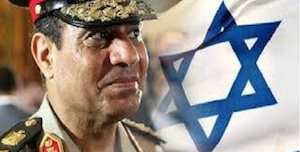
Due to the events that propelled him to power, Sisi has adopted a strategic posture far different from Mubarak’s. As Sisi sees things, Sunni jihadist forces and their Iranian-led Shi’ite allies are existential threats to the Egyptian state even when their primary target is Israel. Sisi accepts that Israel’s fight against them directly impacts Egypt.

He recognized that when Israel is successful in defeating them, Egypt is more secure. When Israel is weak, the threat to Egypt rises.

The government must take every possible action, in economic and military spheres, to ensure that Sisi benefits from his actions. 
******************

The Egyptian court’s decision last Saturday to acquit former president Hosni Mubarak, his sons and associates of all remaining charges against them caused most commentators to proclaim that current Egyptian President Abdel Fattah Sisi has turned back the clock. Under his leadership, they say, Egypt has restored Mubarak’s authoritarian regime under a new dictator.

While this may be how things appear on the surface, the fact of the matter is that at least as far as Israel is concerned, nothing could be further from the truth.

During his 30-year rule, Mubarak always assessed that threats against Israel were unrelated to threats against Egypt. Due to this view, despite continuous complaints from Jerusalem, Mubarak enabled jihadists to take root in Sinai. He allowed Egypt to be used as the major path for terrorist personnel and armaments to enter Gaza. He took only minor, sporadic action against the smuggling tunnels connecting Gaza to Sinai.

By 2005, it became apparent that forces from Hamas, Hezbollah, Iran and al-Qaida were operating in the Sinai and cooperating with one another.

Despite warnings from Israel, Mubarak took no effective action to break up the emerging alliance and convergence of forces.

It was due to Mubarak’s refusal to act that the Palestinians in Gaza were able to begin and massively expand their projectile war of mortars, rockets and missiles against Israel. From the first such attacks, carried out 14 years ago, the Palestinian projectile campaigns could never have happened without Egypt’s effective collaboration.

On countless occasions, Palestinian terrorist commanders were able to escape to Sinai and avoid arrest by Israeli forces, only to return to Gaza from Sinai and continue their operations.

Mubarak believed that Israel was his safety valve.

Mubarak: Facilitating jihadist operations against Israel from Egyptian territory

By facilitating jihadist operations against Israel from Egyptian territory, he assumed that he was securing Egypt from them. As he saw things, the Muslim Brotherhood, Hamas, Hezbollah and Iran would be so satisfied with his cooperation in their jihad against the Jews that they would leave him alone.

It was only in 2009, when Egypt announced the unraveling of a terrorist ring in Sinai comprised of Iranian Revolutionary Guards, Hamas and Hezbollah operatives planning attacks against Israel and Egypt, and seeking the overthrow of the regime, that Mubarak began signaling he may have misjudged the situation. But even then, his actions against those forces were sporadic and half-hearted.

Hamas’s continued assaults against Israel in the years that followed, and the build-up of Muslim Brotherhood and al-Qaida forces in Sinai, were a clear sign that Mubarak was unwilling to contend with the unpleasant reality that the very forces attacking Israel were also seeking to overthrow his regime and destroy the Egyptian state.

In stark contrast, Sisi rose to power as those selfsame forces were poised to destroy the Egyptian state. The Muslim Brotherhood’s rise to power owed in part to the support it received from Hamas.

Sisi and his generals overthrew the Muslim Brotherhood with Saudi and UAE support in order to prevent Egypt from dissolving into a Sunni jihadist axis i

During the January 2011 rebellions against Mubarak, Hamas operatives played a key role in storming Egyptian prisons in Sinai and freeing Muslim Brotherhood leaders – including Muslim Brotherhood president Mohammed Morsi – from prison. In 2012 and 2013, Hamas forces reportedly served as shock troops to quell protests against the Muslim Brotherhood regime. Those protests arose in opposition to Morsi’s moves to seize dictatorial powers Mubarak never dreamed of exercising, and his constitutional machinations aimed at transforming Egypt into an Islamic state and hub of a future global caliphate.

Sisi and his generals overthrew the Muslim Brotherhood with Saudi and UAE support in order to prevent Egypt from dissolving into a Sunni jihadist axis in which Hamas, al-Qaida and other jihadist movements were key players, and Iran and Hezbollah were allied forces.

Due to the events that propelled him to power, Sisi has adopted a strategic posture far different from Mubarak’s. As Sisi sees things, Sunni jihadist forces and their Iranian-led Shi’ite allies are existential threats to the Egyptian state even when their primary target is Israel. Sisi accepts that Israel’s fight against them directly impacts Egypt.

He recognized that when Israel is successful in defeating them, Egypt is more secure. When Israel is weak, the threat to Egypt rises.

Like Israel, Sisi acknowledges that the ideology of the Muslim Brotherhood, which is shared by Hamas, al-Qaida and all other significant Sunni jihadist groups renders all of these groups threats to Egypt. And because of this acknowledgment, Sisi has abandoned Mubarak’s policy of enabling their war against Israel.

Not only has he abandoned Mubarak’s policy of enabling them, Sisi has acted in alliance with Israel in combating them. This is nowhere more evident than in his actions against Hamas in Gaza.

After seizing power in July 2013, Sisi immediately ordered the Egyptian military to take action to secure the border between Gaza and Sinai. To this end, for the first time, Egypt took effective, continuous steps to block the smuggling of arms and people between the two areas. These steps had a profound impact on Hamas’s regime. Hamas went to war against Israel this past summer in a bid to force Egypt and Israel to open their borders with Gaza in support of the Hamas regime and its jihadist allies.

Hamas was certain that footage of suffering in Gaza would force Egypt to oppose Israel, and so open its border with Gaza. It would also lead to US-led pressure on Israel that would make Israel succumb to Hamas’s demands.

Against all expectations, and previous precedents of Egyptian behavior under both Mubarak and Morsi, Sisi supported Israel against Hamas. Moreover, he brought both Saudi Arabia and the UAE into the unofficial alliance with Israel. The bloc he formed was powerful enough to surmount US pressure to end the war by bowing to Hamas’s demands and opening Gaza’s borders with Egypt and Israel.

Since the cease-fire came into force three months ago, Sisi has continued to seal the border. As a consequence, he has denied Hamas the ability to rebuild Gaza’s terror infrastructure. In its reduced state, Hamas is less able to facilitate the operations of its jihadist brethren in Sinai that are primarily involved in waging an insurgency against the Egyptian state.

To be sure, the most significant strategic development in recent years is the US’s strategic realignment under President Barack Obama. Under Obama the US has switched sides, supporting Iran and its allies, satellites and assets, including the Muslim Brotherhood and Hamas, against America’s Sunni allies and Israel.

But the alliance that emerged this summer between Israel and Egypt, with the participation of Saudi Arabia and the UAE , is also a highly significant strategic development. For the first time, a major regional power is basing its strategic posture on its understanding that the threats against itself and against Israel stem from the same sources and as a consequence, that the war against Israel is a war against it.

Israelis have argued this case for years to their Arab neighbors as well as to the Americans and other Western states. But for multiple reasons, no one has ever been willing to accept this basic, obvious reality.

As a consequence, everyone from the Americans to the Europeans to the Saudis long supported policies that empower jihadist forces against Israel.

Sisi became the first major leader to break with this consensus, as a result of actions Hamas took before and since his rise to power. He has brought Saudi Arabia and the UAE along on his intellectual journey.

And this reassessment has had a profound impact on regional realities generally and on Israel’s strategic posture specifically.

From Israel’s perspective, this is a watershed event.

The government must take every possible action, in economic and military spheres, to ensure that Sisi benefits from his actions.