Archive for the ‘Foreign policy’ category

FIG LEAVES FALLING

May 15, 2015

Fig leaves falling, Power LineScott Johnson, May 14, 2015

Certain impediments complicate Barack Obama’s selling of the arrangement with the Islamic Republic of Iran. Obama seeks to camouflage the arrangement as one that deters Iran from the acquisition of nuclear weapons. In reality, the arrangement will finance and expedite the mullahs’ acquisition of nuclear weapons.

John Kerry has issued ludicrous “guarantees” in connection with the arrangement. One such guarantee is categorical, but it’s not a money-back sort of a guarantee: “I say to every Israeli that today we have the ability to stop [the Iranians] if they decided to move quickly to a bomb and I absolutely guarantee that in the future we will have the ability to know what they are doing so that we can still stop them if they decided to move to a bomb.”

We may doubt the omniscience that is the predicate of Kerry’s guarantee. But this is strictly a limited warranty. Kerry doesn’t even “guarantee” that his boss would do anything about it if Iran were to break out. Kerry only guarantees that “we” could. Good to know. Kerry’s “guarantee” amounts to nothing more than meaningless verbiage two or three time over.

The arrangement will also provoke an equal and opposite reaction from the Sunni rivals of Iran such as Saudi Arabia. The Sunni rivals understand the nature of the arrangement in process. Their understanding accounts for Obama’s “lonely Arab summit.”

President Obama’s dubious fact-sheet setting forth Parameters for a Joint Comprehensive Plan of Action reflects the fig leaves with which the president seeks to cover the nuts of the deal. Senator Rubio couldn’t get to first base in his proposal requiring any final deal to include the fig leaves. (Eli Lake dubbed it “Rubio’s new and improved poison pill.”)

The fig leaves are falling. The official Farsnews outlet reports that inspection of military sites is not included in the arrangement in process — this according to Iranian envoy to the IAEA Reza Najafi and despite the alleged parameter requiring Iran “to grant access to the IAEA to investigate suspicious sites or allegations of a covert enrichment facility, conversion facility, centrifuge production facility, or yellowcake production facility anywhere in the country.”

The alleged parameters regarding sanctions provide that Iran “will receive sanctions relief, if it verifiably abides by its commitments” and that “•U.S. and E.U. nuclear-related sanctions will be suspended after the IAEA has verified that Iran has taken all of its key nuclear-related steps. If at any time Iran fails to fulfill its commitments, these sanctions will snap back into place.”

We have already learned that President Obama intends to reward Iran with a huge “signing bonus” at the outset of the arrangement. He will agree to the removal of all United Nations sanction on Iran at the same time. He will also waive our own statutory sanctions on Iran. Just about the last fig leaf remaining on this element of the deal is the (utterly meaningless) assertion: “If at any time Iran fails to fulfill its commitments, these sanctions will snap back into place.”

Now Bloomberg News reports that this fig leaf is falling too: “Russia rejects automatic sanctions return if Iran cheats on deal.” Bloomberg quotes Russia’s UN Ambassador Vitaly Churkin bluntly asserting yesterday, “There can be no automaticity, none whatsoever” in reimposing UN sanctions if Iran violates the terms of an agreement to curb its nuclear program.

Omri Ceren writes to comment this morning (footnotes omitted):

The statement really shouldn’t count as breaking news, even though it is. Reuters reported toward the very end of Lausanne that the Russians and Chinese were still rejecting the multilateral snapback. But then the Lausanne announcement happened, and President Obama declared from the Rose Garden that in fact “if Iran violates the deal, sanctions can be snapped back into place.” But then a week later the Associated Press reported that, no, “Russia and China are unlikely to accept any process that sees them sacrifice their veto power.”

At the end of April the American Enterprise Institute quoted Russian Deputy Foreign Minister Sergey Ryabkov saying the exact same thing that Churkin just told Bloomberg News: “in the hypothetical situation that Iran should fail to honour its commitments, then this process should not in any way be automatic.”

And yet the policy conversation has been proceeding as if multilateral snapback is actually a real thing that could happen in our reality.

Part of the reason is that snapback is all the Obama administration has left on the sanctions debate. White House officials had assured lawmakers for literally years that sanctions relief would be phased out only as Iran met a series of nuclear obligations. But after Lausanne, Supreme Leader Ayatollah Ali Khamenei set a new red line, in which he demanded that the relief must be immediate. The administration began trying to find ways to concede to his demand without violating its previous “phase out” promises, which is how the WSJ’s scoop about a $50 billion signing bonus came to be.

That apparently didn’t work, and so instead the administration went all-in on snapback. At his press conference with Renzi in the middle of April the President signaled the that he was prepared to cave on upfront sanctions relief because – he told journalists – what was actually important was snapback: “with respect to the issue of sanctions coming down, I don’t want to get out ahead of John Kerry and my negotiators… [o]ur main concern here is making sure that if Iran doesn’t abide by its agreement that we don’t have to jump through a whole bunch of hoops in order to reinstate sanctions. That’s our main concern.”

The arrangement’s alleged Iranian concession are, you might say, phony baloney all the way down.

Czechs stopped potential nuclear tech purchase by Iran

May 14, 2015

Czechs stopped potential nuclear tech purchase by Iran, Reuters via Ynet News, May 14, 2015

(But they won’t cheat after Obama gets his legacy deal. Right. — DM)

Czechs stopped potential nuclear tech purchase by Iran.UN report says Tehran attempted to buy centrifugal compressors from company in Czech Republic, using false documentation to hide destination of order.

UNITED NATIONS/PRAGUE – The Czech Republic blocked an attempted purchase by Iran this year of a large shipment of sensitive technology useable for nuclear enrichment after false documentation raised suspicions, UN experts and Western sources said.

The incident could add to Western concerns about whether Tehran can be trusted to adhere to a nuclear deal being negotiated with world powers under which it would curb sensitive nuclear work in exchange for sanctions relief.

The negotiators are trying to reach a deal by the end of June after hammering out a preliminary agreement on April 2, with Iran committing to reduce the number of centrifuges it operates and agreeing to other long-term nuclear limitations.

562262409915100640360noNuclear plant in Iran’s Bushehr (Photo: Reuters)

Some details of the attempted purchase were described in the latest annual report of an expert panel for the United Nations Security Council’s Iran sanctions committee, which has been seen by Reuters.

The panel said that in January Iran attempted to buy compressors – which have nuclear and non-nuclear applications – made by the US-owned company Howden CKD Compressors.

A Czech state official and a Western diplomat familiar with the case confirmed to Reuters that Iran had attempted to buy the shipment from Howden CKD in the Czech Republic, and that Czech authorities had acted to block the deal.

It was not clear if any intermediaries were involved in the attempt to acquire the machinery.

There was no suggestion that Howden CKD itself was involved in any wrongdoing. Officials at Prague-based Howden declined to comment on the attempted purchase.

The UN panel, which monitors compliance with the UN sanctions regime, said there had been a “false end user” stated for the order.

“The procurer and transport company involved in the deal had provided false documentation in order to hide the origins, movement and destination of the consignment with the intention of bypassing export controls and sanctions,” it added.

The report offered no further details about the attempted transaction. Iran’s UN mission did not respond to a query about the report.

Contract worth $61 million

The Czech state official said the party seeking the compressors had claimed the machinery was needed for a compressor station, such as the kind used to transport natural gas from one relay station to another.

The official declined to say exactly how the transaction was stopped, provide specifications of the compressors or confirm the intended purchaser. However, he made clear it was the Czech authorities who halted the deal

The official, who spoke on condition of anonymity, said the total value of the contract would have been about 1.5 billion Czech koruna ($61 million).

This was a huge amount for the company concerned, the previously named CKD Kompresory, a leading supplier of multi-stage centrifugal compressors to the oil and gas, petrochemical and other industries.

The firm was acquired by Colfax Corp. of the United States in 2013 for $69.4 million. A spokesman for Colfax declined to comment.

The United States and its Western allies say Iran continues to try to skirt international sanctions on its atomic and missile programs even while negotiating the nuclear deal.

The UN panel of experts also noted in its report that Britain informed it of an active Iranian nuclear procurement network linked to blacklisted firms.

While compressors have non-nuclear applications in the oil and gas industry, they also have nuclear uses, including in centrifuge cascades. Centrifuges purify uranium gas fed into them for use as fuel in nuclear reactors or weapons, if purified to levels of around 90 percent of the fissile isotope uranium-235.

“Such compressors can be used to extract enriched uranium directly from the cascades,” Olli Heinonen, former deputy director-general of the International Atomic Energy Agency and a nuclear expert currently at Harvard University, told Reuters.

“In particular, they are useful when working with higher enrichment such as 20 percent enriched uranium,” he said, adding that precise specifications of the compressors in question would be necessary to make a definitive assessment.

Iran has frozen production of 20 percent enriched uranium, a move that Western officials cite as one of the most important curbs on Iranian nuclear activities under an interim agreement in 2013.

Tehran rejects allegations by Western powers and their allies that it is seeking the capability to produce atomic weapons and says its nuclear program is for peaceful purposes.

The IAEA and the United States have said repeatedly that Tehran has adhered to the terms of the 2013 interim deal.


IRGC Deputy Commander Salami: “We Welcome War with the Americans”

May 14, 2015

IRGC Deputy Commander Salami: “We Welcome War with the Americans”, MEMRI via You Tube, May 14, 2015

(Does Iran really believe Obama’s “all option are on the table” nonsense, which hardly anyone credits? — DM)

In an Iranian TV interview, IRGC Deputy Commander Hossein Salami threatened the Americans, saying: “We welcome war with the Americans.” The U.S. aircraft carriers would be destroyed, its air bases in the region burned, and the skies set ablaze, he said. “We have built our strength for the purpose of long, extended wars… more than for the purpose of peace, compromise, and dialogue with them,” said Salami. The interview aired on the Iran TV’s Channel 1 on May 6, 2015.


President Strangelove or, how I learned to stop worrying and love the bomb

May 14, 2015

President Strangelove or, how I learned to stop worrying and love the bomb, Jerusalem Post, David Turner, May 14,2015

Concerned about Soviet intentions in the region the Truman administration entered into the U. S.-Saudi Mutual Defense Assistance Agreement (MDA) in 1951. The Agreement provided the foundation for what would emerge as an American commitment to provide a defense umbrella for the region to protect American interests in the Middle East. American assurances to states in the region seemed intact until the GW Bush Administration invasion of Iraq. Trapped in a war it completely misjudged and soon realized it could not win the administration sought an accommodation with Iran to control Shi’ite militias battling the Americans.

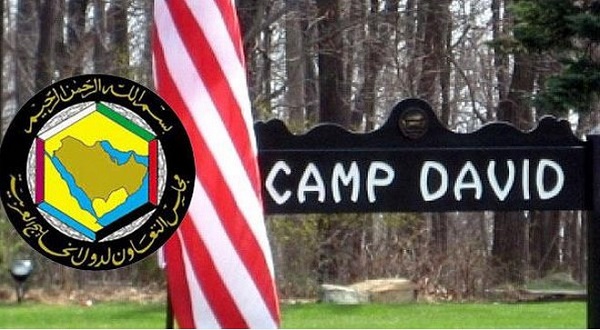
The Bush policy of “accommodation” with Iran became the Obama policy of “appeasement” towards the Islamic Republic. Thus began a six-year-long quest to intended to encourage that country’s recalcitrant and hegemony ambitious leaders to abandon its nuclear weapons program. With the imminent 30 June deadline for signing an Agreement quickly approaching the president invited the Gulf Cooperation Council (GCC) states headed by Saudi Arabia to Camp David promising a mutual defense agreement assuring the Arab states of American protection in the event Iran proved a threat to the region. In addition to “assurances, the Saudis insisted on a signed and “formal alliance structure with the United States guaranteeingU.S. support against potential Iranian aggression.”

In advance of the conference the White House announced that President Obama would meet with the Saudi king the day beforeCamp David. But at the last minute, [d]ispleased with Washington’s dealings with Iran, with an emerging deal over its nuclear program and with US security proposals to Gulf Arab nations,” King Salman announced he would not meet with President Obama and would not attend the Camp Davidconference. In the end only two of six Gulf nations decided to attend with heads of state.

The king’s last-minute cancellation, his turn-down of a meeting with the leader of the Free World was described as “a calculated snub for the president’s policies on Iran and the Middle East.” It was revealed that Kerry, in his meeting with the Saudis the week earlier, told the king that Obama was not prepared to finalize according to the king’s timetable any agreement that might result at Camp David.

And then there was the fact that a mutual defense agreement with the Saudis, the 1951 MDA, already existed already assuring the Saudis protection under America’s nuclear umbrella. Mistrust of American intentions and assurances by America’s “allies” built up over the previous twelve years was palpable.

Bush and the Region

“Even before the inauguration [and, of course, the pretext of 9/11], Cheney asked outgoing Secretary of Defense William Cohen to provide Bush with a briefing focused on Iraq… [Bush appointee] Defense Secretary Rumsfeld saw, “September 11, 2001, as a potential “opportunity.””

Symptomatic of hubris resulting from power minus coherent policy President Bush ignored both Arab and Israeli warnings of Foreseen Consequences certain to follow should the administration follow through with its threat to invade Iraq.

“With his latest remarks, [Saudi, later king] Prince Abdullah joined the chorus of Arab complaints about the Bush administration’s talk of taking military action to oust Saddam Hussein and put an end to his programs to develop weapons of mass destruction. At virtually every stop in the Arab world, Mr. Cheney has been told that an American military strike would destabilize the region.”

And, according to Lawrence Wilkerson, a member of the State Department’s Policy Planning Staff, “[t]he Israelis were telling usIraq is not the enemy – Iran is the enemy.” Wilkerson said that the Israeli reaction to invading Iraq in early 2002 was, “If you are going to destabilize the balance of power, do it against the main enemy.”

Bush and the Bomb

Cut off the head of the snake,” the Saudi ambassador toWashington, Adel al-Jubeir, quotes the king as saying during a meeting with General David Petraeus in April 2008.

In a speech to the Knesset in 2008 to observe Israel’s 60thanniversary Bush told the Knesset, “America stands with you in firmly opposing Iran’s nuclear weapons ambitions. Permitting the world’s leading sponsor of terror to possess the world’s deadliest weapon would be an unforgivable betrayal of future generations.” Nowhere in his speech did Bush hint at his long held view that America was not prepared to enter another Middle East war, that there never was a military option with which to threaten Iran’s nuclear weapons program. No accident then that Bush chose war-averse Robert Gates as his defense secretary; and that Gates in turn chose war-averse Admiral “Mike” Mullen as head the Joint Chiefs of Staff. The dovish defense pair would for years be the president’s PR mouthpiece warning against even the threat of force to halt Iran’s nuclear program. The Gates/Mullen oft-repeated warning of “unforeseen consequences” became, over the years a common, almost mantra-like warning against any action against Iran.

No surprise then that the openly dovish, newly-elected President Obama invited Gates to remain on as his defense department head, “a show of bipartisan continuity in a time of war that will be the first time a Pentagon chief has been carried over from a president of a different party.”

Obama and the Region

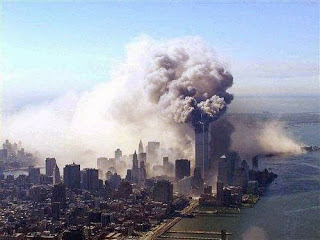
By way of destabilizing the region Obama has not yet equaled the fallout of Bush’s invasion of Iraq. If Bush gifted Iraq to Iran, set the stage for the “Arab Spring,” Obama did not come in second for lack of trying. The new president followed Bush by targeting his own tyrant, Muamar Qadafi and transformingLibya, as did Bush in Iraq, a political wreck bordering on a failed state.  Libya today is ruled al-Queda, Islamic State and other terror organizations with two governments powerless to assert control. Bordering Egypt Libya today supplies both the Sinai Salafist insurgency and the terror enclave of Gaza with weapons. And as Bush ignored Israeli and Arab warnings regarding the impact of invading Iraq, Obama chose to those same Arab-Israeli warnings regarding his intention to depose America’s principal Arab ally, Hosni Mubarak of Egypt. In a single mindless move the U.S. followed up its Iraq disaster with Egypt. And followed the collapse of Egypt’s secular regime, insult to injury Obama endorsed as “democratic government” the same Muslim Brotherhood with a decades-long terror campaign against the government; the group behind the assassination of Anwar Sadat for having sought peace with Israel: the Muslim Brotherhood whose child, al-Quaeda, had flown airliners into New York’s World Trade Center! The list of Bush and Obama Administration policy failures seems to know no limits: Iraq redo, Bahrain,Yemen and the bloodbath of Syria. Lacking capacity to learn from ideology-based failures, it continually repeats its “unintended consequences.”

Obama and the Bomb

If Bush set the pattern for accommodation then the tactic at least had some “justification” as Iran’s IRGC was funding, arming and even leading the Shi’ite insurgency against Iraq’s American invaders. Not provoking Iran might have the result of limiting American casualties. But for Obama, recipient in advance of the Nobel Peace Prize for promising regarding “world peace”; for Obama to provide Iran, a state sponsor of Islamist terrorism a world forum to show up American weakness and enhance Iranian prestige; for Obama whose commitment on entering office was to promote nuclear non-proliferation: for Obama to provide Iran all the time necessary to achieve threshold nuclear armament status and, failing to contain Iran the consequence would be a nuclear arms race in the lands of the Arab Spring… Saudi Arabia,Turkey and Egypt are already moving to parity with Iran whileJordan and several Gulf states are at varying stages of planning.   

Obama, who promised nuclear non-proliferation, has turned out to be godfather to a nuclear arms race in the least stable, most militant region of the world!

Schrödinger’s Jihad

May 14, 2015

Schrödinger’s Jihad, Sultan Knish Blog, Daniel Greenfield, May 13, 2015

( A MUST read…  Thank you, Dan. –  JW )

xin_232090611100060958585

Obama insists that talking about Islamic terrorism ‘summons’ them into being. By admitting the existence of Islamic terrorists, we ‘radicalize’ Muslims. Even the words ‘Islamic terrorism’ creates Islamic terrorists who otherwise wouldn’t exist.

The real threat is not from the terrorists, it’s from the truth.

********************

The great paradox of the War on Terror is that we are fighting an enemy that doesn’t exist. We are told incessantly that there is no such thing as a Muslim terrorist.

There may be a tiny minority of violent extremists, but they are only a tiny minority of no importance whatsoever. And yet we’ve been at war with this same infinitesimally tiny minority for decades.

This tiny minority has killed thousands of Americans. It has the support of entire governments in tiny countries like Pakistan (182 million), Iran (77 million) and Syria (22 million). We are told that this tiny minority is no way representative of the world’s billion Muslims, and yet it’s hard to find a Muslim country that doesn’t support or harbor a terrorist group.

We were told that the problems was their governments, but the Arab Spring showed us that democratic elections lead to governments that are even more supportive of tiny minority of extremists who are somehow taking over entire countries.

Everything we’ve been told is obviously a lie. And the best evidence comes from the liars themselves.

The media is howling that a bunch of cartoonists in Texas were irresponsible for sketching Islam’s dead warlord because they should have known that Muslim terrorists would come to kill them for it. But if the media is right and Islam is a religion of peace, then why should they have anticipated a terrorist attack?

And if Islam isn’t a religion of peace, then the media has been irresponsibly lying to us and the cartoonists have been risking their lives to warn us of that lie.

The talking heads on the television insist that the cartoon contest was irresponsible because there were bound to be “some crazies” who would “take the bait”. But if Islam is no more violent than any other religion, shouldn’t it be just as statistically likely that some Christian or Jewish crazies would attack one of the art exhibits, plays or musicals ridiculing and blaspheming against their religions?

Weren’t museums and galleries exhibiting “works of art” like Piss Christ or Shekhina provoking and baiting those Jewish and Christian crazies? And since there are more Christians than Muslims in America, isn’t it statistically far more likely that there should have been far more Christian terror attacks targeting blasphemous exhibits?

We can only conclude that there is a much higher proportion of “crazies” among Muslims than among Christians. How much higher? 78 percent of Americans identify as Christians. 0.6 percent claim to be Muslims. Only 0.3 percent appear to be Sunnis, who are responsible for ISIS and Al Qaeda attacks.

There is indeed a tiny minority of extremists in America. It’s known as Islam.

What keeps the lie alive is another paradox. Call it Schrödinger’s Jihad. The more famous Schrödinger’s Cat is a paradox in which a cat in a sealed box with poison that has a 50 percent chance of being released is in an indeterminate state. It is neither dead nor alive until someone opens the box.

In Schrödinger’s Jihad, the Muslim terrorist is in an indeterminate state until some Western observer opens the box, collapses his wave function and radicalizes him. The two Muslim Jihadists were in an indeterminate state until Pamela Geller and Bosch Fawstin and the other “provocateurs” suddenly turned them into terrorists in a matter of days or weeks. It didn’t matter that Elton Simpson, one of the Garland terrorists, had already been dragged into court for trying to link up with Jihadists in Africa.

Every Muslim is and isn’t a terrorist. He is both a peaceful spiritual person who is eager to embrace our way of life and a violent killer who can be set off by the slightest offense. Like the cat in the box that is neither dead nor alive, he is both violent and peaceful, moderate and extremist, a solid citizen and a terrorist. He does not choose which of these to be or to become; we decide what he will be.

The Jihadist paradox is that the Muslim terrorist is always defined by what we do, not by what he does.

magnumphotographers5

Islamic terrorism does not exist independently of the Western observer. It is not a Jihad with deep historical and theological roots within Islam, but a reaction to our interactions with Muslims.

Obama insists that talking about Islamic terrorism ‘summons’ them into being. By admitting the existence of Islamic terrorists, we ‘radicalize’ Muslims. Even the words ‘Islamic terrorism’ creates Islamic terrorists who otherwise wouldn’t exist.

The real threat is not from the terrorists, it’s from the truth.

When we tell the truth, people die. The truth turns Muslims into terrorists while the lies soothe them back into non-existence. Underneath all the academic terminology is the dream logic of wishful thinking. If we believe that Islam is a religion of peace, it will be a peaceful religion, and if we accept the reality that it’s violent, then it will become violent. Islam does not define itself. We define it however we want. Our entire counterterrorism policy is based around the perverse ostrich belief that Islamic terrorism is a problem that we create by recognizing its existence. If we ignore it, it will go away.

The lies about Islam are sustained by a deep conviction among liberals that the “Other” minorities are not real people with real beliefs and cultures, but victims in a game of power played out in the West. Islamic terrorism, like gay marriage or Global Warming, is just another step in the progressive pilgrim’s progress. It’s a problem that we caused and need to atone for in our cosmic karmic journey.

Westerners are privileged observers who have power while those minorities they observe do not. The duel between the Western left and right is taking place outside the box to determine what will be in the box once it’s forced open, while the oppressed minorities are in a state of indeterminacy in the box.

The Schrödinger’s Jihad paradox has many other adjoining boxes. Some are filled with dictators and criminals. If the progressive observer can open the box and find the root cause, out comes a good person; if the right opens the box, then out will march the terrorists, drug dealers and warlords.

The other side of the rhetoric about oppression and colonization, of punching up and punching down is the conviction that those at the bottom do not have free will or agency. If the mugger chooses to mug, rather than being driven to it by poverty, if Nazi Germany and the Soviet Union gleefully chose conquest instead of being forced to it by Western imperialism, and if the Muslim terrorist is not a helpless victim, but an abuser, then the moral imperative of the left’s worldview collapses in a heap.

If Muslims are real people who are at least as capable of imperialism, racism, slavery and destroying the planet as any Westerner, and who have been doing all of these things a lot longer, then leftists would have to accept that they are tearing down the most progressive civilization on the planet on behalf of ridiculously reactionary civilizations. Not only would they no longer be the privileged observers in control of the future, but they would have to see themselves as destroyers of what is left of the future.

The left refuses to blame Islam or Muslims because that would mean admitting that they are people.

Schrödinger’s Jihad is a child’s toy box for overgrown children who view Muslims as social justice dolls and terrorist action figures instead of people as flawed and complicated as they are. The left refuses to take Islamic theology seriously because it is incapable of understanding different points of view.

It approaches Islam as a race, rather than a religion, because it refuses to delve into what its beliefs are. Instead it chooses to see Muslims as blank slates to be filled with its ideology, as indeterminate patterns that can be reshaped into whatever they want them to be. It does not want to know what it says in the Koran, because that ruins its wonderful fantasy of Muslims as an oppressed race, rather than a creed.

dest18

Lies that are based on what we want to be true are the hardest to disprove. A lie that is tied into identity cannot be touched without destroying the entire identity of an individual or a movement.

The lies about Islam run into the heart of what the left is. To the left, everything is indeterminate and everything can be reshaped. Existence flows from power and power is pitted against progress. By destroying that which exists, they can bring their dreams to life. The dream is stronger than reality.

The left doesn’t really believe that Muslim terrorists exist except when we bring them to life. The real animating force behind Al Qaeda was George W. Bush or Dick Cheney. The true power behind ISIS is Pamela Geller or the Pentagon. The Westerner opens the box and the Muslim terrorist comes out. When Western civilization as we know it is destroyed, then the left believes Muslim terrorism will end. Kill the observer and the cat never existed. Destroy the dreamer and the nightmare dies with him.

The truth is more dangerous than the terrorists. Terrorists can kill the body, but truth can kill the dream.

Iran: We’ll Build Five More Underground Nuclear Plants

May 13, 2015

Iran: We’ll Build Five More Underground Nuclear Plants, Commentary Magazine, May 13, 2015

There has likely not ever been an administration that has politicized intelligence to the degree that Obama’s has, systematically ignoring any information that would undercut the White House and State Department narrative first on Russia, then on Syria, and now on Iran. As anyone who has ever dealt with intelligence knows, 90 percent if not more is what appears in the open sources every single day. And so, in that spirit, here is an interview with Mohammad Javad Larijani that the Iranian news agency Tasnim just published in Persian. Now, like Rouhani (and, for that matter, Ayatollah Ruhollah Khomeini), Larijani spent time in the West. In Larijani’s case, it was to study mathematics at Berkeley. He has had quite a career, mostly in the judiciary, and today, he is among Supreme Leader Ali Khamenei’s most trusted advisors. So what did Larijani say earlier today with regard to the “historic” agreement that Obama and Kerry have embraced? “…Our facilities will not only remain underground, but will go deeper in the ground,” he said, expressing indignation at Vice President Joseph Biden’s assurances at a recent speech to the Washington Institute that all options remain on the table should Iran cheat on its commitments. He then condemned any slowdown of research and development at the once-covert nuclear enrichment center that Iran built under a mountain at Fordo, and called on Iran to build five new underground facilities.

As talks continue (and sanctions collapse apace), it is important to step back and consider a few broader patterns with regard to Iranian behavior.

First, what the Iranian government is doing is engaging in an elaborate game of good cop, bad cop. Iranian Foreign Minister Mohammad Javad Zarif might whisper sweet nothings into Secretary of State John Kerry’s ear, and like a naïve schoolgirl on the night of the senior prom, President Barack Obama might believe that Iranian President Hassan Rouhani’s statement that if Obama gives up everything, Rouhani will love him for eternity, but there is ample evidence that Iran simply intends to screw the United States. Sincere partners do not play these games.

Second, it is Diplomacy 101 to only strike deals with those who can enact them. Bill Clinton’s Arab-Israeli negotiating team learned this the hard way in 2000, when they called the president to Camp David after Palestinian and Israeli negotiators agreed to a deal. When Palestinian chairman Yasir Arafat arrived, however, he not only flatly refused to agree to what his negotiators had committed him to, but he also refused to make a counteroffer. It was a lesson some of George W. Bush’s diplomats learned the hard way. When the United States negotiated with Zarif back in 2003, Iranian authorities did not abide by the deal that Zarif had struck. There are two possibilities: Either Zarif lied to Ambassador Ryan Crocker and then-National Security Council official Zalmay Khalilzad, or Zarif was sincere but he did not have the influence and ability to guarantee that all of Iran’s myriad power centers would abide by his agreement. And confusing the target with ever shifting power centers—the Iranian equivalent of Three Card Monte—is Iranian strategy 101, whether it comes to revising commercial contracts, undercutting diplomacy, or even negotiating a cultural exchange.

This brings us to the issue of who in Iran has committed themselves to resolving Iran’s nuclear program through negotiations. For a moment, let’s assume that Rouhani and Zarif are sincere (although there is ample evidence that they are not). Has the Supreme Leader really endorsed a diplomatic resolution to the nuclear deal as proponents of the talks have suggested? Take the issue of “heroic flexibility.” That doesn’t mean, as proponents of the deal have suggested, that Khamenei has thrown his weight behind the talks. His own advisors have explained that what Khamenei blessed was a change in tactics, not a change in policy. In other words, so long as Iran gets its nuclear capability, the Supreme Leader doesn’t care if it comes through subterfuge or if he holds his nose and has representatives talk to the Americans. How sad it is that Obama and Kerry have such faith in the Supreme Leader, when he refuses to meet American officials, and yet doesn’t hesitate to find time for GambiansBelarusians, and Eritreans. What the White House and the news media have not realized, however, is that the term “Heroic Flexibility” also has religious connotations. It’s sad to see the State Department and the media—both bastions of multiculturalism—so myopic on issues of culture. Now, none of this even begins to touch the Islamic Revolutionary Guard Corps that has said no to any deal from the very beginning.

So what to make of Larijani’s interview? His proximity to the Supreme Leader should concern anyone who does not have political blinders on. Whether because of personal ambition (in the case of some diplomats or Kerry’s destructive quest for a Nobel Peace Prize), ideological sympathy, or just naiveté, too many do. Simply put, it’s strange to see the White House and the State Department convince themselves that Khamenei is onboard with a substantive nuclear deal that will end Iran’s military nuclear program and illicit nuclear activities when so many statements that come from his office and his proxies suggest the opposite.

In Advance Of Obama-GCC Camp David Summit, Saudi Press Warns: Iran’s Interference In Region Poses Greater Danger Than Iranian Nuclear Bomb

May 13, 2015

In Advance Of Obama-GCC Camp David Summit, Saudi Press Warns: Iran’s Interference In Region Poses Greater Danger Than Iranian Nuclear Bomb, MEMRI, May 12, 2015

(The linked Saudi press articles suggest that Obama’s efforts to reassure Saudi and other regional powers about Iran will not succeed. — DM)

May 14, 2015 is the date set for the summit at Camp David between U.S. President Barack Obama and heads of state of the member countries of the Gulf Cooperation Council (GCC) – Saudi Arabia, Qatar, Kuwait, Bahrain, UAE, and Oman. A meeting at the White House with President Obama and the conferees is planned for the preceding day, May 13.

The objective of the Camp David summit, as announced several weeks ago, is to reassure the GCC countries about the nuclear agreement slated to be signed with Iran next month, as well as to discuss tighter U.S.-Gulf security cooperation.[1]In advance of the summit, the GCC held several preparatory meetings at various diplomatic levels, including: an April 20 meeting of GCC foreign ministers; a May 4 summit of GCC heads of state which was attended also by French President François Hollande; a May 7 meeting in Riyadh of Saudi Foreign Minister ‘Adel Al-Jubeir and his U.S. counterpart Secretary of State John Kerry; and a May 8 meeting in Paris of all the GCC foreign ministers and Kerry.

However, on May 9, Saudi Arabia announced that Saudi King Salman would not be at the Camp David summit as planned, and that Crown Prince Mohammed bin Nayef and Deputy Crown Prince Mohammed bin Salman would be participating in his stead. Saudi Foreign Minister ‘Adel Al-Jubeir explained that the monarch would not attend because he had to stay home to ensure peace and security in Yemen and to oversee the arrival of humanitarian assistance to the Yemeni people.[2]

Later, it was reported that the Bahraini king, the UAE president, and the Sultan of Oman would also not be attending the summit, sending representatives instead. As of this writing, the Emirs of Kuwait and Qatar are the only GCC heads of state who are planning to attend.

The downgrade of the level of representation at the summit appears to constitute a message to the U.S. that Saudi Arabia and the other GCC member countries were not pleased with the preliminary talks with Secretary of State Kerry, and also that they were disappointed at what the summit would achieve. According to a May 2, 2015 New York Times report, the Saudis had even then hinted that they would downgrade their representation if they felt that the summit was not going to produce results that conformed to their expectations.[3]

In fact, Arab press reports that preceded the announcement of downgraded representation pointed to what the GCC countries were demanding from the U.S., as well as to dissatisfaction on their part. At the May 4 summit of GCC heads of state with Hollande, Saudi King Salman called on the international community, especially the P5+1 that is negotiating with Iran, to “set stricter rules that guarantee the region’s security and prevent it from plunging into an arms race.” The king also stipulated that any final agreement with Iran must include unambiguous security guarantees.[4] Additionally, on May 7, UAE Ambassador to the U.S. Yousef Al Otaiba announced that the GCC would demand from the U.S. guarantees in writing that the latter would defend it from Iran.[5] Likewise, on May 9, the London-based Saudi daily Al-Hayat reported that even at the May 8 meeting with Kerry, the GCC foreign ministers had demanded U.S. guarantees that their countries would havemilitary superiority over Iran.[6]

Elaph.com also reported, on May 9, that the Gulf heads of state, headed by the Saudi monarch, would not settle for aid, military contracts, and defense systems provided by the U.S., but that they were seeking “clear, honest, and practical clarification, by means of absolutely firm, long-term resolutions, that Iran would be prevented from actualizing its expansionist aspirations in the region and from developing nuclear weapons…” Elaph also reported that “the Gulf leaders are headed for confrontation with the American president, and they want answers and explanations about his positions on these burning issues…”[7]

On May 12, three days after the Saudis announced that King Salman would not be attending the summit, it was reported that President Obama and King Salman had spoken by phone about the preparations for the summit, and had discussed the agenda of the meetings that would take place during it.[8] Both the White House, in an announcement, and Saudi Foreign Minister ‘Adel Al-Jubeir, at a press conference, emphasized the continuing Saudi-U.S. partnership. According to the White House announcement, Obama and Salman had, in their phone conversation, “reviewed the agenda for the upcoming meetings” and had “agreed on the necessity of working closely, along with other GCC member states, to build a collective capacity to address more effectively the range of threats facing the region and to resolve regional conflicts.” The two also discussed “the importance of a comprehensive agreement between the P5+1 and Iran that verifiably ensures the exclusively peaceful nature of Iran’s nuclear program” and “emphasized the strength of the two countries’ partnership, based on their shared interest and commitment to the stability and prosperity of the region, and agreed to continue… close consultations on a wide range of issues.”[9] Also, at a Washington press conference, the Saudi foreign minister stressed that King Salman’s “absence from the summit is not in any way connected to any disagreement between the two countries,” adding, “We have no doubts about the U.S.’s commitment to Saudi and Gulf security. The U.S. will present the Gulf countries with a new level of cooperation that will meet the needs on the ground.”[10]

At the same time, the Saudi press published numerous articles, including op-eds and editorials, fiercely attacking the Obama administration’s Middle East policy, stating that it had repeatedly disappointed the Arab countries, in its positions on Syria, Iraq, Bahrain, Yemen, and Iran. The articles accused the Obama administration of reinforcing Iran’s power in the region – so much so that it was now threatening GCC interests – and claimed that it was not the Iranian nuclear bomb but Iran’s imperialism in the region and Iran’s interference in the affairs of the Arab countries that was the “real bomb threatening [the Arab countries’] security,” and called on the U.S. to curb these. These articles focused on the demands that the GCC countries would be presenting to Obama at the summit, including that he change his policy towards Iran and “restore the regional balance,” while at the same time he would undertake unprecedented security military cooperation with the GCC. The articles emphasized that “the Gulf countries no longer believe the U.S.’s promises and guarantees,” and that they would now demand guarantees in writing. Some of the articles even warned that U.S.-GCC relations were now at a point of a grave, even critical crisis of confidence, and that the Camp David summit was a chance for the U.S. to prevent the collapse of its alliance with the GCC. If this alliance did fall apart, they said, U.S. interests in the region would suffer, and the smoldering regional conflict would erupt into a conflagration.

Below are translated excerpts from some of the articles:

23277

‘Al-Sharq Al-Awsat’ Editor: The Dissolution Of The U.S.-Gulf Alliance Will Harm U.S. Interests In The Region

Salman Al-Dosari, editor of the London-based Saudi daily Al-Sharq Al-Awsat, argued that the mutual trust between the US and the Gulf states had eroded to an extent that jeopardizes the alliance between them: “The upcoming Camp David summit may be the most important Gulf-U.S. meeting to take place in 50 years, [because] the U.S.-Gulf alliance is going through a phase of tension and a crisis of confidence… Washington is aware of this and it is no secret. Who knows, perhaps the summit will be an opportunity to put the train of this historic alliance back on the track from which it slipped in recent years. The summit will be an opportunity for the American administration to shift from talk to action, and quell the doubts in the region regarding its credibility, that has been put to the test  [by a series of events,] starting with the Syrian crisis, continuing with [America’s]feeble position on the events in Bahrain, Egypt and Iraq, and culminating in the nebulous and secret agreement that is expected to be signed with Iran…

“All [U.S.] institutions are aware of the negative repercussions for American interests that will ensue if the alliance with the Gulf States is dissolved. Naturally, the two parties do not have to be [perfectly] coordinated in their policies. However, it is unreasonable for U.S. policy to threaten the interests of the Gulf States, and later we [are bound to] discover that U.S. interests in the region have been harmed as well. This proves that Washington’s policy in the region is completely misguided…

“President Obama undoubtedly has a clear plan that will translate American talk into action, as reflected in statements by a senior American official last Thursday, published in Al-Sharq Al-Awsat, regarding ‘unprecedented military cooperation’ that will be revealed at the Camp David summit. It is also important that the U.S. give [the Gulf States] its assurances in writing… Only by such actions can the U.S. restore the cordiality to its relations with the Gulf States and truly demonstrate that the final nuclear agreement expected to be signed [with Iran] will not include ambiguous meanings and unclear details.

“The US wants to kill two birds with one stone, [namely achieve] excellent relations with the Gulf States and with Iran simultaneously. This equation is unacceptable, not because the Gulf States hate [Iran], but because the Iranian regime is predicated on hostility to its neighbors in the Arabian Gulf, and its entire policy is geared towards intervening in their internal affairs. This is the entire story, honorable President Barack Obama.”[11]

Al-Hayat Editor: U.S. Hesitation At Camp David Will Cause The Regional Conflict To Erupt

Ghassan Charbel, editor-in-chief of the London-based Saudi daily Al-Hayat, wrote: “The U.S. is not interested in playing the role of the Middle East’s policeman. It does not wish to squander additional billions [of dollars] and blood. However, it certainly cannot wash its hands of the fate of this region of the world – not just  because [it seeks to preserve] the security of oil and of Israel, but also for the sake of the security of the U.S. and the West. Experience teaches us that Middle East diseases are contagious, and that the terrorism that is taking root there threatens the safety of New York, Washington, Paris, Berlin, and so on.

“It would be no exaggeration to say that the U.S.-Gulf summit at Camp David creates an unusual encounter that will leave its mark on the fate of the Middle East for years or [even] decades to come. The summit demands more than just dispersing [messages of] reconciliation and calm [to alleviate Gulf fears]. The situation is too grave to be treated with painkillers and hopes. The framework of a new regional order must be outlined; [such an order] must restore the necessary balance and provide safety valves to stop the chain of collapses, coups, and infiltrations [of foreign elements]. It is clear that the Iranian specter will be at the summit, bearing two bombs [that is, both nuclear bomb and the bomb represented by the regional role that Iran is seeking]…

“The problem that the GCC countries have with Iran does not end with Iran’s nuclear program. The GCC countries maintain that Iran’s current interference… is the real bomb threatening the security of the GCC countries, and [also] threatening the stability and status of the Arabs in the region. Therefore, what the Gulf is demanding at Camp David is measures to curb Iran’s involvement in the region, in addition to curbing its nuclear ambitions…

“It appears, therefore, that the Camp David summit must clarify the American position vis-à-vis the two Iranian ‘bombs’ – the first being the nuclear program, and the second being the regional role [that Iran covets]. The GCC is against the view that an agreement concerning the first bomb is a character reference providing it with what it needs in order to protect and expand the second bomb. This goes beyond the issue of missile defense [to be provided by the U.S. to] the Gulf countries, and beyond providing it with a deterrent arsenal, and has to do with the U.S.’s perception regarding its own interests in the next stage, how committed it is to its allies, and how serious it is in thwarting Iran’s takeover of the region – as well as how [willing] it is to give [the Gulf countries] unequivocal [security] guarantees.

“It is impossible to establish a suitable regional order without first restoring balance to the region. The bomb of [the regional]role [for which Iran strives] contradicts the required balance, and the American hesitation to deal with it [i.e. with Iran] decisively and seriously will diminish the importance of the summit and increase the Gulf countries’ apprehensions about Obama’s ‘Iran policy.’ American hesitation will also cause the regional conflict to erupt, especially the Syrian link [in the chain]… That is, if the Camp David summit does not address these two bombs, it will add fuel to the alarming Middle East conflagration.”[12]

‘All-Hayat’ Columnist: We No Longer Believe Obama’s Promises; Saudi Arabia Has Alternatives To The U.S. – Such As China And France

George Sama’an, a columnist for the London-based Saudi daily Al-Hayat, wrote about the U.S. president’s dilemma, under the headline “Obama Stuck Between Losing Saudi Arabia and Stopping Iran’s Expansion”: “Iran. There is no other issue butIran on the agenda of the U.S.-Gulf summit set for this week in Washington and Camp David. The [Iranian] nuclear program has worried, and continues to worry, the members of the GCC. In their meetings in Paris with U.S. Secretary of State John Kerry, the GCC foreign ministers did not focus on technical clarifications related to the program nor on those related to the mechanism of economic sanctions. What they fear is the day after the anticipated agreement between Iran and the five superpowers and Germany.

“Like many who oppose the approach of the American dialogue [with Iran], they fear Iran’s getting its hands on the region. [Iran] could gain from the lifting of the siege and of the sanctions on its frozen assets by continuing its regional expansionist program. Despite its [economic] distress, Iran has accelerated this expansionism, with brazen persistence. Its strategy relies on two main elements: the advanced, developed, and extensive arsenal of missiles in its possession, which are conventional weapons that are not subject to an international ban such as nuclear energy, and on continuing its expansion using its Shi’ite forces and militias in several Arab countries…

“The Gulf states are among the countries that no longer believe the promises and guarantees that the U.S. is providing these days. Obama has not kept any of the promises he made to the residents of the region since his speeches in Egypt and Turkey… The American indifference regarding the events in Iraq, for instance, left that country in Iran’s hands, and this scenario has been repeated in all the countries of the Levant [i.e. Syria and Lebanon]. The Obama administration has made no serious attempts to arrive at an arrangement [to resolve] the Syria crisis, leaving that country in [the hands of] Tehran and Moscow… [Obama] also kept out of the events in Yemen prior to [Operation] Decisive Storm…

“[The U.S.’s] partners did not have the sense that it wanted to end Iran’s lack of restraint and expansionism in the region, even if it led to damage to several Arab countries and their national unity. It [i.e. the U.S.] also did not do enough to address the conventional missile industry, at which Iran excels, possibly as a temporary substitute for the banned nuclear bomb…

“Today, the strategic arena is no longer solely in the hands of the U.S. and Iran. Arabs have a say and a policy [in them,]following Saudi Arabia’s establishment of the new coalition… No matter how far overboard the U.S. goes in relying on its future relations with Iran and on [Iran’s] role in the stability of the region, it can no longer ignore the positions of the residents of the Gulf, headed by Saudi Arabia – which has proven itself as the central player with regard to energy… Operation Decisive Storm has increased the Saudis’ ability to correct the imbalance in the power balance with Iran…

“In light of the changes in the regional and strategic arenas, it is not enough for President Obama to provide guarantees or attempt to calm the situation, to make do with talk about ABM [systems] for the Gulf as he did five years ago, or to focus on the war on terror. What [he] must do [now] is take an active role in a policy that will restore the balance among the region’s major powers, and reexamine his policy in Iraq, Syria, Yemen, and Lebanon. Will he do this, and grow closer to the U.S.’s traditional partners instead of pushing them away?

“The Arab coalition will not stop. Many elements that could replace the U.S., from China to France, should be considered. [Likewise,] the Gulf states might possibly decide to initiate an arms race, for which they have the suitable economic capacities.”[13]

In the same vein, Saudi columnist Muhammad Aal Al-Sheikh wrote, in the Saudi Al-Jazirah daily: “Last Tuesday in Riyadh, a GCC consultation summit was held, led by King Salman; during it, the countries stressed the unity, adherence, and solidarity amongst them… At this summit, the participation of French President Hollande, as a guest of honor, stood out. It constituted a clear and highly significant message to the American president, Obama, who has been chasing down the Persian ayatollahs to get them to sign a final agreement regarding the peacefulness of the Iranian nuclear facilities and to remove the sanctions from them.

“The message [sent by Hollande’s presence] said clearly to Obama, prior to the summit with the Gulf heads of state at Camp David: ‘Gulf residents, there are other options. You are not alone in the arena. France is an independent decision-maker, as Francophones tend to be. France is a world power, a permanent member of the U.N. Security Council with a veto, and a major and advanced manufacturer of developed weaponry. And, some of the armament agreements and military deals of the Gulf countries are going to be [signed] with it.’

“This is an extremely clear message, and the [U.S.] Republican Party will necessarily use it against the Democrats, particularly in the upcoming presidential election campaign between the two parties.”[14]

Endnotes:

[1] Alarabiya.net April 3, 2015, April 6, 2015.

[2] Alarabiya.net, May 10, 2015.

[3] Nytimes.com, May 2, 2015.

[4] Arabnews.com, May 5, 2015.

[5] Al-Riyadh (Saudi Arabia), May 7, 2015.

[6] Al-Hayat (London), May 9, 2015.

[7] Elaph.com, May 9, 2015.

[8] Alarabiya.net; Al-Quds Al-Arabi (London), May 12, 2015.

[9] Al-Quds Al-Arabi (London), May 12, 2015; Whitehouse.gov/the-press-office/2015/05/11/readout-president-s-call-king-salman-bin-abdulaziz-al-saud-saudi-arabia. May 11, 2015.

[10] Telegraph (London) May 12, 2015; Usatoday.com, May 11, 2015; Al-Sharq Al-Awsat (London) May 12, 2015.

[11] Al-Sharq Al-Awsat (London), May 11, 2015.

[12] Al-Hayat (London), May 11, 2015.

[13] Al-Hayat (London), May 11, 2015.

[14] Al-Jazirah (Saudi Arabia) May 10, 2015.

A Preview of ‘Palestine’

May 12, 2015

A Preview of ‘Palestine’, Front Page Magazine, May 12, 2015

Hamas-450x308

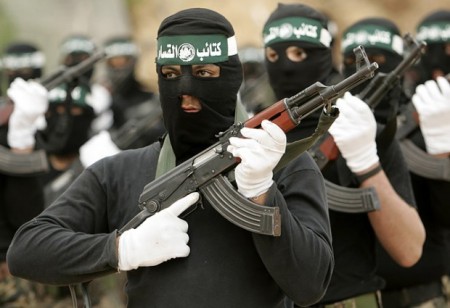
[W]hy is the Obama administration placing mammoth pressure on Israel to cede vital strategic territory and why is it besotted with the idea of dismembering Israel by tearing away parts of its ancestral heartland? The answer lies in a flawed foreign policy that rewards tyrannical regimes while back-stabbing allies; a foreign policy that favors Iranian Fatwas over concrete empirical evidence of malfeasance.

******************

Anyone wishing to get a glimpse of what a future “Palestinian” state might look like, need look no further than recent actions taken and official statements made by both the Palestinian Authority and its rival Hamas this past month. While these two governing entities detest each other (perhaps even more so than the infidel Yahuds), it is difficult to discern why, since both of these governing bodies spew forth nearly identical xenophobic rhetoric and act with typical autocratic ruthlessness to stifle any whiff of internal dissent. In essence, they both act in a manner that is not dissimilar to the 20 or so chauvinistic, anti-democratic Muslim pseudo-states of the Middle East.

Most Israelis harbor deep reservations about the creation of an “independent Palestinian state” for a multitude of reasons. Chief among them is the fear that a Palestinian state would devolve into an entity similar to that found in Gaza and that’s a best case scenario. There are far worse, more frightening scenarios. But while Gaza is contained in the southwest corner of Israel and can, relatively speaking, be monitored and controlled, the same cannot be said about the West Bank with its long, torturous border along the imaginary Green Line (the 1949 armistice lines). Moreover, in contrast to the Gaza periphery, much of Israel’s population and industry faces the West Bank, which juts out like a bone into Israel’s throat.

But even if the Palestinian Authority, headed by its aging, autocratic leader Mahmoud Abbas, succeeds in rebuffing a Hamas takeover – an unlikely prospect – the Palestinian Authority’s leadership has proven to be just as extreme, xenophobic and malevolent as its rivals in Gaza. Palestinian Authority TV and media outlets as well as PA-backed NGOs, routinely spew forth ancient anti-Semitic canards involving ritualistic Passover blood libels and conspiracy theories involving Jewish attempts at world domination.

On April 5, in an official PA television interview, Fatah spokesperson, Osama Al-Qawasmi, invoked the notorious early 20th century Czarist forgery known as the Protocols of the Elders of Zion to back up his spurious claims against Israel. For the sake of perspective, both Hitler’sMein Kampf and the Hamas Charter incorporate the Protocols to buttress repugnant supremacist views and reinforce ancient calumnies.

Al-Qawasmi comments, largely ignored by the West, represent views that are commonplace within the Palestinian Authority. In fact, most high-level officials within the PA subscribe to Hitleresque positions and this comes as no surprise given that the father of the modern “Palestinian” movement and the man who gave birth to Palestinian nationalism, Haj Amin al Husseini, was a Nazi collaborator and a dear friend of the Fuhrer.  In January 2013, “President” Abbas, whose own ventures into Holocaust denial are well known, showered the Hitler-supporting Husseini with acclaim.

The Palestinian Authority has also been known to perpetuate ancient ritualistic Passover blood libels. In July 2014 Mahmoud Abbas’ official PA daily, Al-Hayat Al-Jadida, featured an op-ed which claimed that Jews use the “blood of [Palestinian] children” as a key ingredient in Matzah or unleavened bread used by Jews during the Passover holiday. Shortly thereafter, in a variation of that insidious theme, Palestinian Authority TV claimed that Israel was injecting poison into the Palestinian water supply.

In 2013, a Western funded Palestinian propaganda outfit called MIFTAH (which publishes in both English and Arabic) published an article in Arabic criticizing President Obama for speaking of Passover in a favorable light. The author then went on to invoke the ancient blood libel stating,

Does Obama in fact know the relationship, for example, between “Passover” and “Christian blood”..?! Or “Passover” and “Jewish blood rituals?!’ Much of the chatter and gossip about historical Jewish blood rituals in Europe are real and not fake as they claim; the Jews used the blood of Christians in the Jewish Passover.

Palestinians routinely spew forth revolting babble and nonsensical conspiracy theories in Arabic but are substantially more reserved when addressing Western audiences who would find such utterances disquieting to say the least.

MIFTAH was founded by the Palestinian Authority’s spokeswoman and PLO Central Committee Member Hanan Ashrawi. Incredibly, when confronted with the outrage, Ashrawi, a seasoned politician who makes frequent guest appearances on Western news programs, refused to acknowledge any wrongdoing and actually attacked the blogger who exposed the incident claiming that she was the victim of a “smear campaign.” She also risibly noted that she was committed to “open dialogue” and in any event, a “disclaimer” in the publication absolved her and her organization of any culpability.

To a vile terror apologist like Ashrawi, blood libels are part of her concept of “open dialogue.” Only after drawing the ire of her Western donors did Ashrawi express contrition and posted an apologylaced with the requisite dose of crocodile tears. That served to placate MIFTAH’s gullible Western enablers.

But while Palestinians are free to spew forth the vilest canards against Israel and Jews, any whiff of criticism or dissention directed against any Palestinian body, Hamas or the Palestinian Authority, is ruthlessly dealt with. In April, a Palestinian civil servant was arrested for expressing views on Facebook critical of Yassir Arafat. More precisely, he failed to subscribe to the view that Arafat was a “martyr.” He was charged with “attacking and harming the martyr, eternal leader and symbol of the Palestinian people Abu Ammar,” Arafat’s nom de guerre. His niece was expelled from Birzeit University near Ramallah for expressing similar views and all other Palestinian universities have been instructed to deny her admission.

In Hamas-controlled Gaza, in a rare show of defiance, a group of between 150 to 200 Palestinians demonstrated against the governing authorities. The demonstrators were beaten with sticks and some were herded off in jeeps by thug-like Hamas enforcers.

These two incidents are demonstrative of the complete absence of freedom of speech and freedom of assembly in areas governed by Palestinians. Conversely, Palestinians are completely free to let loose with the vilest canards as long as the objects of derision, defamation and ridicule are Jews.

A Palestinians state, whether governed by Hamas or the “moderate” Palestinian Authority, will almost certainly resemble the 20 or so Arab pseudo-states currently in existence.  It will be dysfunctional, autocratic, xenophobic and unable to survive without massive financial assistance. That will be the nature of the state that lives alongside Israel’s long and tortuous border with the West Bank. That will be the state that will have full view of all commercial airlines that come and go from Ben Gurion International Airport. And that will be the state that juts into Israel’s narrow 9-mile wide waistline overlooking Israel’s heavily populated coastline.

Considering these facts, why is the Obama administration placing mammoth pressure on Israel to cede vital strategic territory and why is it besotted with the idea of dismembering Israel by tearing away parts of its ancestral heartland? The answer lies in a flawed foreign policy that rewards tyrannical regimes while back-stabbing allies; a foreign policy that favors Iranian Fatwas over concrete empirical evidence of malfeasance.

Prime Minister Netanyahu has just formed a governing coalition with a razor thin majority. Yet his coalition partners, cognizant of the dangers they face, both on the battlefield and in the political arena, appear to be solidly behind their Prime Minister. One can only hope that the Prime Minister will stand fast in the face of massive pressure he is sure to encounter from an extremely hostile Obama administration. Good luck Mr. Prime Minister, you’re going to need every bit of it for the next 18 months.

The Failed Tactic of Flattering Islam Won’t Go Away

May 11, 2015

The Failed Tactic of Flattering Islam Won’t Go Away, Front Page Magazine, May 11, 2015

Palestinian_militant_with_rifle-450x338

The recent attack in Texas against a “draw Mohammed” event ended up with two dead jihadis and widespread criticism of event organizer Pamela Geller for “inciting” or “provoking” the assault on our First Amendment right to free speech. The hypocrisies and ignorance behind such criticism have been amply documented, including by some on the left. But there’s another argument against actions and events like Geller’s that needs dismantling. This is the received wisdom that we should avoid criticizing Islamic doctrine or Mohammed because it will alienate moderate Muslims who otherwise would help us against the so-called “extremist” jihadists.

Geraldo Rivera on Fox News invoked this rationale in his hysterical attack on Geller for “spewing her hatred and making us all look like the intolerant jerks they are saying we are in the Middle East and elsewhere.” In other words, most Muslims dislike the jihadis, who have “hijacked” and “distorted” their faith, and want to support our efforts against them. But they are put off by our “insults” of Mohammed and our “intolerance” of the wonderful “religion of peace,” all of which serve to “recruit” new jihadists. Even Bill O’Reilly and Laura Ingraham skirted this notion, advising against making any image of Mohammed, and thus in effect ratifying the legitimacy of the shari’a law against any representation of Mohammed, good or bad.

Consistent with this notion that flattery and respect can change Muslim behavior, many in the foreign policy establishment, including conservatives, have for decades counseled flattering “outreach” to Muslims as a tactic in winning the “hearts and minds” of the supposed large majority of Muslims angry at the jihadists’ “distortions” of their faith. Even before 9/11, Bill Clinton’s Secretary of State, Madeleine Albright, called Islam “a faith that honors consultation, cherishes peace, and has as one of its fundamental principles the inherent equality of all who embrace it.” Even after 9/11 confirmed Islam’s traditional theologized violence and intolerance, George Bush claimed in his first address after 9/11 that Islam’s “teachings are good and peaceful, and those who commit evil in the name of Allah blaspheme the name of Allah.” In 2005, administration officials encouraged this tactic of false flattery as a way “to support the courageous Muslims who are speaking the truth about their proud religion and history, and seizing it back from those who would hijack it for evil ends.”

Of course Obama, who has serially groveled before Muslims and praised Islam, has continued this sorry practice. After his administration blamed the Benghazi murders on an obscure Internet video, he lectured that “the future must not belong to those who slander the Prophet of Islam.” The 2 gunmen in Garland Texas obviously agreed.  His quondam Secretary of State and now presidential candidate Hillary Clinton is on record extolling Islam’s “deepest yearning of all––to live in peace.” How is that going in Nigeria, Yemen, Iraq, Syria, and Afghanistan? Worse of all, training materials used by our military and security services have excised any mention of jihad, which Western infidels have redefined as “a quest to find one’s faith in an external fight for justice,” as the New York Times put it in 2008. So Obama identifies the 13 slaughtered at Fort Hood to the traditional jihadist cry of “Allahu Akbar” as victims of “workplace violence.” Never mind the Koranic command to “slay the idolaters wherever you find them, and take them captives and besiege them and lie in wait for them in every ambush”––exactly what various jihadi outfits are doing today across the Middle East, and tried to do in Garland Texas.

Two decades of such flattery and admiration have failed to prevent nearly 26,000 violent jihadist attacks since 9/11, for they are based on Western bad ideas rather than on an accurate understanding of Islamic doctrine and the Muslim mentality. Behind our delusions is the peculiarly arrogant assumption that traditionalist Muslims––by which I mean those who take seriously the doctrines and precepts of their faith has practiced for 14 centuries––do not have their own motives and aims, but can only react to our bad behavior. Besotted by our own materialist superstitions and failure to take religion seriously, we reduce jihadist behavior to material and psychological causes: wounded self-esteem, resentment of “colonial” and “imperial” crimes, disrespect of Islam, or the lack of jobs, political freedom, or even sexual access to women.

Thus despite consistent polling data showing widespread Muslim support of illiberal shari’a law and its draconian penalties like death for blasphemy, we won’t accept that millions of Muslims actually believe what the Koran, Hadith, and 14 centuries of jurisprudence teach about the superiority of Islam and their right to use violence in order to bring the whole world under the sway of the superior social, economic, and political order that shari’a represents. In the guise of “respecting” Muslims, then, we patronize them as little more than children who can only “act out” violently in the face of injustice instead of “using their words.” Having reduced our own faith to holidays and comforting slogans, we simply can’t believe that Islam endorses violence and cruelty in the name of Allah, or that otherwise loving and kind people, as bin Laden was said to have been by all who knew him, can at the same time slaughter and brutalize innocents in pursuit of spiritual aims. No, either they are “crazy” or “evil,” or they are traumatized by our bad behavior.

This dubious pop-psychological assumption is usually accompanied by a catalogue of the historical crimes against Muslims perpetrated by the West, from the Crusades to the wars against the Taliban and Saddam Hussein. These depredations, so the story goes, also fuel anger and resentment, and help to incentivize otherwise peaceful Muslims into turning jihadist. But this narrative is belied by the facts of history. For what history tells us is that the record of Muslim conquest, occupation, colonizing, slaving, raiding, and killing of Christians far surpasses the alleged crimes of the West against Islam. We recently marked the centenary of the Ottoman genocide against the Christian Armenians, Assyrians, and Chaldeans, a crime being duplicated today by ISIS in northern Iraq. Recently our historically challenged president whined about the Crusades and the Inquisition, with nary a word about the centuries of Muslim invasion, occupation, colonization, and brutal suppression in Christian Spain, Sicily, the Balkans, and Greece.

Or what about the 1066 pogrom in Granada, the alleged paradise of “pan-confessional humanism,” as an ignorant Wall Street Journal editorial claimed a few years back. Those tolerant, humanist Muslims slaughtered 5000 Jews, equaling the toll of dead during the whole existence of the Inquisition. But can anyone name one Muslim religious leader in the Middle East who has publicly and consistently apologized in Obama fashion for these 14 centuries of slaughter? Who has justified our defensive wars in the region as an understandable reaction to that history? Who has chastised Muslims for destroying and desecrating churches, and blamed them for inviting violent reactions? Muslim Turkey won’t even own up to its copiously documented slaughter of 1.5 million Armenians. If anyone has a historical grievance that justifies payback, it is Christians and Jews.

Finally, if Western insults and crimes against Muslims are really the reason jihadists want to kill us, why do they let Russia off the hook? No Christian power has killed more Muslims or occupied more Muslim lands than has Russia, from the siege of Izmail in 1790, when 40,000 Muslim men, women, and children were slaughtered, to the invasion of Afghanistan, which killed a million, to the brutal wars against Muslim Chechnyans, which killed at least 100,000. Or how about the 10 million Muslim Uighurs oppressed by China and forbidden to fully practice their faith?  Is Russia or China the “Great Satan”? Are they the constant targets of jihadist attack and thundering denunciations by the mullahs of Iran? Are “moderate” Muslims “alienated” by their behavior and rushing to join the jihad against them?

The obvious answer is no, for the simple reason that Russia and China are contemptuous of such juvenile psychological blackmail, pursue their national interests without regard for criticism by the “Muslim community,” and respond with brutal force to violent attacks. Meanwhile the U.S. has rescued millions of Muslims in the Balkans, Kuwait, Iraq, and Afghanistan from brutal dictators, ethnic cleansing, and psychotic autocrats, yet is deemed “Islamophobic” because we exercise our Constitutional rights in our own country. Worse yet, we grovel and apologize and demonize those like Pamela Geller who practice their right to free expression at a private function, and we vainly believe despite all evidence that if we just act nice to Muslims and join them in demonizing their critics, they’ll ignore their spiritual beliefs, the traditions of their faith, and the model of Mohammed and his credo to “fight all men until they say there is no god but Allah.”

To paraphrase Cicero and Orwell, there are some things so stupid that only rich, arrogant Westerners will believe them. If we let this president continue to predicate his dealings with Iran on this same delusional belief in the power of flattering engagement and “mutual respect,” we will soon find out the high cost of this stupidity.

Why the Snub? Saudis Know Obama’s Replaced Them With Iran

May 11, 2015

Why the Snub? Saudis Know Obama’s Replaced Them With Iran, Commentary Magazine, May 11, 2015

Will Obama get the message and change course? That’s even less likely than him embracing Netanyahu. An administration that came into office determined to create more daylight between itself and Israel has now embarked on a policy designed to alienate all of America’s traditional allies in order to appease a vicious Islamist foe. Anyone who thinks this will turn out well simply isn’t paying attention to the same events that have left the Saudis and other U.S. allies thinking they are more or less being left on their own.

**********************

If the Obama administration thought it’s half-hearted efforts to make up with Saudi Arabia and other Arab states outraged by its Iran policies, it’s got another thing coming. On Sunday, the Saudis told the White House that King Salman would not be attending meetings there or at Camp David this week. Later, Bahrain said its King Hamad would skip the same meeting. The snubs are as pointed as President Obama’s recent signals that he has no intention of meeting with Israeli Prime Minister Benjamin Netanyahu anytime soon. But while the president has little interest in patching things up with America’s sole democratic ally in the Middle East, he was quite interested in making nice with the Saudi monarch. But the Saudis and Bahrain, like the Israelis, are deeply concerned by the U.S. effort to create a new détente with Iran. It’s not just that Salman apparently has better things to do than to schmooze with Obama. The president may have thought he could essentially replace the Saudis with Iran as the lynchpin of a new Middle East strategic vision without paying a price. But the Saudis understandably want no part of this. The result will be a region made even more dangerous by the Arabs, as well as the Israelis, coming to the realization that they can’t rely on Washington.

The conceit of Obama’s strategy rests on more than a weak deal that he hopes will be enough to postpone the question of an Iranian bomb even as it essentially anoints Tehran as a threshold nuclear power. Rather it is predicated on the notion that once Iran is allowed to, in the president’s phrase, “get right with the world” and reintegrated into the global economy, it can be counted on to keep peace in a region from which Obama wants to withdraw.

That’s why the administration has tacitly allied itself with Iran in the struggle against ISIS in Iraq and, bowed to Tehran’s desire to leave its ally Bashar Assad in power in Syria even as they sought to restrain the Islamist regime’s Houthi friends in their effort to take over Yemen. But given Iran’s desire for regional hegemony, it’s reliance on terrorist allies like Hezbollah and Hamas as well as Assad’s criminal regime, the notion that it is a force for stability is as much a delusion as the idea that it is giving up its quest for nuclear weapons.

Just as important, the Obama foreign policy team was convinced that it could afford to ignore the Saudis’ concerns about their intended entente with Iran with as much impunity as it did those of Israel. As one expert quoted in the New York Times said, the Saudis have no alternative to the U.S. as a superpower ally. But it has not failed to escape their attention that “there’s a growing perception at the White House that the U.S. and Saudi Arabia are friends but not allies, while the U.S. and Iran are allies but not friends.”

Under the circumstances, the Saudis are now prepared to show the president the extent of their disdain. But it may not stop at that.

The Saudis, like the Israelis, know that America’s promises about both the nuclear deal and the future of the region are not worth much. The Iranians have been granted two paths to a bomb by the United States. One is by cheating via the easily evaded restrictions in the nuclear pact with little fear of sanctions being snapped back. The other is by patiently waiting for it to expire while continuing their nuclear research with little interference from a West that will be far more interested in trade than anything else.

That leaves the Saudis thinking they may need to procure their own nuclear option and to flex their muscles, as they have been doing in Yemen. It also sets up the region for what may be an ongoing series of confrontations between Iranian allies and the Saudis and their friends, a recipe for disaster.

Will Obama get the message and change course? That’s even less likely than him embracing Netanyahu. An administration that came into office determined to create more daylight between itself and Israel has now embarked on a policy designed to alienate all of America’s traditional allies in order to appease a vicious Islamist foe. Anyone who thinks this will turn out well simply isn’t paying attention to the same events that have left the Saudis and other U.S. allies thinking they are more or less being left on their own.