Archive for the ‘European Union’ category

How to lose friends and empower radicals: the peace prize president’s more dangerous world

January 29, 2015

How to lose friends and empower radicals: the peace prize president’s more dangerous world, Breitbart,  Dr. Sebastian Gorka, January 29, 2015

(Please see the video at the link. — DM)

obama-binoculars-AP-640x480AP Photo/Susan Walsh

Since 2008, the world has become a significantly more dangerous place. In every region, new threats have emerged or old ones have reasserted them. The scorecard is clear: the bad guys are winning and America’s interests are being undermined daily.

As a nation, America has yet to recover from the experience of September 11th, 2001. Public opinion on our national response to the attacks against the World Trade Center, the Pentagon, and Flight 93 is today divided. On one side we have the “Bush lied, People Died!” crowd who portray President George W. Bush’s response in terms of a conspiracy, despite the fact that we now know Saddam Hussein indeed possessed thousands of WMD warheads (and had used them in the past).

On the other, we have conservatives who are themselves split between the unsophisticated isolationists/non-interventionists who believe that an American withdrawal from the world will make us safe, and the quietly resurgent neoconservatives who see in the rise of ISIS/The Islamic State a justification for more foreign engagements.

For a moment, let us put Operations Enduring Freedom (Afghanistan), and Operations Iraqi Freedom (OIF), to one side. Instead, let us take an unemotional snap-shot of the global geostrategic situation to see whether the administration whose head was awarded a Nobel Peace Prize during his first year in office has indeed make the world a safer and more peaceful place.

Europe: During most of the last century, American security was tied directly to the continent of Europe. Whether is was the generational genocide of World War One, the racial genocide of WWII, or the class-based totalitarianism of the Cold War, Europe was the source of strategic, and at times existential, threats to America.

During the first Obama Administration, Secretary of State Hilary Clinton declared a “Pivot to Asia” which would deemphasize Europe’s importance and see Washington focus more on our Pacific partners than on old Atlantic Allies.

Since that announcement, an emboldened Vladimir Putin has seen fit to break an almost 70-year-old international taboo by using force to redraw national borders with his annexation of Crimea. This includes, incredibly, the shooting down of a civilian jet-liner by forces armed by Moscow.

At the same time, we have seen the European Union become evermore centralizing and undemocratic as untenable economic and fiscal policies are propped up by a Brussels bureaucracy in the name of “broader and deeper union.” This has naturally led to two types of responses: the unprecedented success of a paleo-conservative backlash,f best typified by the insurgent victories of UKIP in Great Britain, as well the reverse: Utopian socialist populists such as the victorious Syriza party of Greece.

Then there are Europe’s ties to the Global Jihadist Movement. The recent slaughter in Paris, the beheading of a British serviceman on the streets of the UK, and Spanish and Belgian terror-related arrests all attest to the failure of the current international campaign against Islamist terrorism.

The flawed immigration policies of many EU nations have also facilitated the establishment of literally hundreds of ethnic and religious enclaves across the continent where integration is seen as a bad thing and where radical talent spotters for groups such as Al Qaeda and ISIS/IS identify, indoctrinate and recruit murderers such as the Charlie Hebdo killers, as well as thousands of fighters for The Islamic State.

This has led to a grass-roots response from Europeans afraid of the future survival of their countries embodied in the ever-broadening PEGIDA movement that Breitbart London has covered in great detail. The failure of multiculturalist immigration policies has not only encouraged the enclave phenomenon, but is also clearly linked to the disturbing rise of anti-Semitism on the continent which has led to unprecedented numbers of European jews deciding to leave the nations of their birth for good.

If we include Turkey in our European snapshot, the situation is even worse, as we have seen the one viable example of a secular Muslim state slip even deeper into the corruption-ridden maelstrom of Islamic fundamentalism under the Erdogan government which is either incapable or unwilling to prevent Turkey becoming a pre-deployment site for jihadist fighters traveling into Syria and Iraq. All this from a formal NATO ally of the US.

Asia: The much-vaunted Pivot to Asia has clearly not worked. China has, over the last several years, openly challenged the post-Cold War peace in the region with a commitment to its own military build-up coupled with a concerted campaign of intimidation against its smaller and weaker neighbors.

While challenging and intimidating our regional partners, China has continued to grow economically at such a rate that the nation which was once universally ridiculed as the maker of plastic toys for McDonalds Happy Meals has now surpassed the US economy in terms of gross output.  At the same time, China is waging a covert war against America in the cyber domain, stealing not only state secrets for use in developing its new weapons systems, but also billions of dollars worth of intellectual property and commercial secrets from American businesses. See the remarkable report from Mandiant on scale of the threat.

North Korea has also used the internet to assault American interests as the Sony hacking attack attests, while Washington has proven totally ineffective in undermining the world’s last truly fully-fledged Stalinist regime, or its regionally destabilizing nuclear weapons capabilities.

Africa: A giant continent, with threats as bad as they were in 2008, or in several cases much worse. The Global Jihadist Movement continues to consolidate its control in Nigeria through the horrific attacks of Boko Haram, the group made famous for the kidnapping of the girls from Chibok, an attack which is just one part of a vast campaign targeting Christians and anyone who does not want to live under a theocratically run system based upon sharia and 7th century interpretation of the Koran.

In addition to the insurgent-like threat of Boko Haram, we have also witnessed horrific hit and run terrorist tactics used by other African jihadists, as in the Westgate Mall attack in Nairobi by Al Shabaab. At the same time, China proceeds to build its vast network of economic interests in the continent in ways that far outstrip American geostrategic investment in Africa.

Australasia: Of course, the Pivot to Asia should have pleased our Antipodean allies. But the concrete consequences of the declarations and speeches by Secretary Clinton and the White House have amounted to little more than the deployment of a handful of US Marines from Camp Pendleton to Australia. Instead of the security situation improving, Australia faced its own Jihadist attack just before Christmas last year as a self-styled imam took hostages and brought the violent jihad so familiar to New York, London, Madrid, and Paris, to the streets of Sydney.

The Americas: Canada likewise became a direct victim of the Global Jihadist Movement after a spate of attacks against its armed forces and even its parliament which was only stopped when a brave sergeant-at-arms applied deadly force in the face of a rampaging jihadi.

Those who like illicit quality cigars may be celebrating the White House’s “normalization” of relations with Communist Cuba, but if statements by the Castro regime are to be credited as expressing Havana’s true intentions, then the deal was good for the dictatorship and bad for America. And despite the US government’s historic decision, conditions inside Cuba have remained the same, or in many case deteriorated, with last year seeing record-breaking numbers of political arrests on the island nation. And Cuba’s anti-democratic influence is a problem for the region, not just its wretched population, with Raul Castro’s secret police providing aid and expertise in the oppression of dissidentsto the government of Venezuela.

The Middle East and North Africa: Leaving the worst for last we have, of course, the Middle East, and North Africa. The highs hopes for the Arab Spring turned very rapidly into a “Christian Winter” and a victory for the fundamentalist and anti-Democratic forces of the Muslim Brotherhood. One after another, one-man authoritarian regimes fell to Islamist MB governments, or collapsed into deadly civil wars which are still being fought in places like Syria and Libya. Throughout the region, proto-democrats and vulnerable minorities, especially ancient Christian communities, have been targeted for death or persecution, or have been forced to flee.

The one ray of hope, the people’s revolt in Egypt against the Brotherhood government of Mohammad Morsi, which led to his being ousted by a secular military, was rejected by the US administration as a coup, despite the fact that General, now President, Sisi, has been fighting his own war against Jihadi fundamentalists since he was the Chief of the Egyptian Armed Forces.

And now Yemen, which was lauded just a few months ago by President Obama as the poster-child of his successful counterterrorism strategy, has collapsed under insurgent attacks and the resignation of the government in Sanaa.

Then there is Iran, which, much like Cuba, has squeezed concession after concession out of the administration without either stopping its acquisition of nuclear weapons capability, or curtailing its support of Shiite terrorist fighters in either Iraq or Syria.

I said I would leave Afghanistan and Iraq of our the equation, but nevertheless, it is important to recognize that this is a new jihadist threat that is even more dangerous than Al Qaeda. ISIS, the Islamic State, is today a full-fledged insurgency, one that in four dimensions is much more of a threat that [Sic] Al Qaeda ever was.

The Islamic State is more than a terrorist group, it now functions as a quasi-state and controls territory equivalent to the size of the UK. It is the richest non-state threat group in human history. It has an incredibly sophisticated understanding of information warfare and how to use social media as a propaganda platform, and lastly – and relatedly – it has recruited ten of thousands of young Muslim men from around the world, including Europe and the US, to fight for the new Caliphate of Abu Bakr al Baghdadi. Bin Laden dreamt of being this powerful. The Islamic State has turned his dream into a horrific reality.

There is not one area of the world of import to America in which we have either not lost friends, or failed to help our allies to defend themselves against the common enemies that threaten us all. Whatever your politics, or whomever you favor for the next Commander-in-Chief of the United States, one thing is certain: without resolute American leadership the world can become, and now is, a much more dangerous place.
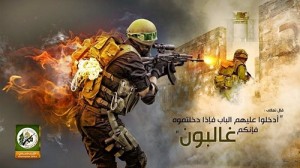
Hamas says EU appeal to keep it on terror list ‘immoral’

January 19, 2015

Hamas says EU appeal to keep it on terror list ‘immoral’, Yahoo News, January 19, 2015

Foreign ministers from the 28 EU member states decided at a Monday meeting to appeal the decision taken by the General Court of the European Union on December 17, the bloc’s foreign policy chief Federica Mogherini said.

The EU ministers were meeting in Brussels to discuss how to boost cooperation in the face of a growing Islamist militant threat following deadly Paris attacks and anti-terror raids in Belgium.

******************

Gaza City (Palestinian Territories) (AFP) – Palestinian Islamist movement Hamas slammed as “immoral” Monday an EU appeal to keep it on the bloc’s terror blacklist, a month after a European court ordered its removal.

“The European Union’s insistence on keeping Hamas on the list of terrorist organisations is an immoral step, and reflects the EU’s total bias in favour of the Israeli occupation,” Hamas spokesman Sami Abu Zuhri told AFP.

“It provides it (Israel) with the cover for its crimes against the Palestinian people,” he added.

Foreign ministers from the 28 EU member states decided at a Monday meeting to appeal the decision taken by the General Court of the European Union on December 17, the bloc’s foreign policy chief Federica Mogherini said.

The ruling by the EU’s second highest court had said that the blacklisting of Hamas in 2001 was based not on sound legal judgements but on conclusions derived from the media and the Internet.

Hamas, which has dominated the Gaza Strip since 2007, had appealed against its inclusion on the blacklist on several grounds.

Israel’s closest ally the United States has urged the EU to keep up its sanctions on Hamas, saying the US position had “not changed” and Hamas is still a “designated foreign terrorist organisation.”

Hamas fired thousands of rockets at Israel during a 50-day war last summer in which the Jewish state pounded Gaza with thousands of its own strikes.

The war killed nearly 2,200 Palestinians, mostly civilians, and 73 on the Israel side, mostly soldiers.

The EU ministers were meeting in Brussels to discuss how to boost cooperation in the face of a growing Islamist militant threat following deadly Paris attacks and anti-terror raids in Belgium.

Israel, the Obsession

December 22, 2014

Israel, the Obsession, American ThinkerRichard Baehr, December 22, 2014

[T]here is no clear path back to sanity, nor is there a clear path to the end of the obsession with Israel.

*****************

It has been a pretty typical week on the hate Israel front.  A European Union Court has decided that Hamas is not a terrorist organization, and their previous designation as such had not been justified by real evidence that Europeans had developed, as opposed, say, to information supplied by the United States or Israel.  An international court in Geneva is hearing evidence of Israeli human rights violations.  The United Nations Security Council has been considering a resolution developed by the Palestinian Authority, as well as one by the French that would effectively lay out the terms for Israel’s capitulation over the next few years.  Israel’s peace camp has been working with U.S. Secretary of State John Kerry, encouraging a delay in consideration of the Security Council resolutions, since any action before the upcoming Israeli parliamentary elections could benefit the right-wing parties in Israel.  In other words, there is not even an attempt to hide anymore that the United States is putting its foot down for one particular side in the Israeli election.  Various European countries are endorsing Palestinian statehood on the terms demanded by the Palestinian Authority.  Academic groups, unions, and churches in Europe and the United States are endorsing the boycott, divestment, and sanctions (BDS) movement.  Certain European communities are now “Israeli-frei” – free of Israeli goods (or at least those they can identify and care to avoid).  The U.N. Human Rights Council and the General Assembly, as well as specific agencies whose only task is to bash Israel, are set to get back to work, creating more resolutions and condemnations of the Jewish state.

As Joshua Muravchik makes clear in his outstanding new book, Making David Into Goliath, this obsession with Israel by most nations of the world and the United Nations – or as they are collectively known, “the international community” – as well as by “the global left,” could not have been imagined a half-century back, prior to the Six-Day War.  At that time, Israel was championed by Socialist political parties, and viewed sympathetically as a beleaguered democracy fighting for its existence against a collection of larger anti-Western Arab tyrannies.  There was residual sympathy for Jewish survivors of the Holocaust, many of whom had moved to Israel.  There was no movement for Palestinian nationhood, though certainly violent actions by Arabs aimed at Israel and Jews in the region had been going on for decades.

Muravchik’s book attempts to explain what has happened during this period and why.  A lot changed after the 1967 war, when, instead of little Israel facing off with 21 Arab nations, the conflict was recast with Israel as the big dog, oppressing the Palestinians and occupying their land.  Since the left tends to root for the underdog, Israel no longer fit the bill.  The description of the conflict in the post-1967 telling is of course neither factual nor historical, since there had never been a unique nation of Palestinian Arabs, denied their nationhood – say, the way the Tibetans or the Kurds have been for sixty years, or forever.  The Palestinians became refugees because their leaders refused to accept half a loaf – a state on half of the mandate territory in 1947 – and instead chose to go to war to deny the Zionists their state.  The Arabs of Palestine, even with the support of armies from their Arab neighbor states, lost the war.

When you start a war and lose, there are consequences.

Since 1967, the Palestinians and their allies have been trying to reverse not just the war of 1967, but the 1948 war as well.  Refugees from the 1948 war (and there are not many of them left) are still in refugee camps, unlike any other refugees from any other conflicts then or in the years since, and the descendants of the original refugee population, now from three generations, demands a “right of return” to homes in Israel where they never lived and in fact to a country where they have never been.

The 1948 war produced a population exchange – a larger number of Jews were driven out of Egypt, Tunisia, Morocco, Algeria, Yemen, Iraq, Libya, and other countries than Arabs who left their homes in what became Israel.  Most of the Jewish refugees moved to Israel, where in relatively short order they were out of any temporary refugee camps and absorbed as regular citizens of the state.  That the Arabs have sacrificed generations of their own people to maintain their inflexible hatred of Israel is all one needs to know about why there has been no resolution of the conflict despite serious efforts over the years to accomplish this.

Muravchik, who was once a leftist himself, spends a fair amount of time in the book documenting the impact of Edward Said , who with his disciples has mentored the current U.S. president, Barack Obama.  Said, despite his faked personal history, has had enormous impact introducing moral relativism to studies of the regions, declaring that the West cannot understand “the Orient” and has no right to judge the regimes, the religions, the people.  What the West calls a terrorist group is instead viewed as a resistance fighting for freedom.  The combination of mosque and state is what those in the region know and prefer, not Western parliamentary systems.  Israel is not a beacon with much to offer those in the region, but an imperialist creation and a predator.  Muravchik outlines how in Israel itself, a part of the population is at war with Zionism and is in fact in league with Israel’s external enemies, assisting viperish non-governmental organizations (often funded by European nations) and bigoted journalists.  An increasing number of left-wing Jews in the United States behave as if Israel is an embarrassment, claiming that Israel’s behavior is “not in its name” and calling for an end to the “racist, apartheid“ state.

At one time, the United Nations consisted primarily of democracies who had fought the Axis powers.  With the decolonization of Africa and Asia after the war, dozens of new nations, since dubbed “the Third World,” became the dominant block at the U.N., particularly in the General Assembly and other international organizations.  These new nations included many Arab and Islamic countries, and their power in numbers shifted these organizations into full-blown assault forces directed at Israel.  Three quarters of all U.N. General Assembly resolutions that are directed at a single country are rebukes of Israel.  It is fairly obvious that the international community considers Israel the worst country in the world (or at least the closest thing to a piñata for the purposes of diplomatic assault) and has ignored the human rights disasters at play in Sudan, Somalia, Nigeria, Iran, North Korea, Pakistan, Bangladesh, Libya, Saudi Arabia, and dozens of other easy targets, since there is no real interest in fairness, and Israel is always held to a different standard.

The Palestinians and their allies have also scored with the terror weapon and the oil weapon.  One nation after another demonstrated that cowardice was the preferred policy for dealing with Palestinian terror groups, rather than risking confrontation with them, and many nations thought they could buy peace and security by becoming harsh critics of Israel and allies of the Palestinians.  In countries with large populations of Arab or Muslim immigrants, taking on Israel politically, and ignoring violence directed against Israel or threats against Jews, was seen as a safety valve to prevent terrorism and violence directed against such countries’ own citizens.  After the 1973 Yom Kippur War, OPEC, dominated by Arab oil producers, began a more systematic effort to use the threat of cutting off oil deliveries to force changes in policy by oil-importing nations, particularly in Europe.

Muravchik is an honest historian of the conflict, and he documents how Israel contributed to changing the narrative of the conflict.  Some of Israel’s leaders were poor spokespersons for the country.  The invasion of Lebanon in 1982, followed by the attacks carried out by Christian Phalangists in Sabra and Shatila to avenge the assassination of their leader by Palestinians, with Israeli forces seemingly looking the other way, were particularly damaging.  Many Israelis, not all on the hard left, have opposed the settlement enterprise in Judea and Samaria.  Muravchik makes clear, however, much as Caroline Glick has done in her book The Israel Solution, that to a large extent it is irrelevant what Israel has offered in any peace process to achieve a deal.  In essence, the country has entered a bidding war against itself.

Muravchik has laid out why Israel is now in the dock, facing more critics on more fronts all the time.  But what is most depressing is that there is no clear path back to sanity, nor is there a clear path to the end of the obsession with Israel.  In fact, the momentum is all with those ganging up on the Jewish state.  In the United States, Barack Obama is a president more comfortable with the thinking of the international community than any prior president since Israeli statehood in 1948, and he seems anxious to end America’s isolation on this issue (since it alone has stood in Israel’s corner for several decades) and move American policy so we are more in line with Sweden or Spain with regard to the conflict.

Muravchik calls for vigilance (Obama will be around only another two years and one month), but with America’s rapidly shifting demography, and the takeover of so many parts of the culture by the left – most of the media, the arts, the universities, Hollywood, many churches and synagogues – the struggle for those who stand with Israel will be uphill.


EU Gives Hamas Green Light to Attack Israel

December 22, 2014

EU Gives Hamas Green Light to Attack Israel, Gatestone InstituteKhaled Abu Toameh, December 22, 2014

Although the EU court has said that its controversial decision was “technical” and was not a reassessment of Hamas’s classification as a terrorist group, leaders of the Islamist movement believe that the move will eventually earn them legitimacy in the international arena.

The EU court’s decision represents a “severe blow to the Palestinian Authority and Egypt,” according to Palestinian political analyst Raed Abu Dayer.

Any victory for Hamas, albeit a small and symbolic one, is a victory for the Islamic State, Al-Qaeda, Islamic Jihad, the Muslim Brotherhood and other fundamentalist groups, and causes tremendous damage to those Muslims who are opposed to radical Islam.

Hours before the EU court’s decision was made public, Hamas leader Mahmoud Zahar announced that his movement would never recognize Israel, and that Hamas seeks to overthrow the Palestinian Authority and seize control of the West Bank.

The EU court’s decision also coincided with a rapprochement between Hamas and Iran. Now, the Iranians and other countries, such as Turkey and Qatar, are likely to interpret the EU court’s decision as a green light to resume financial and military aid, including rockets and missiles, to Hamas — not only to Gaza but to the West Bank as well — to support those Palestinians whose aim it is to eliminate Israel.

Less than 48 hours after a top European Union court ruled that Hamas should be removed from the bloc’s list of terrorist groups, supporters of the Palestinian Islamist movement responded by firing a rocket at Israel. The attack, which did not cause any casualties or damage, did not come as a surprise.

Buoyed by the EU court’s ruling, Hamas leaders and spokesmen see it as a “political and legal achievement” and a “big victory” for the “armed struggle” against Israel.

Musa Abu Marzouk, a top Hamas leader, issued a statement thanking the EU court for its decision. He hailed the decision to remove his movement from the terrorist list as a “victory for all those who support the Palestinian right to resistance.”

When Hamas leaders talk about “resistance,” they are referring to terrorist attacks, such as the launching of rockets and suicide bombings against Israel. In other words, Hamas has interpreted the court’s decision as a green light to carry out fresh attacks as part of its ambition to destroy Israel.

The rocket that was fired from the Gaza Strip at Israel only days after the court decision is not likely to be the last.

Although the EU court has said that its controversial decision was “technical” and was not a reassessment of Hamas’s classification as a terrorist group, leaders of the Islamist movement believe that the move will eventually earn them legitimacy in the international arena.

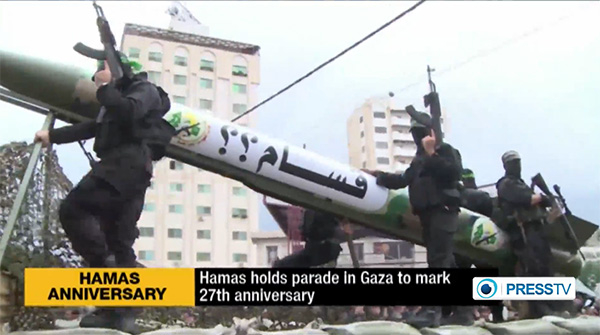
Ironically, the EU court’s decision coincided with Hamas celebrations marking the 27thanniversary of its founding. Once again, Hamas used the celebrations to remind everyone that its real goal is to destroy Israel. And, of course, Hamas used the event to display its arsenal of weapons that include various types of rockets and missiles, as well as drones.

845 (1)Thousands of armed Hamas troops showed off their military hardware at a Dec. 14, 2014 parade in Gaza, marking the organization’s 27th anniversary. (Image source: PressTV video screenshot)

Hours before the EU court decision was made public, Hamas leader Mahmoud Zahar announced that his movement would never recognize Israel. Zahar also made it clear that Hamas seeks to overthrow the Palestinian Authority [PA] regime and seize control over the West Bank.

The EU court’s decision also coincided with increased efforts to achieve rapprochement between Hamas and Iran. Recently, a senior Hamas leadership delegation visited Tehran as part of efforts to mend fences between the two sides. The main purpose of the visit was to persuade the Iranians to resume military and financial aid to Hamas. The visit, according to senior Hamas officials, appears to have been “successful.”

“There are many signs that our relations are back on the right track,” explained Hamas’s Musa Abu Marzouk. “Hamas and Iran have repaired their relations, which were strong before the Syrian crisis.” Relations between Hamas and Iran deteriorated due to the Islamist movement’s refusal to support the regime of Syrian President Bashar Assad.

Now the Iranians are likely to interpret the EU court decision to remove Hamas from the list of terrorist groups as a green light to resume financial and military aid to the movement.

Iran’s leaders recently announced that they intend to dispatch weapons not only to the Gaza Strip, but to the West Bank as well, as part of Tehran’s effort to support those Palestinians who are fighting to eliminate Israel.

Moreover, the EU court’s move will also embolden other countries that provide Hamas with political and financial aid, first and foremost Qatar and Turkey. Oil-rich Gulf countries such as Kuwait, Bahrain, Oman and Saudi Arabia will now face pressure from many Arabs and Muslims to join Qatar, Turkey and Iran in extending their support to Hamas.

The biggest losers, meanwhile, are Palestinian Authority President Mahmoud Abbas and Egypt’s President Abdel Fattah el-Sisi. Over the past few months, the two men have been doing their utmost to undermine Hamas and end its rule over the Gaza Strip.

Abbas has been fighting Hamas by blocking financial and humanitarian aid and arresting its supporters in the West Bank, while Sisi continues to tighten the blockade on the Gaza Strip and destroy dozens of smuggling tunnels along the border with Egypt.

The EU court’s decision represents a “severe blow to the Palestinian Authority and Egypt,” noted Palestinian political analyst Raed Abu Dayer. “As far is Abbas is concerned, the decision grants Hamas political legitimacy and challenges his claim to be the sole legitimate leader [of the Palestinians]. With regards to Egypt, the European court decision calls into question rulings by Egyptian courts that Hamas is a terrorist organization.”

Even if the EU court decision is reversed in the future, there’s no doubt that it has already caused tremendous damage, especially to those Muslims who are opposed to radical Islam.

Any victory for Hamas, albeit a small and symbolic one, is a victory for the Islamic State, Al-Qaeda, Islamic Jihad, the Muslim Brotherhood and other fundamentalist groups around the world.

The decision has left many Arabs and Muslims with the impression that Hamas, after all, is not a terrorist organization, especially if non-Muslims in Europe say so through one of their top courts. Even worse, the decision poses a real and immediate threat to Israel, as evident from the latest rocket attack.

If the Europeans have reached the conclusion that Hamas is not a terrorist organization, then why don’t their governments openly invite tens of thousands of Hamas members and supporters to move to London, Paris and Rome? And they should not forget to ask the Hamas members to bring along with them their arsenal of weapons.

Imperialism, Obama style

December 20, 2014

Imperialism, Obama style, Dan Miller’s Blog, December 20, 2014

Obama condemns “wicked” U.S. imperialism for supporting American values such as freedom and democracy abroad. Simultaneously, he tries to precipitate “regime change” in Israel so that she will support His values and those of Palestinians rather than American and Israeli values of freedom and democracy.

The Palestinians have placed before the United Nations Security Council a “peace proposal” intended to force Israel to agree to creation of a Palestinian state and “an Israeli withdrawal to the pre-1967 lines” by the end of 2017. Secretary Kerry has argued that the matter should not be considered until after the Israeli Knesset elections in March. According to an article in Foreign Policy,

Speaking at an annual luncheon with the 28 European Union ambassadors, Kerry cautioned that any action by the U.N. Security Council would strengthen the hands of Israeli hardliners who oppose the peace process. . . . [Emphasis added.]

“Kerry has been very, very clear that for the United States it was not an option to discuss whatever text before the end of the Israeli election,” according to a European diplomat.

The diplomat, who spoke on condition of anonymity because the luncheon was confidential, said that Kerry explained that Israel’s liberal political leaders, Shimon Peres and Tipzi Livni, had expressed concern that a Security Council move to pressure Israel on the eve of election would only strengthen the hands of Israeli hardliners, including Prime Minister Benjamin Netanyahu, and Naftali Bennett, an implacable foe of a Palestinian state and leader of the right-wing Jewish Home party. Netanyahu is also fiercely opposed to the Palestinians effort to secure Security Council backing for its statehood drive. [Emphasis added.]

Kerry said Livni had “told him that such a text imposed by the international community would reinforce Benjamin Netanyahu and the hardliners in Israel,” as well as the hardliners in Palestine, according to the European diplomat.

The message, said another European diplomat, was that U.N. action would “give more impetus to more right-wing parties, that there was a risk this could further embolden the more right-wing forces along the Israeli political spectrum.” [Emphasis added.]

Kerry’s remarks highlight the Obama administration’s delicate balancing act when it comes to its tense relationship with the Israeli government. On the one hand, senior  administration officials make little attempt to hide the personal dislike between Netanyahu and President Barack Obama or their sharp disagreements on issues ranging from the peace process to Iran. On the other hand, Kerry and other top policymakers have tried to avoid saying or doing anything that could be seen as meddling in the Israeli election in an effort to oust Netanyahu and replace him with a more centrist prime minister. [Emphasis added.]

On an open microphone in March of 2012, Obama

told Dmitry Medvedev that he would have more flexibility after November’s election to deal with contentious issues such as missile defence. . . .

Obama’s candid remark was considered a gaffe because He made it assuming that the microphone had been turned off and that no one other than Medvedev would hear Him. Kerry, however, candidly but intentionally told twenty-eight European Union ambassadors that it is U.S. policy to encourage the Israeli left, to diminish the Israeli right and to make it more difficult for Prime Minister Netanyahu to remain in office. Aside from his incredible naivete, why did Kerry do that?

For Obama and European leaders, Israel is reducible to the peace process. And the Israeli left depends on the support of foreign governments for its network of foreign funded non-profit organizations. The Israeli left can’t let go of its exploding version of ObamaCare [Palestine] because the left is becoming a foreign organization with limited domestic support. Its electorate isn’t in Israel; it’s in Brussels. [Emphasis and bracketed insert added.]

. . . .

Escalating a crisis in relations has been the traditional way for US administrations to force Israeli governments out of office. Bill Clinton did it to Netanyahu and as Israeli elections appear on the horizon Obama would love to do it all over again.

There’s only one problem.

The United States is popular in Israel, but Obama isn’t. Obama’s spats with Netanyahu ended up making the Israeli leader more popular. The plan was for Obama to gaslight Israelis by maintaining a positive image in Israel while lashing out at the Jewish State so that the blame would fall on Netanyahu. [Emphasis added.]

Kerry’s remarks — covered by Israeli media — seem, contrary to his intentions, likely to enhance the chances of Israeli “hardliners” on the “right,” to hurt the chances of those on the left and hence to increase PM Netanyahu’s chances of remaining in office. Even leaving that aside, how will Kerry’s remarks favoring regime change be viewed by other increasingly reluctant U.S. allies in the Middle East?

Israeli “hardliners” have already yielded to the Palestinians as much as, if not more than, they can without greatly endangering the security of Israel because there is no Palestinian entity with which peace can be made other than through Israel’s suicide.

The remarks of the Islamic preacher at the mosque in Jerusalem reflect a general Palestinian view.

Interestingly, the speaker doesn’t mention the longing for Palestinian statehood or independence. Instead, he talks of the establishment of the “Islamic Caliphate.” “Oh Allah’” he states, “Hasten the establishment of the State of the Islamic Caliphate,” and further rants, “Oh Allah hasten the pledge of allegiance to the Muslim Caliph.” He spews forth the latter statement three times to chants of “Amen!” from the large, approving crowd congregating around him.

These comments, which would register horror and revulsion in the West (at least in some quarters) are almost banal among Palestinians. In fact, a similar video featuring a different speaker some days earlier at the same venue, conveyed identical sentiment, expressing admiration for the Islamic State and calling for murder of Jews and annihilation of America. [Emphasis added.]

Here’s the other video referenced in the article:

Guttural anti-Semitism is ingrained and interwoven in the fabric of Palestinian society. Despite their minuscule numbers, 78% of Palestinians believe that Jews are responsible for most of the world’s wars while a whopping 88% believe that Jews control the global media and still more believe that Jews wield too much power in the business world. [Emphasis added.]

Much of the blame for this can be placed squarely on the doorstep of Mahmoud Abbas’s Palestinian Authority, which subjects the Palestinian population to a steady diet of hate-filled, Judeophobic rhetoric through state-controlled media and educational institutions. It is so well entrenched that the process of deprogramming, if it were ever attempted, would take generations to reverse. [Emphasis added.]

As noted in the Wall Street Journal article linked in the quote immediately above,

To understand why peace in Palestine is years if not decades away, consider the Palestinian celebrations after Tuesday’s murder in a Jerusalem synagogue of five Israelis, including three with joint U.S. citizenship. Two Palestinian cousins armed with meat cleavers and a gun attacked worshipers during morning prayers, and the response was jubilation in the streets.

The Popular Front for the Liberation of Palestine claimed responsibility, while Hamas praised the murders as a “response to continued Israeli crimes.” The main obstacle to peace isn’t Jewish settlements in the multireligious city of Jerusalem. The barrier is the culture of hatred against Jews that is nurtured by Palestinian leaders. [Emphasis added.]

Palestinian Prime Minister Mahmoud Abbas condemned the killings, but not without calling for Israel to halt what he called “invasions” of the holy Al Aqsa Mosque in Jerusalem. Mr. Abbas has previously said the Temple Mount was being “contaminated” by Jews, despite assurances by Prime Minister Benjamin Netanyahu that the Dome of the Rock and Al Aqsa Mosque are for Muslim worship only. The Memri news service reports that the Oct. 29 issue of the Palestinian daily Al-Hayat Al-Jadida was full of false accusations that Israel is damaging Jerusalem’s holy sites. [Emphasis added.]

Moreover,

An overwhelming majority of Palestinian Arabs support the recent spate of terrorist attacks against Israelis, an opinion poll released Tuesday finds, according to The Associated Press (AP).[Emphasis added.]

The poll also found that more than half of Palestinian Arabs support a new “intifada” (uprising) against Israel, and that Hamas would win presidential elections if they were held today. [Emphasis added.]

Palestinian Arab pollster Khalil Shikaki said the results reflected anger over Israeli statements about Jerusalem, as well as a loss of hope following the collapse of U.S.-brokered peace talks and Israel’s recent war with Hamas in Gaza.

Shikaki heads the Palestinian Center for Policy and Survey Research, which interviewed 1,270 people in the Palestinian Authority-assigned areas of Judea and Samaria and Gaza last week. The poll had an error margin of 3 percentage points.

“There is an environment in which violence is becoming a dominant issue,” Shikaki told AP. “This seems to be one of the most important driving forces.”

Hamas is, if possible, even worse than Abbas’ Palestinian Authority.

Both Hamas and Abbas’ Palestinian Authority seek the death of Israeli Jews and the destruction of Israel, the only democratic and free nation in the Middle East. Kerry’s ill-conceived efforts to assist them at the expense of Israel, most recently by actively seeking to promote Israel’s left wing, to diminish its right wing and hence to empower Palestinians intent upon the death of Israel, may well fail. Succeed or fail, those efforts are consistent with Obama’s preference for Islamic dictators over democracy coupled with freedom.

Barack Mitsvah

EU Backs Palestinian Dictatorship

December 18, 2014

EU Backs Palestinian Dictatorship, Gatestone InstituteKhaled Abu Toameh, December 18, 2014

These European parliaments are also turning a blind eye to the fact that, under the Palestinian Authority in the West Bank and Hamas in the Gaza Strip, there is no respect for the rule of law, free speech, transparency or accountability.

These Western parliamentarians are in fact acting against the interests of the Palestinians, who are clearly not hoping for another corrupt dictatorship in the Arab world.

“The situation in Palestine does not conform at all with democracy or the rule of law… Wake up and see the loss of rights, law and security.” — Freih Abu Medein, former Palestinian Authority Justice Minister.

“Abu Mazen [Mahmoud Abbas] wants to concentrate all authorities in his hands and the hand of his loyalists. He’s acting in a dictatorial way and wants to be in control of everything, especially the finances.” — Yasser Abed Rabbo, Secretary General of the PLO.

By turning a blind eye to human rights violations, as well as assaults on freedom of expression, the judiciary and the parliamentary system in the Palestinian territories, Western parliaments are paving the way for a creation of a rogue state called Palestine.

European parliaments that are rushing to recognize a Palestinian state are ignoring the fact that the Palestinians have been without a functioning parliament for the past seven years.

The Palestinian parliament, known as the Palestinian Legislative Council [PLC], has been paralyzed since 2007, when Hamas violently seized control over the Gaza Strip and expelled the Palestinian Authority [PA].

These European parliaments are also turning a blind eye to the fact that, under the PA in the West Bank and Hamas in the Gaza Strip, there is no respect for the rule of law, free speech, transparency or accountability.

This week, the European Parliament also adopted a resolution recognizing Palestinian statehood in principle. A total of 489 MEP’s voted in favor, while 88 were against.

Ironically, the EU Parliament vote coincided with an unprecedented crackdown by the Palestinian Authority leadership on the Palestinian Legislative Council and its secretary-general, Ibrahim Khraisheh, in Ramallah.

PA President Mahmoud Abbas ordered the arrest of Khraisheh for allegedly criticizing PA Prime Minister Rami Hamdallah. Following strong protests by leaders of various Palestinian factions, who described the decision as a flagrant breach of freedom of expression, Abbas was forced to backtrack.

But for Abbas, this was not the end of the story. After canceling the arrest order against Khraisheh, Abbas dispatched policemen to the parliament building in Ramallah to prevent the top official from entering the compound. The presence of the policemen at the main entrance to the parliament building drew sharp denunciations from many Palestinians.

844The Palestinian Legislative Council building in Ramallah. (Image source: Alarab

Khraisheh was removed from his job because he dared to criticize the Palestinian government for arresting Bassam Zakarneh, head of the public employees’ union in the West Bank. Many Palestinians have also denounced the arrest of Zakarneh as an assault on workers’ rights and an attempt to intimidate them.

But the EU Parliament and other parliaments that voted in favor of recognizing Palestinian statehood did not see a need to comment on Abbas’s measures against the PLC and one of its senior officials.

EU parliamentarians who voted in favor of Palestinian statehood are most likely unaware of what the former PA Justice Minister, Freih Abu Medein, had to say about the rule of law and order in the Palestinian Authority.

Abu Medein drew a bleak picture of what the future Palestinian state would look like. In a damning article he published last week, Abu Medein wrote: “The situation in Palestine does not conform at all with democracy or the rule of law, because the Palestinian mentality is too coarse to cope with transparency of the law and its regulators and provisions.”

Abu Medein’s scathing attack, which is directed first and foremost against Abbas, ended with an appeal to Palestinians to “wake up and see the loss of law, rights and security” in the areas controlled by the PA and Hamas.

The former Palestinian Authority justice minister is not the only prominent Palestinian who seems to understand that a Palestinian state under the current circumstances would be anything but democratic.

Yasser Abed Rabbo, the secretary-general of the PLO who until recently was considered one of Abbas’s top confidants, was quoted last week as strongly condemning the Palestinian Authority president’s “dictatorial” rule.

Referring to Abbas by his nom de guerre, Abed Rabbo said: “Abu Mazen wants to concentrate all authorities in his hands and the hands of his loyalists. He’s acting in a dictatorial way and wants to be in control of everything, especially the finances. I don’t know what this man wants and why he’s behaving in this way. What will happen after Abu Mazen’s departure?”

The parliament members of Sweden, Britain, France and Portugal who voted in favor of recognizing Palestinian statehood do not seem to care about their Palestinian colleagues, who have been deprived of carrying out their parliamentary obligations as a result of the power struggle between Hamas and Abbas’s Fatah faction.

Nor do they seem to care if the Palestinian state would be another corrupt dictatorship where there is no room for the rule of law, transparency or freedom of speech.

Obviously, Western parliamentarians see no wrongdoing or evil in the actions of the Palestinian leadership and Hamas. They are prepared to vote in favor of a Palestinian state even if it does not appear to be headed toward democracy and transparency.

These Western parliamentarians are in fact acting against the interests of the Palestinians, who are clearly not hoping for another corrupt dictatorship in the Arab world. By turning a blind eye to human rights violations, as well as assaults on freedom of expression, the judiciary and the parliamentary system in the Palestinian territories, Western parliaments are paving the way for the creation of a rogue state called Palestine.

EU Officials Warn: Hamas Siphoning Off Reconstruction Funds to Rearm, Despite Aid Projects

November 18, 2014

EU Officials Warn: Hamas Siphoning Off Reconstruction Funds to Rearm, Despite Aid Projects, Algemeiner, Dave Bender, November 17, 2014

Hamas-Al-Qassam-Brigades-300x168Hamas’ Al Qassam Brigades. Photo: Facebook.

Adding to the concern is exiled Jordanian politician, Mudar Zahran, who confirms that Hamas is already trying to confiscate construction materials donated by the international community, with some success.

“Aid earmarked for reconstruction is turning up on the Hamas controlled black market, where it is being sold at premium prices,” Zahran recently charged, Ch. 2 said.

***************

Hamas in Gaza may be exploiting European Union (EU) funds to rearm instead of rebuild after its pounding in this summer’s Operation Protective Edge, according to European parliament member Arne Gericke, Israel’s Ch. 2 News said Monday night.

Gericke and other EU officials have voiced concerns over a European Court of Auditors report alleging that over 2.5 percent of the EU budget for external relations, aid and enlargement had been misappropriated.

If that percentage is applied to the more than $560 million (€450m) pledged to Gaza, that means nearly $14.7 million (€11.7m) could end up in Hamas’s hands.

The Israeli army’s 51-day foray to quell some 4,000 rockets and mortars, and destroy over 30 attack tunnels destroyed much of the Islamist group’s facilities and arsenal, according to senior Israeli officials.

Adding to the concern is exiled Jordanian politician, Mudar Zahran, who confirms that Hamas is already trying to confiscate construction materials donated by the international community, with some success.

“Aid earmarked for reconstruction is turning up on the Hamas controlled black market, where it is being sold at premium prices,” Zahran recently charged, Ch. 2 said.

Hamas has annually funneled over $300 million towards weapons and paying military salaries, according to the Shin Bet Israel Security Agency.

khameini-mashaal-300x215 (1)The Twitter page of Iranian Supreme Leader Ayatollah Khamenei, photographed sitting next to Hamas leader Khaled Meshaal. Photo: Screenshot / Twitter.

Meanwhile, instead of offering road crews, an Iranian military commander said Monday that “Millions of Basijis (volunteer forces) are ready in Iran to be dispatched to Syria and Gaza,” to fight alongside Palestinian terrorist groups in the latter.

However, Basiji volunteer forces chief, Brig.-Gen. Mohammad Reza Naqdi, said at a press conference that “there is no need to dispatch troops to Gaza” saying that the Palestinians had sufficient abilities to “battle the Israelis,” themselves, according to Iran’s state controlled Fars News Agency.

“The most serious job is that they need to receive the necessary training and skills, as today, Gaza has its own defensive industry and they have stood on their feet; we also try to implement the same plan in the West Bank, God willing,” Naqdi said.

In the West Bank, the rival Palestinian Authority’s minister of civil affairs said Monday that reconstruction material for Qatari-funded construction projects will enter the Gaza Strip upon agreement with the Israeli side, according to Palestinian media.

Hussein al-Sheikh said in a statement that reconstruction material started flowing to Gaza on Monday, including some 100 trucks carrying 4,000 tons of supplies for road repairs, according to the Ma’an News agency.

Al-Sheikh added that asphalt will be entering the Gaza Strip on Tuesday, and said that Israel’s Civil Administration agreed to allow 100 trucks of road construction materials in daily.