Archive for the ‘Egypt’ category

Why Obama Will Just Keep Making the Middle East Worse

May 6, 2015

Why Obama Will Just Keep Making the Middle East Worse, Front Page Magazine, Daniel Greenfield, May 6, 2015
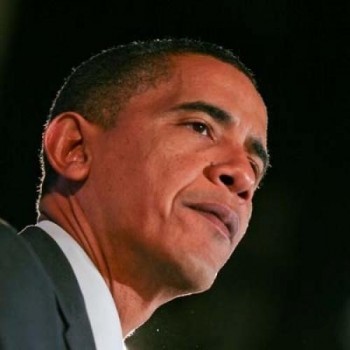
obama9-350x350

In its own perverse way, Iran is becoming a client state of America. But it’s a client state that, like the Palestinian Authority with Israel, is actively trying to destroy us. The lesson from that failed effort was that you can’t use terrorists to stabilize territory. All that terrorists can do is destabilize it even more.

****************

A few years ago it was the Muslim Brotherhood. These days it’s Iran. Next week it may be ISIS or Al Qaeda. Obama stands with the worst elements in the Middle East. That’s always been his philosophy.

If the left had a foreign policy, it would be, “The squeaky wheel gets the grease.” But the wheel is a sword and it’s lubricated with blood. The squeakiest wheels and the bloodiest swords get the most grease from the State Department because they hate us the most. And hating us the most means that somewhere along the way we must have hurt them the worst. They hate us, therefore we’re guilty.

The squeaky wheel runs on blood and on American guilt. The worse they are, the guiltier we must be. Instead of reinforcing the moderates, whose shortage of ravening hatred suggests that they don’t have any legitimate complaints about us worth listening to, the left seeks out the extremes of extremists.

When he wasn’t vowing to lower the oceans, abolish taxes on seniors or heal up race relations, Obama was campaigning on fixing our alliances with our allies. But that’s not what he really had in mind.

Any old Joe can ally with allies. It takes a real Barack to ally with enemies.

Our allies were the problem, so he started shedding them. The least crazy Muslims went first. Then Israel. Now he’s down to deciding which enemies will be his allies and he sits on a golf course, like that little girl in the LBJ ad, picking petals off a daisy trying to choose between Iran and the Muslim Brotherhood. Meanwhile the nuclear countdown is building from one to a mushroom cloud.

Allying with moderates is out of the question. Egypt is fighting terrorists, but its moderate government forced out the Muslim Brotherhood, ruining Obama’s best appeasement effort not directed at Russia. Even the Saudis, who stone people to death like it’s a national sport, have become too sensible for him.

Obama won’t have anything to do with moderates. If they aren’t screaming, banging flabby fists on the table and threatening a nuclear war every Wednesday, they aren’t aggrieved enough to be the root cause of our problems in the region. And there’s no point in wasting our time and goodwill on them.

Animated by American guilt, the left’s foreign policy obsessively seeks to mollify the angriest and most violent enemies in the region. And that poisoned foreign policy philosophy of American appeasement leaves him with few other options.

The left insists that the conventional approach of upholding allies just reinforces a hegemony which makes us more hated. The only way to get to the root of the problem, their way, is to find those who hate us the most, apologize and work through their issues with us.

Instead of building a hegemony of allies, Obama has built up a hegemony of enemies.

But rewarding the angriest and most violent enemies in the region has made the Middle East unstable. Instead of fixing the violence and instability in the region, Obama has made it that much worse.

A policy that is inherently opposed to moderates will either end up destroying the stable countries in the region or destabilize them by involving them in regional wars. Obama’s foreign policy is hostile to moderates because it sidelines them as being incapable of resolving the problems in the region.

If you aren’t the problem, then to Obama and the left, you can’t be the solution.

The emphasis on stabilizing the region by enlisting the aid of the violent and the unstable is a dead end. It rewards exactly the sort of behavior that it claims to want to discourage while punishing the stable behavior it claims to want to encourage.

The left’s foreign policy in the region is a Pavlovian experiment for creating more terrorists and cutting down the list of countries that aren’t expansionistic or involved in terrorism.

Obama talks about stabilizing the Middle East, but you can’t fix a hole by making a bigger hole and you can’t put out a fire by pouring gasoline on it, and gasoline and holes are all he has to work with. By making the violent and angry the focus of his outreach efforts, he has made violence and anger into the unstable pivot of the region. The future of the region now belongs to the angry and the violent.

Jimmy Carter tried to stabilize Iran and the region by aiding the Ayatollah. Instead of stabilizing anything, a revolutionary Shiite Iran became a loose cannon that not only threatened the United States, but dragged the rest of the region into its wars. From the Iran-Iraq war to terrorism in Lebanon and all the way to Al Qaeda looking for some experts to teach its terrorists how to hijack a lot of planes, the peanut farmer’s crop was a harvest of wars and bombings that killed a lot of Americans and even more locals.

Obama picked up where Carter left off. And the problems are bigger, but basically the same. The difference is that Obama had the leisure and disregard for national security to move the same foreign policy philosophy into destructive testing mode. America’s traditional alliances have collapsed. The rest of the region is handling problems on its own with Obama stuck trying to lobby the Saudis or Israel on behalf of Iran. When the Saudis bomb the Shiite Houthi terrorists in Yemen, the Iranians run to Obama. When the Israelis urge sanctions on Iran, the Iranians run to Obama to fix the problem for them.

In its own perverse way, Iran is becoming a client state of America. But it’s a client state that, like the Palestinian Authority with Israel, is actively trying to destroy us. The lesson from that failed effort was that you can’t use terrorists to stabilize territory. All that terrorists can do is destabilize it even more.

But the lessons of that failed peace process were never learned and attempts to use terrorists to stabilize entire countries continued.

Obama is still attempting to negotiate with the Taliban to stabilize Afghanistan. Negotiations with Iran to stabilize the region are going so well that every Sunni Muslim country that can afford it is rushing off to get its own nuclear program started.

There’s no telling how stable the Middle East will be once it has more nuclear nations than existed in the entire world a generation ago; probably even more unstable than the atomic structure of Plutonium.

The only thing Obama can keep doing is making the Middle East worse because it’s the only possible outcome of his foreign policy. American guilt requires perpetual atonement and the only people we can get it from are tearing apart the Middle East and the world.
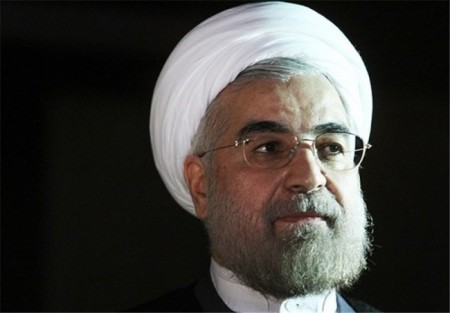

How Iran Saved Obama’s “Blame America” Foreign Policy

April 29, 2015

How Iran Saved Obama’s “Blame America” Foreign Policy, Front Page Magazine, April 28, 2015

rouh-450x313

Obama’s public rejection of every ally, from Israel to Egypt to Saudi Arabia, has finally created the Post-American Middle East that his “Blame America” doctrine sought. The Post-American Middle East is a hive of terrorist groups and a region of nuclear arms races where murderous despots with vast armies dream of resurrecting the Ottoman Empire, the Persian Empire and the Abbasid Caliphate.

*********************

Obama’s Middle East policy was doomed to fail because it was based on the myth that everything wrong with the region was America’s fault.

Senator Obama had argued that Iraq would fix itself once we pulled out. Without America, the Iraqis would create a “political solution”. Instead the Shiites used the withdrawal to take over the government and Al Qaeda rebounded to dominate the Sunnis. After years of denying what was going on, he was forced back into Iraq after genocide and beheadings filled every television screen.

From the White House, he deployed the “Iraq Solution” across the Middle East by withdrawing support from American allies and backing terrorist groups like the Muslim Brotherhood. The chaos tore apart the region and turned over entire cities and countries to terrorists.

Egypt went through multiple coups. Street violence in Tunisia wrecked the country and supplied thousands of fighters to ISIS. His regime change war in Libya led to terrorist takeovers of its capital. Al Qaeda nearly took over Mali. Houthi Jihadists backed by Iran took over Yemen’s capital. The Saudis are bombing Yemen. The Egyptians are bombing Libya. The French are still fighting in Mali.

Iran and Al Qaeda have divided up Iraq, Syria and Yemen between themselves.

Withdrawing American power and influence didn’t work because we were never the problem. American soldiers weren’t causing the Sunnis and Shiites to fight each other. They were the only thing preventing it. American power and influence across the Middle East wasn’t holding back freedom and human rights, it was the only thing keeping a modicum of freedom alive in places like Egypt and Tunisia that quickly fell to Islamist rule in the Arab Spring, resulting in street violence, torture, terrorism and military coups.

The left had been fundamentally wrong about the cause of the problems in the Middle East. Obama trashed the region by following its wrongheaded doctrines.

Once the “Blame America” foreign policy has been implemented and the region went to hell, he had no idea what to do next. Intervening in Libya made sense according to the “Blame America” doctrine because Gaddafi had recently cut a deal with the United States and was obstructing the Jihadists who were implementing the local version of the Arab Spring in coordination with the Muslim Brotherhood.

But intervening in Syria didn’t. Assad wasn’t an American ally. Therefore the “Blame America” doctrine said that he should be left alone. But he was obstructing the Arab Spring. Overthrowing him would let the Muslim Brotherhood claim another country, but would alienate Iran and spoil any reconciliation.

Unable to make a final decision, Obama veered back and forth between Iran and the Muslim Brotherhood. Some days he seemed on the verge of bombing Syria and other days he was against even providing the promised weapons to the Sunni rebels. Even his supporters accused him of having no plan.

Syria’s real red line was the one that it had drawn through his foreign policy. Instead of making the Middle East better, his withdrawals had made it worse. And the beneficiaries of his foreign policy, especially the Muslim Brotherhood, were clamoring for more American military intervention.

Even Iraq’s Shiite government, backed by Iran, wanted American intervention.

Obama’s foreign policy had created a new set of untrustworthy client states which had to be kept alive by American intervention. The great joke of his foreign policy was that his new terrorist states acted just like the old dictators they were supposed to replace. They wanted American weapons and soldiers. Their own people hated them and hated America by extension. The climax of the Arab Spring came with crowds in Tahrir Square denouncing Obama and the Muslim Brotherhood for acting as his client state.

The “Blame America” foreign policy had led to even more blame of America. The new “democratic” Islamist governments that he helped bring to power to appease the Arab Street and atone for the sins of supporting the old secular-ish dictators backfired by making the Arab Street hate us more than ever.

Iran saved Obama’s foreign policy. Just as he was stumbling around Syria and weeping at being stuck back in Iraq, the agents of the Iran Lobby suggested that the whole mess could be put back together again. Iran and the US would fight on the same side against ISIS in Syria and Iraq. And this cooperation could be used to hammer out a nuclear accord that would retroactively justify Obama’s Nobel Prize.

The only problem was that everyone else in the region was completely against the idea.

The Iran Lobby threw Obama’s failed foreign policy a lifeline and he grabbed it. The bombing of Syria was off. Assad turned over some WMDs, but went on using others. The US began acting as the air force for Iran’s Shiite militias in Iraq while the Kurds and the Sunni Sheikhs of the Awakening were shut out.

When the Houthis took over Yemen, Obama shrugged. When the Saudis began bombing Yemen, they didn’t tell him because they were afraid the news would leak to Iran. And the administration covertly began pressuring them to stop, confirming that it now took its marching orders from Tehran, not Riyadh.

Obama ignored the vocal opposition, particularly from Israel’s Netanyahu, because the Iran deal was the only thing holding his foreign policy together. It made it seem as if he knew what he was doing. Take away the Iran deal and there was no longer a strategy, just a series of incoherent panicked responses.

That is why he continues to cling to the Iran deal. Without it, the Emperor’s foreign policy is naked.

The Iran deal salvaged the “Blame America” foreign policy by reorienting it away from the Muslim Brotherhood to deal with our great enemy in the region. By acceding to Iran’s nuclear program, Obama could finally fix everything by atoning for America’s biggest foreign policy sin in the region.

Despite his Muslim family background, Obama never understood the Middle East. Instead he looked at the region through a left-wing lens and saw only America’s crimes.

The Sunnis and Shiites, the Arabs, Kurds, Persians and Turkmen, weren’t fighting because of America. They were fighting over differences in religion, ethnicity and clan. The left has always thought that the way to fix the Middle East was to withdraw American influence. Instead doing that destabilized the region and created a power vacuum that Russia and Iran have been more than happy to fill.

Obama’s final foreign policy act was to fall directly into Iran and Al Qaeda’s trap.

Iran and the various Al Qaeda groups had effectively split parts of the region among themselves. By embracing Iran, Obama alienated the Sunni Middle East and shoved entire populations into Al Qaeda’s waiting embrace. He completed the polarizing process that he began with the Arab Spring by selling out the moderates to the extremists and waiting for everyone in the region to love America again.

But the Muslim Brotherhood lost out to its edgier Al Qaeda children. Egypt and the Saudis are scrambling to hold together some sort of Sunni center without the United States and against its wishes. Obama’s alignment with Iran, his rejection of Egypt’s new government and his failure to back the Saudis in Yemen has sent the message that the only legitimate alternative to Al Qaeda is Iran.

That’s not an alternative that most Sunnis can accept. Many would rather stand with Al Qaeda than Iran.

Obama’s public rejection of every ally, from Israel to Egypt to Saudi Arabia, has finally created the Post-American Middle East that his “Blame America” doctrine sought. The Post-American Middle East is a hive of terrorist groups and a region of nuclear arms races where murderous despots with vast armies dream of resurrecting the Ottoman Empire, the Persian Empire and the Abbasid Caliphate.

While genocide goes on, sex slaves are raped under the rule of a Caliph and black flags are unfurled and nuclear weapons are developed to fulfill apocalyptic Islamic prophecies, Obama smiles for the camera and waits for his second Nobel Prize.

It had been America’s fault all along. Now that Iran and Al Qaeda are in charge, everything will be okay.

Hizballah terror attack on Golan stokes face-off between Israel and the Syrian-Hizballah alliance

April 27, 2015

Hizballah terror attack on Golan stokes face-off between Israel and the Syrian-Hizballah alliance, DEBKAfile, April 27, 2015

Israel over SyriaAlleged Israeli air strikes over Syria

Last week, the Obama administration managed to hold back the clash threatening to blow up opposite Yemen by the US, Saudi and Egyptian navies against an Iran convoy. Washington is likely to lean hard on Israel and Tehran to make sure that the current sparring does not run out of control and explode into a military showdown.

If this happened, Tehran would likely refuse to sign the nuclear deal which is nearing conclusion with the world powers led by the US.

*********************

According to Arab media, Israeli executed its third strike against Syrian and Hizballah targets in the Qalamoun area on the Syrian Lebanese border Sunday night, April 26 – shortly after Hizballah attempted to plant an explosive device near an Israeli Golan military post.

But then, Monday morning, anonymous Israeli sources improbably attributed this air strike to possible Syrian opposition action by the Al Qaeda’s Nusra Front.

Hizballah was meanwhile identified as responsible for the thwarted bomb attack on the Israeli Sheita military post guarding the northern Golan border with Syria. “Four terrorists placed an explosive on a fence near Majdel Shams. The air force thwarted the attack, killing all four,” a military spokesman said.
On the face of it, Israel’s purported third air strike over Syrian territory in five days, this time targeting the Wadi a-Sheikh and Al Abasiya regions of the Qalamoun mountains, was in retaliation for the thwarted Hizballah attack on the Golan.

However, DEBKAfile’s military sources give the exchange of blows a different slant: It is more likely to be the onset of a systematic Israeli campaign to wipe out Syrian-Hizballah military bases repositioned on the mountain range as depots and launching-pads for firing long-range missiles into Israel from Syrian territory.

A clue to this objective was offered Sunday night by Defense Minister Moshe Ya’alon in a firm statement that Israel would not permit Iran to arm Hizballah with advanced weapons. He did not explicitly admit to the air strikes of last Wednesday and Saturday,which were reported by Arab TV stations to have hit surface-to-surface missile depots on Qalamoun. But he nearly gave the game away. He accused Iran of trying to arm Hizballah with advanced weapons by every possible route. “We will not allow the delivery of sophisticated weapons to terrorist groups, Hizballah in particular… or allow Hizballah to establish a terror infrastructure on our borders with Israel,” the minister said, adding: “We know how to lay hands on anyone who threatens Israeli citizens, along our borders or even far from them.”

In a previous report, DEBKAfile disclosed that Syrian and Hizballah forces were on the point of conducting an offensive, under Iranian Revolutionary Guards officers, to flush Syrian rebels out of their last remaining pockets on the mountain slopes in order to clear the Syrian-Lebanese highway link for troop and arms convoys between the two countries.

We also reported that Hizballah had already relocated substantial military manpower and missile stocks from northern Lebanon to an enclave it now controlled on the Syrian Qalamoun mountains.

The anonymous sources’ attribution of Sunday night’s air strike to the Nusra Front sounded more like a lame cover story than a serious supposition. The Syrian opposition has never managed to use air power against the armies of Assad and Hizballah. Nusra did capture a few fighter-bombers from the enemy, but never acquired the technical infrastructure, ordnance or trained pilots to fly them.

This improbable theory would in any case contradict the warning message Israel was clearly addressing to Damascus and Hizballah that any violations of Israel’s red lines on their part would be met with action to knock over their military set-up on their shared border, section by section – even at the risk of a showdown with Iran in the Syrian arena.

Israel’s destruction of the Qalamoun war machine would have four far-reaching ramifications:

1. It would impair the Syrian army’s capabilities and strike at the heart of the Assad regime.

2. It would give a strong leg up to the Syrian opposition, especially Al Qaeda’s Nusra Front, which is emerging as the strongest and most effective paramilitary force in the Syrian opposition camp.

3. It would curtail the transformation of the Qalamoun Mts. into Hizballah’s most important forward base of attack against Israel.

It is hard to see Tehran standing by if the sparring escalates further and Israel continues to punch away at the Islamic Republic’s two most valuable strategic assets. Direct action by Iran would not be its style. Tehran would rather put the Syrian army and Hizballah up to stepping up its campaign of terror against Israel, possibly by expanding the arena across two borders into Lebanon and Israel itself.

Last week, the Obama administration managed to hold back the clash threatening to blow up opposite Yemen by the US, Saudi and Egyptian navies against an Iran convoy. Washington is likely to lean hard on Israel and Tehran to make sure that the current sparring does not run out of control and explode into a military showdown.

If this happened, Tehran would likely refuse to sign the nuclear deal which is nearing conclusion with the world powers led by the US.

Large-scale Egyptian army massed for operation to capture eastern Libya from ISIS

April 26, 2015

Large-scale Egyptian army massed for operation to capture eastern Libya from ISIS, DEBKAfile, April 26, 2015

IS in LibyaISIS in occupation of Libyan town of Derna
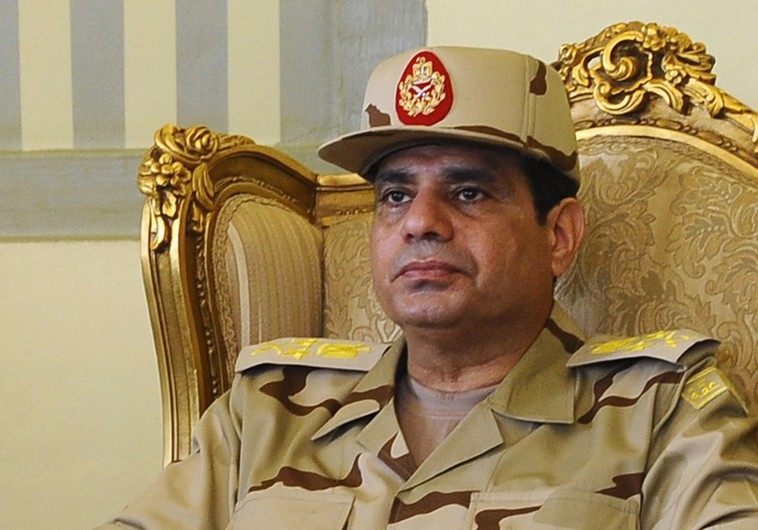
Brennan leaned hard on the Egyptian president to follow Washington’s line, but El-Sisi refused.

*************

The Middle East is on the brink of its fourth war (after Syria, Iraq and Yemen). DEBKAfile’s military and intelligence sources report that Egypt is massing large-scale ground and air forces in the Western Desert along the Libyan border, in preparation for a military campaign to capture eastern Libya – Cyrenaica – from the Islamist State of Syria and Iraq – ISIS – occupation.

The substantial naval and marine forces assembling at Egypt’s Mediterranean ports indicate the possible launching of the offensive by dropping Egyptian marines on the Libyan coast around Derna (pop: 100,000), which ISIS has made its provincial capital. They may be accompanied by simultaneous landings of paratroops from the air.

For President Abdel-Fatteh El-Sisi, ISIS’s presence in eastern Libya (as well as Sinai) poses an unacceptable peril to his country. He has been warned in a number of intelligence reports that the Islamic State’s terrorists have already penetrated some Egyptian towns and even infiltrated certain army units.

To counter the Egyptian plan of campaign, ISIS is rushing reinforcements to eastern Libya from Syria and Iraq. From Syria, they are traveling by air or sea through the Mediterranean; from Iraq, through the Sinai Peninsula, whence oil and drug rings smuggle them across the Suez Canal and Egypt.

DEBKAfile’s sources reveal that Egypt’s projected invasion of Libya was high on the agenda of American CIA Director John Brennan’s unannounced visit to Cairo on April 19 for a meeting with the president.

In reply to his visitor’s demand for precise information on Egypt’s Libyan campaign. President El-Sisi offered an assurance that he had no intention of keeping the Egyptian army in Libya. He would pull the troops out after defeating and disarming the jihadis and hand power to the Libyan government, which has established its seat in the eastern town of Tobruk near the Egyptian border and home to Libyan military bases and oil terminals.

The Tobruk government was set up by Libyan members of parliament who fled the capital Tripoli when it was overrun by a group of extremist Islamist militias, known as the Libyan Dawn, which included elements associated with Al Qaeda in the Islamic Maghreb – AQIM.

The head of the this government is Abdullah al-Thinni, who is recognized by the United States and most Western governments as the legitimate prime minister of Libya.

President El-Sisi was not surprised to hear from the CIA director that the Obama administration objects to a direct Egyptian invasion of Libya, but would not oppose Cairo acting through local Libyan militias. Brennan put forward the name of Gen. Khalifa Hifter, a Libyan-American, who set up a militia in the eastern Libyan town of Benghazi to fight the Islamists, aided by Libyan army units based in the region.

On March 2, Prime Minister al-Thinni and the Tobruk parliament appointed Gen. Hifter commander-in-chief of the Libyan army, promoting him to the rank of lieutenant general. He was entrusted with two missions: To liberate Libya from the clutches of the Islamic militias and to rebuild the national army.
DEBKAfile’s military sources disclose that, for the past six months, the Egyptian president has given Hifter his support and even supplied him with weapons. But he does not see him as a sufficiently powerful and emblematic figure to unify the Libyan nation.

Brennan leaned hard on the Egyptian president to follow Washington’s line, but El-Sisi refused.

Their differences on the Libyan campaign were reflected by omission in the joint communiqué they issued after their conversation: After discussing “regional issues, terrorism and ways of enhancing bilateral relations, the two sides agreed to continue consultation and coordination on issues of mutual interest.”

Interestingly, Egypt is ready to throw ground, sea and air forces into its offensive in Libya, while at the same time abstaining from deploying air or ground power in the Yemeni conflict, although it is a member of the Saudi-led coalition fighting Iran-backed rebels.

Egypt is already fighting the Islamic State’s branch in Sinai. It is now gearing up to tackle the Islamist peril on its western border.

China Warns Of Rising Nuclear Threat From North Korea – Lou Dobbs

April 24, 2015

China Warns Of Rising Nuclear Threat From North Korea – Lou Dobbs, Fox News via You Tube, April 23, 2015

(The first four minutes is about the mess in Yemen and the last four minutes is about the North Korean nuclear threat. — DM)


Iranian ship convoy moves toward Yemen, alarming US officials

April 18, 2015

Iranian ship convoy moves toward Yemen, alarming US officials, The HillKristina Wong, April 17, 2015

Iran sent a destroyer and another vessel to waters near Yemen last week but said it was part of a routine counter-piracy mission. 

What’s unusual about the new deployment, which set out this week, is that the Iranians are not trying to conceal it, officials said. Instead, they appear to be trying to “communicate it” to the U.S. and its allies in the Gulf.

********************

U.S. military officials are concerned that Iran’s support for Houthi rebels in Yemen could spark a confrontation with Saudi Arabia and plunge the region into sectarian war. 

Iran is sending an armada of seven to nine ships — some with weapons — toward Yemen in a potential attempt to resupply the Shia Houthi rebels, according to two U.S. defense officials.

Officials fear the move could lead to a showdown with the U.S. or other members of a Saudi-led coalition, which is enforcing a naval blockade of Yemen and is conducting its fourth week of airstrikes against the Houthis.

Iran sent a destroyer and another vessel to waters near Yemen last week but said it was part of a routine counter-piracy mission.

What’s unusual about the new deployment, which set out this week, is that the Iranians are not trying to conceal it, officials said. Instead, they appear to be trying to “communicate it” to the U.S. and its allies in the Gulf.

It is not clear what will happen as the convoy comes closer to Yemen. Saudi Arabia has deployed ships around Yemen to enforce the blockade, as has Egypt. An official said the ship convoy could try to land at a port in Aden, which the Houthis have taken over.

Although the U.S. is assisting with the Saudi-led air campaign, it is not participating in the naval blockade of Yemen, said U.S. Central Command spokesman Col. Pat Ryder.

However, the U.S. Navy is in the region and has already “consensually boarded” one Panamanian-flagged ship in the Red Sea on April 1 on the suspicion it was illegally carrying arms for the Houthis.

None were found, but the move raised alarm bells in Washington over an increasingly active U.S. military role in the conflict. The Pentagon indicated this week that more boardings could occur.

“We will continue to vigilantly defend freedom of navigation and to conduct consensual searches in an effort to ensure that drugs, human trafficking, weapons trafficking and other contraband are limited,” Army Col. Steve Warren said on Monday.

Officials fear a naval confrontation between Iran and Saudi Arabia could escalate what has become a proxy war between the two countries.

The U.S. has been supporting the airstrikes with intelligence and logistical support, and last week began refueling Saudi fighter jets. Administration officials say it is important to support Saudi Arabia.

Earlier this week, a senior State Department official said the U.S. would try to ensure that a United Nations Security Council arms embargo against Houthi leadership is enforced.

“We will be taking very careful look and examining very closely efforts to violate the embargo,” senior State Department official Gerald Feierstein told the House Foreign Affairs Committee.

The deepening of the conflict comes as the U.S. hopes to reach a deal with Iran to roll back its nuclear program in exchange for sanctions relief. Officials say U.S. support for the Saudi-led coalition has not affected the negotiations with Iran.

The conflict also threatens to complicate U.S.’s relations with Iraq. Iraqi Prime Minister Haider al-Abadi, an Iran ally, criticized Saudi Arabia for its airstrike campaign during a visit to Washington this week.

U.S. officials say they are unsure why Iran is making the brazen move. One theory they have floated is that the Saudi-led coalition has effectively blockaded any air routes into Yemen and there are no other ways to resupply the Houthis.

Another theory is that Iran is trying to distract the coalition from another ship it has tried hard to conceal that is currently docked at Oman — a potential land route for smuggling arms into Yemen.

Yet another theory is that Iran wants to force a confrontation with Saudi Arabia that it believes it will win, because Iran views the Saudi military as weak and suspects the U.S. lacks the willpower to support its Gulf ally.

Earlier this week, Iranian Supreme Leader Ali Khamenei on Twitter taunted Saudi Arabia, calling its military puny and smaller than Israel’s. He also said the air campaign was tantamount to genocide of innocent Yemeni civilians and that the U.S. would also fail in Yemen.

U.S. officials say they hope the airstrikes will force Houthis to the negotiating table in order to restore stability in Yemen, where America faces a terrorist threat from al Qaeda in the Arabian Peninsula (AQAP).

“We’re assisting the Saudis to protect their own territory and to conduct operations that are designed to lead ultimately to a political settlement to Yemen,” said Defense Secretary Ashton Carter on Thursday.

“That’s good for the people of Yemen, first and foremost. It’s good for Saudi Arabia that doesn’t need this on its southern border.  And … it’s good for us, among other reasons, because of AQAP’s presence in Yemen. But for that to occur, it’ll require more than military action,” he added.

Arab world: Egypt’s dangerous stalemate

April 17, 2015

Arab world: Egypt’s dangerous stalemate, Jerusalem Post, Zvi Mazel, April 17, 2015

Egypt's Defense Minister Abdel Fattah al-Sisi is seen during a news conference in Cairo on the release of seven members of the Egyptian security forces kidnapped by Islamist militants in SinaiAbdul Fattah Sisi. (photo credit:REUTERS)

Vainly did the Egyptian president try to convince the US-led coalition against Islamic State to extend its activities to the whole Middle East. But US President Barack Obama is unwilling to acknowledge that there is a regional and international dimension to the movement.

*****************

Egyptian President Abdel Fattah al-Sisi is fighting for his country’s survival – and his own.

Islamic terrorism is not abating, hampering vital efforts to bring a better life to the people through a revitalized economy and political stability. Sisi knows he has to show results soon to prevent Egypt from slipping back into anarchy and chaos.

Despite the army’s all-out effort to defeat Islamist insurgency in Sinai, there is no end in sight. F-16 fighter planes and Apache helicopters have joined the campaign, security forces have killed or wounded hundreds of terrorists, destroying their haunts and their training groups – but more keep coming.

Ansar Bayt al-Maqdis gunmen, who have pledged allegiance to Islamic State, continue making daring raids against police stations and other security targets, leading to loss of life and heavy damage.

In one instance on April 14, the commander of the central police station of El-Arish was wounded in a raid; the assailants were able to escape.

For all intents and purposes the situation has reached a stalemate, though the army has managed to contain the terrorists in the northern part of the Sinai Peninsula, preventing them from extending their activities to the south and to the Suez Canal – where they could have inflicted untold damage to economic and security infrastructure, and severely undermined public morale.

However, there are still sporadic terrorist attacks in Cairo and other parts of the country.

Bombs explode, killing and maiming; power lines are blasted. A number of terrorist groups are involved, from Ansar Bayt al-Maqdis and the so-called Soldiers of Egypt to the ever-present Muslim Brotherhood; many of their members have been arrested, their leaders sentenced to death – though no one has been executed yet – but they keep on demonstrating against the regime (though in diminishing numbers).

In Yemen, Iranian-backed Houthi tribes are poised to take over the strategic Red Sea straits, threatening free passage to the Suez Canal – a reminder, if one was needed, of the fact that Islamic terrorism knows no border.

Vainly did the Egyptian president try to convince the US-led coalition against Islamic State to extend its activities to the whole Middle East. But US President Barack Obama is unwilling to acknowledge that there is a regional and international dimension to the movement.

The fact remains that Islamic State dispatches terrorists and weapons to Ansar Bayt al-Maqdis in the Sinai Peninsula from Libya, where there is an unlimited supply of both. No matter how many guerrillas are intercepted or killed by the Egyptian army, more are coming through the vast mountainous and desert region, along the 1,200-km border between the two countries.

Then there is Gaza, where terrorists can find refuge, regroup and train, and where new weapons can be tested.

Cairo is desperately trying to cut off the peninsula from the Strip. The Rafah crossing is closed most of the time, and when it opens it is under the strict supervision of Egyptian authorities. More than 2,000 contraband tunnels have been destroyed and a 1-km.-deep sanitized zone has been installed; thousands of families have been uprooted.

They have been compensated but resentment is high, and the move has prompted widespread condemnation by human rights associations.

Against this backdrop, the regime is weighing extending the zone to 5 km. and making the digging of contraband tunnels punishable by life imprisonment. A court in Cairo has forbidden Hamas activities in Egypt, and another has declared Hamas a terrorist organization; however, the central government is appealing that decision for the sake of its ongoing dialogue with Gaza’s leaders on the Palestinian issue.

The Iranian-Houthi threat has led Sisi to call for the creation of a rapid-response Arab unit, as Saudi Arabia has rallied neighboring states to form a coalition against the rebels in Yemen – who are threatening its border in the south, and were about to take control of the strategic port of Aden.

Though the creation of a united Arab unit was decided at a summit in Sharm e-Sheikh last month, implementation will not be easy. A number of states such as Lebanon and Iraq have warned they would not allow any infringement to their sovereignty; some Gulf states and Jordan have been more forthcoming, and meetings between army commanders are scheduled.

The problem is that these countries are not keen to risk their troops in a ground operation in neighboring states. Armies are the traditional bulwark of Arab regimes; a failed intervention outside their borders could cause their downfall. Nevertheless, since the West is largely indifferent to what is happening, Sisi and his Gulf allies have no choice but to unite against the common threat of Islamic terrorism, be it Sunni or Shi’ite.

On the home front, Sisi has launched a series of impressive projects – a new canal parallel to the old one to enable simultaneous crossing in both directions, thereby doubling receipts; an industrial, commercial and tourist zone between the two canals; 3,000 km of modern roads. Perhaps his most ambitious project is the creation of a new administrative capital city east of Cairo, at an estimated cost of $45 billion. Arab states have rallied to his side, pledging billions of dollars at a special economic summit last month; international groups have indicated their interest in some of the projects – a significant victory for the embattled president.

But Egypt’s endemic problems – population explosion, illiteracy leading to widespread unemployment and enduring poverty, as well as corruption on an epic scale – are not making Sisi’s task easier.

He is also calling to reform Islam by purging it of its extremist discourse, and has already instructed the Education Ministry to eliminate extremist content such as the call to jihad and attacks on other religions.

Meanwhile, the political situation is still unclear and elections are repeatedly postponed, allegedly because of ambiguities in the election law.

The fact is that the president has not been able to secure a large enough block to ensure his electoral victory, while the Muslim Brotherhood – though banned – and other Islamic parties can still muster a sizable vote.

Can Sisi win all his battles? How long will the Egyptian people wait for some much-needed economic results? Egypt is going it alone, still waiting for the West to understand that Cairo remains its best ally against the rising tide of terrorism now lapping at its shores.

King Abdullah II: We’re War With “Outlaws Of Islam” – Special Report

April 14, 2015

King Abdullah II: We’re War With “Outlaws Of Islam” – Special Report via You Tube, April 13, 2015

(He seems quite diplomatic, but what does he actually think? — DM)


After terrorists claim 13 lives in Sinai, El-Sisi reshuffles top army, navy, intelligence and Suez Canal chiefs

April 13, 2015

After terrorists claim 13 lives in Sinai, El-Sisi reshuffles top army, navy, intelligence and Suez Canal chiefs, DEBKAfile, April 13,2015

police_station_in_the_city_of_al-Arish12.4.15Devastated Egyptian police station in El Arish

DEBKAfile’s military sources report that northern Sinai, due to the increasing frequency and scale of terrorist attacks, is beginning to resemble Baghdad, which on that same Sunday was struck by four ISIS car bombs and other devices, which killed at least 12 people and injured dozens.

*********************

President Abdel-Fatteh El-Sisi was spurred Sunday, April 12, to make a clean sweep of his top military intelligence, navy and Second Field Army command (responsible for Sinai and the Suez Canal) by another two deadly attacks in northern Sinai by Ansar Bayt al-Maqdis, the lslamic State’s local branch. They claimed 13 deaths, seven of them Egyptian troops, including two officers, and injured more than 50.

The Sinai terrorists have played havoc with Sinai security since pledging loyalty to and gained support from the Islamic State of Iraq and the Levant. The Egyptian military, even after being substantially reinforced and imposing a state of emergency, has been unable to stem the deadly spiral and paid for it with a heavy toll of casualties.

In the first attack Sunday, six soldiers, including two officers, were killed when a roadside bomb struck their armored vehicle traveling south of el-Arish, the capital of North Sinai. Twelve hours later, a suicide car bomber detonated his vehicle at the entrance of a large police station in el-Arish, killing seven people, including five policemen, and injuring at least 40, many of them civilians.

In a third smaller attack, militants clashed with soldiers at a mobile checkpoint in Rafah, south of el-Arish, wounding one police officer and two soldiers.

Saturday, April 11, Ansar Bayt al-Maqdas, using the methods of its new parent, released a video clip depicting an Egyptian soldier being shot dead and the decapitation of an Egyptian civilian. Both victims were snatched during an attack on April 2, which left 15 soldiers dead, on an Egyptian army position in the El Arish vicinity.

DEBKAfile’s military sources report that northern Sinai, due to the increasing frequency and scale of terrorist attacks, is beginning to resemble Baghdad, which on that same Sunday was struck by four ISIS car bombs and other devices, which killed at least 12 people and injured dozens.

Before the thunder of the blasts died down in Sinai, the Egyptian president announced a major reshuffle of his military, security and intelligence ranks.

The most senior officer to be sacked was military intelligence chief, Maj. Gen. Salah El-Badry. He was replaced by Gen. Mohamed al-Shahat, a former commander of the Second Field Army, which is the current backbone of the army force fighting the Islamists terrorists in northern Sinai.

Gen. Nasser al-Assi is the new commander of the Second Army. Our military sources report that al-Assi spent some months in northern Sinai on a personal assignment on behalf of the president and returned to Cairo with new recommendations for combating the terrorists.

In another key change, Rear Admiral Osama El-Gendy was replaced as commander of the Egyptian Navy by Rear Admiral Osama Mounir.

The navy’s role is increasingly prominent since Egyptian warships were deployed in the last two weeks off the coast of Yemen to secure the strategically vital Bab el-Mandab Strait — the gateway to the Suez Canal – against Iranian-backed Houthi rebel control. Their guns have been trained on the Yemeni port of Aden in a running barrage to prevent the rebels and their allies, the mutinous Yemeni army’s  212nd Brigade, from overrunning the town.

The Navy’s role in the Yemen war makes a change of commanders in mid-combat highly unusual. However, it had become just as urgent at this stage to shift Rear Adm El-Gendy from the Navy to the top post in the Suez Canal Authority, to take charge of one of the most important seaways in the world, which had became a highway from the rampant smuggling of the arms and fighters nourishing ISIS terrorist outposts in Sinai.

DEBKAfile reports that ships from Libya and Jordan carry the contraband by sea and unload it at secret dropping-off points on the Sinai Peninsula’s western Mediterranean and the eastern Gulf of Aqaba coasts. Some of the goods are conveyed from Libya via the Suez Canal via the towns of Suez, Ismailia and Port Said, whence smuggling rings based on the banks of the waterway collect them by boat.

Tunnels between the Gaza Strip and Sinai are also an important smuggling route for supplying terrorist groups. The Egyptian military reshuffle was accompanied by an amendment to the penal code by presidential decree which raised the penalty for building or using cross-border tunnels to life in jail. The penalty also applies to people with knowledge of tunnels who fail to report them to the authorities. The Egyptian government was authorized to seize buildings at the top of tunnels and equipment for digging them.

Could Saudi Arabia Need Israel More than Vice Versa?

April 12, 2015

Could Saudi Arabia Need Israel More than Vice Versa? Israel National News, Gedalyah Reback, April 12, 2015

Israel’s status as a regional superpower is unusual for its lacking a reliable set of local allies. Even where security ties with Egypt, Jordan and Saudi Arabia might be strong, the country is forced to keep those ties in the background. Regardless, it exerts a degree of influence just by its own strategic value. While ties are not public, they are also not available for public scrutiny, perhaps enhancing the relationship opportunities with the above mentioned countries as well as other Arab states.

“Rather than a charm offensive,” asserts Robert Kappel of the German Institute of Global and Area Studies, “Israel needs an assertive regional foreign policy” in order to gain more allies.

But is that really true?

“I don’t think that it’s either-or,” says Professor Eytan Gilboa of Bar Ilan University. “I think Israel has a regional policy. We don’t see it but it collaborates with Arab countries and the Persian Gulf, especially on Iran and much more on counter-terrorism. It has a regional policy but it’s undercover.”

Solving the Israeli-Palestinian Conflict is not a Condition for an Alliance

Turning back specifically to Kappel, Gilboa states “I think he means to use it to deal with the Palestinian issue; then comes the Arab Peace Initiative. The assumption is the PA is unable, unable, to reach an agreement with Israel.”

Gilboa sees an Arab desire to expand relations with Israel in spite of the conflict with the Palestinians. Thus, the Arab Peace Initiative might be evidence the Arab countries are eager to reach out with a public offer that would allow them to open the door for Jerusalem without necessarily having to seal a deal on the conflict.

“I reject one claim: that resolution of the Israeli-Palestinian issue is a condition for a regional alliance. The reason for this is simple – all these countries couldn’t care less about the Palestinians. They have an interest in blocking Iran and extremist Islamic organizations. They made all kinds of statements to the contrary but that is not the issue. I don’t think there’s a linkage here.”

Pressing his point, Gilboa says “There’s much less opportunity for regional pressure on the Palestinians than most people think. ‘Collaboration’ is a euphemism for security cooperation on ‘negative interests.’”

Those negative interests are opposition to common regional security challenges like the above mentioned Iran and Islamist terrorist organizations. But to create an alliance, you need much more than common enemies, says Gilboa – you need common interests.

“Turkey ambivalent to ISIS – they share an ideology but still see it as a competitor. Erdogan would like to revive the Ottoman Empire where a non-Arab country leads the Arab world. Where you see this kind of geopolitics, there are a lot of opportunities for collaboration with these countries.”

And actually, “there’s criticism of Israel for not exploiting the situation,” says Gilboa.

New Countries?

When Arutz Sheva asked if Israel’s chances for regional alliances might actually increase if Syria were to collapse into several smaller states or the Iraqi Kurdish Regional Government (KRG) were to become a full-fledged independent state, Gilboa sees the idea as having validity.

“I think this is a valid point. I am only hearing that Israel is collaborating with the Kurds there and you can do a little bit more, but it is a lot more than it used to be. The alliance with Turkey had prohibited close collaboration with the Kurds. But now that the relationship is bad, this condition is nonexistent. I think indeed they could do more.”

Focusing on the much more developed autonomy, infrastructure and ambitions of the Iraqi Kurds than other groups that could emerge in Syria, Gilboa says Kurdistan could definitely become a game-changer in the region’s mixture of waxing and waning alliances. Most significantly, it could be something that does not necessarily replace Arab states as a reliable ally, but actually enhances the chances of a strong alliance between those Arab countries and Israel.

“I also think there is room for a strategic alliance between Israel and pro-US Arab states. Not just potential between Israel and the non-Arab groups, but collaboration with Israel, non-Arab states and those emerging new political entities in the Middle East. It could be done on a bilateral basis first – perhaps between Israel and Kurdistan – or multilateral. Once you gain influence with a group like the Kurds, you could translate that into the other (multilateral) type of alliance.”

Israel and Kurdistan have a long history of both covert and overt relations, especially on security. Kurdistan might then be an example of an emerging country where Israel could carry more influence than the Saudis (assuming Kurdistan is able to gain more autonomy or full sovereignty). Saudi Arabia’s diplomatic and military clout is still behind that of Israel, according to Gilboa.

“Saudi Arabia’s power is limited to its ability to manipulate oil markets, but their strength is precarious as major importers like the United States become self-sufficient in that realm. Even their military strength might turn out to be limited as its operation in Yemen is one of the largest it has ever undertaken. The assumption the Saudis might have strong influence over Pakistan and could persuade Islamabad to sell Riyadh a nuclear bomb to pull ahead of the Iranians has been thrown into doubt by Pakistan’s decision not to join the military operation against the Houthis.”

Ultimately, it might be Israel’s power that the Saudis need more.

Anything but a Saudi win (in Yemen) would not be good for Saudi Arabia,” emphasizes Gilboa. On the other hand, “Israel is much stronger diplomatically, militarily and its society is much more vibrant.”