Archive for the ‘Egypt’ category

Doomed Russian jet did not issue a distress call: report

November 1, 2015

Doomed Russian jet did not issue a distress call: report, DEBKAfile, November 1, 2015

The Russian passenger plane that crashed in the Sinai Peninsula on Saturday did not send out any distress call, reports said Sunday, meaning that the plane suddenly blew up. A number of Israeli commentators continue to claim, like Egypt, that the pilots reported a technical problem to the Egyptian control tower, and that the plane broke in half during the flight. However, there is no basis to those reports.

Egypt’s War on Terror

October 20, 2015

Egypt’s War on Terror, Israel DefenseDr. Shaul Shay, October 20, 2015

AP_568967571149An Egyptian armored vehicle patrols on the Egyptian side of the border, Thursday, July 2, 2015 (Photo: AP)

The Egyptian army has launched operation “Martyr’s Right” – the largest and most comprehensive operation aimed at rooting out and killing militants in North Sinai. The operation is just one campaign of many launched by the government in response to the wave of terrorist attacks.

The Second Field Army units, the Commandos and anti-terrorism units with the support of air force attacked the terrorist hotbeds in North Sinai. The Egyptian Navy participates in the operation to tighten the grip on the terrorists and prevent them from escaping via sea as well as to cut the supplies provided to the terrorists.

North Sinai, which borders Israel and the Palestinian Gaza Strip, is a stronghold of Islamist militant group Ansar Beit Al-Maqdis, (known today as Wilayat Sinai) which pledged its allegiance to ISIS in 2014.

The Egyptian army has been battling a decade-long militant insurgency in North Sinai, which has spiked in the last two years following the ouster of Islamist president Mohamed Morsi in July 2013.

Ansar Beit Al-Maqdis has claimed responsibility for some of the deadliest attacks in Egypt. In October 2014, Ansar Beit Al-Maqdis claimed responsibility for an attack that killed as many as 30 soldiers and in July 2015 the group mounted its largest attack on Egypt’s security forces in North Sinai.

Days before operation “Martyr’s Right”, Ansar Beit Al-Maqdis released a video showing attacks it had carried out on military forces.

Operation “Martyr’s Right” – Phase 1

The operation against Islamist militants, was launched on September 8, 2015, at dawn, in the towns of Rafah, Arish, and Sheikh Zuweid in the northern part of Sinai peninsula.

The operation included the following steps:

The army said it has beefed up security around major government institutions and private buildings in the region as well as roads.

Army troops along with anti-terror police units attacked hideouts of Islamist militants, killing many terrorists and destroying vehicles and equipment used by the terrorists.

The military has stopped and arrested many of the North Sinai-based militant leaders and organizers of terrorist operations.

The Air force launched massive air strikes to repel the militants, killing tens of insurgents.

The security forces exercised the utmost care to save lives, public and private property in Sinai.

The army hailed efforts exerted by the citizens in Sinai in the anti-terror fight, saying, health, social and daily life services are guaranteed. The statement lauded unprecedented harmony of the military forces, police and the residents of Sinai to restore stability and security in the peninsula.

The border with Gaza strip – a tunnel was destroyed under a house in Rafah. Military costumes, telescopes, advanced guns, ammunition, a bipod for a sniper rifle and satellite communication devices were found inside the tunnel. The Egyptian authorities have also begun flooding its buffer zone along borders with Gaza to destroy remaining tunnels and prevent future digging.

The Egyptian army announced the end of the first stage of the operation on September 22, 2015, after the “achievement of its primary objectives,” which reportedly included the killing of over 500 militants and destroying various “terrorist” hideouts and artillery storage facilities in North Sinai.

The operation also extended to the Bahariya Oasis in western Egypt, where the army killed 10 militants who were planning to execute terrorist and criminal acts against vital targets and foreign interests during the Eid vacation, scheduled to take place from 23 to 27 September 2015.

Operation “Martyr’s Right” – Phase 2

The Egyptian armed forces announced on October 8, 2015, the commencement of the second phase of operation “Martyr’s Right” in North Sinai in the cities of Sheikh Zuweid, Rafah, and Arish. Phase two of the operation, according to a statement released by the army after the conclusion of the first phase, will “pave the road for creating suitable conditions to start development projects in Sinai.”

The second phase includes:

The commencement of numerous development projects and planned execution of reconstructions in North Sinai in the cities of Sheikh Zuweid, Arish, and Rafah.

The armed forces announced the dispatch of a convoy loaded with medical supplies and construction materials, as well as food for the people of North Sinai.

The armed forces are preparing for the construction of the new town of Rafah, which will include 1200 housing units as well as a hospital and schools.

The second stage of “Martyr’s Right” includes plans to build 27 water desalination plants as well as water tanks and new roads.

Summary

Egypt’s army latest campaign in North Sinai, operation “Martyr’s Right” is the largest and most comprehensive operation aimed at rooting out and killing terrorists.

During the first phase of the operation  according to the Egyptian military spokesman (stated on its official Facebook page) the military was able to combat and seize weapons and ammunition storage places and take over main roads in the area in addition to destroying large numbers of vehicles including 4WD, motor bikes and communication devices.

In ten different statements issued daily during the operation, the military alleged that the forces were able to kill 535 terrorists and 578 others were arrested. In an official statement by the military it alleged that it took precautions to take care of civilians and protect them.

President Abdel Fattah El-Sisi has greeted the armed forces over the advent of Eid Al-Adha. In a statement by the Presidency, Sisi said “this Eid provides a sublime value of sacrifice that all of us should cherish while serving our nation to realize security and stability for a better future for our kids.”

He lauded the efforts exerted by army and police personnel to eradicate terror in Sinai. He said they sacrifice their souls to defend their nation and confront terrorism and extremism.

He hailed the achievements realized during the first stage of the operation “Martyr’s Right” in Sinai that have largely contributed to curbing terror in Egypt. President El-Sisi underlined the importance of proceeding with the second phase with the same resolve and determination of the first stage.

The operation was billed to the Egyptian public as the decisive battle in the state’s ongoing campaign to tackle the country’s terrorist group.  In the press, the operation has been declared a sweeping success, and commentators have predicted that domestic terrorism will be “completely eradicated” by the 6 October, to coincide with the anniversary of what is perceived to be Egypt’s great 1973 military triumph against Israel.

In spite of the optimistic reports in the Egyptian media the war against the Islamic terror in Sinai is not over yet and Egypt will have to deal with Islamic insurgency for long time.

Egypt will begin construction of church dedicated to ISIS martyrs

October 10, 2015

Egypt will begin construction of church dedicated to ISIS martyrs, BreitbartThomad D. Williams, PH.D., October 10, 2015

(The church will be dedicated to those murdered by the Islamic State. In what other Muslim nation would that happen? — DM)

ISIS-21-Christians-YouTube-via-NBC-640x480YouTube via NBC News

President al-Sisi has asked Christians for a greater commitment in politics, urging them to vote and to run for office, to ensure a Christian presence in Parliament.

***********************

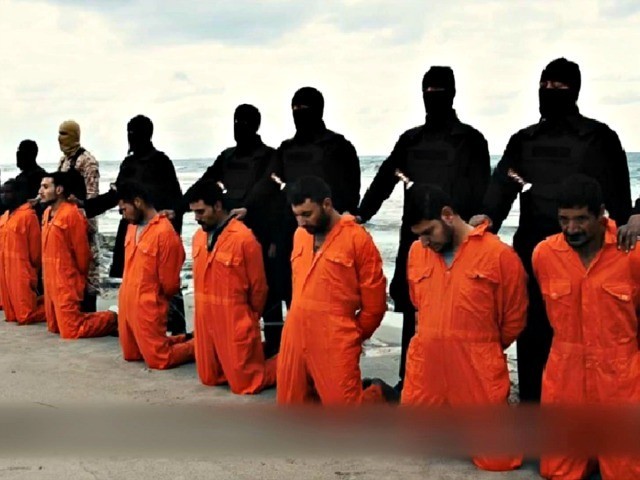
In the coming days, construction will commence on a new church in Egypt dedicated to the martyred Coptic Christians beheaded by the Islamic State in Libya in February.

The new church, bearing the name “Church of the Libyan Martyrs,” will be built in the Minya Governorate, south of the capital, Cairo. The church will cost $1.3 million, half of which has already been raised.

Egyptian President Abdel Fattah al-Sisi granted permission for the construction of the church last February after Islamic State militants murdered 21 Coptic Christians on a Libyan beach.

According to Father Rafic Greiche, spokesman for the Catholic Church in Egypt, the construction is indicative of a slow but noticeable shift taking place in Egyptian culture as well as among state officials. The change comprises improving attitudes toward Christians, but also resistance to Islamic extremism.

Until now, Fr. Greiche said, the procedure involved in getting a church building permit was extremely complex, involving a series of authorizations and approvals, which have been streamlined in this case. The decision also indicates that the government wished to send a strong message against religious discrimination, he said.

Greiche says that there have also been timid attempts at exegesis of the Koran and Islamic texts, accompanied by a ban on women teachers wearing a burka in the classroom and struggles against fundamentalism and extremist sermons in mosques.

Last week, the president of the University of Cairo, Dr. Hossam Kamel, prohibited teachers from wearing the burka in the classroom. They may continue to wear it, if they choose, at home or on the street, but not during teaching time.

Egypt’s top Islamic school, Al-Azhar, followed suit by banning women from wearing the burka in all its affiliate schools after a leading cleric said the burka was only a “tradition” and not necessary in Islam.

With general elections in late October and a possible reform of the Constitution, some expect a greater presence and visibility of Christians in society and in national politics as a result. While a transformation of the mentality naturally takes time, Greiche said, the fact remains that Christians are far more accepted in Egyptian society now than in the past.

President al-Sisi has asked Christians for a greater commitment in politics, urging them to vote and to run for office, to ensure a Christian presence in Parliament.

The High Electoral Commission also decided that at the first stage of the elections on October 17, women wearing the full veil must show their faces if they want to cast their vote.

For some time, there has been a greater determination to limit fundamentalism and extremism in mosques. The priest spoke of a “greater secularism without renouncing the religious element.”

Fast-roping toward war in the Middle East

October 10, 2015

Fast-roping toward war in the Middle East, Washington Times, Ken Allard, October 8, 2015

(Oh well,


Not on our side

— DM)


Home to the Arab world’s largest population and the region’s geopolitical crossroads, Egypt had been a key American strategic ally ever since Anwar Sadat. But Mr. Obama backed the Islamist dictatorship of Mohammed Morsi, even after 30 million Egyptians took to the streets in July, 2013 to force his overthrow. When Mr. Obama cut off military ties with the new Egyptian regime of President Abdel Fattah al-Sisi, the Russians swiftly stepped in to reverse a generation of American statecraft. Unlike the amateurs in the West Wing, Russian strategists and diplomats have no difficulty connecting dots or reading maps.

Neither do our few remaining allies in the Middle East, who can be forgiven for drawing their own conclusions, given the Egyptian reversal, those Syrian red-lines, the recent Iranian arms control deal and the steady expansion of Iranian influence throughout the region.

*****************************

The Russians are rapidly reinforcing their bridgehead in Syria, adding ground troops to their air, marine and naval forces. It is a classic air, land and sea intervention by a military establishment that understands how combined arms build synergies and broaden capabilities. As Jed Babbin pointed out in these pages on Wednesday, the broad-shouldered Russian intervention is the direct counterpoint to the “inaction, indecision and dithering” that have long characterized President Barack Obama’s foreign policy.

Russian President Vladimir Putin has called Mr. Obama’s bluff. He has also deployed a Russian expeditionary force bristling with robust anti-aircraft and ground-attack weapons, even firing cruise missiles from warships in the Caspian Sea. Such a deployment is precisely what Mr. Putin believes necessary to insure that Russian jets and helicopters dominate the skies over Syria. Fox News reports that Russian jets have already shadowed U.S. Predator drones on three occasions, a quiet but unsubtle message that the unmanned aircraft are flying only because of Russian forbearance.

Depending solely on Mr. Putin’s strategic objectives, that prevailing restraint can vanish in an instant. Union and Confederate commanders, for example, routinely practiced counter-reconnaissance throughout the Shenandoah Valley campaign of 1864. When planning a surprise attack or defending a vulnerable position, their first objective was to prevent enemy cavalry from having an unobstructed view of one’s own dispositions. What cavalry did back then, air forces and satellites do today.

Updating an ancient principle for the digital age, Norman Schwarzkopf destroyed Saddam Hussein’s radars, reconnaissance systems and intelligence assets before American airpower launched the opening salvos of Operation Desert Storm. Today’s Russian generals grew up practicing the basic principles of Soviet electronic warfare: Intercept the enemy’s communications, jam him or destroy him. Above all: Use the electromagnetic spectrum and state-of-the-art Russian air defenses to offset hi-tech American airpower. In Syria, that campaign has already begun.

Pandering to an American public that is militarily and strategically illiterate, some presidential candidates have reflexively called for “no-fly zones” to be set up in Syria. Predictably, Donald Trump has even expressed enthusiasm for Mr. Putin’s alleged intent to combat ISIS. But seriously, folks, why would Vladimir Putin go to the considerable trouble of staging the largest foreign deployment of Russian forces since the Cold War only to cater to western conceits about no-fly zones? Even if he did, who would set up and enforce them? Having made a power play to control Syria (and therefore a major chunk of the Middle East) why on earth would Mr. Putin content himself solely with attacking ISIS? (If you are having trouble following this logic, then you probably are a member of the White House staff “perplexed” by Russian objectives.

As a highly trained KGB apparatchik, Syria is not Mr. Putin’s first rodeo. While it has become obligatory in Washington policy salons to deplore Crimea and eastern Ukraine, Egypt’s recent history offers a better clue to Russia’s long-range goals.

Home to the Arab world’s largest population and the region’s geopolitical crossroads, Egypt had been a key American strategic ally ever since Anwar Sadat. But Mr. Obama backed the Islamist dictatorship of Mohammed Morsi, even after 30 million Egyptians took to the streets in July, 2013 to force his overthrow. When Mr. Obama cut off military ties with the new Egyptian regime of President Abdel Fattah al-Sisi, the Russians swiftly stepped in to reverse a generation of American statecraft. Unlike the amateurs in the West Wing, Russian strategists and diplomats have no difficulty connecting dots or reading maps.

Neither do our few remaining allies in the Middle East, who can be forgiven for drawing their own conclusions, given the Egyptian reversal, those Syrian red-lines, the recent Iranian arms control deal and the steady expansion of Iranian influence throughout the region. Because it is a tough and unforgiving neighborhood, where would you place your bets if you lived there? Do you ally yourself with the rising regional power or the one seemingly intent only on defeat and retreat? As a friend points out, “Obama only attacks oilmen, Wall Street, the police, pro-lifers, the NRA, Christians, conservative Republicans, and traditional U.S. allies. Remember when they were the good guys?”

In this confusing world, it is important to remember that things can get worse, particularly given the fog of war with lots of heavily armed aircraft moving at high speeds over surprisingly small operating areas. War is justly famed for confounding the best intentions, for proving that the only assumption which holds true is the one you were certain could never happen.

How ironic that the place where three of the world’s great religions were born might yet spark a global confrontation where no holds are barred.

Why hasn’t Sisi visited Washington yet?

October 9, 2015

Why hasn’t Sisi visited Washington yet? Al-MonitorMohamed Saied, October 8, 2014

(Obama thinks highly of the Islamist Muslim Brotherhood and rejects President Sisi because he supported the Egyptian masses who sought the overthrow of an increasingly dictatorial President Morsi. Obama’s rejection of Sisi’s Egypt pushed it into an alliance with Russia. Now Obama, et al, claim that alliance as a basis for the continuing hostility toward Sisi. Perhaps it is. Obama, et al, have also complained about Egyptian human rights violations in repressing the Muslim Brotherhood; few similar complaints have been made about far greater Saudi and Iranian human rights violations. Sisi is the only president of a Muslim nation who seeks to promote a more secular and hence moderate Islam, to which the Muslim Brotherhood is hostile. Please see also, Egypt’s secular culture minister ruffles Salafi feathers. — DM)

One of the most important issues that may hinder the return of US-Egyptian relations to their previous state is the strong relationship between Cairo and Moscow; Sisi has met his Russian counterpart Vladimir Putin four times so far, and Egypt is currently considered the most important ally of Moscow in the Middle East.

**********************

CAIRO — Ever since Egyptian President Abdel Fattah al-Sisi took office on June 8, 2014, US-Egyptian relations have been deteriorating. This has been further confirmed by the fact that Sisi has not visited Washington yet despite the shuttle visits he has made abroad.

Differences and conflicts plagued the US-Egyptian relationship during the era of President Gamal Abdel Nasser. These conflicts culminated in the 1967 Six-Day War, when diplomatic relations between the two countries were severed because of the economic and military support by the United States to Israel.

However, these relations started to take a positive turn based on the strengthening of the strategic interests shared between the two countries in the wake of the signing of the Camp David Accords with Israel — the US’ permanent ally — on Sept. 17, 1978, between Egyptian President Anwar Sadat and Israeli Prime Minister Menachem Begin, as per the State Information Service affiliated with the Presidency of the Republic.

Only one meeting was held between Presidents Sisi and Barack Obama on the sidelines of the 69th Session of the UN General Assembly in September 2014 in New York, but other than this the two presidents have been settling for phone calls to discuss the latest developments in the region.

According to The Washington Times, Obama refused to meet with Sisi on the sidelines of the 70th session of the UN General Assembly. Egyptian Foreign Minister Sameh Shoukry attributed this in a press statement on Sept. 24 to the mismatching agendas and schedules of the two presidents, which prevented them from holding individual talks.

According to the US Embassy in Egypt’s reports on the situation in the country following the revolution of June 30, 2013, Washington started a “comprehensive review” of its relations with Egypt on the background of the ouster of former Egyptian President Mohammed Morsi.

On Aug. 15, 2013, following the killing of hundreds of Muslim Brotherhood demonstrators in Al-Nahda Square and Rabia al-Adawiya Square, Obama announced the cancellation of the Bright Star maneuvers, which were launched in 1980 following the signing of the peace treaty between Egypt and Israel and consisted of a joint military exercise between the two countries.

By October 2013, the review of relations put a halt to the deal consisting of delivering arms to Egypt. Also in October 2013, the US administration suspended $260 million that was going to be directly transferred to the Egyptian government along with another $300 million in US loan guarantees.

However, in a telephone call on March 13, Obama told Sisi that the military aid amounting to $1.3 billion would continue.

Meanwhile, Dina Badawi, spokeswoman for the US State Department for the Middle East, expressed concerns in a live interview on the ONtv channel April 2 over the state of rights and freedoms in Egypt, and pointed out that aid is aimed at continuing the democratic track and the political reforms in the country.

Abdel Moneim Said, director of the Regional Centre for Strategic Studies, and Shai Feldman, the Judith and Sidney Swartz director at the Crown Center for Middle East Studies, said in a research paper titled “Resetting US-Egyptian relations,” which was published in March 2014 on the center’s website, that at the root of the downturn in the US-Egyptian relations is the huge gap between the two sides’ narratives regarding the events of June 30, 2013.

One of the most important issues that may hinder the return of US-Egyptian relations to their previous state is the strong relationship between Cairo and Moscow; Sisi has met his Russian counterpart Vladimir Putin four times so far, and Egypt is currently considered the most important ally of Moscow in the Middle East.

The dispute between Russia and the United States is in regard to several issues. Chief among these is the Syrian issue; Moscow launched airstrikes on Sept. 30, sparking criticism on the part of Obama during a press conference Oct. 2. Obama said that Moscow is acting “not out of strength, but out of weakness” in support of the losing party. The president was referring to Syrian President Bashar al-Assad, and he pointed out that Russia should help in reaching a political settlement.

Meanwhile, the Egyptian Foreign Ministry did not issue any statements condemning or supporting such strikes.

In January, spokeswoman for the US State Department Jennifer Psaki said during the daily press brief that a meeting she described as “routine” was held with a delegation of members of the former Egyptian parliament from the dissolved Muslim Brotherhood-affiliated Freedom and Justice Party, on the sidelines of their visit to Washington, which was organized and financed by Georgetown University in Washington.

This meeting raised the ire of the Egyptian political leadership, as well-informed sources told Reuters in June that the Egyptian government summoned the US ambassador in Cairo to express displeasure over visits to Washington by figures of the Muslim Brotherhood, which is banned in Egypt.

Concerning the fact that Egypt did not extend an official invitation to Obama to meet with Sisi, or vice versa, Atef el-Ghomri, former director of the office of the Egyptian Al-Ahram newspaper in Washington and a member of the Egyptian Council for Foreign Affairs, said, “There is an ongoing split within the US decision-making circles over the revolution of June 30, 2013, and the toppling of former President Mohammed Morsi, who belongs to the Muslim Brotherhood.”

Ghomri told Al-Monitor that over the past years, Egypt’s relations have been confined to its foreign relations with Washington as it only took into account its regional and international interests. This deprived Egypt of any international initiatives or insights about various issues. Also, Egypt had to give up its pivotal role in the Middle East as far as the African and Arab countries are concerned. This negatively affected Egypt over time.

“The Egyptian leadership is trying to diversify its foreign relations. It resorted to the Eastern bloc led by Russia, as well as East Asia represented by China and Singapore.” Ghomri added.

Washington is concerned about several files managed by the Egyptian leadership, mainly the human rights and political reforms issues. The United States has been expressing those concerns since the June 30 Revolution, when the Muslim Brotherhood was toppled and replaced by a military president.

Under such circumstances, Cairo had to resort to other countries, while the US-Egyptian relations are expected to witness further tension, especially with the differences in views concerning several international issues, namely Syria, Iran and Libya.


Egypt’s secular culture minister ruffles Salafi feathers

October 7, 2015

Egypt’s secular culture minister ruffles Salafi feathers, Al-MonitorRami Galal, October 6, 2015

(Building a secular Muslim state in a region dominated by Islamists is difficult and takes time, as Egypt and Al-Sisi are learning. — DM)

helmiEgypt’s newly appointed Culture Minister Hilmi al-Namnam appears on the Egyptian talk show 25/30, Nov. 11, 2014. (photo by youtube.com/ONtv)

CAIRO — On Sept. 19, a new Egyptian Cabinet, headed by Prime Minister Sherif Ismail, was sworn in before President Abdel Fattah al-Sisi. Among the new ministers is the journalist Hilmi al-Namnam, who holds the culture portfolio. The appointment of Namnam, a secularist, has sparked controversy among Egyptian Salafis and aroused opposition in Saudi Arabia. Such Saudi writers and intellectuals as Jamal Khashoggi, editor-in-chief of Al-Arab News Channel, object to Namnam’s appointment because he opposes Wahhabi Salafism, the religiopoliticial movement that originated in the Nejd region of the Saudi kingdom.

Muhammad ibn Abd al-Wahhab founded what became the Wahhabi movement in the 18th century. In 1744, Wahhab allied with Muhammad ibn Saud, emir of the Nejd and founder of the first Saudi state, to increase followers of the Quran, Sunnism and the words and actions of the Salaf, the first three generations of Muslims. In doing so, they sought to purify Islam of misguided practices negatively affecting the Islamic essence of unity and various forms of heresy.

Immediately after Namnam assumed the culture portfolio, a video of him from July 2013 went viral. In it, Namnam stated, “The political Islam current must leave the political game completely, especially the Salafist Nour Party, which is more dangerous than the Muslim Brotherhood.” He compared the Nour Party to a “whore who extorts her husband if he doesn’t fulfill her demands by escorting someone else.” Namnam also said, “We lie when we say Egypt is a naturally religious country. It is high time we said Egypt is a naturally secular state.”

The Nour Party came in second in the 2012 parliamentary elections. Among its positions at the time were prohibitions on electing women and Copts, saluting the flag and singing the national anthem. The party altered these platforms, however, after lending its stamp of approval in 2013 to the June 30 revolution, although most of its leading figures waivered over what course to take.

On Sept. 19, Shaaban Abdel Aleem, a member of the Nour Party’s board, requested information on the selection criteria used for appointing the new ministers. On the same day, Khashoggi, who is close to Saudi decision-makers, commented on Namnam’s appointment via Twitter. “For whoever is planning mutual cultural exchanges with our brothers in Egypt, the following piece of information could be useful: Namnam is not only a critic of Wahhabism, but abhors it and blames it for all his country’s catastrophes,” Khashoggi tweeted. In a separate tweet, he wrote, “Honestly, for the sake of relations between Saudi Arabia and Egypt, and due to the nature of the regime there, Egypt should not appoint a minister like Namnam, who has taken it too far in offending the kingdom.”

Namnam responded that evening in a phone call to “Al-Ashera Masaa,” a show on Dream TV, saying, “I did not say Wahhabism was the mother of vices. These are not my words, but I am against terrorist groups in general.” He added that he had criticized “attempts to export Wahhabism to Egypt,” but that he “respects the kingdom’s choices, just as the kingdom’s writers should respect Egypt and Egyptians’ choices.”

Khashoggi immediately replied, again on Twitter, writing, “Egypt’s minister of culture claims he respects Wahhabism, but admits that he is against exporting it to Egypt. I would like to tell him that Wahhabism cannot be exported. It is a pillar of the Egyptian revolution and is represented by emblematic figures like the followers of Sheikh Muhammad Abduh.” The Islamic jurist Abduh, an Egyptian, is a founder of Islamic modernism. He spearheaded the movement at the end of the 19th century, beginning of the 20th century to counter intellectual and cultural stagnation and revive the Islamic nation in line with the times.

Khashoggi argued, “Salafism preceded the Muslim Brotherhood in Egypt, as there was the Ansar al-Sunna al-Muhammadiyah group, which remains the oldest reformist Islamic organization in Egypt and the world.” Ansar al-Sunna al-Muhammadiyah seeks absolute unity and the rejection of superstitions and cults. It began in Cairo’s Hadara Mosque in 1926. Many Al-Azhar scholars and Salafist preachers were welcoming of it.

On Oct. 2, tensions escalated when Namnam said during an interview on the Sada al-Balad channel that he was ready to be “martyred to spare Egypt from turning into a caliphate state.” He added that secularism is not the adversary of Islam, as some claim. “Every moderate Muslim is necessarily secular. But, not every secularist is a Muslim,” he said.

The following day, Yasser Borhami, deputy leader of the Salafist Call, implored Sisi to intervene and forbid Namnam from making such statements, which he said contradict the constitution given that Sharia is the primary source of legislation.

Nour Party leader Younes Makhyoun entered the fray Oct. 3, asserting that Namnam should remain impartial or be dismissed. “The person [Sisi] who appointed this minister must oblige him to respect the constitution,” he stated.

Sayyed Mustafa, deputy chair of the Nour Party, told Al-Monitor, “The party did not look into Namnam’s old opinions, because they stem from personal freedom. Each person has the right to believe whatever they wish. But he must realize that he is the minister of culture for 90 million Egyptians. The Ministry of Culture should represent all currents, not just one, be it secular or nonsecular.” He added, “As a minister handling a political portfolio, Namnam must take into consideration Egypt’s foreign relations in general and brotherly relations in particular, like those it shares with Saudi Arabia.”

Zubeida Atta, former dean of Helwan University’s faculty of arts and a member of the Supreme Council of Culture, has a different perspective on the issue. “The concept of secularism that Namnam called for is not a heretical one. It relies on the use of education and its application in countries to improve them and ensure their civil aspects, instead of mixing religion with political life. The latter [mixing of the two] would send Egypt down a sectarian abyss that would threaten its existence,” she told Al-Monitor. “The Nour Party demanded clarifying the selection criteria of ministers. I demand clarifying the criteria that allow such a religious party to participate in political life and in parliamentary elections.”

As for the rumblings from the Gulf, Atta asserted, “Egypt does not dare suggest a Saudi Arabian minister for a certain ministry in the kingdom or criticize a current minister in the Saudi Arabian regime, because this is an internal Saudi Arabian matter. Why is Khashoggi, among others, allowing himself to interfere in the appointment of a minister in the Egyptian Cabinet?”


Progressivism: Easing the Way to Mass Murder

September 26, 2015

Progressivism: Easing the Way to Mass Murder, American ThinkerKenneth Levin, September 26, 2015

The progressive creed as it relates to foreign policy, and as represented most notably by our Progressive-in-Chief, President Obama, holds that the impact of United States behavior in the world has largely been negative. It casts American foreign policy as a variation on European colonialism: exploitative, indifferent to the peoples subjected to American attention and intervention, and inexorably engendering anti-American sentiment among those peoples.

The translation of this comprehension of the world into a progressivism-informed foreign policy has had the effect of making the world safer for mass murder.

President Obama has offered apologies for past American policy to Europeans, to Arabs and the Muslim world more broadly, to the peoples of Central and South America. Various media outlets have noted that, according to a 2011 Wikileaks publication, only a negative response by the Japanese government prevented Mr. Obama from going to Hiroshima in September, 2009, and offering apologies for America’s atomic bomb attack on the city.

But whatever the President’s erstwhile intentions vis-a-vis Hiroshima, the broader focus of his apologetics has been on those nations and peoples that are hostile to America. His key foreign policy syllogism, and that of America’s progressive camp, is that anti-American sentiment is essentially a product of American abuses and that American self-reform and accommodation, a kinder, gentler United States, will bring an end to current hostility and engender a new comity between this nation and its long-time victims.

Most of the world’s nations offer their citizens at best very limited rights. Some authoritarian regimes have close relations with the United States; others are hostile to the United States. One might think that progressives would object to despots of whatever sort and aspire to the liberation of populations from such governments.

But that is not case. The progressivist pattern, rather, is to oppose despotic regimes with which this nation has had positive relations but to be sympathetic and accommodating towards those that have viewed us as the enemy — that view being congruent with progressive orthodoxy.

Moreover, the advocates of genuine democratic reform in closed societies of either sort, pro- or anti-American, are essentially given short shrift. Such advocates typically look to the United States as a model for their aspirations, and that is sufficient to alienate, and preclude any hoped for support from, the progressive camp. Within pro-American authoritarian regimes, American progressives reserve their sympathy primarily for anti-regime forces that likewise look to America as the source of their respective nations’ ills and seek to replace those in power with a despotism of their own, a despotism with an anti-American stamp.

In Latin America, a number of democracies have in recent decades been subverted by left-wing populists who gained power at the ballot box and then proceeded to dismantle their nations’ democratic institutions with, for example, measures against competing parties, a free media and an independent judiciary. The pattern was established by Hugo Chavez, who became president of Venezuela in 1998, and was followed by, among others, Evo Morales in Bolivia and Rafael Correa in Ecuador. The new despots commonly justified their anti-democratic measures as necessary to counter the supposed nefarious aims of parties domestic and foreign, among which the United States is commonly trotted out as key bogeyman.

Obama and his administration displayed a notable sympathy for Chavez and have likewise done so for his emulators. The victims — among media figures or political opponents — that suffered at the hands of the post-democratic strongmen have enjoyed no such sympathy. Amazingly, when President Manuel Zelaya of Honduras likewise sought to undo his nation’s democracy and consolidate his personal control of the country but had his subversion of Honduras’s constitution blocked by the nation’s parliament and courts, the Obama administration backed Zelaya, attacked the “coup” that pushed him from power, and sought his reinstatement.

All of these populist despots were supported, of course, by Castro’s Cuba, which remains the chief example of anti-democratic leftism in Latin America both in terms of its longevity and in terms of its record of thousands murdered and myriad more imprisoned among those who have dared to take issue with the island’s dictatorship. But here, too, the progressive camp, and the Obama administration, have chosen to look upon the regime’s anti-American cant sympathetically, to see the proper way forward as American reform and cultivation of the Castros, and to close their ears and eyes to the regime’s victims.

But this progressivist cultivating of despotic forces which have only their anti-Americanism to recommend them takes on an even more sinister hue — indeed, much more sinister, in terms of the slaughters perpetrated by such forces and essentially ignored by American progressives — in the arena of the Muslim Middle East.

Virtually from its inception, the Obama administration has demonstrated support for the Muslim Brotherhood. The Brotherhood, founded in 1928 and closely linked to the Nazis during World War II, has consistently promoted an anti-American, anti-Western and anti-Semitic agenda. Its offshoot, Hamas, openly declares its dedication not only to the murder of all Israel’s Jews but of all Jews worldwide. Yet the Obama administration has appointed American Muslims associated with the Muslim Brotherhood to government posts and even as liaisons with federal law enforcement and security agencies and the military, and Brotherhood associates have been frequent guests at the White House.

Obama intervened to provide Brotherhood leaders prominent audience placement for his 2009 Cairo speech in which he apologized for America’s past role in the Middle East and sought more generally to propitiate the Arab and broader Muslim world. The President subsequently undercut pro-American Egyptian strongman Hosni Mubarak when the so-called “Arab spring” exploded in Egypt. He helped force Mubarak from office, and, as in Latin America, rather than support moderate, democratically oriented, groups in Egyptian society in the shaping of an alternative to Mubarak (including groups that consisted of Muslims and Coptic Christians working together for a democratic Egypt), threw his support behind the Brotherhood. One expression of this was the administration’s pushing for quick elections, which provided less time for challengers to the Brotherhood — the best organized political group in Egypt — to mount effective campaigns.

The election in June 2012, did bring the Brotherhood to power, with Mohamed Morsi as president and with the White House’s blessing. In the ensuing months, which saw increased murderous Brotherhood assaults on Egypt’s Coptic Christians — more than ten percent of the population and the Middle East’s largest Christian community — as well as Brotherhood cultivation of its Hamas protégés, the Obama administration continued to offer its support. (The only high profile criticism of Morsi came in the wake of the rarest of events, a New York Times front page, above-the-fold piece on Muslim anti-Semitism, in this instance a newly revealed Morsi anti-Semitic diatribe recorded some years earlier. On this occasion, the White House finally felt obliged to break from its typical indulgence of the Brotherhood and its leaders by releasing some comment condemning Morsi’s remarks.)

The Brotherhood ultimately lost popular favor, in large part because of its failure to address Egypt’s economic ills. But Egyptians were also put off by Morsi’s pursuit of the Brotherhood’s Islamist agenda. As, for example, The Economist noted

“… [I]n power the Brotherhood began to abandon its previous caution regarding its foes. Mr Morsi appeared to dismiss secular opponents and minorities as politically negligible. Instead of enacting the deeper reforms that had been a focus of popular revolutionary demands, such as choosing provincial governors by election rather than presidential appointment, or punishing corrupt Mubarak-era officials, the Brothers simply inserted themselves in key positions…

“When nearly all the non-Islamist members of a body charged with drafting a new constitution resigned in November 2012, the Brothers brushed the problem aside. Mr Morsi issued a snap decree rendering him and his constitution-writers immune from court oversight. This was when his popularity started to slide…

“The Brothers pushed through a hastily drafted constitution to a national referendum despite angry criticism from all other parties, and the referendum went Mr Morsi’s way. But his high-handedness lost him a crucial part of the electorate…”

But, again, none of this seemed to dampen Obama’s enthusiasm for Morsi and the Brotherhood, and when the Egyptian army under Abdel Fattah al-Sisi deposed Morsi in July, 2013, with wide popular support, the White House condemned the coup and dismissed its popular backing and the transgressions of the Morsi regime that generated that support. For much of the subsequent two years, the administration has given the pro-American al-Sisi the cold shoulder. Its withholding of military grants and sales to Egypt — only recently softened to some degree — has pushed al-Sisi to renew Egypt’s long dormant military links with Russia.

Before its victory in Egypt, the country where the Muslim Brotherhood had been most successful in gaining power had been Sudan, where its members made up a large part of the government following the 1989 coup d’état by General Omar Hassan al-Bashir. Bashir, who still rules Sudan, led a genocidal campaign against the black and non-Muslim — Christian and animist — population of southern Sudan over many years, until that region successfully seceded and established its independence. He currently continues a campaign of mass murder and displacement of the Muslim — but, again, black rather than Arab — population of Darfur. Bashir is under indictment by the International Criminal Court for genocide in Darfur.

President Obama, during his 2008 campaign as well as in earlier speeches, promised to act against the Darfur genocide. But he has done nothing, even as the slaughter, displacement and suffering continue. On the contrary, the Obama administration has reached out to Bashir. In addition, consistent with the Sudan government’s wishes and despite the horrible consequences for the people of Darfur, the administration appears to be supporting the downsizing of the UN peacekeeping mission in Darfur. Once again, for President Obama, appeasing anti-American entities such as the Muslim Brotherhood, an appeasement consistent with progressive orthodoxy, trumps supporting the victims of those entities.

Obama’s favorite Middle East leader has long been, according to various sources, Turkey’s Recep Tayyip Erdogan. Turkey is, of course, a NATO member and remains so even under Erdogan’s Islamist regime. It is not openly anti-American. But Erdogan has clearly turned away from the West, has developed close ties with the Muslim Brotherhood and has sought to establish himself as the leading figure in a Middle East and broader Muslim world dominated by Islamist policies that emulate those of the Brotherhood.

Having notably described democracy as like a streetcar from which one exits upon reaching one’s destination, Erdogan has done much to undermine Turkish democracy. He has essentially dismantled the nation’s independent judiciary, closed down opposition media and arrested journalists — with Turkey having more journalists incarcerated than either China or Iran — and engineered his Islamist camp’s infiltrating and seizing control over other Turkish institutions, both public and private.

Erdogan was an enthusiastic supporter of the Muslim Brotherhood’s rise to power in Egypt, is reported to have cried over the downfall of Morsi and the Brotherhood, and some months ago declared that he still regards Morsi rather than al-Sisi as Egypt’s president. He remained silent over and apparently indifferent to the Brotherhood’s slaughter of Egyptian Christians both before and during its period in power.

Erdogan likewise supports the Brotherhood offshoot Hamas in its genocidal war against Israel and has, through statements by him and leaders of his party and through his party-controlled media, whipped up domestic anti-Israel and anti-Jewish sentiment. He has opened Turkey as a refuge for members of both Hamas and the Egyptian Brotherhood, and attacks on Israelis, such as the kidnapping and murder of three Israeli teenagers last year, have been orchestrated by senior Hamas agents in Turkey.

Yet none of this seems to have shaken President Obama’s enthusiasm for the Turkish leader. On the contrary, Erdogan’s turning from the West and embracing an agenda close to that of the Brotherhood has, once more consistent with the president’s progressive world view, rendered him worthy of the administration’s propitiation.

Obama’s reaching out to the Iranian mullahs virtually from the moment of his taking office in 2009 is likewise in line with his progressivist comprehension of foreign hostility to the United States as a response to past American transgressions. Following from this, his path to ending the hostility lay in breaking from that past, offering mea culpas for it, and cultivating new policies of understanding and comity.

More particularly, the CIA’s involvement in the overthrow of Iranian Prime Minister Mossadegh in 1953 (which in fact at the time had the support of Iran’s religious establishment) and America’s subsequent ongoing support for Shah Reza Pahlavi are construed as the source of Iranian enmity and the history for which the President seeks to apologize and atone.

The popular uprising that followed the disputed reelection of President Mahmoud Ahmadinejad in June, 2009, led to the regime’s killing of dozens of protesters and the arrest and reported torture and rape of thousands more. Protesters urged the outside world, particularly the United States and President Obama, to support them, but Obama refrained even from offering significant verbal support, apparently not wanting to do anything that might undermine his outreach to the mullahs.

In the ensuing years, torture, including rape, and murder of political prisoners, among them suspected student critics of the regime culled in raids on Iranian universities, have been an ongoing fact of life in Iran. So, too, have been the imprisonment and execution of homosexuals and individuals accused of religious crimes, and abuses targeting members of the embattled Baha’i community and elements of Iran’s ethnic minorities, who represent more than fifty percent of the nation’s population.

But on all of this the Obama administration has been essentially silent as it has pursued its policy of winning over the apocalyptic Iranian theocracy through accommodation and concessions. That policy culminated this summer in the agreement on the Iranian nuclear program, which provides Iran with a path to nuclear weapons and even offers American aid to Iran in defending its nuclear program against sabotage and attack.

Nor has the administration let Iran’s role in killing Americans in Lebanon, Saudi Arabia, Afghanistan and Iraq, and Iran’s assertions of never compromising in its enmity towards America, interfere with Obama’s agenda of pursuing its progressivist fantasies of peace with Iran through accommodation. Nor has the mullahs’ genocidal anti-Semitism, including their openly and repeatedly declared determination to destroy Israel, or their arming and training of Hezb’allah and Hamas to pursue Israel’s annihilation, led to the administration’s wavering from its course. On the contrary, the nuclear agreement appears to offer Iran protection against any Israeli attempt to derail the Islamo-fascist theocracy’s development of nuclear weapons. It also promises to soon provide the regime with tens of billions of dollars in previously embargoed funds, which has already translated into Iran’s embarking on a massive acquisition of advanced warplanes and other major weapons systems from China and Russia and its promising enhanced military aid to Hezb’allah and its other terrorist allies for use in pursuit of Israel’s destruction.

But the off-handedness regarding existential threats to Israel, and regarding as well myriad instances of wholesale human rights abuses, including mass slaughter by those the Obama administration has sought to propitiate, is apparently due to such matters being regarded as of no great consequence when measured against the central international dynamic as construed by progressivism. Administration indifference to the fact of some of those hostile regimes and non-state entities — the objects of American cultivation — having dismantled working democracies or having strangled incipient democratic movements derives from the same worldview. All their various crimes are mere epiphenomena, at most secondary, and potentially an unwelcome distraction, when measured against what is comprehended as the essential world-shaping dynamic: hostility towards America whose roots lie in past American abuses, and an end to hostility and creation of a more peaceful world through American contrition and accommodation.

In this way, Obama’s, and the progressive camp’s, comprehension of reality and playing out of that delusional “reality” on the world stage inexorably makes the world safer for the crimes, including mass murder, of the anti-American forces that are the object of progressivist propitiation.

 

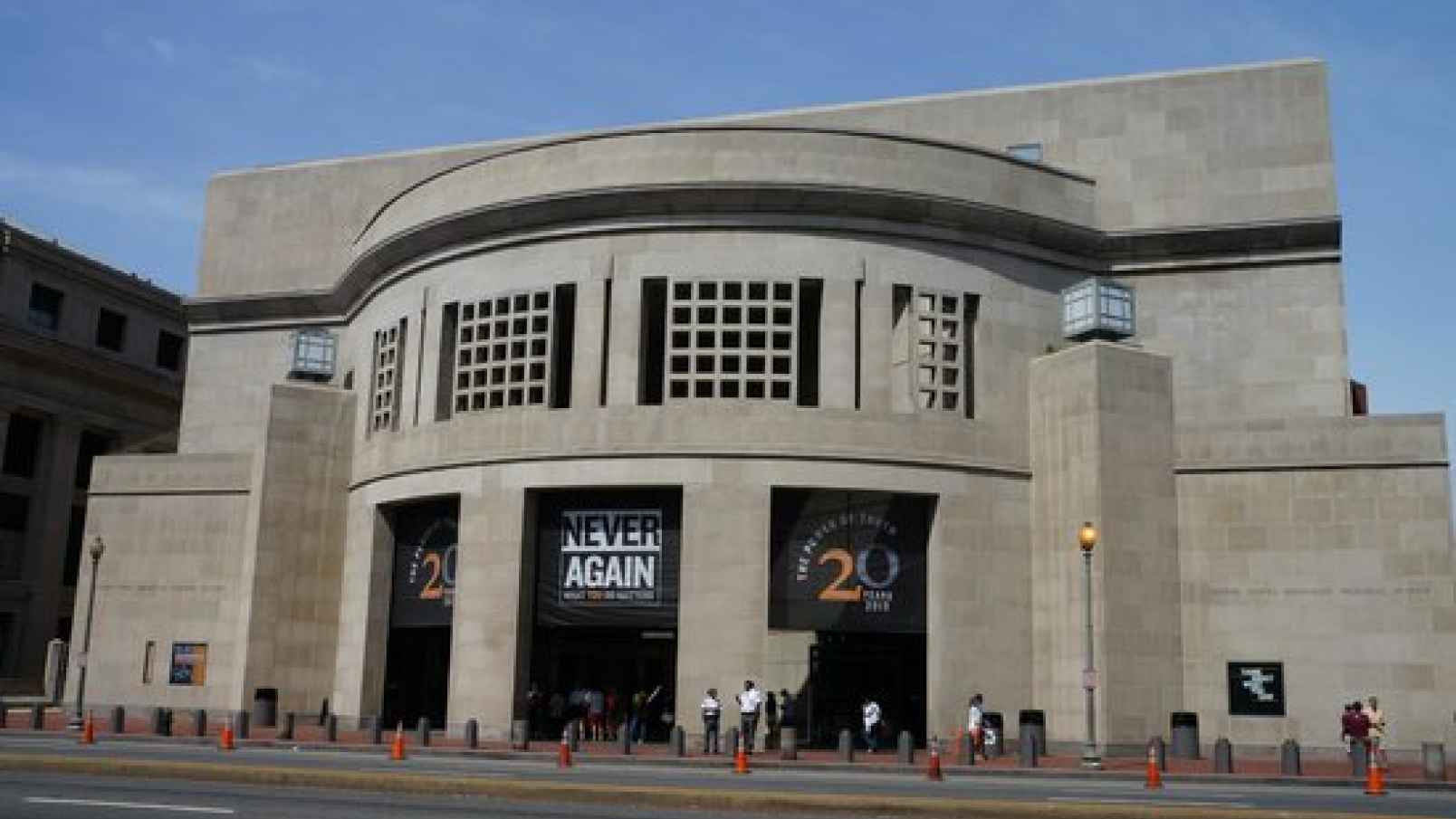
The Holocaust Museum defends Muslim Brotherhood Nazis

September 25, 2015

The Holocaust Museum defends Muslim Brotherhood Nazis, Front Page Magazine, Daniel Greenfield, September 25, 2015

united-states-holocaust

Despite the constant threats to destroy the Jewish State, Iran is also rated at low risk. Instead the Holocaust Museum claims that the real threat of genocide is in Egypt which is “experiencing a mass killing episode perpetrated by the current regime against the Muslim Brotherhood and oppositionists.”

***************************

The United States Holocaust Memorial Museum was tainted from the start.

Carter created the President’s Commission on the Holocaust to pander to the Jews after endorsing a PLO state. Then Carter complained that there were too many Jews on the Commission. One of the Jews he was complaining about was a Presbyterian with a German last name, but he was too bigoted to care.

The Museum hit a new low when the Clinton administration pressured its chairman to invite Arafat, a protégé of Hitler’s Mufti who had been trained to kill Jews by a former Nazi officer. It hit an even lower low when it brought in John K. Roth who had compared Israel to the Nazis.

Now the Holocaust Memorial Museum has rolled out an “Early Warning Project” to warn of the risk of mass killings and genocide.

According to the “Project,” Israel is not at risk of genocide. Its risk assessment is lower than the UK or Panama. If another Holocaust happens, it’s more likely to take place in London or Brazil. (But the EWP also claims that America and New Zealand are at a higher risk of mass killings than Cuba even though the Castro regime, unlike New Zealand Prime Minister John Key, actually engaged in mass killings.)

Despite the constant threats to destroy the Jewish State, Iran is also rated at low risk. Instead the Holocaust Museum claims that the real threat of genocide is in Egypt which is “experiencing a mass killing episode perpetrated by the current regime against the Muslim Brotherhood and oppositionists.”

Jews don’t face genocide in the Middle East. The Nazi-influenced Muslim Brotherhood does. Muslim Nazis are the real victims of a new Holocaust.

The Muslim Brotherhood was allied with Hitler. It distributed Arabic translations of Mein Kampf. Hitler’s Mufti, Haj Amin al-Husseini, who headed the Muslim Brotherhood’s affiliate in Israel, had personally met with Hitler, encouraged the extermination of the Jews and visited the gas chambers at Auschwitz.

The Mufti had preached genocide, encouraging Muslims to “get rid of this dirty race… Kill the Jews, burn their property, destroy their stores” making him one of the earlier promoters of BDS.

Five years after the Holocaust, Sayyid Qutb, the Muslim Brotherhood’s leading thinker, wrote a pamphlet titled, “Our Struggle with the Jews”.  Qutb’s Muslim Brotherhood had been heavily influenced by Nazi Germany and the title and theme were deliberate echoes of Hitler’s Mein Kampf.

Qutb claimed that the Jews were the source of all evil. Like Hitler, he insisted that there was a struggle for world domination, except instead of a struggle between Aryans and Jews, it was a struggle between Muslims and Jews. He echoed Hitler’s claims that the Jews had invented sex and materialism and blamed them for everything from the Sunni-Shiite split to the fall of the Ottoman Empire.

The intellectual leader of the Muslim Brotherhood even insisted that Hitler had been an instrument of Allah to punish the Jews. The claim was recently repeated by Sheikh Qaradawi, the Brotherhood’s current Qutb, who said, “Throughout history, Allah has imposed upon the [Jews] people who would punish them for their corruption. The last punishment was carried out by Hitler. By means of all the things he did to them – even though they exaggerated this issue – he managed to put them in their place. This was divine punishment for them. Allah willing, the next time will be at the hands of the believers.”

The “believers” are the Muslims. As opposed to the unbelievers who are everyone else. The Muslim Brotherhood likes what Hitler did to the Jews, but it wants to carry out the next Holocaust on its own.

Or as Qaradawi put it, “count their numbers and kill them down to the very last one.”

If the Holocaust Memorial Museum’s Early Warning Project were really concerned about “genocide” in Egypt, it might have noted the Muslim Brotherhood attacks on Christians and churches.

It might have spoken up when video emerged of the Muslim Brotherhood’s former Egyptian president, Mohammed Morsi, urging his followers “to nurse our children and our grandchildren on hatred for them: for Zionists, for Jews.”

Egyptian children, “must feed on hatred; hatred must continue,” he said. “The hatred must go on for Allah and as a form of worshiping him.”

The Early Warning Project might have noted that the charter of the Muslim Brotherhood affiliate in Gaza, the terrorist group Hamas, states, “The Day of Judgment will not come about until Muslims fight the Jews”.  And Hamas is doing its best to advance that date.

But instead the front page of the Holocaust Museum focuses on Syrian refugees. The piece on the Muslim migrants invading Hungary begins with the statement that, “In the 1930s, the world watched as Nazi Germany forced its beleaguered Jewish population to leave their homes.”

The piece is written by a Syrian who served as the Holocaust Museum’s Director of Special Events.

The Holocaust Museum has spent a good deal of time on Syria. It even hosts a paper describing the Muslim Brotherhood’s Sheik Moaz al-Khatib as “a well-respected, moderate Sunni cleric”. It leaves out his statement that Saddam Hussein’s positive legacy was “terrifying the Jews”.

The Museum obsesses over false Muslim claims that they are being persecuted by Buddhists in Burma and Hindus in India. It takes the time to visit Syria, but not Sderot. It puts up photos of Syrians, but not Jewish families murdered by members of genocidal Islamofascist terrorist organizations.

Despite all the propaganda, the Muslim Rohingya illegal aliens in Burma are not being exterminated. Muslim terror against Jews in Israel however is part of an ongoing campaign of genocide.

Hassan al-Banna, the founder of the Muslim Brotherhood, warned, “If the Jewish state becomes a fact, and this is realized by the Arab peoples, they will drive the Jews who live in their midst into the sea.”

“Kill the Jews wherever you find them,” the Mufti of Jerusalem had proclaimed. “Allah is with you.” Hamas declares that, “Killing Jews is worship that draws us close to Allah”.

There was a reason why Adolf Eichmann, the architect of the Holocaust, turned for sympathy to the Muslim world. “You 360 million Mohammedans to whom I have had a strong inner connection since the days of my association with your Grand Mufti of Jerusalem. You, who have a greater truth in the surahs of your Koran. I call upon you to pass judgment on me.”

The Holocaust Museum’s Early Warning Project is ignoring Muslim genocide aimed at Jews while promoting the bizarre myth that the Muslim Brotherhood is at risk of genocide. It couldn’t be any stranger if the Holocaust Museum had begun insisting that Neo-Nazis face genocide in Germany.

“Either this place will be a sanctuary, or it will be an abomination,” Elie Wiesel had said of the museum.

It did not take long for the United States Holocaust Memorial Museum to become an abomination. From its early days, a museum dedicated to teaching about the evil of the Final Solution instead became a platform for promoting the newest attempt to solve the “Jewish problem” with the Two-State Solution.

Now it approaches the final phase of the left’s Post-Holocaust Anti-Semitism where Muslims are transformed into Jews so that Jews may be transformed into Nazis to justify another Holocaust.

After all this time, the Holocaust Museum has decided that the Nazis were the real victims.

Egypt’s War on Terrorism Bears Fruit

September 24, 2015

Egypt’s War on Terrorism Bears Fruit, Gatestone InstituteKhaled Abu Toameh, September 23, 2015

  • Egyptian President Sisi’s war against the smuggling tunnels will undoubtedly weaken Hamas and other radical groups in the Gaza Strip. Sisi should be commended, rather than criticized, for his courageous actions against Islamist terrorists, both in the Gaza Strip and in Sinai.
  • Sisi’s actions will benefit not only Egyptians, but also many Palestinians who are opposed to Hamas and radical Islamist groups.
  • When the Egyptians destroy a Hamas tunnel, that is called “war on terrorism.” But when Israel destroys a tunnel, that is condemned as an “act of aggression.” This moral slithering is why it is important for the international community to stand behind Sisi’s relentless war on radical Islam.
  • Without such backing, Islamists will continue to pose a major threat not only to Israel, but to many Arabs and Muslims who oppose Hamas, Islamic State and Islamic Jihad.
  • The environment of the Gaza Strip is the last thing that Hamas cares about. Hamas did not think about damage to the environment or to agricultural fields when it used those fields, as well as populated areas, as launching pads for attacking Israel.

Egypt began this week flooding smuggling tunnels along their border with the Gaza Strip with water from the Mediterranean Sea — a move being condemned by Hamas and other Palestinian factions as a “disturbing nightmare.”

The Egyptian army’s move is another sign of President Abdel Fattah el-Sisi’s determination to destroy the tunnels that were used to smuggle weapons, people and merchandise from Sinai to the Gaza Strip and the other way around.

This act is also a sign of Sisi’s resolve to pursue his military campaign against Islamist terror groups that are waging war against the Egyptian authorities in Sinai. The Egyptians are convinced that Hamas and other Palestinian groups have been providing aid to the terror groups in Sinai.

Since the beginning of the year, dozens of Egyptian soldiers and police officers have been killed in a spate of terror attacks launched by Islamist groups in Sinai.

Earlier this week, Egypt’s Interior Ministry announced that terrorists shot dead an Egyptian general in Sinai. In another similar shooting a few days earlier, a terror group killed General Khaled Kamel Osman.

The decision to pump water into the smuggling tunnels is seen as a severe blow not only to the terror groups in Sinai, but also to Hamas, Islamic Jihad and other Palestinian factions inside the Gaza Strip.

1259Seawater covers parts of the ground where Egypt has been pumping water into smuggling tunnels along the border with Gaza. (Image source: Al Jazeera video screenshot)

Judging from the reaction of the Palestinian groups, it is clear that they are in a state of hysteria as they see their tunnels collapsing one after the other.

In a statement published in the Gaza Strip, Palestinian groups, including Hamas, denounced the flooding of the tunnels as a “disturbing nightmare” for the Palestinians. The factions appealed to the Egyptian authorities to “stop this despicable crime against the Palestinian people and their environment.”

“The Palestinian people are surprised by the Egyptian move, which will tighten the blockade on the Gaza Strip, destroy vast areas of agricultural land and harm those living near the border (with Egypt),” the statement said.

Initially, Hamas leaders did not take the reports about flooding the tunnels seriously. Some Hamas leaders, in fact, first thought that these were rumors designed to scare them and other Palestinian groups in the Gaza Strip.

But when Hamas leaders woke up on September 13 to discover that the Egyptians had begun pumping water into the smuggling tunnels, they could not believe what they were seeing.

Hamas spokesman Sami Abu Zuhri announced that his movement asked the Egyptians to stop flooding the tunnels with seawater. “We hope that the Egyptians will comply with our demand,” Abu Zuhri said. “This measure is completely unacceptable and poses a threat to many families living alongside the border.”

Sources in the Gaza Strip noted this week that the Egyptian move has thus far proven to be effective and successful. They said that since being flooded with water, several tunnels have collapsed.

It is worth noting that despite its outrage, Hamas has stopped short of issuing threats against Egypt in response to the flooding of the tunnels.

Hamas’s response would have been different had it been Israel that was flooding the tunnels with water. But Hamas knows very well that it would not be a good idea to mess with the Egyptian authorities and President Sisi.

During the past two years, the Egyptians have destroyed hundreds of smuggling tunnels along their border with the Gaza Strip. Nevertheless, Hamas did not dare launch one terror attack against Egypt.

Hamas is now pretending that it is concerned about the damage to the environment that is caused by the flooding of the smuggling tunnels. But the truth is that the environment of the Gaza Strip is the last thing that Hamas cares about.

Hamas did not think about damage to the environment or to agricultural fields when its men fired thousands of rockets at Israel in the past few years. In fact, Hamas used these fields, as well as populated areas, as launching pads for attacking Israel.

Hamas is interested only in one thing: preserving its rule in the Gaza Strip. The tunnels that are now being destroyed by the Egyptians were used by Hamas to smuggle all types of weapons into the Gaza Strip. Hamas warlords are also believed to have earned millions of dollars from the smuggling industry during the past few years.

Sisi’s war against the smuggling tunnels will undoubtedly weaken Hamas and other radical groups in the Gaza Strip. The Egyptian president should be commended, rather than criticized, for his courageous actions against Islamist terrorists, both in the Gaza Strip and in Sinai.

Sisi’s actions will benefit not only Egyptians, but also many Palestinians who are opposed to Hamas and radical Islamist groups. Israel also stands to benefit from Sisi’s war against Hamas. The destruction of the tunnels means fewer weapons used by Hamas to attack Israel.

However, Israel still has good reason to be worried about Hamas’s plans and intentions.

While Sisi is busy flooding the tunnels on the border with Egypt, Hamas continues to dig new ones on the border between the Gaza Strip and Israel.

It is no secret that Hamas has also managed to rebuild many of the terror tunnels that were used to infiltrate gunmen into Israel during last year’s military confrontation between the two sides. Hamas is planning to use these tunnels in the future, to dispatch its men to kill as many Israelis as possible.

The Israelis have thus far been monitoring the situation very closely and have refrained from attacking the tunnels. That is because Israel is keen on maintaining the unofficial truce with Hamas that was reached in the aftermath of last year’s war, known as Operation Protective Edge.

There is not much that Israel can do at this stage other than hope that Sisi will continue with his measures to undermine Hamas. Any attempt by Israel to flood a Hamas tunnel will most likely spark an international outcry and bring condemnations from the United Nations. In addition, such a move on the part of Israel is likely to trigger a violent response from Hamas — one that could lead to another war.

When the Egyptians destroy a Hamas tunnel, that is called “war on terrorism.” But when Israel destroys a tunnel, that is condemned as an “act of aggression.” This moral slithering is why it is important for the international community to stand behind Sisi’s relentless war on radical Islam. Without such backing, the Islamists will continue to pose a major threat not only to Israel, but to many Arabs and Muslims who oppose Hamas, Islamic State and Islamic Jihad.

Why the Iran nuclear deal will mean war

September 8, 2015

Why the Iran nuclear deal will mean war, Front Page Magazine, Daniel Greenfield, September 8, 2015

mars-mushroom-562873

Iran . . . is not looking for a deterrent weapon against its neighbors. With the fall of Saddam, it faces no serious threat of invasion by Sunni forces. Today its nuclear program can have no other purpose except to expand its power and territory while forcing the United States out of the region. Nuking Israel would help seal its right to rule over the Muslim world while intimidating its enemies.

********************

Like a snake oil salesman trying to move a gallon of lies by promising that it’s either buy the bottle or die, Obama sold the Iran deal as the only alternative to war. In fact the deal is a certain road to war.

Or as Churchill said, “You were given the choice between war and dishonor. You chose dishonor, and you will have war.” Before long, the British and French were facing Czech tanks redesignated as Panzers that had been seized as part of the Nazi spoils of appeasement.

When Obama claimed that the Iran nuclear deal was the only alternative to war, he was lying in more ways than one. The United States has already been dragged into Iran’s war for control of Iraq. That war was one of the levers that Iran exploited to get its way on its nuclear program. Iran also came close to dragging us into its war in Syria and we are hovering on the edge of being dragged into Yemen.

Iran and ISIS have done a thorough job of carving up entire countries into Shiite and Sunni blocs. And there’s no sign that this Islamic realignment of the Sykes Picot borders is going to stop. If the process continues, the scale and scope of the war will expand and transform the region away from nation states.

Everyone will have a choice between backing a Sunni ISIS or a Shiite ISIS. Obama chose the Shiite ISIS.

This would be happening even without the deal, but Iran’s victory and Obama’s appeasement will speed up the process. Russia is blatantly joining the Shiite military coalition as part of Tehran’s victory celebration. And the Russians aren’t there just to protect Assad, but to push America out of the region. As areas of operations overlap, there will be incidents. And Obama will back off once again.

But it’s not just about Syria. Iran promised its Russian and Chinese backers that they will benefit from a major regional realignment. Nations allied with the US will be overthrown or suppressed. And once that process really gets underway and will begin to threaten oil supplies, even a Democrat won’t be able to stay out. But by then America will have little credibility, few allies and major strategic disadvantages.

The real test won’t be in Syria. It has already come and gone in Yemen. It will probably come in Bahrain. Bahrain has a majority Shiite population and is the home of the Fifth Fleet. During the Arab Spring the Saudis put down Iran’s “civilian” uprising in Bahrain using tanks. The next time, it won’t be that easy for the House of Khalifa or the House of Saud. If there’s one thing that Iran knows it’s how to arm and train insurgencies and this time around its bid for a takeover of Bahrain will have Russian backing.

Iran’s Islamic Front for the Liberation of Bahrain played a significant role in the Arab Spring protests under the umbrella of political Islam and human rights organizations. Iran’s ideal game plan would be for its front groups to win Western political backing for a takeover the way that the Muslim Brotherhood did in Egypt. Turning over Bahrain to admirers of the Iranian Revolution would seem insane, but so was turning over Iran to Khomeini or Egypt to Al Qaeda’s parent Muslim Brotherhood organization.

The Saudis have had to consider the possibility that Obama, Hillary or Biden would back Iran over the Saudis in Bahrain as they did in Iraq and Yemen. And they have been making their own plans.

Some months after Iran’s Ahmadinejad visited Cairo and met with the Muslim Brotherhood’s Morsi, the Saudis reversed the Qatari-Obama coup that had put the Muslim Brotherhood in power. As the deadline for last year’s negotiations with Iran approached, the Saudis began dumping oil to hurt Russia and Iran. A similar Saudi move against Iran had helped bring on the Islamic Revolution. The Saudis probably don’t expect to undo that disaster, but they were hoping to offset any Obama-backed Iranian recovery.

Instead of fighting to keep sanctions in place, the Saudis were instead poisoning the well.

Whether he understood it or not, by signing off on Iran’s Shiite bomb, Obama was also signing off on an Egyptian-Saudi Sunni bomb. Israel’s nuclear capability was tacitly understood as a defensive weapon of last resort that would not trigger a regional arms race. Genocidal military invasions of Israel came to an end and any weapons remained under wraps.

Iran however is not looking for a deterrent weapon against its neighbors. With the fall of Saddam, it faces no serious threat of invasion by Sunni forces. Today its nuclear program can have no other purpose except to expand its power and territory while forcing the United States out of the region. Nuking Israel would help seal its right to rule over the Muslim world while intimidating its enemies.

A Middle Eastern MAD with Iranians and Saudis in a nuclear standoff would be bad enough, but both powers have a long history of using terrorists to do their dirty work. And the transfer of nuclear materials to terrorists is a lot harder to track than ICBM launches.

Iran and Saudi Arabia getting the bomb won’t be the end. It will only be the beginning. A decade ago, Iran had already funneled a billion dollars into helping Syria get its own nuclear reactor. A nuclear Iran will expand its points of proliferation to the Shiite regime in Baghdad, to Hezbollah in Lebanon and any other Shiite allied states it can set up. The Saudis will expand their own nuclear capabilities to their GCC allies and Egypt so that instead of two nuclear powers, there may be as many as ten nuclear nations.

Imagine the Cold War in miniature with a lot more proliferation and Jihadists with nukes on both sides.

That is what the Iran nuclear deal really means. Every Sunni kingdom will be glaring out from under its own nuclear shield as petty tyrants keep one finger on the populace and the other on the button. A single popular uprising could see nuclear weapons in the hands of Al Qaeda or ISIS.

On the other side, Iran will be aggressively expanding its influence while engaging in escalating naval confrontations with America and its allies. It’s possible that Obama, Biden or Hillary will be able to run away fast enough to avoid a war, but they won’t be able to avoid the resulting economic chaos. And the war will follow them home as Muslim countries have a history of settling their scores by aiming at more “legitimate” non-Muslim targets. That is how 9/11 happened as part of a Saudi power struggle.

And if the United States stays, our people will be trying to keep the peace in a region gone nuclear where American bases will be prime targets for Iran and its terrorist allies. The United States will retaliate against a nuclear strike directly from Iran, but what if it comes from one of the Hezbollahs?

The question isn’t whether there will be a war. It’s how bad the war will be.

That is what Churchill understood and Chamberlain didn’t. While Churchill had fought in Afghanistan against the forerunners of the Taliban, Chamberlain had run family businesses. He saw the military as an unnecessary expense and war as something that could be negotiated away. Churchill knew better.

We are up against something similar today.

The Middle East has exploded before. It will explode again. All we’ve been doing is keeping the lid on. Obama’s surrender means that we won’t control how that explosion happens, but it won’t stop us from getting dragged in anyway once the bombs start going off.

Obama’s advisers have told him to outsource American foreign policy to Tehran. And that’s what he did. Turning over your power to your enemy won’t make him your friend. It won’t stop a war.

It will make the war much worse.