Archive for the ‘Diplomacy’ category

Iran and suspension of disbelief

May 8, 2015

Iran and suspension of disbelief, Israel Hayom, Yoram Ettinger, May 8, 2015

The term “suspension of disbelief” — coined in 1817 by the philosopher Samuel Taylor Coleridge — refers to a willingness to suspend one’s critical faculties and believe the unbelievable; sacrificing reality, common sense, doubt and complexity on the altar of a pretend reality, convenience and oversimplification; infusing a semblance of truth into an untrue narrative.

U.S. President Jimmy Carter’s policy toward Iran in 1977-1979 was characterized by suspension of disbelief: energizing the Ayatollah Ruhollah Khomeini while ignoring or underestimating his track record and his radical, supremacist and violent worldview. The betrayal of the Shah transformed Tehran from “the U.S. policeman in the Gulf” to the worst enemy of the U.S.

Currently, the suspension of disbelief undermines the U.S. posture of deterrence and vital U.S. national security and commercial interests. It was demonstrated by U.S. President Barack Obama, who — irrespective of Middle East reality — referred to the brutally intolerant, terror-driven, anti-U.S., anti-infidel, repressive, tumultuous Arab tsunami as the “Arab Spring.” He said it was “casting off the burdens of the past,” “a story of self-determination,” “a democratic upheaval,” “a peaceful opposition,” “rejection of political violence” and “a transition toward [multi-sectarian, multi-ethnic] democracy.”

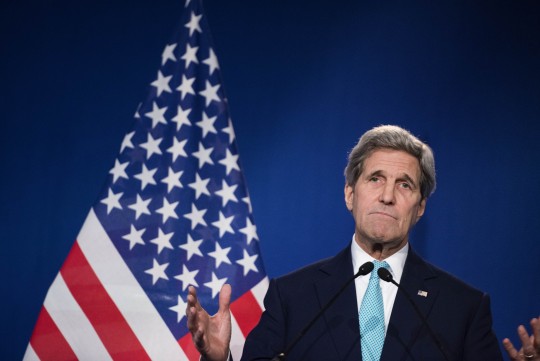
Suspension of disbelief, coupled with the ayatollahs’ mastery of ‘taqiyya’ (Islam-sanctioned double-talk and deception), is what led U.S. Secretary of State John Kerry to assert on November 24, 2013 that “Iran’s Foreign Minister [Mohammad Javad] Zarif emphasized that they don’t intend to acquire nuclear weapons, and Iran’s supreme leader has indicated that there is a ‘fatwa’ [an authoritative religious ruling] which forbids them to do this.”

In an April 7, 2015 NPR interview, Obama made a reality-stretching assumption which underlines the Iran policy: “If in fact Iran is engaged in international business … then in many ways it makes it even harder for them to engage in behaviors that are contrary to international norms. … It is possible that if we sign this nuclear deal, we strengthen the hand of the more moderate forces in Iran.”

Rebutting Obama’s remarks, Amir Taheri, a leading authority on Iran, wrote: “Hope is not a sufficient basis for a strategy. … [The relatively moderate former President Akbar Hashemi] Rafsanjani has little chance of surviving a direct clash with [Supreme Leader Ayatollah Ali] Khamenei.

The Saudi frustration with U.S. policy on Iran — shared by all pro-U.S. Arab regimes — was expressed on April 25, 2015 by the opinion editor of the prestigious Saudi daily Asharq Al-Awsat, which echoes the position of the House of Saud: “While the U.S. considers the ayatollahs a legitimate partner to negotiation, Saudi Arabia and other Persian Gulf states are in a state of war with Iran, which is the main source of chaos in the region.” The editor-in-chief of the Saudi daily added: “Has the axis of evil collapsed to the extent that President Obama is courting one of its key members?! Isn’t this the same Tehran that has posed a clear and present danger to the Gulf states for the past 36 years?!”

• An agreement is not the goal, but a tool to achieve the real goal.

• Transforming an agreement to a goal undermines the real goal.

• Details of an agreement are less critical than the details of the ayatollahs’ 36-year track record of supremacist, apocalyptic and megalomaniacal violence, martyrdom, sponsorship of global Islamic terrorism, subversion of pro-U.S. Arab regimes, repression, anti-U.S. hate education- and policies, a systematic noncompliance with agreements and mastery of concealment.

• Such a track record warrants a “guilty until proven innocent” approach.

• Preconditioning an agreement upon a dramatic change in the conduct of the rogue, anti-U.S. ayatollahs would be “a poison pill” to a bad deal, but a vitamin to a good deal.

• A “bad deal” would nuclearize Iran; “no deal” would allow the U.S. to choose the ways and means to prevent Iran’s nuclearization.

• Nuclear capabilities would extend the life of the repressive, rogue ayatollah regime, precluding any hope for civil liberties or home-induced regime change.

• An agreement — not preconditioned upon the transformation of the ayatollahs — would compound their clear and present threat to vital U.S. interests.

• The transformation of the nature of the ayatollahs — as a precondition to an agreement — would prevent the nuclearization of the ayatollahs.

• Precluding the option of military pre-emption has strengthened and radicalized the rogue ayatollahs, and could lead to a nuclear war.

• Misrepresenting the option of military pre-emption as war defies reality, since it should be limited to surgical — no troops on the ground — air and naval bombings of critical parts of Iran’s nuclear infrastructure from U.S. bases in Bahrain, Qatar, Saudi Arabia, Oman and the Indian Ocean, or aircraft carriers.

• A U.S. military option forced Iran to end the 1980-1988 war against Iraq, convinced Libya to give away its nuclear infrastructure in 2003, and led Iran to suspend its nuclear development in 2003.

• “Ironclad” supervision and intelligence failed to detect the nuclearization of the USSR, China, Pakistan, India and North Korea.

• Unlike the USSR, which was deterred by Mutual Assured Destruction, the apocalyptic ayatollahs would be energized by MAD-driven martyrdom.

• The zeal to strike a deal has led to a U.S. retreat from six U.N. Security Council Resolutions, which aimed to prevent Iran’s nuclearization.

• A nuclear Iran, which celebrates “Death to America Day,” would devastate cardinal U.S. interests: toppling the oil-producing Arab regimes (impacting supply and price of oil) and other pro-U.S. Arab regimes; intensifying Islamic terrorism, globally and on the U.S. mainland; agitating Latin America; collaborating with North Korea; cooperating with Russia and destabilizing Africa and Asia.

• The track record of the ayatollahs on the one hand, and compliance with agreements on the other hand, constitute an oxymoron.

• Suspension of disbelief, in the case of Iran’s nuclearization, entails overlooking facts that highlight the implausibility of a viable agreement with the ayatollahs, thus damaging crucial U.S. interests and fueling a nuclear war.
N. Korea Submarine Missile Allows Covert Nuclear Strike on US

May 5, 2015

N. Korea Submarine Missile Allows Covert Nuclear Strike on US, Israel National News, Ari Yashar, May 5, 2015

(Perhaps North Korea and Iran can make a deal — North Korea gets sanctions-relief money and Iran gets missile equipment and nukes for its submarines. Or maybe Iran could just pay North Korea to attack the U.S. mainland.– DM)

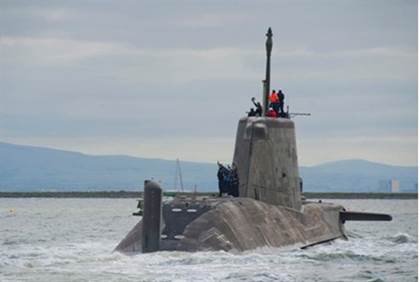
img369953Military submarine (illustration) Reuters

[I]t was reported last month that US President Barack Obama hid intel from the UN about North Korea transferring rocket components needed to create a nuclear missile to Iran even during the nuclear talks, to try and prevent the UN from acting on the information with increased sanctions.

[O]nce the KN-11 and mobile KN-08 “systems go operational, it potentially gives North Korea a dual threat for attacking the United States with nuclear or chemical weapons – a threat generated from difficult to detect mobile platforms on both land and sea.”

***********************

In a worrying step showing North Korea’s rapidly expanding nuclear strike capabilities, the Communist regime recently held a test of a new submarine-launched ballistic missile (SLBM), the first time it has launched a missile capable of carrying a nuclear warhead from underwater.

According to US defense officials cited by the Washington Free Beacon on Tuesday, the test took place on April 22 from an underwater test platform near the coastal city of Sinpo in the southeast of the country, and tested what the US is calling a KN-11 missile.

The test appears to have been successful, and is the third KN-11 test showing the high-priority of the nuclear missile program for North Korea. Previous tests in January and last October were from a sea-based platform not underwater and a land-based platform.

The KN-11 joins the KN-08 mobile intercontinental ballistic missile (ICBM) as being part of a varied North Korean missile arsenal on platforms that would be hard for the US to detect, and consequently allow a strike that would be difficult to shoot down.

Admiral Bill Gortney, Commander of North American Aerospace Defense Command (NORAD) and US Northern Command, admitted last month that North Korea could hit the continental US with a nuclear strike. That admission accompanied the announcement that NORAD is reopening its nuclear-EMP-proof Cheyenne Mountain bunker, apparently amid renewed concerns of an EMP attack by which a nuclear weapon would be detonated over the US, knocking out all of its electronic devices, and thereby rendering it defenseless to secondary nuclear strikes.

The latest launch test also comes after Chinese experts warned the US last month that American estimates are wrong and North Korea actually has 20 nuclear weapons, with that arsenal to double next year thanks to the regime’s higher than anticipated advanced enrichment capabilities.

Nuclear strikes the US won’t see coming

Admiral Cecil D. Haney, commander of the Strategic Command, confirmed the SLBM launch test in comments to the Senate on March 19, reports the Washington Free Beacon. The program is in violation of UN Security Council resolutions.

Regarding the UN, it was reported last month that US President Barack Obama hid intel from the UN about North Korea transferring rocket components needed to create a nuclear missile to Iran even during the nuclear talks, to try and prevent the UN from acting on the information with increased sanctions.

Former US Defense Intelligence Agency official Bruce Bechtol, Jr. told the paper that North Korea’s SLBM program is meant to give it the ability to strike the US, and to not have the strike be detected in advance.

“With an SLBM they get both,” said Bechtol. “The submarine can get the platform to launch the missile within range of the continental United States, Alaska, or Hawaii. Thus, once operational, this immediately brings key nodes in the United States within range of what would likely be a nuclear armed missile.”

He noted that once the KN-11 and mobile KN-08 “systems go operational, it potentially gives North Korea a dual threat for attacking the United States with nuclear or chemical weapons – a threat generated from difficult to detect mobile platforms on both land and sea.”

Obama is bringing the US to “tragedy”

A number of American officials responded sharply to the KN-11 test, placing the blame squarely on Obama’s shoulders.

“This missile, along with the KN-08, happened on Obama’s watch and nothing has been done,” one US intelligence official told the Washington Free Beacon.

Former US Ambassador to the UN John Bolton added his criticism, saying, “by utterly ignoring North Korea’s growing missile threats, Obama has allowed the threat of rogue state proliferators to fall out of the center of the national political debate.”

“This is a potential tragedy for the country,” Bolton warned.

Air Force Lt. Gen. (ret.) Thomas McInerney said that the KN-08 and KN-11 programs constitute “threats to the continental United States and have been developed under the Obama administration’s leadership.”

“Leading from behind is a failed strategy as evidenced by this very dangerous strategic threat to the continental United States of nuclear attack by a very unstable North Korean government,” said McInerney.

The general also spoke about Obama’s admission that the nuclear deal being formed with Iran will allow it to obtain a nuclear weapon in under 15 years if it doesn’t breach conditions and obtain it sooner, noting that the deal “puts the United States in the most dangerous threat of nuclear attack since the height of the Cold War but from multiple threats – North Korea, China, Russia, and Iran.”

Opponents of the nuclear deal being formulated with Iran ahead of a June 30 deadline have warned it follows in the footsteps of the failed deal sealed by then-President Bill Clinton with North Korea in 1994.

Despite the deal, North Korea tested its first nuclear weapon in 2006, just over ten years after the agreement.

Iranian Supreme Leader following Lausanne Declaration: Nothing Has Been Achieved So Far

May 5, 2015

Iranian Supreme Leader following Lausanne Declaration: Nothing Has Been Achieved So Far, MEMRI TV via You Tube, May 5, 2015

(Khamenei delivered this speech last month, but this fourteen minute video includes some comments I had not seen him make previously. — DM)

Obama turns a smiling face to Israel. Biden: Iran has enough material for 8 nuclear bombs

May 3, 2015

Obama turns a smiling face to Israel. Biden: Iran has enough material for 8 nuclear bombs, DEBKAfile, May 2, 2015

(Obama and Biden speak with forked tongues. Please see also, PM Netanyahu’s Remarks to the Washington Institute for Near East Policy.– DM)

Biden-netanyahu_30.4.15We drive each other nuts…

President Barack Obama and Vice President Joe Biden have gone out of their way in the last fortnight to shower friendly gestures on Israel, Prime Minister Binyamin Netanyahu and even Ambassador to Washington, Ron Dermer. Refuting the dire predictions by Netanyahu’s critics of a disastrous breach, Obama and Biden, by word and gesture, are putting behind them the rancor long marring relations between Washington in Jerusalem.

The White House launched its new charm campaign for Israel on April 13 by meetings with three groups of American Jewish leaders. Obama addressed the first with an emotional affirmation of his support for Israel and its security. Vice President Biden, National Security adviser Susan Rice and Biden’s national security adviser Colin Kahl then talked to another group of Jewish leaders, while Obama spoke to Jewish “community leaders”, a group of individuals who though unaffiliated are influential and generous donors to the Democratic Party.

Ten days later, on April 23, Biden was the keynote speaker at the Israeli embassy’s Independence Day reception. He stood alongside the former object of administration ire – Ambassador Dermer – and declared: “We have Israel’s back, you can count on that.” He announced that Israel would be the first country in the world to receive the new US F-35 stealth aircraft already next year.

Thursday, the Vice President delivered a lecture at the Washington Institute for Near East Policy, the key DC research think tank on the subject of US-Israel relations.

In this important lecture, Biden defended in great detail US strategy and objectives in the negotiations for a nuclear accord with Iran, as they enter their final lap.

All in all, the US president and vice president are devoting more time to gestures for repairing relations with Israel than on the burning crises afflicting the world in Yemen, Iraq, Syria and Ukraine.

DEBKAfile found four reasons for this striking White House pivot:

1. After the fireworks sparked by Netanyahu’s March 3 speech to the US Congress against the nuclear accord, which placed him at the forefront of the international front opposing the deal, the White House decided that instead of sparring with him, it would be more productive to convert the Israeli prime minister into a supporter by meeting him halfway on certain points.

2. The rift with Israel proved disadvantageous to the Obama administration, while boosting Netanyahu and his Likud in Israel’s recent general election. The US president has paid a high political and personal price for colliding with Congress on the Iranian nuclear issue. His strategic advisers have recommended a bid to convince Netanyahu that Israel’s most pressing concerns about the nuclear deal are being addressed in the final stage of the talks. Assuming that the prime minister too is not looking for a major rift with Washington, he may be amenable to partly changing course and withdrawing some of his objections to the deal. Congress might then respond more positively to the administration’s nuclear policy.

3. As American gears up for its 2016 elections, the Democratic Party needs to woo the Jewish vote and most importantly its financial support for campaigners.

The Biden lecture to the Washington Institute is therefore worthy of close scrutiny. This masterly and eloquent work is an attempt to lay the political and security groundwork for Prime Minister Netanyahu’s consent to a change of heart from opposition to the nuclear deal to its support.

DEBKAfile has therefore singled out is 17 high points:

  • Israel is absolutely right to be worried about the world’s most dangerous weapons falling in the hands of a nation, whose leaders dream openly of a world without Israel.
  • So the criticism that Israel is too concerned I find preposterous.  They have reason to be concerned. (DF. Netanyahu’s concerns about Iran are fully justified.)
  • …that’s why the President, President Obama, decided for the first time — people forget this — to make it an explicit, declared policy of the United States of America – no such policy existed before President Obama uttered it — that all instruments of American power to prevent — not contain, not contain -— to prevent a nuclear-armed Iran would be used to prevent that from happening.
  • …our military had the capacity and the capability to execute the mission, if it was required. (DF. This was an explicit US presidential pledge to use military force to prevent a nuclear-armed Iran.)

Vice President Biden then laid down 12 conditions as the sine qua non for a deal. “If what’s on the table doesn’t meet the President’s requirements, there will be no deal,” he said.

  • A final deal must effectively cut off Iran’s uranium, plutonium and covert pathways to the bomb.
  • The final deal must ensure a breakout timeline of at least one year for at least a decade or more.
  • A final deal must include phased sanction relief, calibrated against Iran taking meaningful steps to constrain their program. (DF. Iran insists on immediate sanctions relief.)
  • A final deal must provide verifiable assurances to ensure Iran’s program is exclusively peaceful.
  • If they did try to cheat… they would be far more likely to be caught because… we’ll also put in place the toughest transparency and verification requirements.
  • Iran will be required to implement the Additional Protocols, allowing IAEA inspectors to visit not only declared nuclear facilities, but undeclared sites where suspicious, clandestine work is suspected and address IAEA concerns about the military dimensions of past nuclear research.
    Not only would Iran be required to allow 24/7 eyes on the nuclear sites you’ve heard of — Fordow and Natantz and Arak — and the ability to challenge suspect locations, every link in their nuclear supply chain will be under surveillance.
  • And if Iran resumes its pursuit of nuclear weapons, no option available today will be off the table. In fact, the options will be greatly increased because we will know so much more.

Biden went on to warn: “Let’s not kid each other. They already have paved a path to a bomb’s worth of material. Iran could get there now if they walked away in two to three months without a deal.” He went on to say:  “Without this deal, they already have enough material if further enriched for as many as eight nuclear bombs. Already, right now, as I speak to you.

  • Under the proposed final deal, the Arak reactor will be redesigned to produce zero weapons-grade plutonium. The spent fuel will be required to be shipped out of Iran for the life of the reactor. And Iran will be barred from building the reprocessing plant for extracting bomb-grade material from plutonium.

“Finally there is the myth that a nuclear deal between the United States and Iran enables Iran to gain dominance inside the Middle East.” The US vice president protested: “But it is a nuclear bargain between Britain, France, Russia, China, Germany, the EU, America and Iran – one that reduces the risk of nuclear war and makes the region and the world a safer place,” he stressed.

“We are working continually to develop the means and capacity to counter Iran’s destabilizing activities…“ he said citing the Strait of Hormuz. We are prepared to use (inaudible) the force.”

Biden wound up his peroration by directing these words to Israel. “It’s true we disagree sometimes. But as I said last week at Israel’s Independence Day celebration, we’re family. I think it was Ambassador Dermer who essentially said the same thing. We drive each other nuts. But we love each other. And most of all we protect each other.”

DEBKAfile’s Washington sources note: The Obama administration appears willing to keep on smiling towards Israel. US Secretary of State John Kerry will soon schedule a visit to Israel, after staying away for a long time, The visit will be billed as promoting Israeli-Palestinian peace talks, but his real errand will be to test the ground with Prime Minister Netanyahu and assess how successful the White House’s gestures of affection have been in toning down his opposition to the nuclear deal.

For now, the host of critics who accused Netanyahu of causing an irreparable breach with Washington over the nuclear issue have retired to a corner.

PM Netanyahu’s Remarks to the Washington Institute for Near East Policy

May 3, 2015

PM Netanyahu’s Remarks to the Washington Institute for Near East Policy, via You Tube, May 2, 2015

Report: Kerry Told Iran He Wishes ‘U.S. Had a Leader like Iran’s Supreme Leader’

April 29, 2015

Report: Kerry Told Iran He Wishes ‘U.S. Had a Leader like Iran’s Supreme Leader’ Washington Free Beacon, April 29, 2015

(Who is fibbing?– DM)

Kerry againAP

Secretary of State John Kerry told his Iranian counterpart that he wished the United States had a leader more like Supreme Leader Ayatollah Khamenei, according to comments made by a senior Iranian cleric and repeated in the country’s state-run media.

Ayatollah Alam al-Hoda claimed during Friday prayer services in Iran that in negotiations over Tehran’s contested nuclear program, Kerry told the country’s foreign minister that he “wished the U.S. had a leader like Iran’s supreme leader,” according to a Persian-language report on the remarkspublished by the Asriran news site.

“In the negotiations Kerry told [Iranian Foreign Minister Javad] Zarif that he [Kerry] wished U.S. had a leader like Iran’s supreme leader,” according to Alam al-Hoda, who is a senior member of the Iran’s powerful Assembly of Experts.

A senior administration official told the Washington Free Beacon that such a contention is patently absurd.

The remarks are the latest in a string of comments made by Iranian leaders purporting to reveal private details of the talks.

Iranian newspapers have carried multiple reports in recent months suggesting that Iranian Foreign Minister and chief negotiator Javad Zarif was ordered to stop screaming at Kerry behind closed doors.

In his Friday remarks, al-Hoda went on to say that Obama is set on striking a deal with Iran by June.

“Both Republicans and Democrats want these negotiations with Iran, but they fight each other for partisan interests,” he was quoted as saying. “Obama wants the negotiation to succeed so his party can win the next election and Republicans want to stop him.”

Alam al-Hoda also celebrated Iran’s expansion in the region and controversial activities in war-torn countries such as Syria and Yemen.

“Today, the resistance crescent has gone beyond Syria and Lebanon and reached to Yemen,” he said. “Today the resistance front is in control of Strait of Hormuz and Bab-el-Mandeb.”

The “U.S. and Israel have not been so weak anytime before,” he continues. “All these events are being managed by the hidden Imam,” a revered religious figure in Shia Islam.

Saeed Ghasseminejad, an Iranian dissident and fellow at the Foundation for Defense of Democracies (FDD), said U.S. overtures to Iran at the negotiating table have failed to win it any respect from the Islamic Republic’s leaders.

“President Obama thinks that by making more concessions he can gain the trust and respect of Iranian leaders,” Ghasseminejad said. “However, Iranian leaders neither trust him nor respect him.

“Seeing unprecedented weakness in the U.S. president, Iranian leaders do not fear the United States anymore. Partnership, trust, and alliance between the radical Islamist regime of Tehran and United States cannot and should not exist.”

Meanwhile, Zarif said over the weekend that fighting between the Obama administration and Congress over a potential final deal could not stop America from implementing any agreement the White House signs.

“As we have stated since the beginning, we consider the U.S. administration responsible for implementing the agreement and internal problems and conflicts in the U.S. are not related to us and to the implementation of the agreement, and based on the international laws, the countries’ internal problems don’t exempt them from implementing their undertakings and this is the main framework that we attach importance to,” Zarif said, according to the Fars News Agency.

On Monday, Zarif urged the United States to woo Iran.

“Maintaining an uncertain and unstable situation is not acceptable to Iran and the Americans should take practical and confidence-building measures to reach a comprehensive nuclear agreement,” Zarif was quoted as telling reporters.

A timely message from Iran

April 29, 2015

A timely message from Iran, Power Line, Scott Johnson, April 28, 2015

What the hell are the Iranians doing playing chicken with the U.S. Navy on the same day that the full Senate takes up debate on Corker-Menendez?

*****************

Omri Ceren provides this email update on today’s developments in the Persian Gulf, reported in this brief Reuters story:

It’s been a busy two hours, but some clarity is starting to emerge about the Iranian seizure of a cargo vessel in the Strait of Hormuz. The vessel is the M/V Maersk Tigris and sails under a Marshall Islands flag. It was intercepted by Iranian navy patrol crafts earlier today and sent a distress call, and which point it was contacted by US naval assets who streamed to the area to monitor the confrontation. The vessel was ordered to sail into Iranian waters and refused, at which point the Iranians fired shots across her bow, and the master complied. It’s now in the Iranian port of Bandar Abbas.

There is a dispute over whether the M/V Maersk Tigris was in international waters when it was initially intercepted. The Pentagon seems to have told journalists this morning that it was transiting through Iranian territorial waters. Defense analysts are posting maps showing otherwise (https://twitter.com/PatMegahan/status/593073911786377216).

A few things you’re likely to be hearing as the afternoon kicks off:

(1) The U.S. is treaty-bound to defend the security of the Marshall Islands. To what extent will the US be obligated to act in response to functionally unspinnable Iranian aggression? Keep in mind that in two weeks the President will be personally in a room floating security assurances to the Gulf, promising that the U.S. will protect them from future Iranian aggression.

The Republic of the Marshall Islands (RMI) is a sovereign nation. While the government is free to conduct its own foreign relations, it does so under the terms of the Compact. The United States has full authority and responsibility for security and defense of the Marshall Islands, and the Government of the Marshall Islands is obligated to refrain from taking actions that would be incompatible with these security and defense responsibilities. (http://www.state.gov/r/pa/ei/bgn/26551.htm)

(2) The administration just wrapped up a week of insisting that under no circumstances would it allow Iran to interfere with shipping in the area. It’s unclear how that can be reconciled with what the Iranians just did.

White House Press Secretary Josh Earnest, April 21: “principal goal of this operation is to maintain freedom of navigation and free flow of commerce in the Gulf of Aden and the Red Sea… would send a clear signal about our continued insistence about the free flow of commerce and the freedom of movement in the region… this is a clear statement about our commitment to ensuring the free flow of commerce in this important region of the world” (https://www.whitehouse.gov/the-press-office/2015/04/21/press-briefing-press-secretary-josh-earnest-4212015)

State Department Spokesperson Marie Harf, April 21: “I think the Defense Department may have already addressed this in their briefing today, but there were reports about these U.S. ships that have been moved. And I want to be very clear, just so no one has the wrong impression, that they are not there to intercept Iranian ships, to do issues like that; that the purpose of moving them is only to ensure the shipping lanes remain open and safe. I think there was some misreporting and confusion on this, and I just wanted to be very clear.” (http://www.state.gov/r/pa/prs/dpb/2015/04/240950.htm)

Pentagon spokesman Col. Steve Warren, April 21: “[U.S. warships] are operating [in the Arabian Sea] with a very clear mission to ensure that shipping lanes remain open, to ensure there’s freedom of navigation through those critical waterways, and to help ensure maritime security…By having U.S. ships in the region, we…preserve options should the security situation deteriorate to the point where there is a problem or a threat to freedom of navigation or to the shipping lanes or to overall maritime security.” (http://www.defense.gov/news/newsarticle.aspx?id=128634)

(3) What the hell are the Iranians doing playing chicken with the U.S. Navy on the same day that the full Senate takes up debate on Corker-Menendez? Business Insider’s national security and military editor Armin Rosen had one of the early lines on this:

Whatever else is going on, IRGCN just baited a Burke-class US destroyer into a confrontation in the world’s busiest oil choke point. (https://twitter.com/ArminRosen/status/593076865922891779)

Hizballah terror attack on Golan stokes face-off between Israel and the Syrian-Hizballah alliance

April 27, 2015

Hizballah terror attack on Golan stokes face-off between Israel and the Syrian-Hizballah alliance, DEBKAfile, April 27, 2015

Israel over SyriaAlleged Israeli air strikes over Syria

Last week, the Obama administration managed to hold back the clash threatening to blow up opposite Yemen by the US, Saudi and Egyptian navies against an Iran convoy. Washington is likely to lean hard on Israel and Tehran to make sure that the current sparring does not run out of control and explode into a military showdown.

If this happened, Tehran would likely refuse to sign the nuclear deal which is nearing conclusion with the world powers led by the US.

*********************

According to Arab media, Israeli executed its third strike against Syrian and Hizballah targets in the Qalamoun area on the Syrian Lebanese border Sunday night, April 26 – shortly after Hizballah attempted to plant an explosive device near an Israeli Golan military post.

But then, Monday morning, anonymous Israeli sources improbably attributed this air strike to possible Syrian opposition action by the Al Qaeda’s Nusra Front.

Hizballah was meanwhile identified as responsible for the thwarted bomb attack on the Israeli Sheita military post guarding the northern Golan border with Syria. “Four terrorists placed an explosive on a fence near Majdel Shams. The air force thwarted the attack, killing all four,” a military spokesman said.
On the face of it, Israel’s purported third air strike over Syrian territory in five days, this time targeting the Wadi a-Sheikh and Al Abasiya regions of the Qalamoun mountains, was in retaliation for the thwarted Hizballah attack on the Golan.

However, DEBKAfile’s military sources give the exchange of blows a different slant: It is more likely to be the onset of a systematic Israeli campaign to wipe out Syrian-Hizballah military bases repositioned on the mountain range as depots and launching-pads for firing long-range missiles into Israel from Syrian territory.

A clue to this objective was offered Sunday night by Defense Minister Moshe Ya’alon in a firm statement that Israel would not permit Iran to arm Hizballah with advanced weapons. He did not explicitly admit to the air strikes of last Wednesday and Saturday,which were reported by Arab TV stations to have hit surface-to-surface missile depots on Qalamoun. But he nearly gave the game away. He accused Iran of trying to arm Hizballah with advanced weapons by every possible route. “We will not allow the delivery of sophisticated weapons to terrorist groups, Hizballah in particular… or allow Hizballah to establish a terror infrastructure on our borders with Israel,” the minister said, adding: “We know how to lay hands on anyone who threatens Israeli citizens, along our borders or even far from them.”

In a previous report, DEBKAfile disclosed that Syrian and Hizballah forces were on the point of conducting an offensive, under Iranian Revolutionary Guards officers, to flush Syrian rebels out of their last remaining pockets on the mountain slopes in order to clear the Syrian-Lebanese highway link for troop and arms convoys between the two countries.

We also reported that Hizballah had already relocated substantial military manpower and missile stocks from northern Lebanon to an enclave it now controlled on the Syrian Qalamoun mountains.

The anonymous sources’ attribution of Sunday night’s air strike to the Nusra Front sounded more like a lame cover story than a serious supposition. The Syrian opposition has never managed to use air power against the armies of Assad and Hizballah. Nusra did capture a few fighter-bombers from the enemy, but never acquired the technical infrastructure, ordnance or trained pilots to fly them.

This improbable theory would in any case contradict the warning message Israel was clearly addressing to Damascus and Hizballah that any violations of Israel’s red lines on their part would be met with action to knock over their military set-up on their shared border, section by section – even at the risk of a showdown with Iran in the Syrian arena.

Israel’s destruction of the Qalamoun war machine would have four far-reaching ramifications:

1. It would impair the Syrian army’s capabilities and strike at the heart of the Assad regime.

2. It would give a strong leg up to the Syrian opposition, especially Al Qaeda’s Nusra Front, which is emerging as the strongest and most effective paramilitary force in the Syrian opposition camp.

3. It would curtail the transformation of the Qalamoun Mts. into Hizballah’s most important forward base of attack against Israel.

It is hard to see Tehran standing by if the sparring escalates further and Israel continues to punch away at the Islamic Republic’s two most valuable strategic assets. Direct action by Iran would not be its style. Tehran would rather put the Syrian army and Hizballah up to stepping up its campaign of terror against Israel, possibly by expanding the arena across two borders into Lebanon and Israel itself.

Last week, the Obama administration managed to hold back the clash threatening to blow up opposite Yemen by the US, Saudi and Egyptian navies against an Iran convoy. Washington is likely to lean hard on Israel and Tehran to make sure that the current sparring does not run out of control and explode into a military showdown.

If this happened, Tehran would likely refuse to sign the nuclear deal which is nearing conclusion with the world powers led by the US.

Empowering Iran

April 24, 2015

Empowering Iran, Weekly Standard, Lee Smith, May 4, 2015 (print date)

Obama’s foreign policy legacy will be to have tied America’s fortunes to an imperial and nuclear Iran governed by an ambitious and ruthless anti-American regime.

*****************

Last week, the Obama administration urged Saudi Arabia to halt its air campaign against the Iranian-backed Houthi rebels who have wrested control of the Yemeni capital Sanaa. The White House’s professed concern was that Riyadh’s Operation Decisive Storm was killing too many civilians. Unfortunately, that’s hardly surprising since Iranian proxies, like Hezbollah and Hamas, typically stash their missiles and rockets in civilian areas. Presumably, the Houthis have read from the same playbook. The effect of the administration’s diplomatic efforts, then, was to protect Iranian arms in Yemen. And this, in turn, the administration no doubt believes, protects Obama’s nuclear agreement with Iran.

Houthi rallyHouthis rally against Saudi Arabia, April 1. Newscom

In public, Obama is eager to show that the United States still stands by its traditional allies, like Riyadh. But behind the scenes, it’s clear that the White House’s real priority is partnering with Iran. Sure, the White House dispatched an aircraft carrier to the Arabian Sea, but this was not to stop Iran from shipping arms to the Houthis. As Obama himself explained, America’s blue-water Navy was present to ensure freedom of navigation in the Persian Gulf. The notion that the White House really intended to interdict Iranian arms shipments beggars belief. For more than four years Obama has done nothing to stop Bashar al-Assad from killing nearly a quarter of a million people in Syria, lest he endanger his nuclear agreement with Iran. With a deal so close, Obama is certainly not going to risk what he sees as the capstone of his foreign policy legacy by disarming Iranian allies in Yemen.

The problem is that by protecting his nuclear agreement with Iran, the president has protected and empowered the Islamic Republic. Tehran may boast of controlling four Arab capitals, but the reality is that its regional position is a house of cards. Pull out one of those Arab capitals, or the nuclear program, and Iran’s burgeoning empire quickly collapses. It’s Obama who is propping it up.

It’s interesting to imagine how these last six years might have gone for the Islamic Republic had the White House not been so determined to have a nuclear deal. Perhaps the Tehran regime would have been toppled when the Green Movement took to the streets in June 2009 to protest a fraudulent election if the American government had decided to back the opposition early, openly, and resourcefully. Perhaps another administration would at least have seen that uprising as an opportunity to gain leverage over the Iranian regime. Not Obama. He wanted a nuclear deal with the existing regime.

Another White House might have backed the Syrian rebels in order to bring down Assad. Indeed, a good portion of Obama’s cabinet counseled as much. To topple Tehran’s key Arab ally would have been the biggest strategic setback to Iran in 20 years, said Gen. James Mattis. Obama chose to leave Assad alone, and even ignored his own red line against the use of chemical weapons. Instead of the airstrikes he threatened on Syrian regime targets, Obama made a deal to ostensibly remove the chemical weapons that Assad is still employing.

As Assad’s position became weaker, Hezbollah entered the Syrian war to prop him up. The Iranian-backed militia was stretched thin between Syria and Lebanon, but the Obama administration helped the terrorist organization cover its flank by sharing intelligence to keep Sunni car bombs out of Hezbollah strongholds in Beirut. Another administration might have understood this as an opportunity to weaken Iran’s position in Damascus and Beirut, but not Obama. He had his eyes on the prize.

In sum, over the last six years, almost all of Iran’s advances in the region, including its move into Iraq to fill the vacuum in Baghdad after the American withdrawal from that country, has taken place with either the overt or tacit assistance of Obama. The White House brags about it. Israel might have attacked Iranian nuclear facilities, as one administration official told the press, but we deterred Prime Minister Benjamin Netanyahu from striking. If the Iranians strut with confidence these days, that’s because they understand who has their back.

The nuclear deal, as the president has explained, means that within a little more than a decade, Iran’s breakout time will be down to zero—which is a nice way of saying the clerical regime will have the bomb. The likely result is that the agreement will ensure Iran’s regional position long after Obama’s presidency is around to safeguard it. It will strengthen the hand of the hardliners. It is not Rouhani or Zarif or other so-called moderates who hold the nuclear file, but Khamenei and the Revolutionary Guard Corps. And in the future, American policymakers will have a vital interest in ensuring there are no internal regime fights over who controls the bomb.

In other words, Obama’s foreign policy legacy will be to have tied America’s fortunes to an imperial and nuclear Iran governed by an ambitious and ruthless anti-American regime.

Iranian Warships Arrive in Yemen Port

April 23, 2015

Iranian Warships Arrive in Yemen Port, The Jewish PressHana Levi Julian, April 23, 2015

YemenKSA.jpgSaudi Arabia airstrikes were aimed at Iranian-backed Houthi rebels who seized positions in neighboring Yemen. Iran is believed to be arming the rebels. Photo Credit: KSA

Iranian warships arrived Thursday in the southern Yemen port of Aden despite the presence of several U.S. warships in the area as well. It is believed the Iranian vessels are carrying weapons to re-arm the Shiite Houthi rebels who have seized control over the port city and the nation’s capital, Sa’ana.

Saudi Arabian Ambassador to the United States, Adel al-Jubeir, said Wednesday that his nation’s air force had achieved its objectives and has concluded its bombing campaign.

“We destroyed the air force, we destroyed their ballistic missiles as far as we know; we destroyed their command and control; we destroyed much, if not most of their heavy equipment and we made it very difficult for them to move from a strategic perspective,” al-Jubeir said. He added that Saudi forces had “eliminated the threat they posed to the Kingdom of Saudi Arabia” but . said that in the long run, there is “no military solution” to the conflict.

According to the World Health Organization, 1,080 people have been killed in the past month in Yemen, and 4,352 others have been wounded.

Coalition warplanes picked up where Saudi Arabian air force pilots left off and continued on Thursday to pound Houthi rebels in southern Yemen. The international forces targeted rebel positions in Aden and the central city of Taiz, according to Voice of America.

A severe humanitarian crisis has been created in the war-torn region, according to VOA, but the Shi’ite rebels still remain. Yemen President Abd Rabbu Mansour Hadi has fled for his life to Saudi Arabia.

Although Iran claimed that it welcomes an end to “killing innocent and defenseless civilians” and seeks a political resolution to the conflict, its warships laden with arms for the rebels– as usual – tell a different story.