Archive for the ‘Department of Defense’ category

First US ground operation in Syria kills ISIS oil chief – as Islamists advance on three new fronts

May 16, 2015

First US ground operation in Syria kills ISIS oil chief – as Islamists advance on three new fronts, DEBKAfile, May 16, 2015

USspecialforcesJoran10.6.14US Special Operations forces in Jordan.

America’s first ground operation in the five years of Syrian war was directed against the Islamic State of Iraq and the Levant – ISIS.  US sources report that Special Operations forces mounted a raid Saturday, May 16, on an ISIS convoy in the Deir a-Zour district of eastern Syria, and killed senior Islamist commander and oil and gas chief, Abu Sayyaf, when he resisted capture. His Iraqi wife, Umm Sayyaf, was taken to Iraq for interrogation by the US troops, all of whom returned safely.

Abu Sayyaf’s importance for the Islamist group cannot be overrated as the man in charge of its commandeered oil fields in Syria and Iraq. He also managed their overseas sales in a thriving black market, netting an estimated $5million a day for bankrolling the group’s wars.

Catching him alive was the preferred object of the raid. Under interrogation, he would have been a valuable source of information on the working of the group’s illicit oil and gas trade, how it was managed, the identities of its customers and routes of payment to the ISIS war chest.

DEBKAfile’s military sources report that the US raid was staged from Jordan, not Iraq. In normal circumstances, the Jordanians don’t permit US ground or air operations to be staged directly from their territory. However, a joint 10-day US-Jordanian war game, Eager Lion, was in progress in the Hashemite Kingdom. Some 10,000 troops from various countries, including the US, were practicing special operations against ISIS. And so the US unit was ready to hand a short distance from a high-value target at Deir a-Zour.

DEBKAfile adds that the operation came just two days after the Arab Gulf leaders’ summit convened by President Barack Obama ended at Camp David Thursday, May 14. The war on ISIS was a key item on their agenda.

Sources in Washington disclose that the order for the raid came directly from President Barack Obama on the advice of national security council heads in the White House. The troops landed in the middle of a hotbed of fighting between the Syrian army and ISIS. They were no doubt lifted in and out of the scene at speed by helicopter.

The Islamists are in full flight on three Syrian fronts (as well as the same number in Iraq). The group has overrun Al-Sina’a, Ar-Rusafa and Al-Omal in this district, as well as seizing Saker Island in the middle of the Euphrates River north of Deir a-Zour, from which it is shelling the largest Syrian air base in eastern Syria.

Islamist fighters are also advancing on Syria’s ancient city of Palmyra (Tadmor). This is a 2,000-old desert site with precious remains of antiquity, but also home to Bashar Assad’s infamous Tadmor prison, notorious for torture and summary executions.

ISIS targets near this ancient town are the biggest Syrian air base in central Syria and more oil fields. Most of the Iranian and Russian air transports delivering military equipment for the Syrian army and Hizballah land at this base.

The Islamists are additionally targeting Syrian military positions in eastern Homs.

President Strangelove or, how I learned to stop worrying and love the bomb

May 14, 2015

President Strangelove or, how I learned to stop worrying and love the bomb, Jerusalem Post, David Turner, May 14,2015

Concerned about Soviet intentions in the region the Truman administration entered into the U. S.-Saudi Mutual Defense Assistance Agreement (MDA) in 1951. The Agreement provided the foundation for what would emerge as an American commitment to provide a defense umbrella for the region to protect American interests in the Middle East. American assurances to states in the region seemed intact until the GW Bush Administration invasion of Iraq. Trapped in a war it completely misjudged and soon realized it could not win the administration sought an accommodation with Iran to control Shi’ite militias battling the Americans.

The Bush policy of “accommodation” with Iran became the Obama policy of “appeasement” towards the Islamic Republic. Thus began a six-year-long quest to intended to encourage that country’s recalcitrant and hegemony ambitious leaders to abandon its nuclear weapons program. With the imminent 30 June deadline for signing an Agreement quickly approaching the president invited the Gulf Cooperation Council (GCC) states headed by Saudi Arabia to Camp David promising a mutual defense agreement assuring the Arab states of American protection in the event Iran proved a threat to the region. In addition to “assurances, the Saudis insisted on a signed and “formal alliance structure with the United States guaranteeingU.S. support against potential Iranian aggression.”

In advance of the conference the White House announced that President Obama would meet with the Saudi king the day beforeCamp David. But at the last minute, [d]ispleased with Washington’s dealings with Iran, with an emerging deal over its nuclear program and with US security proposals to Gulf Arab nations,” King Salman announced he would not meet with President Obama and would not attend the Camp Davidconference. In the end only two of six Gulf nations decided to attend with heads of state.

The king’s last-minute cancellation, his turn-down of a meeting with the leader of the Free World was described as “a calculated snub for the president’s policies on Iran and the Middle East.” It was revealed that Kerry, in his meeting with the Saudis the week earlier, told the king that Obama was not prepared to finalize according to the king’s timetable any agreement that might result at Camp David.

And then there was the fact that a mutual defense agreement with the Saudis, the 1951 MDA, already existed already assuring the Saudis protection under America’s nuclear umbrella. Mistrust of American intentions and assurances by America’s “allies” built up over the previous twelve years was palpable.

Bush and the Region

“Even before the inauguration [and, of course, the pretext of 9/11], Cheney asked outgoing Secretary of Defense William Cohen to provide Bush with a briefing focused on Iraq… [Bush appointee] Defense Secretary Rumsfeld saw, “September 11, 2001, as a potential “opportunity.””

Symptomatic of hubris resulting from power minus coherent policy President Bush ignored both Arab and Israeli warnings of Foreseen Consequences certain to follow should the administration follow through with its threat to invade Iraq.

“With his latest remarks, [Saudi, later king] Prince Abdullah joined the chorus of Arab complaints about the Bush administration’s talk of taking military action to oust Saddam Hussein and put an end to his programs to develop weapons of mass destruction. At virtually every stop in the Arab world, Mr. Cheney has been told that an American military strike would destabilize the region.”

And, according to Lawrence Wilkerson, a member of the State Department’s Policy Planning Staff, “[t]he Israelis were telling usIraq is not the enemy – Iran is the enemy.” Wilkerson said that the Israeli reaction to invading Iraq in early 2002 was, “If you are going to destabilize the balance of power, do it against the main enemy.”

Bush and the Bomb

Cut off the head of the snake,” the Saudi ambassador toWashington, Adel al-Jubeir, quotes the king as saying during a meeting with General David Petraeus in April 2008.

In a speech to the Knesset in 2008 to observe Israel’s 60thanniversary Bush told the Knesset, “America stands with you in firmly opposing Iran’s nuclear weapons ambitions. Permitting the world’s leading sponsor of terror to possess the world’s deadliest weapon would be an unforgivable betrayal of future generations.” Nowhere in his speech did Bush hint at his long held view that America was not prepared to enter another Middle East war, that there never was a military option with which to threaten Iran’s nuclear weapons program. No accident then that Bush chose war-averse Robert Gates as his defense secretary; and that Gates in turn chose war-averse Admiral “Mike” Mullen as head the Joint Chiefs of Staff. The dovish defense pair would for years be the president’s PR mouthpiece warning against even the threat of force to halt Iran’s nuclear program. The Gates/Mullen oft-repeated warning of “unforeseen consequences” became, over the years a common, almost mantra-like warning against any action against Iran.

No surprise then that the openly dovish, newly-elected President Obama invited Gates to remain on as his defense department head, “a show of bipartisan continuity in a time of war that will be the first time a Pentagon chief has been carried over from a president of a different party.”

Obama and the Region

By way of destabilizing the region Obama has not yet equaled the fallout of Bush’s invasion of Iraq. If Bush gifted Iraq to Iran, set the stage for the “Arab Spring,” Obama did not come in second for lack of trying. The new president followed Bush by targeting his own tyrant, Muamar Qadafi and transformingLibya, as did Bush in Iraq, a political wreck bordering on a failed state.  Libya today is ruled al-Queda, Islamic State and other terror organizations with two governments powerless to assert control. Bordering Egypt Libya today supplies both the Sinai Salafist insurgency and the terror enclave of Gaza with weapons. And as Bush ignored Israeli and Arab warnings regarding the impact of invading Iraq, Obama chose to those same Arab-Israeli warnings regarding his intention to depose America’s principal Arab ally, Hosni Mubarak of Egypt. In a single mindless move the U.S. followed up its Iraq disaster with Egypt. And followed the collapse of Egypt’s secular regime, insult to injury Obama endorsed as “democratic government” the same Muslim Brotherhood with a decades-long terror campaign against the government; the group behind the assassination of Anwar Sadat for having sought peace with Israel: the Muslim Brotherhood whose child, al-Quaeda, had flown airliners into New York’s World Trade Center! The list of Bush and Obama Administration policy failures seems to know no limits: Iraq redo, Bahrain,Yemen and the bloodbath of Syria. Lacking capacity to learn from ideology-based failures, it continually repeats its “unintended consequences.”

Obama and the Bomb

If Bush set the pattern for accommodation then the tactic at least had some “justification” as Iran’s IRGC was funding, arming and even leading the Shi’ite insurgency against Iraq’s American invaders. Not provoking Iran might have the result of limiting American casualties. But for Obama, recipient in advance of the Nobel Peace Prize for promising regarding “world peace”; for Obama to provide Iran, a state sponsor of Islamist terrorism a world forum to show up American weakness and enhance Iranian prestige; for Obama whose commitment on entering office was to promote nuclear non-proliferation: for Obama to provide Iran all the time necessary to achieve threshold nuclear armament status and, failing to contain Iran the consequence would be a nuclear arms race in the lands of the Arab Spring… Saudi Arabia,Turkey and Egypt are already moving to parity with Iran whileJordan and several Gulf states are at varying stages of planning.   

Obama, who promised nuclear non-proliferation, has turned out to be godfather to a nuclear arms race in the least stable, most militant region of the world!
Can Iran Do Whatever It Wants?

April 29, 2015

Can Iran Do Whatever It Wants? Commentary Magazine, April 28, 2015

[I]f the Obama administration were, in fact, to “tolerate” this disruption of the free flow of shipping it would send a dangerous signal, or to be more accurate, to reinforce a signal already sent: The U.S. lacks the will to stand up to predators in the international system, and in particular to Iran.

*****************

Every day, everywhere around the world, a silent referendum is going on about the state of American power. President Obama has consistently failed that test. By demanding that Bashar Assad leave power and then letting him stay; by letting Assad cross a “red line” on chemical weapons with impunity; by talking big about ISIS (“degrade and destroy”) and doing little; by standing by as Iran expanded its power into Iraq, Syria, and Yemen, as Russia seized chunks of Ukrainian territory, and as China intimidated its neighbors to claim sovereignty over disputed island, the president has dissipated the most precious commodity in the world—American credibility.

Today comes yet another test of American resolve. Details remain in dispute, but it appears that Iranian Revolutionary Guard gunboats seized the Maersk Tigris, a container ship traversing the Persian Gulf either through international waters or through a small section of Iranian waters that it would be allowed to traverse under the international legal doctrine of “innocent passage.” Instead of allowing the ship to go on its way, the IRGC fired a shot across its bow and detained the ship along with its crew. This is a vessel flagged in the Marshall Islands, a U.S. protectorate, owned by the Maersk line (a company with substantial American operations that is headquartered in Denmark, a NATO ally), and chartered by Rickers Ship Management, the Singapore-based subsidiary of a German company (two more U.S. allies).

The Iranian action may well be an indirect response to the U.S. decision to deploy an aircraft carrier strike group in order to intimidate Iran into turning back a cargo of supply ships reportedly bringing weapons to Iranian-backed Houthi fighters in Yemen. But whatever caused the Iranian action, it is a direct threat to freedom of navigation, which the U.S. Navy has defended around the world for centuries.

In the Persian Gulf, the U.S. commitment to that doctrine led President Reagan to order U.S. Navy ships to escort tankers and protect them from Iranian attacks, precipitating a short and sharp conflict (the Tanker War of 1987-88) between the U.S. and Iran. This was the last time, incidentally, that the U.S. used force to respond to Iranian attacks and it was an unqualified success—the Iranians lost some oil platforms and boats that they had been using to harass shipping. Finally the accidental shootdown of an Iranian airliner in 1988 by the USS Vincennes (an unintended and unfortunate consequence of these operations) helped convince the Iranian leadership to end their war with Iraq.

Today the U.S. still remains committed, at least on paper, to protecting freedom of navigation in the Persian Gulf. In 2011, a 5th Fleet spokesman put it well: “The free flow of goods and services through the Strait of Hormuz is vital to regional and global prosperity. Anyone who threatens to disrupt freedom of navigation in an international strait is clearly outside the community of nations; any disruption will not be tolerated.”

Thus if the Obama administration were, in fact, to “tolerate” this disruption of the free flow of shipping it would send a dangerous signal, or to be more accurate, to reinforce a signal already sent: The U.S. lacks the will to stand up to predators in the international system, and in particular to Iran. Put another way, it would signal to the entire region that the president is so invested in reaching a deal with Iran that no Iranian misconduct—not the dropping of barrel bombs on Syrian civilians, not the takeover of Yemen, not the ethnic cleansing of Sunni communities in Iraq, and now not the seizure of a Western cargo ship—will be allowed to interfere with his objective.

The fate of the Maersk Tigris does not matter much in and of itself, but it will say much about this administration’s commitment to maintaining America’s traditional security responsibilities.

China Warns Of Rising Nuclear Threat From North Korea – Lou Dobbs

April 24, 2015

China Warns Of Rising Nuclear Threat From North Korea – Lou Dobbs, Fox News via You Tube, April 23, 2015

(The first four minutes is about the mess in Yemen and the last four minutes is about the North Korean nuclear threat. — DM)


Empowering Iran

April 24, 2015

Empowering Iran, Weekly Standard, Lee Smith, May 4, 2015 (print date)

Obama’s foreign policy legacy will be to have tied America’s fortunes to an imperial and nuclear Iran governed by an ambitious and ruthless anti-American regime.

*****************

Last week, the Obama administration urged Saudi Arabia to halt its air campaign against the Iranian-backed Houthi rebels who have wrested control of the Yemeni capital Sanaa. The White House’s professed concern was that Riyadh’s Operation Decisive Storm was killing too many civilians. Unfortunately, that’s hardly surprising since Iranian proxies, like Hezbollah and Hamas, typically stash their missiles and rockets in civilian areas. Presumably, the Houthis have read from the same playbook. The effect of the administration’s diplomatic efforts, then, was to protect Iranian arms in Yemen. And this, in turn, the administration no doubt believes, protects Obama’s nuclear agreement with Iran.

Houthi rallyHouthis rally against Saudi Arabia, April 1. Newscom

In public, Obama is eager to show that the United States still stands by its traditional allies, like Riyadh. But behind the scenes, it’s clear that the White House’s real priority is partnering with Iran. Sure, the White House dispatched an aircraft carrier to the Arabian Sea, but this was not to stop Iran from shipping arms to the Houthis. As Obama himself explained, America’s blue-water Navy was present to ensure freedom of navigation in the Persian Gulf. The notion that the White House really intended to interdict Iranian arms shipments beggars belief. For more than four years Obama has done nothing to stop Bashar al-Assad from killing nearly a quarter of a million people in Syria, lest he endanger his nuclear agreement with Iran. With a deal so close, Obama is certainly not going to risk what he sees as the capstone of his foreign policy legacy by disarming Iranian allies in Yemen.

The problem is that by protecting his nuclear agreement with Iran, the president has protected and empowered the Islamic Republic. Tehran may boast of controlling four Arab capitals, but the reality is that its regional position is a house of cards. Pull out one of those Arab capitals, or the nuclear program, and Iran’s burgeoning empire quickly collapses. It’s Obama who is propping it up.

It’s interesting to imagine how these last six years might have gone for the Islamic Republic had the White House not been so determined to have a nuclear deal. Perhaps the Tehran regime would have been toppled when the Green Movement took to the streets in June 2009 to protest a fraudulent election if the American government had decided to back the opposition early, openly, and resourcefully. Perhaps another administration would at least have seen that uprising as an opportunity to gain leverage over the Iranian regime. Not Obama. He wanted a nuclear deal with the existing regime.

Another White House might have backed the Syrian rebels in order to bring down Assad. Indeed, a good portion of Obama’s cabinet counseled as much. To topple Tehran’s key Arab ally would have been the biggest strategic setback to Iran in 20 years, said Gen. James Mattis. Obama chose to leave Assad alone, and even ignored his own red line against the use of chemical weapons. Instead of the airstrikes he threatened on Syrian regime targets, Obama made a deal to ostensibly remove the chemical weapons that Assad is still employing.

As Assad’s position became weaker, Hezbollah entered the Syrian war to prop him up. The Iranian-backed militia was stretched thin between Syria and Lebanon, but the Obama administration helped the terrorist organization cover its flank by sharing intelligence to keep Sunni car bombs out of Hezbollah strongholds in Beirut. Another administration might have understood this as an opportunity to weaken Iran’s position in Damascus and Beirut, but not Obama. He had his eyes on the prize.

In sum, over the last six years, almost all of Iran’s advances in the region, including its move into Iraq to fill the vacuum in Baghdad after the American withdrawal from that country, has taken place with either the overt or tacit assistance of Obama. The White House brags about it. Israel might have attacked Iranian nuclear facilities, as one administration official told the press, but we deterred Prime Minister Benjamin Netanyahu from striking. If the Iranians strut with confidence these days, that’s because they understand who has their back.

The nuclear deal, as the president has explained, means that within a little more than a decade, Iran’s breakout time will be down to zero—which is a nice way of saying the clerical regime will have the bomb. The likely result is that the agreement will ensure Iran’s regional position long after Obama’s presidency is around to safeguard it. It will strengthen the hand of the hardliners. It is not Rouhani or Zarif or other so-called moderates who hold the nuclear file, but Khamenei and the Revolutionary Guard Corps. And in the future, American policymakers will have a vital interest in ensuring there are no internal regime fights over who controls the bomb.

In other words, Obama’s foreign policy legacy will be to have tied America’s fortunes to an imperial and nuclear Iran governed by an ambitious and ruthless anti-American regime.

Fleet of Iranian ships heading to Yemen turns around after being tracked by US warships

April 23, 2015

Fleet of Iranian ships heading to Yemen turns around after being tracked by US warships, Fox News, April 23, 2015

(But see Iranian Warships Arrive in Yemen Port. ?????????????? — DM)

A nine-ship Iranian convoy believed to be laden with weapons bound for rebels in Yemen turned around Thursday after being followed by U.S. warships stationed in the area to prevent arms shipments, multiple sources in the Pentagon told Fox News.

The sources said the nine-ship convoy is south of Salalah, Oman, and now headed northeast in the Arabian Sea in the direction of home. The ships, which include seven freighters and two frigates, had sailed southwest along the coast of Yemen heading in the direction of Aden and the entrance to the Red Sea. They appeared to drop anchor in the north Arabian Sea, after the USS Theodore Roosevelt, the USS Normandy and a half-dozen other American ships arrived in the Arabian Sea on Monday, and U.S. officials said that they could intercept the convoy.

The USS Theodore Roosevelt, a 100,000-ton nuclear-powered aircraft carrier known as the “Big Stick” and her escort, the USS Normandy, a guided missile cruiser, have been shadowing the convoy for the past few days, the sources said.

Fighter jets taking off from the carrier have been relaying the convoy’s location to the U.S. Navy’s higher command since the start of the week.

The Iranian Navy ships are characterized as “smaller than destroyers,” a Pentagon official with knowledge of the convoy said Tuesday. Asked what type of weapons the freighters are carrying, one Pentagon official said, “they are bigger than small arms.”

The reversal was welcomed by Pentagon officials, but they expressed caution saying, “this isn’t over yet,” and insisted Roosevelt will maintain observation on the convoy.

Iran backs the Houthi rebels, who chased the Yemeni president from Sanaa and are fighting for control of the Gulf nation. Warships from Saudi Arabia and Egypt, who back Yemeni President Abd Rabbuh Mansur Hadi, are positioned to the southwest of the convoy, forming a blockade of the Gulf of Aden and the port city of Aden.

Western governments and Sunni Arab countries say the Houthis get their arms from Iran. Tehran and the rebels deny that, although Iran has provided political and humanitarian support to the Shiite group.

The U.S. also has been providing logistical and intelligence support to the Saudi-led coalition launching airstrikes against the Houthis. That air campaign is now in its fourth week, and the U.S. also has begun refueling coalition aircraft involved in the conflict.

The campaign meant to halt the rebel power grab and help return to office Hadi, a close U.S. ally who fled Yemen.

The defiant Shiite rebels pressed their offensive in the country’s south on Thursday, apparently ignoring an overture from Saudi Arabia earlier this week, while the kingdom’s warplanes continued to target their positions, officials said.

The rebels’ prized goal — the port city of Aden — remained an elusive one, in part thanks to the Saudi-led airstrikes.

Meanwhile, Pakistan’s top leaders, including Prime Minister Nawaz Sharif and army chief Gen. Raheel Sharif, arrived Thursday in Saudi Arabia to push for negotiations in the Yemen conflict. The two are to meet with King Salman to discuss the crisis, according to Pakisitan’s Foreign Office spokeswoman Tasnim Aslam.

Both predominantly Sunni majority countries, Saudi Arabia and Pakistan are close allies, and Islamabad has supported the Saudi-led coalition, though it declined to send troops, warplanes and warships to join it.

The kingdom and Gulf Arab allies launched the airstrikes March 26, trying to crush the Houthis and allied military units loyal to ousted President Ali Abdullah Saleh.

The Saudis believe the rebels are tools for Iran to take control of Yemen.

Loud explosions shook the cities of Taiz and Ibb in western Yemen on Thursday, as well as Aden when coalition warplanes bombed the rebels and their allies, witnesses said.

Residents also said the Houthis and Saleh’s forces were attacking the city of Dhale, one of the southern gateways to Aden, with random shelling.

All Yemeni officials and witnesses spoke to The Associated Press on condition of anonymity because they were not authorized to talk to the media or feared for their safety amid the fighting.

Iranian Warships Arrive in Yemen Port

April 23, 2015

Iranian Warships Arrive in Yemen Port, The Jewish PressHana Levi Julian, April 23, 2015

YemenKSA.jpgSaudi Arabia airstrikes were aimed at Iranian-backed Houthi rebels who seized positions in neighboring Yemen. Iran is believed to be arming the rebels. Photo Credit: KSA

Iranian warships arrived Thursday in the southern Yemen port of Aden despite the presence of several U.S. warships in the area as well. It is believed the Iranian vessels are carrying weapons to re-arm the Shiite Houthi rebels who have seized control over the port city and the nation’s capital, Sa’ana.

Saudi Arabian Ambassador to the United States, Adel al-Jubeir, said Wednesday that his nation’s air force had achieved its objectives and has concluded its bombing campaign.

“We destroyed the air force, we destroyed their ballistic missiles as far as we know; we destroyed their command and control; we destroyed much, if not most of their heavy equipment and we made it very difficult for them to move from a strategic perspective,” al-Jubeir said. He added that Saudi forces had “eliminated the threat they posed to the Kingdom of Saudi Arabia” but . said that in the long run, there is “no military solution” to the conflict.

According to the World Health Organization, 1,080 people have been killed in the past month in Yemen, and 4,352 others have been wounded.

Coalition warplanes picked up where Saudi Arabian air force pilots left off and continued on Thursday to pound Houthi rebels in southern Yemen. The international forces targeted rebel positions in Aden and the central city of Taiz, according to Voice of America.

A severe humanitarian crisis has been created in the war-torn region, according to VOA, but the Shi’ite rebels still remain. Yemen President Abd Rabbu Mansour Hadi has fled for his life to Saudi Arabia.

Although Iran claimed that it welcomes an end to “killing innocent and defenseless civilians” and seeks a political resolution to the conflict, its warships laden with arms for the rebels– as usual – tell a different story.

U.S. Warships On Watch – Leading From Behind – Lt Col Ralph Peters – Willis Report

April 22, 2015

U.S. Warships On Watch – Leading From Behind – Lt Col Ralph Peters – Willis Report, Fox News via You Tube, April 21, 2015

(It’s from yesterday and the situation remains fluid. Still, it’s worth watching. — DM)


Pentagon: US Warship Repositioning, Not Intercepting Iranian Ships Off Yemen

April 21, 2015

Pentagon: US Warship Repositioning, Not Intercepting Iranian Ships Off Yemen, Voice if America, April 20, 2015

(Who is the U.S. Navy about to protect from whom? Does it have anything to do with the P5+1 nuke “negotiations?”– DM)

The Pentagon says the American warship USS Theodore Roosevelt is “repositioning” as part of a security operation at sea, and not to intercept Iranian vessels off the coast of Yemen.

Citing unnamed officials, the Associated Press reported earlier in the day that the aircraft carrier would join other U.S. ships in the area to confront Iranian vessels, which are said to be carrying weapons to resupply Houthi rebels that have overrun parts of the country.

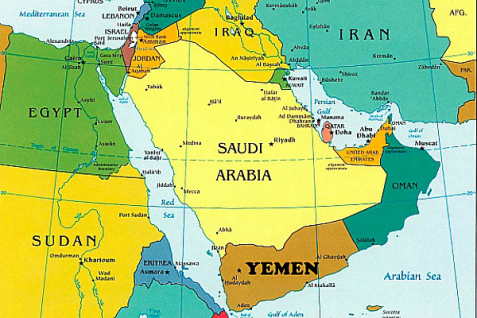
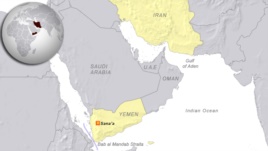
Yemen and IranYemen and Iran

But Pentagon spokesman Col. Steve Warren dismissed the report, saying the Roosevelt is ”repositioning to conduct maritime security operations.”

The guided-missile cruiser USS Normandy escorted the ship en route from the Arabian Gulf to the Arabian Sea, where they joined other U.S. military vessels “to ensure the vital shipping lanes in the region remain open and safe,” according to a statement from the U.S. Navy.

U.S. officials told media late last week that Iran has deployed at least seven ships, some carrying weapons, to Yemen in a bid to shore up Houthi arms supplies through the port city of Aden.

Houthi insurgents face daily air raids from a Saudi Arabian-led coalition and ongoing clashes with local forces.

White House spokesman Josh Earnest told reporters Monday there is “evidence that Iranians are supplying weapons and other forms of support to Houthis.”

“That’s the kind of support that will only contribute to greater violence in Yemen,” he said.

On Saturday, Iranian President Hassan Rouhani said the presence of Iranian naval ships “in the Persian Gulf and the Gulf of Aden is intended to ensure the security of neighboring countries and maritime traffic.”

The Saudi coalition has Aden under a naval blockade.

U.S. Navy warships to intercept Iranian weapons shipments in Yemeni waters

April 20, 2015

U.S. Navy warships to intercept Iranian weapons shipments in Yemeni waters, Associated Press via Washington Times, April 20, 2015

U.S. Navy officials say the aircraft carrier USS Theodore Roosevelt is steaming toward the waters off Yemen and will join other American ships prepared to intercept any Iranian vessels carrying weapons to the Houthi rebels fighting in Yemen.

The U.S. Navy has been beefing up its presence in the Gulf of Aden and the southern Arabian Sea amid reports that a convoy of Iranian ships may be headed toward Yemen to arm the Houthis.

The Houthis are battling government-backed fighters in an effort to take control of the country.

There are about nine U.S. ships in the region, including cruisers and destroyers carrying teams that can board and search other vessels.

The officials spoke on condition of anonymity because they were not authorized to discuss the ship movement on the record.