Archive for the ‘Department of Defense’ category

“This caliphate will take over the entire world and behead every last person that rebels against Allah”

August 1, 2015

“This caliphate will take over the entire world and behead every last person that rebels against Allah,”  Front Page Magazine, Daniel Greenfield, August 1, 2015

(But of course, as all good little Obamabots know, the Islamic State it not Islamic. Please see also, Despite Bombing Campaign, Islamic State No Weaker Than a Year Ago. — DM)

isis_map


The Un-Islamic JayVee team that Obama is trying to fight has a big plan. Behead all non-Muslims. Rule the world.

The undated document, titled “A Brief History of the Islamic State Caliphate (ISC), The Caliphate According to the Prophet,” seeks to unite dozens of factions of the Pakistani and Afghan Taliban into a single army of terror.  It includes a never-before-seen history of the Islamic State, details chilling future battle plans, urges al-Qaeda to join the group and says the Islamic State’s leader should be recognized as the sole ruler of the world’s 1 billion Muslims under a religious empire called a “caliphate.”

“Accept the fact that this caliphate will survive and prosper until it takes over the entire world and beheads every last person that rebels against Allah,” it proclaims. “This is the bitter truth, swallow it.”

Unlike al-Qaeda, which has targeted terror attacks on the United States and other western nations, the document said Islamic State leaders believe that’s the wrong strategic goal. “Instead of wasting energy in a direct confrontation with the U.S., we should focus on an armed uprising in the Arab world for the establishment of the caliphate,” the document said.

First the Muslim world. Then the world. It’s a straightforward strategy, one that Osama bin Laden flirted with but never truly committed to. Though he celebrated the Arab Spring, ISIS would reap its rewards.

Retired Defense Intelligence Agency Director Lt. Gen. Michael Flynn, who also reviewed the document, said it “represents the Islamic State’s campaign plan and is something, as an intelligence officer, I would not only want to capture, but fully exploit. It lays out their intent, their goals and objectives, a red flag to which we must pay attention.”

The failure to target the radical Islamic ideas behind the group has given its fighters the opportunity to spread, Flynn said. “If I were in their shoes, I would say,’We are winning, we are achieving our objectives,’” Flynn said. “They have demonstrated an incredible level of resiliency and they will not be defeated by military means alone.”

We have yet to try defeating them by military means.

To gratify Tehran and Moscow, new US-Turkish anti-ISIS war campaign in Syria skirts Assad’s forces

July 26, 2015

To gratify Tehran and Moscow, new US-Turkish anti-ISIS war campaign in Syria skirts Assad’s forces, DEBKAfile, July 25, 2015

Tanks_face_IS_at_Syria_25.7.15

Not exactly by chance, the security zone bisects Kurdish territory and holds back Kurdish forces in their assaults on ISIS.

DEBKAfile’s military sources report that a glance at the map betrays an all-out US-Turkish effort not put up backs in Tehran by interfering with Syrian, Hizballah and pro-Iranian militia operations in critical northern Syrian war zones such as Aleppo or give the Syrian rebels a helping hand in the Idlib province.

*********************

After the second successive night of Turkish cross-border bombing attacks on the Islamic State in northern Syria, Ankara and Washington agreed Saturday, July 25, to name the “security zone” covered by a “partial no fly zone” they had declared in northern Syria the “Islamic State free zone.” Click HERE for full-size map!

This name represents a significant US-Turkish concession to Iran of immunity for its allies, Syrian President Bashar Assad and Hizballah, in order to gain Tehran’s cooperation in the campaign Turkey launched against ISIS Friday. Integral to the deal is also a promise to abstain from using the campaign to grant anti-Assad rebel groups any advantages.

This immunity did not extend to the Kurdish Workers Movement (PKK), which were targeted in the course of Turkish air and ground action in and over the new “security zone.” Those warplanes also flew missions Friday night over the PKK bases and logistical facilities in the Qandil Mountains of northern Iraq. The PKK responded Saturday with an announcement that their armistice with Ankara was over. Turkey may consequently expect a recurrence of Kurdish terrorist violence in its cities,DEBKAfile notes.

High-placed sources in Ankara disclosed details of the US-Turkish deal with Iran. US warplanes will have the use of Turkish air bases, and not just the big Incirlik facility, for staging air strikes against ISIS, so long as Syrian targets are avoided. Washington agreed to Ankara using its air and ground operations against ISIS in Syria to drive into the new “security zone” and push toward the east to continue those attacks – eve if they run up against Kurdish forces which are also fighting ISIS.

The security zone’s area covered by a no-fly zone is 90 km wide and 40km deep, running between Mere, a small town 25  km north o Aleppo in the west, to the northwestern town of Jarabulus, which is situated on the west bank of the Euphrates.

Not exactly by chance, the security zone bisects Kurdish territory and holds back Kurdish forces in their assaults on ISIS.

DEBKAfile’s military sources report that a glance at the map betrays an all-out US-Turkish effort not put up backs in Tehran by interfering with Syrian, Hizballah and pro-Iranian militia operations in critical northern Syrian war zones such as Aleppo or give the Syrian rebels a helping hand in the Idlib province.

The combined US-Turkish action moreover greatly supports the Assad-Hizballah war against ISIS gains in Syria and enhances Iranian and Russian influence in Damascus.

US Secretary of Defense Ashton Carter, in Irbil Friday, July 24, assured leaders of the semiautonomous Kurdish Republic of Iraq. “We are trying to build a force through the territory of Iraq, and someday in Syria, that can do what the peshmerga have achieved.”

At the same time, in Syria, the Kurds and their national aspirations look like losing out dramatically in the fallout from the complex US-Turkish partnership for beating ISIS back.

Jordan launches war on ISIS in Iraq, Turkish warplanes hit ISIS in Syria. US, Israel involved in both ops

July 24, 2015

Jordan launches war on ISIS in Iraq, Turkish warplanes hit ISIS in Syria. US, Israel involved in both ops, DEBKAfile, July 24, 2015

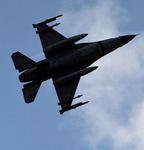
ISIS_24.7.15F-16 warplane in action against ISIS

The Middle East woke up Friday, July 24, to two new full-fledged wars launched by Jordan and Turkey for cutting down the Islamic State of Iraq and the Levant as is forces advanced on their borders. The United States and Israel are involved in both campaigns. Jordanian armored, commando and air forces are already operating deep inside Iraq, while Friday morning, Turkey conducted its first cross-border air strike against ISIS targets in Syria. Clashes between Turkish troops and Islamic fighters erupted at several points along the border. Both governments also conducted mass arrests of suspected Islamists. The Jordanian police picked up ISIS adherents, while 5,000 Turkish police detained 250 Islamist and outlawed Kurdish PKK suspects in Istanbul, Ankara, Izmir and Saniurta. Jordan Friday shut down its only border crossing with Iraq.

Earlier this week, Turkey permitted US warplanes to us the Incirlik air base in the south for bombing missions against ISIS, and Israel handed over to Jordan 16 Cobra combat helicopters and assured Jordan of air force cover for its anti-ISIS operation.

Read more about this new chapter in the war on ISIS in the DEBKAfile report of Thursday, July 23.

In the first publicized Israeli military hardware transaction with an Arab nation, Israel has handed over “around 16 Cobra” combat helicopters in support of Jordan’s war on the Islamic State. This was confirmed Thursday, July 23, by a US official close to the transfer. It was also the first time US-Jordanian-Israeli military cooperation in the struggle against ISIS was publicly disclosed.

“These choppers are for border security,” said the unnamed US official.DEBKAfile’s military and counter-terror sources disclose that the Cobras are needed for a large-scale Jordanian aerial-commando operation launched in the western Iraqi province of Anbar, which borders on the Hashemite Kingdom. This operation is designed to carve out a security belt tens of kilometers deep inside Iraq as a barrier against Islamic State’s encroachment.

Amman approached Washington for combat helicopters to back the operation and was told that the US is short of these items and would turn Israel to pitch in. The US first provided mechanical overhauls for the aircraft before they were incorporated free of charge in Jordan’s existing Cobra fleet.

The transfer was announced while US Defense Secretary Ashton Carter was touring the Middle East. He arrived in Amman Tuesday, July 21,after talks in Israel, and visited Baghdad unannounced Thursday, July 23 for an update on the war on ISIS

The mounting Islamist threat to Jordan is coming now from two directions – the Iraqi province of Anbar and  Syria. ISIS forces have grabbed positions in southern Syria near the intersection of the Jordanian, Iraqi and Syrian borders. They have also moved up to the eastern Syrian town of Abu Kamal on the Iraqi border and, since mid-May, have gradually detached small groups from the captured central Syrian town of Palmyra and quietly built up positions in the south near Jabal Druze.

This buildup has been tracked by US, Jordanian and Israeli surveillance.

The Islamist domestic threat to the Hashemite Kingdom is no less acute. Jihadist sleeper cells have been planted in Jordan ready to strike strategic targets for a reign of terror to coincide with the onset of external Islamic State attacks staged from Iraq and Syria.

Our military sources report that US-Israeli-Jordanian cooperation is channeled through the US Central Command Forward-Jordan from its headquarters north of Amman. It is staffed by US, British, Jordanian, Saudi and Israeli officers working together to defeat ISIS.

There is Iron in Your Word

June 9, 2015

Dempsey: Israel, IDF have no greater friend on Earth than the US military

By YAAKOV LAPPIN 06/09/2015 Via The Jerusalem Post

Dempsey and Eisenkot
U.S. Army Gen. Martin E. Dempsey, left, chairman of the Joint Chiefs of Staff, receives the Distinguished Ally of Israeli Defense Forces award from Israeli Chief of Defense Lt. Gen. Gadi Eisenkot in Tel Aviv, Israel, June 9, 2015.
DOD photo by D. Myles Cullen

(‘No signed paper can hold the iron. It must come from men.’ – LS)

CLICK HERE FOR VIDEO

Eisenkot tells visiting US military chief: Your personal commitment to our security has inspired us.

Israel and the IDF have “no greater friend on the face of the Earth than the United States military,” US Chairman of the Joint Chiefs of Staff. Gen. Martin Dempsey, told his counterpart in Israel on Tuesday.

Dempsey made the warm remarks after receiving a badge of appreciation from IDF Chief of Staff Lt.-Gen. Gadi Eisenkot at a ceremony held at IDF headquarters, at the Kirya in Tel Aviv.

The ceremony followed a guard of honor held by the IDF for Dempsey.

“I am greatly honored to host your visit to Israel. Your loyalty, friendship, and personal commitment to our security has inspired us,” Eisenkot told Dempsey.

“Under your leadership, the cooperation between our militaries has become more powerful,” Eisenkot added.

Dempsey responded by saying, “I’m so honored to accept this award. And I accept it on behalf of all of the men and women who had the privilege of serving side by side with the men and women of the IDF.”

The words reflected years of very close cooperation between the two armed forces, which has continued irrespective of the turbulent diplomatic relationship between the Netanyahu government in Jerusalem and the Obama Administration in Washington.

Dempsey, arrived in Israel on Monday on an official visit, and is holding a series of meetings with Eisenkot, Defense Minister Moshe Ya’alon, and other Israeli security chiefs, to discuss bilateral military cooperation, and pressing security challenges.

This is Dempsey’s fifth visit to Israel since his appointment as US military chief.

The US military chief was last in Israel in March 2014, when he met Netanyahu, Ya’alon, and the former IDF Chief of Staff Lt.-Gen. (res.) Benny Gantz for a series of closed-door meetings.

Soup Sandwich: Obama and His National Security Team Has no Plan to Combat ISIS

June 9, 2015

Soup Sandwich: Obama and His National Security Team Has no Plan to Combat ISIS, ISIS Study Group, June 9, 2015

(This appeared in an e-mail this morning from Foreign Policy Strategy Report:

Wait, where is everybody? Several hundred U.S. soldiers and Marines at al Asad air base in Iraq are standing by, ready to train some Iraq soldiers. But those Iraqi troops have stopped showing up, leaving the Americans all alone at the sprawling base. FP’s John Hudson, Lara Jakes and Paul McLeary report that across Iraq, there seem to be more U.S. trainers than recruits, with only 2,600 Iraqi soldiers currently receiving training from about 3,000 U.S. military personnel.

While the training has dried up, at the G-7 summit in Germany, President Barack Obama maintained that the United States and its allies must speed up the training of the Iraqi security forces….even, presumably, if they aren’t showing up.

— DM)

President Obama did some talking about the Islamic State (IS) after the G-7. Of note is that he admitted to not having an actual strategy in combatting IS and the threat it poses to the free world. In typical fashion he fails to hold himself accountable for his actions and points the finger at everybody but himself. He’s known about the threat of IS for since 2010 when Baghdadi’s guys initiated the “Breaking the Walls Campaign” in Iraq (which the Long War Journal did a great job of covering btw). This quote from our illustrious President was quite telling:

“I don’t want to put the cart before the horse. We don’t have a strategy yet,”

Obama: No ‘complete strategy’ yet on training Iraqis
http://www.cnn.com/2015/06/08/politics/obama-abadi-iraq-germany-g7/

And here’s President Obama’s press conference after the G-7 (we recommend fast-forwarding to the 18:00 mark to get to the good stuff):


The President comes off as well-versed in “saying the right things” when it comes to things like Greece, healthcare or raising minimum wage. However, he starts stumbling the minute someone asks about IS. At around the 19:00 mark of the aforementioned video he said that we’re making “progress” in pushing IS back, but then goes on to say that as we “secure” an area they move into other areas the Iraq Security Forces/Popular Mobilization Committee (ISF/PMC) left. This is the President’s definition of “winning” the fight against IS. We’re sorry if this offends his supporters (not really), but what’s happening on the ground in Syria, Iraq, Lebanon and Yemen isn’t the US “winning” this fight against IS, Iran or al-Qaida (AQ).

His “solution” to the problem being an acceleration of training up the ISF is smoke and mirrors, really. You can train the ISF up all you want and it won’t make any difference because at its core both the IA and Iraqi Police (IP) have been purged of their most capable commanders and replaced by incompetent officers. The fact that the IA is now 80% Shia further alienates itself from the Sunni Arab and Kurd communities. Even Secretary of Defense Ash Carter stated all the training in the world can’t help the IA due to the cowardice that’s endemic throughout the force. As much as the Iranian regime denied this and pushed back against Carter’s assessment, IRGC-Qods Force commander GEN Suleimani shares many his beliefs in the poor state of the IA – and that’s a big reason why Suleimani has been influencing the establishment of the Iraqi National Guard by working to ensure that the ranks are filled with Shia militia personnel. Oh, and btw, a lot of those “fresh troops” the President was referring to are already being put through the meat grinder in places like Bayji and Ramadi – and the results aren’t pretty.

Iranian Regime, GOI Take Issue With US SECDEF’s Assessment that IA are Cowards
http://isisstudygroup.com/?p=6707

ash-carter-300x169

SECDEF Ash Carter is the only guy in the Obama administration who seems to “get it” – too bad the powers that be forced him to walk back his accurate assessment on the cowardice seen throughout the IA
Source: Wall Street Journal

Again, none of this is surprising to our readers who’ve been with us since the beginning of our site. President Obama had a quasi-strategy of sorts that we covered in last summer’s “Obama’s ISIS Strategy: Failed Before it Started” that was followed up by “Another Reason Obama’s ISIS Strategy Has Already Failed.” To the uninitiated, the Obama strategy called for trainers and the arming of so-called “moderates” in Syria while supporting an Iraqi Army (IA) that has taken on sectarian characteristics. He’s banking on doing the bare minimum to basically run out the clock so that he can say he “didn’t deploy combat troops to Iraq.” In other words, he has a plan alrighHe’s been very untruthful because he’s dramatically increased the US military footprint in Iraq since last summer. Their situation is also much more dangerous now than it ever was during the OIF-era thanks to the restrictive ROE he slapped our brethren with prior to authorizing their deployment. Additionally, his term “no boots on the ground” is misleading because those “advisors/trainers” we’ve deployed are all ground troops – many of which are located in bases currently under siege such as al-Asad Airbase or Habbaniyah. If these aren’t American “combat troops,” then what are they, aid workers? Bystanders? The Obama administration may give the “trainer” label on our guys being deployed to Iraq, but the inconvenient truth of the matter is that they all have either “US ARMY” or “US MARINES” tags on their uniforms.

Obama’s ISIS Strategy: Failed Before it Started
http://isisstudygroup.com/?p=1730

Another Reason Obama’s ISIS Strategy Has Already Failed
http://isisstudygroup.com/?p=1757

US-Backed Syrian Group Disbands – But Were They Ever Truly “Moderate” to Begin With?
http://isisstudygroup.com/?p=5286

It was painful to watch President Obama – the alleged “leader” of the free world – have a hard time answering some pretty easy questions asked about US policy to combat IS. President Obama and his national security team had more than a few years to develop a strategy – but didn’t. Why is that? Its because President Obama doesn’t want his domestic agenda to get sidetracked by things like the foreign-policy arena. He just points the finger at everybody else saying “its their fault” while not formulating any real solution. He’s on his 7th year in office and still blames his predecessor for everything. Coming from military backgrounds ourselves, we were taught that a leader doesn’t make excuses. He makes things happen. A leader doesn’t keep rolling with a plan if it clearly isn’t working. A leader will adjust accordingly and inspire his subordinates to press on. That’s what a leader does. We’re not seeing that from this President. As we’ve stated earlier in this article, he’s just trying to “run out the clock” of his second term so that this will become the “next guy’s problem.” Unfortunately for him, it doesn’t work that way. His inaction and arrogance has directly led to the rise of IS, and his current policies have allowed the terror organization to expand into other locales such as Yemen, Libya, Egypt, Tunisia, Iraq, Afghanistan, Pakistan and the North Caucasus region. History won’t look so kindly on him as the current American media. The public will see this manifest itself in the next administration, when our country gets attacked on our home soil – again. Of course there’s the hope that the American people will finally realize this is what a “hope and change” foreign policy is all about before its too late. But we doubt it.

Screen-Shot-2015-06-08-at-2.21.59-PM-300x173

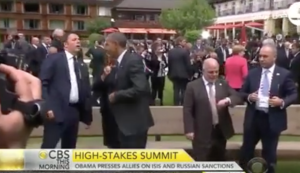
Oh yeah, President Obama knew PM Abadi was next to him and acted as if he wasn’t there – kinda like his approach to foreign policy
Source: CBS News

If you want additional details on the lead up to the rise of IS, then check out the history lesson we put together for President Obama’s counterpart Rand Paul, who is just as naive on foreign policy as he is:

Rand Paul Needs a History Lesson..
http://isisstudygroup.com/?p=6782

Links to Other Related Articles:

Defeating The Islamic State
http://isisstudygroup.com/?p=1708

Egypt Atmospherics
http://isisstudygroup.com/?p=614

Shoshana Bryen: The Kurds: A Guide for U.S. Policymakers

June 7, 2015

Shoshana Bryen: The Kurds: A Guide for U.S. Policymakerssecurefreedom via You Tube, June 5, 2015

Shoshana Bryen, Senior Director, Jewish Policy Center; Former Senior Director for Security Policy, Jewish Institute for National Security Affairs (JINSA):


The Islamic State Is Here to Stay

June 5, 2015

The Islamic State Is Here to Stay, VICE NewsAhmed S. Hashim, June 6, 2015

(Please see also, The Kurd-Shia War Behind the War on ISIS. — DM)

The victories against IS in early 2015 have proven ephemeral — or have been nullified by IS gains elsewhere. On Sunday, CIA director John Brennan said on Face the Nation, “I don’t see this being resolved anytime soon.” Assad’s vaunted offensives of February 2015 have fallen short as the regime faced stiff resistance from a wide variety of opposition fighters, including elements from IS. The failure was alarming in part because the campaign was designed and aided by both Hezbollah and the Iranians, two seemingly ascendant Shia powers.

************************

Just a few months ago, analysts and policy-makers were certain that the defeat of Islamic State (IS) forces was simply a matter of time.

Coalition airstrikes would degrade the group’s capabilities and eventually allow Iraqi forces and Kurdish Peshmerga — though discredited by their poor military showing in mid-2014 — to push back the extremists. And indeed, IS fighters were ejected from Tikrit in March 2015 by the Iraqi army and thousands of motivated fighters from Shia militias. In Kobani in northern Syria, IS fighters were defeated by Syrian Kurdish fighters. Elsewhere in the country, the regime of Bashar al-Assad was going on the offensive with help from Hezbollah and advisers from the Iranian Revolutionary Guard.

The Islamic State, however, rose like a phoenix from the ashes of every setback. And today, the situation is not so rosy.

The victories against IS in early 2015 have proven ephemeral — or have been nullified by IS gains elsewhere. On Sunday, CIA director John Brennan said on Face the Nation, “I don’t see this being resolved anytime soon.” Assad’s vaunted offensives of February 2015 have fallen short as the regime faced stiff resistance from a wide variety of opposition fighters, including elements from IS. The failure was alarming in part because the campaign was designed and aided by both Hezbollah and the Iranians, two seemingly ascendant Shia powers.

The situation in Iraq is just as complicated, something that the Obama administration appears either oblivious to or reluctant to acknowledge. Much of the US strategy continues to hinge on what is increasingly a mirage: a unified, albeit federal, Iraq under the control of Baghdad. Meanwhile, the resilience of IS is greatly enhanced by the ability of its military forces to innovate and adapt faster on the ground than its lackluster opponents.

In light of the constant aerial strikes by the US and its allies, IS has dispersed and made its forces more mobile, no longer presenting dense concentrations of fighting men as it did when it seized Mosul in mid-2014. Instead, when IS seized Ramadi in May 2015, it made use of inclement weather and sent several small units from different directions simultaneously into the city aided by suicide bombers. Moreover, the fact that the group faced ill-equipped and poorly motivated Sunni fighters in and around Ramadi did not do anything for Baghdad’s standing with the country’s already alienated Sunni community, which had pleaded for arms while caught between the unfathomable brutality of IS and revengeful Shia militias.

Many Sunnis are now angling for their own “super-region,” one that would have considerable independence from Baghdad. The problem? In order to have it, the Sunnis would need to first defeat IS. Currently, they’re unable to do so because they lack the resources; despite all the talk from Baghdad and Washington about arming Sunni tribes, Baghdad is not actually keen to do so.

And besides, the Sunnis seem relatively ambivalent about defeating IS. They took an unequivocal stance between late 2006 and 2009, when they joined with the Americans and the Iraqi government to deal the Islamist militants what was then seen as a decisive blow. Now, however, despite Sunnis’ resentment and fear of IS, the Islamists’ existence is seen as a kind of insurance policy against Shia revanchism should Baghdad succeed in retaking the three Sunni provinces of Anbar, Salahuddin, and Ninevah.

(Please see video at the link. — DM

The “victory” of the Iraqi government in Tikrit was more propaganda than reality; a few hundred IS fighters managed to inflict considerable damage on the Shia militias that had been mobilized to fight alongside the Iraqi army, then withdrew because they were outnumbered and wished to avoid being surrounded. The IS forces in Tikrit simply felt that they had done enough damage; there was no need to waste further assets in an untenable situation.

Militarily, the Iraqi Shia militias are better motivated and more dedicated than the regular army. Anecdotal information out of Baghdad suggests that Iraqi Shias are wondering whether the government should invest more effort building these forces into an effective and more organized parallel army. Even that parallel army, however, might be reluctant to commit to any significant long-term offensive to reclaim provinces full of “ungrateful” Sunnis.

But the Shia are willing to die to defend what they have, and there is increased sentiment among the Shia in central Iraq and Baghdad, along with the southern part of the country, that they would be better off without the Sunnis. There also exists the belief that the Kurds have more or less opted out of the Iraqi state despite the fact that they maintain a presence within the government in Baghdad. The Shia would seemingly not be sorry to see them exit the government in a deal that would settle as best as possible divisions of resources and territory. However, whether the Kurds would take the plunge and opt for de jure rather than de facto independence is a question that is subject to regional realities — How would Ankara and Tehran react? — rather than merely a matter of a deal between Baghdad and Erbil.

The Islamic State will continue to be a profound geopolitical problem for the region and the international community, and a long battle lies ahead. Syria and Iraq are more or less shattered states; it is unlikely that they will be put back together in their previous shapes. If Assad survives 2015, it will be as head of a rump state of Alawites and other minorities protected by Hezbollah, Iran, and Alawite militias. Shia Iraq will survive, and will possibly dissociate itself from the nettlesome Sunni regions. The Kurds will go their own way step by step. The international community is currently at a loss for how to stem the flow of foreign fighters to the IS battlefields — and even more serious is the growing sympathy and admiration for the group in various parts of the world among disgruntled and alienated youth.

If the US is serious about defeating IS, it needs to take on a larger share of the fight on the ground. This means more troops embedded with regular Iraqi forces in order to bring about better command, control, and coordination. It also means advisors who can continue to train these forces so that they improve over time. If this is not done, the regular Iraqi military will continue to be nothing more than an auxiliary to the more motivated — and pro-Iranian — Shia militias. Currently, militia commanders are giving orders to the regular military; that cannot be good for morale.

This month, the Islamic State celebrates the first anniversary of its self-declared caliphate. The group has little reason to fear it will be the last.

Bombers Return To Base Without Conducting Air Strikes Against ISI.S – Peters

June 1, 2015

Bombers Return To Base Without Conducting Air Strikes Against ISI.S – Peters, America’s News Room, June 1, 2015


Iraq Lost 2,300 Humvees in Mosul, Prime Minister Says

May 31, 2015

Iraq Lost 2,300 Humvees in Mosul, Prime Minister Says, Defense News, May 31, 2015

HumveesMembers of Iraqi security forces gather around a military vehicle on March 28 outside the western entrance of Tikrit during a military operation to retake the northern Iraqi city from Islamic State group jihadists. (Photo: Ahmad Al-Rubaye/AFP)

The militants gained ample arms, ammunition and other equipment when multiple Iraqi divisions fell apart in the country’s north, abandoning gear and shedding uniforms in their haste to flee.

IS has used captured Humvees, which were provided to Iraq by the United States, in subsequent fighting, rigging some with explosives for suicide bombings.

*********************

BAGHDAD — Iraqi security forces lost 2,300 Humvee armored vehicles when the Islamic State jihadist group overran the northern city of Mosul, Prime Minister Haider al-Abadi said on Sunday.

“In the collapse of Mosul, we lost a lot of weapons,” Abadi said in an interview with Iraqiya state TV. “We lost 2,300 Humvees in Mosul alone.”

While the exact price of the vehicles varies depending on how they are armored and equipped, it is clearly a hugely expensive loss that has boosted IS’ capabilities.

Last year, the State Department approved a possible sale to Iraq of 1,000 Humvees with increased armor, machine guns, grenade launchers, other gear and support that was estimated to cost $579 million.

Clashes began in Mosul, Iraq’s second city, late on June 9, 2014, and Iraqi forces lost it the following day to IS, which spearheaded an offensive that overran much of the country’s Sunni Arab heartland.

The militants gained ample arms, ammunition and other equipment when multiple Iraqi divisions fell apart in the country’s north, abandoning gear and shedding uniforms in their haste to flee.

IS has used captured Humvees, which were provided to Iraq by the United States, in subsequent fighting, rigging some with explosives for suicide bombings.

Iraqi security forces backed by Shiite militias have regained significant ground from IS in Diyala and Salaheddin provinces north of Baghdad.

But that momentum was slashed in mid-May when IS overran Ramadi, the capital of Anbar province, west of Baghdad, where Iraqi forces had held out against militants for more than a year.

White House: We Won’t Fight ISI.S For The Iraqis, They Must Do It – America’s Newsroom

May 28, 2015

White House: We Won’t Fight ISI.S For The Iraqis, They Must Do It – America’s Newsroom via You Tube, May 28, 2015