Archive for the ‘Caliphate’ category

Book review: The Islamic War

March 16, 2015

The Islamic War: Book review, Dan Miller’s Blog, March 16, 2015

(The views expressed in this article are mine and do not necessarily reflect those of Warsclerotic or its other editors. — DM)

The Islamic War, Martin Archer, 2014

The novel begins with a terror attack on a residential area in Israel, resulting in multiple causalities. It may, or may not, have involved members of the Iranian Revolutionary Guard. Menachem Begin is the Israeli Prime Minister and Ariel Sharon is the Defense Minister. The story begins immediately after the (postponed?) end of the Iran – Iraq war in 1988.

A massive armor, infantry, artillery and air attack on Israeli positions in the Golan follows the terrorist attack. The Israelis are outnumbered and suffer many thousands of casualties.

Israel had anticipated a simultaneous attack via Jordan, so most Israeli tank, infantry and air resources are deployed there, rather than in the Golan, to conceal themselves and await the arrival of Iranian, Iraqi and Syrian forces. They come and are defeated, most killed or fleeing. The Israeli forces then move into Syria and have similar successes there as well.

As the story evolves, it becomes evident that Israel must have known that the Iran – Iraq war had been allowed to fester to permit Iran, Iraq and Syria to develop a well coordinated plan to dispose of Israel, in hopes that a surprise attack could be made as soon as the Iran – Iraq war ended. Other events also suggest that Israel had prior notice:

Nuclear facilities of several hostile nations explode mysteriously.

The Israeli Navy had managed to infiltrate Iranian oil ports — apparently before the attack on the Golan — without being noticed. Then, at a propitious moment near the end of the fighting elsewhere, they destroyed all oil tankers in, entering or leaving port, along with all Iranian oil storage facilities.

The Israel Navy, which had suffered no losses, then moved to Saudi Arabia to protect her oil ports and ships coming to buy her oil and leaving.

As these events unfold, Israel, Egypt, Jordan, Saudi Arabia and Turkey* are negotiating a united front against Iran, Iraq and Syria, much to the displeasure of the U.S. Secretary of State, who wants a cease fire and return to the status quo ante. Fortunately, the U.S. President favors Israel and her coalition and generally ignores his SecState.

I won’t spoil the story by relating what happens at the end, but it’s very good for Israel, Egypt, Jordan, Saudi Arabia, Turkey and the Kurds, and very bad for Iran, Iraq and Syria. The novel is well worth reading, perhaps twice.

_____________

*Historical note: Turkey in 1988 was reasonably secular and also in other ways quite different from now. Egypt under President Al-Sisi is, in some but not all respects, similar to Egypt in 1988 under President Mubarak. Beyond a good relationship with Israel, Al-Sisi is working to modernize and reform Islam by turning it away from the violent jihad which drives both the Islamic State (Sunni) and the Islamic Republic of Iran (Shiite). Egypt remains under fire from the Obama administration due to the “coup” which ousted President Morsi, who had made Egypt essentially an arm of the Muslim Brotherhood. Egypt now helps to protect Israel with her military presence in the Sinai to oppose Hamas and Muslim Brotherhood activities there. Saudi Arabia and Jordan, like most countries in the Middle East, look out for the interests of their rulers first and are quite concerned about both the Islamic State and Iran.

Al-Aqsa Mosque Sheik Rebukes Pakistan for Not Launching Nuclear Strike to Help Establish Caliphate

March 16, 2015

Al-Aqsa Mosque Sheik Rebukes Pakistan for Not Launching Nuclear Strike to Help Establish Caliphate, MEMRI via You Tube, March 16, 2015

(Al-Aqsa Mosque  “also known as Al-Aqsa and Bayt al-Muqaddas, is the third holiest site in Islam and is located in the Old City of Jerusalem.” — DM)


ISIS-Sinai Is packing large water tankers with explosives

March 14, 2015

ISIS-Sinai Is packing large water tankers with explosives, DEBKAfile, March 14, 2015

(Please see also, IDF braces for Islamic State attack on Israel-Egypt border. — DM>

Egyptian military sources report that the ISIS Sinai affiliate has been discovered rounding up a large fleet of water and fuel tankers and big lorries and packing them with explosives for large-scale terrorist attacks on Egyptian and Israeli targets. The group which calls it’s the Sinai Province of the Islamist Caliphate tried the method out on March 4, using an explosives-packed water tanker to storm an Egyptian military compound in the Kawthar district of the northern Sinai town of Sheikh Zuweid. On March 10, they seized another water tanker at al-Towil east of El Arish, and on March 11, in the same area, they captured two large trucks of the Egyptian electricity company and pushed the drivers out.
Thursday, March 13, Col. Arik Hen of the IDF’s 80th Division said the military was on the alert for a major coordinated ISIS attack on Eilat from Sinai and the sea.

Iran’s advances create alarm in Saudi Arabia and the Gulf

March 14, 2015

Iran’s advances create alarm in Saudi Arabia and the Gulf, the Guardian,  March 13, 2015

Arabs believe Baghdad, Damascus, Beirut and Sana’a are in effect under Iranian control – and power may shift further if US sanctions are eased.

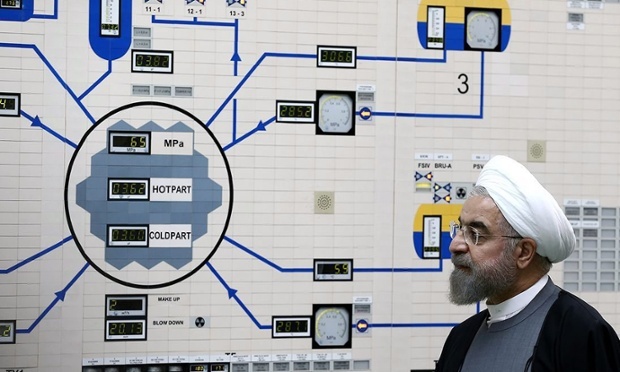
c0ac3569-93da-4ae8-8b51-29dc6991ee13-620x372 Hassan Rouhani, the Iranian president, visiting Bushehr nuclear power plant in southern Iran this year. Photograph: Presidential official handout/EPA

Iran’s great advantage, suggests Emile Hokayem, an analyst, is its commitment and competence, in Syria and beyond. “The expertise, experience and strategic patience it deployed in support of the Syrian regime to a great extent facilitated Assad’s recovery from serious setbacks in 2012. In contrast, the war in Syria has exposed not only the political and operational limitations of the Gulf states, but also the rivalries among them.”

*********************

The commanders of Iran’s Islamic Revolutionary Guard Corps (IRGC) have been working overtime recently, flaunting their achievements across the Middle East and flexing muscles as international negotiations over the country’s nuclear programme enter their critical and perhaps final phase.

On Wednesday it was the turn of Major-General Mohammad Ali Jafari, the IRGC’s most senior officer. “The Islamic revolution is advancing with good speed, its example being the ever-increasing export of the revolution,” he declared. “Not only Palestine and Lebanon acknowledge the influential role of the Islamic Republic but so do the people of Iraq and Syria. They appreciate the nation of Iran.”

Last month a similarly boastful message was delivered by General Qassem Suleimani, who leads the IRGC’s elite Quds force — and who is regularly photographed leading the fightback of Iraqi Shia miltias against the Sunni jihadis of the Islamic State (Isis) as well as against western and Arab-backed rebels fighting Bashar al-Assad in southern Syria. “Imperialists and Zionists have admitted defeat at the hands of the Islamic Republic and the resistance movement,” Suleimani said.

Iran’s advances are fuelling alarm in Saudi Arabia and the Gulf, where Tehran has been a strategic rival since the days of the Shah, and which now, it is said with dismay, in effect controls four Arab capitals – Baghdad, Damascus and Beirut and in the last month Sana’a in Yemen – which is uncomfortably close to home.

Iran’s regional position has certainly improved. Its high-profile role fighting Isis in Iraq, Assad’s retention of control in Syria with the help of its Lebanese ally Hezbollah, and the Houthi rebel takeover in Yemen have all been deeply discomfiting for the Saudis. Anti-government protests in Shia-majority Bahrain are also often blamed on Tehran — though that ignores the domestic roots of the unrest.

In Riyadh King Salman has dropped his preoccupation with the Muslim Brotherhood in favour of building a united Sunni Arab front to confront the Iranians, diplomats say, though translating that strategy into action is another matter. The message from Saudi Arabia and the United Arab Emirates is that whatever the outcome of the nuclear talks, Iran is bent on expanding its power and influence. “The Iranians have scored major victories but only where there are Shia minorities,” a senior Gulf official told the Guardian. “Our concern is that the nuclear issue will become a tool of their foreign policy.”

Arab alarm is shared by Israel. Binyamin Netanyahu used identical arguments in his recent speech to the US Congress, timed to influence next week’s nuclear endgame in Geneva. “The Saudis will be incredibly worried that we are getting close to a point where the Iranians will be players because of the nuclear issue and the way the Americans have effectively ended up on the same side as the Iranians in Iraq,” said one veteran Saudi-watcher. “But the noise they are making is in inverse proportion to their ability to do anything about it.”

Arab governments are not reassured by the promises of John Kerry, the US secretary of state, that Washington is not seeking a “grand bargain” with Tehran that will allow it to “destabilise” the Middle East, bolstered by the easing of economic sanctions. Saud Al Faisal, the Saudi foreign minister, warned of Tehran’s “hegemonic” ambitions as the IRGC supported the military operation to retake the Iraqi town of Tikrit from Isis. In Gulf capitals Hassan Rouhani, the emollient Iranian president, is seen as less important than the hardline supreme leader, Ayatollah Ali Khamenei.

It is hard to disentangle propaganda from reality. But independent analysts argue that Iran is inflating its gains for both foreign and domestic consumption. “If you listen to Suleimani there is a degree of exaggeration,” argues Ali Ansari of St Andrews University. “It’s rhetorical reassurance. He is saying to Iranians: ‘We are powerful and and everyone is worried about this’ – partly to make the point that they are not really under pressure. People outside can see what Iran’s strengths and weaknesses are. But there is this belief that you need to negotiate from a position of strength and that if you are weak you will be trampled on.”

Iran-watcher Hossein Rassam also detects a domestic calculation in the IRGC statements. “Critics of Rouhani’s policy of rapprochement with the international community inside Iran can turn to the supreme leader and say there wasn’t really much need for that softer tone because now we have more bargaining chips in our hands. Iran is the only power in the region which can actually fight Isis and the west needs us for that.”

Meir Litvak, an Israeli expert on Iran, sees both genuine belief and posturing in Tehran’s stance. “The Iranians believe they have been able to save the Assad regime from total collapse and there is at least stalemate in Syria,” he said. “That means they have been able to maintain the link with Hezbollah and maybe open a second front by proxy against Israel on the Golan Heights. The Houthi rebellion in Yemen was initially a genuinely domestic affair but the Iranian regime saw it as an opportunity. And it has become a bonus for it – even if they are not that active inYemen. But if the Saudis are scared that’s a plus for the Iranians.”

Arab diplomatic sources say they expect to see an IRGC and Hezbollah presence in Yemen, helped by a new agreement on regular flights between Tehran and Sana’a.

Iran’s role in Bahrain, where the Shia majority remains locked in confrontation with the Saudi-backed Sunni monarchy, is more about scoring propaganda points than material support – despite claims in Manama about Iran’s sinister role.

Still, in the heartlands of Iranian influence, Iraq and Syria, there have been significant costs as well as benefits, including the deaths of two senior IRGC commanders. Continuing sanctions and low oil prices – seen in Tehran as a deliberate strategy by the Saudis – have also made it harder to shell out billions of dollars to subsidise the Assad regime.

Iran’s great advantage, suggests Emile Hokayem, an analyst, is its commitment and competence, in Syria and beyond. “The expertise, experience and strategic patience it deployed in support of the Syrian regime to a great extent facilitated Assad’s recovery from serious setbacks in 2012. In contrast, the war in Syria has exposed not only the political and operational limitations of the Gulf states, but also the rivalries among them.”

It’s Not Just Islam, It’s the Tribal Mentality

March 12, 2015

It’s Not Just Islam, It’s the Tribal Mentality, Front Page Magazine, March 12, 2015

fft-450x253

Islam in part is the “theologizing” of the tribal mentality. Islam’s important innovation was to redefine the “tribe” as the whole umma of believers, creating in effect a “super tribe” that transcends mere blood as the bonding agent. But the tribal warrior ethos persists–– in the doctrine of jihad, tribal atrocities in contemporary terror and its gruesome videos, the privileging of men in polygamy, honor killings, and social restrictions on women, the disdain for the infidel “other” in the Koranic belief that Muslims are the “best of nations,” the betrayal of alliances in the religious sanction of lying to infidels (taqiyya), and the obsession with “honor” that today we find in violent Muslim reactions to “blasphemy” against Mohammed or the Koran.

Ignoring the tribal mentality is as dangerous for our foreign policy as downplaying Islamic doctrine.

The Obama administration’s serial appeasement of Iran––currently the “strongest tribe” spreading its influence throughout the region–– has damaged our prestige among allies like Jordan, Saudi Arabia, and Egypt, who are already shopping around for a more reliable and forceful partner. If we want to destroy the jihadists, check Iran’s nuclear ambitions, and protect our interests, we must again become the “strongest tribe.”

********************

The “nothing to do with Islam” mantra took a hit recently in one of the premier organs of liberal received wisdom, The Atlantic. Many have greeted as a revelation Graeme Wood’s article on the Islamic doctrines behind ISIS’s atrocities. Regular readers of FrontPage and Jihad Watch will not be as impressed. For years they have understood the link between jihadism and Islam. In 1994 Andy McCarthy made this connection when he prosecuted the perpetrators of the first World Trade Center bombing the previous year, a connection that the FBI ignored or discounted at the time––a failure, by the way, that has become a pernicious tradition for those charged with protecting our nation’s security and interests. For everyone else who has been paying attention to the rise of modern jihadism, Wood’s article is a dog bites man story.

One can hope that perhaps now, with the truth revealed by one of the Acela corridor’s oracles, the jihad deniers will wise up, though I wouldn’t bet on it. Unexamined opinions comprise the bulk of the progressive mind, and are notoriously resistant to empirical evidence and sound argument. But the current mess in the Middle East results from more than just Islam and its traditional belligerence, supremacist pretensions, and illiberal religious laws and doctrines. These characteristics reflect variations on the mentality of the tribe, one antithetical to modernity and the principles of liberal democracy, and still powerful in the Middle East, the region once described as “tribes with flags.”

For all the differences among tribal peoples, the components of this mentality are consistent, from the ancient Gauls and Germans Caesar conquered and the Vikings terrorizing much of Europe, to the American Indians the U.S. Cavalry fought and the jihadist gangs rampaging in the Middle East.

First, there is little notion of a common humanity that transcends ethnicity or culture. Universal principles are scarce, and personal identity is found solely in the collective customs and traditions of the tribe. Outsiders are to be distrusted, plundered, or conquered when possible. Loyalty is not to principle, but to blood. Most tribal peoples consider their tribe the acme of humanity, the only genuine humans. Hence their word for “human” is usually identical to the name of their tribe. They are literally ethnocentric.

Second, violence, particularly against outsiders, is an acceptable instrument for resolving conflict and asserting tribal superiority. Not just the violence of war, but also the cruel torture and slaughter of outsiders, including women and children, are legitimate for serving the interests of the tribe. Indeed, what we call terrorism was a tactic of tribal warfare to prevent a full-scale war by so terrorizing enemies that they would give up without a fight, a phenomenon common in the various Indian wars of American history. Hence the scary face-paint, tattoos, war cries, bizarre hairstyles, tortures like scalping, mutilation of enemies, or slaughter of their women and children, all of which are meant to frighten and demoralize the enemy. The same intent explains the blustering threats, braggadocio, and insults typical of tribal warfare and diplomacy. These practices can be documented in tribal societies from the Iroquois to the ancient Gauls.

Next, loyalty in tribal societies counts only for those within the tribe. Alliances with other tribes or peoples are ad hoc and contingent on the immediate interests of the tribe. They can be abandoned or betrayed if circumstances or perceptions change. Moreover, respect for others beyond the tribe is based solely on their capacity to inflict violence on their enemies. The “strongest tribe,” a status based on its effectiveness and success in conflict, will attract allies, who will abandon the hegemon once it loses that perception of its strength. Thus during Caesar’s wars in Gaul various Gallic and Germanic tribes would ally with the Romans when they appeared dominant, and betray them in an instant if they thought them weak. Likewise during the U.S. Cavalry’s wars against the Plains Indians, many tribes victimized by the Sioux or Apache or Cheyenne would ally with the Americans if they seemed to be winning, then switch sides the moment they seemed weak.

Finally, tribal societies are centered on the male warrior and his honor. Forget the Women’s Studies fantasies of matriarchal tribal societies. Tribal cultures privilege males, for men fight, and the survival and honor of the tribe depends on martial valor. Women bear children and work, as the skeletons of pre-contact American Indian remains demonstrate. Female bones show much more damage from hard physical labor than do male. This doesn’t mean that women had no status within the tribe, or did not enjoy somewhat more equality than women in more sophisticated civilizations. But warrior males still dominated, and culture in the main centered on men and their prowess in war, which earned honor, what we call prestige, for the whole tribe.

Sound familiar? It should, for Islam in part is the “theologizing” of the tribal mentality. Islam’s important innovation was to redefine the “tribe” as the whole umma of believers, creating in effect a “super tribe” that transcends mere blood as the bonding agent. But the tribal warrior ethos persists–– in the doctrine of jihad, tribal atrocities in contemporary terror and its gruesome videos, the privileging of men in polygamy, honor killings, and social restrictions on women, the disdain for the infidel “other” in the Koranic belief that Muslims are the “best of nations,” the betrayal of alliances in the religious sanction of lying to infidels (taqiyya), and the obsession with “honor” that today we find in violent Muslim reactions to “blasphemy” against Mohammed or the Koran.

Ignoring the tribal mentality is as dangerous for our foreign policy as downplaying Islamic doctrine. The chronic disorder in northern Iraq today is not just about the Sunni-Shi’a divide, or ISIS’s dream of a caliphate. It also reflects the bewildering number of tribes and clans in the region, whose complex alliances and enmities continually shift depending on circumstances and the perceptions of which tribe is the stronger. Our ally today can instantly become our enemy tomorrow. Factions that appear “moderate” today can become jihadist terrorists tomorrow. Our “friends” will tell us what we want to hear today, and then betray their words tomorrow. Most important, anything we do that creates the perception of weakness––especially concessions, or failure to inflict revenge, or acts of mercy––will also damage our prestige as the “strongest tribe” and invite tribes to abandon us.

These tribal practices defined most peoples, including Europeans, before the advent of modernity. They have survived among Middle Eastern Muslims because they were encoded in religious doctrines that promise global power for the tribe of the faithful in this life, and paradise in the next, especially for jihadist warriors. This amalgamation in part explains the spectacular success of Muslim warriors for a 1000 years, a record of martial achievement the memory of which today fuels the resentment and anger of those Muslims who wish to restore that lost honor. It also contributes to the difficulty of many Muslim societies to reconcile with modernity, particularly liberal democracy and its cargo of human rights, confessional tolerance, and equality for women and those of other faiths.

Of course, worldwide millions of Muslims have managed to transcend tribalism and adjust their faith to modernity. But millions more haven’t, and it is they who are fomenting most of the mayhem and murder on every continent except Antarctica. Our tactics and strategies in confronting this threat must indeed be based on a correct understanding of the spiritual imperatives that motivate the jihadists. But they also must take into account the tribal mentalities that respect force and honor the strong.

The Obama administration’s serial appeasement of Iran––currently the “strongest tribe” spreading its influence throughout the region–– has damaged our prestige among allies like Jordan, Saudi Arabia, and Egypt, who are already shopping around for a more reliable and forceful partner. If we want to destroy the jihadists, check Iran’s nuclear ambitions, and protect our interests, we must again become the “strongest tribe.”

Obama’s Surrender to Iran

March 12, 2015

Obama’s Surrender to Iran, Front Page Magazine, March 12, 2015

obama-iran

Iran, therefore, needs nuclear weapons to protect itself should it fail to derail Obama’s ambitious plans. Should the Pan Arabic (Sunni) Islamic Union become a reality, the Iranian rulers believe that having the capability of ushering in Armageddon will keep the Sunni’s at bay.

At the very least, the Mullahs in Iran rest better knowing, should they fall, that they can take everyone else down with them. Think “mutually-assured destruction.” A sort of “MAD” amongst madmen.

***************************

It is becoming increasingly clear that Obama’s agenda in the Middle East is to help the Islamists regain the land they once controlled but lost in 1924 with the fall of the Ottoman Empire.

The Arab Spring was not a movement to replace ruthless dictators with democratic governments. It was an Islamic movement to replace secular governments with Islamic ones.

Step by step, this administration is helping to establish the Islamists’ dream of a revived caliphate, or “Pan Arabic Islamic Union” as it has been called by Islamist leaders recently.

There is a mistaken school of thought that believes such an Islamic Union would function like an Arabic European Union, growing their economies and enabling them to take their place among the other nations of the world as equals.

This school neglects to answer the most salient question: How do you contain a movement that recognizes no borders but its own and is compelled by dint of faith to dominate the rest of the world or die in the effort?

Unfortunately, the primary opposition to this plan isn’t coming from the American people. Sadly, much of America is suffering from confusion, ignorance, self-loathing and a dedication to bending over backwards in an attempt to avoid the confrontation that looms ahead.

Rather than marshaling a strong core of support for the hard choices that must be made, our administration is creating a huge chasm between citizens over trivialities and over-amplified slights. We are far weaker for it.

One might ask then, who is opposing the mighty President of the United States? Who dares stand in the way of the Nobel Peace prize winner “Barack Obama?”

The answer will be something of a shock to many.

In no particular order, listed below are those who are arrayed against the designs of our “Dear Leader.”

Putin

Standing most prominently, is Vladimir Putin, the Russian bear. Putin has designs on the former Soviet satellite nations and he needs a strong economy and the leverage that an oil monopoly over the European market provides to fuel his aspirations.

His Ukraine adventure is proving more troublesome than originally thought, and Obama’s push to topple Assad in Syria threatens Putin’s access to a warm water port for Russia’s oil exports to Europe.

The Russian oligarchs are growing restive under the thumb of Putin, seeing his dreams of Sovietus revivivus as bad for business and potentially catastrophic. Putin’s leash is shortening, and his tenure is by no means a sure thing.

While Putin remains in power, he will oppose Obama’s Ottoman revival. He has no choice.

Old Guard and Monarchies of the Middle East

Next are the old guard and monarchies of the Middle East. We like to call them “dictators” even though in reality, while they are all Sunni Muslims, they are more concerned with maintaining their own wealth and power than in recreating an Islamic caliphate.

Among these were Gaddafi, Mubarak and the others deposed in the Arab Spring, but also numbered in this groups is the Hashemite kingdom of Jordan and both Saudi Arabia and the Emirates.

All are in danger of being ejected from this game. But just like Putin, they will not go bloodlessly.

Islamic Republic

The final player is also the strongest: Iran.

Iran, a Shiite nation, is a natural enemy to any Sunni Islamic caliphate system. The Iranian rulers know from Islamic history (the same history we completely ignore here in the West) that any Sunni caliphate will soon swallow and erase the Shi’a, destroying all opponents to their well-established ideals of Islamic religious and political structure.

Iran, therefore, needs nuclear weapons to protect itself should it fail to derail Obama’s ambitious plans. Should the Pan Arabic (Sunni) Islamic Union become a reality, the Iranian rulers believe that having the capability of ushering in Armageddon will keep the Sunni’s at bay.

At the very least, the Mullahs in Iran rest better knowing, should they fall, that they can take everyone else down with them. Think “mutually-assured destruction.” A sort of “MAD” amongst madmen.

Don’t let this apocalyptic scenario, however, lead you to think that Iran is going quietly into oblivion. On the contrary, it has tirelessly worked to thwart Obama’s plans.

Iran’s use of terror and terror proxies is on the upswing. It will distract and misdirect, strike and cajole, but it will not permit a Sunni caliphate to appear on its border without a nuclear capability of its own to deter Sunni adventurism.

Obama’s setbacks in Syria and Benghazi have forced him to negotiate with the Iranians. He wants to assure them that they have nothing to fear from a caliphate, while simultaneously keeping the American people from recognizing the monumentally stupid policy objective he is pursuing.

To this end, he tells us he has gotten Iran to agree to postpone its nuclear work for ten years, under the ridiculously naive idea that the dynamics of the Middle East will have changed. Many believe Obama is in fact a Muslim. In reality, that really doesn’t matter.

His administration believes that all conflict can be framed in Marxist terms. Empower those who have little and they will join the community with smiles and slaps on the back. The administration fundamentally misunderstands the problem and is applying a solution akin to gasoline on a grease fire.

Economics are unimportant to the Islamists. Power is their currency and they spend all they have to purchase the world for Allah. The establishment of an Islamic caliphate will not calm the Arab street, it will invigorate it to greater conquests, as Islam demands.

Of course, in the eyes of the neo-progressives in the White House, to speak truthfully about this “Islamophobia.”

To Obama, a nuclear Iran is an acceptable trade-off for a revived caliphate, To Israel, however, both Iran and a caliphate are threats to their very existence.

Iran with a nuclear weapon has no reason not to make good on its long-standing promise to “wipe Israel from the face of the earth.” A reconstituted caliphate modeled after the former Ottoman Empire has no room for Israel, indeed, on Iran’s maps, Israel doesn’t exist at all.

America is negotiating nuclear policy with a terrorist state, and geopolitical hegemony with an ideology/religion that knows no borders but its own.

In 2013, President Obama told us we can all take a deep breath, he was able to wring an invaluable concession out of the Iranians. He breathlessly announced that Iran had issued a fatwa against nuclear weapons.

It appeared that we had been brought back from the brink by the president’s keen ability to negotiate.   Notwithstanding the obvious (and wholly inappropriate) grandstanding by the POTUS, there are a few other issues that need to be addressed in relation to this irrelevant fatwa.

Most Americans aren’t aware that the foundation of Iran’s nuclear program was laid on March 5th, 1957 by the United States, under an Eisenhower program called “Atoms for Peace.”  Iran established the Tehran Nuclear Research Center (TNRC) in 1967, which was a 5 megawatt nuclear research reactor, fueled by enriched uranium.

In 1968, Iran signed the Nuclear Non-Proliferation Treaty (NPT) ratifying it in 1970, making Iran’s nuclear program subject to International Atomic Energy Agency (IAEA) verification and accountability.

Following the 1979 Revolution, nearly all international nuclear cooperation with Iran was cut off.  With little hope of regaining international cooperation, Iran elected to continue the program on their own, although they thought it best to save face and attempt to “shame” America (and by extension its advanced nuclear technology) by condemning all things nuclear.

It was for this reason and this reason alone, that the fatwa was issued. It had nothing to do with any humanitarian interests held deeply in the hearts of Iranian leaders; they are certainly more than amenable to any method that allows them to more efficiently eliminate their enemies, most especially Israel.

The anti-nuclear fatwa, is fully revealed to be a sham five years later, when we see the destruction of a reputedly “non-existent” Iranian nuclear program by Iraqi forces.

All of this is still occurring under the reign of the same Ayatollah that issued the nuclear fatwa a brief five years previous. Clearly, the Iranians had continued their nuclear program, despite the fatwa.

The next time we saw any reference to the 1979 “nuclear fatwa” was in 2003.  The IAEA issued a report, condemning the Iranian nuclear program, accusing it of once again, trying to weaponize the technology.

Still, Iran didn’t budge.  It wasn’t until the U.S. threatened to get involved militarily (the full might and power of the U.S. military was on display right next door in Iraq under the leadership of President Bush) that the Iranians finally caved.

What did this concession look like?  Well, as you might have guessed, Iran simply reaffirmed the old stand-by fatwa from 1979, condemning nuclear weapons and promising to play nice.

So, for the record, we have clear evidence that the Iranians consider their anti-nuclear fatwa to be toilet paper, so Obama’s “concession” is more enabling than disarming. Iran had cast the ‘79 fatwa out again in 2013, hoping we’ll bite on it one more time. Obama readily obliged.

President Obama appears willing to do whatever it takes to build his legacy on reestablishing the Islamic state after an 80 year absence. He also appears willing to endanger both the United States and Israel to get it done.

European colonization didn’t create terrorists; Islam and Mohammed birthed terrorism in order to spread a brutal and unforgiving ideology.

Absent European intervention, Muslims might yet be centuries further behind than they already are. Islam is a crippling force. Science has never been particularly important to the Islamists.

European contact brought Muslim countries out of the Stone Age; the same stone age to which the Islamic jihad intends to return us all.
Analysis: Iran is no partner in the fight against the Islamic State

March 11, 2015

Analysis: Iran is no partner in the fight against the Islamic State, Long War Journal and , March 11, 2015

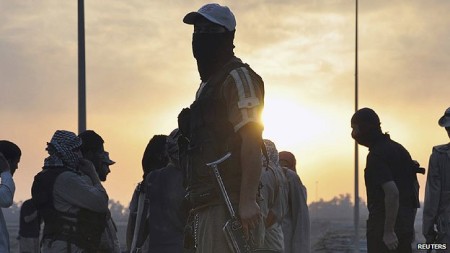
B_vsofcXEAAtDRvQassem Soleimani (center) with his bodyguards near the frontlines of Tikrit.

Iran benefits from the threat of an Islamic State, and if the US continues its courtship of Tehran, it may find the Islamic State replaced by an Islamic Republic.

****************

Testifying on Capitol Hill on March 3, Joint Chiefs Chairman General Martin Dempsey characterized the joint attempts of the Iraqi military, Iraqi Shia militias, and Iran’s Islamic Revolutionary Guards Corps (IRGC) at taking back control of Tikrit, Saddam Hussein’s hometown, from the Islamic State, as “a positive thing.” “Frankly,” General Dempsey said, “it will only be a problem if it results in sectarianism.”

General Dempsey’s caveat is an interesting one, since there is every reason to believe that Shia control of Tikrit will result in further sectarianism. While the US administration says in its most recent National Security Strategy that it desires to “degrade and ultimately defeat ISIL [Islamic State]” in an attempt to “support Iraq … free itself from sectarian conflict and the scourge of extremists,” Tehran is actively perpetuating the sectarian crisis in Iraq.

The threat of the Islamic State, coupled with American “strategic patience,” not only makes the Iraqi Shia more dependent on Tehran and legitimizes Iran’s military presence in Iraq, it also provides the regime in Tehran with another bargaining chip in nuclear negotiations with the P5+1 Group.

In the past, the Iraqi Shia have demonstrated little interest in reducing themselves to puppets of Tehran. During the war with Iraq from 1980-1988, Iraqi nationalism trumped sectarian identity: the Shia constituted the rank and file of the Iraqi military, and Shia leaders in Iraq kept their distance from the regime in Tehran. After the collapse of Saddam Hussein’s regime in 2003, Iraq became a sanctuary to Iranian clerics critical of the regime in Tehran, including Hossein Khomeini, grandson of the founder of the Islamic Republic.

But Iraq did not remain a refuge for long. The civil war in Iraq, followed by the rise of Islamic State, forced moderate Iraqi Shia, who otherwise would have pursued a line independent of Iran, to become dependencies of Tehran. After being rebuffed by the US following the Islamic State’s takeover of Mosul in 2014, General Qassem Atta, head of the Iraqi National Intelligence Service, asked Tehran for help and received assistance within 48 hours. Iraqi Prime Minister Haider al Abadi continues to press Washington for more support in his fight against the Islamic State and uses US hesitancy to justify reliance on Iran, which according to Vice President Iyad Allawi,only increases Iran’s influence in Iraq and could lead to dismantlement of the Iraqi state.

The Obama administration may desire to help secure the survival of the Iraqi state, but the small contingent of US advisers in Iraq is relying on a heavily Iranian-influenced Iraqi sectarian intelligence and security apparatus. The Iraqi security forces are predominantly Shia, and in addition, Shia militias and “advisers” from the IRGC Quds Force are now fighting as legitimate Iraqi forces. 

This creates an environment in which targeting operations developed by Iranian forces and the militias have primacy over those developed by the US, leading to the possibility that  Washington could be portrayed by Islamic State as complicit in the indiscriminate targeting of Sunnis. Such operations will be perceived the same way by the very Sunnis we need to fight Islamic State, thus undermining the US strategy to “support Iraq … free itself from sectarian conflict and the scourge of extremists.”

Any US reliance on Iranian support in the fight against the Islamic State is also likely to strengthen Tehran’s bargaining position in the nuclear negotiations.

Although both US and Iranian negotiators maintain that nothing but the nuclear issue is being discussed, this of course is fiction. On Sept. 22, Fars News, quoting an anonymous American source, reported that Secretary of State John Kerry and Mohammad Javad Zarif, Iran’s foreign minister, discussed the nuclear issue as well as the fight against the Islamic State. And Admiral Ali Shamkhani, Iran’s Supreme National Security Council Secretary, has also connected both issues. Clearly, Tehran’s cooperation with Washington in the fight against the Islamic State comes at a price, which Washington must pay at the negotiating table in Geneva.

Iran has Washington where it wants it. Iran wants a favorable deal, and the Obama administration is signaling that such a deal is forthcoming. US “strategic patience” is allowing Iran to increase its influence and presence in Iraq and Syria. Assad is waiting out the Americans and the international community, and Shia militias are now viewed as legitimate forces in Iraq, Syria, and Yemen. But most importantly, US “strategic patience” signals to Iran an unwillingness to jeopardize the talks by linking them to Iran’s role in Iraq, Syria, and Yemen. 

Iran benefits from the threat of an Islamic State, and if the US continues its courtship of Tehran, it may find the Islamic State replaced by an Islamic Republic.

Rouhani adviser denies he called for Iran’s return to empire

March 11, 2015

Rouhani adviser denies he called for Iran’s return to empire, Al-MonitorArash Karami, March 10, 2015

(An modest attempt at a partial walk-back. Please see also, Advisor To Iranian President Rohani: Iran Is An Empire, Iraq Is Our Capital . . . — DM)

Iran's former Intelligence Minister Younesi, chief nuclear negotiator Larijani and former chief nuclear negotiator Rohani attend conference in TehranIran’s former Intelligence Minister Ali Younesi (L), chief nuclear negotiator Ali Larijani and former chief nuclear negotiator and current President Hassan Rouhani (R) attend a conference on Iran’s nuclear policies and prospects in Tehran April 25, 2006. (photo by REUTERS/Raheb Homavandi)

Ali Younesi, President Hassan Rouhani’s adviser on Ethnic and Religious Minorities affairs, has issued a clarification about his comments suggesting a union between regional countries. His words had sparked criticism from the Arab-language media, which construed them as reviving Iran’s ancient empire. A former Iranian vice president who was at the conference also spoke out against Younesi’s comments.

Younesi accused Iran’s enemies of creating propaganda by misconstruing his comments at a March 8 conference on Iranian history and culture, saying that he was simply talking about a “historical and cultural unity” between certain countries in the region, including Iran, Tajikistan, Afghanistan and Iraq. He said that his proposal was for a “union” and “does not mean an empire should be reborn,” but rather that the neighbors should cooperate to confront mutual threats. He added that Iran’s official position is that “it respects the national boundaries and territorial integrity of other countries.”

Younesi was specifically criticized for saying, “Currently, Iraq is not only part of our civilizational influence, but it is our identity, culture, center and capital, and this issue is for today and the past. Because Iran and Iraq’s geography and culture are inseparable, either we fight one another or we become one.” He went on, “My meaning is not that we should remove our borders, but that all the countries of the Iranian plateau should become close because our interests and safety are intertwined.”

Younesi’s call for a “natural union” between these countries was not welcomed by Iran’s regional rivals, especially given the sensitivities of Arab countries in the Persian Gulf to Iran’s assistance to Iraqi forces currently battling the Islamic State in former Iraqi President Saddam Hussein’s hometown of Tikrit.

Saudi Arabian-funded Al-Arabiya incorrectly reported that Younesi had said, “Iran today has become an empire like it used to be through history, and its capital is now Baghdad. That is the center of our civilization and our culture and our identity today, as it has been in the past.” CNN Arabic wrote in their headline that Younesi said, “Iran is an empire and its capital is Iraq. We protect the region from Wahhabis, neo-Ottomans and atheists.” Though the first sentence in the CNN Arabic is incorrectly translated, Younessi did say in the March 8 conference that Iran was helping to protect the region from Wahhabi, takfiri, Zionist and Western domination. The Al-Arabiya article was tweeted over 3,000 times and shared on Facebook by over 4,000 people.

Former Iranian Vice President Mohammad Ali Abtahi also criticized Younesi, posting on Facebook immediately after attending the conference, “Now that the Arab countries in the region have reached a relative unity with Israel on fears about Iran, these comments will be construed as the same threatening talk of Ahmadinejad.” He added, “Irrespective of their governments, people have a sensitivity to their land, and this talk provokes people’s sensitivities.”

As Rouhani’s Ethnic and Religious Minorities adviser, Younesi has become known for reaching out to Iran’s Jewish population by laying wreaths at the graves of Jewish Iranians killed in the Iran-Iraq war, taking criticism from conservatives for suggesting Iran revert to its pre-revolution flag bearing the lion and sun and criticizing those who commit human rights violations in Iran. Though he was once minister of intelligence under President Mohammad Khatami, today his position carries no executive weight. But given the tensions between Iran and Arab countries in the Persian Gulf, it’s understandable that these comments would spark a backlash.

Iran Declares Pre-emptive Victory in Nuke Talks

March 11, 2015

Iran Declares Pre-emptive Victory in Nuke Talks, Washington Free Beacon, March 11, 2015

(Unfortunately, he appears to be correct. Iran seems to have improved her arsenal substantially since November of 2013 and the sanctions relief, used to get Iran to “negotiate,” doubtless helped it to do so. Please see also Iran is an empire, Iraq is our capital.

What will Obama do if Iran declines even his “extremely reasonable” deal because Iran doesn’t want one? Blame it on the recent letter sent by Republican members of the Congress? — DM)

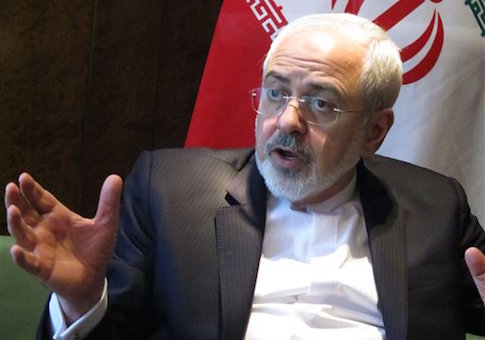
Iran minister says sanctions must be lifted before nuclear agreementIranian Foreign Minister Mohammad Javad Zarif / AP

Iran’s foreign minister and chief negotiator in nuclear talks with the West declared victory for his country, stating that no matter how the negotiations end, Tehran has come out “the winner,” according to remarks made on Tuesday and presented in the country’s state-run press.

Javad Zarif, the Islamic Republic’s foreign minister, stated in remarks before the country’s powerful Assembly of Experts, which recently installed a hardline new cleric as its leader, that the nuclear negotiations have established Tehran as a global power broker.

“We are the winner whether the [nuclear] negotiations yield results or not,” Zarif was quoted as saying before the assembly by the Tasnim News Agency. “The capital we have obtained over the years is dignity and self-esteem, a capital that could not be retaken.”

Zarif’s comments were accompanied by a host of bold military displays by Tehran in recent weeks, including the announcement of one new weapon that Iranian military leaders have described as a “very special” missile.

As the United States and Iran rush to hash out a final nuclear agreement ahead of a self-imposed July deadline, Zarif also lashed out at congressional Republicans who have expressed skepticism over the Obama administration’s diplomacy and have fought to exert control over the implementation of any deal.

Zarif dismissed as a “propaganda ploy” a recent letter signed by 47 Senate Republicans that warned Tehran against placing too much stock in a weak deal agreed to by the Obama administration.

Meanwhile, Iran’s military continues to unveil a range of new strategic missiles and advanced weapons meant to project strength throughout the region.

Iran disclosed during military drills late in February that it is developing a missile capable of being fired from a submerged submarine. Top Iranian military leaders have described the missile as a “very special weapon,” according to IHS Jane’s, a defense industry news source.

“I believe that this weapon is a strategic weapon,”Admiral Ali Fadavi, the naval commander of the Iranian Revolutionary Guard Corps (IRGC), said on state television, according to Jane’s. “It has special characteristics.”

Fadavi declined to provide additional details about the missile. “I would like to keep this information for the future. It is a very special weapon and the Americans cannot even surmise how strong and effective this weapon is.”

On Tuesday morning, the commander of Iran’s navy previewed the unveiling of “advanced surface and subsurface vessels” that will soon be incorporated into the country’s fleet, according to the state-run Fars News Agency.

Iran has put great stock in its navy, investing significant resources to bolster the force and make it a principal player in key global shipping lanes, including around the Strait of Hormuz, the Gulf of Oman, and the Caspian Sea.

Sea-based weapons were a major focus of recent high-level meetings between Iranian and Russian officials, who agreed to a new arms pact.

Earlier this week, Iran initiated into its fleet a new destroyer ship that is “armed with advanced anti-surface and anti-subsurface weapons and air defense systems,” according to military leaders quoted by Fars.

The ship was immediately deployed to the Caspian Sea, an area Iran views as critical to its interests.

Admiral Kordad Hakimi, a top Iranian navy official, told the country’s press that Iran is prepared to use force in the region.

“We have no security problem in the Caspian Sea today, [but] … the Navy is fully prepared to confront any threat,” he was quoted as saying.

Iranian officials have also bragged about being in full control of five out of nine major international waterways.

Advisor To Iranian President Rohani: Iran Is An Empire, Iraq Is Our Capital . . .

March 10, 2015

Advisor To Iranian President Rohani: Iran Is An Empire, Iraq Is Our Capital ; We Will Defend All The Peoples Of The Region; Iranian Islam Is Pure Islam – Devoid Of Arabism, Racism, Nationalism, MERI, March 9, 2015

On March 8, 2015, Ali Younesi, advisor to Iranian President Hassan Rohani and previously intelligence minister (2000-2005) in the government of president Khatami, spoke at the “Iran, Nationalism, History, and Culture” conference in Iran; his statements were published by the Iranian ISNA news agency the same day.

According to Younesi, Iran is once again an empire, as it was in the past, and its capital, Iraq, is “the center of Iranian heritage, culture, and identity.” Delineating the borders of the Persian Empire, or, in his words, “greater Iran,” he included countries from China, the Indian subcontinent, the north and south Caucasus, and the Persian Gulf. He added that since the very dawn of its history, Iran had been an empire and a melting pot of different cultures, languages, and peoples.

Younesi stressed that despite the current obstacles to the unification of the countries in the region under Iranian leadership, Iran cannot disregard its regional influence if it wishes to preserve its national interests. Iran, he said, has been operating in this region, particularly in Iraq, with the aim of ensuring the security of the peoples there, whose connection to Iran is obvious because of history and culture. Saudi Arabia has nothing to fear from Iran’s actions, he added, because the Saudis themselves are incapable of defending the peoples of the region. He also assured the peoples of the region that Iran is operating there against Islamic extremism as embodied by ISIS, as well as against the Saudi Wahhabis, Turkey, secularists, Western rule, and Zionism.

Further emphasizing that anything that enters Iran is improved by becoming Iranian, especially Islam itself, he added that Islam in its Iranian-Shi’ite form is the pure Islam, since it has shed all traces of Arabism, racism, and any other element that divides the various Islamic groups.

Following are excerpts from Younesi’s statements:

“Every Cultural Or Ethnic Group That Arrived From Other Places To The Iranian Plateau Has In Time Become Iranian”

“The central, western, and eastern parts of the Iranian Plateau have always protected and nurtured Iranian ethnic groups, and all the people living in this expanse are ethnic Iranians. Every cultural or ethnic group that arrived from other places to the Iranian Plateau has in time become Iranian, as have their language and culture – even a language originating from somewhere else takes on a distinct Iranian flavor once it reaches the Iranian Plateau.

“The Azeris are one of the oldest tribes of the Iranian empire, and some of them spoke a Turkic language. But when this language reached the Iranian Plateau, it became Iranian and totally different from Turkic languages in other countries. The Azeris in Iran have always defended [Iran’s] national literature, language, and culture.

“A large section of the Iranian Plateau stretches in the east to the peaks of the Pamir [mountains in Tajikistan, Kyrgyzstan, Afghanistan, and Pakistan] and to the great River Sindh; in the north to the River Amu [Darya]; in the west to the peaks of the Caucasus; and in the central part to the peaks of Alborz and Zagros, overlooking the Caspian Sea, the Persian Gulf, and Oman…

“Today Iran is restricted to [only] the central plateau. Several countries have emerged from the eastern and western plateaus. The name and culture of greater Iran have always had a good reputation in the region… We cannot preserve our interests, national security, and historic identity without attention to Iran’s regional influence and borders…”

“If We Disregard The Region That Lies Within Our Sphere Of Influence, We Will Be Unable To Protect Our Interests And Security… Since Its Inception, Iran Has [Always] Had A Global [Dimension]; It Was Born An Empire”

“In essence, the greater Iran and Iranian culture, civilization, religion, and spirit are present in this expanse, and constitute a natural union in this region. While differences prevent such a union, in truth the Iranian Plateau includes countries from the borders of China and the Indian subcontinent to the north and south Caucasus and the Persian Gulf – all of which are part of this union…

“There is no dismantling our borders. Our borders have been recognized throughout history, like our territory and our culture. This region is impacted greatly by cultural and historical partnerships. If we disregard the region that lies within our sphere of influence, we will be unable to protect our interests and security.

“Since its inception, Iran has [always] had a global [dimension]; it was born an empire. Iran’s leaders, officials, and administrators have always thought in the global [dimension]…

“Of course, I do not mean that we want to take over the world again, but we need to know what our status is and must arrive at historic self-awareness – that is, thinking globally but acting as Iranians. [Israeli Prime Minister Benjamin] Netanyahu acknowledged with certainty Iran’s might and influence; he said that Iran has taken over four countries in the region. But Iran was only trying to help these [countries].”

“Iraq Is Not Merely A Sphere Of Cultural Influence For Us; It Is Also… Our Capital”

“In the current situation, Iraq is not merely a sphere of cultural influence for us; it is also our identity, our culture, our center, and our capital. This issue [of Iraq as our capital] exists today as it did in the past, because just as there is no way to divide the territory of Iran and Iraq, there is no way to divide our culture either. We must either fight each other or unite. The purpose of such a union would not be the elimination of borders; rather, that all the countries in the Iranian expanse would become closer, since their interests and security are interconnected.”

“We Are Protecting The Interests Of [All] The People In The Region –Because They Are All Iran’s People”

“Now, when Iran is defending Iraq from the extremists, our historic rivals are displeased, and in order to annoy us they are helping their own enemiesthus destabilizing the region. Today, the [Saudi] Wahhabis are angry that Iran is supporting Iraq, but their fear is misplaced, since they themselves are incapable of fighting the fossilized Islamic thought in the region [i.e. ISIS]. We [on the other hand] are protecting the interests of [all] the people in the region, because they are all Iran’s people. We will support all the people living in Iranian Plateau, and we will defend them from fossilized Islamic thought, takfirism, and atheism, from the new Ottoman regime [Turkey], from the Wahhabi regime [Saudi Arabia], from the Western regime, and from Zionism.”

“When Islam Reached Iran, It Shed Arabism, Racism, And Nationalism”

“Everything that comes into Iran is improved. When Islam reached Iran, it shed Arabism, racism, and nationalism, and Iran eventually received pure Islam. Even during the time when the Iranians were Sunnis, their Islam was mystical, as opposed to Wahhabi; now, when [Iranian] Islam is Shi’ite, it belongs to Ahl Al-Beit – the Islam of unity and friendship.

“We must try to once again spread the banner of Islamic-Iranian unity and peace in the region. Iran must bear this responsibility, as it did in the past.”