Archive for the ‘Britain’ category

Public Support for the European Union Plunges

June 9, 2016

Public Support for the European Union Plunges, Gatestone InstituteSoeren Kern, June 9, 2016

♦ Public anger is also being fueled by the growing number of diktats issued by the unelected officials running the Brussels-based European Commission, the powerful administrative arm of the bloc, which has been relentless in its usurpation of sovereignty from the 28 nation states that comprise the European Union.

♦ Although the survey does not explicitly say so, the findings almost certainly reflect growing anger at the anti-democratic nature of the EU and its never-ending power grabs.

♦ On May 31, the EU, in partnership with Facebook, Twitter, YouTube and Microsoft, unveiled a “code of conduct” to combat the spread of “illegal hate speech” online. Critics say the EU’s definition of “hate speech” is so vague that it could include virtually anything deemed politically incorrect by European authorities, including criticism of mass migration, Islam or  even the EU itself.

♦ On April 20, the European Political Strategy Centre, an in-house EU think tank that reports directly to Juncker, proposed that the European Union establish its own central intelligence agency, which would answer only to unelected bureaucrats.

Public opposition to the European Union is growing in all key member states, according to a new survey of voters in ten EU countries.

Public disaffection with the EU is being fueled by the bloc’s mishandling of the refugee and debt crises, according to the survey, which interviewed voters in Britain, France, Germany, Greece, Hungary, Italy, the Netherlands, Poland, Spain and Sweden.

Public anger is also being fueled by the growing number of diktats issued by the unelected officials running the Brussels-based European Commission, the powerful administrative arm of the bloc, which has been relentless in its usurpation of sovereignty from the 28 nation states that comprise the European Union.

The 17-page report, “Euroskepticism Beyond Brexit,” was published by the Pew Research Center on June 7, just two weeks before the June 23 referendum on whether Britain will become the first country to leave the European Union (Brexit blends the words Britain and exit).

The following are excerpts:

  • Much of the disaffection with the EU among Europeans can be attributed to Brussels’ handling of the refugee issue. In every country surveyed, overwhelming majorities disapprove of how Brussels has dealt with the crisis. This includes 94% of Greeks, 88% of Swedes and 77% of Italians. In Hungary and Poland, disapproval of how the refugee crisis has been managed stands at 72% and 71%, respectively. In France, 70% disapprove; in Germany the figure is 67%. The strongest approval of EU management of the refugee crisis is in the Netherlands, but that backing is a tepid 31%.
  • The EU’s handling of economic issues is another huge source of disaffection with Brussels. About nine-in-ten Greeks (92%) disapprove of how the EU has dealt with the ongoing economic crisis. Roughly two-thirds of the Italians (68%), French (66%) and Spanish (65%) similarly disapprove. (France and Spain are the two nations where the favorability of the EU has recently experienced the largest decline.) Majorities in Sweden (59%) and the UK (55%) also disapprove of the EU’s job in dealing with economic challenges. The strongest approval of Brussels’ economic efforts is in Poland and Germany (both 47%).
  • Nearly two-thirds (65%) of Britons say they want the EU to return certain powers to national governments. This Euroskepticism is not limited to Britain. In Greece, 68% of those surveyed want some EU powers devolved to the national government, followed by Sweden (47%); the Netherlands (44%) and Germany (43%).
  • A median of 42% of Europeans across the ten countries surveyed say they want to reclaim some powers from Brussels, while just 19% favor greater centralization (27% prefer the status quo).
  • Conversely, there is little enthusiasm for transferring more power to Brussels. Only 6% of Britons, 8% of Greeks and 13% of Swedes favor more power for the EU. The strongest backing for an ever closer Europe is only 34%, in France. In most countries, a quarter or more of the public prefers to keep the current division of power.
  • Three-quarters of Britons who disapprove of the EU’s handling of economic problems and 71% of those who have an unfavorable view of the bloc’s handling of the refugee crisis believe that Brussels should return powers to national governments.
  • The strongest backers of the EU are the Poles (72%) and the Hungarians (61%). In many other nations, support is tepid. Just 27% of the Greeks, 38% of the French (down from 69% in 2004) and 47% of the Spanish (down from 80% in 2007) have a favorable opinion of the EU. Notably, 44% of the British view the EU favorably, including 53% of the Scottish.
  • EU favorability is down in five of the six nations surveyed in both 2015 and 2016. There has been a double-digit drop in France (down 17 percentage points) and Spain (16 points), and single-digit declines in Germany (8 points), the United Kingdom (7 points) and Italy (6 points).
  • Young people — those ages 18 to 34 — are more favorable toward the European Union than people 50 and older in six of the 10 nations surveyed. The generation gap is most pronounced in France — 25 percentage points — with 56% of young people but only 31% of older people having a positive opinion of the EU. There are similar generation gaps of 19 points in the UK, 16 points in the Netherlands, 14 points in Poland and Germany, and 13 points in Greece. It remains unclear why young Europeans are so favorable to the EU, where youth unemployment is near 50% in some EU countries.
  • There is overwhelming sentiment across Europe that Brexit would be a bad thing for the European Union: 89% in Sweden, 75% in the Netherlands and 74% in Germany say the British leaving would not be good for the EU. France is the only country where more than a quarter (32%) of the public says it would be positive for the EU if the UK departed.

Although the survey does not explicitly say so, the findings almost certainly reflect growing anger at the anti-democratic nature of the EU and its never-ending power grabs.

On May 31, the European Union, in partnership with Facebook, Twitter, YouTube and Microsoft,unveiled a “code of conduct” to combat the spread of “illegal hate speech” online in Europe. Critics say the initiative amounts to an assault on free speech in Europe because the EU’s definition of “hate speech” and “incitement to violence” is so vague that it could include virtually anything deemed politically incorrect by European authorities, including criticism of mass migration, Islam or even the European Union itself.

On May 24, the unelected president of the European Commission, Jean-Claude Juncker, vowed to use sanctions to isolate far-right or populist governments that are swept into office on the wave of popular anger against migration. Under powers granted to the European Commission in 2014, Juncker can trigger a “rule of law alert” for countries that depart from “the common constitutional traditions of all member states.” Rather than accepting the will of the people at the voting booth, Juncker can impose sanctions to address “systemic deficiencies” in EU member states.

On May 4, Juncker warned that EU countries that failed to “show solidarity” by refusing take in migrants would face a fine of €250,000 ($285,000) per migrant.

On April 20, the European Political Strategy Centre, an in-house EU think tank that reports directly to Juncker, proposed that the European Union establish its own central intelligence agency, which would answer only to unelected bureaucrats. According to the plan, the 28 EU member states would have a “legally binding duty to share information.”

The British Minister of State for the Armed Forces, Penny Mordaunt, responded:

“These matters are supposed to be, and must be the competence of member states. Intelligence sharing can only be done on a bilateral basis. This latest EU integration project not only shows how little the EU cares for the sovereignty of nation states, but also how little it understands the business of counter-terrorism.”

On December 15, 2015, the European Commission unveiled plans for a new European Border and Coast Guard force that can intervene anywhere in the EU, even without the host country’s consent.

On March 8, 2015, Juncker said that the EU needed its own military in order to restore the bloc’s standing around the world: “Europe’s image has suffered dramatically and also in terms of foreign policy, we don’t seem to be taken entirely seriously.”

1642Jean-Claude Juncker, the unelected president of the European Commission, recently vowed to use sanctions to isolate far-right or populist governments that are swept into office on the wave of popular anger against migration. In December 2015, the Commission unveiled plans for a new European Border and Coast Guard force that can intervene anywhere in the EU, even without the host country’s consent. (Image source: © European Union 2015 – European Parliament)

In a recent interview with Le Monde, Juncker said that if Britons voted to leave the EU, they would be treated as “deserters”:

“I am sure the deserters will not be welcomed with open arms. If the British should say ‘No’ — which I hope they do not — then life in the EU will not go on as before. The United Kingdom will be regarded as a third country and will have its fur stroked the wrong way (caresser dans le sens du poil). If the British leave Europe, people will have to face the consequences. It is not a threat but our relations will no longer be what they are today.”

In an interview with the Telegraph, Giles Merritt, director of the Friends of Europe think tank in Brussels, summed it up this way:

“The EU policy elites are in panic. If the British vote to leave the shock will be so ghastly that they will finally wake up and realize that they can no longer ignore demands for democratic reform. They may have to dissolve the EU as it is and try to reinvent it, both in order to bring the Brits back and because they fear that the whole political order will be swept away unless they do.”

UK Prison Course on Islam Teaches Violent Jihad, Says Cleric

June 5, 2016

UK Prison Course on Islam Teaches Violent Jihad, Says Cleric, Clarion Project, June 5, 2016

PrisonMuslimHP_0_0Illustrative picture (Photo: Screenshot from Clarion Project’s Film The Third Jihad)

Sheikh Musa Admani, who has extensive experience with counter-radicalization programs, raised objections to a section of the “Tarbiyah program” which has been used in British prisons since 2011. He told the BBC he felt the section on “The Principle of Jihad” placed undue emphasis on the “external jihad,” i.e., religious war, as opposed to the “internal jihad,” understood as an internal struggle.

“There may necessitate a time to pick up arms and physical [sic] fight such evil” the course says. “It is one of the noblest acts.”

Although the document sets out the different kinds of jihad, Sheikh Admani argues that undue emphasis is placed on violent jihad.

“This document sets out the steps and then addresses various forms of jihad and then goes on to emphasize a particular type, i.e. the killing and the fighting,” he says.

“It incites people to take up arms… It prepares people for violence. It could turn people when they come out of prison, supposedly rehabilitated, back into violence.”

Just war traditions exist in a number of different ethical systems, not just Islam. The problem is an overemphasis on violent jihad. There are Islamic theories of non-violence which could also be taught.

A former inmate at Belmarsh prison also attested to the spread of radical ideas in prison.

“People convicted of terrorism, people in the public domain that are very well known, are roaming around freely and being able to manipulate young minds,” he told the BBC.

“The fact they’re able to learn the Tarbiyah programme and Arabic, coupled with the fact that inmates [convicted of terrorism] have access to extremist literature and narrations that aren’t related to the prophet but they relate it to the prophet — coming from them it seems so realistic, you start believing this is the true Islam, the true Islam is [the militant group Islamic State] IS.”


Watch a clip from the Clarion Project’s film, The ThirdJihad about radicalization in U.S. prisons:

Brexit is the Only Way to Secure Great Britain

June 4, 2016

Brexit is the Only Way to Secure Great Britain, Breitbart, Christopher Carter, June 4, 2016

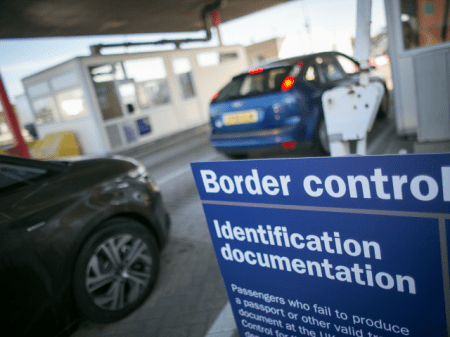
Border control

A few weeks ago David Cameron made contemptible warnings over Brexit and its implications for UK security. He even went so far as to suggest the Islamic State leader Abu Bakr al-Baghdadi “might be happy” if the country votes to Leave the EU.

It is rather telling that since this intervention the PM has chosen to focus on prophesizing economic collapse and hardship rather than discussing this vital issue of Britain’s national security. It is not surprising – considering the recent interventions and revelations concerning how the UK’s membership of the EU impacts on our security.

A report by the EU itself has revealed how there will be a greater risk of terrorist attacks as a result of the Turkey visa-waiver scheme. This has been supported by the ex-head of MI6, Sir Richard Dearlove, who strongly criticised the EU’s attempt to solve the migrant crisis by offering visa-free access to millions of Turks, saying it was “like storing gasoline next to the fire one is trying to extinguish”.

Added to the short-term security threat posed by 77 million Turks having access to all the countries within the EU, there are the long-term political ramifications of the deal, which has the potential to accelerate the resurgence of the far-Right across Europe.

The fact President Erdogan is willing to simply pocket the €3 billion he has demanded the EU send Turkey in aid is hardly going to improve the mood of governments currently forcing through major austerity measures.

He is even threatening to renege on the deal he made over the Greek borders if he doesn’t get his way. His recent warning to the German Parliament not to pass a resolution declaring the mass killings of Armenians in 1915 as genocide are typical of his despotic interventions.

It is clear the EU’s deal with Turkey will have lasting consequences for the whole of the EU, and only by Leaving can we protect the UK.

Of huge concern are the rulings of the European Court of Justice (ECJ), the official court of the EU. Not content with simply supporting the European Commission in its drive to create a federal superstate, its interventions are now putting UK citizens at risk.

Particularly worrying is the recent ruling by the ECJ on freedom of movement. The ECJ is now insisting if a Member State wants to restrict a citizen’s right to ‘free movement’ if they suspect the person has been involved in terrorist activities for example, it must explain exactly why – even though this would endanger national security.

This raises the prospect of British Intelligence officials being forced to hand over highly sensitive documents to people they suspect of terrorism. The UK’s own Court of Appeal has since ruled the rights enshrined in the Charter of Fundamental Rights of the European Union “cannot yield to the demands of national security”.

Yesterday the Justice Secretary, Michael Gove spoke of his frustration at the inability of the UK Government to refuse entry to EU citizens who are suspected of terrorist links. It is clear the European elite are perfectly happy to put the lives of the people of Europe at risk in order to protect the deeply flawed principle of ‘free movement’.

These revelations completely undermine the claims of the Remain campaign that we are safer inside the EU. It is not at all surprising the Prime Minister has now backtracked, choosing to orchestrate a smear campaign against his Leave opponents, rather than addressing the important issue of our national security.

Whilst David Cameron is happy making ludicrous claims about Brexit causing a World War 3, he is clearly uncomfortable addressing the very real threats we will face if we vote to Remain inside the EU.

There is only one way to regain control of our borders and our security and this is to Vote to Leave, to Get Britain Out of the EU.

The Moment of Truth

May 31, 2016

The Moment of Truth, Pat Condell via YouTube, May 31, 2016

(Brexit the Movie is available at Warsclerotic, here. — DM)


The blurb beneath the video states,

Do we want to live in a sovereign democracy or a federal dictatorship?

Please watch ‘Brexit The Movie’ before the referendum, not after. This is the most important political decision we will ever make.
https://www.brexitthemovie.com

UK Labour Party Inquiry: Deny, Divert, Cover Up

May 30, 2016

UK Labour Party Inquiry: Deny, Divert, Cover Up, Gatestone InstituteDouglas Murray, May 30, 2016

♦ Today, as the leader of Her Majesty’s Opposition, Jeremy Corbyn has the opportunity either to tackle anti-Semitism or mainstream it into the UK body politic. The evidence that he has any interest in doing the former are not good.

♦ Whenever the specific question of anti-Semitism was raised, Corbyn would say how opposed he was to all forms of racism, “including Islamophobia.” It has apparently proven impossible for Corbyn to realize the specific nature of anti-Semitism; whenever it has come up, he has used the opportunity to talk not about racial hatred against Jews but what he believes to be an epidemic of hatred towards Muslims.

♦ The British Labour party today evidently is riddled with anti-Semitism from top to bottom, and led by people who want to divert attention from the fact or cover it over entirely. Things can only get worse.

How would you push away a problem you did not want to deal with? The best way, as any addict could tell you, is to pretend that you have dealt with it. The drug-addict pretends to have given up drugs. The alcoholic pretends to have cut down on drink. And the British Labour party pretends to have dealt with its anti-Semitism problem.

Since the start of this year, stories of routine anti-Semitism have emerged from the most junior levels of the Labour party (the Oxford University Labour Club) to the highest levels (a member of Parliament and a member of the party’s National Executive Committee). No one who had followed the career and hobby-horses of the current Labour party leader, Jeremy Corbyn, could have been surprised by this. Anti-Semitism is a swamp he has spent his political life swimming in. But today, this has become not just a problem for him. In recent decades, Jeremy Corbyn’s activities had been of interest only to the small number of people who had hoped to keep the Labour stable clean of anti-Semitism. Today, as the leader of Her Majesty’s Opposition, he has the opportunity either to tackle anti-Semitism or mainstream it into the UK body politic.

The evidence that he has any interest in doing the former are not good. Last month, after online media released anti-Semitic tropes shared and composed by the Labour MP Naz Shah, she was suspended from the party, pending an investigation. The former Mayor of London and Labour grandee Ken Livingstone then spent a week trying to defend Shah by (among other things) explaining which of Hitler’s early policies were not that objectionable. Every day for more than a week, the national newspapers were running headlines about Labour’s anti-Semitism problem. Finally, even this Labour leader realized that something had to be done. And of course the best way to do “something” is to announce an inquiry that will do nothing. This Corbyn soon did, announcing an inquiry that would be led by Shami Chakrabarti, a left-wing human rights advocate, with no expertise in anti-Semitism and a tendency to think well of Islamist extremists. Oddly enough, Chakrabarti — who has made a virtue of her non-party affiliation throughout her career — joined the Labour party on the day that the inquiry was announced.

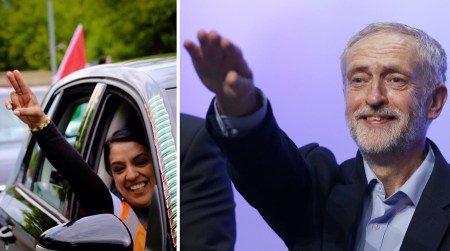
1579Labour Party MP Naz Shah (left), was recently suspended from the party for composing and sharing anti-Semitic tropes. Labour Party leader Jeremy Corbyn (right), has a tendency to hang around with Holocaust deniers, anti-Semitic hate-preachers and others of a similar ilk, and is a self-declared “friend” of the terror outfits Hamas and Hezbollah.

From the outset, she showed that she was willing to do the precise bidding of her party leader. Not least in ensuring that the point of any inquiry was entirely missed. For immediately upon being announced as the leader of the party’s inquiry into anti-Semitism, Chakrabarti announced that it would make no sense “only” to look into anti-Semitism, and that the inquiry must instead also look into “other forms of racism, including Islamophobia.” In a subsequent interview, she went on to question why the Conservative party had not set up an inquiry into what she alleged was its “Islamophobia.” Of course, this is a side-step that Jeremy Corbyn has very much made his own.

In the run-up to his election as Labour party leader, Corbyn was often asked about his tendency to hang around with Holocaust deniers, anti-Semitic hate-preachers and others of a similar ilk. Apart from not quite owning up to his connections to such people, the other technique he employed at this time was to put on a look of extreme affront and say that he had spent his entire life “fighting racism.” Whenever the specific question of anti-Semitism was raised, he would say how opposed he was to all forms of racism “including Islamophobia.” It has apparently proven impossible for Corbyn to realize the specific nature of anti-Semitism; whenever it has come up, he has used the opportunity to talk not about racial hatred against Jews but what he believes to be an epidemic of hatred towards Muslims.

Leaving aside the obvious fact that Muslims are not a race, there is in any case no evidence whatsoever to support the allegation of Corbyn and others that there is an epidemic of “Islamophobia” in the UK, and specifically no evidence of such an issue in the Conservative party. But this attempt to turn around the narrative was pushed by certain Labour apparatchiks to complain that any and all questioning of the newly elected London Mayor, Sadiq Khan, for his past affiliations with Islamist extremists was not a legitimate line of questioning of the judgement of anyone running for elected office, but instead an “Islamophobic” attack purely motivated by “racism.” Even now, Corbyn supporters are trying to distract attention from their own party’s very evident problem and turn racism allegations around on the Conservative party. None of which suggests any serious desire to get on top of their problem.

We can already predict what the conclusions of the Chakrabarti Inquiry will be, from the manner in which she has started it. Will she able to explain that the main originator of anti-Semitism in the Labour party today comes from its growing Muslim base? If she does identify that, will she then need to have an inquiry into herself for such flagrant “Islamophobia”? More likely she will find the party entirely blameless. Just a few dozen bad apples, and so on. And even then, we now have a nice demonstration of what will happen if any unpleasant findings do accidentally slip through.

The Labour party has another inquiry: into allegations, reported earlier this month, of anti-Semitism at its Oxford University club. Amazingly enough, while that inquiry (led by Baroness Royall) found “difficulties,” it claimed to find no “institutional anti-Semitism.” These careful headline facts having been released, the rest of the report was then swiftly supressed on the orders of the Labour party. Only a bland executive summary and some recommendations were made public, evidently leaving even the author of the inquiry “frustrated.” So there is the state of the British Labour party in 2016. A party evidently riddled with anti-Semitism from top to bottom, and led by people who want to divert attention from the fact or cover it over entirely. The Labour party has a serious problem, and it is in institutional denial. Things can only get worse.

Related Video: Douglas Murray on “Anti-Semitism in Britain’s Labour Party”

Anti-Brexit Shocker: Economists and Faith Leaders Plot Britain’s Downfall

May 30, 2016

Anti-Brexit Shocker: Economists and Faith Leaders Plot Britain’s Downfall, The Daily Bell, Staff, May 30, 2016

broken-uk-flag

Economists overwhelmingly reject Brexit in boost for Cameron  … Poll shows 88% of 600 experts fear long-term fall in GDP if UK leaves single market, and 82% are alarmed over impact on household income. -Guardian

Once again, economists remind us that that their profession is at least a questionable one.

Presumably healthy economies are based in private competition not public regulation. Economic progress is made via individual human action.

One person has a product or service and competes against another. And one company against another.

There is room for more than one product or service as consumers have different priorities.

And thus an “economy” is built.

But for some reason, British economists seem to believe that the authoritarian mess that is the European Union is necessary for prosperity.

More:

Relatively few economists have publicly come out saying that leaving the EU would be good for British growth, and only a handful have signed up in support of the pro-Brexit group Economists for Britain.

Most studies of the impact on Britain’s economy of a decision to quit the EU show the uncertainty will hit growth in the short term and the loss of access to the EU’s single market will damage growth for decades to come.

The poll was administered by Ipsos MORI, and received responses from more than 600 economists.

These economists believed in great numbers that leaving the EU would damage the British economy for years to come. Some 61% believe unemployment would expand.

Economists from top institutions such as the Royal Economic Society and the Society of Business Economists replied voluntarily.

The article also tells that 37 “faith leaders” have just written a letter to the Observer newspaper claiming Brexit damages both peace and prosperity.

It’s not clear from the article why leaving the EU would damage peace and prosperity.

The article makes a clearer case for what economists are worried about: “Loss of access to the single market” (67%) and “increased uncertainty leading to reduced investment” (66%).

Presumably economists (and faith leaders?) see their professions somehow enhanced by the EU and diminished by Brexit.

But these views still don’t make much sense.

There are currently reports that the EU is pushing hard for the federalization of Europe via a new tax ID number and also via plans for a pan-European army.

A national insurance number will allow Brussels to identify European (and British) taxpayers and would be a further step toward the institution of an aggressive European tax.

Additionally, new legislation will ban sovereign states from reducing corporate taxation to below 15 percent.

Neither plans for a European army nor the new tax ID number are apparently getting much coverage in Britain.

It really doesn’t matter though. Brussels have proven several times over that the EU’s goal is a United States of Europe.

Surely the economists involved in the survey understand the level of corruption currently infecting the EU.

Those affiliated with the EU receive enormous compensation for useless activities. Regulatory advantages are routinely sold to the highest bidder.

And surely they understand that the decision-making bodies have been purposefully divorced from Parliament. The entire setup of the EU is aimed at producing a mega-state responsible only to a handful of bureaucrats.

How on earth British economists, let alone “faith leaders” can endorse the EU is difficult to imagine.

If Britain stays in the EU, within a decade the country – as it has existed for perhaps a thousand years – will be disassembled.

These economists and faith leaders are content to support the end of Britain.

Faith will not be diminished and industry will not leave if Brexit occurs. But the country will not survive as a historical entity if it remains within Europe.

Conclusion: These two groups are willfully presiding over the end of Britain.

Brexit: “An Off Ramp From the Road to Serfdom”

May 30, 2016

Brexit: “An Off Ramp From the Road to Serfdom” Power LinePaul Mirengoff, May 29, 2016

Next month, Great Britain will vote on whether to exit the European Union. One of the main arguments against a “Brexit” seems to be that Germany and company will punish Britain economically if it exits in order to deter other states from following or perhaps just out of spite.

For some, though, this reality may be an argument in favor of leaving. Why remain attached, and cede more and more authority, to an entity this powerful and vindictive?

The core argument for leaving is forcefully set forth by George Will. He points to the EU’s “democracy deficit” and contends that it flows inexorably from the very point of the EU — to create a continent-wide administrative state.

In Europe, as in the United States, the administrative state exists to marginalize politics — to achieve [the] goal of “replacing the government of persons by the administration of things.” The idea of a continent-wide European democracy presupposes the existence of a single European demos, the nonexistence of which can be confirmed by a drive from, say, Stettin in the Baltic to Trieste in the Adriatic.

Quoting Michael Gove, secretary of justice and leader of the Brexit campaign, Will maintains that the ongoing concentration of power in Brussels guarantees “regulation in the interest of incumbents” who “do not want a dynamic, innovative Europe.” Under Europe’s administrative state, interest groups are stronger than ever and they prefer social stasis to the uncertainties of societies that welcome the creative destruction of those interests that thrive by rent-seeking.

Then there is the matter of mass migration. Will states:

If, as some serious people here fear, Europe’s current crisis of migration is just the beginning of one of the largest population movements in history, the E.U.’s enfeebled national governments must prepare to cope with inundations. But each E.U. member’s latitude for action exists at the sufferance of E.U. institutions.

I would move the analysis back one step and argue that the EU’s national governments should be able to decide the extent, if any, to which their country shall be inundated.

Consider the issue of Syrian refugees. The German chancellor wants a large influx of them because her country doesn’t have enough people. Trying to make the mass influx of Syrians acceptable to the German public, she insists that other EU countries take “their fair share” of refugees, and claims they have a moral duty to do so.

But some EU nations don’t lack for people. Thus, their interests diverge sharply from those of Germany and certain other EU countries. And because they don’t share Germany’s guilt over World War II or its level of prosperity, their sense of moral responsibility may diverge, as well.

Separate entities with separate demographic interests and separate views of what is morally required should be able to make separate decisions about immigration. As I argued here, it’s one thing for the EU to dictate banking rules or antitrust policy. It’s quite another to tell a nation whom it must allow to settle inside its borders.

That the EU apparently perceives no material distinction illustrates how dangerous it is.

Will concludes:

If Britain rejects continuing complicity in the E.U. project — constructing a bland leviathan from surrendered national sovereignties — it will have rejected the idea that its future greatness depends on submersion in something larger than itself. It will have taken an off-ramp from the road to serfdom.

Exactly.

FULL: Donald Trump at Morning Joe, May 20, 2016- ‘Would you consider Sanders as your running mate?’

May 20, 2016

FULL: Donald Trump at Morning Joe, May 20, 2016- ‘Would you consider Sanders as your running mate?’ May 20, 2016

(Spoiler alert: The question about Sanders as Trump’s VP choice comes at the tail end of the interview, and Trump’s answer was that Sanders should run as an independent. The interview is wide-ranging and deals with foreign policy, China, Mexico, the Islamist threat, the terrorist attack on EgyptAir and a bunch of other stuff. — DM)

Brexit Can Only Be Good for the United Kingdom

May 17, 2016

Brexit Can Only Be Good for the United Kingdom, American ThinkerJustin O. Smith, May 17, 2016

Nigel Farage, UKIP leader, warns that the U.K. will not be able to handle the upcoming surge of migrants if it stays in the EU.  He observed during the April 1 Munk Debate that “Jeane-Claude Juncker, the unelected president of the European Commission, has changed the definition of what a refugee is, to include people … from war torn areas … [and] from extreme poverty … [and] perhaps 3 billion people could possibly come to Europe [as a result].”

************************

The British people seem ready to leave the European Union through a historic June 23 referendum, because they are tired of the high-handed tyrannical regulations, clauses and counter-clauses, emanating from the EU Council on even the simplest aspects of their everyday lives.  They have determined that leaving the EU will be the best step toward reclaiming their nation’s sovereignty and democratic rule in all matters of immigration and border control, their economy, free trade, and national security, and they are proudly waving the Union Jack, as they tell their would-be masters in Brussels to go to hell, declaring their independence.

In November 2015, U.K. prime Minister David Cameron attempted to renegotiate a treaty change with European Union Council president Donald Tusk concerning U.K. sovereignty, trade, immigration, and economic governance.  Tusk rejected it all, with a minor exception regarding the handling of a few million pounds for children’s benefits.  This dismal failure of P.M. Cameron only offered proof that the EU was closed to any substantial moves toward reform, which created a renewed and angry momentum for the Out of Europe, Vote Leave, and Brexit movements.

Corporatists, trans-nationalists, advocates of the U.N. 2030 Agenda, the BBC, and the Guardinista establishment are presenting dishonest and fear-based monologues regarding the uncertainty a U.K. exit from the EU might bring.  They enjoy being able to circumvent individual nation’s policies by going through Brussels, and most of them have been made rich through their deals with the tyrannical, unelected, and entrenched bosses of the European Union.

Despite disingenuous conclusions from the trans-nationalist President Obama, does anyone really believe that a hundred years of shared security concerns and initiatives and trade agreements between the U.S. and the U.K. will be detrimentally affected by a “yes” vote to leave the EU?

What cogent thought process could people, like Lena Komileva (London economist), possibly be using when they ascribe the term “illiberal” to the British people’s desire for nationalist policies and reclaiming Britain’s sovereignty?

It will not take years for the U.K. to renegotiate trade deals with the U.S., as Obama suggests, but rather only months.  And if small nations like South Korea and Chile can succeed in global markets, certainly Britain also will continue to succeed, especially since the EU already imports 45% of British exports.

Membership in the EU currently costs Britain approximately $30 billion annually.  Although $55 billion in austerity cuts were made by the chancellor of the exchequer during the last Parliament, Britain’s contribution to the EU was roughly $132 billion.  Every cut in public spending could be reversed, and Britain could still pay down its deficit faster if Britain were to leave the European Union.

In February, George Mason, senior vice president of Britain’s high-profile Tate and Lyle Sugars, made a mockery of claims by Britain Strong in Europe that Brexit would spell economic disaster for the U.K.: “we are absolutely certain that our business and people who work in it would have a more secure future outside the EU.”

Priti Patel, the U.K.’s employment minister, told the Daily Telegraph in March: “The Prime Minister has tried hard but the EU refused to give the British people what they want[.] … The only way to take back control over our economy[.] … [T]o create more jobs and growth is to Vote Leave.”

However, national security is the issue currently foremost in most Britons’ minds, but Eurocentrics, who believe that the U.K. will be safer in the EU through cooperation on crime and terrorism, have failed to see that the EU has never been capable of agreeing on effective foreign policy.  Also not taken into account, the EU recently embraced the expanded definition of “refugee” put forth by the United Nations in its 2030 Agenda.

Nigel Farage, UKIP leader, warns that the U.K. will not be able to handle the upcoming surge of migrants if it stays in the EU.  He observed during the April 1 Munk Debate that “Jeane-Claude Juncker, the unelected president of the European Commission, has changed the definition of what a refugee is, to include people … from war torn areas … [and] from extreme poverty … [and] perhaps 3 billion people could possibly come to Europe [as a result].”

There are also reports of Bosnia, with a population of 3.8 million, being infiltrated by Islamic State terrorists.  They are buying property there, and they would be free to travel to the U.K. if Bosnia is granted EU membership.

Andrew Rosindell, a Conservative member of Parliament, stated in March: “Being in the EU means we don’t have control of our own systems, we don’t have control of our own borders. We are effectively tied to countries which I think are not as good at protecting their people as we have been.”

One can only imagine the palpable red-hot anger of the British people upon hearing Martin Shulz, European Parliament president, say that he was “sad and angry [over] the undertone of national resentment” and it was “not possible” to make the changes PM Cameron wanted. Shulz added that Britain “belongs” to the EU.  Really?  Just watch, wait, and see.

Downing Street has declared that “a vote to leave is a vote to leave.”  A leave vote will facilitate the U.K.’s departure through Article 50 of the Lisbon Treaty, and terms for Britain’s withdrawal will then be negotiated over the next two years.

Over forty years ago, Britain last debated her relationship with Europe, and even then, elected officials on both the right and left, such as two of the most iconic political figures of that era, Enoch Powell and Tony Benn, campaigned against the U.K.’s membership in what was then the European Economic Community.  They objected to Britain’s elected government meekly surrendering Britain’s national sovereignty to unelected foreign entities and the fundamental lack of democracy in the EU.

Lady Margaret Thatcher knew that it would be near impossible to effectively and efficiently impose one currency, one economy, and one national identity on many different countries (now 28) with such different languages, histories, customs, and cultures in general.  Early on, the Iron Lady called the attempt to create a European super-state “the greatest folly of the modern era.”

Britons, excited and optimistic, are moving forward to reclaim a more free, prosperous, ally-connected, and nationally secure Britain, through their own elected officials and their own choices and wisdom, breaking free of the heavy bureaucratic chains of the European Union.  As they shout “Hail Britannia,” they will vote to leave in June.


Queen to announce major crackdown on extremism in UK

May 15, 2016

Queen to announce major crackdown on extremism in UK, Times of Israel, Stuart Winer, May 15, 2016

(Would opposing the Islamisation of Britain and favoring Brexit constitute “extremism” under the legislation? — DM)

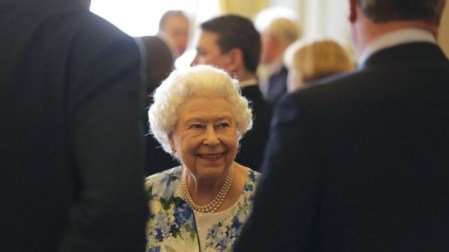
000_AF0CT-635x357Britain’s Queen Elizabeth II smiles as she speaks to British Prime Minister David Cameron, right, during a reception in Buckingham Palace in London, May 10, 2016. (AFP/PAUL HACKETT)

In an upcoming annual speech to parliament, the queen of England is expected to announce a major UK government crackdown on extremism, including measures to deny extremists access to vulnerable groups such as children and students.

Her Majesty’s Most Gracious Speech, known informally as the Queen’s Speech, will include references to the new Counter-Extremism Bill, which the British government has touted as a major step in the effort to defeat extremism in the country, The Telegraph reported Saturday.

Among the measures envisioned in the bill is banning hate speakers from working with children through a vetting process similar to safeguards against sex offenders.

The national criminal records checking service is to be updated to list those with a terror conviction or clear connection to extremism, enabling education officials, municipal councils and other employers to screen potential employees.

Officials hope to stop radicals from spreading extremist ideology in schools, colleges, and other institutes where they could influence young or vulnerable people and talk them into committing acts of violence.

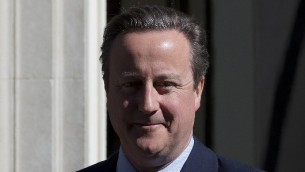
CameronBritish Prime Minister David Cameron leaves 10 Downing Street in central London, May 4, 2016. (AFP/JUSTIN TALLIS)

Under the terms of the new bill, those convicted of extremism or who have strong links to extremism would be required to register with the government-run Disclosure and Barring Service — similar to existing rules for sex offenders.

Proposed laws would also give authorities the ability to ban organizations that promote hate or extremist action, and to close down mosques, Islamic educational institutes, and other places that repeatedly promote extremist activities.

Continuing a tradition that goes back to the 16th century, the queen is scheduled to deliver her speech as part of the State Opening of Parliament on Wednesday. The address, which is written by the government cabinet, presents the legislative plans for the coming session of parliament.

Last year Prime Minister David Cameron announced the plan, saying: “We know that extremism is really a symptom; ideology is the root cause – but the stakes are rising and that demands a new approach. A key part of this new approach is going further to protect children and vulnerable people from the risk of radicalization by empowering parents and public institutions with all the advice, tools and practical support they need.”

The bill has been held up, among other things, over the difficulty in finding a legally sound definition of extremism, the report said.

A definition of “vocal or active opposition to fundamental British values” was deemed indefensible in court.