Author Archive

US President Donald Trump warns Iran’s Hassan Rouhani against threatening Washington; says ‘be cautious’

July 23, 2018

President Donald Trump is warning Iranian President Hassan Rouhani that he will face dire consequences for threatening the United States.


Trump tweeted early Monday about the dangers to Iran of making hostile threats after Rouhani said Sunday “American must understand well that peace with Iran is the mother of all peace and war with Iran is the mother of all wars.”

By: Associated Press | Washington | Published: July 23, 2018 Financial Express

Source Link: US President Donald Trump warns Iran’s Hassan Rouhani against threatening Washington; says ‘be cautious’

Bonus Link: President Trump and Secretary of State Pompeo Respond to Threats From Iran

{Iran knows they wouldn’t stand a chance in an all-out war with the US military. They’re betting there be no escalation on Trump’s part. Imagine that…putting the entire Iranian nation at risk on a bet. – LS}

President Donald Trump is warning Iranian President Hassan Rouhani that he will face dire consequences for threatening the United States.

Trump tweeted early Monday about the dangers to Iran of making hostile threats after Rouhani said Sunday “American must understand well that peace with Iran is the mother of all peace and war with Iran is the mother of all wars.” Trump responded early Monday with a tweet that warned: “NEVER EVER THREATEN THE UNITED STATES AGAIN OR YOU WILL SUFFER CONSEQUENCES THE LIKE OF WHICH FEW THROUGHOUT HISTORY HAVE EVER SUFFERED BEFORE.”

Trump earlier this year pulled the United States out of the international deal meant to prevent Tehran from developing a nuclear weapon and ordered increased American sanctions.

Rouhani warned Trump Sunday to stop “playing with the lion’s tail” and threatening Iran, “or else you will regret it.”

Trump has suggested Iranian leaders are “going to call me and say `let’s make a deal”’ but Iran has rejected talks.

Rouhani has previously lashed out against Trump for threatening to re-impose the sanctions, as well as for moving the U.S. embassy to Jerusalem and banning travel to the U.S. from certain Muslim-majority countries.

Trump’s tweet suggested he has little patience with the trading of hostile messages with Iran, using exceptionally strong language and writing an all-capitalized message.

“WE ARE NO LONGER A COUNTRY THAT WILL STAND FOR YOUR DEMENTED WORDS OF VIOLENCE & DEATH. BE CAUTIOUS!,” he wrote.

Trump has a history of firing off heated tweets that seem to quickly escalate long-standing disputes with leaders of nations at odds with the U.S.

In the case of North Korea, the public war of words cooled quickly and gradually led to the high profile summit and denuclearization talks.

Netanyahu tells Putin: Israel will continue to act against Iran in Syria

July 20, 2018

PM Netanyahu and President Putin spoke by telephone four days after Putin’s meeting with US President Donald Trump in Moscow, in which both leaders spoke of the importance of Israel’s security.

By Tovah Lazaroff, REUTERS July 20, 2018 Jerusalem Post

Source Link: Netanyahu tells Putin: Israel will continue to act against Iran in Syria

{There goes the neighborhood. – LS}

Israel will continue to act against Iran in Syria, Prime Minister Benjamin Netanyahu told Russian President Vladimir Putin on Friday as Syrian rebels were due to evacuate the border area near Israel’s Golan Heights.

The two spoke by telephone four days after Putin’s meeting with US President Donald Trump in Moscow, in which both leaders spoke of the importance of Israel’s security. Trump later told Fox News that Putin was a fan of “Bibi.”

Netanyahu and Putin spoke of regional developments and the situation in Syria, according to the Prime MInister’s Office.

He said that, “Israel would continue to act against the establishment of an Iranian military presence in Syria,” Netanyahu said.

On Thursday Trump tweeted that he looked forward to his next meeting with Putin, “so that we can start implementing some of the many things discussed, including stopping terrorism, security for Israel, nuclear proliferation, cyber attacks, trade, Ukraine, Middle East peace, North Korea and more. There are many answers, some easy and some hard, to these problems…but they can ALL be solved!”

President Bashar al-Assad’s forces are due to resume control of Syrian area of the Golan Heights.

“We are awaiting the start of the operation and God willing it will happen today,” Hammam Dbayat, the governor of al-Quneitra province, told Reuters, as buses prepared to transport out rebel fighters to the northwestern province of Idlib.

Reuters footage filmed from the Israeli side of the frontier showed men climbing into trucks piled high with belongings and leaving al-Qahtaniya village at the Golan frontier. It was not clear where they were headed.

Tens of thousands of people have been sheltering at the frontier since the government offensive began one month ago.

With the Russian-backed offensive closing in, rebels in Quneitra agreed on Thursday to either accept the return of state rule, or leave to Idlib province in the north, echoing terms imposed on defeated rebels elsewhere in Syria. Idlib’s population has been swollen by Syrians fleeing from Assad’s advances elsewhere.

The offensive has restored Syrian government control over a swathe of the southwest, strategically vital territory at the borders with Jordan and Israel.

It has been one of the swiftest military campaigns of the seven-year-long war. The United States, which once armed the southern rebels, told them not to expect its intervention as the offensive got underway. Many surrendered quickly.

While swathes of Syria remain outside his control, Assad’s advances over the past two years have brought him ever closer to snuffing out the armed rebellion that grew out of a civilian uprising against his rule in 2011.

It leaves the insurgency with one last big foothold – a chunk of territory in the northwest at the border with Turkey stretching from Idlib province to the city of Jarablus northeast of Aleppo. The deployment of the Turkish military in this area will complicate further gains for Assad.

Large areas of the northeast and east also remain outside Assad’s grasp. These areas are held by Kurdish-led militias, supported by 2,000 U.S. troops on the ground.

Dbayat said it remained unclear exactly how many fighters would leave Quneitra, but the government had so far prepared 45 buses. “We are ready to move the militants out of the area, and if it is completed, we will immediately provide the necessary services to residents, including electricity and water.”

State TV said 10 buses had entered a village in Quneitra on Thursday night for the evacuation of insurgents “who refuse to settle with the state” towards rebel territory in the north.

The offensive sparked the largest exodus of the war, uprooting more than 320,000 people mostly towards the southern borders. Both neighbors Israel and Jordan said they would not take in refugees.

Many people left the frontier with Jordan after government forces took the Nassib border crossing and rebels in Deraa province agreed a surrender deal last week.

Texas to become world’s number 3 oil producer, passing Iran

July 19, 2018

John Sexton Posted at 1:01 pm on July 19, 2018 Hot Air

Source Link: Texas to become world’s number 3 oil producer, passing Iran

{God Bless Texas. – LS}

America is a powerhouse and I mean that literally as well as figuratively. CNN Money reported Wednesday that Texas is set to become the world’s number three oil producer thanks to a boom in production:

Plunging drilling costs have sparked an explosion of production out of the Permian Basin of West Texas. In fact, Texas is pumping so much oil that it will surpass OPEC members Iran and Iraq next year, HSBC predicted in a recent report.

If it were a country, Texas would be the world’s No. 3 oil producer, behind only Russia and Saudi Arabia, the investment bank said.

“It’s remarkable. The Permian is nothing less than a blessing for the global economy,” said Bob McNally, president of Rapidan Energy Group, a consulting firm…

“The industry cracked the code on fracking,” said McNally.

Texas is producing so much oil that it will soon be bumping up against pipeline capacity. Some producers are already selling at a discount because of the limitations. Another problem is a shortage of labor, though that will likely be good news for the state and for people moving to Texas to find work.

The boom in Texas is one reason the U.S. is set to become the world’s number one oil producer. Last week, U.S. production reached an all-time high of 11 million barrels per day:

Reuters reports that if these preliminary numbers are confirmed, the U.S. is currently the second largest producer in the world, just behind Russia:

U.S. crude oil production last week hit 11 million barrels per day (bpd) for the first time in the nation’s history, the Energy Department said on Wednesday, as the ongoing boom in shale production continues to drive output.

The gains represent a rapid increase in output, as the data, if confirmed by monthly figures, puts the United States as the second largest producer of crude oil, just behind Russia, which was producing 11.2 million bpd in early July, according to sources.

“Eleven million would have made us the biggest producer in the world; but actually Russian production in June was above 11 million. So, this is kind of like the space race,” said Sandy Fielden, director of research in commodities and energy at Morningstar.

But we won’t be behind Russia for much longer. The U.S. Energy Information Administration predicted last week that production would near 12 million barrels a day by next year:

EIA forecasts total U.S. crude oil production to average 10.8 million b/d in 2018, up 1.4 million b/d from 2017. In 2019, crude oil production is forecast to average 11.8 million b/d. If realized, the forecast for both years would surpass the previous record of 9.6 million b/d set in 1970. Crude oil production at these forecast levels would probably make the United States the world’s leading crude oil producer in both years.

Of course, gasoline prices are still up a bit thanks to problems in Venezuela and sanctions on Iran. But fracking has made the U.S. the world’s energy powerhouse and that should continue well into the 2020s. This is data the Trump administration should continue to cite as a sign America is resurgent.

Why Iran Supports Palestinian Terror Groups

July 19, 2018


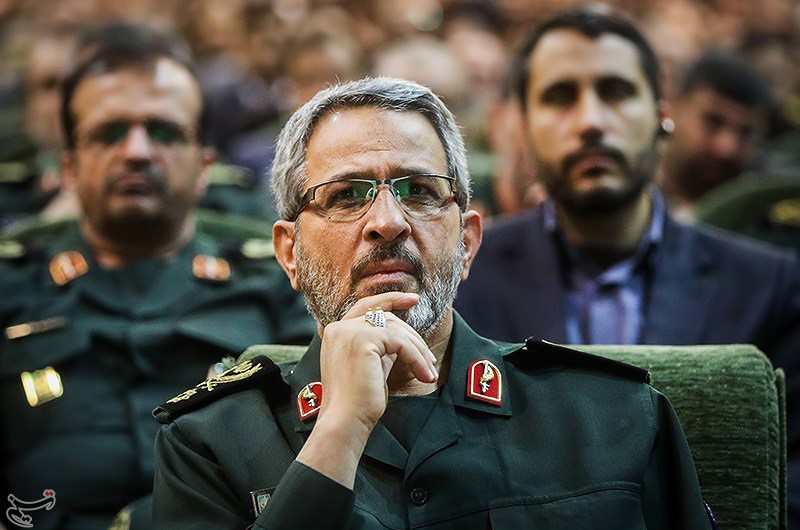
Iranian Islamic Revolutionary Guards General Gholamhossein Gheybparvar. (Image source: Tasnim via Wikimedia Commons)

by Khaled Abu Toameh
July 19, 2018 Gatestone Institute

Source Link: Why Iran Supports Palestinian Terror Groups

{Iran’s obsession with the destruction of Israel will be their undoing. – LS}

  • The Iranian general did not offer to build the Palestinians a hospital or a school. Nor did he offer to provide financial aid to create projects that would give jobs to unemployed Palestinians in the Gaza Strip. His message to the Palestinians in the Gaza Strip: Iran will give you as much money and weapons as you need as long as you are committed to the jihad (holy war) against Israel and the “big Satan,” the US.
  • The same Hamas that is telling UN representatives that it wants to improve the living conditions of Palestinians in the Gaza Strip is the one that is reaching out its hand to Iran to receive funds and weapons.
  • Now, someone needs to step in and stop Iran from setting foot in the Gaza Strip and using the Palestinians as cannon fodder in Tehran’s campaign against the US and Israel. How might someone do that? It is not so complicated. Any international aid to the Gaza Strip must be conditioned on ending Iran’s destructive effort to recruit Palestinians groups as its soldiers. It is that simple.

While the United Nations, Israel and the US are proposing plans to alleviate the suffering of the Palestinians in the Hamas-ruled Gaza Strip, Iran is pledging to continue its financial and military aid to Palestinian terror groups.

Iran’s meddling in the internal affairs of the Palestinians is not new. The Iranians have long been providing Hamas and the Palestinian Islamic Jihad terror groups with money and weapons. Were it not for Iran’s support, the two groups, which do not recognize Israel’s right to exist, would not have been able to remain in power in the coastal enclave.

Iran’s support for the Palestinian terror groups has a twofold goal: first, to undermine the Palestinian Authority, which is headed by Mahmoud Abbas, and which Tehran sees as a pawn in the hands of the US and Israel; and second, to advance Iran’s goal of destroying Israel.

Just this week, we received yet another reminder of Iran’s true goal. The leader of Iran’s “Islamic Revolution,” Ayatollah Ali Khamenei, said that the Palestinians will win over their enemies and will “see the day when the fake Zionist regime” vanishes. He said that US President Donald Trump’s “evil policy” is doomed to failure.

So, Iran does not care about the harsh conditions of the Palestinians in the Gaza Strip. Instead, its leaders are hoping that the Palestinians will live to see the day Israel is eliminated. This is also why Iran continues to support any Palestinian group that seeks to destroy Israel.

On the same day that Khamenei made his statement in Tehran, one of his senior generals, Gholamhossein Gheybparvar addressed a conference held in the Gaza Strip and Tehran simultaneously. Gheybparavar is a senior officer in Iran’s Revolutionary Guards and commander of its Basij forces — the “Mobilization Resistance Force.” This force’s main mission is to suppress protests against the regime in Tehran.

In his speech via video conference, the Iranian general told representatives of Hamas, Palestinian Islamic Jihad and other terror groups that he was “proud” of their “resistance” against Israel. He said that the conference, which was being held under the title, “Wet Gunpowder/Resistance Is Not Terrorism,” was an expression of Arab and Islamic unity against the enemies of the Arabs and Muslims. The Iranian general said that Iran and the “axis of resistance” were not afraid of Trump’s “threats.”

The Palestinian terror groups said after the conference that they were encouraged by the Iranian general’s pledge to support them in their fight against Israel and the US.

Khader Habib, a senior Palestinian Islamic Jihad official in the Gaza Strip, said that the Iranian-Palestinian conference was both “symbolic and significant.” The conference, he said, served as a reminder that Iran continues to support the Palestinian “resistance” and would deter Israel from attacking the Gaza Strip in response to terror attacks on its citizens. The speech by the Iranian general, he added, was aimed at sending a message to the many countries to support the Palestinian “resistance” groups in the Gaza Strip. “Israel is a potential threat to the Arabs and Muslims,” Habib said.

Buoyed by the Iranian backing, several speakers at the conference called for the formation of a “unified Arab-Islamic front” against Israel and the US. They also stressed that the terror attacks against Israel would continue and praised Iran for its full support for the Palestinian factions in the Gaza Strip.

By promising to continue helping the Palestinian terror groups, Iran is offering the two million residents of the Gaza Strip more bloodshed and violence. The Iranian general did not offer to build the Palestinians a hospital or a school. Nor did he offer to provide financial aid to create projects that would give jobs to unemployed Palestinians in the Gaza Strip. His message to the Palestinians in the Gaza Strip: Iran will give you as much money and weapons as you need, as long as you are committed to the jihad (holy war) against Israel and the “big Satan,” the US.

The Iranian message to the Palestinian terror groups came at a time when several international parties are trying to resolve the “humanitarian and economic” crisis in the Gaza Strip. These efforts are spearheaded by the UN’s Special Coordinator for the Middle East Peace Process, Nickolay Mladenov, who in recent weeks has been on a mission to prevent another war in the Gaza Strip.

These efforts are unlikely to succeed, however, as long as Iran continues its support of the Palestinian terror groups. Iran apparently wants to retain control over its Palestinian proxies to prevent any peace and stability between Arabs and Israel. Iran is not helping the terror groups out of love for the Palestinians, but in order to advance its goal of eliminating the “fake Zionist regime.”

If anyone is worried about the Iranian meddling in the internal affairs of the Palestinians, it is Palestinian Authority President Mahmoud Abbas and his ruling Fatah faction. “We don’t want to become a pawn in the hands of Iran,” said Ra’fat Elayan, a senior Fatah official. “Iran is using Hamas and Palestinian Islamic Jihad as a maneuvering card against Israel and the US, and this will have a negative impact on the just Palestinian cause. We have repeatedly warned the two groups of the Iranian intervention in Palestinian affairs.”

Meanwhile, it appears that Hamas wants to have it both ways. On the one hand, Hamas wants the international community to step in and help the people of the Gaza Strip. On the other hand, Hamas wants Iran to continue funding its terrorism. The same Hamas that is telling UN representatives that it wants to improve the living conditions of Palestinians in the Gaza Strip is the one that is reaching out its hand to Iran to receive funds and weapons.

We can take a tip from Abbas’s and Fatah’s anxiety: If they are worried about Iran’s ongoing efforts to infiltrate the Palestinian arena, the US and the rest of the world need to find ways to stop Iran from using the Palestinians as a weapon in its battle to extend its control over more and more countries in the Middle East and carry out its deadly schemes.

Iran has brought nothing but disaster to Iraq, Yemen, Lebanon and Syria. Now, someone needs to step in and stop Iran from setting foot in the Gaza Strip and using the Palestinians as cannon fodder in Tehran’s campaign against the US and Israel. How might someone do that? It is not so complicated. Any international aid to the Gaza Strip must be conditioned on ending Iran’s destructive effort to recruit Palestinians groups as its soldiers. It is that simple.


Iran Hints at Nuclear Cooperation with U.S.

July 17, 2018


Iranian Supreme Leader Ayatollah Ali Khamenei attends a meeting with lawmakers in Tehran. (Office of the Iranian Supreme Leader via AP)

OAN Newsroom
UPDATED 12:55 PM PT — Tues. July 17, 2018 One America News Network

Source Link: Iran Hints at Nuclear Cooperation with U.S.

{Iran’s armor is starting to crack? – LS}

The Ayatollah regime in Iran is signaling that it is open for nuclear cooperation with the United States.

Officials at the Iranian nuclear agency said, Tehran could be more transparent in its nuclear endeavors to alleviate some of America’s concerns. However, the Ayatollah regime said the U.S. must stop what it calls “hostile” policies toward Iran.

This comes as the Treasury Department is set to slap two rounds of sanctions on the Islamic republic, while the country is mired in a wave of domestic civil unrest.

Ayatollah regime officials urged for better relations between the U.S. and Iran.

“America is a country that has good technology, if it had good leaders too, it would be able to work very well with Iran and other countries, in a way that both parties could benefit,” said Behrouz Kamalvandi, spokesman for Iran’s Atomic Energy Agency. “There is ground for nuclear cooperation if a political situation is ready, but that’s highly unlikely — first they need to stop being selfish.”

Israeli intelligence recently exposed — what it says– is a military component of Iran’s nuclear program.

Some say Tehran could be seeking better relations with the U.S. for the purposes of regime protection.


Iran’s ‘Supreme Leader’ Khamenei Celebrates Birthday With Genocidal Message for Israel

July 17, 2018

by Ben Cohen July 16, 2018 Algemeiner

Source Link: Iran’s ‘Supreme Leader’ Khamenei Celebrates Birthday With Genocidal Message for Israel

{This man’s obsession with the destruction of Israel seems to permeate every aspect of his life. – LS}

Visitors to the Twitter feed of Iran’s “supreme leader”on Monday were treated to the incongruous sight of multicolored balloons floating above a series of incendiary anti-Israel tweets.

The celebratory mood on what is normally a rather somber feed marks Ayatollah Ali Khamenei’s 79th birthday — which falls on Tuesday, July 17, in the Gregorian calendar.

But as the last balloon disappeared from the screen, so did the jollity — leaving only a thread of threatening messages warning of the Jewish state’s coming destruction.

Denouncing US President Donald Trump’s “deal of the century” proposal for an Israeli-Palestinian peace as a “satanic, vicious plot,” Khamenei declared, “The turbulent dream that Al-Quds [Jerusalem] would be given to the Zionists will never come true.”

He continued: “The Palestinian nation will stand against it and Muslim nations will back the Palestinian nation, never letting that happen.”

As to his ultimate intentions towards Israel, Khamenei left little to the imagination in a further tweet.

“By God’s grace, the Palestinian nation will certainly gain victory over the enemies and will witness the day when the fabricated Zionist regime will be eradicated,” he vowed.

Khamenei’s birthday rant was excerpted from a speech he delivered in Tehran on Monday to organizers of Iran’s hajj — the annual pilgrimage to the holy city of Mecca in Saudi Arabia that faithful Muslims are required to make at least once during their lifetimes.

In the same breath as attacking Israel, Khamenei also turned his ire on the Saudis — an increasingly common linkage among Iran’s leaders anxious about the common strategic interests between Jerusalem and Riyadh that have emerged in recent years.

With the hajj scheduled to begin on Aug. 19, Khamenei fanned tensions with Iran’s Saudi neighbor, asserting that Mecca’s holy sites “belong to all Muslims, not to the rulers of Saudi Arabia.”

Arguing that a “true” hajj must include a “disavowal of the infidels,” Khamenei told the gathered Islamic leaders that the pilgrimage “is the best opportunity and a practical scene to demonstrate the unification of religion and politics.”

Khamenei also called for a fresh investigation into a 2015 crush during the hajj that killed hundreds of pilgrims, blaming the tragedy on the Saudi authorities’ alleged indifference to the safety of the participants.

The defiant tone of Khamenei’s rhetoric has not wavered in the face of mounting pressures on Iran’s regime in the wake of the US decision in June to abandon the 2015 nuclear deal with Tehran. With the US expecting renewed sanctions on Iran to be locked in by November, the Islamic Republic has been convulsed by anti-regime protests in several cities, leading to thousands of arrests.

Protests against Iran’s rulers spilled into neighboring Iraq on Sunday, as two demonstrators were killed and dozens more were wounded by security forces during rallies and marches demanding an end to Iranian interference in Iraq’s national affairs.

In Baghdad, hundreds of protesters closed a highway at the entrance to the Iraqi capital’s northwestern Shula neighborhood, chanting “Iran, out out! Baghdad is free!” and “The people want to overthrow the regime,” the AFP news agency reported.

Fighter Showdown: Air Force F-22 Raptor vs. F-14 Tomcat (That Iran Still Flies)

July 17, 2018

by TNI Staff July 18, 2018 The National Interest

Source Link: Fighter Showdown: Air Force F-22 Raptor vs. F-14 Tomcat That Iran Still Flies

{I feel the need for speed. – LS}

Even if the Raptors had run out of AMRAAMs and were forced to engage within visual range, the F-22s can use their stealth to close in unobserved to less than 1000ft to either kill the F-14s with Raytheon AIM-9X Sidewinders or 20mm Vulcan cannon fire. Indeed, F-22 pilots flying during exercises such as Red Flag or Northern Edge will often sneak into guns range to make unobserved kills from very close distances by taking advantage of the Raptor’s stealth. More often than not, the Raptor’s quarry is caught completely unaware.

With the United States withdrawing from the Joint Comprehensive Plan of Action nuclear deal with Iran, a war with Tehran seems to be a distinct possibility.  In the event of a military conflict between Washington and Tehran, there is also the ever growing possibility that the White House might seek regime change in Iran.

A full-scale military campaign against Iran would require the United States to destroy the Iranian air force—which to this day flies American-built warplanes. The best of Iran’s decrepit fighter aircraft fleet is the Grumman F-14 Tomcat. The Imperial Iranian Air Force purchased 80 of the powerful fourth generation fighters before the 1979 Islamic revolution, but deliveries were halted at 79 aircraft. Additionally, Iran had purchased 714 Hughes (now Raytheon) AIM-54A Phoenix long-range semi-active/active radar guided air-to-air missiles, which have a range of roughly 100 nautical miles.

When the F-14A was developed, it was amongst the most capable fighters developed by the United States during the late 1960s. The jet entered service with the U.S. Navy in 1974 equipped with the AWG-9 long-range pulse Doppler radar, which had a range of over 115 nautical miles and was the first American radar set to incorporate a track while scan mode to allow for a multiple shot capability. Coupled with the AIM-54, the AWG-9 could target six enemy bombers simultaneously. On paper, the Tomcat provided the fleet with a potent capability—though the reality did not quite meet the Navy’s public relations hype.

Iran has upgraded its Tomcats with new avionics and potentially new weapons, but only a handful of Tehran’s F-14s are in flyable condition—perhaps as few as 20 aircraft. However, other than perhaps 20 Russian-made Mikoyan MiG-29 Fulcrums, the venerable Tomcat is the Islamic Iranian Air Force’s most capable fighter. In the event of a war, the F-14 would be Iran’s first line of defense against an American onslaught.

The stealthy Lockheed Martin F-22A Raptor air superiority fighter would almost certainly lead an American attack. Compared to the antiquated F-14, the Raptor is a technological marvel and is equipped with some of the most sophisticated sensors ever developed for a military aircraft.

The F-22 combines extreme stealth and sustained supersonic speed—it can cruise at just above Mach 1.8 without afterburners—with integrated avionics and extreme agility. The Raptor’s Northrop Grumman AN/APG-77 (V)1 active electronically scanned array radar and ALR-94 passive electronic support measures suite would spot an F-14 from many tens of nautical miles away before the Tomcat had any idea that an F-22 was in the vicinity.

The Raptor, having detected a flight of Iranian F-14s and given the go-ahead to engage, would likely turn toward the enemy and launch its Raytheon AIM-120D AMRAAM missile—which reported has a range of 96 nautical miles when launched from a conventional fighter—from high supersonic speeds exceeding Mach 1.5 and at altitudes well above 50,000ft. It would be all over for the Iranian F-14s before anyone in the enemy formation would have any idea they were under attack.

Even if the Raptors had run out of AMRAAMs and were forced to engage within visual range, the F-22s can use their stealth to close in unobserved to less than 1000ft to either kill the F-14s with Raytheon AIM-9X Sidewinders or 20mm Vulcan cannon fire. Indeed, F-22 pilots flying during exercises such as Red Flag or Northern Edge will often sneak into guns range to make unobserved kills from very close distances by taking advantage of the Raptor’s stealth. More often than not, the Raptor’s quarry is caught completely unaware.

However, if by some bizarre circumstance the F-22 is embroiled in a dogfight with the F-14, the chances are the Raptor will kill the Tomcat unless the American pilot suffers from extremely bad luck or makes a serious error. The Raptor holds all of the cards in terms of instantaneous and sustained turn rates—which in the F-22’s case is greater than 30 degrees per second—and energy addition. The Raptor’s incredible specific excess power and sheer maneuverability combined with its new AIM-9X missiles makes it so that the odds are grotesquely stacked in the F-22 pilot’s favor. It would be like clubbing a baby seal.

Of course, that’s just in the case that Iran’s leaders are foolish enough to take the United States head on. It would be much smarter for Iran to use asymmetric means to take on the United States instead of challenging America in the air.


IDF: Hamas Plans to Strike Israel with Exploding Drones

July 17, 2018

Investigative Project on Terrorism News July 16, 2018

Source Link: IDF: Hamas Plans to Strike Israel with Exploding Drones

{If Hamas is successful, it will be their own undoing. – LS}

As Israel moves more Iron Dome anti-missile batteries to its border with Gaza, Hamas terrorists are moving forward with plans to spread their arson-by-air attacks deeper into the country. Israel held an emergency cabinet session Sunday after another Hamas provocation over the weekend. Israel’s military hit dozens of Hamas targets in Gaza after terrorists launched an estimated 200 missiles at Israeli communities on the border.

According to Palestinian media reports, Israel also deployed three drones to strike Palestinians launching incendiary kites and balloons, wounding three terrorists.

“It’s important to emphasize that we have no intention of tolerating this – not rockets, not kites, not drones – nothing,” warned Israeli Defense Minister Avigdor Liberman during the cabinet meeting.

For years, Hamas has been diverting resources intended for civilian re-building efforts in Gaza to enhance its military capabilities, including a growing drone program. Hamas, like other terrorist groups, has used drones for a variety of purposes including attacks, reconnaissance, and testing state air defenses. In the past, Hamas hasdeployed several drones to infiltrate Israel and exploited these incidents as propaganda victories. Now Hamas may have found another potential use for drones: to enflame its arson terror campaign.

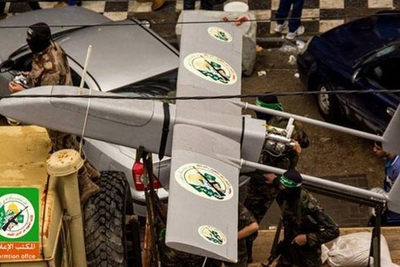
Looking beyond incendiary kites and balloons, Israeli defense officials believe that Hamas wants to deploy exploding drones to increase the organization’s arson-based terrorist efforts.

According to an Israel Hayom report, Hamas is preparing to mount explosive material on unmanned aerial vehicles to target Israel communities situated deeper into the country. The terrorist group has also already started to affix timers to incendiary aerial devices, to delay their detonation and maximize damage to Israeli land.

Public Security Minister Gilad Erdan warned that “we are seeing an obvious trend” and that Hamas operatives “are constantly increasing their kites’ range and they are using ‎other airborne devices” which “may even reach Judea ‎and Samaria (West Bank).”

Previous reports pointed to Iran building a fleet of suicide drones for its main terrorist proxies, including Hamas, to assemble and launch kamikaze style attacks. But Hamas also maintains an increasingly sophisticated domestic drone program as well.

Israel’s national security is threatened by several militant groups with established drone programs on its borders, including Hizballah, the Islamic State, and al-Qaida’s affiliate in Syria. Even Iran’s Islamic Revolutionary Guard Corps (IRGC) now threatens Israel directly by deploying drones into its airspace to test Israel’s resolve.

Like Iran, Hamas is attempting to create “new rules of engagement” in its war against Israel. The terrorist organization recognizes that Israel’s military will likely avoid direct responses against terrorist cells launching incendiary aerial devices into Israel territory.

Israel’s air force struck several Hamas military targets after terrorists deployed incendiary kites and balloons that caused severe fires in Israeli communities on the Gaza border. Hamas escalated the violence last month by launching 45 mortar shells and rockets at Israel. Similar tit-for-tat incidents have emerged since Hamas began encouraging and planning this new method of arson terrorism during the violent border riots on the Gaza border at the end of March.

Many of these devices continue to land on Israeli territory, sparking destructive fires that burn thousands of acres of crops and natural forest area. Containing the fires is amajor strain on Israel’s resources and significantly disrupts civilians’ lives. Israel has largely relied on firing warning shots at Palestinians launching incendiary devices.

On Sunday, Israel’s security cabinet directed the military to adopt tougher countermeasures against Hamas’ use of arson terrorism. But considerable debate within Israel’s security establishment remains on how to tackle the threat.

In a reportedly heated exchange on Sunday, IDF Chief of Staff Gadi Eisenkot challenged Education Minister Naftali Bennett’s push to allow the military to directly target cells launching incendiary aerial devices – a more aggressive policy than the current use of warning shots. Eisenkot allegedly argued that lethal force in this situation is immoral.

Israel has increasingly relied on drones in an attempt to take down incendiary kites and balloons. There may be an emerging “drone, counter drone” struggle between Israel and its terrorist enemies – similar to the dynamic between the United States and global jihadists. To address the wider UAV terrorism threat, Israel has reportedly assassinated key drone experts abroad, while continuing to target enemy UAV storage facilities in airstrikes and intercepting shipments of UAV-related material to terrorist organizations.

UAV terrorism will grow as the technology becomes less expensive and more effective. A sophisticated militant organization should have no issues launching explosives-laden drones. The Islamic State, for example, deployed its first suicide drone attack using a modified commercial UAV.

Amid Hamas’s new provocative strategy, Israel will continue evolving its efforts to counter emerging terrorist threats – including drone-based arson attacks.

Vladimir Putin Is Laying a Bomb on Israel’s Doorstep

July 16, 2018


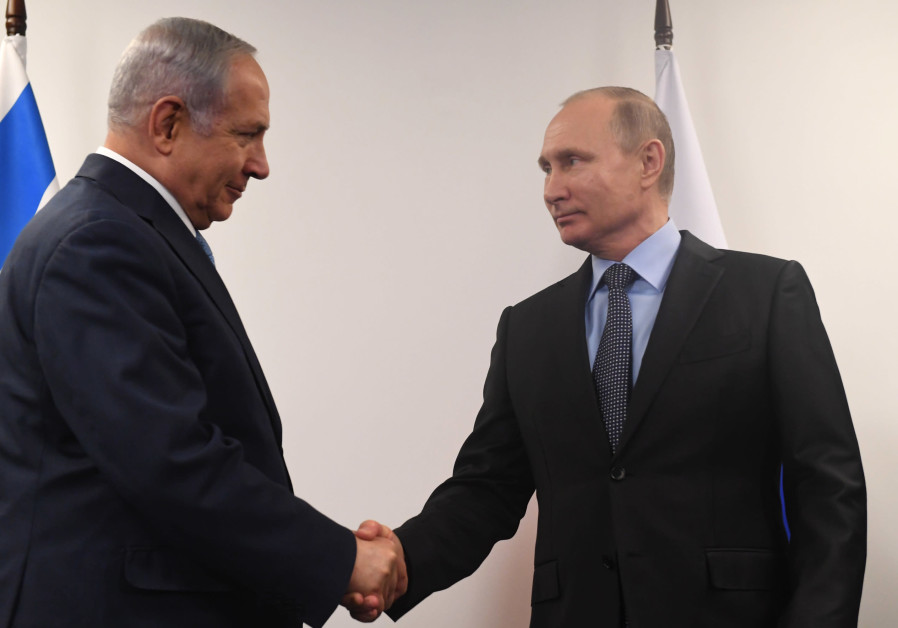
Russian President Vladimir Putin shakes hands with Israeli Prime Minister Benjamin Netanyahu during their meeting at the Kremlin in Moscow. July 11, 2018Office of the Russian president

Shlomo Bolts Jul 15, 2018 12:39 PM Haaretz

Source Link: Vladimir Putin Is Laying a Bomb on Israel’s Doorstep

{Maybe, just maybe…and I’m going out on a limb here…Putin is no friend of Israel. – LS}

In September 1999, residents of an apartment building in the Russian city of Razyan came home to bags of explosives rigged to detonate in their basement. They hastened to call authorities, who confirmed the threat, defused the bomb, and arrested the perpetrators.

The next day, the perpetrators were released – according to some reports, they were Russian intelligence agents. The government declared that there had been no bomb and that it was all a drill.

Residents of the apartment were skeptical, but as one resident later told the LA Times, “The general opinion is that we’d better not challenge them or they will really blow us up.”

Indeed, many Russians who challenged the state narrative regarding this incident went on to die suspicious deaths.

Yet one Russian in particular benefitted. Prime Minister Benjamin Netanyahu recently met him at the World Cup to discuss the Iranian presence in Syria, and came out proclaiming that Russia had pushed Iranian proxies “tens of kilometers” from Israel’s border.

Russian President Vladimir Putin, then the Russian intelligence chief, blamed Chechen terrorists for the Razyan incident – and for a series of actual bombings of Russian apartment buildings earlier that month that killed nearly 300 people – and went to war with the separatist region of Chechnya the next day. Putin used his role in that war to paint himself as a security hawk, win the Russian presidency, and steer Russia toward authoritarianism. As Russian influence operations on social media gain global notoriety, Israel would be wise to recall this older and more low-tech form of information warfare in Putin’s playbook.

It’s a fundamental paradox: How could the Razyan hotel incident simultaneously have been a harmless drill, and the last straw before a wide offensive on the Chechen capital? Putin made both claims; one must be a lie.

If we examine Russian actions near Israel’s border today, we confront the same paradox at the heart of Netanyahu’s Syria policy: How could Russia simultaneously be the main agent of Iranian expansion, and an Israeli ally in pushing Iran back?


Russian President Vladimir Putin shakes hands with Ali Akbar Velayati, a senior adviser to Iran’s Supreme Leader Ayatollah Ali Khamenei, outside Moscow. July 12, 2018Alexei Druzhinin/AP

Both cannot be true. One is a lie.

Netanyahu does not have long to reveal the truth. The Syrian regime is in the midst of a devastating offensive on opposition forces in southern Syria, which borders Israel. Over 250 civilians have been killed in the offensive, which includes Russian airpower and Iran-backed militia fighters. Current reports indicate an exodus of tens of thousands of civilians fleeing toward Israel’s border.

And as Haaretz analyst Zvi Bar’el has rightly noted, “Israel is considered the party that gave the green light for the entry of Assad forces into southern Syria…based on a Russian commitment to remove Iranian forces.”

Given Netanyahu’s strong focus on containing Iran, the Russian commitment is key. Israel does not want Iranian proxy militias near its border, especially since many of them have declared their intentions to target Israel. Yet Russia is facilitating exactly that.

Many international observers underestimate the extent of Iranian involvement in the regime’s current offensive, perhaps due to Russian pronouncements that Iran must withdraw from the area, or due to multiple feigned Iranian withdrawals that turned out to be ruses.

In fact, the Iranian proxy Liwa al-Zulfikar was integral to the storming of Busr al-Harir, the first major town to fall to pro-regime forces in the current offensive, as Russian warplanes bombed from above. An Iranian Revolutionary Guards Corps commander was recently reported killed in Deir al-Adas, a northern gateway to the Golan Heights. Similarly, the Iranian proxy group “Abu Fadel al-Abbas” recently appeared in the frontline town of Da’el under 30km from Israel.

Da’el activists shared a photograph earlier this month of Abu Fadel al-Abbas leader “Abu Ajeeb” speaking with a Russian general. I queried former residents of Da’el on the photograph, and they traced its precise location to the Martyr Fayz al-Jamous school in northwest Da’el – a plausible site given current battle lines, and a site that aligns with imagery analysis of the photograph. The Assad regime hasn’t controlled Da’el until this month, so the photograph must have been quite recent.

Russian leader Vladimir Putin is hardly distancing Iran from the Israeli border. If anything, Iran and Russia are collaborating as closely as ever. But this is the same treacherous double game that Putin played in Razyan nearly 20 years ago.

Just as the same foiled apartment bombing cannot be both a routine intelligence drill and a provocation to war, we know that Russia can’t be Iran’s air cover for advances toward Israel and an Israeli ally against Iran at the same time. Furthermore, Putin likely knows that we know; the same day the aformentioned photo was released, Russian Foreign Minister Sergei Lavrov strongly backtracked on his stance that “all foreign forces” – including Iranian proxies – must leave Syria.

But Putin’s goal is not factual accuracy or consistency. It is to plant the proverbial bomb on Israel’s doorstep: to present Israel with a mortal threat, make it clear that he is doing so, and leave just enough deniability that Israel chooses to pretend he is an ally rather than confront him for the threat he created.

This mode of information warfare relies on the target audience’s fear of confronting Putin. He wants Israel to say, as residents of a Russian apartment once said, “We’d better not challenge them or they will really blow us up.”

Unfortunately, it appears Netanyahu has fallen into the trap. Russian Foreign Minister Sergei Lavrov declared on May 30 that all Iranian proxies must withdraw; Hezbollah attacked a gateway town to the Golan Heights as recently as July 9; Netanyahu nonetheless declared, mere hours later, that Iranian proxies had withdrawn “tens of kilometers” from Israel’s border. In short, Netanyahu endorsed Putin’s lie.

There’s no logical reason for Netanyahu to believe that Putin’s promises in Moscow last week will be implemented, when Lavrov’s promises six weeks ago were blatantly flouted, especially now that Russia and Iran have increased their leverage by decimating much of southwest Syria. Israel must realize that if it stays silent now, Iranian proxies are bound to reach Israel’s border eventually.

Yet Israel doesn’t have to follow this sordid script. President Donald Trump has evinced a firm desire to support Israel, and initiatives to sanction Iranian proxies in the U.S. Congress have earned bipartisan backing. Israel would increase U.S. support against Putin’s deception by demanding that the Assad regime alliance expand no further.

Netanyahu should call off his agreement with Putin – Putin did not honor its terms anyway – and call for U.S. support to defend the remnants of opposition to the Russian-Iranian alliance in Syria.

How John Wayne Got Rid of the KGB Agents Hired to Kill Him

July 16, 2018


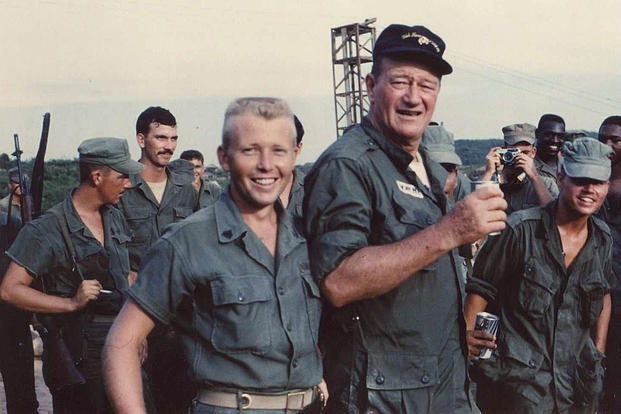
Corpsman Gene Hackemack & John Wayne, June 20, 1966, with Bravo Co., 1st Tanks, 1st Mar. Div. on Hill 55 (Chu Lai/Da Nang area).

We Are The Mighty 16 Feb 2018 By Blake Stilwell

Source Link: How John Wayne Got Rid of the KGB Agents Hired to Kill Him

{Good thing for both sides the KGB failed and Nikita called off the hit. Did I mention Putin was once a KGB agent? Maybe so, but you already knew that. – LS}

It seems like so many dictators just love movies. We all do, but absolute power takes it to a whole new level. Gaddafi had a channel set up just to play his favorite movie – his one favorite movie. Kim Jong-Il kidnapped his favorite actors and actresses to star in North Korea’s movies. Then, of course, the next natural step for these guys is directing movies.

Kim Jong-Il made several films. Benito Mussolini pitched to Columbia pictures. And even Saddam Hussein made a $30 million war epic. But Joseph Stalin was the Soviet Union’s “ultimate censor.”

At the time, global Communism was still very much a growing threat, one Stalin wanted to continue to spread around the world – under Soviet leadership. {It’s still as big a threat as ever. – LS}

He saw how much power and influence films – and the stars in them – held over large audiences. He saw it in Nazi German propaganda during the Second World War and he used it effectively himself to further his own personality cult.

So when he saw John Wayne’s power as an virulent anti-Communist on the rise, he ordered the actor killed and then sent (allegedly) more than one hit squad to do the job. He saw the Duke as a threat to the spread of Communism around the world – and especially in America.

According to the book John Wayne – The Man Behind The Myth, Soviet filmmaker Sergei Gerasimov told Wayne of the KGB plot in 1949. What the Duke and his Hollywood friends did to the hit squad is mind blowing.

Obviously not one to let a thing like Communist assassins get him down, Wayne and his scriptwriter Jimmy Grant allegedly abducted the hitmen, took them to the beach, and staged a mock execution. No one knows exactly what happened after that, but Wayne’s friends say the Soviet agents began to work for the FBI from that day on.

But there were other incidents. The book also alleges KGB agents tried to take the actor out on the set of 1953’s Hondo in Mexico. A captured sniper in Vietnam claimed that he was hired by Chairman Mao to take the actor out on a visit to troops there.

Stalin died in 1953. His successor, Nikita Khrushchev, met privately with John Wayne in 1958 and informed him that the order had been rescinded. Wayne told his friends Khrushchev called Stalin’s last years his “mad years” and apologized.

The entire time Wayne knew there was a price on his head, he refused the FBI’s offer of federal protection and didn’t even tell his family. He just moved into a house with a big wall around it. Once word got out, though, Hollywood stuntmen loyal to the Duke began to infiltrate Communist Party cells around the country and expose plots against him.

Wayne never spoke of the incidents publicly.