Author Archive

Exclusive: North Korea earned $200 million from banned exports, sends arms to Syria, Myanmar – U.N. report

February 5, 2018

by Michelle Nichols Reuters Sunday Feb 4, 2018 6:47am

Source: Exclusive: North Korea earned $200 million from banned exports, sends arms to Syria, Myanmar – U.N. report

{More strongly worded letters, more sanctions, and the Axis of Evil will still find a way – LS}

UNITED NATIONS (Reuters) – North Korea violated United Nations sanctions to earn nearly $200 million in 2017 from banned commodity exports, according to a confidential report by independent U.N. monitors, which also accused Pyongyang of supplying weapons to Syria and Myanmar.

The report to a U.N. Security Council sanctions committee, seen by Reuters on Friday, said North Korea had shipped coal to ports, including in Russia, China, South Korea, Malaysia and Vietnam, mainly using false paperwork that showed countries such as Russia and China as the coal origin, instead of North Korea.

The 15-member council has unanimously boosted sanctions on North Korea since 2006 in a bid to choke funding for Pyongyang’s nuclear and ballistic missile programs, banning exports including coal, iron, lead, textiles and seafood, and capping imports of crude oil and refined petroleum products.

“The DPRK (North Korea) is already flouting the most recent resolutions by exploiting global oil supply chains, complicit foreign nationals, offshore company registries and the international banking system,” the U.N. monitors wrote in the 213-page report.

The North Korean mission to the United Nations did not immediately respond to a request for comment on the U.N. report. Russia and China have repeatedly said they are implementing U.N. sanctions on North Korea.

SYRIA, MYANMAR

The monitors said they had investigated ongoing ballistic missile cooperation between Syria and Myanmar, including more than 40 previously unreported North Korea shipments between 2012 and 2017 to Syria’s Scientific Studies and Research Centre, which oversees the country’s chemical weapons program.

The investigation has shown “further evidence of arms embargo and other violations, including through the transfer of items with utility in ballistic missile and chemical weapons programs,” the U.N. monitors wrote.

They also inspected cargo from two North Korea shipments intercepted by unidentified countries en route to Syria. Both contained acid-resistant tiles that could cover an area equal to a large scale industrial project, the monitors reported.

One country, which was not identified, told the monitors the seized shipments can “be used to build bricks for the interior wall of a chemical factory.”

Syria agreed to destroy its chemical weapons in 2013. However, diplomats and weapons inspectors suspect Syria may have secretly maintained or developed a new chemical weapons capability.

The Syrian mission to the United Nations did not immediately respond to a request for comment on the U.N. report.

The U.N. monitors also said one country, which they did not identify, reported it had evidence that Myanmar received ballistic missile systems from North Korea, along with conventional weapons, including multiple rocket launchers and surface-to-air missiles.

Myanmar U.N. Ambassador Hau Do Suan said the Myanmar government “has no ongoing arms relationship, whatsoever, with North Korea” and is abiding by the U.N. Security Council resolutions.

BANNED EXPORTS, IMPORTS

Under a 2016 resolution, the U.N. Security Council capped coal exports and required countries to report any imports of North Korean coal to the council sanctions committee. It then banned all exports of coal by North Korea on Aug. 5.

The U.N. monitors investigated 16 coal shipments between January and Aug. 5 to ports in Russia, China, Malaysia and Vietnam. They said Malaysia reported one shipment to the council committee and the remaining 15 shipments violated sanctions.

After the coal ban was imposed on Aug. 5, the U.N. monitors investigated 23 coal shipments to ports in Russia, China, South Korea and Vietnam. The U.N. monitors said all those shipments “would constitute a violation of the resolution, if confirmed.”

“The DPRK combined deceptive navigation patterns, signals manipulation, transshipments as well as fraudulent documentation to obscure the origin of the coal,” the monitors said.

The U.N. monitors “also investigated cases of ship-to-ship transfers of petroleum products in violation (of U.N. sanctions) … and found that the network behind these vessels is primarily based in Taiwan province of China.”

The monitors said one country, which they did not name, told them North Korea had carried out such transfers off its ports of Wonsan and Nampo and in international waters between the Yellow Sea and East China Sea between October and January.

The report said several multinational oil companies, which were not named, were also being investigated for roles in the supply chain of petroleum products transferred to North Korea.

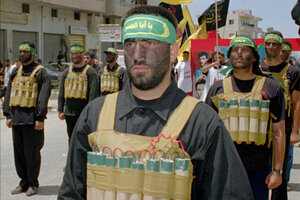
Israel And Egypt Form Secret Alliance To Wipe Out Egyptian Jihadists

February 5, 2018

by Tyler Durden Mon, 02/05/2018 – 01:00 Zero Hedge

Source: Israel And Egypt Form Secret Alliance To Wipe Out Egyptian Jihadists

{The enemy of my enemy is my friend…or something like that. – LS}

Israel has been conducting bombing raids on jihadists within Egypt’s borders since at least late 2015 as part of a secret two-year alliance. For more than two years, unmarked Israeli drones, helicopters and jets have carried out a covert air campaign, conducting more than 100 airstrikes inside Egypt, frequently more than once a week — and all with the approval of President Abdel Fattah el-Sisi, the NYT reported on Sunday.

Once enemies in three wars, and having struggled to reach peace agreements for decades, Egypt and Israel are now (not so) secret allies against a common foe.

In late 2015, jihadists in Egypt’s Northern Sinai moved in, killing hundreds of soldiers and police officers and briefly seizing a major town – setting up armed checkpoints as they established control over the area. On October 31, 2015, the Islamic State of Iraq and the Levant’s Sinai branch, formerly known as Ansar Bait al-Maqdis, brought down a Russian passenger flight with an explosive device – killing all 224 people aboard.

With Egypt seemingly unable to stop the jihadists, Israel – alarmed by the threat just over the border, began taking action – sending a barrage of airstrikes into the neighboring Arab country whose officials and media continued to vilify the Jewish state in public.

In order to conceal their involvement, Israel’s drones, jets and helicopters have covered up their markings. “Some fly circuitous routes to create the impression that they are based in the Egyptian mainland,” according to American officials briefed on the operations.

It is unclear whether any Israeli troops have actually set foot inside Egyptian borders.

Despite efforts by both Israel and Egypt to hide the origin of the strikes and censor public reports, Egypt and Israel’s two-year alliance has become somewhat of an open secret in intelligence circles:

Inside the American government, the strikes are widely known enough that diplomats and intelligence officials have discussed them in closed briefings with lawmakers on Capitol Hill. Lawmakers in open committee hearings have alluded approvingly to the surprisingly close Egyptian and Israeli cooperation in the North Sinai.

In a telephone interview, Senator Benjamin L. Cardin of Maryland, the ranking Democrat on the Senate Foreign Relations Committee, declined to discuss specifics of Israel’s military actions in Egypt, but said Israel was not acting “out of goodness to a neighbor.”

“Israel does not want the bad stuff that is happening in the Egyptian Sinai to get into Israel,” he said, adding that the Egyptian effort to hide Israel’s role from its citizens “is not a new phenomenon.” –NYT

Moreover, despite Israeli military censors preventing reports of the strikes from becoming public, certain news outlets circumvented the censorship by citing a 2016 Bloomberg report in which a former Israeli official admitted to drone strikes inside of Egypt.

The two-year alliance between the two countries is thought to have begun after Egypt’s relatively new president Mohamed Morsi – a leader within the Muslim Brotherhood who came to power after the Arab Spring revolt, was outed in a military takeover by el-Sisi – then defense minister.

Israel welcomed the change in government, urging Washington to accept it.

And Egypt needed the help; following Mr. Sisi’s takeover, Islamist militants who had established a refuge in the North Sinai region between the Suez Canal and the Israeli border began a wave of deadly assaults against Egyptian security forces.

A few weeks after Mr. Sisi took power, in August 2013, two mysterious explosions killed five suspected militants in a district of the North Sinai not far from the Israeli border. The Associated Press reported that unnamed Egyptian officials had said Israeli drones fired missiles that killed the militants, possibly because of Egyptian warnings of a planned cross-border attack on an Israeli airport. (Israel had closed the airport the previous day.)

At the time, both Israel and Egypt vehemently denied the reports – however after the Russian charter jet was brought down in October of 2015, Israel began its wave of airstrikes, killing a long list of militant leaders according to an American official who spoke on the condition of anonymity in order to discuss classified operations.

After Israel wiped out much of the jihadist leadership in the region, less ambitious successors stepped in. No longer employing armed checkpoints, closing roads or claiming territory – the group began targeting “softer” targets like Christians in Sinai and Muslims they considered heretics. As an example, the militant group killed over 300 worshippers at a Sufi Mosque in North Sinai.

Since Israel has effectively been keeping jihadists at bay in a mutually beneficial arrangement, some American supporters of Israel have been complaining that given Egypt’s reliance on the Israeli military, “Egyptian officials, diplomats and state-controlled news media should stop publicly denouncing the Jewish state.” 

“You speak with Sisi and he talks about security cooperation with Israel, and you speak with Israelis and they talk about security cooperation with Egypt, but then this duplicitous game continues,” said Representative Eliot L. Engel of New York, the ranking Democrat on the House Foreign Relations Committee. “It is confusing to me.”

Israel’s prime minister, Benjamin Netanyahu, has also pointedly reminded American diplomats of the Israeli military role in Sinai. In February 2016, for example, Secretary of State John Kerry convened a secret summit in Aqaba, Jordan, with Mr. Sisi, King Abdullah of Jordan and Mr. Netanyahu, according to three American officials involved in the talks or briefed about them.

Mr. Kerry proposed a regional agreement in which Egypt and Jordan would guarantee Israel’s security as part of a deal for a Palestinian state. –NYT

Netanyahu scoffed at the idea – arguing that if Egypt was unable to control the ground within its own borders, it was hardly in a position to guarantee Israel’s safety.

Trump administration, pushing back on Iran’s influence, slaps fresh sanctions on Hezbollah

February 2, 2018

By Adam Shaw | Fox News February 2, 2018

Source: Trump administration, pushing back on Iran’s influence, slaps fresh sanctions on Hezbollah

{Iran will make up the difference and further deprive it’s already suffering people from economic recovery. – LS}

The Trump administration announced Friday that it was slapping fresh sanctions on Hezbollah-linked individuals and businesses in Africa and the Middle East — a move to limit not only the operations of the terrorist group, but also Iran’s influence in the region.

The Treasury announced that it is targeting a network of companies and individuals in Lebanon, Sierra Leone, Ghana, Liberia and other countries linked to Hezbollah financier Adham Tabaja.

The sanctions freeze assets in the U.S. and prevent Americans from doing business with any of the six individuals and seven companies. The U.S. has designated Hezbollah a terrorist organization that also plays a major political role in Lebanon.

Senior officials told the Associated Press that it is the “first wave” of a campaign to put pressure on the Iranian-linked organization. In a statement, Treasury Secretary Steven Mnuchin described the group as “responsible for the deaths of hundreds of Americans.”

“It is also Iran’s primary proxy used to undermine legitimate Arab governments across the Middle East,” he said. “The Administration is determined to expose and disrupt Hezballah’s networks, including those across the Middle East and West Africa, used to fund their illicit operations.”

Experts say that there is a sense that the administration is attempting to re-invigorate global efforts to push back against Hezbollah, while walking a fine line so it does not destabilize Lebanon.

“There is a position by the administration that they want to do it so as not to destabilize Lebanon’s economy and banking sector and do it in a way that targets global aspect of Hezbollah and in a way that minimizes Lebanon’s exposure,” Tony Badran, a research fellow at the Washington-based Foundation for Defense of Democracies and the author of “The Third Lebanon War” told Fox News.

The U.S. estimates Iran sends Hezbollah about $700 million a year and officials say that Hezbollah has become Iran’s main proxy in the Arabic-speaking world. The U.S. is particularly concerned about Hezbollah’s presence in Syria and Yemen. Badran warned against making an “artificial” distinction between Hezbollah and Iran, arguing that it is largely an extension of the Iranian Revolutionary Guard.

Most of the individuals targeted had not been publicly known to be financiers of Hezbollah, nor are they prominent names in Lebanon.

Don’t Ignore Kushner’s Quiet Mideast Gains

February 2, 2018

Ahmed Charai January 29, 2018 The National Interest

Source: Don’t Ignore Kushner’s Quiet Mideast Gains

{Giving credit where credit is due. – LS}

He may be the most effective presidential Middle East envoy in decades, but he doesn’t get much respect from the press.

It is hardly an understatement to say that Jared Kushner, a baby-faced real-estate magnate and presidential son-in-law, didn’t send expectations soaring when he was named to supervise Israel-Palestine peace efforts.

Lacking years of diplomatic experience and advanced degrees in Near Eastern politics, his appointment seemed more like favoritism than a confirmation of expertise, more a presidential gift to his daughter than a strategic decision.

What little coverage Kushner has received has varied from skeptical to scornful. And, tellingly, he hasn’t tried to dispel the pundits’ prejudices. He doesn’t travel with reporters or invite press attention. His few appearances are fleeting and uneventful.

Still, his frequent visits and stray public remarks reveal a surprisingly sophisticated understanding of the region. Behind the scenes, he is making surprising progress.

First, he recognizes that Iran now matters more to the Arabs than Palestine. With Iran and Islamic militants threatening the survival of major Arab states, many Arab leaders have quietly decided to align with Israel—dialing down their interest in the Palestinian drama. Consider that President Trump’s plan to move the United States’ embassy in Israel to Jerusalem did not touch off huge protests in Arab capitals or angry editorials in the Arab press. Kushner was one of the strongest voices inside the White House in favor of the long-promised move. Any other mediator would fret that the move would needlessly complicate his job. Kushner knows that Iran has replaced Palestine as the center of Arab interest, and he spotted an opportunity that few in Washington saw.

Second, Kushner realizes that younger Arab generation has a fundamentally different perspective from that of its elders. More than 60 percent of Arabs are too young to remember the 1967 and 1973 wars with Israel, and many more regard them as ancient history. Consider an American equivalent; how many millennials are outraged at the fate of South Vietnam? As a result, younger Arabs largely accept Israel’s existence as a settled fact, and generally see trading with its prosperous economy as essential to their own economic growth. I know. I have heard them tell me these things in the privacy of their living rooms. Their septuagenarian leaders do not share their views, and punish younger leaders who try to independently engage with Israelis—which only deepens the divide.

The generation gap is based on practical economic concerns. Young Arabs want well-paying jobs that allow them to marry and start families. They want good schools for the children. Many see no issue with taking an ambulance across the border to an Israeli hospital, unlike their retirement-age relatives who say that they would rather die.

Kushner correctly captured the sentiment of the new Arab generation when he said in July 2017, “We don’t want a history lesson. We’ve read enough books. Let’s focus on, How do you come up with a conclusion to the situation?”

To be sure, the Israeli-Palestinian conflict is one of the longest and thorniest conflicts in history. It cannot be resolved quickly or easily. Kushner has publicly acknowledged this, usually adding the idea that new approaches are more likely to bear fruit than old ones.

And he is trying a new approach, completely at odds with the conventional wisdom among diplomats. Kushner, speaking at the Saban Forum in Washington, said, “The most important thing was to focus on the final status issues, not on daily distractions that come up along the way.”

This signals a sharp break with the conventional State Department view that it is better to start modestly, focus on building trust, build the capacity of the Palestinian Authority, foster economic ties between the parties and lay a foundation for still greater capacity on the Palestinian side. Only then, after years of “capacity building,” can the final-status negotiations start.

Kushner blunted turned this upside down, adding that it had been tried for decades with little success. In the absence of a political horizon to steer toward, he said, people make decisions based on who is holding guns now. And that cements the current impasse.

Finally, Kushner has three key relationships that make progress possible.

First, he enjoys the complete trust of the president and has continuous real-time access to Trump. Few U.S. negotiators, at least since Henry Kissinger, have had such a unique bond with the president.

Second, he is liked and trusted by Israel’s Prime Minister Benjamin Netanyahu and its influential ambassador to the United States, Ron Dermer. Obama administration officials often publicly faulted Israel’s elected leaders, and the relationship was, at best, lukewarm.

Third, Kushner has befriended Saudi Arabia’s thirty-one-year-old deputy crown prince, Mohammed bin Salman. Both are seen as tech-savvy, young disrupters of the status quo, and both favor practical solutions over symbolic displays. Saudi pressure on Qatar to end its funding of Hamas, the Palestinian terror group, would not have happened with earlier generations of Saudi leadership.

Other Gulf Arab leaders that I have met with tell me that they have heard positive things about Kushner, and are eager to work with him.

In short, Kushner’s correct reading of this unique moment in Arab politics as well as the strong relationships with key players that he has fostered position him, and the United States, to make historic progress in the Middle East.

Is peace between Arabs and Israelis possible? Consider the case of my homeland, Morocco. Under the leadership of King Mohamed VI, a constitutional monarchy has emerged with legal protections for Jews and other religious minorities. Here in Casablanca, Jews and Muslims attend each other’s schools, form business partnerships and leave peacefully side by side. With a dose of Kushner’s quiet diplomacy, there is no reason Arabs and Jews couldn’t live the same way in Israel and Palestine.

Scoop: Trump may present peace plan even if Palestinians won’t negotiate

February 2, 2018

Barak Ravid of Israel’s Channel 10 news February 2, 2018 Via Axios

Source: Scoop: Trump may present peace plan even if Palestinians won’t negotiate

{Finally, after all these years we now have an administration that believes in transparency. – LS}

The White House is considering presenting President Trump’s Middle East peace plan even if the crisis with the Palestinian Authority continues and Palestinian President Abbas refuses to come to the negotiating table, senior U.S. officials tell me.

The bottom line: The U.S. officials say the administration won’t impose on the Israelis or Palestinians to accept the plan, but may release it so the parties and international community can judge it at face value.

The officials said no decisions were made yet in this regard but stressed the president and his “peace team” are not ruling out this option.

One senior U.S. official told me:

“Since it’s not done, we haven’t decided yet how we are going to put it forward and what happens if one of the sides isn’t ready to come to the table. We are not there yet. But we are very optimistic that all relevant countries who want to support a peace agreement between the two sides are still waiting for our plan, want to work with us and realize we cannot be replaced. Despite all of the false reports about our plan, we are confident it will be beneficial to both sides and both peoples.”

The current standoff

After Trump’s Jerusalem announcement on December 6th, Abbas announced he would cut ties with the U.S. over the peace process. The Palestinians also boycotted Vice President Pence’s visit in the region.

  • Abbas claimed Trump is not an honest broker and called his peace plan “the slap of the century”.
  • Meanwhile Israeli Prime Minister Netanyahu said he will react to the Trump plan after he sees it but stressed he is ready to renew peace talks.

The latest developments…

  • U.S. special envoy Jason Greenblatt held a series of meetings with Netanyahu, his advisers and several ministers over the last two weeks. Greenblatt also met with opposition leader Hertzog and briefed EU member states representatives in Tel-Aviv and East Jerusalem. He did not meet with any Palestinian officials but met with Palestinian students and private sector executives.
  • On Wednesday, Greenblatt participated in an emergency meeting of the donor countries to the Palestinian Authority. The meeting focused on the crisis in the peace process and on the humanitarian situation in Gaza. The Palestinian Prime Minister Rami Hamdallah also participated in the meeting. It was the first time senior Palestinian and U.S. officials were around the same table since the Jerusalem announcement. Greenblatt and Hamdallah shook hands but didn’t hold a meeting.
  • In his speech during the plenary meeting, Greenblatt referred to Hamdallah and said he hopes that the fact he is participating shows the Palestinians are still committed to the efforts to renew the peace process. Greenblatt also said President Trump’s announcement was just a recognition of reality and the connection of Israel and the Jewish people to Jerusalem. Greenblatt also said in his speech: “Did the President’s decision prejudge any final status issues? No. We have not taken a position on borders”.
  • Greenblatt stressed that the Trump administration continues drafting its peace plan and called on the Palestinians to return to the peace talks: “Peace will not be achieved by walking away from negotiations. It is easy to walk away from the table. But that helps no one, and it reduces or perhaps eliminates the chances of achieving a comprehensive peace agreement. And that would be terrible for the Palestinian people”.

Iran’s Future, In Its Own Words (or lack thereof)

February 1, 2018

Heshmat Alavi , Contributor February 1, 2018 Forbes

Source: Iran’s Future, In Its Own Words

{The so-called enemies of Iran’s ruling class are knocking on Tehran’s door, yet the Mullahs do not hear. – LS}

On the very sensitive subject of how Iran plans to confront ongoing protests, described by some as an uprising, all the while attempting to resolve the very issues engulfing the ruling regime, there are critical concerns raising from various voices within.

And considering U.S. President Donald Trump’s powerful State of the Union message, underscoring “America stands with the people of Iran in their courageous struggle for freedom,” the stakes at hand in the months ahead for Tehran are extremely high.

Iran’s state-linked media are a good source, shedding significant and noteworthy light on the seemingly obscure nature of the Iranian regime.

The common tone heard in all such messages is hopelessness. Those loyal to the faction of Iranian Supreme Leader Ali Khamenei see the solution in sacking the regime’s president, Hassan Rouhani.

Arguments from the other side of the aisle in Tehran’s politics rely on warning the Khamenei camp that such a scenario will not end the regime’s escalating quandaries. This is only the beginning and there is no stopping this train, adding the entirety of this regime is in the crosshairs.

There are those who believe dark days await those sitting on the throne in Tehran, speaking of future uprising waves. Providing no solutions, their words can mean nothing but succumbing to an inevitable downfall.

“Those who have continuously spread despair and anxiety through their platforms in state TV/radio and Friday prayers (in reference to the Khamenei camp) seek to portray Rouhani as incompetent. They issue and chant slogans of ‘Death to Rouhani,’ failing to answer the inescapable question of who after Rouhani. The answer is obvious: surpassing Rouhani means overcoming the government, reaching the very principle of our state, and finally surpassing the Islamic republic itself,” according to the Tadbir24 website, known for its affiliation to the Rouhani camp.

Interesting is how this piece considers Rouhani a synonym of the ruling state, or at least the velayat-e faqih regime’s last chance of survival, warning surpassing Rouhani is tantamount to the end of the clerical rule altogether.

Protesters in the streets, however, are crystal clear in their intentions and how they view the overall regime apparatus. Chanting “Death to Rouhani,” “Death to Khamenei,” and most interestingly, “Reformists, principalists, end of story,” the Iranian people are demanding sweeping changes, accepting nothing short of regime change. This ends Iran’s scheme of portraying a system established on two parties of conservatives and reformists.

“The issue at hand is not limited to merely surpassing Rouhani. More grave ends may be awaiting us,” according to the Jamaran website, explaining how these protests are raising eyebrows across the board amongst senior Iranian officials.

“Let us be frank: Taking into consideration the current heading, our destination will be nothing but all out ruin,” according to the Asr Iran website, another Rouhani camp mouthpiece.

“The society has become a cradle for numerous crises that will surface in other forms (read in further nationwide protests),” according to Rouhani’s economic advisor Hossein Zaghfar.

Warnings of other crises in the making and Iran anticipating further calamities are indicating signs of Iran’s ruling elite understanding very well there the harsh reality of these protests’ refusal to ever melt down.

To add insult to injury for the mullahs, the brave Iranian people are showing how the regime’s crackdown machine no longer enjoys its previous teeth. For forty years the clerical regime has been relying on this entity to remain intact and in power. Scenes of protesters tearing down Khamenei posters and attacking sites of the Revolutionary Guards Basij paramilitary force, parallel to a wave of Basij members burning their IDs and credentials, speak for themselves.

#IranProtests #تظاهرات_سراسرى #بسيجی_نیستم
The trend continues, terrifying senior security commanders and regime authorities. — Heshmat Alavi (@HeshmatAlavi) January 8, 2018

Iran’s protests will continue despite the fact that authorities killed 53 protesters and sent over 8,000 others behind bars, reports indicate.

The Iranian people are proving to the world over their objective of seeking regime change and establishing a republic based on democratic values rightfully cherished by most of today’s countries.

History shows those movements presenting a specific alternative to the ruling state have a far better chance of realizing victory for the people. A leading entity with a publicized plan for the future and the courage that the populace can rely on.

The time has come to set aside the “reformist” mirage in Iran. For decades, Maryam Rajavi, as President of the National Council of Resistance of Iran, is providing the sole, realistic alternative for Iran with a ten-point plan that enjoys the support of thousands of elected officials across the globe.

For starters, however, there are certain duties and obligations before the international community:

* Demand the release of all recently arrested protesters & political prisoners.

* Provide free internet access to all of Iran to allow activists report the truth about this regime, unfortunately cloaked by mainstream media.

* Continue cutting off Iran’s access to the global financial system. This will deprive the IRGC from the financial sources it desperately needs to continue its slate of domestic and foreign belligerence.

This is a noble launch of standing shoulder to shoulder with the Iranian people in “their courageous struggle for freedom.”

Russia builds four new air bases in Syria, deploys another 6,000 troops

February 1, 2018

Debka File February 1, 2018

Source: Russia builds four new air bases in Syria, deploys another 6,000 troops

{“As of February 2016, Turkey hosts 2,688,686 registered refugees. About 30% live in 22 government-run camps near the Syrian border. Turkey is home to the highest number of Syrian refugees and has provided over $8,000,000,000 in aid.” A Russian investment of this scale could have gone a long way to helping these people return to Syria and rebuild their communities. But it’s not about the people…obviously. – LS}

Contrary to Moscow’s promises, the Russian military is not pulling out of Syria, but adding four more air bases (one shared with Iran) and 6,000 more troops.

On Dec. 11, 2017, Russian President Vladimir Putin, followed by Defense Minister Sergey Shoigu, announced that the Russian military was to withdraw from Syria to home bases. DEBKAfile’s military and intelligence sources report that the reverse happened. A small number of units were indeed sent home, but they were sooner replaced, and instead of two bases – the air facility at Hmeimim and the naval installation at Tartus – four more Syrian air bases are being reconstructed and adapted for the use of the Russian air force.
The attached map illustrates their locations: {See Above – LS}

1.) The Tiyas Military Airbase (also known as T-4) in the Homs Governorate west of Palmyra, is the largest in Syria. The Russians are massively converting it into their main center of aerial operations in central Syria. Tyas will also provide backup as needed for Khmeimim, if drone, missile and mortar attacks recur.

2). Palmyra (or Tadmor) Airport provides air support for operations in eastern Syria including the Deir ez-Zour province. Moscow has agreed to share it with Iran. The Revolutionary Guards Al Qods chief Gen. Qassem Soleimani is planning to make Palmyra the main assembly center for the transfer of pro-Iranian Iraqi Shiite militias from southern Iraq to Syria.

3). From Hama Military Airport west of Hama, the Russians will exercise control from the air of central Syria and the northern and central highways to Damascus. Still more importantly, this airport’s location places it just 125km as the crow flies (173km by road) from Russia’s Tartus naval base on the Mediterranean coast.

4). Shayrat, at Homs (which became notorious as the target of a massive US Tomahawk attack last year) is the main landing site for air transports which bring the Russian and Iranian forces troop reinforcements, weapons and spare parts.

More than 6,000 additional Russian military personnel are assigned to the four renovated bases in Syria – most of them air force and special operations personnel. Some have arrived.

The attached map shows how the new layer of Russian bases Moscow in western, central and eastern Syria faces the chain of military locations the Americans have decided to keep in northern Syria. The two powers are evidently in a race for bases in Syria. In strategic terms, the two powers are dividing a large swath of Syria between them as regions of influence, leaving any future ruler in Damascus with just about half of Syrian territory under government control.

Former MK says Iran stole specs of Israeli submarines in hack

January 31, 2018


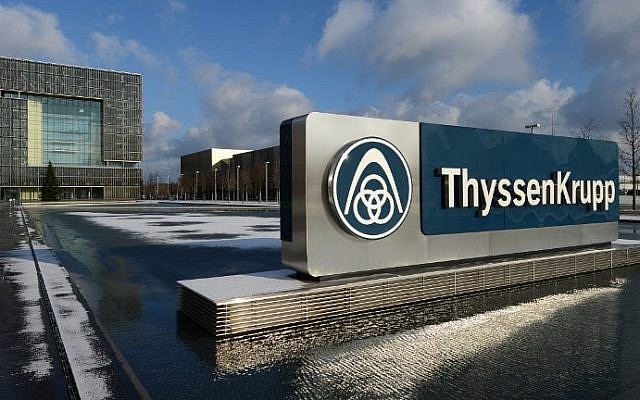
This file photo taken on December 11, 2012 shows a general view of the headquarters of German heavy industry giant ThyssenKrupp AG in Essen, Germany. (AFP/Patrik Stollarz)

By Shoshanna Solomon January 31, 2018 The Times of Israel

Source: Former MK says Iran stole specs of Israeli submarines in hack

{Sounds like an inside job. – LS}

Erel Margalit notes German shipyard that is building vessels for Israel was owned by family of Lebanon’s former defense minister

A former Knesset member claimed Wednesday that blueprints for submarines that were being built for the Israeli military were stolen in a cyberattack on a German shipyard.

In December 2016, heavy industry giant ThyssenKrupp said it fell victim to a hacking attack in which the perpetrators sought to steal company secrets, but there was no indication at the time that the plans for the Israeli submarines had been taken.

“When Israel is ordering strategic submarines from Germany, a hacker… gets into ThyssenkKrupp and is able to steal the secrets and blueprints of the submarines that were developed in Germany for Israeli use,” high-tech entrepreneur Erel Margalit, a former MK, said at a cybersecurity conference in Tel Aviv.

Margalit noted that the shipyard in Kiel, Germany, that is building the ships for the Israel Navy was owned by the family of Samir Moqbel, who was Lebanon’s defense minister.

“We know that the boats, the Corvettes that Israel is buying to protect… its waters… are bought from a shipyard that is owned by a Lebanese family, one of which was the Lebanese defense minister, who has intimate dealings with Iran,” he said. “And so you are asking yourself whether the new blueprint of Israel’s boats is in the hands of Iran.”

In announcing the attack in 2016, a ThyssenKrupp spokesman said hackers believed to be from Southeast Asia were trying to obtain “technological know-how and research results” from the steel conglomerate. He said that the attack was over and had been repelled.

ThyssenKrupp also made headlines in Israel after it was revealed that the Iran Foreign Investment Company held a 4.5 percent stake in the Germany conglomerate.

At the Tel Aviv conference, Margalit also cautioned that “while the world is trying to delay and prevent Iran from becoming a nuclear power, Tehran has already become a cyberpower, with attacks against Israel, the US, Saudi Arabia and others.”

In any future confrontation with Iran’s Lebanese proxy, Hezbollah, he said, Israel will have to contend with Iranian capabilities “that we have not yet encountered in the cyber arena, especially in light of the lack of protection for civilian infrastructure in Israel.”

Last year, Margalit, who was an MK for the opposition Zionist Union faction at the time, petitioned the High Court of Justice to demand an investigation of reports Prime Minister Benjamin Netanyahu may have been involved in suspected shady dealings with ThyssenKrupp.

An ongoing Israel police investigation, known as Case 3000, has focused on suspicions that state officials were bribed to influence a decision to purchase four patrol boats and three Dolphin-class submarines, at a total cost of 2 billion euros (NIS 8.4 billion), from ThyssenKrupp, despite opposition to the deal from the Defense Ministry.

On Friday, Hadashot TV news reported that Netanyahu would be asked to give testimony in the coming weeks, adding that he will be questioned generally and then, later, possibly as a suspect.

Police suspect that Yitzchak Molcho, Netanyahu’s chief negotiator and personal envoy for over a decade, tried to push the submarine deal during his diplomatic trips abroad, while Shimron, Molcho’s legal partner, sought to promote the interests of the German shipbuilders within Israel.

Shimron has already been questioned several times as part of the investigation by Lahav 433, the police anti-corruption unit. In addition to his work with Netanyahu, he served as a lawyer for Ganor, who was ThyssenKrupp’s local representative and turned state witness in July. He is considered a key suspect in the case.

According to a report Tuesday in the Yedioth Ahronoth daily, Ganor told investigators that he had hired Shimron because of his ties to senior government officials, especially Netanyahu. He said Shimron had told him he had involved Netanyahu in the affair.


Russia to the Rescue…for Iran

January 31, 2018

by Reuters Wednesday Jan 31, 2018 12:35pm Via The Foreign Desk

Source: Defying U.S., Russia says no case for U.N. action against Iran

{Seeing is believing. – LS}

UNITED NATIONS (Reuters) – Russia does not believe there is a case for United Nations action against Iran, Russia’s U.N. ambassador said on Wednesday after traveling to Washington to view pieces of weapons that Washington says Tehran gave Yemen’s Houthi group.

The Trump administration has for months been lobbying for Iran to be held accountable at the United Nations, while at the same time threatening to quit a 2015 deal among world powers to curb Iran’s nuclear program if “disastrous flaws” are not fixed.

“We only heard some vague talk about some action,” Russian U.N. Ambassador Vassily Nebenzia said on Wednesday. “If there is something (proposed) we will see. How can we pass judgment prematurely before we know what it is about?”

Asked if there was a case against Iran at the United Nations, Nebenzia answered: “No.”

{How can he say ‘No’ prematurely before he knows what it is about? – LS}

U.S. Ambassador to the United Nations Nikki Haley took her 14 Security Council colleagues to a military hangar near Washington on Monday to see remnants of what the Pentagon said was an Iranian-made ballistic missile fired from Yemen on Nov. 4 at Saudi Arabia’s capital Riyadh, as well as other weapons.

A proxy war is playing out in Yemen between Iran and U.S. ally Saudi Arabia. Iran has denied supplying the Iran-allied Houthis with such weaponry and described the arms displayed in Washington as “fabricated.”

“Yemen hosts a pile of weapons from the old days, many countries competing to supply weapons to Yemen during the time of (former) President (Ali Abdullah) Saleh, so I cannot give you anything conclusive,” Nebenzia said. “I am not an expert to judge.”

Independent U.N. experts reported to the Security Council in January that Iran had violated U.N. sanctions on Yemen because “it failed to take the necessary measures to prevent the direct or indirect supply, sale or transfer” of ballistic missiles and other equipment to the Houthi group.

Nebenzia questioned whether there was conclusive evidence. He said it was up to the Security Council’s Yemen sanctions committee – made up of diplomats from the council’s 15 members – to address the report by the U.N. experts.

Kazakhstan U.N. Ambassador Kairat Umarov, Security Council president for January, also suggested the evidence shown to council envoys in Washington may not be enough for U.N. action.

“Unfortunately we don’t know how this weaponry was delivered to Yemen,” he told reporters on Wednesday.

Haley has said the United States was considering several possible U.N. options for action against Iran, including tightening ballistic missile restrictions on Tehran or imposing targeting sanctions on Iranian individuals or entities.

Diplomats have said Haley has not signaled which accountability option she might pursue or when.

Getting more use out of Gitmo

January 31, 2018


A holding area at GITMO (Photo: Petty Officer 1st class Shane T. McCoy/U.S. Navy)

By Clarion Project Wednesday, January 31, 2018

Source: Trump Keeps Gitmo Open

{Preventing radical Islamo-conversions in general prison populations. – LS}

President Trump signed an executive order rescinding Obama’s order to close the Guantanamo Bay detention camp.

Guantanamo Bay, colloquially known as Gitmo, has been used to detain terrorist suspects since 2002. Prisoners held there have frequently not been formally charged but have been deemed too dangerous to release. Although the order was issued in 2009, the camp was never closed.

“In the past, we have foolishly released hundreds of dangerous terrorists, only to meet them again on the battlefield,” Trump said during the Tuesday night State of the Union address, in which he announced the move. He told Congress he had decided “to reexamine our military detention policy, and to keep open the detention facilities at Guantanamo Bay.”

There are currently 41 detainees in Guantanamo Bay. Of these, 26 are held indefinitely under the law of war and are not due for transfer. No new inmates have been added so far under Trump’s tenure, according to Slate.

High profile Gitmo detainees include Khalid Sheikh Mohammed, the architect of 9/11.

Many Gitmo prisoners who were released resumed their terror activities. Shortly before Obama left office, he transferred 10 prisoners to Oman, prompting Senator Ted Cruz (R-TX) to introduce legislation requiring the government to declassify and publicly release information on the terrorist records of all Gitmo detainees who were released since the November 8, 2016 presidential election.