Taylor Force likely won’t be the last American killed as a result of Palestinian terror incitement.
It was revealed on Wednesday that the new Palestinian Authority budget continues paying salaries to terrorists and families of terrorists, and was released around the same time as the U.S. passed the Taylor Force Act, which cuts off nearly all US aid to the Palestinian Authority if it continues its ‘pay to slay’ policies encouraging bloodshed and murder. The PA even reversed a policy of hiding the payments and returned to directly and openly paying the Commission of Prisoners, which pays the salaries to terrorist prisoners.
After studying the recent PA budget, Director of Palestinian Media Watch (PMW) Itamar Marcus and Palestinian Media Watch’s Head of Legal Strategies Lt. Col. (res.) Maurice Hirsch brought it to the attention of Knesset Israel Victory Caucus (KIVC) Chair MK Oded Forer to collaborate with his counterparts in the Congressional Israel Victory Caucus (CIVC), especially Rep. Doug Lamborn, who introduced the Taylor Force Act, to bring this to the attention of the American authorities that can trigger the clauses in the law.
“That the Palestinian Authority brazenly and openly boasts of its payments to terrorists as the Taylor Force Act was being passed into law is Mahmoud Abbas’ official response to it and is a slap in the face to the U.S.,” MK Forer said. “This can not go unanswered and amply demonstrates the necessity of the Taylor Force Act and a similar law we will pass in the Knesset. The outrageous and shameless commitment to murder and the funding apparatus surrounding it are signs that the Palestinian Authority leadership feels immune from international reproach for its bloody policies, and this must stop immediately.”
MK Forer communicated this outrage to his counterpart Rep. Lamborn and called on the two caucuses to work together to put an end to the impunity of the PA for its rewarding terror.
“The Taylor Force Act was built precisely to put an end to this policy,” Rep. Lamborn said. “It seems like the Palestinian Authority did not receive the message we tried to send by passing this law so now we have to ensure that the U.S. will slash its funding to it. American taxpayer’s money should no longer be used to provide benefits and enticements for the murder of Israelis and others. We will continue to work with both our CIVC and KIVC allies to ensure that this terrible policy becomes a thing of the past.”
According to PMW, 7.47% of the PA’s operational budget is for salaries to terrorist prisoners, released terrorists, and payments to families of “Martyrs” and wounded. The PA’s budget categories rewarding terror equal 44% of anticipated foreign aid.
“For years the Palestinian Authority has promoted terror, glorified terror and rewarded terror,” said PMW Director Marcus, “and tragically the donor countries have indirectly funded these activities by funding the PA. PMW welcomes the new approach by the members of the Israel Victory Caucuses in the US and in Israel. The first step to defeating Palestinian terror is to stop paying for it.”
According to the Taylor Force Act, within 30 days the U.S. State Department must certify to Congress whether the PA and PLO have stopped the payments to terrorists and their families, the so-called ‘pay-for-slay program’ and repealed the pay-for-slay laws. No later than 45 days after enactment (i.e. 15 days after the above certification), State must report to Congress an explanation of why State was unable to certify PA/PLO compliance, plus the total amount of funds to be withheld.
The two caucuses will be working together to highlight Palestinian non-compliance and the continuation of the PA’s policy of providing payments to terrorists and their families.
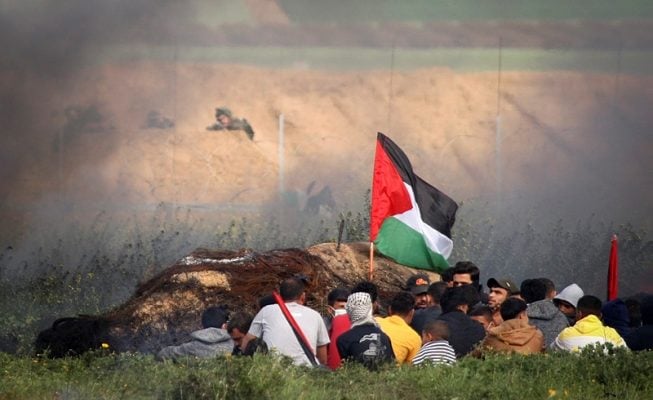
Palestinians demonstrate on Israel’s border. (Abed Rahim Khatib/Flash90)
The IDF is preparing for the Hamas-led mass march on Israel’s southern border which they have called for next Friday.
Hamas has called for “all Palestinians” to take part in a mass protest, another “Friday of Rage,” to mark the 100th day since President Donald Trump recognized Jerusalem as Israel’s capital and pledged to relocate the US embassy to the city.
Hamas wants the protests to begin on March 30 and to last for several weeks, with thousands of Palestinians moving to tent cities to be built along Israel’s border.
Hamas also called for Palestinians to stage the protests in the Judea and Samaria area after Friday prayers.
Hamas stated such protests would continue until the US’ recognition of Jerusalem as the capital of Israel “is undermined.”
Israel is preparing for a scenario in which tens of thousands of Gazans will march to Israel’s border fence with Gaza, possibly attempting to take it down and march into Israel.
“We want to frighten the Israelis with the images of massive crowds of people who peaceably gather and sit close to the border,” Hamas spokesman Ahmed Abu Retaima told Bloomberg this week. “We are working to bring out more than 100,000 people for the march.”
The Hamas march is “clearly an attempt to break through the fences, and they are ready to tolerate losses,” Ehud Yaari, an international fellow at the Washington Institute for Near East Policy, told Bloomberg.
The IDF will attempt to minimize casualties by deploying non-lethal crowd dispersal ordinance, including drones that will drop tear gas canisters on the crowds.
Israel fears a situation in which dozens of Palestinians will cross the border and enter Israeli territory, a situation which could result in many civilian casualties.
Such violent protests on Israel’s border with Gaza have occurred on Fridays over the past months, with several bombs being placed and detonated against Israeli forces, using the cover of the demonstrations to do so.
Yousef Munayyer, an analyst at the Arab Center in Washington, said the border march will force Israel into an unpleasant choice.
“You’re essentially talking about the Israeli military lining up like a firing squad against a wall of Palestinians civilians walking toward the fence,” Munayyer told Bloomberg.
“I don’t think that’s the optics the Israelis want to have out there,” he remarked. However, it appears that Hamas is seeking exactly such a scenario, to exploit the death of its civilians at Israel’s expense and to generate more violence in the region.
We bought a hundred buses and a series of billboards in New York City’s Time Square – we need your support to pay for the ad campaign and production costs of the film.
Please give generously. No one dares do the work we do.
AFDI President Pamela Geller said in a statement: “In this film, we’re setting the record straight about our Garland free speech event, at which we were not only targeted by Islamic jihadis but apparently by the FBI as well. But we’re doing much more as well: we’re telling the whole, as-yet-untold truth about the war on free speech.”
Geller added: “Hollywood will never tell this story. The media will never tell this story. Our public schools and universities will never teach our children what happened. The truth must be told.”
Can’t We Talk About This? is a follow-up to AFDI’s acclaimed 2011 documentary, The Ground Zero Mosque: The Second Wave of the 9/11 Attacks. This much-needed new web series gives viewers the inside story of what happened in Garland and why, and lays out the full and appalling details of the all-out assault on the freedom of speech that is taking place today – and why this may be the most crucial battleground today in the war for the survival of the United States of America as a free republic.
The web series also features seldom-seen news footage and revealing details not only of the Garland event and the jihad killers who wanted to wage jihad there, but also of the many other battlegrounds in the war for free speech that led up to the Garland attack, including the death fatwa issued in 1989 by the Islamic Republic of Iran against Salman Rushdie for his supposed blasphemy in The Satanic Verses; the assassination of Theo Van Gogh by a Muslim on an Amsterdam street in November 2004 for his alleged blasphemy; the Dutch newspaper Jyllands Posten’s cartoons of Muhammad, published in September 2005, which touched off international riots and killings by Muslims – and most disturbing of all, calls in the West for restrictions on the freedom of speech; the Organization of Islamic Cooperation’s years-long struggle at the UN to compel the West to criminalize “incitement to religious hatred” (a euphemism for criticism of Islam); and the U.S. under Obama signing on to UNCHR Resolution 16/18, which calls on member states to work to restrict incitement to religious hatred.
Can’t We Talk About This? covers lesser-known skirmishes in the war against free speech as well, such as Seattle cartoonist Molly Norris’ “Everybody Draw Muhammad Day” in 2010, after which Norris was forced to go into hiding and change her identity after threats. And it traces what immediately led up to the Garland event – most notably, the January 2015 massacre of Muhammad cartoonists at the offices of the Charlie Hebdo satirical magazine in Paris and the subsequent “Stand with the Prophet” event in Garland, at which Muslim groups gathered in the wake of that massacre not to defend free speech, but to complain about “Islamophobia,” while AFDI members and supporters protested outside.
Geller explained: “We’ll set out the media firestorm that followed the Garland event, as well as the attempts to kill me, and explain why the event’s detractors were all missing the point: the freedom of speech doesn’t apply only if you like the message; it applies to everyone. And if it is gone, so is a free society.”
Can’t We Talk About This? tells the whole horrifying story of how advanced the Islamic war on free speech is, and how close leftist and Islamic authoritarians are to final victory and the death of the freedom of speech and free society
Two days after the Turkish military and allied jihadist forces took control of the Kurdish city of Afrin in northwestern Syria, Islamic State (ISIS) terrorists launched a major attack on Syrian regime forces in the eastern province of Deir Ezzor. The ISIS terrorists killed at least 25 soldiers and seized a large oil field.
Around the same time, ISIS militants captured a strategic district in the suburb of Syria’s capital, Damascus, where they killed more than 60 government troops.
In the Palestinian refugee camp of Yarmouk in southern Damascus, ISIS enjoys a rising popularity among local residents. The group also maintains a significant presence near the Israeli border, where it has at least one dangerous affiliate, the Khalid bin al-Walid Army.
Two days after the Turkish military and allied jihadist forces took control of the Kurdish city of Afrin in northwestern Syria, Islamic State (ISIS) terrorists launched a major attack on Syrian regime forces in the eastern province of Deir Ezzor. The ISIS terrorists killed at least 25 soldiers and seized a large oil field. Around the same time, ISIS militants captured a strategic district in the suburb of Syria’s capital, Damascus, where they killed more than 60 government troops.
These two recent advances signal a possible return by the extremist group that only months ago was thought to be largely defeated.
Since Turkey, a NATO ally, launched its Afrin offensive against the Kurdish People’s Protection Units (YPG) — a main U.S. ally in the fight against ISIS — U.S. officials have been warning that the fighting between two U.S. allies is distracting from the main mission, which is defeating ISIS.
“We are very concerned about the effect fighting there has had on our defeat ISIS efforts and would like to see an end to the hostilities before ISIS has the opportunity to regroup in eastern Syria,” said Pentagon spokesman U.S. Army Colonel Rob Manning, referring to the Turkish offensive against Kurds in Afrin.
The U.S. State Department is already convinced that the terror group has been rebuilding itself in some places in Syria.
“The fighting in western Syria over the last two months, including in Afrin, has distracted from the defeat ISIS campaign and provided opportunity for ISIS to begin reconstituting in some areas,” State Department spokeswoman Heather Nauert said in a recent statement.
The Turkish-led attack on Afrin has forced more than 2,000 Kurdish and Arab fighters deployed against ISIS frontlines in eastern Syria to withdraw, in order to defend the area. U.S. officials have voiced concerns that such changes in battlefield priorities would take pressure off ISIS, and thus allowing the extremists to regroup and re-strategize their attacking capabilities along the Euphrates River Valley. More Kurdish fighters are expected to pull back from the battle against ISIS as Turkey’s president, Recep Tayyip Erdogan, has threatened to invade more Syrian Kurdish-held areas after Afrin.
The Turkish-led attack on Afrin has forced more than 2,000 Kurdish and Arab fighters deployed against ISIS frontlines in eastern Syria to withdraw, in order to defend the area. Pictured: Kurdish YPG fighters near a check point at Kobane, Syria on June 20, 2015. (Photo by Ahmet Sik/Getty Images)
After more than three years of almost daily U.S.-led airstrikes and ground operations against ISIS targets in Syria, the terrorist group has lost most of the territory it once held since it declared its so-called caliphate in 2014 — including its de facto capital in Raqqa.
However, ISIS still controls around 5% of Syria’s territory, particularly in the east and pockets near Damascus. In the Palestinian refugee camp of Yarmouk in southern Damascus, ISIS enjoys a rising popularity among local residents. The group also maintains a significant presence near the Israeli border, where it has at least one dangerous affiliate, the Khalid bin al-Walid Army.
Around 1,500 ISIS militants are estimated to be present across Syria, some of them moving about mostly freely as the U.S.-led air campaign has significantly decreased, especially after the liberation of Raqqa.
Unlike in Iraq, where a U.S.-backed government — regardless of its weaknesses — has largely managed to keep a grip on areas retaken from the terrorists, ISIS continues to benefit from the seven-year civil war raging in Syria. In many parts of the country, ISIS has hundreds of sleeper cells and Sunni rebel groups that are poised to pledge allegiance to the terror group at any moment.
ISIS as we knew it may not exist anymore, but it can certainly morph into an insurgency and attempt to reestablish itself in other parts of the Middle East and North Africa, while still using war-ravaged Syria as its command center.
Even the once-optimistic U.N. Special Envoy to Syria, Staffan de Mistura, now believes that ISIS could make a comeback, exploiting the lack of a political settlement in Syria. The longer the stalemate drags on in Syria, the better it is for ISIS — and other terrorist groups, for that matter — to feed off the chaos and to continue posing a danger to regional and global security.
Sirwan Kajjo is a Syrian-Kurdish Washington-based journalist and author.
Hamas is launching rockets into Israel, Israelis are running to shelters, and the UN is hounding Israel to pay for damage in Gaza that came about because Hamas deliberately launched attacks against Israel from civilian areas.
There is NO end to the UN’s anti-Semitic bias. Why is Israel still part of the UN at all?
Yet just days ago, CNN “journalist” Andrew Kaczynski was hitting John Bolton for agreeing with me that the UN was anti-Semitic. This is what passes for “journalism” today.
“Israel needs to pay for damage to Gaza facilities, UN says,” by Tovah Lazaroff and Herb Keinon, Jerusalem Post, March 27, 2018:
United Nations has demanded that Israel pay compensation for damage done to seven of its Gaza facilities by the IDF during the 2014 war between Israel and Hamas.
“On 22 March, the UN submitted to the Ministry of Foreign Affairs of Israel a claim for reimbursement for the losses that the UN had sustained in seven incidents in 2014,” UN spokesman Farhan Haq told The Jerusalem Post in response to an email query.
The UN “also submitted a claim for the losses sustained by the dependents of one of its staff members who was killed in one of the incidents,” Haq said.
A UN board of inquiry looked “into the matter found that the seven incidents in which UN premises were hit were all attributable to the IDF,” he said, adding that the board had finished its work in February 2015.
Israel’s Mission to the UN in New York said it had received a demand for $528,725 for the facilities and $64,449 for the death.
The question of compensation had been a bone of contention between Israel and the UN when the board of inquiry examined the incidents, particularly because Israel has claimed that Hamas hid weapons in weapons in UN facilities and attacked its force from or near those facilities.
The facilities had also served as emergency shelters for Palestinians in Gaza during the war and as such, were supposed to be immune from IDF shelling.
Ambassador to the UN Danny Danon said it was “unacceptable” that the organization should make demands for compensation from Israel, and not from Hamas.
“Everyone knows our intention was to protect our citizens, and not harm anyone else, while Hamas uses UN facilities to hide behind,” Danon told the post, noting the terrorist tunnels built underneath UN schools.
“The blame should go on Hamas,” he said.
“Israelis Run to Bomb Shelters as Iron Dome Rockets Launched Around Gaza,” by Avi Abelow, Israel Unwired, March 26, 2018 (thanks to David):
Last night Israelis on the Gaza border were surprised to hear air raid sirens go off, warning them to run to their bomb shelters. Israel then launched Iron Dome rockets to shoot down the projectiles and protect Israeli citizens.
Thankfully no rockets were fired into Israel and nobody was injured.
Israeli citizens from various Southern communities recorded the rockets being launched, before running to their shelters.
What Happened?
It ends up that Hamas did not shoot a barrage of rockets at Israel. Rather, Hamas was conducting a live-fire drill, which mostly consisted of machine gun fire as well as rocket fire.
The IDF also responded to the Hamas drill with tank shells fired on Hamas posts in Northern Gaza….
AP Photo/Rainier Ehrhardt, AP Photo/Susan Walsh, Breitbart News Edit
President Donald Trump announced on Thursday that he is appointing Amb. John Bolton as his new national security advisor, ending weeks of speculation he would be tapped for the job.
Trump made the announcement via Twitter:
I am pleased to announce that, effective 4/9/18, @AmbJohnBolton will be my new National Security Advisor. I am very thankful for the service of General H.R. McMaster who has done an outstanding job & will always remain my friend. There will be an official contact handover on 4/9.
Bolton’s appointment comes after months of speculation that current National Security Advisor H.R. McMaster was on his way out, after repeated reports that he and the president were not close. It also comes after someone leaked to the press that the president congratulated Putin on his election win after a briefing card had included the note: DO NOT CONGRATULATE.
According to a White House official, the president and McMaster had “mutually agreed” on his resignation, and the two had been discussing it for “some time.” However, the timeline was “expedited as they both felt it was important to have the new team in place, instead of constant speculation.”
“This was not related to any one moment or incident, rather it was the result of ongoing conversations between the two,” the official said. Trump announced last week that Secretary of State Rex Tillerson was resigning, and CIA Director Mike Pompeo would take his place.
McMaster, a lieutenant general, said in a statement that he is requesting retirement from the Army, and will leave public service.
“I am thankful to President Donald J. Trump for the opportunity to serve him and our nation as national security advisor. I am grateful for the friendship and support of the members of the National Security Council who worked together to provide the President with the best options to protect and advance our national interests,” he said.
Trump praised McMaster in a statement.
“H.R. McMaster has served his country with distinction for more than 30 years. He has won many battles and his bravery and toughness are legendary. General McMaster’s leadership of the National Security Council staff has helped my administration accomplish great things to bolster America’s national security. He helped develop our America First National Security Strategy, revitalize our alliances in the Middle East, smash ISIS, bring North Korea to the table, and strengthen our nation’s prosperity. This work and those achievements will ensure that America builds on its economic and military advantages. I thank General McMaster and his family for their service and wish them the very best.”
White House Chief of Staff John Kelly called McMaster a “true soldier-scholar.”
“His impact on his country and this government will be felt for years to come,” he said.
Bolton was spotted entering the West Wing late Thursday afternoon:
Bolton last served in the George W. Bush administration as the U.S. Ambassador to the United Nations. Bolton is a senior fellow at the conservative American Enterprise Institute and a frequent Fox News commentator. He has also been a regular guest on Breitbart News Daily.
He spoke with Breitbart News Daily on Thursday morning, discussing the Trump administration’s actions against unfair trade practices by China.
Perhaps the most dramatic Saudi reform is the one that has received virtually no attention in America. Saudi Crown Prince Mohammed bin Salman (MBS) has led an effort to sweep out the Muslim Brotherhood from teaching and leadership positions in elementary, middle and high schools as well as colleges and universities.
MBS is kicking a dragon and he knows it.
The stakes of his fight with the Brotherhood could not be higher. If MBS succeeds, Saudi Arabia returns to pre-1979 roots, with movie theaters, women in the workplace, and features of a modern developing country. If MBS fails, he will be killed by the Brotherhood and Saudi Arabia will become more repressive than ever.
The global stakes of MBS’s internal fight with the Brotherhood are large, too. If the crown price wins, nearly all Saudi funding for violent Islamic radicals ends — and if he dies, it grows to new heights.
His “Vision 2030” is the biggest planned change in any country since Turkey’s Ataturk or Singapore’s Lee Kuan Yew. With America’s encouragement, Saudi Arabia could lead a regional transformation that would be truly historic.
Saudi Arabia, with the visit of the Saudi Crown Prince Mohammed bin Salman to the United States this week, opens a new front in its war with Iran.
The visit is a collection of firsts. It is the first trip by Prince Mohammed bin Salman — known universally as “MBS” — to the U.S. since becoming the heir to the oil kingdom’s throne in June 2017. (President Trump’s first presidential trip to the Middle East began with a stop in Saudi Arabia.) More importantly, it is the first time a senior Saudi official, let alone a ruling royal, will venture outside the U.S. capital to make official visits to Wall Street, Hollywood and Silicon Valley. Never before has a crown prince — especially one who runs Saudi Arabia’s government on a daily basis — come to America’s financial and cultural capitals to do business. Indeed, MBS is hoping to drum up support for his plan to offer five percent of ARAMCO, the Saudi oil producer, to Western investors as well as to make investments in software upstarts and media empires. This is a Saudi royal who sees no division between commerce and statecraft, between diplomacy and investment.
President Donald Trump (right) shakes hands with Saudi Crown Prince Mohammed bin Salman at the White House on March 20, 2018, in Washington, D.C. (Photo by Kevin Dietsch-Pool/Getty Images)
For Americans, the three most important items on MBS’s agenda are Saudi Arabia’s internal reforms, its new kinetic role in the war on terror from Yemen to Syria and its evolving relationship with Israel.
While much has been made of MBS’s opening “drivers ed” schools for women (which quickly attracted some 70,000 students) as part of the kingdom’s June 2018 move to allow women to drive, the domestic reforms have been far more rapid and sweeping than the conservative kingdom has ever seen.
Perhaps the most dramatic reform is the one that has received virtually no attention in America. The crown prince has led an effort to sweep out the Muslim Brotherhood from teaching and leadership positions in elementary, middle and high schools as well as colleges and universities. The Brotherhood, founded in Egypt in 1928, has been the birthplace of nearly every radical Islamist group in the past century — from Egyptian Islamic Jihad to al Qaeda. The Brotherhood came to power in Cairo, following the departure of Hosni Mubarak, and only lost its grip due to a Saudi-funded coup. Inside Saudi Arabia, the organization’s intellectual and financial influence is vast. It has shaped the thought of at least two generations of Saudis, and it counts many allies among the kingdom’s 15,000 princes and even more among its 20,000 major clerics. It also has a literal army of armed supporters. MBS is kicking a dragon and he knows it.
The stakes of his fight with the Brotherhood could not be higher. If MBS succeeds, Saudi Arabia returns to pre-1979 roots, with movie theaters, women in the workplace, and features of a modern developing country. If he fails, he will be killed by the Brotherhood and Saudi Arabia will become more repressive than ever. The global stakes of MBS’s internal fight with the Brotherhood are large, too. If the crown price wins, nearly all Saudi funding for violent Islamic radicals ends — and if he dies, it grows to new heights.
MBS is betting his life that he can reform his country and offer it a future beyond its dangerous dependency on oil. He wants to build 18 nuclear power plants over the next two decades, thereby safeguarding his nation’s electricity prices from the rollercoaster of world oil prices. He wants to diversify the economy, allowing men and women to leave their subsidized and static lives for new roles as professionals, executives and entrepreneurs. His “Vision 2030” is the biggest planned change in any country since Turkey’s Ataturk or Singapore’s Lee Kuan Yew. And Saudi Arabia is larger in terms of both people and land than 1920s Turkey or 1960s Singapore. If he succeeds, his achievement will be studied for centuries. America should get behind MBS’s bold vision — it is the best roadmap for regional peace and security as well as domestic modernization.
Regarding the war on terror, Saudi Arabia has been one of America’s most steadfast allies. Since the September 11 attacks, it has killed or captured hundreds of al Qaeda operatives and provided intelligence on thousands more. It has cracked down hard on sheikhs who once financed terror outfits, seized bank accounts and jailed malefactors.
America would also do well to support Saudi Arabia’s peaceful attempts to reform its neighbor, Qatar.
Finally, MBS’s visit allows the Saudi royal to talk about his nation’s increasingly warm relationship with Israel. The two nations have a common enemy (Iran) and a shared interest in thwarting terrorism. Together with MBS’s apparently close friendship with Jared Kushner, Trump’s son-in-law, a new and less confrontational relationship with Israel could pay dividends for peace.
America should welcome MBS. With America’s encouragement, Saudi Arabia could lead a regional transformation that would be truly historic. Missing this opportunity to engage would be beyond tragic.
Ahmed Charai is Chairman and CEO of Global Media Holding. He sits on the Board of Directors of The Atlantic Council in Washington and International Councilors at TheCenter for Strategic and International Studies. He is also Board of Trustees of theThe Foreign Policy Research Institute in Philadelphia, a member ofThe National Interest‘s Advisory Council and a member of the Advisory Council of Gatestone Institute in New York.
Israel lifted the censorship gag on details surrounding the daring operation that destroyed a Syrian nuclear threat.
By: Aryeh Savir, World Israel News
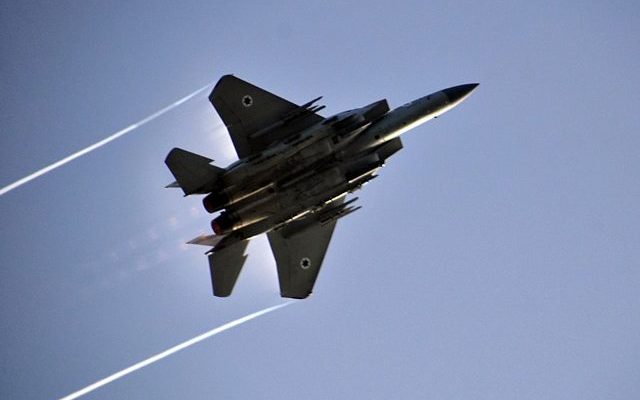
An IAF F-15 (IAF)
A decade after the crucial secret operation, Israel officially acknowledged that it attacked and destroyed the Al-Kibar nuclear facility in Syria, which was in its last stages of construction at the time.
During the night between September 5 and 6, 2007, Israel secretly bombed the nuclear reactor, in accordance with the Begin Doctrine, which states that no Israeli adversary in the Middle East would be allowed to acquire a nuclear weapon.
In a secret mission known as operation “Out Of The Box,” authorized by then-Prime Minister Ehud Olmert, eight Israeli Air Force (IAF) aircraft flew along the Syrian-Turkish border shortly before 1 a.m. and destroyed the Syrian nuclear facility.
The Syrian nuclear project operated under a heavy cloak of secrecy for about six years prior to its destruction. The Al Kibar reactor was situated 900 yards from the Euphrates River and halfway between the borders with Turkey and Iraq, far from Syria’s biggest cities, in the Deir ez-Zor region, 280 miles northeast of Damascus.
For two years prior to the attack, officials in the IDF Military Intelligence Directorate were monitoring the Syrian nuclear project. Their intelligence suggested that the facility would become active toward the end of 2007, which prompted the IDF to initiate an attack.
In March 2007, the Mossad – Israel’s national intelligence agency – raided the home of the head of Syria’s atomic energy commission in Vienna, where they discovered conclusive information about the reactor.
The information recovered by the Mossad operatives included some three dozen color photographs taken from inside the Syrian building, indicating that it was a top-secret plutonium nuclear reactor. The photographs obtained by the Mossad also showed workers from North Korea at the site. The sole purpose of this kind of plutonium reactor, in the Mossad’s analysis, was to produce an atomic bomb.
Olmert: With or without US support
The attack was launched after intense discussions between the American administration, under the leadership of President George W. Bush, and the Israelis.
At a meeting in Washington on June 19 that year, Olmert told Bush that if the US did not destroy the reactor, Israel would do it, even if it lacked US support. Finally, the US declined to participate but did not prevent the Israelis from carrying through with the raid.
The IAF had very little time to prepare for the attack or to account for possible contingencies, such as retaliation by the Syrian forces. Once the attack plan was ready, however, it was possible to execute it within 12 hours from the moment the order would be given.
Prior to the attack, then-IAF Commander, Maj. Gen. (Res’) Eliezer Shkedi personally addressed the combat crews, feeling it was of operational significance, in order to emphasize the transition from routine security measures to a strategic operation while stressing the pilots’ responsibility. At around 7 p.m., hours before the attack commenced, the target was revealed to the aircrews.
“Combatants, today you will be sent to participate in a mission of great importance to the State of Israel and the Jewish people. The mission is to destroy the target and disengage without aircraft losses, as stealthily as possible. The mission is kept under the highest secrecy, both before and after execution, until further notice. I trust you, believe in you, and am convinced of your capabilities. Good luck, Eliezer Shkedi”
The attack
Shortly after midnight, Olmert, Defense Minister Ehud Barak, Minister of Foreign Affairs Tzipi Livni, Chief of General Staff Gabi Ashkenazi, the deputy Chief of the General Staff, the head of the Military Intelligence Directorate and the head of the Operations Directorate assembled in the aerial war room, the Bor, in the heart of Tel Aviv. From there, they followed all aircrafts’ aerial locations and the communication systems.
The “Ra’am” (F-15I) formation that led the assault took off from Hatzerim Air Force Base in the south at around 10 p.m. The second formation left two minutes later, joined by the rest of the “Sufa” (F-16I) fighter jets, and they refueled together in the air. The aircraft took off in radio silence.
The jets flew low to remain undetected. The entire operation took four hours. At around midnight, the leading formation had reached the necessary distance from the target and began ascending in preparation for the attack maneuver. The ordnance drop occurred minutes later. The aircraft broke contact, and the next formations followed in order to attack. After all the munitions were dropped, the final “Sufa” fighter pilot radioed “Arizona from all of us,” meaning that all of the bombs hit their target and exploded as planned.
The Military Intelligence Directorate estimated that the nuclear facility was damaged beyond repair. As the IDF was preparing for Syrian retaliation, it decided that information about the operation should not be disclosed to the general public at the time.
The operation was deemed a success. The nuclear facility was destroyed and an escalation in the region was prevented.
Only a few years later, the Islamic State (ISIS) terror group captured the Deir ez-Zor region. One can only imagine how much havoc they could have wreaked with a nuclear facility in their hands. The scenarios range from an existential threat to the Jewish state to the disruption of the area’s strategic balance.
‘One of the best decisions made in Israel’
The destruction of the Syrian reactor was an historic operation of great significance for the State of Israel and the Jewish People and one of the most important military operations in the IAF’s history.
“When faced with today’s reality, the decision to destroy the reactor is one of the best decisions made in Israel over the past 70 years”, declared Lt. Gen. Amikam Norkin, current commander of the IAF. “The principles according to which the IAF prepared for the attack are also the IAF’s principles today. They help the air force maintain its relevance.”
Two months after the operation, Olmert concluded: “There were many disputes regarding all sorts of alternatives, but in the end, we all know one thing – the strategic force, which makes the difference in Israel’s international strength, is the aerial force. Our aerial force will be the determining factor in all possible confrontations that we will possibly – hopefully not – deal with in the future.”
Lifting of censorship coincided with the publication of Olmert’s memoirs and follows a petition to the High Court of Justice by Israel’s Channel 10, which is now permitted to air an interview with Olmert and the then-Mossad chief, the late Meir Dagan, on the bombing of the reactor.
Current Chief of Staff, Lt.-Gen. Gadi Eisenkot, OC Northern Command at the time of the operation, said the message that should be taken from the incident is that “Israel will never accept an existential threat against it. That was the message in 2007, and that is the message to our enemies in both the near and distant future.”
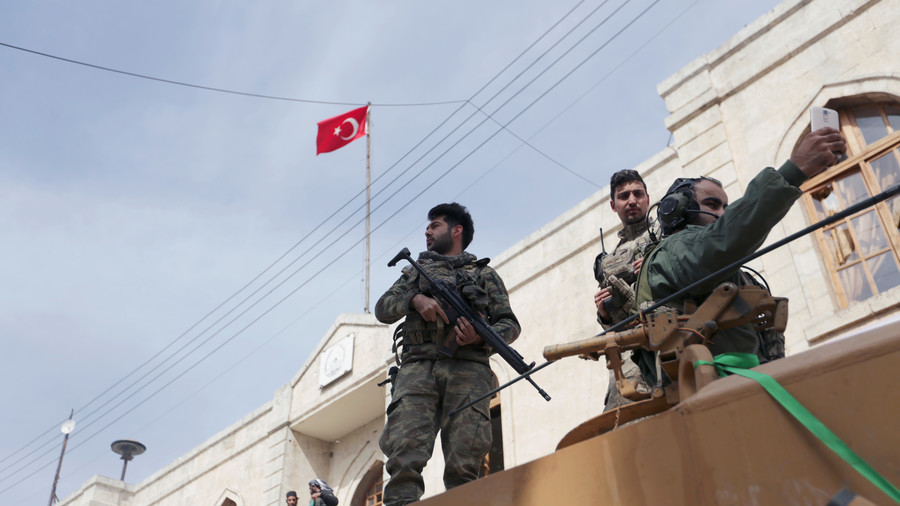
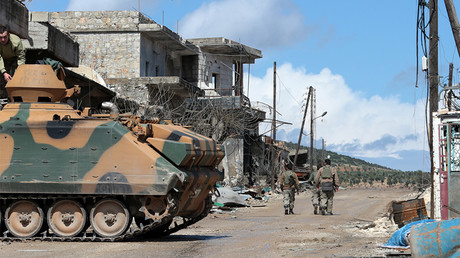
Turkey’s military operation in Syria will target other Kurdish-held towns – and may even spill over into Iraq – President Recep Tayyip Erdogan has announced just a day after pro-Turkish forces seized Afrin.
The controversial cross-border offensive “will go on until the terror corridor through Manbij, Ayn al-Arab, Tell Abyad, Ras al-Ayn, Qamishli has been wiped out,” Erdogan said, speaking in the presidential complex in Ankara on Monday.
Erdogan hinted that the Turkish military operation may even expand into neighboring Iraq, if needed, in an effort to “eliminate” forces loyal to the Kurdish Workers’ Party (PKK), which Ankara has designated as a terrorist organization.
“We can suddenly come over one night in Iraq’s Sinjar and eliminate PKK terrorists there,” Erdogan said, according to Turkish state media.
On January 20, Turkey launched a cross-border offensive into Syria with an aim to dislodge Kurdish “terrorists” from Afrin. The assault, codenamed Operation Olive Branch, has strained relations between Ankara and Washington. The Kurdish YPG are key US allies in the fight against Islamic State (IS, formerly ISIS/ISIL) terrorists, but Ankara views them as an offshoot of the terrorist-designated Kurdistan Workers’ Party (PKK).
The Turkish leader’s announcement comes just one day after the Turkish military, aided by its Free Syrian Army (FSA) allies, seized the Syrian city of Afrin. Erdogan said that capturing Afrin was a “comma” and “God willing, a full stop will come next.” However, he stressed that Turkey was not invading Syria.
“Our intention is not to invade, but to carry out operations to cleanse terrorists and eliminate terrorist threats to our country,” he said, as cited by Rudaw.
Thousands have reportedly fled their homes in the Afrin region in the wake of Turkey’s offensive. After announcing the city’s capture, Erdogan vowed to protect Afrin’s residents. However, Kurdish leaders have accused the Turkish military and its proxies of committing “massacres” and “ethnic cleansing.”
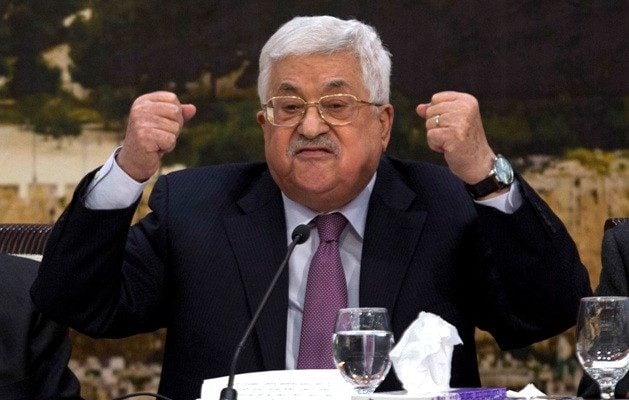
Palestinian leader Mahmoud Abbas (AP/Majdi Mohammed)
The Palestinian president has called the U.S. ambassador to Israel a “son of a dog,” in an angry rant against the Trump administration.
In a speech Monday, Palestinian Authority President Mahmoud Abbas pre-emptively rejected an expected White House peace proposal.
He criticized the U.S. recognition of Jerusalem as Israel’s capital, the American plan to move its embassy to the city and the cutting off of hundreds of millions of dollars in aid to the U.N. agency for Palestinian “refugees.”
He also condemned Ambassador David Friedman’s close ties with Jewish communities in Judea and Samaria, describing him as a “son of a dog.”
“Some say wait for their plan,” Abbas said, regarding the as-yet-undisclosed Trump peace plan. “What shall we wait for? No, we will not wait, and we will not allow that.”
Earlier Monday, Friedman condemned the Palestinian leadership for its silence in the wake of two deadly terror attacks – a car-ramming on Thursday in Samaria and a stabbing on Sunday in the Old City of Jerusalem – that claimed the lives of three people. Another two were seriously wounded, one critically.





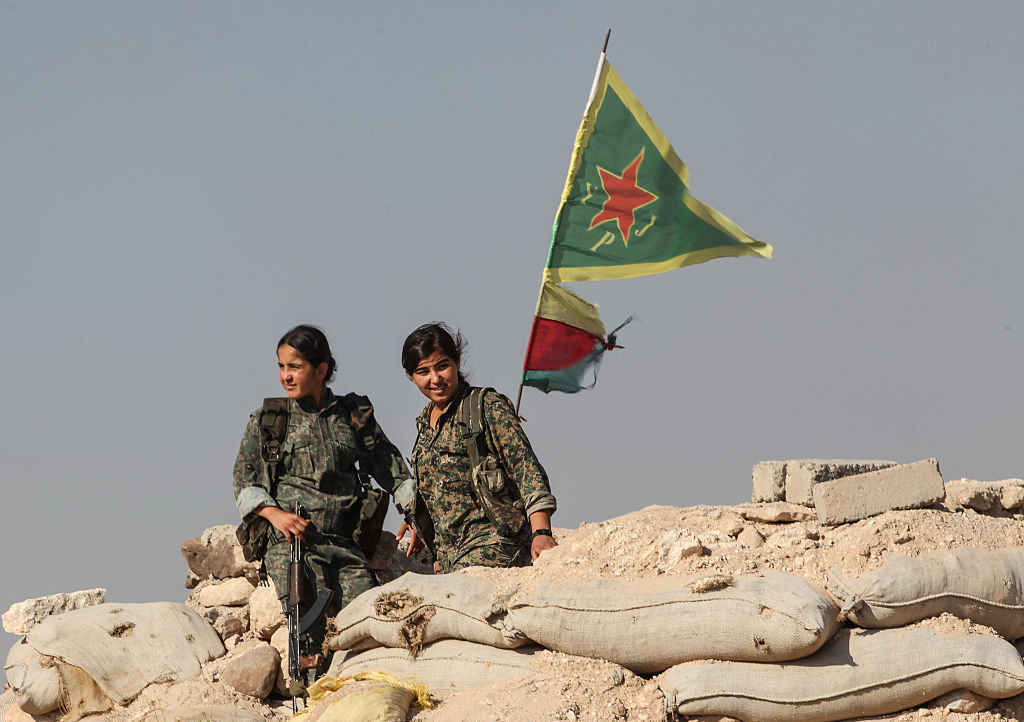 The Turkish-led attack on Afrin has forced more than 2,000 Kurdish and Arab fighters deployed against ISIS frontlines in eastern Syria to withdraw, in order to defend the area. Pictured: Kurdish YPG fighters near a check point at Kobane, Syria on June 20, 2015. (Photo by Ahmet Sik/Getty Images)


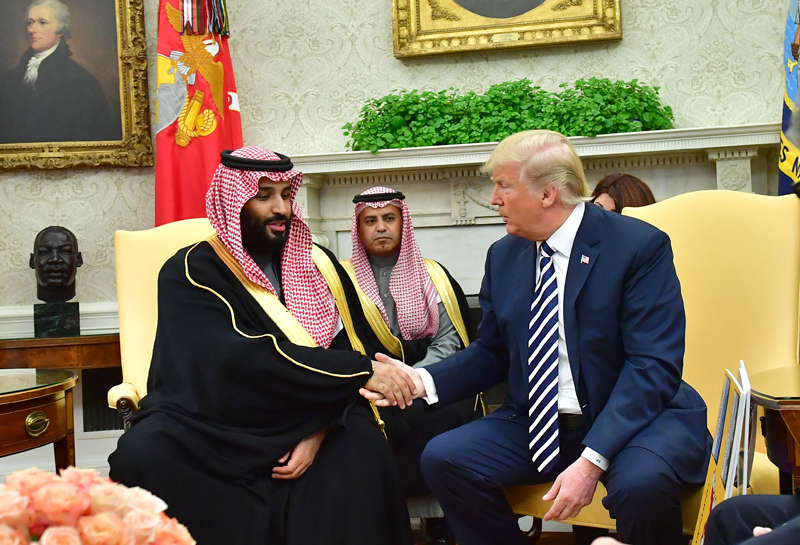 President Donald Trump (right) shakes hands with Saudi Crown Prince Mohammed bin Salman at the White House on March 20, 2018, in Washington, D.C. (Photo by Kevin Dietsch-Pool/Getty Images)

 anneinpt
 artaxes
 danmillerinpanama
 davidking1530
 Peter Hofman
 Joseph Wouk
 Peter
 Louisiana Steve


Recent Comments