Author Archive

Canadian Prime Minister Justin Trudeau DECLARATION of jihad against the Jews: Palestinian Day on the Hill, “EYES ON JERUSALEM

May 3, 2018

By – on

Canadian Prime Minister Justin Trudeau DECLARATION of jihad against the Jews: Palestinian Day on the Hill, “EYES ON JERUSALEM”

Canadian Prime Minister Justin Trudeau continues to advance his career in the cause of jihad and Islam.

He issued a letter in support of the continuing jihad against the Jewish state, welcoming “Palestinian Day on the Hill.” The theme of Palestinian Day on the Hill is “EYES ON JERUSALEM” — in other words, conquering and capturing the eternal capitol of the Jewish people.

But he won’t condemn Abbas’s recent statement re the Holocaust. He needs the Muslim votes. Terrified of his Muslim voters.

Justin Trudeau welcomes “Palestinians” to Ottawa for Israel hating event.

Activists of the radical anti-Zionist group call for Israel’s destruction at pro-Palestinian event at the Canadian Parliament.

Arutz Sheva: The Association of Palestinian Arab Canadians (APAC) on Monday held an event entitled “Palestine Day on the Hill 2018 – Eyes on Jerusalem” at the Canadian Parliament building in Ottawa.

The event was attended by members of parliament, senators, city councilors, ambassadors, religious community leaders, political activists and others.

Among those who were invited to the event were prominent members of the radical anti-Zionist Neturei Karta group, who wore traditional Palestinian scarves on which Palestinian flags were printed.

Activists of the Neturei Karta organization in Canada regularly participate in anti-Israel demonstrations alongside extreme leftists and Islamic activists. They bring with them signs calling for the destruction of the State of Israel and the establishment of a Palestinian state throughout the Land of Israel.

In one of the demonstrations in Toronto, the activists held up signs saying, “Jews are mourning the existence of Israel”, “Israel is a defiance of the Lord of the Universe and a disaster for humanity”, “Real rabbis have always opposed Zionism and the State of Israel”, “Read the Talmud. Jews in exile are not permitted to establish a state” and “The State of Israel does not represent world Jewry.” In Montreal, Neturei Karta activists burned an Israeli flag.

Lieberman: Russia should support our vital Mideast interests

May 3, 2018

In interview with Russian daily, defense minister says ‘special relationship’ and ‘open, transparent discourse’ with Russia should lead to consideration of Israeli interests; vows to retaliate if Russian S-300 systems in Syria are turned against Israel.

Itay Blumenthal|Published:  05.03.18 , 14:47

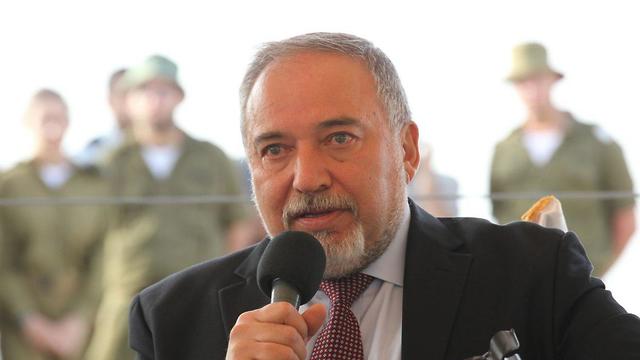
Defense Minister Avigdor Lieberman lauded in an interview with a Russian newspaper published Thursday the “special relationship” Israel had forged with Russia, adding he expected Russia’s “understanding and support of our vital interests in the Middle East.”

“Our relations with Russia are normal and we take into account its interests. We hope it does the same,” Lieberman iterated in the interview with the Kommersant daily, characterizing bilateral relations between the countries as “efficient and transparent.”

Offering proof of the relationship’s strength, the defense minister noted that while “many countries have expelled Russian diplomats lately, Israel did not join the trend.”

Defense Minister Lieberman said Israel’s ‘special relationship’ with Russia should lead to the superpower taking Israel’s vital interests into account (Photo: TPS)
On the topic of Russian S-300 air defense systems possibly being supplied to Syria, which Jerusalem fears may be turned against Israel, Lieberman reiterated his position he made during a Ynet studio interview last week, stating that if the system was used against, it would retaliate.
“If the systems are not turned against us, that’s one thing. But if they open fire on Israeli planes, we’ll certainly retaliate,” he said, before stressing Israel did not actively seek confrontation with Russia, nor does harbor any intentions of meddling in Syria’s internal affairs.
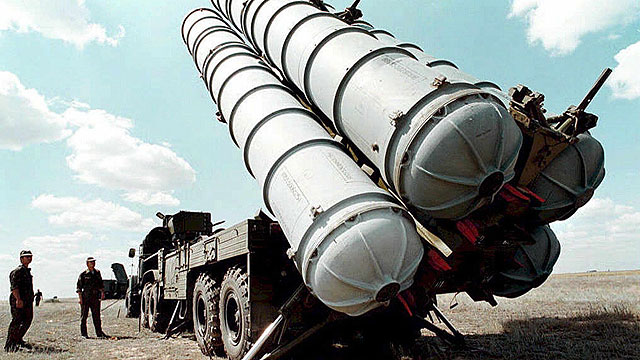
The Russian S-300 defense system. If it was turned against Israeli planes, Lieberman said, it will be destroyed (Photo: EPA)
In the past few years,” Lieberman added, “an open, clear and transparent dialogue with Russia was engendered, when our opinions lined up and even when they didn’t. We always hold a transparent discourse, without hiding anything.”
Asked about Prime Minister Benjamin Netanyahu’s press conference last week in which he divulged details from secret Iranian nuclear archives, Lieberman said the revelations provided certain proof of the Islamic republic never forsaking its ambitions of attaining nuclear weapons.
“It actively sought to not only enrich uranium but also to manufacture nuclear weapons,” he said. “They simply temporarily halted their program in order to maximize their benefits from the deal. 

“Why does Iran even need enriched uranium when it has huge oil and gas deposits?” the defense minister demanded, questioning the veracity of Iran’s claims that its nuclear program was for civilian purposes. “That was not its goal,” he accused.

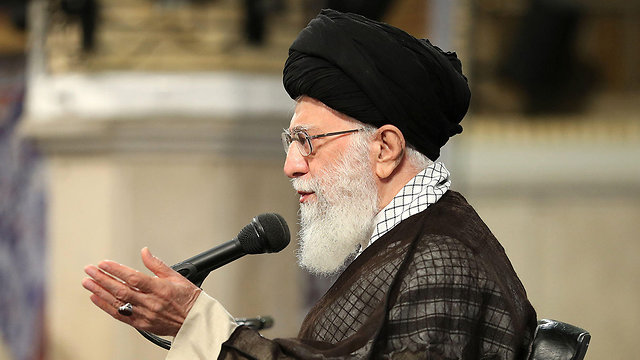
Lieberman said Russia should denounce anti-Israeli rhetoric by Iranian leaders such as Ayatollah Khamenei (Photo: AFP)

Leberman concluded his Kommersant interview by speaking about Iranian leaders’ frequent attacks, and their statements about “annihilating the Zionist entity.”

“Unfortunately, we have not seen an unequivocal response from Western Europe or Russia, which remembers all too well the events of World War Two,” Lieberman lamented. “We expect a clear, unequivocal response on the part of Russia to Iran’s statements and actions.”


Abbas says he rejected offer from Egypt’s Mursi to settle Palestinians in Sinai

May 2, 2018

Palestinian President Mahmoud Abbas said on Monday that he had rejected an offer by former Egyptian President Mohammed Mursi to get a part of Sinai to settle the Palestinians there.

“When the Brotherhood ruled during Mursi’s presidential term, we were offered a part of Sinai but we turned down the offer,” he said while addressing the Palestinian National Council in Ramallah.

He added that this was an Israeli project dubbed “Giora Eiland” and aims to completely put an end to the Palestinian cause.

Abbas voiced his rejection to Mursi and told him that the Palestinians will not accept such proposals as they will not leave their land and will not live on someone else’s land.

The Palestinian president had revealed details of this proposal four years ago while meeting with reporters in Egypt as he said that he had refused an Israeli offer to take 1,000 kilometers of Sinai during Mursi’s era.

He added that back then, Hamas and Israel were discussing taking 1000 km from Sinai to expand Gaza but he refused the plan saying: “We will not even take one centimeter from Egypt’s land.”

According to Abbas, Mursi reprimanded him for not accepting the offer.

Military expert Major-General Hussam Soueilam told Al Arabiya.net that the “Giora Eiland document” is named after Giora Eiland, a reserve commander who works at the Begin-Sadat Center for Strategic Studies, and it was proposed as the “best solution” for the Palestinian-Israeli conflict.

“Eiland’s project stipulated that resolving the Palestinian cause is not only Israel’s responsibility but the responsibility of 22 other Arab states as Egypt and Jordan in particular must positively and effectively formulate a regional and multilateral solution,” he said.

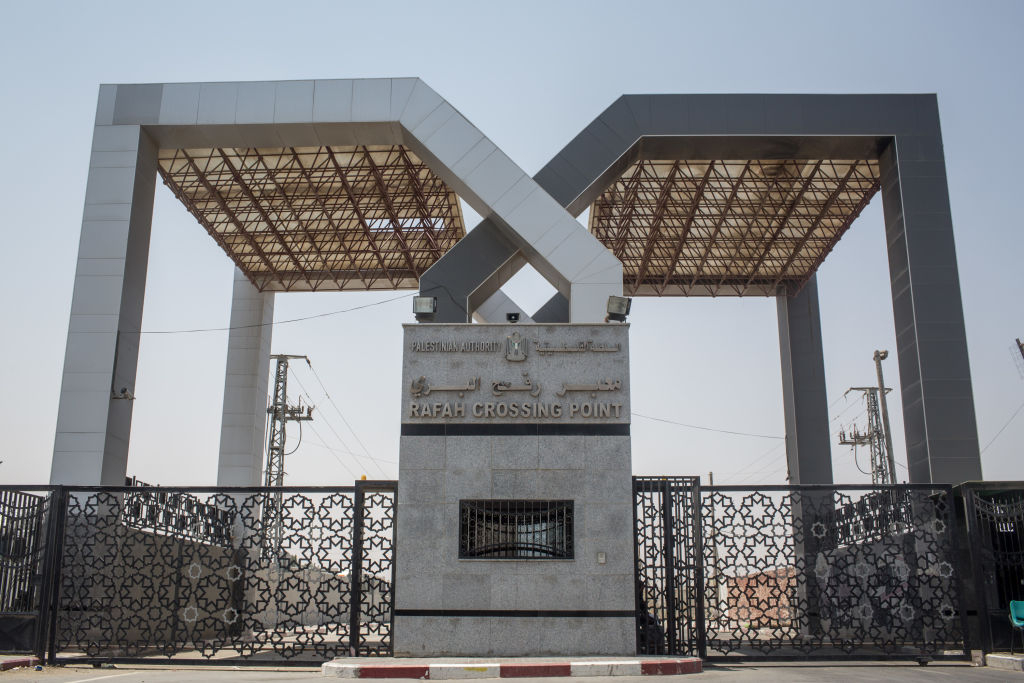
According to the Israeli project, the Palestinians would be granted 720 km2 of North Sinai that extends from Rafah in the west until Arish borders and from west Kerem Shalom border crossing until the south alongside the Egyptian-Israeli borders.

Soueilam added that according to this project, Gaza’s area will be three times more than its current area which is only 365 km2. He noted that the Palestinians will have to give up 12% of the West Bank’s area to be included within Israeli territories and that Egypt will be compensated with an equal area from Israeli lands southwest of Negev.

Last Update: Wednesday, 2 May 2018 KSA 15:04 – GMT 12:04

UK, Germany, France allow for possibility of new nuclear deal with Iran

May 2, 2018

April 29, 18:18

The three leaders “discussed the importance of the Iran nuclear deal as the best way of neutralizing the threat of a nuclear-armed Iran”

http://tass.com/world/1002501

British Prime Minister Theresa May

© AP Photo/Geert Vanden Wijngaert

LONDON, April 29. /TASS/. Leaders of the United Kingdom, Germany and France have allowed for the possibility of a new deal with Iran over the elements of its nuclear program that the current deal failed to cover, says a press release issued by British Prime Minister Theresa May’s Office on Sunday.

On Saturday and Sunday, May had phone talks with German Chancellor Angela Merkel and French President Emmanuel Macron.

“Acknowledging the importance of retaining the JCPoA, they committed to continue working closely together and with the US on how to tackle the range of challenges that Iran poses – including those issues that a new deal might cover,” the press release says.

The three leaders “discussed the importance of the Iran nuclear deal (Joint Comprehensive Plan of Action) as the best way of neutralizing the threat of a nuclear-armed Iran, agreeing that our priority as an international community remained preventing Iran from developing a nuclear weapon,” it reads.

“They agreed that there were important elements that the deal does not cover, but which we need to address – including ballistic missiles, what happens when the deal expires, and Iran’s destabilizing regional activity,” a Downing Street spokesperson said.

In July 2015, Iran, the five permanent members of the UN Security Council (Russia, Britain, China, the United States and France) and Germany agreed on a settlement of Tehran’s nuclear problem. Under the JCPoA they worked out the UN, US and EU sanctions were to be lifted. Its implementation began in January 2016. Washington lifted the restrictions.

US President Donald Trump has described the agreement with Iran as a “bad deal.” He argued that it did not eliminate the possibility Iran might make nuclear weapons, but merely postponed the moment. On January 12, Trump said the United States would quit the deal if certain amendments agreed on with the European countries were not made to it. At the end of April a US administration spokesman said the United States, France, Germany and Britain had achieved progress at negotiations on amendments to the agreement on Iran’s nuclear program, but a final solution had not been identified yet.


Palestinians: The Real Gaza Blockade

May 2, 2018

US troops to remain in South Korea even if peace treaty signed with North – Moon

May 2, 2018

Published time: 2 May, 2018 13:24

https://www.rt.com/news/425648-us-troops-korea-stay-moon/

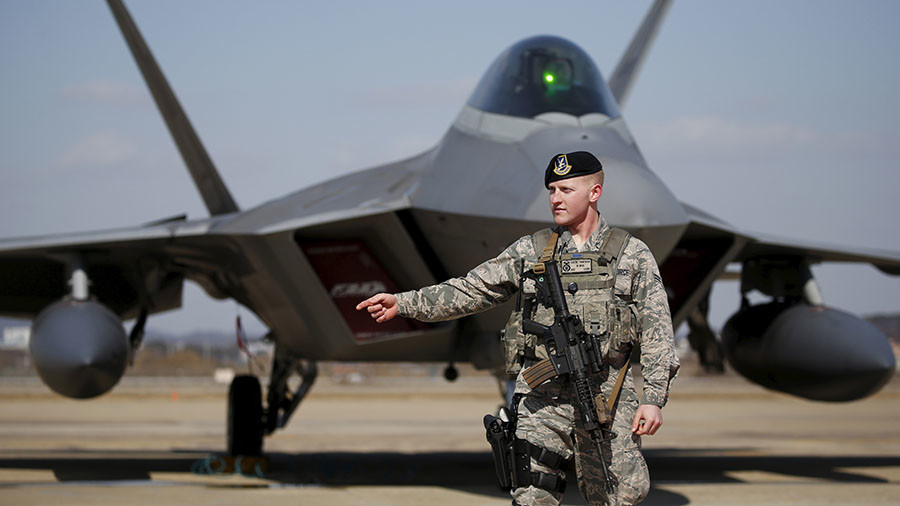
A US army soldier stands guard in front of a F-22 stealth fighter jet at Osan Air Base in Pyeongtaek, South Korea. © Kim Hong-Ji / Reuters

South Korean President Moon Jae-in said on Wednesday that US troops will remain on the peninsula even if a peace agreement with the North is reached, saying their presence has “nothing to do with signing peace treaties.”

“US troops stationed in South Korea are an issue regarding the alliance between South Korea and the United States. It has nothing to do with signing peace treaties,” Moon’s spokesperson Kim Eui-kyeom said at a press conference.

The statement came in response to a Foreign Affairs magazine article written by presidential adviser, Moon Cung-in, in which he stated that it would be “difficult to justify [US forces] continuing presence in South Korea,” if peace is concluded with the North. The spokesperson warned the adviser “not to cause any more confusion” with such comments.

READ MORE: Trump considers Peace House on North-South Korea border for Kim Jong-un meeting

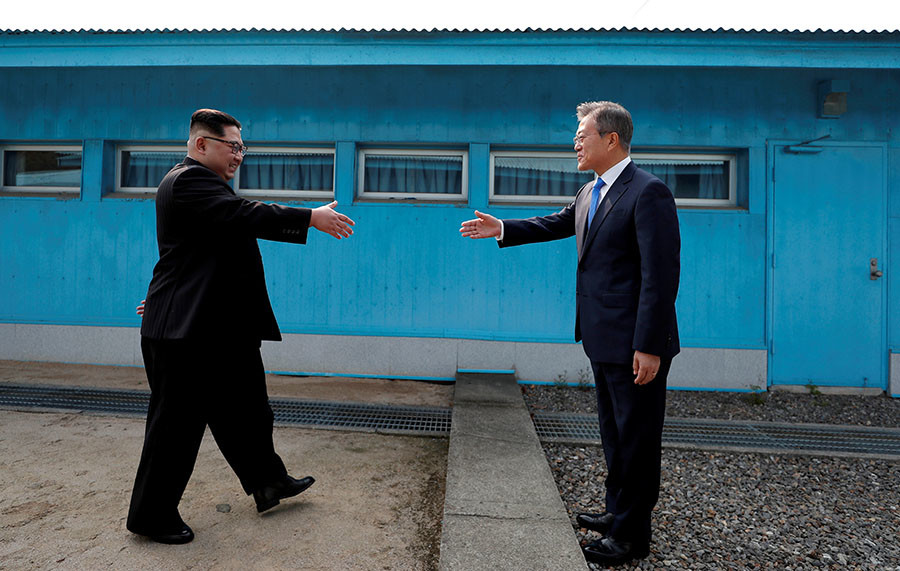
The discussion regarding US troops in Korea follows Friday’s historic meeting between Moon and North Korea’s Kim Jong-un, which resulted in the two signing an agreement in favor of the Korean peninsula’s “complete denuclearization.” The summit marked the first time leaders of the divided nation have met in 11 years, and the first time a North Korean leader has entered the South since 1953.

North Korea previously signaled its readiness to denuclearize at a meeting between Kim and Chinese President Xi Jinping last month, noting that it would require a “security guarantee,” according to a report by the Japanese newspaper Yomiuri Shimbun. What the guarantee implied remains unclear, as North Korea reportedly dropped its long-held demand for US troop withdrawal, at least according to Moon’s public statement in late April.

Read more

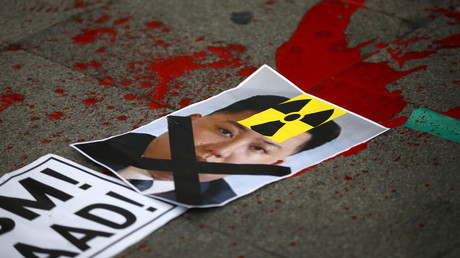
A poster with the image of North Korean leader Kim Jong-un during an anti-North Korea rally in central Seoul, South Korea, February 11, 2016. © Kim Hong-Ji

The US has already expressed its intention to make North Korea take “irreversible” steps towards denuclearization, without guaranteeing any concession in relation to its military presence.

CIA Director and newly appointed US Secretary of State Mike Pompeo identified the Trump administration’s “objective” with regard to North Korea as “complete, verifiable, irreversible denuclearization” in an ABC News interview.

In a separate interview with Fox News, US National Security Advisor John Bolton stated that the 2003 agreement to eliminate Libya’s weapons of mass destruction program could serve as a model for the North Korea negotiations.

“We have very much in mind the Libya model from 2003, 2004. There are obviously differences. The Libyan program was much smaller, but that was basically the agreement that we made,” Bolton said.

Former Libyan president Muammar Gaddafi agreed to dismantle the country’s nuclear program in exchange for the lifting of imposed Western sanctions. In 2011, he was killed by a NATO-led bombing of the country, which led to a civil war and Islamist terrorism groups rising in the region.

At the historic Korean summit, Kim and Moon agreed to establish a direct telephone line between their executive offices, through which they will “hold frequent and candid discussions on issues vital to the nation,” according to the declaration they signed. President Moon is also set to visit Pyongyang this fall, months after US President Donald Trump’s anticipated meeting with Kim in the coming weeks.

EU condemns Abbas’s ‘unacceptable’ remarks about Holocaust

May 2, 2018

‘Such rhetoric will only play into the hands of those who do not want a two-state solution,’ the European External Action Service says in statement after PM Netanyahu called on international community to denounce the PA leader’s anti-Semitic comments.

Reuters|Published:  05.02.18 , 15:42

In strikingly blunt language from Brussels, the European External Action Service said in a statement: “The speech Palestinian President Mahmoud Abbas delivered on 30 April contained unacceptable remarks concerning the origins of the Holocaust and Israel’s legitimacy.

“Such rhetoric will only play into the hands of those who do not want a two-state solution, which President Abbas has repeatedly advocated.”

Palestinian President Abbas (Photo: EPA)
 Netanyahu called for international condemnation of anti-Semitism by Abbas over remarks on Monday in which the Palestinian leader suggested historic persecution of Jews in Europe was caused by their conduct.

“With utmost ignorance and brazen gall, (Abbas) claimed that European Jews were persecuted and murdered not because they were Jews but because they gave loans with interest,” Netanyahu said. “Abbas is once again reciting the most contemptible anti-Semitic canards. Apparently the Holocaust-denier is still a Holocaust-denier.”

The EEAS added: “Anti-Semitism is not only a threat for Jews but a fundamental menace to our open and liberal societies.

“The European Union remains committed to combat any form of anti-Semitism and any attempt to condone, justify or grossly trivialize the Holocaust.”

In his speech Monday, the Palestinian leader repeated conspiracy theories about the Jews’ origins and their ties to the land of Israel.

“The Jewish question that was widespread throughout Europe was not against their religion, but against their social function, which relates to usury and banking and such,” Abbas said on Monday.

Palestinian President Abbas (Photo: Reuters)

He claimed Nazi leader Adolf Hitler offered the Jews money incentives to emigrate out of Europe to Palestine, including the option of taking all of their assets with them and selling their real state in the continent.

“He (Hitler) wanted the Jewish homeland (in Palestine) to be supportive of him,” the Palestinian leader said.

Abbas also spoke about the roots of European Jewry, quoting a historian called Arthur Koestler who wrote about a “13th tribe” of Israel in the “Khazar Kingdom”—a theory that has been dismissed by other Jewish historians.

The Khazar Kingdom, Abbas said, eventually collapsed and its subjects spread throughout Europe. Those subjects, Abbas asserted, are the Ashkenazi Jews.

“They have no relationship to Semitic culture, Abraham, Jacob and others,” Abbas claimed.

 He also compared the treatment of European Jews to that of Jews who lived in Arab nations, saying the latter never suffered from persecution in the 1,400 years they lived there.


Palestinians said set to withdraw recognition of Israel

May 2, 2018

Sources tell pan-Arab daily that the PLO will seek to pause all agreements until Jerusalem recognizes a state of Palestine

Today, 1:13 pm

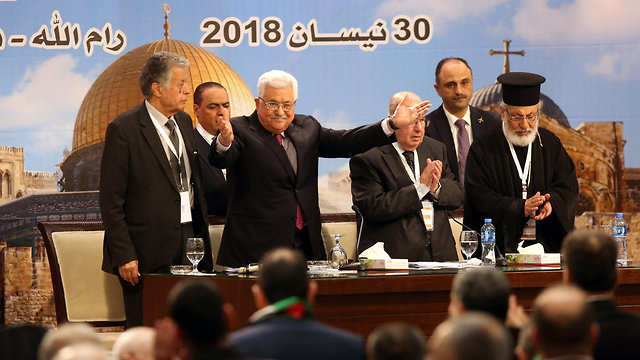
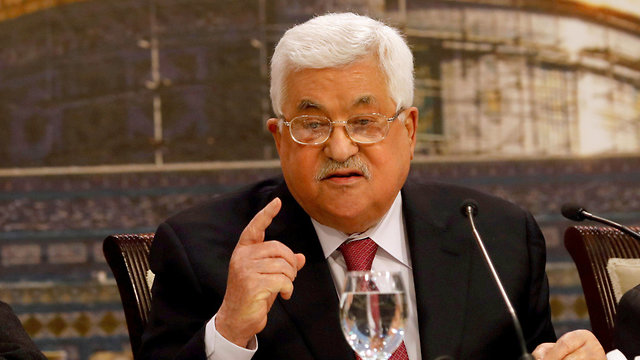
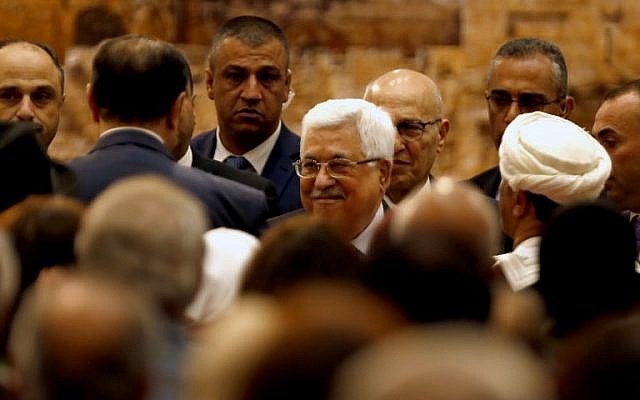
Palestinian Authority President Mahmoud Abbas gestures as he chairs a Palestinian National Council meeting in Ramallah, April 30, 2018. (ABBAS MOMANI/AFP)

The top-level governing body of the Palestine Liberation Organization is reportedly set to adopt a resolution freezing its recognition of Israel and making it dependent of Israel recognizing a state of Palestine.

Sources close to Palestinian Authority President Mahmoud Abbas told the London-based Arabic daily Al-Hayat that the Palestinian National Council is expected to pass the resolution during its current gathering, and will also put on hold all other agreements with Israel.

Abbas is reportedly to announce the measures during a speech to the council on Thursday evening.

The sources said the PNC, which is holding a rare gathering this week in Ramallah, will make a number of decisions against Israel. Among other things, the council will allow the filing of war crimes complaints against Israeli figures and organizations, the sources said.

The PNC is the legislative body of the PLO, the official representative of the Palestinian people all over the world, including the West Bank and the Gaza Strip.

The PA, headed by Abbas, was created as a result of the 1993 Oslo Accords, in which the Palestinians agreed to recognize Israel. The PA is responsible for governing the Palestinians in the West Bank and the Gaza Strip. Decisions made by the PNC are usually also adopted by the PA.

In addition to the measures against Israel, the PNC will call for ending money transfers to the Gaza Strip, which the Hamas terror group seized from Abbas’s Fatah party in a violent coup in 2007, the report said. Several attempts at reconciliation between the rival factions have failed to restore PA governance in Gaza.

Abbas told the council that the PA, which has already slashed funding and imposed other sanctions on Hamas, transfers some $115 million a month to the Strip.

Palestinian Authority President Mahmoud Abbas gestures during a Palestinian National Council meeting in Ramallah, April 30, 2018. (ABBAS MOMANI/AFP)

On Monday Abbas provoked condemnation from Israel and the US after he gave a long, rambling speech to the council in which he said that the Holocaust was not caused by anti-Semitism but by the “social behavior” of Jews, including money lending. He touched on a number of anti-Semitic conspiracy theories during what he called a “history lesson” as he sought to prove the 3,000 year-old Jewish connection to the Land of Israel is false.

Abbas also spoke at length about the failed peace process and reiterated his preemptive rejection of the peace plan that the Trump administration is working on, amid an ongoing and deep rift with the US.

The Palestinian leader told the hundreds of delegates that he was sticking to his rejection of any US proposals for an Israeli-Palestinian peace deal following the Trump administration’s recognition in December of Jerusalem as Israel’s capital and a decision to move the US embassy there in mid-May.

The 82-year-old Abbas warned that he might “take tough steps in the near future in our relationship with our neighbors (Israel) and the Americans.” He did not elaborate, but said they would be important and far-reaching.

Later this week, the Palestinian National Council is to elect a new PLO Executive Committee, an 18-member leadership group that has served in recent years to rubberstamp any decisions by Abbas.

The elections, tightly controlled by Abbas, are expected to install a new group of loyalists in the committee. The council last convened over 20 years ago.

Times of Israel staff contributed to this report.

US officials say Israel behind latest Syria strike, preparing for war with Iran

May 1, 2018

NBC news reports Israeli Air Force used F-15 fighter jets to target recent Iranian weapons shipment delivered to Syria’s Hama air base

Today, 7:30 pm

https://www.timesofisrael.com/us-officials-say-israel-behind-latest-syria-strike-preparing-for-war-with-iran/?utm_source=us-officials-say-israel-behind-latest-syria-strike-preparing-for-war-with-iran&utm_medium=desktop-browser&utm_campaign=desktop-notifications

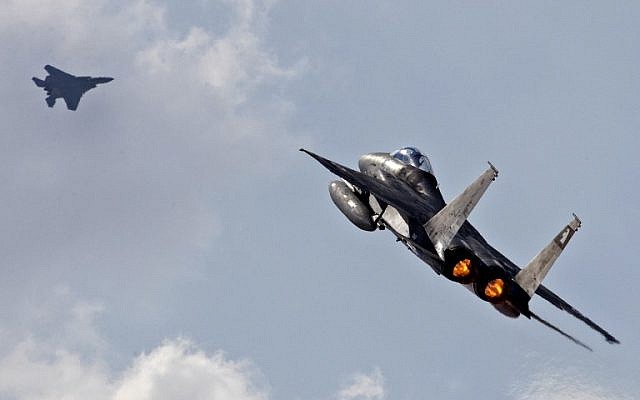
An Israeli Air Force F-15 takes off during the Blue Flag air exercise at the Ovda air force base, north of the Israeli city of Eilat, on November 8, 2017. (Jack Guez/AFP)

Three American officials on Tuesday told NBC news that Israel, using F-15 fighter jets, conducted the airstrike on an allegedly Iranian-controlled military base in northern Syria this week, in the latest bout of the increasingly public fight between Tehran and Jerusalem.

The unnamed US officials said Israel appears to be preparing for active conflict and is seeking American assistance, noting the recent visits to the US by Defense Minister Avigdor Liberman and trips to Israel by senior American officials.

According to NBC, the target of the Sunday night strike was an incoming weapons shipment, including surface-to-air missiles, which were freshly delivered from Iran.

Casualty counts from the attack have varied, but most put the death toll at between 16 and 38, including many Iranians. Iran denied that any of its soldiers were killed in the attacks and that any of its bases in Syria were targeted.

According to NBC, one unnamed senior US official said the Iran-Israel conflict is the most likely in the world to devolve into open clashes.

“On the list of the potentials for most likely live hostility around the world, the battle between Israel and Iran in Syria is at the top of the list right now,” the official said.

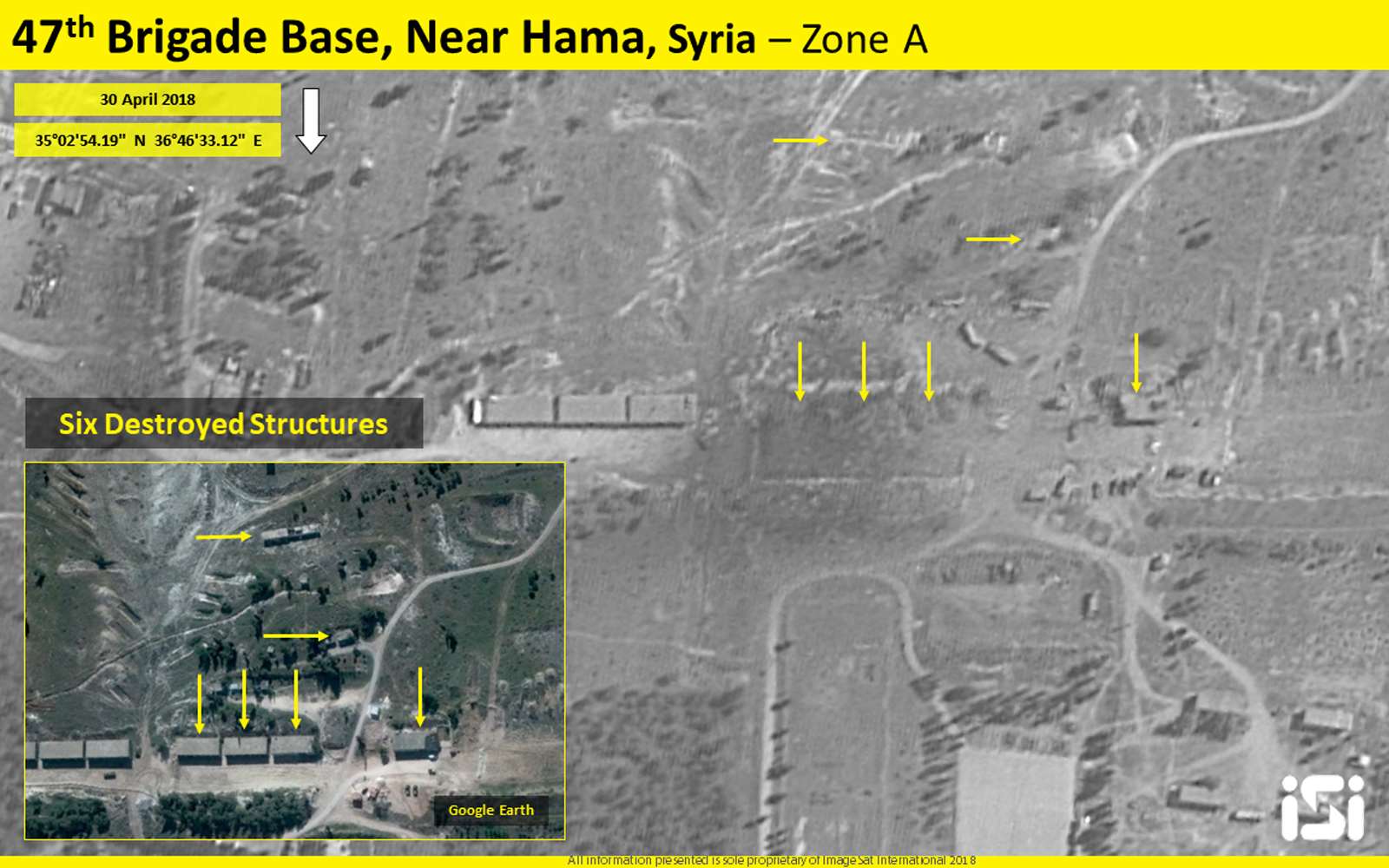
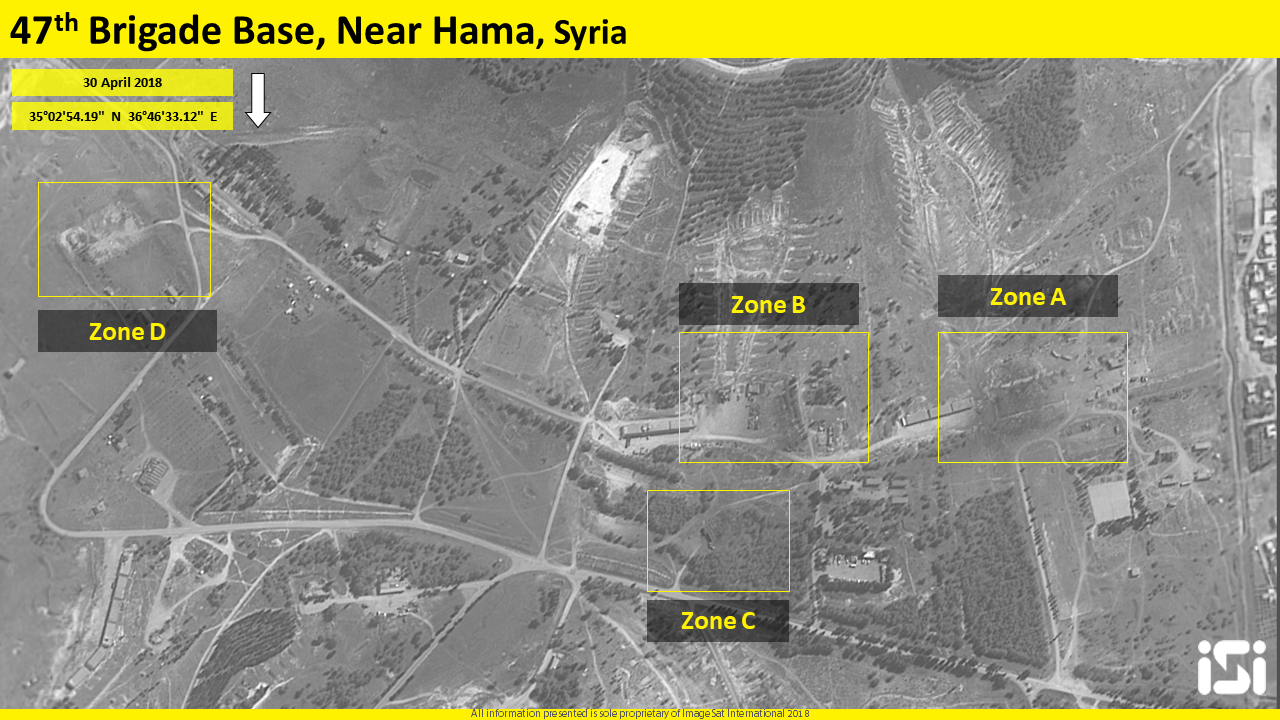
A satellite image showing the results of an alleged Israeli airstrike on a reported Iranian base outside the northern Syrian city of Hama the day before, on April 30, 2018. (ImageSat International ISI)

The base hit in the Sunday night airstrike was located south of the city of Hama in northwestern Syria and belonged to the Syrian army’s 47th Brigade, but has reportedly been used as a headquarters for Iranian troops for several years.

American and Israeli officials have been monitoring as Iran has increased the number of transport planes that it sends from its Mehrabad Airport in Tehran to Syria. The US and Israeli officials fear that these planes are loaded with advanced munitions, which could potentially be used against Israel.

The day before the strike, one such plane was spotted by a civilian skywatcher, using open-source flight tracking software, as it flew from Tehran toward an airfield in Hama.

The blast from the air raid could be seen from kilometers away and registered a 2.6 on the Richter scale on nearby seismographs, likely from the munitions in the weapons depot and not the initial bombing.

Israeli officials have refused to comment on the strike. Neither Syria nor Iran has publicly accused Israel of carrying it out, though many news outlets affiliated with them have pointed the finger at the Jewish state. Some have claimed that the United States or United Kingdom was behind the attack.

An Israeli satellite company revealed the damage caused to the site. Aerial photographs showed that at least 13 buildings were hit in the strike on the Hama base.

Speaking on condition of anonymity about the attack, an official from the coalition backing Syrian dictator Bashar Assad said Tehran can be expected to hit back at Israel for the bombing, according to the New York Times.

However, Iran would likely wait to do so until after May 6 parliamentary elections in neighboring Lebanon, where its ally Hezbollah is fielding candidates, the official said.

Tehran has sent some 80,000 Iran-backed fighters to back Syrian President Bashar Assad’s forces in the country’s seven-year civil war, Israeli Ambassador to the United Nations Danny Danon said last week.

Israel has designated Iranian military entrenchment in Syria as unacceptable to it, fearing that Tehran could use the country as a springboard for attacks against the Jewish state.

Defense Minister Avigdor LIberman, center, visits a national emergency preparedness exercise, alongside IDF Chief of Staff Gadi Eisenkot, right, and the head of the Home Front Command, Maj. Gen. Tamir Yadai, in March 2018. (Israel Defense Forces)

Defense Minister Avigdor Liberman has repeatedly vowed that Israel will work to prevent this from occurring, “no matter the cost.”

The Sunday night attack comes amid soaring tensions between Iran and Israel following an airstrike earlier this month on Syria’s T4 air base in the central province of Homs that killed seven Iranian military personnel. Tehran has vowed to retaliate for the T4 attack.

Syria, Iran, and Russia blamed Israel for that T4 attack. Israel did not confirm or deny it.

British Foreign Secretary responds to Netanyahu’s Iran speech

May 1, 2018

‘That Iran conducted sensitive research in secret until 2003 shows why we need intrusive inspections allowed by Iran nuclear deal today.’

Mordechai Sones, 01/05/18 17:33
Boris Johnson Reuters

British Foreign Secretary Boris Johnson responded today to Israel’s historic operation to obtain Iran’s nuclear archive, which uncovered over 100,000 documents detailing Tehran’s nuclear program.

“The Israeli Prime Minister’s presentation on Iran’s past research into nuclear weapons technology underlines the importance of keeping the Iran nuclear deal’s constraints on Tehran’s nuclear ambitions,” Johnson said.

“The Iran nuclear deal is not based on trust about Iran’s intentions; rather it is based on tough verification, including measures that allow inspectors from the International Atomic Energy Agency unprecedented access to Iran’s nuclear programme.

“The fact that Iran conducted sensitive research in secret until 2003 shows why we need the intrusive inspections allowed by the Iran nuclear deal today. The verification provisions in the Iran nuclear deal would make it harder for Iran to restart any such research. That is another good reason for keeping the deal while building on it in order to take account of the legitimate concerns of the US and our other allies.”

Netanyahu last night revealed the purpose of Iran’s secret nuclear program, Project Amad, was to design, produce, and test five nuclear warheads, each with an explosive yield of 10 kilotons of TNT, for integration with ballistic missiles. “That’s like 5 Hiroshima bombs to be put on ballistic missiles.”

He further revealed that Project Amad had all five elements of a nuclear weapons program, designing nuclear weapons, developing nuclear cores, building nuclear implosion systems, preparing nuclear tests, and integrating nuclear weapons with missiles.