Gas pipes on fire at the Kerem Shalom goods crossing between Israel and the Gaza Strip, May 11, 2018
Israeli reconnaissance planes fired at least two missiles at Beit Hanoun in the northern Gaza Strip late Saturday, according to Ma’an. The agency cited witnesses who claimed the bombing targeted an electric generator in the area, which led to its destruction and caused fire in the surrounding area.
The F-16 fighter jets resumed firing at the site with seven rockets, but no casualties were reported.
The IDF Spokesperson’s Office confirmed that “the explosions that are being heard in the northern Gaza Strip are the result of Israeli army activity.”
Apparently there was a launch of a ground-to-air missile against Israeli aircraft during the raid, according to Ma’an.
An Arab was shot dead by IDF forces east of Gaza City during riots at the al-Awda refugee camp.
A number of Arab youths managed to destroy part of the security fence in the town of Beit Lahia in the northern Gaza Strip, and damage cameras.
Arab rioters on Friday set fire to the pipeline through which Israel supplies gas and fuel to the Gaza Strip at the Kerem Shalom crossing, as well as the conveyor belt for importing goods. Replacing the pipe will cost about $3 million, a new conveyor belt will cost about $6.5 million. Damage from the fire is estimated in millions. This was the second consecutive week when Arab rioters have set fire to the Gaza Strip side of the crossing – the only point through which goods like food, equipment and fuel pass through.
Earlier on Saturday, Defense Minister Avigdor Liberman announced the closure of the Kerem Shalom crossing. According to the IDF’s announcement, the crossing will remain closed, except for humanitarian cases that will be approved on an individual basis, until repair of the damage caused by the arson is complete.
U.S. officials are closely monitoring the security situation in Israel ahead of a historic ceremony celebrating the opening of the new U.S. embassy in Jerusalem, according to senior Trump administration officials.
Senior administration officials acknowledged the potential for violence as armed protests by Palestinians continue along Israel’s border with the Gaza Strip, but emphasized their preparedness and close coordination with Israeli security organizations.
The opening of the U.S. embassy in Jerusalem became a reality when Trump made good on a campaign promise to relocate the embassy from its longstanding perch in Tel Aviv to Israel’s capital city of Jerusalem. Monday’s celebration is expected to attract more than 800 dignitaries, officials, and others.
The move has splintered U.S. allies, some of whom have praised the move and some who have objected, warning that such a recognition of Jerusalem of Israel’s capital by the United States would further foment violence and make it more difficult to broker a peace deal between Israel and the Palestinians.
The Trump administration has objected to these arguments, telling reporters that Hamas terrorists and their supporters are the ones chiefly responsible for engaging in violence in the region.
The security situation for the embassy opening is expected to be incredibly tight, U.S. officials said.
“In terms of potential conflicts, we look at this issue hourly,” according to one senior administration official who was only authorized to speak on background. “We work closely with our law enforcement and security establishments here, and our own people here from the United States.”
The United States also is working closely with Israel’s security apparatus, the official said.
“We work closely with Israeli police, with the Shin Bet, and we measure the risk of demonstrations and violence minute by minute,” the official explained. “And so we’re confident that we’re considering all potential issues and risks, and doing everything we can to mitigate those risks and to keep people safe.”
A second senior administration official emphasized that the violence along Israel’s border by Gaza is chiefly being perpetuated by Hamas terrorists seeking to further inflame regional tensions.
“We support the right for peace—to peaceful protest,” said the second official. “But the operative word there is peaceful, and particularly as you look at what’s going on down in Gaza, there are a lot of people who are legitimately protesting the very, very difficult humanitarian situation that they are enduring. But at the same time, you have some people flying kites as symbols of freedom, you have some people flying kites with Swastikas, and gas bombs attached to them, and that’s intolerable.”
“I think we need to blame that violence not on anything the United States has done or Israel has done, but firmly on Hamas,” the official said.
U.S. personnel stationed in Israel are said to be excited about the impending move and efforts are already underway to relocate a number of officials to the new Jerusalem embassy, the officials said, adding that officials held a toast early Friday saying goodbye to the Tel Aviv offices.
“We just had a little toast where we all got together and toasted our last day as Embassy Tel Aviv on Monday,” said the official. “People will be coming back to work as the embassy branch of the Jerusalem embassy, and we’re—I think we’re all very happy and excited to be participating in such a historic event.”
“People have been working literally around the clock in getting ready for our opening dedication ceremony on Monday,” the official noted. “We’ll be ready. We are expecting about 800 people. We are expecting a healthy number of dignitaries from the Congress. You’re aware of the presidential delegation; there’ll be others.”
Two former Obama administration officials suggested in a New York Times op-ed published Thursday that European countries allied with the United States could expel American ambassadors in retaliation for President Donald Trump withdrawing from the Iran nuclear deal.
“Europe Doesn’t Have to Be Trump’s Doormat,” wrote Steven Simon and Jonathan Stevenson. Simon served as the National Security Council’s senior director for the Middle East and North Africa, while Stevenson served as the regional director for political-military affairs.
“After months of swaggering hesitation, President Trump finally announced the United States’ withdrawal from the nuclear deal with Iran, to which Britain, France, Russia, China, Germany, and the European Union are also parties,” they wrote. “This action tramples on European leaders, who urged Mr. Trump to exercise restraint in the interest of international security and multilateralism.”
The two men urged European countries to go beyond “mere words” and counter Trump’s withdrawal from the Iran nuclear deal with real, concrete actions.
“The European Union could, for instance, announce the withdrawal of member-states’ ambassadors from the United States,” they suggested. “Isn’t this what states do when diplomatic partners breach solemn agreements, expose them to security risks and threaten to wreak havoc on their economies?”
Simon and Stevenson went on to suggest that, depending on how the United States reacted, “European capitals might even follow up with expulsion of American ambassadors.”
As the U.S. and other world powers negotiated the Iran deal in 2015, the Obama administration was critical of what its officials described as Republican efforts to undermine negotiations. Vice President Joe Biden complained that Republicans “undercut a sitting president in the midst of sensitive international negotiations,” while Obama himself accused them of making “common cause with the hardliners in Iran.”
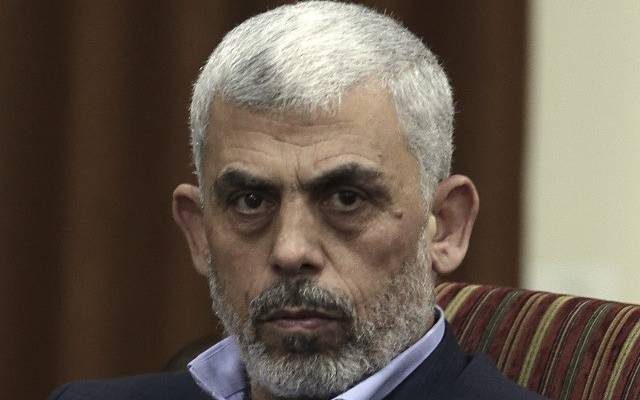
Hamas leader in the Gaza Strip Yahya Sinwar (AP/Khalil Hamra)
In an apparent threat to Israel, the leader of Hamas, the Gaza-based terrorist organization, said that next week’s riots at the border fence with Israel would be “decisive,” Israeli media reported.
The Hamas-led riots, which had originally been described as non-violent, involve rioters attempting to tear down the border fence with Israel, throwing rocks at soldiers, and sending kites over the fence with burning fuel in attempts to start fires inside Israel. Last week, rioters entered the Kerem Shalom crossing and set storage facilities on fire, including pipelines that bring gas into Gaza. This is the seventh consecutive week that riots are being held.
Yahya Sinwar, the Gaza-based leader of Hamas, said that the riot next week planned for May 14, the day the United States Embassy is slated to open in Jerusalem, will be “decisive.” Israel imposed the blockade when Hamas expelled Fatah, the main Palestinian political party, from Gaza in 2007 and took control of the enclave. Hamas remains committed to Israel’s destruction, has accumulated an arsenal of rockets, and built terror tunnels with the aim of attacking Israel.
“We can’t stop these protests. We are supporting, even leading, them,” Sinwar said. The riots will be “like a tiger running in all directions,” he said.
Hamas has claimed that the goal of the riots is to gain the “right” to return to all of Israel, meaning the destruction of Israel. Israel has charged that the goal is to cover for violent activities, including efforts to breach the border fence.
Sinwar made the comments in a speech to activists, who have been leading the riots. According to media reports, Hamas has been indicating that it could encourage the rioters to storm the fence.
The Hamas-run health ministry in Gaza claims that 48 rioters have died since the first protest too place on March 30. According to the Meir Amit Intelligence and Terrorism Information Center, which uses publicly available information to identify casualties, 80% of the rioters who have been killed were a member of, or otherwise affiliated with terrorist organizations.
In a conference call hosted by The Israel Project, Maj.-Gen. (ret.) Israel Ziv, former head of IDF’s Gaza Division, assessed that the rioters would use grenades, improvised explosives, “anything that can fly over the fence and burn.”
He added, “we don’t expect anything terribly new.” However, if Hamas attempts to use the riot to “maneuver a terror unit, commando units or things of that kind …, to penetrate to Israel, to go to some of the settlements, the IDF is ready for those options as well,” Ziv asserted.
Iranian Intelligence sites in Syria that were attacked
On Friday morning, the IDF Spokesperson’s Office issued aerial photographs of several Iranian facilities that were attacked by the Israeli Air Force during Operation House of Cards early Thursday morning. The published photographs show the Tel Gharba, Tel Kleb, Tel Maqdad, Tel Nabi Yusha, and the logistic military installations of the Revolutionary Guards’ Quds Force near Damascus.
Iranian logistical site near Damascus that was attacked / Photo credit: IDF Spokesperson
During the operation, about 50 Iranian targets were attacked in Syria, reaching intelligence positions, outposts, headquarters and equipment storage facilities in 16 different locations across the country.
Quds Force Military compound that was attacked / Photo credit: IDF Spokesperson
Reports in Israeli media on Friday morning suggested the Russians were not necessarily unhappy to see Iran get a severe nose bleed from the Israeli attacks, since Iran has introduced an unacceptable level of instability to the area the Russians have been trying to tame back for their client, President al-Assad.
It is roughly estimated that Iran has some 4,000 Revolutionary Guards military personnel, instructors, advisers and soldiers stationed in Syria. In addition, about 8,000 Hezbollah fighters are deployed in Syria as well, along with some 40,000 fighters in Shi’ite militias from Iraq, Pakistan, and Afghanistan. None of these are particularly loyal to the Russian mission statement in Syria…
So far the Russians have stayed out of the way and enabled Israel to act as it sees fit – and that is neither a given or something to be taken lightly.
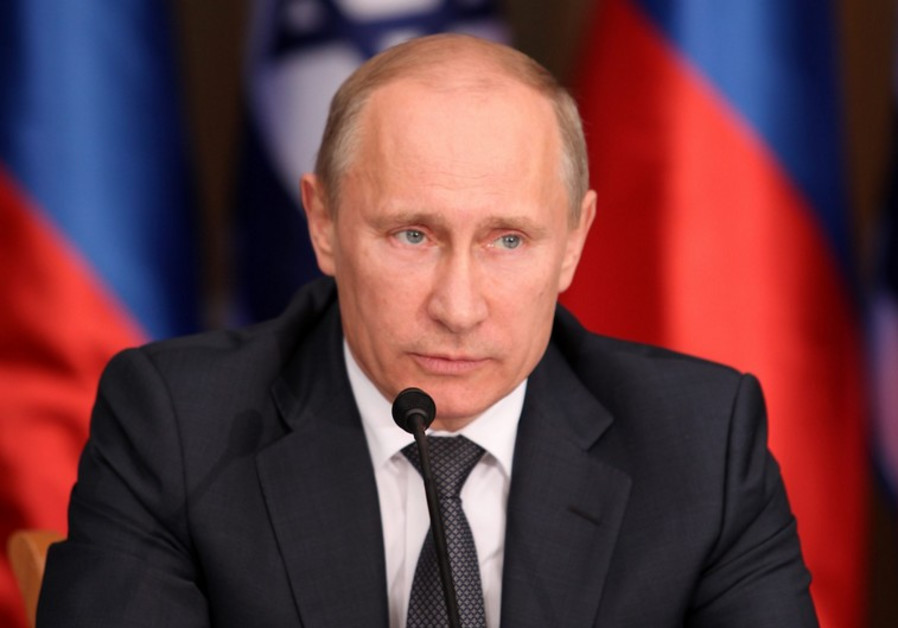
Vladimir Putin. (photo credit: MARC ISRAEL SELLEM/THE JERUSALEM POST)
Tellingly, the Russians did nothing on the ground; their Mideast envoy, Mikhail Bogdanov, issued a neutral statement saying that the developments were “alarming,” that there was a need to de-escalate tensions, and that the situation distracts from the fight inside Syria against Islamic State.
The working assumption in Jerusalem for weeks, since Iranian fighters were killed in two recent attacks in Syria attributed to Israel, was that Tehran would respond. The clear message coming from Jerusalem was that Israel would not let such a response go unanswered, and it would deliver a pulverizing counterpunch.
It is highly likely that the nature of that counterpunch – perhaps not the exact targets to be attacked, but the breadth and magnitude of the operation – was discussed with the Russians to avoid, as Israel is meticulously trying to do, accidentally engaging the Russians and surprising Moscow.
Nobody wants Israel to surprise them: not US President Donald Trump, and not Putin – and it is very much in Israel’s interests to have a good, open channel of communications with both men.
Netanyahu speaks often about the close coordination that exists between the Israeli and Russian militaries and the good relationship he has developed with Putin – a relationship very much on display when the Russian president invited him to Moscow on Wednesday to watch the military parade marking the victory over Germany 73 years ago.
And one of the reasons that relationship remains as good as it has is because there are few surprises. The Russians by now know very well what will trigger an Israeli response and what form that response is likely to take.
So far the Russians have stayed out of the way and enabled Israel to act as it sees fit – and that is neither a given or something to be taken lightly.
Netanyahu’s critics say if the premier’s relationship is so good with the Russian leader, and if the coordination is so close, then why doesn’t Putin put an end to Iran’s attempts to entrench itself in Syria?
Russian diplomats, when asked this question, say Iran is a sovereign state over which Russia does not have control. Just as Moscow cannot tell Israel not to operate in Syria, they say, it cannot tell Iran not to operate there either.
But what Moscow does obviously tell both sides is not to harm Russian interests or assets. The primary Russian asset in Syria is President Bashar Assad, in whose regime Moscow has invested millions of rubles and for whom Russian soldiers have been killed.
Other assets include the Russian naval base at Tartus and the air base at Latakia.
Russia enjoys good relations with Iran, just as it enjoys good relations with Israel. Putin meets periodically with Iranian President Hassan Rouhani, just as he meets with Netanyahu, though perhaps not as much. But they do meet, and they do talk. For instance, the two men last met in April and before that last November.
One can assume that just as Netanyahu from time to time entreats Putin to curb Iranian actions in Syria, Rouhani appeals to Putin to stop Israeli actions there also. Putin listens to both and does nothing against either side: He doesn’t curb Israel, and he doesn’t restrict Iran.
As long as Russia’s interests are not harmed, from Putin’s point of view, this particular fight is not Russia’s.
In response to Iranian rocket attacks on the Golan Heights on Wednesday, Israel attacked nearly all of Iran’s military infrastructure inside of Syria.
Video captured one Israeli air strike on a Pantsir-S1 surface-to-air missile, and as one journalist put it, some nearby Syrian or Iranian troops appeared to have no idea the Israeli strike was incoming. One figure appeared to run inside the truck right before impact.
The Quds, the special forces unit of the Iranian Revolutionary Guard Corps, aid the Bashar al-Assad regime in Syria.
Israeli Defense Minister Avigdor Lieberman said Israel’s air force had destroyed “nearly all” of Iran’s military infrastructure in Syria. The Islamic Republic and Russia are allied with the brutal Assad regime.
“If there is rain on our side, there will be a flood on their side,” Lieberman said at a conference in near Tel Aviv. “I hope we have finished with this round and that everybody understood.”
According to Israel, the Iranian rockets were either intercepted by the Iron Dome missile defense system or fell short of their intended targets. According to the New York Times, Israeli children in the Golan Heights were already going to school like normal on Thursday morning.
Israeli military spokesman Lieutenant-Colonel Jonathan Conricus said the Iranian attack was “commanded and ordered by (Quds Force chief General) Qassem Soleimani and it has not achieved its purpose.”
UNDOF multinational force evacuating Golan Heights
Photo Credit: Oshri Weizman / Rotter
Unconfirmed reports said Thursday that the United Nations Disengagement Observer Force is pulling out of the Golan Heights.
The multinational forces were evacuating their positions, according to the report, posted on the Rotter website.
UNDOF vehicles evacuating Golan Heights neutral zone
UNDOF was established by UN Security Council Resolution 305 on May 31 1974, to implement Resolution 338, calling for an immediate cease-fire and disengagement between Israeli and Syrian forces on the Golan Heights to end the 1973 Yom Kippur War.
The mandate that maintains the force has been renewed every six months since that time and is due to be renewed again on June 30 of this year.
During the Syrian civil war, the buffer zone between Israeli and Syrian forces has led UN observer forces to reconsider the mission “due to safety issues,” stemming from the Quneitra clashes between the Syrian regime forces and the opposition fighters, according to an article on Wikipedia. The violence intensified between 2012 and 2014, spilling into the UN-supervised neutral demilitarized zone in the Golan Heights.
Firing from the war has sometimes also spilled over into Israel as well; in response to such cases, the Israel Defense Force returns fire to remind those behind the gunfire that Israel is not in that war.
It is possible the UNDOF is evacuating due to the current tensions between Iran and its proxies, and Israel. There was no response to a query sent by JewishPress.com to the headquarters of the United Nations Disengagement Observer Force.
The escalation has led to a direct exchange of hostilities between Iran and Israel for the first time ever, over the past several weeks, with Iran launching its first missile barrage at Israel shortly after midnight on late Wednesday night, May 9.
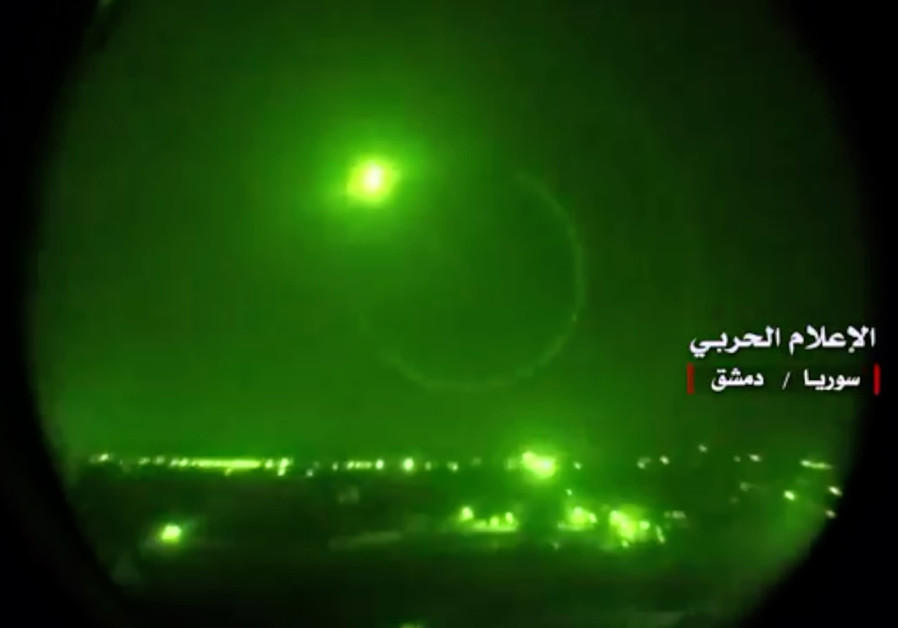
An image grab from a video released on May 10, 2018 by the “Central War Media” and broadcast on Syria’s official TV purportedly shows Syrian air defense systems intercepting Israeli missiles over Syrian airspace. (photo credit: AFP PHOTO / HO / CENTRAL WAR MEDIA)
The United Kingdom, Germany and France defended Israel’s right to launch self-defensive strikes against Iranian targets in Syria, after its warplanes struck 50 Iranian targets in Syria early in Thursday morning.
It was one of the heaviest Israeli barrages against Syria since the Syrian Civil War began in 2011.
The three countries issued an unusually strong defense of the Jewish state. The Trump Administration which always stands strong on Israel’s right to self-defense issued a statement as well.
The French Foreign Ministry said its country had an “unwavering commitment to Israel’s security” and that it “condemns any attempt to undermine it.”
It called on both Israel and Iran to exercise restrain. But at the same time the French Foreign Ministry also demanded that “Iran refrain from any military provocation” and “warned it against any temptation toward regional hegemony.”
British Prime Minister Theresa May’s spokesman told reporters in London, “We condemn Iran’s attack on Israel. Israel has every right to defend itself.
“We call on Iran to refrain from any further attacks and for calm on all sides. We call on Russia to use its influence in Syria to prevent further Iranian attacks,” May’s spokesman said.
The German Foreign Ministry said: “We are deeply concerned by reports about last night’s Iranian rocket attacks on Israeli army outposts.
“These attacks are a severe provocation that we most strongly condemn. We have always emphasized that Israel has a the right to defend itself.
“At the same time, it is a key that the situation not escalate any further. This particularly means we must do everything we can to finally arrive a sustainable poetical solution to the conflict in Syria — it is needed to end the suffering of the Syrian population and to not further threaten stability in the region.”
The White House followed her interview with a more formal statement.
“The Iranian regime’s deployment into Syria of offensive rocket and missile systems aimed at Israel is an unacceptable and highly dangerous development for the entire Middle East,” the White House said.
“Iran’s Islamic Revolutionary Guard Corps (IRGC) bears full responsibility for the consequences of its reckless actions,” the White House said as it demanded that the IRGC and Hizbollah refrain from any further provocations.
The White House also called on “all nations” to “make clear” that Iran’s “actions pose a severe threat to international peace and stability.”
Israel launched its air-strike after Iranian Revolutionary Guard Corp’s Quds Force fired 20 rockets towards Israel’s front defensive line in the Golan Heights.
The Syrian Army Command said Israel’s attack killed three people and injured two others. A Britain-based war monitor, the Syrian Observatory for Human Rights, said the strikes killed at least 23 military personnel, including Syrians and non-Syrians.
The strong exchange of fire stoked international fears of a war between Israel and Iran in Syria.
Israel’s diplomatic and security cabinet is set to meet later Thursday to discuss the strike and counter-strike.
The Syrian foreign ministry said the Israeli attack indicated “the start of a new phase of aggression” against Damascus.
The escalation in tensions comes as the US announced that it had left the 2015 agreement with Iran and the five other world powers that had been designed to curb Iran’s nuclear ambition.
The US warned that the deal had instead funneled billions of dollars into Tehran to fuel its regional military ambitions including an increased military presence in Syria.
The other signatories to the deal — France, Germany, the United Kingdom, Russia and China still hope to salvage the deal.
In the backdrop of those efforts, the German, French and British statements in defense of Israel is particularly striking.
The Iranian-Israeli attacks also came after Prime Minster Benjamin Netanyahu had visited Moscow and spoken with Russian President Vladimir Putin, whose country is also active in Syria and back Iran militarily.
Israeli reportedly informed Russia of its intention to strike Iranian targets in Syria.
Deputy Foreign Minister Mikhail Bogdanov told TASS on Thursday: “All of this is very alarming and raising concerns. It is necessary to deescalate tensions. We are verifying all the details now.”
Russia’s defense ministry said Syria had shot down more than half of the missiles fired by Israel, RIA news agency reported.
Defense Minister Avigdor Liberman said in Herzliya on Thursday that the IDF had hit almost all of Iran’s infrastructure in Syria.
The targets all belonged to IRGC’s Quds Force and included intelligence sites, logistics headquarters, a military compound and logistics complex in Kiswah near the Syrian capital of Damascus, weapons storage sites belonging at Damascus International Airport, intelligence systems and installations, as well as observation, military posts and military hardware in the buffer zone.
In addition, the Iranian launcher from which the Grad rockets and Fajr 5 missiles were fired at Israel was also destroyed overnight.
A senior Hamas official on Thursday urged “hundreds of thousands” of Arab rioters in Gaza to breach the border fence from Gaza into Israel at protests to coincide with next week’s US embassy move to Jerusalem.
In his first major briefing to international media since becoming Gaza head of the Islamist group in 2017, Yahya Sinwar implied he would like to see hundreds of thousands of Gazans infiltrating into Israel as part of more than a month of violent protests.
Asked what he wanted to see from riots on Monday and Tuesday, Sinwar said out Israel has never specifically defined its borders.
“What’s the problem with hundreds of thousands breaking through a fence that is not a border?”
Sinwar said he hoped Israel would not shoot at what he called “peaceful” protests.
Fifty-two rioters and terrorists have been killed by Israeli fire since the six weeks of violent clashes dubbed the “March of Return” began on March 30 along the Israel-Gaza frontier.
Israel says it only opens fire when necessary to stop infiltrations, attacks and damage to the border fence, while accusing Hamas of seeking to use the riots as cover to carry out violence.
Thousands of rioters are expected to gather along the border on Monday, which coincides with the controversial opening of the US embassy in Jerusalem.
There are fears protesters could attempt to breach the fence en masse, in an attempt to flood into Israeli territory.











 anneinpt
 artaxes
 danmillerinpanama
 davidking1530
 Peter Hofman
 Joseph Wouk
 Peter
Peter Louisiana Steve
 WarSclerotic