Israeli Air Force ✡ /USAF joint air exercise, Juniper Falcon, May 2017 US Air Force and Israeli Air Forces dominated the Jewish state’s southern skies for the 2017 annual Juniper Falcon exercise. This IAF Video courtesy of IDF Spokesperson’s Unit.
Israeli Air Force ✡ /USAF joint air exercise, Juniper Falcon, May 2017 US Air Force and Israeli Air Forces dominated the Jewish state’s southern skies for the 2017 annual Juniper Falcon exercise. This IAF Video courtesy of IDF Spokesperson’s Unit.
17 minutes of pure gold.
Plenty of shoe-usage and shoe references.
“My shoe and my urine are more dignified than you”, ha ha ha.
The shiite prank caller to the sunni cooking show is amusing.
Challenges of COVID-19 and economic meltdown are exacerbated by frequent explosions — most of which may have less to with Israel than a battle between reformists and conservatives
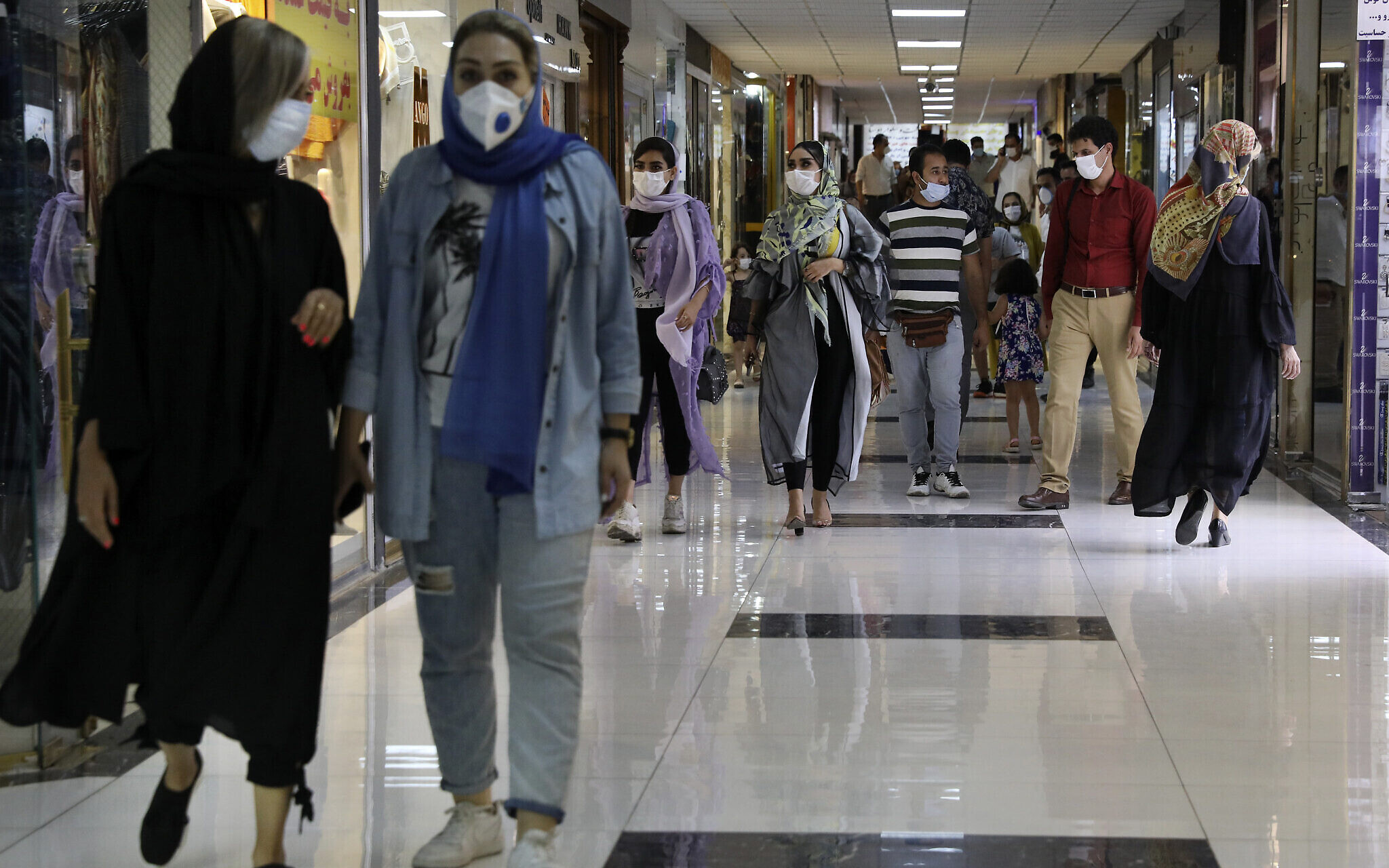
The stream of mysterious explosions and fires in Iran over the past few weeks has stirred the imagination of countless Israelis and media outlets.
Is it possible that a foreign intelligence entity is trying — and managing — to destabilize the Islamic Republic? Is someone trying to drag Iran into a war or a confrontation?
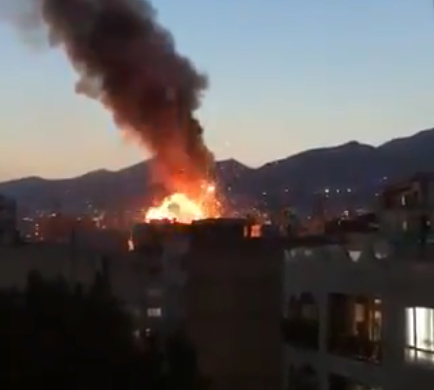
Just this week, there was an explosion at a power station in Isfahan Province and, later the same day, a fire broke out at a phone factory in northwestern Iran. In late June, there was a big explosion near a military facility in Tehran and another one in a civilian hospital in the capital, where 19 people were killed.
However, officials have not been quick to blame Israel, the United States, or the West, at least not in most cases — and there could be a reason for that.
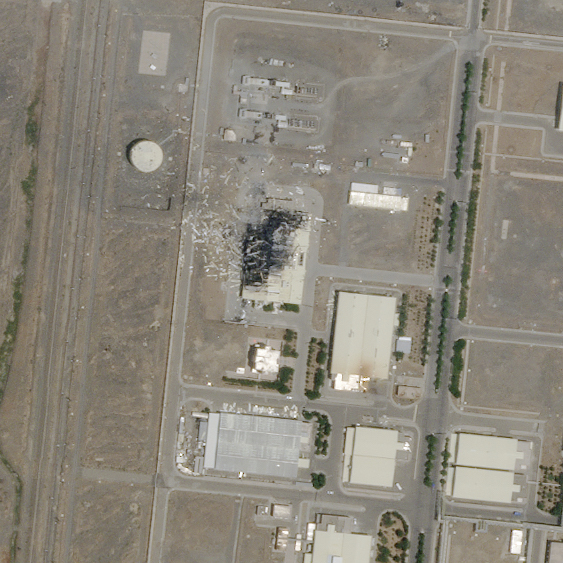
Setting aside the most dramatic incident, the July 2 blast at the nuclear facility in Natanz — which is said by some experts to have significantly set back Iran’s nuclear program, damaging an advanced centrifuge development and assembly plant, and which foreign media reports have attributed to Israel — the other cases have been blamed by the Iranians on such banal causes as poor maintenance, rising temperatures and negligence. (A report on Thursday said the Islamic Revolutionary Guard Corps [IRGC] has concluded that contractor Ershad Karimi was the perpetrator of the Natanz attack.)
This summer in Iran has indeed been hot. This week, temperatures reached 43°C (109°F) in the port city of Bandar Abbas, 35°C (95°F) in Shiraz and 34°C (93°F) in the capital Tehran.
And the national infrastructure is rickety anyway, and every year there are fires and even explosions. Still, this year, their number has increased.

Meir Javedanfar, a lecturer on Iranian Diplomatic and Security Studies at the Interdisciplinary Center (IDC) Herzliya, suspects a different cause.
“Since March, we have witnessed hundreds of fires, perhaps even a thousand, across the country. That’s unimaginable. Why would a foreign entity do something like this? What interest do they have to attack a hospital? And I’m not talking about Natanz,” he said.

“Somebody’s trying to weaken President [Hassan] Rouhani and tarnish his public image,” he elaborated. “We saw that in the attempt to pass a motion of no confidence in the Iranian Majlis (parliament). Now, the Supreme Leader [Ayatollah Ali] Khamenei has apparently blocked that effort — and all of a sudden, there has been a significant fall in the number of fires and explosions.”
Javedanfar was alluding to the tensions within the conservative wing of Iran’s leadership, which has ruled the parliament since last February’s election.
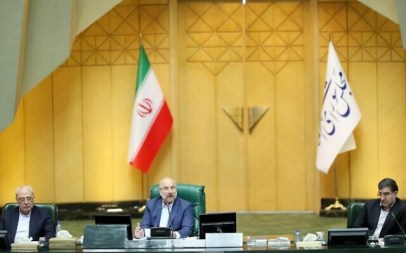
The elected speaker of the Majlis is Mohammad Bagher Ghalibaf, a well-known conservative who previously ran against Rouhani. Ghalibaf was a top-ranking IRGC official and a commander of its Air Force.
Along with his parliamentary peers, Ghalibaf has been trying to challenge Rouhani and the members of his moderate-reformist wing ahead of the next presidential election, in May 2021.
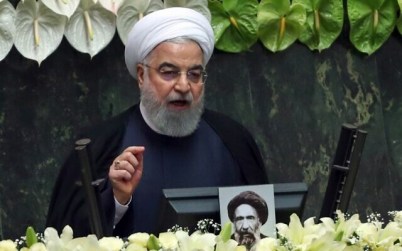
Rouhani, who has been president since 2013, cannot be reelected, but a representative of his moderate wing will aim to succeed him, possibly in a contest against Ghalibaf.
One of the names mentioned as a potential candidate for the moderate wing is Ali Larijani, a former speaker of the Majlis, who was recently appointed as adviser to the supreme leader.
The struggle between these two wings is deeply affecting Iran, complicating its response to the coronavirus pandemic that has ravaged the country.
“Rouhani can’t do much in the face of the pandemic and the economy. About 60 percent of the Iranian economy is not steered by elected officials, but by what’s known as the ‘Deep State,’” Javedanfar said.
“These are entities like the Islamic Revolutionary Guard Corps and the allegedly ‘social’ funds. When the first COVID-19 cases were discovered in the sacred city of Qom, Rouhani wanted to impose a lockdown, but Khamenei and the ‘Deep State’ prevented him from doing so. Iran now has very significant problems, and I’m doubtful whether it can deal with them,” said Javedanfar.
Asked whether he thinks Iran will retaliate for the explosion in Natanz, Javedanfar was skeptical.
“In my estimation, the Iranian leadership is trying these days first and foremost to survive, at least until the US presidential election [in November],” he said. “They understand that even if Joe Biden is elected, he isn’t expected to lift the sanctions immediately, but his election would at least inspire hope.
Javedandar, indeed, argues that the accumulation of crises constitutes the biggest challenge the regime has faced since it came to power, albeit not one that threatens its collapse.
“I don’t know any Iranian administration since 1979 that has had to deal with such significant crises and challenges as today,” he added.
Indeed, Iran is inundated with problems that threaten to suffocate its economy and citizens.
The most striking figure is the steep fall in the value of the Iranian currency, the rial. As of January, the rial was 128,000 to the US dollar. In recent weeks, the exchange rate fell as low as 250,000 rials to $1. The past few days have seen a slight improvement, after intervention by the Central Bank of Iran.
Unemployment rates have skyrocketed due to the pandemic, subsidies have been canceled and annual inflation is at 41%, leading to a dramatic rise in the price of basic commodities like rice and poultry.
Real wages have been eroded, and the administration knows full well that a new generation of poor people creates a fertile ground for instability. Even Rouhani’s deputy has acknowledged that Iran’s economy is at a critical stage.
This week, Rouhani announced there have been an estimated 25 million coronavirus cases in Iran — out of a population of about 82 million — numbers so high as to be implausible. There may conceivably be several million carriers in Iran, but it’s also possible that Rouhani chose to inflate the numbers.
First of all, he may have wanted to create a sense of a crisis too dramatic for his government to handle, as a way to evade responsibility.
Secondly, he may have hoped to restore calm to the Iranian street. After turbulent demonstrations last November over a sudden increase in gasoline prices, the first wave of the pandemic was met with relative equanimity. However, over the past few weeks, protests were renewed on a smaller scale, after authorities decided to execute three organizers of the November protests. The court then announced it would reconsider the verdicts amid fear of a public outcry.
Moreover, it is possible that Rouhani is trying to signal to both Khamenei and the public that parliament and the conservative wing have been trying to curb him in a way that poses a direct threat to Iranian citizens and their health. Wary of the conservatives and well aware of the despair among young people, and the disappointment in his performance, he may be trying to improve the position of his wing ahead of the election in May.

Either way, the COVID-19 resurgence that started in May is indeed severe. There have been about 200 coronavirus-related deaths in Iran every day, and anger and concern are deepening.
“The situation is terrible,” Javedanfar said. “Those who can are trying to leave the country. There are more cases of depression and aggression. The despair leads people to act illogically, and the administration’s [handling of the crisis] encourages that behavior.
“Tehran’s stock exchange market is somehow booming in the most difficult time financially the country has experienced. We’ve seen unprecedented records. People invest fortunes in various companies that are on the verge of bankruptcy, and the administration resuscitates them. The Telegram channel of the Islamic Revolutionary Guard Corps encourages the public to invest in the stock exchange. Do you understand? People who can’t make a living are selling their cars, farmers are selling their tractors, in the hope of getting rich via the stock market.”
One development in Iran’s relationship with the outside world that has received significant attention is the agreement between China and Iran, according to which China will allegedly invest in Iran.
But it is doubtful whether this deal has substance. It seems more like a statement of intent that is meant, on the one hand, to show the United States that China will not accept dictates from US President Donald Trump and, on the other, to serve Iranian interests by giving hope to the public.
The deal includes no concrete or specific elements, at least not for the time being. For now, it seems designed to provide some internal resilience for the Iranian administration.
Facing paralyzing sanctions from the US and the rest of the world, the grim financial situation and the pandemic, the future of the Iranian public and administration is unclear.
Will Iran become more conservative? Perhaps. If a conservative president wins the election, the delicate balance between conservatives and moderates will be disrupted, and all three branches of government will be in the hands of conservatives — the parliament, the presidency and the judiciary, which is currently headed by Ayatollah Ebrahim Raisi, a conservative who has been flagged as a potential heir to Khamenei.
On the other hand, a victory by the moderate wing would send the message that the Iranian leadership wishes to follow the same lines as before, perhaps in the hope of change on the American side.
Neither a conservative takeover nor a balance between conservatives and moderates, however, is likely to bring about the collapse or overthrow of the regime.
As Tehran facesnprecedented crises — including COVID-19, the economy and frequent explosions — it is hamstrung by a battle between reformists and conservatives, expert says
The stream of mysterious explosions and fires in Iran over the past few weeks has stirred the imagination of countless Israelis and media outlets.
Is it possible that a foreign intelligence entity is trying — and managing — to destabilize the Islamic Republic? Is someone trying to drag Iran into a war or a confrontation?
Just this week, there was an explosion at a power station in Isfahan Province and, later the same day, a fire broke out at a phone factory in northwestern Iran. In late June, there was a big explosion near a military facility in Tehran and another one in a civilian hospital in the capital, where 19 people were killed.
However, officials have not been quick to blame Israel, the United States, or the West, at least not in most cases — and there could be a reason for that.
Setting aside the most dramatic incident, the July 2 blast at the nuclear facility in Natanz — which is said by some experts to have significantly set back Iran’s nuclear program, damaging an advanced centrifuge development and assembly plant, and which foreign media reports have attributed to Israel — the other cases have been blamed by the Iranians on such banal causes as poor maintenance, rising temperatures and negligence. (A report on Thursday said the Islamic Revolutionary Guard Corps [IRGC] has concluded that contractor Ershad Karimi was the perpetrator of the Natanz attack.)
This summer in Iran has indeed been hot. This week, temperatures reached 43°C (109°F) in the port city of Bandar Abbas, 35°C (95°F) in Shiraz and 34°C (93°F) in the capital Tehran.
And the national infrastructure is rickety anyway, and every year there are fires and even explosions. Still, this year, their number has increased.

Meir Javedanfar, a lecturer on Iranian Diplomatic and Security Studies at the Interdisciplinary Center (IDC) Herzliya, suspects a different cause.
“Since March, we have witnessed hundreds of fires, perhaps even a thousand, across the country. That’s unimaginable. Why would a foreign entity do something like this? What interest do they have to attack a hospital? And I’m not talking about Natanz,” he said.
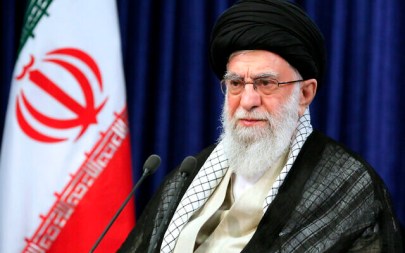
“Somebody’s trying to weaken President [Hassan] Rouhani and tarnish his public image,” he elaborated. “We saw that in the attempt to pass a motion of no confidence in the Iranian Majlis (parliament). Now, the Supreme Leader [Ayatollah Ali] Khamenei has apparently blocked that effort — and all of a sudden, there has been a significant fall in the number of fires and explosions.”
Javedanfar was alluding to the tensions within the conservative wing of Iran’s leadership, which has ruled the parliament since last February’s election.
The elected speaker of the Majlis is Mohammad Bagher Ghalibaf, a well-known conservative who previously ran against Rouhani. Ghalibaf was a top-ranking IRGC official and a commander of its Air Force.
Along with his parliamentary peers, Ghalibaf has been trying to challenge Rouhani and the members of his moderate-reformist wing ahead of the next presidential election, in May 2021.
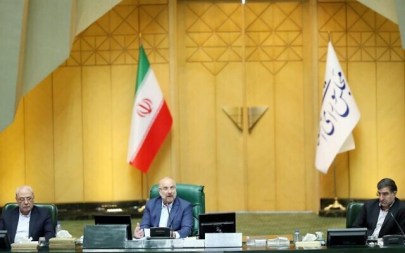
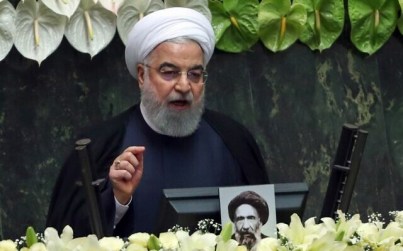
Rouhani, who has been president since 2013, cannot be reelected, but a representative of his moderate wing will aim to succeed him, possibly in a contest against Ghalibaf.
One of the names mentioned as a potential candidate for the moderate wing is Ali Larijani, a former speaker of the Majlis, who was recently appointed as adviser to the supreme leader.
The struggle between these two wings is deeply affecting Iran, complicating its response to the coronavirus pandemic that has ravaged the country.
“Rouhani can’t do much in the face of the pandemic and the economy. About 60 percent of the Iranian economy is not steered by elected officials, but by what’s known as the ‘Deep State,’” Javedanfar said.
“These are entities like the Islamic Revolutionary Guard Corps and the allegedly ‘social’ funds. When the first COVID-19 cases were discovered in the sacred city of Qom, Rouhani wanted to impose a lockdown, but Khamenei and the ‘Deep State’ prevented him from doing so. Iran now has very significant problems, and I’m doubtful whether it can deal with them,” said Javedanfar.
Asked whether he thinks Iran will retaliate for the explosion in Natanz, Javedanfar was skeptical.
“In my estimation, the Iranian leadership is trying these days first and foremost to survive, at least until the US presidential election [in November],” he said. “They understand that even if Joe Biden is elected, he isn’t expected to lift the sanctions immediately, but his election would at least inspire hope.
“I don’t know any Iranian administration since 1979 that has had to deal with such significant crises and challenges as today,” he added.
Indeed, Iran is inundated with problems that threaten to suffocate its economy and citizens. The most striking figure is the steep fall in the value of the Iranian currency, the rial.
As of January, the rial was 128,000 to the US dollar. In recent weeks, the exchange rate fell as low as 250,000 rials to $1. The past few days have seen a slight improvement, after intervention by the Central Bank of Iran.
Unemployment rates have skyrocketed due to the pandemic, subsidies have been canceled and annual inflation is at 41%, leading to a dramatic rise in the price of basic commodities like rice and poultry.
Real wages have been eroded, and the administration knows full well that a new generation of poor people creates a fertile ground for instability. Even Rouhani’s deputy has acknowledged that Iran’s economy is at a critical stage.
This week, Rouhani announced there have been an estimated 25 million coronavirus cases in Iran — out of a population of about 82 million — numbers so high as to be implausible. There may conceivably be several million carriers in Iran, but it’s also possible that Rouhani chose to inflate the numbers.
First of all, he may have wanted to create a sense of a crisis too dramatic for his government to handle, as a way to evade responsibility.
Secondly, he may have hoped to restore calm to the Iranian street. After turbulent demonstrations last November over a sudden increase in gasoline prices, the first wave of the pandemic was met with relative equanimity. However, over the past few weeks, protests were renewed on a smaller scale, after authorities decided to execute three organizers of the November protests. The court then announced it would reconsider the verdicts amid fear of a public outcry.
Moreover, it is possible that Rouhani is trying to signal to both Khamenei and the public that parliament and the conservative wing have been trying to curb him in a way that poses a direct threat to Iranian citizens and their health. Wary of the conservatives and well aware of the despair among young people, and the disappointment in his performance, he may be trying to improve the position of his wing ahead of the election in May.
Either way, the COVID-19 resurgence that started in May is indeed severe. There have been about 200 coronavirus-related deaths in Iran every day, and anger and concern are deepening.
“The situation is terrible,” Javedanfar said. “Those who can are trying to leave the country. There are more cases of depression and aggression. The despair leads people to act illogically, and the administration’s [handling of the crisis] encourages that behavior.
“Tehran’s stock exchange market is somehow booming in the most difficult time financially the country has experienced. We’ve seen unprecedented records. People invest fortunes in various companies that are on the verge of bankruptcy, and the administration resuscitates them. The Telegram channel of the Islamic Revolutionary Guard Corps encourages the public to invest in the stock exchange. Do you understand? People who can’t make a living are selling their cars, farmers are selling their tractors, in the hope of getting rich via the stock market.”
One development in Iran’s relationship with the outside world that has received significant attention is the agreement between China and Iran, according to which China will allegedly invest in Iran.
But it is doubtful whether this deal has substance. It seems more like a statement of intent that is meant, on the one hand, to show the United States that China will not accept dictates from US President Donald Trump and, on the other, to serve Iranian interests by giving hope to the public.
The deal includes no concrete or specific elements, at least not for the time being. For now, it seems designed to provide some internal resilience for the Iranian administration.
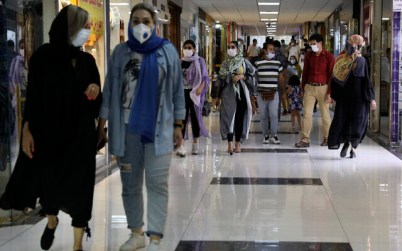
Facing paralyzing sanctions from the US and the rest of the world, the grim financial situation and the pandemic, the future of the Iranian public and administration is unclear.
Will Iran become more conservative? Perhaps. If a conservative president wins the election, the delicate balance between conservatives and moderates will be disrupted, and all three branches of government will be in the hands of conservatives — the parliament, the presidency and the judiciary, which is currently headed by Ayatollah Ebrahim Raisi, a conservative who has been flagged as a potential heir to Khamenei.
On the other hand, a victory by the moderate wing would send the message that the Iranian leadership wishes to follow the same lines as before, perhaps in the hope of change on the American side.
Neither a conservative takeover nor a balance between conservatives and moderates, however, is likely to bring about the collapse or overthrow of the regime.
Syrian state media says 2 lightly injured; Israeli army says it hit observation posts, intel-gathering tools; strikes come after blasts at border sent shrapnel into Israeli town
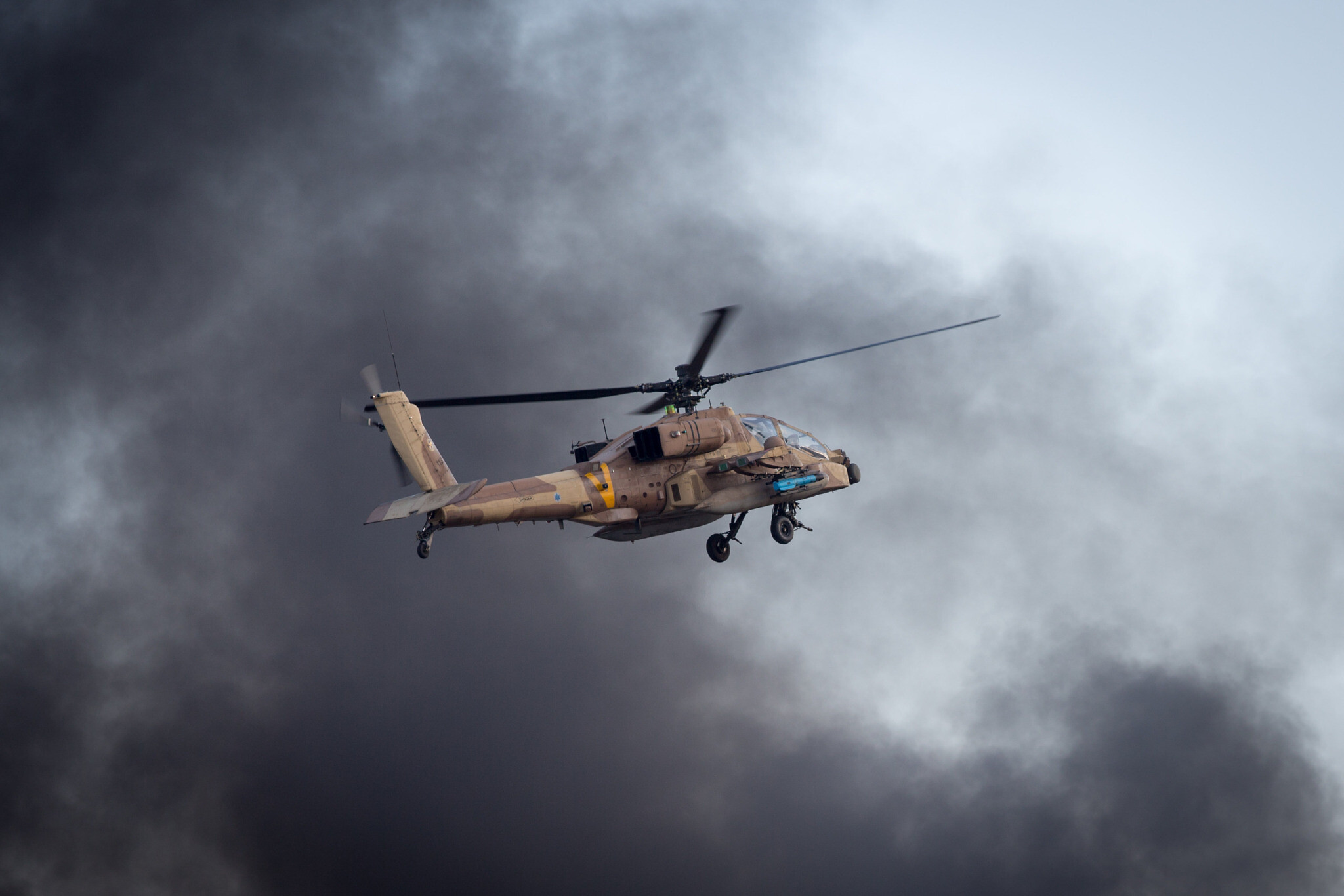
Targets included “observation positions and intelligence-gathering tools inside Syrian posts,” the military said.
Syrian state news agency SANA said the strikes injured two soldiers, hit three sites and caused fires.
Arabic media reports said missiles had hit anti-aircraft batteries near Quneitra in the Syrian Golan Heights.
The incident in the morning saw explosions heard along the border and shrapnel striking a home and a car on the Israeli side in the Druze town of Majdal Shams, causing light damage. The cause was reported to be either anti-aircraft fire toward an IDF observation balloon or an artillery shell fired from Syria toward Israel, possibly by accident.
Reported incident of an IDF airstrikes occurred near Majdal Farms. @manniefabian #Israel #Syria pic.twitter.com/9aOEOmQe9l
— Joe Truzman (@Jtruzmah) July 24, 2020
“The IDF holds the Syrian regime responsible for the fire against Israel earlier today,” the army said in a statement. “The IDF will continue operating with determination and will respond to any violation of Israeli sovereignty.”
The incidents came amid heightened tensions between Israel and the Hezbollah terror group, which maintains a presence in the Syrian Golan Heights, after one of the organization’s fighters was killed in an airstrike attributed to Israel on Monday night.
The US Chairman of the Joint Chiefs of Staff, Gen. Mark Milley, made an unannounced visit to Israel on Friday, meeting with Defense Minister Benny Gantz, IDF chief Lt. Gen. Aviv Kohavi and Mossad director Yossi Cohen, along with other top brass. Israeli television commentators speculated on the possible significance of the visit, particularly regarding the threat posed by Iran and its Lebanese ally Hezbollah.
The IDF further stepped up its defenses along the country’s northern borders on Friday, the army said, out of concern the Hezbollah terror group may carry out an attack against military targets along the frontier in retaliation and warned Beirut it would bear responsibility for any possible Hezbollah strike.
“In light of a situational assessment in the IDF and in accordance with the Northern Command’s defense plan, the IDF’s deployment will change in both the military and civilian arena with the goal of strengthening defenses along the northern border,” the IDF said in a statement.
In the past, Hezbollah has vowed to retaliate to losses of its soldiers in Syria with attacks on Israel. This was the case in September, when the terror group fired three anti-tank guided missiles at Israeli military targets along the Lebanese border, narrowly missing an IDF armored ambulance with five soldiers inside, after the IDF killed two of its fighters in Syria the month before.
In a tacit threat, the IDF preemptively warned Beirut that it sees the state of Lebanon as “responsible for all actions emanating from Lebanon.”
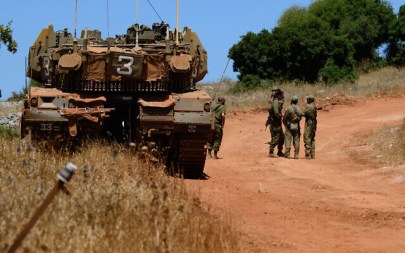
Beginning at 8 p.m. on Friday night, roadblocks were installed along a number of highways to prevent military vehicles vulnerable to attack from anti-tank guided missiles fired from either Lebanon or Syria, from driving on certain roads.
Entrances to some communities where the military maintains a presence that are exposed to attack were also blocked for IDF vehicles. As the military assessed that Hezbollah planned to attack only IDF targets, civilian vehicles will be able to travel freely throughout the area.
However, the IDF said that some farmers who have fields directly along the border may be blocked from working their lands.
The military also cleared some troops out of positions directly along the border, moving them deeper into Israel, so that they would not represent a clear target for Hezbollah, while still allowing them to defend the frontier.
The IDF has also stepped up its intelligence collection efforts along the border in recent days. Throughout the day on Friday, Lebanese media reported on large numbers of Israeli drones flying overhead.
Judah Ari Gross contributed to this report.
“Mowing the lawn” resumes in Syria, may it long continue…
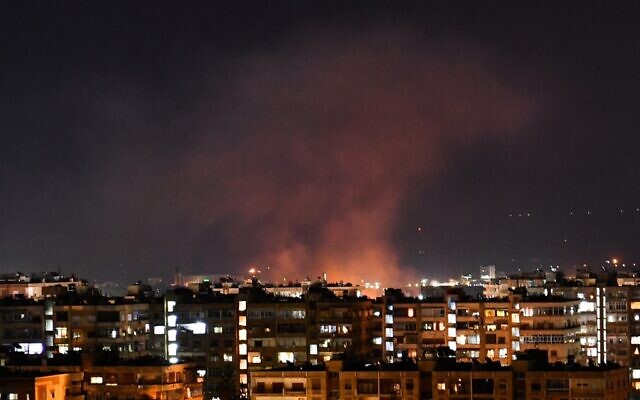
Five Iran-backed fighters were killed in an Israeli missile strike south of the Syrian capital, a Britain-based monitoring group said Tuesday.
The missile attack on Monday night hit weapons depots and military positions belonging to Syrian regime forces and Iran-backed militia fighters south of Damascus, according to the Syrian Observatory for Human Rights.
The attack wounded at least seven Syrian troops, according to the official SANA news agency, which said the missiles were launched by warplanes from the Golan Heights.
The five killed were all non-Syrian paramilitary fighters, according to the Observatory.
It added that 11 combatants were wounded in total — four non-Syrian fighters and seven Syrian troops, of whom two were in critical condition.
The group said the aerial bombardments caused several explosions around the town of Kiswah, south of the Syrian capital, an area that has long been associated with Iran’s Islamic Revolutionary Guard Corps.
The attack reportedly came in two waves. The Reuters news service reported that the assault hit targets in the towns of Jabal al Mane, Muqaylabiya and Zakiya, causing “huge blasts” and allegedly killing Iranian personnel.
A military source quoted by Syria’s official SANA news agency claimed that most of the missiles were shot down. Such claims of interceptions by Syrian state media are generally dismissed by defense analysts as false, empty boasts.
Reuters quoted a Syrian analyst with sources on the ground named Zaid al Reys as saying that the target of the attack was a “major ammunition depot.”
Israel has launched hundreds of strikes in Syria since the start of the civil war in 2011. It has targeted government troops, allied Iranian forces and fighters from the Lebanese Shiite terror group Hezbollah.
It rarely confirms details of its operations in Syria, but says Iran’s presence in support of President Bashar Assad and Hezbollah is a threat and that it will continue its strikes.
Monday’s attack came a week and a half after Iran and Syria signed an agreement that would see Tehran upgrade the Syrian military’s air defenses, apparently in response to ongoing Israeli strikes in the country.
It was the first in Syria to be attributed to Israel since June, when the Observatory said nine fighters were killed in airstrikes targeting positions of Iran-backed militias near the Iraqi border. Those strikes came hours after a similar raid killed six other Tehran-backed fighters.
Source: IDF sends reinforcements to north amid threat of Hezbollah attac
Move comes after terror group accused Israel of killing one of its fighters in an airstrike outside Damascus earlier in the week

The Israel Defense Forces on Thursday announced it was sending reinforcements to the northern border amid the threat of retaliation by the Lebanese Hezbollah terror group over the death of one of its fighters in Syria earlier this week.
“In light of a situational assessment that was held in the IDF, it was decided to send a pinpoint reinforcement of infantry troops to the Northern Command,” the military said.
Also on Thursday, sources close to Hezbollah told the London-based Asharq al-Awsat newspaper that the terror group would likely respond to the death of its fighter on Monday night.
An IDF spokesperson said the reinforcement consisted of one battalion — the Golani Brigade’s 13th Battalion — and a small number of additional troops, who were being sent to the Northern Command’s Galilee Division.
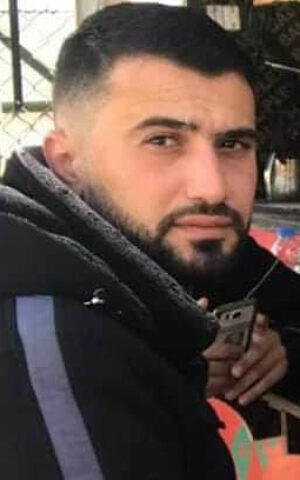
The move came two days after Hezbollah accused Israel of killing one of its members — Ali Kamel Mohsen Jawad — in an airstrike south of Damascus on Monday night, raising the possibility of retaliation against the Jewish state.
In response to the terror group’s announcement about Jawad’s death, both the IDF and Hezbollah went on high alert along the frontier, according to media reports from both sides of the border.
In the past, Hezbollah has retaliated for confirmed deaths of its members at Israel’s hands with attacks on the Jewish state, generally along the Israeli-Lebanese border. As a result of this policy, the IDF generally refrains from killing Hezbollah troops in Syria.
Such an exchange occurred last August, when the IDF killed two Hezbollah members that the military said were taking part in an Iranian-run operation in southern Syria that attempted to attack IDF border positions with armed drones.
“If Israel kills any of our members in Syria, we’ll respond from Lebanon and not in the Shebaa Farms, and we tell the Israeli army on the border to be very cautious and to wait for us,” Hezbollah leader Hassan Nasrallah said in a speech at the time.
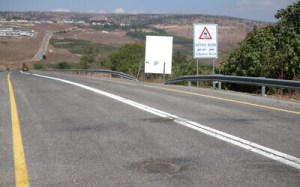
Days later, in response to their deaths — as well as an alleged Israeli drone attack in Beirut that occurred the same night — Hezbollah fired three anti-tank guided missiles at Israeli military targets along the Lebanese border, narrowly missing an IDF armored ambulance in with five soldiers inside.
On Thursday, sources “familiar with [Hezbollah’s] views” told Asharq Al-Awsat that the terror group was abiding by that same “equation that Nasrallah set last year” of retaliating when one of its fighters is killed in Syria.
The airstrike attributed to Israel on Monday night hit weapons depots and military positions belonging to Syrian regime forces and Iran-backed militia fighters, according to the Syrian Observatory for Human Rights.
The group said the aerial bombardments caused several explosions around the town of Kiswah, an area that has long been associated with Iran’s Islamic Revolutionary Guard Corps.
The attack reportedly came in two waves. The Reuters news service reported that the assault hit targets in the towns of Jabal al Mane, Muqaylabiya and Zakiya, causing “huge blasts” and allegedly killing Iranian personnel.

Reuters quoted a Syrian analyst with sources on the ground named Zaid al Reys as saying that the target of the attack was a “major ammunition depot.”
Israel has launched hundreds of strikes in Syria since the start of the civil war in 2011. It has targeted government troops, allied Iranian forces and fighters from the Lebanese Shiite terror group Hezbollah.
It rarely confirms details of its operations in Syria, but says Iran’s presence in support of President Bashar Assad and Hezbollah is a threat and that it will continue its strikes.
Monday’s attack came a week and a half after Iran and Syria signed an agreement that would see Tehran upgrade the Syrian military’s air defenses, apparently in response to ongoing Israeli strikes in the country.
It was the first strike in Syria to be attributed to Israel since June, when the Observatory said nine fighters were killed in airstrikes targeting positions of Iran-backed militias near the Iraqi border. Those strikes came hours after a similar raid killed six other Tehran-backed fighters.
Times of Israel staff and AFP contributed to this report.
The “WTF?” news article for the day.
Hezbollah: IDF Stole Our Drone – We Were Shooting a Music Video

A Hezbollah spokesman on Sunday claimed the IDF had taken control of a drone that was part of a music video of a Lebanese orchestra that was recorded near the border with Israel.
The IDF reported on Sunday that one of its units identified and downed a drone that had apparently penetrated from Lebanese territory into Israeli airspace, which apparently happens up north every few months (IDF Downs Lebanese Drone).
So this is what Hezbollah had to say about the same event (courtesy of Google Translate):
“The enemy’s army hijacked a photo drone belonging to a singing squad that was carrying out a hymn for Nasrallah near the borders with occupied Palestine, before it controlled it electronically and withdrew it 3 kilometers inside the occupied territories. One of the photos taken by the drone while it was being towed showed it flying inside the occupied territories.”
We think the IDF should offer to return the drone, but only directly to Hassan Nasrallah, the terror group’s leader, the one from the hymn, who has been hiding from the IDF in a bunker in south Beirut since 2006. Come out, come out and claim your drone, dear sheikh.
Source: Hezbollah says one of its fighters killed in Israeli strike in Syria | The Times of Israel
Lebanese terror group has consistently retaliated for confirmed deaths of its members at Israel’s hands with attacks along the border
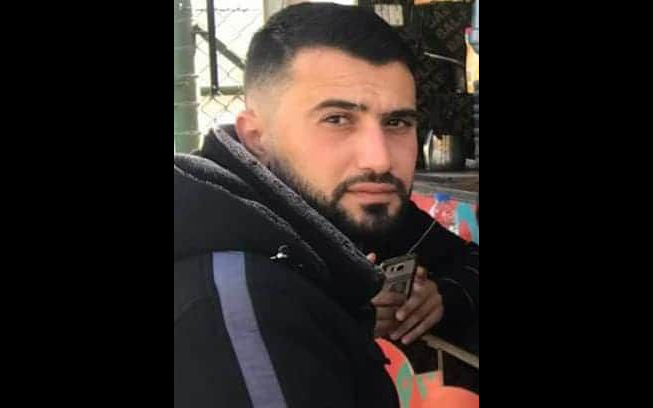
The Hezbollah terror group on Tuesday evening accused Israel of killing one of its members in an airstrike outside Damascus the night before, raising the possibility of retaliation against the Jewish state.
In a statement carried by Hezbollah-controlled media channels, the terror group said its operative Ali Kamel Mohsen Jawad was killed in an act of “Zionist aggression,” apparently referring to a series of airstrikes south of Damascus late Monday night that were attributed to Israel.
In the past, Hezbollah has retaliated for confirmed deaths of its members at Israel’s hands with attacks on the Jewish state, generally along the Israeli-Lebanese border.
Such an exchange occurred last August, when the Israel Defense Forces killed two Hezbollah members that the military said were taking part in an Iranian-run operation in southern Syria that attempted to attack IDF border positions with armed drones.
“If Israel kills any of our members in Syria, we’ll respond from Lebanon and not in the Shebaa Farms, and we tell the Israeli army on the border to be very cautious and to wait for us,” Hezbollah leader Hassan Nasrallah said in a speech at the time.
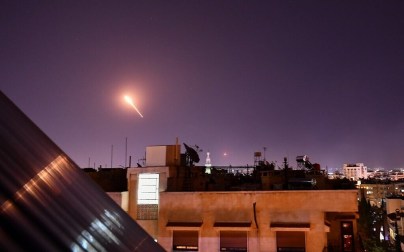
Days later, in response to their deaths — as well as an alleged Israeli drone attack in Beirut that occurred the same night — Hezbollah fired three anti-tank guided missiles at Israeli military targets along the Lebanese border, narrowly missing an IDF armored ambulance in with five soldiers inside.
A Britain-based Syrian war monitoring group reported that five Iran-backed fighters were killed in an Israeli missile strike south of the Syrian capital on Monday night. It was not immediately clear if Jawad was counted among the five.
The missile attack on Monday night hit weapons depots and military positions belonging to Syrian regime forces and Iran-backed militia fighters, according to the Syrian Observatory for Human Rights.
The attack wounded at least seven Syrian troops, according to the official SANA news agency, which said the missiles were launched by warplanes from the Golan Heights.
The five killed were all non-Syrian paramilitary fighters, according to the Observatory.
It added that 11 combatants were wounded in total — four non-Syrian fighters and seven Syrian troops, of whom two were in critical condition.
The group said the aerial bombardments caused several explosions around the town of Kiswah, an area that has long been associated with Iran’s Islamic Revolutionary Guard Corps.
The attack reportedly came in two waves. The Reuters news service reported that the assault hit targets in the towns of Jabal al Mane, Muqaylabiya and Zakiya, causing “huge blasts” and allegedly killing Iranian personnel.
A military source quoted by SANA claimed that most of the missiles were shot down. Such claims of interceptions by Syrian state media are generally dismissed by defense analysts as empty boasts.
Reuters quoted a Syrian analyst with sources on the ground named Zaid al Reys as saying that the target of the attack was a “major ammunition depot.”
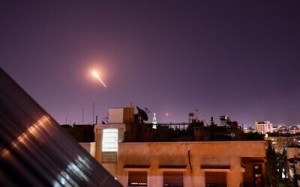
Israel has launched hundreds of strikes in Syria since the start of the civil war in 2011. It has targeted government troops, allied Iranian forces and fighters from the Lebanese Shiite terror group Hezbollah.
It rarely confirms details of its operations in Syria, but says Iran’s presence in support of President Bashar Assad and Hezbollah is a threat and that it will continue its strikes.
Monday’s attack came a week and a half after Iran and Syria signed an agreement that would see Tehran upgrade the Syrian military’s air defenses, apparently in response to ongoing Israeli strikes in the country.
It was the first strike in Syria to be attributed to Israel since June, when the Observatory said nine fighters were killed in airstrikes targeting positions of Iran-backed militias near the Iraqi border. Those strikes came hours after a similar raid killed six other Tehran-backed fighters.
Times of Israel staff contributed to this report.
Source: How lethally effective is Iran’s air defense system? – DEBKAfile

The intentions behind the high alert ordered for Iran’s air defenses – reported by US sources from “several” indications – are as opaque as the mystery behind the recent string of explosions at Iran’s key nuclear, military and missile sites.
International speculation has centered on Israel as being responsible for some of the attacks, although this is not confirmed. The only comment came from Defense Minister Benny Gantz on July 5. He said: “Not all the incidents in Iran have anything to do with us. … All their systems are complex; they have very high security constraints and I am not sure that they always know how to maintain them.”
But if there are opposition groups on the ground in Iran carrying out attacks on key facilities there, it is not clear whether they are acting on directives or funding from external sources. None alone is capable supporting the sweeping effort involved in more than half a dozen strikes at the heart of Iran’s most secure infrastructure since late June.
One of the most critical attacks occurred on July 2, when a fire caused significant damage to the advanced centrifuge production building at the Natanz uranium enrichment center. It is calculated to have retarded Iran’s nuclear program by a year or more. Another blew up a missile production amenity and tunnel network near the Parchin military compound. The most recent was the setting of seven ships on fire at Iran’s southern port of Bushehr.
No one has yet suggested that aerial attacks by hostile fighters, bombers or missiles were the cause of those incidents. Only possible sabotage from the ground or cyberattack has been mentioned. So what moved the Revolutionary Guards (IRGC) to put the country’s air defenses on high alert? DEBKAfile’s military and Middle East sources postulate a number of considerations:
So how effective is Iran’s air defense system?
In June 2019, the IRGC claimed to have shot down a large, slow-flying US Global Hawk drone over the Strait of Hormuz with a Khordad 3 missile, a version of the SAM Raad. The Khordad 15 is capable of detecting, intercepting, and destroying six targets simultaneously. The system is said able to detect fighter jets, cruise missiles and unmanned combat aerial vehicles (UCAV) from 150 km away and is able to track them within a range of 120km
Iran has 32 batteries of Russian-made S-300 ground-to-air missiles delivered since 2016 (in the face of Israel’s efforts to prevent the transaction). Iran’s aviation industry has also developed home-made versions of this system, including Bavar 373, SAM Tabas and SAM Raad, which are regularly showcased on military parades. They are seen as posing a serious threat. Their radar system is also believed to be highly effective.
The Sayyad-3 missile, used by the SAM system, has a range of 200 km. The system can also detect stealth targets from a distance of 85km. Missiles fired from the much older SA-15 are designed when they explode to pepper flying targets with shrapnel penetrating the fuselages of aircraft and drones.
The most advanced of all these systems are arrayed around Iran’s nuclear-related facilities.
The European Aviation Safety Agency reacted to the Iranian alert without delay on Thursday, July 13, by warning passenger jets against flying through Iranian air space lest they are accidentally targeted by the country’s air defense systems. “The hazardous security situation, poor coordination between Iran’s civil aviation and military operations” were cited as high risk.
The warning came shortly after Tehran admitted to mistakenly shooting down a Ukraine airliner in January killing all 176 passengers aboard The Iranian government explained that the “misalignment of an air defense unit’s radar system” was the key “human error” that led to the accidental downing of the airliner.
At the time, Tehran’s air defenses had been on high alert following an Iranian attack on US troops in Iraq after the killing of top general Qasem Soleimani by a US drone.
Following the Ukrainian disaster, the US is also concerned that Iran’s unreliability in the operation of its air defense systems means that the transition to a high state of alert could also pose a threat in itself.




 anneinpt
 artaxes
 danmillerinpanama
 davidking1530
 Peter Hofman
 Joseph Wouk
 Peter
Peter Louisiana Steve
 WarSclerotic
Recent Comments