Archive for March 29, 2020

Israel’s war-between-wars campaign against Iran continues 

March 29, 2020

Source: Israel’s war-between-wars campaign against Iran continues – The Jerusalem Post

IDF troops patrolling Israeli cities to enforce the nation-wide semi lockdown
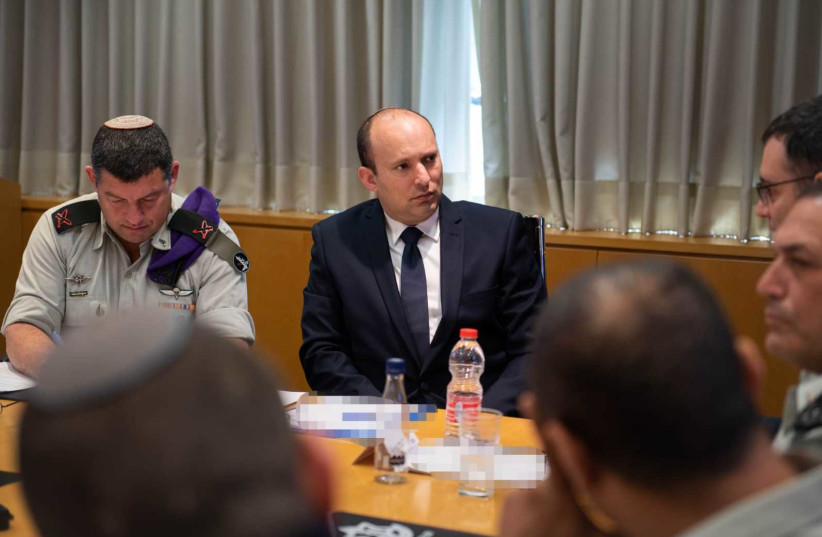
Defense Minister Naftali Bennett during a special meeting discussing what will happen if a national state of emergency is declared due to coronavirus, March 2020 (photo credit: Courtesy)
Defense Minister Naftali Bennett during a special meeting discussing what will happen if a national state of emergency is declared due to coronavirus, March 2020
(photo credit: Courtesy)
Israel’s “war-between-wars” campaign against Iran is continuing despite the spread of the coronavirus, Defense Minister Naftali Bennett said Sunday.

“The Iranian leadership insisted for many years to invest its monetary and human resources in exporting terror instead of on its own people and today the Iranian people are paying the price. Iran should start taking care of its people,” he said.

Earlier in the day Israel Air Force Commander Maj.-Gen. Amikam Norkin said the IAF will continue its routine and maintain operational readiness despite the outbreak of the virus.

“This is a historic event that happens once in a 100 years. The [air] force has gone into a state of emergency,” Norkin told senior air force officers by video conference. “We have made significant adaptations and changes in how we operate. We are aware of our people and we will take care of their health and we will help as much as necessary in the national and civilian effort to deal with this virus. We will continue to defend the skies of the nation. And we will be operationally prepared to protect the skies.”

Iran is among the countries hardest hit by the coronavirus, with thousands of people dying from the deadly virus, including several senior government officials.

In early March IDF Spokesperson Brig.-Gen. Hidai Zilberman told reporters that there’s been a decrease in hostile enemy activity targeting Israel due to the continued spread of the coronavirus.

Speaking to reporters by phone, Zilberman said the spread of the virus has affected Israel’s enemies, who have decreased their hostile activities to focus on containing the pandemic.While he did not refer to Iran by name, the spokesman said “there are enemy countries that have been hit much stronger than us by the coronavirus and therefore their activities have decreased.”

Also on Sunday IDF troops began patrolling cities alongside police officers to enforce the Health Ministry’s restrictions meant to stop the continued spread of the coronavirus.

The 650 troops will act as an auxiliary force to the police, which has the legal authority to enforce the lockdown, which requires residents to remain at home except under specific circumstances such as buying food or going to a pharmacy.

Should a full nationwide lockdown be imposed, an additional 3,600 troops from the Ground Forces training bases will be allocated to the police.

According to Haaretz, the troops deployed alongside the police will not be stationed inside Arab cities and villages.

The number of individuals diagnosed with the virus climbed to over 3,865 cases by Sunday morning. There are 58 soldiers confirmed to have the virus and another 3,697 in quarantine, many of them at two quarantine facilities run by the IDF and Yahad-United for Israel’s Soldiers. The soldiers who have been diagnosed with the virus have been placed at the military’s coronavirus treatment center in Ashkelon, which is also run by the association.

Col. (res) Sharon Harmon, deputy CEO of Yahad-United for Israel’s Soldiers, told The Jerusalem Post that in addition to the hundreds of soldiers who are quarantined, there are thousands more who must remain on base that are being helped by Yahad.

“The IDF wants to keep the troops separate from civilians so they can return to their duty as soon as possible,” Harmon said, explaining that “even with all the chaos that we have because of the virus, the IDF needs to be strong because this could be an opportunity for our enemies to attack us.”

On Friday night a rocket was fired from northern Gaza towards southern communities leading the IDF to carry out retaliatory strikes on Hamas targets later that night.

According to Harmon, thanks to donations, more than 80,000 troops (both men and women) were given packages of hygiene products as well as games and other care products. The association will also provide care packages with food and games for Passover to troops, including 17,000 lone soldiers.

“Usually soldiers have families who can help them, but lone soldiers don’t have that,” Harmon said adding that “we will make sure that the thousands of troops on base will celebrate the Passover holiday, and those who remain in their apartments will get these care packages as well.”

The association plans to hold a Seder for all troops in their quarantine facilities with a high-ranking IDF officer to lead the service.

Harmon said that despite the hard economic hit caused by the virus, donors in Canada, the United States, Mexico, Brazil, France and England have given the association a total of NIS 8 million.

“Everyone is in a hard place and it’s not easy to give but this is for soldiers and we will continue to support them,” she said.

 

Seeking the Elusive “Herd Effect” to Beat back Coronavirus – DEBKAfile

March 29, 2020

Source: Seeking the Elusive “Herd Effect” to Beat back Coronavirus – DEBKAfile

Is the coronavirus playing games with the world? Do lockdowns have a lasting effect? Hong Kong was a rare success story in the global war on coronavirus.

But it also showed what happens when such measures as social distancing, hygiene and protective gear are relaxed too soon. In the past week, confirmed cases in Hong Kong suddenly doubled, mainly due to overseas imports, prompting Hong Kong Chief Executive Carrie Lam on Wednesday, March 25 to bar all non-residents from the territory.

This pattern of ebb and surge, which is unfolding also in China, Singapore and Taiwan, begs questions. Is the lockdown model for containing coronavirus at fault? After all, people do get fed up staying at home. Or was the lifting of restrictions premature? These questions lead to another: Maybe the virus did not in the first wave reach what epidemiologists call “critical mass” i.e., infecting enough people for the “herd effect” to kick in. It therefore returned for a second visit.

The “herd effect” or “herd immunity” – another term used by those scientists – happens when a large proportion of a population develops an immune response to a certain disease, forcing the virus to run out of hosts and retreat. Large-scale vaccinations may trigger this effect by disrupting the chain of infection.

But the size of this proportion – and therefore critical mass – varies from virus to virus and has not been discovered yet in the case of covid-19.

An ordinary flu vaccination program counts 70pc as critical mass since it is enough to protect the remaining, unvaccinated 30pc. That’s how you get “herd immunity.”  It is hard to determine how this works case by case. And no one knows whether the proportion of recovered cases from the covid-19 pandemic has become large enough to beat the virus into retreat.

Because of these imponderables, total closure of a population is counter-productive, Sharon Mikhailov, biologist and former researcher at the Sheba Medical Center, tells DEBKA Weekly. Partial closures are preferable when conducted in controlled stages. They permit the disease to advance in controlled clusters in stages, thereby avoiding overtaxing the hospitals, while contributing to the build-up of a critical mass of immune subjects. By this method, if closely controlled, the entire population may eventually become immune to infection.

The formula of partial lockdown should enable health authorities to keep the outbreak and the death toll sustainable. The supermarket is a good venue for controlled clusters. It is virtually the only public place where people may move away from home and within their neighborhoods. There, they may touch products and mingle, inevitably encountering some covid-19 carriers in a controlled, identifiable environment.

However, the trouble is that the Israeli Health Ministry’s program, while seeking to establish the point at which covid-19 reaches critical mass for generating the elusive “herd immunity,” holds to strict criteria for testing. They exclude from the testing program the priceless input available from local family practitioners and district medical centers. The criteria are limited to testing patients rushed to hospital with acute symptoms and put on respirators, although some will die regardless; those patients’ contacts; and travelers returning from overseas.

However, doctors working in the community are not authorized to refer patients suspected of contracting coronavirus for testing. Such an undocumented suspect will be free to visit the local supermarket and infect large numbers. This venue then ceases to be a controlled environment.

Because this regional category is excluded, the national testing program is short of the data for documenting the virus’ extent. The authorities are therefore caught off guard by unforeseen local outbreaks. Their stage-by-stage buildup towards the critical mass for herd immunity is quickly blown off course, with disastrous effect on the overburdened hospital staff and equipment. The doubling of the numbers of confirmed cases in Israel every three days – which began to happen this week – is way outside the authorities’ plan for a controlled progression of the infection.

Universal testing is unfeasible. But its application in communities, based on local medical data, would document such outbreaks and offer more credible figures. It would also present a true regional picture for fitting into a comprehensive geographic survey to map the pandemic. Districts free of the disease could then return to normal and so begin to relieve some of the economic pain suffered by so many.

This week, two months into the pandemic, Israel’s health authorities finally launched a program to divide the country into 16 closed regions. In each, a battalion of IDF Homeland Command reservists will help the police monitor the tightened lockdown ordered by the national task force for the war on coronavirus.

This article was contributed to DEBKA by Sharon Mikhailov, biologist and former researcher at the Sheba Medical Center

But it also showed what happens when such measures as social distancing, hygiene and protective gear are relaxed too soon. In the past week, confirmed cases in Hong Kong suddenly doubled, mainly due to overseas imports, prompting Hong Kong Chief Executive Carrie Lam on Wednesday, March 25 to bar all non-residents from the territory.

This pattern of ebb and surge, which is unfolding also in China, Singapore and Taiwan, begs questions. Is the lockdown model for containing coronavirus at fault? After all, people do get fed up staying at home. Or was the lifting of restrictions premature? These questions lead to another: Maybe the virus did not in the first wave reach what epidemiologists call “critical mass” i.e., infecting enough people for the “herd effect” to kick in. It therefore returned for a second visit.

The “herd effect” or “herd immunity” – another term used by those scientists – happens when a large proportion of a population develops an immune response to a certain disease, forcing the virus to run out of hosts and retreat. Large-scale vaccinations may trigger this effect by disrupting the chain of infection.

But the size of this proportion – and therefore critical mass – varies from virus to virus and has not been discovered yet in the case of covid-19.

An ordinary flu vaccination program counts 70pc as critical mass since it is enough to protect the remaining, unvaccinated 30pc. That’s how you get “herd immunity.”  It is hard to determine how this works case by case. And no one knows whether the proportion of recovered cases from the covid-19 pandemic has become large enough to beat the virus into retreat.

Because of these imponderables, total closure of a population is counter-productive, Sharon Mikhailov, biologist and former researcher at the Sheba Medical Center, tells DEBKA Weekly. Partial closures are preferable when conducted in controlled stages. They permit the disease to advance in controlled clusters in stages, thereby avoiding overtaxing the hospitals, while contributing to the build-up of a critical mass of immune subjects. By this method, if closely controlled, the entire population may eventually become immune to infection.

The formula of partial lockdown should enable health authorities to keep the outbreak and the death toll sustainable. The supermarket is a good venue for controlled clusters. It is virtually the only public place where people may move away from home and within their neighborhoods. There, they may touch products and mingle, inevitably encountering some covid-19 carriers in a controlled, identifiable environment.

However, the trouble is that the Israeli Health Ministry’s program, while seeking to establish the point at which covid-19 reaches critical mass for generating the elusive “herd immunity,” holds to strict criteria for testing. They exclude from the testing program the priceless input available from local family practitioners and district medical centers. The criteria are limited to testing patients rushed to hospital with acute symptoms and put on respirators, although some will die regardless; those patients’ contacts; and travelers returning from overseas.

However, doctors working in the community are not authorized to refer patients suspected of contracting coronavirus for testing. Such an undocumented suspect will be free to visit the local supermarket and infect large numbers. This venue then ceases to be a controlled environment.

Because this regional category is excluded, the national testing program is short of the data for documenting the virus’ extent. The authorities are therefore caught off guard by unforeseen local outbreaks. Their stage-by-stage buildup towards the critical mass for herd immunity is quickly blown off course, with disastrous effect on the overburdened hospital staff and equipment. The doubling of the numbers of confirmed cases in Israel every three days – which began to happen this week – is way outside the authorities’ plan for a controlled progression of the infection.

Universal testing is unfeasible. But its application in communities, based on local medical data, would document such outbreaks and offer more credible figures. It would also present a true regional picture for fitting into a comprehensive geographic survey to map the pandemic. Districts free of the disease could then return to normal and so begin to relieve some of the economic pain suffered by so many.

This week, two months into the pandemic, Israel’s health authorities finally launched a program to divide the country into 16 closed regions. In each, a battalion of IDF Homeland Command reservists will help the police monitor the tightened lockdown ordered by the national task force for the war on coronavirus.

This article was contributed to DEBKA by Sharon Mikhailov, biologist and former researcher at the Sheba Medical Center


Woman dies of coronavirus, 15th Israeli fatality overall and 3rd in a day

March 29, 2020

Source: Woman dies of coronavirus, 15th Israeli fatality overall and 3rd in a day | The Times of Israel

Jerusalem’s Shaare Zedek Medical Center says Rosa Sherman Arbel, 84, died after six days of serious illness

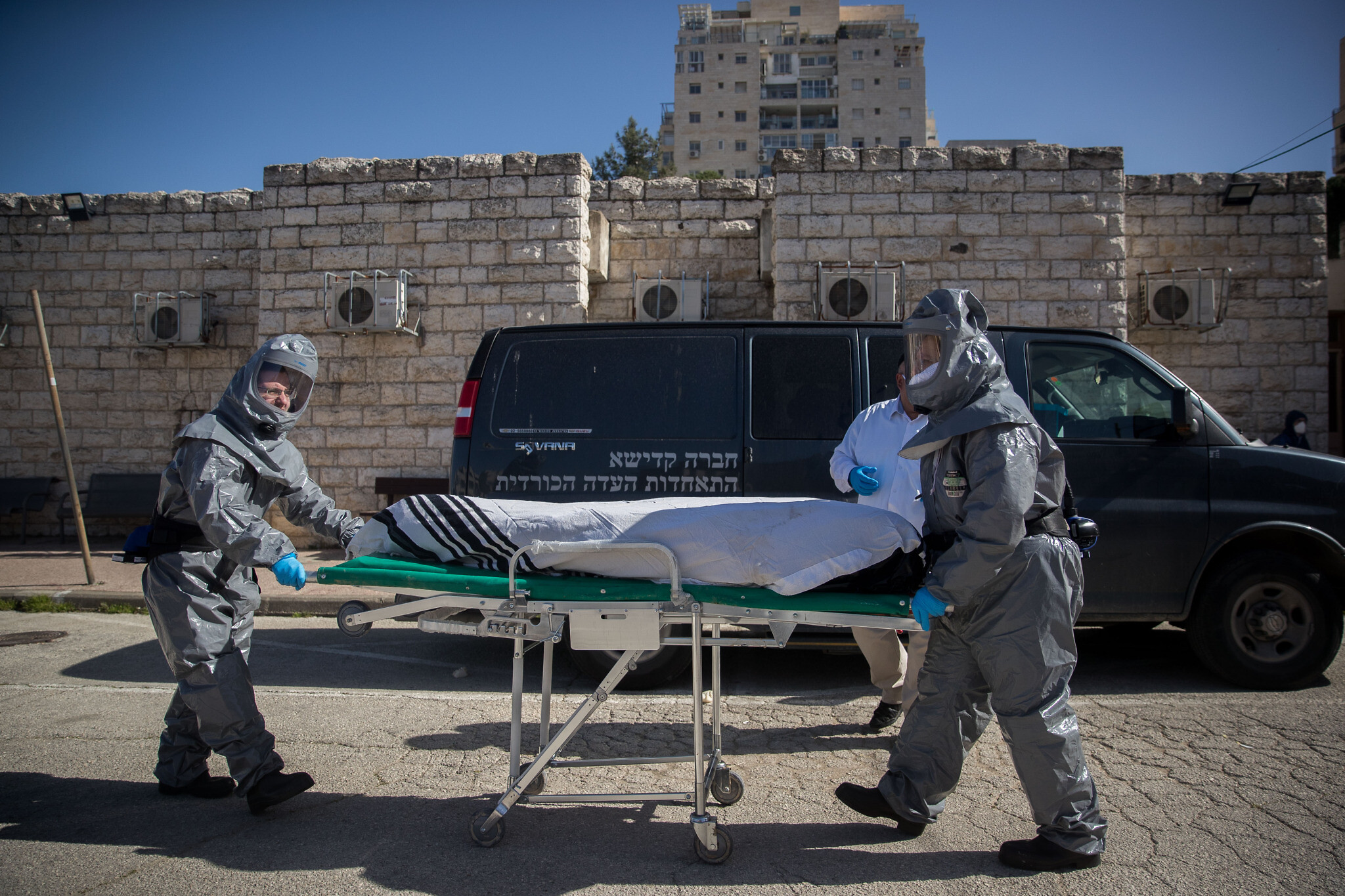
Illustrative: Funeral workers wearing protective clothes carry the body of a patient who died from the coronavirus (COVID-19), at the Shamgar Funeral Home in Jerusalem on March 29, 2020. (Yonatan Sindel/Flash90)

Illustrative: Funeral workers wearing protective clothes carry the body of a patient who died from the coronavirus (COVID-19), at the Shamgar Funeral Home in Jerusalem on March 29, 2020. (Yonatan Sindel/Flash90)

The toll in Israel from the coronavirus rose to 15 Sunday with the death of Rosa Sherman, 84, in Jerusalem.

The capital’s Shaare Zedek Medical Center announced her death in a statement, saying she was hospitalized six days ago in very serious condition.

Sherman was the third person to die from the virus since Sunday morning. Earlier a person died in Bnei Brak and another in Jerusalem, both in their 90s.

Of the 15 people to die so far in Israel from COVID-19, the disease caused by the coronavirus, 13 were over the age of 70. An 82-year-old Israeli man in Italy also died of the disease.

As of Sunday morning, there have been 3,865 confirmed coronavirus cases in Israel. According to the Health Ministry, 66 people are in serious condition, including 54 who were breathing with the help of ventilators. Another 82 people were in moderate condition, while the rest had minor symptoms.

One of those in serious condition is a man in his 20s who had no preexisting medical issues. Due to increasing difficulty in breathing, he was sedated and hooked up to a ventilator, Samson Assuta Ashdod University Hospital said Sunday.

The continued rise in virus cases came as a top Health Ministry official reportedly warned that Israel needed to prepare for a situation in which 5,000 people infected with the virus needed ventilators.

“This is a difficult scenario, but we can endure it,” Dr. Vered Ezra, head of medical management at the ministry, was quoted saying by Channel 12 news as saying in a briefing.

According to a report prepared last week for the Knesset’s Special Committee on Dealing With the Coronavirus, there are at most 1,437 ventilator machines in the country still available to treat patients. The Health Ministry disputed that figure, saying there were 2,864 available ventilators.

There have been growing concerns there may not be enough ventilators to treat all of the most seriously ill, leaving doctors with life and death decisions on whom to keep alive.

Israelis were ordered starting on Wednesday to remain in their homes unless they are taking part in a small number of approved activities, including purchasing food and medicine or going a short walk of no more than 100 meters (328 feet) from their home. Those found violating those regulations are subject to fines of upwards of NIS 500 ($140) or imprisonment.

The government was set to weigh imposing further restrictions.


