Source: Israel expands ‘travelers quarantine’ to France, Germany, Spain, and more – The Jerusalem Post
This list is to be added to already expanded list of country’s requiring isolation, including China, Hong Kong, Macau, Thailand and Singapore.
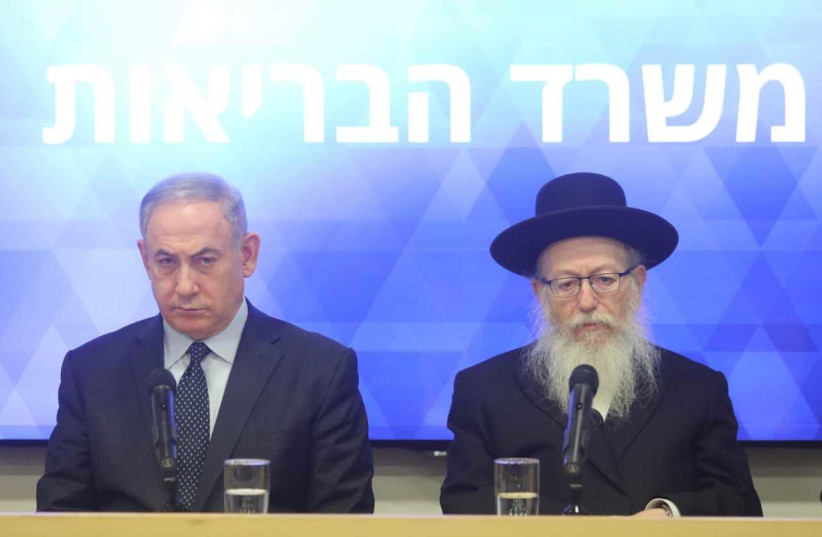
This list is to be added to already expanded list of country’s requiring isolation, including China, Hong Kong, Macau, Thailand and Singapore.
Speaking at a press conference on Wednesday, the prime minister and Health Minister Ya’acov Litzman announced an expansion on the country’s restrictions to help stop the spread of the potentially lethal novel coronavirus.
Additional restrictions: All Israelis who attend an international conference will require isolation and events with over 5,000 participants cannot be held in the country. In addition, the Health Ministry is asking that people refrain from any unnecessary travel abroad.
“We must call it like it is: coronavirus is a world pandemic, among the worst this century,” the prime minister said.
He asked that people refrain from shaking hands with one another and adhere to strict personal hygiene.
The press conference took place after it was determined Wednesday that hundreds more Israelis are likely to enter isolation on after it was discovered that a newly diagnosed coronavirus patient attended a soccer game at Bloomfield Stadium in Tel Aviv.The Health Ministry is asking anyone who entered through gates seven or eight and sat in section 425, rows 43-49, seats 169-179 of the stadium to go into home-quarantine, after patient No. 13, a high school student from the Brenner Regional Council, visited the stadium on February 24.
“All of the instructions provided by the Health Ministry have prevented the disease from spreading,” said Education Minister Rafi Peretz. “Schools and school principals are receiving clear instructions – we are not leaving anyone to deal with this on their own.
“The decision to put these students in isolation was made by the Health Ministry,” he continued, noting that the Education Ministry would continue to follow the Health Ministry’s recommendation “in hopes that these actions will prevent wider spread.”
Health Ministry director-general Prof. Itamar Grotto, who is currently under quarantine himself, posted on Facebook Wednesday to help inform the public about the spread of the coronavirus in Israel and around the world.
“It seems we are looking at dealing with this for at least the next months, so we need to preserve our energy.”
The country has expanded the number of hospitals that can treat coronavirus patients. On Tuesday, Rambam Medical Center opened an isolation unit. And on Wednesday, Barzilai Hospital in Ashkelon also announced it was prepared. The 15-year-old teenager – patient No. 13 – is being held in quarantine there.
Brigadier general says analysis and ‘certain news reports’ point to the source of the virus being a hostile state ‘with economic goals’
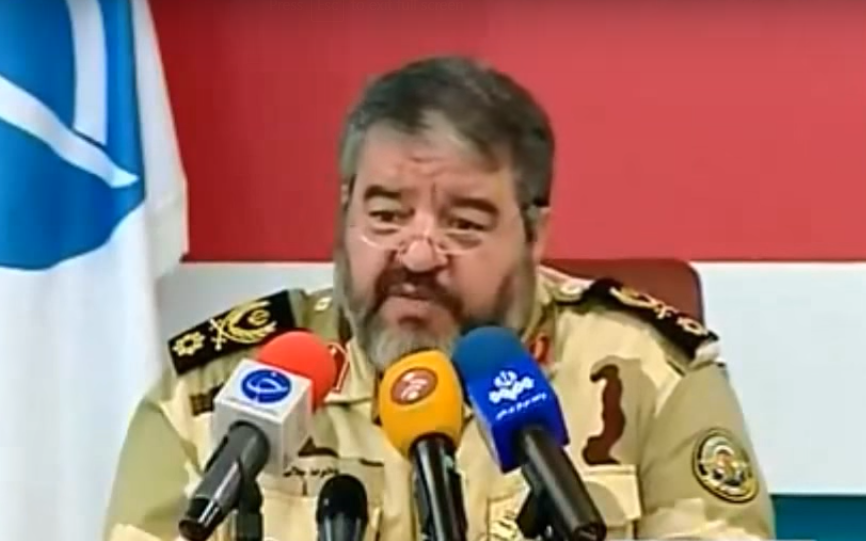
The Head of Iran’s Civil Defense Organization, Brigadier General Gholam Reza Jalali, said Tuesday that media fear-mongering over the new corornavirus and the spread of the disease in his country bolsters claims that the virus is a biological attack on China and Iran.
The virus is known to have killed dozens and infected thousands in Iran.
“A study of the consequences of the virus in terms of tolls or the extent of the epidemic and the type of media propaganda over this issue that is aimed at increasing fear and panic among people strengthens the speculations that a biological attack has been launched against China and Iran with economic goals,” Jalali told Iran’s semi-official Fars News Agency.
Jalali said that analysis and “certain news reports” point to the source of the virus being a hostile state, but that laboratory research is required to compare the new strain with the primary virus to in order to prove the assumption.
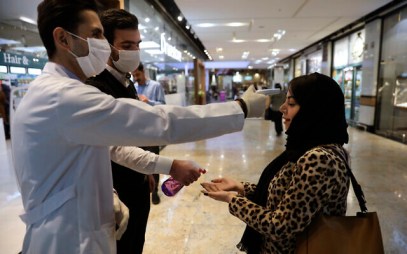
On Tuesday UN health officials said the new coronavirus is well-established in Iran, and warned that a lack of protective gear for healthcare workers was complicating efforts to control the outbreak.
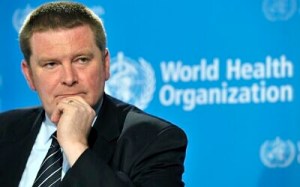
“It is not an easy situation,” Michael Ryan, who heads the World Health Organization’s emergencies program, told reporters in Geneva.
The outbreak, which has claimed 77 lives and infected more than 2,300 people across the country, is affecting multiple cities, according, he pointed out.
“Like in some other countries, the disease is now well-established,” he said.
Ryan said rooting out the virus in countries where it has become established “is not impossible” but “it is difficult.”
“Doctors and nurses have concerns that they do not necessarily have enough equipment, supplies, ventilators, respirators, oxygen,” he said of Iran.
The WHO said on Tuesday that supplies of protective gear worldwide were rapidly depleting, threatening the overall response to the outbreak, which has killed more than 3,100 people — mostly in China where it was first detected in December last year.
But the problem is particularly serious in Iran.
“Those needs are more acute for the Iranian health system than they are for most any other health system,” Ryan said.
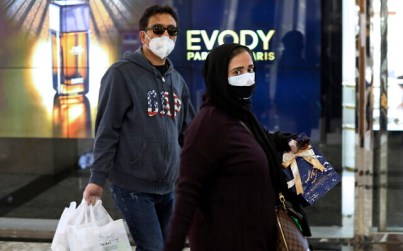
In a first step towards addressing the problem, a WHO team of experts arrived in Iran on Monday to help with the response, bringing with them medical supplies and enough laboratory kits to test roughly 100,000 people.
Iran has shut schools and universities, suspended major cultural and sporting events and cut back on work hours in response to the outbreak.
On Tuesday, it announced another 11 deaths and 835 new infections — the biggest increase in a single day since the COVID-19 outbreak began there nearly two weeks ago.
National emergency services chief Pirhossein Kolivand was the latest high-profile official to contract the illness, a spokesman for the services told AFP.
Mohammad Mirmohammadi, 72, a member of the Expediency Council which advises Iran’s supreme leader, died from the virus this week, according to Tasnim news agency.
The country’s deputy health minister Iraj Harirchi fell ill with COVID-19 last week.
Ryan said that while the spike in numbers could appear to be a very bad thing, it reflected “a more aggressive approach to surveillance and case detection.”
“Things tend to look worse before they get better,” he said, adding: “You have to find your problem, you have to recognize your problem and then deal with your problem.”
Source: Iran’s virus death toll surges to 92 as first vice president said infected | The Times of Israel
Islamic Republic announces 15 new deaths; Friday prayers in major cities canceled amid outbreak; Saudi Arabia bans citizens and residents from performing Muslim pilgrimage
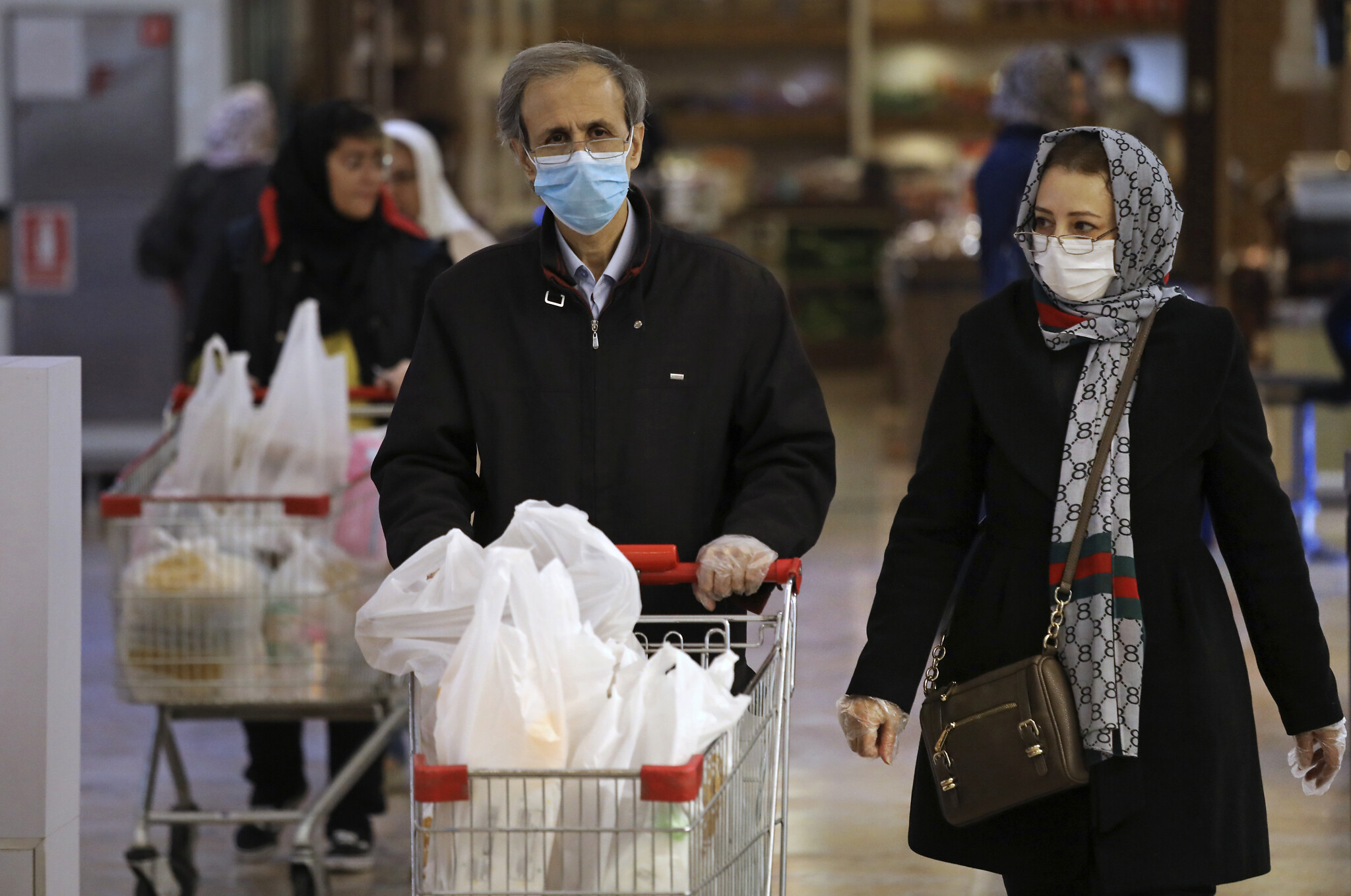
TEHRAN, Iran — Iran announced Wednesday that the new coronavirus has killed 92 people amid 2,922 confirmed cases across the Islamic Republic, the highest death toll in the world outside of China.
Health Ministry spokesman Kianoush Jahanpour announced the new figures — including the 15 new deaths — at a news conference in Tehran, raising Iran’s death toll from the new illness to higher than Italy’s, where there has also been a serious spike in infections.
There are now over 3,140 cases of the new virus across the Middle East. Of those outside Iran in the region, most link back to the Islamic Republic.
The virus has sickened top leaders inside Iran’s civilian government and Shiite theocracy, and one has died. On Wednesday, the IranWire news site reported that the country’s first vice president Eshaq Jahangiri had tested positive and was undergoing treatment, according to Reuters. There was no official confirmation.

Iran stands alone in how the virus has affected its government, even compared to hard-hit China, the epicenter of the outbreak. Worldwide, the virus has infected more than 90,000 people and caused over 3,100 deaths.
Friday prayers in Iran have been canceled across all provincial capitals amid the country’s growing coronavirus outbreak, state television said.
Friday is the main congregational day of prayer in Islam, and traditionally an important event for Iran’s clerical rulers.
The report came after Tehran and other areas canceled Friday prayers last week over the outbreak.
Experts worry Iran may be under-reporting the number of cases it has.
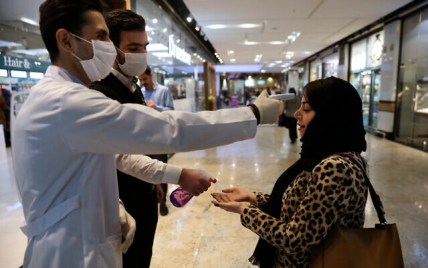
“The virus has no wings to fly,” Jahanpour said. “We are the ones who transfer it to each other.”
Iranian President Hassan Rouhani meanwhile acknowledged that the virus was in nearly all of Iran’s 31 provinces while speaking at a Cabinet meeting Wednesday.
“This disease is a widespread one,” he said, according to a transcript. “It encompasses almost all of our provinces and is, in a sense, a global disease that many countries in the world have become infected with, and we must work together to tackle this problem as quickly as possible.”
Meanwhile Wednesday, Saudi Arabia’s Deputy Health Minister Abdel-Fattah Mashat was quoted on the state-linked news site Al-Yaum saying that groups of visitors to Mecca from inside the country would now also be barred from performing the pilgrimage, known as the umrah. The crowds typically are made up of foreign residents going as large groups. Individuals and families in the kingdom can still travel to Mecca.
Saudi Arabia last week closed off the holiest sites in Islam to foreign pilgrims over the coronavirus, disrupting travel for thousands of Muslims already headed to the kingdom and potentially affecting plans later this year for millions more ahead of the fasting month of Ramadan and the annual hajj pilgrimage.
news•Nov 22, 2019
Jewish Leadership Conference
Presented by Victor David Hanson at the 2019 Conference on Jews and Conservatism on November 10, 2019.
Parts of Europe and North America seem to have lost their self-confidence. We see pacifism and appeasement in the face of external threats, anemic birth-rates that suggest hopelessness, anxiety about defending national borders, and overwhelming shame about the national past. Religious devotion is down, and the cultures of the West are fractured.
But the eminent military historian Victor Davis Hanson believes that Israel is the exception. With significant national resources devoted to defense, an above average birth-rate (even among secular Israelis), a society that fosters religious observance, a culture of military service and national readiness, all while maintaining a democratic government, a market-oriented economic system, and defending the rights of its Jewish and non-Jewish citizens, Israel today exemplifies the very civilizational confidence that other parts of the West need to recover. What are the reasons for Israeli exceptionalism, and can these cultural characteristics inspire a revival of moral confidence elsewhere? Victor Davis Hanson brings his extensive knowledge of ancient and modern history to bear on the role that the Jewish State can now play in the energizing the West.




 anneinpt
 artaxes
 danmillerinpanama
 davidking1530
 Peter Hofman
 Joseph Wouk
 Peter
Peter Louisiana Steve
 WarSclerotic
Recent Comments