Archive for June 2019

Iran stages snap civil defense drill against air, missile, radiation attacks on Tehran – DEBKAfile

June 20, 2019

Source: Iran stages snap civil defense drill against air, missile, radiation attacks on Tehran – DEBKAfile

Iran on Thursday, June 20, launched a snap civil defense exercise that simulated air and missile strikes on Tehran, as well as a possible nuclear attack. It started without prior notice shortly after the Iranians and Americans reported that a surface-to-air missile had shot down a US Navy MQ-4C Triton.

Local Iranian sources reported that the exercise was staged to test the readiness of Iran’s civil defense systems for what was described as “possible mass bombing” and “radiation exposure events” that would call for the evacuation of civilians and steps for controlling outbreaks of mass panic. The Iranian media did not specify in which parts of Tehran the exercise was staged or its duration.

DEBKAfile’s military sources maintain that it was timed for a peak moment in the rising US-Iranian military tension to instill a sense of national emergency in the street for the purpose of rallying the people around the regime. In this climate, dissidents will dare less than ever to raise their voices, least of all to criticize the path of confrontation with America led by supreme ruler Ayatollah Ali Khamenei. According to our sources, the civil defense exercise called without warning points to the Iranian leadership’s adamant resolve not just to continue to challenge the US, but to head for further escalation.
Russian President Vladimir Putin added his voice to the war climate building up by warning the United States that military action against Iran would be a “catastrophe for the region at a minimum.” During a televised call-in show on Thursday, Putin added that it would “trigger an escalation of hostilities with unpredictable results.


After Four Decades of Coddling, Is It Time for War with Iran? 

June 20, 2019


Bill Whittle now….


Israel’s Flotilla 914 – Where I fought in the first Lebanon War

June 20, 2019


Also know as “Peace for Galilee,” 1082..

The :Daburs (wasps) PC boats.


Iran’s grand strategy tests U.S. and its allies Yemen, Iraq, Syria 

June 20, 2019

Source: Iran’s grand strategy tests U.S. and its allies Yemen, Iraq, Syria – Middle East – Jerusalem Post

The strategy of Iran and its allies is to show they can set the Middle East ablaze if they want. From Lebanon to Syria, Iraq, Yemen and the Gulf of Oman, Iran faces off against the US and its allies.

BY SETH J. FRANTZMAN
 JUNE 19, 2019 23:07
M302 rockets found aboard the Klos C ship are displayed at an Israeli navy base in the Red Sea resor

An air strike hit Tel al-Hara in Syria on June 12. The mountain contained an observation area for the Syrian regime and its allies, including groups linked to Iran.

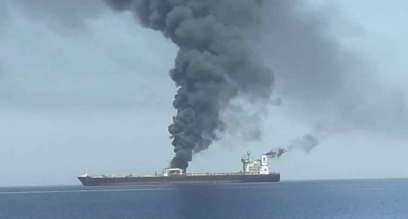
The next day, Iran’s Islamic Revolutionary Guard Corps (IRGC) are accused of attacking two oil tankers in the Gulf of Yemen. The incidents were several thousands of kilometers apart, and help us to understand the scale of the battlefield that links Iran and its allies, pitting them against America’s allies.

The alliances in this contest are well known. On the one side are Iran, pro-Iranian Shi’ite militias in Iraq, the Syrian regime, Hezbollah in Lebanon, Hamas, and Palestinian Islamic Jihad in Gaza and the Houthi rebels in Yemen.

On the other are US allies such as Israel and Saudi Arabia. The strategy of Iran is not a top-down approach controlling all its proxies. But the Islamic republic certainly encourages its allies in various ways, and likely also encourages them to exercise restraint at other times.

For instance, after the US warned Iran against any attacks in early May, the regime in Tehran appeared to scale back some provocations. But it also attempted other probing attacks.

The US says Iran was “almost certainly” behind the sabotage of four tankers off the coast of the UAE on May 12. A rocket was fired near the US embassy in Baghdad on May 19. The Houthi rebels increased their drone attacks on Abha city and airport in Saudi Arabia.

One must draw the conclusion that there is a strategy, and that Iran has exported technology to its allies. Some of this is well known, such as advances in rocketry by Hamas in the last decade, or the Houthis firing ballistic missiles at Riyadh or Iran saying its missiles can hit US carriers. Iran even showcased its new precision in attacks against dissidents in Koya in Iraq and against ISIS last year in Syria.

Then comes the latest rocket and mortar attacks, for which Iranian-backed groups are a likely the culprit. June 14 mortar attacks at Balad Air base in Iraq. June 17 against Camp Taji in Iraq, where US forces are present. June 18 in Mosul. June 19 against oil facilities near Basra, where ExxonMobil has offices. Of course, all of this is done with plausible deniability. A rocket launcher was “found” in Mosul. No group takes responsibility. It could be ISIS, some say.

But so many attacks on so many places where the US is present?

The strategy of Iran and its allies is to show that they can set the Middle East ablaze, if they want to. From Lebanon to Syria, Iraq, Yemen and the Gulf of Oman, Iran faces off against the US and its allies.

Writers such as Martin Chulov have called part of this strategic map Iran’s “road to the sea,” a corridor of influence across Iraq and Syria to Hezbollah. But there is also the southern flank that links it with Yemen and the Gulf of Oman and other parts of Iraq.

Iran’s strategy is not like the pre-World War I strategy of the two alliance systems in Europe. It doesn’t need to calculate the exact times to deploy specific units – like the Schlieffen Plan the Germans came up with that saw war like a Mozart composition.

Rather, Iran’s plan is more Beethoven, with all the power and surprises of his symphonies. Tehran’s strategy now is to test the US and its allies on numerous fronts, while Washington says it does not want war – it only wants “maximum pressure” on Iran. However, for many countries, including Israel and Saudi Arabia, a low-level conflict against Iran’s proxies has already been going on for years.


Iran’s Revolutionary Guard chief: Downing US drone sends ‘clear message’ 

June 20, 2019

Source: Iran’s Revolutionary Guard chief: Downing US drone sends ‘clear message’ | The Times of Israel

Gen. Hossein Salami says Tehran is ready for war though no ‘intention’ for it; US official: Drone was shot down by surface-to-air missile in international airspace

In this undated photo released by Sepahnews, the website of the Iranian Revolutionary Guard, Gen. Hossein Salami speaks in a meeting in Tehran, Iran (Sepahnews via AP)

The commander of Iran’s Revolutionary Guard said Thursday that the shooting down of a US drone had sent “a clear message” to America.

In comments carried live on Iranian state television, Gen. Hossein Salami also said that Iran does “not have any intention for war with any country, but we are ready for war.”

An anonymous US official confirmed earlier Thursday that an American drone was shot down amid heightened tensions between Tehran and Washington over the collapsing nuclear deal.

However, contrary to Iran’s claim, the official told the Reuters news agencythat the aircraft was shot down in international airspace over the Strait of Hormuz — not in Iran’s airspace — by an Iranian surface-to-air missile.

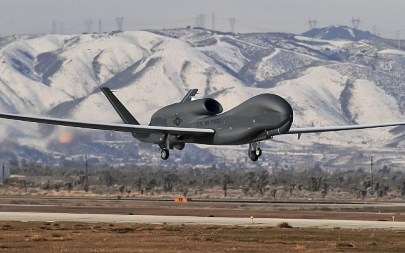
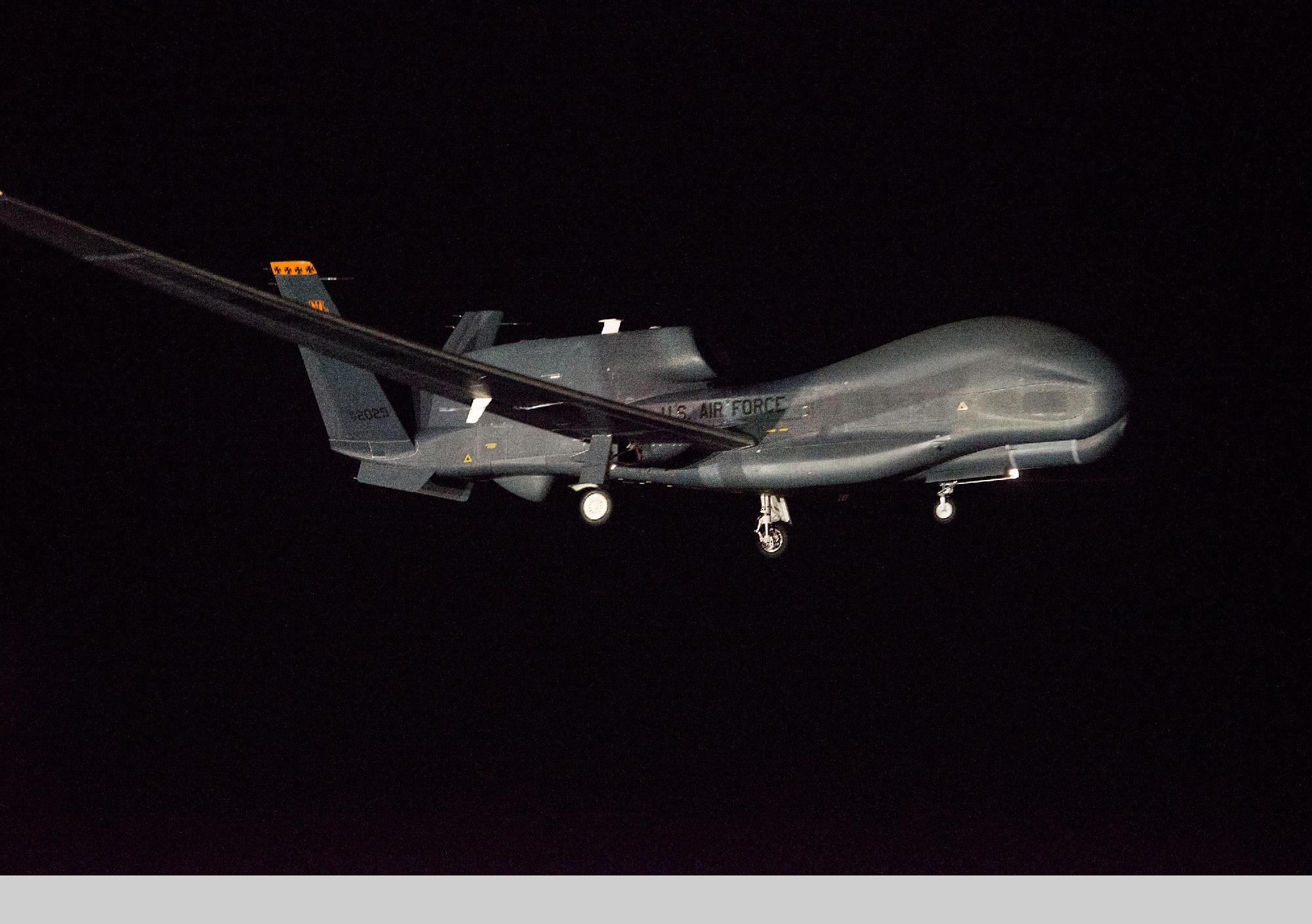
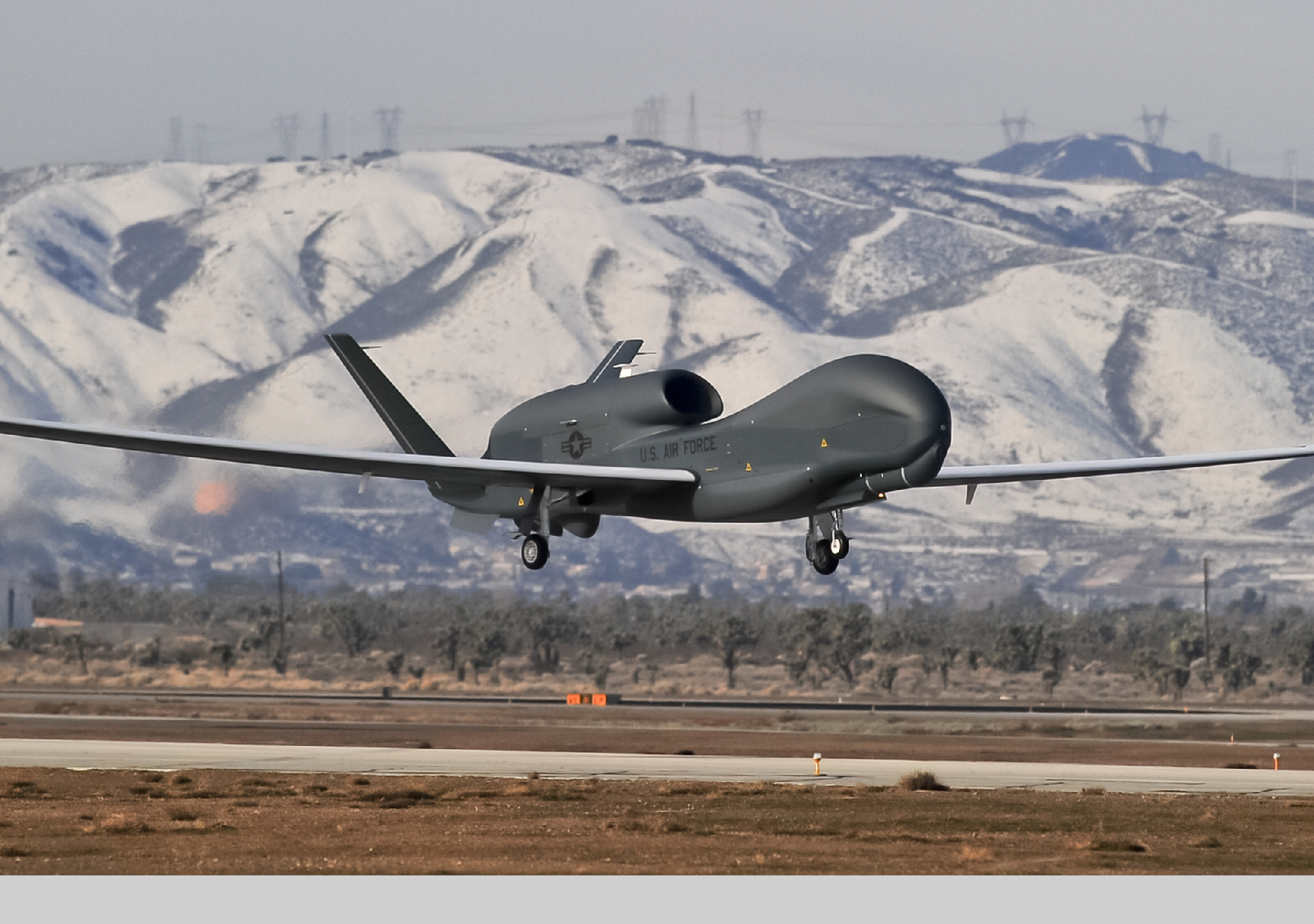
Illustrative: A Northrop Grumman Global Hawk unmanned aircraft (GLOBE NEWSWIRE via AP)

Iran’s paramilitary Revolutionary Guard, which answers only to Supreme Leader Ayatollah Ali Khamenei, said it shot down the drone Thursday morning when it entered Iranian airspace near the Kouhmobarak district in southern Iran’s Hormozgan province.

Kouhmobarak is some 1,200 kilometers (750 miles) southeast of Tehran and is close to the Strait of Hormuz.

Iran’s state-run IRNA news agency, citing the paramilitary Revolutionary Guard, identified the drone as an RQ-4 Global Hawk.

Capt. Bill Urban, a US Central Command spokesman, declined to comment when asked if an American drone was shot down.

However, he told The Associated Press: “There was no drone over Iranian territory.”

Iran’s Revolutionary Guard troops march before the shrine of the late revolutionary founder Ayatollah Khomeini, just outside Tehran, to commemorate the anniversary of the start of the 1980-88 Iraq-Iran war. (AP Photo/Vahid Salemi, File)

A senior Iranian security official had said Wednesday that Iran would “strongly respond” if its airspace was violated.

“Our airspace is our red line and Iran has always responded and will continue to respond strongly to any country that violates our airspace,” the secretary of Iran’s Supreme National Security council said, according to Reuters.

The reported downing of the RQ-4 Global Hawk comes after the US military alleged Iran had fired a missile last week at a drone that responded to an attack on two oil tankers near the Gulf of Oman. The US blames Iran for the attack on the ships, an allegation Tehran rejects.

The attacks come against the backdrop of heightened tensions between the US and Iran following President Donald Trump’s decision to withdraw from Tehran’s nuclear deal with world powers a year ago.

Iran recently has quadrupled its production of low-enriched uranium and threatened to boost its enrichment closer to weapons-grade levels, trying to pressure Europe for new terms to the 2015 deal.

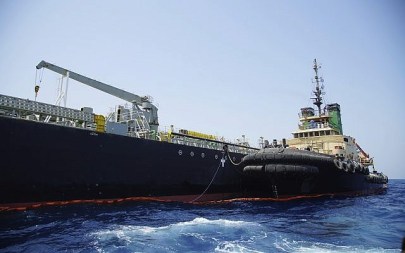
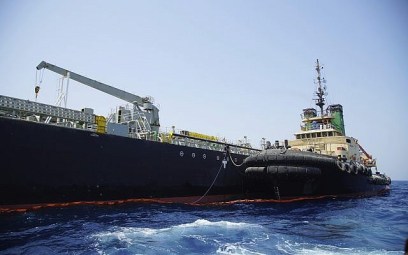
The Panama-flagged, Japanese owned oil tanker Kokuka Courageous, that the U.S. Navy says was damaged by a limpet mine, is anchored off Fujairah, United Arab Emirates, during a trip organized by the Navy for journalists, Wednesday, June 19, 2019. The limpet mines used to attack the oil tanker near the Strait of Hormuz bore “a striking resemblance” to similar mines displayed by Iran, a U.S. Navy explosives expert said Wednesday. Iran has denied being involved. (AP Photo/Fay Abuelgasim)

In recent weeks, the US has sped an aircraft carrier to the Mideast and deployed additional troops to the tens of thousands already in the region. Mysterious attacks also have targeted oil tankers as Iranian-allied Houthi rebels launched bomb-laden drones into Saudi Arabia. Israel and the US are said to blame Iran for the tanker attacks.

All this has raised fears that a miscalculation or further rise in tensions could push the US and Iran into an open conflict, some 40 years after Tehran’s Islamic Revolution.


US official confirms Iran shot down drone, says it was in international airspace 

June 20, 2019

Source: US official confirms Iran shot down drone, says it was in international airspace | The Times of Israel

Tehran reportedly used surface-to-air missile; Iran’s Revolutionary Guard says it hit Global Hawk as it entered Iranian airspace

Illustrative: A Northrop Grumman Global Hawk unmanned aircraft (GLOBE NEWSWIRE via AP)

An anonymous US official confirmed on Thursday that an American drone was shot down amid heightened tensions between Tehran and Washington over its collapsing nuclear deal.

However, contrary to Iran’s claim, the official told the Reuters news agencythat the aircraft was shot down in international airspace over the Strait of Hormuz — not in Iran’s airspace — by Iranian surface-to-air missile.

Iran’s paramilitary Revolutionary Guard, which answers only to Supreme Leader Ayatollah Ali Khamenei, said it shot down the drone Thursday morning when it entered Iranian airspace near the Kouhmobarak district in southern Iran’s Hormozgan province. Kouhmobarak is some 1,200 kilometers (750 miles) southeast of Tehran and is close to the Strait of Hormuz.

Iran’s state-run IRNA news agency, citing the paramilitary Revolutionary Guard, identified the drone as an RQ-4 Global Hawk.

Capt. Bill Urban, a US Central Command spokesman, declined to comment when asked if an American drone was shot down.

However, he told The Associated Press: “There was no drone over Iranian territory.”

Iran’s Revolutionary Guard troops march before the shrine of the late revolutionary founder Ayatollah Khomeini, just outside Tehran, to commemorate the anniversary of the start of the 1980-88 Iraq-Iran war. (AP Photo/Vahid Salemi, File)

A senior Iranian security official said Wednesday that Iran would “strongly respond” if its airspace was violated.

“Our airspace is our red line and Iran has always responded and will continue to respond strongly to any country that violates our airspace,” the secretary of Iran’s Supreme National Security council said, according to Reuters.

The reported shootdown of the RQ-4 Global Hawk comes after the US military alleged Iran had fired a missile at a drone last week that responded to the attack on two oil tankers near the Gulf of Oman. The US blames Iran for the attack on the ships, an allegation Tehran rejects.

The attacks come against the backdrop of heightened tensions between the US and Iran following President Donald Trump’s decision to withdraw from Tehran’s nuclear deal with world powers a year ago.

Iran recently has quadrupled its production of low-enriched uranium and threatened to boost its enrichment closer to weapons-grade levels, trying to pressure Europe for new terms to the 2015 deal.

The Panama-flagged, Japanese owned oil tanker Kokuka Courageous, that the U.S. Navy says was damaged by a limpet mine, is anchored off Fujairah, United Arab Emirates, during a trip organized by the Navy for journalists, Wednesday, June 19, 2019. The limpet mines used to attack the oil tanker near the Strait of Hormuz bore “a striking resemblance” to similar mines displayed by Iran, a U.S. Navy explosives expert said Wednesday. Iran has denied being involved. (AP Photo/Fay Abuelgasim)

In recent weeks, the US has sped an aircraft carrier to the Mideast and deployed additional troops to the tens of thousands already in the region. Mysterious attacks also have targeted oil tankers as Iranian-allied Houthi rebels launched bomb-laden drones into Saudi Arabia. Israel and the US are said to blame Iran for the tanker attacks.

All this has raised fears that a miscalculation or further rise in tensions could push the US and Iran into an open conflict, some 40 years after Tehran’s Islamic Revolution.


The Seeing Eyes of the West: Israeli Intelligence Continues to Uncover Terror Plots, Making Us All Safer

June 20, 2019

Source: Israeli Mossad Tipped off U.S. to Iranian Plan to Attack a US-Allied Target

(IRIB News Agency via AP)

Last month, when Trump dispatched the USS Abraham Lincoln Carrier Strike Group to the Persian Gulf region, it was reportedly the Israeli Mossad that tipped off the U.S. “on an Iranian plan to attack either a US or a US-allied target.”

If so, the warning has already been borne out as just a week later Iran—trying to bully and threaten its way out of the Trump administration’s economic chokehold—attacked Norwegian, Emirati, and Saudi oil tankers, and last week attacked a Japanese and a Norwegian oil tanker.

It’s not the first time Israeli intelligence has warned of impending attacks by Iran or by terror groups.

One of the most notable cases in recent years came when, in 2017, the Israeli army’s Unit 8200 tipped off Australia on an ISIS plot to down a civilian plane.

Unit 8200 is a signals-intelligence outfit similar to the U.S. National Security Agency. In this case, after receiving “exclusive intelligence” from Unit 8200, “Australian security forces arrested [in August] two men suspected of trying to place an improvised explosive device on an Etihad Airways flight out of Sydney in a plot directed by Islamic State.”

An Australian police official called it “one of the most sophisticated plots that has ever been attempted on Australian soil” and said it could have led to “a catastrophic event.”

The next exploit came in June 2018 when the Mossad “[gave] authorities in France, Germany, and Belgium crucial intelligence that led to arrests of a cell headed by an Iranian diplomat… at the Austrian embassy in Vienna.”

The terror cell also included two Belgian nationals and an alleged French accomplice who “planned to bomb a June 30 conference organized by an Iranian dissident group.” Here too the killing could have been large-scale as “[a]bout 25,000 people [eventually] attended the rally in the Paris suburb of Villepinte.”

Iran, of course, has a long history of terror attacks or attempted terror attacks on European soil. Later that year, Tehran was at it again with a plot to kill three Iranians in Denmark thought to belong to another antiregime dissident group.

This time, too, the Mossad stepped in and “provided its Danish counterpart with information” on the plot. The intelligence “prompted the arrest of a Norwegian national of Iranian origin,” and Denmark “recalled its ambassador to Iran over the incident.”

Now it turns out that, back in 2015, the Mossad also informed London of a huge bomb plot by Iran’s proxy Hizballah—but this rather interesting development was covered up.

Acting on the Mossad tipoff, UK security forces “raided four properties in North West London, discovering thousands of disposable ice packs containing three tons of ammonium nitrate, a common ingredient in homemade bombs.”

Britain’s Daily Telegraph, which broke the story, “said the raid came just months after the UK joined the US and other world powers in signing the Iran nuclear deal, and speculated that it was hushed up to avoid derailing the agreement with Tehran, which is the main patron of Hezbollah.”

The crucial role of Israeli intelligence in thwarting terror attacks, including large-scale catastrophic ones, does not mean, of course, that Israel wins popularity contests.

For instance, a BBC international poll of 26,000 people in 2013 found that, among 16 countries listed, the four least-liked were North Korea, Pakistan, Iran… and Israel.

That mindset could be spreading—to some extent—to young Americans. A 2016 Pew poll found 27 percent of millennials—up from 9 percent in 2006—sympathizing with the Palestinians and only 43 percent sympathizing with Israel.

This despite the fact that Israel is a leader in fighting terror while the Palestinians, going back decades, have been innovators of terror—right up to the recent incendiary kites and balloons that burn forests and fields to a crisp.

Popular or not, though, Israeli intelligence will keep uncovering terror plots and other planned aggressions, and all of us—Israelis and non-Israelis alike—are the safer for it.


Iran says Revolutionary Guard shoots down US drone

June 20, 2019

Source: Iran says Revolutionary Guard shoots down US drone | The Times of Israel

State media says Global Hawk hit as it enters Iranian airspace in southern Iran’s Hormozgan province; US military declines to comment

Illustrative: A Northrop Grumman Global Hawk unmanned aircraft (GLOBE NEWSWIRE via AP)

TEHRAN, Iran (AP) — Iran’s Revolutionary Guard said Thursday it shot down a US drone amid heightened tensions between Tehran and Washington over its collapsing nuclear deal. The US military declined to immediately comment.

The reported shootdown of the RQ-4 Global Hawk comes after the US military previously alleged Iran fired a missile at another drone last week that responded to the attack on two oil tankers near the Gulf of Oman. The US blames Iran for the attack on the ships, which Tehran denies.

The attacks come against the backdrop of heightened tensions between the US and Iran following President Donald Trump’s decision to withdraw from Tehran’s nuclear deal with world powers a year ago. The White House separately said it was aware of reports of a missile strike on Saudi Arabia amid a campaign targeting the kingdom by Yemen’s Iranian-allied Houthi rebels.

Iran recently has quadrupled its production of low-enriched uranium and threatened to boost its enrichment closer to weapons-grade levels, trying to pressure Europe for new terms to the 2015 deal.

The Panama-flagged, Japanese owned oil tanker Kokuka Courageous, that the U.S. Navy says was damaged by a limpet mine, is anchored off Fujairah, United Arab Emirates, during a trip organized by the Navy for journalists, Wednesday, June 19, 2019. The limpet mines used to attack the oil tanker near the Strait of Hormuz bore “a striking resemblance” to similar mines displayed by Iran, a U.S. Navy explosives expert said Wednesday. Iran has denied being involved. (AP Photo/Fay Abuelgasim)

In recent weeks, the US has sped an aircraft carrier to the Mideast and deployed additional troops to the tens of thousands already in the region. Mysterious attacks also have targeted oil tankers as Iranian-allied Houthi rebels launched bomb-laden drones into Saudi Arabia.

All this has raised fears that a miscalculation or further rise in tensions could push the US and Iran into an open conflict, some 40 years after Tehran’s Islamic Revolution.

Iran’s paramilitary Revolutionary Guard, which answers only to Supreme Leader Ayatollah Ali Khamenei, said it shot down the drone Thursday morning when it entered Iranian airspace near the Kouhmobarak district in southern Iran’s Hormozgan province. Kouhmobarak is some 1,200 kilometers (750 miles) southeast of Tehran and is close to the Strait of Hormuz.

Iran’s state-run IRNA news agency, citing the paramilitary Revolutionary Guard, identified the drone as an RQ-4 Global Hawk.

Capt. Bill Urban, a US Central Command spokesman, declined to comment when asked if an American drone was shot down.

However, he told The Associated Press: “There was no drone over Iranian territory.”

Meanwhile, White House spokeswoman Sarah Sanders said Trump had been “briefed on the reports of a missile strike in the Kingdom of Saudi Arabia.”

“We are closely monitoring the situation and continuing to consult with our partners and allies,” Sanders said.

A Saudi-led coalition has been battling the Houthis since March 2015 in Yemen, the Arab world’s poorest nation now pushed to the brink of famine by the conflict.

Saudi state media and officials did not immediately report a missile strike Thursday.


Iran mulls foreign air defense aid for domestic security. Russian S-400s with teams? – DEBKAfile

June 20, 2019

Source: Iran mulls foreign air defense aid for domestic security. Russian S-400s with teams? – DEBKAfile

Amid high tension with the US, Tehran is looking at a possible invitation to a foreign power to boost its domestic security against aerial attack.  

“We currently face demonstrative threats. Nevertheless, when it comes to air defense of or country, we consider using foreign potential in addition to our domestic capacities,” said Iran’s Supreme National Security Council Chairman Ali Shamkhani on Wednesday, June 19 when he was asked if Iran might purchase Russian S-400s.

Shamkhani’s words carry special weight because he is one of the few Iranian officials with direct access to supreme leader Ayatollah Ali Khamenei. He went on to reject the possibility of Russia or any other power attempting to smooth over Iran’s dispute with the US. “Mediation is out of the question in the current situation,” he stressed.

The security adviser sharply denounced the United States for accusing Iran of orchestrating the latest attacks on oil tankers in the Gulf. At the same time, he insisted: “Iran and the United States will not come to war as there is no reason for this war to happen.”

DEBKAfile’s military sources take the senior Iranian official’s words to indicate that Tehran is in advanced talks with Moscow on the deployment to Iran of Russian S-400 air defense missiles. In that case, the fastest way would be for Russian teams to come over to operate the advanced systems, since Iran does not have this capability – although Moscow may think twice before getting entangled militarily in a potential confrontation between Iran Tehran and Washington.

Our sources believe that the subject of Russian S-400 assistance for Iran’s air defenses was most likely raised when its president Hassan Rouhani encountered his Russian counterpart Vladimir Putin at the recent Shanghai Cooperation Organization summit last week at Bishkek


Senator Graham “U.S. Should Bomb Iran’s Navy And Oil Refineries!” 

June 20, 2019