Archive for June 2019

With Tehran set to upgrade uranium enrichment, the USS Boxer strike force with Marines reaches Iranian shore – DEBKAfile

June 27, 2019

Source: With Tehran set to upgrade uranium enrichment, the USS Boxer strike force with Marines reaches Iranian shore – DEBKAfile

On Thursday, June 27, Tehran is set to make good on its ultimatum and start accelerating uranium enrichment in violation of the 300-kilo ceiling set by the 2015 nuclear accord, further boosting tensions with the US.

The Atomic Energy Organization announced on Wednesday that the enrichment level of 3,67 percent is to be raised to 20 percent, much closer to nuclear weapons grade. President Donald Trump and top US officials have repeatedly warned that Iran would not be allowed to gain a nuclear weapon.

Asked in a Fox Business Network interview on Wednesday if a war was brewing, Trump replied: “I hope we don’t but we’re in a very strong position if something should happen. “I’m not talking boots on the ground,” he said. “I’m just saying if something would happen, it wouldn’t last very long.” Nevertheless, in the last few days, the USS Boxer expeditionary strike group has taken up position opposite Iran’s shores, carrying some 2,200 troops of the 11th Marine Expeditionary Unit. This fairly small helicopter carrier’s strike group also consists of two amphibious dock landing craft, the USS John P. Murtha and the USS Harpers.

This group is designed to execute amphibious landings of troops on enemy shores and evacuate them upon completing their mission. On the Boxer’s decks are an AV-8B Harrier II strike aircraft which has vertical takeoff ability, transport helicopters and helicopters bearing Sea Sparrow anti-ship missiles.

The deployment of the Boxer strike group and a Marine force opposite Iran’s shore is intended to inform Tehran that the Trump administration is poised ready for immediate response in the event of further threats or provocations by the Islamic Republic – whether by boosting uranium enrichment for its nuclear program or strikes at US and allied oil targets in the Persian Gulf.


Khamenei says Iran won’t budge despite fresh US sanctions

June 26, 2019

Source: Khamenei says Iran won’t budge despite fresh US sanctions | The Times of Israel

As war of words escalates and after White House targets top officials, supreme leader blasts ‘sinister’ American government

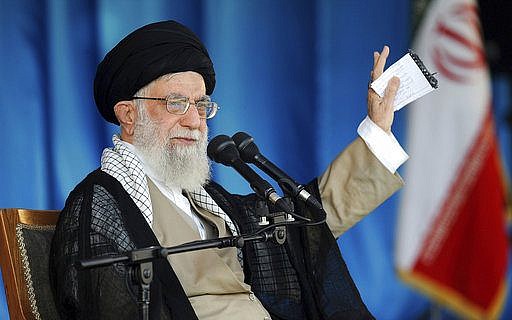
Iranian Supreme Leader Ayatollah Ali Khamenei at a gathering of the Basij, an all-volunteer force under the Revolutionary Guard, in Tehran, October 4, 2018. (Office of the Iranian Supreme Leader via AP)

Iran’s Supreme Leader Ayatollah Ali Khamenei on Wednesday said Iranians would not budge or change their stance following the new US sanctions targeting him and his associates.

The top Iranian cleric’s website on Wednesday quoted Khamenei as calling Donald Trump’s administration “the most sinister” US government.

Khamenei was also quoted as saying that “the most hated figures of such an administration accuse and insult the Iranian nation.”

“[The] Iranian nation will not budge and will not withdraw because of the insults,” he said.

Khamenei made the remarks as Tehran and Washington were in the midst of an escalating war of words following Iran shooting down a US drone last week.

US President Donald Trump speaks to reporters on the South Lawn of the White House in Washington on June 22, 2019, before boarding Marine One for the trip to Camp David in Maryland. (AP/Susan Walsh)

US President Donald Trump on Monday enacted the new sanctions against Khamenei and others. US officials also said they plan sanctions against Iranian Foreign Minister Mohammad Javad Zarif.

The sanctions followed Iran’s downing last week of a US surveillance drone, worth over $100 million, over the Strait of Hormuz, sharply escalating the crisis.

Trump said he pulled back from retaliatory strikes on Iran at the last minute, rejecting Tehran’s claim that the aircraft was in its airspace.

But pressure mounted this week with Trump announcing sanctions on Khamenei and other top officials.

The new measures are the latest against Tehran since Trump pulled out of a landmark nuclear accord between Iran and world powers.

Iranian President Hassan Rouhani speaks in a ceremony at Imam Khomeini International Airport, south of the capital Tehran on June 18, 2019. (Iranian Presidency Office via AP)

Earlier on Wednesday, Iranian President Hassan Rouhani sought to rein in soaring tensions between the two countries, telling his French counterpart that Iran was not seeking war with the US.

“Iran has no interest to increase tension in the region and it never seeks war with any country, including (the) US,” the president told Emmanuel Macron, according to state news agency IRNA.

Rouhani blamed the United States for regional tensions and said if Washington had stuck to the deal “we would have witnessed positive developments in the region.”

Iran announced in May it would suspend two of its pledges under the 2015 deal, giving the agreement’s remaining supporters two months to help it circumvent US sanctions.

On Tuesday Tehran’s top security official, Ali Shamkhani, said Iran would “forcefully” reduce further commitments from July 7.


Israeli F-35s train alongside US, UK in first international exercise

June 26, 2019

Source: Israeli F-35s train alongside US, UK in first international exercise | The Times of Israel

Fifth-generation stealth fighter jets fly in drill over Mediterranean Sea to test and improve aircraft’s abilities, IDF says

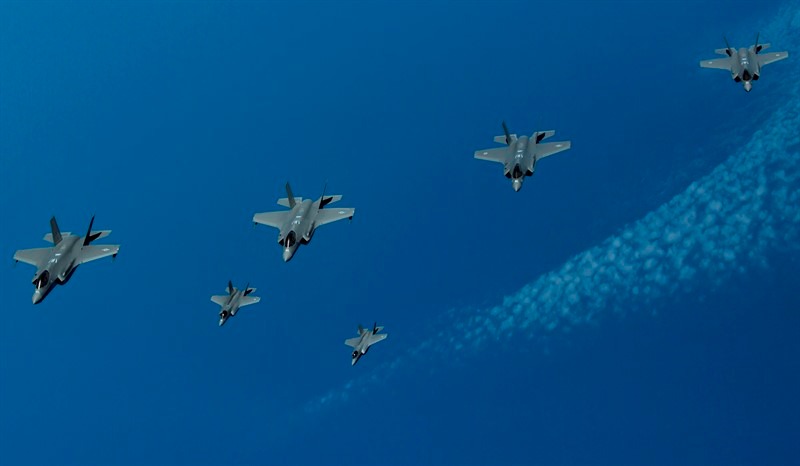
F-35 fighter jets from Israel, the United States and the United Kingdom take part in an aerial exercise over the Mediterranean Sea on June 25, 2019. (Israel Defense Forces)

F-35 fighter jets from Israel, the United States and the United Kingdom take part in an aerial exercise over the Mediterranean Sea on June 25, 2019. (Israel Defense Forces)

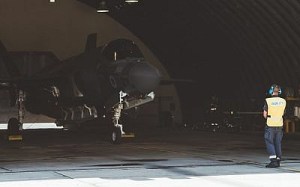
F-35 fighter jets from Israel, the United States and United Kingdom conducted training flights over the Mediterranean Sea Tuesday in the Israeli aircraft’s first-ever international exercise, the military said.

This marked a significant show of military cooperation between the three countries.

The Israel Defense Forces received the fifth-generation stealth fighter from the United States’ Lockheed Martin defense contractor in late 2016 and declared it operational roughly a year later. In 2018, the Israeli Air Force revealed it had used the F-35 operationally — including at least once over Lebanon — making it the first military in the world to do so.

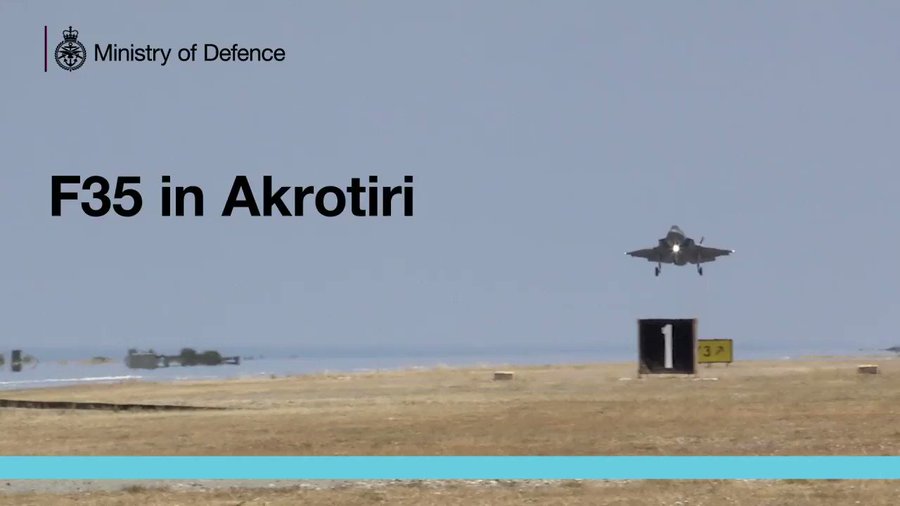
On Tuesday, the United Kingdom said its F-35 fighter jets had also conducted their first missions, flying sorties over Iraq and Syria as part of the fight against the Islamic State terror group.

Embedded video

Ministry of Defence 🇬🇧

@DefenceHQ

📹 🛫 History has been made over the last week as UK F-35s have completed their first operational missions over Iraq and Syria @RoyalAirForce @RoyalNavy http://ow.ly/yNke50uM6dO 

The joint drill, which included dogfights between the F-35 fighter jets, was dubbed “Tri-Lightning,” a reference to the aircraft’s official designation, the Lockheed Martin F-35 Lightning II.

“The first international air exercise involving Israeli F-35 planes alongside foreign F-35 planes was held yesterday. The exercise was held over the Mediterranean Sea and simulated survival scenarios and defense against varying threats from advanced aircraft, including the F-35 plane,” the IDF said in a statement.

The Israeli Air Force said it planned to hold additional international exercises with the stealth fighter jets in the future in order to “advance its capabilities.”

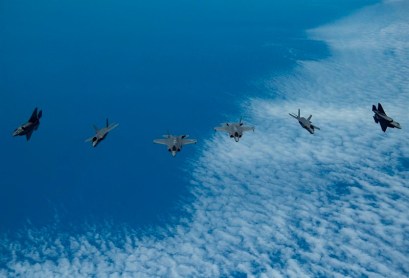
F-35 fighter jets from Israel, the United States and the United Kingdom take part in an aerial exercise over the Mediterranean Sea on June 25, 2019. (Israel Defense Forces)

As one of the world’s leading air forces, the IAF regularly leads and participates in international exercises, including its flagship biennial Blue Flag drill.

Israel was also invited to take part in the British Royal Air Force’s Cobra Warrior exercise planned for September 2019.

“International cooperation between Israel, the US and Britain strengthens our joint interests and our new, exclusive capabilities in the Middle East,” said IAF Chief of Air Staff Brig. Gen. Amnon Ein-Dar.

Last week, the air force held a large multi-day exercise simulating combat action on multiple fronts, the army said Tuesday, with F-35s taking part for the first time.

That drill included night and day missions by fighter jets, helicopters, cargo planes, drones, air defense units and ground support forces. It simulated simultaneous fighting in the Gaza Strip, Syria and Lebanon, and included scenarios involving an enemy armed with advanced technology, such as the Russian S-300 and S-400 missile defense systems; a home front under massive missile attacks; and challenges such as damaged runways and disabled IAF communications centers.

An Israeli Air Force F-35 is seen during an air force exercise, June 2019. (IDF Spokesperson)

The IAF has acknowledged receiving from the US-based Lockheed Martin defense contractor at least 14 F-35 fighter jets of the 50 that have been ordered. These are scheduled to be delivered in installments of twos and threes through 2024.

The fifth-generation F-35 has been lauded as a “game-changer” by the military, not only for its offensive and stealth capabilities, but for its ability to connect its systems with other aircraft and form an information-sharing network.

Detractors, however, balked at the high price tag for the aircraft: approximately $100 million apiece (Lockheed Martin says the cost is expected to go down as more countries purchase the F-35).

Times of Israel staff contributed to this report.


Kushner to Palestinians: Stop blaming others for your misfortunes 

June 26, 2019

Source: Kushner to Palestinians: Stop blaming others for your misfortunes – www.israelhayom.com

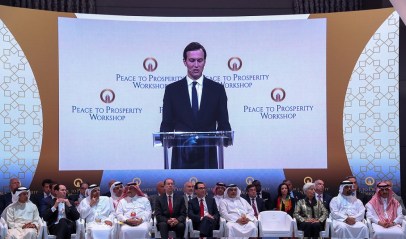
“We can turn this region from a victim of past conflicts into a model for commerce and advancement,” White House senior adviser Jared Kushner says at US-led economic conference in Bahrain. “My direct message to the Palestinians is that despite what those who have let you down in the past have told you, President Trump and America has not given up on you.”

Kushner, speaking at a conference in Bahrain, defended the proposal as the foundation of any eventual peace plan. Meanwhile, Palestinians protested the plan in the streets of the West Bank, Gaza and elsewhere.

The president’s son-in-law sought to defend his long-anticipated plan at the start of a two-day workshop aimed at building support for a program to combine private investment and support from regional governments to transform economically challenged Palestinian communities.

“One who is more hopeful and sees an opportunity for his or her family will put energy into pursuing opportunity, instead of blaming others for their current misfortune,” Kushner said. “That is why agreeing on an economic pathway forward is a necessary precondition to what has previously been an unsolvable political situation.”

“My direct message to the Palestinians is that despite what those who have let you down in the past have told you, President Trump and America has not given up on you,” Kushner said. “This workshop is for you, and if this is executed correctly, it will lead to a better future for the Palestinian people: a future of dignity, prosperity and opportunity.”

He continued: “What we have developed is the most comprehensive economic plan ever created specifically for the Palestinians and the broader Middle East… We can turn this region from a victim of past conflicts into a model for commerce and advancement throughout the world.

“To be clear, economic growth and prosperity for the Palestinian people are not possible without an enduring and fair political solution to the conflict … one that guarantees Israel’s security and respects the dignity of the Palestinian people… “However, today is not about the political issues. We will get to those at the right time,” he said.

Kushner’s audience in the tiny Gulf kingdom did not include any official Palestinian delegation. Israel, which will have to sign off on many of the proposal’s projects, did not send any government officials, either. Those who heard Kushner in person were Arab finance ministers, the heads of international financial organizations and global business executives and investors.

While the representation was broad, many countries’ delegations were not headed by cabinet ministers, an indication of their uncertainty about the proposal’s viability.

The Palestinians have rejected the proposal – which aims in 10 years to create a million new jobs, slash unemployment and improve living standards in the West Bank, Gaza and across the Middle East – because it does not include a horizon for granting independence. US officials say the political portion of the plan addressing such thorny issues may not be released until fall.

Kushner acknowledged that a political solution is crucial to the success of the economic proposal. He said it was more important to first set out what is economically possible.

“Agreeing on an economic pathway forward is a necessary precondition to resolving what has been a previously unsolvable political situation,” he said.

Trump boiled it down to even simpler terms: “We have to get economic support because the Palestinians don’t have money, and we have to help the Palestinians with some money,” he told reporters at the White House.

But, without proposals on borders, the status of Jerusalem and the fate of Palestinian refugees, the Palestinians say the economic plan is meaningless. To express their rejection, Palestinians in Gaza called a general strike on Tuesday to protest the meeting, with demonstrators in the West Bank burning effigies of Trump and featuring a donkey pasted over with images of Gulf royals.

“Palestine is not for sale!” protesters chanted. “From Bahrain to Saudi Arabia, we are not tempted by your millions!”

Besides opposition from the intended beneficiaries of the proposal, the plan has been criticized by former diplomats, aid workers and others involved in past peacemaking efforts for being unrealistic and lacking any clear description of who will pay for it.

Trump, Kushner and US Treasury Secretary Steven Mnuchin argue that a new approach is needed precisely because previous efforts have fallen short. They note that the heads of the International Monetary Fund and the World Bank will attend and speak at the event, as will the head of FIFA, the international soccer federation, and the managers of numerous large investment funds.

The Palestinians wrote to FIFA chief Gianni Infantino on Tuesday urging him to reconsider his participation.

“How can the president of the highest governing body of football, and the most outspoken person on the importance of separating politics from sports, agree to participate in a political workshop whose objective is to determine the future of Palestine in the absence of Palestinians?” the letter said.

Enthusiasm has also been tempered by the Trump administration’s refusal to endorse the creation of a Palestinian state in the West Bank, Gaza and east Jerusalem, the “two-state solution” that has long been viewed internationally as the only viable path to lasting peace.

Even the Arab delegations attending the meeting in Bahrain have couched their participation with reaffirmations of support for an eventual Palestinian state.

Saudi Arabia, one of the few Arab countries to send its foreign minister to the event, said it remained committed to that end with a state based on the border that existed before the 1967 Six-Day War.

Egypt and Jordan, the only Arab nations to have signed peace deals with Israel, are sending only midlevel representatives to Bahrain and said they would not abandon demands for a Palestinian state.

At a ceremony hosted by Israel’s president to mark 40 years of Egyptian-Israeli peace on Tuesday, Egypt’s ambassador to Israel, Khaled Azmi, said his country’s “vision was, and still is, based on full nation-statehood and security for everyone in the region.”

Bahrain, which has close ties to the Saudis, has been criticized for hosting the conference and sharply limited the number of journalists allowed to cover it. It has defended its decision by saying its only objective is to support the “brotherly Palestinian people.”

Although Bahrain has cracked down on dissent, Bahraini opposition voices protested the meeting on social media, particularly on Twitter, where Arabic hashtags about the workshop were trending under banners “Down with Bahrain conference” and “Down with the Deal of Shame.”


Experts fear ‘snowball effect’ as Iran abandons nuclear deal 

June 26, 2019

Source: Experts fear ‘snowball effect’ as Iran abandons nuclear deal | The Times of Israel

As efforts to salvage 2015 pact flounder, Tehran gears up to enrich uranium closer to weapons-grade levels, inching closer to an atomic bomb

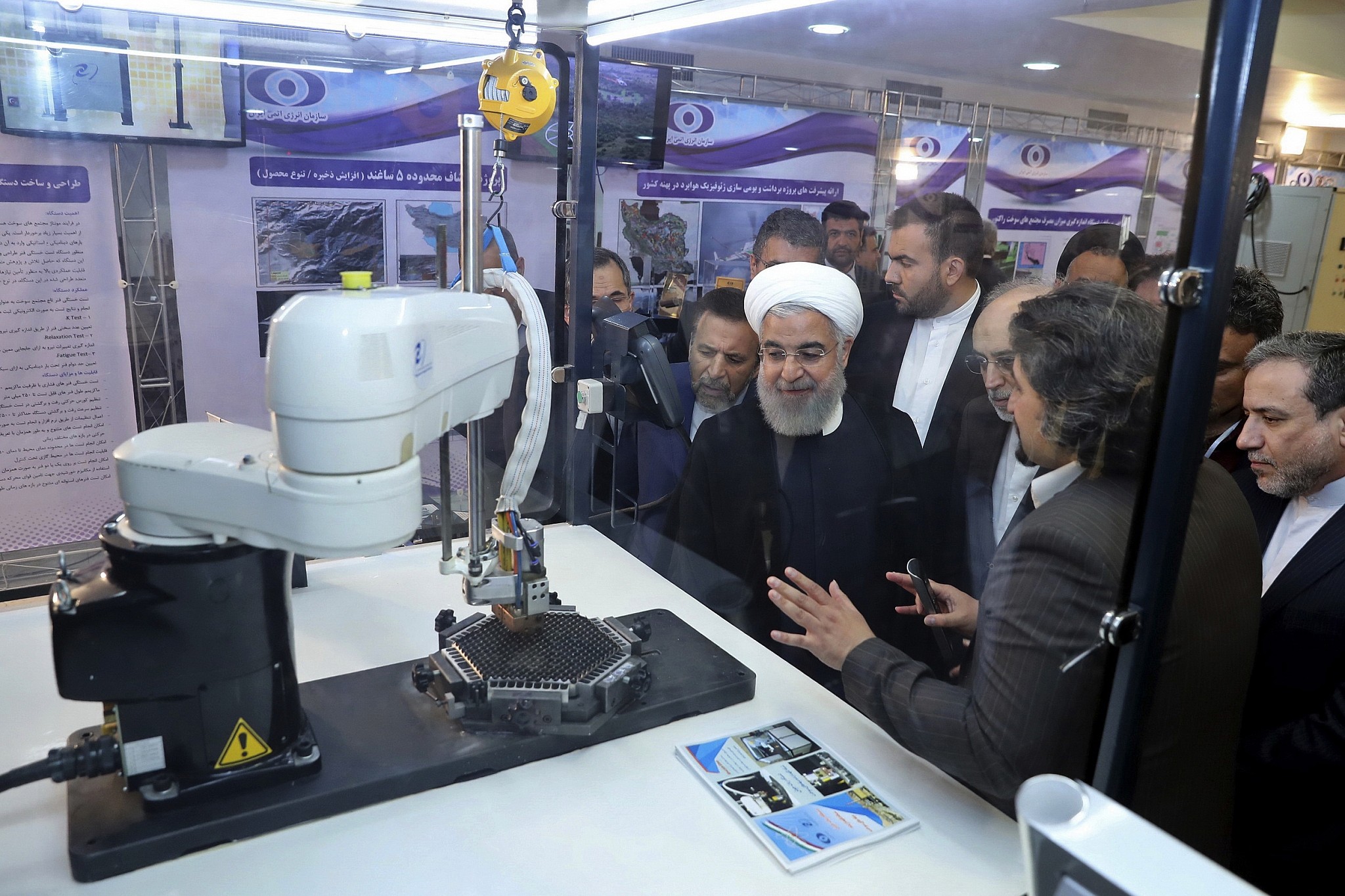
In this April 9, 2018 file photo, released by an official website of the office of the Iranian Presidency, President Hassan Rouhani listens to explanations on new nuclear achievements at a ceremony to mark "National Nuclear Day," in Tehran, Iran. (Iranian Presidency Office via AP, File)

In this April 9, 2018 file photo, released by an official website of the office of the Iranian Presidency, President Hassan Rouhani listens to explanations on new nuclear achievements at a ceremony to mark “National Nuclear Day,” in Tehran, Iran. (Iranian Presidency Office via AP, File)

DUBAI, United Arab Emirates (AP) — As Iran prepares to surpass limits set by its 2015 nuclear deal with world powers, each step it takes narrows the time the country’s leaders would need to have enough highly enriched uranium for an atomic bomb — if they chose to build one.

The United Nations says Iran has so far respected the deal’s terms. But by Thursday, Iran says it will have over 300 kilograms (660 pounds) of low-enriched uranium in its possession, which would mean it had broken out of the atomic accord.

European countries that are still a part of the nuclear accord face a July 7 deadline imposed by Tehran to offer a better deal and long-promised relief from US sanctions, or Iran will also begin enriching its uranium closer to weapons-grade levels.

Breaking the stockpile limit by itself doesn’t radically change the one year experts say Iran would need to have enough material for a bomb. Coupled with increasing enrichment, however, it begins to close that window and hamper any diplomatic efforts at saving the accord.

“I worry about the snowball effect,” said Corey Hinderstein, a vice president at the Washington-based Nuclear Threat Initiative who once led the US Energy Department’s Iran task force. “Iran now takes a step which puts Europe and the other members of the deal in an even-tougher position.”

Under terms of the nuclear deal, Iran agreed to have less than 300 kilograms of uranium enriched to a maximum of 3.67 percent. Previously, Iran enriched as high as 20%, which is a short technical step away from reaching weapons-grade levels. It also held up to 10,000 kilograms (22,046 pounds) of the higher-enriched uranium.

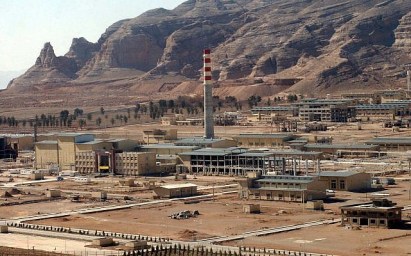
Iran’s uranium conversion facility near Isfahan, which reprocesses uranium ore concentrate into uranium hexafluoride gas, which is then taken to Natanz and fed into the centrifuges for enrichment, March 30, 2005. (AP/Vahid Salemi)

Experts who spoke to The Associated Press described the enrichment and stockpile limits in the deal as a sort of sliding scale. Balancing both elements keeps Iran a year away from having enough material for a nuclear weapon, something Iran denies it seeks despite Western concerns about its program.

At the time of the deal — which was signed by Iran, the United States, China, Russia, Germany, France and Britain — experts believed Iran needed anywhere from several weeks to three months to have enough material for a bomb.

However, the stockpile limit isn’t an immediate worry from a nonproliferation standpoint, experts say.

“Going over the limit doesn’t immediately signify that Iran has enough material that could — if further enriched and processed — be used in a nuclear weapon,” said Tom Plant, the director of proliferation and nuclear policy at London’s Royal United Services Institute for Defense and Security Studies.

“It does mean that it builds up reserves of material that could in the future support a more rapid push to the higher levels of enrichment that are suitable for weapons use,” Plant said.

The danger comes July 7, if Iran begins enriching uranium to higher levels.

“If Iran begins stockpiling uranium enriched to higher levels, the breakout timeline would decrease more quickly,” said Kelsey Davenport, the director of nonproliferation policy at the Washington-based Arms Control Association.

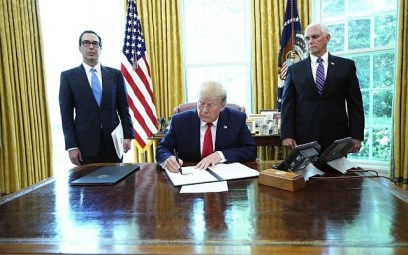
US President Donald Trump signs with US Vice President Mike Pence(R) and US Secretary of Treasury Steven Mnuchin at the White House on June 24, 2019, ‘hard-hitting sanctions’ on Iran’s supreme leader. (MANDEL NGAN / AFP)

Both Davenport and Ian Stewart, a professor at King’s College London who runs its anti-proliferation studies program called Project Alpha, worry about miscalculations from Iran, the US or the West amid the brinkmanship.

“This highlights the real tension at play in Iran: doing enough to satisfy Iranian hard-liners while also maintaining EU, Chinese and Russian support” for the deal, Stewart said. “There’s a real risk of miscalculating, not least because it’s not clear at which point the EU will have to back away from a non-compliant Iran.”

Davenport says Iran’s moves probably are aimed at gaining leverage in negotiations.

“Even if Iran decided to pursue a nuclear weapon, it would still take months to further enrich and weaponize the uranium,” she said. “It is critical that the United States does not overreact to a stockpile breach and use it as an excuse to further ratchet up tensions in the region.”

A year after US President Donald Trump’s unilateral withdrawal from the nuclear deal, the US and Iran are already locked in a volatile standoff. Last week, Iran shot down a US military drone, saying it violated Iranian airspace, though Washington said it was above international waters. The US has blamed Iran for mysterious explosions targeting oil tankers near the Strait of Hormuz. Tehran denied any involvement.

Meanwhile, Prime Minister Benjamin Netanyahu has vowed to stop Iran from obtaining a nuclear weapon. Israel has bombed nuclear facilities in Iraq and Syria in the past, and reportedly pushed for a similar strike in Iran prior to the 2015 deal.

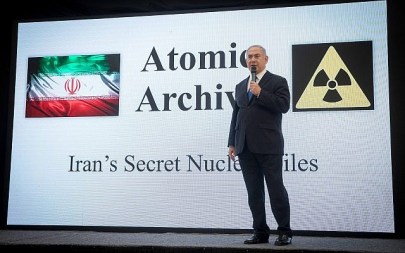
Prime Minister Benjamin Netanyahu exposes stolen files on Iran’s nuclear program in a press conference in Tel Aviv, on April 30, 2018. (Miriam Alster/Flash90)

Iran, for now, allows UN inspectors to monitor its nuclear facilities via in-person checks and surveillance cameras. It also has yet to begin widespread use of advanced centrifuges that would speed its enrichment. Experts fear either of those happening.

Once Iran starts going beyond the terms of the nuclear deal, one fact remains indisputable: the time it needs to have enough material for a possible atomic bomb starts dropping.

“As soon as they go over 300 or above 3.67, that number is starting to count down from one year,” Hinderstein warned. “So if they do both, then it’s just going to steepen that line from one year to wherever they end up.”


Moscow pointedly allows East Jerusalem venue for US-Russian-Israeli Mid-East security meeting – DEBKAfile

June 26, 2019

Source: Moscow pointedly allows East Jerusalem venue for US-Russian-Israeli Mid-East security meeting – DEBKAfile

The first gettogether of the US, Russian and Israel national security advisers on Tuesday, June 25 in Jerusalem proved a useful forum for the powers to air pressing Mid East concerns even without a breakthrough. John Bolton, Nikolai Patrushev and Meir Ben-Shabbat, who was upstaged by Prime Minister Binyamin Netanyahu, also shone interesting light on their boss’s respective policies.

  1. President Donald Trump’s anti-Iran offensive seems to have narrowed down to a single focus, i.e., Iran will never be allowed to acquire a nuclear bomb. The 12-point ultimatum for Iran elaborated not long ago by US Secretary of State Mike Pompeo has faded away. Since Trump’s next steps are unknown, there was not much point in the three security advisers coming to conclusions or even indulging in far-reaching brainstorming.
  2. There was also little point in trying to double-guess Iran’s next moves. Tehran abruptly killed any form of diplomacy with Washington after the imposition of US sanctions on Monday, June 24 against supreme leader Ayatollah Ali Khamenei. Even the quiet, discreet dialogue taking place in Baghdad, with Swiss and Iraqi mediation, that was revealed exclusively by DEBKAfile, has been shut down.
  3. All three officials concurred in urging the removal of all foreign troops from Syria as a general proposition, although they were divided – the US and Israel versus Russia – on the Iranian military presence there and other details.
  4. The US national security adviser John Bolton limped into the meeting after President Trump cut him down in an NBC interview: “John Bolton is absolutely a hawk,” he said. “If it was up to him, he’d take on the whole world at one time.” Not long ago, Bolton was Trump’s chief point man with the Kremlin, but this role appears to have faded in recent months. Bolton’s troubles at home helped reduce parts of the tripartite event to a conversation between the Russian and Israeli advisers.
  5. Therefore, the plan was ditched for Bolton and Patrushev, with Netanyahu’s assistance, to produce a joint working script on key Middle East issues for the Trump-Putin sitdown at the Osaka G20 summit later this month.
  6. That the top security officials of the two world powers sat down at the same table in Jerusalem to discuss vital regional issues in partnership with Israel must be chalked up to Netanyahu as an extraordinary feat of diplomacy and an unprecedented boost for Israel’s international prestige.
  7. A little noticed feature of the event was another groundbreaker. It was Moscow’s consent to the Israeli prime minister chairing this high-powered meeting at an East Jerusalem venue, the Orient Hotel. By that gesture, along with other pro-Israeli steps, Putin injected some Russian input into Trump’s recognition of both parts of Jerusalem as Israel’s capital. Putin was not amiss to the security conference in Jerusalem outshining the US-sponsored economic event on the future of the Palestinians which took place on the same day in Manama, Bahrain.
  8. In a speech opening the meeting, Netanyahu announced that President Putin would be visiting Israel later this year. This news was completely ignored by the local media. It was taken rightly as another vote of support for Netanyahu’s run for re-election in September, just as the Kremlin backed him in the April vote.


Trump warns Iran of ‘overwhelming force’ in the event of an attack on ‘anything American’

June 25, 2019

Source: Iran-U.S. tensions: Iran calls new sanctions ‘outrageous and idiotic’ – The Washington Post

On June 25, after President Trump announced new sanctions, Iranian President Hassan Rouhani accused the United States of lying and refused any future talks. 

June 25 at 11:59 AM

 President Trump on Tuesday warned Iran that any attack on “anything American” would be met with “great and overwhelming force” after Iranian officials slammed new U.S. sanctions as permanently closing the path to diplomacy amid a spike in tensions in the Persian Gulf.

Iran’s leadership “doesn’t understand the words ‘nice’ or ‘compassion,’ they never had,” Trump said in a series of tweets.

“Sadly, the thing they do understand is Strength and Power,” he said. “Any attack by Iran on anything American will be met with great and overwhelming force. In some areas, overwhelming will mean obliteration!”

Iranian officials earlier Tuesday criticized new penalties targeting Iran’s supreme leader, Ayatollah Ali Khamenei, saying that the White House had “become mentally crippled.” In a searing televised address, Iranian President Hassan Rouhani called restrictions against Iran’s supreme leader “outrageous and idiotic” and said they showed “certain failure” on the part of the Trump administration to isolate Iran.

Trump called Rouhani’s comments “ignorant and insulting,” saying that they showed that Iran does “not understand reality.”

“You call for negotiations. If you are telling the truth, why are you simultaneously seeking to sanction our foreign minister?” Rouhani said Tuesday, referring to remarks by U.S. officials suggesting plans to sanction Foreign Minister Mohammad Javad Zarif later this month.

Iran’s Foreign Ministry spokesman said on Twitter that the “useless sanctioning” of Supreme Leader Ali Khamenei and Zarif, who led Iran’s nuclear negotiations with world powers, “means the permanent closure of the doors of diplomacy.”

“Trump’s government is annihilating all of the established international mechanisms for maintaining world peace and security,” said the spokesman, Abbas Mousavi.

Under the sanctions any foreign financial institutions that provide significant “financial services” to any of the Iranian officials would face U.S. penalties.

Trump announced the measures Monday, which U.S. officials said came in response to the downing of a U.S. Navy surveillance drone over the Strait of Hormuz last week. The sanctions also targeted senior commanders of Iran’s Islamic Revolutionary Guard Corps, including those the Treasury Department said were involved in shooting down the drone, a RQ-4A Global Hawk.

The United States has also blamed Iran for a recent string of attacks on petrochemical tankers in the Persian Gulf region. Iran has denied involvement.

Rouhani said Tuesday that the sanctions against Khamenei — whom Trump described as “the one who is ultimately responsible for the hostile conduct of the regime” — were futile because the 80-year-old leader does not maintain any financial assets abroad.

“Tehran’s strategic patience does not mean we have fear,” Rouhani said.

National security adviser John Bolton described the new economic penalties Tuesday as “significant” but said that Trump has also “held the door open to real negotiations” with Iran.

A day after President Trump imposed additional sanctions on Iran, national security adviser John Bolton said June 25 that Trump was open to talks. 

“All that Iran needs to do is walk through that door,” Bolton said at a conference in Jerusalem. He added that any deal would need to “eliminate Iran’s nuclear weapons program, its pursuit of ballistic missile delivery systems, its support for international terrorism and other malign behavior worldwide.”

Iran does have a nuclear weapons program and has complied with restrictions to its atomic energy activities set out under the 2015 deal it negotiated with world powers, including the United States.

The Trump administration abandoned that pact and reimposed a near-total embargo on Iran’s economy, including its oil, shipping, manufacturing and banking industries. 

Iran said last week that it was on course to boost its stockpile of low-enriched uranium beyond the limits prescribed by the deal, a move that arms control experts said does not pose a near-term proliferation risk.

Zarif said Tuesday from Tehran that Iran would “never seek a nuclear weapon based on its religious and strategic views,” the Fars News Agency reported.

The head of Iran’s Supreme National Security Council, Ali Shamkhani, said Tuesday, however, that a decision was made to further modify Iranian commitments to the nuclear deal. In a “memo” he wrote to the Fars News Agency, Shamkhani did not elaborate on the specific steps Iran would take.

The 2015 agreement curbed Iran’s nuclear energy program in exchange for widespread sanctions relief. But the deal’s other signatories, including the European Union, have struggled to maintain the economic benefits promised to Iran under the pact.

After a meeting with his counterparts, Bolton told reporters that the U.S. pressure campaign would force Iran to engage in new nuclear negotiations, Reuters news agency reported.

“They’ll either get the point or . . . we will simply enhance the maximum-pressure campaign further,” Bolton said. He predicted that “the combination of sanctions and other pressure” would “bring Iran to the table.”

A participant in the Jerusalem conference, Russian Security Council Secretary Nikolai Patrushev, told reporters Tuesday that Russia has military intelligence showing that the U.S. drone was in Iranian airspace when it was shot down by Iran last week, Reuters reported. Patrushev also described U.S. evidence that Iran was behind attacks on ships in the Gulf of Oman as poor quality and unprofessional.

Trump has said that he is willing to speak to Iran with no preconditions, but U.S. officials said this week that there is no back channel between the U.S. and Iranian governments. And planned sanctions against Iran’s chief diplomat undermined the administration’s message that it seeks unconditional talks with Iranian officials.

“If Zarif is sanctioned, it won’t be to punish him because of his service to the Islamic Republic,” said Esfandyar Batmanghelidj, founder of the Europe-Iran forum that promotes business ties between Iran and European nations.

“It will be because of his own dogged commitment — to diplomacy — and of his proven ability to keep the door open for negotiations despite the sabotaging by rivals in both Tehran and Washington,” he said.

Eglash reported from Jerusalem. Carol Morello in Abu Dhabi, United Arab Emirates, and Missy Ryan in Washington contributed to this report.

 

Iran’s air defense missiles must be taken seriously, experts say 

June 25, 2019

Source: Iran’s air defense missiles must be taken seriously, experts say | The Times of Israel

Tehran’s downing of a sophisticated US drone – albeit a large, slow one – shows it knows how to use its missile systems, though it still lags far behind US capabilities

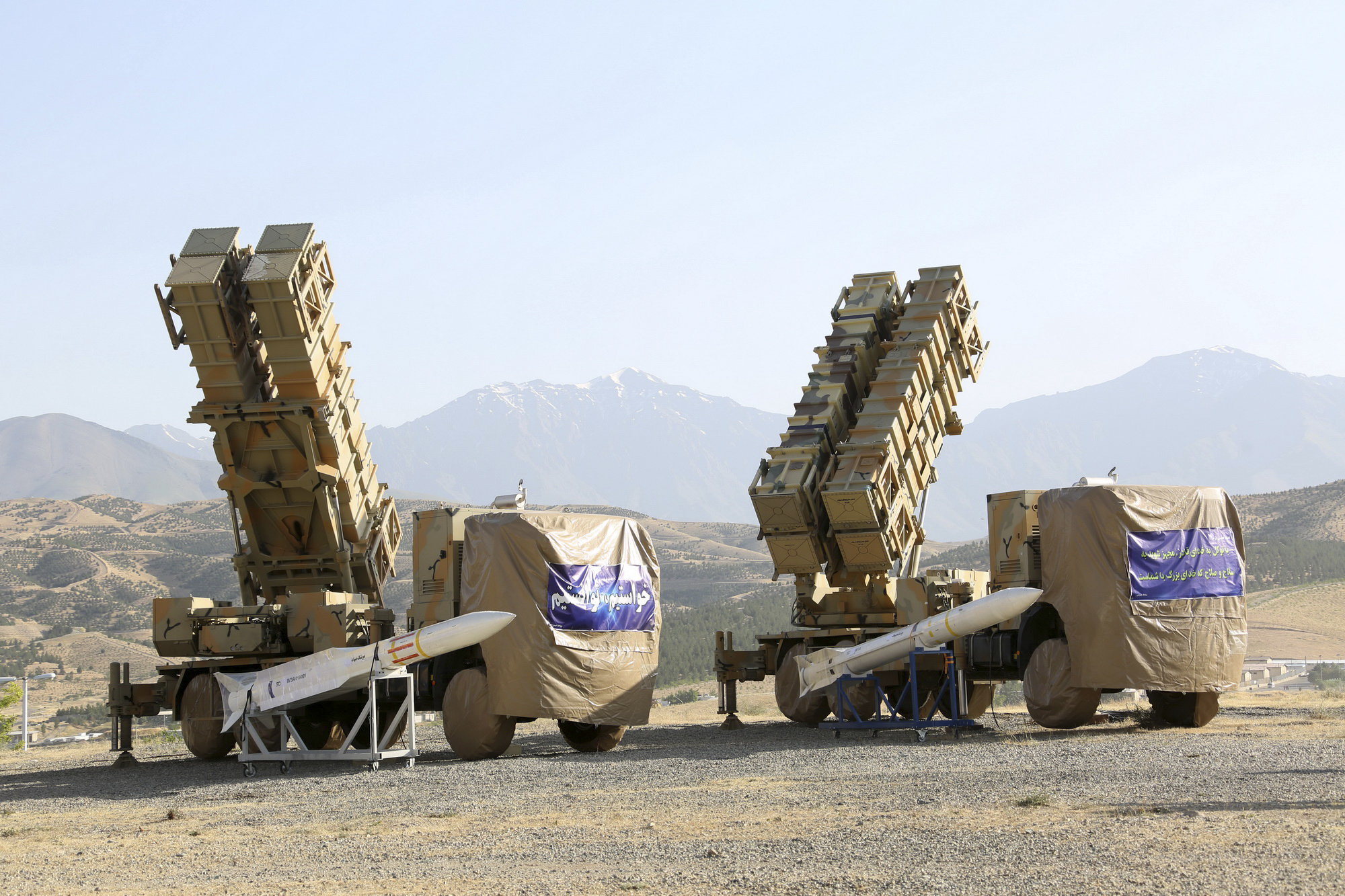
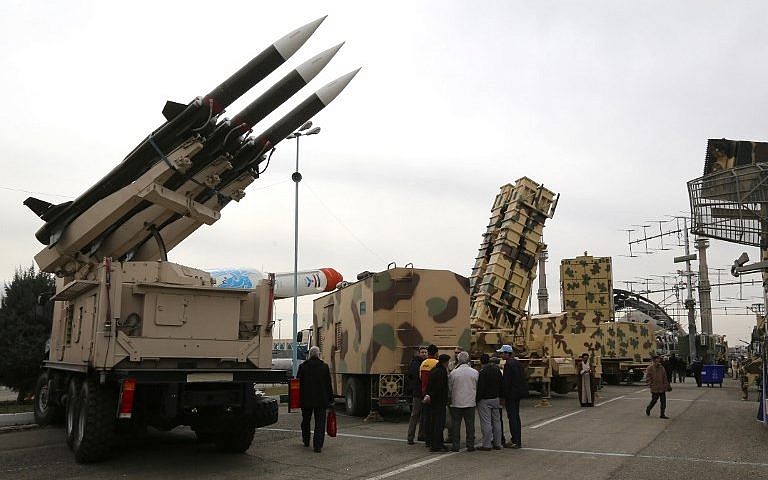
This photo released by the official website of the Iranian Defense Ministry on Sunday, June 9, 2019, shows the Khordad 15, a new surface-to-air missile battery at an undisclosed location in Iran. The system uses locally made missiles that resemble the HAWK missiles that the US once sold to the shah and later delivered to the Islamic Republic in the 1980s Iran-Contra scandal. (Iranian Defense Ministry via AP)

This photo released by the official website of the Iranian Defense Ministry on Sunday, June 9, 2019, shows the Khordad 15, a new surface-to-air missile battery at an undisclosed location in Iran. The system uses locally made missiles that resemble the HAWK missiles that the US once sold to the shah and later delivered to the Islamic Republic in the 1980s Iran-Contra scandal. (Iranian Defense Ministry via AP)

DUBAI, United Arab Emirates (AFP) — The shooting down last week of a sophisticated US drone by an Iranian missile demonstrates that Tehran’s air defense capabilities can pose a challenge to US air superiority, experts say.

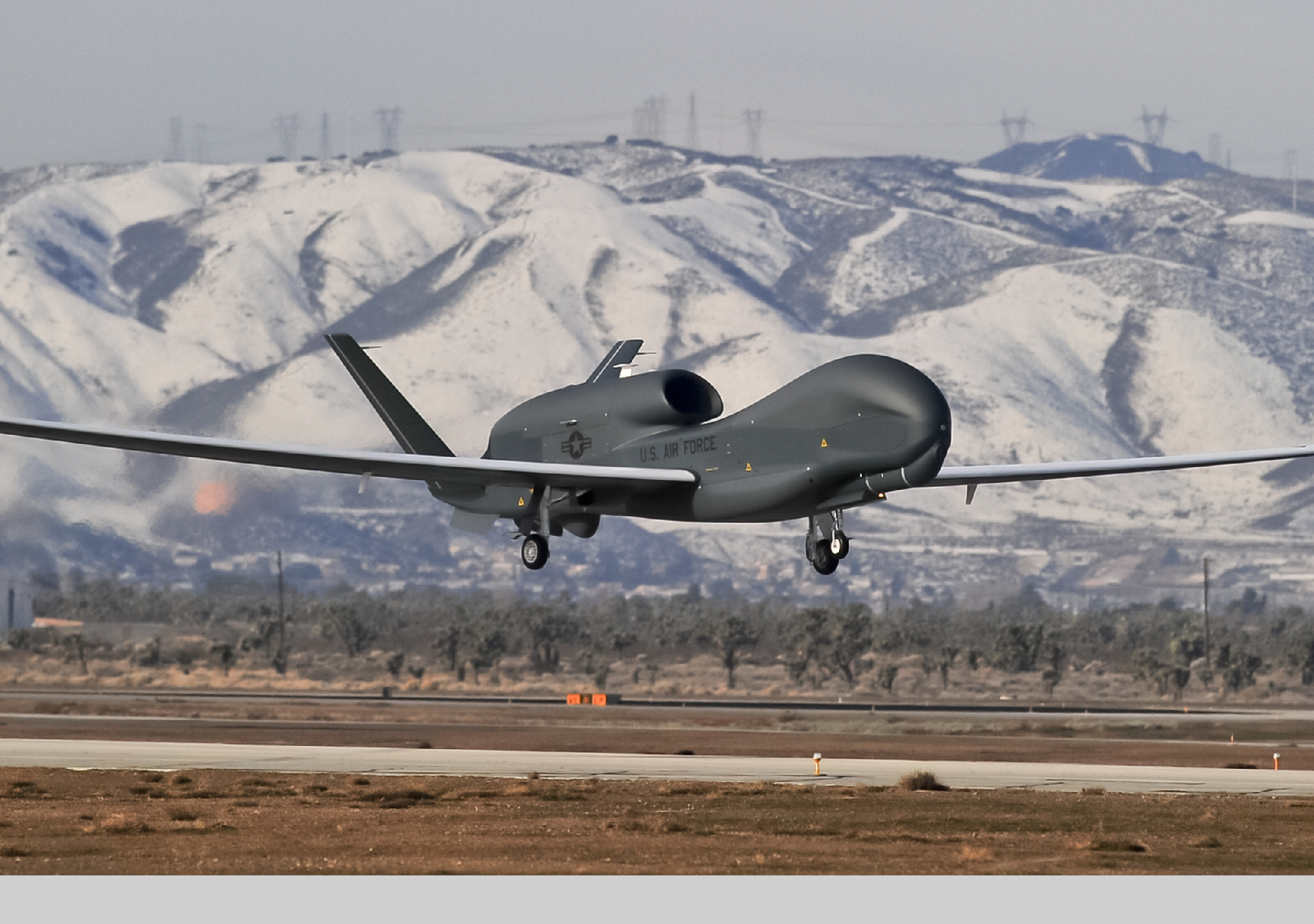
The Global Hawk, an advanced US navy surveillance drone, was flying at high altitude — it can reach 60,000 feet (18 kilometers) — early Friday local time when it was struck by a ground-to-air missile by Iran’s elite Revolutionary Guards.

“The shooting down of the drone shows Iran is revealing a capability and choosing to message it to the United States,” said Becca Wasser, an analyst at Rand Corp.

“The fact that Iran was able to shoot down the drone demonstrates that they have developed or purchased fairly significant capabilities and are skilled at employing these systems.”

Wasser noted an Iranian claim that it had used a home-made surface-to-air missile (SAM) system to shoot down the drone.

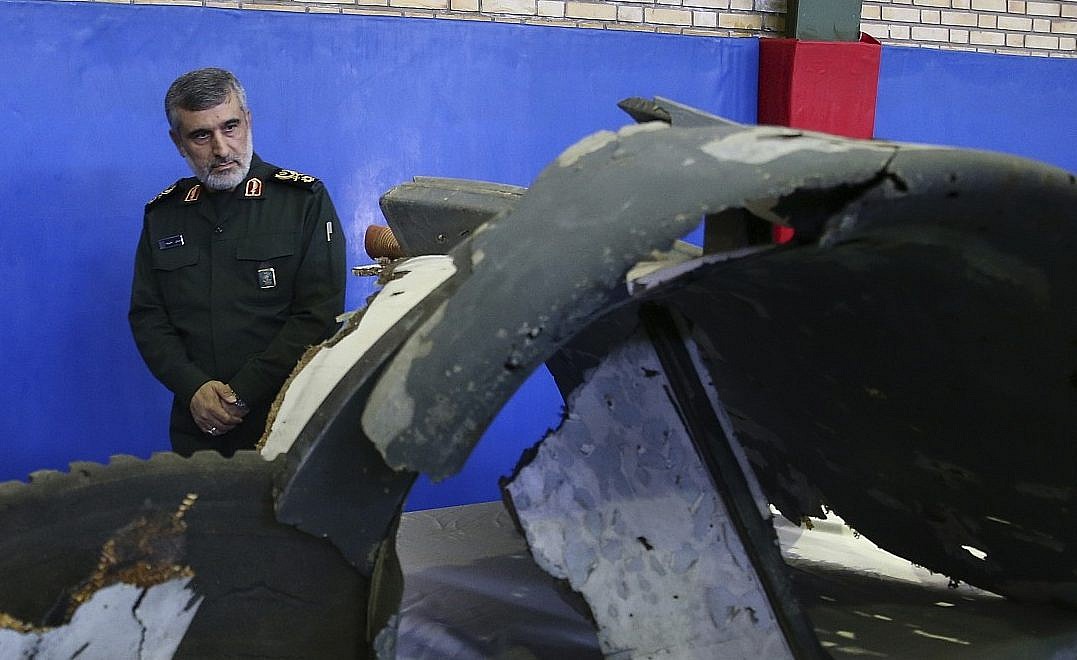
Head of the Revolutionary Guard’s aerospace division Brig. Gen. Amir Ali Hajizadeh looks at debris from what the division describes as the US drone which was shot down by Iran, seen here in Tehran, Iran, June 21, 2019. (Meghdad Madadi/Tasnim News Agency/via AP)

“If true, this would be significant because it is a domestically produced capability that Iran could replicate and potentially provide to proxy groups throughout the region to threaten US and partner militaries,” she told AFP.

According to the Military Balance — an annual publication by the International Institute for Strategic Studies (IISS) — Iran has 32 batteries of Russian-made S-300 ground-to-air missiles that have been delivered by Moscow since 2016. They are seen as posing a serious threat.

The Islamic Republic has also developed Iranian versions of these missile systems, including the Bavar 373, SAM Tabas and SAM Raad which are regularly displayed at military parades.

The Revolutionary Guards claim that they shot down the US drone with a Khordad 3 missile, a version of the SAM Raad.

Senior Iranian officials and military officers have welcomed the strike and warned against a possible US retaliation.

Iranians visit a weaponry and military equipment exhibition in the capital Tehran on Febraury 2, 2019, organized on the occasion of the 40th anniversary of the Iranian revolution. (Atta Kenare/AFP)

“The enemy dispatched its most advanced, smartest and most sophisticated surveillance and reconnaissance aircraft to the forbidden area and everyone saw the shooting down of this unmanned aircraft,” Iran’s navy commander Rear Admiral Hossein Khanzadi said on Monday.

“I say confidently that this crushing response can be repeated and the enemy knows this,” he said.

Spy plane

The former head of a French intelligence service, who asked to remain anonymous, said that if the US air force sends large numbers of aircraft over Iran, it should be prepared for some losses, because Iranian forces will be prepared.

“That said, in the case of the drone, it may not have had sufficient counter-measures — to deceive, deflect or outmaneuver the missile — and the Americans thought that the Iranians would not dare” shoot it down, he told AFP.

Illustrative: A Northrop Grumman Global Hawk unmanned aircraft. (Globe Newswire via AP)

Dan Gettinger, co-director at the Center for the Study of the Drone at Bard College, New York, said the Global Hawk is a large plane that flies slowly.

The plane “is not a stealthy aircraft — it’s very large” with a wingspan of 40 meters, similar to a Boeing 737, Gettinger said.

The drone’s fate is “definitely going to be taken into account in future operations,” Gettinger told AFP.

He said the incident is also reminiscent of the time the Soviet Union shot down a U-2 spy plane in 1960.

That event, targeting a piloted craft, “is a large part of the reason why the US started developing drones in the first place,” Gettinger said.

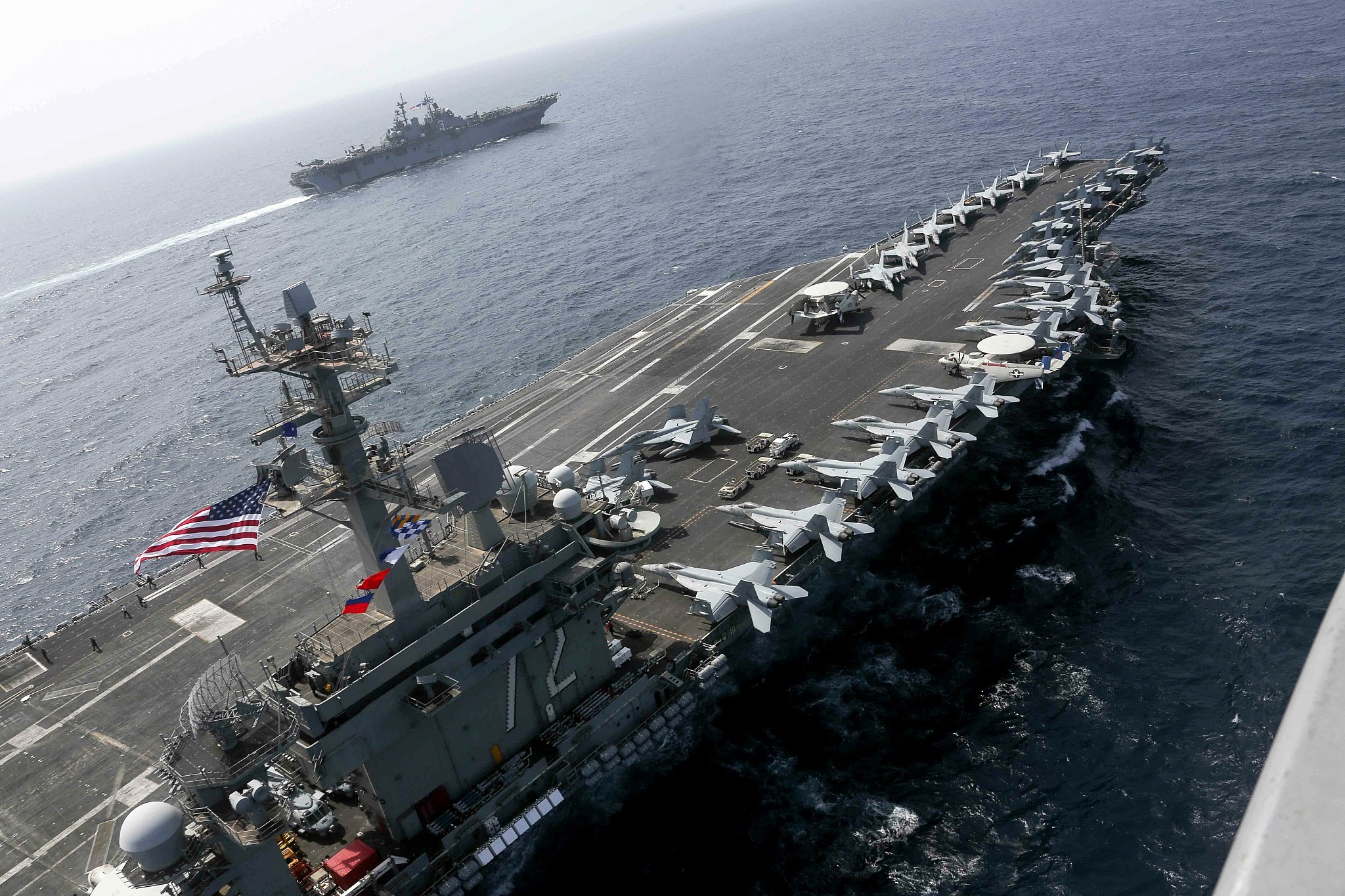
In this May 17, 2019, photo released by the US Navy, the USS Abraham Lincoln sails in the Arabian Sea near the amphibious assault ship USS Kearsarge. (Mass Communication Specialist 1st Class Brian M. Wilbur, US Navy via AP)

Experts however say that the latest incident does not mean Iran is capable of building a firewall against the air force of the world’s largest military, whose superior firepower and electronic warfare capabilities are overwhelming.

At the end of 2015, just after Moscow agreed to sell the S-300 systems to Tehran, a move Israel tried in vain to prevent, the head of the Israeli Air Force, Maj. Gen. Amir Eshel, said the missiles posed “a significant but not insurmountable challenge.”

Douglas Barrie, senior fellow for military aerospace at IISS, said Iran had shown it is capable of shooting down a large drone.

But, he said, “this is a long way from being able to sustain air defense operations in the face of a significant attack involving missile strikes and counter-measures to degrade its air defenses.”


Top Iran military adviser threatens to ‘erase’ Israel if war breaks out 

June 25, 2019

Source: Top Iran military adviser threatens to ‘erase’ Israel if war breaks out | The Times of Israel

Aide to supreme leader warns his country can ‘totally obliterate’ US bases in the Gulf

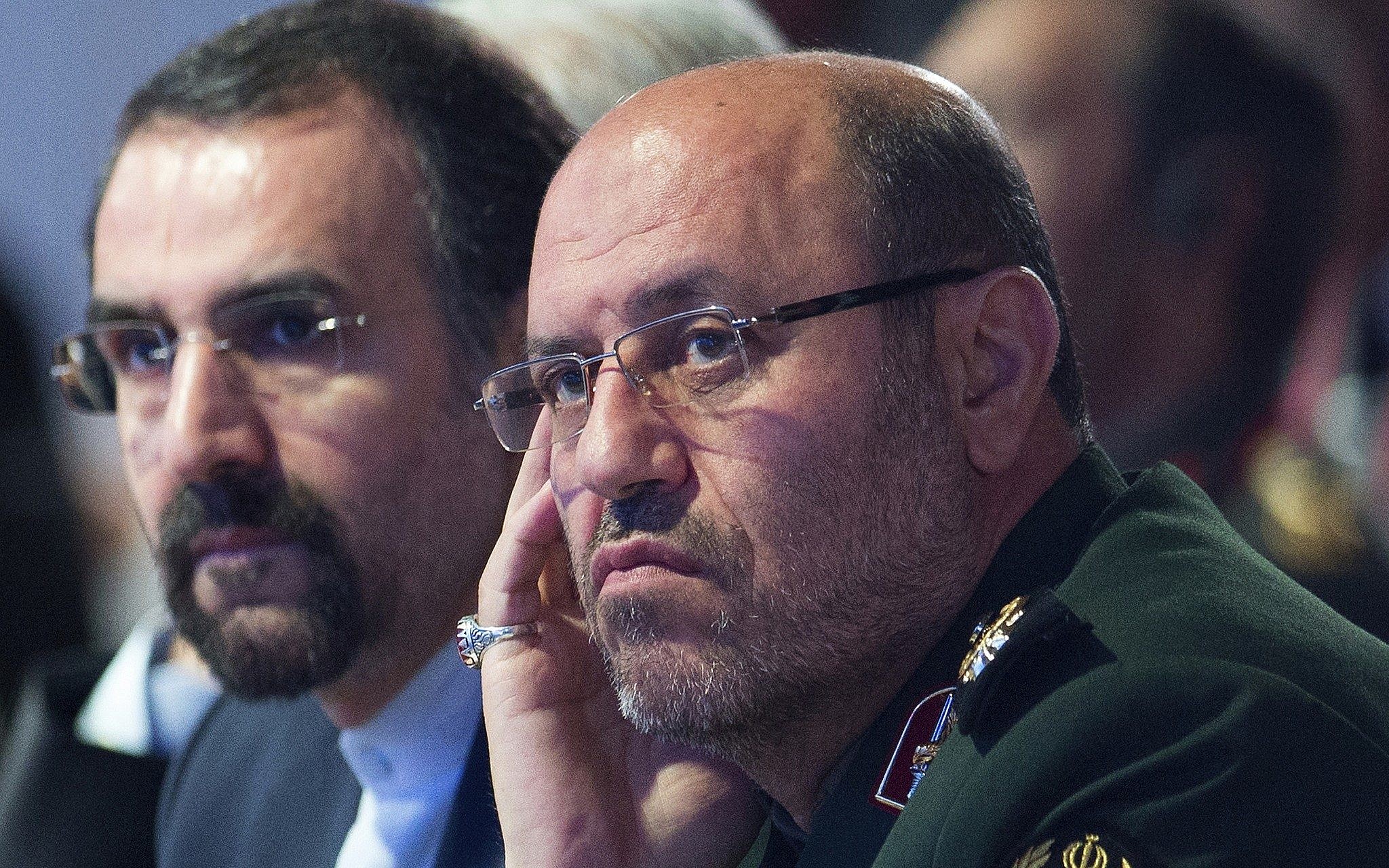
Then Iranian Defense Minister Hossein Dehghan (right) in Russia at the Moscow Conference for International Security on April 26, 2017. (AP/Ivan Sekretarev)

Then Iranian Defense Minister Hossein Dehghan (right) in Russia at the Moscow Conference for International Security on April 26, 2017. (AP/Ivan Sekretarev)

A top Iranian defense official said the Americans are fully aware that their assets in the Middle East can be destroyed by Iran’s missiles and know that should war break out in the region, it would not be a “walk in the park.”

In a June 20 interview on Iraq’s Alnujaba TV, translated by the Middle East Media Research Institute (MEMRI) monitoring group and posted to social media Sunday, former Iranian defense minister Gen. Hossein Dehghan said Iran’s military could destroy US military bases in the region and annihilate Israel.

“Our missiles can totally obliterate those bases,” Dehghan said. “Israel knows that Iran will erase its entity and uproot it from existence in case of a war.”

Dehghan said US President Donald Trump and his country fear the outbreak of war because they are unable to get global legal legitimacy for an attack or assemble an international coalition against Iran. He warned that if war broke out, America would find itself in the “garbage bin of history.”

However, Dehghan said he did not think such a war was in the offing, because of how powerful Iran is.

A former brigadier general in Iran’s air force, Dehghan was defense minister of Iran from 2013 until 2017, when he became defense adviser to Iran’s supreme leader, Ayatollah Ali Khamenei.

The US armed forces maintain numerous army, navy and air force bases in the region near Iran. Those bases located in Saudi Arabia, Qatar, Jordan, Kuwait, Iraq, the UAE and Bahrain have at least ten thousand American personnel and an unknown number of troops from coalition partners as well as local contractors.

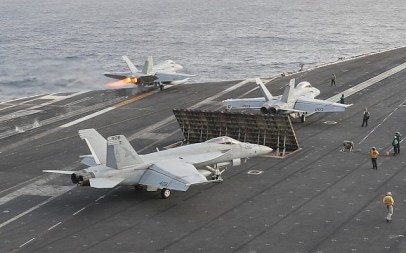
A fighter jet takes off from the deck of the USS Abraham Lincoln aircraft carrier in the Arabian Sea, June 22, 2019. (Dan Snow/US Navy)

Tensions between the two countries are running high after Iran shot down a US spy drone last week and US President Donald Trump considered, then canceled, a retaliatory strike.

The Trump administration reimposed sanctions on Iran, including on its energy sector, last November, after pulling America out of the 2015 nuclear deal between Iran and six world powers in May 2018.

Following a fresh round of American sanctions leveled against Iranian leaders on Monday, Iran’s foreign minister said that leaders in Israel, Saudi Arabia and the US “despise diplomacy and thirst for war.”

Agencies contributed to this report.


Iran says it will abandon further nuclear deal commitments on July 7 

June 25, 2019

Source: Iran says it will abandon further nuclear deal commitments on July 7 | The Times of Israel

( They clearly don’t take Trump seriously, if they ever did, – JW )

Warning comes 2 months after Tehran suspended some pledges under 2015 pact in response to US sanctions

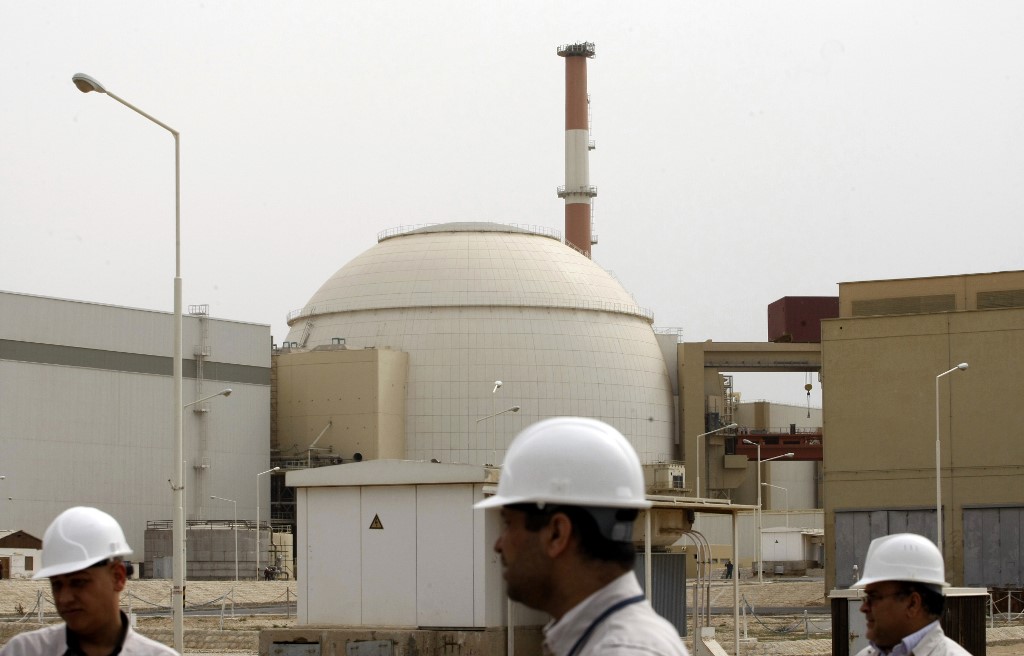
In this file photo taken on February 25, 2009, Iranian technicians walk outside the building housing the reactor of the Bushehr nuclear power plant, in the Iranian port town of Bushehr, 1,200 kilometers south of Tehran. (Behrouz Mehri/AFP Files/AFP)

In this file photo taken on February 25, 2009, Iranian technicians walk outside the building housing the reactor of the Bushehr nuclear power plant, in the Iranian port town of Bushehr, 1,200 kilometers south of Tehran. (Behrouz Mehri/AFP Files/AFP)

Iran will “resolutely” abandon more commitments under a 2015 nuclear deal with world powers on July 7, the semiofficial Fars News Agency reported on Tuesday quoting a “note” from a top security official.

Tehran had announced on May 8 that it was suspending two of its 2015 pledges and gave Europe, China and Russia a two-month ultimatum to help Iran circumvent US sanctions and sell its oil or it would abandon two more commitments.

Last year Washington withdrew from the landmark nuclear deal and reimposed sanctions on Tehran, and Europe’s efforts so far to help Iran economically benefit from the accord have been dismissed by Iran’s Supreme Leader Ayatollah Ali Khamenei as a “bitter joke.”

“As of July 7, Iran will forcefully take the second step of reducing its commitments” to the nuclear deal, Rear Admiral Ali Shamkhani, secretary of Iran’s Supreme National Security Council, was quoted as saying by Fars.

Secretary of Iran’s Supreme National Security Council Ali Shamkhani in Tehran, Iran, January 17, 2017. (Ebrahim Noroozi/AP)

This was so “countries who interpreted Iran’s ‘patience’ with weakness and inaction realize that Iran’s answer to the American drone’s violation of its airspace will be no different than its reaction to devious political efforts to limit Iranian people’s absolute rights,” he added.

Amid escalating tensions last week, Iran shot down a US spy drone it said had crossed into its territory, a claim denied by the United States.

Russia, a key ally of Iran, on Tuesday backed Iran’s version of events.

US President Donald Trump said he ordered retaliatory airstrikes against Iran but pulled back at the last minute.

Shamkhani slammed Europe’s “political insolence” for expecting Iran to continue its commitments without them fulfilling their end of the deal and said it showed a “lack of will” to face the US.

France’s foreign minister said that Iran would be making a “serious mistake” by violating the nuclear deal as a response to pressure from the United States.

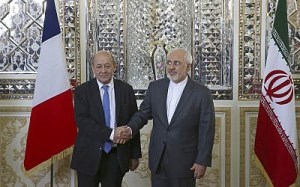
Iranian Foreign Minister Mohammad Javad Zarif, right, and his French counterpart Jean-Yves Le Drian, shake hands for journalists at the start of their meeting in Tehran, Iran, on March 5, 2018. (AP Photo/Vahid Salemi)

“French, German and British diplomacy is completely mobilized to make Iran understand that it would not be in its interest,” Jean-Yves Le Drian told parliament.

In retaliation to what it says is European inaction, Iran has begun to increase its enriched uranium and heavy water stockpile beyond the limits set in the deal.

The second step would involve breaking past the 3.67 percent restriction on enriching uranium and restarting development of a heavy water reactor that was put on hold.