Archive for June 2019

Report: For 2nd straight day, Israel strikes military targets in Syria 

June 3, 2019

Source: Report: For 2nd straight day, Israel strikes military targets in Syria – www.israelhayom.com

Israeli aircraft fires missiles at a T4 air base in country’s center late Sunday, killing at least one soldier and wounding two others. Base has long been used by Iranian forces in Syria. Unconfirmed reports say five combatants killed, three of them Syrian soldiers.
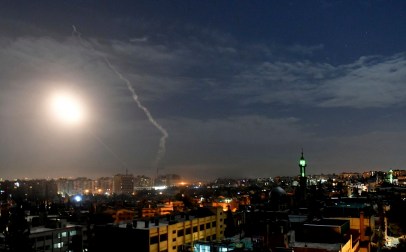
Unconfirmed reports said Monday that five soldiers were killed in the strike, three of them Syrian.

According to Syrian media, the Israeli strike targeted the T4 air base in the central province of Homs – long used by Iranian forces in Syria – just before midnight Sunday. There was no immediate comment from Israel about striking the air base.

Syrian state TV quoted an unidentified military official as saying that one soldier was killed and two others were wounded in the strike and that an arms depot was hit as well. Israel has attacked the T4 base in the past.

Earlier Sunday, the IDF confirmed it targeted several military positions in southern Syria, including two artillery batteries, several observation and intelligence posts and an SA2 air defense unit, in response to two rockets launched from Syria late on Saturday, which caused no casualties.

Soon after the strike on Sunday morning, Prime Minister Benjamin Netanyahu confirmed he had ordered the strikes. “We will not tolerate firing into our territory and will respond fiercely against any aggression against us,” he said in a statement.

The Britain-based Syrian Observatory for Human Rights, an opposition war monitor, said Israeli aircraft struck positions and an arms depot belonging to Iranian troops and Hezbollah fighters. It said the attacks killed at least 10, including three Syrian troops and seven who were believed to be foreign fighters. Rami Abdurrahman, who heads the Observatory, said that “until this moment it is not clear if they were Iranians or Hezbollah members.”

Israel has acknowledged carrying out dozens of airstrikes in Syria against Iranian targets and Tehran’s allies over the past months.
 

TV report: White House tells Russia it backs Israeli strikes in Syria 

June 3, 2019

Source: TV report: White House tells Russia it backs Israeli strikes in Syria | The Times of Israel

US official quoted saying Trump administration told Kremlin it supports Israeli action so long as Iranian forces remain in the country

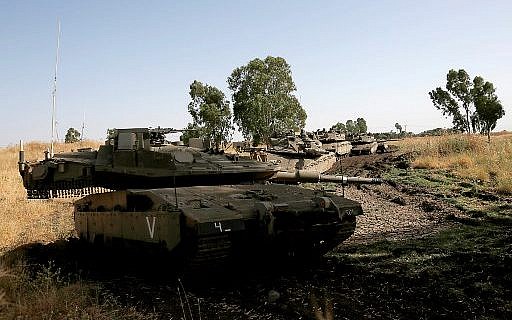
Israeli soldiers manoeuver Merkava tanks in the Israeli-annexed Golan Heights on June 2, 2019. (Photo by JALAA MAREY / AFP)

Israeli soldiers manoeuver Merkava tanks in the Israeli-annexed Golan Heights on June 2, 2019. (Photo by JALAA MAREY / AFP)

A senior official in the Trump administration says the US has made it clear to Russia several times in recent months that America supports Israeli attacks in Syria as long as Iranian forces are operating in the country, Channel 13 reported Sunday.

The unnamed official was quoted as saying the US had told the Russians that Israel has America’s complete support for attacking targets in Syria.

“We told them [Russia] that all the Iranian forces should leave, and this is not only an Israeli demand, but also an American demand,” the source reportedly said.

The revelation came after Israel retaliated for an attack a day earlier in which rockets were fired from Syria at Mount Hermon, with one explosion damaging a ski-lift.

Reports said seven “foreign fighters” were among the 10 killed in the Israel Defense Forces airstrikes Sunday on several military targets in Syria.

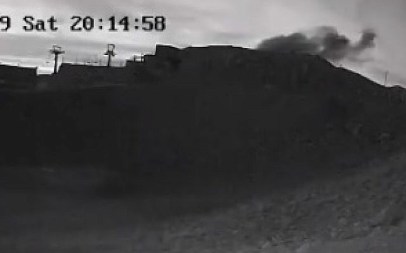
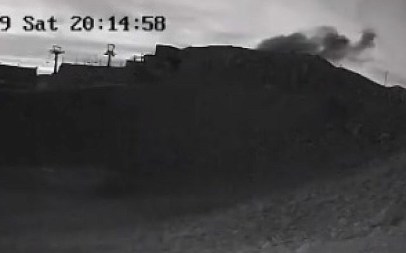
Smoke seen billowing from the landing site of a rocket fired from Syrian territory at Mount Hermon in the Golan Heights on June 1, 2019. (Screenshot from Mt. Hermon ski site CCTV)

According to Sunday’s report, the US official said Israel had asked the United States to intervene with Russia regarding Moscow’s commitment to keep pro-Iranian forces at least 70-100 kilometers away from the border, saying that Washington had raised the issue with the Russians in quiet diplomatic talks.

In three weeks the national security advisers of Israel, the US and Russiaare expected to meet in Jerusalem in the first security summit of its kind.

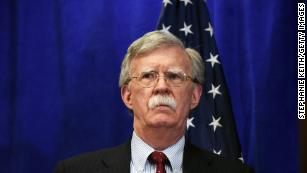
US National Security Adviser John Bolton and his Russian counterpart, Nikolai Patrushev, are expected to discuss Syria and Iran when they meet later this month in Jerusalem with Israel’s national security chief Meir Ben-Shabbat. Israel wants to push Russia and the US to cooperate in reaching a political settlement that will remove the Iranian forces from Syria.

Earlier this year, Amos Gilad, a former army general and powerful head of the Defense Ministry’s political affairs bureau, warned that Israel was failing to force Iran to abandon its plans to establish a permanent military presence in Syria, despite the success of Israel Defense Forces strikes there.

“On the tactical and operational level, the strikes on the Iranians are powerful. But on a strategic level, we are not succeeding,” Gilad said.

Israel has for years accused Tehran of trying to establish a permanent military presence in Syria from which the Islamic republic could threaten the Jewish state, much in the same way it does from Lebanon with its proxy there, the Hezbollah terrorist group.


TV report: White House tells Russia it backs Israeli strikes in Syria 

June 3, 2019

Source: TV report: White House tells Russia it backs Israeli strikes in Syria | The Times of Israel

US official quoted saying Trump administration told Kremlin it supports Israeli action so long as Iranian forces remain in the country

Israeli soldiers manoeuver Merkava tanks in the Israeli-annexed Golan Heights on June 2, 2019. (Photo by JALAA MAREY / AFP)

Israeli soldiers manoeuver Merkava tanks in the Israeli-annexed Golan Heights on June 2, 2019. (Photo by JALAA MAREY / AFP)

A senior official in the Trump administration says the US has made it clear to Russia several times in recent months that America supports Israeli attacks in Syria as long as Iranian forces are operating in the country, Channel 13 reported Sunday.

The unnamed official was quoted as saying the US had told the Russians that Israel has America’s complete support for attacking targets in Syria.

“We told them [Russia] that all the Iranian forces should leave, and this is not only an Israeli demand, but also an American demand,” the source reportedly said.

The revelation came after Israel retaliated for an attack a day earlier in which rockets were fired from Syria at Mount Hermon, with one explosion damaging a ski-lift.

Reports said seven “foreign fighters” were among the 10 killed in the Israel Defense Forces airstrikes Sunday on several military targets in Syria.

Smoke seen billowing from the landing site of a rocket fired from Syrian territory at Mount Hermon in the Golan Heights on June 1, 2019. (Screenshot from Mt. Hermon ski site CCTV)

According to Sunday’s report, the US official said Israel had asked the United States to intervene with Russia regarding Moscow’s commitment to keep pro-Iranian forces at least 70-100 kilometers away from the border, saying that Washington had raised the issue with the Russians in quiet diplomatic talks.

In three weeks the national security advisers of Israel, the US and Russiaare expected to meet in Jerusalem in the first security summit of its kind.

US National Security Adviser John Bolton and his Russian counterpart, Nikolai Patrushev, are expected to discuss Syria and Iran when they meet later this month in Jerusalem with Israel’s national security chief Meir Ben-Shabbat. Israel wants to push Russia and the US to cooperate in reaching a political settlement that will remove the Iranian forces from Syria.

Earlier this year, Amos Gilad, a former army general and powerful head of the Defense Ministry’s political affairs bureau, warned that Israel was failing to force Iran to abandon its plans to establish a permanent military presence in Syria, despite the success of Israel Defense Forces strikes there.

“On the tactical and operational level, the strikes on the Iranians are powerful. But on a strategic level, we are not succeeding,” Gilad said.

Israel has for years accused Tehran of trying to establish a permanent military presence in Syria from which the Islamic republic could threaten the Jewish state, much in the same way it does from Lebanon with its proxy there, the Hezbollah terrorist group.


Netanyahu threatens Iran, citing overnight Israeli strikes in Syria

June 3, 2019

Source: Netanyahu threatens Iran, citing overnight Israeli strikes in Syria | The Times of Israel

At Jerusalem Day ceremony, PM says anyone who tries to hurt Israel will be hurt far worse, claims Tehran gives Hezbollah $700 million a year

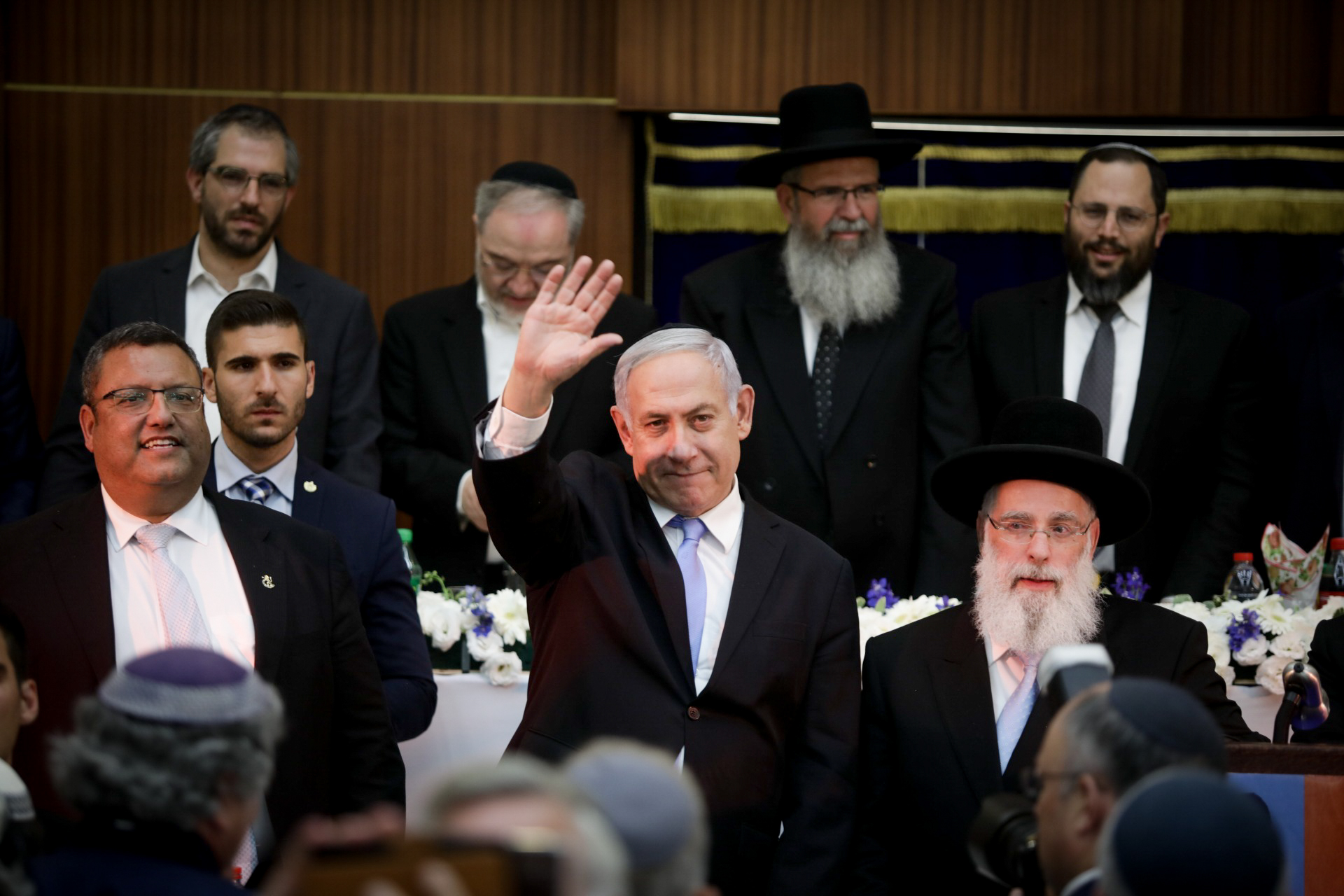
Prime Minister Benjamin Netanyahu waves to the crowd during a Jerusalem Day celebration at Mercaz HaRav Yeshiva in Jerusalem, on June 2, 2019. To his right is Jerusalem Mayor Moshe Lion. (Aharon Krohn/Flash90)

Prime Minister Benjamin Netanyahu waves to the crowd during a Jerusalem Day celebration at Mercaz HaRav Yeshiva in Jerusalem, on June 2, 2019. To his right is Jerusalem Mayor Moshe Lion. (Aharon Krohn/Flash90)

Prime Minister Benjamin Netanyahu on Sunday warned Iran that Israel’s airstrikes on Syria earlier in the day showed that, when assaulted, the Jewish state hits back hard.

Speaking at a ceremony for Jerusalem Day, when Israel marks the unification of Jerusalem during the 1967 Six Day War, Netanyahu said that in the decades since that conflict many moderate Arab states have “sobered up” regarding their attitudes toward Israel, which they now see as an ally against Iran.

“While we do not make light of Iran’s threats, neither are we deterred by them because anyone who tries to hurt us will be hurt far worse,” Netanyahu said at the ceremony at Ammunition Hill in Jerusalem, the location of a key battle during the war. “We have proven this many times in the history of our state. We proved it just last night.”

The ceremony was also attended by President Reuven Rivlin, Israel Defense Forces Chief of Staff Aviv Kohavi and other senior officials.

“Since 1967, a large number of Arab and Muslim countries have sobered up and today, thanks to our strength, they cooperate with us in an unprecedented manner,” Netanyahu said.

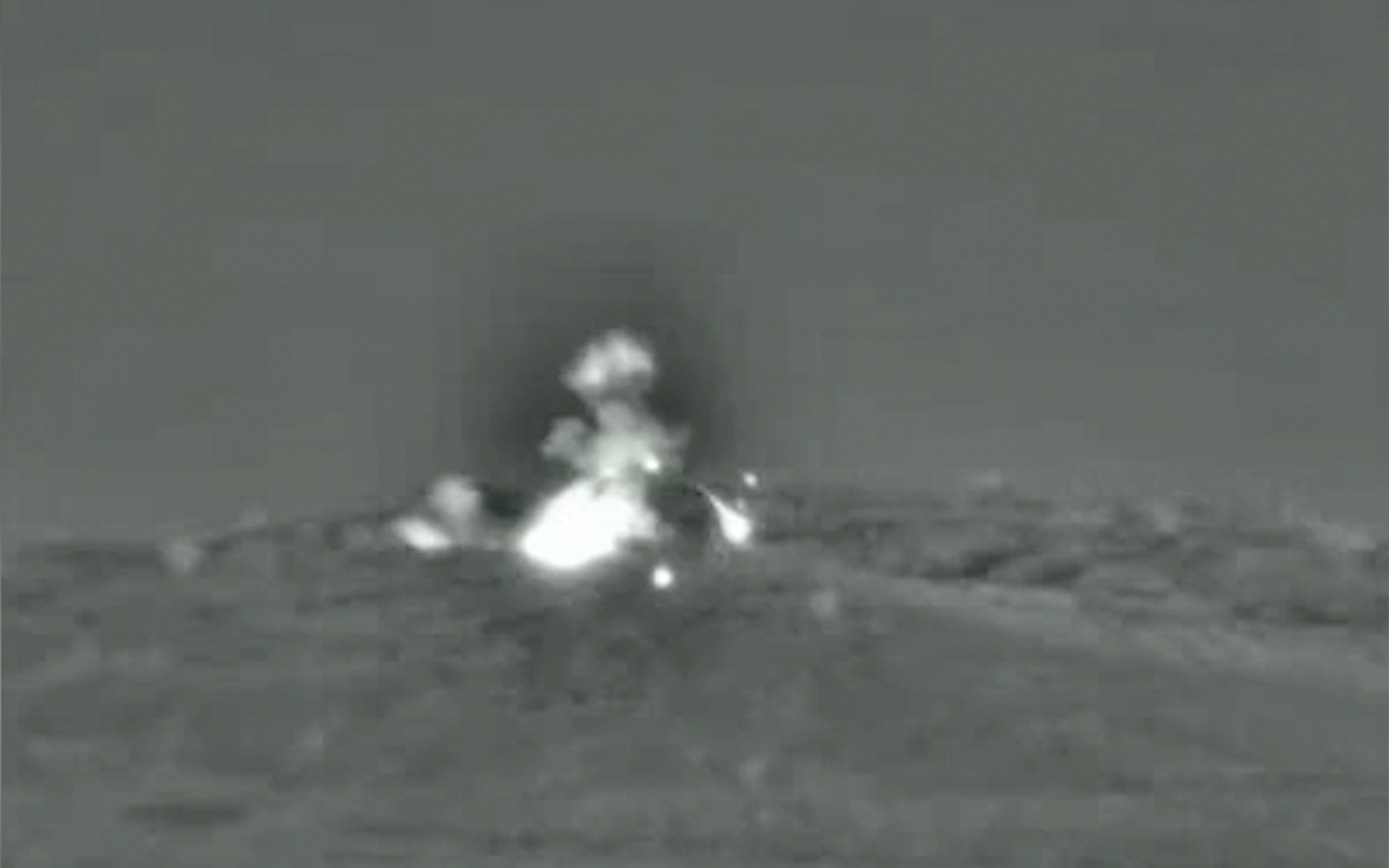
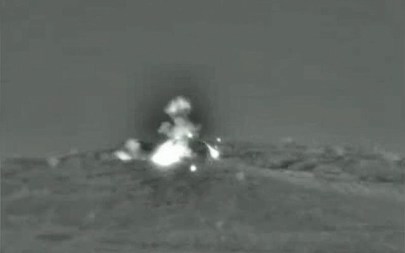
An IDF airstrike hits Syrian military targets, June 1, 2019. (IDF spokesperson’s unit)

The IDF carried out airstrikes on several military targets in Syria in the predawn hours of Sunday morning in response to two rockets that were fired from the country at the Golan Heights the night before, the army said in a statement earlier.

“Every year Iran transfers to its protege Hezbollah $700 million,” Netanyahu said Sunday evening. “These enormous amounts are used to fuel the endless aggression by Iran and its satellites in our region. Our neighbors know this, all the Arab states know it, and that is one of the things bringing them to a renewed closeness with us.”

Beginning at 4:10 a.m. Sunday, IDF helicopters and planes attacked several targets connected to the Syrian army, including two artillery batteries, several observation and intelligence outposts, and an SA-2 type air defense unit, the army said in its statement. Syrian media reported that Israel also struck several targets connected to Iran and its proxy militias in Syria, in the area of al-Kiswah, south of Damascus.

The strikes reportedly targeted weapons caches and a military training facility. Seven “foreign fighters” were among the 10 killed by the strikes, according to the UK-based Syrian Observatory for Human Rights monitor group.

The Israeli army refrained from specifying who it believes fired the two rockets at the Golan Heights — one of which landed inside Israeli territory, the other in Syria — but said it “sees the Syrian regime as responsible for all attacks against Israel from Syrian territory.”

Saturday night’s rockets appeared to be a relatively long-range variety, reportedly fired from the Damascus area, some 35 kilometers (22 miles) away, similar to an attack earlier this year aimed at Mount Hermon.

Mount Hermon is located in the northern tip of Israel’s Golan Heights. In addition to a popular ski resort, the area is also home to a number of military installations.


Syria says Israeli missiles target Iran-linked base near Homs; 5 reported killed 

June 3, 2019

Source: Syria says Israeli missiles target Iran-linked base near Homs; 5 reported killed | The Times of Israel

Reports say strike destroys weapons depot on airbase that Israel has targeted several times before; attack comes hours after Netanyahu warns Tehran

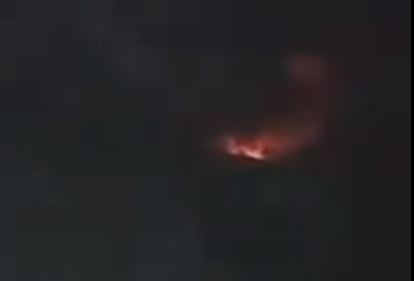
Explosions on the T-4 base in northern Syria reportedly caused by an Israeli airstrike on June 2 2019 (Screencapture/Twitter)

Explosions on the T-4 base in northern Syria reportedly caused by an Israeli airstrike on June 2 2019 (Screencapture/Twitter)

Syrian state media reported that Israel attacked the T-4 airbase near the northern city of Homs just after midnight Sunday, killing one soldier and wounding two others. A watchdog group said 5 people were killed.

The attack comes after the IDF carried out airstrikes on several military targets in Syria in the predawn hours of Sunday morning, reportedly killing 10 in response to two rockets that were fired from the country at the Golan Heights the night before.

Military officials told SANA that the attack targeted and destroyed a weapons storage facility and several other buildings at the base.  Israel has attacked the T-4, or Tiyas, air base on multiple occasions. They said one Syrian soldier was killed and two wounded.

The Britain-based Syrian Observatory for Human Rights reported five killed, including one Syrian soldier. It said the attack also destroyed a rocket warehouse.

In addition to the Syrian army, Iranian fighters and Hezbollah forces are also stationed at the airbase, according to the monitor.

SANA also claimed that Syrian air defenses destroyed two of the incoming missiles.

There was no immediate comment from the IDF.

Israeli defense officials have previously claimed the base is being used by Iranian forces as part of the Islamic Republic’s efforts to entrench militarily in Syria, something Israel has vowed to prevent.

An IDF airstrike hits Syrian military targets, June 1, 2019. (IDF spokesperson’s unit)

Beginning at 4:10 a.m. Sunday, IDF helicopters and planes attacked several targets connected to the Syrian army, including two artillery batteries, several observation and intelligence outposts, and an SA-2 type air defense unit, the army said in its statement. Syrian media reported that Israel also struck several targets connected to Iran and its proxy militias in Syria, in the area of al-Kiswah, south of Damascus.

The strikes reportedly targeted weapons caches and a military training facility. Seven “foreign fighters” were among the 10 killed by the strikes, according to the UK-based Syrian Observatory for Human Rights monitor group.

The Israeli army refrained from specifying who it believes fired the two rockets at the Golan Heights — one of which landed inside Israeli territory, the other in Syria — but said it “sees the Syrian regime as responsible for all attacks against Israel from Syrian territory.”

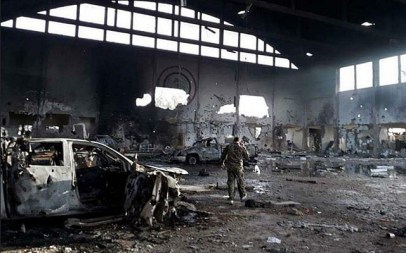
Illustrative: A photo released by Iranian media reportedly shows the T-4 air base in central Syria after a missile barrage attributed to Israel on April 9, 2018. (Iranian media)

Saturday night’s rockets appeared to be a relatively long-range variety, reportedly fired from the Damascus area, some 35 kilometers (22 miles) away, similar to an attack earlier this year aimed at Mount Hermon.

Speaking Sunday evening, Prime Minister Benjamin Netanyahu warned Iran that Israel’s airstrikes on Syria earlier in the day showed that, when assaulted, the Jewish state hits back hard.

Speaking at a ceremony for Jerusalem Day, when Israel marks the unification of Jerusalem during the 1967 Six Day War, Netanyahu said that in the decades since that conflict many moderate Arab states have “sobered up” regarding their attitudes toward Israel, which they now see as an ally against Iran.

“While we do not make light of Iran’s threats, neither are we deterred by them because anyone who tries to hurt us will be hurt far worse,” Netanyahu said at the ceremony at Ammunition Hill in Jerusalem, the location of a key battle during the war. “We have proven this many times in the history of our state. We proved it just last night.”


Iran: Saudis have joined Israel, US in ‘hopeless’ effort to turn region against Tehran 

June 2, 2019

Source: Iran: Saudis have joined Israel, US in ‘hopeless’ effort to turn region against Tehran – www.israelhayom.com

Iranian Foreign Ministry rejects Saudi accusations that Iran is behind sabotage on Saudi oil infrastructure as “baseless,” state media reports.

Saudi Arabia’s king told an emergency Arab summit that decisive action was needed to stop Iranian “escalations” in the region following attacks on Gulf oil assets, as American officials said a U.S. military deployment had deterred Tehran.

“Foreign Ministry spokesman Abbas Mousavi … rejected the baseless accusations by the heads of certain Arab countries … and said ‘We see the Saudi effort to mobilize [regional] opinion as part of the hopeless process followed by America and the Zionist regime against Iran,’” the state news agency IRNA said.

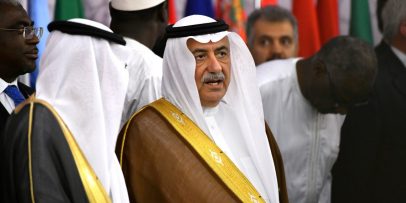
On Thursday, Saudi Foreign Minister Ibrahim al-Assaf urged Muslim nations to confront recent attacks in the region that the U.S. and its allies have blamed on Iran with “all means of force and firmness.”

Al-Assaf made the comments at a meeting of foreign ministers of the 57-nation Organization of Islamic Cooperation ahead of a series of summits in the kingdom that began on Thursday.

Al-Assaf said the alleged sabotage of boats off the coast of the United Arab Emirates and a drone attack on a Saudi oil pipeline by Yemen’s Iranian-backed Houthi rebels requires the region to “make more efforts to counter the terrorist acts of extremist and terrorist groups.”

“We should confront it with all means of force and firmness,” al-Assaf said.


Iran: Israel ‘trapped in ongoing nightmare’ of security fears, instability

June 2, 2019

Source: Iran: Israel ‘trapped in ongoing nightmare’ of security fears, instability – www.israelhayom.com

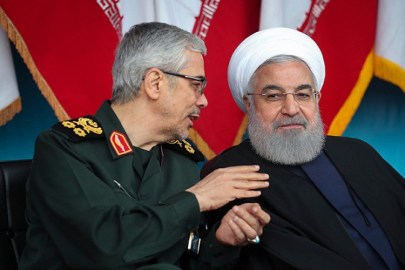
At memorial for founder of ayatollah regime Ruhollah Khomeini, Iran’s senior military commander Mohammad Bagheri says, “Islamic Revolution radiates outward from our homeland to the surrounding space.” Zionist regime now knows what genuine fear is, he says.

In a speech at a memorial for the founder of the ayatollah regime Ruhollah Khomeini, Bagheri said, “Today, the Islamic Revolution radiates outward from our homeland to the surrounding space. The leaders of the imperialist system and the Zionist regime now know what genuine fear is.”

He said, “Our strategic depth and determination created a new regional order, and there is no issue in Western Asia in which Iran does not have a hand. We created an Islamic resistance front, and now the criminal and occupying regime is trapped in an ongoing nightmare of security fears and instability – this despite the vast support it enjoys from the West.”

Bagheri also related to the tensions with the U.S. and Iran’s missile program in his speech.

“Today’s political climate is an unprecedented opportunity to develop a defense system and in particular our missile system. We must never give up on this system,” he said.

Meanwhile, Hezbollah leader Hassan Nasrallah said the “balance of power” was preventing a war between the U.S. and Iran, which he warned would also hit U.S. allies Saudi Arabia and Israel.


52 years later: Israel and the superpowers 

June 2, 2019

Source: 52 years later: Israel and the superpowers – www.israelhayom.com

Over 50 years after the Six-Day War, Russia and the United States are convening a joint security summit in Israel, while Arab states have come to terms with the fact that we cannot be defeated through war or even by a protracted terror campaign.

Many years have passed, and the balance of power between Israel and its neighbors has shifted considerably: Israel now has complete air superiority and the risk of losing aircraft is negligible. While there is no room for complacency, the current reality is utterly different. The air force and other military branches are developing anti-missile and radar systems, which greatly reduce the potency of the Russian-made SA-300.

The latest news illustrates that Russia of today is not the Soviet Union of 50 years ago, nor is it the Russia of the previous decade. The willingness to convene a joint security summit in Israel (not a “peace summit”), with senior American counterparts, enhances Israel’s standing.

Two days before the outbreak of the Six-Day War, France was still an ally of Israel. However, then-French President Charles de Gaulle chose to impose an embargo that effectively quashed the sale of French planes and weapons to Israel and mainly spare parts for equipment. This crisis gave birth to Israel’s independent development of weapons systems, including the Merkava tank, and the Nesher and Kfir fighter jets. This, essentially, was the backdrop for the tremendous growth spurt of Israel’s defense industry. The Soviet Union, for its part, continued arming Arab countries without restraint.

Amid the backdrop of the current diplomatic developments – the strengthening of Israel-U.S. ties; the special relationship between Israel and Russia; recognition of Israeli sovereignty over the Golan Heights, which was captured in the Six-Day War; the relocation of the U.S. Embassy to Jerusalem and other achievements – I recall the words of then-Defense Minister Moshe Dayan, who said: “We’re happy where we now stand.”

And here we stand today, more than 50 years later; Arab states have come to terms with the fact that we cannot be defeated in war or even through a protracted campaign of terror. Israel’s cooperation with a significant number of Arab countries in the struggle against Iran, the world’s leading exporter of terror for 40 years now, their rapprochement with Israel and the Israeli government’s steadfast adherence to the fundamental principles of its existence, illuminate the path for a better future for Israel and its neighbors.


Pompeo: US prepared to engage with Iran without preconditions 

June 2, 2019

Source: Pompeo: US prepared to engage with Iran without preconditions – www.israelhayom.com

When the Iranians prove they want to behave like a “normal nation,” U.S. is eager to start negotiations, U.S. Secretary of State Mike Pompeo tells Swiss counterpart.

The United States is prepared to engage with Iran without preconditions about its nuclear program but needs to see the country behaving like “a normal nation,” U.S. Secretary of State Mike Pompeo said on Sunday.

Iran’s President Hassan Rouhani suggested on Saturday that Iran may be willing to hold talks if Washington showed it respect, but said Tehran would not be pressured into talks.

Pompeo, in an apparent softening of his previous stance, said when asked about Rouhani’s remarks: “We are prepared to engage in a conversation with no preconditions, we are ready to sit down.”

However, he said Washington would continue to work to “reverse the malign activity” of Iran in the Middle East, citing Tehran’s support to Hezbollah and to the Syrian government.

Pompeo said U.S. President Donald Trump had been saying for a long time that he was willing to talk to Iran.

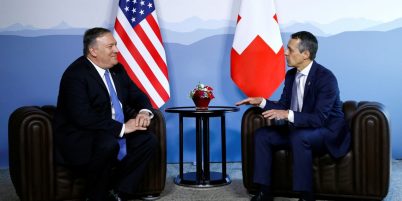
“We are certainly prepared to have that conversation when the Iranians can prove that they want to behave like a normal nation,” Pompeo told a joint news conference with his Swiss counterpart Ignazio Cassis in the southern Swiss city of Bellinzona.

Trump said last Monday he was hopeful Iran would come to the negotiating table. But Supreme Leader Ayatollah Ali Khamenei said on Wednesday Tehran would not negotiate with Washington, even after Rouhani had previously signaled talks might be possible if sanctions were lifted.

Cassis voiced concern at Iranian people suffering from the impact of sanctions and said that neutral Switzerland wanted to provide humanitarian aid, “especially pharmaceutical products and foodstuffs.”

He said Iran needed to make payments for this, and that was possible only if the United States allowed banks to transfer payments. Cassis said he was confident the United States would come up with the “best possible solution” to that problem in a short time.

Iran has stayed within the main restrictions of its 2015 nuclear deal, a quarterly report by the U.N. atomic watchdog indicated on Friday, at a time when Tehran is threatening to break the rules in future in response to new U.S. sanctions.

Pompeo declined on Sunday to comment on the latest report by the International Atomic Energy Agency. He said Washington was tracking IAEA findings closely but added: “We also have our own independent understanding of what is taking place there.

“And the world should be mindful that we are watching closely how Iran is complying with the requirements that were set out in the JCPOA, not only the heavy water issue, but the amount of high-enriched uranium which they are accumulating,” he said, referring to the Joint Comprehensive Plan of Action which the Trump administration has quit.

“We are watching closely as they put centrifuges into work and whether they are actually beginning to spin those centrifuges and load those centrifuges,” Pompeo said.

Switzerland has served as an intermediary between Iran and the United States since shortly after the Islamic revolution in November 1979. Switzerland provides protective and consular services for some 100 U.S. citizens and 12,000 people with both U.S. and Iranian citizenship.


Saudi Arabia united the Arab world against Iran. That means conflict could be one step closer – CNN

June 2, 2019

Source: Saudi Arabia united the Arab world against Iran. That means conflict could be one step closer – CNN

And while this achievement came without bellicose threats or new red lines, it is an important milepost on a road that may yet lead to regional conflict.
In middle-of-night, back-to-back summits at Islam’s holiest of sites, the aging but still-attentive Saudi monarch got a double endorsement of his claims that Iran is destabilizing the Middle East and a backing of his call for “the international community to shoulder its responsibility.
The six-nation Gulf Cooperation Council and 21 Arab League nations present called for Iran to stop “interfering in the internal affairs” of its neighbors and denounced Tehran’s “threat to maritime security” in the Persian Gulf.
For its part, Iran hit back, criticizing the allegations as “baseless” and accusing Saudi Arabia of promoting an “American and Zionist” agenda. Still, Tehran appeared tone-deaf to not one, but two unifying summit communiques urging it to change its behavior.
It would be easy to write the King’s success off as the kind of leverage that only petro-dollars can buy, but the region is deeply divided over many issues — not least a searing rift with neighboring Qatar, which has spent two years under an economic and travel embargo imposed by Saudi Arabia.
Trump declares emergency to expedite arms sales to Saudi Arabia and UAE
US pressure was applied to get Qatar to send a high-level delegation to the summits. When the country’s prime minister, Sheikh Abdullah bin Nasser al-Thani, showed up, he was the only leader not to get a customary kiss from the King.
While he didn’t get much eye contact from some of the leaders gathered around the GCC table, al-Thani did back the Saudi monarch, saying: “Our participation comes from our support to join Arab and Islamic work and our common security and stability.”
It marked the sign of a possible thaw in relations, but also the reemergence of Saudi Arabia from pariah to regional power broker again, which is good timing for its key ally, US President Donald Trump, as he doubles down on sanctions and pressure on Iran.
In the months since Saudi journalist Jamal Khashoggi was brutally murdered by Saudi officials inside their consulate in Istanbul last October, the desert Kingdom has struggled to find its voice amid international condemnation.
The stigma of Khashoggi’s killing isn’t going to be washed away easily, but King Salman will see the events in Mecca this week as proof that he at least has clout.
He has used some canny diplomacy, including old school show-and-tell. Leaders landing in Jeddah airport on their way to the summits got a tour of Iranian-made ballistic missiles, and drones fired at Saudi Arabia by Iranian-backed Houthi rebels in Yemen.
A simple message — that Saudi is on the front line of Iranian-inspired aggression — was an easy sell. The airport itself, through which millions of Muslim pilgrims pass this time of year, was itself targeted by a Houthi ballistic missile last week.
Bolton, without offering evidence, says Iran 'almost certainly' responsible for oil tanker attack in UAE

The King, unlike his ally Trump, who prefers the megaphone in his quest for dialogue with Iran’s mullahs, opted for a subtler soft-power effort to tamp down tensions, giving visiting Iranian diplomats plentiful access to Mecca at this deeply religious time.
Still, it would be a mistake to dismiss the summits as hot air. It’s true that at these summits in the past, many words have been followed by fewer actions. King Salman himself admitted that “failure to take a firm position against the Iranian regime” in the past had “led to the escalation we see today.”
It would also be misleading to conflate the King’s anger at Iran with President Trump’s record of easy lies and a US history of invasion on false premise, notably in neighboring Iraq over WMD 16 years ago, as a joint enterprise to start a new war.
Trump’s and Salman’s agendas do intersect on Iran but the King’s new-found regional unity on the issue could quickly crumble if he was seen to pick a fight.
What we saw in Mecca was a mark being set, that the status quo with Iran will no longer be tolerated by Saudi and its allies. What happens next is in Iran’s court. Talks are an option, but terrorism, insofar as it is perceived as such by Tehran’s neighbors, is not.