Please watch this video till the end… – JW
Please watch this video till the end… – JW
Source: Trump says ‘always a chance’ of war with Iran, but insists he doesn’t want it | The Times of Israel
In British television interview, US president says Tehran ‘was extremely hostile when I first came into office,’ and ‘probably maybe’ remains a ‘terrorist nation’ now
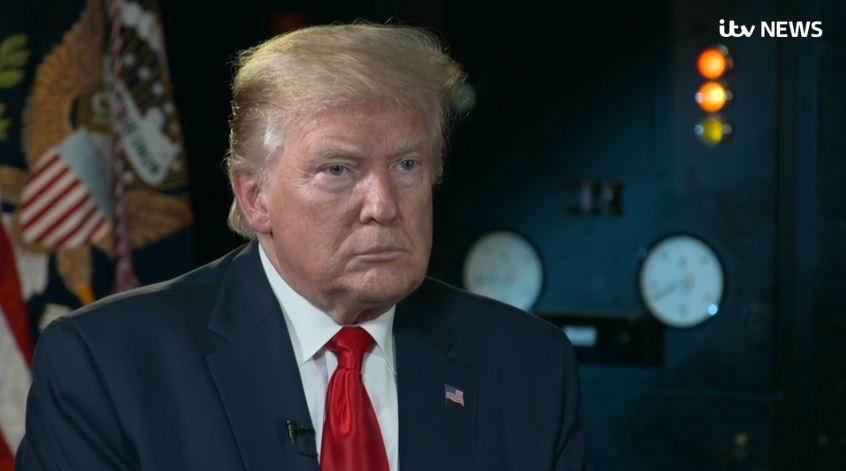
US President Donald Trump said in an interview broadcast on Wednesday that while he did not want war with Iran, there was “always a chance” it would happen.
Trump spoke to the ITV television network during a state visit to Britain.
Iran, he said, “is a place that was extremely hostile when I first came into office.”
He added: “They were a terrorist nation, number one in the world at that time and probably maybe are today.”
Asked if he believed military action would be needed against Tehran, he said, “There’s always a chance. Do I want to? No, I’d rather not. But there’s always a chance.”
He said he “would much rather talk” with Iran, and replied “yeah, of course,” when asked if he’d be did not rule out a meeting with Iranian President Hassan Rouhani.
Trump’s comments come after weeks of increasingly belligerent rhetoric and actions between the two countries.
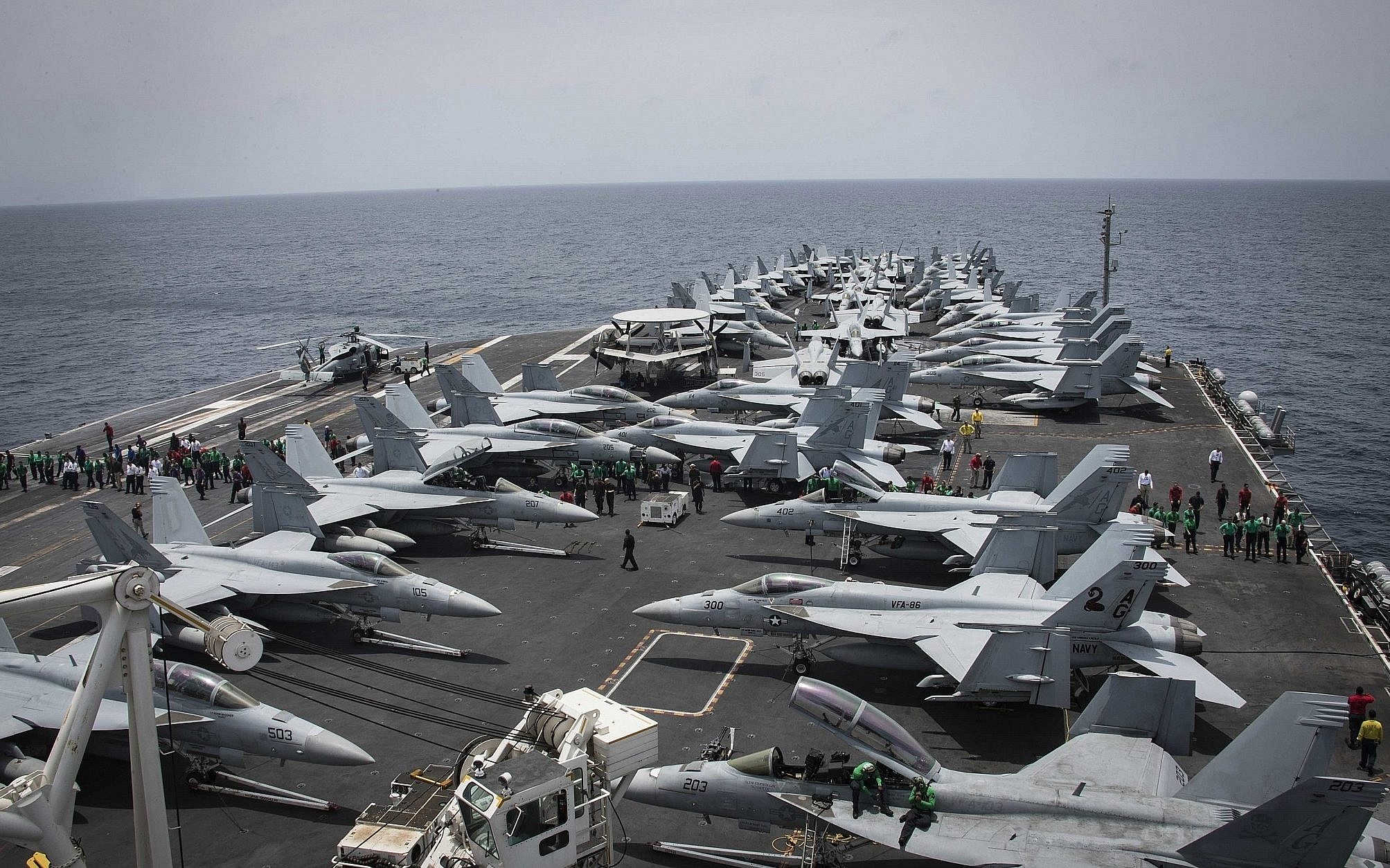
Tensions between Washington and Tehran soared recently over America’s deployment last month of an aircraft carrier and B-52 bombers to the Persian Gulf amid reports of intelligence information that said Iran planned attacks against US forces in the region.
Last year, the US withdrew from a nuclear deal between Iran and world powers and re-imposed sanctions on Iran targeting the country’s oil sector.
US Secretary of State Mike Pompeo has said the US is willing to talk with Iran “with no preconditions.” Iran says the US must return to the deal first.
On Tuesday, Iranian Supreme Leader Ali Khamenei said the country would continue resisting US economic and political pressure.
Khamenei addressed thousands of people on the 30th anniversary of the death of Grand Ayatollah Ruhollah Khomeini, founder of the Islamic Republic, in Khomeini’s mausoleum in the capital Tehran.
Without referring to the US by name, Khamenei said “standing and resisting the enemy’s excessive demands and bullying is the only way to stop him.”
Khamenei, who has final say on all state matters, said the US is treating Iran with hostility because “they want us to be losers and put our hands up as a sign of surrender, and because we don’t do that, they threaten us.”
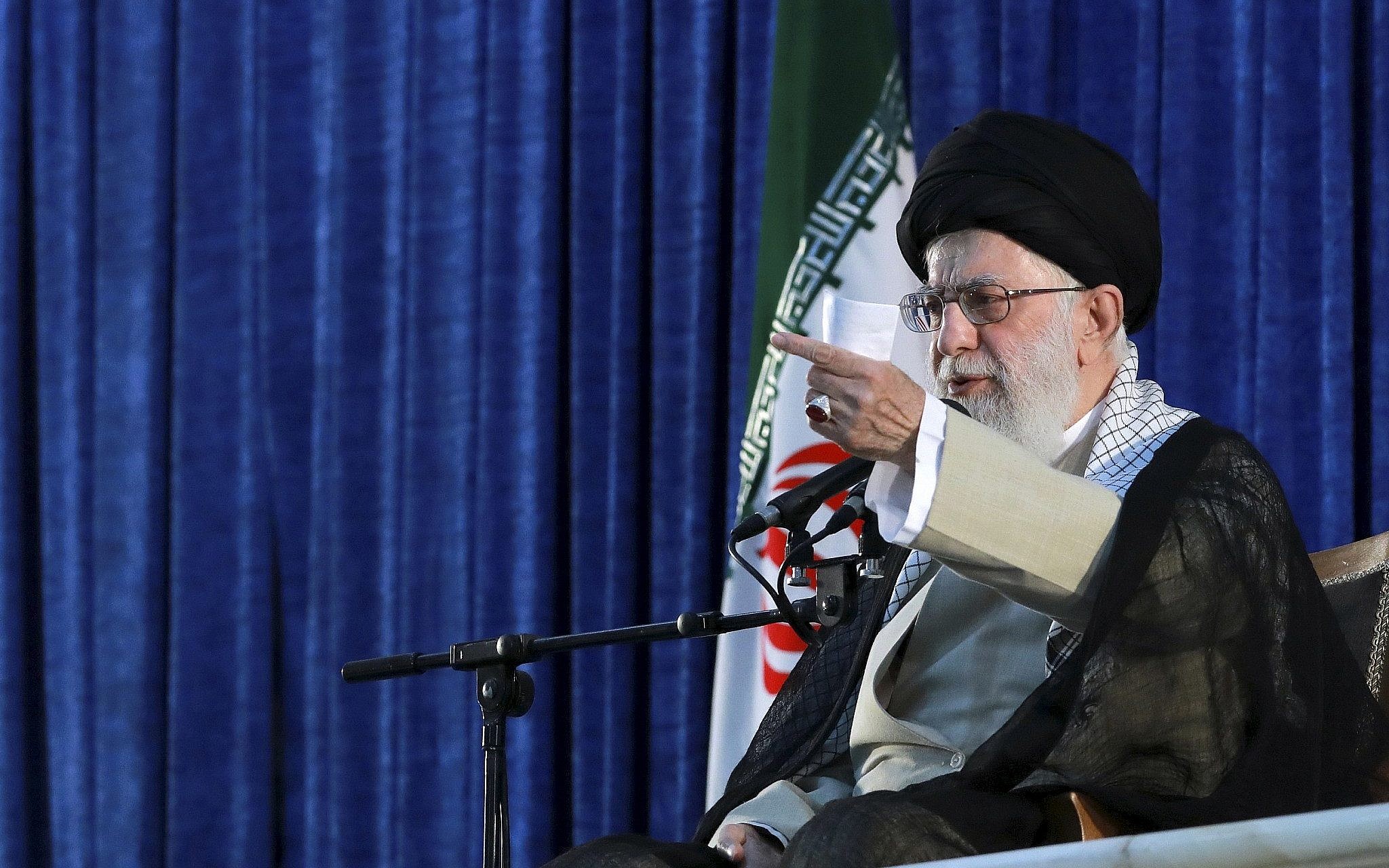
Khamenei added: “Resistance has a cost, but the cost of surrendering to the enemy is higher.”
The Ayatollah urged Iranian officials not to pay attention to offers for negotiations made by the US.
“Wherever Americans have set foot, a war broke out, a fratricide began, a sedition was instigated, or an exploitation or colonialism began there,” he said.
The supreme leader added that Iran is under pressure to negotiate over its missile program because it has been developed to the point where it is a deterrent.
AP contributed to this report.
Source: Israeli intel firm: Alleged IDF strike on Syrian base targeted Iranian drones | The Times of Israel
Satellite image analysis company ImageSat says attack attributed to Israel seems to have been pinpoint airstrike, targeting a small number of recently arrived components from Iran

An Israeli satellite imagery analysis firm on Tuesday determined that the target of an airstrike on a Syrian air base earlier this week, which was attributed to Israel, appeared to be an Iranian drone facility.
According to the company, ImageSat International, the attack late Sunday night appeared to be a pinpoint strike, targeting “one element or just a few elements” connected to Tehran’s unmanned aerial vehicle program in Syria, indicating that the components were of “particular importance.”
This assessment was based on satellite images of the targeted facility, the T-4 air base near Palmyra, from Tuesday. Comparing these photographs to ones from May 22, the private intelligence firm determined that the strike hit a small crop of buildings on the base.
The firm said that a number of cargo planes had recently landed at the base from Iran prior to the strike, indicating that they had delivered the equipment that was targeted.
“According to our assessment, it is reasonable that [the target] was a component [or components] connected to [Iran’s] UAV program,” ImageSat said in a statement.
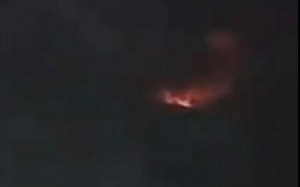
Syrian state media said that Israel was behind the attack late Sunday night on the T-4 air base, which the Israel Defense Forces has bombed in the past and which Jerusalem has long claimed to be a facility used by Iran and its proxies.
In February 2018, the IDF bombed the T-4 air base after it said an Iranian soldier piloted an armed drone from there into Israeli airspace before it was shot down by an IDF helicopter.
The Israeli military refused to comment on Sunday’s strike. Israel generally acknowledges conducting operations in Syria, but refuses to take responsibility for particular attacks, with the exception of retaliatory strikes in response to attacks from Syria, as occurred on Saturday night.
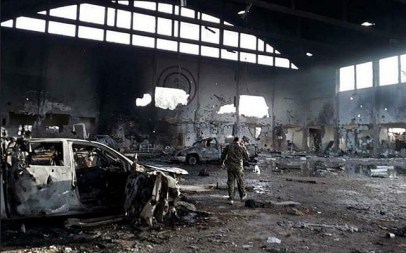
Syrian military officials told the state media outlet SANA that the attack on the T-4 air base targeted and destroyed a weapons storage facility and several other buildings at the base.
The Britain-based Syrian Observatory for Human Rights reported five people were killed, including one Syrian soldier. It said the attack also destroyed a rocket warehouse.
The attack came a day after the IDF carried out airstrikes on several military targets in Syria in the predawn hours of Sunday morning, reportedly killing 10 in response to two rockets that were fired from the country at the Golan Heights the night before.
 Eva J. Koulouriotis – إيفا كولوريوتي@evacool_
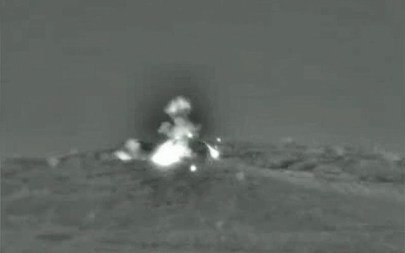
Beginning at 4:10 a.m. Sunday, IDF helicopters and planes attacked several targets connected to the Syrian army, including two artillery batteries, several observation and intelligence outposts, and an SA-2 type air defense unit, the army said in its statement.
Syrian media reported that Israel also struck several targets connected to Iran and its proxy militias in Syria, in the area of al-Kiswah, south of Damascus.
The strikes reportedly targeted weapons caches and a military training facility. Seven “foreign fighters” were among the 10 killed by the strikes, according to the UK-based Syrian Observatory for Human Rights monitor group.
The Israeli army refrained from specifying who it believes fired the two rockets at the Golan Heights — one of which landed inside Israeli territory, the other in Syria — but said it “sees the Syrian regime as responsible for all attacks against Israel from Syrian territory.”
Saturday night’s rockets appeared to be a relatively long-range variety, reportedly fired from the Damascus area, some 35 kilometers (22 miles) away, similar to an attack earlier this year aimed at Mount Hermon.
Speaking Sunday evening, Prime Minister Benjamin Netanyahu warned Iran that Israel’s airstrikes on Syria earlier in the day showed that, when assaulted, the Jewish state hits back hard.
Speaking at a ceremony for Jerusalem Day, when Israel marks the unification of Jerusalem during the 1967 Six Day War, Netanyahu said that in the decades since that conflict many moderate Arab states have “sobered up” regarding their attitudes toward Israel, which they now see as an ally against Iran.
“While we do not make light of Iran’s threats, neither are we deterred by them because anyone who tries to hurt us will be hurt far worse,” Netanyahu said at the ceremony at Ammunition Hill in Jerusalem, the location of a key battle during the war. “We have proven this many times in the history of our state. We proved it just last night.”
Source: Intel chief: Iran acting out in response to ‘unprecedented’ economic sanctions | The Times of Israel
Tamir Hayman says Islamic Jihad more likely to start a war in Gaza than Hamas, boasts that Israel knows more than Nasrallah about Hezbollah’s missile program

The head of Military Intelligence on Wednesday said the heavy economic sanctions on Iran and their devastating financial ramifications were the driving forces behind attacks linked to the Islamic Republic on petroleum facilities last month and recent threats by Tehran to step up nuclear enrichment.
“Iran is under growing pressure that is forcing it to take actions connected to oil and to its nuclear project — though for now there are no changes to its policies,” Maj Gen. Tamir Hayman said, speaking at the Intelligence Legacy Center conference in Tel Aviv as part of the Israel Defense Expo.
On May 15, Iran announced it was stepping up its uranium enrichment program in response to the United States’ decision the year before to drop out of the 2015 nuclear deal and impose heavy economic sanctions on Iran and the countries and groups that do business with it. Last week, the International Atomic Energy Agency watchdog said Iran was staying within the limitations set by the 2015 nuclear accord, though its stockpiles of low-enriched uranium and heavy water were growing.
“The unprecedented sanctions on Iran has led to a severe recession, which is being felt in all directions, and has led Iran to take actions against the global oil trade,” he said.

Last month, four United Arab Emirate oil tankers were damaged in the Gulf of Oman. The United States and Israel said Iran was behind the sabotage, which Tehran denied.
Days later, Houthis in Yemen — a militia that receives significant funding and assistance from Iran — carried out a number of drone strikes on Saudi Arabian oil facilities.
In his wide-ranging speech, the Military Intelligence chief also addressed the prospect of war in the Gaza Strip, saying it was not likely as the Hamas terror group, which rules the enclave, is not interested in a large-scale conflict. However, Hayman warned that the second-largest group in the Strip, the Iran-backed Palestinian Islamic Jihad, has far fewer responsibilities toward Gaza residents and thus has less to lose in a war, making it a far likelier instigator of violence.
“Hamas is quite deterred from war and is deeply interested in staying the course of a ceasefire in which they expect to receive certain concessions — and therefore they really don’t want a war,” he said.

“The Islamic Jihad has a high potential of volatility. This group does not have the duties of a sovereign and so there is a potential for it to initiate [war],” Hayman said.
Turning his attention to the north, the IDF general said Lebanon-based terror group Hezbollah’s program to turn its massive arsenal of some 100,000 “dumb” rockets into precision-guided missiles has largely stalled due to American pressure on the government of Lebanon — despite recent claims to the contrary by Hezbollah Hassan Nasrallah.
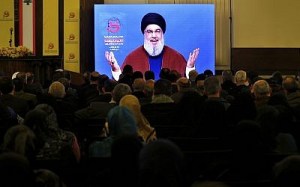
In an uncharacteristic boast by a head of Military Intelligence, Hayman said, “We don’t need Nasrallah to tell us the status of this project. We know it better than he does, and everything that he revealed was already known. To the best of our understanding, their capabilities, their missiles, are still not precise.”
Precision-guided munitions represent a far greater threat to Israel than “dumb” rockets, which follow a fixed trajectory and are highly inaccurate.
On Friday night, Nasrallah said in a speech to his supporters that his group possesses precision-guided missiles, but denied it produces them.
“So far in Lebanon there are no factories for precision missiles,” he said.
He threatened for the first time, however, that Hezbollah could consider setting up such factories.
A senior US diplomat presented photographs and maps of sites used by Hezbollah to store precision missiles to a number of Lebanese government officials recently, according to a report Sunday.
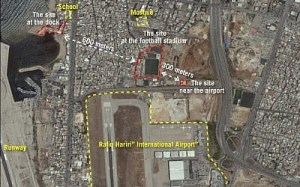
The London-based Al-Hayat newspaper, owned by a Saudi prince, said that David Satterfield, US acting assistant secretary of state for Near Eastern Affairs, told the Beirut officials that the US government could neither overlook the findings nor hold Israel back from acting to deal with them, and that it was up to the Lebanese government to resolve the situation.
In April, US Secretary of State Mike Pompeo reportedly conveyed to Lebanon a message from Israel warning Beirut of action by Iran and Hezbollah to covertly construct a new missile production facility in the country.
Pompeo visited Beirut after Israel, using the trip to highlight his concerns about Hezbollah, which is targeted by US sanctions as a terror group, but holds three cabinet posts in Lebanon.
In a September 2018 speech at the United Nations General Assembly, Prime Minister Benjamin Netanyahu displayed a map pinpointing the location of the Hezbollah missile sites near Beirut’s airport, and accused the terror group of “deliberately using the innocent people of Beirut as human shields.”
Netanyahu later said that Hezbollah closed the facilities he had revealed to the United Nations.
Source: Syria: Iran is not leaving, despite U.S. and Israeli pressure – Middle East – Jerusalem Post
The report seeks to downplay rumors that an upcoming US, Israel and Russia trilateral meeting in Israel would examine Iran’s presence in Syria.

A Syrian official told Russian media that there are no plans for Iran to reduce its troop levels in the country, even if the US and Israel seek to offer Russia a deal.
Speaking to Izvestia and later reported in Russia’s TASS news agency, the report seeks to downplay rumors that an upcoming US, Israel and Russia trilateral meeting in Israel would examine Iran’s presence in Syria.
Asharq Al-Awsat reported the rumors Monday, but a US official told The National in Abu Dhabi that Washington flatly denied the report.
The US officially opposes the Bashar al-Assad regime and US President Donald Trump has launched airstrikes against the regime and harshly criticized it for human rights violations, including recent bombing in Idlib.
Trump has also accused Iran of attacking Idlib, via its forces in Syria. US-Iran tensions rose this month as the US also accused Tehran of threats in the Gulf and Iraq.
Israel has called on Iranian forces to leave Syria and recent airstrikes in Syria, two of which Israeli Defense Forces released information about, have occurred over the last week since May 27.
Syria claimed that Israeli struck its T-4 airbase where Iranians are suspected to be present.
Syria’s chairman of the Syrian Parliamentary Committee told Izvestia in Russia that “Damascus has no intention of turning away Iran’s military assistance or demanding an Iranian troop withdrawal.”
The Russian report notes that “Washington and Tel Aviv intended to offer a deal to Moscow and Damascus.” The deal would legitimize Assad and remove sanctions as long as the Iranian presence was reduced.
Vitaly Naumkin, Director of the Institute of Oriental Studies at the Russian Academy of Science also threw cold water on the news. Russia will not harm relations with Iran for the “sake of a doubtful deal with the Americans,” TASS reported.
In addition Syria says that it will not bargain regarding Iran’s presence. The US sanctions are a violation of Syria’s rights.
“Washington is not in a position to tell a sovereign state whose troops it may or may not host. The Iranian troops are deployed to our country based on our government’s official request and will leave Syria when it is necessary,” the lawmaker pointed out, TASS said.
But Syria is willing to have talks with western countries. Although the report did not mention this, Syria wants massive investment to rebuild the country after eight years of war and the displacement of eleven million people. Turkey occupies northern Syria and a US-led coalition supports the Syrian Democratic Forces which control eastern Syria.
Russia also wonders if the US and Israel are prepared to make “positive actions” regarding Syria, the report notes. “The recent bombing of Syrian military facilities near Quneitra and an air base near Hama did not happen at the same time by chance but were part of the same campaign,” an expert told Russian media.
This is a thinly veiled accusation against Jerusalem, but it comes as part of the generally amicable relations between Moscow and Israel. While Russia has critiqued Israeli airstrikes in the past, it has also indicated that foreign forces should leave Syria.
However Moscow’s stance is often cloaked in opacity. Russia said it would supply the Syrian regime with the S-400 last September after Syrian air defense downed a Russian place during an Israeli air strike near Latakia.
There are other issues involved as well. Radio Farda reported over the weekend that Russia was not willing to sell Iran the S-400 air defense system.
It is already selling it to Turkey and has shopped it around the Middle East. Russia has also denied reports of a deal with the US regarding Venezuela and a withdrawal of Russians from the South American nation.
These reports should be read as brinkmanship designed to elicit a response from either Moscow or Washington, to test the waters of what might happen on all these files that Moscow and Washington are dealing with.
Israel’s media has mistakenly reported in the past that Moscow would ask Iran or Hezbollah to leave Syria and reports have surfaced of Russian guarantees to Israel about keeping Iran away from the Golan ceasefire lines.
Since 2016, reports have also emerged of tensions between Russia and Iran in Syria, including tensions on the ground between different parts of the Syrian army and paramilitary forces that the countries work with. The full details of all these reports never clearly emerge and Moscow, Tehran, Damascus prefer it that way.
On Tuesday Syria’s regime media SANA reported that it is working on a friendly agreement with Iran. The Syrian soccer team will soon play the Iranians.
At the same time SANA says that Syria and Russia “affirmed their intention to develop cooperation in various fields,” in a meeting between Syrian Presidential Affairs Minister Mansour Azzam his Russia’s Deputy Prime Minister Yury Borisov.
If those two reports are an indication of the relative interests of Damascus it is that Damascus realizes Russia is the more important ally. Iran is more important for people-to-people relations on the ground.
Source: Iran calls US sanctions ‘economic war,’ says no talks until they are lifted – www.israelhayom.com
Iranian Foreign Minister Mohammad Zarif rebuffs Washington’s offer to hold talks without preconditions, accusing U.S. of “economic terrorism.” “War and talks – with or without preconditions – don’t go together,” he says.
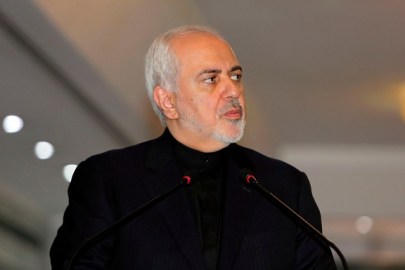
Iran’s Foreign Minister Mohammad Javad Zarif | Photo: Sabah Arar / AFP
A day after Washington suggested it could hold talks without preconditions if Iran changed its behavior, Iran’s Foreign Minister Mohammad Javad Zarif posted a video clip of a woman saying the prosthetic leg her son needs is sanctioned to Twitter.
He tweeted: “#EconomicTerrorism against Iran targets innocent civilians. Like this little boy, whose heartbroken mother can’t get him prosthetic legs as he grows. They’re sanctioned.”
Reuters could not verify the authenticity of the video.
“This is @realDonaldTrump’s ‘economic war’. And war and talks – with or without preconditions – don’t go together,” Zarif added in the tweet.
U.S. Secretary of State Mike Pompeo said on Sunday that Washington was prepared to engage with Tehran without pre-conditions on its nuclear program, but first needed to see the country behave like “a normal nation.”
Tensions between the two foes have escalated in the past month, a year after the United States pulled out of the 2005 Iran nuclear deal.
Source: In wake of Golan attack, Israel makes it clear Iran cannot hide in Syria – www.israelhayom.com
The alleged Israeli strike on Iranian assets in Syria sends the message that the Islamic republic cannot hide behind its regional proxies, and that its activities remain highly exposed to Israeli intelligence and firepower.
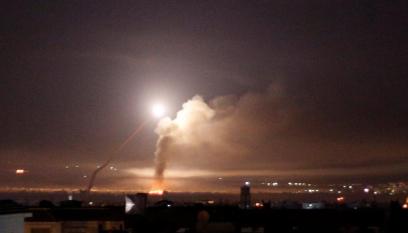
An Israeli strike on Iranian assets in Syria | Illustration: Reuters/Omar Sanadiki
At this time, no group has claimed responsibility for the firing of two rockets at Israel’s Mount Hermon on Saturday night from Syria, but it doesn’t take a lot of imagination to view Iran, or one of its proxies, as the prime suspects.
The Iranian radical axis possesses both the ability and the motivation to conduct such an attack.
Israel’s alleged responses included a significant air strike on Iranian assetswithin the T-4 airbase, in central Syria, and deadly strikes on President Bashar Assad regime’s military.
Israel sent the message that Iran cannot hide behind its regional proxies and that its activities remain highly exposed to Israeli intelligence and firepower. It also reiterated that Assad will continue to pay a price for Iran’s aggression.
The Islamic republic has spent years creating proxy terrorist organizations throughout the Middle East, including in Syria. This gives it an ability to attack and pressure its enemies on their own doorstep, far from Iran’s own borders, while maintaining a facade of deniability. The “anonymous” firing of two rockets on Saturday appears to fit this pattern well.
Tens of thousands of Shi’ite militia members – made up of Iraqis, Afghans and others – are active in Syria. They are armed, trained and funded by Iran, and are also under its command.
Iran has tried to recruit Syrians, who live near the Israeli border, into Iranian-organized terror networks. In addition, Hezbollah – Iran’s powerful Lebanese proxy – is a part of this picture. Hezbollah has repeatedly tried to turn southern Syria into a forward operating base against Israel.
In addition to all of these efforts, Iran has tried to build up its own direct military capabilities in Syria.
In response, Israel uses its advanced intelligence and precision airstrike capabilities to disrupt the threats as they form.
Stopping Iran’s entrenchment in Syria has become a top Israeli goal. The Israeli Air Force has, in recent years, shifted into a high operational tempo to keep up with the constantly changing threat. The main mission, in Syria and beyond, is to stop the Iranian axis build-up.
This has frustrated Iran’s Islamic Revolutionary Guards Corps and its overseas black-ops unit, the Quds Force, commanded by the notorious Maj. Gen. Qasem Soleimani.
Iran’s plans have run into constant “problems” in the form of hundreds of Israeli preventative strikes, including some in recent months, according to international media reports. The reports said Israeli strikes destroyed valuable Iranian targets, like missile-production facilities and weapons warehouses, killing Iranian personnel in the process.
The mysterious rocket attacks on Saturday night, therefore, could be seen as an Iranian attempt to deter Israel from taking more such action.
Another motivation could be the increasing economic pressure that Iran is under, due to punishing American sanctions. The closer Iran comes to the economic crisis, the more willing it is to activate its proxies and destabilize the region.
Recent examples of this trend include the sabotage of oil tankers at a UAE port, the explosive drone attacks launched by Iranian-backed Houthis in Yemen against oil facilities in Saudi Arabia and a rocket attack on the U.S. embassy in Baghdad. Saturday’s projectile attack from Syria seems could fit this pattern.
In addition, May 31 marked Iran’s “Quds Day,” held on the last Friday of Ramadan. This day is marked by rallies held in Iran and by Shi’ite communities abroad who are loyal to Tehran. Its defining message an ideological and fundamentalist religious commitment to Israel’s destruction.
The rocket attacks from Syria seem too close to Quds Day to be a coincidence. This year’s Quds Day was filled with threats by Iranian officials – not only against Israel but also against pro-U.S. Sunni Gulf states and the United States itself.
Israel’s first response to Saturday’s attack was to extract a painful price from the very regime that Iran worked so hard to save. Israeli aircraft struck a number of military targets belonging to Assad’s military, including artillery batteries, a number of observation and intelligence posts, and an SA-2 surface-to-air missile battery.
The IDF released a statement saying it “holds the Syrian regime accountable for every action taken against Israel and will firmly operate against any activity from within Syrian territory against Israel.”
Israel’s message is that Iran cannot hide behind its regional proxies and that the Assad regime will pay the price for Iran’s actions. This response should give Iran pause for thought since Assad’s survival is a key Iranian strategic interest. It is also a key interest of Russia, which is trying to keep Iran’s activities under some level of check to prevent the outbreak of a wider conflict.
In January this year, the Iranians tried to pull off a similar, more brazen attack. They fired a mid-range missile from the outskirts of Damascus at Mount Hermon, which was intercepted by Israeli air defenses right over the heads of winter skiers.
In response, the Israeli Air Force launched three waves of airstrikes that targeted Iranian sites in and around Damascus, as well as Syrian air-defense batteries that fired on the Israeli fighter jets.
Iran’s attack at that time was motivated, according to Israeli assessments, by a desire to stop Israel from hitting its troops and bases in Syria. That initiative failed.
The Lebanese front
Meanwhile, in neighboring Lebanon, Hezbollah chief Hassan Nasrallah used a Quds Day speech to state that “American intelligence knows that every war that erupts will not remain inside Iranian borders, but will spark a fire in the region. Israel and Saudi Arabia will pay the price.”
This threat likely came from Tehran rather than from Beirut. The mysterious rocket attacks fit Nasrallah’s warning. His message is that Iran’s axis should be seen as a single network and that Iran will activate its proxies if it becomes involved in any escalation with the United States.
That means that a U.S.-Iranian conflict will trigger an Israeli-Hezbollah conflict.
Still, Nasrallah has no appetite for a war at this time. His lackluster response to the IDF’s destruction of a series of Hezbollah tunnels, dug into northern Israel from Lebanon, are evidence of this.
On May 30, the IDF completed the destruction of Hezbollah’s largest and key tunnel.
In any future conflict, Hezbollah’s plan was to “infiltrate Israel through the attack tunnel into Israeli communities near the border in order to harm civilians as part of its war plans,” the IDF said.
Hezbollah invested “the most resources and efforts” into this tunnel, which was designed to allow terrorists to stay inside for a prolonged period of time.
So far, Israel and the Iranian axis have kept this conflict at bay. It remains unknown how much longer this will continue to be the case.
This article is reprinted with permission from JNS.org.
Source: Iran calls US offer of talks without preconditions ‘wordplay’ – www.israelhayom.com
U.S. Secretary of State Mike Pompeo tells Swiss counterpart that U.S. is ready to sit down with Iran when “the Iranians prove they are ready to behave like a normal nation.”
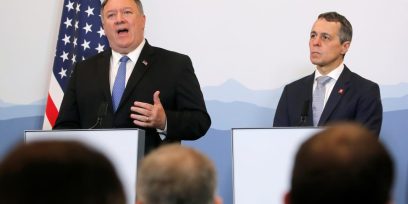
U.S. Secretary of State Mike Pompeo and Swiss Foreign Minister Ignazio Cassis attend a joint news conference at the medieval Castelgrande castle in Bellinzona, Switzerland, Sunday | Photo: REUTERS/Arnd Wiegmann
Reacting to a U.S. offer to engage with Iran without preconditions, Iran’s Foreign Ministry said on Sunday that Tehran expected a change in U.S. behavior rather than “wordplay.”
U.S. Secretary of State Mike Pompeo said on Sunday that the United States is prepared to engage with Iran without preconditions about its nuclear program but needs to see the country behaving like “a normal nation.”
“The Islamic Republic of Iran does not pay attention to wordplay and expression of hidden agenda in new forms. What matters is the change of U.S. general approach and actual behavior toward the Iranian nation,” Foreign Ministry spokesman Abbas Mousavi was quoted as saying by the Mehr news agency.
“Pompeo’s emphasis on the continuation of maximum pressure on Iran is the same old wrong policy that needs reform.”
Pompeo, in an apparent softening of his previous stance, said when asked about Rouhani’s remarks: “We are prepared to engage in a conversation with no preconditions, we are ready to sit down.”
However, he said Washington would continue to work to “reverse the malign activity” of Iran in the Middle East, citing Tehran’s support of Hezbollah and the Syrian government.
Pompeo said U.S. President Donald Trump had been saying for a long time that he was willing to talk to Iran.
“We are certainly prepared to have that conversation when the Iranians can prove that they want to behave like a normal nation,” Pompeo told a joint news conference with his Swiss counterpart Ignazio Cassis in the southern Swiss city of Bellinzona.
Trump said last Monday he was hopeful Iran would come to the negotiating table. But Supreme Leader Ayatollah Ali Khamenei said on Wednesday Tehran would not negotiate with Washington, even after Rouhani had previously signaled talks might be possible if sanctions were lifted.
Cassis voiced concern at Iranian people suffering from the impact of sanctions and said that neutral Switzerland wanted to provide humanitarian aid, “especially pharmaceutical products and foodstuffs.”
He said Iran needed to make payments for this, and that was possible only if the United States allowed banks to transfer payments. Cassis said he was confident the U.S. would come up with the “best possible solution” to that problem in a short time.
Iran has stayed within the main restrictions of its 2015 nuclear deal, a quarterly report by the U.N. atomic watchdog indicated on Friday, at a time when Tehran is threatening to break the rules in future in response to new U.S. sanctions.
Pompeo declined on Sunday to comment on the latest report by the International Atomic Energy Agency. He said Washington was tracking IAEA findings closely but added: “We also have our own independent understanding of what is taking place there.
“And the world should be mindful that we are watching closely how Iran is complying with the requirements that were set out in the JCPOA, not only the heavy water issue, but the amount of high-enriched uranium which they are accumulating,” he said, referring to the Joint Comprehensive Plan of Action which the Trump administration has quit.
“We are watching closely as they put centrifuges into work and whether they are actually beginning to spin those centrifuges and load those centrifuges,” Pompeo said.
Switzerland has served as an intermediary between Iran and the U.S. since shortly after the Islamic revolution in November 1979. Switzerland provides protective and consular services for some 100 U.S. citizens and 12,000 people with both U.S. and Iranian citizenship.
Source: Someone in Syria wants to challenge Israel – www.israelhayom.com
Israel has yet to determine who was behind the most recent rocket attack from Syria, but multiple actors – the Syrian regime, Iranian proxies or Palestinian terrorist groups – could have an interest in changing the rules of the game.
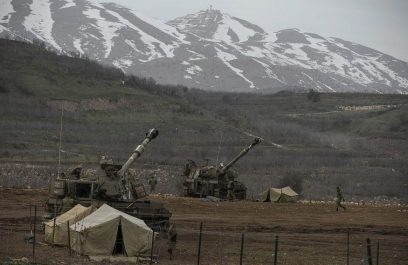
Israeli soldiers walk near mobile artillery units near the Syrian border on the Golan Heights | Archives: Reuters/Baz Ratner
It was not the first attack of that type. Rockets have already been fired at the Hermon in recent years.
As a reminder, the most recent rocket attack, in January, took place in the afternoon hours and was carried out by Shiite militias supported by Iran, while the ski resort in the area was full of visitors. The rocket was intercepted by an Iron Dome battery stationed there in advance. That incident, which came in response to an Israeli airstrike, was exploited by Israel to carry out a broad attack on Iranian targets in Syria, most notably a logistics center used by the Islamic Revolutionary Guard Corps and Hezbollah at the international airport in Damascus, which was knocked almost completely out of commission.
And yet, the rocket attack on Saturday was unusual in the sense that it seemingly came out of the blue. Unlike previous incidents, the attack wasn’t carried out in response or retaliation to any Israeli activity.
This could indicate that someone on the other side is fed up with Israel dictating the rules of the game in the north, and wants to send it a message that there’s more than one player on the field.
As of Sunday evening, Israeli officials were still unsure who fired the Grad rockets, one of which landed on the Hermon and the other, apparently, in Syrian territory.
The rockets were launched from a distance of around 30 kilometers (19 miles), from an area with multiple active actors, at least three of whom could have an interest in harming Israel: the Syrian regime or a group acting on its behalf, in an attempt to convey Damascus’ sovereignty; Iranian proxies (Shiite militias or Hezbollah), seeking revenge against Israel for a plethora of possible reasons – from airstrikes on weapons depots to economic sanctions imposed on Tehran; or another player, either Palestinian or another such terrorist group, who managed to get their hands on rockets and decided to put them to use.
From Israel’s perspective, it doesn’t really matter who fired the rockets. The response – striking Syrian artillery and anti-aircraft batteries and an intelligence gathering post near the border – sought to reiterate that as the sovereign power it is the regime’s responsibility to prevent hostile activities against Israel from its territory. This is Israel’s standing policy (in Gaza, too) – target the sovereign entity so that it exerts said sovereignty – to which it adhered to even throughout the Syrian civil war when the Assad regime was not in control of the border region. Therefore, it stands to reason that Israel is continuing to implement this policy now that the Syrian army has seized full control of the frontier region.
Still, this rocket attack should concern officials in Jerusalem because it means that someone in Syria wants to challenge Israel.
For the time being, the attack does not alter the basic situational assessment. The IDF enjoys complete dominance in the northern sector. If it avoids making mistakes (specifically regarding Russian forces in Syria), it will be able to continue, for now, to pound away at Iran’s entrenchment and weapons smuggling efforts. In the long term, however, Israel will have to consider and plan new avenues of action that reinforce deterrence and ensure that Israel meets its objectives in Syria; and as a byproduct in Lebanon as well.
Given the recent political upheaval in Israel, this task falls almost squarely on the IDF’s shoulders.
Consequently, IDF Chief of Staff Lt. Gen. Aviv Kochavi will have to continue bearing an extraordinarily heavy load until a new, stable government can formulate a clear policy, security-related and otherwise. Until then, it seems things will mostly stay the same: from the frequent headaches in Gaza to the far more disconcerting security concerns in the north.




 anneinpt
 artaxes
 danmillerinpanama
 davidking1530
 Peter Hofman
 Joseph Wouk
 Peter
Peter Louisiana Steve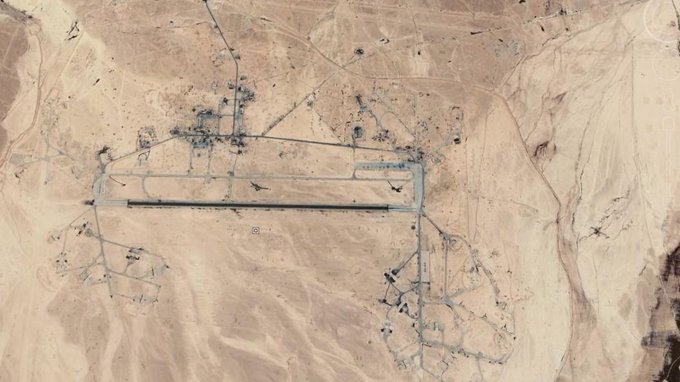

 WarSclerotic
Recent Comments