Source: Iran says new US sanctions show offer for talks is ‘hollow’ | The Times of Israel
Tehran: Announcement of penalties for petrochemical industry belies Trump’s claim he would reopen discussions if Tehran agreed to give up nuclear weapons

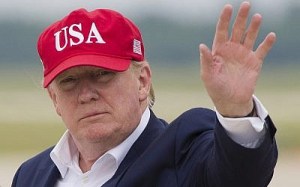
TEHRAN, Iran — Iran said Saturday that new US sanctions on its petrochemical industry show the hollowness of US President Donald Trump’s claims to be open to fresh negotiations with Tehran.
“Only one week was needed for the US president’s claim that he was ready to negotiate with Iran to be proven hollow,” foreign ministry spokesman Abbas Mousavi said.
His statement came after the US Treasury announced new sanctions on Friday against Iran’s largest and most profitable petrochemicals group PGPIC.
Trump said Thursday he would be willing to reopen talks as long as Iran agreed to give up nuclear weapons. But Tehran ruled out talks until the United States is ready to “return to normal.”
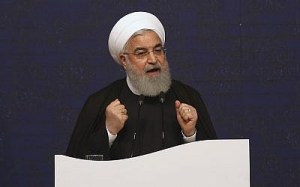
Mousavi called the new sanctions another instance of “economic terrorism” and a continuation of US “enmity” against Iran.
“America’s maximum pressure policy is a failed policy tried numerous times before by the country’s previous presidents. This is a wrong path and the US government can be sure that it will not achieve any of the goals set for this policy,” Mousavi added.
Washington began reimposing unilateral sanctions on Iran after Trump abandoned a landmark 2015 nuclear deal in May last year.
It reimposed a first set in August followed by a second in November.
On April 8, it designated Iran’s Revolutionary Guards a “foreign terrorist organisation,” paving the way for sanctions against their sources of funding.
Announcing the sanctions against PGPIC on Friday, US Treasury Secretary Steven Mnuchin said they were intended as a “warning that we will continue to target holding groups and companies in the petrochemical sector and elsewhere that provide financial lifelines to the Islamic Revolutionary Guard Corp.”
The PGPIC group holds 40 percent of Iran’s petrochemical production capacity and is responsible for 50% of the its petrochemical exports, the Treasury said.
But Israeli intelligence sources tell Channel 13 news Tehran is also making overtures to Washington to renew talks in bid to deescalate
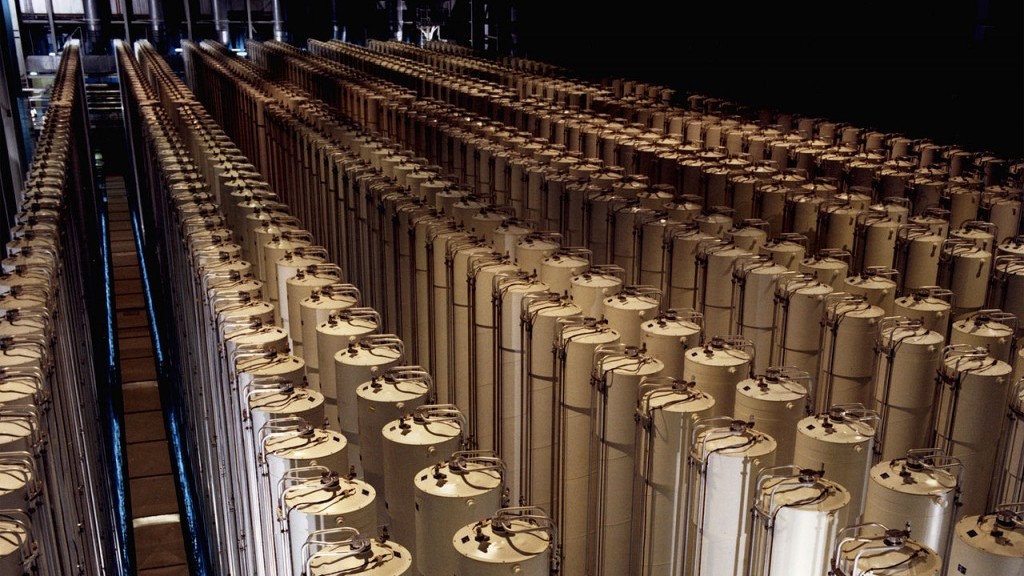
With Iran’s nuclear deal with global powers teetering on the edge of collapse, Israeli intelligence has identified a significant acceleration of work on the production of new uranium centrifuges, as Tehran prepares for the possibility of boosting enrichment activities, Channel 13 news reported Friday night.
The intelligence sources were not named, nor were further details provided on the alleged centrifuge production efforts.
The sources cited by the network also said, however, that the Islamic republic was making back-channel overtures to Washington expressing a willingness to renew talks in a bid to find common ground.
That assessment appeared to agree with statements made by US President Donald Trump on Thursday.
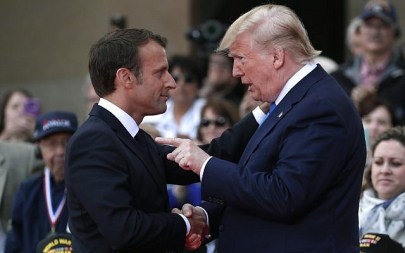
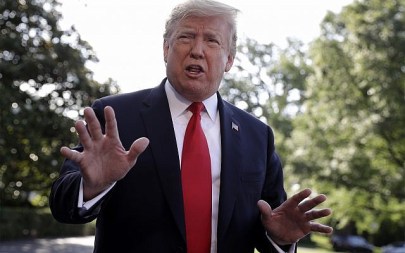
Speaking after talks in northern France with French President Emmanuel Macron, an ardent supporter of diplomacy with Iran, Trump indicated he could consider talking to Tehran.
“I understand they want to talk and if they want to talk that’s fine,” said Trump, who was in France to mark the 75th anniversary of the D-Day landings.
“We’ll talk but the one thing that they can’t have is they can’t have nuclear weapons,” he added.
Trump said when he came to power Iran was “undisputed champions of terror” but indicated activity had slackened in recent times.
“They’re not doing that anymore. They’re doing very poorly as a nation. They’re failing as a nation,” said Trump.
Trump referred to the US sanctions against Iran which are battering the Iranian economy especially since Washington pulled out of the nuclear deal.
“I don’t want them to fail as a nation. We can turn that around very quickly but the sanctions have been extraordinary.”
On Friday, Washington slapped Tehran with new sanctions, targeting its largest petrochemical company for providing support to the Revolutionary Guard Corps.
Although EU leaders were bitterly angered by Trump’s pullout from the nuclear deal, the US president said he and Macron did not have differences on how to handle Iran.
Macron said the US shared the same four objectives on Iran — to prevent it obtaining nuclear weapons, reduce its activities in ballistics, contain Iran’s operations in the region and promote regional peace.
The French president said that in order to achieve such objectives “you need to start a negotiation” and applauded Trump’s apparent readiness to hold talks.
The comments came as Japanese Prime Minister Shinzo Abe, who has a warm personal relationship with Trump, plans to travel to Iran next week as Tokyo aims to play mediation role.
However, Iran’s supreme leader Ayatollah Ali Khamenei lashed out at Trump earlier this week, saying “when such a person is the president, this shows the political and moral decline of that country.”
Also on Friday, Iran rejected the notion of reopening nuclear talks, warning that seeking to broaden an existing landmark treaty could lead to its collapse.
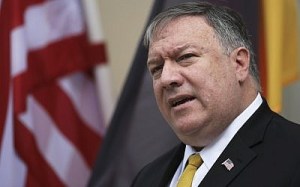
Earlier this week, Tehran ruled out new talks with Washington unless it changes its “general behavior,” after US Secretary of State Mike Pompeo said his country was ready for negotiations with Iran.
Pompeo, too, was reserved, saying Iran must first prove “they are behaving as a normal nation.”
The Trump administration’s hard-line approach with Iran began with the US withdrawal from Tehran’s nuclear deal with world powers last year and continued with punishing economic sanctions on the Shiite state.
Last month, Iran announced that if a way could not be found within 60 days to shield it from US sanctions targeting its economy and oil industry, it would increase its enrichment of uranium beyond the purity allowed under the nuclear deal, known formally as the Joint Comprehensive Plan of Action.
A few days later, Tehran said it had increased its uranium-enrichment production capacity, though only of the lower-enriched uranium permitted by the agreement.
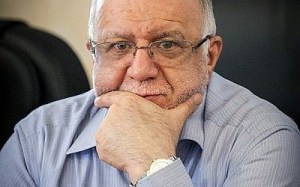
Bijan Zanganeh scant on details, but says Iran covertly circumventing ‘evil’ American oil embargo through ‘unconventional means’
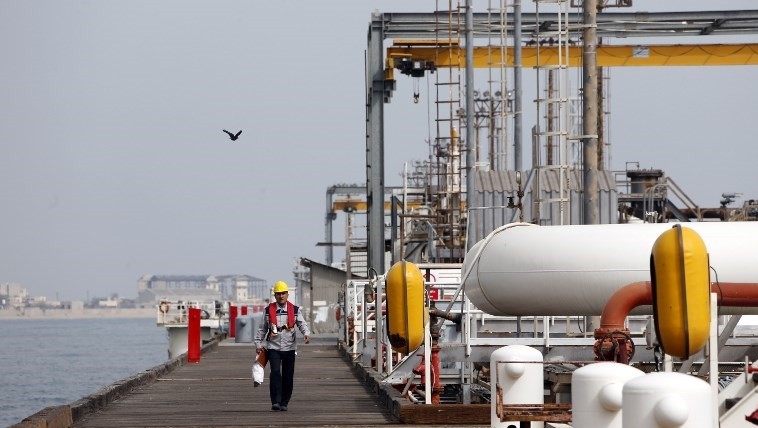
Iran is keeping up oil sales through “unconventional” means to circumvent US sanctions, Iranian Oil Minister Bijan Namdar Zanganeh said in an interview published Saturday.
“We have unofficial or unconventional sales, all of which are secret, because if they are made known America would immediately stop them,” he said, quoted by the oil ministry’s SHANA news agency.
Zanganeh declined to give details on Iran’s oil exports, saying he would not disclose figures until sanctions were lifted.
In May 2018, Washington withdrew from Iran’s 2015 nuclear deal with world powers that granted Tehran sanctions relief in exchange for curbs on its atomic program.
Washington reimposed oil sanctions on Iran last November, but initially gave eight countries, including several allies such as China, six-month waivers.
Iran’s oil shipments tumbled to 750,000 barrels per day in April compared to 1.5 million in October, according to data compiled by Bloomberg.
The White House in May ended all the waivers as part of a “maximum pressure” campaign against Tehran. A month later, it designated Iran’s Revolutionary Guards a “foreign terrorist organization,” paving the way for sanctions against their sources of funding.
According to Zanganeh, the US has reached an “evil maturity” in tightening the noose on Iran’s economy using “smart sanctions.”
“The most severe organized sanctions in history are currently being imposed on Iran,” he said.
The remarks came after the US Treasury announced new sanctions on Friday against Iran’s largest and most profitable petrochemicals group PGPIC for allegedly doing business with the IRGC.
Iranian foreign ministry spokesman Abbas Mousavi called the new sanctions another instance of “economic terrorism” and a continuation of US “enmity” against Iran.
“America’s maximum pressure policy is a failed policy tried numerous times before by the country’s previous presidents. This a wrong path and the US government can be sure that it will not achieve any of the goals set for this policy,” Mousavi said on Saturday.
Last week, US President Donald Trump said he would be willing to reopen talks as long as Iran agreed to give up nuclear weapons. But Tehran has ruled out negotiating with the US until it is ready to “return to normal.”
By AFP and TOI STAFF Today, 3:27 pm
https://www.timesofisrael.com/us-envoy-says-israel-has-right-to-annex-parts-of-west-bank/
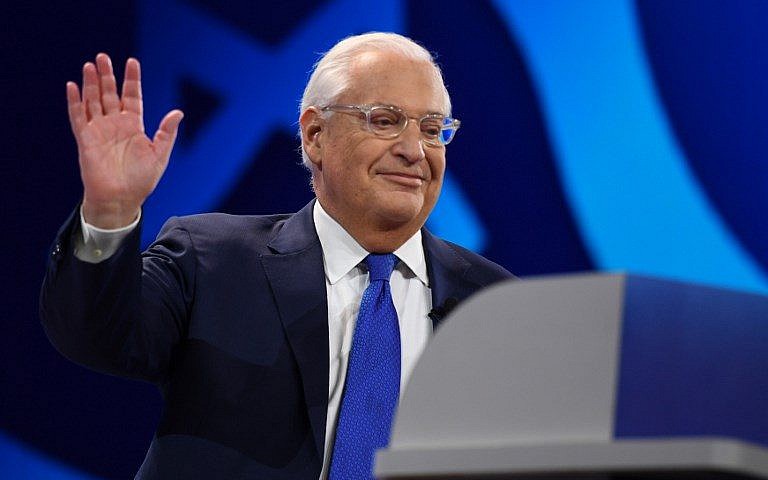
US Ambassador to Israel David Friedman speaks during the annual AIPAC conference in Washington on March 26, 2019. (Jim Watson/AFP)
The US ambassador to Israel said he believes the Jewish state has the right to annex at least “some” of the West Bank, in comments likely to deepen Palestinian opposition to a long-awaited US peace plan.
In an interview published by the New York Times on Saturday, Ambassador David Friedman said that some degree of annexation of the West Bank would be legitimate.
“Under certain circumstances, I think Israel has the right to retain some, but unlikely all, of the West Bank,” he said.
The US is set to lay out an economic component of its long-awaited Mideast peace plan on June 25 and 26 in Bahrain, where Gulf Arab states are expected to make pledges to boost the troubled Palestinian economy.
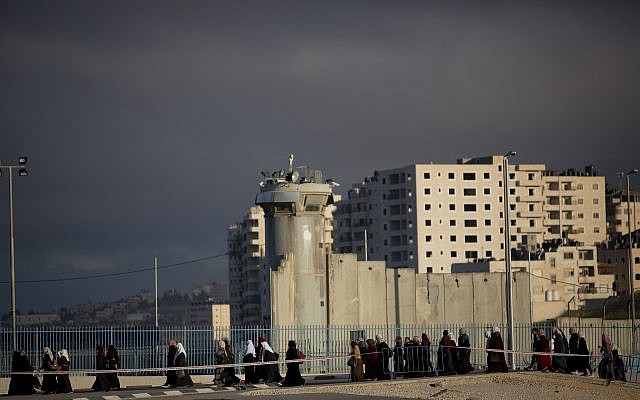
Palestinians walk towards the Qalandia checkpoint between the West Bank city of Ramallah and Jerusalem to attend the first Friday prayers in Jerusalem’s al-Aqsa mosque on the Temple Mount, during the Muslim holy month of Ramadan, Friday, May 10, 2019.(AP Photo/Majdi Mohammed)
But it is not clear when the political aspects of the plan — which are expected to avoid calling for the creation of a Palestinian state — will be unveiled.
Abandoning the call for a Palestinian state would end years of US support for the so-called two-state solution, which envisages an independent Palestinian state alongside Israel.
The Palestinians have already dismissed the Trump peace plan and said they will not attend the Bahrain summit, rejecting it as heavily biased in favor of Israel.
Friedman’s comments on Israeli annexation are likely to be viewed by Palestinians as the last nail in the coffin of a peace process that is already on life support.
Senior Palestinian official Saeb Erekat has said any Israeli annexation policy would be tantamount to “US complicity with Israeli colonial plans.”
The public comments made by administration officials so far suggest the US plan will lean heavily on substantial financial support for the Palestinian economy, much of it funded by the Gulf Arab states, in return for concessions on territory and statehood.
“The absolute last thing the world needs is a failed Palestinian state between Israel and Jordan,” Friedman said in the Times interview.
“Maybe they won’t take it, maybe it doesn’t meet their minimums.
“We’re relying upon the fact that the right plan, for the right time, will get the right reaction over time.”
Friedman, a staunch supporter of the Israeli settlements, told the Times that the Trump plan was aimed at improving the quality of life for Palestinians but would fall well short of a “permanent resolution to the conflict.”
He said he did not believe the plan would trigger Palestinian violence.
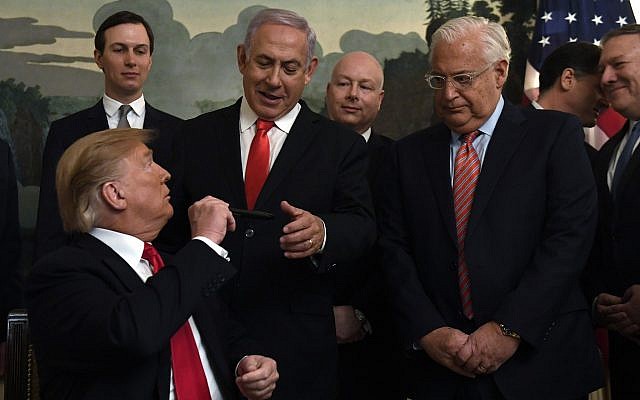
US President Donald Trump, left, turns to give a pen to Prime Minister Benjamin Netanyahu, center, at the White House in Washington, March 25, 2019 after signing the official proclamation formally recognizing Israel’s sovereignty over the Golan Heights.. From left, Jared Kushner, US special envoy Jason Greenblatt, US Ambassador David Friedman, Israeli Ambassador Ron Dermer, and Secretary of State Mike Pompeo. (AP/Susan Walsh)
But he said the United States would coordinate closely with Arab ally Jordan, which could face unrest among its large Palestinian population over a plan perceived as overly favorable to Israel.
Publication of the plan looks set to be further delayed after the Knesset called a snap general election for September, the second this year.
The plan is regarded as too sensitive to release during the campaign.
During campaigning for the first general election in April, Prime Minister Benjamin Netanyahu pledged to annex West Bank Jewish settlements, a move long supported by nearly all lawmakers in his alliance of right-wing and religious parties.
Earlier, in February, Netanyahu told lawmakers he had been discussing with Washington a plan that would effectively annex settlements.
In a rare public show of disunity between the close allies, the White House then flatly denied any such discussion.

In this May 18, 2018 file photo, White House adviser Jared Kushner speaks in the East Room of the White House in Washington. (AP Photo/Susan Walsh, File)
Meanwhile, Trump administration officials have been dampening expectations about the peace plan rollout. Senior White House adviser and Trump son-in-law Jared Kushner in an interview broadcast Sunday expressed doubts about the Palestinians’ ability to govern themselves without Israeli involvement. “The hope is that over time, they can become capable of governing,” he told the Axios news site.
On Monday, the Washington Post published leaked remarks made by US Secretary of State Mike Pompeo, who told US Jewish leaders in a closed-door conversation that the plan might not “gain traction.”
Source: Are Iran and Hezbollah turning Venezuela into the next Syria? – www.israelhayom.com
ANALYSIS: With Russia, Cuba, Iran and Herzbollah offering their support to Venezuelan dictator Nicolás Maduro, some fear the once prosperous South American country could become a hub for international terrorism.
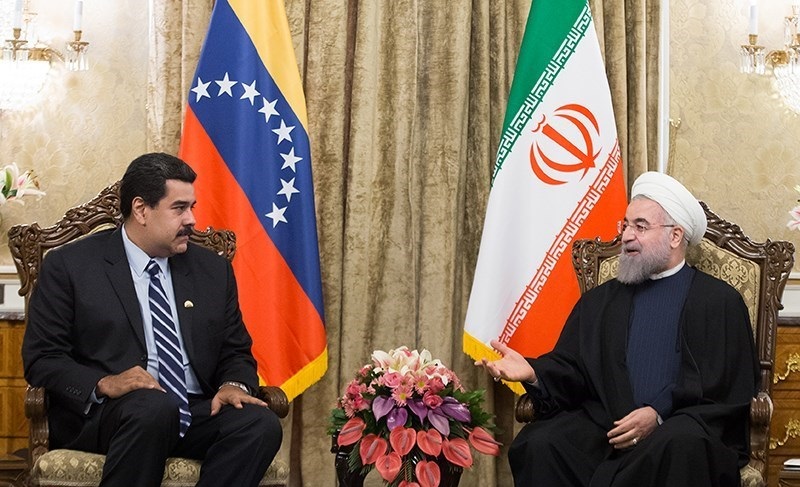
Iranian President Hassan Rouhani meets with Venezuelan dictator Nicolás Maduro | Photo: Wikimedia Commons
Ongoing instability in Venezuela under dictator Nicolás Maduro has led to the continued suffering of tens of millions of Venezuelans. A failed uprising earlier this spring by National Assembly President Juan Guaidó, recognized by the United States, Israel and many other Western democracies as Venezuela’s leader, has only led to the further entrenchment of Maduro and his regime.
At the same time, Maduro is being supported by international pariahs such as Russia, Cuba as well as Iran and its terror proxy Hezbollah, leading some to fear the once prosperous South American country could turn into the next Syria and serve as a hub for international terrorism.
“Venezuela has opened its doors to Iran and Hezbollah, giving them full access to Latin America,” Emanuele Ottolenghi, a senior fellow at the Foundation for Defense of Democracies said.
“Venezuela is their forward operating base in the Western Hemisphere. Iran and Hezbollah run many of their overt and covert activities from there. Preserving this relationship is paramount for their interests.”
This alliance comes as U.S. President Trump has sanctioned the Venezuelan government in an effort to help Guaidó come to power peacefully.
“Venezuela allies itself with a group of nations that the Trump administration is actively pressuring, including Russia, Iran and Cuba. Venezuela’s connections to Iran were well-known under the leadership of Maduro’s mentor, Hugo Chávez, who often met with Iranian President Mahmoud Ahmadinejad,” Ari Cicural, a policy analyst with the JINSA Gemunder Center for Defense and Strategy, said.
‘One of the world’s largest drug-trafficking operations’
Indeed, Maduro and Chávez have had a long history of ties with Iran and its terror proxies. Chávez used to meet regularly with former Iranian President Mahmoud Ahmadinejad, who infamously threatened to wipe Israel off the map. More recently, a report by The New York Times highlighted how close Maduro confidante Tareck El Aissami, who was indicted in the U.S. in March on drug-trafficking charges, played a crucial role in assisting Iran and Hezbollah in their operations in Latin America.
The report cited a confidential dossier by Venezuelan intelligence agents documenting El Aissami’s activities, provided to the Times by a former top Venezuelan intelligence official and confirmed independently by another.
The United States sanctioned El Aissami in February 2017.
“Alongside Ghazi Atef Nassereddine, who is also under U.S. sanctions and wanted by the FBI, El Aissami has been an important facilitator for Hezbollah inside the Venezuelan regime,” said Ottolenghi. “Thanks to him, numerous operatives have likely acquired citizenship and entry into the country and, by way of that, they are now free to travel across the region visa-free.”
Born in Venezuela to a Lebanese mother and Syrian Druze father, El Aissami has deep family connections to Baathist party members in Syria and formerly in Iraq, as his great-uncle was close to former Iraqi dictator Saddam Hussein. El Aissami’s father was an early supporter of Chávez, backing him in his 1992 coup d’êtat attempt.
According to the Times, “El Aissami and his family have helped sneak Hezbollah militants into the country, gone into business with a drug lord and shielded 140 tons of chemicals believed to be used for cocaine production –helping make him a rich man as his country has spiraled into disarray.”
The New York Times reported that “informants told intelligence agents that Mr. El Aissami’s father was involved in a plan to train Hezbollah members in Venezuela, ‘with the aim of expanding intelligence networks throughout Latin America and at the same time working in drug trafficking,’” as El Aissami had the authority to issue residency permits, including to members of the terrorist group, thereby allowing them to remain in the country.
While the dossier does not mention whether Hezbollah established a network in the country, the Politico magazine in December 2017 exposed Hezbollah’s money-laundering network and involvement in other crimes, as well as its operations in the South American country. Under Trump’s predecessor U.S. President Barak Obama, Washington reportedly turned a blind eye to these activities in order to reach the 2015 nuclear deal with Iran.
“Hezbollah has long operated one of the world’s largest drug-trafficking operations, including in Venezuela. As a senior member of the Venezuelan government linked to the drug trade and other illicit activities in Latin America and the Middle East, it is not surprising that recent reports have alleged Tareck El Aissami has aided Hezbollah militants” in entering Venezuela, Cicurel said.
With U.S. sanctions having a significant impact on Hezbollah’s funding from Iran, the drug trade remains an important source of income for the terror group.
“Venezuela is a key transit point for cocaine, and Hezbollah has an important network of supportive businesses in Venezuela, many with connections to Colombia, Panama and the Dutch Antilles, which are then used to money-launder drug revenues,” said Ottolenghi.
“Given that, supporting Maduro is critical,” he added. “If Hezbollah and Iran were to lose Venezuela, many of their ongoing ops in Latin America would suffer. It wouldn’t be a mortal blow, but definitely a serious one.”
While Iran and Hezbollah’s track record of taking advantage of failed states such as Syria, Iraq and Yemen have only proven to exacerbate the instability in those places, it remains unclear whether or not Venezuela will become a launching ground for terrorism, according to Jonathan Ruhe, associate director of the JINSA Gemunder Center for Defense and Strategy.
“Currently, there are two more pressing concerns raised by Venezuela’s close ties with Iran and Hezbollah. First, that Hezbollah uses Venezuela to increase narcotrafficking revenues at a time when sanctions are crimping Iranian largesse; and second, that Russia uses its leverage over Caracas to secure a real political and military foothold in Venezuela,” he told JNS.
“This foothold would be smaller than what it has in Syria, but it would give Moscow both undue influence over one of the world’s largest oil players and a dangerous perch along the approaches to the Panama Canal, as well as threatening neighboring U.S.-allied Colombia – a country that has stabilized itself over the exact same period as Venezuela has descended into chaos, but whose remarkable gains are now held at risk by potential spillover from Venezuela.”
‘There’s no direct anti-Semitism in Venezuela’
Aside from narcoterrorism, Iran and Hezbollah have had a history of targeting Israeli and Jewish interests in South America, as in the 1994 AMIA Jewish center bombing in Argentina that killed 85. Later, in 2015, Argentinian Jewish federal prosecutor Alberto Nisman was found dead hours before he was due to appearin Congress to present evidence that then-President Cristina Fernández de Kirchner plotted to whitewash Iran’s involvement in the bombing.
“Iran’s and Hezbollah’s networks in Latin America are not based in one country,” explained Ottolenghi. “The most recent public instances of Hezbollah operatives seeking to carry out attacks in Latin America and the U.S. involved two U.S.-based Lebanese nationals who became U.S. citizens. Iran’s and Hezbollah’s cells operate with impunity in the tri-border area of Argentina, Brazil and Paraguay.”
It remains unclear whether the presence of Iran and Hezbollah in South America would constitute a threat to Venezuela’s once vibrant Jewish community, which following years of emigration from the country, now numbers in the thousands.
“What we have heard from government officials in the U.S. and others in Latin America that we have spoken to, they know that money laundering is prevalent, they know because they are involved in drug trafficking and other criminal activities. But nobody has been able to confirm that there are active cells that could carry out terror attacks,” Dina Siegel Vann, director of Latin American Affairs for the American Jewish Committee, said.
While the Jewish community was targeted by Chávez in the past, according to Siegal Vann, “There’s no direct anti-Semitism in Venezuela presently as the Maduro regime is interested in surviving. They cannot be strategic in that sense. They are not in that type of mindset.”
Nevertheless, Maduro has promoted hateful anti-Semitic conspiracy theories and allegations of Jewish or “Zionist” plots to take over the government. Interim President Guaidó has been repeatedly accused of being an agent of “Zionists” or the United States.
“The Jewish community has dwindled and has continued to dwindle,” Siegel Vann affirmed. “The Jewish community, like the rest of the country, is suffering.”
This article is reprinted with permission from JNS.org.
Source: Macron: ‘We know what we owe to the United States of America’ – The Washington Post
Source: Trump signals readiness for negotiations with Iran | The Times of Israel
US president, visiting France, says he’s ‘fine’ with talks, but Tehran ‘can’t have nuclear weapons’
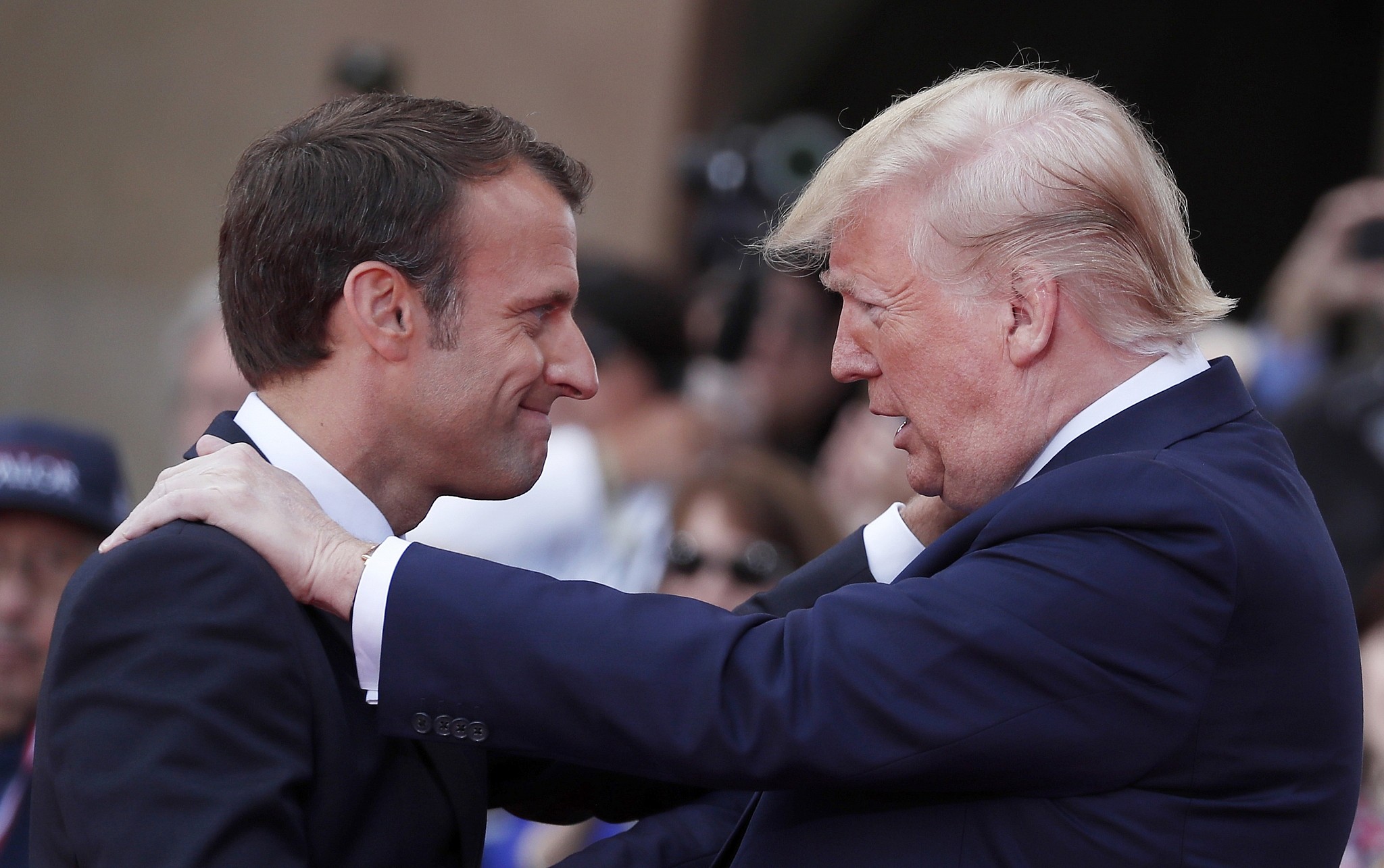
CAEN, France — US President Donald Trump on Thursday said it was “fine” for him if Iran wanted to hold talks, adding the Islamic Republic was currently “failing as a nation.”
The United States has had no diplomatic relations with Iran following the seizure of hostages at the American embassy in Tehran that followed the 1979 Islamic Revolution.
US diplomats helped negotiate the landmark 2015 deal on Iran’s nuclear program with Europe under former President Barack Obama but Trump unilaterally pulled out of the deal in May 2018.
Speaking after talks in northern France with French President Emmanuel Macron, an ardent supporter of diplomacy with Iran, Trump indicated he could consider talking to Tehran.
“I understand they want to talk and if they want to talk that’s fine,” said Trump, who is in northern France to mark the 75th anniversary of the D-Day landings.
“We’ll talk but the one thing that they can’t have is they can’t have nuclear weapons,” he added.
Trump said when he came to power, Iran was “undisputed champion of terror” but indicated activity had slackened in recent times.
“They’re not doing that anymore. They’re doing very poorly as a nation. They’re failing as a nation,” said Trump.
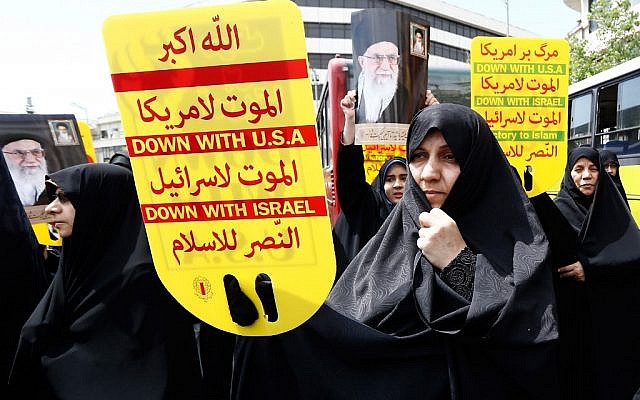
Trump referred to the US sanctions against Iran which are battering the Iranian economy, especially since Washington pulled out of the nuclear deal.
“I don’t want them to fail as a nation. We can turn that around very quickly but the sanctions have been extraordinary.”
Although EU leaders were bitterly angered by Trump’s pullout from the nuclear deal, the US president said he and Macron did not have differences on how to handle Iran.
Macron said the US shared the same four objectives on Iran — to prevent it obtaining nuclear weapons, reduce its activities in ballistics, contain Iran’s operations in the region and promote regional peace.
The French president said that in order to achieve such objectives, “you need to start a negotiation” and applauded Trump’s apparent readiness to hold talks.
“I think the words pronounced by President Trump today are very important,” said Macron, speaking in English. “We need to open a new negotiation.”
The comments came as Japanese Prime Minister Shinzo Abe, who has a warm personal relationship with Trump, plans to travel to Iran next week. Tokyo aims to play a mediation role.
However Iran’s supreme leader Ayatollah Ali Khamenei lashed out at Trump earlier this week, saying “when such a person is the president, this shows the political and moral decline of that country.”
In Eid al-Fitr comments, Iranian supreme leader lashes ‘anti-democratic’ regime in Manama, vows Trump peace deal ‘will never be realized’
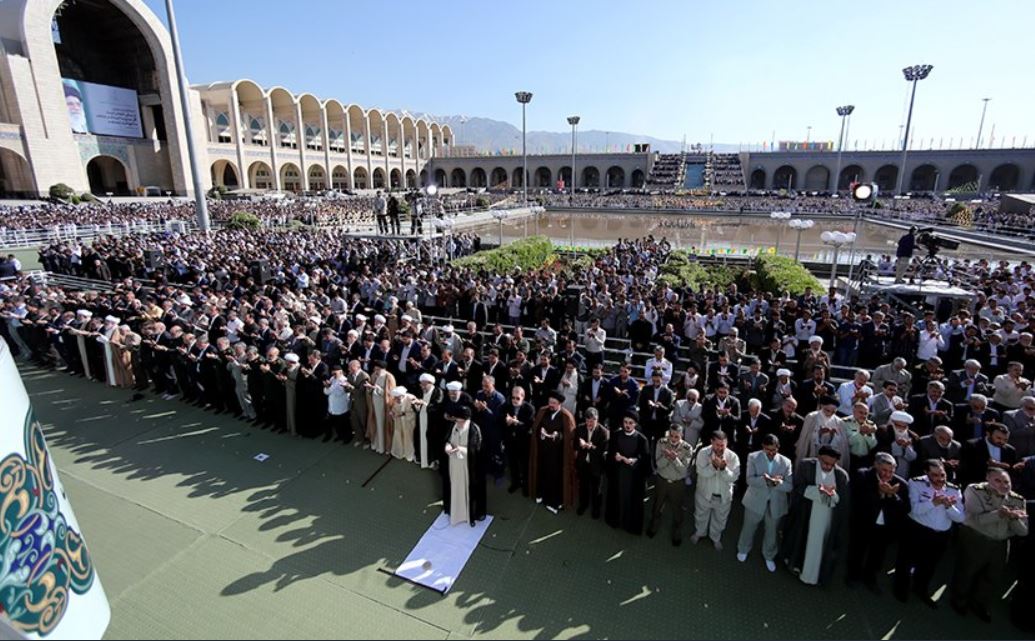
Iranian supreme leader Ayatollah Ali Khamenei on Wednesday lashed the US-initiated conference slated for later this month in Bahrain in which the Trump administration is expected to launch part of its peace initiative between Israelis and Palestinians.
He called Israel a “usurping enemy,” and urged “resistance” by Muslims until Israelis “surrender to [the Palestinian] nation’s will.”
The Iranian leader also accused Bahrain’s leaders of “weakness” and an “anti-democratic” spirit in hosting a US-led event.
“Some Islamic countries have betrayed the issue of Palestine by taking treasonous measures,” Khamenei said in a statement on Twitter following similar comments made in a speech at Eid al-Fitr prayers in Tehran.
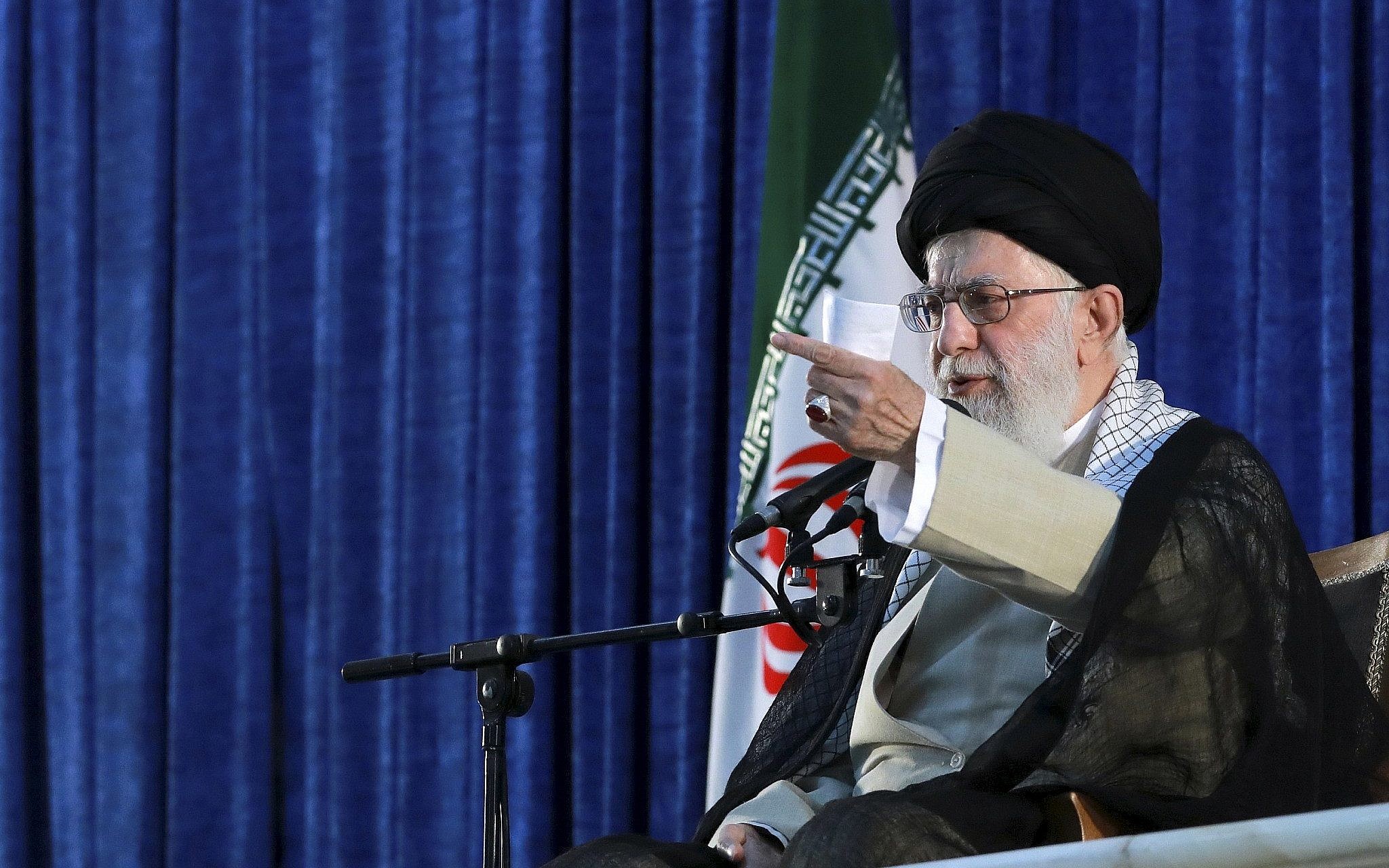
“The summit that is to take place in Bahrain belongs to the US but Bahraini rulers’ weakness and anti-democratic, anti-Islamic spirit has led them to hold the summit,” Khamenei charged.
“The purpose of the summit is to implement the treasonous, vicious US plot that they call ‘Deal of the Century.’ Of course this will not happen and the Deal of the Century will never be realized, God willing,” he said.

The conference in Bahrain, slated for June 25-26, is to be part of the roll-out of the Trump administration’s much-touted, but as yet still vague, peace plan for Israelis and Palestinians.
The conference is being boycotted by the Palestinian leadership and nearly the entirety of the Palestinian business community. The Palestinian Authority has had almost no ties with the US administration since US President Donald Trump’s recognition of Jerusalem as Israel’s capital in December 2017.
PA officials have charged that the Bahrain summit is meant to convince Palestinians to surrender their political aspirations for independence in exchange for international investment and economic prosperity.
“The ‘Deal of the Century’ is a major act of treason against the World of Islam,” Khamenei added on Wednesday. “We thank Muslim & Arab countries & Palestinian groups that opposed the deal. We hope Bahraini & Saudi rulers will understand what a quagmire they’re stepping into & how harmful it will be for them.”
The Iranian regime opposes Israel’s existence and has long supported Palestinian terrorist groups, including Hamas and Islamic Jihad in Gaza, opposed to a peace agreement with Israel.
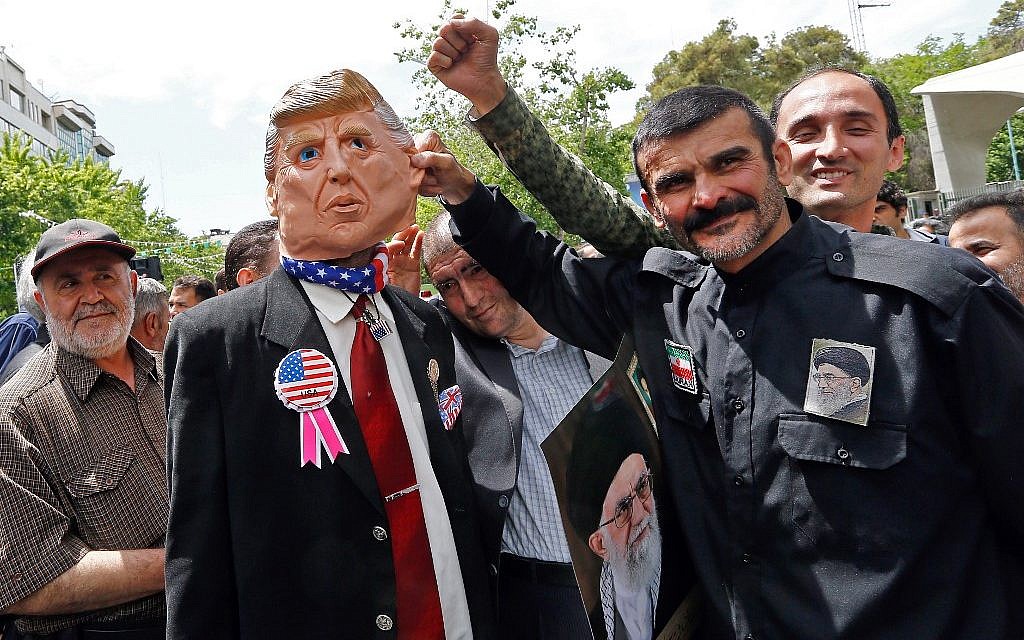
In his Twitter comments, Khamenei went on to complain that “there are Islamic countries with Muslim nations but remiss rulers who ally with Zionist regime rather than opposing it & fight against Muslims.”
He insisted that Tehran did not seek to see Jews “thrown to the sea,” but believed the “Palestinian nation’s pervasive fight including military, political & cultural resistance should persist until usurpers surrender to this nation’s will.”
And he called on Muslims to battle the “usurping enemy in the heart of Muslim countries—i.e. Palestine,” which was “criminally active. This obliges Muslims to prevent it from committing crimes. Instead, there are governents in the World of Islam that compromise with it while attacking their brethren. The door to repentance is open.”
Khamenei called for a referendum by “Muslim, Christian & Jewish residents of #Palestine & Palestinian refugees on governing system. Till then, Resistance should continue; by God’s grace Palestinians will be victorious; youth will see the day Palestine is returned to Palestinians.”




 anneinpt
 artaxes
 danmillerinpanama
 davidking1530
 Peter Hofman
 Joseph Wouk
 Peter
Peter Louisiana Steve
 WarSclerotic
Recent Comments