Archive for June 2019

Israel said to blame Iran’s Revolutionary Guard for attacks on oil tankers

June 16, 2019

Source: Israel said to blame Iran’s Revolutionary Guard for attacks on oil tankers | The Times of IsraelTV rep

ort says Israeli intelligence shares US, UK assessment, claims mines and a torpedo were used in Thursday’s strikes in Gulf of Oman
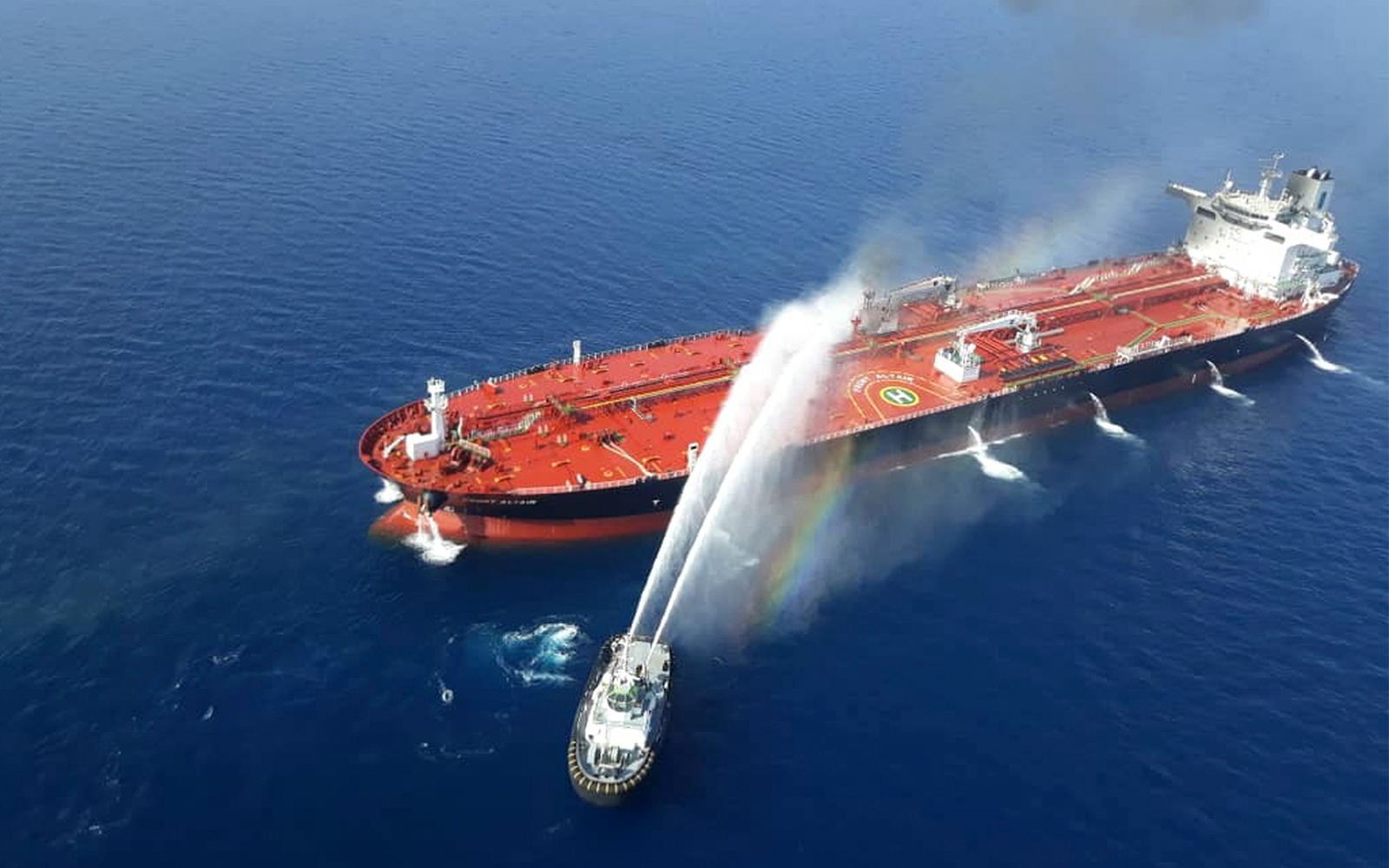
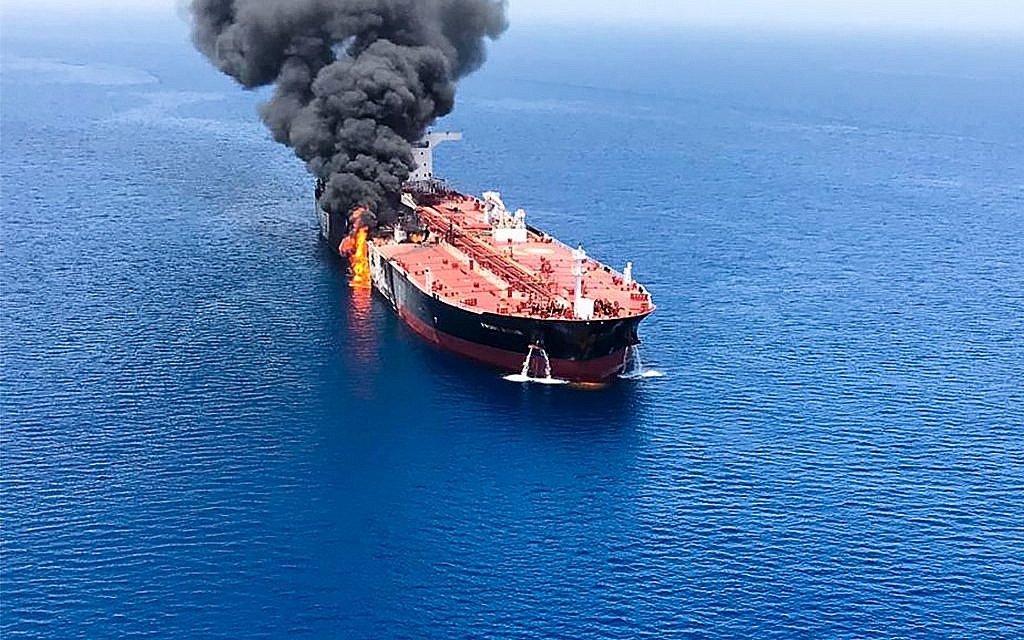
An Iranian navy boat sprays water to extinguish a fire on an oil tanker in the sea of Oman, Thursday, June 13, 2019. (AP Photo/Tasnim News Agency)

An Iranian navy boat sprays water to extinguish a fire on an oil tanker in the sea of Oman, Thursday, June 13, 2019. (AP Photo/Tasnim News Agency)

Israeli intelligence has concluded that Iran carried out Thursday’s attacks on two oil tankers in the Gulf of Oman, Israeli television reported on Saturday night.

Quoting a senior Israeli official involved in Iran-related issues, Channel 13 news reported that Iran’s Islamic Revolutionary Guard Corps carried out the attacks. They used mines and a torpedo, the report said.

US President Donald Trump on Friday called Iran “a nation of terror,” saying the attacks on tankers in the Gulf of Oman had “Iran written all over it.”

The Israeli conclusion mirrors that of the US and the UK.

The US military on Friday released a video it said shows Iran’s Revolutionary Guard removing an unexploded limpet mine from one of the oil tankers targeted near the Strait of Hormuz, suggesting the Islamic republic sought to remove evidence of its involvement from the scene.

Also Friday, Britain said it had concluded that Iran was “almost certainly” responsible for the latest Gulf tanker attacks.
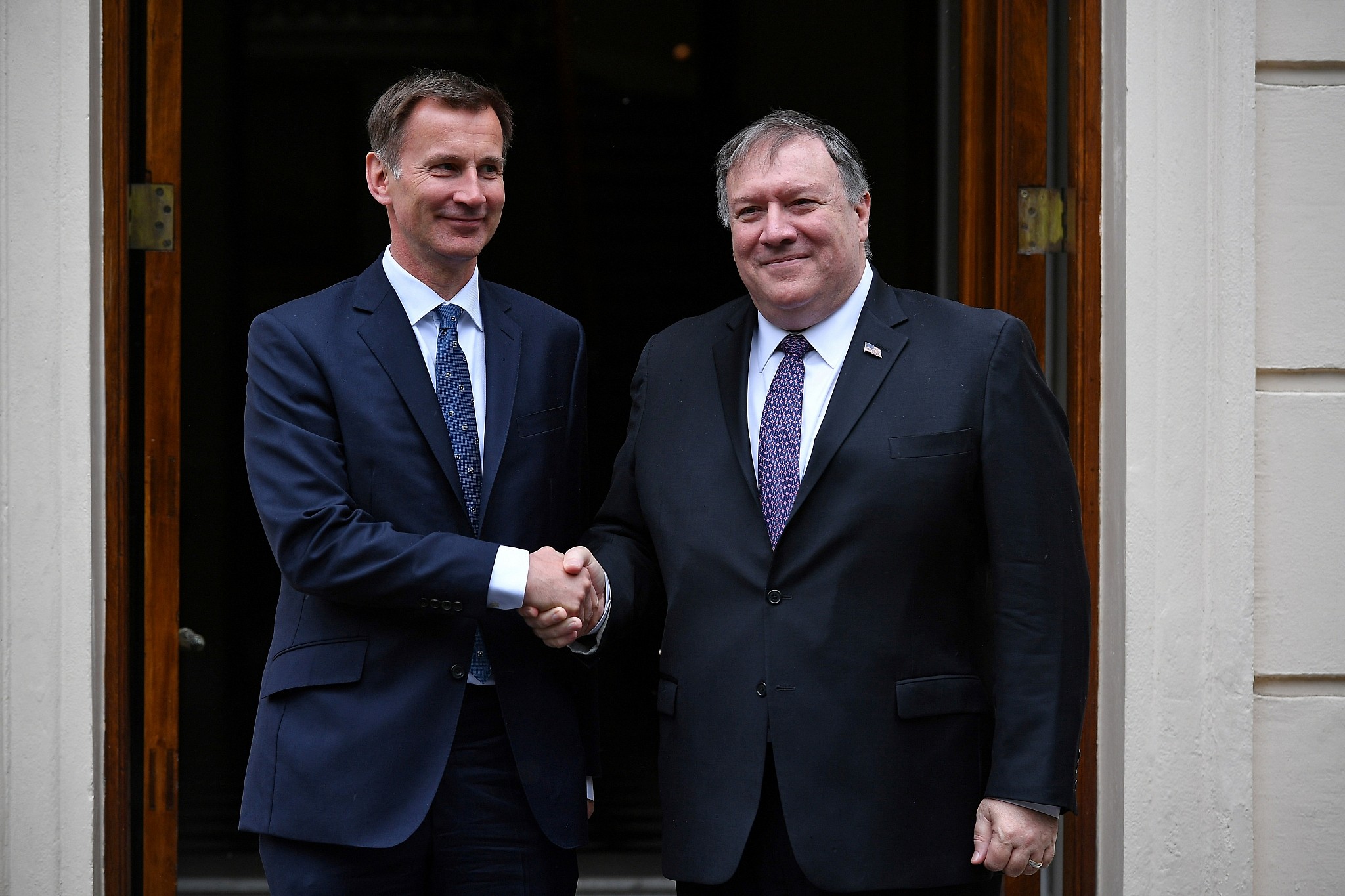
US Secretary of State Mike Pompeo, right, is greeted by Britain’s Foreign Secretary Jeremy Hunt in central London, May 8, 2019. (Mandel Ngan/Pool via AP)

“Our own assessment leads us to conclude that responsibility for the attacks almost certainly lies with Iran. These latest attacks build on a pattern of destabilizing Iranian behavior and pose a serious danger to the region,” British Foreign Secretary Jeremy Hunt said Friday

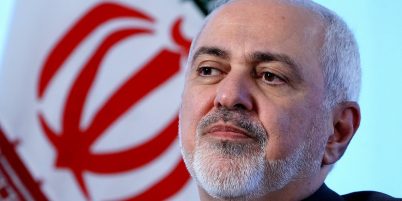
Iran denies being involved, accusing the US instead of waging an “Iranophobic campaign” against it. Tehran’s foreign minister Mohammad Javad Zarif on Friday fired back at Washington, accusing the US, Israel and Saudi Arabia of a plot to “sabotage diplomacy,” and appeared to insinuate that those countries were behind the assaults.

US President Donald Trump said Friday of the attacks, “Iran did do it.” He cited the video purporting to show an Iranian boat removing what the US says is an unexploded mine from one of the vessels.

“You know they did it because you saw the boat,” Trump said. “I guess one of the mines didn’t explode and it’s probably got essentially Iran written all over it.”

“You saw the boat at night, successfully trying to take the mine off — and that was exposed,” he said.

Also on Friday, an US official told CNN that Iranian forces in the Gulf of Oman fired a missile at a US drone hours before the alleged attack. The drone had spotted Iranian boats approaching the tankers before the sabotage occurred. The surface-to-air missile launched at the drone missed its target and fell into the sea, the official said.
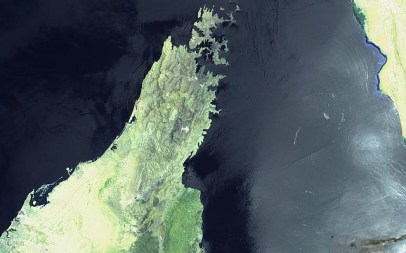
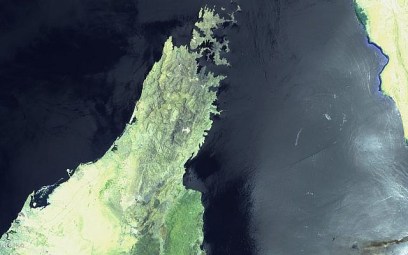
This June 13, 2019 false-color image from the European Commission’s Sentinel-2 satellite that was processed by Sinergise’s Sentinel Hub website shows the Norwegian-owned MT Front Altair, bottom right, ablaze with smoke rising from it in the Gulf of Oman after what the U.S. described as a limpet mine attack by Iran. Iran has denied being involved in the incident. The land mass to the left is the United Arab Emirates and Oman on the Arabian Peninsula. The land mass in the upper right hand corner is Iran. (European Commission via AP)

The ships’ operators offered no immediate explanation on who or what caused the damage against the Norwegian-owned MT Front Altair and the Japanese-owned Kokuka Courageous. Each was loaded with petroleum products, and the Front Altair burned for hours, sending up a column of thick, black smoke.

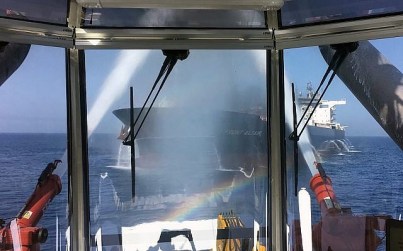
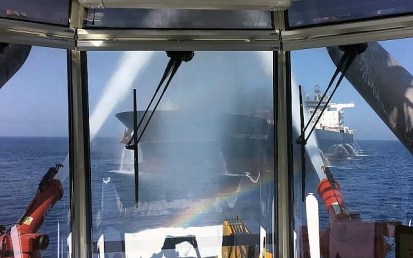
In this photo dated Thursday June 13, 2019, made available by the Norwegian shipowner Frontline, showing the crude oil tanker Front Altair seen through glass observation window as water cannon operate during the firefighting of the fire onboard the Norwegian ship in the Gulf of Oman. The US Navy rushed to assist the stricken vessels in the Gulf of Oman, off the coast of Iran, as two oil tankers came under suspected attack amid heightened tension between Iran and the US. (Frontline via AP)

Frontline, the owner of the MT Front Altair said Friday that the blaze has been extinguished and did not cause any pollution. The company added that its 23 crew members are still in Iran at Bandar Abbas, though they’ll be repatriated soon.

Frontline CEO Robert Hvide Macleod separately said the company still doesn’t know the cause of the explosion and the fire, “but we can exclude that a fault with the ship that has caused this.”

While Iran has denied being involved in the attack, Tehran previously used mines against oil tankers in 1987 and 1988 in the “Tanker War,” when the US Navy escorted ships through the region.

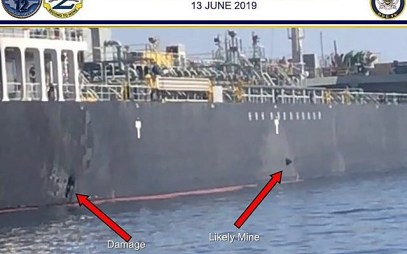
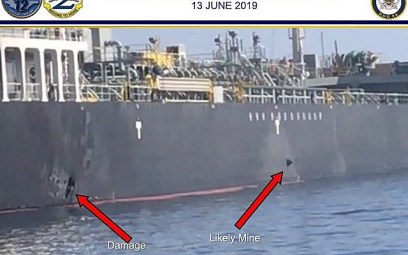
The black-and-white footage, as well as still photographs released by the US military’s Central Command on Friday, appeared to show the limpet mine on the Kokuka Courageous.
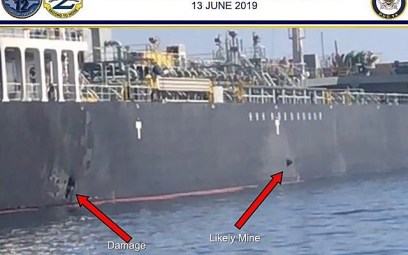
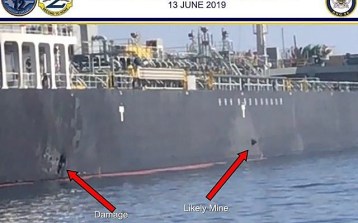
This June 13, 2019, image released by the US military’s Central Command, shows damage and a suspected mine on the Kokuka Courageous in the Gulf of Oman near the coast of Iran. (U.S. Central Command via AP)

A Revolutionary Guard patrol boat pulled alongside the ship and removed the mine, Central Command spokesman Capt. Bill Urban said.

“The US and the international community stand ready to defend our interests, including the freedom of navigation,” Urban said. “The United States has no interest in engaging in a new conflict in the Middle East. However, we will defend our interests.”

Iran earlier denied involvement via a statement from its mission to the United Nations.

“The US economic war and terrorism against the Iranian people as well as its massive military presence in the region have been and continue to be the main sources of insecurity and instability in the wider Persian Gulf region and the most significant threat to its peace and security,” the statement said.

Meanwhile in Tokyo, the owner of the Kokuka Courageous said its sailors saw “flying objects” before the attack, suggesting it wasn’t damaged by mines. Company president Yutaka Katada offered no evidence for his claim, which contradicts the US military account.

Katada also said crew members saw an Iranian naval ship nearby, but did not specify whether this was before or after the attacks.

The suspected attacks occurred at dawn Thursday about 40 kilometers (25 miles) off the southern coast of Iran. The Front Altair, loaded with the flammable hydrocarbon mixture naphtha from the United Arab Emirates, radioed for help as it caught fire. A short time later, the Kokuka Courageous, loaded with methanol from Saudi Arabia and Qatar, also called for help.

The US Navy sent a destroyer, the USS Bainbridge, to assist, said Cmdr. Joshua Frey, a 5th Fleet spokesman. He described the ships as being hit in a “reported attack,” without elaborating.

Thursday’s attack resembled that of an attack in May targeting four oil tankers off the nearby Emirati port of Fujairah. US officials similarly accused Iran of targeting the ships with limpet mines, which are magnetic and attach to the hulls of a ship. The mines disable, but don’t sink, a vessel.

US Secretary of State Mike Pompeo told journalists on Thursday that the US assessment of Iran’s involvement was based in part on intelligence, as well as the expertise needed for the operation. It was also based on recent incidents in the region, which the US also blamed on Iran, including the use of limpet mines in the Fujairah attack, he said. He also tied Iran to a drone attack by Yemen’s Iranian-backed Houthi rebels on a crucial Saudi oil pipeline around the same time.

“Taken as a whole, these unprovoked attacks present a clear threat to international peace and security, a blatant assault on the freedom of navigation and an unacceptable campaign of escalating tension by Iran,” Pompeo said. He didn’t elaborate and took no questions.

Tensions have escalated in the Mideast as Iran appears poised to break the 2015 nuclear deal with world powers, an accord that President Donald Trump repudiated last year. In the deal, Tehran agreed to limit its enrichment of uranium in exchange for the lifting of crippling sanctions. Now, Iran is threatening to resume enriching uranium closer to weapons-grade levels if European nations don’t offer it new terms to the deal by July 7.

Already, Iran says it quadrupled its production of low-enriched uranium. Meanwhile, US sanctions have cut off opportunities for Iran to trade its excess uranium and heavy water abroad, putting Tehran on course to violate terms of the nuclear deal regardless.
 

Iranian forces fired missile at US drone before tanker sabotage — report

June 16, 2019

Source: Iranian forces fired missile at US drone before tanker sabotage — report | The Times of Israel

Unmanned aircraft spotted Iran boats approaching ships hours before they were hit in alleged attack, American official tells CNN

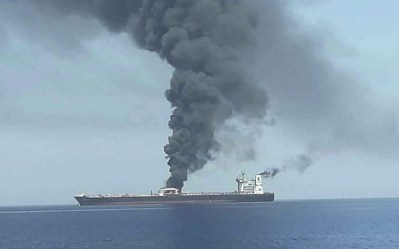
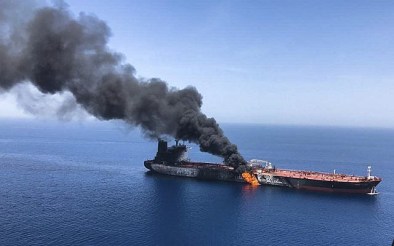
A picture obtained by AFP from Iranian News Agency ISNA on June 13, 2019, reportedly shows fire and smoke billowing from a tanker said to have been attacked in the waters of the Gulf of Oman. (ISNA/AFP)

A picture obtained by AFP from Iranian News Agency ISNA on June 13, 2019, reportedly shows fire and smoke billowing from a tanker said to have been attacked in the waters of the Gulf of Oman. (ISNA/AFP)

Iranian forces in the Gulf of Oman on Thursday fired a missile at a US drone, hours before an alleged attack by Iran against two tankers in the area.

The surface-to-air missile was fired from a boat and missed its target, a US official told CNN on Friday.

The MQ-9 drone had spotted the Iranian forces approaching the tankers, the official said. He did not say if the aircraft had seen the actual attacks take place.

The unnamed official added that an American reaper drone had been downed in the Red Sea in the days before the attack, likely by Houthi rebels equipped with an Iranian missile.

Tensions between Washington and Tehran have skyrocketed following the incident.

On Friday, US President Donald Trump blamed Iran for the sabotage,calling the country “a nation of terror” and saying the attack had “Iran written all over it.”

Calling into “Fox & Friends,” Trump said of the Thursday attacks, “Iran did do it.” He cited video purporting to show an Iranian boat removing what the US says is an unexploded mine from one of the vessels.

“You know they did it because you saw the boat,” Trump said. “I guess one of the mines didn’t explode and it’s probably got essentially Iran written all over it.”

Trump cited no new potential US responses, saying the US has been “very tough on sanctions.” He said, “They’ve been told in very strong terms we want to get them back to the table.”

Trump also warned Iran not to close off the strategic Strait of Hormuz, saying if it is closed it won’t be closed for long.

“They’re not going to be closing it. It’s not going to be closed, it’s not going to be closed for long and they know it. They’ve been told in very strong terms,” Trump said.

The US military on Friday released a video it said shows Iran’s Revolutionary Guard removing an unexploded limpet mine from one of the oil tankers, suggesting the Islamic Republic sought to remove evidence of its involvement from the scene.

The black-and-white footage, as well as still photographs released by the US military’s Central Command on Friday, appeared to show the limpet mine on the Japanese-owned Kokuka Courageous.

The ships’ operators offered no immediate explanation on who or what caused the damage against the Norwegian-owned MT Front Altair and the Kokuka Courageous. Each was loaded with petroleum products, and the Front Altair burned for hours, sending up a column of thick, black smoke.

The suspected attacks occurred at dawn Thursday about 40 kilometers (25 miles) off the southern coast of Iran. The Front Altair, loaded with the flammable hydrocarbon mixture naphtha from the United Arab Emirates, radioed for help as it caught fire. A short time later, the Kokuka Courageous, loaded with methanol from Saudi Arabia and Qatar, also called for help. The US Navy rushed to assist the stricken vessels.

While Iran has denied being involved in the attack, Tehran previously used mines against oil tankers in 1987 and 1988 in the “Tanker War,” when the US Navy escorted ships through the region.

In this photo dated Thursday June 13, 2019, made available by the Norwegian shipowner Frontline, showing the crude oil tanker Front Altair seen through glass observation window as water cannon operate during the firefighting of the fire onboard the Norwegian ship in the Gulf of Oman. The U.S. Navy rushed to assist the stricken vessels in the Gulf of Oman, off the coast of Iran, as two oil tankers came under suspected attack amid heightened tension between Iran and the U.S. (Frontline via AP)

Tehran’s foreign minister Mohammad Javad Zarif on Friday fired back at Washington, accusing the US, Israel and Saudi Arabia of a plot to “sabotage diplomacy,” and appeared to insinuate that those countries were behind the assaults.

Iran earlier denied involvement via a statement from its mission to the United Nations.

“The US economic war and terrorism against the Iranian people as well as its massive military presence in the region have been and continue to be the main sources of insecurity and instability in the wider Persian Gulf region and the most significant threat to its peace and security,” the statement said.

Thursday’s attack resembled that of an attack in May targeting four oil tankers off the Emirati port of Fujairah. US officials similarly accused Iran of targeting the ships with limpet mines, which are magnetic and attach to the hulls of a ship. The mines disable, but don’t sink, a vessel.

This June 13, 2019, image released by the US military’s Central Command, shows damage and a suspected mine on the Kokuka Courageous in the Gulf of Oman near the coast of Iran. (U.S. Central Command via AP)

US Secretary of State Mike Pompeo told journalists on Thursday that the US assessment of Iran’s involvement was based in part on intelligence, as well as the expertise needed for the operation. It was also based on recent incidents in the region, which the US also blamed on Iran, including the use of limpet mines in the Fujairah attack, he said. He also tied Iran to a drone attack by Yemen’s Iranian-backed Houthi rebels on a crucial Saudi oil pipeline around the same time.

Tensions have escalated in the Mideast as Iran appears poised to break the 2015 nuclear deal with world powers, an accord that Trump repudiated last year. In the deal, Tehran agreed to limit its enrichment of uranium in exchange for the lifting of crippling sanctions. Now, Iran is threatening to resume enriching uranium closer to weapons-grade levels if European nations don’t offer it new terms to the deal by July 7.

Already, Iran says it quadrupled its production of low-enriched uranium. Meanwhile, US sanctions have cut off opportunities for Iran to trade its excess uranium and heavy water abroad, putting Tehran on course to violate terms of the nuclear deal regardless.
 

Saudi prince blames Iran for tanker attacks, says won’t hesitate on ‘threats’ 

June 16, 2019

Source: Saudi prince blames Iran for tanker attacks, says won’t hesitate on ‘threats’ | The Times of Israel

Mohammed bin Salman warns kingdom does ‘not want a war in the region’ but will not allow harm to its ‘people, sovereignty, interests’

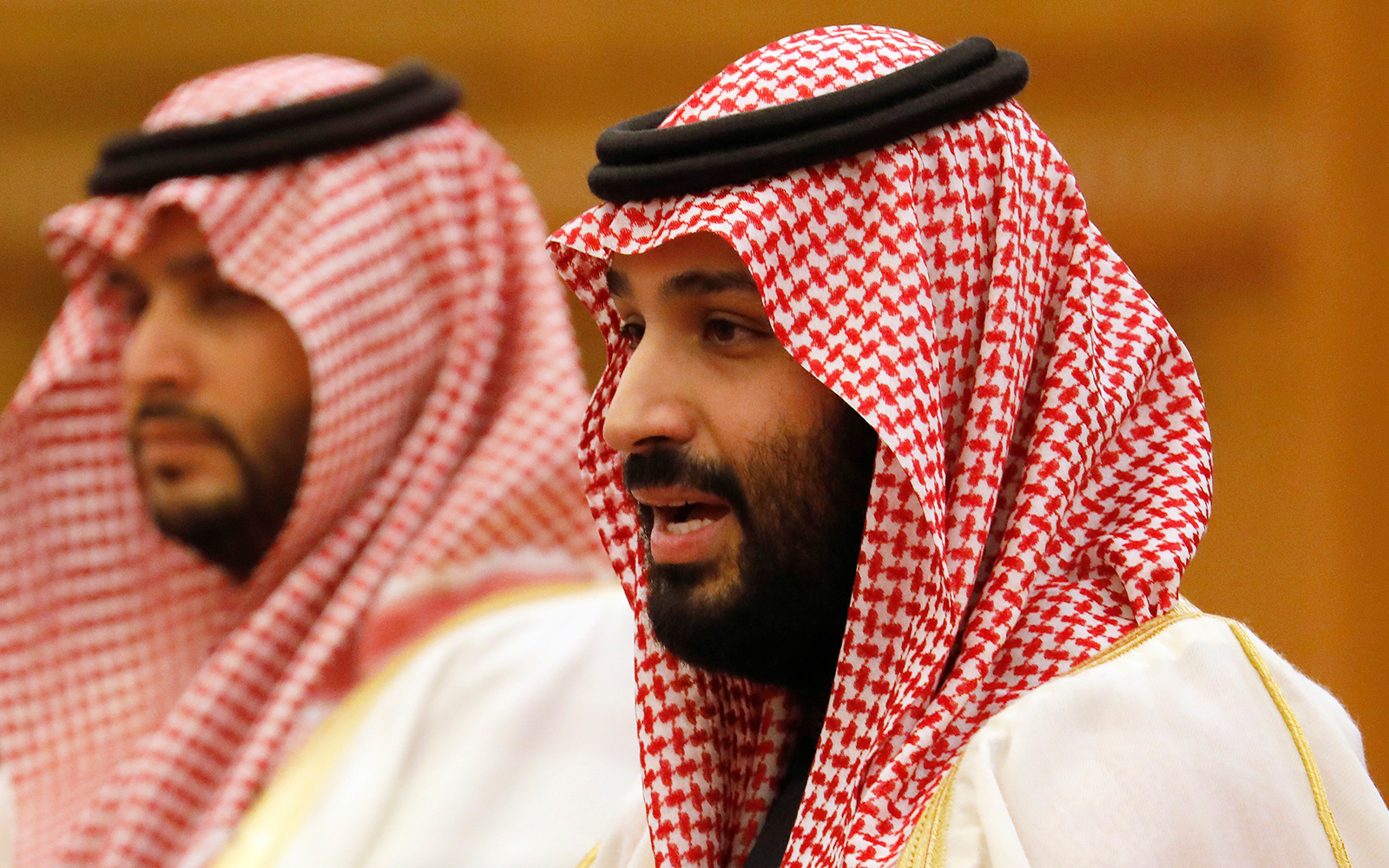
Saudi Crown Prince Mohammad bin Salman, right, speaks during a meeting in Beijing, China, February 22, 2019. (How Hwee Young/Pool Photo via AP, File)

Saudi Crown Prince Mohammed bin Salman on Saturday night accused Iran of carrying out twin attacks on oil tankers in a vital Gulf shipping channel, and said he “won’t hesitate” to tackle threats to the kingdom, in his first comment amid ongoing tensions with rival Iran following attacks on oil tankers in a vital Gulf shipping channel.

“We do not want a war in the region… But we won’t hesitate to deal with any threat to our people, our sovereignty, our territorial integrity and our vital interests,” Prince Mohammed said in excerpts published early Sunday of an interview to pan-Arab daily Asharq al-Awsat.

“The Iranian regime did not respect the presence of the Japanese prime minister as a guest in Tehran and responded to his [diplomatic] efforts by attacking two tankers, one of which was Japanese,” he said.

The prince also accused “Iran and its proxies” over May 12 attacks on four tankers anchored in the Gulf of Oman off the United Arab Emirates port of Fujairah.

The attacks on Thursday on two tankers in the Gulf of Oman sent crude prices soaring amid a tense standoff between Iran and the US.

The Japanese-owned Kokuka Courageous was carrying highly flammable methanol through the Gulf of Oman when it was rocked by explosions, causing a blaze that was quickly extinguished.

US President Donald Trump said the twin attack, which also targeted a tanker owned by Oslo-listed company Frontline, had Iran “written all over it.”

An oil tanker on fire in the Gulf of Oman, June 13, 2019 near the strategic Strait of Hormuz where two ships were reportedly attacked. (AP Photo/ISNA)

The US military on Friday released a video it said shows Iran’s Revolutionary Guard removing an unexploded limpet mine from one of the oil tankers targeted near the Strait of Hormuz, suggesting the Islamic republic sought to remove evidence of its involvement from the scene.

Tehran has vehemently denied any involvement.

Saudi Arabia, a close US ally, is a bitter regional rival of Iran.

Iran has repeatedly warned in the past that it could block the strategic Hormuz Strait in a relatively low-tech, high-impact countermeasure to any attack by the United States.

Doing so would disrupt oil tankers travelling out of the Gulf region to the Indian Ocean and global export routes.

Israeli TV reported Saturday night that Israeli intelligence has concluded Iran carried out Thursday’s attacks. Quoting a senior Israeli official involved in Iran-related issues, Channel 13 news reported that the IRGC carried out the attacks. They used mines and a torpedo, the report said.

The Israeli conclusion mirrors that of the US and the UK.

“Our own assessment leads us to conclude that responsibility for the attacks almost certainly lies with Iran. These latest attacks build on a pattern of destabilizing Iranian behavior and pose a serious danger to the region,” British Foreign Secretary Jeremy Hunt said Friday

Iran denies being involved, accusing the US instead of waging an “Iranophobic campaign” against it. Tehran’s foreign minister Mohammad Javad Zarif on Friday accused the US, Israel and Saudi Arabia of a plot to “sabotage diplomacy,” and appeared to insinuate that those countries were behind the assaults.

In this photo released by Iran’s state-run IRIB News Agency, an oil tanker is on fire in the sea of Oman, June 13, 2019. (IRIB News Agency via AP)

The ships’ operators offered no immediate explanation on who or what caused the damage against the Norwegian-owned MT Front Altair and the Japanese-owned Kokuka Courageous. Each was loaded with petroleum products, and the Front Altair burned for hours, sending up a column of thick, black smoke.

Tehran previously used mines against oil tankers in 1987 and 1988 in the “Tanker War,” when the US Navy escorted ships through the region.

The US Navy sent a destroyer, the USS Bainbridge, to assist, said Cmdr. Joshua Frey, a 5th Fleet spokesman. He described the ships as being hit in a “reported attack,” without elaborating.

Thursday’s attack resembled that of an attack in May targeting four oil tankers off the nearby Emirati port of Fujairah. US officials similarly accused Iran of targeting the ships with limpet mines, which are magnetic and attach to the hulls of a ship. The mines disable, but don’t sink, a vessel.

This June 13, 2019, image released by the US military’s Central Command, shows damage and a suspected mine on the Kokuka Courageous in the Gulf of Oman near the coast of Iran. (U.S. Central Command via AP)

US Secretary of State Mike Pompeo told journalists on Thursday that the US assessment of Iran’s involvement was based in part on intelligence, as well as the expertise needed for the operation. It was also based on recent incidents in the region, which the US also blamed on Iran, including the use of limpet mines in the Fujairah attack, he said. He also tied Iran to a drone attack by Yemen’s Iranian-backed Houthi rebels on a crucial Saudi oil pipeline around the same time.

“Taken as a whole, these unprovoked attacks present a clear threat to international peace and security, a blatant assault on the freedom of navigation and an unacceptable campaign of escalating tension by Iran,” Pompeo said. He didn’t elaborate and took no questions.

Tensions have escalated in the Mideast as Iran appears poised to break the 2015 nuclear deal with world powers, an accord that President Donald Trump repudiated last year. In the deal, Tehran agreed to limit its enrichment of uranium in exchange for the lifting of crippling sanctions. Now, Iran is threatening to resume enriching uranium closer to weapons-grade levels if European nations don’t offer it new terms to the deal by July 7.

Already, Iran says it quadrupled its production of low-enriched uranium. Meanwhile, US sanctions have cut off opportunities for Iran to trade its excess uranium and heavy water abroad, putting Tehran on course to violate terms of the nuclear deal regardless.
AP contributed to this repor


Iran’s secrets for pulling off sneak attacks: Surprise, precise weapons, a new cruise missile – DEBKAfile

June 16, 2019


Source: Iran’s secrets for pulling off sneak attacks: Surprise, precise weapons, a new cruise missile – DEBKAfile

Four secret assets account for Iran’s success in pulling off half a dozen attacks on US allies in the past month, peaking in the sabotage of two oil tankers in the Gulf of Oman on Thursday, June 13. Those assets are listed by DEBKAfile’s military sources  

The element of surprise: Before the four tankers were sabotaged on May 12 and 14 outside the UAE port of Fujairah, no intelligence agency, whether American, Gulf Arab or Israeli, suspected this attack was coming. Intelligence data spoke of Iran activating Shiite militias to attack US military bases near the Syrian-Iraqi border, whereas four of the six hits until now targeted Gulf oil facilities and none aimed at US military targets.

Tehran managed to keep its plans hidden from the eyes of hostile spy agencies and catch them all by surprise.

High professional standards of operation:  Iranian marine and special forces units assigned to these attacks were highly proficient. Attaching limpet mines to the hulls of four tankers (in May) and detonating them in precise order, undetected by US or other forces present in the region, called for top military skills. The same applied to the rockets, which were precisely guided to explode at a point close to the US embassy in Baghdad without damaging the building. It achieved its exact purpose, which was to avoid causing harm while warning the Americans that trouble was ahead. The rockets aimed at Israeli military positions on the Hermon were likewise programed to be harmless.

The escalating stages: The initial attacks caused no casualties and no irreversible damage to the four tankers opposite Fujairah port. The next strikes against Saudi oil pipeline pumping stations delayed the flow through the east-west pipeline but the damage was quickly repaired. However, the June 13 attack on the two supertankers which caught fire in the Gulf of Oman was a dangerous escalation. Whereas Iranian soldiers were caught on video removing an unexploded limpet mine from the Japanese Kokuka Courageous to remove the evidence, witnesses aboard the tanker denied that the explosion was caused by mines and claimed it was caused by “flying objects.”

This incident is under investigation. Military experts maintain that whether it was caused by magnetic mines or a torpedo, the explosive must have been planted by saboteurs on fast boats or mini submarines, which crept up to the tankers undetected by the US, British or French warships patrolling this key international oil route. –

Precise weaponry: All the weapons the Iranians have used hitherto have operated faultlessly, none missing their mark. DEBKA Weekly’s military sources note that until now, no one had appreciated that Iran was in possession of a weapon systems capable of hitting a target with only a 1.5-meter margin of error. It was first discovered on Wednesday, June 12, when Yemeni Houthi rebels fired Iran’s new Soumar cruise missile at the southwestern Saudi airport of Abha, directly hitting and destroying the control tower. This incident revealed that Iran had delivered this cruise missile to the Yemen rebels, or components for assembling it, so crossing another red line. The worry in the US and Israel now is that Tehran may now decide to arm its Lebanese proxy, Hizballah with the precise Soumar cruise missile, which carries half a ton of explosives and has a range of up to 2,500 kilometers.


Iran & the West, diplomacy and war- Jerusalem Studio 

June 15, 2019


Trump says Gulf tanker attacks have ‘Iran written all over it’ 

June 14, 2019

Source: Trump says Gulf tanker attacks have ‘Iran written all over it’ | The Times of Israel

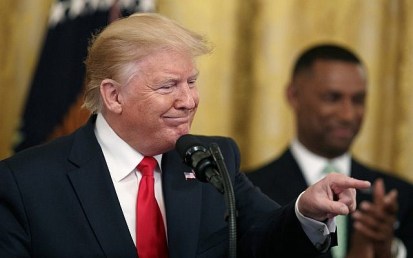
US President Donald Trump gestures into the audience as he speaks  in the East Room of the White House, Thursday June 13, 2019, in Washington. (AP Photo/Jacquelyn Martin)

US president calls Iran ‘a nation of terror,’ and warns Tehran not to close strategic Strait of Hormuz, saying it wouldn’t manage to do so for very long

US President Donald Trump gestures into the audience as he speaks in the East Room of the White House, Thursday June 13, 2019, in Washington. (AP Photo/Jacquelyn Martin)

WASHINGTON — US President Donald Trump on Friday called Iran “a nation of terror,” saying the attacks on tankers in the Gulf of Oman had “Iran written all over it.”

Calling into “Fox & Friends,” Trump said of the Thursday attacks, “Iran did do it.” He cited video purporting to show an Iranian boat removing what the US says is an unexploded mine from one of the vessels.

“You know they did it because you saw the boat,” Trump said. “I guess one of the mines didn’t explode and it’s probably got essentially Iran written all over it.”

“You saw the boat at night, successfully trying to take the mine off — and that was exposed,” he said.

Trump cited no new potential US responses, saying the US has been “very tough on sanctions.” He said, “They’ve been told in very strong terms we want to get them back to the table.”

Trump also warned Iran not to close off the strategic Strait of Hormuz, saying if it is closed it won’t be closed for long.

“They’re not going to be closing it. It’s not going to be closed, it’s not going to be closed for long and they know it. They’ve been told in very strong terms,” Trump said.

This June 13, 2019 false-color image from the European Commission’s Sentinel-2 satellite that was processed by Sinergise’s Sentinel Hub website shows the Norwegian-owned MT Front Altair, bottom right, ablaze with smoke rising from it in the Gulf of Oman after what the U.S. described as a limpet mine attack by Iran. Iran has denied being involved in the incident. The land mass to the left is the United Arab Emirates and Oman on the Arabian Peninsula. The land mass in the upper right hand corner is Iran. (European Commission via AP)

The US military on Friday released a video it said shows Iran’s Revolutionary Guard removing an unexploded limpet mine from one of the oil tankers targeted near the Strait of Hormuz, suggesting the Islamic Republic sought to remove evidence of its involvement from the scene. Iran denies being involved, accusing the US instead of waging an “Iranophobic campaign” against it.

The US Navy rushed to assist the stricken vessels in the Gulf of Oman, off the coast of Iran, including one that was set ablaze Thursday by an explosion.

The ships’ operators offered no immediate explanation on who or what caused the damage against the Norwegian-owned MT Front Altair and the Japanese-owned Kokuka Courageous. Each was loaded with petroleum products, and the Front Altair burned for hours, sending up a column of thick, black smoke.

In this photo dated Thursday June 13, 2019, made available by the Norwegian shipowner Frontline, showing the crude oil tanker Front Altair seen through glass observation window as water cannon operate during the firefighting of the fire onboard the Norwegian ship in the Gulf of Oman. The US Navy rushed to assist the stricken vessels in the Gulf of Oman, off the coast of Iran, as two oil tankers came under suspected attack amid heightened tension between Iran and the US. (Frontline via AP)

Frontline, the owner of  the MT Front Altair said Friday that the blaze has been extinguished and did not cause any pollution. The company added that its 23 crew members are still In Iran at Bandar Abbas, though they’ll be repatriated soon.

Frontline CEO Robert Hvide Macleod separately said the company still doesn’t know the cause of the explosion and the fire, “but we can exclude that a fault with the ship that has caused this.”

While Iran has denied being involved in the attack, Tehran previously used mines against oil tankers in 1987 and 1988 in the “Tanker War,” when the US Navy escorted ships through the region.

The black-and-white footage, as well as still photographs released by the US military’s Central Command on Friday, appeared to show the limpet mine on the Kokuka Courageous.

This June 13, 2019, image released by the US military’s Central Command, shows damage and a suspected mine on the Kokuka Courageous in the Gulf of Oman near the coast of Iran. (U.S. Central Command via AP)

A Revolutionary Guard patrol boat pulled alongside the ship and removed the mine, Central Command spokesman Capt. Bill Urban said.

“The US and the international community stand ready to defend our interests, including the freedom of navigation,” Urban said. “The United States has no interest in engaging in a new conflict in the Middle East. However, we will defend our interests.”

Iran earlier denied involvement via a statement from its mission to the United Nations.

“The US economic war and terrorism against the Iranian people as well as its massive military presence in the region have been and continue to be the main sources of insecurity and instability in the wider Persian Gulf region and the most significant threat to its peace and security,” the statement said.

Meanwhile in Tokyo, the owner of the Kokuka Courageous said its sailors saw “flying objects” before the attack, suggesting it wasn’t damaged by mines. Company president Yutaka Katada offered no evidence for his claim, which contradicts the US military account.

Katada also said crew members saw an Iranian naval ship nearby, but did not specify whether this was before or after the attacks.

The suspected attacks occurred at dawn Thursday about 40 kilometers (25 miles) off the southern coast of Iran. The Front Altair, loaded with the flammable hydrocarbon mixture naphtha from the United Arab Emirates, radioed for help as it caught fire. A short time later, the Kokuka Courageous, loaded with methanol from Saudi Arabia and Qatar, also called for help.

The US Navy sent a destroyer, the USS Bainbridge, to assist, said Cmdr. Joshua Frey, a 5th Fleet spokesman. He described the ships as being hit in a “reported attack,” without elaborating.

Thursday’s attack resembled that of an attack in May targeting four oil tankers off the nearby Emirati port of Fujairah. US officials similarly accused Iran of targeting the ships with limpet mines, which are magnetic and attach to the hulls of a ship. The mines disable, but don’t sink, a vessel.

US Secretary of State Mike Pompeo told journalists on Thursday that the US assessment of Iran’s involvement was based in part on intelligence, as well as the expertise needed for the operation. It was also based on recent incidents in the region, which the US also blamed on Iran, including the use of limpet mines in the Fujairah attack, he said. He also tied Iran to a drone attack by Yemen’s Iranian-backed Houthi rebels on a crucial Saudi oil pipeline around the same time.

“Taken as a whole, these unprovoked attacks present a clear threat to international peace and security, a blatant assault on the freedom of navigation and an unacceptable campaign of escalating tension by Iran,” Pompeo said. He didn’t elaborate and took no questions.

Tensions have escalated in the Mideast as Iran appears poised to break the 2015 nuclear deal with world powers, an accord that President Donald Trump repudiated last year. In the deal, Tehran agreed to limit its enrichment of uranium in exchange for the lifting of crippling sanctions. Now, Iran is threatening to resume enriching uranium closer to weapons-grade levels if European nations don’t offer it new terms to the deal by July 7.

Already, Iran says it quadrupled its production of low-enriched uranium. Meanwhile, US sanctions have cut off opportunities for Iran to trade its excess uranium and heavy water abroad, putting Tehran on course to violate terms of the nuclear deal regardless.
 

Iranian FM Zarif: US allegations over tanker attacks ‘sabotage diplomacy’

June 14, 2019

Source: Iranian FM Zarif: US allegations over tanker attacks ‘sabotage diplomacy’ – www.israelhayom.com

Tehran “categorically rejects” unfounded US claim over Gulf of Oman attacks, Iran’s UN envoy says. Zarif: Allegations part of efforts by US “B Team” to conceal its economic terrorism against Iran.

Iran’s foreign minister said on Friday that the US allegations against Iran over the Gulf of Oman attacks on oil tankers were part of a “sabotage diplomacy” adopted by a so-called “B Team,” which he said includes US National Security Adviser John Bolton.

“That the US immediately jumped to make allegations against Iran–w/o a shred of factual or circumstantial evidence – only makes it abundantly clear that the #B_Team is moving to a #PlanB: Sabotage diplomacy – including by @AbeShinzo – and cover up its #EconomicTerrorism against Iran,” Mohammad Javad Zarif tweeted.

Zarif has repeatedly said that Bolton, an ardent Iran hawk, Prime Minister Benjamin Netanyahu and Saudi Crown Prince Mohammed bin Salman could goad US President Donald Trump into a conflict with Tehran.

On Thursday, Iran’s UN mission said that Tehran categorically rejects the “unfounded” U.S. claim over Thursday’s attacks on two oil tankers in the Gulf of Oman, after Washington blamed Tehran for the attacks.

“Iran categorically rejects the US unfounded claim with regard to 13 June oil tanker incidents and condemns it in the strongest possible terms,” the Iranian mission said in a statement.


Khamenei slaps America in the face by refusing to receive Trump message from Abe – DEBKAfile

June 14, 2019

Source: Khamenei slaps America in the face by refusing to receive Trump message from Abe – DEBKAfile

Iran’s leader administered a brazen insult to the United States when he told visiting Japanese PM Shinzo Abe on Thursday, June 13, that he did not consider President Donald Trump “worthy” of an exchange of messages with him.

“I do not have and will not have any response for him,” he told the Japanese prime minister, crudely knocking down his visitor’s effort to ease the spiraling US-Iranian tensions. Ayatollah Ali Khamenei went on to say that Trump’s promise not to seek regime change in Iran was “a lie” and he did not believe Washington’s offer of “honest negotiations” with Tehran.

Not content with that insult, Iran’s Foreign Minister Javad Zarif suggested that an American provocation was behind the “reported attacks on Japan-related” oil tankers in the Gulf of Oman. That they took place while Japanese PM Shinzo Abe was meeting supreme leader Ayatollah Ali Khamenei was “beyond suspicious,” he tweeted.

DEBKAfile’s military sources report that behind Iran’s attempt to throw off suspicion for a string of attacks lies the discovery by US intelligence that the Iranian Revolutionary Guards were responsible for the explosions on two supertankers in the Gulf of Oman on June 13, just as they were for the four tankers sabotaged opposite the UAE port of Fujairah on May 12 and 14. This IRGC war plan consists of three escalating phases of aggression, targeting Gulf oil targets and US, Saudi, Israeli and other American allies in the Middle East. Masterminded by Al Qods chief Gen. Qassem Soleimani, it is aimed at compelling the Trump administration to lift its harsh sanctions on Tehran’s oil exports.

Thursday’s attack in the two supertankers in the Gulf of Oman signaled the start of the second stage of the program after the first failed to dent Washington’s resolve.

Our sources add that Khamenei’s decision to throw down the gauntlet puts President Trump on the spot for picking it up. Trump has until now held to his resolve to avoid a military clash with Iranian forces in the Gulf, the Middle East or in Syria. However, the all-powerful Iranian leader has raised the stakes to prove his theory that America is just a paper tiger and Iran’s strategy of belligerence will pay off and confirm its standing as the leading regional power.

Against the first round of Iranian attacks, Trump stuck to a policy of military restraint. That policy failed to hold Iran in check. Now it has been seized by Khamenei as a stick for beating Washington. If the US does not use its might to strike back, other adversaries, such as China’s Xi Jinping, Russia’s Vladimir Putin and North Korea’s Kim Jong un, will follow Khamenei’s example.


‘Iran is the Culprit Behind the Attack on Two Oil Tankers in Gulf’ 

June 14, 2019


Gaza-Palestinians resume rocket fire toward Israel – TV7 Israel News 13.06.19 – YouTube

June 14, 2019