Archive for June 25, 2019

Netanyahu tells Russian official: We will do ‘anything’ to prevent nuclear Iran 

June 25, 2019

Source: Netanyahu tells Russian official: We will do ‘anything’ to prevent nuclear Iran | The Times of Israel

At Jerusalem meet ahead of trilateral summit, Moscow’s national security adviser promises to pay ‘special attention to ensuring Israel’s security’
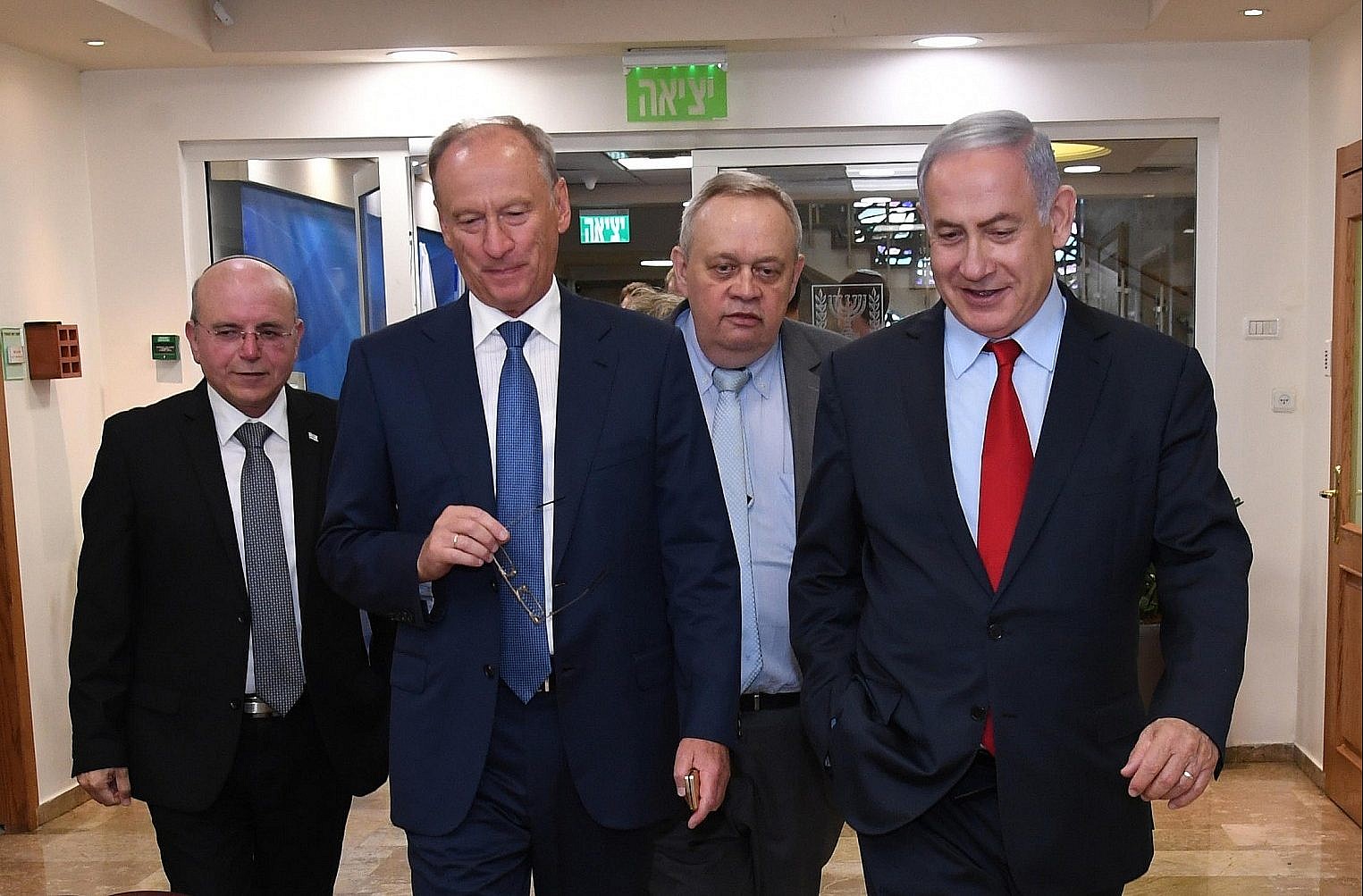
Prime Minister Benjamin Netanyahu, right, meets Russia's national security adviser, Nikolai Patrushev, second from left, in Jerusalem, June 24, 2019. Israel's National Security Adviser Meir Ben-Shabbat is at left. (Haim Tzach/GPO)

Prime Minister Benjamin Netanyahu, right, meets Russia’s national security adviser, Nikolai Patrushev, second from left, in Jerusalem, June 24, 2019. Israel’s National Security Adviser Meir Ben-Shabbat is at left. (Haim Tzach/GPO)

Prime Minister Benjamin Netanyahu told Russian President Vladimir Putin’s top security adviser on Monday that Israel will do “anything it takes” to ensure Iran does not obtain nuclear weapons.

“I’m certain that Russia understands what it means for us when a regime calls for our annihilation, and acts on a daily basis to achieve that aim,” Netanyahu said in a meeting at his Jerusalem office with Russia’s National Security Council Secretary Nikolai Patrushev.

“Israel won’t allow an Iran that calls for our annihilation to entrench itself on our border, and we will do anything it takes to prevent it from obtaining nuclear weapons,” the prime minister said.

The meeting comes ahead of a first-ever trilateral summit Tuesday between the Russian, Israeli and American national security advisers — Patrushev, Meir Ben-Shabbat and John Bolton, respectively.

“The security cooperation between Russia and Israel has already contributed a great deal to the security and stability of our region, and has profoundly changed the regional situation,” Netanyahu said.
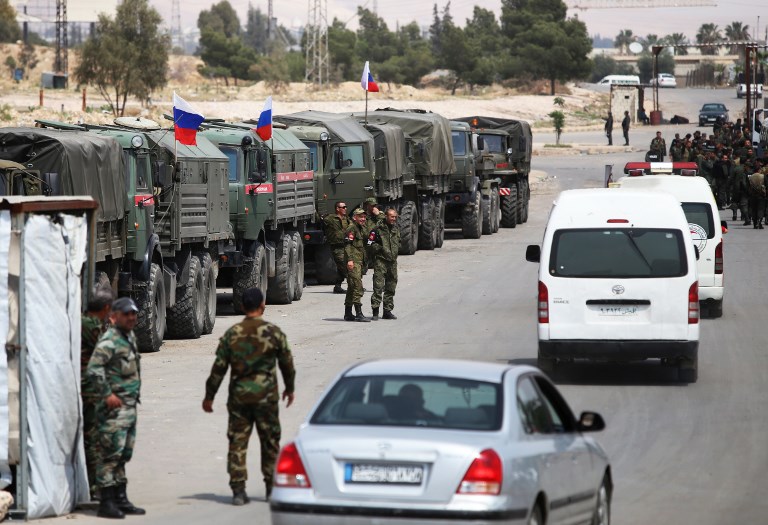
Syrian and Russian soldiers at the entrance of the Wafideen Camp in Syria, on April 12, 2018. (AFP Photo/Youssef Karwashan)

In a statement to reporters, Patrushev said Monday that the following day’s summit would focus on “the regional situation, especially Syria,” and place special emphasis on Israel’s security concerns.

“We pay special attention to ensuring Israel’s security,” he said, calling it “a special interest of ours because here in Israel live a little less than about two million of our countrymen. Israel supports us in several channels, including at the UN. The prime minister [Netanyahu] has already said that we share the same views on the issue of the struggle against falsifying the history of World War II.”

Among the issues that will be discussed with Bolton, Patrushev added, were “several ideas about how to reach peace in your region. And once we reach agreement, we should add other states in the region to this format.”
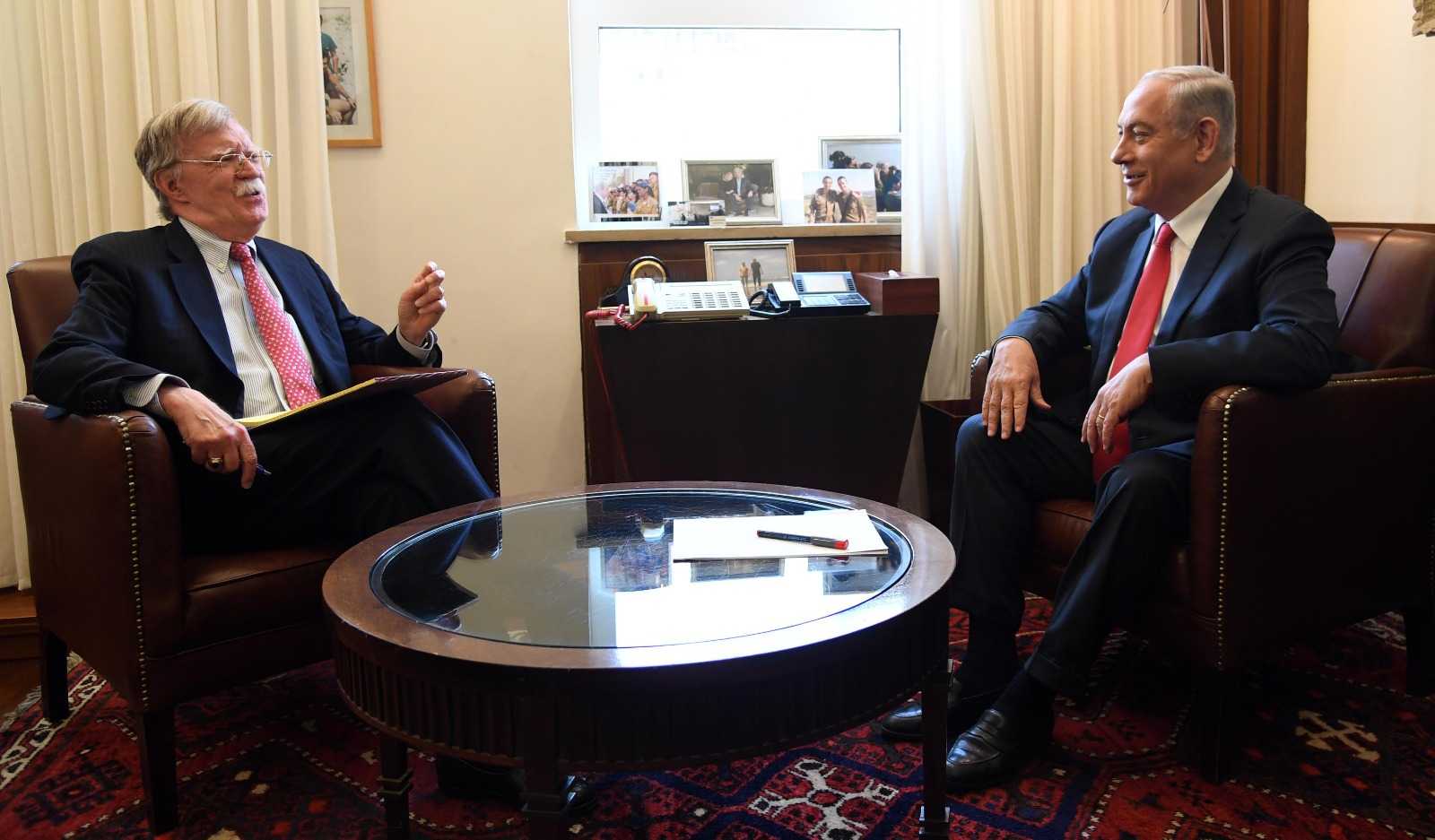
US National Security Adviser John Bolton, left, meets with Prime Minister Benjamin Netanyahu at the Prime Minister’s Office in Jerusalem, June 23, 2019. (Haim Zach/GPO)

Earlier Monday, during a meeting of the cabinet, Netanyahu called the upcoming trilateral gathering “an unprecedented summit between two great powers, the United States and Russia, and Israel — here in Israel.

“The very fact that this summit is happening here is more evidence of the special standing of Israel among the nations of the world at this time,” he said.

Iran’s efforts to entrench itself militarily in Syria and the escalating tensions between Tehran and Washington are expected to top the agenda.

Patrushev has tried to navigate the regional struggle between Israel and Iran without upending Russia’s relationship with either.

Last week, he said Moscow would back Iran’s interests at the trilateral meeting.

“Iran is in Syria at the invitation of the legitimate government and is actively involved in fighting terrorism. Therefore, of course, we will have to take into account the interests of Iran,” Patrushev said.
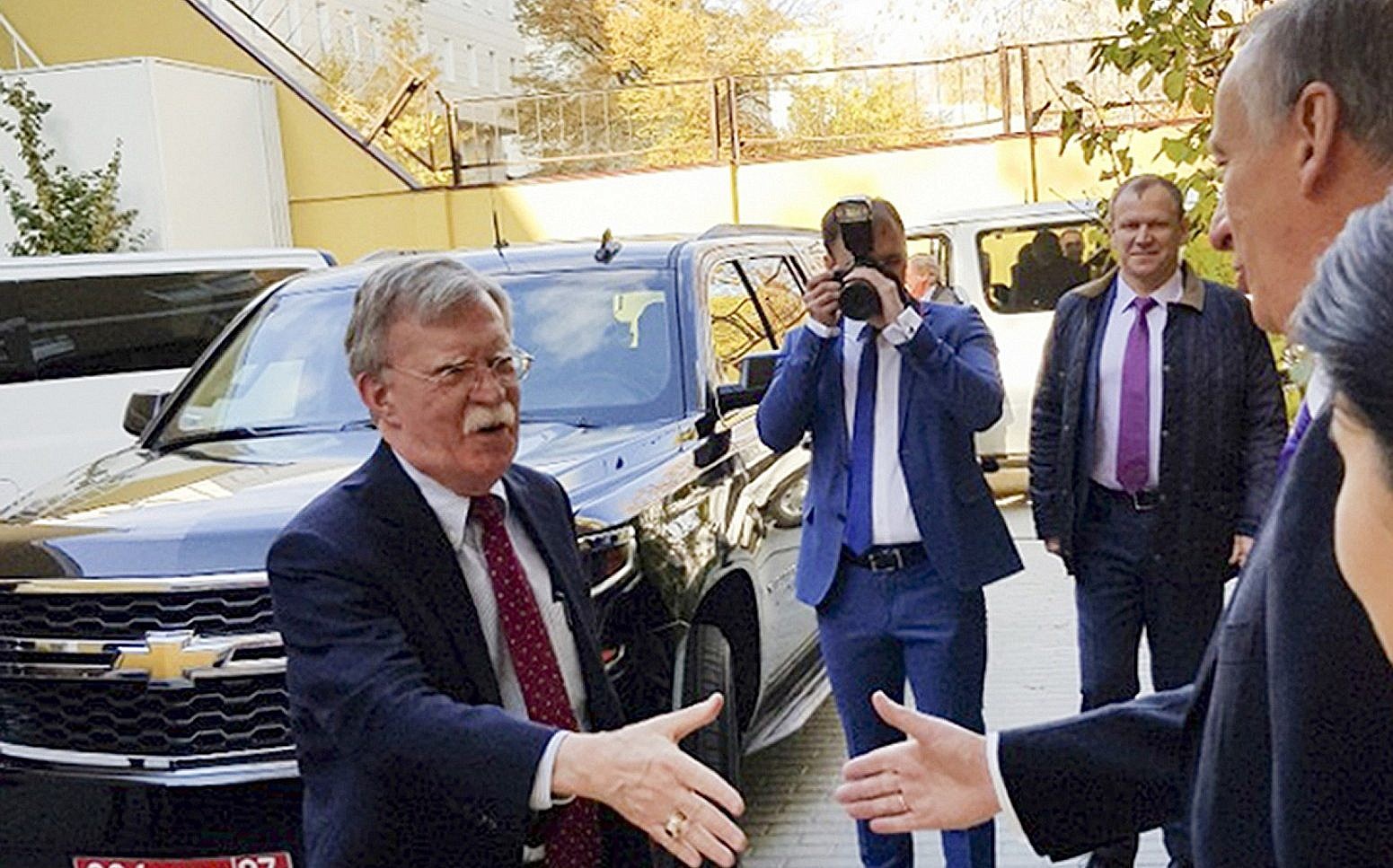
US National Security Adviser John Bolton, left, is greeted by Russian Security Council chairman Nikolai Patrushev in Moscow, Russia, October 22, 2018. (Press Service of the Russian Security Council via AP)

Earlier this month, a senior US official said Washington would use the meeting to tell Moscow that Iran should withdraw from Syria, and ask for Russia’s suggestions on how to counter Tehran’s influence in the region. The unnamed official said that the US supported Israel’s actions against Iranian entrenchment in Syria.

“We would hope to make the point in conjunction with the Israelis that we don’t see any positive role for the Iranians — and that would extend beyond Syria, to Lebanon, to Iraq, to Yemen — other places where they’re active,” the official said, according to a Reuters report.

He added that Washington was sure that the summit, with Israel hosting both Russia and the US in Jerusalem, would irk Iranian leadership, and said that the fact that Russia was participating was a positive sign.

“The fact that the Russians see value in these conversations, that they’re willing to do it publicly, I think is in and of itself quite significant,” the official said.
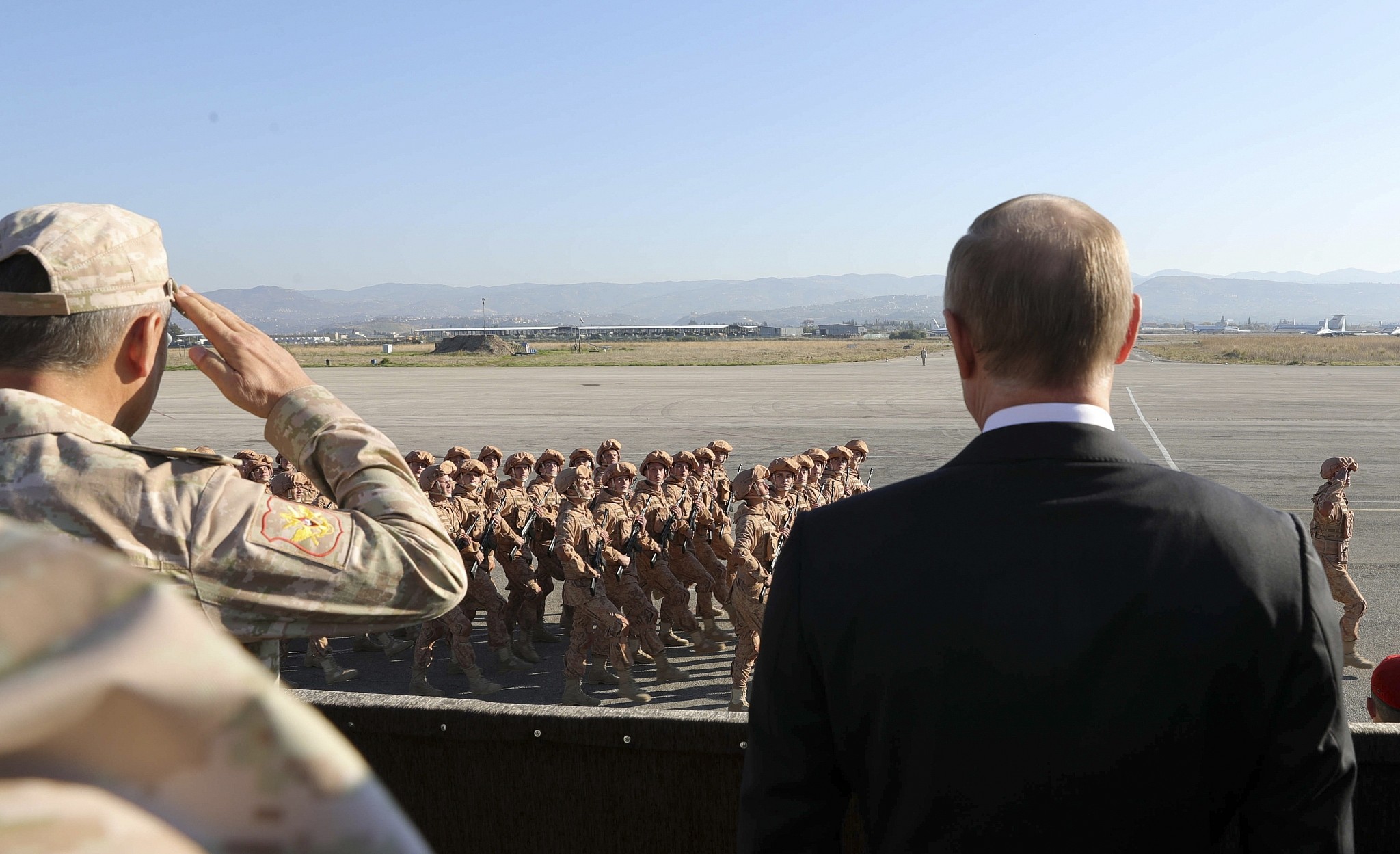
Russian President Vladimir Putin, right, meets troops alongside Syrian President Bashar Assad on a visit to the Hmeimim air base in Syria, December 11, 2017. (Mikhail Klimentyev, Sputnik, Kremlin Pool Photo via AP)

According to a report by the Kan public broadcaster, Israel and the US will offer Russia incentives for an effort to curb Iranian influence in Syria, which could include legitimizing the continued leadership of Syrian President Bashar Assad. It was unclear what Washington and Jerusalem would offer Moscow in return.

Moscow is a close ally of Tehran and Damascus, while Jerusalem and Washington are seen by the Iranian regime as archenemies.
 

Rouhani says US ‘lying’ about talks offer, suffers from ‘mental retardation’ 

June 25, 2019

Source: Rouhani says US ‘lying’ about talks offer, suffers from ‘mental retardation’ | The Times of Israel

Iranian president denounces sanctions against foreign minister Zarif; military spokesman says Washington ruptured path of diplomacy by also targeting supreme leader Khamenei

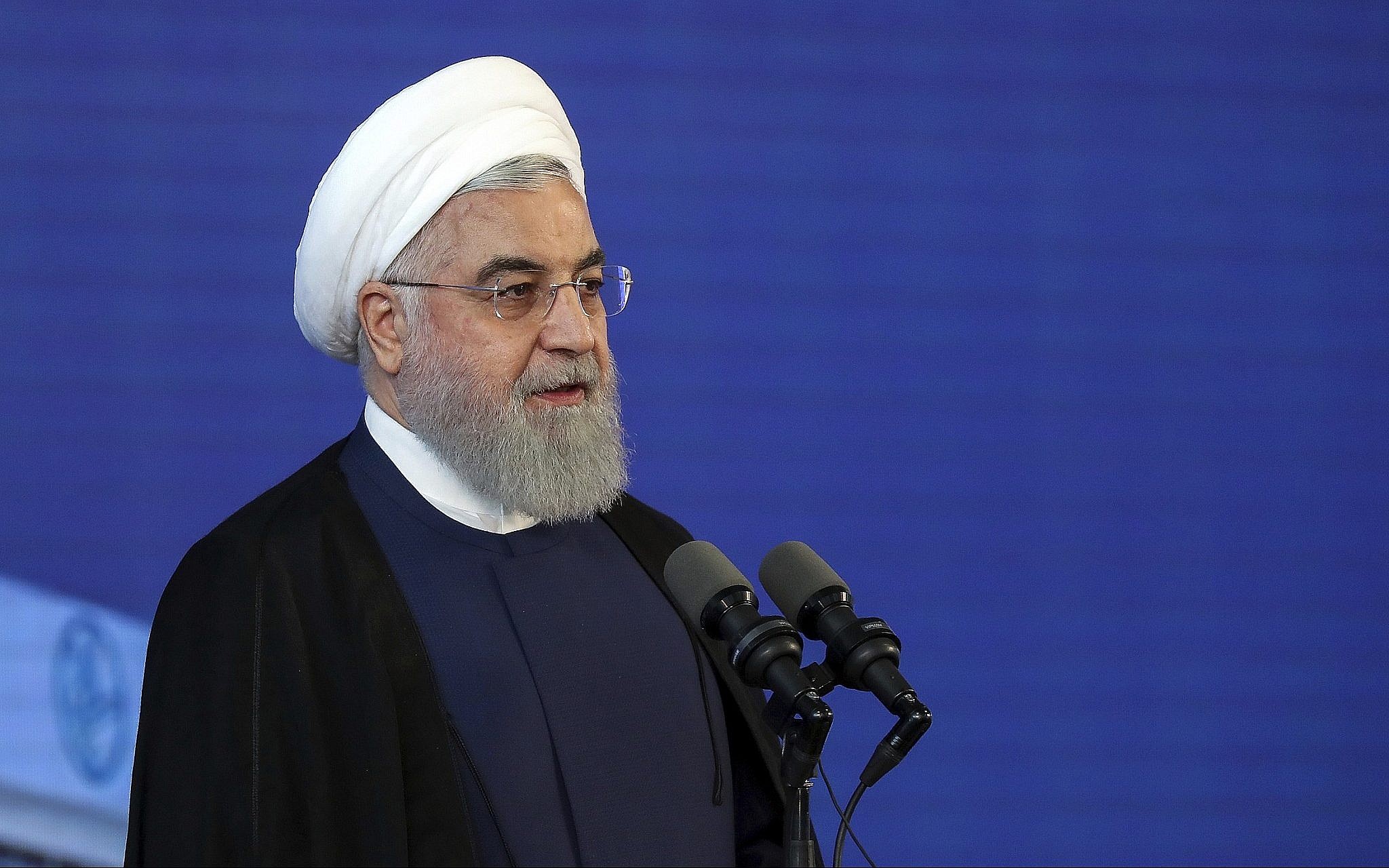
In this photo released by an official website of the office of the Iranian Presidency, Iranian President Hassan Rouhani speaks in a ceremony at Imam Khomeini International Airport some 25 miles (40 kilometers) south of the capital Tehran, Iran, June 18, 2019. (Iranian Presidency Office via AP)

In this photo released by an official website of the office of the Iranian Presidency, Iranian President Hassan Rouhani speaks in a ceremony at Imam Khomeini International Airport some 25 miles (40 kilometers) south of the capital Tehran, Iran, June 18, 2019. (Iranian Presidency Office via AP)

Iran’s President Hassan Rouhani said Tuesday that new US sanctions against senior Iranian officials including top diplomat Mohammad Javad Zarif showed Washington is “lying” about offering to negotiate.

“At the same time as you call for negotiations you seek to sanction the foreign minister? It’s obvious that you’re lying,” Rouhani said in a meeting with ministers broadcast live on TV.

He also said the White House is “afflicted by mental retardation.”

His comments came as US National Security Adviser John Bolton said in Jerusalem that Washington had “held the door open to real negotiations” but that “in response, Iran’s silence has been deafening.”

Iran’s Foreign Ministry said the sanctions on its leaders represent the “permanent closure” of diplomacy with Washington.

“Imposing fruitless sanctions against Iran’s supreme leader and the commander of Iran’s diplomacy is the permanent closure of the path to diplomacy with Trump’s desperate government,” ministry spokesman Abbas Mousavi said in a tweet.

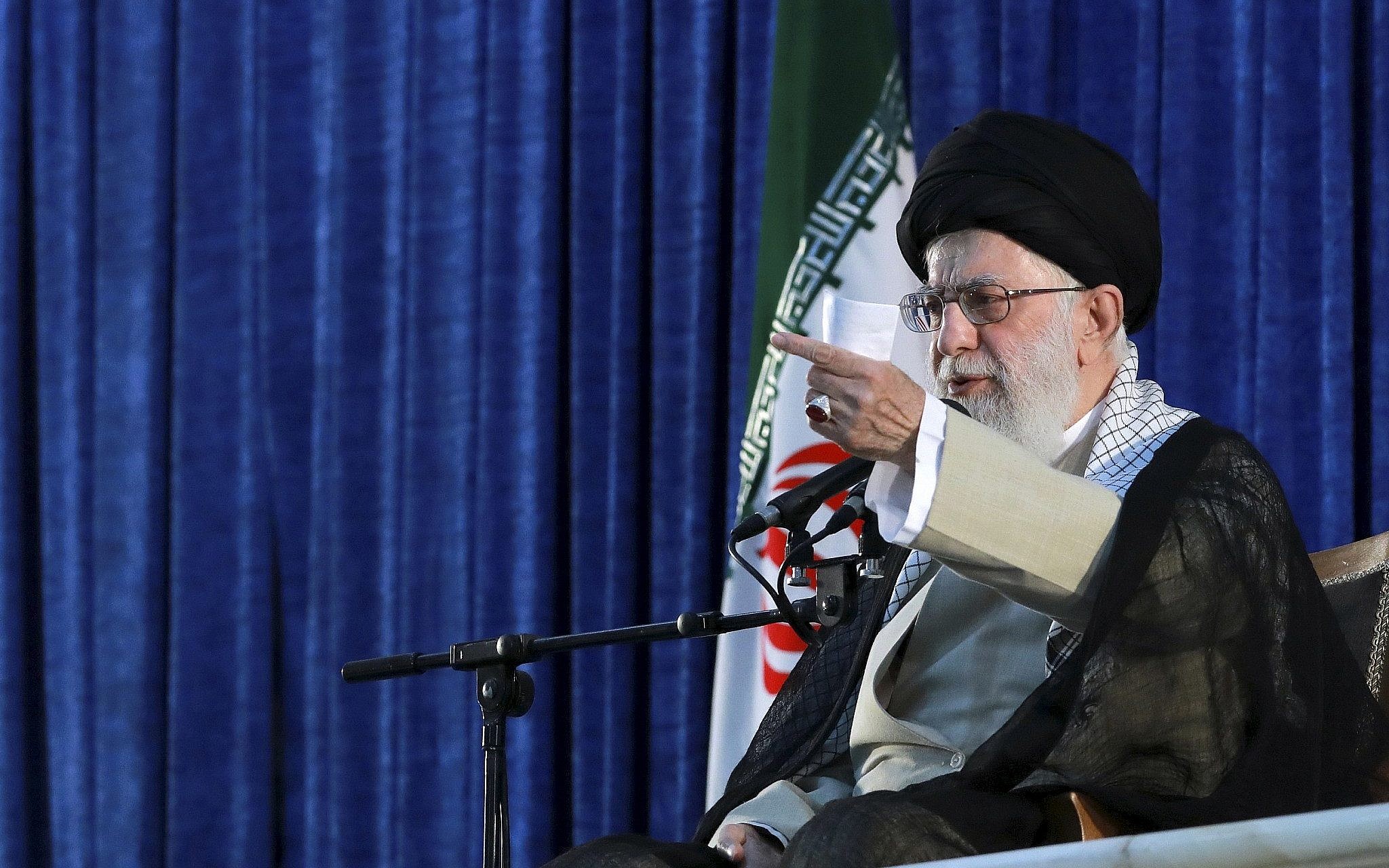
Iranian supreme leader, Ayatollah Ali Khamenei speaks in a ceremony marking the 30th death anniversary of the late revolutionary founder Ayatollah Ruhollah Khomeini, at his mausoleum just outside Tehran, Iran, June 4, 2019. (Office of the Iranian Supreme Leader via AP)

Washington imposed new sanctions against supreme leader Ayatollah Ali Khamenei Monday as well as blacklisting Foreign Minister Zarif, its latest salvo in a tense standoff that has raised fears of a regional conflict.

“Trump’s government is destroying all established international mechanisms for keeping global peace and security,” Mousavi added.

Zarif responded Monday to the sanctions, saying that leaders in Israel, Saudi Arabia and the US “despise diplomacy and thirst for war.”

US President Donald Trump also imposed new sanctions Monday against top Iranian military chiefs, pressuring the country it has threatened with “obliteration” if a war breaks out.

Washington’s move came after Iran shot down a US spy drone last week and Trump authorized a retaliatory strike but canceled it at the last minute.

That follows a series of attacks on ships in sensitive Gulf waters that the US has blamed on Iran — allegations hotly denied by Tehran. The incidents came a year after Trump unilaterally withdrew from a multilateral pact with Iran over its nuclear program.

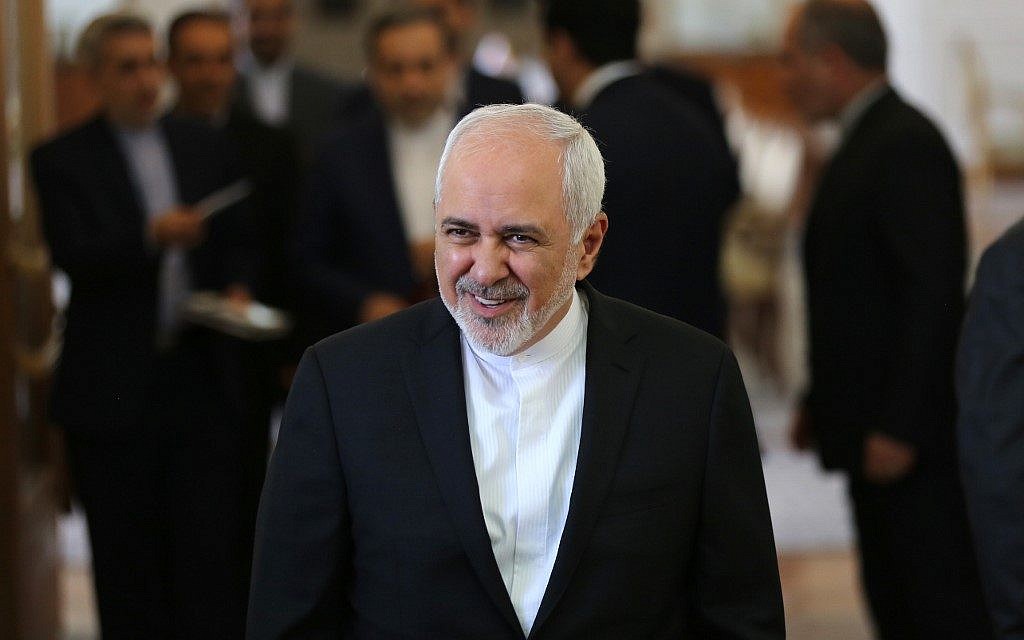
Iranian Foreign Minister Mohammad Javad Zarif arrives to meet his Japanese counterpart in Tehran on June 12, 2019. (Atta Kenare/AFP)

US media have also reported Trump secretly authorized cyberattacks against Iran’s missile defense systems and a spy network, but Tehran says no damage was done.

Trump called the punitive measures “a strong and proportionate response to Iran’s increasingly provocative actions.”

Tehran and Washington broke off diplomatic relations in 1980 over the hostage crisis at the US embassy in Tehran following Iran’s Islamic Revolution.


Bolton slams Iran’s ‘belligerence’ but says ‘door is open’ for negotiations

June 25, 2019

Source: Bolton slams Iran’s ‘belligerence’ but says ‘door is open’ for negotiations | The Times of Israel

At Jerusalem summit with Israeli, Russian counterparts, Trump security adviser says talks possible if Tehran renounces nukes, ballistic missiles, terrorism

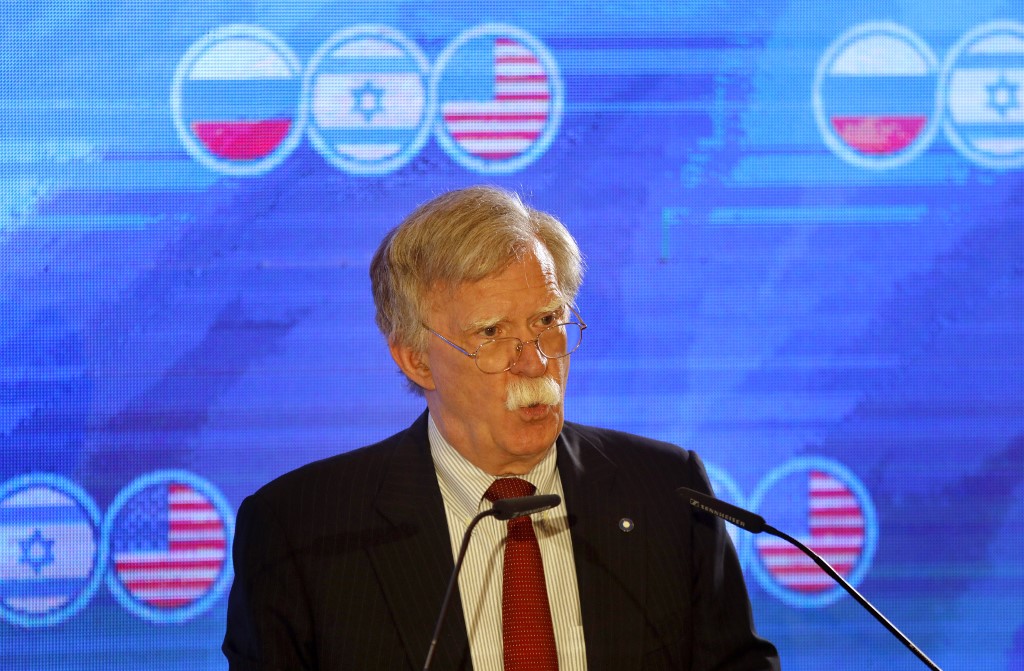
US National Security Adviser John Bolton speaks at a trilateral summit of national security advisers of the US, Israel and Russia, in Jerusalem on June 25, 2019. (Menahem Kahana/AFP)

US National Security Adviser John Bolton speaks at a trilateral summit of national security advisers of the US, Israel and Russia, in Jerusalem on June 25, 2019. (Menahem Kahana/AFP)

US President Donald Trump’s top national security adviser urged Iran on Tuesday to step back from its “malign behavior” and enter into “real negotiations” over its nuclear weapons program, ballistic missile development, and backing for international terror groups.

Speaking at a summit meeting between Israel’s, Russia’s and America’s national security advisers in Jerusalem, John Bolton slammed Iran as the “source of belligerence and aggression” in the Middle East.

He accused Tehran of supporting violence throughout the region — from Hezbollah in Lebanon to the Assad regime in Syria, as well as Shiite militias in Iraq, Yemen’s Houthi rebels, and terror attacks on US forces in Afghanistan — and of threatening Middle Eastern oil supplies.

He also charged that the Islamic Republic was still pursuing nuclear weapons, saying, “There’s simply no evidence that Iran has made the strategic decision to renounce nuclear weapons and open realistic discussions to demonstrate that decision.

“In just a few days,” he noted, “Iran has threatened to exceed the key limits imposed by the inadequate 2015 Iran nuclear deal, exposing once again the fatal deficiencies of that failed agreement.”

He said Trump, while imposing “significant new sanctions” on Iranian leaders on Monday, “has held the door open to real negotiations to completely and verifiably eliminate Iran’s nuclear weapons program, its pursuit of ballistic missile delivery systems, its support for international terrorism, and its other malign behavior worldwide.

“All that Iran needs to do is to walk through that open door,” he said.

Meanwhile on Tuesday, Iran’s President Hassan Rouhani said that new US sanctions against senior Iranian officials including top diplomat Mohammad Javad Zarif showed Washington was “lying” about offering to negotiate.

A ‘historic’ gathering in Jerusalem

Prime Minister Benjamin Netanyahu, speaking to the three countries’ delegations, which met at Jerusalem’s Orient Hotel, said the “historic” gathering signaled the sides’ “common objective” of ensuring the withdrawal of all foreign forces from Syria.

Israel has long sought Russian backing for its demand that Iranian forces leave Syria upon the conclusion of the country’s civil war.

In this photo released by an official website of the office of the Iranian Presidency, Iranian President Hassan Rouhani speaks in a ceremony at Imam Khomeini International Airport some 25 miles (40 kilometers) south of the capital Tehran, Iran, June 18, 2019. (Iranian Presidency Office via AP)

“There’s a wider basis for cooperation between the three of us than many believe…. We have a common objective: that no foreign forces that arrived in Syria after 2011 remain in Syria. We think there are also ways to achieve this common goal. We look forward to discussing concrete ways to achieve this goal,” he said.

Sounding a different tone on Iran, the Russian national security adviser, Nikolia Patrushev, insisted that Tehran was aiding in the battle against Islamist terrorists in Syria. “We work together and listen to each other. We’re aware of Israel’s concerns and hope the threats will be lifted,” he said.

The meeting between the three nations’ national security advisers — Bolton, Patrushev, and Israel’s Meir Ben-Shabbat — was the first-ever such trilateral summit.

Iran’s efforts to entrench itself militarily in Syria and the escalating tensions between Tehran and Washington were expected to top the agenda.

On Monday, Netanyahu told Patrushev that Israel would do “anything it takes” to ensure Iran does not obtain nuclear weapons.

In a statement to reporters Monday, Patrushev said the summit would focus on “the regional situation, especially Syria,” and place special emphasis on Israel’s security concerns.

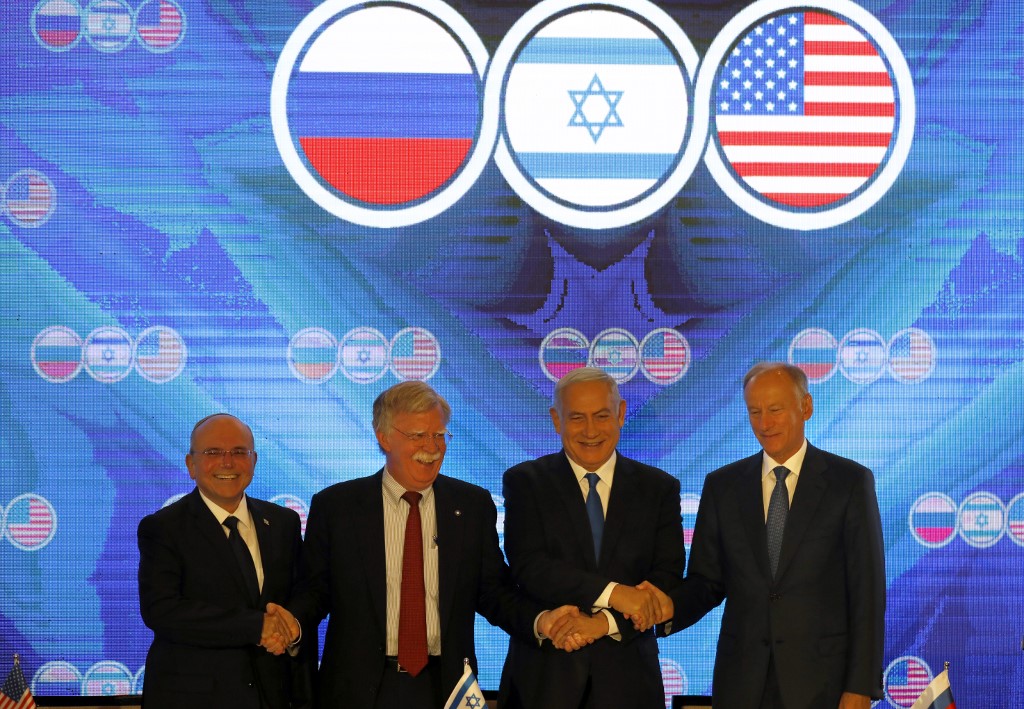
Prime Minister Benjamin Netanyahu, second right, US National Security Adviser John Bolton, second left, Russian National Security Council Secretary Nikolai Patrushev, right, and Israeli National Security Adviser Meir Ben-Shabbat, left, take part in a trilateral summit in Jerusalem on June 25, 2019. (Menahem Kahana/AFP)

“We pay special attention to ensuring Israel’s security,” he said, calling it “a special interest of ours because here in Israel live a little less than about two million of our countrymen. Israel supports us in several channels, including at the UN. The prime minister [Netanyahu] has already said that we share the same views on the issue of the struggle against falsifying the history of World War II.”

Among the issues that will be discussed with Bolton, Patrushev added, were “several ideas about how to reach peace in your region. And once we reach agreement, we should add other states in the region to this format.”

Earlier Monday, during a meeting of the cabinet, Netanyahu called the trilateral gathering “an unprecedented summit between two great powers, the United States and Russia, and Israel — here in Israel.

“The very fact that this summit is happening here is more evidence of the special standing of Israel among the nations of the world at this time,” he said.

Agencies contributed to this report.