Archive for May 2019

Rouhani: In current situation, Iran chooses path of ‘resistance only’

May 21, 2019

Source: Rouhani: In current situation, Iran chooses path of ‘resistance only’ | The Times of Israel

Iranian president says he won’t walk away from nuke deal because it would bring more sanctions; Trump says willing to talk, but provocations will be met with ‘great force’
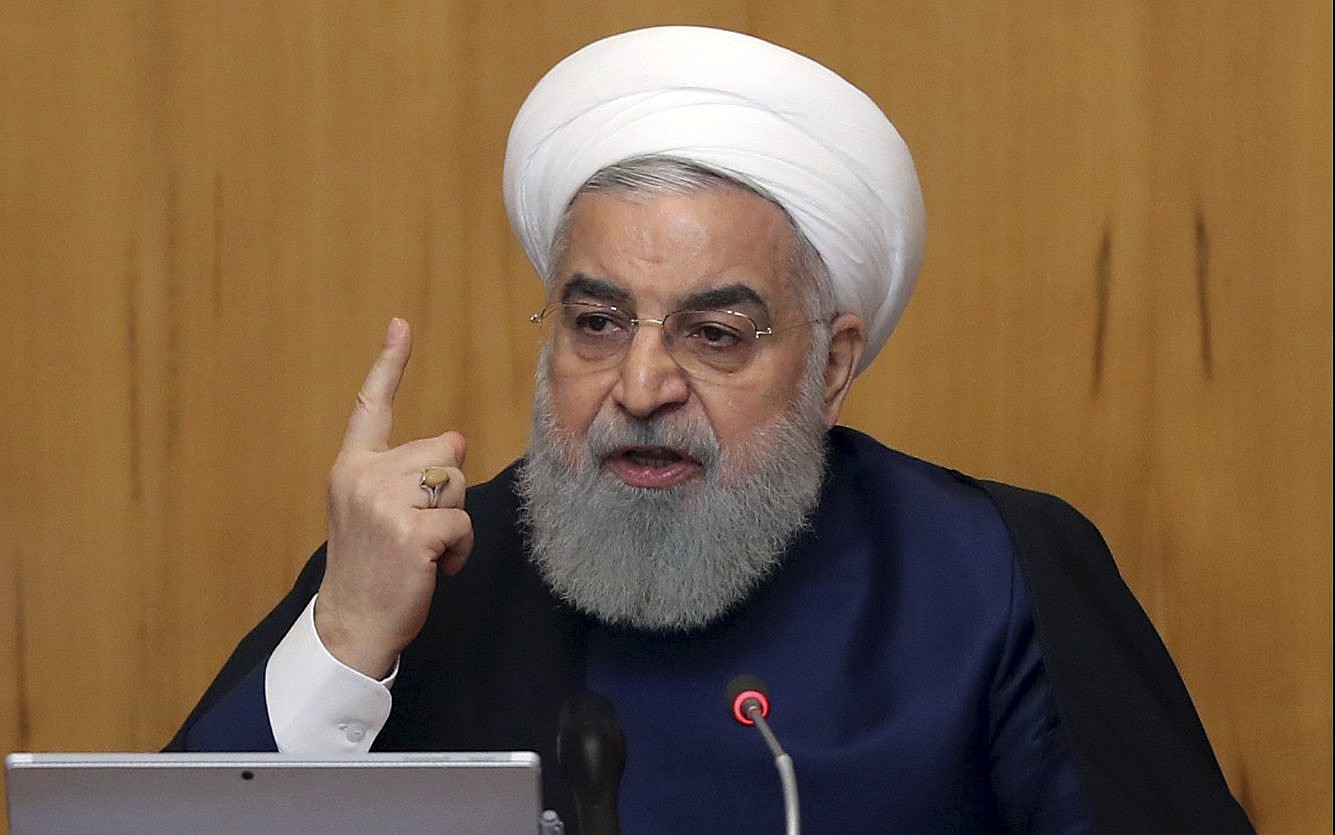
In this photo released by the official website of the office of the Iranian Presidency, Iran's President Hassan Rouhani speaks in a cabinet meeting in Tehran, Iran, May 8, 2019. (Iranian Presidency Office via AP)

In this photo released by the official website of the office of the Iranian Presidency, Iran’s President Hassan Rouhani speaks in a cabinet meeting in Tehran, Iran, May 8, 2019. (Iranian Presidency Office via AP)

Iran’s President Hassan Rouhani said Monday that while he favors talks and diplomacy, these are impossible in the current situation, and so his country has chosen a path of “resistance only.”

“I favor talks and diplomacy but under current conditions, I do not accept it, as today’s situation is not suitable for talks and our choice is resistance only,” the Islamic Republic News Agency quoted him as telling leading religious figures.

His comments came hours after US President Donald Trump said that any  provocations by Iran would be met with “great force,” while noting that he’s also willing to negotiate.

According to IRNA, Rouhani told the clerics that there was consensus among the leadership that Iran would stand up to the US and its sanctions.

However, he said Iran would not officially leave the nuclear deal because that would open it up to further sanctions.

“If we walked away from the JCPOA with the US provocative acts, then, in addition to the US, the UN and world would also impose sanctions on us,” he said, using an acronym for the official name of the deal.

Tensions have spiraled in recent days after the Trump administration sent an aircraft carrier and other military resources to the Persian Gulf region, and withdrew nonessential personnel from Iraq, raising alarms over the possibility of a confrontation with Iran.

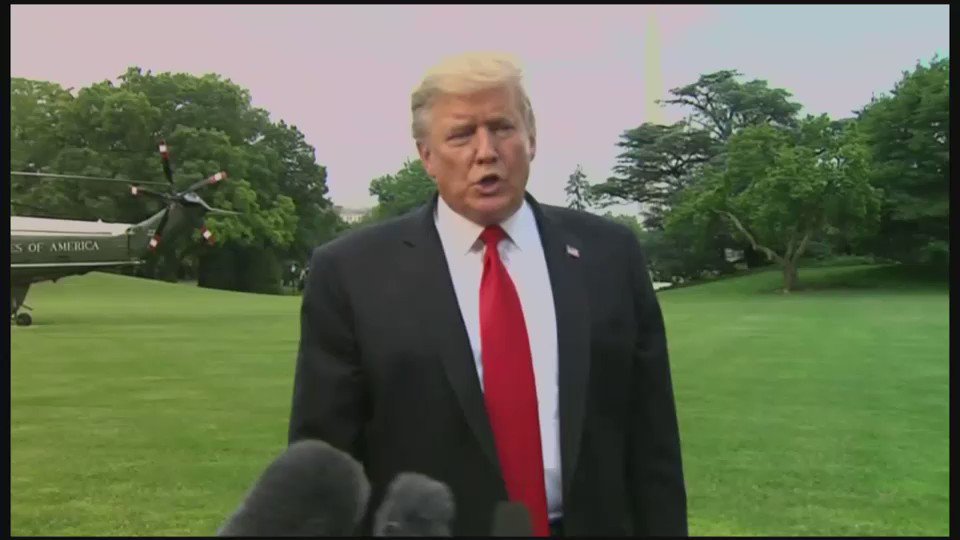
“We have no indication that anything’s happened or will happen. But if it does, it will be met obviously with great force,” said Trump, speaking to reporters as he left the White House en route to a rally in Pennsylvania. “We’ll have no choice.”

Despite saying there was no indication of a belligerent act from Iran, the president called the Islamic Republic “very hostile” and the “No. 1 provocateur of terror in this country.”

Trump had been downplaying the chances of potential conflict in recent days and again said he was willing to talk to Tehran.
Embedded video

POLITICO

@politico

“If they call we would certainly negotiate, but that’s going to be up to them,” Trump said. “I’d only want them to call if they’re ready. If they’re not ready, they don’t have to bother.”

Trump’s comments come after semi-official news agencies in Iran reported that the country has quadrupled its production of low-enriched uranium amid tensions with the US over the unraveling nuclear accord.

The Fars and Tasnim news agencies both reported that the production is of uranium enriched only to the 3.67 percent limit set by the 2015 nuclear deal with world powers, far below the 20% to which Iran was enriching before the deal or the 90% required to produce nuclear weapons.

The fast combat support ship USNS Arctic transports cargo to the Nimitz-class aircraft carrier USS Abraham Lincoln during a replenishment-at-sea in the Arabian Sea, May 19, 2019. (Mass Communication Specialist 3rd Class Jeff Sherman/US Navy via AP)

However, a quadrupling of production would mean that Iran likely will soon go beyond the stockpile limitation of 300 kilograms set by the deal.

Iran said it has informed the International Atomic Energy Agency, the UN nuclear watchdog, of its decision. The IAEA did not immediately respond to a request for comment.

The crisis is rooted in Trump’s decision to withdraw from the nuclear accord last year and impose sweeping sanctions on Iran. The Trump administration has criticized the 2015 accord for failing to rein in Tehran’s regional ambitions.

Earlier Monday, Iran’s foreign minister, Mohammad Javad Zarif, met with his visiting counterpart from Oman, Yusuf bin Alawi. The Gulf nation has in the past served as an intermediary between the United States and the Islamic Republic, including during the early stages of the talks that led to the 2015 nuclear agreement.

Overnight Sunday, Trump took to Twitter to warn Iran not to threaten the US or it will face its “official end.”

The USS Abraham Lincoln sails in the Arabian Sea near the amphibious assault ship USS Kearsarge, on May 17, 2019. (Mass Communication Specialist 1st Class Brian M. Wilbur, US Navy via AP)

Trump tweeted: “If Iran wants to fight, that will be the official end of Iran. Never threaten the United States again!”

Trump did not elaborate, nor did the White House. However, the tweet came after a rocket landed less than a mile from the sprawling US Embassy in Baghdad in the Iraqi capital’s heavily fortified Green Zone Sunday night.

No group immediately claimed responsibility for the rocket launch.

Trump’s tweet was a “genocidal taunt,” according to Iran’s top diplomat, Zarif.

In his own message on Twitter, Zarif said Trump had been “goaded” into “genocidal taunts.”

He wrote that Trump “hopes to achieve what Alexander (the Great), Genghis (Khan) & other aggressors failed to do,” adding: “Iranians have stood tall for a millennia while aggressors all gone.”


Israel conducts two airstrikes on Syrian targets – TV7 Israel News 20.05.19 – YouTube

May 21, 2019


HAMAS AND ISRAEL DENY REPORT OF SIX MONTH TRUCE

May 21, 2019

Palestinian reporter calls it ‘fake news’; Otzma, ‘humiliating treaty of surrender.’

BY HAGAY HACOHEN, TOVAH LAZAROFF  MAY 20, 2019 23:43

https://www.jpost.com/Israel-News/Hamas-Israel-agree-to-a-six-months-cease-fire-agreement-590216

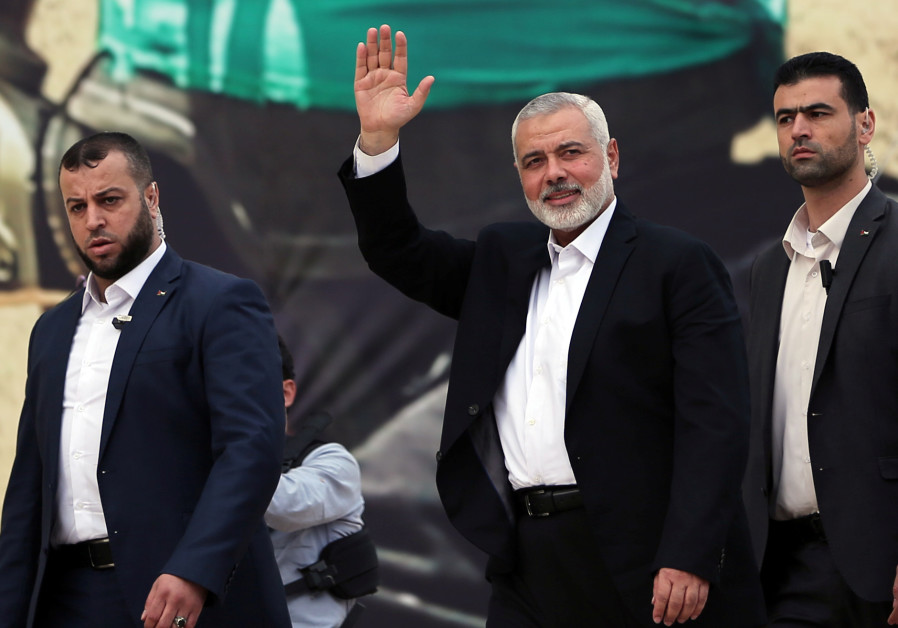
Hamas Chief Ismail Haniyeh gestures during a rally marking the 31st anniversary of Hamas’ founding, in Gaza City December 16, 2018. (photo credit: IBRAHEEM ABU MUSTAFA / REUTERS)

Israel and Hamas have denied reports that a Gaza ceasefire understanding had been reached that would ensure six-months of calm.

Channel 12 news on Monday night reported that a truce had been reached, sparking a chain of Israeli political reactions and diplomatic denials.According to the report, Hamas agreed to end clashes with IDF forces along the Gaza border, with Palestinian rioters keeping to a 300 meter distance from the border.

Hamas also agreed to end its night raids against IDF units along Israel’s southern border. During those six months, no new flotillas would be launched in an attempt to break Israel’s maritime blockade of Gaza, Channel 12 reported.

Israel agreed to widen the Gaza fishing zone to 15 nautical miles and to ensure the uninterrupted transfer of medicines and other forms of civic aid to Gaza residents, the report said.

Talks would be held on the Gaza crossings, electricity, health services and financial assistance. In addition, Israel will promote UN funded projects.

If calm is held for six month, the report stated, then work could proceed on a more permanent ceasefire that would include the return of the bodies of two IDF soldiers and the release of two Israeli civilians held in Gaza.

All efforts toward either an informal or a formal ceasefire have been brokered by Egypt with the help of the United Nations. Nickolay Mladenov, the UN Special Coordinator to the Middle East Peace Process, had no comment on the report.

In the past, informal ceasefire understandings have rarely been publicly acknowledged and have been measured only by the absence of violence. Earlier this month, a severe outbreak of Israel-Hamas violence caused the death of four Israeli civilians and almost led to a full-on outbreak of war.

Palestinians and Israelis objected to the reports of an informal ceasefire.

The organizers of the weekly Palestinian Friday border protests pledged: “we will continue with the Friday marches until the siege is removed and the rights of our people restored.”

Representatives of the Eshkol Regional Council, in turn, said that from their perspective, a ceasefire includes a complete cessation of incendiary balloons, terror attacks on the security fence, and the sporadic fire to which they are subjected.

MK Amir Peretz from the Labor Party said that a deal with Hamas that does not include the return of the remains of IDF soldiers Oron Shaul and Hadar Goldin for burial in Israel, as well as living Israelis held captive by the terrorist group, is an ongoing assault on “IDF values and the alliance [the state has] with families.”

Goldin’s parents, Lea and Simcha, said that the “deal with Hamas is misleading the families, who have been waiting for almost five years for their sons to be returned from the battlefield.”

Palestinian reporter Iiad El-Kara suggested that the ceasefire is “fake news,” claiming that, “this is part of the conniving means used by Prime Minister Benjamin Netanyahu against Yisrael Beytenu leader Avigdor Liberman.”

Former Yesh Atid MK Haim Yalin said: “I don’t believe a single word of Hamas,” noting that, at this time, Israel has had 12 ceasefire understandings with Hamas and that Hamas broke all of them.

The far-right Otzma Yehudit Party issued a press release saying that this is a “humiliating treaty of surrender” and that “Hamas is dictating to the State of Israel what is on the agenda, and brings the Israeli government to its knees time and time again.”

MK Yoaz Hendel of Blue and White responded to the news, saying that in the Middle East, “agreements with terrorists are not worth the paper on which they are signed.”

Yasser Okby contributed to this report.

Israel and Hamas agree to six-month ceasefire

May 20, 2019

Israel prepared to expand fishing zone, promote UN-initiated deal, transfer medicines and humanitarian aid, open negotiations.
Mordechai Sones, 20/05/19 20:27

http://www.israelnationalnews.com/News/News.aspx/263431


Financial aid as part of $480 million in aid allocated by Qatar, in GazaFlash 90

News 12 Defense and Security commentator Roni Daniel reports that two weeks after the end of the last round of fighting with Hamas, Israel and Hamas reached an agreement on a temporary cease-fire for six months, mediated by Egypt and with the help of a UN representative.

The mutual understandings agreed upon states the Hamas Islamic Movement agrees to a cease-fire and end to border hostilities, preserving a security zone 300 meters from the fence, cessation of night clashes, and cessation of flotillas to the coastal area.

For its part, Israel is prepared to expand the fishing zone to 15 miles, promote a UN-initiated deal, transfer medicines and humanitarian aid, and open negotiations on electricity, crossings, health, and finances.

All this is supposed to take place in six months. If the parties succeed in keeping the rules – Hamas demands rapid implementation – then they will enter the more problematic next stage – returning the IDF fighters who fell in Gaza whose bodies are held there, and the two citizens who are still being held there. The Egyptians were a significant factor in the agreement, and it is yet to be seen what will happen next year on the assumption that the parties will meet the conditions in return for quiet.

Herman Wouk and Jewish Tradition

May 20, 2019

Coverage in the Aussie media here:

https://www.theherald.com.au/story/6131333/us-author-herman-wouk-dead-at-103/?cs=7594

Interesting article below.

May his memory be a blessing.

https://www.aish.com/jw/s/Herman-Wouk-and-Jewish-Tradition.html?s=mm

Herman Wouk, the Pulitzer Prize winning and bestselling author, has died at the age of 103, just ten days short of his 104th birthday. His long career spanned a tumultuous time in American Jewish history, as many first and second generation Jews assimilated and shed their Jewish identities.

Throughout it all, Wouk was a passionate spokesman for Jewish rituals and lifestyle, introducing many Jews and non-Jews to the beauty of a Jewish life and helping traditional Judaism go mainstream. His book This Is My God was a must-read for searching Jews finding their way back to Jewish observance.

Wouk was born in New York in 1915; his parents Esther and Abraham Wouk were religious Jewish immigrants from Belarus who raised their three children with a deep love of being Jewish. Following college at Columbia University, Wouk worked as a comedy sketch writer, then joined the navy after the attack on Pearl Harbor, serving with distinction. He later said that soldiers from all over the United States changed him, giving him a better understanding of his country and the people in it. Soon, he became a part of the fabric of American culture himself, bringing Jewish experiences into the mainstream American experience.

His novel Marjorie Morningstar was published in 1955 and became a runaway bestseller, selling three million copies in the US alone. It featured Marjorie, a Jewish American woman who tries to become an actress, shedding much of her Judaism and conventional family life along the way. At the end of the novel, after many disappointments, Marjorie realizes what will truly make her happy, settling for a much more sedate lifestyle, marrying a Jewish husband and raising children. The novel was one of the first to describe an attractive, typical character who was also Jewish, and broke new ground in describing Jewish traditions and rituals such as a Passover Seder in a popular book.

When Marjorie Morningstar was made into a movie starring Natalie Wood in 1958, it was the first American film since The Jazz Singer in 1927 to depict Jewish rituals on screen, making Jewish observance acceptable to a new generation of theatre-goers.

Wouk was prolific, writing over two dozen novels, including such wildly popular works as The Caine Mutiny in 1951 and The Winds of War in 1971. He wrote several books about World War II, the Holocaust, and the state of Israel. One of his favorite books, however, was non-fiction: This is My God, first published in 1959. At a time of widespread assimilation, Wouk wanted to explain traditional Judaism to a wider audience. His book described Jewish tradition, including keeping kosher, the Jewish holidays, and milestones such as brit milah and weddings. He wanted, he wrote, to give Jews “permission to believe” in a religion that was often seen as old fashioned and irrelevant. For years, This is My God was a popular bar mitzvah gift and was widely read by both Jews and non-Jews.

In describing a typical American Jews of the time, Wouk wrote “his grandparents were fairly religious, his parents much less so and he is wholly indifferent”. This assimilated American Jew is well educated, has a good job, and is good-hearted and pleasant – but is also intensely ashamed of being a Jew. Wouk’s book was his attempt to change that, to show the beauty and majesty of the Jewish faith, and to encourage readers to see themselves as part of a proud tradition and wider Jewish community.

In the 1988 editions of the book, Wouk noted “if I were to write it afresh now, the book would have a more intensely Jewish tone. In 1959 I was preoccupied with proving that an educated Westerner could live a traditional Jewish existence, not only without any intellectual sacrifices, but much to his enrichment. Today, I take that for granted.”

Within the period of high assimilation rates in the 1950s, 1960s and 1970s, however, Wouk stood out as a proud defender of Jewish tradition and identity. In 1955 he was featured on the cover of Time magazine, and he talked about his return to the traditional Jewish lifestyle with which he grew up. It was an unpopular position at the time but Wouk was adamant that he wouldn’t compromise his Jewishness, even if it seemed unfashionable. “He is a devout Orthodox Jew who had achieved worldly success in worldly-wise Manhattan,” the Time article explained, “while adhering to dietary prohibitions and traditional rituals which many of his fellow Jews find embarrassing.”

Indeed, Wouk lived a glamorous life, with homes in Manhattan, the US Virgin Islands, and Fire Island off the coast of New York. He dressed well and was well-spoken in interviews. The fact that he also maintained Jewish traditions was proof to some that American Jews could be educated and successful and also be religiously observant and proud of their Jewishness. He was married to the same woman, Betty Sarah Brown, for 66 years, until her death in 2011. They had three children, two of whom survive him, as well as three grandchildren and two great grandchildren.

Wouk’s life, like that of American Jews as a whole, was one of evolution. Towards the end of his life Wouk seems to have become even more religiously observant, studying the Talmud every day and helping to establish Jewish study groups near his various homes. In later years, he also taught weekly Talmud classes.

Many of Wouk’s books remain popular. Yet his greatest legacy might be his intense pride in his Jewishness – and his encouragement to other Jews to be proud as well. In 1988, Wouk recalled a meeting he’d had years earlier with David Ben Gurion, the first Prime Minister of Israel.

“Ben Gurion said to me in his office,” Wouk recalled, “the wise, tough old builder of Israel, with the floating white hair of a dreamer and the hard jaw of an army general – ‘You Jews in the United States are different from any Jewish community that has ever existed. You are not strangers or no more strangers than anyone else in your land. America consists of immigrants. You belong like the rest, and you will prosper. But how will you survive as Jews?’

“Without thinking,” Wouk recounted, “I answered, ‘Through the religion’.”

That devotion to Judaism and Jewish tradition maintained Wouk throughout his long life, and continues to inspire us with his works and his example. May Herman Wouk’s memory be a blessing for us all.

Report: Israel will not join war with Iran unless attacked 

May 19, 2019

Source: Report: Israel will not join war with Iran unless attacked – www.israelhayom.com

Israeli officials reportedly shared with Trump administration classified information on Iran’s missile program during a recent visit to Washington, Independent Arabia reports. Talks meant to coordinate joint posture on Iran and prepare for possible escalation.

According to the report, the Israeli delegation told the American officials that in the case of a full-fledged confrontation between Iran and the United States, Jerusalem would not play an active role and would only join the fighting if it was attacked by Iran or its proxies.
The discussions reportedly focused on ensuring there would be no daylight between the two countries in the case of a military confrontation in the region.
The Israelis, according to the report, also provided classified information on Iran’s missile program.


First tentative US-Iranian talks don’t promise easing of war tensions – DEBKAfile

May 19, 2019

Source: First tentative US-Iranian talks don’t promise easing of war tensions – DEBKAfile

Both the US and Iran appear for now to be holding back from a direct military confrontation, judging from the comments heard on all sides. On Tuesday, May 14, US President Donald Trump said: “We don’t want a war with Iran.”

The next day, supreme leader Ayatollah Ali Khamenei said: “The Iranian nation has chosen the path of resistance.” The most revealing comment came on Friday, May 17, from Qatar’s Foreign Minister Sheikh Mohammed bin Abdulrahman Al Thani after a visit to Tehran: “A red desk should be set up in Iraq or Qatar with officials from the two sides… to manage tensions.”

All these remarks confirm the suspicion that American and Iranian officials are already in secret conversation in Baghdad or in Doha, although engaged in nothing more than  a start on “talks about talks” – a far cry from ordering a slowdown of their threatening military movements. Therefore, flareups are still on the cards, including such incidents as the presumed Israeli air or missile strike on Iranian and Hizballah sites south of Damascus on Friday night, May 17. It may be taken for granted that Israel would have cleared with Washington in advance any attack on Iranian targets in Syria.

Even if  US and Iranian officials achieve enough progress in their preliminary talks to lift the war clouds hanging over the Middle East, they would still face major hurdles on the path to negotiations on the substantive subjects at issue. The easing of crippling US sanctions will top Iran’s agenda, as it has for Kim Jong-un after his two summits with President Donald Trump, and also most likely for President Vladimir Putin when he met Secretary of State Mike Pompeo in Sochi last Tuesday, although the trade war with China takes place on a different plane.

Up until now, Trump has stuck fast to sanctions as the most powerful weapon in his foreign policy toolbox with regard to Iran, North Korea, China and Russian, in the hope that one of those powers will blink first and the others will follow. That has still not happened.

Trump confronts Tehran with his tallest order: Halt malign meddling in the affairs of Middle East nations, especially, Syria, Lebanon and Yemen; give up your nuclear weapons and ballistic missile development programs; and return to the table for talks on a revised nuclear pact. However, although the sanctions against Iran are harsh, Khamenei is a tough survivor and confident enough to believe that he can outlast his adversary in the White House.


Syria says air defenses intercept Israeli missiles, in 2nd incident in 24 hours

May 19, 2019

State TV says military shot down ‘hostile targets coming from direction of occupied territories,’ a day after explosions heard in vicinity of Iranian and Hezbollah facilities

By TOI STAFF and AGENCIES18 May 2019, 9:39 pm 

Footage aired by Syrian state media shows an air defense missile after it was fired during reported Israeli strikes near the capital Damascus on May 17, 2019. (Screen capture: Twitter)

Syria claimed its air defenses on Saturday night shot down a number of missiles fired from Israel, for the second time in less than 24 hours.

The official SANA news agency said the military intercepted “hostile targets coming from direction of occupied territories.” Syrian state TV said the missiles were shot down over Quneitra and near Damascus.

Rami Abdel Rahman, head of the Britain-based Syrian Observatory for Human Rights, said Israel fired at least three missiles. Two of the strikes targeted a Syrian army brigade which supervises the country’s Quneitra province, he told AFP, while the third missile was destroyed by Syrian defenses.

On Friday night, Syrian state TV reported sounds of explosions near the capital, and aired footage of what it claimed were air defenses intercepting missiles fired from Israeli jets seen over Quneitra in the Syrian Golan Heights.

“Aerial defenses detected hostile targets coming from the direction of Quneitra and dealt with them,” the official SANA news agency quoted a military source saying, referring to a Syrian town in the Golan Heights bordering Israel.

The UK-based Syrian Observatory for Human Rights monitoring group reported several explosions in the Al-Kiswah area outside the city, in the vicinity of Iranian and Hezbollah storage facilities and air defense batteries. The group added that it was not immediately clear if the explosions were caused by Israeli airstrikes or surface-to-surface missiles.

There was no response from the Israel Defense Forces, which rarely comments on reported strikes.

The Hebrew-language media reported Saturday night that Friday’s alleged strike was another episode in the confrontation between Israel and Iran in Syria. Israel accuses Iran of seeking to set up a military presence in Syria that could be used to threaten the Jewish state.

In November 2017, Western intelligence officials told the BBC that Iran had established a permanent military base in el-Kiswah. Israel has reportedly hit the base several times.

The Israeli military has acknowledged carrying out hundreds of airstrikes in Syria in recent years on targets linked to Iran, which is backing President Bashar Assad’s regime in the Syrian civil war.

The Living Years (Cover) Mike & The Mechanics 

May 18, 2019


Herman Wouk, a consummate writer until the end, dies at 103

May 18, 2019

Source: Herman Wouk, a consummate writer until the end, dies at 103

today
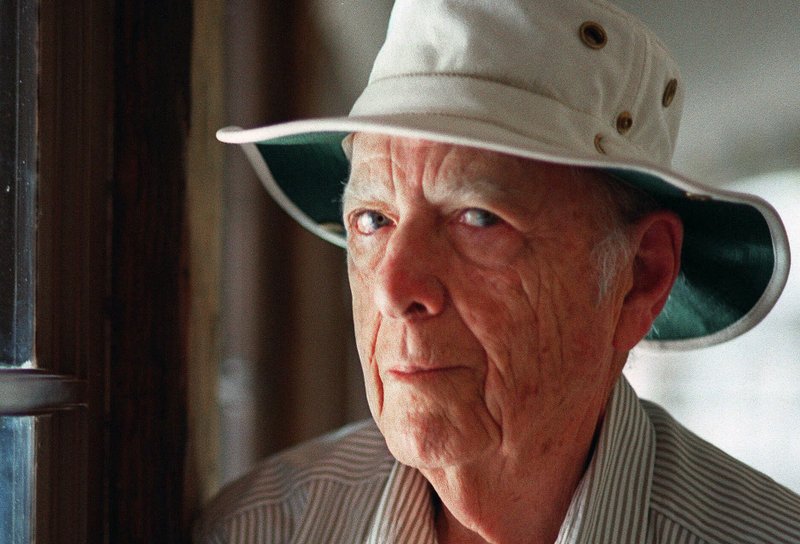
FILE – This May 15, 2000, file photo, shows Pulitzer Prize-winning author Herman Wouk in Palm Springs, Calif. Wouk died in his sleep early Friday, May 17, 2019, according to his literary agent Amy Rennert. He was 103. (AP Photo/Douglas L. Benc Jr., File)

NEW YORK (AP) — Herman Wouk was a prize-winning, million-selling author never quite in fashion.

He was a religious Jew among secular peers, a respecter of authority in a field of rebels. He didn’t brag like Norman Mailer and was spared the demons driving the madness of Philip Roth’s “Portnoy’s Complaint.” After a Pulitzer early in his career for “The Caine Mutiny,” he was mostly ignored by awards committees and was often excluded from anthologies of Jewish literature. Gore Vidal praised him, faintly, by observing that Wouk’s “competence is most impressive and his professionalism awe-inspiring in a world of lazy writers and TV-stunned readers.”

But Wouk, who died Friday 10 days shy of his 104th birthday, was a success in ways that resonated with critics and readers, and with himself. He created at least one immortal fictional character, the unstable Captain Queeg of “The Caine Mutiny.” He was praised for the uncanniness of his historical detail in “The Winds of War” and other books. He was among the first modern Jewish writers who appealed to the general public and had an enviably large readership that stayed with him through several long novels, many of which dramatized the conflicts between faith and assimilation.

He was working on a book until the end, said his literary agent Amy Rennert.

Wouk’s long, unpredictable career included gag writing, fiction and a musical co-written with Jimmy Buffett. His two-part World War II epic, “The Winds of War” and “War and Remembrance,” was adapted by Wouk himself for a 1983, Emmy Award-winning TV miniseries starring Robert Mitchum. “The Winds of War” received some of the highest ratings in history and Wouk’s involvement covered everything from the script to commercial sponsors.

Heads of state read him and quoted from him, but Wouk shied from talk of greatness, telling one reporter he was not a “high stylist.” In “War and Remembrance,” a writer notes in his journal, “I could contribute nothing new; but writing as I do with a light hand, I might charm a few readers into pausing, in their heedless hurry after pleasure and money, for a look at the things that matter.”

From Ernest Hemingway to James Joyce, major authors of the 20th century were assumed either anti-religious or at least highly skeptical. But Wouk was part of a smaller group that included C.S. Lewis, Chaim Potok and Flannery O’Connor, those who openly maintained traditional beliefs. He contended that among writers, anti-conformity was a kind of conformity. “It seems curious,” he wrote in “Aurora Dawn,” his first novel, “that life ‘as it really is,’ according to modern inspiration, contains a surprising amount of fornication, violence, vulgarity, unpleasant individuals, blasphemy, hatred, and ladies’ underclothes.”

“Marjorie Morningstar,” published in 1955, was one of the first million-selling novels about Jewish life, and two novels, “The Hope” and “The Glory,” were set in Israel. One of his most influential works was “This Is My God,” a careful, but firm defense of faith that could be found in countless Jewish households. Into his 90s, he studied the Talmud daily and led a weekly Talmud class. He gave many speeches and sermons and received several prizes, including a lifetime achievement award from the Jewish Book Council. During the many years he lived in Washington, D.C., the Georgetown synagogue he attended was known unofficially as “Herman Wouk’s synagogue.”

In 1995, the Library of Congress marked his 80th birthday with a symposium on his career; historians David McCullough, Robert Caro, Daniel Boorstin and others were present. In 2008, Wouk received the first ever Library of Congress Award for Lifetime Achievement in the Writing of Fiction. In his mid-90s, he completed the comic novel “The Lawgiver,” and at age 100 wrote a memoir. Wouk’s longevity inspired Stephen King to title one story “Herman Wouk is Still Alive.”

Wouk, the son of Russian Jews, was born in New York in 1915. The household was religious — his mother was a rabbi’s daughter — and devoted to books. His father would read to him from Sholem Aleichem, the great Yiddish writer. A traveling salesman sold his family the entire works of Mark Twain, who became Wouk’s favorite writer, no matter how irreverent on matters of faith.

“I found it all very stimulating,” Wouk, in a rare interview, told The Associated Press in 2000. “His work is impregnated with references to the Bible. He may be scathing about it, but they’re there. He’s making jokes about religion, but the Jews are always making jokes about it.”

A top student in high school, Wouk majored in comparative literature and philosophy at Columbia University and edited the college’s humor magazine. After graduation, he followed the path of so many bright, clever New Yorkers in the 1930s: He headed for California, where he worked five years on Fred Allen’s radio show.

Had war not intruded, he might have stuck to comedy sketches. After the bombing of Pearl Harbor he enlisted in the Navy and served as an officer in the Pacific. There, he received the writer’s most precious gift, free time. He read and read, from the Bible to Victorian fiction, and wrote what became his first published novel, the radio satire “Aurora Dawn.”

“I was just having fun. It had never occurred to me write a novel,” he said.

By the time “Aurora Dawn” came out, in 1947, Wouk was married and living in New York. His novel was a Book-of-the-Month Club selection and he would soon publish “City Boy,” a coming-of-age story highly influenced by Twain.

In 1951, Wouk became a major literary star with the release of “The Caine Mutiny,” for which Wouk was compared to other World War II novelists: Mailer, Irwin Shaw, James Jones. But his next book turned to domestic matters. Wouk spoke often of his concern about assimilation and this story told of an aspiring Jewish actress whose real name was Marjorie Morgenstern. Her stage name provided the novel’s title, “Marjorie Morningstar.”

“My agent was absolutely appalled,” Wouk told the AP. “He submitted it to the editor of a women’s magazine and the editor said, ‘Herman Wouk has destroyed himself. He’s a man who writes big, sweeping dramas about men in action. Then he writes about this girl and nothing happens. He should burn this book and forget it.’”

But like “The Caine Mutiny,” the novel sold millions and was made into a movie, starring Natalie Wood. (Wouk eventually bought Wood’s former home in Palm Springs). He was famous enough to appear on the cover of Time magazine, even as some Jews complained his book perpetuated stereotypes and critics complained he was too old-fashioned, too deferential.

Captain Queeg, for example, may be a villain in popular culture, but “The Caine Mutiny” was not “Catch-22.” Wouk was just as hard on the officers who rebelled against Queeg. The “crux” of the story, Wouk wrote in his journal, was that the “mutiny was a mistake” and the crew should have stood by its leader, however flawed. Over the years, Wouk responded to criticism in two ways: He didn’t judge the characters in his stories, but tried to tell the truth; and whether he really challenged authority depended on what you thought needed challenging. Wouk knew that others didn’t share his views. “This Is My God” featured a similar approach to “Mere Christianity” and other works by C.S. Lewis. Wouk preached not to the converted, but to the curious. He anticipated arguments about religion and tried his best to answer them.

“I’m not out front as a figure, and that suits me,” he told the AP. “I love the work and it’s the greatest possible privilege to say, ‘Here are these books that exist because I had to write them.’”

In 1945, Wouk married Betty Sarah Brown, who also served as his agent until her death in 2011. They had three sons— Nathaniel, Joseph and their eldest, Abraham, who drowned in 1951, a death that left Wouk with “the tears of the scar of a senseless waste.”