Archive for May 5, 2019

Ashdod man seriously injured by Gaza rocket; IDF to ramp up retaliatory strikes

May 5, 2019

Source: Ashdod man seriously injured by Gaza rocket; IDF to ramp up retaliatory strikes | The Times of Israel

3 Israelis killed, dozens injured as Gaza terrorist groups fire over 600 rockets and mortars at Israel; retaliatory IDF strikes said to kill at least 12 Palestinians
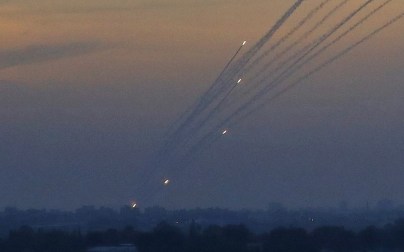
  • A picture taken on May 5, 2019 from the Israel-Gaza border shows a barrage of rockets being fired from the Hamas-run Palestinian enclave. (Jack GUEZ / AFP)
    A picture taken on May 5, 2019 from the Israel-Gaza border shows a barrage of rockets being fired from the Hamas-run Palestinian enclave. (Jack GUEZ / AFP)
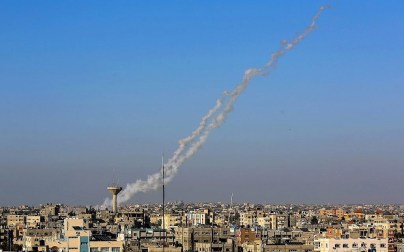
  • Smoke trails seen as rockets are launched from Rafah in the southern Gaza Strip toward Israel on May 4, 2019. (Abed Rahim Khatib/Flash90)
    Smoke trails seen as rockets are launched from Rafah in the southern Gaza Strip toward Israel on May 4, 2019. (Abed Rahim Khatib/Flash90)
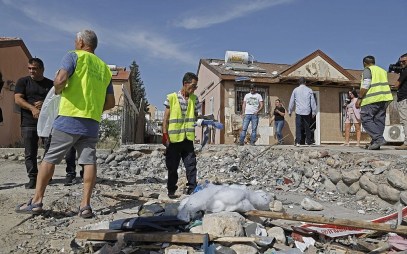
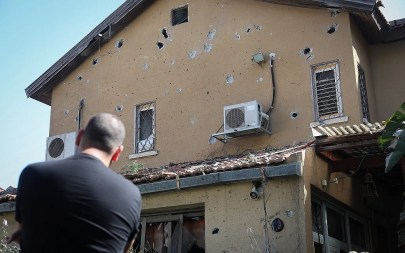
  • People inspect the damage at a house in the southern Israeli city of Beersheba on May 5, 2019, after it was hit in a rocket strike from Gaza. (Ahmad GHARABLI / AFP)
    People inspect the damage at a house in the southern Israeli city of Beersheba on May 5, 2019, after it was hit in a rocket strike from Gaza. (Ahmad GHARABLI / AFP)
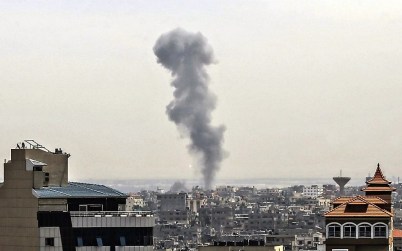
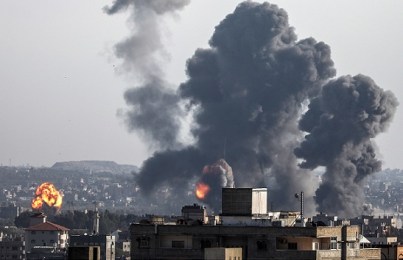
  • Smoke billows above buildings in Rafah in the southern Gaza Strip during an Israeli airstrike on the Palestinian coastal enclave, on May 5, 2019. (Said KHATIB / AFP)
    Smoke billows above buildings in Rafah in the southern Gaza Strip during an Israeli airstrike on the Palestinian coastal enclave, on May 5, 2019. (Said KHATIB / AFP)
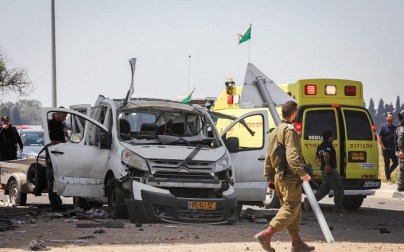
  • The scene of a car hit by a rocket fired from the Gaza Strip near the Israel-Gaza border on May 5, 2019. (Noam Rivkin Fenton/Flash90)
    The scene of a car hit by a rocket fired from the Gaza Strip near the Israel-Gaza border on May 5, 2019. (Noam Rivkin Fenton/Flash90)
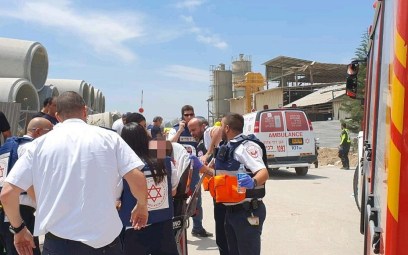
  • Magen David Adom paramedics treat a factory worker injured in a rocket strike in Ashkelon on May 5, 2019. (courtesy Magen David Adom)
    Magen David Adom paramedics treat a factory worker injured in a rocket strike in Ashkelon on May 5, 2019. (courtesy Magen David Adom)
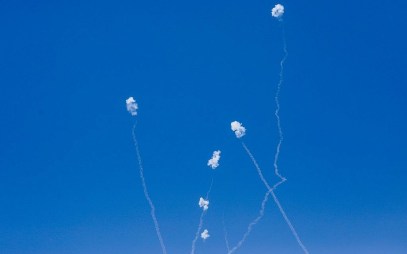
  • Smoke trails from a barrage of rockets launched from the Gaza Strip after they were intercepted by the Iron Dome on May 5, 2019. (Noam Revkin Fenton/Flash90)
    Smoke trails from a barrage of rockets launched from the Gaza Strip after they were intercepted by the Iron Dome on May 5, 2019. (Noam Revkin Fenton/Flash90)
  • The house of Moshe Agadi, 58, killed from shrapnel wounds after his house was hit by a rocket fired from the Gaza Strip in Ashkelon, southern Israel on May 5, 2019. (Noam Rivkin Fenton/Flash90)
    The house of Moshe Agadi, 58, killed from shrapnel wounds after his house was hit by a rocket fired from the Gaza Strip in Ashkelon, southern Israel on May 5, 2019. (Noam Rivkin Fenton/Flash90)

The Times of Israel is liveblogging Sunday’s events as they unfold.

Security cabinet instructs IDF to continue Gaza strikes, prepare for escalation

At the conclusion of the security cabinet’s session, the PMO issues a brief statement saying that the army has been instructed to continue striking targets in the Gaza Strip.

“The [security] cabinet instructed the IDF to continue the strikes and the prepare for a continuation. The main consideration is the security of the state and its citizen,” the statement says.

— Raphael Ahren

IDF releases footage of strike that killed alleged Hamas moneyman

The Israeli military releases drone footage of its strike that killed Hamed Hamdan al-Khodari, who it says was a terrorist operative who funneled money to terror groups in the Gaza Strip from Iran.

In the video, al-Khodari’s car can be seen driving down a street in Gaza City before it is hit by a missile from above and erupts into a cloud of smoke and flame.

Ashdod man seriously injured by Gaza rocket fire

A 35-year-old man is seriously injured by shrapnel from a rocket fired from the Gaza Strip at the coastal city of Ashdod, medics say.

The man is taken to the city’s Assuta hospital for treatment.

— Judah Ari Gross

Gaza rocket hits Sderot home, no injuries reported

A rocket fired from the Gaza Strip directly hits a home in the southern city of Sderot.

According to Channel 13, the rocket failed to explode upon impact.

No injuries are reported.

Incoming rocket sirens blare in Ashdod, Ashkelon and Yavne

Incoming rocket sirens sound in the southern Israeli cities of Ashdod, Ashkelon and Yavne as Palestinian terror groups in the Gaza Strip continue to fire rockets and mortar shells across the border.

Observer IL – #OSINT Analysis@Obs_IL

Massive Rocket Barrage on and area.

See Observer IL – #OSINT Analysis’s other Tweets

IDF says it thwarted Hamas cyber attack amid rocket barrage

The Israeli military says its soldiers thwarted a cyber attack by the Hamas terror group, without elaborating on the nature or target of the attack.

The commander of the IDF’s Cyber Division, who can only be identified by his rank and first Hebrew letter of his name, Brig. Gen. “Dalet,” would only say that the cyber attack occurred in the past day and was aimed at “harming the way of life of Israeli citizens.”

The military says much of the information about the attempted attack cannot be published as it would reveal to Hamas details about Israel’s cyber capabilities.

In addition to Israeli technology soldiers thwarting the cyber attack, the Israeli Air Force also bombed the headquarters of Hamas’s cyber unit.

According to the officer, the attempt by Hamas was not a particularly advanced one. “We were a step ahead of them the whole time,” he says.

However, Dalet says this was one of the first times where Israeli soldiers had to fend off a cyber attack while also fighting a physical battle.

“What’s special here is that we thwarted this threat under fire,” Dalet tells reporters.

The general says Hamas likely knows by now that its effort failed.

“I believe that they know they didn’t succeed in doing what they intended to do,” Dalet says.

— Judah Ari Gross

More incoming rocket sirens heard in Sderot

Fresh rocket sirens sound in the town of Sderot and surrounding communities, as terror groups in the Strip continue to fire rockets and mortar shells at southern Israel.

— Judah Ari Gross

Islamic Jihad says 2 operatives killed in Israeli strike

The Hamas-run health ministry and the Palestinian Islamic Jihad terrorist organization say that an Israeli strike earlier this afternoon killed two PIJ operatives.

A ministry spokesman tells AFP Mohammed abu Armanah, 30, and Mahmoud abu Armanah, 27, were killed in an Israeli strike in central Gaza, without giving further details.

Islamic Jihad confirms the men were members of its armed wing.

— with AFP

IDF says airstrikes target another terror cell in southern Gaza

The Israeli military says one of its aircraft attacked another group of terrorist operatives in the southern Gaza Strip.

— Judah Ari Gross

Kfar Saba opening public shelters

The central Israeli city of Kfar Saba is opening its public bomb shelters for residents as a precaution amid the wave of rocket fire into southern Israel from the Gaza Strip.

The decision is made by the municipality, not the the IDF’s Home Front Command. Kfar Saba is about 20 minutes north east of Tel Aviv.

The decision comes hours after the northern city of Netanya opened its city shelters.

Earlier today, Channel 12 news said Israeli defense officials were worried the latest round of fighting with armed terrorist groups in Gaza, would spread to the north of the country.

Incoming rocket sirens again blare in southern Israeli communities

A fresh round of rocket sirens sound in the communities of Nahal Oz and Sdot Negev as a barrage is fired toward southern Israel from the Gaza Strip.

There are no immediate reports of injuries.

Observer IL – #OSINT Analysis@Obs_IL

Massive Rocket Barrage on and area.

See Observer IL – #OSINT Analysis’s other Tweets


Israel-Gaza Clashes Escalate Dramatically After 500 Rockets

May 5, 2019


Why isn’t Israel’s Iron Dome stopping these deadly rocket attacks? 

May 5, 2019

Source: Why isn’t Israel’s Iron Dome stopping these deadly rocket attacks? – Arab-Israeli Conflict – Jerusalem Post

Yaakov Amidror tells the ‘Post’ that if a rocket is shot at a location less than a few kilometers away, “we don’t have enough time to intercept it.”

BY MAAYAN JAFFE-HOFFMAN
 MAY 5, 2019 15:40
Why isn’t the Iron Dome stopping these deadly rocket attacks?

Israel has a critical gap in its protection system, said Yaakov Amidror, a former head of Military Intelligence’s Research Department and currently a senior fellow at the Jerusalem Institute for Strategic Studies.

He told The Jerusalem Post that if a rocket is shot at a location less than a few kilometers away, “we don’t have enough time to intercept it.”

Amidror explained that there is nothing unique about these particular rockets – “they are within the capabilities of the Iron Dome.”

The challenge is that sometimes, such as in the case of the rocket that hit the vehicle near Kibbutz Yad Mordechai, “from the point of view of the system, this was an open area without people. We don’t intercept such rockets.”

Amidror said that the rockets currently being fired at Israel had either been smuggled into the Gaza Strip before the 2013 regime change in Egypt from the Muslim Brotherhood to General Abdel Fattah el-Sisi, or are being produced on the Gaza side but using a manufacturing system that was built during that same time frame.

“Before the change of regime,” Amidror explained, “Egypt informally but practically allowed terrorist groups to bring in all the facilities needed to produce these rockets.”

He said that the rockets are paid for by Iran.

How can Islamic Jihad manage to launch so many rockets in one day?

According to Amidror, “It is very easy to launch rockets when you are launching them at close range and you don’t really need to be accurate.”


Rocket Attacks on Israel 

May 5, 2019


Israel says latest Gaza strike killed Hamas’s chief Iran liaison 

May 5, 2019

Source: Israel says latest Gaza strike killed Hamas’s chief Iran liaison | The Times of Israel

Israel says latest Gaza strike killed Hamas’ chief Iran liaison

The IDF confirms conducting a targeted killing of a Hamas field commander, saying he was responsible for receiving money for the group from Israel’s enemy, Iran.

The Hamas commander is identified as Hamed Hamdan al-Khodari.

According to the IDF, al-Khodari owned a number of money exchanges in the Gaza Strip and used them to bring in large amounts of cash into the coastal enclave for Hamas, Palestinian Islamic Jihad and other terror groups.

“Al-Khodari’s financial activities… significantly contributed to advancing terrorist activities and militarily strengthening terror groups in the Gaza Strip,” the army says.

The IDF says the assassination of al-Khodari is meant to thwart Iran’s efforts to support terror attacks from the Gaza Strip.

— Judah Ari Gross


Latest round of Gaza violence must be used to restore deterrence

May 5, 2019

Source: Latest round of Gaza violence must be used to restore deterrence

Analysis: Senior officials say Israel rejected the Egyptian ceasefire proposal, refusing to be dictated by the terror groups in Gaza, who apparently believed this flare-up would be over by Monday, when the holiday of Ramadan begins
At the moment it seems as though both sides, Hamas and Israel, want to escalate the current flare-up rather than let it die down. Gaza militants launch non-stop rocket attacks on Israel’s civilian population, while Israeli military continues striking targets in the enclave.Overnight, Israel appeared to have rejected a ceasefire proposal by the Egyptian intelligence officials, who remain in constant contact with the leadership of Hamas and Islamic Jihad – currently in Cairo.

The Egyptians apparently offered a deal which involves an immediate and unconditional cessation of violence, something that Israel is not willing to accept. Furthermore, Israel said it intends to not only continue striking Gaza but also to intensify the scale of the attacks. A message which I’m sure was conveyed to the Palestinians by Egypt. Thus, it seems this round up of border violence will continue in the upcoming days.

IDF bombing in Gaza (Photo: EPA)

IDF bombing in Gaza (Photo: EPA)

The current flare-up, unlike many others in recent past, is characterized by new methods of warfare used by both sides. The Palestinians – Hamas, Islamic Jihad and other smaller terror groups in the Strip – have introduced a new self-produced rocket, which can reach only a few kilometers into Israel but is tipped with a uniquely heavy warhead.

These rockets – called Burkan – were first developed in Syria in the midst of a civil war and their warheads usually contain dozens of kilograms of explosives. The terror groups thought the rocket would surprise the residents of Israeli communities near the Gaza border, but due to the rockets’ lack of precision, most of them landed in open spaces or failed to make it into Israeli territory altogether. This prompted Hamas to issue a statement, claiming Israel is hiding from the public the full extent of damage the rockets inflicted on the area.

So far both Hamas and Islamic Jihad have refrained from increasing the rocket range to over 40 km (25 miles) from the Gaza border. Although the Palestinian factions did make good on their promise to strike the cities of Beer-Sheva and Ashdod, the attacks didn’t bear fruit as most of the rockets had been intercepted by the Iron Dome.

House in Ashkelon hit by Gaza rocket (Photo: AP)

House in Ashkelon hit by Gaza rocket (Photo: AP)

“The armies of terror,” as the IDF chief of staff calls them, have relatively few long-range rockets that can reach Tel Aviv as they are difficult to manufacture and the terror groups don’t want to empty their precious stockpiles so easily.

The IDF for their part have decided in this round of violence to attack almost exclusively, what the military labeled as “the power targets.” These targets include multi-storey buildings with military installations, buildings serving as headquarters for the terror groups and even private homes of the factions’ leaders (something the IDF hasn’t done in years), leaving them without a roof over their heads on the eve of the Ramadan holiday. The IDF also doesn’t hesitate to strike terror cells launching rockets, and since Friday at least eight terror operatives had been killed in Israeli attacks.

The Palestinian factions might have believed this flare-up would be over within a few hours since they probably didn’t want to wage battles during the Ramadan, which starts on Monday. Ramadan is considered to be a family holiday and dragging Gazan population into a war at this time would only increase the resentment to the Hamas leadership, which has ruled the Strip since 2007.

Multi-storey building flattened in Gaza after IDF strike (Photo: EPA)

Multi-storey building flattened in Gaza after IDF strike (Photo: EPA)

Senior officials say that Israel has no intention of agreeing to a ceasefire at this point, even if means that central Israel, including Tel Aviv, will be subjected to rocket attacks from Gaza. As far as Israel is concerned, the goal of the current round up of fighting – initiated by the Palestinians – is to restore its deterrence, which in recent months has been completely eroded.


2 killed as Gaza rockets slam into southern Israel

May 5, 2019

Source: 2 killed as Gaza rockets slam into southern Israel

Ashkelon hospital also sustains direct hit; IDF deploys Armored Corps brigade ‘preparing for escalation’; IAF striking homes of mid-level Hamas, Jihad commanders; IDF denies killing woman and baby, says deaths caused by Gaza rocket; some 450 rockets fired at Israeli communities since Saturday morning

Two other people were badly wounded when a rocket slammed into the Ashkelon factory, killing a 22-year-old man. Near Sderot, a 60-year-old driver was discovered at the side of the road in his burning car, and rushed to hospital in critical condition, but was pronounced dead a short time later.

A rocket strike on a car near Sderot killed a man Sunday (Photo: AFP)

A rocket strike on a car near Sderot killed a man Sunday (Photo: AFP)

An earlier rocket strike on Ashkelon claimed the life of 58-year-old father of four Moshe Agadi.

The site of a rocket strike on an Ashkelon factory (Photo: Ittay Shickman)

The site of a rocket strike on an Ashkelon factory (Photo: Ittay Shickman)

Barzilai hospital in Ashkelon also sustained a direct hit to its oncology unit, but there were no injuries.

Bracing for further escalation with Gaza, the Israel Defense Forces ordered the deployment of a brigade from the Armored Corps along the border on Sunday morning, after a weekend of violence in which 450 rockets were launched at Israel. The IDF retaliated with a wave of air strikes against terror targets that was still continuing Sunday.

“We are preparing for several days like this,” said IDF Spokesman Brig. Gen. Ronen Manelis, several hours after 58-year-old Moshe Agadi was killed by a rocket in Ashkelon – the first Israeli fatality in rocket fire since the 2014 Gaza war.

The aftermath of IDF strikes in Gaza (Photo: AP)

The aftermath of IDF strikes in Gaza (Photo: AP)

“The enemy has fired about 450 rockets at Israel, mainly by Hamas and the Islamic Jihad in a coordinated manner,” said Manelis. “We have intercepted more than 150 rockets in several built-up areas. Civilians are required to act when the sirens sound as part of the layers of defense provided by the IDF. It has proven itself to save lives. More than 70% of the rocket fire (has hit) open areas. ”

“We gave an order to deploy a brigade that will mobilize in the coming hours,” Manelis said, adding that the brigade will join the Gaza Division “as an available offensive force and not to reinforce defenses.”

Palestinians inspect damage caused by IDF strikes in Gaza (Photo: IDF Spokesperson's Unit)

Palestinians inspect damage caused by IDF strikes in Gaza (Photo: IDF Spokesperson’s Unit)

Manelis said that the army has so far attacked more than 220 terrorist targets since the round of violence began.

“We are attacking launch squads, and three terrorists have been killed in these attacks. We struck two such squads at night and another squad this morning. The IDF does not recognize and is not dealing with any ceasefire – the deployment is for several days and under these circumstances.”

The general also denied Gazan claims that IDF fire had killed a mother and her baby, saying that they had been caught up in a failed rocket launch by Palestinians militants.

“The mother and daughter who were killed yesterday in Gaza were killed by the use of weapons in Gaza and not by our attack,” he said. “They were apparently killed by the failed launch of a rocket that exploded close by in the eastern part of the city, near the border.”

Gazans look at the damage to a shop hit by the IDF in Gaza City (Photo: AP)

Gazans look at the damage to a shop hit by the IDF in Gaza City (Photo: AP)

Manelis said that the army was also targeting installations in Gaza, which he called “real estate targets with terrorist infrastructure, including high-rise buildings.”

He said that the IDF had also struck “an underground site for the manufacture of weapons, as well as stores of small and specialist anti-tank and naval weaponry.”

The general said that no civilians were harmed when the IDF took out weapon caches hidden in their homes.

Smoke rises over a Gaza marine facility following IDF strikes (Photo: AFP)

Smoke rises over a Gaza marine facility following IDF strikes (Photo: AFP)

Since the early hours of Sunday, the Israel Air Force has been striking the private homes of the mid-level Hamas and Islamic Jihad commanders. According to the IDF, more than 30 houses were being targeted across the Strip, including in areas such as Khan Yunis and Rafah in the south and Shati in the north. Some of the houses contained weaponry, the army said.

The IDF said that it is taking the approach that those who command rocket fire against Israeli homes will not find a home of their own to return to.

Following Manelis’ comments, Hamas hardened its own position, declaring itself “ready to fight until the last moment.”


Ashkelon residents say they this round is the worst they remember 

May 5, 2019

Source: Ashkelon residents say they this round is the worst they remember – www.israelhayom.com

Long-time residents of southern coastal city admit they’re scared after relentless rocket fire from the Gaza Strip continues to maim their friends and neighbors.

Residents of the city of Ashkelon on Israel’s southern coast are outraged at the latest flare-up in violence, which has thus far killed one resident and left some 100 wounded, including one man in critical condition following a rocket hit on a local factory.

“This was a really hard Shabbat,” says Devorah Harush, who lives on the same street as the late Moshe Agadi, a 58-year-old father of four, who was killed early Sunday morning.

“We can’t remember it ever being this bad, both in terms of the intensity and the number of rockets being fired at us. I’m not ashamed to say, I voted for [Prime Minister Benjamin] Netanyahu, and I’m really disappointed that we’ve lost our military deterrence against Hamas and the rest of the terrorist organizations,” Harush said.

“I’m aware of the fact that we have the Eurovision coming up and it’s just before Remembrance Day and Independence Day, and at a time like this, it’s better for the Israeli people to mourn quietly and celebrate the country’s independence. But there’s a limit to what we can endure in the name of the days that are just about here,” she said.

“Enough – we’re sick of this terrorism, all these sirens and booms. We’re sick of the fear and the explosions and the children experiencing one trauma after another. If they need to, they should start a military operation and deal them a fatal blow,” Harush said.

On Sunday, the third day of heavy rocket fire, Ashkelon residents seemed mostly stunned. The streets were virtually empty, and anyone who had to be out conducted their business quickly so as not be caught exposed if there was another rocket barrage.

“I’m not ashamed to admit it – I’m scared,” said Zion Dabush, 71.

“On a day like today, I wouldn’t leave the house. It’s better to stay someplace safe, but I had to go to the doctor. So I’m getting it done as quickly as possible, and going back home.

“True, Agadi was killed when he was at home, but you need to be really careful on a day like today. You really need to follow the instructions of the IDF Homefront Command, and not play Russian roulette with your life. The murderers from Gaza are godless. They’ll murder children and old people, and as I said, I’d rather be at home, near my safe room. That’s where I feel safest,” Dabush said.

Katya, a 17-year-old high school student, said, “What a sad day for Ashkelon. Look how sad everyone is. It’s not easy to lose someone from the city, someone we knew and only did good in the world. He’s the one who had to die because of a rocket? I work as a waitress in a café in town, and I know that it will be empty today because no one is in the mood to go out and enjoy themselves.”


Gaza’s terrorists are looking for trouble

May 5, 2019

Source: Gaza’s terrorists are looking for trouble – www.israelhayom.com

Israel has warned Hamas that a decision to avoid reining in Palestinian Islamic Jihad will lead to a greater conflagration; while the message may have been received, it has yet to be implemented on the ground.

The ball was in Israel’s court, Saturday night. Through mediators, Hamas expressed a willingness to restore calm, but Israel hesitated, out of concern the escalation and the accompanying blackmail would nevertheless continue in the coming weeks.

Were this not a particularly sensitive time, with the country set to mark Memorial Day and Independence Day this week and host the Eurovision song contest next week, Israel would have changed the rules of the game on Saturday, in relative terms when it comes to Hamas and entirely in relation to Palestinian Islamic Jihad, which is also responsible for this current round of fighting. Less than one week after the attempt to fire a rocket at the southern city of Ashdod, and despite an explicit warning from Jerusalem, PIJ once again decided to go wild. The organization was responsible for Friday’s sniper fire that wounded an IDF officer and a female soldier on the border with Gaza.

Israeli officials contemplated responding directly against PIJ, but ultimately, the decision was made to attack Gaza’s rulers: Hamas. One of the terrorist organization’s posts was attacked, but unlike in the past, this time, the position was manned. Three Hamas members were killed and Hamas decided to retaliate by wildly firing at the entire western Negev region while coordinating its activities with PIJ.

For a moment, the intensive rocket fire recalled that day last November when over 500 rockets were launched at Israel from Gaza. At the time, Israel responded in a controlled manner, avoiding an escalation for three main reasons: a desire to focus its efforts on the Hezbollah terror tunnels in the north, stormy weather that limited the Israeli Air Force’s activities and the fact that the escalation followed a failed operation by special IDF forces in the southern Gaza town of Khan Younis.

This current round, however, comes in the absence of comparable circumstances. In security talks held on Saturday, Israeli officials were of the unanimous opinion that avoiding a sharp response this time would have the opposite effect: Instead of this being seen as an Israeli gesture, it would be seen as fear of taking action. The outcome would be that at any moment, Hamas and PIJ could renew fire and blackmail Israel anew, making the man responsible for scoring the participants at the Eurovision song contest Hamas military leader Yahya Sinwar.

A reluctant Hamas

Hamas, which was less eager to join the current round of fighting, sent a clear message through the Egyptians and U.N. Middle East envoy Nikolay Mladenov Saturday night that it was willing to bring the violence to an immediate halt. Israel has wavered between a desire to end this round in a similar way to previous rounds, and the understanding that a dangerous threshold has been breached. Yet, both Jerusalem and Gaza have avoided radically changing the rules of the game: Israel has taken care not to cause too many casualties in the coastal enclave, while Hamas – and PIJ for that matter – have not expanded the rocket fire to Beersheba and Tel Aviv, despite threats to do just that.

Past experience and logic teach us that this round of fighting will also likely come to an end quickly. The IDF’s decision not to call up a large number of reinforcements could be a sign that the officials at the Defense Ministry headquarters do not believe we are on the brink of another extended and violent round of fighting. To the list of factors that have limited the fighting thus far, we can add the monthlong fast set to commence with the Muslim holy month of Ramadan on Sunday night. It is doubtful Hamas wants to ruin the holiday for Gaza’s residents. If it accepts the promised Qatari funds, at a few days’ delay, Hamas will have every interest in calming the winds of war.

But PIJ will continue to keep both sides in a sensitive state. In recent months, it is clear the Iranian-backed organization has deviated from Hamas’ course of action. This stems from its new leadership in Damascus, headed by Ziad Nakhala, and clear Iranian pressure to act, along with the fact that its operatives are gunning for action. Israel has warned Hamas that a decision to avoid reining in PIJ will lead to a greater conflagration; while the message may have been received, it has yet to be implemented on the ground.

Israel then will likely demand to handle the job by itself. The only question that remains is when. Does Israel, due to the holidays and the Eurovision, hold off for now? Or does it change the rules of the game to deliver a strong blow, even at the price of a few days of fighting, in the hope it will restore calm for a little longer than just a few weeks.

No one in Israel is under any illusions: Even if Israel goes for the first option, it will soon come time for the second. The clock is ticking, and patience is running out on both sides. If a breakthrough is not quickly reached in talks for calm in Cairo, we may have reached a point in which, after extensive talks, missiles will take the place of words.

Palestinian Islamic Jihad started a fire

May 5, 2019

Source: Palestinian Islamic Jihad started a fire – www.israelhayom.com

The Iranian proxy group has been behind a string of attacks in recent weeks designed to sabotage Egyptian-led efforts to steer Gaza towards calm.

The Iranian-backed Palestinian Islamic Jihad (PIJ) terrorist organization – the second largest armed faction in Gaza – is responsible for the latest escalation in Gaza and Israel.

In recent weeks, PIJ, whose rocket arsenal is larger than that of Hamas, has conducted a string of attacks that it did not take responsibility for. The goal of these attacks appears to be the sabotage of Egyptian-led efforts to stabilize Gaza.

PIJ’s attacks include the launching of a rocket on April 29, which exploded in the Mediterranean Sea near a southern Israeli city. More recently, on May 3, the PIJ conducted a sniper attack on Israel Defense Forces soldiers on the Gaza border, during a Hamas-organized border riot. That shooting wounded an Israeli officer and a female soldier. It is that event that triggered the current flare-up. Starting on Saturday, hundreds of rockets and mortars have been fired from Gaza.

Israel accused the PIJ’s commander in northern Gaza, Bahaa Abu Al Ata, of being behind the April 29 rocket attack, which no group took responsibility for.

One possibility is that PIJ’s Syria-based radical secretary-general, Ziad Nakhala, who is extremely close to Iran and a frequent visitor to it, passed along orders to the faction’s commanders in Gaza to keep attacks on Israel going.

Egypt has worked hard to push Gaza away from the brink – efforts that the PIJ, Iran’s direct proxy, is apparently trying to undo.

Iran, for its part, is under growing economic distress and battling widening American sanctions. The Islamic republic has a network of proxy groups around the Middle East, which it can activate in response to developments such as the recent U.S. designation of Iran’s Islamic Revolutionary Guard Corps as a terrorist organization.

Iran could also be seeking revenge for events in Syria. An airstrike attributed by international media reports to Israel destroyed Iranian targets near the northwestern Syrian city of Masyaf on April 12, reportedly resulting in Iranian casualties.

On March 27, an Iranian weapons warehouse near the northern Syrian city of Aleppo was destroyed in an airstrike, which also reportedly resulted in casualties.

Israel is committed to preventing Iran from building military bases in Syria.

Either way, according to Israeli intelligence assessments, Hamas has been dragged into this latest escalation after failing to call out PIJ or enforce its sovereignty in Gaza.

During a conference call with journalists, the head of the IDF’s International Media Branch, Lt.-Col. Jonathan Conricus, confirmed that PIJ has “over the last week been trying to destabilize the area, and execute different attacks below the threshold, without being accountable, while trying to outsmart or trick Hamas.”

He described “numerous covert attempts” by PIJ to do this, while the faction simultaneously attends mediation talks in Egypt together with Hamas, which it pretends to cooperate with.

“Hamas has been unable so far to really control PIJ,” Conricus said. “We see that Hamas is deterred by PIJ, and [that it has] not been implementing its sovereignty over it.”

Hamas, for its part, has stuck with the “on-off” tactic of border riots and sending arson and explosive balloons over the border into Israel, as part of its extortion campaign to convince Israel to agree to its economic and infrastructure demands for Gaza. But that “controlled escalation” approach may well have collapsed over the weekend.

Following the PIJ sniper attack on Friday, the IDF responded by striking a manned Hamas position nearby, killing three members of Hamas’s armed wing. Conricus described that response as an “immediate tactical response … Our troops came under fire and we responded in the nearest place where we saw enemy officers.”

What followed was a wave of heavy rocket and mortar fire on Israeli civilians, launched by both PIJ and Hamas. Hamas abandoned its more “cautious” approach in favor of the escalation that PIJ initiated. Hundreds of rocket attacks followed.

“This is a reckless, coordinated fire effort by PIJ and Hamas, who are firing from almost all parts of Gaza at different Israeli civilian communities,” Conricus stated. “We have been responding by hitting military targets.”

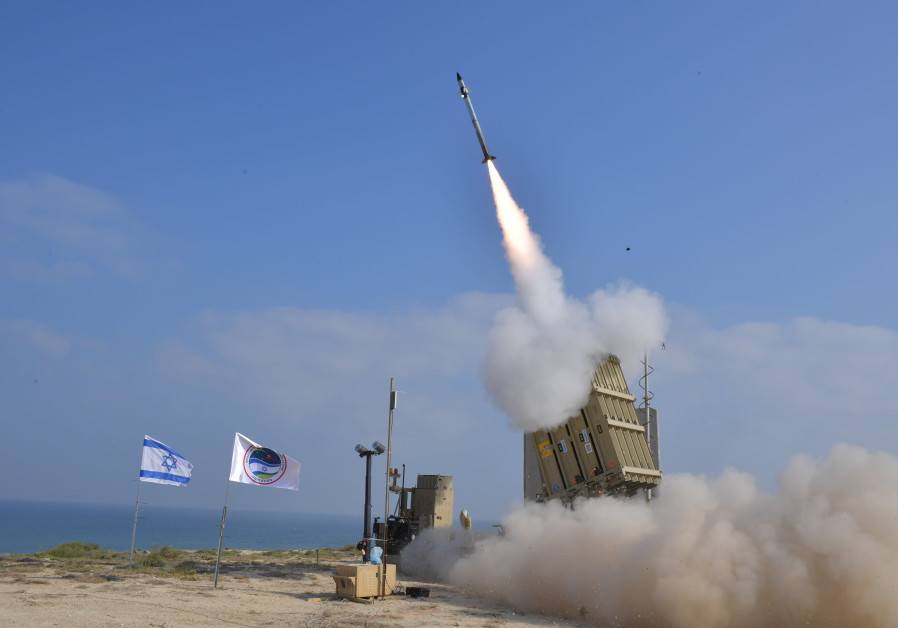
As Gazan terrorist cells launch projectiles from densely populated urban areas in Gaza, Israel’s Iron Dome air defense batteries have intercepted most of the threats headed for populated areas. Conricus described the interception rate as “good.”

Israeli airstrikes have killed some five to six Gazan terrorists thus far, according to the IDF. Israel targeted dozens of PIJ and Hamas sites – a combination of weapons production facilities and military posts.

Israel is expected to broaden its air campaign in the coming hours. The Israel Air Force also destroyed a cross-border PIJ attack tunnel, dug from the Rafah area of southern Gaza into Israel.

“They expedited the digging over the past weeks,” Conricus said, referring to PIJ, “in an attempt to have an operational infrastructure to conduct a terrorist attack. We monitored that digging for a long time. The tunnel did cross the fence into Israel. Now, we decided to attack and neutralize it.”

The Israeli military is preparing for what may come next if the flare-up does not die down. At this stage, at least, it appears as if Israel’s goal is to get Hamas to rein in PIJ and commit to keeping it in check before considering any further steps.

In the meantime, Israel is reinforcing its air defense systems, sharpening intelligence capabilities and deploying Homefront Command crews around the country to aid civilians in dealing with rocket attacks.

Israel has sealed all the border crossings with Gaza and closed the fishing zone off the coast.

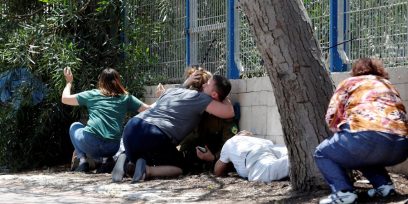
Meanwhile, Israeli civilians are on high alert, and authorities have called on them to be attentive to rocket alerts. Compliance with safety procedures saved lives on Saturday, Conricus said.

Alluding to where the escalation may lead, he added: “If needed, we have the ability to mobilize ground forces.”

This article is reprinted with permission from JNS.org.