Archive for May 2019

Iran’s Revolutionary Guards: ‘We do not fear war with US’ 

May 28, 2019

Source: Iran’s Revolutionary Guards: ‘We do not fear war with US’ – www.israelhayom.com

“The enemy is not more powerful than before,” Revolutionary Guards spokesman says. Government-aligned Dubai newspaper publishes rare front-page editorial criticizing Iran’s role in regional tensions.

Iran’s Revolutionary Guard doesn’t fear a possible war with the United State, according to its spokesman Gen. Ramazan Sharif.

The remarks by Sharif come as tensions between Washington and Tehran soared recently after America deploying an aircraft carrier and B-52 bombers to the Persian Gulf in response to a threat from Tehran.

The U.S. also plans to send 900 additional troops to the 600 already in the Middle East and extending their stay.

Sharif told reporters on Tuesday that the paramilitary force doesn’t “support engaging in any war” while at the same time it doesn’t “fear the occurrence of a war.”

Sharif said, “The enemy is not more powerful than before.”

Also on Tuesday, a Dubai-based, government-aligned newspaper has published a rare front-page editorial criticizing Iran’s Foreign Minister Mohammad Javad Zarif amid tensions between Tehran and Washington.

Titled “No thank you, Mr. Zarif,”The Gulf News editorial on Tuesday criticized the Iranian diplomat for his recent offer to form a nonaggression pact with Gulf Arab nations.

The newspaper said Gulf Arab nations are not buying Zarif’s “nice neighbor routine.”

Iran “continues to call for the overthrow of Arab governments, sends its agents to spy and sabotage, aiming at spreading chaos in Gulf countries, such as Bahrain and Kuwait and more recently off Fujairah and in Saudi Arabia.

“Nobody wants war in this region. But Iran should instead focus on its daunting internal problems which cannot be resolved by constantly fomenting aggression against our countries,” according to the piece.


Iran’s rulers feel the pain 

May 28, 2019

Source: Iran’s rulers feel the pain – www.israelhayom.com

Iran’s rulers are feeling intense pain from Mr. Trump’s “maximum pressure” campaign, and they are no longer sure they can wait for what they hope will be a more conciliatory occupant of the White House in 2021.

Defenders of the nuclear deal with the Islamic Republic of Iran predicted that President Trump’s sanctions would have little impact unless our European friends joined in. They were dead wrong.

That same crowd is now in a frenzy over President Trump deploying military assets to the Middle East to deter or, if necessary, punish attacks on Americans by the Islamic Revolutionary Guard Corps or its many proxies.

They have been claiming — including in paid advertisements— that Mr. Trump is leading a “march to war.”

What’s really happening is less dramatic but more intriguing: Iran’s rulers are feeling intense pain from Mr. Trump’s “maximum pressure” campaign, and they are no longer sure they can wait for what they hope will be a more conciliatory occupant of the White House in 2021.

So they’ve been floating the possibility of negotiating with the Trump administration. Secretary of State Mike Pompeo is soon to visit Switzerland where the fluctuating price of chocolate will not be the main topic of discussion. Swiss diplomats represent the U.S. in Iran.

Javad Zarif, the Islamic Republic’s foreign minister, has proven himself a skilled negotiator. When he sat down at the table with Secretary of State John Kerry, it was like Doc Holliday playing poker with a greenhorn in Dodge City.

The pot Mr. Zarif raked in was the Iran deal, formally known as the Joint Comprehensive Plan of Action, which promised Iran’s rulers sunset clauses, which are patient pathways to nuclear weapons as key restrictions disappear. What if the Islamic Republic remains, as it’s long been, the world’s leading state sponsors of terrorism? It won’t matter.

Mr. Zarif now wants to play a few hands against Mr. Pompeo, but doesn’t want to seem too eager. So he routinely insults Mr. Trump — he recently called him a “terrorist” — and demands that the president show “respect” for Iran’s ruling mullahs before any new talks begin.

What he really wants is for the U.S. to ease restrictions on Iranian oil exports, and lift other sanctions as well – akin to what President Obama did in 2013 after the conclusion of an interim agreement. Following that, Mr. Zarif made no serious concessions. Mr. Kerry made one after another.

I’m hopeful — not confident — that President Trump and Mr. Pompeo won’t repeat their predecessor’s mistakes by rewarding the mullahs for nothing more than sending Mr. Zarif to filibuster and dine in Europe’s finest restaurants. Does that close the door on a new round of diplomacy?

Not necessarily. Mr. Zarif’s negotiating position may not be his fallback position. He may, after a while, agree to attend talks without preconditions. If not, an alternative occurs to me.

Imagine if the Germans, the French and the British, the so-called E3, were to say to Mr. Zarif: “Look, we’ve not just shown you respect – we’ve bent over backwards for you. So talk to us. You claim you don’t have a nuclear weapons program, don’t want one, and – oh yes – threaten to ratchet up your nonexistent nuclear weapons program if you don’t get some cash in your pocket soon. So let’s hammer out some new agreements. We can take those to President Trump and see if, in exchange, we can’t get his Gucci loafers off your throat.”

Such agreements would have to include eliminating the sunset clauses, ending the development of missiles capable of carrying nuclear warheads, allowing international inspectors to seriously verify that illicit research is not being secretly conducted, and prohibiting the production of fissile material for nuclear warheads.

Will that be enough to satisfy President Trump? I’d argue it shouldn’t be. Not at this point in the 40-year-old conflict with the revolutionary theocrats.

A year ago, Mr. Pompeo announced 12 conditions that Iran’s rulers must meet if they want all sanctions lifted and, perhaps, a restoration of diplomatic relations and economic support. Regime sympathizers in the media and think tanks have pronounced those conditions “impossible” and tantamount to “surrender.”

Brian Hook, the U.S. Special Representative for Iran, has repeatedly asked: Is it really impossible for the theocrats to stop sponsoring terrorists, holding hostages, bankrolling mass-murdering dictators and threatening their neighbors? And were they to cease torturing and murdering ethnic and sexual minorities, would that really be waving a white flag?

The Islamic Republic’s enablers are, in effect, arguing that America and Europe should accept such practices as the new normal. Defining deviancy down is never a good idea. At present – with the rulers of North Korea, China, Russia, and a list of non-state jihadi groups watching – it would be particularly ill-advised.

In Japan on Monday, President Trump said he was not “looking for regime change” in Iran. “I just want to make that clear. We are looking for no nuclear weapons.”

Yes but he should insist that the regime change its conduct in line with his administration’s eminently reasonable 12 conditions. To fail to do so would repeat another of President Obama’s most egregious errors: implicitly licensing the regime to continue a range of nefarious activities, including sponsoring terrorism in the Middle East, Europe, Latin America, and the U.S.

Is it possible for such change to come about through a new and improved round of diplomacy? The odds are low but, if that does happen, it will not be because Iran’s rulers are enthusiastic about the benefits détente would bring.

It will be because they have been crippled by American sanctions, deterred by American military might, and daunted by the risks they’ll run should they continue to provoke an American president who is less predictable than the others they’ve encountered over the decades.


Who’s afraid of the Gaza Strip?

May 28, 2019

Opinion: Israel has been lurching from round of violence to round of violence with Hamas and the other Palestinian terror groups in the coastal enclave and wasting the goodwill of an international community that for once is firmly behind it

Ron Prosor |Published:  05.28.19 , 15:49

https://www.ynetnews.com/articles/0,7340,L-5516790,00.html

What will the world say? For years this has been the de facto excuse of the Israeli government when it is accused of not really trying to defeat the terrorist organizations in Gaza. But why?


It is not the international community that is stopping Israel from hitting these terror groups hard. After a year of battles of attrition against Hamas and Islamic Jihad, one could easily say that if and when Israel decides to defeat these organizations, there will not exactly be a deafening chorus of condemnation from the international stage – even by the Arab states.

Rocket launches from Gaza towards Israel (Photo: Reuters) (Photo: Reuters)

Rocket launches from Gaza towards Israel (Photo: Reuters)

Towards the end of the last deadly round of violence earlier this month, which claimed the lives of four Israelis, condemnation of the massive rocket barrage launched from Gaza into Israel could be heard from several members of the international community.

One might expect such messages of support from Israel’s friends in Washington, Warsaw and Prague, and indeed they came. But condemnation also came from Paris, Oslo, and even from the European Union’s foreign minister, Federica Mogherini, who could never be accused of being a massive Zionist.

Without condemning the “violence on both sides,” without any attempt to create a false symmetry and without the whitewashed statements we became so used to in the past, Europe stood unequivocally alongside Israel and against Hamas.

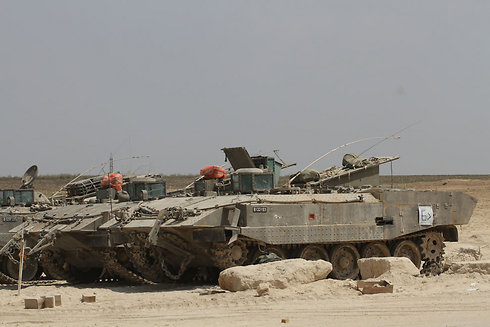
IDF troops on the Gaza border during the 2014 war (Photo: Ido Erez)

IDF troops on the Gaza border during the 2014 war (Photo: Ido Erez)

But the Israeli political echelon chooses to shut its ears and its eyes to the declarations of support and the green light to act issued by the international community.

In fact, Israel has chosen to ignore this state of affairs for the past five years, since the end of Operation Protective Edge in 2014.

During those 50 days of fighting in Gaza, Israel did not come under any real pressure from the rest of the world. Intensive and efficient diplomacy meant that the IDF had breathing room of the kind it had not experienced in many years.

But Jerusalem and the military brass did not successfully exploit this, and instead of making real diplomatic gains, were content to return to the same understandings reached two years earlier after Operation Pillar of Defense.

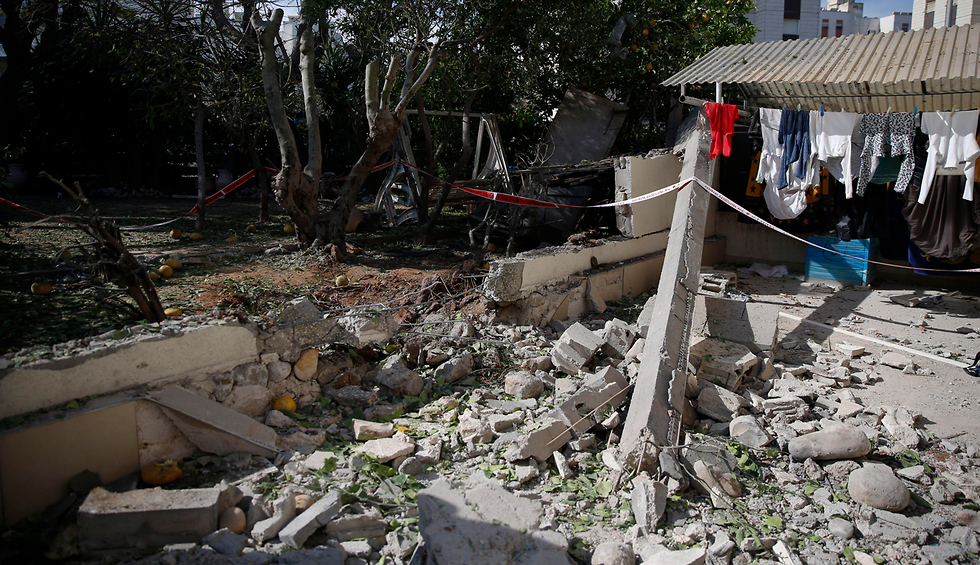
A home in Ashkelon damaged in a Gaza rocket strike (Photo: AP)

A home in Ashkelon damaged in a Gaza rocket strike (Photo: AP)

It would be an exaggeration to say that the world is letting the IDF “win,” but the Israeli government is not really doing this either.

Israel of 2019 has cast aside the country’s fundamental security concept, which always rested on the three legs of deterrence, vigilance and decisiveness.

The first leg was thoroughly eroded, the second weakened and the third is no longer part of the equation. Israel does not aspire to any form of decision-making and prefers to operate from one round of violence to the next.A decision does not have to be military in nature, it can also made on the diplomatic level. But in order to make a decision, one must have targets and objectives. 

Hamas has been doing this successfully for more than a year – on its watch, funds have been transferred from Qatar to the Gaza Strip, the Gaza fishing zone was expanded, additional raw materials were allowed into the Gaza Strip, the electricity supply expanded, and more.

Israel, on the other hand, is motivated by a desire to achieve certain goals but rather out of fear. It is fearful of setting diplomatic targets and of a prolonged confrontation.

The political echelon is afraid to set objectives for one simple reason: if you do not set objectives, you cannot fail to achieve them.

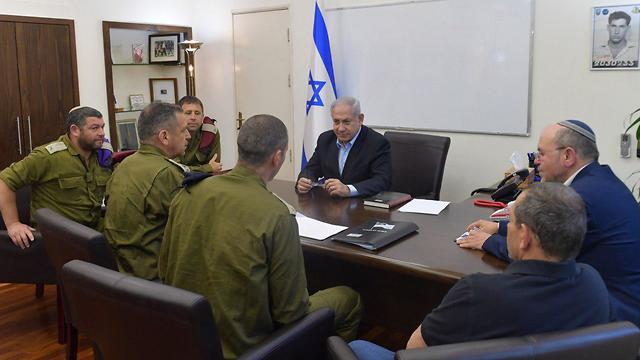
Benjamin Netanyahu and his generals during the fighting with Gaza earlier this month (Photo: GPO)

Benjamin Netanyahu and his generals during the fighting with Gaza earlier this month (Photo: GPO)

The images published of the prime minister at situation assessments during the last few rounds of fighting with Gaza do not show a single other civilian official. And when the only voices in the room are those of the security forces, the decision-makers are working with a partial toolbox and from the outset are solely bound to a military option, which ultimately means going down the familiar path that leads to nowhere.It would not do anyone any harm to recall the famous words of U.S. President Franklin Roosevelt, who told his people that, “the only thing we have to fear is fear itself.”

Ron Prosor, is Israel’s former permanent representative to the United Nations and former ambassador to the Court of St. James’s. He is currently the Abba Eban Chair of International Diplomacy at the Interdisciplinary Center Herzliya (IDC).


U.S. to deploy additional forces to confront Iran – TV7 Israel News 27.05.19 

May 28, 2019


IDF says it bombed Syrian anti-aircraft battery that fired at Israeli jet 

May 28, 2019

Source: IDF says it bombed Syrian anti-aircraft battery that fired at Israeli jet | The Times of Israel

Syria claims Israeli retaliatory strike hit a military position in Quneitra region on Syrian Golan Heights, killing two soldiers

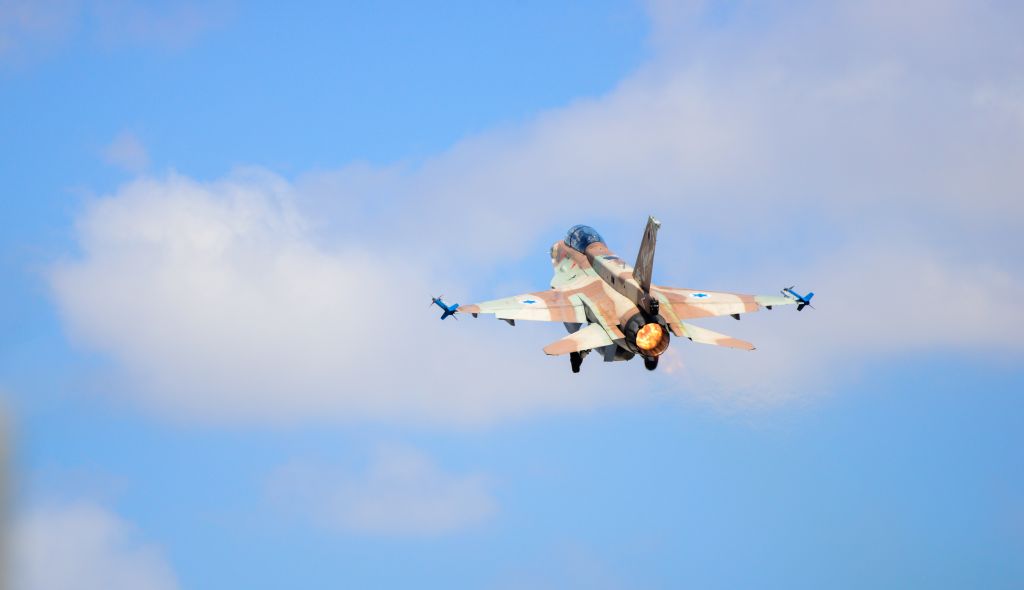
An Israeli F-16. (Hagar Amibar/Israeli Air Force)

The Israeli military said it bombed a Syrian anti-aircraft battery on Monday night that earlier in the day had fired at one of its fighter jets during a routine mission within Israeli airspace.

The Syrian Observatory for Human Rights reported that an officer and a soldier were killed in the Israeli retaliatory strike. A military vehicle was also said damaged in the attack.

Prime Minister Benjamin Netanyahu said Israel would “not tolerate any aggression against us, and we will respond forcefully.”

According to the Israel Defense Forces, earlier in the day, an anti-aircraft shell was fired “at an Israeli fighter jet that was in the midst of a routine flight in the north of the country.”

Embedded video

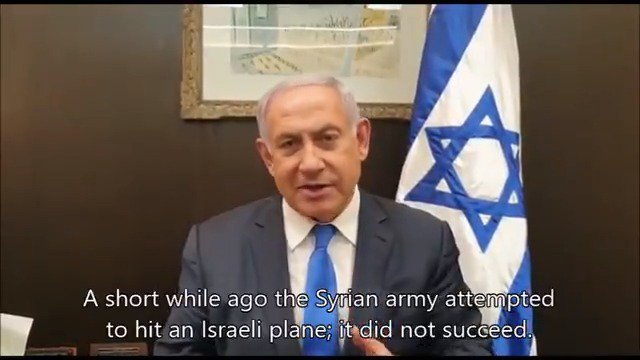
PM of Israel

@IsraeliPM

PM Netanyahu: “A short while ago the Syrian army attempted to hit an Israeli plane; it did not succeed. In response the air force destroyed the launcher that fired on the plane. Our policy is clear – we will not tolerate any aggression against us, and we will respond forcefully.”

The military said the shell landed inside Syrian territory and did not damage the Israeli plane, whose “mission was completed as planned.”

The earlier incident was not immediately reported by the IDF.

Shortly after 9 p.m., the IDF retaliated to the anti-aircraft attack, bombing the battery that fired it, the military said.

The official Syrian state mouthpiece SANA said the Israeli strike targeted a military post on the Tel al-Sha’ar hilltop, east of Khan Arnabeh, just east of the border.

“The IDF takes seriously any threat to its planes and will act to defend them,” the army said in a statement.

Last Saturday, Syria said its air defenses shot down a number of missiles fired from Israel, a day after the country made a similar claim.

SANA said the Syrian military intercepted “hostile targets coming from the direction of occupied territories.” Syrian state TV said the missiles were shot down over Quneitra and near Damascus.

The night before, Syrian state TV reported sounds of explosions near the capital, and aired footage of what it claimed were air defenses intercepting missiles fired from Israeli jets seen over Quneitra.

“Aerial defenses detected hostile targets coming from the direction of Quneitra and dealt with them,” SANA quoted a military source as saying.

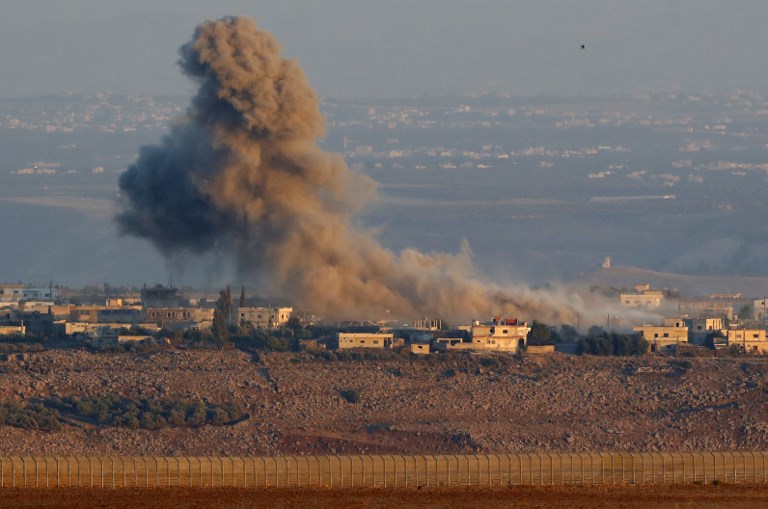
A picture taken on July 26, 2018, near Ein Zivan in the Israeli Golan Heights, shows smoke rising above buildings across the border in Syria during airstrikes backing a government-led offensive in the southern province of Quneitra. (AFP/Jack Guez)

There was no response from the IDF to those reports. Israel rarely comments on individual strikes in Syria.

Toward the start of the Syrian civil war, the Israeli military established a number of “red lines” that if violated would result in a retaliatory strike, including any attacks — intentional or otherwise — against Israel.

They also included Iranian efforts to establish a permanent military presence in Syria and attempts to transfer advanced munitions to the Lebanon-based Hezbollah terrorist group.

In recent years, Israel has acknowledged conducting hundreds of airstrikes in Syria in response to these “red line” violations.


Syria attempts to hit Israeli aircraft, IDF attacks in response

May 27, 2019

Source: Syria attempts to hit Israeli aircraft, IDF attacks in response – Breaking News – Jerusalem Post

The missile didn’t hit the Israeli aircraft, which was conducting a routine flight over northern Israel, and fell within Syrian territory.

BY JERUSALEM POST STAFF, SETH J. FRANTZMAN
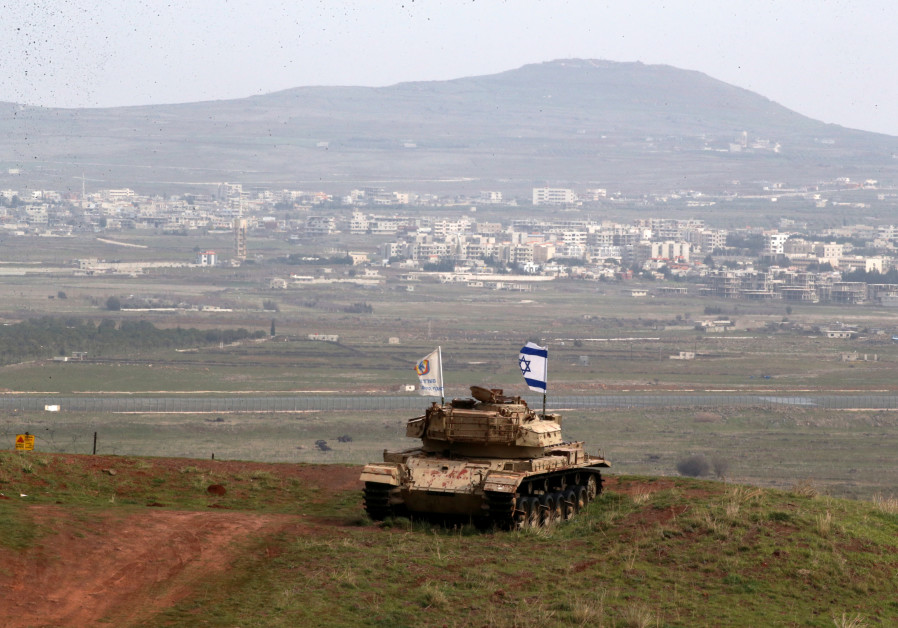
 MAY 27, 2019 22:28An old military vehicle can be seen positioned on the Israeli side of the border with Syria, near th

Syrian forces shot an anti-aircraft missile at an Israeli fighter jet Monday evening, in response to which Israel attacked Syrian targets, the IDF spokesperson reported.

The missile didn’t hit the Israeli aircraft, which was conducting a routine flight over northern Israel, and fell within Syrian territory. The mission was completed as planned, the IDF said.

In response to the attempt, the IDF attacked the location from which the anti-aircraft missile was launched.

Arab media, meanwhile reported of air strikes near Quneitra.

Syria’s SANA reported that “a military source confirmed that at 2110 hours the Israeli enemy targeted one of our military positions east of Khan Arnabeh in rural Quneitra.”

The source explained that the aggression resulted in the “martyr’s death and wounding another fighter.”

According to Syrian media the strike took place near Khan Arnabeh which is very close to the Golan border and right next to line Bravo of the demilitarized zone near UNDOF areas. UN observers returned last summer after the Syrian regime retook this area near the border. An IDF statement said that Israel views with severity any threat to its aircraft and takes measures to defend them.

Last August Russia also deployed military police in southern Syria as part of the Syrian regime’s efforts to reconcile with the former rebel-held areas.

The attempt represents an escalation on the Syrian side. It is not the first time that Syria anti-aircraft missiles have targeted Israel, or the first time they have been detected heading toward Israeli airspace.

In January, Iron Dome was activated on Mount Hermon to intercept a rocket. In December 2018, a Syrian anti-aircraft missile was fired toward Israel from Syria. In November of 2018, fragments of a Syrian rocket were found in the Golan.  An F-16 crashed in the Galilee after being targeted by Syrian air-defense in October 2018. Rockets from Syria fell inside Israeli territory in July 2018.

David’s Sling was used operationally for the first time that month to defend against the rockets. In March 2017, Israel used its Arrow defense system against Syrian air defense.

In late March, Syrian media claimed Israel attacked a site near Aleppo and on April 13 and May 18, Syrian state media made similar claims.

Israel said last year that it had struck hundreds of targets in Syria, primarily Iranian targets related to weapons shipments. In January, former IDF Chief of Staff Gadi Eisenkot told The New York Times that Israel had struck thousands of targets in Syria.

But for Syria to target a routine patrol inside Israel is unusual. Syria is already embroiled in new air raids in Idlib against Syrian rebels and the US and Iran are involved in major tensions in the region.


Iran could hold referendum on nuclear program, Rouhani suggests 

May 27, 2019

Source: Iran could hold referendum on nuclear program, Rouhani suggests – www.israelhayom.com

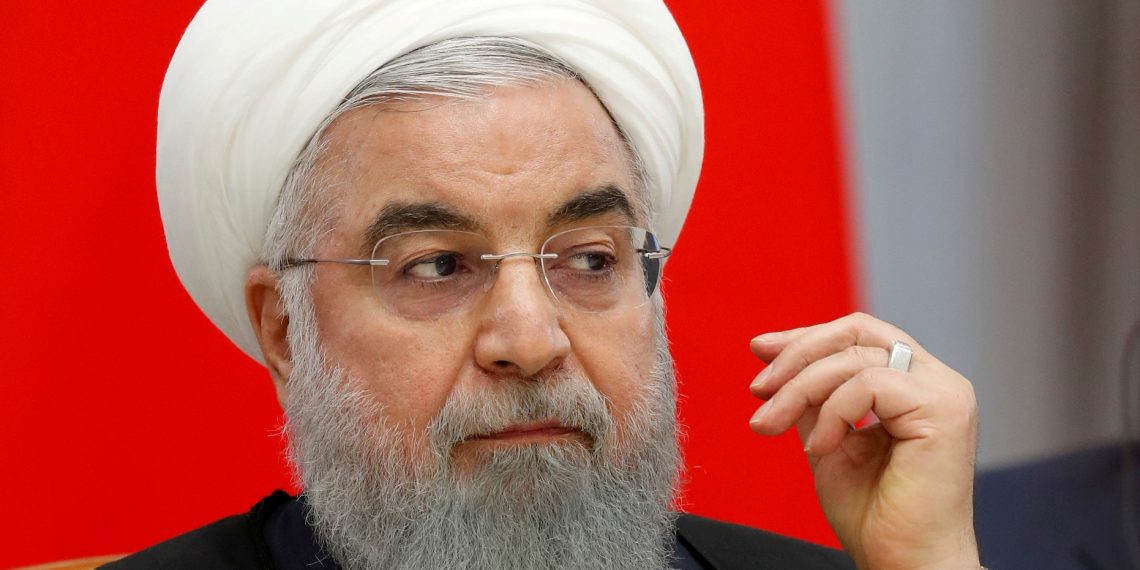
Iranian President Hassan Rouhani tells state news that he proposed a referendum back in 2004 and that Supreme Leader Ali Khamenei supported the idea at the time.

Iranian President Hassan Rouhani implied Sunday that the Islamic Republic could hold a referendum over the country’s nuclear program.

Rouhani was quoted by the state-run IRNA news agency saying he proposed a referendum on the issue in 2004 to Iran’s Supreme Leader Ayatollah Ali Khamenei, who initially accepted the idea. However, Rouhani said, former President Mahmoud Ahmadinejad “changed the situation and things went on another path.”

Last week semi-official Fars and Tasnim quoted an official at the Natanz nuclear facility saying that Iran had quadrupled its production of low-enriched uranium.

Earlier this month, Rouhani said Tehran would enrich uranium and stop some of its commitments under the 2015 nuclear deal if the European signatories did not live up to their parts of the deal.

Tehran’s announcement caused friction with the European signatories to the 2015 nuclear deal, who all urged Iran to stick to the agreement.


Peace and Annexation are not Mutually Exclusive

May 27, 2019

Judith Bergman | 23/04/2019

President Trump appears to recognize that the conflict is not about specific borders, but about the Arabs’ total opposition to Israel’s existence. Israel could be on its way to a full annexation of Judea and Samaria.

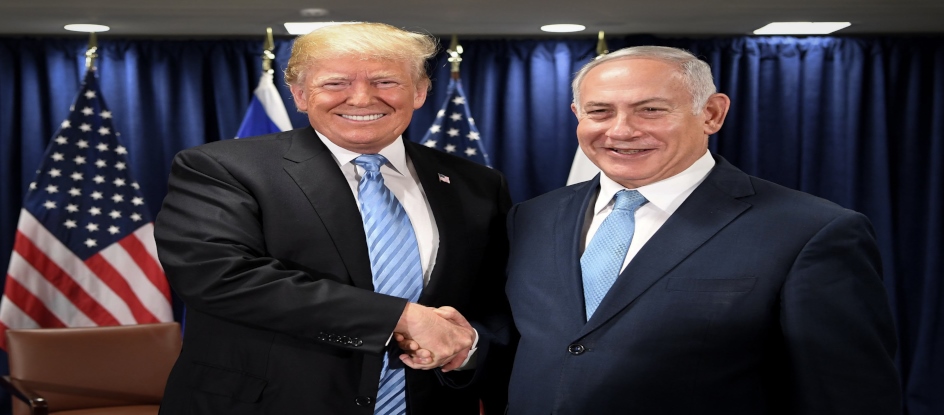
Trump and Netanyahu. (Credit photo: A. Ohayon, Flash90)

Shortly before the Israeli elections, Prime Minister Benjamin Netanyahu vowed to extend Israeli sovereignty to all Israeli settlements in Judea and Samaria: “I am going to apply Israeli sovereignty, but I don’t distinguish between settlement blocs and isolated settlements. From my perspective, each of those settlement points is Israeli. We have responsibility [for them] as the government of Israel. I don’t uproot any, and I won’t transfer them to the sovereignty of the Palestinians. I take care of them all,” he said.

Netanyahu also told Trump regarding the peace plan that “… there can’t be the removal of even one settlement, and [that Israel insists on] our continued control of all the territory to the west of the Jordan”.

Netanyahu’s pledge caused a meltdown among certain American Jewish groups, nine of whom wrote a letter to Trump, pleading with him to stop Netanyahu from fulfilling his pledge of annexation.

However, US Secretary of State Mike Pompeo was recently asked whether he thought that Netanyahu’s pledge of annexation would hurt Trump’s peace plan and he said that he did not think so.  “I think that the vision that we’ll lay out is going to represent a significant change from the model that’s been used,” said Pompeo. Already in late March, US Ambassador to Israel David Friedman said about the current administration’s concern for Israeli security, “How can we kick the can down the road and leave this to our successors?  … Can we leave this to an administration that may not understand the existential risk to Israel if Judea and Samaria are overcome by terrorism in the manner that befell the Gaza Strip after the IDF withdrew from this territory? Can we leave this to an administration that may not understand the need for Israel to maintain overriding security control of Judea and Samaria and a permanent defense position in the Jordan valley?” Pompeo’s indication that there is no contradiction between a potential Israeli annexation of Jewish communities beyond the green line and Trump’s peace plan represents a groundbreaking paradigm shift in US-Israeli relations. For decades, the international community, including the US, as well as the left in Israel and abroad, insisted that a Jewish presence in Judea and Samaria undermines peace. For the first time ever, a US president appears to think differently. This is a fact that could shift decades of perceptions on the topic.

“Pompeo’s remarks are the latest signal that the Trump peace plan, if it’s ever presented, will bear no resemblance to previous models of a two-state solution. Instead, the plan seems designed to perpetuate isolated areas of limited Palestinian autonomy under overall Israeli control, including annexed settlements,” said Dan Shapiro, former US ambassador to Israel and currently a fellow at Tel Aviv University’s Institute for National Security Studies.

Shapiro makes it sound as if that is a bad thing. It is not:

Most main Israeli settlement blocs are adjacent to the narrow 1949 ceasefire lines and are important components of Israel’s security. A complete Israeli withdrawal to the 1949 ceasefire lines (pre-1967 green line) in the context of a two-state solution would greatly expose Jerusalem, metropolitan Tel Aviv and Ben Gurion airport to terrorists taking advantage of the commanding heights of Judea and Samaria. Critics demand that Israel exposes itself to security threats that no other country in the world would accept.

Unlike its predecessors, the Trump administration appears to recognize that the conflict is not about specific borders, but about the Arabs’ total opposition to Israel’s existence within any boundaries. Unlike the rest of the international community, the Trump administration seems to understand that the two-state solution has failed because the Palestinian Authority (PA) is not prepared to accept Israel’s existence and shoulder the responsibilities of statehood. The two-state mantra itself has become an obstacle to peace and a political weapon to put constant pressure on Israel. A fully independent PA state would become a terrorist state threatening Israel’s security. In 2018, Netanyahu said that the PA Arabs should have all the powers to govern themselves but no power to threaten Israel. Instead of labels, Netanyahu stressed the need for content with solutions that do not undermine Israel’s security.

What many international observers deliberately ignore is that full national independence is not an automatic right for anyone, as evidenced by the experience of stateless peoples such as the Kurds, for example. The same international community that rejects the establishment of the world’s first Kurdish state hypocritically demands the establishment of a 22nd Arab state.

The PA Arabs have rejected statehood more than any other group in the world. By consistently prioritizing Israel’s destruction over its own independence, the PA has effectively disqualified itself as a candidate for full statehood. It can only be hoped that the US is only the first of many to realize this fact.

________________

Judith Bergman is a columnist and political analyst and a fellow with the Gatestone Institute.

Trump on Iran: ‘If they’d like to talk, we’d like to talk’ 

May 27, 2019

Source: Trump on Iran: ‘If they’d like to talk, we’d like to talk’ | The Times of Israel

US president tells Japan’s PM: ‘Nobody wants to see terrible things happen, especially me’; says he feels good about North Korea; Pyongyang calls Bolton a ‘defective human product’

US President Donald Trump speaks during a bilateral meeting with Japan's Prime Minister Shinzo Abe (not pictured) at Akasaka Palace in Tokyo on May 27, 2019. (Eugene Hoshiko / POOL / AFP)

US President Donald Trump speaks during a bilateral meeting with Japan’s Prime Minister Shinzo Abe (not pictured) at Akasaka Palace in Tokyo on May 27, 2019. (Eugene Hoshiko / POOL / AFP)

US President Donald Trump on Monday held out the possibility of negotiations with Iran as he met with Japanese Prime Minister Shinzo Abe, who is reportedly weighing a trip to Tehran.

“I do believe that Iran would like to talk, and if they’d like to talk, we’d like to talk also,” Trump said.

“We’ll see what happens, but I know for a fact that the prime minister (Abe) is very close with the leadership of Iran… nobody wants to see terrible things happen, especially me.”

Earlier this week, the United States said it was deploying 1,500 additional troops to the Middle East to counter “credible threats” from Iran in a move denounced by Tehran on Saturday as “a threat to international peace.”

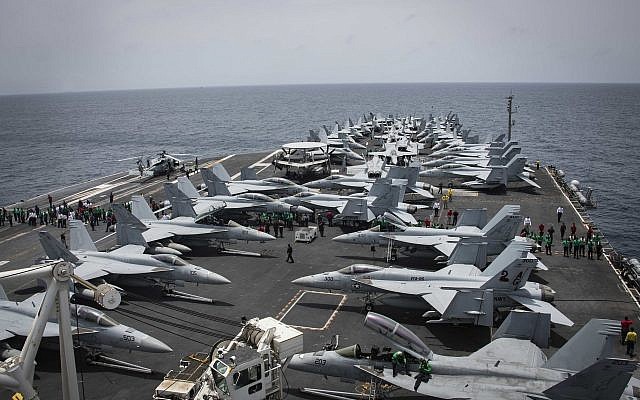
The escalation of the US military presence follows a decision in early May to send an aircraft carrier strike force and B-52 bombers in a show of force against what Washington’s leaders believed was an imminent Iranian plan to attack US assets.

The flight deck of the Nimitz-class aircraft carrier USS Abraham Lincoln in the Arabian Sea, on May 19, 2019. (Mass Communication Specialist 3rd Class Garrett LaBarge/US Navy via AP)

The new deployment includes reconnaissance aircraft, fighter jets and engineers. Six hundred of the personnel belong to a Patriot missile defense battalion that had its deployment in the region extended.

Pentagon officials said the move was necessary after multiple threatening actions and several small-in-scope attacks in May by Iranian forces, the Iranian Revolutionary Guard Corps, and “proxy” forces.

Those include a rocket launched into the Green Zone in Baghdad, explosive devices that damaged four tankers in Fujairah near the entrance to the Gulf, and a Houthi drone attack against a Saudi oil installation.

Iran has denied involvement in any of the attacks.

Pentagon officials have stressed that the US does not seek war with Iran.

“We do not see these additional capabilities as encouraging hostilities. We see them as defensive in nature,” said acting Assistant Secretary of Defense Katie Wheelbarger.

“Our policy remains an economic and diplomatic effort to bring Iran back to the negotiating table to encourage a comprehensive deal that addresses the range of their destabilizing behavior in the region.”

Trump said he had a good feeling that the nuclear standoff with North Korea will be resolved.

“I may be right, I may be wrong. But I feel that we’ve come a long way. There’s been no rocket testing, there’s been no nuclear testing,” he said.

People watch a TV showing a news program reporting North Korea’s missile launch, at the Seoul Railway Station in Seoul, South Korea, May 5, 2019 (AP Photo/Ahn Young-joon)

North Korea has not tested long-range missiles that could hit the United States. But earlier this month, North Korea fired off a series of short-range missiles that alarmed U.S. allies in closer proximity to North Korea. National Security Adviser John Bolton said violated UN Security Council resolutions. The tests broke a pause in North Korea’s ballistic missile launches that began in late 2017.

North Korea on Monday called Bolton a “war monger” and “defective human product” after he called the tests on May 4 and May 9 a violation of UN Security Council resolutions.

US President Donald Trump, left, meets with South Korean President Moon Jae-In in the Oval Office of the White House in Washington, as national security adviser John Bolton, right, watches. May 22, 2018. (AP Photo/Evan Vucci, File)

Pyongyang’s official Korean Central News Agency on Monday carried a statement by an unnamed spokesman of North Korea’s Foreign Ministry who said that Pyongyang was rightfully exercising its rights to self-defense with the launches.

The tests have been seen as a way for North Korea to pressure Washington to soften its stance on easing sanctions against it without actually causing the negotiations to collapse.

“We’ll see what happens,” Trump said in Tokyo. “There’s a good respect built — maybe a great respect built — between certainly the United States and North Korea. We will see what happens.”


A Swiss diplomat & Iraq’s President – go-betweens for first, US-Iranian talks – DEBKAfile

May 27, 2019

Source: A Swiss diplomat & Iraq’s President – go-betweens for first, US-Iranian talks – DEBKAfile

The two back-channels through which the Trump team sought to initiate exploratory talks with Tehran have run into a blank wall, DEBKAfile’s exclusive sources report. Interpreting this silent treatment as an Iranian ploy for time to prepare more attacks, the administration last week boosted its military deployment in the Gulf with another 1,500 troops.

Plenty of politicians are volunteering to mediate efforts to bring the US and Iran together, notably, Iraqi Prime Minister Adil Abdul-Mahdi and Omani Foreign Minister Yusuf bin Alawi – who is an old hand as this. The Trump administration has not taken up any of their offers.  Instead, our intelligence sources reveal, White House advisers have turned to a senior Swiss diplomat and the Kurdish president of Iraq. Arnold Henninger, a high-ranking member of the Swiss foreign service, has long being involved in the interaction between the two governments since the Swiss embassy has represented US interests in Tehran for decades. Iraq’s president Barham Salih has good contacts in the right circles in both Washington and Tehran.

On Saturday, May 25, shortly before Salih boarded a flight fo Saudi Arabia and Turkey, he was confronted by Iran’s Foreign Minister Javad Zarif who had popped over to Baghdad. They held a long conversation.

The main catch in both channels is that no one knows how high in the Islamic regime the two brokers have reached, and on whose desks the US messages addressed to the highest echelons have landed.

The Swiss diplomat Henninger has come closest to supreme ruler Ayatollah Ali Khamenei through Ali Velayati, Khamenei’s senior adviser on international affairs. But he can’t say whether Velayati passed the Trump administration’s messages to his boss.

President Salih is known to be in contact with Zarif and talks regularly with deputy foreign minister Abbas Aragchi. Iranian officials are ambiguous about the final destination of the messages he relayed, although some admit that Iran’s President Hassan Rouhani is in the picture. Without con formation that those messages reached the all-powerful supreme leader or some authoritative affirmation, the American bid to open initial exploratory talks with Tehran is up against an immovable obstacle.