Archive for May 2019

Caroline Glick: Trump’s Policy on Nuclear Iran Is Working

May 12, 2019

Source: Caroline Glick: Trump’s Policy on Nuclear Iran Is Working

The Associated Press
AP Photo
CAROLINE GLICK

241

7:27
Media analysts and Obama administration officials are working overtime to blame President Donald Trump for Iran’s decision, announced Wednesday, to breach key limitations on its nuclear operations that Teheran had accepted in 2015 in the framework of the so-called Joint Comprehensive Plan of Action (JCPOA), otherwise known as the nuclear deal.

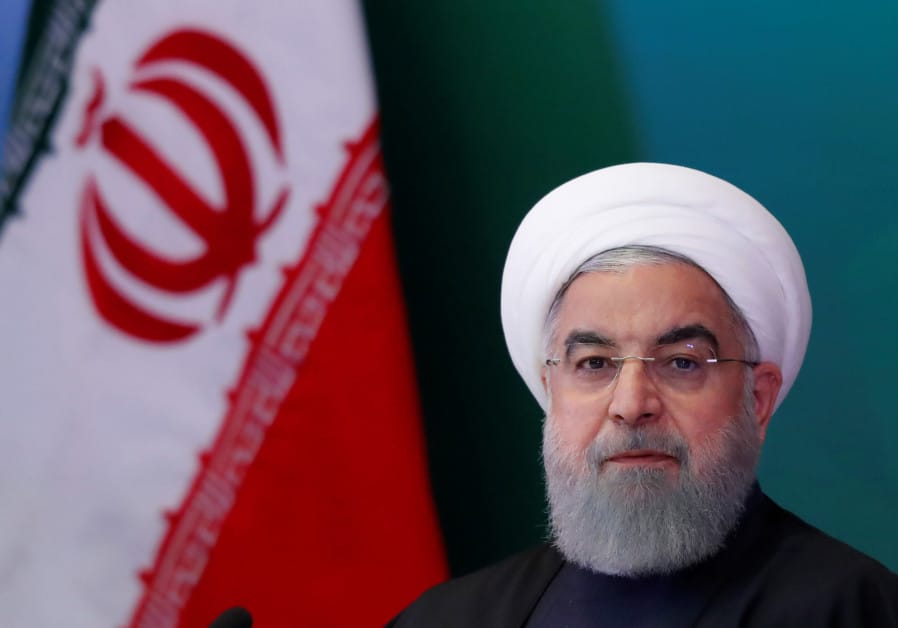
Had Trump not withdrawn from the JCPOA, and had he not adopted and implemented an alternative policy of maximum pressure on Iran, then Iranian President Hassan Rouhani’s announcement on Wednesday that Iran is ending its compliance with key provisions of the 2015 nuclear deal would never have been made, they argue.

That is nonsense.

On Wednesday, Rouhani announced that Iran is suspending its commitment to export all excess uranium and plutonium to third countries. That is, he said that Iran is stockpiling plutonium and enriched uranium.

Rouhani also announced that unless the European Union (EU) breaches U.S. sanctions and allows Iran to export oil and use the international banking system, Iran will increase levels of uranium enrichment in sixty days.

Despite what Trump’s critics claim, there is no causal connection between Rouhani’s announcement and Trump’s withdrawal from the nuclear deal and renewal of U.S. economic sanctions on Iran.

To understand why that is the case, it is important to recall the nature of the nuclear deal itself.

The JCPOA was based on a fiction. Obama and his EU counterparts asserted, in the face of massive, long-standing countervailing evidence, that Iran was a credible negotiating partner. They insisted that Iran’s regime could be trusted not to develop nuclear weapons if the U.S., Europe, and other key players offered it sufficient quantities of cash and other monetary gains. This fiction, in turn, was based on an even more basic lie: that Iran’s nuclear program was peaceful rather than military.

This foundational fiction – that the purpose of Iran’s nuclear program was peaceful — was always fanciful. Iran, with its massive deposits of natural gas and oil, has no need for nuclear energy. Moreover, if it were truly interested in peaceful nuclear energy, it could have found ways to secure legal nuclear power capabilities. Tehran had no need to spend hundreds of millions of dollars over decades to construct hidden nuclear installations inside of mountains and underground if all it sought were radioactive isotopes for medical research.

And yet, Iran, in the absence of any energy deficit and at great cost, materially breached the nuclear non-proliferation pact and secretly built nuclear installations in Qom, in IsfahanNatanz, FordoParchin, and other sites throughout the country. It used these secret nuclear installations to enrich uranium illicitly, to develop plutonium, and to engage in other illicit nuclear weapons projects. It similarly breached non-proliferation treaties in its illicit pursuit of ballistic missiles.

Moreover, it engaged in all of these activities in secret and then refused to open its illegal nuclear facilities to UN nuclear inspectors – again, in material breach of the Nuclear Non-Proliferation Treaty (TPT).

Obama; the Europeans; China; and Iran’s chief overt nuclear partner, Russia, all ignored these basic realities and chose instead, at President Barack Obama’s urging, to conclude a nuclear deal with Iran that took account of none of these things. Instead, they embraced the demonstrated fiction that Iran’s nuclear program was peaceful, and that Iran would give it up for sufficient sums of money.

A year ago, on April 30, 2018, the fiction was exposed conclusively. Israeli Prime Minister Benjamin Netanyahu shocked the world when he exposed Iran’s nuclear archive, which Mossad officers located, seized and spirited out of Iran. Iran’s nuclear archive proved conclusively that Iran’s nuclear program was a military program. Iran had gone to extraordinary lengths to mask its nature. But its copious documentation of its nuclear knowledge, and the lengths it went to preserve that know-how, showed that the basic assumptions of the JCPOA were fraudulent.

Netanyahu’s revelation of Iran’s nuclear archive set the stage for Trump’s announcement, a week later, that he was abandoning the nuclear deal and enacting a new strategy to prevent Iran from acquiring nuclear weapons.

In truth, once its true nature of Iran’s nuclear program was finally exposed, there was no rational way the U.S. could have remained in the nuclear deal. The nuclear archive made clear that the nuclear deal was not a non-proliferation agreement. It was a payoff.

Iran agreed to suspend some of its nuclear work for a limited time. In exchange, the U.S. and its partners agreed to pay Iran billions of dollars in cash and sanctions relief, and accept that Iran has a right to nuclear development in contravention of the NPT.

Under the deal, the Iranians have three paths to achieve military nuclear capabilities. They can keep the agreement, and wait for its limitations to expire. After its expiration, as Obama himself confessed, the nuclear research and ballistic missile activity the agreement permits Iran to undertake during the course of the JCPOA would have positioned Iran to develop a nuclear arsenal immediately.

Second, the Iranians could just as easily develop a weapon during the lifespan of the JCPOA by cheating. Since the deal allowed Iran to define nuclear installations as military sites and to bar UN inspectors from entering military sites, the UN had no effective meansof determining Iran’s nuclear capabilities. And indeed, for the past four years, since the JCPOA went into effect, the UN’s biannual determinations that Iran was abiding by the JCPOA’s limitations on its nuclear efforts obscured more than they revealed. After all, the UN’s compliance certifications are based on only partial access to Iran’s nuclear installations. And, as such, they have no credibility.

Finally, Iran can achieve nuclear weapons by abandoning the JCPOA and renewing its nuclear operations. Since the deal was based not on preventing the proliferation of nuclear weapons but on international monetary payoffs to Iran, Iran’s decision to walk away from the deal now that it is no longer receiving payoffs is perfectly predictable.

Does this mean that the cause of nuclear non-proliferation has been set back? Not at all. The JCPOA itself set back nuclear non-proliferation efforts by inventing a fictional Iran that was credible and appeasable while ignoring the real Iran which is neither of these things.

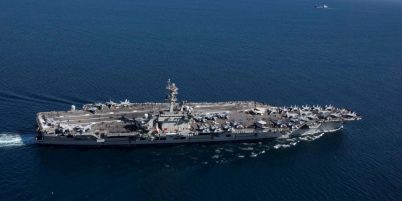
Given this state of affairs, Trump’s strategy of maximum pressure on Iran, including his decision to deploy the USS Abraham Lincoln carrier group to the Persian Gulf, is entirely reasonable.

There are only two moves the U.S. and its allies can make to prevent Iran from developing nuclear weapons. The first is to apply crippling sanctions on Iran. And the Trump administration is certainly doing that.

By undermining Iran’s financial stability, the U.S. makes it difficult, if not impossible, for Iran to pay for its illicit nuclear and other operations. Iran’s reported curtailment of its financial support for Hezbollah and Hamas is an indicator that the sanctions are having the anticipated positive effect on the region. The more precarious the Iranian regime’s position becomes, the more difficult it will be for it to carry out its nuclear work and maintain its support for terrorism in the Middle East and worldwide.

The second is to develop a credible threat to use force. Over the past year of steadily increasing U.S. economic pressure on Iran, coupled with stalwart U.S. support for Israel and the Sunni Arab states threatened by Iran, President Trump has built up his personal credibility in the Middle East. In the context, his decision to deploy the carrier group to the Persian Gulf constitutes a credible threat to use military force against Iran if it fails to comply with U.S. demands.

Rouhani’s announcement Wednesday was eminently predictable. The regime is clearly hoping that Europe will run to its side to save Iran from Trump’s effective policies. But if the EU’s tepid responses to the move are any indication, it appears that the ploy backfired. Trump has demonstrated his seriousness of purpose to Europe no less than he has to Iran. And so far, the EU is not willing to breach its relations with the U.S. in order to give in to Iranian nuclear blackmail.

While there is every reason to be concerned that unforeseen events will place the U.S. and its allies in challenging positions vis-à-vis Iran and its terror proxies, and the U.S. and its allies must prepare for the worst, Iran’s announcement that it is stockpiling plutonium and enriched uranium is not proof that Trump’s policy of maximum pressure is failing. It is proof that it is working.
 

B-52s, Patriots, F-35s and more: America’s MidEast deployment rundown

May 12, 2019

Source: B-52s, Patriots, F-35s and more: America’s MidEast deployment rundown – Middle East – Jerusalem Post

A short 101 on the US deployment making its way to the Middle East.

BY SETH J. FRANTZMAN
 MAY 11, 2019 22:15
B-52s, Patriots, F-35s and more: America’s MidEast deployment rundown

In recent days, the US has announced the deployment of an array of military power to the Middle East as tensions grow with Iran. On Friday, the Department of Defense approved the addition of the USS Arlington and a Patriot battery to US Central Command to fill a request last week. The additional forces come as tensions with Iran are rising and the US has warned Iran that any attack by Iranian forces or their proxies will be met with retaliation.

The following is a list of the known forces that the US has deployed.

The USS Arlington

A 24,000 ton, 207-meter-long ship commissioned in 2013 is a San-Antonio class amphibious transport vessel. It is designed to transport US Marines, vehicles and aircraft to be used to support amphibious assaults. It can carry up to 800 troops with a dozen vehicles. Although with the 6th Fleet, which operates in the Atlantic and Mediterranean, it was ordered to join the deployment, according to the United States Naval Institute News.

The 22nd Marine Expeditionary Unit

Elements of the 22nd Marine Expeditionary Unit (MEU) were also dispatched. They transited the Strait of Hormuz with the amphibious ship Kearsarge.

The Kearsarge ARG

The amphibious ready group (ARG) led by the Kearsarge entered the 6th Fleet’s area of operations in December with the MEU and over the last months has been deployed to the Persian Gulf, steaming around various countries. It has up to 4,500 sailors and marines aboard its various units. These include, according to Naval Today, the USS Arlington which is mentioned above, the dock landing ship USS Fort McHenry, a helicopter squadron, a tactical air squadron and a naval beach group.

USS McFaul and USNS Alan Shepard

The destroyer USS McFaul and the ammunition ship USNS Alan Shepard were photographed in the Straits of Hormuz on May 7. They had been in the Red Sea in April.

B-52 bombers

Two B-52s landed Thursday in Qatar, part of four B-52s sent to the region. They flew from Barksdale Air Force Base in Louisiana and were supported by two KC-10s from McGuire-Dix-Lakehurst in New Jersey, according to reports. They form part of a bomber task force of Barksdale’s 20th Bomb Squadron.

The USS Abraham Lincoln

The USS Abraham Lincoln aircraft carrier strike force passed through the Suez Canal last week en route to the Persian Gulf. It included the USS Leyte Gulf and destroyers.

Patriot missiles

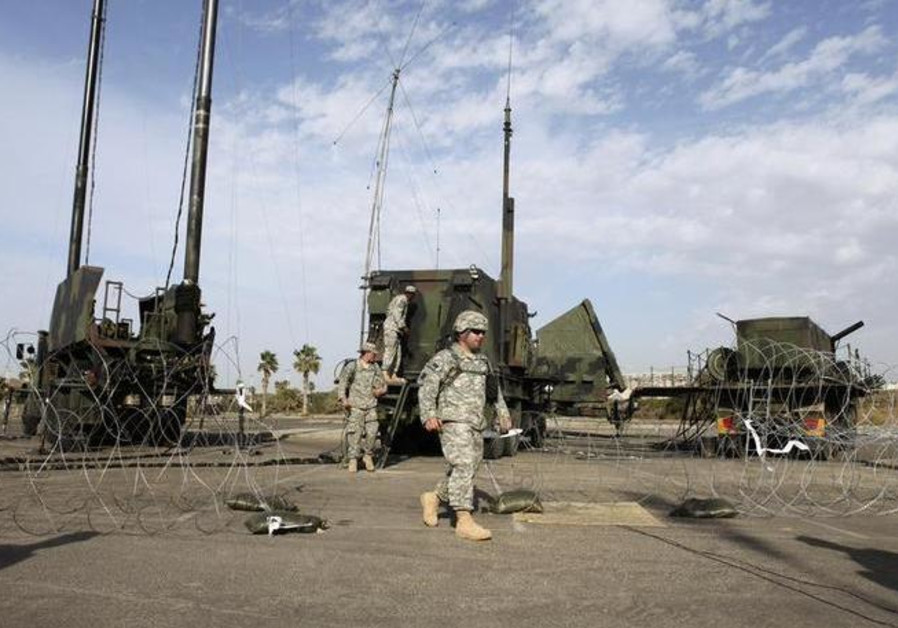
US Defense Secretary Patrick Shanahan also sent a US Patriot missile battery to bolster Central Command.

F-35s

In mid-April, the US sent several F-35s to the United Arab Emirates. These included maintenance and support units from the 388th Fighter Wing and Air Force Reserve 419th Fighter Wing.


Rouhani compares current ‘difficult conditions’ to Iran-Iraq War 

May 12, 2019

Source: Rouhani compares current ‘difficult conditions’ to Iran-Iraq War – Middle East – Jerusalem Post

The Iran-Iraq War, which began in 1980 and continued for 8 years, left millions dead and wounded on both sides of the fight. Food and essential goods were rationed for years afterwards.

BY TZVI JOFFRE
 MAY 12, 2019 04:48
Rouhani compares current 'difficult conditions' to Iran-Iraq War

Iranian President Hassan Rouhani compared Iran’s current situation with the Iran-Iraq War which killed and injured millions and heavily affected the country’s economy in a meeting with a group of politicians on Saturday, according to Radio Farda.

“Today it is not possible to say if conditions are better or worse than during the imposed war, but at the time we did not have problems with banking, selling oil, imports and exports and our only problem was a weapons sanction,” Rouhani said.

The Iran-Iraq War, which began in 1980 and continued for 8 years, left nearly two-million people dead and wounded on both sides of the fight, and it took years afterwards for the government to end the rationing of food and essential goods.

“Some goods might be rationed and distributed through vouchers or coupons,” said Islamic Republic Vice President Es’haq Jahangiri without much elaboration according to a Radio Farda report. “We might be forced to ration some goods and reintroduce vouchers for distributing them.”

Increasing US sanctions imposed since 2018 have virtually stalled much of Iran’s oil exports and foreign investment and have reduced its trade.

US President Donald Trump imposed new sanctions on Iran on Wednesday, as Iran announced that it was relaxing some restrictions on its nuclear program, according to Reuters.

“I believe we can get through this tough situation if we stick together and lend a helping hand to each other,” Rouhani said. “We face difficult conditions, but at the same time I am not hopeless.”

“Surrendering is not compatible with our religion and culture and people will not accept it, therefore we should not surrender. Instead we should find solutions,” Rouhani told the politicians.

“In this regard, it important to consider to what degree solutions can be determined by the government,” Rouhani said, possibly referring to the distribution of power in Iran and the limited power his government has, according to Radio Farda.

Much of the military’s policies, foreign policy, cultural and social restrictions, judicial and major economic policies are determined by Iran’s Supreme Leader Ali Khamenei, not the president.

Zachary Keyser contributed to this report.


US ready to go for Iran’s Guards bases if Iraqi Shiite proxies attack Al Tanf garrison – DEBKAfile

May 12, 2019

Source: US ready to go for Iran’s Guards bases if Iraqi Shiite proxies attack Al Tanf garrison – DEBKAfile

US-Iranian tensions this week were ramped up by intelligence of a plot for Iran’s Iraqi proxies to attack the American Al Tanf garrison in E. Syria, which commands the strategic Syrian-Iraqi-Jordanian border intersection. DEBKAfile’s military and intelligence sources, reporting this exclusively, reveal that Tehran’s master-plotter is Qais al-Khazail, head of the Iraqi Kataib Hezballah militia, and he is collaborating with a fellow proxy, the Asa’ib Ahl Al-Haq.

This intelligence, which reached the head of US CENTCOM, Marine Lt. Gen. Kenneth McKenzie, galvanized Washington into action. US Secretary of State Mike Pompeo hurried over to Baghdad on Tuesday, May 7 with a warning that US punishment would reach Iranian soil and its Revolutionary Guards bases, if US forces came to harm. On Thursday, the USS Abraham Lincoln carrier strike group sailed into the Red Sea and on Thursday, the Pentagon announced the redeployment of Patriot anti-missile batteries to the Middle East.

These ramped up US deployments followed a high-powered conference, which took place unusually at CIA headquarters in Langley on April 29 at 7 a.m. The top-secret meeting was attended by CIA Director Gina Haskel, Acting Defense Secretary Patrick Shanahan, Chairman of the Joint Chiefs of Staff, Gen. Joe Dunford, Secretary of State Mike Pompeo and National Intelligence Director Dan Coats.

For the Trump administration, an Iranian proxy attack on a US asset or ally is tantamount to direct aggression by the Islamic regime in terms of the American response. The Iraqi Hezballah militia is a faction of the multibranched Iraqi Shiite PMU which takes its orders from the Al Qods chief Gen. Qassem Soleimani. DEBKAfile’s military sources report that in recent months, the PMU has concentrated large scale forces in the western Iraqi province of Anbar next door to the Syrian border This has given Tehran’s plot master Qais al Khazali easy access to his target and time to properly prepare a successful hit. Iran has also provided him with a multi-function arsenal of missiles. They include Fateh 110 missiles which have a range of 300km; Zelzal 2 and Zelzal 3 which can reach targets at distances respectively of 150km and 210 km; and Zulfigar short-range ballistic missiles which have a 1,000km range.

This missile arsenal offers Iran’s proxy chief several options for striking US targets outside Iraq across the Middle East – either instead of or in addition to the projected Al Tanf operation.

Ranged against Iran’s preparations, the Americans have deployed: B-52 bombers to the Al-Udaid Air Base in Qatar; F-35A stealth aircraft to Al-Dhafra base in the UAE; and ordered the USS Abraham Lincoln with strike group take up position in the Red Sea.


Why is pressure mounting between the U.S. and Iran?

May 11, 2019

Source: Why is pressure mounting between the U.S. and Iran?- analysis – Middle East – Jerusalem Post

The Trump administration sees Iran’s behavior as another instance of why it pulled the U.S. out of the deal in the first place: the Iranian regime is not trustworthy.

BY RON KAMPEAS/JTA
 MAY 11, 2019 00:53
US President Donald Trump

WASHINGTON (JTA) – Iran announced this week that it is changing a key term of the Iran nuclear deal — and plans to make an even more dramatic change in 60 days if partners don’t ease conditions.

The partners — Europe chief among them — complained, loudly. But so did an ex-partner: the United States.

The Trump administration immediately retaliated, expanding sanctions on Iran after Tehran said it would fiddle with a deal that the Trump administration thinks should be null and void.

“Hey, this is binary. You’re either in compliance or you’re not,” Secretary of State Mike Pompeo said in Baghdad on Tuesday, a day before Iranian President Hassan Rouhani announced the change, and at the same time that the Trump administration was celebrating the one-year anniversary of pulling out of the deal. (Reports of Rouhani’s planned announcement had already emerged.)

Pompeo’s statements sound a little confusing to observers who have followed the Trump administration’s stance on the deal. Trump has called the agreement the “worst” deal ever.

So what’s going on?

The answer is that the Trump administration sees Iran’s behavior as another instance of why it pulled the U.S. out of the deal in the first place: the Iranian regime is not trustworthy.

“Cheating just a little bit is still cheating. And in the context of Iran’s nuclear commitments, it will not be tolerated,” Brian Hook, the State Department’s special representative for Iran, said Wednesday at the Center for Strategic and International Studies. “If the clerics in Tehran choose, as the Iranian people are demanding, to play by the rules, respect the sovereignty of their neighbors, and abide by international obligations and commitments, the United States will be ready and willing to engage.”

What Iran is planning: Under the 2015 deal, Iran was permitted to enrich uranium for peaceful medical research purposes but was required to sell its surplus. Iran is now immediately keeping its surplus low-enriched uranium, which it had sold overseas. Low enriched uranium may be repurposed to make nuclear weapons. In 60 days, unless its partners take steps to ease its economic isolation, Iran has threatened to remove caps on uranium enrichment levels and resume work on its Arak plutonium nuclear facility.

How the Trump administration reacted: It added new sanctions on Iran’s metals sector, on top of sanctions already on Iran’s financial and energy sectors.

How partners to the deal reacted: The European Union and three signatories to the deal, Britain, France and Germany, demanded Iran to stick to the deal and urged the United States to butt out.

“We regret the re-imposition of sanctions by the United States following their withdrawal from the JCPOA,” a joint statement said, using the acronym for the deal’s name, the Joint Comprehensive Plan of Action. “We call on countries not party to the JCPOA to refrain from taking any actions that impede the remaining parties’ ability to fully perform their commitments.”

Russia and China, the other parties to the deal, are equally as committed to making it work.

What the Trump administration wants: They want the deal to collapse and for Iran to acquiesce to its demands that it end all nuclear activity; that Iran stop producing ballistic missiles; that it stop interfering in the region and elsewhere (the United States sees Iran’s malign hand in Yemen, Iraq and Syria, and as far afield as Venezuela); and that it improve human rights for its citizens.

Is the pressure working? The Trump administration thinks so.

“For the first time in a very long time, we are raising the costs of Iran’s expansionism and making clear that this kind of blackmail will no longer work,” Hook said. “We are making it unsustainable for Iran to support terrorist proxies and militias that for decades have defied the basic standards of behavior observed by normal countries.”

He listed, among other consequences, the effective expulsion of Iran from the SWIFT international financial messaging system and the admission by Hezbollah, Iran’s ally in Lebanon, that it is starved for cash.

The other partners to the deal are committed to resisting the pressure, and the Europeans are pressing ahead with plans to set up a complex barter system, INSTEX, that would work around the U.S. sanctions.

What happens next? Someone blinks. John Bolton, Trump’s national security adviser, last week announced the deployment of extra forces to the region to counter what the United States says is Iran’s heightened menace. He cited, but did not define, “troubling and escalatory indications and warnings” from Iran.

Trump, reportedly wary of Bolton’s overseas interventionism, might want to replicate his direct overtures to North Korea by talking directly with Iran. (No predecessor ever did: The Obama administration stuck to multilateral talks.)

“What I’d like to see with Iran, I’d like Iran to call me,” he said Thursday at a White House briefing with reporters on planned reforms to medical billing.


American B-52 bombers land in Qatar over unspecified Iran threat 

May 11, 2019

Source: American B-52 bombers land in Qatar over unspecified Iran threat | The Times of Israel

US has said it is sending the planes to counter Tehran, though no details have been provided

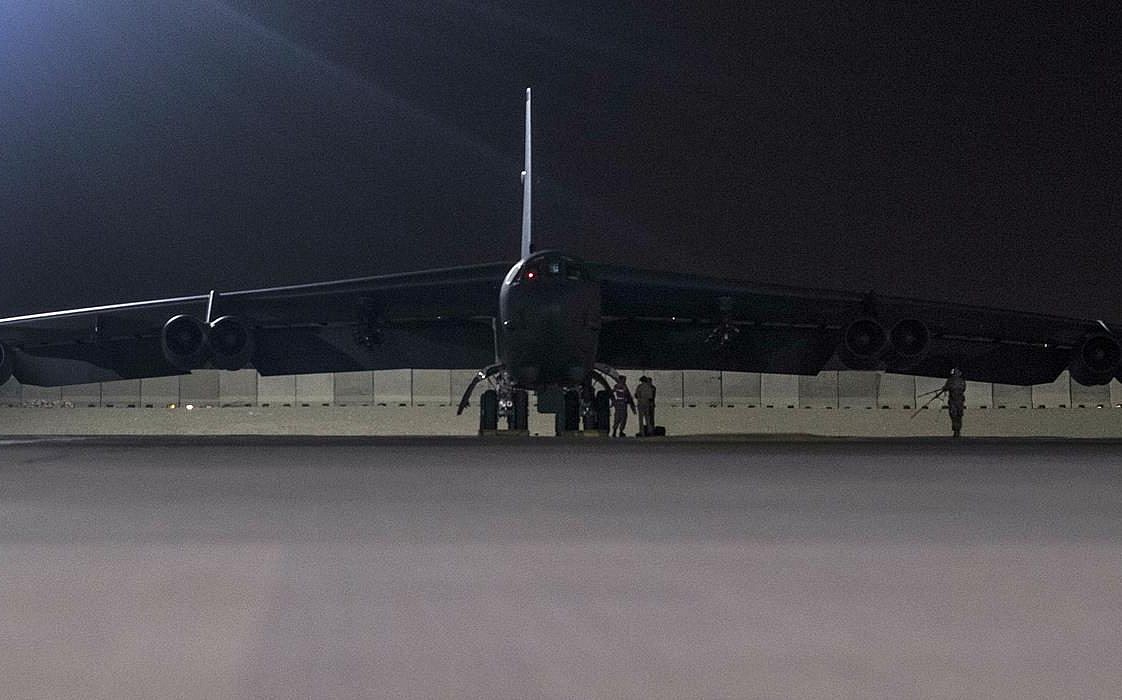
In this Thursday, May 9, 2019 photograph released by the US Air Force, a B-52H Stratofortress assigned to the 20th Expeditionary Bomb Squadron is parked on the ramp at Al Udeid Air Base, Qatar (Senior Airman Keifer Bowes, US Air Force via AP)

In this Thursday, May 9, 2019 photograph released by the US Air Force, a B-52H Stratofortress assigned to the 20th Expeditionary Bomb Squadron is parked on the ramp at Al Udeid Air Base, Qatar (Senior Airman Keifer Bowes, US Air Force via AP)

DUBAI, United Arab Emirates (AP) — The B-52 bombers ordered by the White House to deploy to the Persian Gulf to counter unspecified threats from Iran are beginning to arrive at a major American air base in Qatar.

Images released by the US Air Force show B-52H Stratofortress bombers arriving at Al Udeid Air Base in Qatar on Thursday. Others landed at an undisclosed location Wednesday.

The Air Force identified the aircraft as coming from the 20th Bomb Squadron of Barksdale Air Force Base in Louisiana.

On Sunday, the White House announced it would send the USS Abraham Lincoln aircraft carrier strike group and the bombers to counter Tehran.

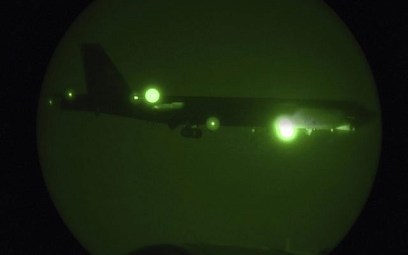
In this Thursday, May 9, 2019 photograph released by the US Air Force, a B-52H Stratofortress assigned to the 20th Expeditionary Bomb Squadron is seen through night vision coming in for a landing at Al Udeid Air Base, Qatar (Staff Sgt. Ashley Gardner, US Air Force via AP)

On Wednesday, Iran announced it would begin backing away from its nuclear deal with world powers, a year after US President Donald Trump pulled America from the accord.

On Thursday US Secretary of State Mike Pompeo put off a visit to Greenland, citing pressing business in Washington — just two days after he also ditched a trip to Germany to fly to Iraq amid soaring tensions with Iran.


Is the Trump administration sending mixed signals on the Iran deal?

May 11, 2019

Source: Is the Trump administration sending mixed signals on the Iran deal? | The Times of Israel

As Iran threatens to completely bolt the nuclear accord, the US imposes more sanctions and bolsters its forces in the region, but then Trump says he’s waiting for Tehran to call

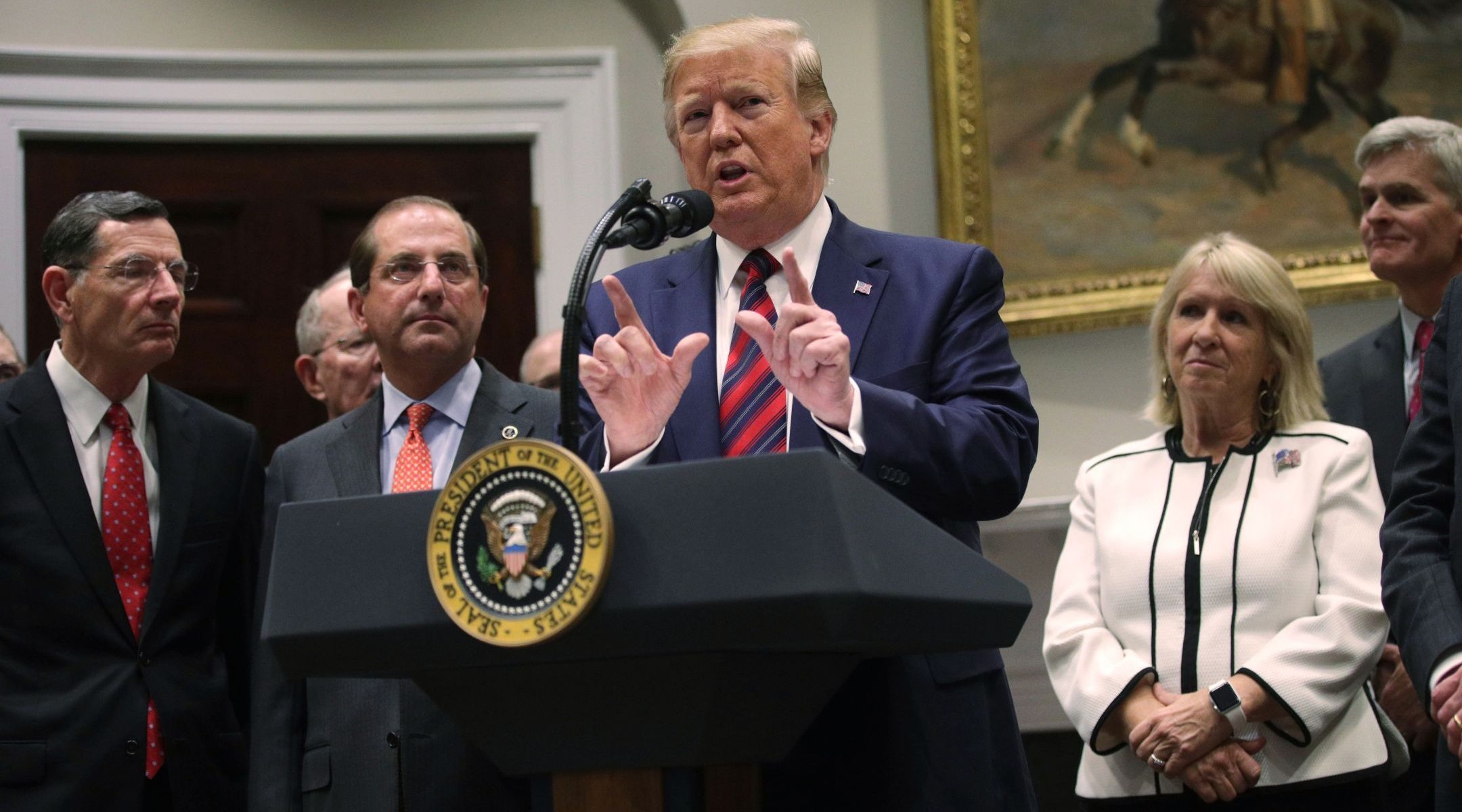
US President Donald Trump speaks in a Roosevelt Room event at the White House, May 9, 2019. (Alex Wong/Getty Images via JTA)

US President Donald Trump speaks in a Roosevelt Room event at the White House, May 9, 2019. (Alex Wong/Getty Images via JTA)

WASHINGTON (JTA) – Iran announced this week that it is changing a key term of the Iran nuclear deal — and plans to make an even more dramatic change in 60 days if partners don’t ease conditions.

The partners — Europe chief among them — complained, loudly. But so did an ex-partner: the United States.

The Trump administration immediately retaliated, expanding sanctions on Iran after Tehran said it would fiddle with a deal that the Trump administration thinks should be null and void.

“Hey, this is binary. You’re either in compliance or you’re not,” Secretary of State Mike Pompeo said in Baghdad on Tuesday, a day before Iranian President Hassan Rouhani announced the change, and at the same time that the Trump administration was celebrating the one-year anniversary of pulling out of the deal. (Reports of Rouhani’s planned announcement had already emerged.)

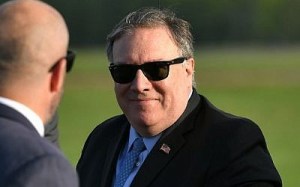
US Secretary of State Mike Pompeo walks to board a plane before departing from London Stansted Airport, north of London, on May 9, 2019. (MANDEL NGAN / POOL / AFP)

Pompeo’s statements sound a little confusing to observers who have followed the Trump administration’s stance on the deal. Trump has called the agreement the “worst” deal ever.

So what’s going on?

The answer is that the Trump administration sees Iran’s behavior as another instance of why it pulled the US out of the deal in the first place: The Iranian regime is not trustworthy.

“Cheating just a little bit is still cheating. And in the context of Iran’s nuclear commitments, it will not be tolerated,” Brian Hook, the State Department’s special representative for Iran, said Wednesday at the Center for Strategic and International Studies. “If the clerics in Tehran choose, as the Iranian people are demanding, to play by the rules, respect the sovereignty of their neighbors, and abide by international obligations and commitments, the United States will be ready and willing to engage.”

What Iran is planning: Under the 2015 deal, Iran was permitted to enrich uranium for peaceful medical research purposes but was required to sell its surplus. Iran is now immediately keeping its surplus low-enriched uranium, which it had sold overseas. Low enriched uranium may be repurposed to make nuclear weapons. In 60 days, unless its partners take steps to ease its economic isolation, Iran has threatened to remove caps on uranium enrichment levels and resume work on its Arak plutonium nuclear facility.

Iran’s controversial heavy water production facility is seen in this general view at Arak, south of the Iranian capital Tehran, Oct. 27, 2004. (Saeedi/Getty Images via JTA)

How the Trump administration reacted: It added new sanctions on Iran’s metals sector, on top of sanctions already on Iran’s financial and energy sectors.

How partners to the deal reacted: The European Union and three signatories to the deal, Britain, France and Germany, demanded Iran to stick to the deal and urged the United States to butt out.

“We regret the re-imposition of sanctions by the United States following their withdrawal from the JCPOA,” a joint statement said, using the acronym for the deal’s name, the Joint Comprehensive Plan of Action. “We call on countries not party to the JCPOA to refrain from taking any actions that impede the remaining parties’ ability to fully perform their commitments.”

Russia and China, the other parties to the deal, are equally as committed to making it work.

What the Trump administration wants: They want the deal to collapse and for Iran to acquiesce to its demands that it end all nuclear activity; that Iran stop producing ballistic missiles; that it stop interfering in the region and elsewhere (the United States sees Iran’s malign hand in Yemen, Iraq and Syria, and as far afield as Venezuela); and that it improve human rights for its citizens.

Is the pressure working? The Trump administration thinks so.

“For the first time in a very long time, we are raising the costs of Iran’s expansionism and making clear that this kind of blackmail will no longer work,” Hook said. “We are making it unsustainable for Iran to support terrorist proxies and militias that for decades have defied the basic standards of behavior observed by normal countries.”

He listed, among other consequences, the effective expulsion of Iran from the SWIFT international financial messaging system and the admission by Hezbollah, Iran’s ally in Lebanon, that it is starved for cash.

The other partners to the deal are committed to resisting the pressure, and the Europeans are pressing ahead with plans to set up a complex barter system, INSTEX, that would work around the US sanctions.

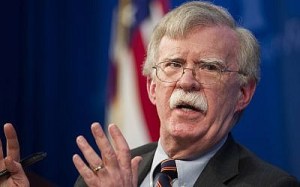
US National Security Advisor John Bolton unveils the Trump Administration’s Africa Strategy at the Heritage Foundation in Washington, December 13, 2018. (Cliff Owen/AP)

What happens next? Someone blinks. John Bolton, Trump’s national security adviser, last week announced the deployment of extra forces to the region to counter what the United States says is Iran’s heightened menace. He cited, but did not define, “troubling and escalatory indications and warnings” from Iran.

Trump, reportedly wary of Bolton’s overseas interventionism, might want to replicate his direct overtures to North Korea by talking directly with Iran. (No predecessor ever did: The Obama administration stuck to multilateral talks.)

“What I’d like to see with Iran, I’d like Iran to call me,” he said Thursday at a White House briefing with reporters on planned reforms to medical billing.


Israeli TV claims Iran weighing attack on Saudi oil production facilities

May 11, 2019

Source: Israeli TV claims Iran weighing attack on Saudi oil production facilities | The Times of Israel

Channel 13 says Tehran has ruled out striking at US bases; quotes Arab sources saying some in IRGC want to hit Israeli targets, others warn of ‘suicidal’ risk of conflict with US

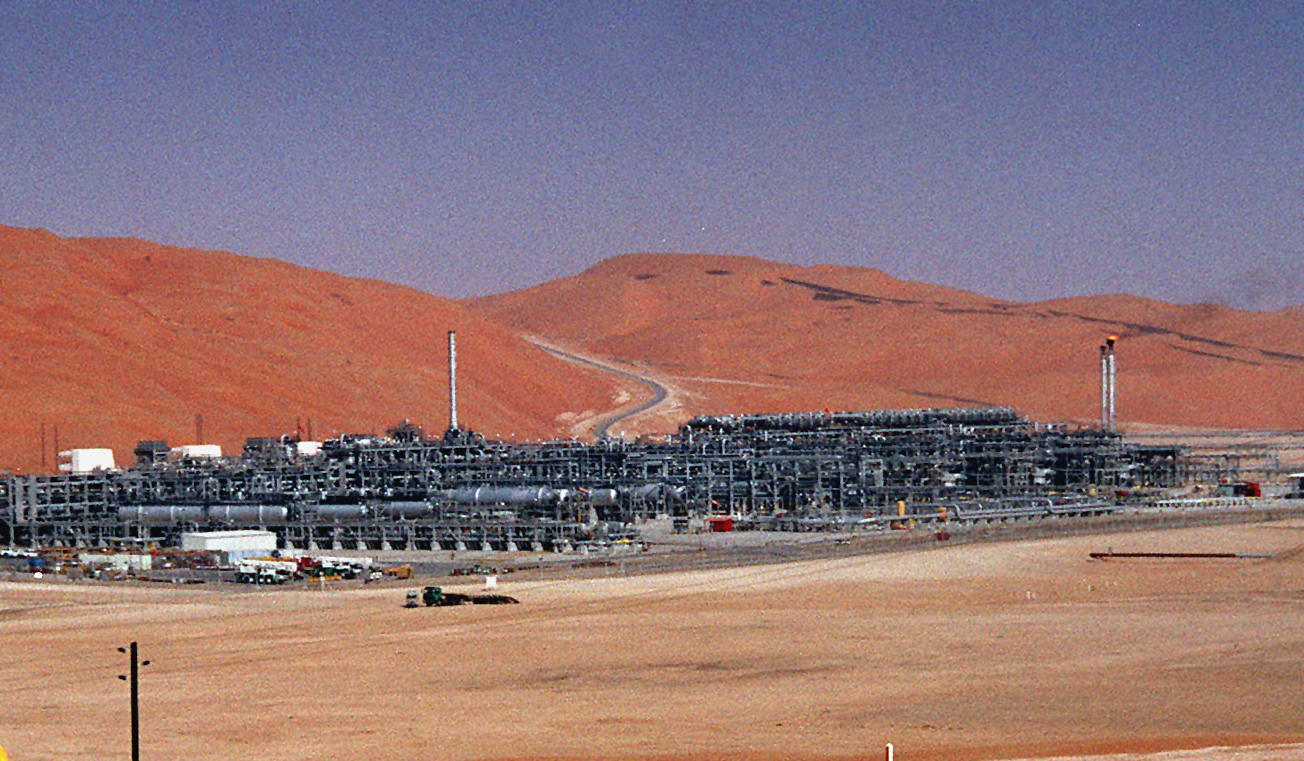
In this 2004 file photo, an industrial plant that strips natural gas from freshly pumped crude oil is seen at Saudi Aramco's Shaybah oil field at Shaybah in Saudi Arabia's Rub al-Khali desert. (AP Photo/Bruce Stanley, File)

In this 2004 file photo, an industrial plant that strips natural gas from freshly pumped crude oil is seen at Saudi Aramco’s Shaybah oil field at Shaybah in Saudi Arabia’s Rub al-Khali desert. (AP Photo/Bruce Stanley, File)

Israel has warned the US that Iran is contemplating targeting Saudi oil production facilities, an Israeli TV report said Friday night, as tensions between Tehran and the Trump Administration soar.

The unsourced Channel 13 report said the Iranians were “considering various aggressive acts” against American or American-allied targets. Tehran had looked at targeting American bases in the Gulf, but that had been deemed too drastic. The main target they were interested in was “Saudi oil production facilities,” the TV report said. Such a strike would also send world oil prices soaring and enable Iran to get more income from its oil sales, the report added.

Channel 13 also quoted unnamed Arab intelligence sources saying there was a debate raging in the Iranian leadership about striking US and US-allied targets, with some in the Islamic Revolutionary Guard Corps pushing for attacks, including against Israeli targets, while others cautioned that it would be “suicidal” to get into serious military conflict with the US.

The Channel 13 report came four days after the same TV channel first reported that the Israeli Mossad had tipped off the White House two weeks ago about an Iranian plan to attack either a US or US-allied target. That earlier report did not specify potential targets for such an ostensible attack.

The Israeli intel was conveyed by an Israeli delegation led by National Security Council head Meir Ben-Shabbat, which met with American intelligence officials at the White House late last month, the May 6 TV report said.

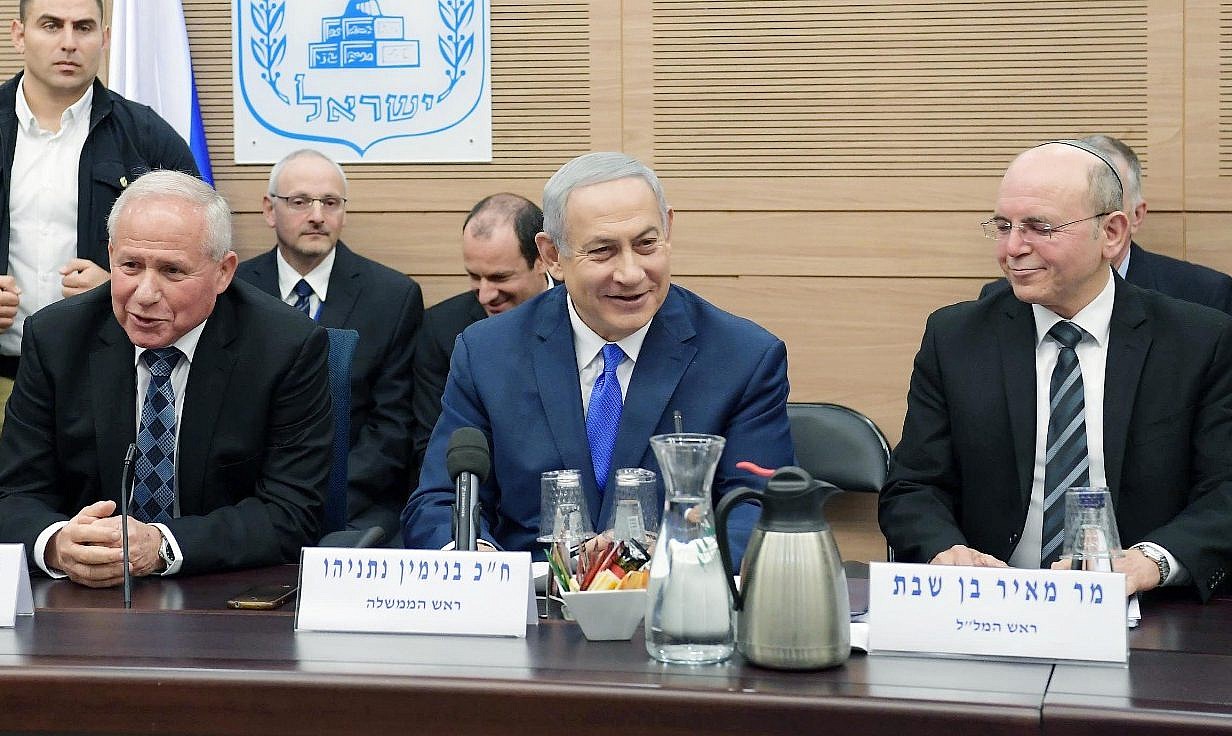
Prime Minister Benjamin Netanyahu, center, Foreign Affairs and Defense Committee chair MK Avi Dichter, left, and National Security Adviser Meir Ben-Shabbat, right, at an FADC meeting in the Knesset, November 19, 2018. (Amos Ben Gershom/GPO)

“It is still unclear to us what the Iranians are trying to do and how they are planning to do it, but it is clear to us that the Iranian temperature is on the rise as a result of the growing US pressure campaign against them, and they are considering retaliating against US interests in the Gulf,” an official was quoted as saying.

Channel 13’s military analyst Alon Ben-David said Friday that the Iranians might be “underestimating American determination” to defend US interests. “In Israel, there is an assessment that the prospect of confrontation between the US and Iran is growing — because the US is ready to respond harshly to any attack” including on Saudi Arabia, he said.

Ultimately, he added, the decision on whether to attack US and US-allied targets would rest with Iran’s Supreme Leader Ayatollah Ali Khamenei.

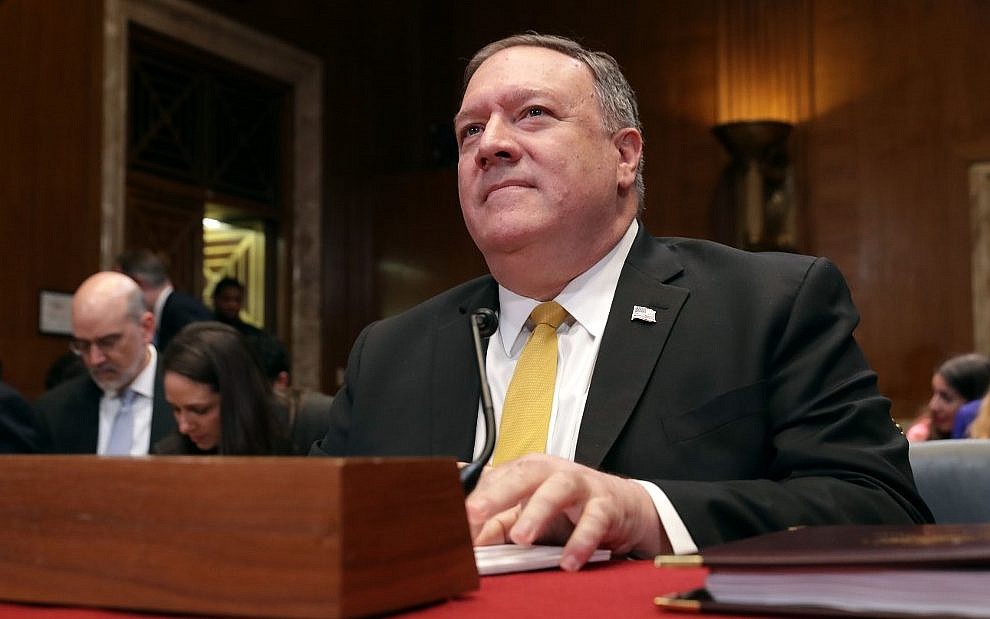
US Secretary of State Mike Pompeo appears before the Senate Appropriations Committee’s State, Foreign Operations and Related Programs Subcommittee in the Dirksen Senate Office Building on Capitol Hill on April 9, 2019 in Washington, DC (Chip Somodevilla/Getty Images/AFP)

US Secretary of State Mike Pompeo had on Thursday threatened a “swift and decisive” US response to any attack by Iran, in the latest of a series of escalating statements and actions.

“The regime in Tehran should understand that any attacks by them or their proxies of any identity against US interests or citizens will be answered with a swift and decisive US response,” Pompeo said in a statement.

“Our restraint to this point should not be mistaken by Iran for a lack of resolve,” he said.

The Pentagon said Friday that the US would move a Patriot missile battery into the Middle East region to counter threats from Iran.

The department provided no details, but a defense official said the move comes after intelligence showed that the Iranians have loaded military equipment and missiles onto small boats.

Also on Friday, the US Maritime Administration warned that Iran could try to attack American commercial vessels, including oil tankers, Reuters reported.

US officials announced Sunday that they would rush an aircraft carrier strike group and nuclear-capable bombers to the region.

The United States had already announced the deployment of an aircraft carrier strike group and nuclear-capable bombers to the region, saying it had information of plans for Iranian-backed attacks.

An American official said the decision to send in more forces was based in part on intelligence indicating that Iran had moved short-range ballistic missiles by boat in waters off its shores.

The official, who spoke on condition of anonymity, said it was not clear whether the boats with missiles represented a new military capability that could be used against US forces or were only being moved to shore locations.

The moves have frightened some European allies as well as President Donald Trump’s Democratic rivals, who fear the administration is pushing for war based on overhyped intelligence.

Pompeo, who earlier canceled a trip to Greenland to rush back to Washington, however said: “We do not seek war.”

US Secretary of State Mike Pompeo walks to board a plane before departing from London Stansted Airport, north of London, on May 9, 2019. (MANDEL NGAN / POOL / AFP)

“But Iran’s 40 years of killing American soldiers, attacking American facilities, and taking American hostages is a constant reminder that we must defend ourselves,” said Pompeo, referencing the 1979 Islamic revolution that transformed Iran from close US ally to sworn foe.

Meanwhile Vice Admiral Jim Malloy, commander of the United States Naval Forces Central Command, told Reuters he would bring the aircraft carrier USS Abraham Lincoln through the Gulf’s sensitive Strait of Hormuz if need be.

“If I need to bring it inside the strait, I will do so,” Malloy said. “I’m not restricted in any way, I’m not challenged in any way, to operate her anywhere in the Middle East.”

Iran on Wednesday said it would suspend some commitments under a 2015 nuclear accord rejected by Trump, frustrated that renewed US sanctions have prevented the country from enjoying the economic fruits of compliance with the deal.

Earlier Thursday, Trump said he sought talks with Iran.

“What I would like to see with Iran, I would like to see them call me,”Trump told reporters at the White House. “We don’t want them to have nuclear weapons — not much to ask.”

US President Donald Trump (C) speaks during event on ending surprise medical billing at the White House in Washington, DC, on May 9, 2019. (Jim WATSON / AFP)

Trump also said Washington was not looking for a conflict with Tehran, but refused to divulge why the carrier had been dispatched.

“We have information that you don’t want to know about,” Trump said, according to Reuters. “They were very threatening and we have to have great security for this country and many other places.”

Asked about the possibility of a military confrontation, he said “I don’t want to say no, but hopefully that won’t happen,”


Iran under strict sanctions regime – Jerusalem Studio 421 

May 11, 2019


Tehran knows US pressure is working 

May 10, 2019

Source: Tehran knows US pressure is working – www.israelhayom.com

Iran has failed to bust the American embargo on its oil exports, while Israel and the moderate Sunni states are cooperating to check Iranian influence in the Middle East.

A year after U.S. President Donald Trump’s speech in which he announced he was withdrawing from the deal, the impression is that the semi-open cooperation between Israel and the moderate Sunni Arab states against Iran, with full backing from Washington, has at the very least managed to check the Iranian regime’s attempts to spread its regional influence.

Saudi Arabia is leading the coalition that is battling the pro-Iranian Houthi rebels in Yemen; Israel is acting doggedly against Iran’s efforts to gain a foothold in Syria; and the U.S. is providing full superpower backing as well as taking direct action against Iran through major sanctions.

The Iranian move – which was announced on the first anniversary of America’s withdrawal from the deal – demonstrates the change in Tehran’s policy. Are the winds of war starting to blow? Trump said Thursday: “They should call,” and senior administration officials stressed his desire to return to negotiations, but some op-eds and analyses about the deployment of more U.S. forces to the Persian Gulf warned that Trump’s policy on Iran was becoming “dangerous,” as the journal Foreign Policy wrote. Is it? We should remember that similar things were written at the height of the tension between the U.S. and North Korea a year and a half ago. Since then, Trump and North Korean leader Kim Jong Un have met twice, even though actual negotiations are moving ahead by microns.

Tehran knows that Washington doesn’t want a war. Even Iranian Foreign Minister Mohammad Javad Zarif admitted that, although he claimed that others – such as Prime Minister Benjamin Netanyahu – want to cause one. The ayatollah regime knows that Trump wields force, but more than anything wants a legacy that includes historic peace deals based on American interests – with Pyongyang, between Israel and the Palestinians and with Tehran. The question is whether the Iranians are willing to pay the price.