Archive for May 2019

Iran must decide: To be or not to be 

May 14, 2019

Source: Iran must decide: To be or not to be – www.israelhayom.com

Iran’s top priority is to preserve the rule of the ayatollahs, so if the U.S. is prepared to back threats with military action, it will agree to a better nuclear deal from President Trump.
The developing tension between the U.S. and Iran in the Persian Gulf comes as no coincidence. Since U.S. President Donald Trump pulled out of the 2015 nuclear deal and restored sanctions against Iran, he has had a clear goal in mind – to topple the ayatollah regime and dismantle the axis of evil.

Last decade, former President George W. Bush declared the ties between the nations of the Fertile Crescent an “axis of evil.” Later on, after the 9/11 attacks, he took action to smash that axis, which included striking a fatal blow to al-Qaida and the Taliban; bringing down the regime of former Iraqi dictator Saddam Hussein; and because of the U.S.’s incorrect approach to creating stability after the Iraqi Baath regime fell apart, it all stopped there.

The result was that the American economy took a serious hit because of the defeat in the war in Iraq and a mistaken strategy to stabilize the region. In effect, it all created a vacuum, which the Iranians and the Islamic State filled. Former U.S. President Barack Obama, who succeeded Bush Jr., inherited the problem and took a conciliatory approach to these threats that resulted in a major loss of standing for the U.S. It’s no secret that Trump was elected president because the Americans were reacting to Obama.

Trump is the first American president who has adopted violent, uncompromising rhetoric on the axis of evil. He announced his intention to wipe out ISIS, and even sent an unmistakable message to the Iranians: Don’t mess with America, because we can annihilate you. This is not an empty threat.

In the last two years, Trump has put together a particularly belligerent cabinet, headed by Secretary of State Mike Pompeo and John Bolton as national security adviser. Neither of these “hawks” blink in the face of terrorism, and now that America is moving forces to the Persian Gulf, talk is starting to be bolstered by action. The Americans expect the Iranians to make an absolute retreat from their nuclear program, but this time they are including Al-Quds Force – which is behind terrorism throughout the region, not to mention the world – in the equation.

America will not be deterred from war with Iran. What’s more, the Americans understand that the ultimate goal of the Islamic Republic regime is to safeguard the revolution – in other words, that the survival of the rule of the ayatollahs is more important to it than anything. When they (Ali Khamenei and his evil friends) realize that their survival is in real danger, they will be forced to cave. This is precisely the policy that Obama was unwilling to entertain. He didn’t understand that an ultimatum for the Iranians must be backed by a genuine military option.

Trump won’t be put off. Certainly not when he is a year and a half out from an election for a second term. There’s no doubt that the balance of power is inherently asymmetric. American can wipe out the ayatollah regime just like it did Saddam Hussein in Iraq, and Tehran knows that very well. At the end of the day, the evil regime must vanish from the face of the earth, and it would fit Trump, who promised to make America great again, to be the liberator.

However, Trump’s capitalistic worldview would prefer a better nuclear deal with Iran, which he is keeping in reserve as a way out of the crisis. He’ll offer the Iranians the deal of a lifetime, and if they are under real threat of destruction, they won’t have any choice but to accept it. That is how America is implementing the strategy of “mutually assured destruction,” which has prevailed since World War II. It is saying: If you don’t do what we ask, you’ll be annihilated. America, the only superpower in the world, is reassuming its role as policeman, a role that Obama did everything he could to escape.

The importance of the situation cannot be exaggerated, insofar as it relates to Israel. Israeli and U.S. interests are aligned. However, it’s clear to the intelligence community that if it comes to war in the Gulf, Iran will respond, mostly by using Hezbollah and its 200,000 missiles to create deterrence. If Tehran is attacked, the missiles will no doubt be let loose on Israel.

It is still too early to build scenarios, but if it comes to war, the Israeli homefront will likely endure some harsh blows. The good news is that if America chooses the military option, Lebanon will probably calculate its odds early on. Without the backing of the ayatollahs, Hezbollah will disappear, and Hezbollah leader Sheikh Hassan Nasrallah will face a clear choice about whether or not to go all in.

The Iranians, meanwhile, face another choice – to be or not to be.
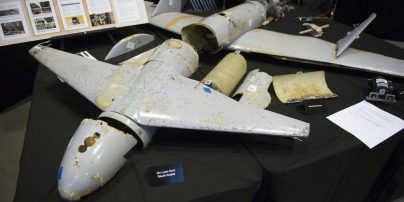
 

Egypt condemns rebel drone attack on Saudi oil infrastructure 

May 14, 2019

Source: Egypt condemns rebel drone attack on Saudi oil infrastructure – www.israelhayom.com

Houthi rebels in Yemen, who are backed by Saudi Arabia’s arch-rival Iran, claim attack on Saudi oil pipelines. Incident comes two days after four vessels are sabotaged off the coast of the United Arab Emirates.

A statement by the Foreign Ministry says Egypt stands alongside Saudi Arabia “to counter all attempts meant to stabilize the kingdom” in the wake of Tuesday’s attacks.

The statement says Egypt is coordinating with Saudi Arabia to face “terror and all threats to its national security.”

Earlier Tuesday, Saudi Araba said drones attacked one of its oil pipelines as other assaults targeted energy infrastructure elsewhere in the kingdom, shortly after Yemen’s rebels claimed a coordinated drone attack on the Sunni power.

The assaults marked the latest incidents challenging Middle East security after the alleged sabotage of oil tankers off the coast of the United Arab Emirates earlier this week amid heightened tensions between the U.S. and Iran.

In a statement carried on the state-run Saudi Press Agency, Energy Minister Khalid al-Falih said that drones attacked a petroleum pumping station supplying a pipeline running from its oil-rich Eastern Province to the Yanbu Port on the Red Sea.

A fire broke out and firefighters later brought it under control, though the state-run Saudi Aramco stopped pumping oil through the pipeline.

The kingdom’s state security body also said that two oil infrastructure sites in the greater region of Riyadh, home to its landlocked capital, were targeted at the same time. The statement described it as a “limited targeting” of petroleum stations in areas al-Dudami and Afif in the Riyadh region, without elaborating.

This comes after four oil tankers anchored in the Middle East were damaged by what Gulf officials described as sabotage, though satellite images obtained by The Associated Press on Tuesday showed no major visible damage to the vessels.

Details of the alleged sabotage to two Saudi, one Norwegian and one Emirati oil tanker on Sunday remained unclear, and Gulf officials have declined to say who they suspected was responsible. But it demonstrated the raised risks for shippers in a region vital to global energy supplies as tensions are increasing between the U.S. and Iran over its unraveling nuclear deal with world powers.

The U.S. has warned sailors of the potential for attacks on commercial sea traffic, and regional allies of the United Arab Emirates condemned the alleged sabotage as the tankers were off the coast of the UAE port city of Fujairah.

A U.S. official in Washington, without offering any evidence, told AP that an American military team’s initial assessment indicated Iran or Iranian allies used explosives to blow holes in the ships. The official, who was not authorized to discuss the investigation, agreed to reveal the findings only if not quoted by name. The U.S. Navy’s 5th Fleet, which patrols the Mideast and operates from a base in Fujairah, has repeatedly declined to comment.

The U.S. already had warned ships that “Iran or its proxies” could be targeting maritime traffic in the region. America is deploying an aircraft carrier, USS Abraham Lincoln, and B-52 bombers to the Persian Gulf region to counter alleged, still-unspecified threats from Tehran.

Citing heightened tensions in the region, the United Nations called on “all concerned parties to exercise restraint for the sake of regional peace, including by ensuring maritime security” and freedom of navigation, U.N. deputy spokesman Farhan Haq said.

Tensions in the region have risen since Trump withdrew America from the 2015 nuclear deal between Iran and world powers, and restored U.S. sanctions that have pushed Iran’s economy into crisis. Last week, Iran warned it would begin enriching uranium at higher levels in 60 days if world powers failed to negotiate new terms for the deal.

The oil tankers were visible in satellite images provided Tuesday to AP by Colorado-based Maxar Technologies. A boom surrounded the Emirati oil tanker A. Michel, indicating the possibility of an oil leak. The other three showed no visible major damage from above.


UN envoy to Mideast warns of war between Israel, Hamas

May 14, 2019

Source: UN envoy to Mideast warns of war between Israel, Hamas

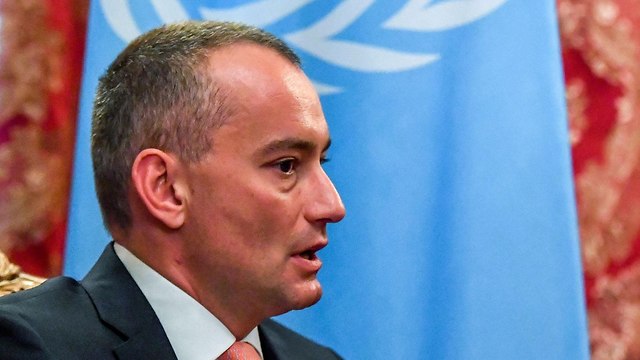
Nikolay Mladenov said now is the last chance to prevent an all-out conflict and the ‘risk of war remains imminent,’ a week after a cease-fire between Israel and Hamas ended the worst fighting since 2014

Nikolay Mladenov said on Monday that the “risk of war remains imminent,” a week after a cease-fire between Israel and Gaza’s Hamas rulers ended the worst fighting since a 2014 war.

Nikolay Mladenov (Photo: AFP)

Nikolay Mladenov (Photo: AFP)

The spate of violence killed 25 Palestinians, including 10 confirmed militants, and four Israeli civilians.Mladenov, inaugurating a solar power plant for a Gaza hospital, said parties must “consolidate the understandings” of the cease-fire.

The deal, mediated by Egypt, Qatar and the U.N., promises to let in fuel and humanitarian aid and ease the movement of people from the blockaded territory.

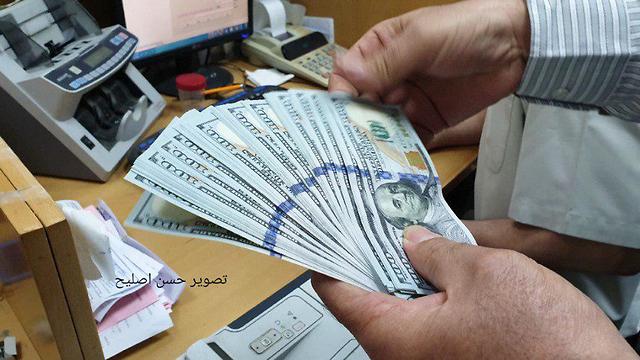
A Qatari cash infusion, meant for thousands of needy families as part of the cease-fire understandings, arrived Monday.

Qatari cash in Gaza

Qatari cash in Gaza

The Qatari envoy, Mohammed al-Emadi, is expected to hand-over some $30 million to Gaza officials during his visit. The money is destined for impoverished families and those most affected by the humanitarian crisis in the enclave.

Qatar’s Gaza Reconstruction Committee confirmed the payouts began on Monday, with each family in need receiving $100 in assistance. Payments will be distributed via post offices in the Strip. Emadi is expected to meet with leaders of the Palestinian factions during his trip.

IDF armor (Photo: Reuters)

IDF armor (Photo: Reuters)

According to a report in the London-based Asharq al-Awsat newspaper on Sunday, Israel’s willingness to allow the money to enter the Hamas-ruled enclave, apparently represents the first stage of the implementation of the agreement reached between Israel and Hamas in the latest ceasefire.

Parts of the deal, which have yet to be implemented, include the lifting of some restrictions on imports and exports to and from the Strip as well as the expansion of the fishing zone, in exchange for a cessation of all Hamas-led border violence.

Islamic Jihad leaders later claimed that Israel’s pledge to implement the understandings reached in an earlier ceasefire deal from March (which include lifting of the Gaza blockade) is what convinced the terror group to agree to a ceasefire.


Iran’s nuclear standoff has left it in a bind

May 14, 2019

Source: Iran’s nuclear standoff has left it in a bind

Analysis: Tehran’s 60-day ultimatum to Europe, China and Russia to renegotiate the 2015 agreement brokered by Obama and rejected by Trump could leave the Islamic Republic with no option but to go cap in hand to the Americans, unless the ayatollahs are playing a more dangerous game
Iran’s leaders don’t have suicidal tendencies. Their every move is calculated, with cost-benefit considerations in mind. Thus, the latest crisis which saw US military move Patriot missile batteries to the Mideast – fearing an Iranian attack – will probably result in some type of negotiations between the two sides.

In the Western world, however, no one understands exactly what’s going on inside the heads of the ayatollahs and to where this will escalate.

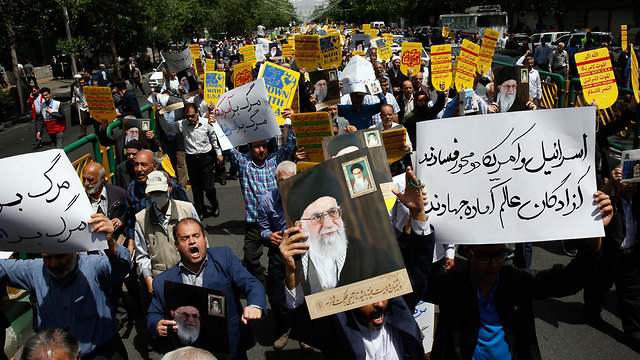
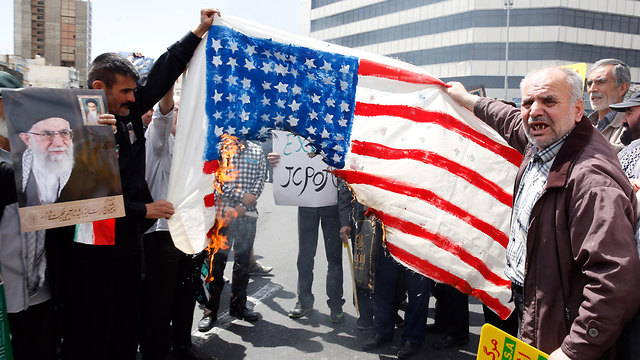
Protests in Tehran after the US reimposes nuclear sanctions (Photo: EPA)

Protests in Tehran after the US reimposes nuclear sanctions (Photo: EPA)

Western intelligence seems to have more of an idea about Iran’s intentions after the Revolutionary Guards were caught with anti-ship missiles on vessels along the Persian Gulf, in order to probably create a military crisis in the Gulf, particularly in the Strait of Hormuz (linking the Persian Gulf with the Arabian Sea).

American deployment in the area is mostly seen as a deterrent, signaling to Tehran that the US has no plans to invade the Islamic Republic but is adamant that any intentions to affect the oil trade routes and counter American sanctions must be scrapped.

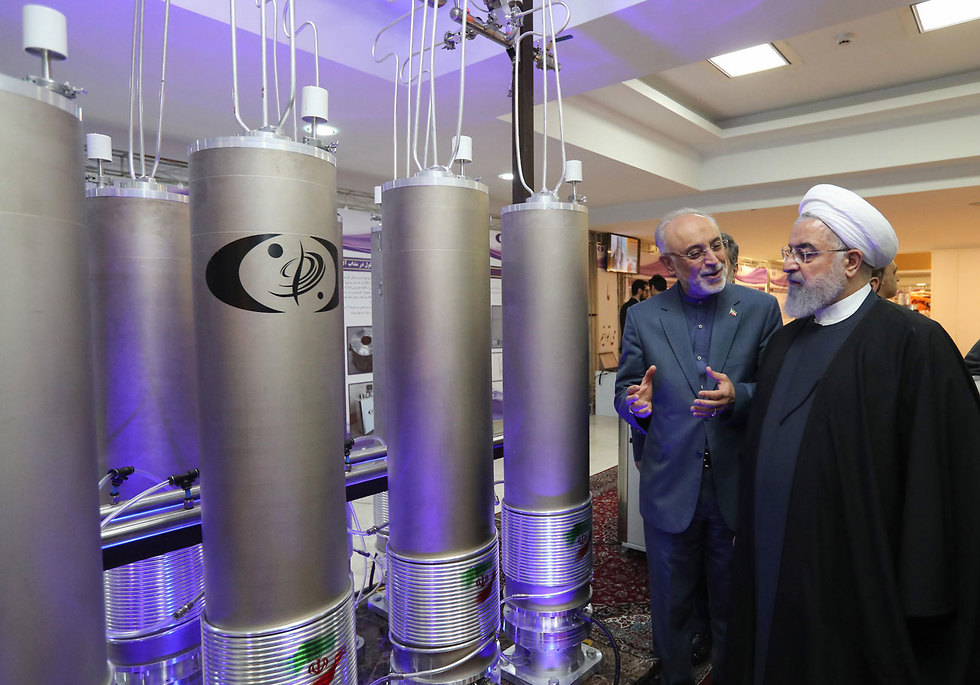
Iranian President Hassan Rouhani tours one of the country's nuclear facilities (Photo: AFP)

Iranian President Hassan Rouhani tours one of the country’s nuclear facilities (Photo: AFP)

There’s no doubt that US intelligence has led Washington to hold behind the scenes talks with allies who could be affected by a potential spike in oil prices. The announcement by the French government in support of the US actions in the Gulf only goes to prove that. Furthermore, Russian Foreign Minister Sergey Lavrov also said last week that Iranian threats to disrupt the oil supplies are unacceptable.

The Americans most likely have also consulted with Jerusalem on the issue, seeing as a strong US response could trigger a regional crisis that would impact on Israel.

As the current crisis unfolds, Iran finds itself increasingly isolated. The Iranians feel they’d been betrayed by the Europeans, who cast the Islamic Republic aside after reading the economic map: Trade between the US and EU is worth over $1.1 trillion a year, while the trade with Iran is only worth some $30 billion a year.

A 12-point document by Secretary of State Mike Pompeo indicates that the administration views the Iranians not only as attempting to become a nuclear power, but also as sponsors of terror and instability in the Mideast.

Anti-U.S. protests in Tehran (Photo: EPA) (Photo: EPA)

Anti-U.S. protests in Tehran (Photo: EPA) (Photo: EPA)

US President Donald Trump’s mindset regarding the international agreements he inherited from Barack Obama is “out with the old, in with the new.” This is the real reason behind the re-imposition of US sanctions on Iran in recent weeks. And the American pressure seems to be paying off, seeing as Iran’s economy has shrunk so badly that inflation could reach 40 percent, while the local currency is in free fall.

Trump is consistent in his attempts to blow up any international deal signed by his predecessor, and that includes the Iran nuclear agreement.

The Iranians are feeling the effects of the sanctions. A 40% inflation rate and the collapse of the local currency already wreaking havoc.

Israel is so far staying quiet, as it should, save for a comment last week by Prime Minister Benjamin Netanyahu to again warn that Israel will not allow Iran to obtain nuclear weapons.

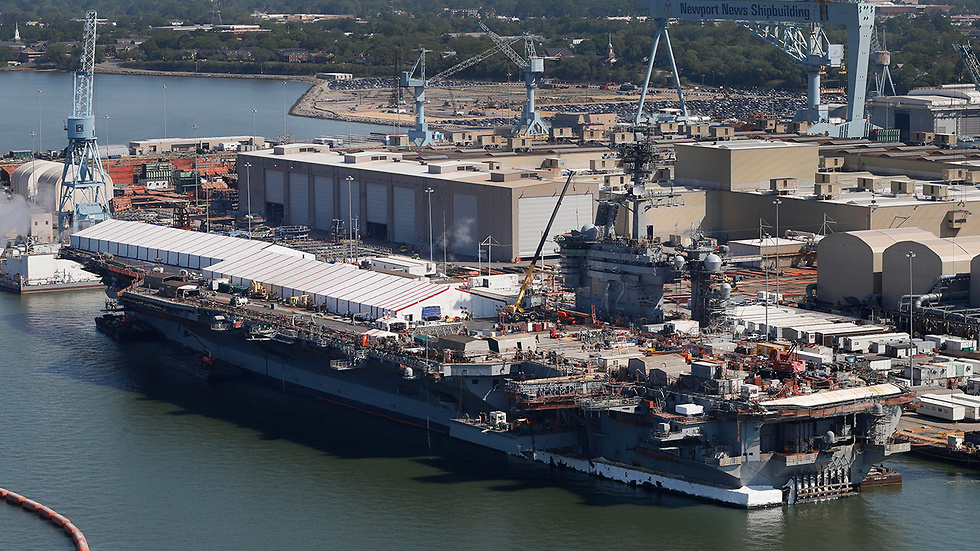
The USS Abraham Lincoln is heading for the Middle East (Photo: AP) (Photo: AP)

The USS Abraham Lincoln is heading for the Middle East (Photo: AP)

In light of a 60-day ultimatum given by Iran last week to Britain, France, Germany, China and Russia to renegotiate the nuclear deal after the U.S. withdrawal, the Mideast could see any number of changes. The Trump peace deal which will purportedly be unveiled in June may create new alliances and will certainly impact on U.S.-Iran relations.

The Iranians are in a bind. They cannot drop out of the Non-Proliferation Treaty because that would be considered an act of war. They cannot drop out of the 2015 nuclear deal because that is the only agreement that will ultimately ensure that they can produce nuclear weapons.

They will most likely make some noise and cause some drama for the duration of those 60 days, at the end of which they will surely pick up the phone to the Americans.

That is of course unless the ayatollahs have completely lost their minds.


Iranian disinformation campaign targeted Israelis 

May 14, 2019

Source: Iranian disinformation campaign targeted Israelis – Middle East – Jerusalem Post

The fake social media accounts were given depth through articles published under their names on websites that allow user-submitted content.

BY LAHAV HARKOV
 MAY 14, 2019 07:10
Iranian President Hassan Rouhani is seen during a public speech in the southern Hormozgan province

An Iranian disinformation campaign targeting Israelis exposed by The Jerusalem Post continues to be active, a report by the University of Toronto’s Citizen Lab released on Tuesday reveals.

Citizen Lab – which researches digital security, human rights and global politics – tracked the Iranian campaign, which they nicknamed “Endless Mayfly,” for a year, doing extensive analysis of the operation and linking it to Iran.

Citizen Lab said their conclusion that the campaign is aligned with Iran is “based on the overall framing of the campaign, the narratives used and indicators from overlapping data in other reports.”

Endless Mayfly – a network made up of fake social media accounts that spread false news reports to amplify narratives critical of Saudi Arabia, the US and Israel – is still active. This is despite its activities being exposed by established news outlets, including the Post, over several years.

One of the cases Citizen Lab researchers studied pertains to a story peddled to Post reporters and to Washington-based Saudi scholar Ali Al-Ahmed in November among others.

Al-Ahmed was contacted by a Twitter account named Mona A. Rahman, posing as a critic of the Saudi government, while reporters at the Post were contacted by a Twitter account named Bina Melamed, claiming to be a human rights activist and freelance journalist, with a link to a website – disguised as the Belfer Center for Science and International Affairs at Harvard University – reporting that ex-Mossad chief Tamir Pardo accused Yisrael Beytenu head Avigdor Liberman of being a Russian spy in an address to the Belfer Center. The story was false.

However, the page looked genuine based on the graphics and fonts it used. A closer look revealed typos, poor grammar and a URL of belfercenter.net, as opposed to the genuine Belfer Center website, belfercenter.org.

The Post exposed the fake site the day it received the links, on November 14, and other news sources have reported on stories falsified by the network, including Buzzfeed and the Belgian periodical Le Soir.

But Citizen Lab identified at least three cases where stories by Endless Mayfly made it into the mainstream media, including a June 2017 Reuters report that six Arab countries called for Qatar to be stripped of hosting privileges for the 2022 World Cup. Several other media outlets republished the news wire’s article, and Reuters later retracted the story.

Another was a falsified Haaretz story claiming that Azerbaijani President Ilham Aliyev invested $600 million of his personal wealth into the Israeli stock exchange.
Armenian news site Armenpress republished the story claiming Haaretz published and then deleted it, implying a cover-up by the Azerbaijani government.
The report’s strongest hypothesis is that Endless Mayfly’s activities come from Iran or an Iran-aligned actor, in that it fits Iranian interests, and none of the content is critical of Iran.

“The extensive content concerning Saudi Arabia fits with themes that are regularly observed in Iranian public statements and propaganda,” the report states, pointing to Iranian Foreign Minister Mohammad Javad Zarif and others accusing Saudi Arabia of supporting global Islamic terrorism, a common theme in the network’s content.
Citizen Lab notes that there was early speculation on some of the network’s stories that they were being promoted by Russia, but the researchers found that this was unlikely.

“Not only is the content heavily focused on issues of concern to Iran, but some of the content is detrimental to Russian relationships and foreign policy,” the report reads.

Endless Mayfly has been active since 2016, spreading 135 false articles via 11 social media personas and 73 domain names, the vast majority of which mimicked established media outlets in English, French and Arabic. Some of the news sources Endless Mayfly impersonated were The GuardianHaaretzLe SoirBloomberg and Breaking Israel News, a site targeting an Evangelical Christian audience.

When the content gains traction on social media, the Endless Mayfly content is deleted and links are redirected to legitimate websites being impersonated, giving an appearance of the content coming from a legitimate source while obscuring the origin of the false narrative. The network’s accounts used screenshots of the articles, so that the message continues to be sent even after the web pages are deleted.

Of 118 false articles with still-accessible content – mostly through cached content, since the pages were deleted – 61 are about Saudi Arabia, 21 are about the US and 18 are about Israel. Of the articles about Israel, 14 are about growing relations between Israel and Muslim-majority countries, with an emphasis on Saudi Arabia. For example, an article impersonating the website Israel in Arabic claimed that Sephardi Chief Rabbi Yitzhak Yosef said that condolences sent by Arab states for the death of former president Shimon Peres were a sign of Israel-Arab rapprochement.

The articles are mostly about international relations and name specific politicians. Their release was often timed to correspond with real world events, such as a falsified Breaking Israel News article using Prime Minister Benjamin Netanyahu’s visit to Azerbaijan in December 2016 as the context for fake quotes by Mossad Chief Yossi Cohen.

The fake social media accounts were given depth through articles published under their names on websites that allow user-submitted content, like Buzzfeed Community, Medium, China Daily and others. One of the ways the fake accounts operate is to privately and publicly engage with journalists, political dissidents and activists.

“We see Endless Mayfly as part of a trend towards more complex, multi-narrative, multi-platform efforts that evolve over time,” the Citizen Lab report explains. “Such campaigns cannot be fully understood or countered without using a wide range of tools that cut across traditional disciplinary silos, such as information security, political science, journalism and education.”


White House reviews military plans against Iran 

May 14, 2019

Source: White House reviews military plans against Iran – American Politics – Jerusalem Post

According to the New York Times, the plan envisions sending up to 120,000 troops to the Middle East should Iran attack American forces or accelerate work on nuclear weapons.

BY REUTERS
 MAY 14, 2019 05:15
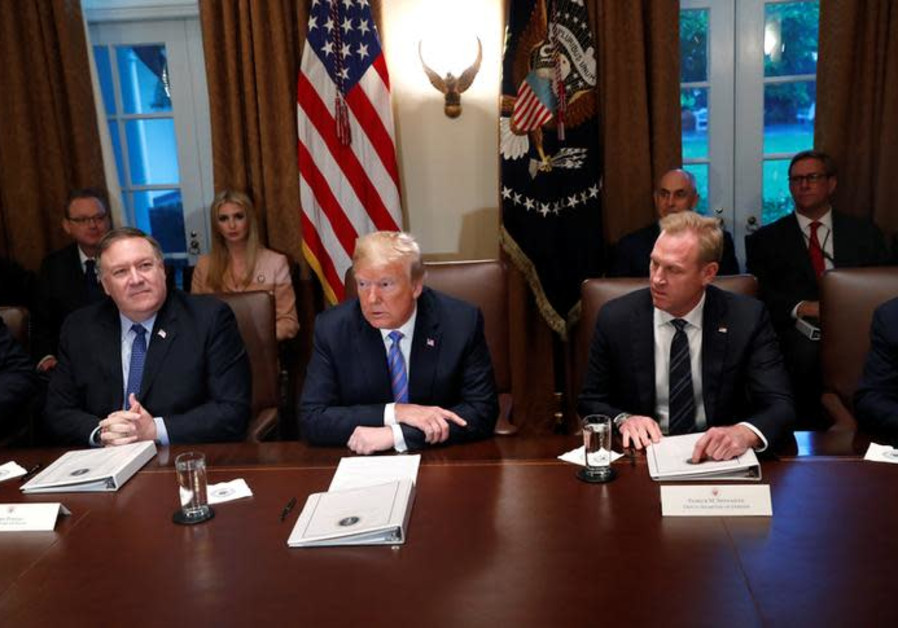
U.S. President Donald Trump participates in a meeting with cabinet members

WASHINGTON – The top U.S. defense official has presented an updated military plan to President Donald Trump’s administration that envisions sending up to 120,000 troops to the Middle East should Iran attack American forces or accelerate work on nuclear weapons, the New York Times reported on Monday.

Citing unnamed administration officials, the Times said Acting Defense Secretary Patrick Shanahan presented the plan at a meeting of Trump’s top security aides on Thursday.

Reuters could not immediately confirm the report.

The White House did not immediately respond to a request for comment. The Pentagon declined to comment.

Tensions between Iran and the United States have intensified since Trump pulled out of a 2015 international deal to curb Iran’s nuclear activities and imposed increasingly strict sanctions on Tehran.

Trump wants to force Tehran to agree to a broader arms control accord and has sent an aircraft carrier and B-52 bombers to the Gulf in a show of force against what U.S. officials have said are threats to U.S. troops in the region.

Iran has said the U.S. is engaging in “psychological warfare,” called the U.S. military presence “a target” rather than a threat and said it will not allow its oil exports to be halted.

The Times said among those attending the Thursday meeting were Trump’s national security adviser John Bolton, CIA Director Gina Haspel, Director of National Intelligence Dan Coats, and Chairman of the Joint Chiefs of Staff General Joseph Dunford.

Several plans were detailed, the Times said, and “the uppermost option called for deploying 120,000 troops, which would take weeks or months to complete.”


Iran’s special marine unit sabotaged tankers. Fujairah was outside US, Saudi, UAE purview – DEBKAfile

May 14, 2019

Source: Iran’s special marine unit sabotaged tankers. Fujairah was outside US, Saudi, UAE purview – DEBKAfile

A special unit of the Iranian Revolutionary Guards marine force carried out the sabotage attack Sunday on 4 Saudi oil tankers outside Fujairah port, DEBKAfile’s exclusive sources reveal.
Iran chose this venue in the Gulf of Oman waters of the United Arab Emirates for its first proactive strike against US sanctions, because it is way off the beaten track of Gulf oil export routes. There were two other reasons:

 (a) To show the US and Gulf oil nations that Tehran doesn’t need to block the Strait of Hormuz in order to disrupt the Gulf’s oil exports to international markets.

(b) The UAE has built the new Habshan-Fujairah oil pipeline there for the purpose of circumventing the Strait of Hormuz. By striking Fujairah, the Iranians demonstrated that alternative shipping routes are just as vulnerable to Iranian attack as the Gulf of Hormuz.

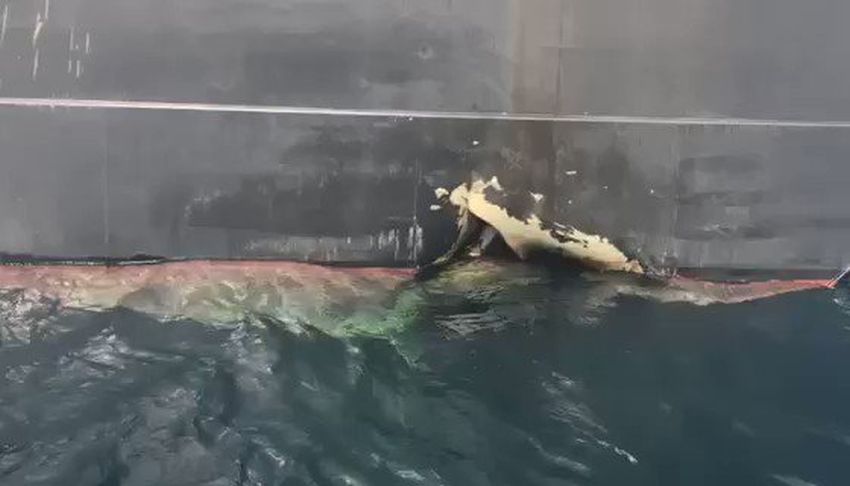
The above picture shows a direct hit to the Norwegian-flagged Andre Victoriaoil tanker which was almost scuttled.

Our sources note that although war tensions between US and Iran were mounting sharply, Western intelligence and the Gulf emirates were caught off-guard by the location of the Iranian attack and its precise targeting. It is now estimated that Tehran carefully calibrated the blasts to cause damage while falling short of sinking the vessels or inflicting casualties.


After tanker blasts, Trump warns Iran will ‘suffer greatly’ if it tries anything

May 14, 2019

Source: After tanker blasts, Trump warns Iran will ‘suffer greatly’ if it tries anything | The Times of Israel

US president tells Tehran not to make ‘bad mistake,’ after US-bound Saudi oil tankers targeted in mysterious Persian Gulf attack

US President Donald Trump speaks during a meeting with Hungarian Prime Minister Viktor Orbán in the Oval Office of the White House on May 13, 2019, in Washington. (AP Photo/ Evan Vucci)

US President Donald Trump speaks during a meeting with Hungarian Prime Minister Viktor Orbán in the Oval Office of the White House on May 13, 2019, in Washington. (AP Photo/ Evan Vucci)

US President Donald Trump warned Monday that Iran would “suffer greatly” were it to “do anything,” after US intelligence suggested Tehran was planning to attack US interests in the region.

“I’m hearing little stories about Iran,” Trump told reporters as he hosted Hungarian Prime Minister Viktor Orban at the White House.

“If they do anything, it would be a very bad mistake,” Trump warned. “If they do anything they will suffer greatly.”

Trump’s warning came as Saudi Arabia said two of its US-bound oil tankers were sabotaged and received “significant damage” Sunday off the coast of the United Arab Emirates.

A UAE government official said the Saudi oil tankers Al-Marzoqah and Amjad were attacked off the emirate of Fujairah along with the Norwegian tanker Andrea Victory and an Emirati ship, the A. Michel.

The Andrea Victory’s managers, Thome Group, said the tanker had a hole in the hull area “after being struck by an unknown object on the waterline”.

The crew were unharmed and the ship was not in any danger of sinking.

Details of the incident were initially unclear. But it raised risks for shippers in a region vital to global energy supplies at a time of increasing tensions between the US and Iran over its unraveling nuclear deal with world powers.

A US official told Reuters Monday that Washington suspected Iranian involvement, but could not prove it.

““This is what Iran does … The sort of thing you could see Iran doing,” the official said.

An Emirati coast guard vessel passes an oil tanker off the coast of Fujairah, United Arab Emirates, on May 13, 2019. (AP Photo/Jon Gambrell)

Asked about the sabotage on Monday, Trump responded: “It’s going to be a bad problem for Iran if something happens.”

Washington has warned shipping companies that “Iran or its proxies” could be targeting maritime traffic in the Persian Gulf region and said it was deploying an aircraft carrier and B-52 bombers to the Persian Gulf to counter alleged threats from Tehran.

An Israel TV report on Friday said Israel has warned the US that Iran is contemplating targeting Saudi oil production facilities.

The unsourced Channel 13 report said the Iranians were “considering various aggressive acts” against American or American-allied targets. Tehran had looked at targeting American bases in the Gulf, but that had been deemed too drastic. The main target they were interested in was “Saudi oil production facilities,” the TV report said.

The Channel 13 report came four days after the same TV channel first reported that the Israeli Mossad had tipped off the White House two weeks ago about an Iranian plan to attack either a US or US-allied target. That earlier report did not specify potential targets for such an ostensible attack.

The spike in tensions comes a week after Iran announced it was suspending some of its commitments under the 2015 nuclear agreement, one year after Trump withdrew from the accord and slapped tough sanctions on the Islamic republic.

In the face of growing international concern, US Secretary of State Mike Pompeo on Monday scrapped a trip to Moscow, heading instead to Brussels to discuss the Iran crisis with his European counterparts.

Trump last week declared himself open to talks with the Iranian leadership, a position reiterated on Monday by Brian Hook, the US special envoy for Iran.

“We believe that Iran should try talks instead of threats. They have chosen poorly by focusing on threats,” Hook told reporters.


Initial US investigation blames Iran for ship sabotage attacks 

May 14, 2019

Source: Initial US investigation blames Iran for ship sabotage attacks | The Times of Israel

Each ship has a 5- to 10-foot hole near or just below water line, and American military team believes they were caused by explosive charges set by Iranians or their proxies

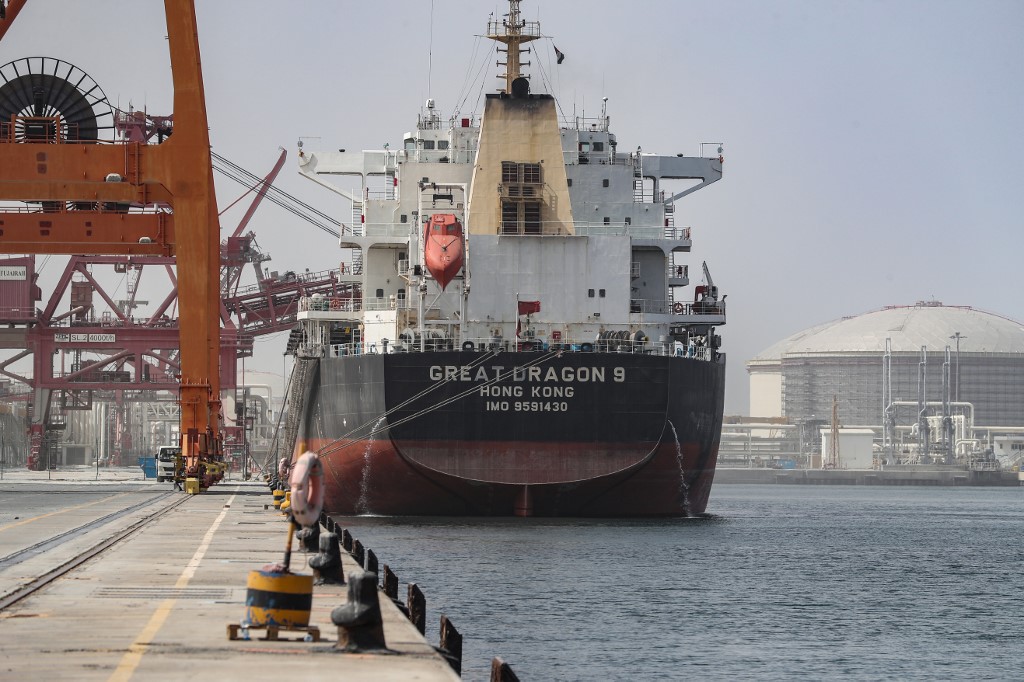
A cargo ship is seen moored at the port of Fujairah in the Gulf Emirate on May 13, 2019. (KARIM SAHIB / AFP)

A cargo ship is seen moored at the port of Fujairah in the Gulf Emirate on May 13, 2019. (KARIM SAHIB / AFP)

WASHINGTON (AP) — An American military team’s initial assessment is that Iranian or Iranian-backed proxies used explosives Sunday to blow large holes in four ships anchored off the coast of the United Arab Emirates, a US official said Monday.

The official said each ship has a 5- to 10-foot hole in it, near or just below the water line, and the team’s early belief is that the holes were caused by explosive charges.

The team of US military experts was sent to investigate the damages at the request of the UAE, but American officials have not provided any details about what exactly happened or any proof as yet about the possible Iranian involvement in the explosions.

The official was not authorized to discuss the investigation publicly and spoke on condition of anonymity.

Gulf officials have characterized the damage to the tankers as sabotage. Two Saudi oil tankers, a Norwegian-flagged vessel, and a bunkering tanker flagged in Sharjah, one of the UAE’s seven emirates, all suffered similar damage Sunday.

An Emirati coast guard vessel passes an oil tanker off the coast of Fujairah, United Arab Emirates, on May 13, 2019. (AP Photo/Jon Gambrell)

The US issued a new warning to sailors as the UAE’s regional allies condemned Sunday’s alleged attack that the UAE says targeted four ships off the coast of its port city of Fujairah.

It came just hours after Iranian and Lebanese media outlets aired false reports of explosions at the port.

Citing heightened tensions in the region, the United Nations called on “all concerned parties to exercise restraint for the sake of regional peace, including by ensuring maritime security” and freedom of navigation, UN deputy spokesman Farhan Haq said.

America is deploying an aircraft carrier and B-52 bombers to the Persian Gulf to counter alleged, still-unspecified threats from Tehran.

The scale of the alleged sabotage also remains unclear. A statement from Saudi Energy Minister Khalid al-Falih said the kingdom’s two oil tankers, including one due to later carry crude to the US, sustained “significant damage.” However, a report from Sky News Arabia, a satellite channel owned by an Abu Dhabi ruling family member, showed the allegedly targeted Saudi tanker Al Marzoqah afloat without any apparent damage.

The MT Andrea Victory, another of the allegedly targeted ships, sustained a hole in its hull just above its waterline from “an unknown object,” its owner Thome Ship Management said in a statement. Images Monday of the Andrea Victory, which the company said was “not in any danger of sinking,” showed damage similar to what the firm described.

This photo provided by the United Arab Emirates’ National Media Council shows the Norwegian-flagged oil tanker MT Andrea Victory off the coast of Fujairah, United Arab Emirates, Monday, May 13, 2019. (United Arab Emirates National Media Council via AP)

Emirati officials identified the third ship as the Saudi-flagged oil tanker Amjad. Ship-tracking data showed the vessel still anchored off Fujairah, apparently not in immediate distress. The fourth ship was the A. Michel, a bunkering tanker flagged in Sharjah, one of the UAE’s seven emirates.

The US Navy’s 5th Fleet, which patrols the Persian Gulf and wider region from its base in Bahrain, declined to comment on the incident. The Navy runs a small supply operation out of the nearby Emirati naval base in Fujairah.

Authorities in Fujairah, also a UAE emirate, also declined to speak to the AP. Emirati officials stopped AP journalists from traveling by boat to see the ships.

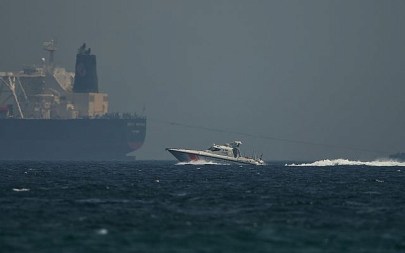
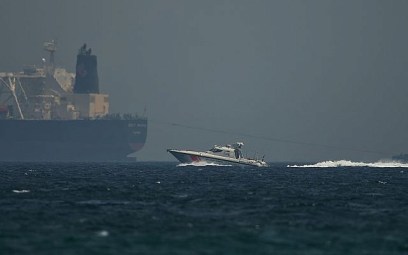
The incident raises questions about maritime security in the UAE, home to Dubai’s Jebel Ali port, the largest man-made deep-water harbor in the world that is also the US Navy’s busiest port of call outside of America. From the coast, AP journalists saw an Emirati coast guard vessel patrolling near the area of one of the Saudi ships in Fujairah, some 130 miles (210 kilometers) northeast of Dubai on the Gulf of Oman.

Fujairah also is about 140 kilometers (85 miles) south of the Strait of Hormuz, the narrow mouth of the Persian Gulf through which a third of all oil at sea is traded. The alleged sabotage caused jitters in global oil markets, as benchmark Brent crude rose in trading to over $71.50 a barrel Monday, a change of 1.3%.

Al-Falih, the Saudi energy minister, said the attacks on the two Saudi tankers happened at 6 a.m. Sunday. He said “the attack didn’t lead to any casualties or oil spill,” though he acknowledge it affected “the security of oil supplies to consumers all over the world.”

It is “the joint responsibility of the international community to protect the safety of maritime navigation and the security of oil tankers, to mitigate against the adverse consequences of such incidents on energy markets, and the danger they pose to the global economy,” he said, according to the statement carried by the state-run Saudi Press Agency.

The US Energy Department later said it was “monitoring the oil markets, and is confident they remain well-supplied.”

This photo from March 12, 2017, shows a an Iranian oil facility on Kharg Island, on the shore of the Persian Gulf. (AFP Photo/Atta Kenare)

Shortly after the Saudi announcement, Iran’s Foreign Ministry called for further clarification about what exactly happened with the vessels. The ministry’ spokesman, Abbas Mousavi, was quoted by the official IRNA news agency as saying there should be more information about the incident.

Mousavi also warned against any “conspiracy orchestrated by ill-wishers” and “adventurism by foreigners” to undermine the maritime region’s stability and security. Both the UAE and Saudi Arabia are staunch opponents of Iran’s government.

Asked at the White House about the incident, President Donald Trump responded: “It’s going to be a bad problem for Iran if something happens.”

Tensions have risen since Trump withdrew America from the 2015 nuclear deal between Iran and world powers, and restored US sanctions that have pushed Iran’s economy into crisis. Last week, Iran warned it would begin enriching uranium at higher levels in 60 days if world powers failed to negotiate new terms for the deal.


Mystery deepens in ‘sabotage’ of oil tankers in Persian Gulf

May 13, 2019

Source: Mystery deepens in ‘sabotage’ of oil tankers in Persian Gulf – Middle East – Jerusalem Post

Conflicting reports and current tensions in the Gulf obscure knowledge of the incident.

BY SETH J. FRANTZMAN
 MAY 13, 2019 15:58
NIMITZ-CLASS aircraft

As tensions rose over the weekend between the US and Iran in the Persian Gulf, several vessels were “sabotaged” off the coast of the United Arab Emirates. Both Iranian media and the UAE reported the incident, but 24 hours after it happened, much of what occurred was still shrouded in mystery, with allegations of “explosions” and questions about how severe the “sabotage” actually was.
The Saudi energy minister confirmed that two of its oil tankers were targeted in a “sabotage attack.” It took place as the tankers were “on their way to the Arabian Gulf” via the Emirate of Fujairah, the statement said. The UAE said that in total four boats were damaged. The UAE’s The National claimed that “Iranian and Lebanese media outlets aired false reports of explosions.”
The same reports in the UAE said the tankers had been on their way to the US after being loaded with Saudi oil. No one was hurt, the UAE said.
Saudi Arabia and Bahrain see the incident as a dangerous threat to the safety of navigation. But what is the actual threat? What actually happened? What do we know? Saudi Arabian energy minister Khalid al-Falih did discuss the attack, indicating that the kingdom sees it as a threat to freedom of navigation in the Gulf.
The Iranians are also warning of conspiracies involving “foreign” players. Iran’s Press TV speculated that the sabotage might have been due to drones from Yemen or even the US “dropping bombs to ignite the region.” Tensions between the US and Iran escalated in recent days with Iranian officials threatening the US and the US sending a variety of forces to the region, including bolstering its aircraft carrier strike force in the Gulf. The US has warned that Iran or its allies could target ships in the region.
Conflicting reports appear to provide contradictory stories. Pro-Iranian media initially claimed that there had been explosions and a fire at the Fujairah tanker terminal. But later reports about the “sabotage” downplayed what had happened and pointed to something occurring at sea in the Gulf of Oman, either on the way to Fujairah or merely passing the area at sea. Fujairah is situated on the Gulf of Oman around 10 kilometers from the Oman border. Ships that arrive there don’t have to navigate the Strait of Hormuz, they can arrive from the Indian Ocean and then leave without going into the Persian Gulf.
The official UAE statement says that the incident took place “near UAE territorial waters in the Gulf of Oman, east of Fujairah.” The website Maritime Bulletin notes that “it didn’t happen in port, but on outer anchorage.” A map of oil tankers currently off the coast shows them anchored several kilometers off Fujairah. The site points out that fire boats were not dispatched to aid those tankers, meaning reports of a fire were mistaken. But what is “significant damage” that was apparently inflicted after the “sabotage,” which is what Riyadh says happened?
Let’s look at the timeline. The first reports of “massive explosions” were put online around 11 a.m. on Sunday, first in Lebanese media and then in Sputnik, the Russian news channel. Sputnik claimed that “the Lebanon-based Al-Mayadeen broadcaster said, citing local media, that several heavy explosions occurred in the port of Fujairah.” The report claimed this happened at around 4 to 7 a.m., that “Seven to 10 oil tankers were in flames.” The next reports in Al-Mayadeen began at around four in the afternoon. By midnight, the channel was holding numerous interviews about the incident. It noted that the UAE denied there had been explosions and discussed whether the incident might lead to a military escalation.
What adds to the mystery is how or why someone would report “explosions” that never happened, now that evidence appears to indicate there were no explosions in the port and that the ships, although damaged, did not blow up. Is it possible that whoever carried out the sabotage also sought to fan the flames of rumors? That would point to a pro-Iranian source, since the initial sources of the information were published in sites that lean toward the Iranian regime. On the other hand, would the countries that are more critical of Iran have a reason to downplay the incident not to increase escalation?
The US, which has played a key role in upping the tensions with Iran, has not leapt on the story to point to Iranian aggression. Does that mean evidence does not point toward Iran or that the US primarily is upping its rhetoric but wants to avoid a real escalation? Any real incident occurring near the oil corridor of the Strait of Hormuz will certainly lead to economic concerns across the globe. So far “sabotage” is the term the victims prefer for what happened to their ships. What precisely happened has not been revealed, which adds to the rumor mill, and tensions, rather than reducing them. Riyadh may be waiting to see what is the best course of action. Bringing reporters aboard would reveal what happened and settle the mystery. For now, Riyadh says the incident is a “criminal act” and threatens navigation.

The incident grew in its international implications when the Norwegian-registered oil tanker MT Andrea Victory reported that it had been damaged as well and had a hole in its hull. More details were not immediately released but the tanker was shown near numerous other tankers around 10 km off the coast off Fujairah int he Gulf of Oman.