Archive for May 17, 2019

Herman Wouk, the legendary author who brought Judaism into the mainstream

May 17, 2019

Wouk, an Orthodox Jew, embodied the new postwar possibilities for American Jews and his writing helped normalize Judaism within the larger American landscape

Today, 9:18 pm

https://www.timesofisrael.com/herman-wouk-the-legendary-author-who-brought-judaism-into-the-mainstream/

BOSTON (JTA) — Herman Wouk, who died Friday at the age of 103, was an Orthodox Jewish author whose literary career spanned nearly seven decades and who helped usher Judaism into the American mainstream.

Wouk was the author of two dozen novels and works of nonfiction, including the Pulitzer Prize-winning “The Caine Mutiny” from 1951, which was a fixture on best-seller lists for two years, and the best-selling “Marjorie Morningstar” from 1955. Both books were later adapted for the screen. His novels “The Winds of War” and “War and Remembrance” both became successful television miniseries. By the mid-1950s, Wouk’s popular and financial success as an American Jewish novelist was unmatched.

Even more unusual for a writer of Wouk’s celebrity was his Orthodox observance and treatment of Jewish religious practice in his writing. Wouk embodied the new postwar possibilities for American Jews and his writing was both cause and effect of the normalization of Judaism within the larger American Judeo-Christian tradition.

When he appeared on the cover of Time in 1955, the magazine described Wouk’s blend of worldly success and Jewish religious observance as paradoxical.

“He is a devout Orthodox Jew who had achieved worldly success in worldly-wise Manhattan while adhering to dietary prohibitions and traditional rituals which many of his fellow Jews find embarrassing,” the article said.

At the time, Wouk’s fame seemed like an incredible feat for an Orthodox Jew. Unlike other Jewish novelists, who had focused on Jewish immigrant culture and tended to portray religious Judaism as foreign and exotic, Wouk made Jewish religious observance appear mainstream in his books. Scenes of a Passover seder and a bar mitzvah service became scenes of middle-class American life in “Marjorie Morningstar.”

None of this escaped criticism. With the exception of “The Caine Mutiny,” critical reviews of Wouk’s works were typically mixed. Both Jewish and mainstream reviewers expressed dissatisfaction with the quality of his writing, his conservative outlook on politics and sex, and his treatment of Judaism. Some rabbis even criticized Wouk for mocking Jewish observance — though in the coming decade, Philip Roth’s fiction would radically change their perspective on what counted as literary denigration of Judaism.

In this file photo taken on May 7, 2006 writer Herman Wouk attends the Broadway Opening of ‘The Caine Mutiny Court-Martial’ in New York City. (Andrew H. Walker/Getty Images North America/AFP)

Meanwhile, fellow Jewish novelists like Roth, Saul Bellow and Norman Mailer viewed Wouk as conforming to middle-class American values that prioritized marriage, family, religion and service to country. Not only did he stay married to the same woman for more than six decades, but Wouk expressed pride in his military service, for which he received a US Navy Lone Sailor Award. Wouk in turn saw the others as bowing to fashionable literary trends of rebellion and shocking readers.

From his debut novel, “Aurora Dawn,” in 1947, to his last book, “Sailor and Fiddler: Reflections of a 100-Year-Old Author” — published in 2015 when he had reached a century — Wouk wove themes central to the American Jewish experience throughout his work. Even “The Caine Mutiny,” a less Jewish novel than later works, included Lt. Barney Greenwald, who gives a moving speech in defense of a lieutenant who helped keep Greenwald’s Jewish mother from being “melted down into a bar of soap” by the Nazis.

Set in the 1930s and ’40s, Wouk’s fourth book, “Marjorie Morningstar,” heralded a new era for American Jews. The novel followed the journey of a New York Jewish protagonist no different from any other bright and beautiful girl, an image further cemented by Natalie Wood’s portrayal of Marjorie in the 1958 film version.

Not since the 1927 film “The Jazz Singer,” starring Al Jolson, had a movie shown Jewish religious scenes. But unlike “The Jazz Singer,” Marjorie and her religion were not exoticized — Jewishness was portrayed as middle class and American. With Marjorie, Wouk had succeeded in making a story about Jews into an American story.

Marjorie also marked a turning point in his writing career. With confidence that he had readers who would follow him to less popular subjects, Wouk’s fourth book, his first work of nonfiction, took on the subject of Orthodox Judaism. Published in 1959, “This Is My God” was a primer about the Jewish religion intended for both Jewish and non-Jewish readers.

As other American celebrities would do, Wouk used his fame to draw attention to his little-understood religion. Serialized in the Los Angeles Times, “This Is My God” introduced readers to such Jewish particulars as the laws of kashrut and family purity and the holidays of Sukkot and Shavuot. The book showed, through anecdotes from Wouk’s glamorous Manhattan life, that it was possible to be both a modern American and Orthodox.

At a time when Jews still encountered quotas at universities and discrimination in hiring and housing, Wouk’s example provided inspiration. “This Is My God” became a popular bar mitzvah and confirmation gift for young Jews of all movements.

This May 15, 2000, file photo, shows Pulitzer Prize-winning author Herman Wouk in Palm Springs, Calif. Wouk died in his sleep early Friday, May 17, 2019, according to his literary agent Amy Rennert. He was 103. (AP Photo/Douglas L. Benc Jr., File)

Born in the Bronx borough of New York City on May 27, 1915, Wouk was the second of three children of Esther and Abraham Wouk, both immigrants from Belarus. Abraham Wouk began work as a laundry laborer and found financial success in the laundry business. Herman spent his early years in the Bronx receiving basic Hebrew training from his grandfather. His childhood included the teasing and bullying that was common for bookish boys in rough neighborhoods.

From an early age, Wouk found a haven in reading, family and Judaism. After graduating from the public Townsend Harris High School, Wouk entered Columbia University, where he served as editor of its humor magazine. He also took courses at Yeshiva University.

Upon graduating, Wouk briefly abandoned his religious lifestyle when he became a radio dramatist, writing for the comedian Fred Allen. Although the work was lucrative, Wouk felt a void in a life without Jewish learning and religion, and he eventually returned to his previous level of observance.

In the coming years he would reside in the Virgin Islands, New York’s Fire Island, Washington, DC, Manhattan and Palm Springs, California — and in all those locales he was involved in setting up Jewish study and prayer groups.

Following Pearl Harbor, Wouk joined the Navy and served in the Pacific, where he was an officer aboard two destroyers, participated in eight invasions and won several battle stars. Wouk also started to write “Aurora Dawn” while aboard ship. After Wouk sent part of a draft to one of his former Columbia professors, the professor connected Wouk with an editor, and a contract followed.

While his ship was being repaired in California, Wouk met Betty Sarah Brown, a graduate of the University of Southern California and a civilian Navy employee. After her conversion to Judaism, the couple married in 1945 and had three sons. Betty, who died in 2011, would eventually become her husband’s literary agent.

Wouk is survived by two sons, Nathaniel and Joseph, and three grandchildren. His oldest son, Abraham, died in a 1951 swimming pool accident.

(Rachel Gordan teaches American Jewish studies at Boston University and Brandeis University. She interviewed Herman Wouk at his home in Palm Springs in February 2011.)

BDS is antisemitic rules German Bundestag

May 17, 2019

Germany is the first country in the European Union to rule that the BDS movement is antisemitic.

By JERUSALEM POST STAFF
May 17, 2019 19:08
https://www.jpost.com/Israel-News/German-Bundestag-rules-BDS-is-antisemitic-589999
The German flag is pictured at the Reichstag building in Berlin, Germany, November 7, 2017. (photo credit: REUTERS/HANNIBAL HANSCHKE)

The German Bundestag ruled on Friday that the anti-Israel Boycott, Divestment and Sanctions (BDS) movement is antisemitic, calling on German Federal offices and bodies not to collaborate in any way with events that advocate to boycott or delegitimize the Jewish state.

Prime Minister Benjamin Netanyahu congratulated the Bundestag on its “important decision to recognize BDS as an anti-Semitic movement and that it is forbidden to support it.

I particularly appreciate the Bundestag’s call on Germany to stop funding organizations that work against the existence of the State of Israel. I hope this decision will lead to concrete action and I call on other countries to adopt similar legislation.”

Minister of Strategic Affairs Gilad Erdan reacted to the decision by calling it “an important step in the war against the boycott and the new antisemitism” and argued that “the true face of the boycott movement had been exposed.”

He called on other countries in the European Union to follow Germany.
The spokesperson of the Foreign Ministry Emmanuel Nahshon also lauded the decision. In a tweet he noted the large majority that supported the resolution.
Blue and White’s Yair Lapid said, “The decision by the Bundestag to label the BDS movement antisemitic and call on the German government to oppose all forms of BDS is an important and just step. BDS is the modern manifestation of an ancient hatred. Now is the time for the rest of Europe to follow Germany’s lead.”

Israel’s Ambassador to Germany Jeremy Issacharoff tweeted,”The Bundestag has just adopted a Resolution condemning BDS and Anti-Semitism by a wide margin. We welcome this initiative by its sponsors. It has broader European significance given that BDS makes no attempt to build coexistence and peace between Israel and all of its neighbors.”

Israel’s ambassador to the United Nations Danny Danon hailed the decision and called other world leaders to join Germany “and work to shape a future without hate of Jews and Israel,” a press release sent by spokesperson of the Israeli Mission in the UN reported on Friday.

“German showed BDS activists that lies do not carry with them immunity, but a heavy price,” he said.

Chairman of the Jewish Agency, Isaac Herzog: “German Bundestag made a bold statement today resolving BDS as antisemitic. A significant step in fighting hate crimes on the rise throughout the globe. Leaders of the free world have moral responsibility to follow in Germany’s footsteps and stop this dangerous trend.”

The World Zionist Organization also welcomed the recent ruling, and expressed the wish to see other parliaments in Europe and the world pass similar votes, Walla reported on Friday.

The resolution was initiated by the governing Christian Democratic Union (CDU), the Social Democratic Party (SPD), the Green Party and the Free Democratic Party (FDP).

The motion, termed “Resisting the BDS movement decisively – fighting antisemitism,” calls on the government to “not provide premises and facilities under the administration of the Bundestag to organizations that express themselves in antisemitic terms or question Israel’s right to exist.”
In practicality, the motion is being understood as recognizing that Israel represents the Jewish people and is the home of the Jewish collective, therefore delegitimizing Israel is considered antisemitism.
Uri Bollag contributed to this report. 

The Story of Israel 

May 17, 2019


My beloved father, Herman Wouk ז”ל

May 17, 2019

May 27, 1915 – May 17, 2019

I am sitting shiva at my home in Eilat at Chaverim Balaguna.

If you wish to visit, please PM first.

Image may contain: 2 people, people standing, sunglasses and outdoor

Iranian firewall set for US cyberattack – payback for Tehran’s strikes on Gulf oil – DEBKAfile

May 17, 2019

Source: Iranian firewall set for US cyberattack – payback for Tehran’s strikes on Gulf oil – DEBKAfile

The successful testing of a firewall for protecting Iran’s “industrial facilities” against cyberattack was suddenly revealed by Iran’s Telecommunications Minister Mohammad Javad Azari Jahromi on Thursday, May 16.
This post on the minister’s Instagram page indicated that his government is bracing for an American cyberattack in response for Tehran’s strikes against Gulf oil infrastructure this week.

Jahromi cited “Iran’s university scientists” as having developed a firewall for industrial automation systems to “neutralize industrial sabotage such as that caused by Stuxnet in power networks, and it has been successfully tested,” he said.

DEBKAfile’s military and intelligence sources read these comments in the context of proliferating reports that cyberattack on Iranian facilities is one of the optional responses under consideration at White House and Pentagon consultations, for Iran’s sabotage of oil tankers in UAE waters and Saudi pumping stations. The Iranian minister’s comments reflected Tehran’s belief that this option is real.

Jahromi’s words also tie in with the belligerent comment by the new IRGC commander Maj. Gen. Hossein Salami on Wednesday: “We are on the cusp of a full-scale confrontation with the enemy,” the Fars news agency reported. “This moment in history, because the enemy has stepped into the field of confrontation with us with all the possible capacity, is the most decisive moment of the Islamic revolution.”

The general did not elaborate on his meaning – or even name the enemy, but the phrase “all possibly capacity” is now seen as referring to a possible American cyberattack. The coming issue of DEBKA Weekly (for subscribers) out on Friday, May 17, offers exclusive details on the escalating contest between the US and Iran, their respective tactics, and the calculations guiding their actions. To sign on, click here.


Trump says he hopes there’ll be no war between US, Iran

May 17, 2019

Source: Trump says he hopes there’ll be no war between US, Iran | The Times of Israel

US president makes comment ahead of meeting with Swiss president, reportedly aimed at opening communications with Tehran

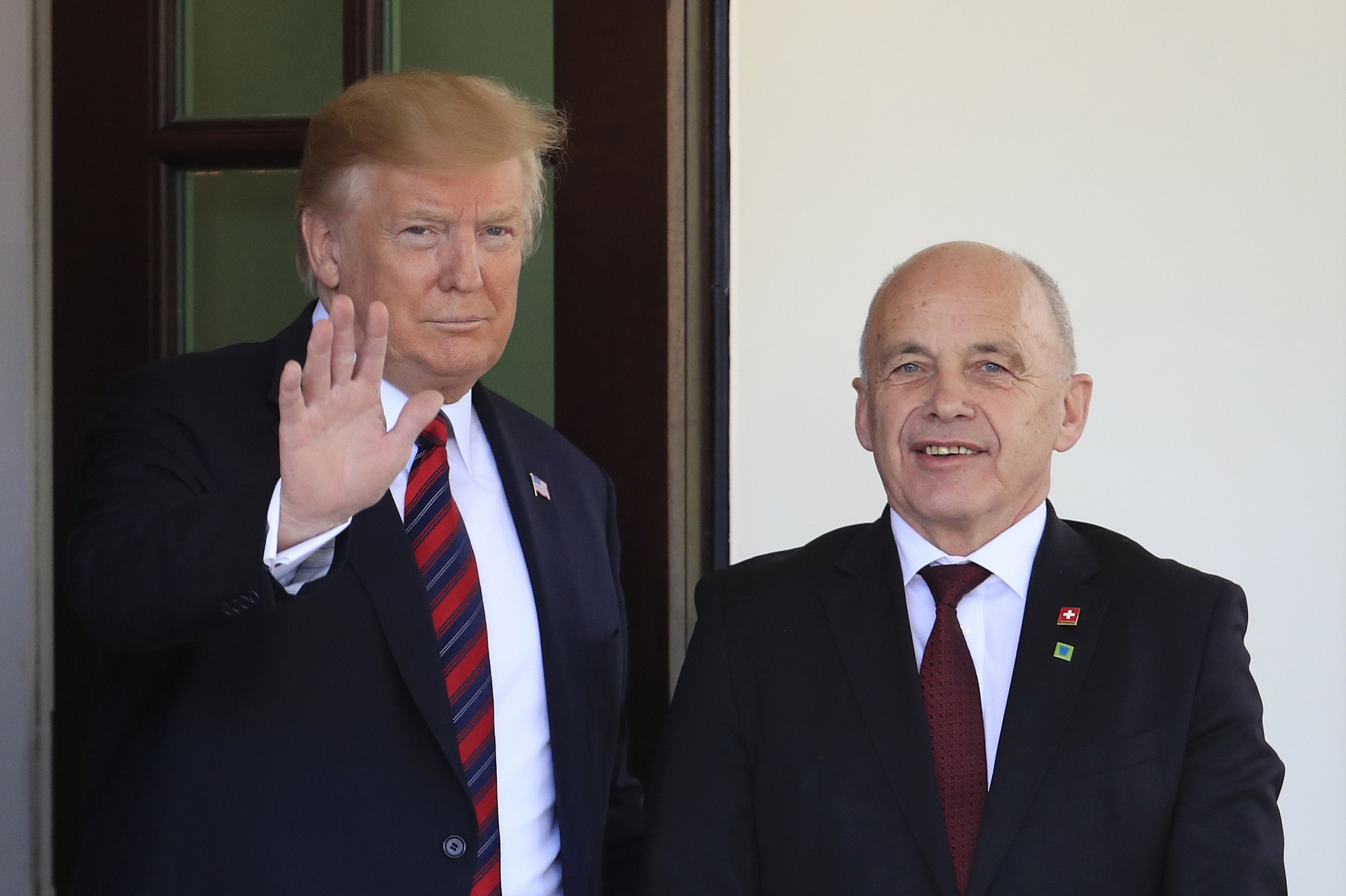
President Donald Trump welcomes Switzerland's Federal President Ueli Maurer to the White House in Washington, May 16, 2019. (AP Photo/Manuel Balce Ceneta)

President Donald Trump welcomes Switzerland’s Federal President Ueli Maurer to the White House in Washington, May 16, 2019. (AP Photo/Manuel Balce Ceneta)

US President Donald Trump said Thursday that he hopes mounting tensions with Iran do not spiral into war.

“Hope not,” Trump said in response to a reporter’s question about a possible armed conflict with Tehran, ahead of his meeting at the White House with Swiss President Ueli Maurer.

Trump was set to meet with Maurer in an effort to open a communications channel with Iran, CNN reported.

The meeting would discuss “Switzerland’s role in facilitating diplomatic relations and other international issues,” the White House said.

Trump has expressed interest in speaking with the Iranians, although Tehran has not reciprocated, with Supreme Leader Ayatollah Ali Khamenei saying that negotiations with Washington would be “poison.”

As the US and Iran have no diplomatic ties, the Swiss embassy in Tehran handles US interests in the country and serves as a diplomatic channel between Washington and the Islamic Republic. Switzerland also hosted negotiations to finalize the nuclear deal.

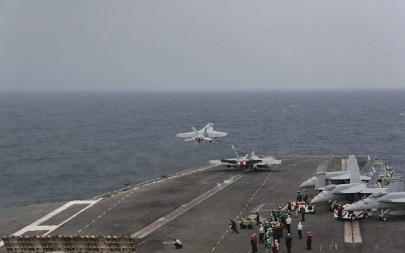
Two F/A-18E Super Hornets launch from the flight deck of the Nimitz-class aircraft carrier USS Abraham Lincoln in the Mediterranean Sea while the ship travels to the Persian gulf, April 25, 2019. (US Navy/Matt Herbst)

Tensions between Washington and Tehran have soared in recent weeks with a war of words between American and Iranian leaderships, allegations of sabotage attacks targeting oil tankers off the coast of the United Arab Emirates, a drone attack on a Saudi oil pipeline claimed by Yemen’s Iranian-allied rebels, and the dispatch of US warships and bombers to the region.

At the root of the recent spike in Persian Gulf tensions appears to be Trump’s decision a year ago to pull the US from Iran’s nuclear deal with world powers, embarking on a maximalist sanctions campaign against Tehran to cripple the country’s economy.

Last week, US officials said they had detected signs of Iranian preparations for potential attacks on US forces and interests in the Middle East, but Washington has not publicly provided any evidence to back up claims of an increased Iranian threat.

Iran’s supreme leader said on Tuesday that “there is not going to be any war” with the United States, but that there will also be no renegotiation of the nuclear deal.

In a speech to state officials, Khamenei said the showdown between the Islamic Republic and the United States was a test of resolve rather than a military encounter.

“This face-off is not military because there is not going to be any war. Neither we nor them [the US] seek war. They know it will not be in their interest,” he said, as quoted on the official Khamenei.ir website.

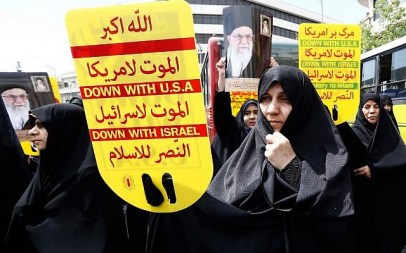
Iranian demonstrators raise placards and portraits of Iran’s Supreme Leader Ayatollah Ali Khamenei as they chant anti-US slogans during a rally in the capital Tehran on May 10, 2019. (STR/AFP)

On Wednesday, however, the head of Iran’s Islamic Revolution Guard Corps warned Tehran was on the brink of full-on conflict with its enemy.

US Secretary of State Mike Pompeo said on Tuesday in Sochi, Russia: “We fundamentally do not seek a war with Iran.”

The US State Department on Wednesday ordered all nonessential government staff to leave Iraq, and Germany and the Netherlands both suspended their military assistance programs in the country.

On Monday, Trump rejected a report saying he was considering sending 120,000 troops to counter Iran, but didn’t rule out deploying “a hell of a lot more” soldiers in the future.

Also on Wednesday, Iran formally dropped the limitations on uranium enrichment and the production of heavy water that were laid down in its landmark 2015 nuclear deal with world powers, an official from the Atomic Energy Organization of Iran announced.

The official said the move was in accordance with instructions from Iran’s Supreme National Security Council and was part of a recent 60-day Iranian ultimatum for renegotiating the pact, the regime-affiliated Iranian Students News Agency reported.

Meanwhile in Washington, lawmakers from both parties in Congress demanded more information on the White House’s claims of rising threats in the Middle East. The top leaders in Congress — the so-called Gang of Eight– were to receive a classified briefing from the administration on Thursday.

House Speaker Nancy Pelosi said the White House has resisted a wider presentation for all lawmakers, part of what Democrats say is a pattern of stonewalling. Some Republicans, including Senator Mitt Romney, sought out their own briefings.

Pelosi said Trump has “no business” moving toward a Middle East confrontation without approval from Congress.

“We have to avoid any war with Iran,” she told fellow Democrats in a meeting, according to a person in the room who spoke on condition of anonymity to discuss comments from the private gathering.


Armed pro-Iran groups in Iraq reject US claim of threat

May 17, 2019

Source: Armed pro-Iran groups in Iraq reject US claim of threat | The Times of Israel

Shiite militia leader accuses Washington of ‘trying to create an uproar in Iraq and the regions under any pretext’

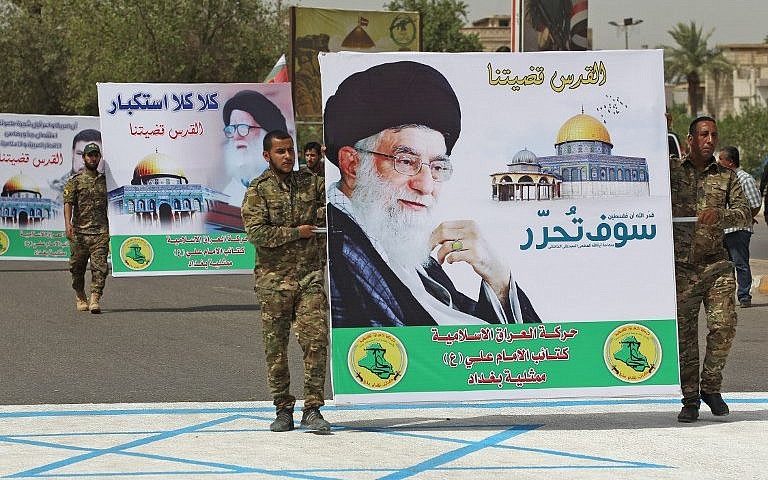
Shiite militiamen carry a poster of Iran's supreme leader, Ayatollah Ali Khamenei, while stepping on a drawing of an Israeli flag during a Jerusalem Day rally in the Iraqi capital Baghdad, June 8, 2018. (AFP/Ahmad Al-Rubaye)

Shiite militiamen carry a poster of Iran’s supreme leader, Ayatollah Ali Khamenei, while stepping on a drawing of an Israeli flag during a Jerusalem Day rally in the Iraqi capital Baghdad, June 8, 2018. (AFP/Ahmad Al-Rubaye)

BAGHDAD, Iraq — Two key pro-Iran Iraqi armed groups Thursday rejected a US claim of an “imminent” threat against American personnel that prompted Washington to order the evacuation of some staff from its Baghdad embassy.

Nasr al-Shomari, a military commander for the Iran-backed Harakat al-Nujaba, told AFP the claim was “a pretext” by Washington to create “an uproar” in Iraq.

A leader of the pro-Iran Asaib Ahl al-Haq group, Layth al-Azari, said the allegations were part of a “psychological war” by the United States.

The two groups are key factions within the Shiite-dominated Hashed al-Shaabi organization which played a key role in the battle to defeat the Islamic State jihadist group in Iraq.

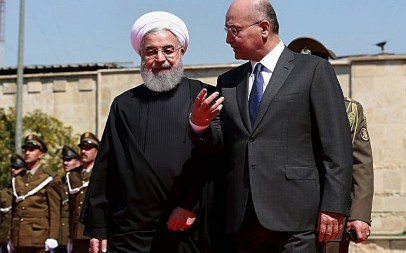
Iraqi President Barham Salih, right, walks with visiting Iranian President Hassan Rouhani, after inspecting an honor guard at Salam Palace, Baghdad, March 11, 2019. (AP/Khalid Mohammed)

On Wednesday the United States ordered the evacuation of non-emergency staff from its Baghdad embassy, citing an “imminent” threat from Iranian-linked armed groups in Iraq.

It came as tensions soared in the region amid a stand-off between Washington and Tehran.

The evacuation order, also covering the US consulate in Arbil, came 10 days after the Pentagon deployed an aircraft carrier task force and B-52 bombers to the Gulf to fend off an unspecified alleged plot by Tehran to attack US forces or allies.

Senior US State Department officials, speaking on condition of anonymity, said the threat came from Iraqi militia “commanded and controlled” by Tehran’s Islamic Revolutionary Guard Corps.

“It is directly linked to Iran, multiple threat streams directly linked to Iran,” said one official.

“This is an imminent threat to our personnel,” said a second official.

But Shomari dismissed the allegations, telling AFP the United States “is trying to create an uproar in Iraq and in the region under any pretext.”

“If we put out a statement concerning the United States, they consider it a threat, but if the United States carries out an attack, isn’t that a threat?,” he added.

Azari echoed his remarks, saying the US claim and its recent action in the region “are a provocation aimed at escalating a psychological war” due to the prevailing tensions with Iran.

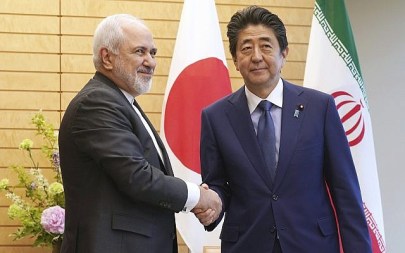
Iranian Foreign Minister Mohammad Javad Zarif, left, and Japanese Prime Minister Shinzo Abe, right, shake hands at Abe’s official residence in Tokyo May 16, 2019. (AP/Eugene Hoshiko, Pool)

Shiite-majority Iraq has been under pressure from the US to limit its ties with neighboring Iran, particularly after Washington last year withdrew from the 2015 nuclear deal with Tehran and hit it with sanctions.

Iranian Foreign Minister Mohammad Javad Zarif on Thursday accused the United States of an “unacceptable” escalation of tensions.

Zarif, who is in Japan and is set to visit China on Friday, said Iran was exercising “maximum restraint.”


Congressional leaders briefed on classified Iran threat

May 17, 2019

Source: Congressional leaders briefed on classified Iran threat | The Times of Israel

Move comes after criticism over lack of information from White House about Gulf buildup; lawmakers tight-lipped but full House and Senate to be briefed next week

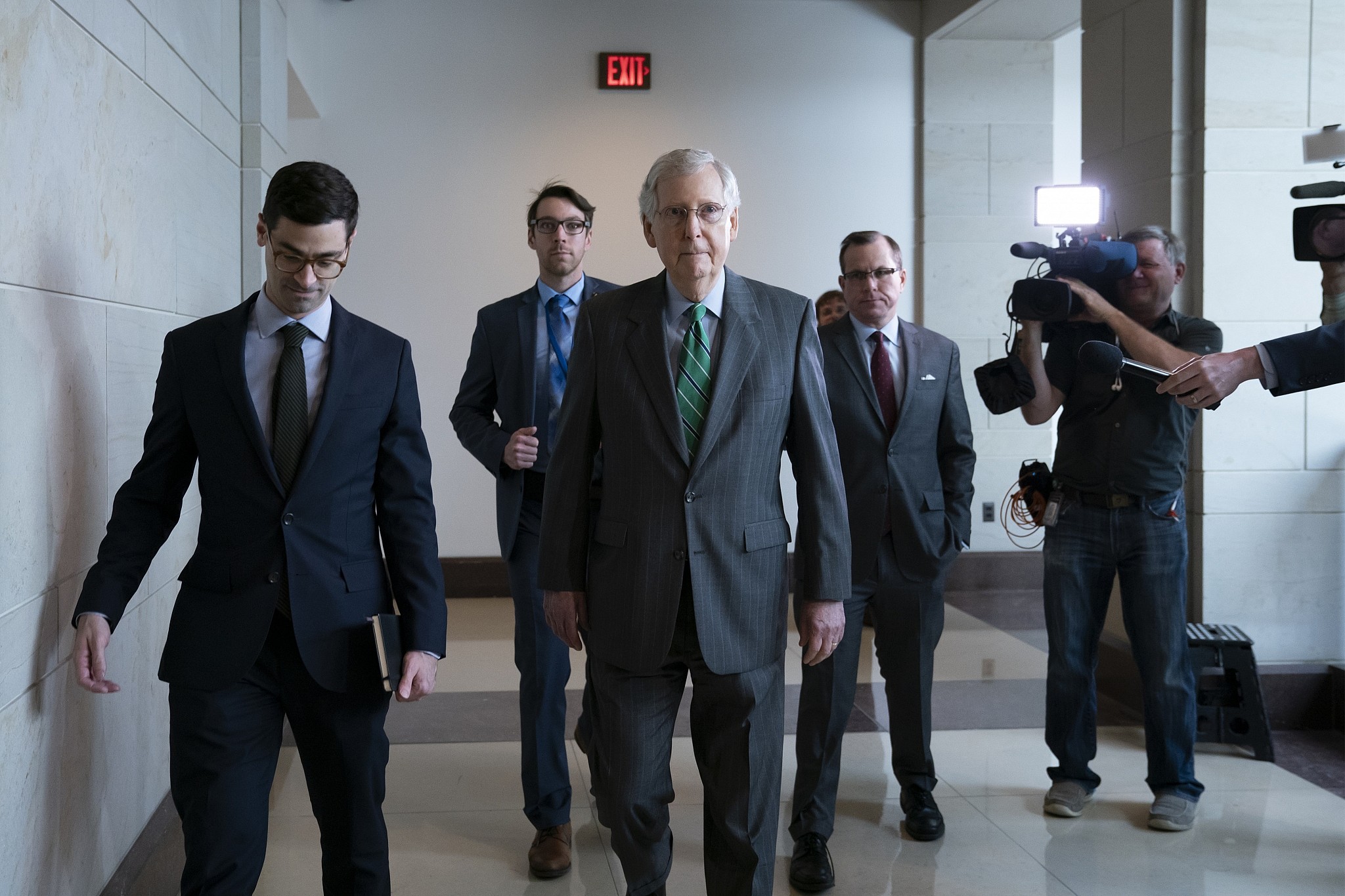
Senate Majority Leader Mitch McConnell, R-Ky., passes reporters as he and other top congressional leaders head to a classified briefing on Iran after members of both parties asked for more information on the White House’s claims of rising threats in the Middle East, at the Capitol in Washington, Thursday, May 16, 2019. (AP/J. Scott Applewhite)

WASHINGTON — Congressional leaders received a classified briefing on Iran from the White House Thursday following criticism that lawmakers have been kept out of the loop about recent military moves in the Middle East.

Members of the so-called Gang of Eight were tight-lipped as they left the briefing. The ranking member of the Senate intelligence committee, Sen. Mark Warner of Virginia, refused to comment on the classified information discussed, but said more lawmakers should be informed of the Iran threat.

“I think obviously there are certain protections that have to be maintained for Gang of Eight but it’s very important that more members hear this story,” Warner told reporters.

Classified briefings on Iran will also be given next week to the full House and Senate.

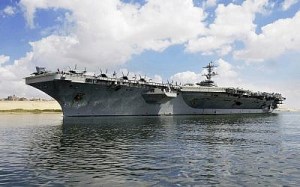
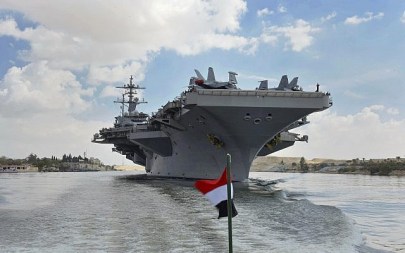
The USS Abraham Lincoln sails south in the Suez canal near Ismailia, Thursday, May 9, 2019 (Suez Canal Authority via AP)

Frustration has been mounting in Congress about the lack of consultation from the White House after the Trump administration sent military assets to the Middle East to protect US interests and on Wednesday partially evacuated the US embassy in Baghdad.

Asked Thursday at the White House if escalating tensions with Iran will lead to war, Trump replied, “I hope not.”

Speaking from the Senate floor, Republican Sen. Marco Rubio of Florida defended the White House’s actions. Rubio, a member of the Senate intelligence committee, described “a persistent and clear stream of information” about Iranian threats to US troops and other assets in the Middle East.

In this photo provided by Tasnim News Agency, Iran’s Revolutionary Guard members walk on the coast during a drill around Qeshm Island, Iran, Saturday, Dec. 22, 2018. State TV is reporting that Iran’s Revolutionary Guard ground force has launched a drill near the strategic Strait of Hormuz, the passageway for nearly a third of all oil traded by sea. (Hamed Malekpour/Tasnim News Agency via AP)

Iranian forces “and their proxies in the region pose a serious and potentially imminent threat to US forces and US civilians in Iraq and in the broader Middle East,” he said. Rubio also said he welcomed upcoming briefings and suggested that skepticism about the administration’s assessment of the Iran threat has been fueled by a lack of information.

Sen. Jim Risch of Idaho, the chairman of the Senate Foreign Relations Committee, said the White House raised the alarm on Iran after seeing multiple pieces of intelligence and that it wasn’t “a single item that (moved) the needle.”

“There’s been public reporting about the movement of rockets on a boat. … I would caution, I would strongly caution everyone not to grab onto that and say ‘aha! This is it.’ That is the tip of the iceberg,” he said.

The Trump administration has taken a hard line on Iran. Trump pulled the US out of the Iran nuclear deal last year and has re-imposed punishing sanctions that have crippled Tehran’s economy. Most recently the Trump administration designated Iran’s Revolutionary Guard Corps as a foreign terrorist organization in April.

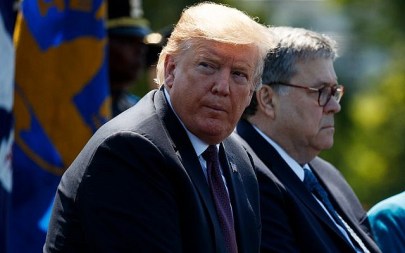
US President Donald Trump sits with Attorney General William Barr during the 38th Annual National Peace Officers’ Memorial Service at the US Capitol, May 15, 2019, in Washington. (AP Photo/Evan Vucci)

Some lawmakers accused the White House of provoking Iranian retaliation.

“The Iranians moving weapons around is not a new thing and that they may be doing it at a more rapid pace after we have threatened them with a carrier strike group is not surprising,” said Rep. Jim Himes, D-Conn., a senior member of the House Intelligence Committee.

State Department officials said threats in the region were credible and based on intelligence showing Iranian-backed militias had been moving personnel and weaponry as well as stepping up surveillance of US and US-affiliated facilities in Iraq and other parts of the Middle East. The officials were not authorized to comment publicly by name and spoke only on condition of anonymity.

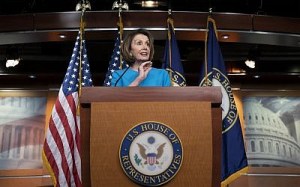
Speaker of the House Nancy Pelosi, D-Calif., meets with reporters at her weekly news conference at the Capitol in Washington, Thursday, May 16, 2019. (AP/J. Scott Applewhite)

Members of Congress, senior US officials and allies have expressed skepticism in response to warnings from the administration about Iran’s regional threat. Many lawmakers referenced the role of false intelligence in the lead-up to the 2003 invasion of Iraq when questioning current intelligence on Iran.

House Speaker Nancy Pelosi, a member of the Gang of Eight, said failure to inform Congress is “part of a pattern” for the Trump administration “that is not right” because the power to declare war resides with the Congress.

“So I hope that the president’s advisers recognize that they have no authorization to go forward in any way” against Iran, Pelosi said.


US official: Iranian missiles spotted on boats in Gulf 

May 17, 2019

Source: US official: Iranian missiles spotted on boats in Gulf | The Times of Israel

Washington reveals key concern behind military buildup, citing worries over Iranian ‘intent’ in strategic shipping area

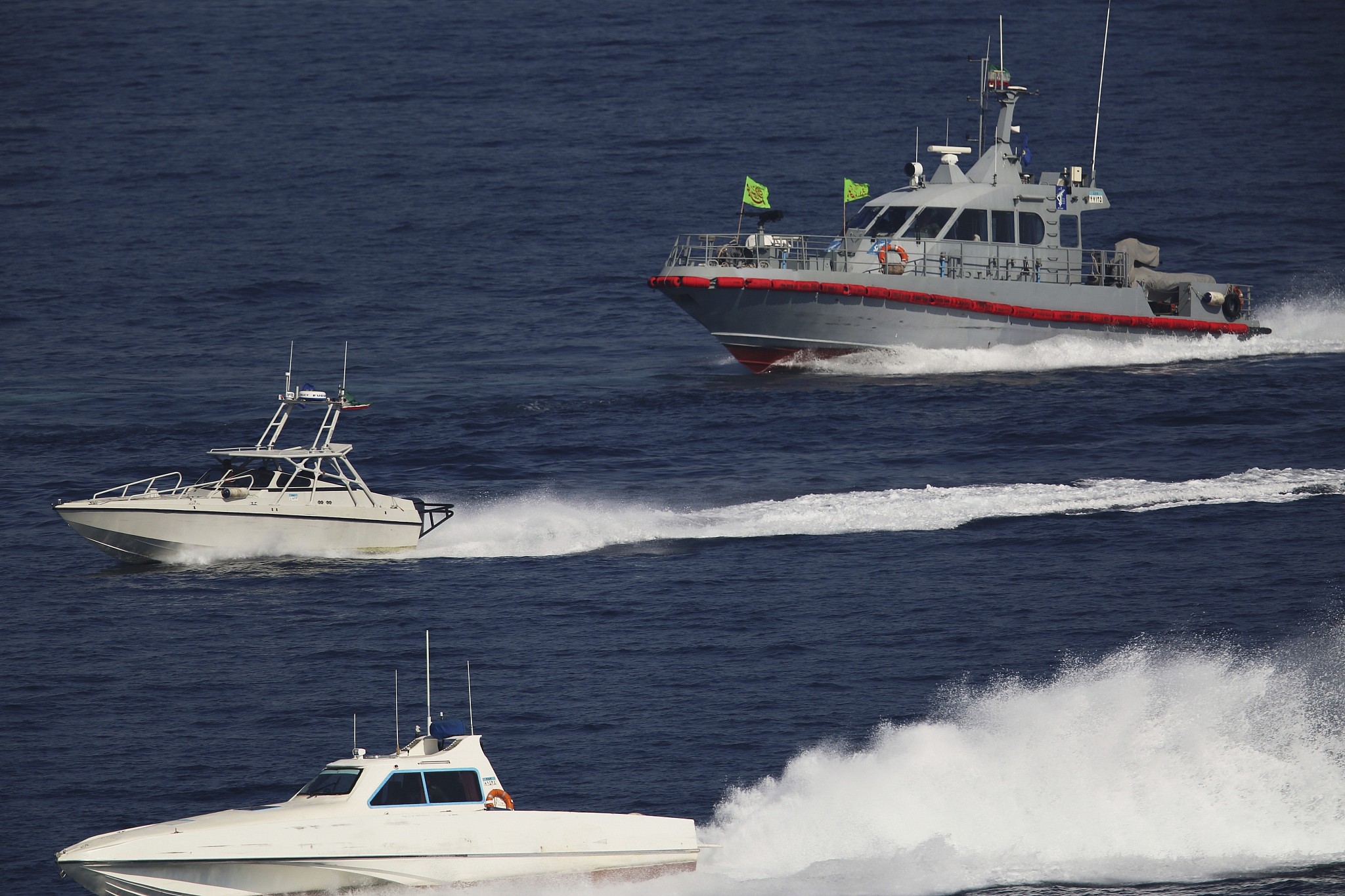
Illustrative: Patrol boats belonging to Iran’s Islamic Revolutionary Guard Corps shadow the USS John C. Stennis aircraft carrier on December 21, 2018 (AP /Jon Gambrell)

WASHINGTON — A US official said Thursday that Iranian missiles loaded on small boats in the Persian Gulf were among the “threats” that have triggered a beefed-up military deployment in the region.

“The missiles on civilian boats are a concern,” said the official, who asked not to be named.

The person was confirming reports in The New York Times saying that Washington reacted to aerial photos from US intelligence agencies showing traditional boats carrying Iranian missiles in the Gulf, one of the world’s most strategic waterways.

The fully-assembled missiles were loaded on the boats by Iran’s Revolutionary Guards, which the US has designated a “foreign terrorist organization,” the newspaper reported.

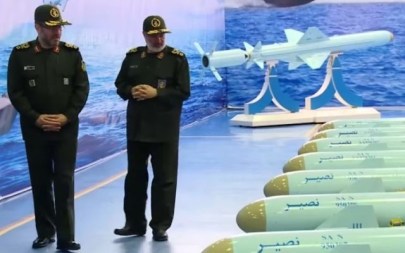
Screen capture from video showing Iranian Defense chief Brigadier General Hossein Dehqan, left, and Iranian Revolutionary Guard Corps Navy Commander Rear Admiral Ali Fadavi during a delivery ceremony of the Nasir anti-ship cruise missile, April 22, 2017. (YouTube/Press TV Videos)

“What the military and the intelligence are concerned about is the intent,” the US official told AFP.

The Trump administration has been ramping up pressure on Tehran for the past 10 days, reinforcing its military presence in the Gulf region to ward off what it warned were Iranian threats to US assets and allies there, without providing any evidence of the danger.

The Iranian ambassador to the United Nations, Majid Takht-Ravanchi, did not deny the shipment of the missiles in an interview with National Public Radio.

“We have to prepare ourselves,” he said. “I am not in a position to talk about military preparedness in Iran. But what I can tell you is that all these allegations are part of fake allegations which are being directed against Iran to prepare something like a conflict or something like a war.”


Top Iranian general tells militias to ‘prepare for proxy war’ — report

May 17, 2019

Source: Top Iranian general tells militias to ‘prepare for proxy war’ — report | The Times of Israel

Intel source says Qassem Soleimani’s comments during meeting with Iraqi groups ‘not far off’ a call to arms, may have led US to pull diplomatic staff from countries

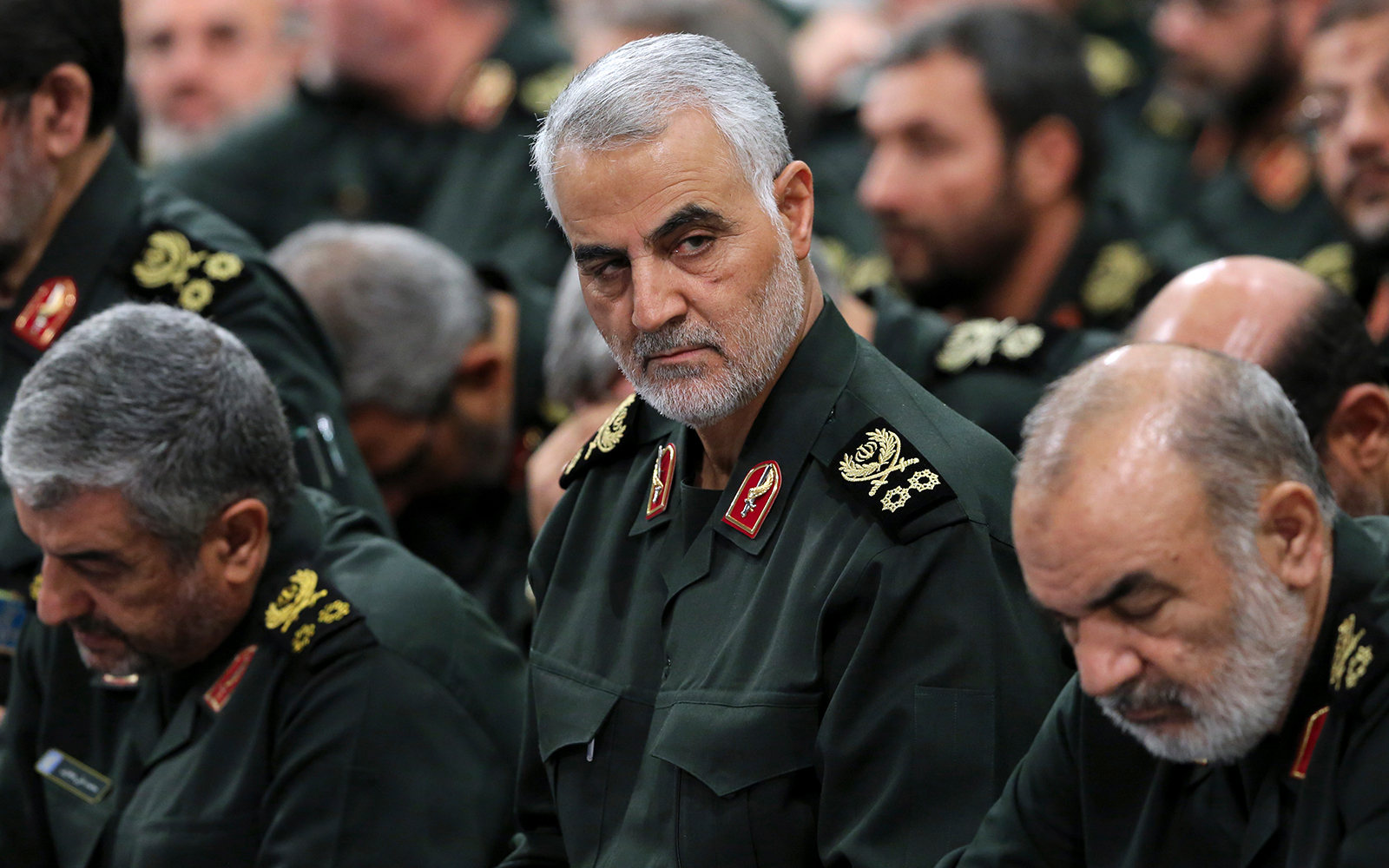
Islamic Revolutionary Guard Corps commander Gen. Qassem Soleimani, center, attends a meeting with Supreme Leader Ayatollah Ali Khamenei and Revolutionary Guard commanders in Tehran, Iran, September 18, 2016. (Office of the Iranian Supreme Leader via AP)

Islamic Revolutionary Guard Corps commander Gen. Qassem Soleimani, center, attends a meeting with Supreme Leader Ayatollah Ali Khamenei and Revolutionary Guard commanders in Tehran, Iran, September 18, 2016. (Office of the Iranian Supreme Leader via AP)

Top Iranian general Qassem Soleimani has met with Iran-linked Iraqi militias in Baghdad, telling them to “prepare for proxy war,” according to a report Thursday, amid rapidly rising tensions between the Washington and Tehran.

Soleimani called the militias for a meeting three weeks ago, the UK’s Guardian newspaper reported on Thursday. It wasn’t immediately clear when the meeting actually took place.

“It wasn’t a call to arms, but it wasn’t far off,” a senior intelligence source said.

The meeting played a part in the US State Department’s decision on Wednesday to order all nonessential government staff to leave Iraq, as Germany and the Netherlands both suspended their military assistance programs in the country.

While Soleimani has regularly met with leaders of Iraqi Shia groups in recent years, this meeting stood out, the source said.

Tensions between Washington and Tehran have soared in recent weeks with a war of words between American and Iranian leaderships, allegations of sabotage attacks targeting oil tankers off the coast of the United Arab Emirates, a drone attack on a Saudi oil pipeline claimed by Yemen’s Iranian-allied rebels, and the dispatch of US warships and bombers to the region.

Last week, US officials said they had detected signs of Iranian preparations for potential attacks on US forces and interests in the Middle East, but Washington has not publicly provided any evidence to back up claims of an increased Iranian threat.

The New York Times reported Thursday that photographs showing Iranian missiles mounted on small boats in the Persian Gulf had led the US to dispatch the warship fleet and bombers to the region.

But the root of the recent spike in Persian Gulf tensions appears to be US President Donald Trump’s decision a year ago to pull the US from Iran’s nuclear deal with world powers, embarking on a maximalist sanctions campaign against Tehran to cripple the country’s economy.

The USS Abraham Lincoln sails south in the Suez canal near Ismailia toward the Persian Gulf, May 9, 2019. (Suez Canal Authority via AP)

Iran’s supreme leader said on Tuesday that “there is not going to be any war” with the United States, but that there will also be no renegotiation of the nuclear deal.

In a speech to state officials, Khamenei said the showdown between the Islamic Republic and the United States was a test of resolve rather than a military encounter.

“This face-off is not military because there is not going to be any war. Neither we nor them [the US] seek war. They know it will not be in their interest,” he said, as quoted on the official Khamenei.ir website.

On Wednesday, however, the head of Iran’s Islamic Revolution Guard Corps warned Tehran was on the brink of full-on conflict with its enemy.

US Secretary of State Mike Pompeo said on Tuesday in Sochi, Russia: “We fundamentally do not seek a war with Iran.”

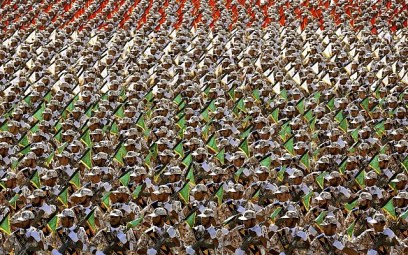
Members of Iran’s Revolutionary Guard march during an annual military parade at the mausoleum of Ayatollah Khomeini, outside Tehran, Iran, on September 22, 2014. (AP Photo/Ebrahim Noroozi)

On Monday, Trump rejected a report saying he was considering sending 120,000 troops to counter Iran, but didn’t rule out deploying “a hell of a lot more” soldiers in the future.

Also on Wednesday, Iran formally dropped the limitations on uranium enrichment and the production of heavy water that were laid down in its landmark 2015 nuclear deal with world powers, an official from the Atomic Energy Organization of Iran announced.

The official said the move was in accordance with instructions from Iran’s Supreme National Security Council and was part of a recent 60-day Iranian ultimatum for renegotiating the pact, the regime-affiliated Iranian Students News Agency reported.

Trump said Thursday that he hopes mounting tensions with Iran do not spiral into war.

“Hope not,” Trump said in response to a reporter’s question about a possible armed conflict with Tehran, ahead of his meeting at the White House with Swiss President Ueli Maurer.

Trump was set to meet with Maurer in an effort to open a communications channel with Iran, CNN reported.