Archive for May 16, 2019

U.S.-Iran tensions: Sides seek deescalation as Iraq simmers 

May 16, 2019

Source: U.S.-Iran tensions: Sides seek deescalation as Iraq simmers – analysis – Middle East – Jerusalem Post

Iran and the US appeared to be heading towards some sort of conflict, perhaps involving Iran’s proxy forces in the region. But both countries want to climb down from this crisis.

BY SETH J. FRANTZMAN
 MAY 15, 2019 18:09
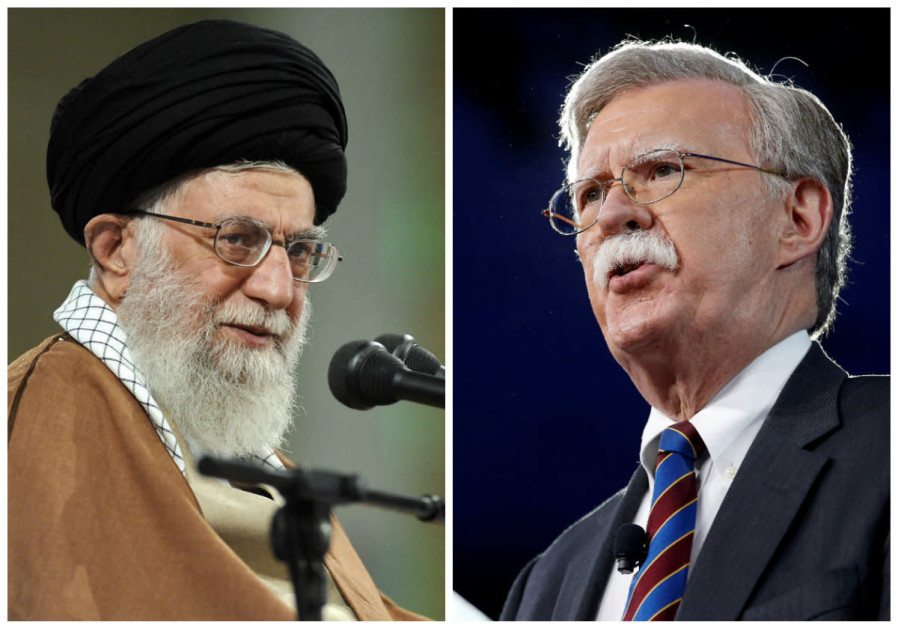
Khamenei and Bolton

For a week and a half, tensions between the US and Iran have been growing. It began on Sunday, May 5, when the US announced that it was alarmed by “escalatory indications and warnings” from Iran. The result, 10 days later, is that Iran and the US appeared to be heading toward some sort of conflict, perhaps involving Iran’s proxy forces in the region. But both countries want to climb down from this crises.
How did it happen? US National Security Adviser John Bolton announced that the USS Abraham Lincoln Carrier Strike Group and a bomber force would be sent to the Persian Gulf to confront any Iranian threats on May 5. That included a threat against US “maritime and land-based forces,” CNN said. The force deployment was a “message” to Iran.
But some were skeptical as to whether the forces weren’t already destined for deployment anyway. Between May 5 and 10 more US assets would arrive, including four B-52s and eventually a Patriot missile battery and amphibious warfare forces as well.
US statements as the buildup took place presented a clear and consistent message. Bolton warned against any attacks by Iran or its proxies. This included any attacks by the Islamic Revolutionary Guard Corps.
On May 8 US Sen. Marco Rubio also tweeted: “Kata’ib Hezbollah and Asaib Ahl al-Haq are Shia militias equipped, trained and directed by Iran’s IRGC. If they attack our 50,000 [sic] US personnel and/or our facilities in Iraq it should be considered no different than a direct attack.” He later revised the tweet to note it was only 5,000.
What is important in his tweet is not the numbers but the singling out of two powerful Shi’ite militias that are part of the Popular Mobilization Forces in Iraq. The US has been seeking to highlight the threat of these units in recent months. The US also designated Harakat Hezbollah al-Nujaba as a terrorist group in March. Nujaba threatened attacks on the US in Iraq on May 14.
“The Islamic Republic of Iran has engaged in an escalating series of threatening actions and statements in recent weeks,” US Secretary of State Mike Pompeo said on May 10. “Any attacks by them or their proxies against US citizens or our interests will be answered with a swift and decisive response.”
Pompeo’s comments came in the context of an unannounced visit to Iraq on May 7. He then changed plans again – instead of going to Moscow, he went to Brussels on May 13, and then to Sochi to meet with his Russian counterpart. The Brussels trip was, at least in part, a response to Iran’s May 9 threats to walk away from the Iran deal in 60 days if European countries didn’t do more for Iran. Pompeo also shared details of Iran’s escalating threats when he went to Brussels. CNN and Reuters reported that he shared Iran intel with European powers.
The icing on the cake for the rising tensions were two May 13 statements. US President Donald Trump said: “If they [Iran] do anything, they will suffer greatly.” In addition, Brian Hook, senior policy adviser to the secretary of state and special representative for Iran, said in Brussels: “Tehran will be held accountable for the attacks of its proxies. They cannot organize, train and equip their proxies and then expect anyone to believe that they had no role. And so we will not make a distinction between the Iranian government and its proxies.”
MEANWHILE, ON the ground the situation was also escalating.
Four ships were sabotaged in the predawn hours of May 13 in the Gulf of Oman off the UAE’s Fujairah port. The extent of the damage and what caused it were not immediately clear, but an unnamed US official told the press that an initial assessment pointed toward Iran and Iran’s allies. Iran blamed a third country, and one Iranian politician blamed Israel.
Then, on May 14, Iranian-backed Houthi rebels in Yemen used drones to attack Saudi Arabia, hitting oil facilities. Like the ship sabotage, initial reports emerged from pro-Houthi Al-Masirah TV, and was picked up by Iranian websites.
Although critics of the Trump administration have presented these attacks as “false flags” or “Gulf of Tonkin” conspiracies, the reality is that they emerged not from pro-Trump media, but from pro-Iranian media.
Amid the sabotage in the Gulf of Oman, the US also issued warnings to citizens in Iraq on May 12. Then the State Department ordered nonemergency personnel to leave Iraq on May 15.
Iraqi sources told media that US intelligence had revealed that Iranian-backed Shia militias had placed rockets and missiles in Iraq and that they threatened the US or US allies. Rumors also circulated in the US that Washington was looking over plans to deploy up to 120,000 troops in case of conflict with Iran.
Iranian media has been particularly tight-lipped regarding the escalation. Initially, the head of the IRGC, Hossein Salami, briefed the Iranian parliament on May 12 about the tensions, laying out the IRGC strength along the Persian Gulf and plans to defend the country. But the usual bluster and threats were reduced. Instead, Press TV ran articles on May 15 saying Ayatollah Khamenei had ruled out a war and that Pompeo had said the US didn’t want war either.
The focus now shifts to Iraq, where tensions are rising.
The US has known about Iranian threats in Iraq for years. The last Lead Inspector General Report, ending March 31, which reviews US anti-ISIS operations in Iraq, noted that Shia militias, which are part of Iraq’s paramilitary Popular Mobilization Forces, had interfered with US-led coalition activities. It noted that in one case a patrol was forced to return to its base after PMF harassment. PMF checkpoints had refused a US unit’s passage. In addition, the Iranian presence in eastern Iraq was so influential it limited the US ability to conduct surveillance operations against ISIS. This clearly points to a major Iranian-backed challenge to the US in Iraq.
Amid the tensions, this challenge may be the next hurdle for Washington’s policy-makers. Trump has waded into this before, saying that the US would use its bases in Iraq to “watch” Iran, in speeches in December and January. In both cases Iraqi politicians condemned the US and said their country should not be a battleground for the US and Iran.


Trump’s Iran moves trigger warnings, demands from Congress

May 16, 2019

Source: Trump’s Iran moves trigger warnings, demands from Congress | The Times of Israel

Top leaders in Congress to receive a classified briefing from administration Thursday; Pelosi: Trump has ‘no business’ moving toward confrontation without approval from lawmakers

US President Donald Trump shakes hands with House Speaker Nancy Pelosi as they attend the 38th Annual National Peace Officers’ Memorial Service on May 15, 2019, in Washington, DC. (Photo by Brendan Smialowski / AFP)

US President Donald Trump shakes hands with House Speaker Nancy Pelosi as they attend the 38th Annual National Peace Officers’ Memorial Service on May 15, 2019, in Washington, DC. (Photo by Brendan Smialowski / AFP)

WASHINGTON (AP) — Lawmakers from both parties in Congress demanded more information on the White House’s claims of rising threats in the Middle East, warning US President Donald Trump off a dangerous escalation with Iran.

The top leaders in Congress — the so-called Gang of Eight— are to receive a classified briefing from the administration on Thursday. But House Speaker Nancy Pelosi said the White House has resisted a wider presentation for all lawmakers, part of what Democrats say is a pattern of stonewalling. Some Republicans, including Utah Sen. Mitt Romney, sought out their own briefings as the administration called US personnel home from Iraq and sent military might to the Persian Gulf, claiming unspecified threats linked to Iran.

Pelosi said Trump has “no business” moving toward a Middle East confrontation without approval from Congress.

“We have to avoid any war with Iran,” she told fellow Democrats in a meeting, according to a person in the room who spoke on condition of anonymity to discuss comments from the private gathering.

On Wednesday, the US ordered all nonessential personnel to leave Iraq, and last week an aircraft carrier group and other resources were shifted to the Persian Gulf region. In public and in private, officials are sticking by the administration’s warnings of serious threats from Iranian-backed forces in the region, yet they reject the idea that the U.S. moves are a prelude to war. Trump himself denied a report Tuesday that the administration had reviewed a plan to send 120,000 troops.

Two F/A-18E Super Hornets launch from the flight deck of the Nimitz-class aircraft carrier USS Abraham Lincoln in the Mediterranean Sea, April 25, 2019. (US Navy/Matt Herbst)

Still, the actions are exposing skepticism in the US and among foreign allies, a legacy of the 2003 invasion of Iraq that was based on false intelligence. US officials have not publicly provided any evidence to back up claims of an increased Iranian threat.

“Congress has not authorized war with Iran, and the administration, if it were contemplating military action with Iran, must come to Congress to seek approval,” said Sen. Bob Menendez of New Jersey, the top Democrat on the Senate Foreign Relations Committee. He said he had never seen anything like the “non-answers” coming from the administration.

Republicans — and even some Democrats — who have been briefed said the threats are legitimate.

The chairman of Foreign Relations Committee, Sen. Jim Risch of Idaho, said that based on the information he received he supports the administration actions, including the repositioning of the USS Abraham Lincoln aircraft carrier to the Gulf.

“The threat is real,” said Democrat Sen. Mark Warner of Virginia, the ranking member of the Senate Intelligence Committee. But, he said, “The administration is doing a dreadful job of consulting with Congress and keeping the vast majority of members of Congress informed about what’s happening.”

And Republican Sen. Marco Rubio of Florida said the information he’s seen shows “by far the single most imminent potential conflict of this significance” in his eight years in Congress. He said, “The intelligence is unmistakable and clear, and it’s backed by observable movement on the ground.”

A cargo ship is seen moored at the port of Fujairah in the Gulf Emirate on May 13, 2019. (KARIM SAHIB / AFP)

Still, Romney expressed support for the Senate Democrats’ request for more information in a classified briefing, and Risch said a broader briefing for senators, perhaps next week, was “in the works.”

Romney said it’s “inconceivable” that Trump would start a conflict with Iran. “There’s no appetite for going to war in the Middle East,” he told reporters.

State Department officials said threats in the region were credible and based on intelligence showing Iranian-backed militias had been moving personnel and weaponry as well as stepping up surveillance of US and US-affiliated facilities in Iraq and other parts of the Middle East. The officials were not authorized to comment publicly by name and spoke only on condition of anonymity.

They pushed back against speculation that the decision to bring nonessential personnel home from Iraq was a prelude to military conflict. There is no US desire for war, said one official, who had returned earlier Wednesday from Europe with Secretary of State Mike Pompeo.

Several Democrats pinned the sudden moves in part on national security adviser John Bolton, known for his hawkish views. Some have suggested Pompeo and Bolton don’t see eye-to-eye on the US strategy, and Trump found it necessary to comment on that.

“There is no infighting whatsoever,” he tweeted Wednesday. “All sides, views, and policies are covered,” and he reserves the “decisive and final decision,” he said.

“I’m sure that Iran will want to talk soon,” he said, without elaboration.

Donald J. Trump

@realDonaldTrump

Donald J. Trump

@realDonaldTrump

….Different opinions are expressed and I make a decisive and final decision – it is a very simple process. All sides, views, and policies are covered. I’m sure that Iran will want to talk soon.

Earlier this year, Congress forced Trump into the first veto of his administration over a resolution that passed the House and Senate to halt US involvement in the Saudi-led war against Iranian-backed Houthi rebels in Yemen.

Rep. Jim Himes, D-Conn., a senior member of the House Intelligence Committee said, “The people inside the administration who are trying to start a war know that if they have this conversation in an open and transparent way, there will be very substantial pushback from both parties and both houses of Congress.”

Republican Rep. Will Hurd of Texas, who is a former CIA officer, said the administration’s information on Iran is highly sensitive and by nature cannot be shared with a wide audience.

“When you get such credible intelligence that leads to major decisions like rerouting aircraft carriers, it’s important that the way the information is collected is not damaged,” Hurd said. “You need to protect sources and methods.”

Pelosi warned that the administration cannot rely on the most recent use-of-force authorization approved by Congress nearly 20 years ago for the wars in Iraq and Afghanistan.

“They have no business declaring a war without the consent of Congress,” she said.

Since last week, House leaders have been asking for a classified session for lawmakers on the situation with Iran, but Pelosi said the administration indicated it couldn’t come together “that fast.”

An administration official said they have no plans for a wider briefing at this point.

“The bigger problem is, so what if you get a briefing?” said Rep. Karen Bass, D-Calif., a member of the House Foreign Affairs Committee who raised broader questions of Trump’s foreign policy. “What does my briefing mean if he comes out and tweets something?”


PM said to tell his defense chiefs to keep Israel out of Iran-US tensions 

May 16, 2019

Source: PM said to tell his defense chiefs to keep Israel out of Iran-US tensions | The Times of Israel

Netanyahu convenes security heads to discuss potential escalation, speaks to Pompeo, TV report says; assessment is reportedly that Israel unlikely to be targeted

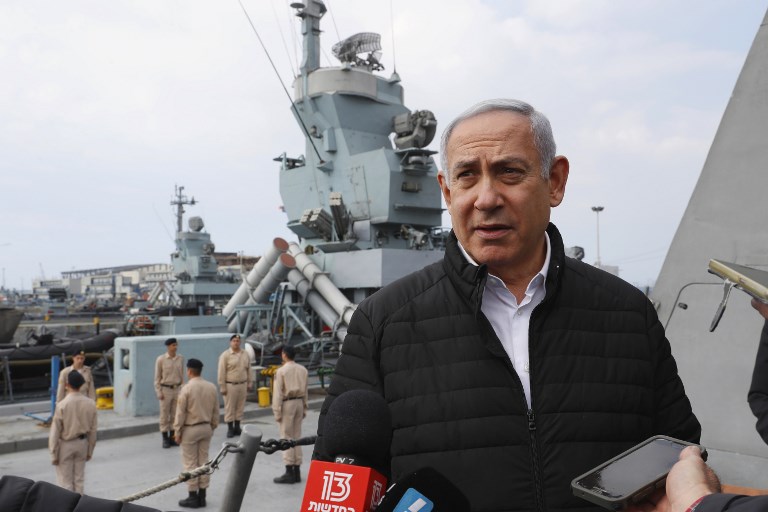
Illustrative: Prime Minister Benjamin Netanyahu speaks to journalists during a visit to inspect a naval Iron Dome defense system in the northern port of Haifa on February 12, 2019. (Jack Guez/Pool/AFP)

Prime Minister Benjamin Netanyahu convened urgent consultations with Israel’s security chiefs this week amid the escalating tensions between Iran and the United States, and reportedly urged them to do their utmost to ensure that Israel is not dragged into the fraught situation.

At his meeting with the security chiefs, Netanyahu ordered the appropriate precautions be taken to deal with any potential escalation, and also called for ongoing, close intelligence monitoring of the surging tensions between Washington and Tehran, a TV report said Wednesday. But he also told the top officers “to take steps to separate Israel from these developments” and to work “at all cost” to keep Israel out of the situation, Israel’s Channel 13 news reported, citing senior Israeli officials.

Despite various threats by Iranian leaders against Israel, the assessment at the meeting was that there is no immediate concern that Israel will be directly targeted — including by rocket fire from pro-Iranian militias in Syria or Iraq, the report said.

Israel, it added, has been maintaining close contact with the Trump administration in recent days, with Netanyahu speaking by telephone with US Secretary of State Mike Pompeo, and the Israeli national security adviser Meir Ben-Shabbat liaising with his US counterpart John Bolton.

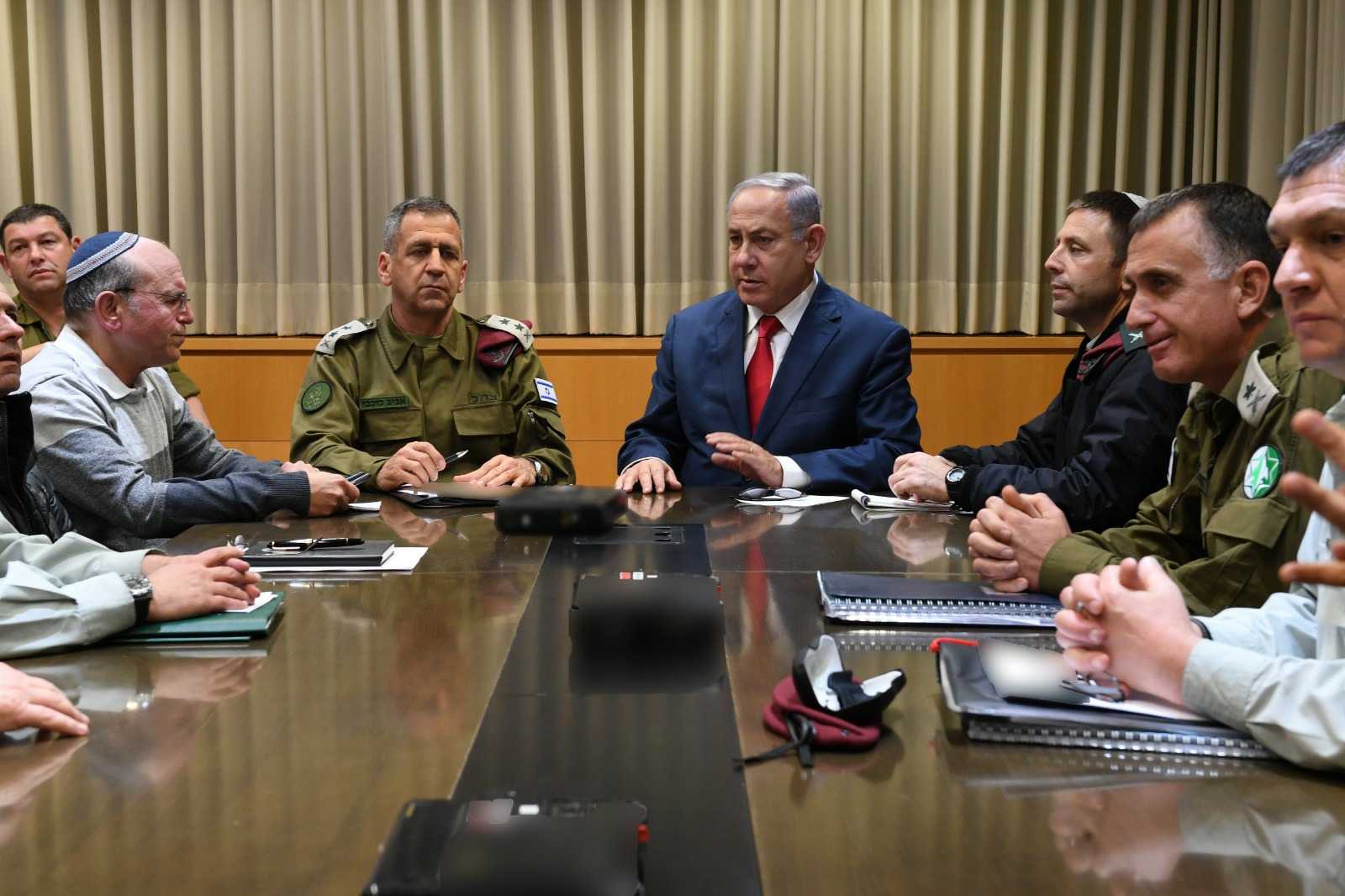
Prime Minister Benjamin Netanyahu (center right) meets with senior security officials at the IDF’s Kirya military headquarters in Tel Aviv on March 14, 2019. (Ariel Hermoni/Defense Ministry)

The Prime Minister’s Office did not deny the report but would not comment on it. US officials told the TV station that Netanyahu and Pompeo are in frequent contact, often about Iran.

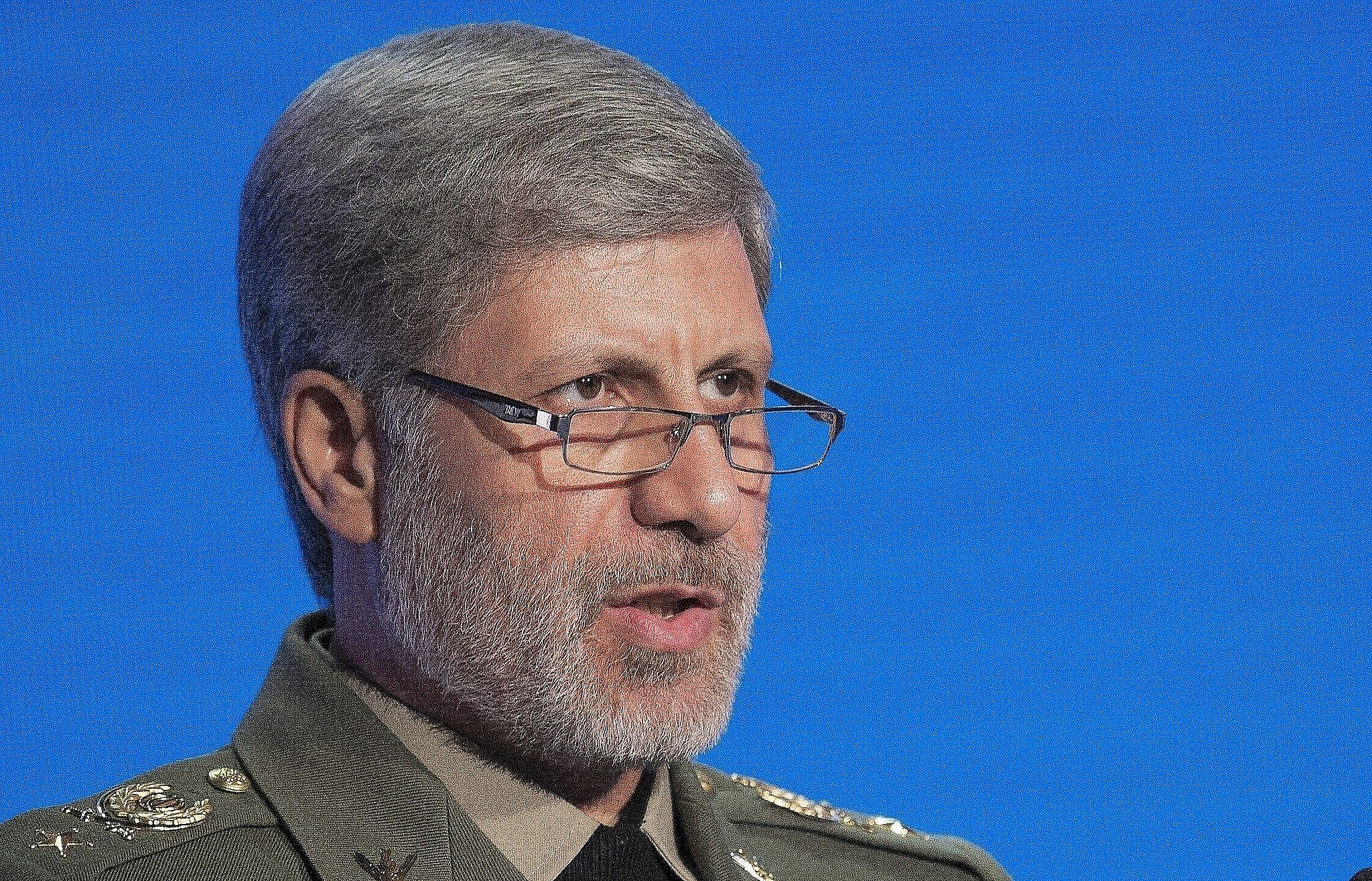
Iranian Defense Minister Amir Hatami speaks at the Conference on International Security in Moscow, Russia, April 4, 2018. (AP Photo/Alexander Zemlianichenko)

Iran’s defense minister said earlier Wednesday his country would overpower the US-Israel alliance in the region. “We will defeat the American-Zionist front,” Amir Hatami told a gathering of military intelligence officials on Wednesday, according to the official Islamic Republic News Agency (IRNA).

Iran’s military preparedness, Hatami said, was “at its highest point,” despite “the most difficult conditions” imposed by US sanctions. “We will be the final victors” in the standoff, he insisted, and “will defeat the United States.”

He blamed the sanctions and heightened tensions on Iran’s “defeat of the heretics” — a reference to the Islamic State jihadist group in Syria and Iraq, which Iranian officials have claimed was founded and backed by the US.

Tensions in the region have risen sharply in recent weeks as US sanctions on Iran, reimposed gradually in the wake of the US withdrawal from the 2015 nuclear deal last year, began to take their toll, pushing the Iranian economy into crisis.

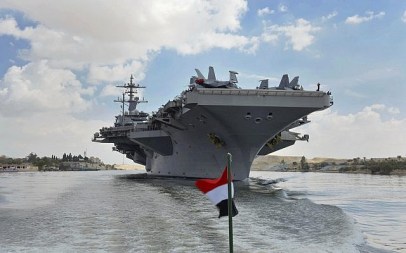
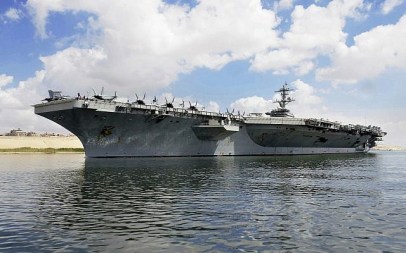
In this Thursday, May 9, 2019 photo released by the US Navy, the Nimitz-class aircraft carrier USS Abraham Lincoln transits the Suez Canal in Egypt. (Mass Communication Specialist Seaman Dan Snow, US Navy via AP)

Last week, Iran warned it would begin enriching uranium at higher levels in 60 days if world powers failed to negotiate new terms for the deal.

On Wednesday, US officials announced they were evacuating nonessential American personnel from Iraq, a day after Saudi oil facilities were attacked by Iran-backed Houthi rebels from Yemen, and three days after four oil tankers — two of which were Saudi — were damaged as they lay off the coast of the United Arab Emirates by what Gulf officials described as sabotage. Of the other two tankers, one was Norwegian and the other Emirati.

Israel was reported last week to have warned the US that Iran was contemplating targeting Saudi oil production facilities. An unsourced Channel 13 report said the Iranians were “considering various aggressive acts” against American or American-allied targets. Tehran had looked at targeting American bases in the Gulf, but that had been deemed too drastic. The main target they were interested in was “Saudi oil production facilities,” the TV report said.

Last week, top officials in the Trump administration warned that Washington believed Iran was plotting some sort of attack in the Gulf region, perhaps targeting US forces in Iraq and Syria.

To meet the threat, the Pentagon has accelerated the deployment of an aircraft carrier task force to the Gulf and accompanied it with several B-52 bombers, a Patriot missile battery and an amphibious assault ship.

The stepped-up deployment and heightened rhetoric has led to fears in capitals around the world of a possible military confrontation breaking out between Washington and Tehran.


Is Iran the new Iraq? Here are the similarities — and big differences

May 16, 2019

Source: Is Iran the new Iraq? Here are the similarities — and big differences | The Times of Israel

As America issues dire warnings about Iran, many elements resemble the lead-up to the 2003 Iraq War, not least among them the Israel factor

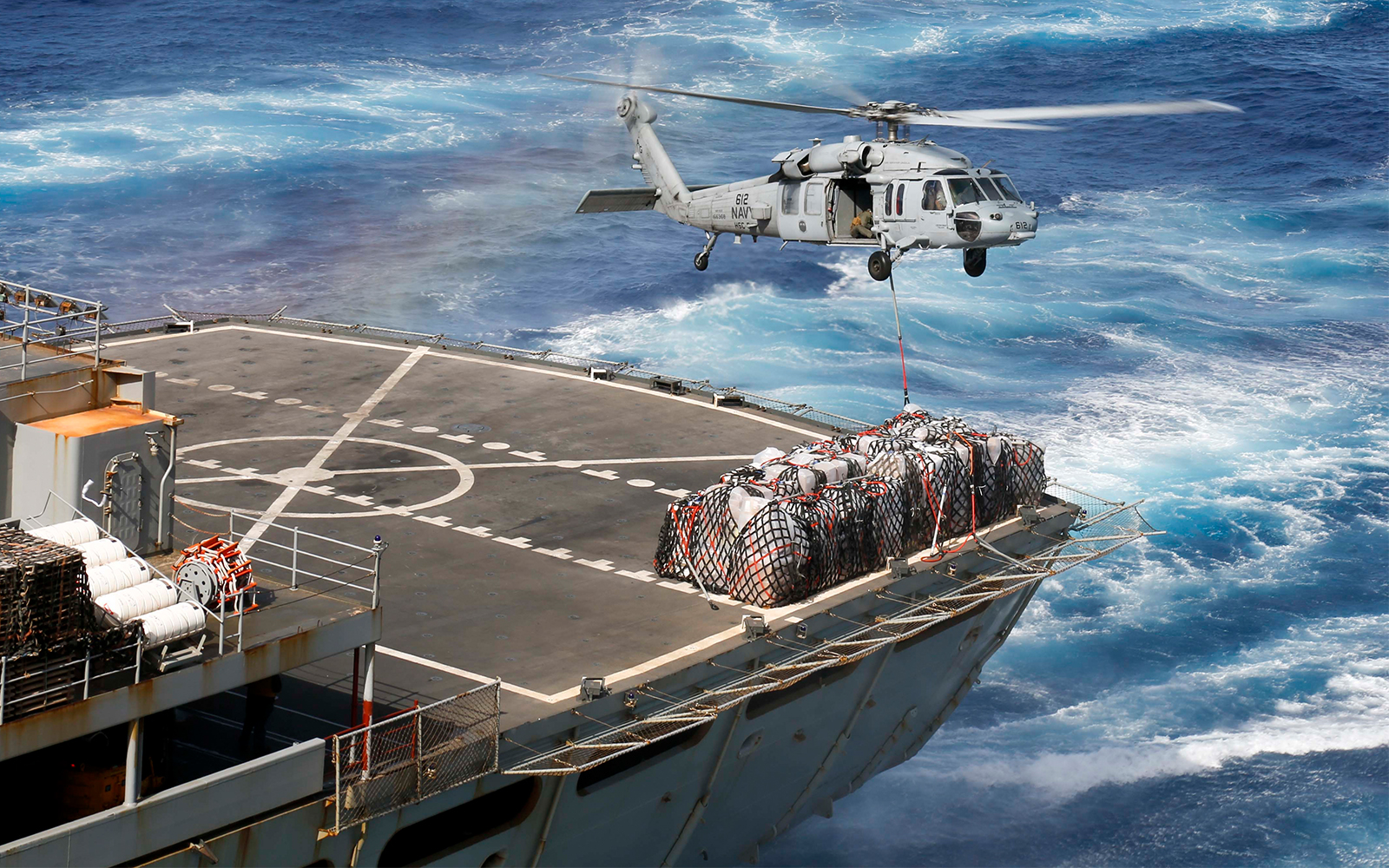
A helicopter loads cargo onto the deck of the USS Abraham Lincoln aircraft carrier in the Mediterranean Sea as the ship's strike group makes its way to the Persian Gulf, May 8, 2019. (US Navy/Michael Singley)

A helicopter loads cargo onto the deck of the USS Abraham Lincoln aircraft carrier in the Mediterranean Sea as the ship’s strike group makes its way to the Persian Gulf, May 8, 2019. (US Navy/Michael Singley)

WASHINGTON (JTA) — An American administration is issuing dire warnings about a Persian Gulf nation, there’s talk of war and questions about the quality of intelligence. And those who back confronting Iran and those who don’t are citing Israel as a factor.

If the Iran war talk sounds familiar, it might be because there are elements that resemble the lead-up to the 2003 Iraq War, not least among them the Israel factor.

The big difference: Israel, under Prime Minister Ariel Sharon, and its supporters were wary of George W. Bush’s Iraq adventure. Israel, under Prime Minister Benjamin Netanyahu, has been a vocal supporter of the Trump administration’s confrontational posture toward Iran.

Here’s a comparative guide.

The weapons

Iraq: The Bush administration touted intelligence that reported elements of what it said was a planned Iraqi nuclear weapons program and an existing chemical weapons program. Reports following the war showed that the evidence was at best speculative and evidence to the contrary at times was suppressed. (The same Iraqi official, Saddam Hussein’s son-in-law, who told foreign intelligence agencies that Iraq had a chemical weapons program, also said that it had been dismantled in 1995. But Bush administration officials, chief among them Secretary of State Colin Powell, did not mention the latter point.)

The security chief of Fallujah II chlorine plant, Mohammed Abid, walks among chlorine canisters in the plant’s yard in Mulahimah, Iraq Thursday Oct. 2, 2003. Once the CIA’s “best example” of a disguised weapons program, the derelict chemical plant stands today more as a symbol of the gap between fears and reality in the Iraqi crisis. (AP Photo/Greg Baker)

Iran: Iran possesses the infrastructure to produce nuclear weapons, but lacks sufficient fissile material and all the know-how, according to a Congressional Research Service Report from May 10. Iran insists its program is peaceful, but multiple Western intelligence agencies — most dramatically Israel following its theft a year ago of a massive Iranian archive — have asserted that Iran’s aim, at least before the 2015 nuclear deal, was the manufacture of a nuclear weapon. Under the nuclear agreement, Iran has committed for the next 10-15 years to enriching uranium only to levels adequate for medical research.

The inspectors

Iraq: Saddam Hussein after the 1991 Gulf War agreed to dismantle his weapons of mass destruction programs, and to allow U.N. inspectors to verify his compliance. Inspectors throughout the ’90s complained of obstructions Saddam placed in their way and of noncompliance with the letter of the agreement, for instance in not allowing them to visit certain designated sites. However, on the eve of the Iraq War, Hans Blix, a nuclear inspector who was one of Saddam’s most strident critics, reported that there was no evidence of the weapons of mass destruction claimed by that the Bush administration as a predicate for the war.

Iran: The UN nuclear inspection agency says that Iran is in compliance with the 2015 deal, which traded sanctions relief for a rollback in Iran’s nuclear program. (President Donald Trump pulled the US out of the deal a year ago.) Critics of the deal say its inspections are not sufficiently intrusive; Iran can significantly obstruct inspections of a site not covered by the deal. Inspectors have yet to demand such an inspection.

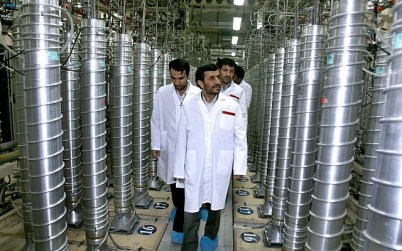
Then-Iranian President Mahmoud Ahmadinejad visits the Natanz Uranium Enrichment Facility some 200 miles (322 kilometers) south of the capital Tehran, Iran in 2008. (AP/Iranian President’s Office)

The bad actors

Iraq: The Bush administration claimed Saddam had ties with al-Qaeda, the terrorist organization behind the 9/11 terrorist attacks in New York and Washington. There were no such ties, and the insistence of some officials that they existed had the adverse effect of raising the profile and popularity in Iraq of terrorists who had previously not enjoyed significant support.

Iran: Iran has long-established ties with insurgent groups throughout the region, most preeminently the Hezbollah terrorist militia in Lebanon, which Israel considers to be one of its most formidable enemies. Working under Iranian guidance, Hezbollah was critical in extracting what is effectively the victory of the Assad regime in suppressing the civil war launched by dissidents in 2011. The Trump administration also says that the Houthi uprising in Yemen would not have occurred without Iranian backing, and the US supports the Saudi bid to crush it. Critics of Trump’s backing for the Saudi war in Yemen say that the uprising is indigenous and that Iranian backing is overstated, and that the United States is effectively supporting an initiative that has claimed mass civilian casualties.

Illustrative image of a tank flying the Hezbollah terror group’s flag seen in the Qara area in Syria’s Qalamoun region on August 28, 2017 (AFP Photo/Louai Beshara)

The intelligence

Iraq: The Bush administration made public its claims, based on intelligence, that Iraq had weapons of mass destruction and was allied with terrorists who had targeted the United States. The claims helped recruit broad bipartisan backing for the war. Bush officials silenced or smeared dissidents within Western intelligence communities — including in the United States — who said the intelligence was faulty. The dissidents were vindicated after the war when it was found that the intelligence had been distorted or been based on questionable sources.

Iran: The Trump administration cites intelligence that its officials say suggests an imminent Iranian attack on US forces in the region. Last week, it sent military reinforcements to the region, and this week it ordered the partial evacuation of the US Embassy in Baghdad. Details of what exactly the Iranian are planning, and what evidence there is that they are planning anything, are scarce. This time around lawmakers from both parties, mindful of the consequences of the Iraq War (including the permanent blot on the reputations of men and women who had presidential ambitions), are demanding more detailed information.

The USS Abraham Lincoln sails south in the Suez Canal near Ismailia, May 9, 2019. (Suez Canal Authority via AP)

“We have no briefings as to what the intelligence is that gives rise to evacuating our embassy in Iraq,” Sen. Robert Menendez, D-N.J., the ranking member on the Senate Foreign Relations Committee, told the Jewish Telegraphic Agency. “We have no intelligence briefings as to what the administration’s end game is and how they seek to achieve it. You cannot make national security and foreign policy decisions in the blind.”

Israel and the Netanyahu factor

Iraq: Subsequent to the Iraq War, a theory took hold that it was fought in part at the behest of Israel and its advocates, based in part on the endorsements of the war by from some Israeli figures, pro-Israel lawmakers in Congress and some pro-Israel groups. Netanyahu, the one-time prime minister who was not in government at the time, advocated for the removal of Saddam Hussein in congressional testimony in 2002. Perhaps the best-known purveyors of the theory that Israel was a critical factor in going to war were two respected foreign policy mavens, Stephen Walt and John Mearsheimer, who published their thesis in a 2007 book, “The Israel Lobby.”

In fact, Israeli government officials and pro-Israel figures who endorsed the war did so at the behest of the Bush administration, not the other way around. In his first term, President George W. Bush held fast to a “with us or against us” formula on all of his policies, but particularly on Iraq, and foreign leaders, lobbying groups, politicians and media seeking access were under pressure to sign on to the war. Vice President Dick Cheney solicited the support of Jewish organizational leaders and pro-Israel lawmakers with what turned out to be unfounded intelligence that Iraq had missiles pointed at Israel.

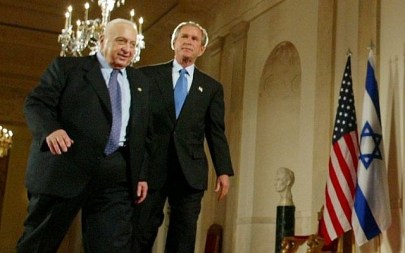
George W. Bush, right, and Ariel Sharon, left, walk together at the end of a joint press conference in the Cross Hall of the White House in Washington in April, 2004. (photo credit: AP/Pablo Martinez Monsivais, File)

Pro-Israel figures behind the scenes fretted that the Bush administration’s engagement in Iraq was giving Iran a free hand — a fear that proved all too real when the postwar chaos enhanced Iran’s influence in the region. Prime Minister Sharon, it was revealed after the war, had urged Bush to limit the aims of any invasion.

Iran: Israel has been a prime driver since the 1990s of having the international community confront Iran over its nuclear ambitions. Netanyahu — the prime minister since 2009 — has intensified the pressure, with lobbying in international bodies and Congress. Tensions between the Obama administration and Netanyahu boiled over in 2015 when the Israeli leader accepted an invitation from Republicans to make his case against the nuclear deal in Congress. Netanyahu has praised Trump repeatedly for pulling out of the nuclear deal, and has counseled pressure on Iran to stand down from its nuclear program and adventurism in the region.

“We are united in our desire to stop Iranian aggression,” Netanyahu said Tuesday. “I believe that Israel and all the countries of the region, and all the countries that seek peace in the world, should stand together with the U.S. against Iranian aggression.”

Prime Minister Benjamin Netanyahu delivers a speech on an archive brought out of Iran by the Mossad that documents Iran’s nuclear program, at the Defense Ministry in Tel Aviv on April 30, 2018. (AFP/Jack Guez)

That has led critics of Trump administration Iran policy to cite Israel as a factor. Rep. Tulsi Gabbard, D-Hawaii, one of 23 candidates for the Democratic presidential nomination, posted a video on social media on Tuesday citing Netanyahu as a driving force in what she said was a march to war with Iran, lumping the Israeli prime minister in with al-Qaeda, “neocons and neolibs.”

Menendez, a pro-Israel stalwart, said that any decision as to whether to take military action against Iran must be based on what is best for the United States, not Israel.

“There’s no question in my mind if Iran is left without constraints at the end of the day could be an existential threat to the State of Israel,” he said. “But we make our decisions based upon what is the national security interests of the United States.”


Zarif says Iran showing ‘maximum restraint,’ US escalation ‘unacceptable’

May 16, 2019

Source: Zarif says Iran showing ‘maximum restraint,’ US escalation ‘unacceptable’ | The Times of Israel

Visiting Tokyo Iranian foreign minister says Tehran still committed to nuclear deal and continues to be in compliance

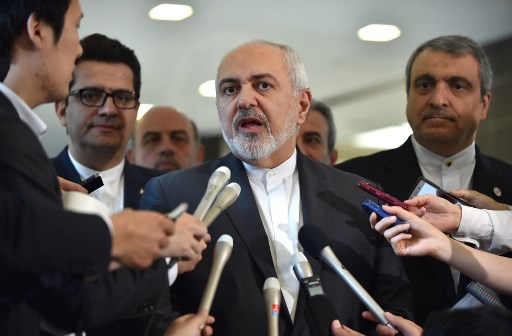
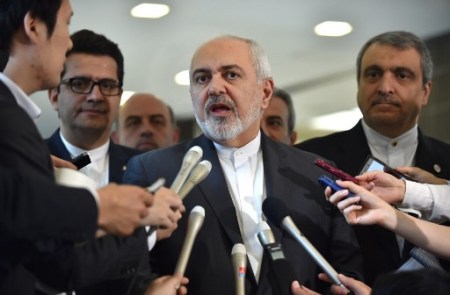
Iranian Foreign Minister Mohammad Javad Zarif (C) answers questions after a meeting with Japanese Foreign Minister Taro Kono at the foreign ministry in Tokyo on May 16, 2019. (Photo by Kazuhiro NOGI / AFP)

Iranian Foreign Minister Mohammad Javad Zarif (C) answers questions after a meeting with Japanese Foreign Minister Taro Kono at the foreign ministry in Tokyo on May 16, 2019. (Photo by Kazuhiro NOGI / AFP)

TOKYO — Iran is showing “maximum restraint” despite the US withdrawal from a nuclear deal, the country’s foreign minister said Thursday, accusing Washington of an “unacceptable” escalation in tensions.

“The escalation by the United States is unacceptable,” Mohammad Javad Zarif said in Tokyo where he is holding talks with Japanese officials.

“We exercise maximum restraint… in spite of the fact that the United States withdrew from JCPOA last May,” he added, referring to the nuclear deal known as the Joint Comprehensive Plan of Action.

He added that Tehran remains “committed” to the deal, and said continuing assessments showed Iran was in compliance with the multilateral agreement.

Earlier this month Iran threatened to enrich its uranium stockpile closer to weapons-grade levels in 60 days if world powers fail to negotiate new terms for the 2015 nuclear deal.

Tensions between the United States and Iran were already high after President Donald Trump withdrew from the nuclear deal a year ago.

But they have been ratcheted up significantly in recent weeks amid increased US pressure over alleged threats from Iran.

Earlier this month, Trump’s hawkish National Security Advisor John Bolton announced the deployment of the USS Abraham Lincoln aircraft carrier strike group and a B-52 bomber force to the Gulf.

The USS Abraham Lincoln sails south in the Suez canal near Ismailia, Thursday, May 9, 2019 (Suez Canal Authority via AP)

Days later, the Pentagon added a Patriot missile defense battery and an amphibious assault ship to the deployment.

And on Wednesday the US ordered the partial evacuation of its Baghdad embassy and consulate in Arbil citing specific threats posed by Iraqi militias alleged controlled by Tehran.

ToI Staff contributed to this report


Iran on the brink of ‘full-scale confrontation with the enemy,’ IRGC chief warns

May 16, 2019

Source: Iran on the brink of ‘full-scale confrontation with the enemy,’ IRGC chief warns | The Times of Israel

Amid simmering tensions in Gulf, Hossein Salami says ‘this moment in history is the most decisive moment of the Islamic revolution’; Rouhani: US engaged in ‘crime against humanity’

In this undated photo released by Sepahnews, the website of the Iranian Revolutionary Guard, Gen. Hossein Salami speaks in a meeting in Tehran, Iran (Sepahnews via AP)

In this undated photo released by Sepahnews, the website of the Iranian Revolutionary Guard, Gen. Hossein Salami speaks in a meeting in Tehran, Iran (Sepahnews via AP)

The head of Iran’s Islamic Revolution Guard Corps on Wednesday warned Tehran was on the brink of full-on conflict with its enemy, a day after Supreme Leader Ayatollah Ali Khamenei said there would not be a war with the United States amid escalating tensions.

“We are on the cusp of a full-scale confrontation with the enemy,” Major General Hossein Salami said, according to the Reuters news agency, which cited Iran’s Fars news agency.

“This moment in history — because the enemy has stepped into the field of confrontation with us with all the possible capacity — is the most decisive moment of the Islamic revolution,” added Salami, who tapped as the new IRGC chief last month.

President Hassan Rouhani later condemned the US sanctions on his country.

“The hard times and problems of America’s economic war against Iran have begun… what America is doing is a crime against humanity,” he said.

Rouhani accused the US of disrupting the flow of “livelihood, food and medical drugs” to normal Iranians. “This war is not against the government of the Islamic republic of Iran, it’s against the Iranian nation,” he said.

The comments come amid rising tensions in the region that saw the deployment earlier this month of an American aircraft carrier strike group to the Persian Gulf and attacks on Saudi oil infrastructure.

On Sunday, four ships, including two Saudi oil tankers, were sabotaged off the United Arab Emirates coast in an attack US officials reportedly suspect was carried out at Iran’s behest.

The USS Abraham Lincoln sails south in the Suez canal near Ismailia toward the Persian Gulf, May 9, 2019. (Suez Canal Authority via AP)

Iran has called for an investigation into what it called an “alarming” incident, while a senior member of Iran’s parliament blamed Israel on Tuesday for the attacks on the ships, for which no one has yet claimed responsibility.

The attacks “appeared to be Israeli mischief,” Behrouz Nemati, an Iranian government spokesman said after a closed-door session of parliament, quoted by state news agency IRNA.

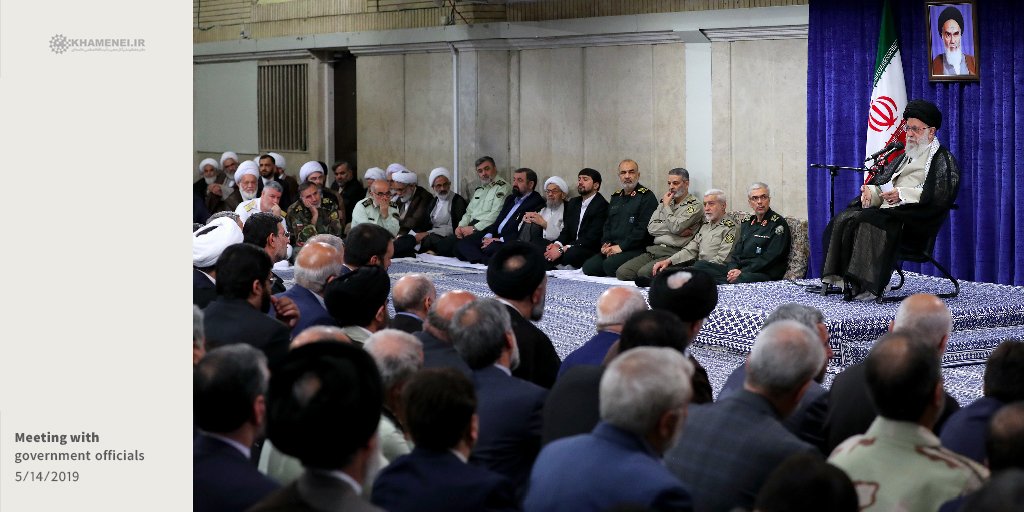
On Tuesday, Khamenei said “there is not going to be any war” with the US, but that there will also be no renegotiation of the nuclear deal.

“This face-off is not military because there is not going to be any war. Neither we nor them [the US] seek war. They know it will not be in their interest,” he said, as quoted on the official Khamenei.ir website.

Khamenei.ir@khamenei_ir

In tweets following the comments, Khamenei wrote that the “Iranian nation’s definite option is resistance against US and in this confrontation, US will have to withdraw…. This confrontation is a confrontation of willpowers and our willpower is stronger because in addition to our willpower we also enjoy relying on God.”

Hours earlier on Tuesday a close adviser to Rouhani warned US President Donald Trump that it “looks like you are going to get a war” with Iran, as the US deployed additional warships to the region.

In an English-language tweet tagging Trump, Hesameddin Ashena said, “You wanted a better deal with Iran. Looks like you are going to get a war instead.”

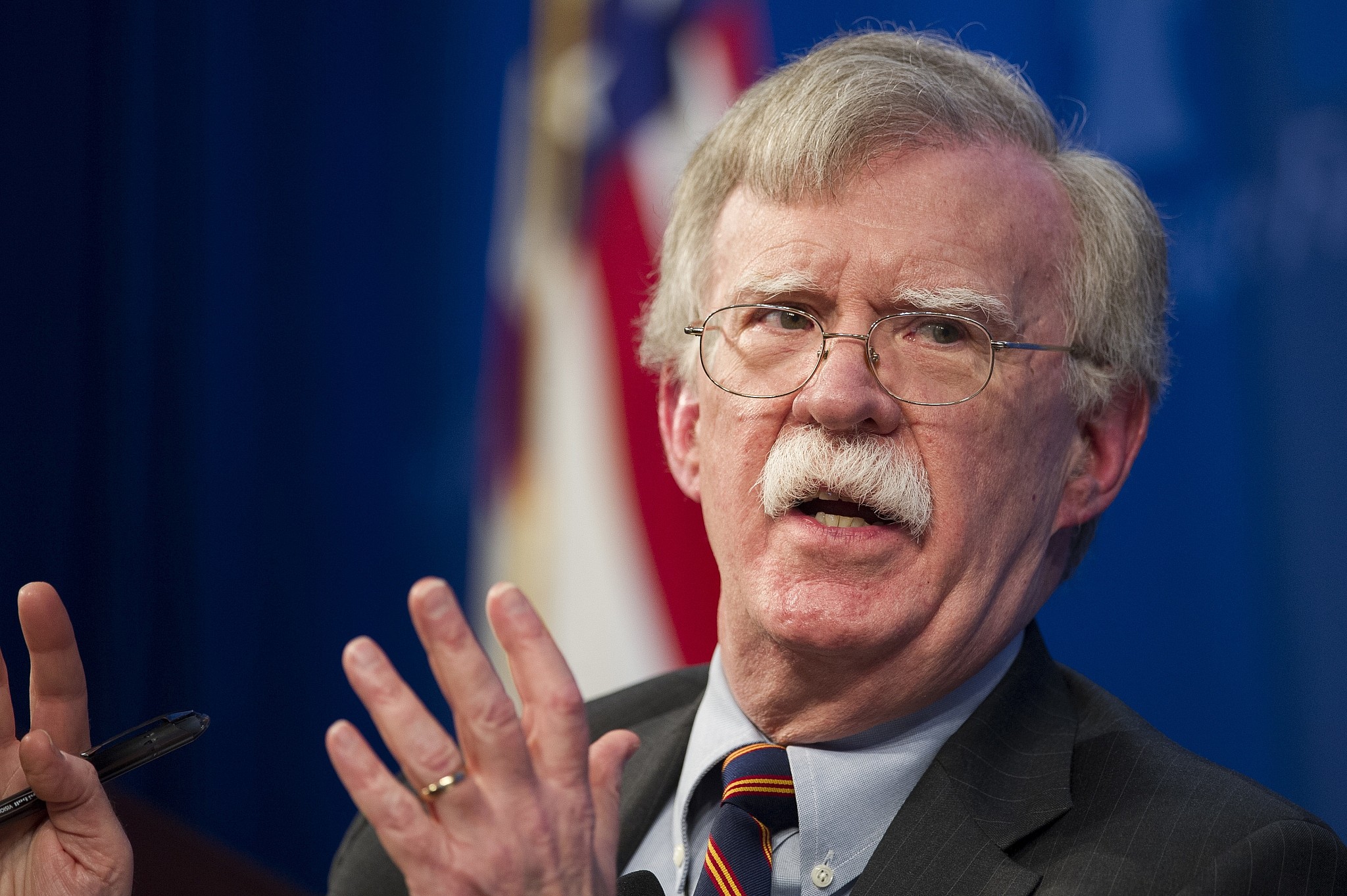
US National Security Adviser John Bolton unveils the Trump Administration’s Africa Strategy at the Heritage Foundation in Washington, December 13, 2018. (Cliff Owen/AP)

In an apparent reference to mustachioed US National Security Adviser John Bolton, he added, “That’s what happens when you listen to the mustache.”

“Good luck in 2020!” he concluded sarcastically.

Tensions have risen since Trump withdrew the US from the 2015 nuclear deal between Iran and world powers, and restored US sanctions that have pushed Iran’s economy into crisis. On Wednesday morning, Iran said it had formally dropped the limitations on uranium enrichment and the production of heavy water that were laid down in the landmark deal.

European powers have vowed to fight to save the nuclear deal and the European Union has urged Iran to respect the international agreement, saying it aims to continue trading with the country despite US sanctions.


US orders embassy staff from Iraq over ‘imminent’ Iran threat 

May 16, 2019

Source: US orders embassy staff from Iraq over ‘imminent’ Iran threat | The Times of Israel

Threat came from Iraqi militia ‘commanded and controlled’ by Revolutionary Guards; Trump predicts Iran will ‘soon’ want to start talks amid rising tensions

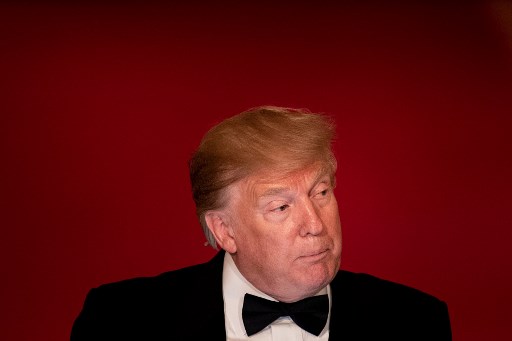
US President Donald Trump pauses while speaking during White House Historical Association Dinner in the East Room of the White House on May 15, 2019, in Washington, DC. (Photo by Brendan Smialowski / AFP)

US President Donald Trump pauses while speaking during White House Historical Association Dinner in the East Room of the White House on May 15, 2019, in Washington, DC. (Photo by Brendan Smialowski / AFP)

WASHINGTON — The United States Wednesday ordered non-emergency staff evacuated from its Baghdad embassy due to an “imminent” threat from Iranian-linked Iraqi militias, but President Donald Trump predicted Iran would “soon” want to start talks.

The move added to growing fears that the long-time rivals could be on course for conflict despite both sides stressing they have no desire for war.

The evacuation order, also covering the US consulate in Arbil, came 10 days after the Pentagon deployed an aircraft carrier task force and B-52 bombers to the Gulf to fend off an unspecified plot by Tehran to attack US forces or allies.

Trump sought to portray the situation as under control, saying there was no discord in the White House and that Iran would want to negotiate.

“I’m sure that Iran will want to talk soon,” he tweeted. He also blasted media reports of White House turmoil, saying “there is no infighting whatsoever.”

Despite international skepticism, the US government has been pointing to increasing threats from Iran, a long-time enemy and rival of US allies Israel and Saudi Arabia.

Senior State Department officials, speaking on condition of anonymity, said the threat came from Iraqi militia “commanded and controlled” by Tehran’s Islamic Revolutionary Guard Corps.

Illustrative photo of the US embassy under construction as seen from across the Tigris river in Baghdad, Iraq, May 19, 2007. (AP Photo)

“It is directly linked to Iran, multiple threat streams directly linked to Iran,” said one official.

“This is an imminent threat to our personnel,” said a second official.

“There is no doubt in my mind that under the circumstances, a partial ordered departure (from the embassy) is a reasonable thing to do.”

Maximum restraint

On Tuesday, Iran’s supreme leader, Ayatollah Ali Khamenei, insisted the showdown between the Islamic republic and the United States was a mere test of resolve.

“This face-off is not military because there is not going to be any war. Neither we nor them (the US) seek war,” he said.

US Secretary of State Mike Pompeo echoed that sentiment, saying in Sochi, Russia: “We fundamentally do not seek a war with Iran.”

Iran’s Foreign Minister Mohammad Javad Zarif said on a visit to Tokyo that his country was exercising “maximum restraint”, accusing Washington of an “unacceptable” escalation in tensions.

Iranian Foreign Minister Mohammad Javad Zarif (C) answers questions after a meeting with Japanese Foreign Minister Taro Kono at the foreign ministry in Tokyo on May 16, 2019. (Photo by Kazuhiro NOGI / AFP)

Tehran remains “committed” to the nuclear deal thrashed out with world powers despite Washington’s withdrawal, Zarif said, adding that Iran had been assessed as in compliance with the multilateral agreement.

Despite the insistence that neither party wants conflict, world powers have rushed to urge calm and voiced concern over the escalating tensions.

Allies skeptical

Washington says it has received intelligence on possible attacks by Iranian or Iranian-backed forces, possibly targeting US bases in Iraq or Syria.

Some observers speculate Tehran is seeking to retaliate over Washington’s decision in April to put Iran’s Revolutionary Guards on a terror blacklist — a move designed to stymie their activities across the Middle East.

But since the first US warning on May 5, the only activity has been a still-mysterious “attack” Monday on tankers anchored off Fujairah, an Emirati port located at the strategically crucial entrance to the Gulf.

One or more vessels incurred light hull damage, but what caused the damage and who was behind it remains unknown.

Britain’s Major General Chris Ghika, a spokesman for Operation Inherent Resolve, the coalition fighting the jihadist Islamic State group, said Tuesday there was no special heightened alert.

Illustrative: Fishermen in waters off Fujairah, United Arab Emirates, near the Strait of Hormuz, on May 30, 2012. (AP Photo/Kamran Jebreili, File)

After Ghika’s comments drew a sharp retort from the US Central Command, Britain’s defense ministry said Wednesday they have “long been clear about our concerns over Iran’s destabilizing behavior in the region” — while still not confirming any new imminent danger.

Germany and the Netherlands said Wednesday they were suspending training of soldiers in Iraq. German defense ministry spokesman Jens Flosdorff said there was a “generally heightened alert” in the region but gave no specifics.

In the US Congress, Democrats demanded to know why the Trump administration was boosting its Gulf presence and, according to media reports, considering war plans that would involve sending 120,000 US troops to the Middle East if Iran attacks American assets.

Senator Bob Menendez, the senior Democrat on the Senate foreign relations panel, demanded a briefing “immediately” on the threat intelligence, any plans for war and the decision to order embassy staff out of Iraq.

“Congress has not authorized war with Iran… If (the administration) were contemplating military action with Iran, it must come to Congress to seek approval,” he said.


U.S. Ambassador: ‘Don’t underestimate the God of Israel’ – TV7 Israel News 15.05.19

May 16, 2019


A U.S.-Iran confrontation will inevitably include Israel

May 16, 2019

Source: A U.S.-Iran confrontation will inevitably include Israel

Analysis: There are four likely scenarios in which the Jewish state will find itself under attack by Tehran and/or its proxies, and Israeli defense establishment is not taking the threat lightly

In Israel, this message was taken very seriously. During recent discussions by the prime minister, the head of the National Security Council, the IDF chief of staff, the head of Military Intelligence and senior IDF General Staff officers, a picture emerged of an imminent confrontation between the Iranians and the Americans in the Persian Gulf.

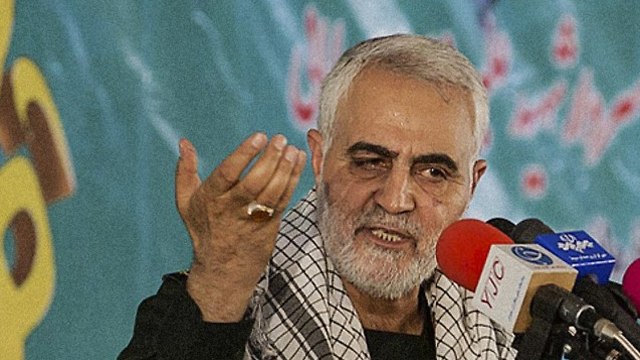
Al-Quds commander Qasem Soleimani (Photo: MCT) (Photo: MCT)

Al-Quds commander Qasem Soleimani (Photo: MCT)

At this point, it is difficult to assess the scale of such a clash, but Israel must prepare for a gradual escalation, in which it, too, will likely to find itself involved in some way.

It is fair to assume that the first military phase will focus on specific Iranian action against oil routes and oil producers in the Persian Gulf. Indeed, the Iranians have in recent days struck Saudi oilfields as well as their tankers at an oil terminal in the United Arab Emirates, either through their special forces or their Houthi allies in Yemen.

In the second stage of the escalation, the Iranians will apparently target the interests of the United States and its allies. And this where Israel enters the picture. The Iranians will leave a direct confrontation with the U.S. to the final stage.

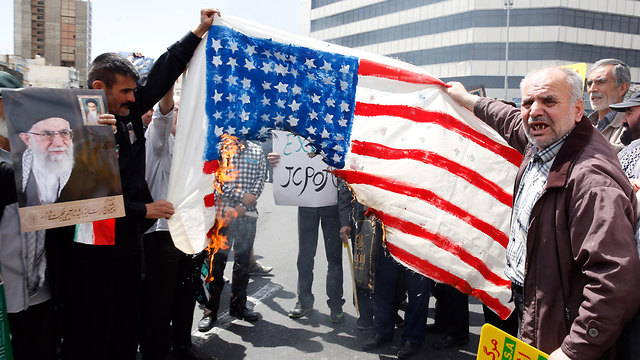
 Anti-U.S. protests in Tehran  (Photo: EPA) (Photo: EPA)

Anti-U.S. protests in Tehran (Photo: EPA)

According to Israeli assessments, there are at least four scenarios for a possible Iranian attack in Israel. The most likely scenario is the launch of missiles from Iraq.

The second scenario includes firing missiles and dispatching armed drones from Syria, alongside terrorist activity along the border fence between the two countries.

A third scenario, which is viewed as less likely, involves Hezbollah military activity from Lebanon. This is seen as a lesser threat as Hezbollah is at present at one of its economic low points, and it is doubtful that its leader Hassan Nasrallah would give Israel the opportunity to best him.

The fourth possible scenario, and the least worrying from an Israeli perspective, is the use of terror attacks by Islamic Jihad from the Gaza Strip.

Each of these scenarios, however, could be folded into another on a different front, depending on the depth of the crisis.

Iranian Revolutionary Guards (Photo: AFP)

Iranian Revolutionary Guards (Photo: AFP)

Israel has been aware of the threat from Iraq for a while. More than a year and a half ago, Israel told Iran, via the Americans and the Russians, to remove surface-to-surface missile systems from western Iraq.

The assessment was that these missiles were deployed in a bid to deter Israel from continuing attacks on Iranian targets in Syria. The warning achieved its goal and the Iranians lowered their profile in western Iraq, although there are still surface-to-surface missiles in the hands of pro-Iran, Shi’ite militias in Iraq.

These militias have missiles with a range of 700-1,000 kilometers, and when stationed in western Iraq, they cover the entire territory of Israel. Unlike the missiles that Saddam Hussein fired at Israel from the same area in 1991, these missiles are accurate and have a relatively short launch period.

There are still no preparations underway in Israel to deal with this potential threat, but there is a level of awareness among the intelligence agencies.

A Ramat Gan home destroyed by an Iraqi Scud, January 1991 (Photo: GPO)

A Ramat Gan home destroyed by an Iraqi Scud, January 1991 (Photo: GPO)

Israel’s ability to gather intelligence on what is happening in western Iraq is immeasurably greater than in 1991, when its intelligence agencies were blindly searching for Saddam’s mobile rocket batteries and reliant on American satellite images.

Israel’s offensive capabilities in air and on land against second-tier countries like Iraq are also very different from what they were in 1991.

Moreover, Israel has more diplomatic cover than ever before should it choose to embark on a military operation in western Iraq.

Just as they didn’t hesitate to use the Houthis in Yemen against the Saudis in order to fan the flames of the crisis with the Americans, the Iranians will likely try to ramp up tensions against Israel in order to speed up international intervention over the death blow that the U.S. has just dealt their economy.