Archive for May 10, 2019

Tehran knows US pressure is working 

May 10, 2019

Source: Tehran knows US pressure is working – www.israelhayom.com

Iran has failed to bust the American embargo on its oil exports, while Israel and the moderate Sunni states are cooperating to check Iranian influence in the Middle East.
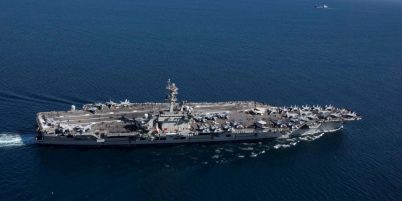
A year after U.S. President Donald Trump’s speech in which he announced he was withdrawing from the deal, the impression is that the semi-open cooperation between Israel and the moderate Sunni Arab states against Iran, with full backing from Washington, has at the very least managed to check the Iranian regime’s attempts to spread its regional influence.

Saudi Arabia is leading the coalition that is battling the pro-Iranian Houthi rebels in Yemen; Israel is acting doggedly against Iran’s efforts to gain a foothold in Syria; and the U.S. is providing full superpower backing as well as taking direct action against Iran through major sanctions.

The Iranian move – which was announced on the first anniversary of America’s withdrawal from the deal – demonstrates the change in Tehran’s policy. Are the winds of war starting to blow? Trump said Thursday: “They should call,” and senior administration officials stressed his desire to return to negotiations, but some op-eds and analyses about the deployment of more U.S. forces to the Persian Gulf warned that Trump’s policy on Iran was becoming “dangerous,” as the journal Foreign Policy wrote. Is it? We should remember that similar things were written at the height of the tension between the U.S. and North Korea a year and a half ago. Since then, Trump and North Korean leader Kim Jong Un have met twice, even though actual negotiations are moving ahead by microns.

Tehran knows that Washington doesn’t want a war. Even Iranian Foreign Minister Mohammad Javad Zarif admitted that, although he claimed that others – such as Prime Minister Benjamin Netanyahu – want to cause one. The ayatollah regime knows that Trump wields force, but more than anything wants a legacy that includes historic peace deals based on American interests – with Pyongyang, between Israel and the Palestinians and with Tehran. The question is whether the Iranians are willing to pay the price.
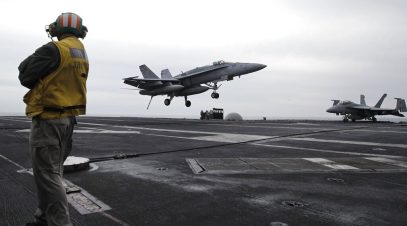
 

The drums of war in the Persian Gulf 

May 10, 2019

Source: The drums of war in the Persian Gulf – www.israelhayom.com

We need to understand that the shockwaves from a clash between the U.S. and Iran, if it indeed occurs, will reach us. If attacked, Tehran will unleash it proxies, chief among them Palestinian Islamic Jihad in Gaza and Hezbollah in Lebanon, against Israel.

The escalation began with a verbal exchange. On the one-year anniversary of the United States’ withdrawal from the nuclear deal, Iranian President Hassan Rouhani told global powers that his country would cease fulfilling its obligations as part of the deal. At this stage, this mostly means Iran will stop shipping abroad its surplus of enriched uranium and heavy water, as it prepares to enrich uranium at a greater pace.

In response, the White House said it would impose additional sanctions on Iran – not just on its oil production, banks and foreign trade, but on its metals industry. This sector is Iran’s top job provider and hurting it could leave many Iranians unemployed, which in turn would increase internal strife.

But the main factor behind increased tensions in the Persian Gulf over the past two days was the Pentagon’s decision to deploy the “Abraham Lincoln” aircraft carrier and four B-52H bombers to Qatar. The backdrop, as conveyed by the Pentagon, were fears that Iran was planning to attack American forces stationed in Iraq, perhaps via Shiite militias that it controls.

It’s hard to misread these developments. After a year of harsh sanctions, the ayatollah regime in Iran is exceedingly frustrated. This frustration stems from the country’s drastic economic downturn, but also from the fact that European countries – who are co-signed to the nuclear deal – have not kept their promises to compensate European companies that continued doing business with Tehran despite the sanctions imposed by Washington.

There’s no question the Trump administration is also disappointed. Although the sanctions are having an effect, they still haven’t forced Iran to wave the white flag and agree to fundamentally amend the nuclear deal to include shelving its ballistic missile project and ceasing its subversive activities via its proxies across the region.

Moreover, if we can assess the situation according to the behavior of Palestinian Islamic Jihad in Gaza and the latest round of violence with Israel, Iran has only amplified its subversive efforts. This terrorist organization, which is completely subordinate to and entirely funded by Tehran, ignited the latest skirmish by sniping at IDF officers on the border and it is the one presently spearheading, at the behest of Iran, the most aggressive line against Israel.

How will developments in the Persian Gulf unfold in the weeks ahead? It’s too soon to make a determination. The Iranians’ move to cancel “some” of their obligations stipulated by the nuclear deal is not irreversible and was the least they could permit themselves without being accused of violating it. The main objective behind their move is to incentivize the Europeans to fulfill their promises, and Rouhani even declared a 60-day extension for global powers to reconsider – before Iran accelerates its uranium enrichment.

The Trump administration, for its part, stressed that its military reinforcements are only intended to deter Iran from attacking American forces in the region, adding that the purpose for increasing sanctions is to bring Iran back to the negotiating table.

The problem, of course, is that it’s entirely uncertain any of this will actually transpire in the near future. We don’t know if the Europeans will surrender to Iranian extortion, and it’s almost assured that the White House will not halt sanctions before the Iranians agree to recalibrate their course of action.

This dynamic is a sure-fire recipe for heightened tensions in the Persian Gulf and opens the door for a military escalation. The ayatollah regime, if it feels it must, could renew uranium enrichment and risk a limited military confrontation with the U.S., over the prospect of regime collapse due to domestic revolt amid the country’s increasingly dire economic situation.

We need to understand that the shockwaves from such a clash, if it indeed occurs, will reach us. During the Gulf War, Saddam Hussein launched Scud missiles at Israel. Iran, if it is attacked, will unleash it proxies, chief among them Palestinian Islamic Jihad in Gaza and Hezbollah in Lebanon, against Israel.


Off Topic:  Pelosi calls Israel ‘our most serious friend’ in the Middle East

May 10, 2019

Source: Pelosi calls Israel ‘our most serious friend’ in the Middle East – www.israelhayom.com

Democratic House speaker tells Washington Post Israel is ‘one of the greatest accomplishments of the 20th century.’ Jewish state celebrated 71 years of independence on Thursday.

The creation of the State of Israel was “one of the greatest accomplishments of the 20th century,” U.S. House Speaker Nancy Pelosi (D-California) said on Wednesday, as Israel was celebrating 71 years of independence.

“My view of the establishment of the State of Israel is one of the greatest accomplishments of the 20th century; it was a political, official establishment of a country,” she told The Washington Post. “It was so exciting.”

“Israel, we have shared values. Our friend in the Middle East for a long time – our only friend, our most serious partner in the Middle East, let me put it that way,” she continued. “So Israel’s security is very, very important to us.”

Pelosi warned that the prospects of achieving a two-state solution to resolve the Israeli-Palestinian conflict have been dimming, but “a peaceful resolution of that is what members of Congress, by and large, would support.”

“There are some [in the Democratic Party] who have said things that are not a reflection of our consensus, you know, and we have pointed that out,” she said. “But again, Israel’s security is important to us. We think Israel’s security is further ensured by having a two-state solution, and we don’t want to move away from that.”

Pelosi’s comments came as the Trump administration is expected to release its Mideast peace plan after Israel forms a new government and after the Muslim holy month of Ramadan, which started on May 5 and concludes on June 4.


Trump: Cannot rule out military conflict with Iran

May 10, 2019

Source: Trump: Cannot rule out military conflict with Iran – www.israelhayom.com

“We have information that you don’t want to know about,” Trump says on reasons for boosting U.S. presence in region. “They were very threatening and we have to have great security for this country and many other places.”

At an impromptu news conference at the White House, Trump declined to say what prompted him to deploy the USS Abraham Lincoln carrier group to the region over what was described as unspecified threats.

“We have information that you don’t want to know about,” said Trump. “They were very threatening and we have to have great security for this country and many other places.”

Trump was asked whether there was a risk of military confrontation with the American military presence in the area.

“I guess you could say that always, right? I don’t want to say no, but hopefully, that won’t happen. We have one of the most powerful ships in the world that is loaded up and we don’t want to do anything,” he said.

Trump has expressed a willingness to meet Iranian leaders in the past to no avail and renewed that appeal in talking to reporters.

“What they should be doing is calling me up, sitting down. We can make a deal, a fair deal, we just don’t want them to have nuclear weapons — not too much to ask. And we would help put them back to great shape.”

He added: “They should call. If they do, we’re open to talk to them.”

On Thursday the U.S. military announced that the B-52 bombers ordered by the White House to deploy to the Persian Gulf to counter the unspecified threats from Iran have arrived at a major American air base in Qatar.

Images released by the U.S. Air Force’s Central Command show B-52H Stratofortress bombers arriving at Al Udeid Air Base in Qatar on Thursday night.

Others landed at an undisclosed location Wednesday in “southwest Asia,” the Air Force said. The U.S. military in the past has described its presence at both the Al Dhafra Air Base in the United Arab Emirates and Al Udeid as “southwest Asia.”

The Air Force identified the aircraft as coming from the 20th Bomb Squadron of Barksdale Air Force Base in Louisiana.

On Wednesday, Iran announced it would begin backing away from its nuclear deal with world powers, a year after Trump pulled America from the accord. President Hassan Rouhani gave European leaders a 60-day deadline to find a way to shield Iran from U.S. sanctions targeting its economy and oil industry, otherwise he said Tehran would begin to enrich uranium at levels closer to weapons-grade levels.

The European Union on Thursday urged Iran to respect the international agreement curbing the Islamic Republic’s nuclear ambitions, and added that the bloc aims to continue trading with the country despite U.S. sanctions. But so far, the EU and its member nations have not offered any new plans.


US envoy: Security Council’s ‘obsessive’ focus on Israeli settlements is a ‘farce’ 

May 10, 2019

Source: US envoy: Security Council’s ‘obsessive’ focus on Israeli settlements is a ‘farce’ – www.israelhayom.com

U.N. Security Council should focus on Palestinian practice of paying families of terrorists, says U.S. Middle East envoy Jason Greenblatt. PA Foreign Minister Riad Malki dismisses U.S. peace effort as “conditions for surrender.”

The speeches by U.S. envoy for international negotiations Jason Greenblatt and top Palestinian diplomat Riad Malki at an informal Security Council meeting ended up focusing on much broader issues than the chosen topic – Israeli settlements at the “core” of the “obstruction of peace.”

Greenblatt said it was “surprising and unfair” that Indonesia, Kuwait and South Africa organized the council meeting and condemned Israel’s behavior when it “was not even invited to speak at this session.” He added that it was “inspiring” to see Israel celebrate the 71st anniversary of its independence on Thursday, calling it “a small brave country” that grew to a “thriving, diverse economically vibrant democracy,” the only one in the Mideast.

U.S. special envoy Jason Greenblatt with PM Benjamin Netanyahu in Jerusalem, December 7, 2017 | Photo: Matty Stern/U.S. Embassy Tel Aviv

He called the council’s “obsessive” focus on Israeli settlements a “farce,” saying settlements aren’t keeping Israel and the Palestinians from negotiating peace, and said the council should instead condemn Hamas and Palestinian Islamic Jihad for recently firing hundreds of rockets into Israel from Gaza.

The council should also focus on the Palestinian practice of paying the families of terrorists rather than on how the United States could support the Palestinian Authority’s budget, Greenblatt said. The Trump administration has drastically cut its support for the Palestinians to try to spur their return to negotiations.

The Palestinians pre-emptively rejected any peace proposal floated by the Trump administration amid concerns it would fall far below their hopes for an independent state in the West Bank, east Jerusalem – which they want as their capital – and Gaza. Their demand for a two-state solution is supported by the U.N. and almost all of its 193 member-states.

Malki told the council that after U.S. President Donald Trump recognized Jerusalem as the capital of Israel “in blatant violation of international law, it is not possible to have faith” in the peace plan, which was crafted over two years by a team led by Greenblatt and the president’s senior adviser and son-in-law Jared Kushner.

“Every decision the U.S. administration has taken since has simply confirmed its disregard for Palestinian lives, for Palestinian rights” and for the two-state solution, he said.

“We cannot afford not to engage with any peace efforts but the U.S. efforts cannot be characterized nor can qualify as peace efforts, unfortunately,” Malki said. “All indicates this far that this is not a peace plan, but rather conditions for surrender – and there is no amount of money can make it acceptable.”

Greenblatt and Kushner have been tight-lipped about the peace plan’s contents.

Last week, Kushner said the blueprint attempts to ensure security for Israel and provide economic opportunity to improve the lives of Palestinians. The plan won’t be released before the Muslim holy month of Ramadan ends during the first week of June, and perhaps not even then.

Greenblatt told the Security Council “the vision for peace that we will soon put forward will be realistic and implementable” and “lay out the core issues of the conflict in enough detail that everyone will be able to imagine what peace could look like.”

“This is the right package of compromises for both sides to take in order to leave the past behind and start a new chapter, where there could be tremendous hope and opportunity in the region,” he added.

Greenblatt called on council members “to support the parties to get together to get behind this opportunity.”

In the meantime, he said, “we will continue to speak the truth even when it is not welcome,” starting with the U.N.’s failure to condemn the “vicious, cynical, unprovoked attack” from Gaza a few days ago “that was intended to terrify, kill and maim Israelis.”

Malki, who spoke before Greenblatt, told reporters afterward that the U.S. envoy’s remarks gave him no hope for the U.S. peace plan.

“I thought I was listening to an Israeli speaker … rather than an American official,” he said. “It seems that the American position has been totally taken by the Israeli position and right now the U.S. administration has no independent position.”

Malki said Greenblatt “attacked the Palestinians and nothing else” and called Israel the only Mideast democracy while forgetting that Israel is the “only occupying power … in the world.”

“It’s very clear that his thinking, his mind, is well set to be exclusively anti-Palestinian, anti-peace and anti-logic, and anti-international law,” Malki said.


Off Topic:  U.S. air strike kills 13 Islamic State fighters in Somalia 

May 10, 2019

Source: U.S. air strike kills 13 Islamic State fighters in Somalia – U.S. military – World News – Jerusalem Post

The US military has stepped up its campaign of air strikes in Somalia since President Donald Trump took office, saying it has killed more than 800 militants in two years.

BY REUTERS
 MAY 10, 2019 09:32
U.S. air strike kills 13 Islamic State fighters in Somalia - U.S. military

NAIROBI – A US air strike killed 13 Islamic State fighters in Somalia’s semi-autonomous Puntland region on Wednesday, the US military said, days after another strike killed three.

The US military has stepped up its campaign of air strikes in Somalia since President Donald Trump took office, saying it has killed more than 800 militants in two years.

Islamic State, also known as ISIS, has gathered recruits in Puntland, although experts say the scale of its force is unclear and it remains a small player compared al Qaeda-linked al Shabaab group that once controlled much of Somalia.

US Africa Command (AFRICOM) said late on Thursday the latest strike targeted an ISIS-Somalia camp in Golis Mountains.

“At this time, it is assessed the air strike on May 8 killed 13 terrorists,” it said..

AFRICOM said in April it had killed Abdulhakim Dhuqub, identifying him as Islamic State’s deputy leader in Somalia.

Somalia has been mired in civil war and an Islamist insurgency since 1991 when clan warlords overthrew a dictator and then turned on each other.

Al Shabaab was pushed out of the capital Mogadishu in 2011, but retains a strong presence in parts of southern and central Somalia and has often clashed with Islamic State.

ALAN DERSHOWITZ:  Ilhan Omar’s ignorance and bigotry on Gaza rockets

May 10, 2019

Source: Ilhan Omar’s ignorance and bigotry on Gaza rockets – Opinion – Jerusalem Post

To be sure, 30 Palestinians were killed and 154 injured by Israeli efforts to stop the rocket rampage. Many of these were terrorists.

BY ALAN DERSHOWITZ
 MAY 10, 2019 15:11
Ilhan Omar’s ignorance and bigotry on Gaza rockets - comment

All decent people should be outraged at the terrorist groups in the Gaza Strip that fired 698 rockets at Israeli civilians – killing four, injuring 234 and traumatizing thousands of innocent children. Imagine what other countries, including the United States, would do if lethal rockets targeted their civilians.

Yet, Israel has responded with restraint. To be sure, 30 Palestinians were killed and 154 injured by Israeli efforts to stop the rocket rampage. Many of these were terrorists, but some were civilians who were put in harm’s way by the terrorists.

These deaths and injuries were caused by the tactic employed by Hamas and Islamic in Jihad: they deliberately place their rocket launchers in densely populated areas – near schools, hospitals and mosques – in a deliberate effort to maximize Arab civilian casualties. This has been called “the dead baby” or “CNN” strategy. The goal is to have CNN and other media show the children and other civilians that Israeli counter-measures have inadvertently killed, while trying to stop the terrorist rockets from killing Israeli children and other civilians.

Tragically, this strategy works, because with the media, “if it bleeds, it leads.” The visual media love to show dead and injured children, without explaining that they are actually encouraging such casualties by playing into terrorist’s hands.

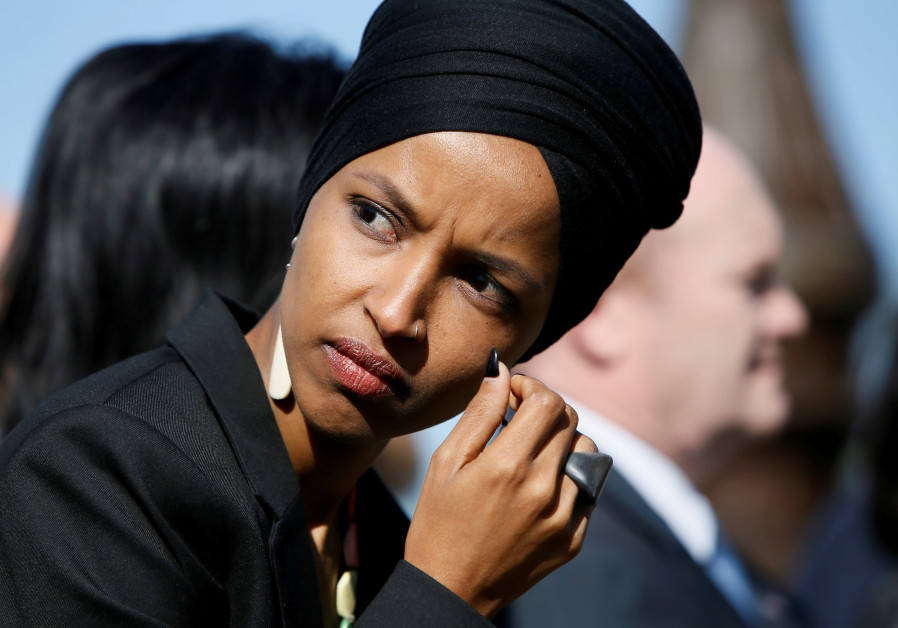
So, too, is US Congresswoman Ilhan Omar encouraging the firing of rockets by Hamas and Islamic Jihad by blaming the Israeli victims for what she calls the “cycle of violence,” instead of blaming those groups for initiating terrorist violence against innocent Israeli civilians.

In a tweet following the rocket barrage, Omar justifies the double war crimes committed by terrorists who target Israeli civilians while using Palestinian civilians as human shields. She asks rhetorically, how many “rockets must be fired, and little kids must be killed until the endless cycle of violence ends?” This implies that these war crimes are justified by what she calls the “occupation and humanitarian crisis in Gaza.”

DOES OMAR not realize that Israel ended its occupation of Gaza in 2005 when it removed every soldier and settler from that area? Gaza could have become the Singapore of the Mediterranean, with its port and location. The Israelis left behind greenhouses and other facilities. Europe and Qatar poured money into the Gaza Strip.

But Hamas – which forcefully took over the area from the Palestinian Authority – decided to turn it instead into a large scale rocket launcher. Instead of using its newly acquired resources to provide humanitarian benefits to its residents, it used them to build terrorist rockets and tunnels that targeted Israeli civilians. This forced Israelis to take counter-measures to protect its citizens. To use the “occupation” – there is no longer any occupation – as a justification for why “rockets must be fired” is to show both ignorance and bigotry.

Nor is Omar alone in blaming Israel for the rocket attacks on its civilians. The ADC (American Arab Anti-Discrimination Committee) issued a statement condemning Israel for “targeting and killing Palestinian civilians, including children and infants.” Irresponsibly, it never once mentioned the firing of 698 rockets by the rulers of Gaza that target Israeli civilians, nor did it ever mention the sad reality that Hamas and Islamic Jihad deliberately use “Palestinian civilians, including children and infants” as human shields in order to increase the number of inadvertent Palestinian casualties.

The conflict in Gaza will only get worse if terrorism is encouraged by the lies of commission and omission told by Omar, ACD and other supporters of Hamas and Islamic Jihad. All decent people must try to discourage the targeting of civilians by terrorist rockets and tunnels. A good beginning would be to tell the truth.

I write these words from Israel, which is now commemorating the many soldiers who have fallen over its years of fighting against those who would destroy the nation state of the Jewish people. It is also celebrating its 71st year of independence. No nation has contributed so much to humankind in so short a period of time. No nation faced with threats compared to those faced by Israel has ever had a better record of human rights, compliance with the rule of law or concern with avoiding civilian casualties.

The world should join Israeli in celebrating its 71st year of statehood. The world should also recognize that if Israel’s enemies stopped attacking its citizens, there would be peace – but if Israel stopped defending its citizens, there would be genocide.

Follow Alan M. Dershowitz on Twitter: @AlanDersh; Facebook: @AlanMDershowitz


Top Iranian commander: US ‘wouldn’t dare launch military action against us’ 

May 10, 2019

Source: Top Iranian commander: US ‘wouldn’t dare launch military action against us’ | The Times of Israel

Amid rising tensions and American reinforcements in region, deputy head of IRGC rules out talks with Washington; Bolton said to convene unusual meeting at CIA headquarters

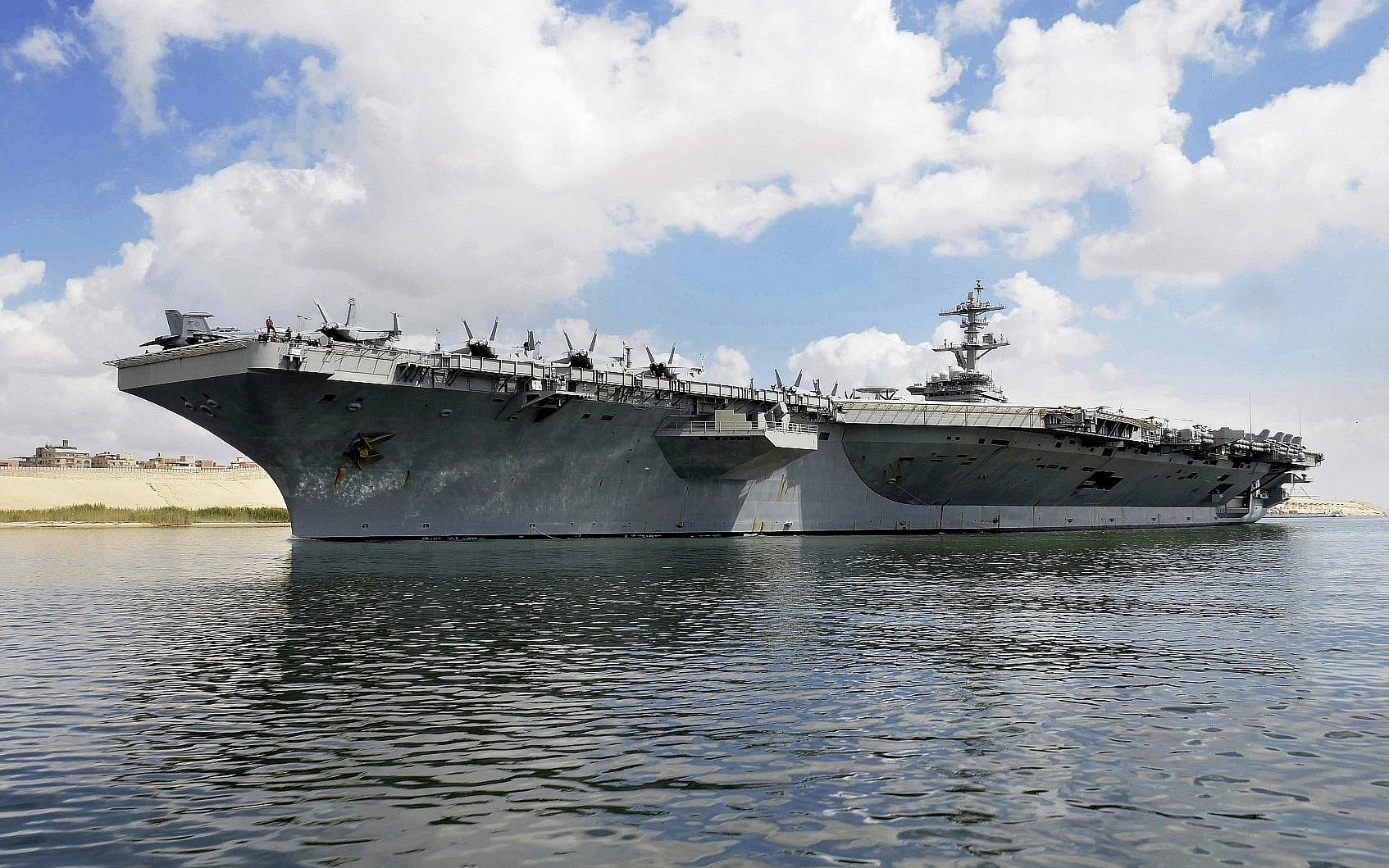
The USS Abraham Lincoln sails south in the Suez canal near Ismailia, Thursday, May 9, 2019 (Suez Canal Authority via AP)

The USS Abraham Lincoln sails south in the Suez canal near Ismailia, Thursday, May 9, 2019 (Suez Canal Authority via AP)

A top commander in Iran’s elite Islamic Revolutionary Guards Corps said Friday the US “wouldn’t dare to launch military action against us,” amid rising tensions and escalating rhetoric in recent days.

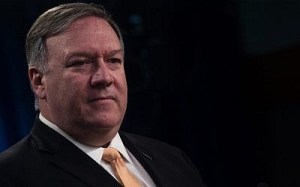
Yadollah Javani, the IRGC’s deputy head for political affairs, made the comments after US Secretary of State Mike Pompeo on Thursday threatened a “swift and decisive” response to any attack by Iran.

And while President Donald Trump on Thursday said he “would like to see [Iran] call me” for talks, Javani told the Tasnim news agency there would be no talks, adding Tehran saw Washington as “unreliable.”

The United States has in recent days announced the deployment of an aircraft carrier strike group and nuclear-capable bombers to the region, saying it had information of plans for Iranian-backed attacks.

Brig. Gen. Yadollah Javani, the deputy head of the political bureau of Iran’s Revolutionary Guards. (CC BY 4.0, sayyed shahab-o- din vajedi, Wikipedia)

An American official told the Associated Press the decision to send in more forces was based in part on intelligence indications that Iran had moved short-range ballistic missiles by boat in waters off its shores.

“We have information that you don’t want to know about,” Trump told reporters. “They were very threatening and we have to have great security for this country and many other places.”

In this photo released by the US Navy, a Sea Hawk helicopter prepares to land on the flight deck of the USS Abraham Lincoln aircraft carrier in the Adriatic Sea, May 2, 2019. (US Navy/Michael Singley)

Asked about the possibility of military conflict with Iran, the president said: “I guess you could say that always, right? I don’t want to say no, but hopefully that won’t happen. We have one of the most powerful ships in the world that is loaded up and we don’t want to do anything.”

Meanwhile NBC News reported Thursday night that in a rare occurrence last week, US national security adviser John Bolton gathered the nation’s top defense, intelligence and diplomatic officials at CIA headquarters to discuss developments on the Iranian front.

US National Security Advisor John Bolton unveils the Trump Administration’s Africa Strategy at the Heritage Foundation in Washington, December 13, 2018. (Cliff Owen/AP)

Those present included Acting Defense Secretary Patrick Shanahan, Chairman of the Joint Chiefs of Staff Gen. Joe Dunford, CIA Director Gina Haspel, Secretary of State Mike Pompeo and Director of National Intelligence Dan Coats.

Unnamed officials told the network the meeting did not focus on the reasons that led the US government to deploy military reinforcements to the Middle East, but did not give any details on the contents of the meeting.

Former CIA officials told NBC that such discussions were previously held to discuss sensitive covert operations.

The US’s military moves have frightened some European allies as well as Trump’s Democratic rivals, who fear the administration is pushing for war based on overhyped intelligence.

Pompeo, who earlier canceled a trip to Greenland to rush back to Washington, however said: “We do not seek war.”

US Secretary of State Mike Pompeo speaks during a press conference at the US Department of State in Washington, DC, on April 22, 2019. (AFP/Andrew Caballero-Reynolds)

“But Iran’s 40 years of killing American soldiers, attacking American facilities, and taking American hostages is a constant reminder that we must defend ourselves,” said Pompeo, referencing the 1979 Islamic revolution that transformed Iran from close US ally to sworn foe.

Meanwhile Vice Admiral Jim Malloy, commander of the United States Naval Forces Central Command, told Reuters he would bring the aircraft carrier USS Abraham Lincoln through the Gulf’s sensitive Strait of Hormuz if need be.

“If I need to bring it inside the strait, I will do so,” Malloy said. “I’m not restricted in any way, I’m not challenged in any way, to operate her anywhere in the Middle East.”

Iran on Wednesday said it would suspend some commitments under a 2015 nuclear accord rejected by Trump, frustrated that renewed US sanctions have prevented the country from enjoying the economic fruits of compliance with the deal.


Trump urges Iran to talk over nuke program, won’t rule out military action

May 10, 2019

Source: Trump urges Iran to talk over nuke program, won’t rule out military actio – Middle East – Jerusalem Post

Trump declined to say what prompted him to deploy the USS Abraham Lincoln carrier group to the region over what was described as unspecified threats.

BY REUTERS
 MAY 9, 2019 22:34
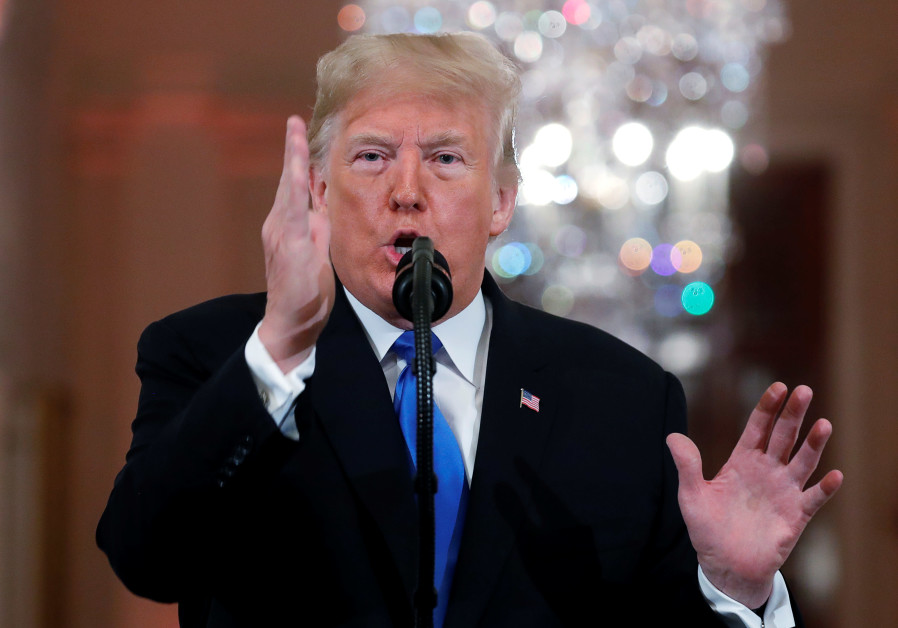
U.S. President Donald Trump addresses a news conference following Tuesday's midterm congressional el

WASHINGTON – U.S. President Donald Trump on Thursday urged Iran’s leadership to sit down and talk with him about giving up Tehran’s nuclear program and said he could not rule out a military confrontation given the heightened tensions between the two countries.

At an impromptu news conference at the White House, Trump declined to say what prompted him to deploy the USS Abraham Lincoln carrier group to the region over what was described as unspecified threats.

“We have information that you don’t want to know about,” said Trump. “They were very threatening and we have to have great security for this country and many other places.”

Trump was asked whether there was a risk of military confrontation with the American military presence in the area.

“I guess you could say that always, right? I don’t want to say no, but hopefully that won’t happen. We have one of the most powerful ships in the world that is loaded up and we don’t want to do anything,” he said.

Trump, who last year pulled Washington out of a 2015 nuclear deal between six world powers and Iran, has expressed a willingness to meet Iranian leaders in the past to no avail and renewed that appeal in talking to reporters.

“What they should be doing is calling me up, sitting down. We can make a deal, a fair deal, we just don’t want them to have nuclear weapons – not too much to ask. And we would help put them back to great shape.”

He added: “They should call. If they do, we’re open to talk to them.”

Asked about Trump’s comments, Iran’s ambassador to the United Nations Majid Takht Ravanchi said Iran had been talking with the six powers, including the United States, within the framework of the nuclear deal.

“All of a sudden he decided to leave the negotiating table. … What is the guarantee that he will not renege again?” Takht Ravanchi said in an MSNBC interview.

He dismissed U.S. allegations of an Iranian threat as “fake intelligence” and said they were “being produced by the same people who in the run-up to the U.S. invasion of Iraq did the same.”

Trump accused former Secretary of State John Kerry, who helped the negotiate the 2015 Iran nuclear deal that Trump withdrew from, of breaking a federal law by having contacts with the Iranians.

Last September Kerry told the Hugh Hewitt radio program that he had met with Iranian Foreign Minister Javad Zarif three or four times.

Trump said Kerry had violated the 1799 Logan Act, which makes it a crime for individual American citizens to negotiate with foreign governments that have a dispute with the United States.

“He’s talking to Iran and has many meetings and many phone calls and he’s telling them what to do. That is total violation of the Logan Act,” said Trump.

A Kerry spokesman said Trump was wrong.

“He’s wrong about the facts, wrong about the law, and sadly he’s been wrong about how to use diplomacy to keep America safe,” the spokesman said. “We’d hope the president would focus on solving foreign policy problems for America instead of attacking his predecessors for theater.”


Hezbollah blasts US over new Iran mining sanctions

May 10, 2019

Source: Hezbollah blasts US over new Iran mining sanctions | The Times of Israel

Lebanese terror group says US ignores international law, follows ‘law of the jungle,’ amid escalating row between Washington and Tehran

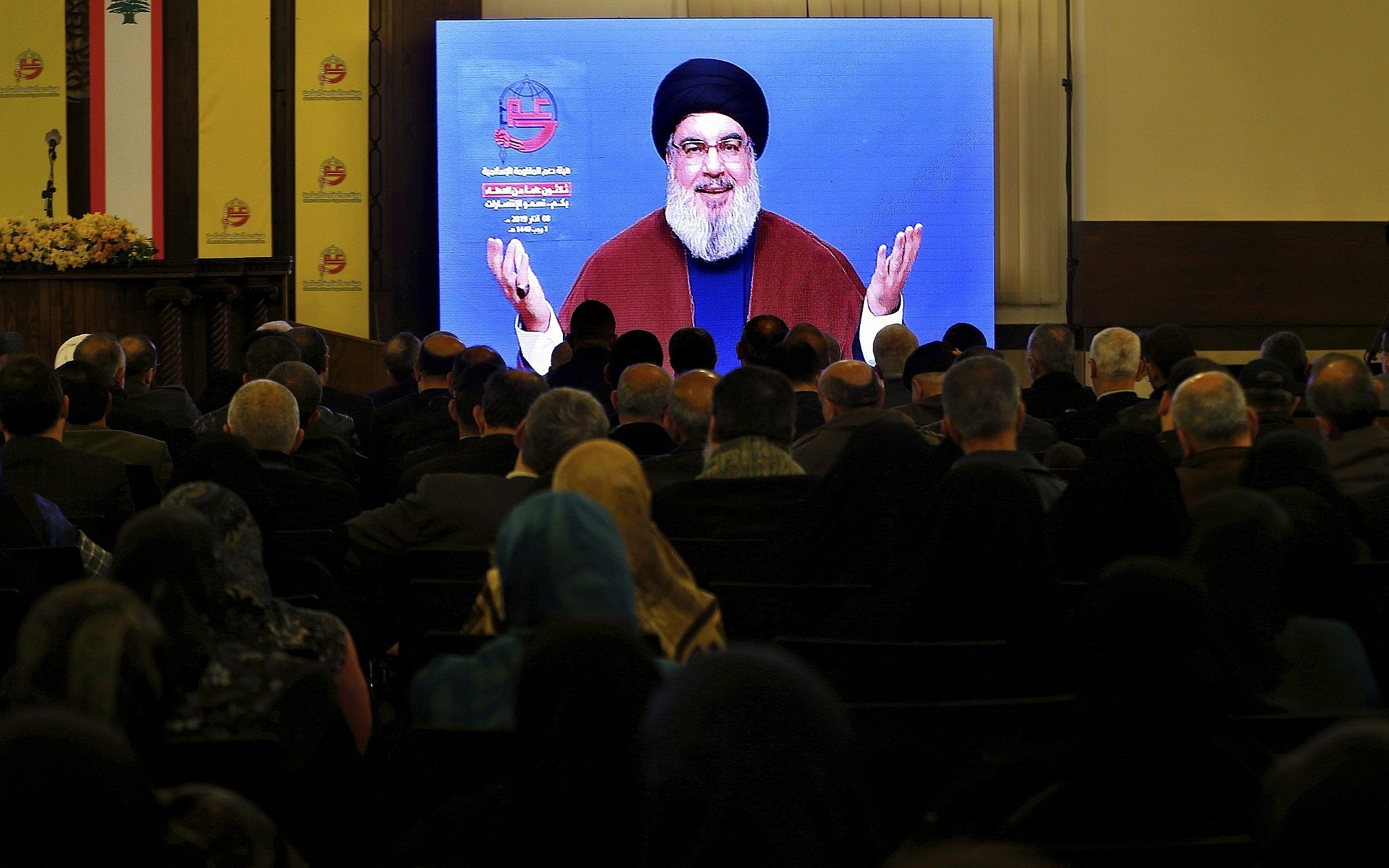
Supporters of the Iranian-backed Hezbollah terror group listen to a speech by Hezbollah leader Hassan Nasrallah via a video link in a southern suburb of Beirut, Lebanon, March 8, 2019. (AP Photo/Bilal Hussein)

Supporters of the Iranian-backed Hezbollah terror group listen to a speech by Hezbollah leader Hassan Nasrallah via a video link in a southern suburb of Beirut, Lebanon, March 8, 2019. (AP Photo/Bilal Hussein)

The parliamentary bloc of Lebanese terror group Hezbollah has blasted the United States over new sanctions it imposed on Iran, describing them as “unjustified.”

The bloc said in a statement Thursday that the US move against Iran shows the Trump administration’s “tyrannical and dictatorial trend.”

Hezbollah, which is backed and armed by Iran and sees the destruction of Israel as its main mission, is represented in Lebanon’s cabinet and parliament and has been under US sanctions for many years.

The group said in a statement Thursday that America’s unilateral sanctions do not respect international laws, and that Washington “behaves in accordance with the law of the jungle.”

It added that Iran had the power to defend itself.

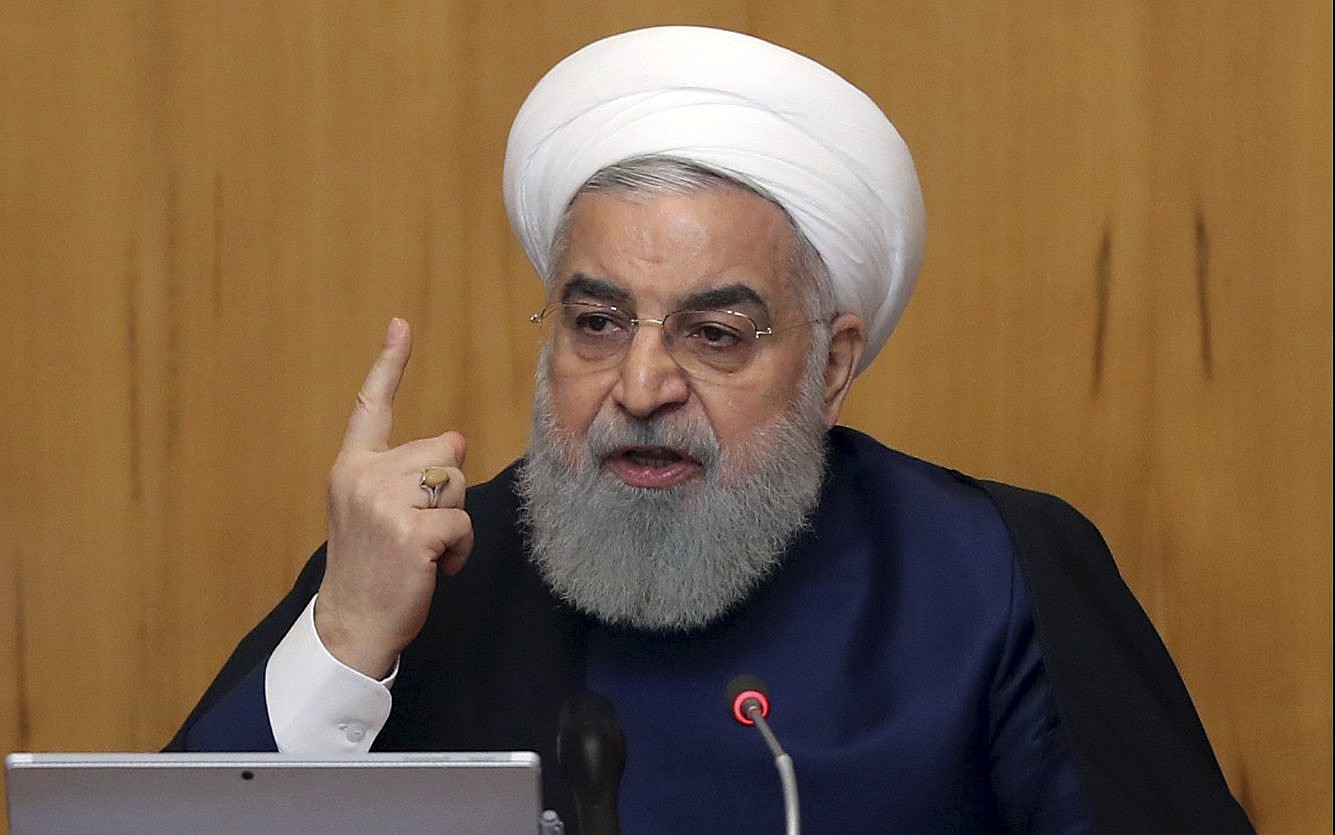
In this photo released by the official website of the office of the Iranian Presidency, Iran’s President Hassan Rouhani speaks in a cabinet meeting in Tehran, May 8, 2019. (Iranian Presidency Office via AP)

The comments came a day after US President Donald Trump tightened the screws further on Iran with sanctions on its mining industry in response to a frustrated Tehran, which said it would suspend some promises it made under a 2015 nuclear deal rejected by Washington.

On Wednesday, Iran said it would immediately stop implementing some restrictions on its nuclear program set down in the 2015 deal — a move aimed largely at pressing Washington’s European allies to step up to preserve the agreement.

Tehran said it would abandon even more restrictions if the remaining parties to the agreement — Britain, China, France, Germany and Russia — failed to start delivering on their commitments to sanctions relief within 60 days.

President Hassan Rouhani said the ultimatum was intended to rescue the nuclear deal from Trump, whose sanctions have caused severe pain in Iran — which had anticipated an economic boon from the agreement negotiated under then-US president Barack Obama.

Rouhani denounced European countries for seeing the US as the world’s “sheriff” and said their view kept them from making “firm decisions for their own national interests.”

The USS Abraham Lincoln sails south in the Suez canal near Ismailia, May 9, 2019. (Suez Canal Authority via AP)

Trump quickly fired back, imposing sanctions that would punish anyone who buys or trades the country’s iron, steel, aluminum and copper.

The White House had already acted forcefully to prevent all countries from buying Iran’s oil — its crucial money-maker — and said that the steel and mining sector was the country’s second largest source of foreign revenue, accounting for 10 percent of exports.

“Tehran can expect further actions unless it fundamentally alters its conduct,” Trump said in a statement Wednesday.

The tensions come on the anniversary of Trump’s withdrawal from the 2015 accord he denounced as “horrible,” and were highlighted earlier this week when the White House ordered an aircraft carrier strike group and nuclear-capable bombers to the region and accused Iran of planning “imminent” attacks against US forces.

On Thursday, the US Navy’s aircraft carrier USS Abraham Lincoln, which leads the strike group, traversed the Suez Canal on its way to the Persian Gulf.

Egyptian state news agency MENA quoted Mohab Mameesh, head of Cairo’s Suez Canal authority, as saying he observed the passage of the carrier through the canal on Thursday morning.