Source: Trump’s Iran policy put to test as end to nuclear deal looms | The Times of Israel
Iranians have threatened to undermine 2015 pact by restarting uranium enrichment if world powers fail to negotiate new terms. Will Washington’s tough posturing pay off?

WASHINGTON (AP) — US President Donald Trump’s Iran policy has been rooted in the idea that being tougher on Tehran would yield better results and perhaps even a new nuclear deal to replace the Obama administration pact that he pulled the US out of a year ago Wednesday.
That strategy is now being put to the test as tension escalates between Washington and Tehran, even as both sides appear willing to negotiate an end to the standoff.
Iran threatened to enrich its uranium stockpile closer to weapons-grade levels in 60 days if world powers fail to negotiate new terms for the 2015 nuclear deal. It follows the Trump administration’s “maximum pressure” campaign of diplomatic and economic measures that have exacted a punishing toll on the Islamic Republic.
The effort has been a success in the view of the president and senior officials of his administration.
“Because of our action, the Iranian regime is struggling to fund its campaign of violent terror, as its economy heads into an unprecedented depression, government revenue dries up, and inflation spirals out of control,” Trump said Wednesday as he announced yet another round of sanctions, this time targeting the country’s metals industry.
The test is whether Iran will return to the bargaining table and agree to the new terms set by the Trump administration. The stakes couldn’t be higher, as shown by the US decision over the weekend to rush an aircraft carrier group and other military assets to the Middle East to confront an unspecified Iranian threat.
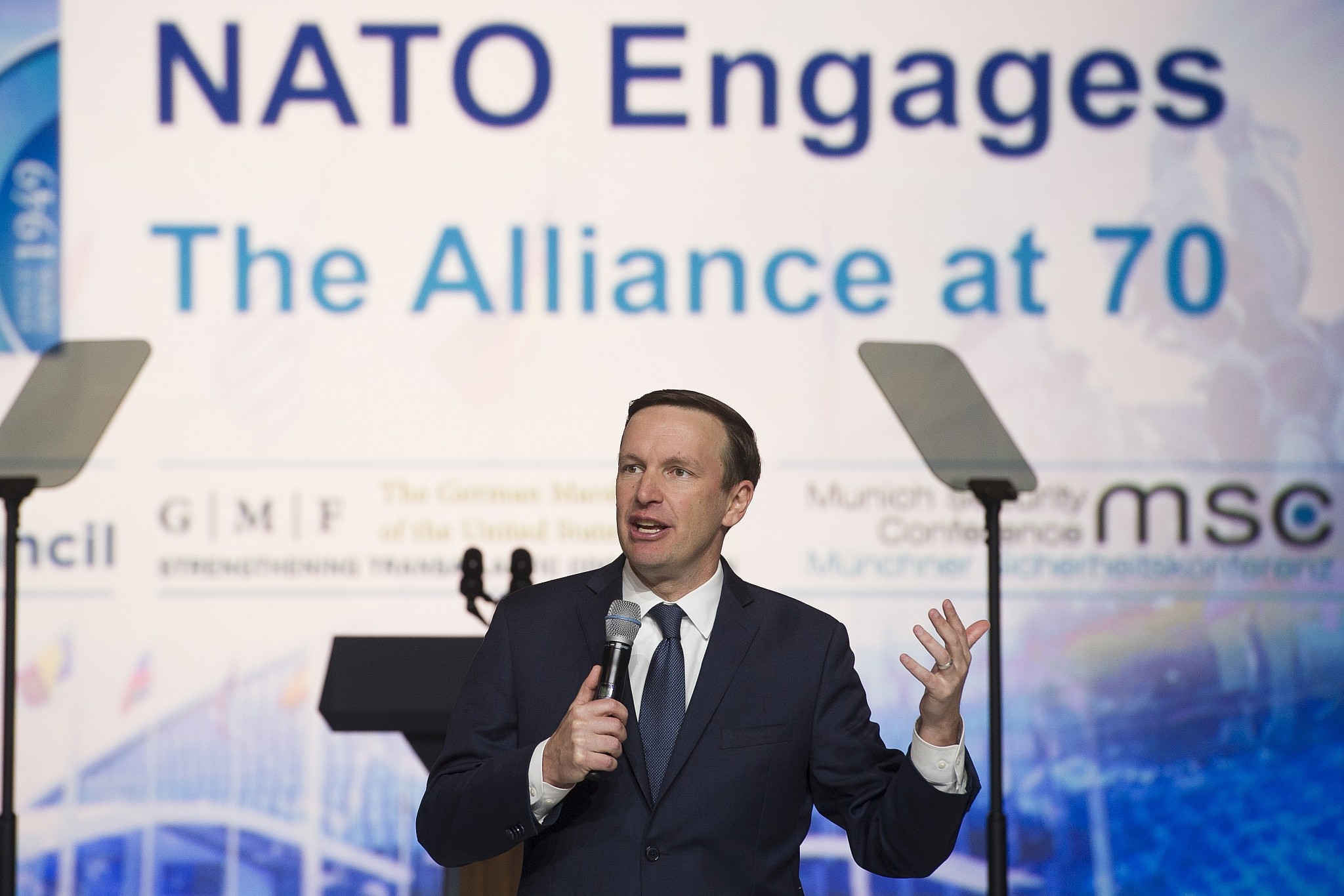
Democrats used Iran’s announcement as an opportunity to criticize Trump for withdrawing from the deal. Sen. Chris Murphy, Democrat-Connecticut, called it a sign of “blind, meandering, escalatory” foreign policy.
“Iran’s moves to restart their nuclear program are a direct consequence of the Trump administration withdrawing from the Iran deal,” said Murphy, a member of the Senate Foreign Relations Committee.
Despite Iran’s announced deadline to pull out of the remainder of the nuclear deal, there have been signs that Tehran is willing to talk. Foreign Minister Mohammad Javad Zarif said during a visit to New York last month that he thinks Trump wants to deal but is trying an antagonistic approach at the direction of senior aides and Middle Eastern allies.
“Try the language of respect,” he urged him, pretending to address the president directly. “It won’t kill you, believe me.”
Trump himself says he’s ready to talk. “We call on the regime to abandon its nuclear ambitions, change its destructive behavior, respect the rights of its people and return in good faith to the negotiating table,” he said in announcing the new sanctions.
Brian Hook, US envoy to Iran, told reporters at the State Department that the US laid out 12 demands last year for a new Iran deal and an end to the Trump administration’s maximum pressure campaign. They include an end to all uranium enrichment, ceasing all support for militant groups in the Middle East and the release of all US citizens detained in Iran on what the administration considers illegitimate grounds.
The United States, Germany, Britain, France, Russia, China and the European Union signed the 2015 deal with Iran, which lifted international sanctions in exchange for Tehran limiting its nuclear program, including restricting uranium enrichment for 10 years.
On May 8, 2018, Trump pulled out of the agreement, which he called “the worst deal in history.” He said the accord should also have restrained Iran’s ballistic missile program and curbed Tehran’s malign activities in the region and support for terror networks. The administration then re-imposed the sanctions on Iran that had been lifted when the agreement went into force.
The administration sees its move as a success.
Deprived of much of its oil revenue, Iran cut its overall military spending by 28% after reaching a peak in 2017, Hook said. Inflation has risen in the Islamic Republic and the economy is in recession, forecast to shrink by 3%, while global oil prices haven’t budged even as Iranian crude has been largely taken out of the market, production at a historic low.
“We have made our focus around diplomatic isolation and economic pressure,” he said. “That policy is working.”
The other nations who signed the nuclear deal negotiated by the Obama administration have remained in the pact and have tried to provide Iran with enough economic incentives to keep the agreement alive.
Complaining that it has not reaped the economic benefits it expected from signing the deal, Iran on Wednesday threatened to enrich its uranium stockpile closer to weapons-grade levels in 60 days if world powers fail to negotiate new terms. Iran stopped its sale of excess uranium and heavy water as a first step — something required under the deal. In 60 days, if no new deal is in place, Iran said it would increase its enrichment of uranium beyond 3.67%, which is permitted by the accord.
“Zarif today is doing what Zarif does very well, which is setting the table for negotiations because I think the Iranians are now realizing that they may not be able to wait Trump out,” said Mark Dubowitz, chief executive of the Foundation for Defense of Democracies and a critic of the deal.
“The economy is in such bad shape and getting worse that they may experience a massive economic crisis before January 2021,” when either Trump starts a second term or a new American president takes office. “I think Zarif can’t wait to get back to the table,” Dubowitz said.
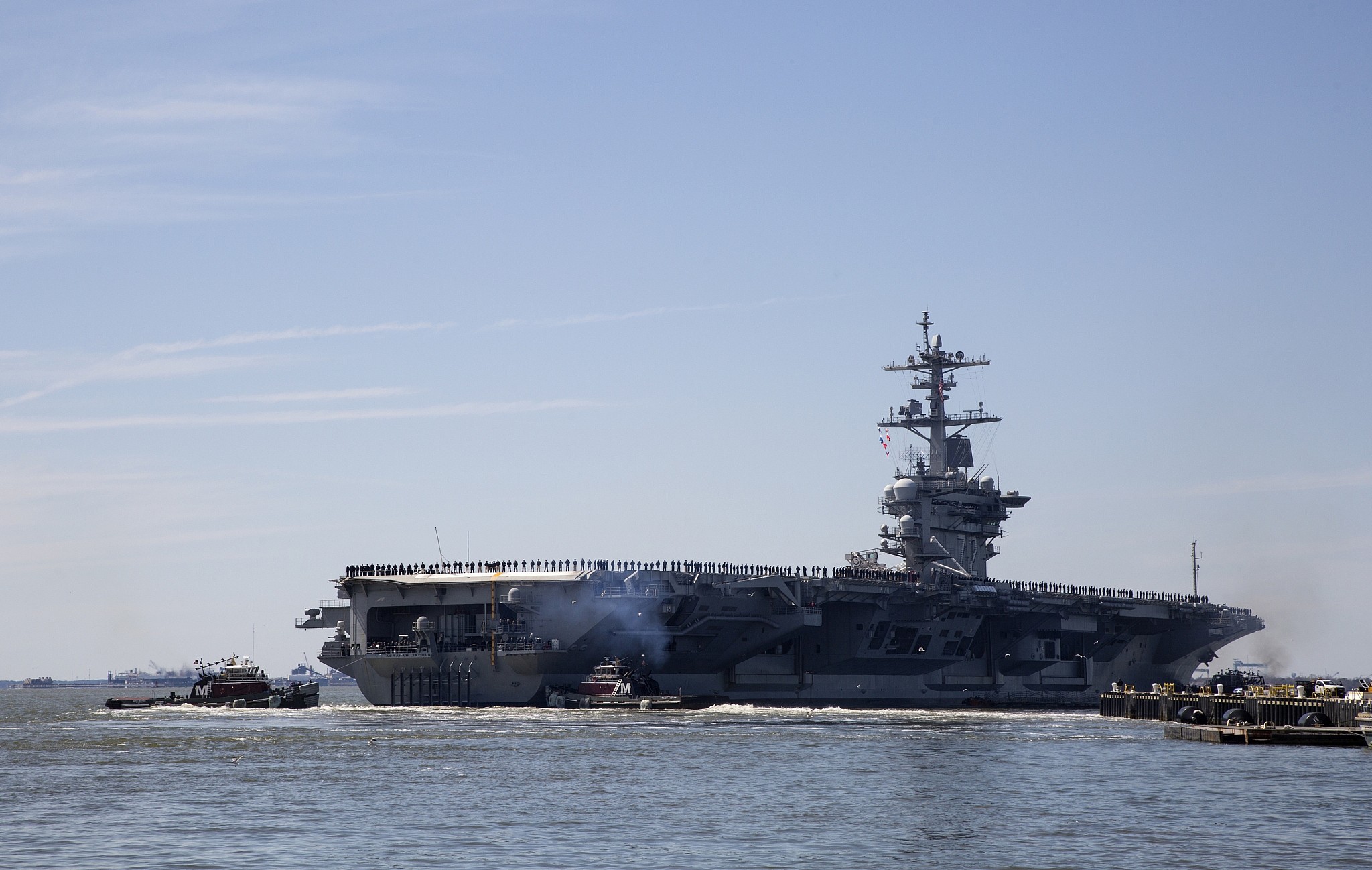
The heightened tension over Iran’s nuclear program comes just after the US dispatched the USS Lincoln aircraft carrier and bombers to the Persian Gulf in response to intelligence reports warning Iran was going to strike US assets, interests or allies.
Gen. Joseph Dunford, chairman of the Joint Chiefs of Staff, told a Senate appropriations subcommittee Wednesday that intelligence threats the US began receiving last week “really intensified” by the end of the week. He said the US “sent some messages” to Tehran, but did not provide any details.
Traveling in London, Secretary of State Mike Pompeo issued a restrained response to Iran’s announcement. He said America “will wait and observe” what Iran does next. “They have made a number of statements about actions they have threatened to do in order to get the world to jump,” Pompeo said.
Tim Morrison, senior director for weapons of mass destruction under national security adviser John Bolton at the White House, was more critical of Iran’s threat to violate the nuclear deal. “Let’s be clear,” he said. “This is nothing less than nuclear blackmail.”
Source: Iran’s atomic agency says it wants to put nuclear deal ‘back on track’ | The Times of Israel
Spokesperson says Tehran is eager to see landmark 2015 pact strengthened, as Europe says it won’t cave to regime’s ‘ultimatums’
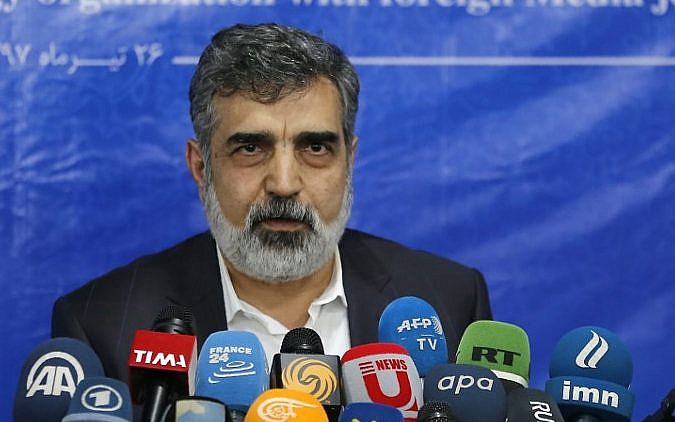
Iran wants to bring the 2015 nuclear deal with world powers “back on track,” the Islamic Republic’s Atomic Energy Organization said Thursday, a day after Tehran said it will suspend some of its commitments to the international agreement unless the terms are renegotiated.
“Our goal is to strengthen the JCPOA and bring it back on track,” state news agency IRNA quoted spokesman Behrouz Kamalvandi as saying,referring to the nuclear deal.
A year after the US withdrew from the accord, Iranian President Hassan Rouhani said in a televised address Wednesday that signatories to the deal have 60 days to come up with a plan to shield his country — already laboring under economic hardship — from the sanctions imposed by US President Donald Trump. If negotiations fail, Iran will restart uranium enrichment to levels banned under the agreement, he warned.
Rouhani compared the situation to a medical emergency for the Islamic Republic, only 40 years after its founding.
“We felt that the nuclear deal needs a surgery, and the painkiller pills of the last year have been ineffective,” Rouhani said. “This surgery is for saving the deal, not destroying it.”
European powers on Thursday rejected “ultimatums” from Tehran but vowed to fight to save the Iran nuclear deal. The European Union urged Iran to respect the international agreement curbing the Islamic Republic’s nuclear ambitions, saying it aims to continue trading with the country despite US sanctions.
The EU and major European powers — Britain, France and Germany — also said that they “note with great concern the statement made by Iran concerning its commitments” to the nuclear deal.
The Trump administration pulled America out of the deal in May 2018 saying it does nothing to stop Iran from developing missiles or destabilizing the Middle East. The Europeans insist that the pact is an important pillar of regional and global security and was never meant to address those other issues.
Trump hit back at Tehran’s threats on Wednesday by tightening the economic screws further, slapping sanctions on the Iranian mining industry.
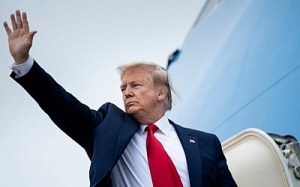
The White House, which has already taken steps to scupper Iran’s oil exports — its crucial money-maker — said the steel and mining sector was the country’s second-largest source of foreign revenue, accounting for 10 percent of exports.
“Tehran can expect further actions unless it fundamentally alters its conduct,” Trump said in a statement.
Iran announced on Wednesday that it was reducing curbs to its nuclear program.
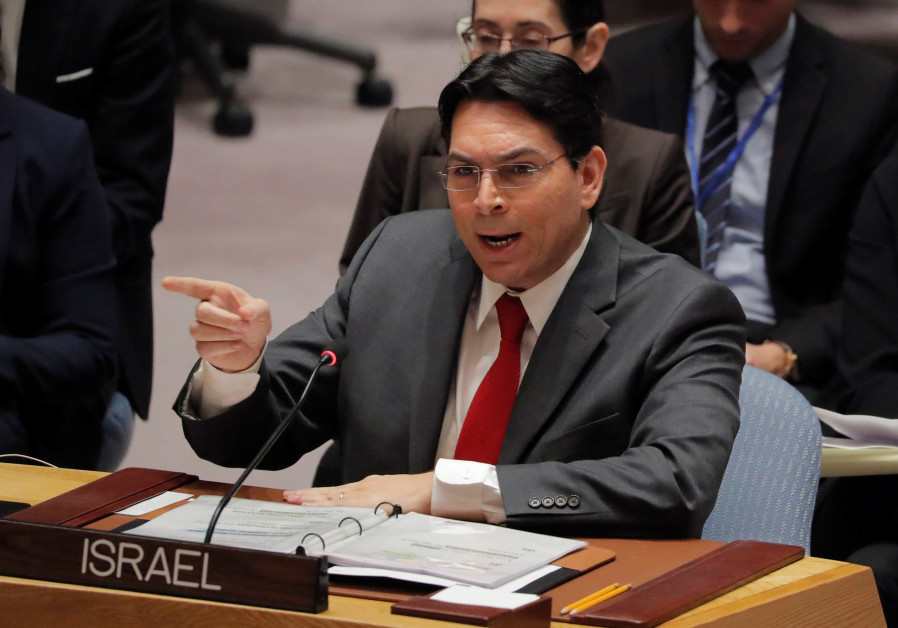
“The world should not give Iran a second chance,” Israel’s Ambassador to the UN, Danny Danon, said in response to Iranian threats to renew its nuclear program.
“This is a government that finances terror with one hand and extorts the international community with the other. The regime in Tehran is working against a safe and stable world and is, once again, exposing the mistake that was the nuclear agreement, signed in 2015,” Danon added.
In response, a few hours later, the Trump administration announced fresh sanctions against Iran.
“Tehran can expect further actions unless it fundamentally alters its conduct,” US President Donald Trump said.
Prime Minister Benjamin Netanyahu also assured that Israel will not let Iran attain nuclear weapons.
“This morning, on my way here, I heard that Iran intends to continue its nuclear program. We will not let Iran get nuclear weapons,” he said. “We will continue to fight our enemies, and will strike our roots even deeper in our homeland. That is what our heroes did at the dawn of the nations’ rebirth, and we march in their path.”
Referring to the flare up in the south over the weekend that led to the killing of four Israelis as some 700 rockets pounded the south from the Gaza Strip, Netanyahu said, “The events of the last few days show clearly what our struggle is about – about the efforts of those who seek our harm, who want to destroy our country and uproot us from our land.”
Israel’s enemies have tried to do this time after time, Netanyahu said, “but they failed.”
Source: Germany issues an ‘early warning’ report about rise of Islamist anti-Semitism | The Times of Israel
Top intelligence agency describes analysis as leap forward, amid concern of rising expressions of hate in the country
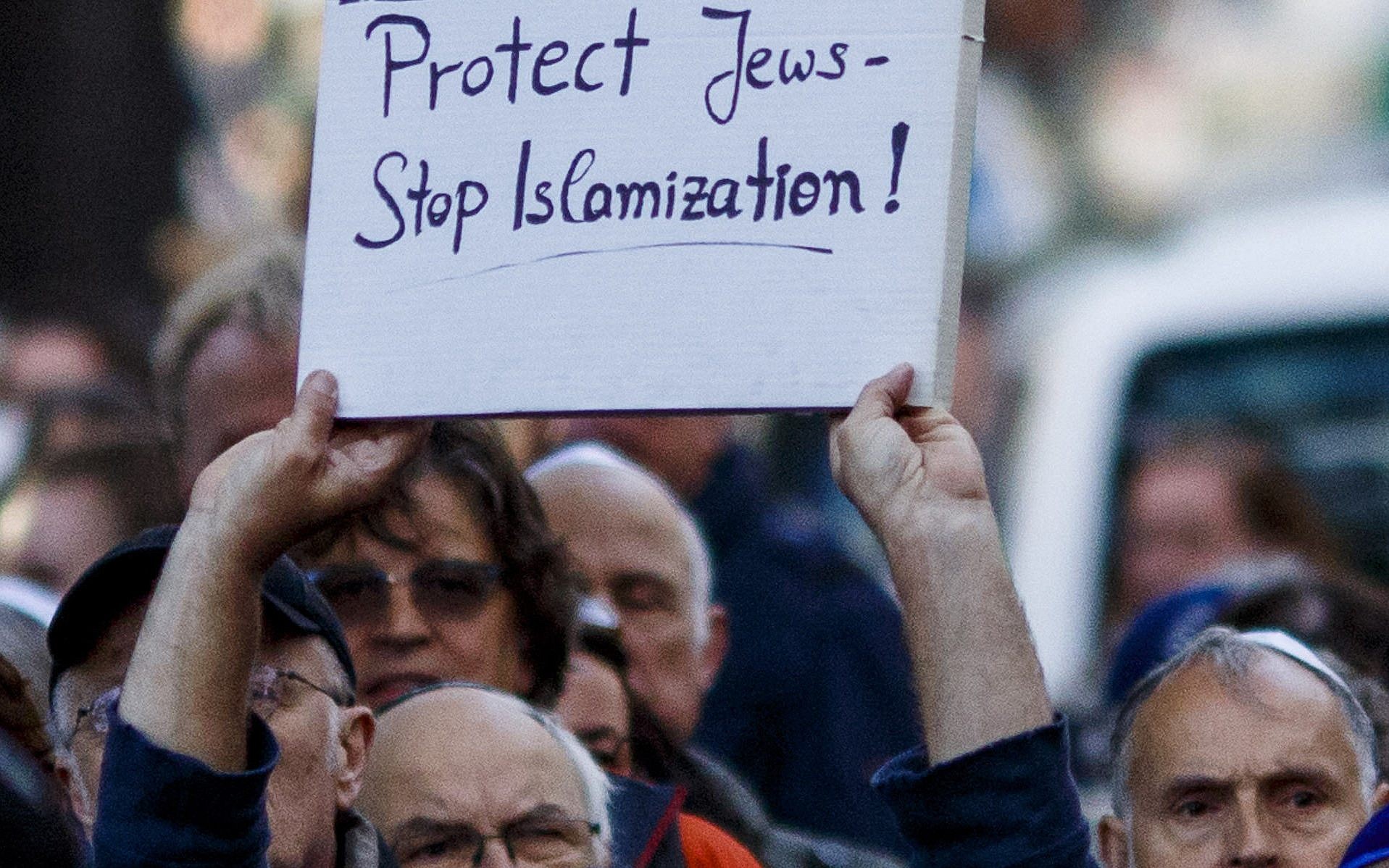
JTA — The top intelligence agency in Germany has written what is being called its most comprehensive analysis of rising anti-Semitism by Islamist extremists.
The Federal Office for the Protection of the Constitution, or BfV, described its 40-page brochure as a tool for educators, social workers, police and others who work closely with recent Muslim immigrants or refugees.
Titled “Anti-Semitism in Islamism,” the recently published report represents a leap forward in terms of the agency’s focus on the topic, spokeswoman Angela Pley told the Jewish Telegraphic Agency in a telephone interview.
She said the agency has never published such a comprehensive analysis of the subject based on empirical data.
“We are an early warning system,” Pley said. “Recommendations on what can be done must come from society and the political establishment.”
Pley said there had been no public response to the report by Muslim associations in Germany, but that it had been downloaded 1,439 times since its release.
It is one of a few recent government measures born of increased concern about anti-Semitism in Germany.
In 2018, the government appointed a commissioner, Felix Klein, to focus specifically on the topic. In 2012, a Bundestag commission was established to report on anti-Semitism nationwide and in all categories.

“Anti-Semitism in Islamism” homes in on the Islamist extremist component, which represents a looming threat, the agency said, though relatively few anti-Semitic crimes in Germany have been attributed to Islamist extremism.
The report distinguishes between “Islam” the religion and “Islamism,” which it describes as a form of political extremism that “aims at the partial or complete abolition of the liberal democratic constitution of the Federal Republic of Germany.”
Between 2010 and 2016, the Pew Research Center reported, the number of Muslims living in Germany rose to nearly 5 million, or 6 percent of the population, from 3.3 million, or 4.1%.
The vast majority of anti-Semitic crimes in Germany have a right-wing extremist background: In 2018, a total of 755 anti-Semitic crimes were reported, and 670 were attributed to the far right and 25 to “foreigners.” Of the 707 cases the previous year, 651 were attributed to the far right and 15 to foreigners.
But the new report, which identifies Islamist organizations and movements and their propaganda, warns that radicalization and incitement to anti-Semitic hate “form the breeding ground for violent escalations.”
It mentions a few sensational cases from recent years:
Anti-Semitic beliefs promoted by Islamist groups and individuals “already represent a considerable challenge for peaceful and tolerant coexistence in Germany,” the report says.

It is not the first time the agency has examined anti-Semitism in this context: Past annual reports on extremist crime have covered Islamism and its anti-Semitic components. A symposium was held on the subject in the early 2000s, Pley told JTA.
Juliane Wetzel, a senior staff member at the Center for Research on Antisemitism at the Technical University in Berlin, called the report an “excellent contribution on the theme.”
“The conclusion is important: Islamist anti-Semitism is spreading in Germany,” said Wetzel, a member of the Bundestag’s commission of experts on anti-Semitism.
The new report is important, though the topic of anti-Semitism in Islamism has hardly been taboo in Germany as some critics have claimed, said political scientist Clemens Heni, director of the Berlin International Center for the Study of Antisemitism.
Among other organizations, “the intelligence agency has reported on it for decades,” Heni told JTA.
In its definition of anti-Semitism, the brochure includes anti-Zionism, since it “aims at the complete elimination of the State of Israel” and falsely defines the Mideast conflict “as a Jewish ‘war of annihilation’ against the Palestinians.”
The brochure says that anti-Zionists in Germany often argue that they are against Israel, not against Jews. But given that “Israel is the only Jewish state in the world and that its annihilation would inevitably result in the death and expulsion of millions of Jews, this argumentation turns out to be a trick to conceal the actual thrust of anti-Zionism,” the report concludes.
Among other points, the brochure covers anti-Semitic stereotypes in Islamism and the rejection of the State of Israel by Islamist organizations.
Its list of Islamic extremist groups and movements in Germany includes the Muslim Brotherhood and Hamas, among others.
Though there has been no public response from Muslim organizations in Germany, the Liberal Islamic Association recently published its own 178-page report on the results of its three-year program, Extreme Out: Empowerment, Not Antisemitism. The project was designed to “shed light on and work [against] anti-Semitic attitudes among young people of Muslim faith” and to help youth see themselves as part of German society.
Source: Pompeo puts off Greenland trip amid heightened tensions with Iran | The Times of Israel
US secretary of state cites pressing business in Washington as reason for travel changes, hours after Tehran announces partial withdrawal from nuclear deal
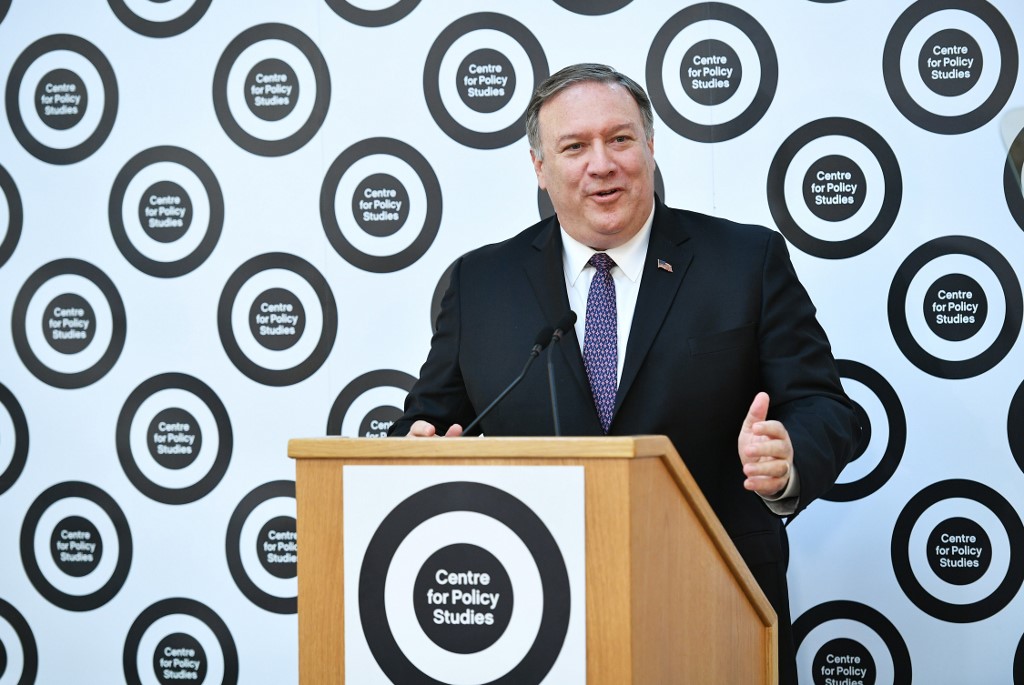
COPENHAGEN, Denmark — US Secretary of State Mike Pompeo on Thursday put off a visit to Greenland, citing pressing business in Washington — just two days after he also ditched a trip to Germany to fly to Iraq amid soaring tensions with Iran.
Pompeo was scheduled to visit Greenland’s capital Nuuk and to make a second stop to see New York Air National Guard troops deployed to assist climate research, part of a push to show the US commitment to the Arctic.
But US State Department spokeswoman Morgan Ortagus said Pompeo was postponing the trip “due to a need for the secretary to be in Washington” on Thursday.
“We look forward to rescheduling the secretary’s visit at a time convenient for Greenland, Denmark and the United States,” she said.
Greenland is an autonomous territory of Denmark, whose foreign minister, Anders Samuelsen, had also been set to meet Pompeo in Nuuk.
A senior diplomat in Greenland, Kenneth Hoegh, earlier told AFP that Pompeo’s visit was being postponed. Greenland’s government in a statement said it was informed that “urgent matters” required Pompeo in Washington.
The trip comes amid a spike in friction with Iran, after the United States announced the deployment of an aircraft carrier strike group and nuclear-capable B-52 bombers to counter what it alleged were imminent Iranian threats.
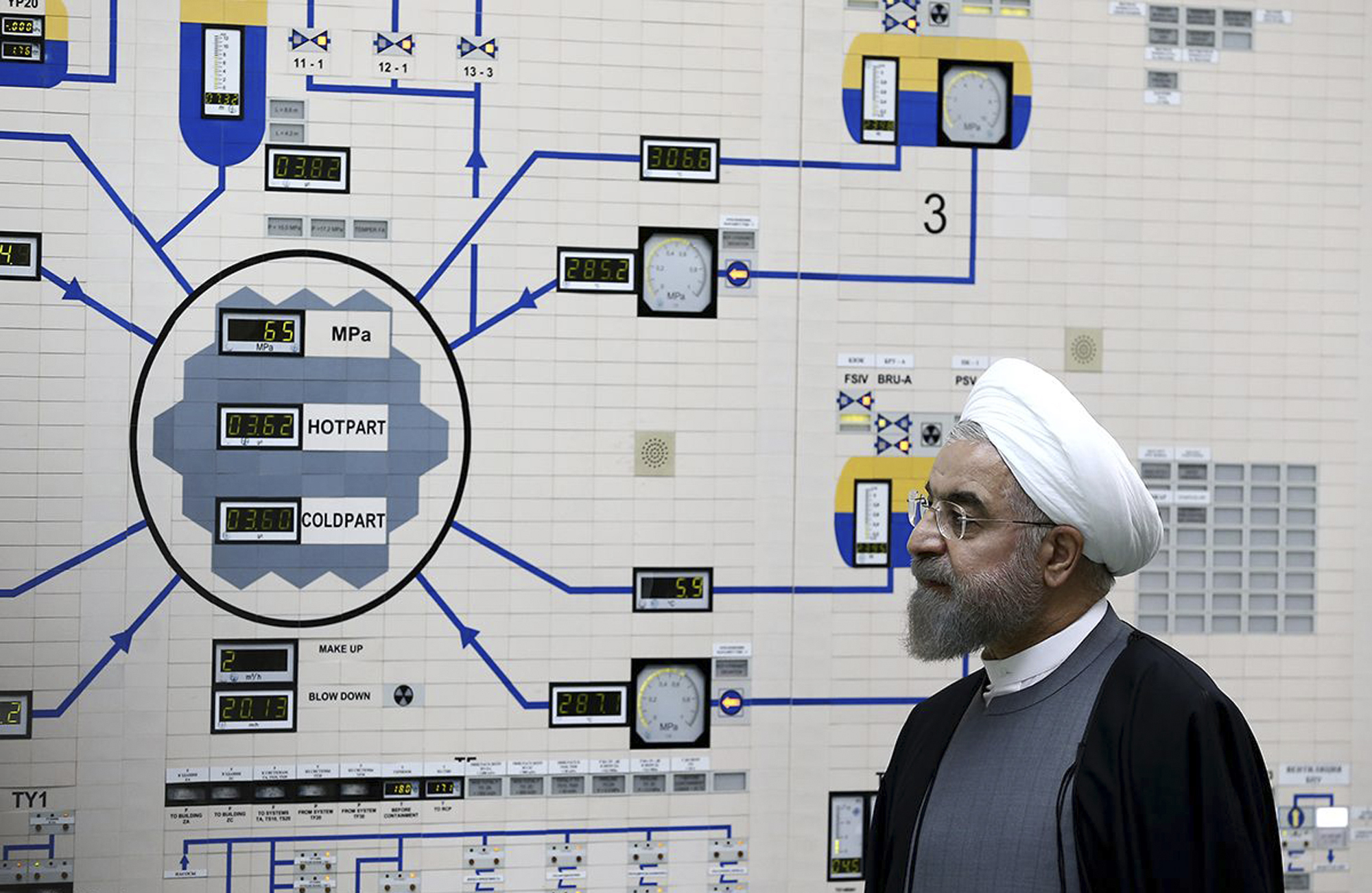
Iran on Wednesday said it would no longer abide by some limits under a 2015 nuclear accord, a year to the date after President Donald Trump pulled the United States out of the deal and instead slapped sweeping sanctions.
On Tuesday, instead of flying to Germany, Pompeo made an unannounced detour to Iraq — where Iran has a major influence — and said that the country’s leaders had promised to protect US interests.
Pompeo’s tour of Greenland was meant to have closed out a four-day visit to Europe that started in Finland, where he attended a meeting of the eight members of the Arctic Council.
While skeptical about fighting climate change, Pompeo noted that new sea routes were opening in the usually frozen Arctic — and challenged the role of China in seeking interests in the region.
Pompeo spent Wednesday in London where he discussed the tensions with Iran and delivered remarks on religious freedom, one of his key priorities.
Source: Trump moves to strangle Iran economy as nuclear deal withers | The Times of Israel
President tightens the screws with sanctions on mining industry, after Tehran suspends part of its obligations under 2015 accord
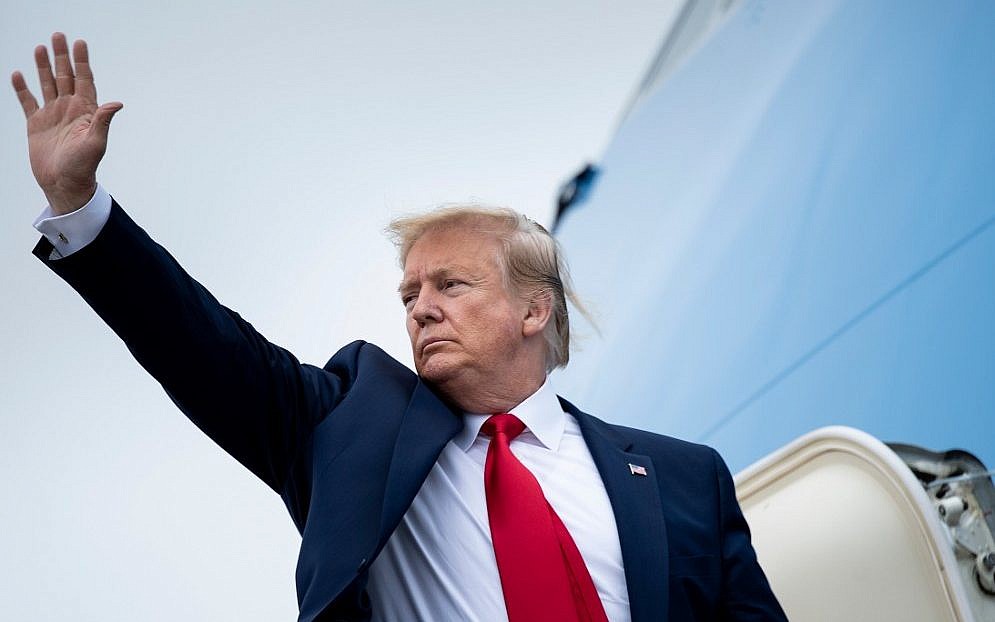
WASHINGTON (AFP) — US President Donald Trump on Wednesday tightened the screws further on Iran with sanctions on its mining industry after a frustrated Tehran said it would suspend some promises it made under a nuclear deal rejected by Washington.
On the anniversary of Trump’s withdrawal from the accord he denounced as “horrible,” tensions were soaring after the United States deployed an aircraft carrier strike group and nuclear-capable bombers to the region and accused Iran of “imminent” attacks.
In an announcement previewed for days, Iran said it would immediately stop implementing some restrictions under the 2015 deal — a move aimed largely at pressing Washington’s European allies to step up to preserve the agreement.
Tehran said it would abandon even more if the remaining parties to the agreement — Britain, China, France, Germany and Russia — failed to start delivering on their commitments to sanctions relief within 60 days.
President Hassan Rouhani said the ultimatum was intended to rescue the nuclear deal from Trump, whose sanctions have caused severe pain in Iran — which had anticipated an economic boon from the agreement negotiated under then president Barack Obama.

“We felt the (deal) needed surgery and that the year-long sedatives have not delivered any result. This surgery is meant to save the (deal), not destroy it,” Rouhani said at a cabinet meeting broadcast live on state television.
Rouhani denounced European countries for seeing the US as the world’s “sheriff” and said their view kept them from making “firm decisions for their own national interests.”
Trump quickly fired back as he moved to inflict greater economic pain on Iran, imposing sanctions that would punish anyone who buys or trades the country’s iron, steel, aluminum and copper.
The White House had already acted forcefully to prevent all countries from buying Iran’s oil — its crucial money-maker — and said that the steel and mining sector was the country’s second largest source of foreign revenue, accounting for 10 percent of exports.
“Tehran can expect further actions unless it fundamentally alters its conduct,” Trump said in a statement.
But in a shift in tone, Trump — who talked tough on North Korea before two landmark summits with leader Kim Jong Un — said he was willing to negotiate face-to-face.
“I look forward to someday meeting with the leaders of Iran in order to work out an agreement and, very importantly, taking steps to give Iran the future it deserves,” he said.
Observers believe it is highly unlikely that Iran’s leaders — who have made hostility to the United States a bedrock principle since the 1979 Islamic Revolution toppled the pro-Western shah — would want to meet Trump, who has repeatedly threatened the country.
But Foreign Minister Mohammad Javad Zarif regularly saw his counterpart in the Obama administration, then secretary of state John Kerry, and recently dangled the prospect of a prisoner swap with the United States.
Zarif, who was visiting Moscow, accused European governments of not fulfilling their obligations under the nuclear deal.
“Our friends in Russia and China maintained very good relations with us in this year but the rest of the… participants did not meet any of their obligations,” Zarif said.

Iran’s Supreme National Security Council said it no longer considered itself bound by the agreed restrictions on stocks of enriched uranium and heavy water.
It said that after 60 days, it would also stop abiding by limits on the level to which Iran can enrich uranium and modifications to its Arak heavy water reactor that were designed to prevent the production of plutonium.
Uranium enriched to much higher levels than Iran’s current stocks can be used as the fissile core of a nuclear weapon, while heavy water is a source of plutonium, which can be used as an alternative way to produce a warhead.
But on a practical level, Robert Kelley, a former UN nuclear inspector now with the Stockholm International Peace Research Institute, said the commitments Iran was dropping had no bearing on its ability to develop an atomic bomb.
He said that Iran was simply seeking to “save face” after “striking a deal which was not respected by the other side.”

The three European parties to the deal tried to save the accord with a trade mechanism meant to bypass reimposed US sanctions, but their attempt was dismissed by Iran’s supreme leader Ayatollah Ali Khamenei as a “bitter joke.”
The European powers voiced alarm at Iran’s statement and expressed hope that the nuclear deal could be preserved.
“It is important to avoid any action that would prevent the enactment of the obligations by parties currently upholding the agreement or that might fuel an escalation,” a French foreign ministry spokesperson said.
Germany urged Iran to uphold the nuclear deal. “We as Europeans, as Germans, will play our part and we expect full implementation from Iran as well,” Chancellor Angela Merkel’s spokesman Steffen Seibert said.
UN Secretary General Antonio Guterres said the nuclear accord was “a major achievement” in boosting international security and said he “strongly hopes” that it can be preserved, according to UN spokesman Farhan Haq.
Source: European powers reject Iran’s ‘ultimatums’ on nuclear deal | The Times of Israel
EU’s foreign policy chief and foreign ministers of Britain, France, and Germany say they will assess Tehran’s adherence to 2015 pact, remain determined to keep agreement alive
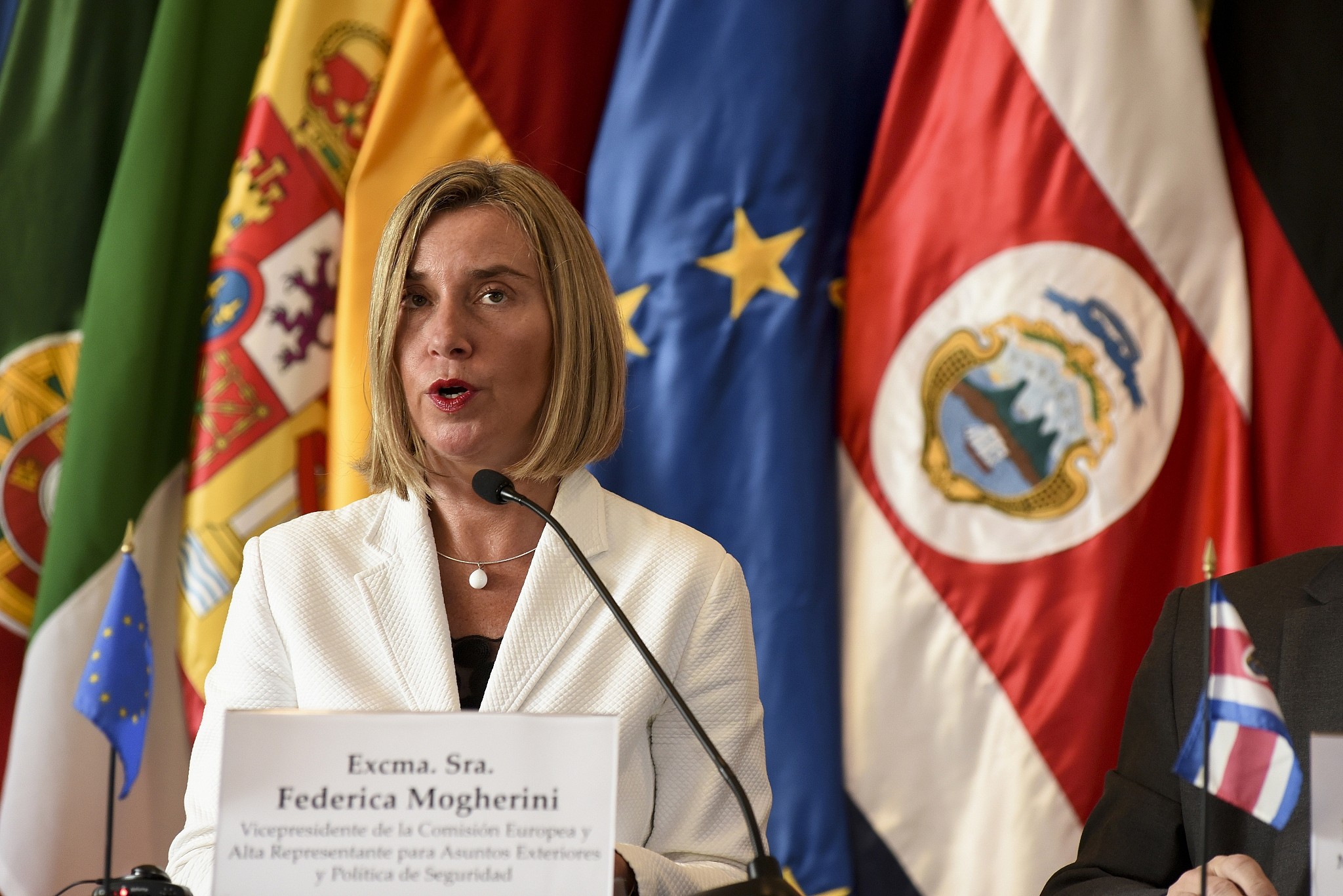
BERLIN, Germany — European powers said Thursday that they still backed the nuclear deal with Iran, but rejected any “ultimatums” from Tehran to keep it alive.
“We reject any ultimatums and we will assess Iran’s compliance on the basis of Iran’s performance regarding its nuclear-related commitments” under a 2015 deal, the EU’s foreign policy chief Federica Mogherini and the foreign ministers of Britain, France and Germany said in a statement.
Iran said Wednesday it had stopped respecting limits on its nuclear activities agreed under the deal with major powers until they find a way to bypass renewed US sanctions, as Washington accused Tehran of resorting to “blackmail.”
Tehran said it was responding to the sweeping unilateral sanctions that Washington has reimposed since it quit the agreement one year ago, which have dealt a severe blow to the Iranian economy.
In their statement, the Europeans underlined “our own firm commitments under the agreement including as regards sanctions-lifting for the benefit of the Iranian people” but criticized the US sanctions.

“In this regard, we regret the re-imposition of sanctions by the United States following their withdrawal from the JCPOA,” — Joint Comprehensive Plan of Action — as the nuclear deal is known.
“We call on countries not party to the JCPOA to refrain from taking any actions that impede the remaining parties’ ability to fully perform their commitments.”
The European powers added that they were “determined to continue pursuing efforts to enable the continuation of legitimate trade with Iran” in an effort to keep the imperiled pact afloat.
But it said that Iran must at the same time “implement its commitments under the JCPOA in full as it has done until now and to refrain from any escalatory steps.”




 anneinpt
 artaxes
 danmillerinpanama
 davidking1530
 Peter Hofman
 Joseph Wouk
 Peter
Peter Louisiana Steve
 WarSclerotic
Recent Comments