Source: What is behind the rise in U.S.- Iran tensions – U.S. News – Haaretz.com
It’s unclear what specific threat American officials perceive coming from Iran
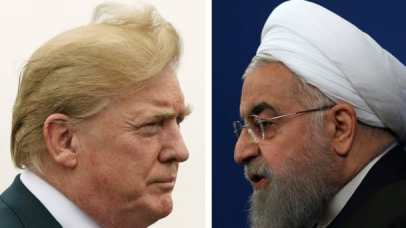
A sudden White House announcement that a U.S. aircraft carrier and a bomber wing would be deployed in the Persian Gulf to counter Iran comes just days ahead of the anniversary of President Donald Trump’s decision to withdraw America from Tehran’s nuclear deal.
Iranian President Hassan Rouhani is said to be planning a speech Wednesday on the anniversary to discuss the next steps Tehran will take in confronting the U.S. Officials in the Islamic Republic previously warned that Iran might increase its uranium enrichment, potentially pulling away from a deal it has sought to salvage for months.
The military has almost always had an aircraft carrier in the Persian Gulf as part of its sprawling military presence in the strategic region, but had begun to scale back its presence as the air campaign against the Islamic State group in Iraq and Syria wound down.
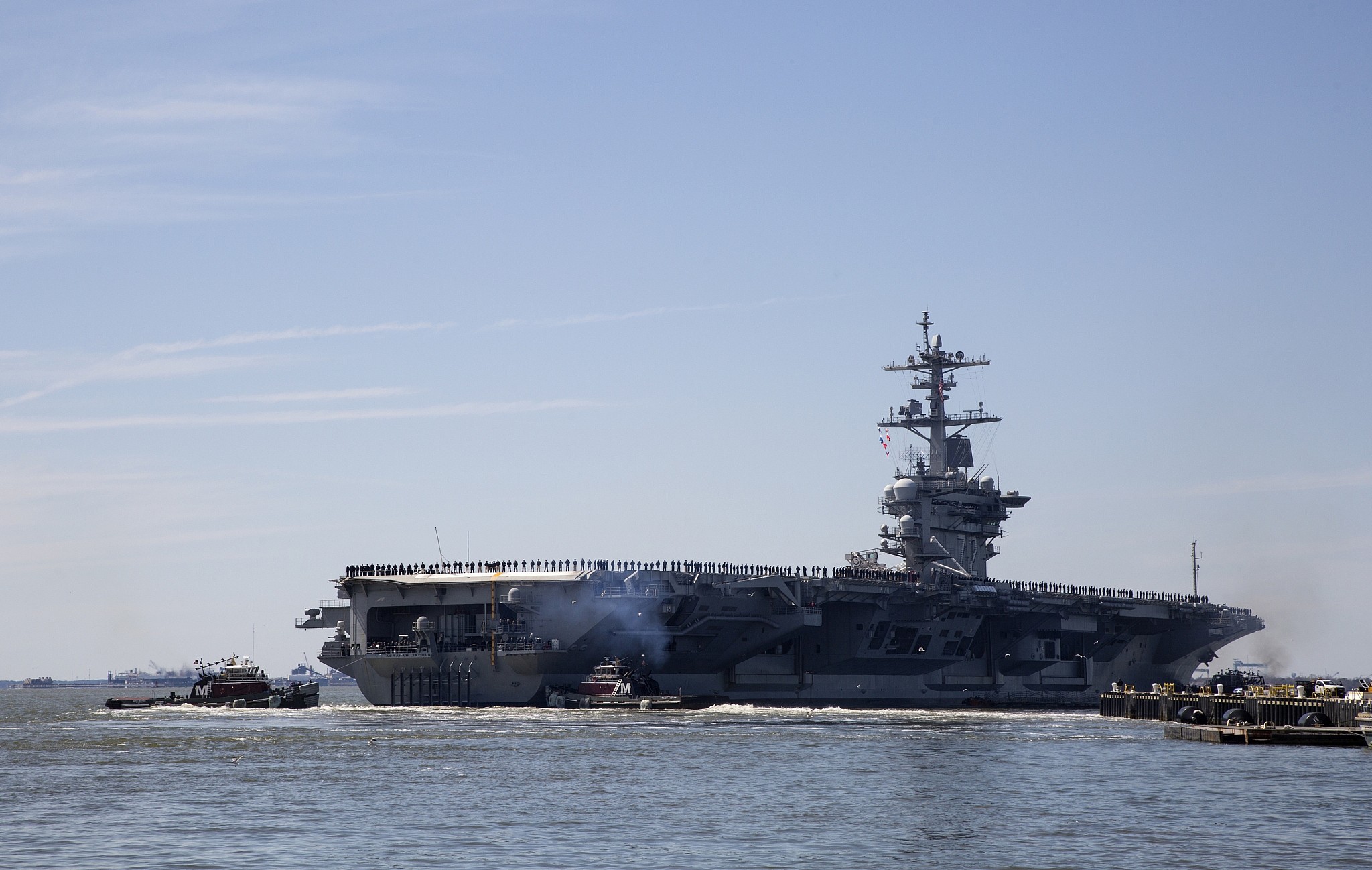
Sunday night’s statement from national security adviser John Bolton said the USS Abraham Lincoln, other ships in the carrier’s strike group and a bomber wing would deploy to the Mideast. Bolton blamed “a number of troubling and escalatory indications and warnings,” without elaborating.
“The United States is not seeking war with the Iranian regime, but we are fully prepared to respond to any attack, whether by proxy, the Islamic Revolutionary Guard Corps, or regular Iranian forces,” Bolton said.
In Iran, the semi-official ISNA news agency on Monday quoted an anonymous official as saying that Rouhani planned a broadcast address Wednesday and may discuss the “counteractions” Tehran will take over America’s withdrawal from the nuclear deal. It said Iranian officials have informed their European counterparts — with whom Iran has been trying to salvage the agreement — of the planned speech.
“Partial and total reduction of some of Iran’s commitments and resumption of some nuclear activities which were ceased following (the deal) are the first step,” ISNA said. Iranian state television and the semi-official Fars news agency similarly suggested an Iranian response loomed.
A spokesman for Iran’s Supreme National Security Council, Keivan Khosravi, also dismissed Bolton’s comments as “psychological warfare.”
Iran’s hard-line Javad newspaper, associated with the Revolutionary Guard, said Wednesday would “ignite the matchstick for burning the deal.” It suggested in its Tuesday edition that Iran may install advanced centrifuges at its Natanz facility and begin enrichment at its Fordo facility, activities prohibited under the nuclear deal.
The United Nations’ nuclear watchdog says Iran has continued to comply with the terms of the 2015 nuclear deal, which saw it limit its enrichment of uranium in exchange for the lifting of economic sanctions. But American sanctions have wreaked havoc on Iran’s already-anemic economy, while promised help from European partners in the deal haven’t alleviated the pain.
The U.S. last week stopped issuing waivers for countries importing Iranian crude oil, a crucial source of cash for Iran’s government.
It’s unclear what specific threat American officials perceive coming from Iran. A U.S. official, who spoke to The Associated Press on condition of anonymity to discuss intelligence matters, said American troops at land and sea could be targeted. Israel reportedly passed on the intelligence of the threat to U.S. interests in the region.
The USS Abraham Lincoln had been in the Mediterranean Sea conducting operations alongside the USS John C. Stennis, another aircraft carrier that has twice been in the Persian Gulf in recent months.
However, American military officials have stopped the near-continuous presence of aircraft carriers in the Persian Gulf, a pattern set following the 1991 Gulf War. American air bases spanning the region can scramble fighter jets and drones, lessening the necessity of an aircraft carrier as U.S. officials also worry about China and Russia.
Already in the Persian Gulf is a group of U.S. Navy warships led by the USS Kearsarge, an amphibious assault ship carrying troops from the 22nd Marine Expeditionary Unit. The Kearsarge also carries AV-8B Harrier fighter jets, MH-60 helicopters and MV-22 Osprey airplanes.
Across the wider 5th Fleet, there were 17 warships deployed, according to the most-recent count by the U.S. Naval Institute, which tracks deployments around the world.
The Bahrain-based 5th Fleet declined to comment on the White House announcement when reached by the AP on Monday.
It also remains unclear what bomber wing would be deployed to the region. Typically, the al-Udeid Air Base in Qatar, home to the forward headquarters of the U.S. military’s Central Command, hosts such bomber deployments.
In late March, the Air Force acknowledged a rare gap in bomber cover in the Mideast after a squadron of B-1 Lancers left al-Udeid to return to Texas. B-52 bombers also had been deployed to the area to keep up attacks on the Islamic State group, the first time the aging aircraft had deployed to the region in 25 years.
Officials at al-Udeid, which also hosts the F-35 fighter jet, declined to answer questions from the AP.
The Trump administration, which abruptly announced in December that it was pulling out of Syria, still maintains 2,000 U.S. troops in the northern part of the war-torn country. Officials suggest they serve as a check on Iranian ambitions and help ensure that Islamic State fighters do not regroup. No significant U.S. forces have so far withdrawn from Syria.
Trump has also said he has no plans to withdraw the 5,200 troops stationed in Iraq as part of a security agreement to advise, assist and support the country’s troops in the fight against IS. Earlier this year, Trump angered Iraqi politicians and Iranian-backed factions by saying troops should stay there to keep an eye on neighboring Iran.
Source: B-52 bombers are off to rebuff Iran after threats to US troops; DoD won’t say what those were

While the carrier strike group was already planning to visit the region, Acting Secretary of Defense Patrick Shanahan ordered the vessels to go earlier than scheduled, canceling a port visit to Croatia, and expediting transit to the region, the Pentagon said in a series of responses Tuesday to provide more insight into a decision announced this weekend.
While the U.S. Air Force is also deploying B-52 bombers to the region, CENTCOM declined to say which squadrons are being tapped.
Officials did not provide a specific timeline for either deployment, nor would they say where specifically the aircraft and ships would operate, though carrier strike groups have sailed through the Arabian Sea and the Persian Gulf on similar missions.
The exact nature of the threat that was received was also not provided by the Pentagon. The mission comes as Iran is expected to announce plans to withdraw from parts of the 2015 nuclear deal this week, one year after the U.S. abandoned the agreement.
The shift in assets to CENTCOM was in response to “recent and clear” indications that the Iranian military or its proxy forces were making preparations to possibly attack American troops in the region, according to Navy Capt. Bill Urban, a CENTCOM spokesman.
“U.S. Central Command requested the additional forces to protect U.S. forces and interests in the region and to deter any aggression,” Urban said. “A number of factors define credibility but they are all related to the sources and methods through which information is obtained, which is not something we are going to be able to talk about.”
It is more likely the U.S. military will fight an insurgent or proxy force than face naval battles in the South China Sea or Russian armor in the Fulda Gap.
The possible attack includes “threats on land and in the maritime,” Urban said. “We are not going to be able to provide detailed information on specific threats at this time.”
Urban added that commercial shipping has been alerted to the threats.
The carrier strike group has more than 6,000 sailors attached to it, according to Navy Lt. Cmdr. Joe Hontz, U.S. European Command spokesman.
The vessels in the strike group include the aircraft carrier Abraham Lincoln with its carrier air wing, the cruiser Leyte Gulf, and the destroyers Bainbridge, Gonzalez, Mason and Nitze.
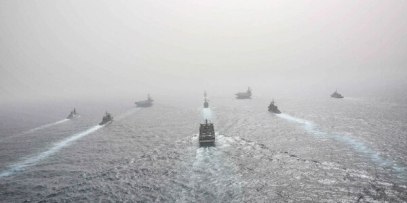
The Abraham Lincoln and John C. Stennis carrier strike groups conducted carrier strike force operations in the U.S. 6th Fleet. Together, the strike groups will complete high-end war fighting training., (Mass Communication Specialist 3rd Class Jeremiah Bartelt/Navy)
National Security Adviser John Bolton said that the bombers and vessels are being sent to the region to deliver “a clear and unmistakable message to the Iranian regime that any attack on United States interests or on those of our allies will be met with unrelenting force.”
“The United States is not seeking war with the Iranian regime, but we are fully prepared to respond to any attack, whether by proxy, the Islamic Revolutionary Guard Corps, or regular Iranian forces,” Bolton said in a statement Sunday.
Asked about what was causing the U.S. response, Secretary of State Mike Pompeo was scant on details Monday.
“I don’t want to talk about what underlays it, but make no mistake, we have good reason to want to communicate clearly about how the Iranians should understand how we will respond to actions they may take,” Pompeo said, adding that the threats are separate from deadly events that took place in Gaza and Israel recently, the Associated Press reported.
Source: Saudi journalists support Israel over Hamas in latest battles – Middle East – Jerusalem Post
“Our hearts are with you. May Allah protect Israel and its people,” wrote Abd Al-Hamid Al-Hakim, former director of the Middle East Center for Strategic and Legal Studies in Jeddah.
Source: Palestinians believe they can beat Iron Dome. Israel refutes this dangerous illusion – DEBKAfile

Palestinian media have been crowing over their “success” in overcoming Israel’s famed anti-rocket Iron Dome system, ever since the Gaza ceasefire early Monday May 6 cut short their 8the rocket onslaught on southern Israel.
The Hamas and Islamic Jihad terrorist groups boast that their tactic of concentrated rocket volleys achieved this feat. For example, they cite the 60-rocket triple volley they fired at Ashkelon and Ashdod in one minute on Sunday, May 5, which, they claim, proved that Iron Dome was not up to preventing an extra-heavy rocket barrage from causing extensive casualties and damage.
The Palestinian terrorists make a habit of claiming victory after every bout of violence with Israel. This time, however, they are selling their garbled version of events far and wide across Arab media. This conviction and the overweening self-confidence gripping the Palestinian terrorists hold dangers for several reasons:
It shot of reality for sobering up the wildly euphoric Palestinian terrorists had become necessary. It came from the horse’s mouth, a director of Rafael Advanced Defense Systems, which produces Iron Dome. Brig. Gen. (res.) Shahar Shochat, former head of the IDF’s Air Defense Division, and current Dep Director of Strategy and Commerce at Rafael, praised the weapon’s excellent performance against the Palestinian rocket onslaught in a radio interview on Tuesday, May 7. He said Iron Dome had stood up to all the challenges it had faced. The expert teams operating the batteries had been apprised that the Palestinians were trying new tactics for beating Iron Dome and were ready with fitting adjustments.
He noted that Iron Dome could boast 2,000 interceptions of enemy rockets since it went into service in 2011. In the latest contest, said Shochat, it prevented more than 200 rockets from devastating populated Israeli areas and scored a hit rate of 85 percent. Shochat promised that the designers and operators of Iron Dome were constantly adjusting the system to the next challenges in store. “It is important to stay a step ahead of the enemy,” he stressed.
Although Shochat may have marginally overstated the weapon’s interception score this week – some experts offer lower estimates – Iron Dome remains an abiding and unique wonder weapon for keeping safe more than a million Israeli civilians, when their homes come under fire, time and time again, from massive Palestinian terrorist rocket aggression.
Source: Iran to announce reduced commitment to nuclear deal, may restart enrichment | The Times of Israel
French diplomat says Europe could reimpose sanctions if Iran pulls out of deal as Tehran hints at retaliatory actions on anniversary of US leaving pact
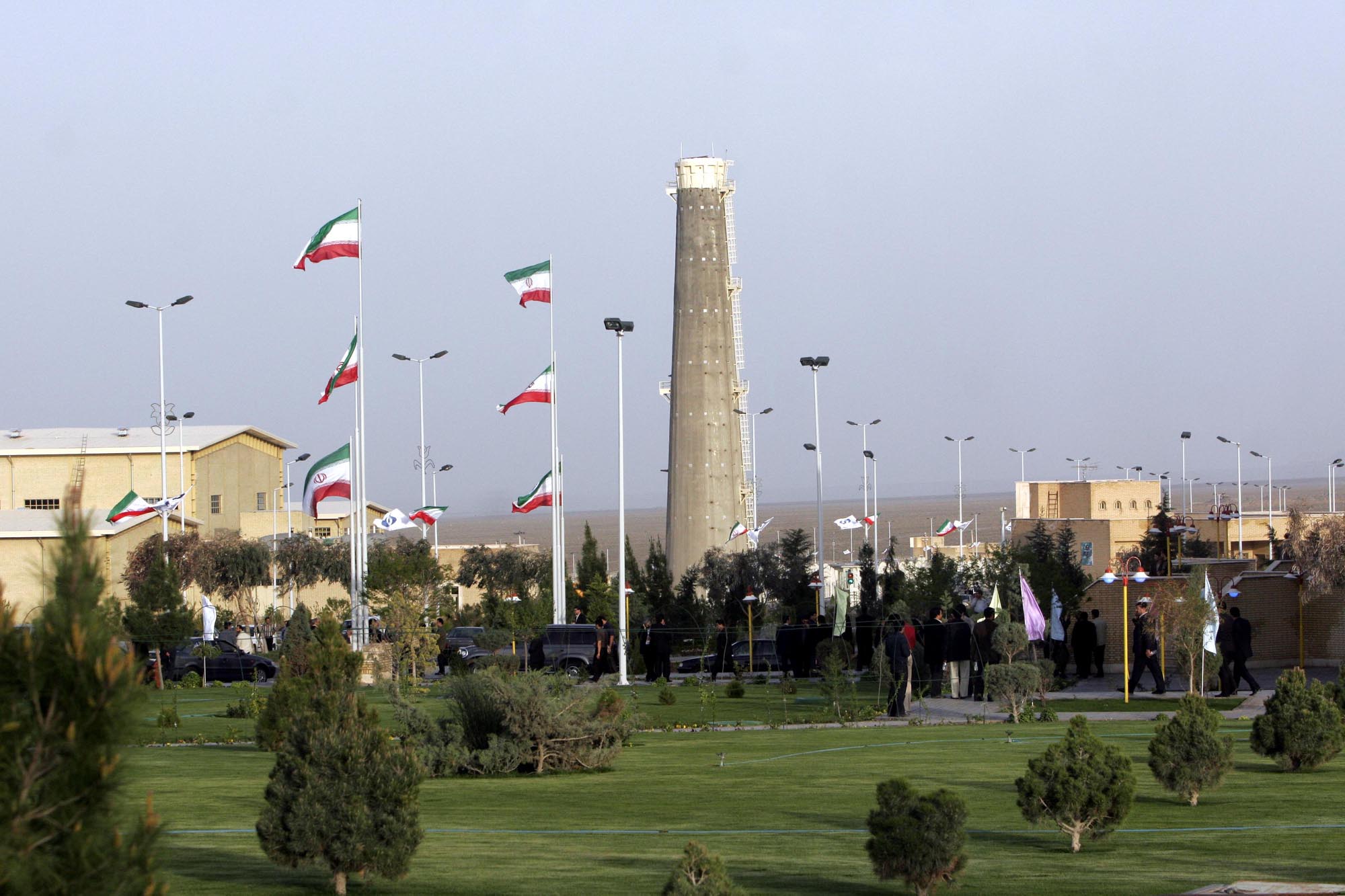
Iran will announce on Wednesday it is scaling back its commitments under the 2015 nuclear deal, a year after the US decision to unilaterally pull out of the international pact, the official IRNA news agency said.
The announcement came as tensions with the US have been ramping up, and could include Iran restarting enrichment at nuclear facilities where activity was curbed by the 2015 deal.
“In response to the unilateral withdrawal of the United States (…), the Islamic Republic of Iran will announce Wednesday its decision to reduce its commitments under this agreement,” the agency said Tuesday.
IRNA did not specify what commitments Tehran intends to “reduce” but indicated that the Iranian decision will be communicated to the ambassadors of the five partner countries of Iran remaining in the agreement — Germany, China, France, Great Britain and Russia — by the vice Minister of Foreign Affairs of Iran, Abbas Araghchi.
A diplomat in Tehran confirmed to AFP that the ambassadors of the five countries were invited to a meeting at the Foreign Ministry with Araghchi on Wednesday, the anniversary of the announcement of the US exit from the agreement, May 8, 2018.
Iran’s Foreign Minister Mohammad Javad Zarif is scheduled to meet his Russian counterpart Sergei Lavrov on Wednesday in Moscow.
A French diplomatic source told Reuters that if Iran withdraws from the deal, known as the Joint Comprehensive Plan of Action, then Europe would reimpose sanctions on the country.
“We do not want Tehran to announce tomorrow actions that would violate the nuclear agreement, because in this case we Europeans would be obliged to reimpose sanctions as per the terms of the agreement. We don’t want that and we hope that the Iranians will not make this decision,” the source said.
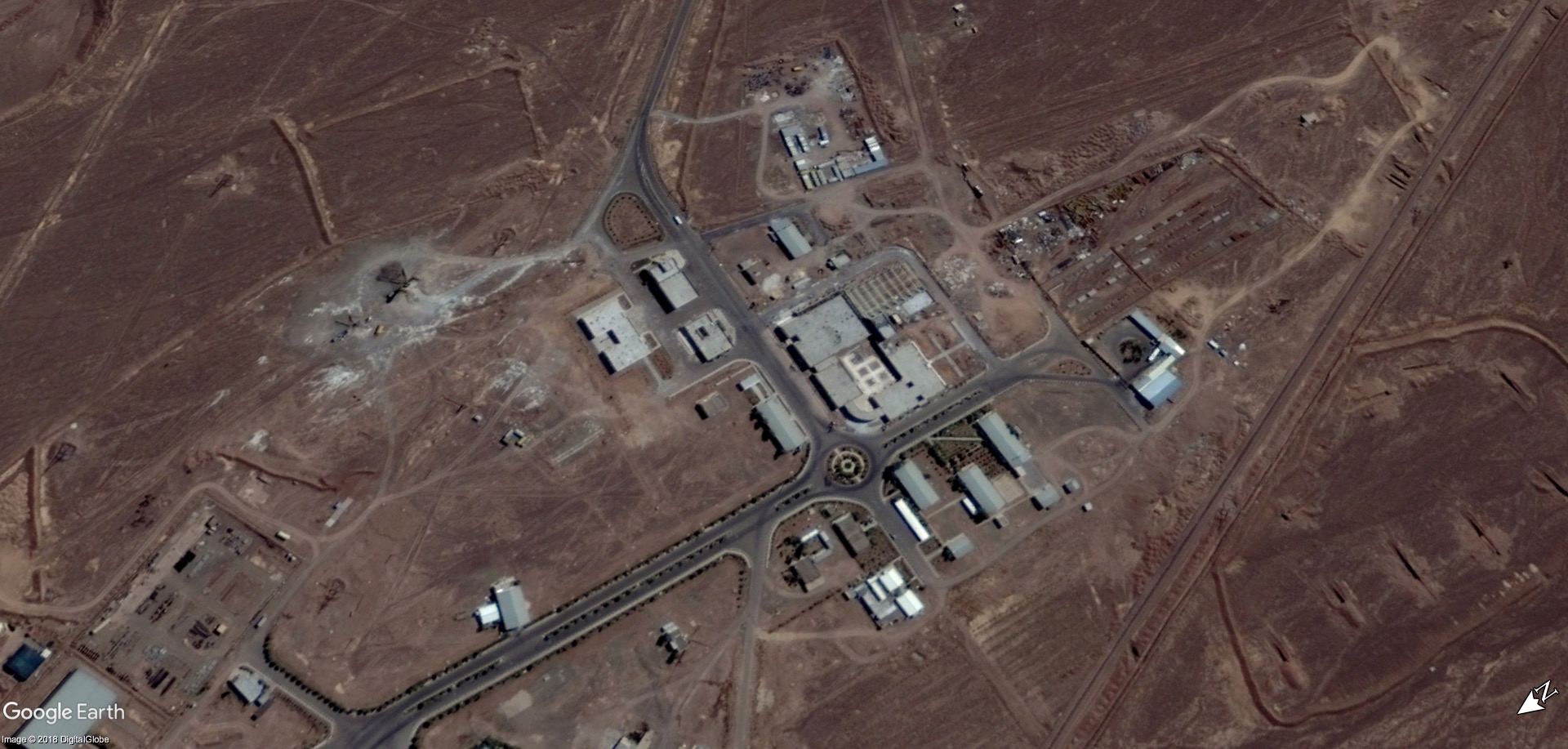
The hard-line Javad newspaper, associated with the powerful Islamic Revolutionary Guard Corps, suggested in its Tuesday edition that Iran may install advanced centrifuges at its Natanz facility and begin enrichment at its Fordo facility, activities prohibited under the nuclear deal.
Iran’s President Hassan Rouhani is expected to announce new measures Wednesday, which the newspaper predicted would “ignite the matchstick for burning the deal.”
US President Donald Trump pulled out of the nuclear deal in May last year but the other five signatories have all agreed to try to keep the pact alive on their own. Trump insists the original agreement did not go far enough in curbing Iran’s nuclear weapons ambitions and wants to renegotiate the JCPOA with stricter terms.
In the meantime, Washington has imposed heavy sanctions on Iran that could weaken the ability of the remaining parties to maintain the deal.
Already high tensions skyrocketed this week as US National Security Advisor John Bolton said on Sunday that the United States was sending an aircraft carrier strike group and a bomber task force to the Middle East in a “clear and unmistakable” message to Iran.
Bolton blamed “a number of troubling and escalatory indications and warnings,” without elaborating.
Reports have indicated the US feared an attack on its soldiers in the Middle East.
“The United States is not seeking war with the Iranian regime, but we are fully prepared to respond to any attack, whether by proxy, the Islamic Revolutionary Guard Corps, or regular Iranian forces,” Bolton said.
A spokesman for Iran’s Supreme National Security Council, Keivan Khosravi, dismissed Bolton’s comments as “psychological warfare.”
Tehran has in the past warned that if the remaining parties are not able to keep up the trade and financial benefits the deal provided, it will also pull out and restart controversial parts of its nuclear program.
Officials in the Islamic Republic previously warned that Iran might increase its uranium enrichment, potentially pulling away from a deal it has sought to salvage for months.
The UNs’ nuclear watchdog says Iran has continued to comply with the terms of the 2015 nuclear deal, which saw it limit its enrichment of uranium in exchange for the lifting of economic sanctions. But US sanctions have wreaked havoc on Iran’s already-anemic economy, while promised help from European partners in the deal haven’t alleviated the pain.
Ali Akbar Salehi, head of the Atomic Energy Organization of Iran said in February that Tehran has begun “preliminary activities for designing” a modern process for 20-percent uranium enrichment. Restarting enrichment at that level would mean Iran had withdrawn from the 2015 nuclear deal.
Source: US Secretary of State Pompeo makes unannounced trip to Iraq | The Times of Israel
Visit to Baghdad a show of support for Iraqi government as Washington squeezes Iran, heightening tension in the region
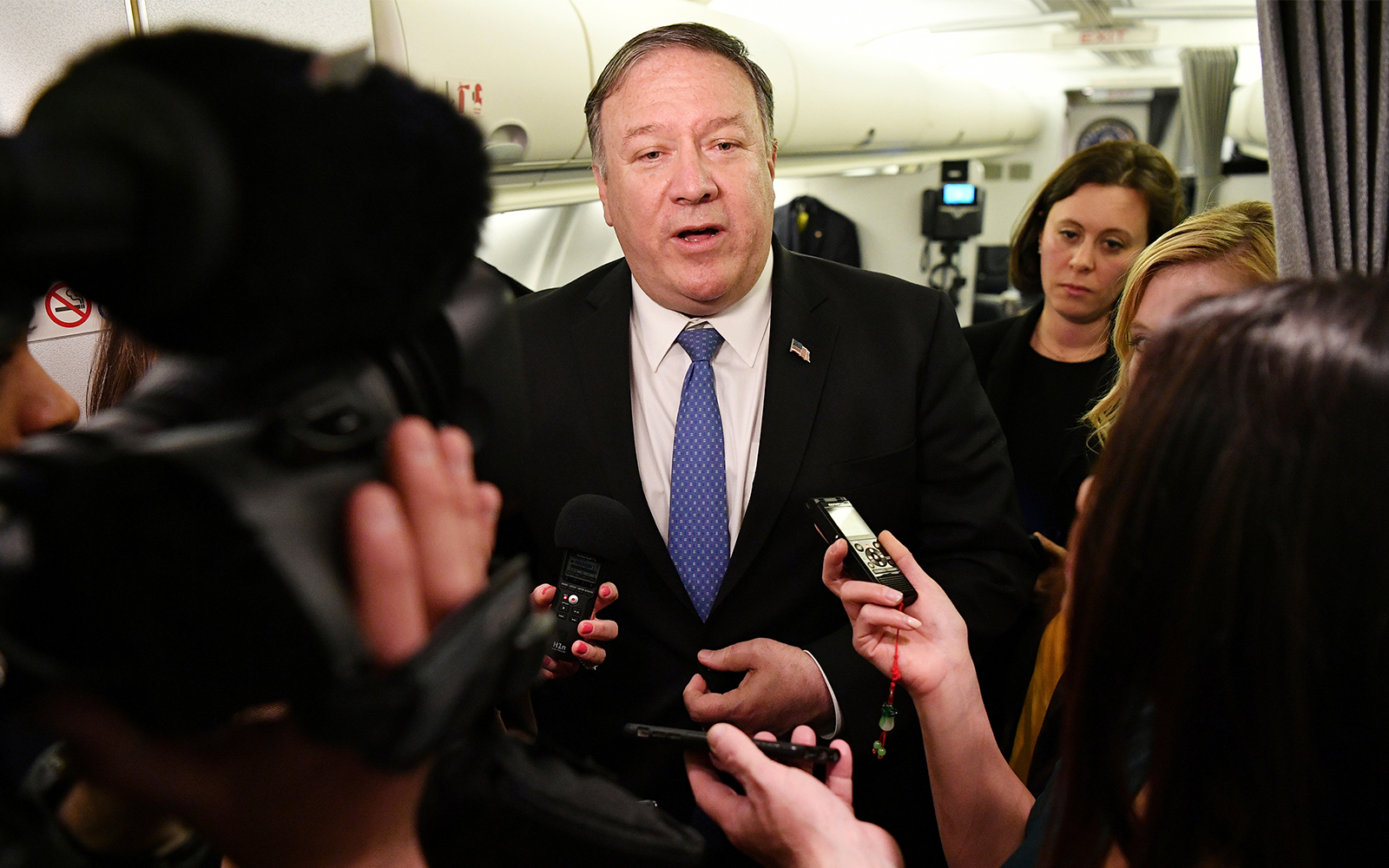
BAGHDAD (AP) — US Secretary of State Mike Pompeo made a lightning visit to Baghdad on Tuesday to show US support for the Iraqi government as Washington steps up warnings to Iran against any action hostile to American interests in the Middle East.
The unannounced trip began and ended after nightfall and under heavy security.
Pompeo’s visit came as the Trump administration is intensifying its pressure campaign against Iran. The US said this week that it is rushing an aircraft carrier group to the Middle East to deter or respond to any Iranian attack. US officials have said there are indications Iran is planning to retaliate for the Trump administration’s stepped-up sanctions on the country, although information on the threat remains vague.
On the way to Baghdad on Tuesday, Pompeo told reporters he would meet with Iraq’s president and prime minister to show them what he said is US support for “a sovereign, independent” Iraq, free from the influence of neighboring Iran. He said he would also discuss with them unfinished business deals that he said would allow Iraq to wean itself from dependence on Iranian energy.
Pompeo would not be specific about the more recent threat information involving Iran, but said he would make the point in his meetings in Baghdad that any attack by Iran or its proxies on American forces in Iraq would affect the Iraqi government too.
The “campaign to continue to prevent ISIS terror inside of Iraq itself is something that’s very central … to the Iraqi government,” Pompeo said.
As tensions rise between Washington and Tehran, Baghdad in some ways is caught in the middle. Iraq has a close relationship with the US, which has led the international coalition in the war against the Islamic State group in Iraq and Syria. More than 5,000 US troops are stationed on Iraqi soil.
But Iraq is also tightly enmeshed with Iran in trade, security and political matters, and it has been loath to antagonize its larger neighbor. Iran won the ear of many top Iraqi politicians after it stepped in to fill the political vacuum following the 2003 US invasion. It also can count on the loyalty of several powerful Iraqi militias, which have fought previously against US forces in the country and on the side of Iran’s allies in Syria in that country’s civil war.
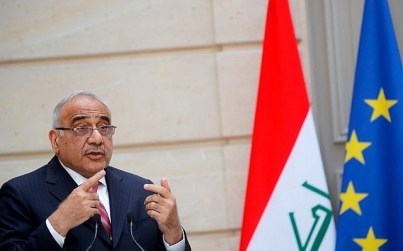
Responding to a question about whether Iraq could protect US interests from attacks by Iran and its proxy forces, Prime Minister Adel Abdul-Mahdi said Tuesday that Iraq takes its responsibilities seriously. “This is an obligation that Iraq honors,” he said.

The Trump administration has made several recent moves to squeeze Iran. Last month, President Donald Trump announced the US would no longer exempt any countries from US sanctions if they continue to buy Iranian oil. The US also designated Iran’s Revolutionary Guard as a terrorist group, the first ever for an entire division of another government.
Trump withdrew from the Obama administration’s landmark nuclear deal with Iran in May 2018 and, in the months that followed, reimposed punishing sanctions, including those targeting Iran’s oil, shipping and banking sectors.
Pompeo’s trip to Baghdad took place under tight security. Journalists accompanying Pompeo were not told of his new destination until his plane left for Baghdad and were not allowed to report on his whereabouts until after his plane took off for his next stop in London.
___
Associated Press writer Philip Issa in Baghdad contributed to this report.
Source: US official: Intel indicates Iran moving missiles by boat | The Times of Israel
Movement of weapons spurred Washington’s decision to send aircraft carrier to Middle East, could indicate preparations to attack American forces in the region

WASHINGTON (AP) — The decision to send an aircraft carrier and a group of Air Force bombers to the Middle East was based in part on intelligence indicating that Iran had moved short-range ballistic missiles by boat in waters off its shores, an American official said Tuesday.
The movement, first reported by CNN, was among a range of recent indications that Iran might be considering or preparing to attack US forces in the region, said the official, who spoke on condition of anonymity in order to discuss sensitive intelligence.
The official said it was not clear whether the boats with missiles represented a new military capability that could be used against US forces or were only being moved to shore locations.
When the White House announced Sunday that the USS Abraham Lincoln carrier strike group and a bomber task force were being deployed to the Middle East, John Bolton, the national security adviser to President Donald Trump, cited “troubling and escalatory indications and warnings” but did not explain what they were.
Bolton said the movement of additional military firepower to the Middle East was meant to send a “clear and unmistakable message to the Iranian regime that any attack on the United States interests or on those of our allies will be met with unrelenting force.”
Patrick Shanahan, the acting secretary of defense, told reporters at the Pentagon on Tuesday that he had approved the expedited movement of the Lincoln strike group and the deployment of a bomber group based on “credible reporting” on Iran.
“What you see is us getting in the right posture for that dynamic environment” in Iraq and elsewhere in the region, Shanahan said. The US has about 5,200 troops in Iraq.




 anneinpt
 artaxes
 danmillerinpanama
 davidking1530
 Peter Hofman
 Joseph Wouk
 Peter
Peter Louisiana Steve
 WarSclerotic
Recent Comments