Archive for May 7, 2019

PM pushes back on Gaza ceasefire criticism, says ‘rules of game’ have changed

May 7, 2019

Source: PM pushes back on Gaza ceasefire criticism, says ‘rules of game’ have changed | The Times of Israel

Netanyahu boasts that Israel has resumed assassinations, killed ‘dozens’ of Hamas, Islamic Jihad terrorists during bout of fighting

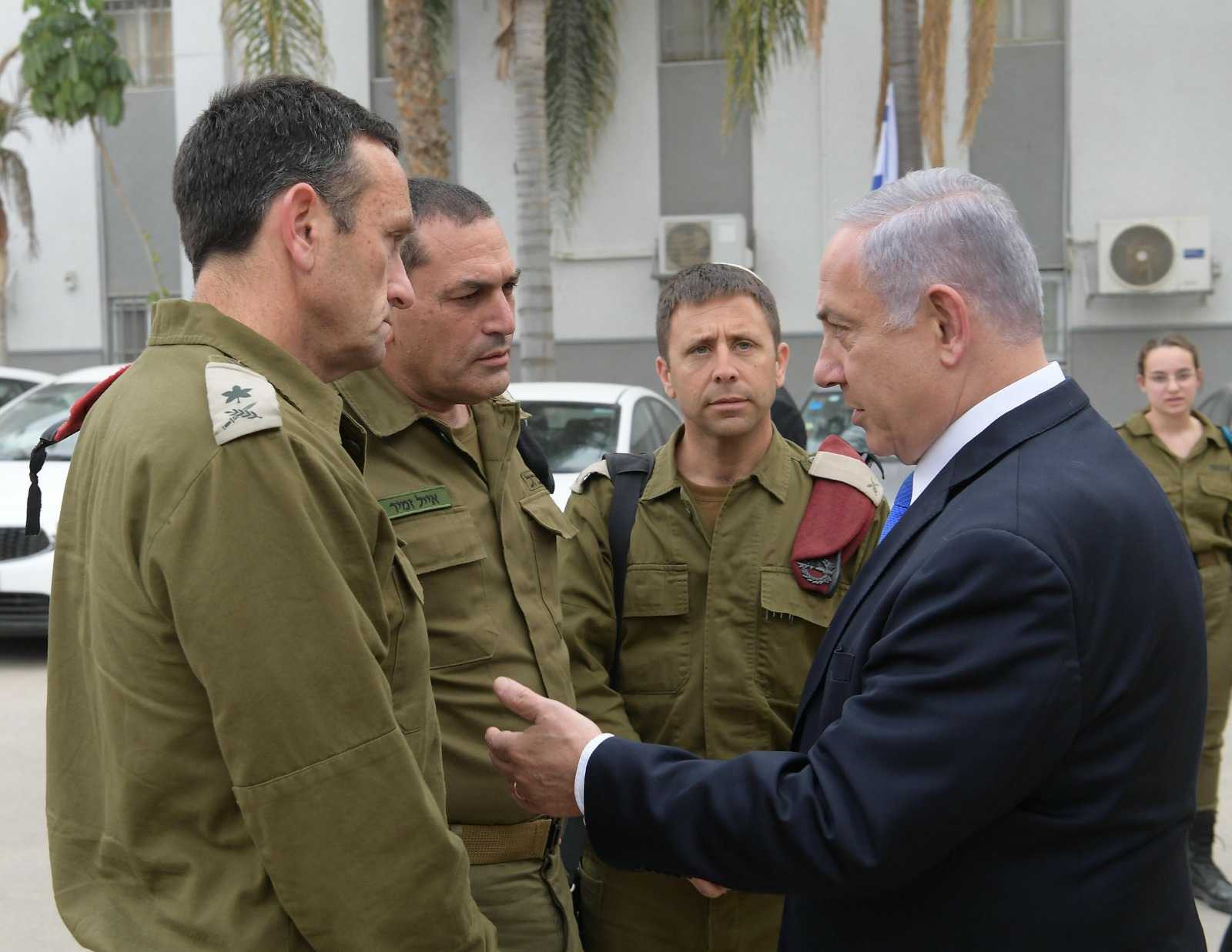
Prime Minister Benjamin Netanyahu (R) with IDF commanders after a security briefing in Beersheba, May 6, 2019. (Amos Ben Gershom/ GPO)

Prime Minister Benjamin Netanyahu (R) with IDF commanders after a security briefing in Beersheba, May 6, 2019. (Amos Ben Gershom/ GPO)

Prime Minister Benjamin Netanyahu on Monday said Israel had reinstated its controversial policy of targeted killings and warned that the “rules of the game” vis-a-vis the Gaza Strip have changed.

The prime minister was briefed by army officials in southern Israel and visited wounded soldiers at a Beersheba hospital on Monday, hours after a ceasefire between Israel and Palestinian terror groups went into effect, ending two days of intense fighting that saw more than 600 rockets fired at Israel and four Israeli civilians killed.

In response to the onslaught, the Israeli military conducted over 300 strikes from the air and land, including a rare assassination of a terrorist operative, who the IDF said funneled money from Iran to terror groups in the Strip.

“In the past two days, we’ve renewed the policy of assassinating senior terrorists, we’ve killed dozens of Hamas and [Palestinian] Islamic Jihad terrorists and we toppled terror towers,”said Netanyahu, who is also defense minister.

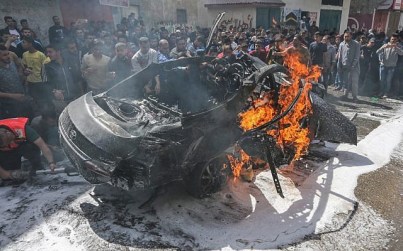
Palestinian emergency personnel try to put out the fire on a car belonging to Hamas terror group senior member Hamed Hamdan al-Khodari, after it was hit by an Israeli airstrike in Gaza City, on May 5, 2019. (MAHMUD HAMS/AFP)

He was referring to the killing of Hamas field commander Hamed al-Khodari in a targeted strike, a practice the army has largely forgone in recent years.

According to the IDF, al-Khodari owned a number of money exchanges in the Gaza Strip and used them to bring large amounts of Iranian cash into the coastal enclave for Hamas, Islamic Jihad, and other terror groups.

At least 11 of the 29 Palestinians killed in Israeli strikes on the Gaza Strip since Friday were members of terror groups, according to Islamic Jihad and Hamas. Eight of the 11 members of terror groups belonged to the Al-Quds Brigades, Islamic Jihad’s military wing.

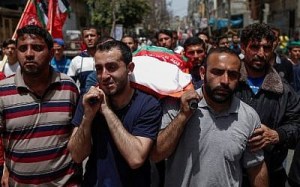
Relatives carry the body of a Palestinian, who was killed in Israeli strikes the previous day, during a funeral ceremony, in Beit Lahia, in northern Gaza Strip on May 6 2019. (MAHMUD HAMS / AFP)

“We changed the rules of the game and Hamas knows this well,” Netanyahu said. “At the same time, it’s obvious that this is not the end of the campaign, and therefore I have instructed [the military] to prepare for its continuation and have directed to keep the artillery and armored corps around the Gaza Strip.”

Netanyahu was criticized earlier on Monday by opposition lawmakers and a lone Likud MK for reportedly agreeing to the Egyptian-brokered ceasefire deal in Gaza.

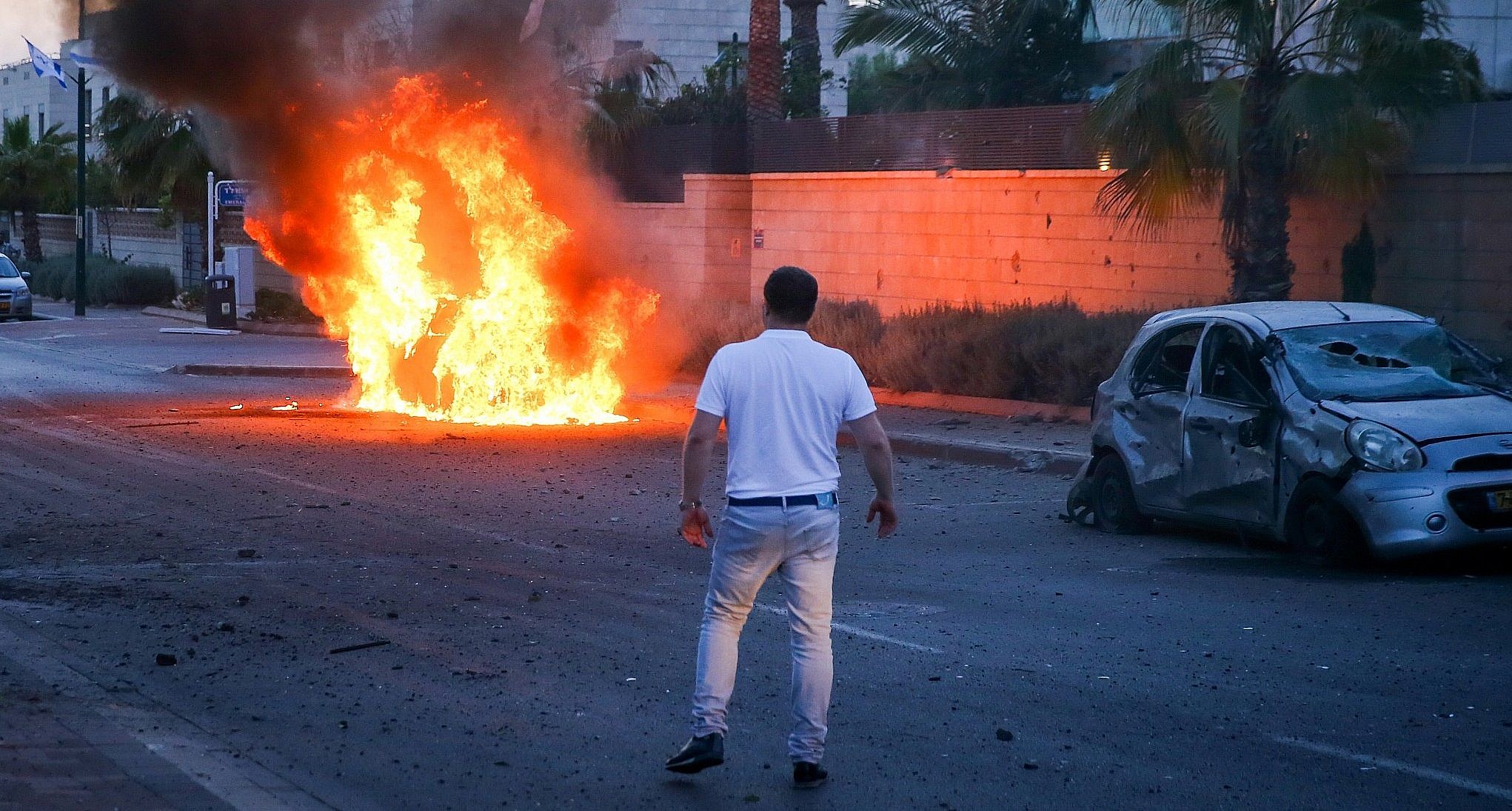
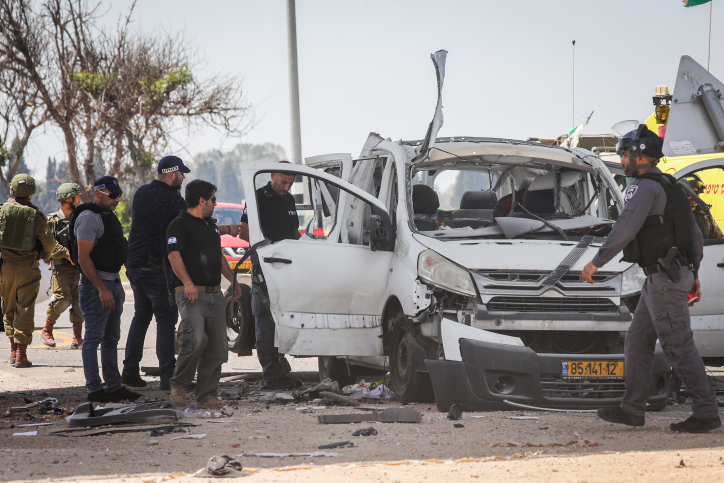
A car bursts into flames after it was hit by a rocket fired from the Gaza Strip in the southern Israeli city of Ashdod on May 5, 2019. (Flash90)

“Over the past two days, we have hit Hamas and Islamic Jihad with great force, attacking over 350 targets and terrorist leaders and activists, and destroying terrorist infrastructure,” Netanyahu said in a statement earlier on Monday.

“The campaign is not over and requires patience and judgment. We are preparing to continue,” the prime minister added. “The goal was and remains to ensure the peace and security of the residents of the south. I send condolences to the families and wish a speedy recovery for the wounded.”

A spokesperson for Hamas also said that although the recent flareup in violence had come to an end, the wider conflict would continue.

“The resistance managed to deter the IDF,” said Sami Abu Zuhri, according to the Kan public broadcaster, referring to the Gaza terror groups. “Our message is that this round is over, but the conflict will not end until we regain our rights.”

Palestinian terrorist groups in the Gaza Strip fire rockets toward Israel on May 5, 2019. (AP Photo/ Khalil Hamra)

The ceasefire between Israel and the Gaza terror groups went into effect at 4:30 a.m. Monday, according to the Hamas and Islamic Jihad terror groups.

The Israeli government refused to confirm the reported truce, apparently so as to avoid publicly acknowledging its negotiations with terrorist groups.

However, the military announced that, as of 7 a.m., it was lifting all security restrictions that had been in place in the south during the fighting, and that schools would be allowed to open, indicating that a ceasefire had indeed been reached.


After flareup, military warns current Gaza policies leading region back to war 

May 7, 2019

Source: After flareup, military warns current Gaza policies leading region back to war | The Times of Israel

Army tells reporters it was instructed to wrap up fighting before holidays, Eurovision, and was kept from carrying out wider attacks; cabinet minister disputes claims

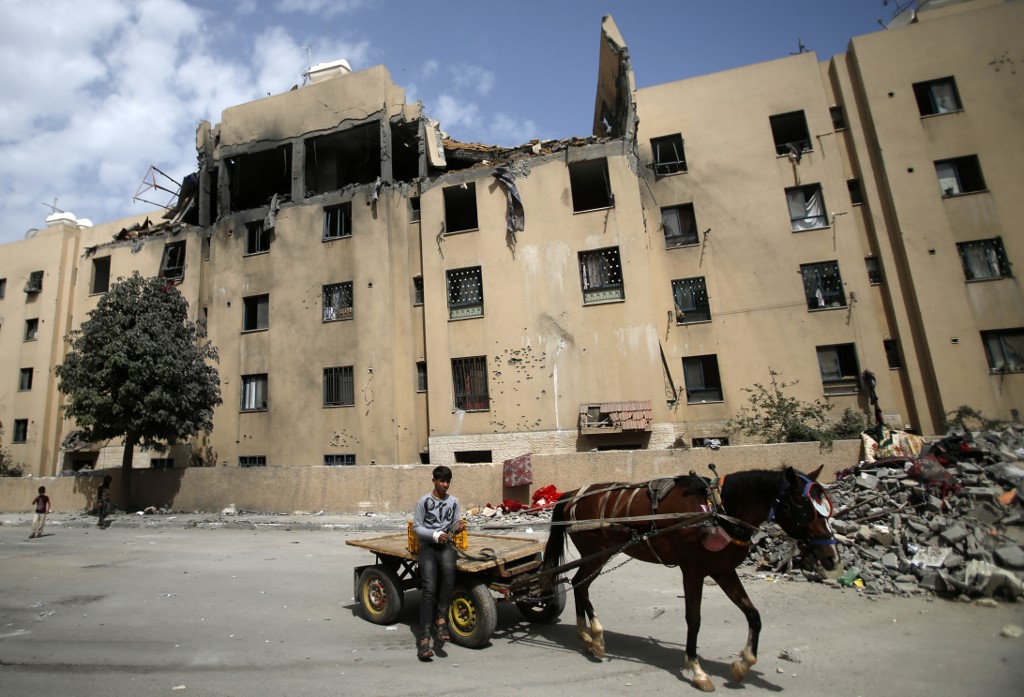
A young Palestinian rides a horse-drawn cart on May 6, 2019, in front of a building that was damaged during an Israeli airstike on Beit Lahia in the northern Gaza Strip. (MOHAMMED ABED / AFP)

A young Palestinian rides a horse-drawn cart on May 6, 2019, in front of a building that was damaged during an Israeli airstike on Beit Lahia in the northern Gaza Strip. (MOHAMMED ABED / AFP)

The Israeli military on Monday warned that war with Gaza could be back on the horizon in days or weeks if Israel did not work to ease living conditions in the beleaguered enclave.

Saturday and Sunday saw two days of intense fighting that saw nearly 700 rockets fired at Israel and four Israeli civilians killed.

In response to the onslaught, the Israel Defense Forces conducted over 300 strikes from the air and land, including a rare assassination of a terrorist operative whom the IDF said funneled money from Iran to terror groups in the Strip.

The fighting was some of the heaviest seen since 2014’s 50-day war with Gaza, but tapered off late Sunday and early Monday, as Palestinian factions Hamas and Islamic Jihad said a ceasefire had been reached.

In a press briefing, the military said the country needed to make changes to its strategic policy to improve living conditions in the Gaza Strip if it did not want another flareup of violence in coming weeks.
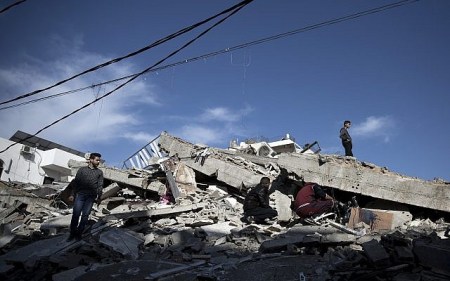
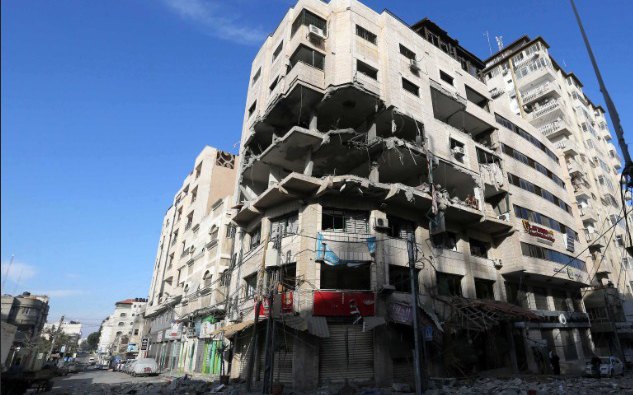
Palestinians check damage to a multi-story building following Israeli retaliatory airstrikes in Gaza City, May 5, 2019. (AP Photo/Khalil Hamra)

Now that there is some degree of calm, the IDF said it believes that the Israeli government should strike while the iron is hot and work towards a longer term ceasefire agreement. In the meantime, however, the military is keeping the air force, including air defense units, on high alert in case of another breakout of violence.

The violent outburst on Saturday and Sunday was the latest in a series of escalating clashes between Israel and Gaza-based terrorists to bring the sides to the brink of war, as Hamas has pushed for a blockade on the Strip maintained by Israel and Egypt to be lifted and other restrictions eased.

While the army has reportedly pushed for measures meant to make the lives of Palestinians in the Strip more bearable, the political leadership has been more hesitant, fearing being portrayed as giving in to terror, especially with Hamas holding Israeli captives and the remains of soldiers.

The military said in its briefing that throughout the fighting, it had been ordered by Prime Minister Benjamin Netanyahu’s government to retaliate against the rocket fire forcefully, but with significant restraint as to avoid all-out war. Netanyahu also serves as defense minister.

The IDF contradicted claims by members of the security cabinet that the Memorial and Independence Days coming up this week and the Eurovision Song Contest planned for next week were not considerations in its decision-making.

The army said it had been instructed to try to bring the fighting to an end before these events, if not sooner, and with as many achievements as possible. Memorial Day begins Tuesday night, with Independence Day the next night. The Eurovision song contest is scheduled to begin on May 14.

Reception area at the 2019 Eurovision Song Contest in Tel Aviv. (Andres Putting, EBU)

The military said the need to wrap up the fighting quickly prevented it from conducting strikes on Hamas’s longer range rockets.

In response, a security cabinet minister told Channel 12 news, “We were shocked by the army’s briefings. They are not in line with what the chief of staff presented to the cabinet. This is an attempt by the army to push blame onto the cabinet.”

Other cabinet officials told the outlet that there were other circumstances beyond the upcoming holidays and events that justified the ceasefire. The officials hinted that the reasoning was similar to the case in November when a truce was accepted ahead of the IDF’s Operation Northern Shield the following month, which found and destroyed attack tunnels dug by the Hezbollah terror group from Lebanon into northern Israel.

Military Intelligence believes that, for now, terror groups in the Strip will not carry out attacks against Israel in the lead-up to the Eurovision Song Contest, which is expected to draw tens of thousands of visitors.

But the army said that, while extant, this deterrence is shaky, especially as it relates to the Iran-backed Palestinian Islamic Jihad, whom the IDF primarily blames for this weekend’s battle.

Before this latest flareup, the military said it had identified plans by the terror group to carry out an attack on the international music competition.
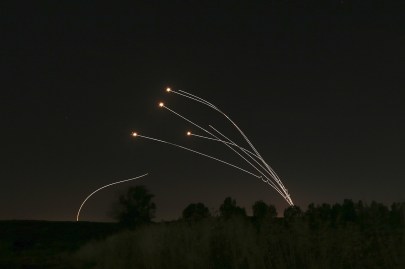
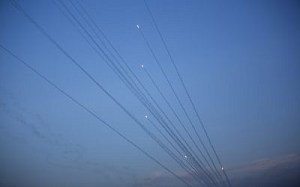
Israeli air defense system Iron Dome takes out rockets fired from Gaza near Sderot, May 4, 2019. (AP/Ariel Schalit)

This weekend’s fighting began on Friday evening after Islamic Jihad, the second largest terror group in the Strip, conducted a sniper attack on an Israeli officer and soldier serving along the Gaza border, injuring them. In response, the IDF shelled a nearby manned Hamas observation post, killing several members of the Gaza-ruling terrorist group.

The following morning, Hamas and Islamic Jihad began firing rockets and mortar shells at south and central Israel, continuing until the predawn hours of Monday morning when the terror groups said Egypt had brokered a ceasefire. Over the course of those 41 hours, more than 690 projectiles were fired from the Gaza Strip.

Hamas and the Islamic Jihad attempted to overwhelm the Iron Dome missile defense system by repeatedly firing large fusillades at a specific location. In one case, over the course of one hour, at least 117 rockets were fired at the city of Ashdod.

A Hamas official boasted Monday that the terror group had managed to beat Iron Dome with the strategy.

Pinchas Menachem Prezuazman. (Courtesy)

In fact, only one of the projectiles aimed at Ashdod in the volley made it past Israel’s air defense. That rocket killed Pinchas Menachem Prezuazman, 21, a dual American-Israeli citizen, as he was running for shelter.

Three other Israelis were killed in attacks from the Strip on Sunday: Moshe Agadi, 58; Zaid al-Hamamdeh, 47; and Moshe Feder, 68.

Hamas also attempted to use a new style of rocket, one with a short range and a heavy warhead, packed with dozens to hundreds of kilograms of explosives. The terror group believed these would get past Israel’s air defenses, as during the 2014 Gaza war, the Iron Dome struggled to intercept short-range mortar shells. However, the military said technological upgrades and other improvements to the Iron Dome allowed it to shoot down the rockets.

In total, 35 rockets and mortar shells from the Gaza Strip struck populated areas over the course of Saturday and Sunday.

The military said that while this shows the Iron Dome is not impenetrable, the system was overall effective, with 240 interceptions and an 86 percent success rate. The Iron Dome’s radars also successfully spotted every rocket and mortar launch, which ensured that Israelis were warned of incoming projectiles ahead of time.

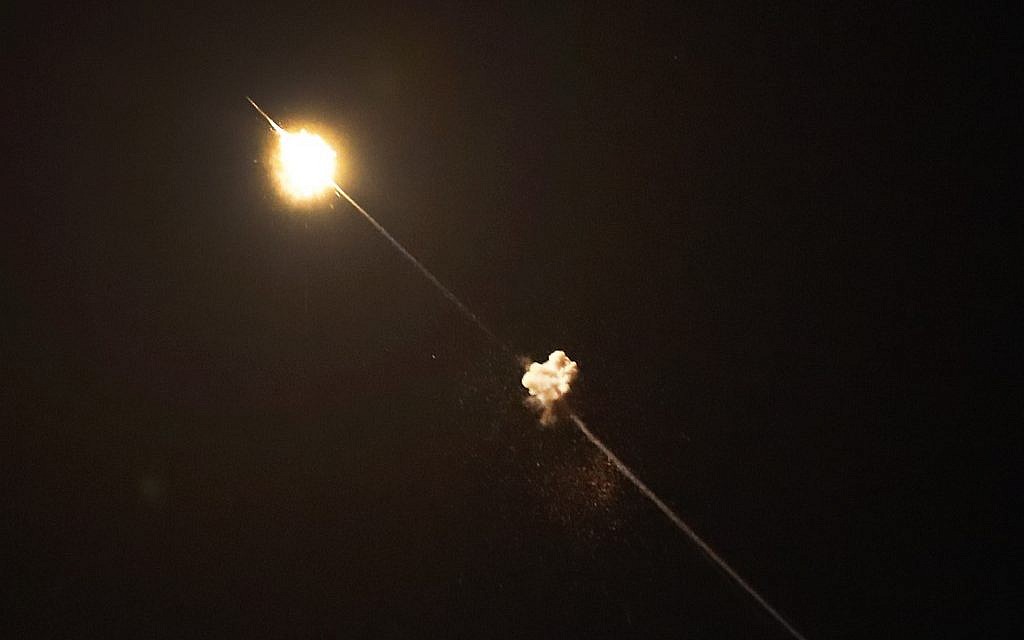
A picture taken from the southern village of Netiv Ha’asara shows missiles fired from Israel’s Iron Dome air defense system intercepting rockets fired from the Gaza Strip on May 4, 2019. (Thomas Coex/AFP)

The military accused the Iran-backed Palestinian Islamic Jihad of instigating the massive flareup with its sniper attack on the border and said the terror group kept it going by rejecting ceasefire offers throughout the fighting. Though the terror group gets most of its funding and support from Iran, the IDF believes that these decisions were not the result of pressure from Tehran but came from domestic political considerations.

The army said the terror group ultimately accepted a truce due to intense pressure from Hamas and Egypt.

The IDF said the group also appeared to be surprised by the number of airstrikes against it over the weekend, as typically Israel focuses its attacks on Hamas, under the belief that, as the de facto ruler of Gaza, the terror group should bear responsibility for all violence emanating from the enclave, regardless of the source.

In Israel’s strikes, at least eight members of Islamic Jihad were killed and dozens of its facilities were hit, including an attack tunnel that was under construction in the southern Gaza Strip.

IDF says it destroyed an attack tunnel crossing under the border from Gaza to Israel, May 4, 2019. (Israel Defense Forces)

The military said the group had recently intensified its efforts to complete the tunnel in order to conduct a cross-border raid.

The IDF said that the government’s directive to strike a balance between aggressive retaliations and restraint to prevent war prompted heated disagreement on the IDF General Staff over the decision by army chief Lt. Gen. Aviv Kohavi to conduct so-called “targeted killings” — assassinations of terrorist leaders with pinpoint strikes — a practice that the military had abandoned in recent years.

Top officers were concerned that such strikes could lead to a wider campaign, as it did in November 2012, when the IDF assassinated Hamas leader Ahmed Jabari and sparked the week-long Operation Pillar of Defense.

Ultimately, these objections were overruled and the military conducted the airstrike, killing Hamas field commander Hamed al-Khodari, whom the IDF says funneled large amounts of money from Iran to terror groups in the Gaza Strip.
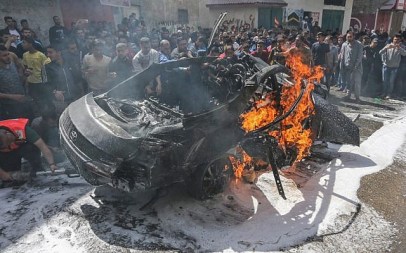
Palestinian emergency personnel try to put out the fire on a car belonging to Hamas field commander Hamad al-Khodari, in Gaza City, after it was hit by an Israeli airstrike on May 5, 2019. (MAHMUD HAMS / AFP)

The IDF said al-Khodari was tracked by multiple drones before the strike as he was driving through the streets of Gaza City.

The military waited until the other passengers in his car got out before conducting the strike. He was the only person killed in the attack, though three bystanders were reportedly injured. The military later released what it said was drone footage of the strike.

According to the military, al-Khodari was technically the second assassination conducted over the course of the fighting. On Saturday, the military also killed a senior member of Hamas’s drone unit in an airstrike as he was riding on a motorcycle.

The IDF said a number of armed unmanned aerial vehicles were used in attempted attacks on Israeli troops along the border, but that these efforts were not successful.
An escalation that achieved nothing, and a ceasefire that won’t hold for long

May 7, 2019

Source: An escalation that achieved nothing, and a ceasefire that won’t hold for long | The Times of Israel

The understandings that ended this flareup are precisely the understandings that held before it started. The border protests won’t stop, and neither will the incendiary balloons

A car bursts into flames after it was hit by a rocket fired from the Gaza Strip in the southern Israeli city of Ashdod on May 5, 2019. (Flash90)

A car bursts into flames after it was hit by a rocket fired from the Gaza Strip in the southern Israeli city of Ashdod on May 5, 2019. (Flash90)

At some point on Sunday evening, the Hamas leadership began to realize that it should seek a ceasefire with Israel.

It may be that Israel’s massive bombardments made the difference — the strikes on Hamas ammunition stores; the targeted assassination of Hamed Hamdan al-Khodari, the man responsible for channeling funds from Iran (according to the IDF and the Shin Bet); the destruction of several multi-story buildings in the heart of Gaza. All of this gradually prompted the organization’s heads to internalize the repercussions of continuing the fighting, and all this at a time when Hamas’s Gaza chief, Yihya Sinwar, was in Cairo, disconnected from the Strip.

The message that was being conveyed from the various mediators — the UN, Egypt, even Qatar — was that Israel was not rushing to seek a ceasefire.

It may be that Hamas had overreached. The assumption in its leadership was that Israel would rush to put an end to this round of fighting, or perhaps might even refrain from a forceful response to the initial rocket fire, because of the sensitivities relating to the upcoming Memorial Day, Independence Day and Eurovision events.

From the Israeli side, the message to the mediators, and the message that was sent to the media in all the various security briefings, was quite the opposite: Even if the confrontation continued into Memorial Day and Independence Day, even into Eurovision, Israel had no intention of stopping.

The remains of what the IDF says was the Hamas terror group’s cyber unit in the Gaza Strip, which was destroyed in an Israeli Air Force strike on May 4, 2019. (Israel Defense Forces)

It may be, however, that what most influenced Hamas to push for a ceasefire was the realization that otherwise Gaza would spend the first days of Ramadan under attack.

Several leading figures in the organization briefed reporters in Gaza to the effect that Hamas had no intention of stopping the fighting until Israel agreed to dramatically change the Gaza reality — such as by opening a safe sea route from Cyprus to the Strip. But these declarations turned out to be empty. After firing almost 700 rockets and mortar shells, killing four Israeli civilians, and sustaining some 30 Gaza fatalities, many of them terrorists, ultimately Hamas realized that there was a limit to what it could achieve, militarily or economically, at this stage. And that the best that could be done was to try to get back to where things stood before the opening of this round of violence.

These, then, are the understandings that were reached by the two sides via various mediators, mainly the Egyptians, on Sunday evening, according to Palestinian sources: Hamas and Israel mutually halt their fire; and the same concessions that were agreed within the framework of the previous understandings, several weeks before Israel’s election, were restored — namely the expansion of Gaza’s fishing zone, an increase in the entry of supplies into Gaza, and the continuation of the transfer of Qatari moneyinto the Strip via the UN. That’s all. The border protest will continue. So, too, apparently the incendiary balloons. Everything as it was.

The “achievement” that Hamas reached this time was a readiness by Israel to resume talks on various humanitarian projects that are supposed to be carried out in Gaza, including improvements to the electricity and water infrastructure.

And thus an agreement was reached to stop the fighting for now, while paving the way to the next escalation. This may happen in the next few weeks. Maybe after the end of Ramadan.

For even after the ceasefire, all the elements that destabilize the situation between Israel and Hamas continue to exist: 1. The Palestinian Authority refuses to take responsibility for the Strip and does quite a lot in order to create economic distress there. 2. Islamic Jihad continues to try to drag the area into war by competing with Hamas and through the lack of authoritative leadership by its new chief, Ziad Nakhaleh. 3. Israel, on the one hand, refuses to talk to Hamas, but talks to it indirectly on the other hand. And furthermore does not rush to provide significant strategic solutions for the Strip — solutions that might prevent the next escalation, or at least put it off further.


Hamas says it beat Iron Dome with concentrated salvos. The IDF says it didn’t

May 7, 2019

Source: Hamas says it beat Iron Dome with concentrated salvos. The IDF says it didn’t | The Times of Israel

Officials say that despite new tactic by Gaza terror groups, relatively few projectiles managed to penetrate Israel’s missile defense system, which had an 86% success rate

A picture taken on May 5, 2019 from the Israel-Gaza border shows a barrage of rockets being fired from the Hamas-run Palestinian enclave. (Jack Guez/AFP)

A picture taken on May 5, 2019 from the Israel-Gaza border shows a barrage of rockets being fired from the Hamas-run Palestinian enclave. (Jack Guez/AFP)

Hamas’s military wing boasted Monday that it had developed a new rocket-launching tactic that “overcame” Israel’s Iron Dome missile defense system, leading to the deaths and injuries of numerous Israelis over the past two days.

A spokesman for Hamas’s Izz ad-Din al-Qassam Brigades, Abu Obeida, said in a social media post that “The Qassam Brigades, thanks to God, succeeded in overcoming the so-called Iron Dome by adopting the tactic of firing dozens of missiles in one single burst.”

“The high intensity of fire and the great destructive ability of the missiles that were introduced by the Qassam [Brigades]… succeeded in causing great losses and destruction to the enemy,” he added.

However, while Hamas and Islamic Jihad indeed attempted to overwhelm Iron Dome by repeatedly firing large fusillades at a specific location, comparatively few rockets actually succeeded in penetrating the system, according to the Israel Defense Forces.

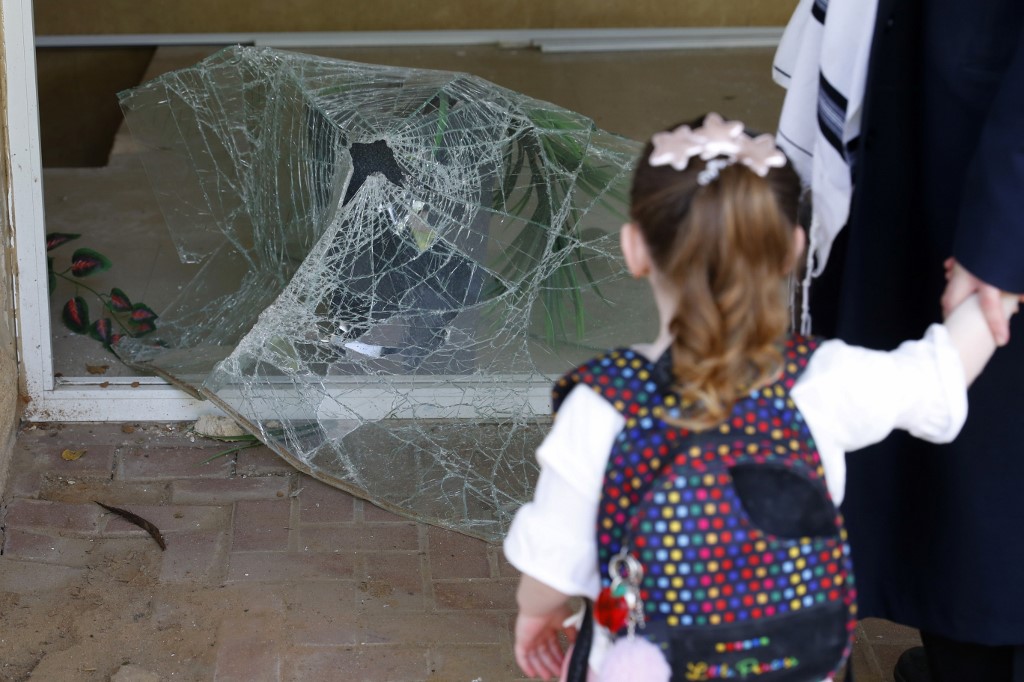
An Israeli child on May 6, 2019, looks at shattered glass at the entrance to a building damaged by a rocket strike from the Gaza Strip, in the southern Israeli city of Ashdod. (Jack Guez/AFP)

In all, Gaza’s terror groups fired some 690 projectiles at Israel during the 41 hours of fighting from Saturday morning to predawn Monday — the largest-ever number of projectiles fired from the Strip in a two-day period.

In one case, over the course of one hour, from 7 p.m. to 8 p.m. on Sunday evening, at least 117 rockets were fired at the city of Ashdod, but only one of the projectiles made it past Israel’s air defenses.

That rocket killed Pinchas Menachem Prezuazman, 21, a dual American-Israeli citizen, as he was running for shelter as the alert siren sounded.

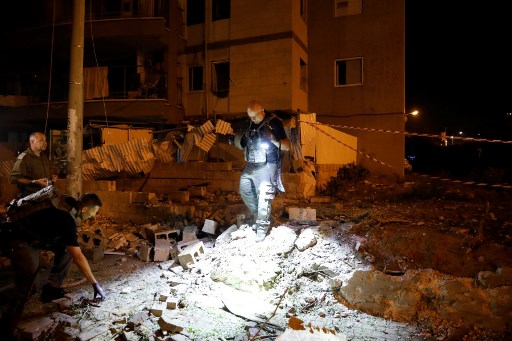
Israeli emergency personnel gather at the site of a rocket attack in the southern Israeli town of Ashdod on May 5, 2019. (Photo by Ahmad GHARABLI / AFP)

Three other Israelis were killed in attacks from the Strip on Sunday: Moshe Agadi, 58; Zaid al-Hamamdeh, 47; and Moshe Feder, 68.

Feder was not killed by ballistic rocket fire, but by an anti-tank guided missile fired at his car as he drove on a road near the Gaza border.

He sustained a serious shrapnel wound to the leg, causing significant blood loss, and was pronounced dead at Ashkelon’s Barzilai Medical Center after resuscitation efforts failed. Hamas claimed responsibility for the attack.

During the fighting, Hamas also attempted to use a new style of rocket, one with a short range and a heavy warhead, packed with dozens to hundreds of kilograms of explosives.

An Israeli police sapper holds part of an exploded Qassam rocket fired from the Gaza Strip in a village near the Gaza border, May 5, 2019. (AP/Tsafrir Abayov)

The terror group believed these rockets would get past Israel’s air defenses, just as, during the 2014 Gaza war, Iron Dome struggled to intercept short-range mortar shells.

The Palestinian Islamic Jihad also said it used a new longer range rocket with a 250-kilogram warhead, known as the Badr 3, in its attacks on the coastal city of Ashkelon.

However, technological upgrades and other improvements to the Iron Dome allowed it to shoot down these different rockets, Maj. Tom Scott, one of the commanders of an Iron Dome battery in southern Israel, told The Times of Israel during the fighting.

Maj. Tom Scott, a commander of an Iron Dome missile defense battery, stands in front of one of the systems in an undated photograph. (Israel Defense Forces)

“We try to stay ahead of them even as they are trying to get ahead of us,” he said.

According to Scott, the missile defense system is capable of intercepting “many different threats,” including “large barrages or short-range rockets or rockets fired at high altitude or at low altitude.”

In total, 35 rockets and mortar shells of the nearly 700 fired from the Gaza Strip struck populated areas over the course of Saturday and Sunday, according to the military.

The military said that while this underlined that the Iron Dome is not impenetrable, the system was overall effective, with 240 interceptions and an 86 percent success rate — similar to previous rounds of intensive rocket fire.

Scott noted that the Iron Dome’s radars also successfully spotted every rocket and mortar launch, which ensured that Israelis were warned of incoming projectiles ahead of time by sirens.

Illustrative: Screen capture from a speech given by Izz ad-Din al-Qassam Brigades Spokesperson Abu Obeida on April 17, 2016. (Facebook)

In response to the onslaught from Gaza, the Israeli military conducted over 300 strikes from the air and land, including a rare assassination of a terrorist operative, who the IDF said funneled money from Iran to terror groups in the Strip.

“In the past two days, we’ve renewed the policy of assassinating senior terrorists. We’ve killed dozens of Hamas and [Palestinian] Islamic Jihad terrorists and we toppled terror towers,” Prime Minister Benjamin Netanyahu, who is also defense minister, said Monday.

A spokesperson for Hamas also said that although the recent flareup in violence had come to an end, the wider conflict would continue.

“The resistance managed to deter the IDF,” said Sami Abu Zuhri, according to the Kan public broadcaster, referring to the Gaza terror groups.

A picture taken from the southern village of Netiv Ha’asara shows missiles fired from Israel’s Iron Dome air defense system intercepting rockets fired from the Gaza Strip on May 4, 2019. (Thomas Coex/AFP)

“Our message is that this round is over, but the conflict will not end until we regain our rights.”

The ceasefire between Israel and the Gaza terror groups went into effect at 4:30 a.m. Monday, according to the Hamas and Islamic Jihad terror groups.

The Israeli government refused to confirm the reported truce, apparently so as to avoid publicly acknowledging its negotiations with terrorist groups.

However, the military announced that, as of 7 a.m., it was lifting all security restrictions that had been in place in the south during the fighting, and that schools would be allowed to open, indicating that a ceasefire had indeed been reached.

Gaza’s Hamas-run health ministry said 29 Palestinians were killed by Israeli strikes, including two pregnant women and a baby. Israel said one of the women and the baby were killed in a failed rocket launch inside Gaza and not as a result of IDF actions.

The scene of a car hit by a rocket fired from the Gaza Strip near the Israel-Gaza border on May 5, 2019. (Noam Rivkin Fenton/Flash90)

An IDF spokesperson could not immediately comment on the reported death toll in Gaza. The IDF said it only struck terrorist targets.

At least 11 of the Palestinians killed in Israeli strikes on the Gaza Strip since Friday were members of terror groups, according to Islamic Jihad and Hamas. Eight of the eleven members of terror groups belonged to the Al-Quds Brigades, Islamic Jihad’s military wing.

The Al-Quds Brigades confirmed on its website the identities of eight of its members killed in Isaeli strikes.

Hamas’s Qassam Brigades similarly confirmed in statements that three others killed during the fighting belonged to its ranks.

Unlike past rounds of fighting, the Iranian-backed Islamic Jihad was accused by Israel of being a main instigator of the violence over the weekend, rather than Hamas, which rules the Gaza Strip.


Iran’s Badr 3 missile debuts against Israel in Palestinian rocket offensive – DEBKAfile

May 7, 2019

Source: Iran’s Badr 3 missile debuts against Israel in Palestinian rocket offensive – DEBKAfile

The Iranian Badr 3 missile explodes within 20m of target and releases a 1,400-piece shower of shrapnel fragments. On Monday, April 6, hours into the Gaza ceasefire, Palestinian and Iranian sources released a video showcasing the new Iranian weapon targeting Ashkelon, 13 km north of Gaza.
At least four of the new Iranian missiles were shown on May 4 and 5 during the 700-rocket blitz on the Israeli population from Saturday morning. The Badr 3 was said by Iranian sources to have been supplied, possibly with technology and components, to the Palestinian Islamic Jihad, Hamas’ partner in the latest round of rocket attacks. While earlier versions of the rocket carried 40 kilos of explosives, the Badr 3 has an explosive warhead of 250 kilos.

The new weapon made its Middle East battlefield debut in Yemen in early April in the hands of the Iranian-backed Houthi insurgents. Jihad in Gaza was therefore the first terrorist organization to use it against Israel.

DEBKAfile’s military sources disclose that the Badr 3 has a range of 150km. Its greatest asset is that it explodes 20 meters above the target before landing, showering 1,400 pieces of shrapnel across a wide area. This feature greatly enhances its capacity to harm multiple human targets and wreak damage to buildings over a wide radius. Due to this capacity, many people in Ashkelon and Ashdod were injured after hearing the rocket alerts before they were able to reach safe shelter. Four people were killed and more than 250 Israelis were injured – many from flying shrapnel and many buildings took direct hits.

Both terrorist groups, Hamas and Jihad, bragged on Monday that they had found a way to beat Israel’s Iron Dome defense batteries by releasing concentrated barrages of scores of rockets in a single launch. Our sources report that in the latest round of rocket aggression from Gaza, Iron Dome scored 70 percent hits in the interception of incoming rockets, down from 80 percent in previous rounds. However, these figures are provisional estimates and deeper analysis is needed for true results.